
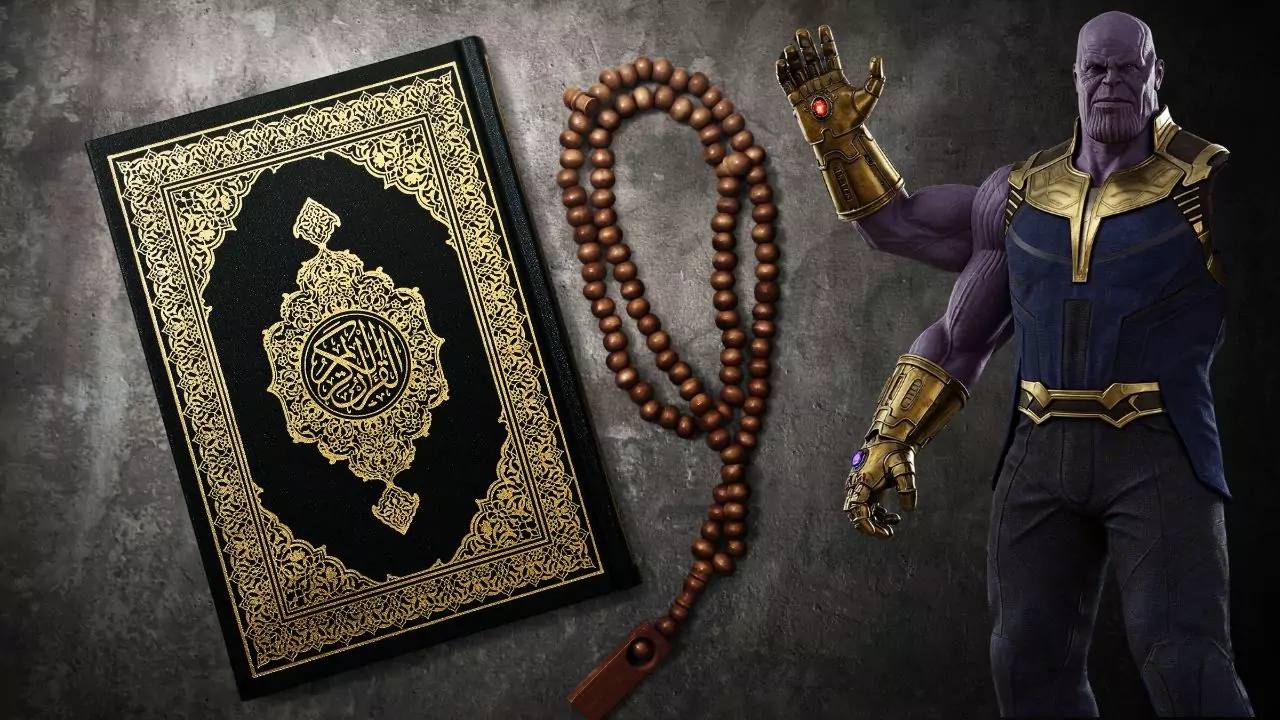
According to Islamic mythology, Allah is said to have two hands—but, curiously, both of them are right hands. How exactly He manages His essential tasks with two right hands is, of course, never explained.
Reference : Sunan an-Nasa’i 5379
In-book reference : Book 49, Hadith 1
English translation : Vol. 6, Book 49, Hadith 5381
English:
It was narrated from ‘Abdullah bin ‘Amr bin Al-‘As that:
The Prophet [SAW] said: “Those who are just and fair will be with Allah, Most High, on thrones of light, at the right hand of the Most Merciful, those who are just in their rulings and in their dealings with their families and those of whom they are in charge.” Muhammad (one of the narrators) said in his Hadith: “And both of His hands are right hands.“
Arabic:
أَخْبَرَنَا قُتَيْبَةُ بْنُ سَعِيدٍ، قَالَ حَدَّثَنَا سُفْيَانُ، عَنْ عَمْرٍو، ح وَأَنْبَأَنَا مُحَمَّدُ بْنُ آدَمَ بْنِ سُلَيْمَانَ، عَنِ ابْنِ الْمُبَارَكِ، عَنْ سُفْيَانَ بْنِ عُيَيْنَةَ، عَنْ عَمْرِو بْنِ دِينَارٍ، عَنْ عَمْرِو بْنِ أَوْسٍ، عَنْ عَبْدِ اللَّهِ بْنِ عَمْرِو بْنِ الْعَاصِ، عَنِ النَّبِيِّ صلى الله عليه وسلم قَالَ ” إِنَّ الْمُقْسِطِينَ عِنْدَ اللَّهِ تَعَالَى عَلَى مَنَابِرَ مِنْ نُورٍ عَلَى يَمِينِ الرَّحْمَنِ الَّذِينَ يَعْدِلُونَ فِي حُكْمِهِمْ وَأَهْلِيهِمْ وَمَا وَلُوا “. قَالَ مُحَمَّدٌ فِي حَدِيثِهِ ” وَكِلْتَا يَدَيْهِ يَمِينٌ “.
So, to summarize: Islamic tradition not only insists that Allah literally has hands, but also that both are right hands. One cannot help but notice how bizarre this sounds—an omnipotent deity supposedly limited to a pair of “right hands,” leaving us to wonder: how does He clap, hold something symmetrically, or perform any ordinary action without ever having a “left”?
About This Article
Genre: Semi-Academic Skeptical Analysis
Epistemic Position: Scientific Skepticism and Secular Humanist Ethics
This article belongs to the skeptical-rationalist analytical tradition of Shongshoy.com.
Its purpose is not theological neutrality or artificial both-sides balance, but evidence-based critical examination of religious, philosophical, moral, and historical claims.
Neutrality here means methodological fairness: accurate use of sources, logical rigor, evidentiary discipline, and factual consistency. It does not mean moral indifference or equal treatment between harmful doctrines and their criticism.
Strong criticism should not be mistaken for bias if it is supported by evidence and sound reasoning.
This article should be evaluated through source quality, evidentiary strength, logical rigor, factual consistency, and fairness in representing opposing claims—not through theological sensitivity, apologetic expectations, or demand for rhetorical softness.