Was Prophet Muhammad the greatest man of all time?
Summary
This article examines a particular historical and religious narrative by ordinary standards of reason, rather than beginning with the prerequisite that religious claims ‘must be believed’. Its purpose is not to establish a formal research design, but to raise questions through a reading grounded in sources: does the figure presented as an ideal and promoted through propaganda, together with the morality and truth claims proclaimed ‘beyond doubt,’ remain defensible within the material used to describe him, or does that material produce inconsistencies and conflicts at several levels?
The discussion centres on several recurring themes: the exercise of personal power and authority, double standards in moral decisions, women and sexual ethics, the justification of war, peace, and violence, slavery, plunder, and punishment, and the practical and logical foundations of claims to miracles or proof of truth. In each theme, the central task is to examine the internal consistency of events, statements, and rules: where principles agree with practice, where a claim and its accompanying account do not align, and where a moral narrative breaks down in its actual application.
The method is straightforward. Rather than dismissing passages by saying ‘this was meant metaphorically’ or ‘it was only an exception; the context must be understood,’ it examines the possible implications of each account separately, distinguishing the account itself, its interpretation, and the moral or logical conclusions drawn from that interpretation. Readers are asked to do one thing: question each claim for themselves. If this information is accepted as true, how consistent is it with claims of ‘exemplary conduct,’ ‘justice,’ ‘moral perfection,’ or ‘divine instruction’? Reach a conclusion through reason, rather than under the influence of blind belief or emotion.
Introduction
As a child, I repeatedly heard my mother tell a ‘deeply humane’ story about Muhammad and an elderly Jewish woman. The story went like this: every day, the woman scattered thorns along his route to prayer, placed camel entrails on his back while he prostrated, harassed him in various ways, and subjected him to obscene abuse. Yet the Prophet, presented as ‘the greatest human being of all time in the universe,’ supposedly never said anything to her. He silently endured everything and prayed to Allah that she might find ‘the right path.’
Then, one day, something astonishing supposedly happened. He noticed that there were no thorns on his path, no one was abusing him, and no one was placing entrails on him. Surprised, he rushed to the woman’s home instead of going to prayer and found her ill. He personally tended to her and restored her health through loving care. Seeing his love for humanity, she felt ashamed, recognised her mistake, subsequently accepted Islam, and devoted her life to serving the faith. That was the end of the story.
The story truly moved me as a child. My eyes would fill with tears when I heard it. I thought: what a good man! Equal compassion for everyone, regardless of religion or background. This was precisely the kind of person the world needed. My mother told many other stories, and in admiration I imagined becoming equally compassionate. If someone abused me, mocked me, or even hurt me, I would supposedly respond with love alone. With that thought in mind, I would hum the song—
‘My Prophet is my touchstone, my Prophet is my goldmine; whoever chants the Prophet’s name possesses the riches of both worlds.’
As I grew older, however, a very simple question occurred to me: if this story is true, where is the account of it? I began reading the Qur’an and hadith, assuming that incidents presented as ‘historical truths’ and ‘moral examples’ should at least appear in the principal Islamic sources. I searched thoroughly. I could not find this story in the Qur’an, authentic hadith, or early historical accounts. I would have been happy if these incidents were true; finding in Islamic sources the Muhammad I had known in childhood would have pleased me. Let us listen to a sermon by the well-known scholar ‘Abdur Razzaq ibn Yusuf, in which he states very clearly that no such incident exists in Islam.
Another question arises from this. Muhammad abandoned the religion of his forefathers. He did more than abandon it: he regularly disparaged, condemned, criticised, and even abused those religions. Opposition in the society of his time was therefore unsurprising. Even today, leaving a religion or adopting a different opinion can make life difficult; the pressures in that period were greater still. But the central question lies elsewhere: how did he treat those who criticised, mocked, and opposed him? Did he ‘win them over’ with love, or turn to power, domination, and punishment?
This question became important to me. By examining the Qur’an, hadith, and Islamic history, I wanted to understand the actual treatment of ‘critics’ and ‘opponents’ described in Islamic sources. To my surprise, however, reading the hadith collections led me to discover a very different Muhammad, one whose portrayal did not match the moral stories of my childhood. This article presents that different portrayal. It will be long, because what is needed here is an examination of the sources, rather than emotion. I hope readers will read it attentively.
What Are the Standards for Being the Greatest Person of All Time?
I have always been careful when choosing friends. Friendship means talking to someone, standing by them in danger, and sharing happiness and sorrow. I therefore consider carefully whom to associate with and whom to maintain a relationship with. When I meet someone, I begin by considering several things to understand what kind of person they are—
1) Are they religiously sectarian? Do they hate people of other religions or opinions?
2) What is their attitude towards women and people of the third gender? Do they regard them as ‘inferior’ or ‘less worthy’?
3) What is their attitude towards minority and marginalised communities, such as Hindus, Buddhists, Christians, Indigenous people, and non-Bengalis?
After these three questions, I also consider whether the person is corrupt, whether they oppress the weak, and especially how they treat subordinate or dependent people, such as domestic workers and poorly paid employees. If any of these aspects is negative, my relationship with that person generally does not last. I gradually distance myself. There are, of course, many other considerations, but these are my minimum ‘standards for a humane person.’
This assessment matters because choosing the wrong person as someone close to me causes more than personal harm: it also damages my own values. If someone is to be presented as ‘the greatest human being of all time,’ the scrutiny should be stricter still. This involves more than personal likes and dislikes; it involves millions of people’s inclination to follow an example. Elevating the wrong person as ‘the greatest’ leads ordinary people to accept him as an ideal without understanding, attempting to imitate everything: his language, his principles, and his conduct.
The question is therefore simple: what qualities do we expect in a genuinely good person? Such a person would not murder, rape, plunder another’s property, or force anyone through coercion. He would not harbour sectarian attitudes; he would respect women and recognise equality, and regard minorities and people of other religions as human beings of equal worth. With these standards before us, does describing Muhammad as ‘the greatest human being’ withstand examination of the sources, or does it collapse? The following sections examine precisely that.
The Prophet Was Narcissistic or Self-Absorbed
The word ‘narcissist’ is often used as an insult, but here I discuss it as a personality tendency. A clinical diagnosis—a medical assessment—is, of course, a separate matter. The aim here is to examine whether narcissistic characteristics appear in conduct and statements: excessive self-centredness, imposing one’s importance on others, dependence on praise, anger at criticism, and a mentality that places oneself at the centre.
Narcissistic personality disorder [1] generally denotes a persistent pattern in which a person’s conduct and thinking display an intense need for others’ admiration, a belief in being special or exceptional, and a tendency to impose their own importance on others. Many people with such tendencies believe that they are ‘more important’ than others, have been ‘specially created,’ and ‘must receive extra importance.’ They become irritated when that importance is withheld and, depending on the circumstances, may become enraged or vindictive.
Its roots are sometimes found in childhood experiences: a child whose words are ignored, who receives no attention or recognition, may grow up treating ‘attracting attention’ and ‘obtaining recognition’ almost as an addiction. Children naturally seek attention from others, but when that tendency becomes persistent and uncontrolled, it may develop into ‘narcissistic’ behaviour in adulthood. Familiar characteristics include arrogance towards others, a contemptuous manner, and a tendency to use people according to one’s own needs. Such individuals often try to become ‘special’ to particular people through manoeuvring, hypocrisy, or social cunning, and seek to control them. When control fails, abuse, curses, and blame may follow.
People with this disorder may be described as ‘narcissists’ or as displaying ‘narcissism.’ An extreme form of this tendency may involve a ‘messiah complex’ [2]: someone comes to believe that they are a kind of ‘saviour’ whose leadership or superiority everyone in society must accept, as though ordinary people have a duty to recognise them as ‘king, leader, or the most important person.’ Keeping this psychological structure in mind, claims of religious leadership, being ‘specially chosen,’ and ‘authority over everyone’ carry the risk of incorporating elements of self-centredness.
The Prophet Commanded Others to Love Him
The question now is whether Islamic sources contain statements in which Muhammad made himself someone his followers were obliged to love. They do. Muhammad, the Prophet of Islam, instructed his community that they must love him, and that a true believer must hold him dearer than parents and children; otherwise, that person is not a ‘true believer.’ Had a later follower or preacher made this claim, it could have been treated as ‘devotional propaganda.’ But when the claimant himself demands to be placed ‘above every other love,’ a question arises: is this merely religious teaching, or a kind of condition of obedience for entering Paradise, binding even personal emotions by rule?
Love is ordinarily spontaneous. ‘Love by command,’ however, is the language of compulsory obedience, often expressing an authoritarian attitude intended to strengthen a structure of power rather than love itself. Much as a military ruler or cult leader forces followers to ‘love’ him, it amounts to extracting devotion with a blade held to someone’s throat. Some of our films have titles like ‘Tell Me Whether You Will Love Me!’—as though even love were subject to orders and domination. [3]
Sahih al-Bukhari (Tawhid edition)
Book: 2. Faith
Chapter: 2/8. Loving the Messenger of Allah is part of faith.
14. Narrated Abu Hurayrah: The Messenger of Allah said: By the One in whose hand is my soul, none of you can be a true believer until I am dearer to him than his father and his children. (Adhunik Prakashani: 13; Islamic Foundation: 13)
Hadith grading: Sahih (Authentic)
Narrator: Abu Hurayrah
The central point in this statement is that ‘love’ is established as a condition of faith, rather than merely a moral quality. Emotional allegiance to the Prophet is therefore not ‘optional’; it is ‘proof of faith.’ Logically, this places a person within a psychological framework: ‘If you do not love him, you are not a true believer.’ Whether the feeling comes from the heart or not, you must love him, encouraging people to display love to others rather than experience its emotional substance. Imposing this kind of condition—especially when the person to whom love is directed makes it compulsory himself—invites comparison with a narcissistic structure: oneself as the centre, oneself as indispensable, and oneself as supreme.
The Prophet Repeatedly Praised Himself
Someone may now say, ‘Love is part of respect or morality; where is the narcissism in that?’ The next question is therefore whether Islamic sources show a tendency for the Prophet repeatedly to present himself as the greatest or the best. Some accounts show him presenting himself before the Companions as ‘the best,’ in a form of self-praise afflicted by circular reasoning. Ordinarily, a leader or moral exemplar who truly lives up to that ideal does not need to be eager to establish his own praise; people assess him by his actions. When the claimant himself proclaims his superiority, however, the question arises: is this the language of excellence, or of establishing authority?
An important distinction here is that saying ‘I am good’ is not the same as saying ‘I am better than you.’ The latter asserts comparative superiority and creates a hierarchy. Once that hierarchy becomes socially entrenched, flattery, blind following, and intolerance of criticism can develop. Such an atmosphere forms around an authoritarian personality, cult leader, or mafia leader, rather than an exemplary leader. [4]
Sunan al-Tirmidhi (Verified Edition)
Book: 46. The Virtues of the Messenger of Allah and His Companions
Chapter: 64. The Virtues of the Wives of the Messenger of Allah
3895. Narrated ‘A’ishah: The Messenger of Allah said: The best among you is the one who is best to his family. And towards my family I am better than you. When one of your companions dies, cease criticising him.
Authentic: al-Sahihah (285).
Abu ‘Isa says: As a report from al-Thawri, this hadith is hasan, gharib, and sahih. Very few have narrated it from al-Thawri. It has also been narrated in mursal form through Hisham ibn ‘Urwah, from his father, from the Prophet.
Hadith grading: Sahih (Authentic)
Narrator: ‘A’ishah
Narrated ‘Aishah: that the Messenger of Allah (ﷺ) said: “The best of you is the best to his wives, andI am the best of you to my wives, and when your companion dies, leave him alone.”
The comparative claim becomes clearer in the English translation above: ‘I am the best of you…’ Yet the actual context reveals complications in his relationships with his wives, particularly incidents concerning enslaved women. The fact is that, following disputes with his wives over intercourse with an enslaved woman, he brought down verses from Allah threatening them with divorce. [5] For a detailed discussion, see [6].
If the Prophet divorces all of you, his Lord may give him, in your place, wives better than you: women who submit, believe, and obey, who repent, worship, and fast, both previously married women and virgins.
— Taisirul Quran (translated from Bengali)
If the Prophet abandons all of you, his Lord may give him wives superior to you: women who submit, believe, and obey, who repent, worship, and observe fasting, both previously married women and virgins.
— Sheikh Mujibur Rahman (translated from Bengali)
If he divorces you, it may be that his Lord will give him, in your place, wives better than you: Muslim women, believing and obedient, repentant, devoted to worship and fasting, both previously married women and virgins.
— Rawai al-Bayan (translated from Bengali)
If the Prophet divorces all of you, his Lord may replace you with wives better than you [1]: Muslim women, believers [2], obedient, repentant, devoted to worship and fasting, both previously married women and virgins.
— Dr. Abu Bakr Muhammad Zakaria (translated from Bengali)
Placing the hadith’s claim ‘I am better than everyone’ alongside the verse concerning a threat to divorce his wives raises a question of its own: is ‘superiority’ established here as a moral ideal, or is it language used to place oneself at the top of a relationship of power? It is unsurprising to find traces of self-centred authority in someone who simultaneously makes loving him above all others a condition, describes himself as ‘better than you,’ and appears in accounts of threats and pressure within relationships expressed through the language of power.
The Prophet Cursed Those Who Did Not Invoke Blessings upon Him
Another familiar aspect of narcissistic characteristics is dissatisfaction, a sense of insult, and sometimes vindictive language when ‘praise or recognition’ is withheld. Do Islamic sources contain examples of Muhammad cursing people who, even after hearing his name mentioned, did not invoke blessings upon him? They do. This is punitive language, rather than ‘moral advice’: a curse such as ‘May your nose be rubbed in the dust.’ [7]
Riyad al-Salihin
Book: 15. Invoking Blessings and Peace upon the Messenger of Allah
Chapter: 243. The Command to Invoke Blessings and Peace upon the Prophet, Their Merit and Wording
4/1408. Narrated Abu Hurayrah: The Messenger of Allah pronounced this curse: ‘May the nose be rubbed in the dust of the person in whose presence my name is mentioned, yet who does not invoke blessings upon me after hearing it.’ That is, who does not say ‘May Allah’s blessings and peace be upon him.’ (Al-Tirmidhi: hasan.) (1)
(1) Al-Tirmidhi 3545; Ahmad 7402.
Hadith grading: Hasan (Good)
Notice that wishing someone well when their name is mentioned can be a matter of courtesy. Pronouncing a curse when that courtesy is not observed, however, establishes an obligation centred on a particular person, rather than teaching etiquette. Logically, this creates a structure in which a ‘ritual of praise’ becomes compulsory whenever the Prophet’s name is mentioned, while condemnation or a curse against anyone who does not perform it becomes legitimate. Such language sits uneasily with stories of ‘humane generosity.’ It is more consistent with a personality seeking to establish allegiance and recognition by rule, and responding in the language of punishment when they are withheld.
The Prophet Acted Contradictorily
Mixing between Men and Women Was Forbidden, but Permitted for the Prophet
Within Islamic belief, ‘free mixing’—ordinary social interaction between men and women, moving about together, going out, holding hands, and speaking privately—is often strictly prohibited through intimidating descriptions such as ‘temptation,’ ‘Satan’s deception,’ and ‘the road to sin.’ An old, distorted, and inhumane assumption operates within this view: sexual temptation is ‘inevitable’ whenever men and women are together. Ordinary human relationships, friendship, compassion, and cooperation are thus placed under suspicion from the outset. The idea that relationships between men and women necessarily mean sexuality is pushed so far that people cease to be seen as people and become walking ‘temptations’ or ‘risks.’
The problem goes deeper still: Islamic sources themselves show that this ‘strictness’ is not applied equally to everyone. Conduct turned into a principle of control for ordinary people through prohibitions, temptation, and fear of Hell is legitimised for powerful men, especially the Prophet or a master, as ‘normality,’ ‘humility,’ or ‘kindness.’ Here the principle’s mask falls away: it is a system of control based on power, rather than a morality based on reason. This section examines that double standard: one rule for the public and another for those who hold power.
In the words of popular sermon speakers in Bangladesh, this suspicion becomes more extreme. It is even said that being alone together is risky in relationships such as that between a father and daughter, because supposedly ‘Satan may enter.’ Such statements poison human relationships with sexual suspicion and cast even the safest relationships under a shadow of ‘sinister possibilities.’ This is called ‘morality,’ but in practice it is a method of distorting thought. The video below provides one such example, in which a healthy mind is imprisoned by suspicion in the name of ‘purity.’ Let us listen to a statement by Ahmadullah.
Let us turn to Islamic sources. Examining authentic hadith concerning the same Muhammad shows how contradictory the application of the principle ‘free mixing is forbidden’ can be. An authentic hadith relates that, when a woman came to the Prophet with a particular need, he offered to meet her separately in whichever lane she chose and subsequently ‘attended to’ her need in private. The hadith does not say what the need was, why it required privacy, or how he ‘attended to’ it. Yet the same conduct becomes praiseworthy in the Prophet’s case under a principle used to frighten ordinary people by saying ‘unrelated men and women must not be alone together.’ The references for this incident are [8] [9].
Sahih Muslim (Islamic Foundation)
Book: 45. Virtues
Chapter: 19. People’s Access to the Prophet, Their Seeking Blessings through Him, and His Humility towards Them
5837. Abu Bakr ibn Abi Shaybah … related from Anas that a woman had some impairment in her understanding. She said, ‘Messenger of Allah, I have a need involving you.’ The Messenger of Allah said, ‘Mother of so-and-so, choose whichever lane you wish, and I will attend to your need there when you call.’ He then met her privately on a path, and she had her need attended to.
Hadith grading: Sahih (Authentic)
Narrator: Anas ibn Malik
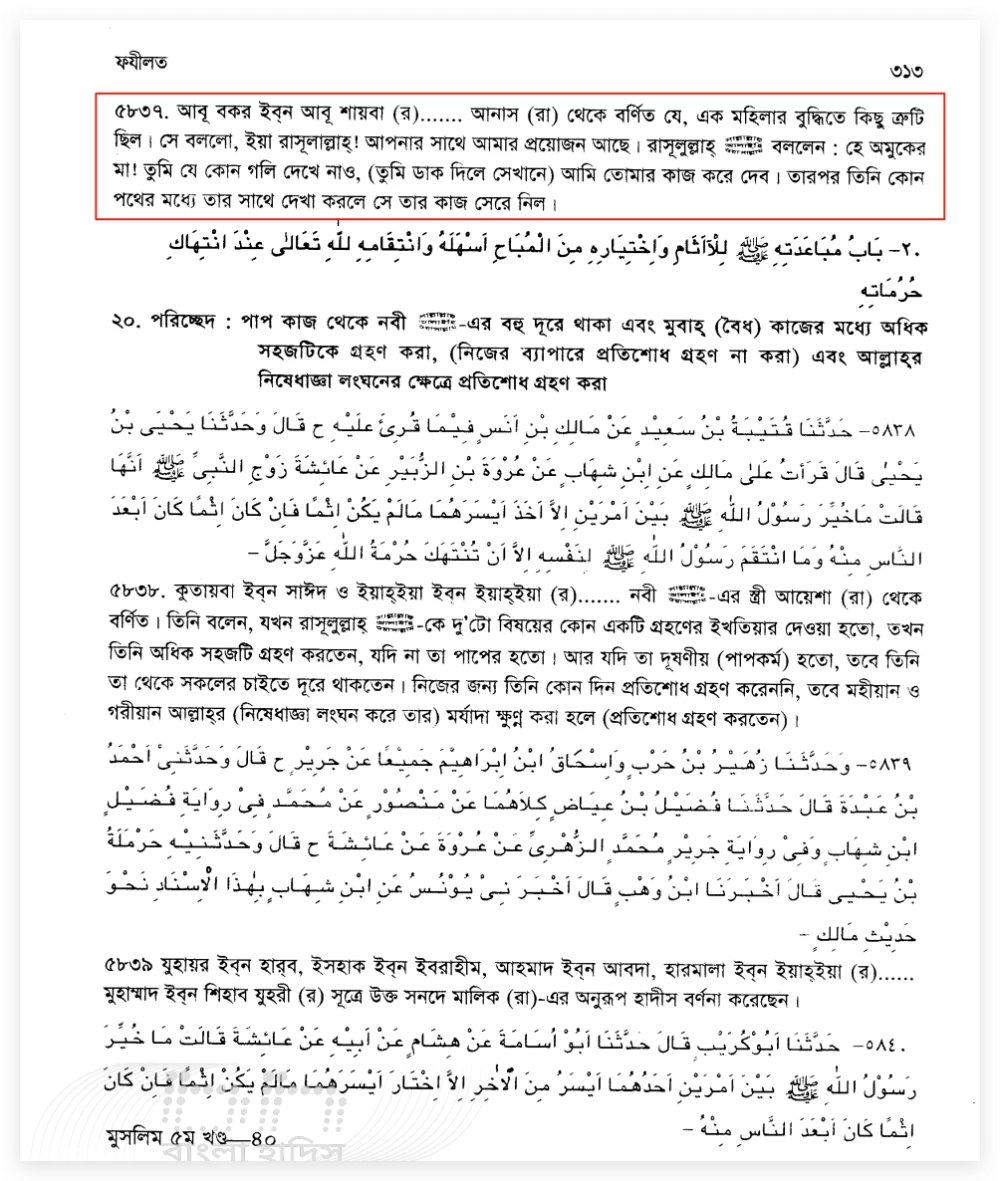
Conduct prohibited to ordinary people through fear of ‘temptation’—meeting privately with an unrelated woman—is praised as ‘humility’ in the Prophet’s case. This completely undermines the substance of the principle: if these Islamic principles and strict rules were rational, or laws given by Allah, why exempt the Prophet? It demonstrates that the prohibition concerns deception based on power rather than morality. While ordinary people were kept within strict rules, the Prophet himself was accustomed to living differently.
An even more blatant contradiction appears in hadith concerning enslaved women. On the one hand, mixing is declared forbidden; on the other, an authentic hadith states that an enslaved woman of Medina could take the Prophet by the hand and lead him wherever she wished, and he would go with her. [10] The same account appears in Ibn Majah: ‘If an enslaved woman took the Prophet by the hand and led him wherever she wished, he would not withdraw his hand and would accompany her to different places.’ Imagine an enslaved woman taking the Prophet by the hand and leading him somewhere through the streets of Medina. What does that scene look like? [11]
Sahih al-Bukhari (Islamic Foundation)
Book: 65. Manners
Chapter: 2493. Pride. Mujahid says that the word عطفه in Allah’s statement means ‘his neck’; ثَانِيَ عطفه means one who harbours arrogance within himself.
Islamic Foundation numbering: 5645; international numbering: 6071–6072.
5645. Muhammad ibn Kathir … narrated from Harithah ibn Wahb al-Khuza‘i that the Prophet said: Shall I tell you about the people of Paradise? They are those who are weak and regarded as insignificant. If they swear an oath by Allah, He certainly fulfils it. Shall I tell you about the people of Hell? They are harsh, hard-hearted, and arrogant.
Through Muhammad ibn ‘Isa, it is narrated from Anas ibn Malik, who said: Even an enslaved woman among the people of Medina could take the Messenger of Allah by the hand and lead him wherever she wished, and he would accompany her.
Hadith grading: Sahih (Authentic)
Narrator: Harithah ibn Wahb
Sunan Ibn Majah
Book: 31. Abstinence from Worldly Pleasures
Chapter: 31/16. Avoiding Pride and Adopting Humility
5/4177. Narrated Anas ibn Malik: If an enslaved woman of Medina took the Messenger of Allah by the hand for a need of her own and wished to lead him to any place in Medina, he would not withdraw his hand from hers but would accompany her.
Hadith grading: Sahih (Authentic)
This double standard is plainly deceptive. Ordinary people are frightened with the claim that ‘interaction between men and women is dangerous,’ but when the woman is enslaved—someone’s property—the same conduct is not treated as a problem, particularly in the Prophet’s case. This shows that control, ownership, and unequal power lie at the centre of Islamic principles, rather than social respect.
The Prophet Prevented ‘Ali from Taking a Second Wife
Muhammad himself contracted numerous marriages and had intercourse with enslaved women. Arguments over wives and enslaved women frequently became so serious that verses containing Allah’s threats had to be revealed to manage them. The presence of multiple wives in one family often creates conflict, and Allah periodically revealed verses rebuking the Prophet’s wives so that they would neither rebel nor obstruct his intercourse with enslaved women. Muhammad’s greater love for his young child-wife ‘A’ishah is widely known. Interestingly, despite marrying so many women himself, he did not allow his own son-in-law to marry again. On this matter, he knew exactly where his interests lay. He was a father, after all! How could he permit a co-wife to be brought into his daughter’s life? Yet he forgot that the women he married were also somebody’s daughters. He did not consider that they too suffered when a co-wife entered their household. [12] [13]—
Sahih al-Bukhari (Islamic Foundation)
Book: 54. Marriage
Chapter: 2533. Preventing Jealousy in One’s Daughter and Speaking Justly
4850. Qutaybah … narrated from al-Miswar ibn Makhramah, who said: I heard the Messenger say from the pulpit that Banu Hisham ibn al-Mughirah had asked my permission to marry their daughter to ‘Ali ibn Abi Talib; but I will not give permission, I will not give permission, I will not give permission, unless ‘Ali ibn Abi Talib divorces my daughter first, after which he may marry their daughter. For Fatimah is a part of me, and I dislike what she dislikes, and what hurts her also hurts me.
Hadith grading: Sahih (Authentic)
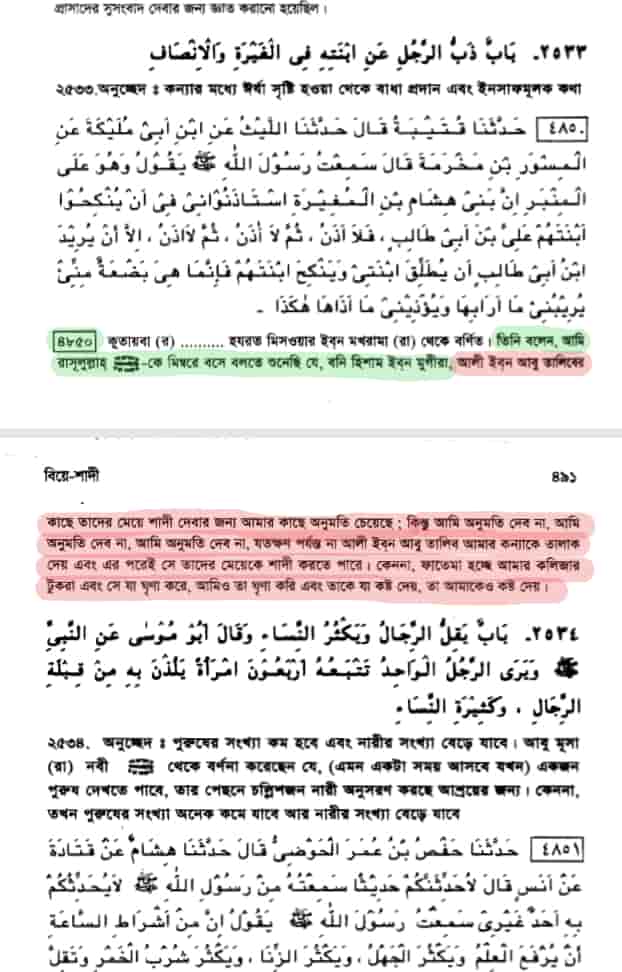
Evidence that ‘Ali himself wished to contract this marriage can be found in the commentary on Sahih al-Bukhari. [14]—
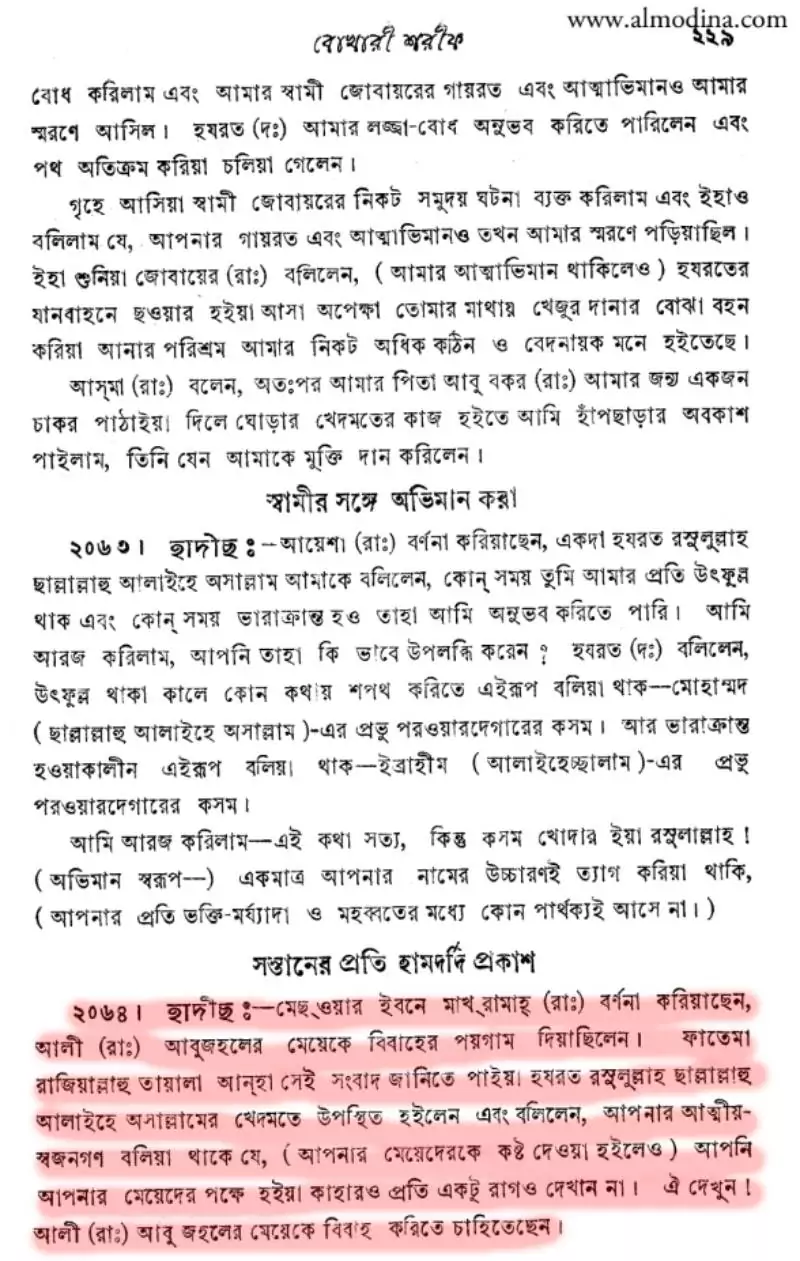
Let us consult another hadith collection to see whether ‘Ali himself wanted this marriage. [15]—
Al-Lu’lu’ wa al-Marjan
Book: 44. The Virtues of the Companions
Chapter: 44/15. The Virtues of Fatimah, Daughter of the Prophet.
1592. Narrated al-Miswar ibn Makhramah: ‘Ali sent a marriage proposal to Abu Jahl’s daughter. When Fatimah heard this, she came to the Messenger of Allah and said, ‘The people of your tribe think that you do not become angry on behalf of your daughters’ honour. ‘Ali is preparing to marry Abu Jahl’s daughter.’ The Messenger of Allah prepared to deliver a sermon. Al-Miswar said: When he had praised Allah, I heard him say, ‘I married my daughter to Abu al-‘As ibn al-Rabi‘. What he told me was truthful. Fatimah is a part of me, and I never wish her to suffer any distress. By Allah, the daughter of Allah’s Messenger and the daughter of Allah’s enemy cannot be joined in marriage to the same man.’ ‘Ali withdrew his proposal.
Sahih al-Bukhari, Book 62: Virtues of the Companions, chapter 16, hadith 3729; Muslim, Book 44: Virtues of the Companions, chapter 15, hadith 2449.
Hadith grading: Sahih (Authentic)
Narrator: Al-Miswar ibn Makhramah
Reading the hadith above may raise a question: Muhammad only prevented ‘Ali from marrying Abu Jahl’s daughter; he did not forbid it on other occasions. What, then, is the problem? Many Islamic apologists claim that the instruction was given solely because she was Abu Jahl’s daughter, and that no such statement was made concerning anyone else. Is that information actually true?
The fact is that, after this instruction, ‘Ali could not take a second wife during the lifetimes of the Prophet and Fatimah. He made do with enslaved women. Muhammad did not object to ‘Ali’s intercourse with enslaved women and generously gave his daughter’s husband ‘Ali enslaved women for sexual use—something that even many liberal fathers-in-law in modern Europe or America would find difficult. [16] [17].
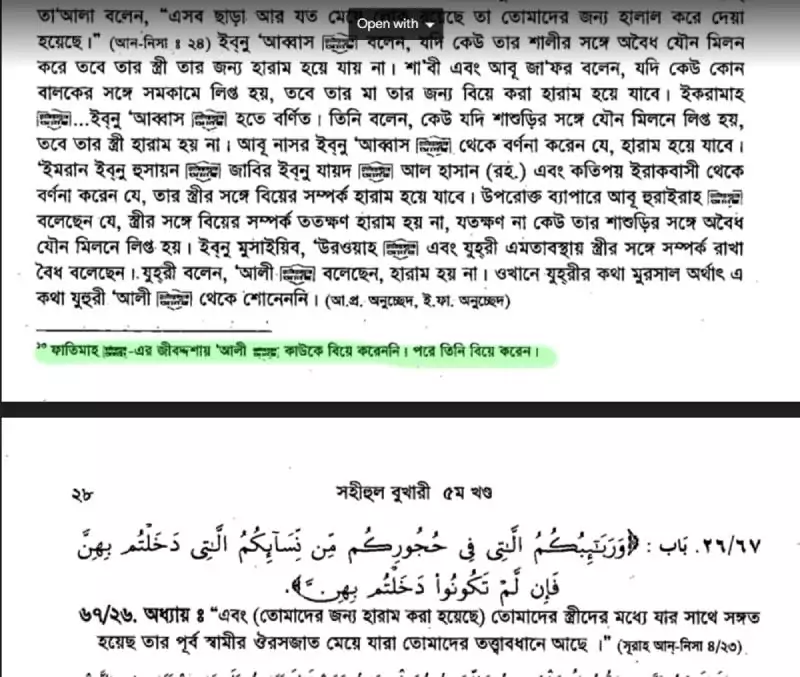
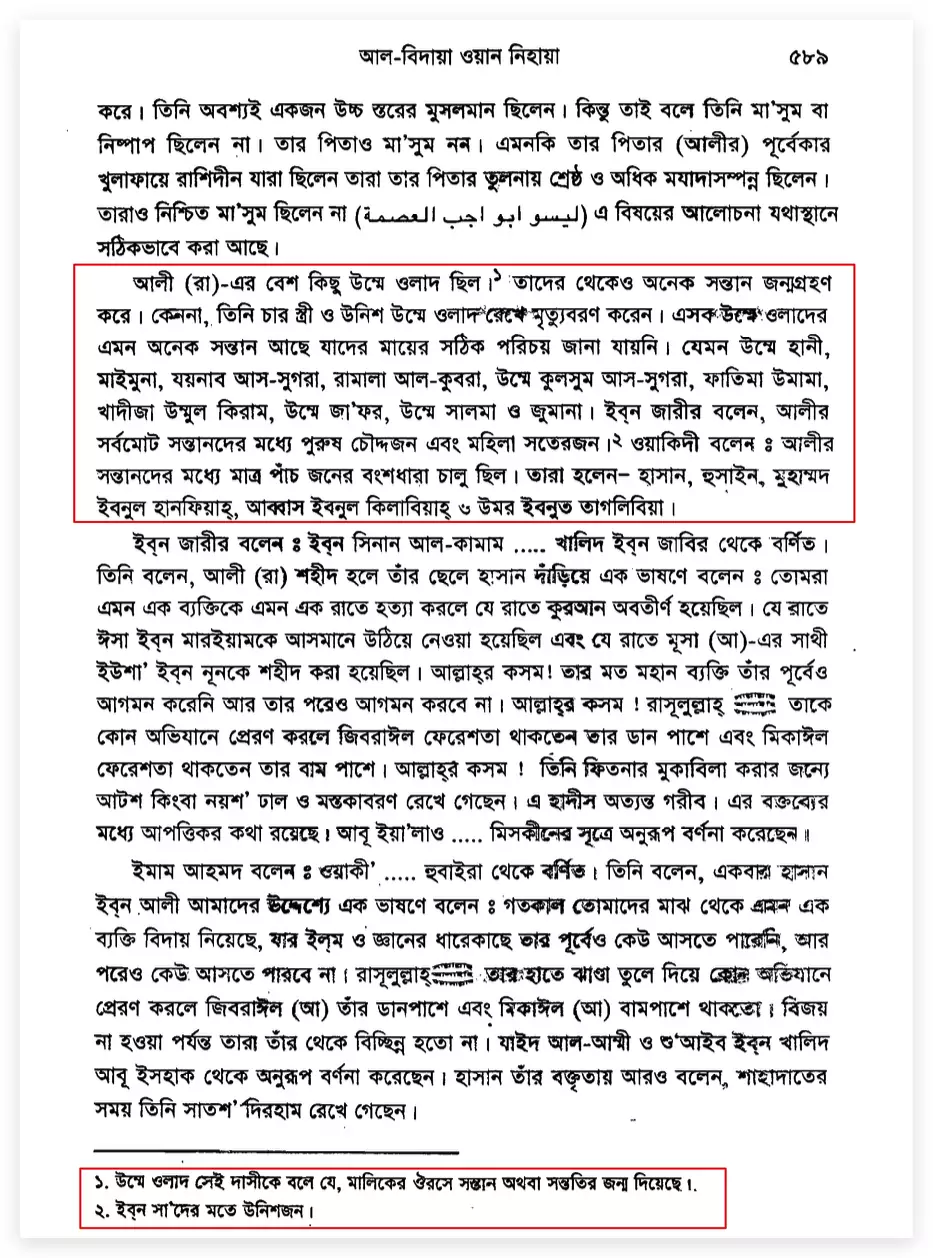
It is also reported that, after Fatimah died, ‘Ali satisfied his desires as he wished. At his death, he reportedly had numerous umm walads: enslaved women who had borne his children. [18]
Placing these events together makes the double standard clear. Polygyny is ‘Sunnah’ or ‘lawful’ for the Prophet, but within his own family, when his daughter’s distress is involved, the same practice suddenly becomes ‘unacceptable.’ What operates here is personal interest and emotion rather than principle, conflicting with the claim to be a ‘universal moral exemplar.’
The Prophet Had Intercourse without Paying a Marriage Dower
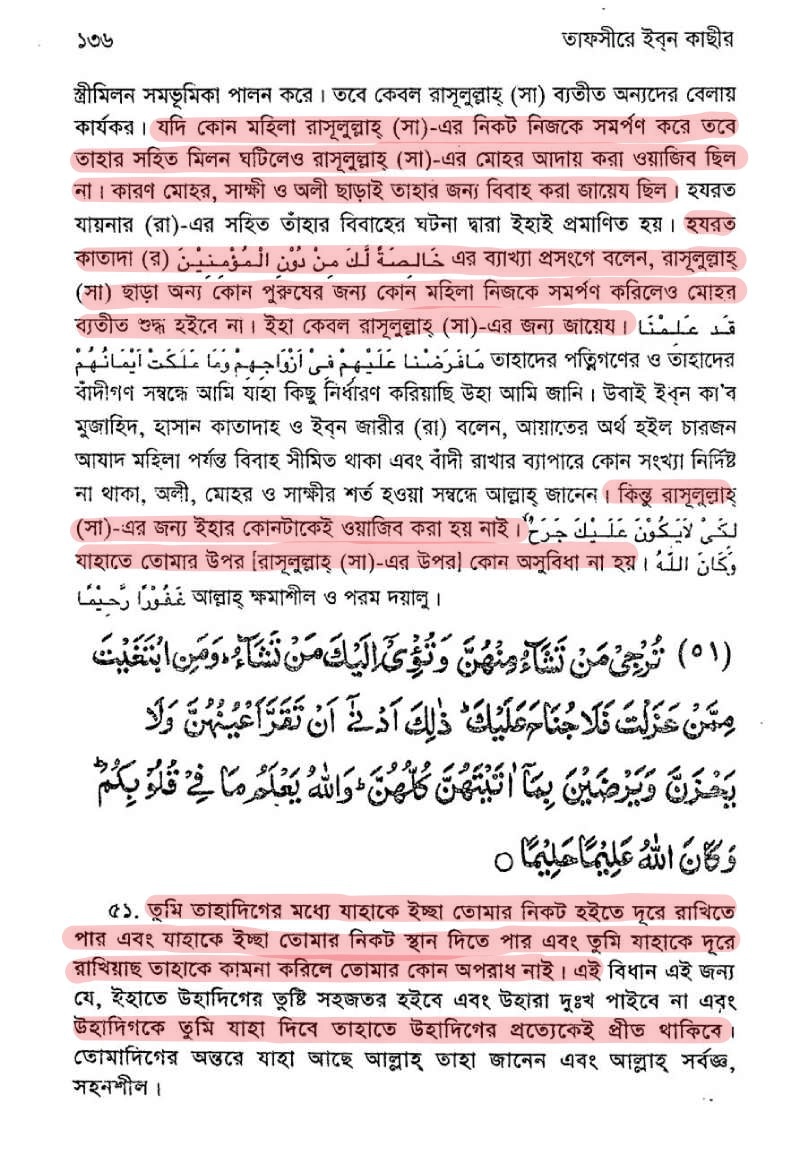
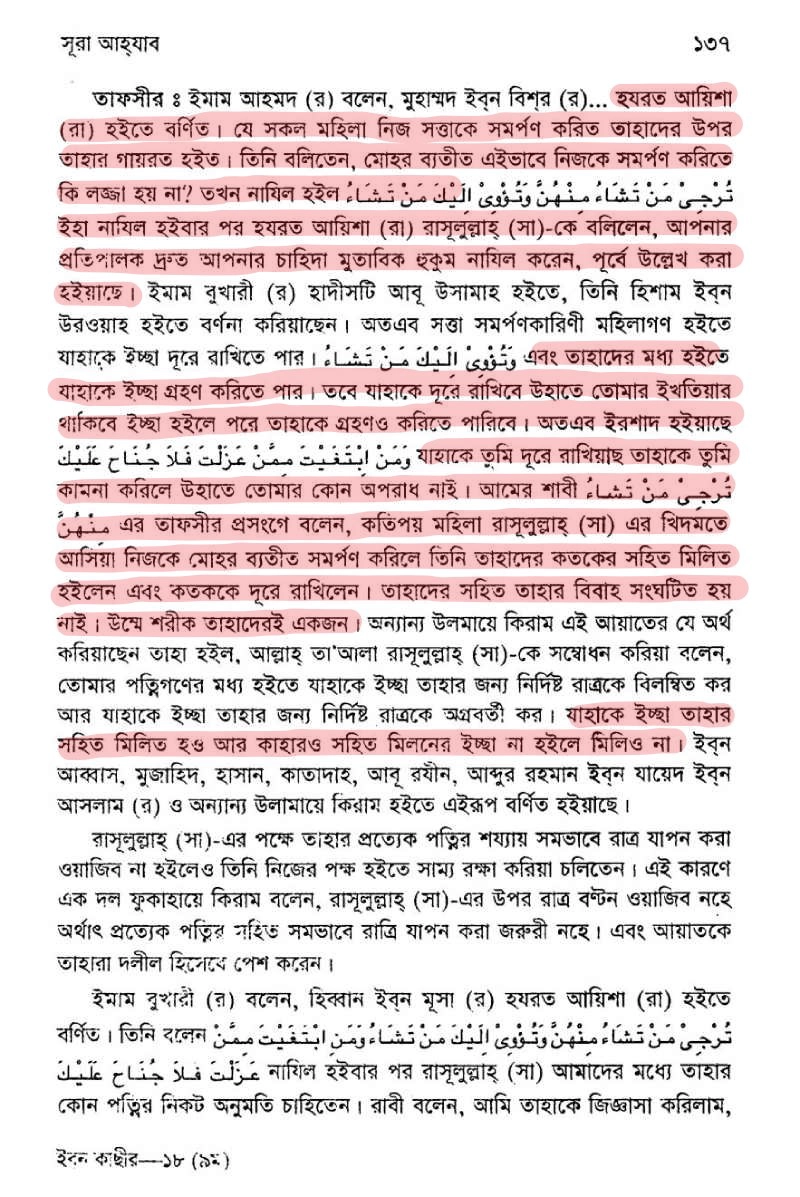
We all know that Muhammad had intercourse with enslaved women without marrying them. He also had intercourse without paying a marriage dower with women who were not enslaved. Evidence appears in Ibn Kathir’s commentary on verses 50–51 of Surah al-Ahzab. Muhammad’s wife ‘A’ishah was openly irritated by this habit and even taunted him by saying that verses were revealed to suit his convenience. [19]
The Prophet Urinated Facing the Qiblah
Accounts describe the Prophet himself urinating towards the qiblah after prohibiting urination or defecation in that direction. When a prohibition is imposed on ordinary people, one expects the ‘exemplary’ individual to observe it more strictly still. Here, however, he performed an act that he had strongly forbidden. Naturally, when the need to urinate or defecate becomes urgent, people may no longer notice which direction they face. The criticism here therefore concerns the imposition of the rule and the hypocrisy, rather than the act of facing the qiblah while relieving oneself. [20]
Sunan al-Tirmidhi (Verified Edition)
Book: 1. Purification, from the Messenger of Allah
Chapter: 7. Permission Concerning the Matter Mentioned
9. Narrated Jabir ibn ‘Abdullah: The Prophet prohibited defecating or urinating while facing the qiblah. One year before his death, I saw him defecating or urinating facing the qiblah.—Sahih. Ibn Majah (325).
Reports from Abu Qatadah, ‘A’ishah, and ‘Ammar also appear concerning this subject. Abu ‘Isa says: Jabir’s hadith in this chapter is hasan and gharib.
Hadith grading: Sahih (Authentic)
Narrator: Jabir ibn ‘Abdullah al-Ansari
Muhammad Urinated Standing Up
A familiar hadith states that the Prophet urinated standing up, although Islamic rules prohibit doing so. Another rule was therefore developed on the basis of this hadith describing the Prophet urinating while standing. Many believers offer various explanations—excuses—for why he did it. The central point is that the conflict between ‘command’ and ‘exception’ in religious conduct repeatedly returns to the Prophet himself. [21]
Mishkat al-Masabih
Book: 3. Purification
Chapter: 2. Second Section: Etiquette of Defecation and Urination
364-(31). Narrated Hudhayfah: The Prophet went to a tribe’s rubbish dump and urinated there standing up. (Al-Bukhari and Muslim.) (1) It is said that he did so because of an excuse.
(1) Authentic: al-Bukhari 224; Muslim 273.
Hadith grading: Sahih (Authentic)
The Prophet Was Gluttonous or Greedy for Food
Many Muslims today say that the Prophet ate very little and advised others to do the same. Eating little is even described as his Sunnah. Authentic hadith, however, presents a different picture, indicating that he was extremely greedy for food. Let us read the reports describing him asking for more forelegs even after eating both forelegs of a goat. Consider how many kilograms of meat the forelegs of a medium-sized goat contain. How could someone ask for another after eating both? [22] [23]—
Sahih Shama’il al-Tirmidhi
26. The Food Accompanying the Messenger of Allah’s Meals
126. Narrated Abu ‘Ubayd: I once cooked a pot of meat for the Prophet. He particularly liked the meat of a goat’s foreleg, so I gave him one foreleg. He then said, ‘Give me another foreleg.’ I gave him another foreleg. He again said, ‘Give me another foreleg.’ I asked, ‘Messenger of Allah, how many forelegs does a goat have?’ He said, ‘By the One in whose hand is my life! Had you remained silent, you could have continued giving me forelegs for as long as I asked.’ [1]
[1] Al-Mu‘jam al-Kabir, hadith 18286; Musnad al-Bazzar, hadith 8345.
Hadith grading: Sahih (Authentic)
Sunan al-Darimi (HadithBD edition)
Introduction
Chapter: 7. The Distinction Granted to the Prophet through Blessings in Food
45. Shahr ibn Hawshab narrated from Abu ‘Ubayd that he cooked a pot of meat for the Messenger of Allah. The Messenger of Allah said to him: ‘Give me a foreleg.’ He liked foreleg meat. He gave him a foreleg. He said again, ‘Give me a foreleg.’ He gave him another. He again said, ‘Give me a foreleg.’ I asked, ‘Messenger of Allah, how many forelegs does a goat have?’ He replied, ‘By the One in whose hand is my soul! Had you remained silent, you would have continued giving me forelegs for as long as I asked.’ [1]
[1] Verification: the chain is hasan on account of Shahr ibn Hawshab.
Source tracing: al-Tabarani, al-Kabir 22/335, no. 842; al-Tirmidhi, al-Shama’il 170.
Hadith grading: Hasan (Good)
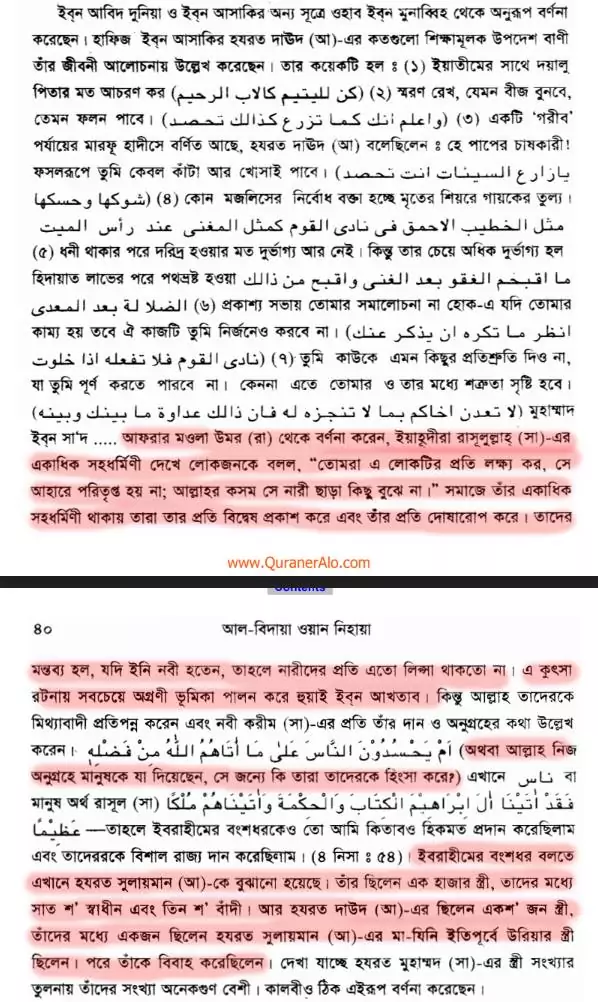
Al-Bidayah wa al-Nihayah reports that Jews mocked the Prophet’s excessive appetite for food and women, saying that this man could never be satisfied by eating and understood nothing but women. [24]—
The Prophet Was Afraid of Death
Authentic hadith states that, despite Muhammad’s complete faith and trust in Allah, and despite having a powerful angel such as Gabriel and armies of thousands of other angels with him, fear of his enemies prevented him from sleeping at night. He needed a guard because he feared that someone might come and kill him. [25]
Sahih al-Bukhari (Tawhid edition)
Book: 56. Jihad and Conduct during War
Chapter: 56/70. Keeping Guard in Warfare in Allah’s Cause
2885. Narrated ‘A’ishah: The Messenger of Allah spent a night awake. After coming to Medina, he expressed the wish that a suitable Companion would guard him at night. We then heard the sound of weapons. He asked, ‘Who is that?’ The man replied, ‘I am Sa‘d ibn Abi Waqqas. I have come to guard you.’ The Prophet then went to sleep. (7231.) (Muslim 44/5, hadith 2410; Ahmad 25147.) (Adhunik Prakashani: 2673; Islamic Foundation: 2684.)
Hadith grading: Sahih (Authentic)
Narrator: ‘A’ishah
The Prophet Was Afraid on the Battlefield
An account describes Muhammad, when endangered on the battlefield, calling on others: ‘Who will repel the enemy on my behalf? Paradise will be his.’ If an army of angels was truly protecting him, as religious narratives commonly maintain, where was that ‘invisible army’ at the moment of crisis? The actual picture instead depends on human beings: the deaths of Companions, encirclement, and a promise of Paradise in return. A clear gap appears here between the religious claim of ‘miraculous protection’ and the historical account. [26]
There was a fraudulent spiritual leader in our neighbourhood who supposedly had many powerful jinn accompanying him. He frightened people with these jinn to extract money. They could supposedly even fly people to another continent! One day, some local boys set a dog after him. The fraud ran so fast that he would surely have won an Olympic gold medal. In his haste, even his lungi fell off. No one saw what his ‘powerful jinn’ were doing that day. Comparing stories like this with the notion of the final Prophet as Allah’s most beloved servant, the most important figure in human civilisation under the special protection of angels, makes the entire matter look more absurd. [26]
Sahih Muslim (Islamic Foundation)
Book: 33. Jihad and Its Rules
Chapter: 37. The Battle of Uhud
4490. Haddab ibn Khalid al-Azdi … narrated from Anas ibn Malik that, on the day of Uhud, the Messenger of Allah was surrounded by enemy forces with only seven Ansari and two Qurayshi emigrant Companions. When they encircled him, he said, ‘Who will repel the enemies on my behalf? Paradise will be his,’ or said, ‘He will be my companion in Paradise.’ One of the Ansar advanced and began fighting, and was eventually killed. They then surrounded him again, and in the same way all seven were killed while fighting. The Messenger of Allah then said to his two remaining Companions, ‘We have not treated our companions justly.’ That is, we survived while they were killed.
Hadith grading: Sahih (Authentic)
Narrator: Anas ibn Malik
Failed Predictions and Attempts to Reconcile Contradictory Statements
Numerous hadith attributed to Muhammad contain predictions disproved in practice, sometimes shortly after his death, even during the caliphs’ rule. Then begins a game of interpretation and mental gymnastics through changes to the meanings of words and sentences. Scholars have tried to rescue these hadith by twisting words, transforming sentences, changing the context, or inserting ‘Allah willing’ or ‘metaphor.’ Yet anyone reading them with a minimum of plain understanding can see what the text says and what reality has shown. Bringing several examples together makes the matter clear.
Would No Epidemic Enter Medina?
Muhammad declared that no epidemic or plague would ever enter Medina. This claim appears in several authentic accounts, rather than only one. [27] [28]—
Sahih al-Bukhari (Islamic Foundation)
Book: 63. Medicine
Chapter: 2301. The Plague
Islamic Foundation numbering: 5320; international numbering: 5731.
5320. ‘Abdullah ibn Yusuf … narrated from Abu Hurayrah, who said: The Messenger of Allah said: ‘Neither the false messiah nor an epidemic can enter the city of Medina.’
Hadith grading: Sahih (Authentic)
Narrator: Abu Hurayrah
Sahih al-Bukhari (Islamic Foundation)
Book: 86. Refutation of the Jahmiyyah and the Oneness of Allah
Chapter: 3133. Allah’s Will and Desire. Allah’s statement: ‘You will not will unless Allah wills’ (76:30); ‘You grant authority to whom You will’ (3:26); ‘Never say of anything, “I will do it tomorrow,” without saying, “If Allah wills”’ (18:23–24); ‘You cannot guide whom you love merely by wishing it, but Allah guides whom He wills’ (28:56). Sa‘id ibn al-Musayyab relates from his father, al-Musayyab, that the preceding verse was revealed concerning Abu Talib. Allah’s statement: ‘Allah desires ease for you and does not desire hardship for you’ (2:185).
6965. Ishaq ibn Abi ‘Isa … narrated from Anas ibn Malik, who said: The Messenger of Allah said: The Dajjal will come towards Medina, but he will find angels guarding it. Thus neither the Dajjal nor plague will even approach Medina, Allah willing.
Hadith grading: Sahih (Authentic)
Narrator: Anas ibn Malik
Now consider reality. Epidemics or plague have repeatedly spread in Medina throughout history; this is no new information. Even recently, waves of infectious disease have subjected the city to various restrictions. But I am not drawing on ‘external history’ here: I am showing from within hadith itself that al-Bukhari explicitly records an epidemic in Medina during Caliph ‘Umar’s time. Notice while reading that ‘Umar is addressed as ‘Commander of the Believers,’ placing the incident during his caliphate. [29]—
Sahih al-Bukhari (Islamic Foundation)
Book: 44. Testimony
Chapter: 1647. How Many Witnesses Are Needed to Attest to Someone’s Uprightness?
Islamic Foundation numbering: 2467; international numbering: 2643.
2467. Musa ibn Isma‘il … narrated from Abu al-Aswad, who said: I once came to Medina while an epidemic was occurring there, causing widespread deaths. I was sitting with ‘Umar. A funeral procession passed, and favourable remarks were made about the deceased. Hearing them, ‘Umar said, ‘It has become obligatory.’ Another funeral procession passed, and favourable remarks were again made. He said, ‘It has become obligatory.’ A third funeral procession passed, and unfavourable remarks were made. Again, he said, ‘It has become obligatory.’ I asked, ‘What has become obligatory, Commander of the Believers?’ He replied, ‘I said what the Prophet said: if four people testify favourably about a Muslim, Allah will admit him to Paradise.’ He said, ‘Even if three testify.’ We asked, ‘If two testify?’ He said, ‘Even if two testify.’ We then asked him nothing about the testimony of one person.
Hadith grading: Sahih (Authentic)
Narrator: Abu al-Aswad
Here, the prediction ‘there will be no epidemic in Medina’ stands alongside al-Bukhari’s own account that ‘an epidemic was occurring in Medina.’ Scholars’ attempts at reconciliation generally follow two routes: changing the meaning of ‘plague,’ or introducing ‘a part of Medina,’ ‘its surroundings,’ or ‘a nearby area’ to find a loophole. The text, however, is straightforward: ‘Neither … nor an epidemic can enter the city of Medina.’ The other text is equally straightforward: ‘I came to Medina while an epidemic was occurring there.’ Reconciling them requires beginning with blind faith in Islam and changing the meaning when a difficulty appears in a hadith, since disbelieving that hadith would make one an unbeliever!
The Hour Is ‘Very Near’—but How Near?
Another major subject of prediction is the Day of Judgment. Many hadith present Muhammad’s statements as indicating that the Hour is ‘very near,’ almost at the doorstep. In one, he brings his fingers together and says that he and the Hour are this close. [30] Another account points to a boy and states that the Hour will arrive before the boy grows old. [31]—
Sahih Muslim (Islamic Foundation)
Book: 55. Tribulations and Signs of the Hour
Chapter: 23. The Nearness of the Hour
7140. Abu Ghassan al-Misma‘i … narrated from Anas: The Messenger of Allah said, ‘I and the Hour have been sent like these two.’ The narrator says that he brought his index and middle fingers together.
Hadith grading: Sahih (Authentic)
Sahih Muslim (Islamic Foundation)
Book: 55. Tribulations and Signs of the Hour
Chapter: 23. The Nearness of the Hour
7142. Abu Bakr ibn Abi Shaybah … narrated from Anas, who said: A man once asked the Messenger of Allah when the Hour would arrive. An Ansari boy named Muhammad was present beside him. The Messenger of Allah said: ‘If this boy lives, the Hour will occur before he grows old.’
Hadith grading: Sahih (Authentic)
Narrator: Anas ibn Malik
Attempts are commonly made to rescue this through ‘metaphor’ or ‘allegory.’ It is said that ‘the Hour’ supposedly meant ‘the individual’s death,’ a ‘minor judgement,’ or the questioner’s ‘final time.’ The problem is that the question in the hadith concerns the Hour, and the answer also concerns the Hour; moreover, ‘before the boy grows old’ sets a time limit. These are plainly examples of an ad hoc fallacy. An ad hoc fallacy introduces new explanations or unproven or mysterious conditions to defend or establish a claim. It is essentially based on the mistaken notion of post hoc ergo propter hoc—‘after this, therefore because of this’—which wrongly transforms the sequence of two events into a causal relationship. How an ad hoc fallacy works:
- Additional explanations: When a theory or idea lacks sufficient evidence, ‘special’ or ‘additional’ conditions are introduced to save it, or new interpretations of words are created, with the aim of defending the original claim by any means.
- ‘After this, therefore because of this’ (post hoc): When one event immediately follows another, the first is assumed to have caused the second, although no actual causal relationship may exist.
For example, suppose I say, ‘Next year, the entire world will be submerged by a flood.’ That year, however, no worldwide flood occurs; only Noakhali in Bangladesh floods. I then reinterpret my prediction and say that, by ‘the entire world,’ I had meant Noakhali, because many people in Noakhali regard their district as the whole world, and I had spoken from their perspective.
In other words, I changed the meaning of my prediction in response to subsequent events. This is an ad hoc fallacy. The central point is that, if predictions of this kind genuinely arise from ‘divine knowledge,’ such a large error in the timeline should not occur. There should be no need for mental gymnastics to correct it through new explanations or newly invented meanings. If the prediction is wrong, the next question is why it should be presented as ‘divine proof.’
The Tendency to Offer ‘Expert Opinions’ without Adequate Knowledge
Muhammad had a habit of attempting to offer expert opinions even on subjects he did not understand. As a result, his Companions sometimes realised that what he said was incorrect. He then tried in various ways to alter the meaning of his earlier statement. Hadith concerning where the sun goes at night provide examples of speaking without knowledge; since they appear later, they are not repeated here. Let us read other reports illustrating his tendency to behave like a know-it-all despite inadequate knowledge. In the hadith below, after being caught in an error by his Companions, he tried to protect himself by saying that he was only human and could make mistakes. But how could someone with such boundless knowledge be mistaken? And why offer an expert opinion on a subject he did not know? [32] [33]—
Sahih Muslim (Islamic Foundation)
Book: 45. Virtues
Chapter: 34. Obedience Is Obligatory in What the Messenger Commands as Religious Law, but Not in Opinions He Expresses on Worldly Matters
5915. ‘Abdullah ibn al-Rumi al-Yamami, ‘Abbas ibn ‘Abd al-‘Azim al-‘Anbari, and Ahmad ibn Ja‘far al-Ma‘qiri … narrated from Rafi‘ ibn Khadij, who said: The Messenger of Allah came to Medina. People practised pollination of date palms. The narrator says: They fertilised the palms by combining pollen from male and female flowers. The Messenger of Allah asked, ‘What are you doing?’ They replied, ‘This is what we have always done.’ He said, ‘Perhaps it would be better if you did not do this.’
The narrator said: They therefore abandoned it, and the dates fell off—or the narrator said that production declined. The people told the Messenger of Allah what had happened. He said, ‘I am only a human being. When I command you about religion, obey it; when I say something according to my own opinion, I am only human.’ The narrator ‘Ikrimah says: Or the Prophet said words to this effect. Al-Ma‘qiri, without expressing doubt, used only نَفَضَتْ, ‘fell off.’
Hadith grading: Sahih (Authentic)
Narrator: Rafi‘ ibn Khadij
Sahih Muslim (Islamic Foundation)
Book: 45. Virtues
Chapter: 34. Obedience Is Obligatory in What the Messenger Commands as Religious Law, but Not in Opinions He Expresses on Worldly Matters
5916. Abu Bakr ibn Abi Shaybah and ‘Amr al-Naqid … narrated from ‘A’ishah, and through another chain from Anas, that the Prophet passed people pollinating trees. He said, ‘It would be better if you did not do this.’ They stopped, and poor-quality dates were produced. Later, the Messenger of Allah passed them and asked, ‘What has happened to your date palms?’ They said, ‘You said such-and-such, and following it produced this result.’ The Messenger of Allah said: ‘You know more about your worldly affairs.’
Hadith grading: Sahih (Authentic)
Narrator: ‘A’ishah bint Abi Bakr al-Siddiq
‘Your Stomach Is Lying’—What Kind of Reasoning Is This?
Another hadith describes a Companion’s brother suffering from a stomach illness. The Prophet repeatedly instructed that he be given honey. When the illness did not improve after consuming it, the Prophet said that his stomach was lying! Consider how ridiculous this situation is: a stomach illness cannot tell lies. Although the illness eventually improved, we know that stomach illnesses commonly resolve on their own after some time. [34]—
Sahih al-Bukhari (Tawhid Publications)
Book: 76. Medicine
Chapter: 76/4. Treatment with Honey. Allah’s statement: ‘In it is healing for people.’ (Surah al-Nahl: 69.)
5684. Narrated Abu Sa‘id: A man came to the Prophet and said, ‘My brother has a stomach illness.’ The Prophet said, ‘Give him honey to drink.’ When the man came a second time, he said, ‘Give him honey.’ When he came a third time, he again said, ‘Give him honey.’ The man returned and said, ‘I have done that.’ Then the Prophet said, ‘Allah has spoken the truth, but your brother’s stomach is lying. Give him honey.’ He gave him honey, and this time he recovered. [5716; Muslim 39/31, hadith 2267; Ahmad 11146.] (Adhunik Prakashani: 5273; Islamic Foundation: 5169.)
Hadith grading: Sahih (Authentic)
Narrator: Abu Sa‘id al-Khudri
Notice that this concerns more than ‘treatment’: it is a problem of language and authority. When something is mistaken or uncertain, a person might say, ‘I am not sure,’ or ‘Try this approach.’ Here, however, the stance is that the Prophet’s statement is final, and if reality fails to match it, ‘the stomach is lying’! Such framing attempts irrationally to make one’s own statement ‘infallible,’ leaving out the test against reality.
Is Everything That Comes from His Mouth True?
Let us read another hadith in which the Prophet claims that every statement coming from his mouth is true. [35]—
Sunan Abi Dawud (Islamic Foundation)
Book: 19. Learning and Knowledge
Chapter: 417. Recording Knowledge
3607. Musaddad … narrated from ‘Abdullah ibn ‘Amr, who said: I used to write down everything I heard from the Messenger of Allah. I wished to preserve it all. The Quraysh forbade me, saying, ‘You write everything you hear, although the Messenger of Allah is a human being who speaks both when angry and when pleased.’ Hearing this, I stopped writing and told the Messenger of Allah about it. He pointed to his mouth with his finger and said, ‘Keep writing. By the One in whose hand is my life, everything that comes from this mouth is true.’
Hadith grading: Sahih (Authentic)
Narrator: ‘Abdullah ibn ‘Amr ibn al-‘As
This directly conflicts with the earlier argument, ‘I am human; you know more about worldly matters.’ On one hand, when proved wrong, he says that he is only human; on the other, he says that everything coming from his mouth is true. The unavoidable question is: which statement is true? Both cannot be true together unless later interpretive patchwork is used to give the text a new meaning. That is precisely the problem: the Prophet’s statements do not match reality. Believers have had to perform tireless mental gymnastics to reconcile them for 1,400 years.
Which Eye of the Dajjal Is Blind?
Another prediction contains a still more ridiculous inconsistency concerning the Dajjal’s blind eye. One account says the right eye is blind; another says the left. This is what happens when stories are invented: what was said before becomes confused with what is said later. What believers generally do next is familiar: they patch up the confusion between right and left with explanations such as ‘one hadith takes the observer’s perspective, and the other takes the Dajjal’s perspective,’ or ‘the Prophet once saw the Dajjal directly and another time saw his reflection in a mirror.’ Anyone can understand how ridiculous such reconciliation is. [36] [37]—
Sahih Muslim (Hadith Academy)
Book: 54. Tribulations and Signs of the Hour
Chapter: 20. Description of the Dajjal, His Identity, and What Will Accompany Him
Hadith Academy numbering: 7251; international numbering: 169.
7251-(100/169). Abu Bakr ibn Abi Shaybah and Ibn Numayr … narrated from Ibn ‘Umar: The Messenger of Allah spoke among the people about the Dajjal, saying, ‘Allah is not blind. Beware, however: the Dajjal’s right eye will be blind and swollen like a grape.’ (Islamic Foundation: 7095; Islamic Centre: 7149.)
Hadith grading: Sahih (Authentic)
Mishkat al-Masabih
Book: 27. Tribulations
Chapter: First Section: Signs Preceding the Hour and the Description of the Dajjal
5474-[11]. Narrated by the same transmitter, Hudhayfah: The Messenger of Allah said: ‘The Dajjal’s left eye is blind. His hair is thick. With him will be his Paradise and Hell. In reality, his Hell will be Paradise, and his Paradise will be Hell.’ (Muslim.)
Authentic: Muslim 104-(2934); Ibn Majah 4071; Sahih al-Jami‘ 3400; Musnad Ahmad 23298.
Hadith grading: Sahih (Authentic)
Narrator: Hudhayfah ibn al-Yaman
Anyone wishing to do so can ‘harmonise’ the two accounts into one. But that is the central question: if the statements truly convey infallible divine knowledge, why do they conflict over so basic a detail as right and left? When predictions are offered as ‘proof,’ inconsistencies of this kind do not establish Islam’s truth; they confront it with questions and place it before the tribunal of reason.
Repeated Failure to Demonstrate Miracles and a Culture of Excuses
‘Tomorrow’ for Three Answers—Then Fifteen Days of Silence
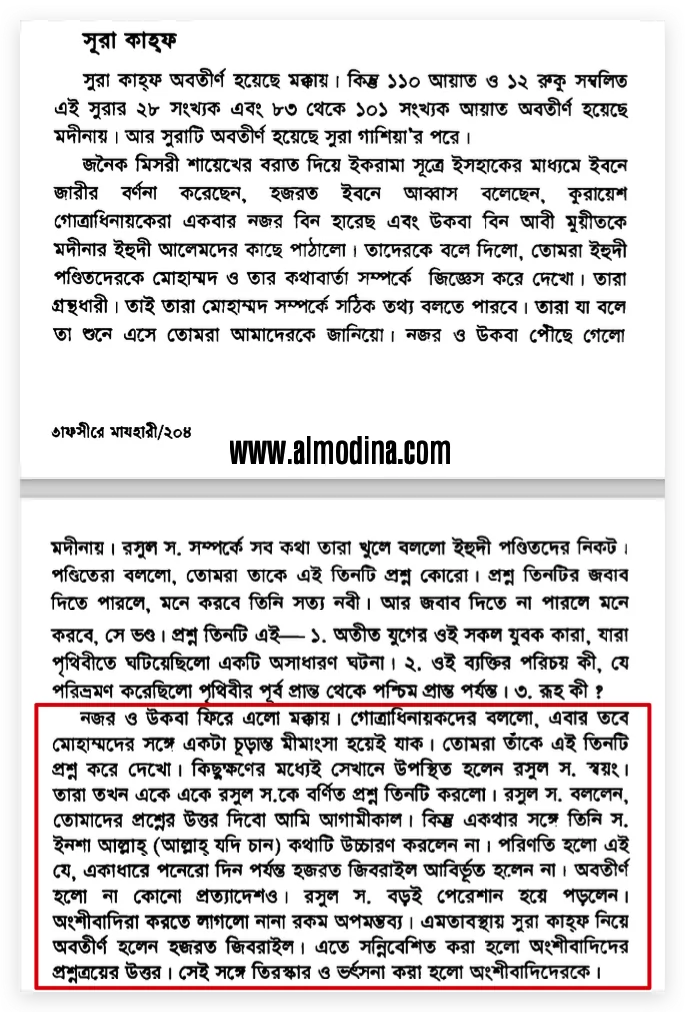
To test the truth of his prophethood, the unbelievers, after consulting Jewish scholars, put three questions to Muhammad. These were difficult to evade through a speech because they required specific information or knowledge. Muhammad assured them that he would answer the following day.
The problem began here: the day after his promise of ‘tomorrow’ brought no answers. There was no response for not merely a few days but fifteen days. The account says that Gabriel did not come and no revelation descended during this period. Logically, this creates a peculiar scene:
- On the one hand, Muhammad claims to be Allah’s messenger, receiving revelation when needed;
- On the other, at precisely the moment of a public challenge to his prophethood, concern over his reputation, and a test of his credibility, the ‘channel’ is supposedly closed! The internet is off, so nothing can be downloaded.
The explanation subsequently offered is more ridiculous still: because Muhammad did not say ‘Allah willing,’ Allah supposedly became displeased and withheld revelation. Failure in a ‘major test of prophethood’ is thus attributed to an omitted phrase: Allah became ‘angry’ and did not send Gabriel. This is the familiar strategy of turning failure into an excuse: instead of answering the questions, finding a reason why no answer arrived.
Another point deserves attention: revelation eventually came, but the claim that it supplied direct and verifiable answers to the questions is also false. The answers Muhammad gave after fifteen days were not really answers. They are omitted here because discussing them would take too long. [38] The immediate point is that a challenge is met with ‘tomorrow,’ followed by prolonged silence and then an excuse. [39]—
Ibn Jarir narrated through Ishaq, from ‘Ikrimah, citing an Egyptian shaykh, that Ibn ‘Abbas said: The Quraysh chiefs once sent al-Nadr ibn al-Harith and ‘Uqbah ibn Abi Mu‘ayt to the Jewish scholars of Medina. They told them, ‘Ask the Jewish scholars about Muhammad and his statements. They possess scriptures and can therefore provide correct information about him. Hear what they say and report it to us.’ Al-Nadr and ‘Uqbah reached Medina and told the scholars everything about the Messenger. The scholars said, ‘Ask him these three questions. If he can answer them, consider him a true prophet; if he cannot, consider him an impostor. The questions are: 1. Who were the young men of the past who brought about an extraordinary event in the world? 2. Who was the man who travelled from the eastern end of the earth to its western end? 3. What is the spirit?’ Al-Nadr and ‘Uqbah returned to Mecca and told the chiefs, ‘Now let us settle the matter with Muhammad once and for all. Ask him these three questions.’ Shortly afterwards, the Messenger himself arrived. They put the questions to him one by one. The Messenger said, ‘I will answer your questions tomorrow,’ but did not add ‘in sha’ Allah,’ meaning ‘if Allah wills.’ Consequently, Gabriel did not appear for fifteen consecutive days, and no revelation descended. The Messenger became deeply distressed, and the polytheists made various disparaging remarks. In these circumstances, Gabriel descended with Surah al-Kahf, containing the answers to the polytheists’ three questions. The polytheists were also rebuked and reprimanded.
Turning Mount Safa into a Mountain of Gold
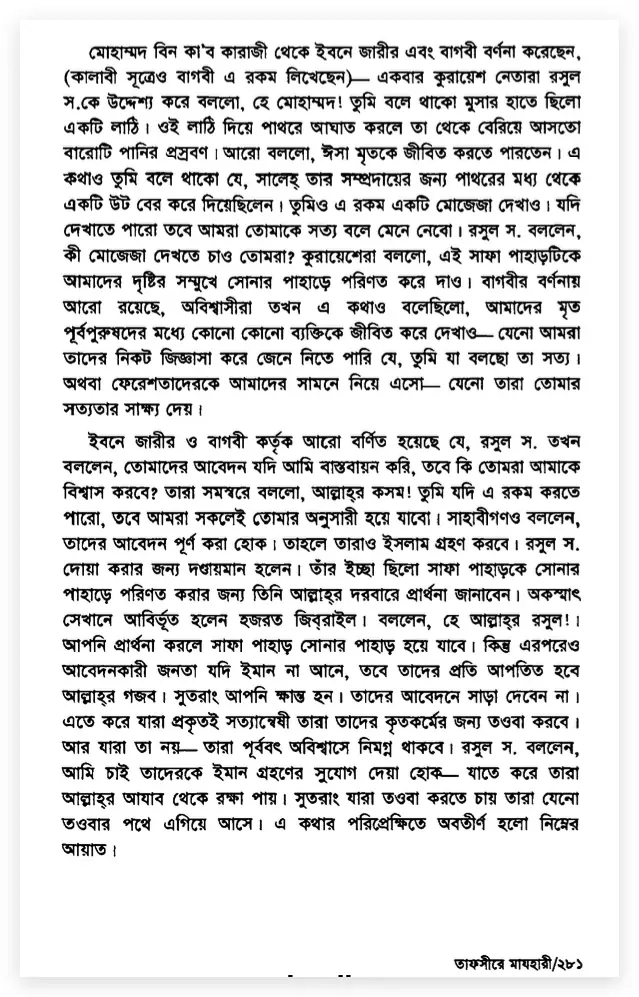
The next challenge is simpler and more verifiable. Mecca’s unbelievers asked Muhammad to prove his prophethood by turning Mount Safa into a mountain of gold before their eyes. They wanted something that could not be evaded through verbal artistry: either it would happen or it would not. Logically, this was not an unrealistic or impossible demand, because Muhammad himself claimed that his Allah was omnipotent and capable of anything.
According to the account, however, Muhammad could not demonstrate the miracle. What followed is also important: rather than acknowledging inability, he tried to protect his position through bluster, excuses, and religious language. Put in your terms, the challenge was clear, but the answer was a counter-strategy rather than proof. [40]—
Ibn Jarir and al-Baghawi narrated from Muhammad ibn Ka‘b al-Qurazi; al-Baghawi also recorded a similar account through al-Kalbi. The Quraysh leaders once said to the Messenger, ‘Muhammad, you say that Moses had a staff and that, when he struck a rock with it, twelve springs of water emerged. You also say that Jesus could bring the dead to life, and that Salih produced a camel from a rock for his people. Show us a similar miracle. If you can, we will accept you as truthful.’ The Messenger asked, ‘What miracle do you want to see?’ They said, ‘Turn this Mount Safa into a mountain of gold before our eyes.’ Al-Baghawi’s account adds that the unbelievers also said, ‘Bring some of our dead ancestors back to life, so that we can ask them whether your statements are true. Or bring angels before us so that they may testify to your truthfulness.’
Ibn Jarir and al-Baghawi further narrated that the Messenger said, ‘If I fulfil your request, will you believe me?’ They replied together, ‘By Allah, if you can do this, we will all become your followers.’ The Companions also said, ‘Let their request be fulfilled, so that they too will accept Islam.’ The Messenger stood to pray, intending to ask Allah to turn Mount Safa into gold. Suddenly Gabriel appeared and said, ‘Messenger of Allah, if you pray, Mount Safa will become a mountain of gold. But if those requesting it still do not believe afterwards, Allah’s wrath will descend upon them. Therefore desist; do not grant their request. In this way, those genuinely seeking truth will repent of their deeds, while others will remain immersed in unbelief.’ The Messenger said, ‘I want them to be given an opportunity to believe, so that they may escape Allah’s punishment. Let those who wish to repent move towards repentance.’ The following verse was revealed in response to this.
Fleeing the Banu Nadir’s Challenge
The leaders of Banu Nadir invited Muhammad and his Companions to a discussion and challenged him to demonstrate proof of his prophethood. The Jews said that, if he could correctly answer all the scholars’ questions, the whole tribe would understand Islam’s truth and accept it. Muhammad would bring thirty companions to a specified place, and the Jews would bring thirty of their own. He went with his Companions. Before the debate began, however, he suddenly got up and slipped away quietly, leaving everyone else behind. The Companions waited a long time, but there was no news of him; they could not find him anywhere. They eventually learned from another person that he had gone to Medina and returned there themselves. Afterwards, they learned that Gabriel had supposedly whispered to the Prophet that people were sitting on the roof of the house where they had been seated, intending to kill him. Nothing is known about why those people did not kill his Companions, why none of the Companions saw anyone of the kind, or why the Prophet departed alone without telling anybody. In other words, only the Prophet knew of this secret Jewish plot, for which there was no practical evidence. Any intelligent person can understand how ridiculous this flight was, leaving friends and companions in danger, and how it functioned as a strategy to avoid debate with the Jews. The following day, Banu Nadir were attacked under Muhammad’s leadership. [41]—
The Messenger of Allah was sitting beside the wall of one of their houses. They said, ‘Who will climb onto the roof and drop a stone from there to kill Muhammad and rid us of him?’ ‘Amr ibn Jahhash stepped forward and said, ‘I am ready.’ He climbed up to throw the stone. The Messenger of Allah remained seated with several Companions, including Abu Bakr, ‘Umar, and ‘Ali. Heavenly information about their malicious plan reached the Messenger of Allah. Without telling anyone, he got up and set off towards Medina. When he did not return for a long time, the Companions went looking for him. Seeing a man coming from Medina, they asked about the Messenger. The man said, ‘I saw him enter Medina.’ On hearing this, all the Companions returned to Medina and gathered before him. He informed them of the Jews’ betrayal.
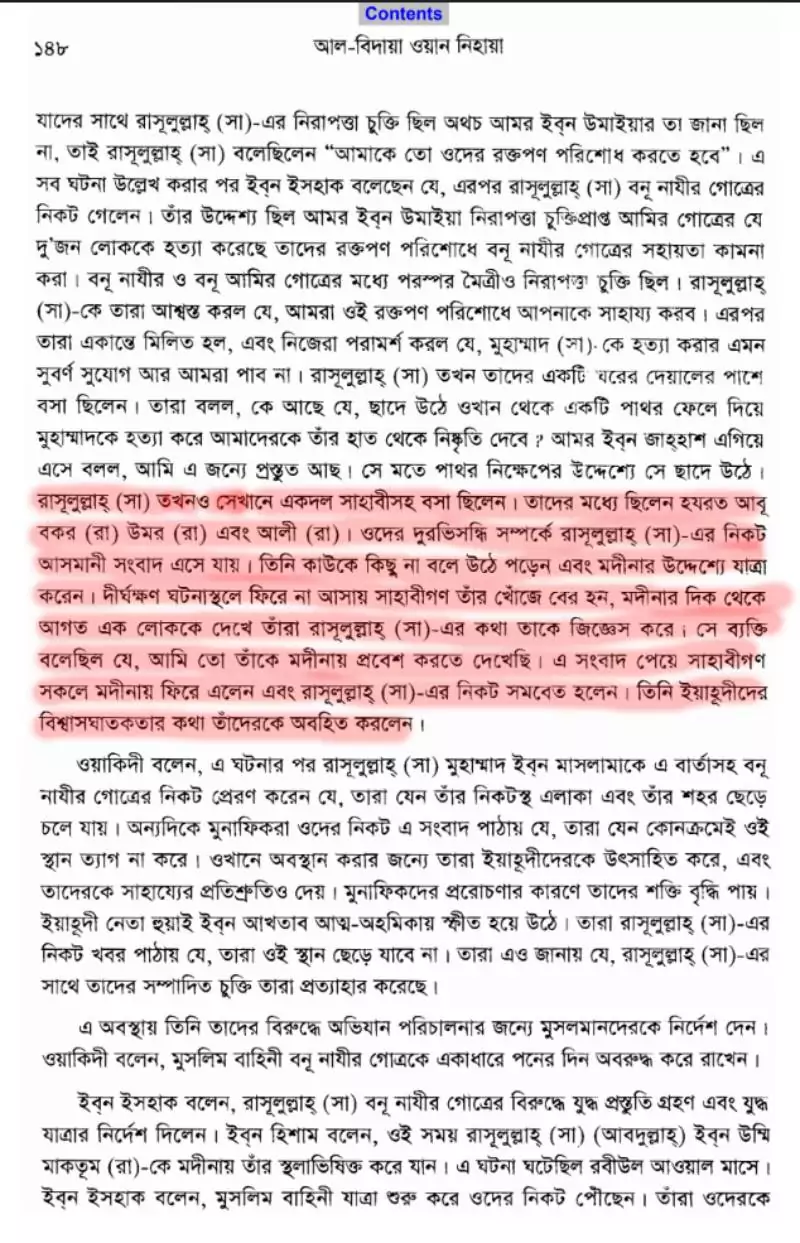
The evidence above shows Muhammad suddenly leaving without proving his prophethood. Let us now examine what happened before and afterwards. [42]
Sunan Abi Dawud (Islamic Foundation)
Book: 14. Taxes, Revenue, Grants, and Administrative Responsibilities
Chapter: 161. The Incident of Banu Nadir
2994. Muhammad ibn Dawud ibn Sufyan … narrated from ‘Abd al-Rahman ibn Ka‘b ibn Malik, through a Companion of the Prophet, that the Qurayshi unbelievers wrote a letter to ‘Abdullah ibn Ubayy and his idol-worshipping companions of Aws and Khazraj while the Messenger of Allah was in Medina before Badr: ‘You have given shelter to our man Muhammad. We swear by Allah that you must either fight him or expel him. Otherwise, we will attack you together, kill your fighters, and take possession of your women.’
When ‘Abdullah ibn Ubayy and his idol-worshipping companions received this news, they prepared to fight the Messenger of Allah. Hearing of this, the Prophet met them and said, ‘You have received an inciting letter from the Quraysh, but it is less dangerous to you than the harm you will do yourselves, because you intend to fight your own children and brothers.’
When they heard this, they dispersed. On learning of it, the Qurayshi unbelievers wrote to the Jews after Badr: ‘You possess houses and fortresses. You ought therefore to fight our man Muhammad. Otherwise, we will do this and that to you. There will be no distinction between our women and yours.’
When they received this letter concerning the Prophet, the Jews of Banu Nadir declared rebellion and informed him: ‘Bring thirty of your companions to us, and thirty of our scholars will meet you in a separate place. They will hear you. If they believe and have faith in you, we will also believe in you.’
The following morning, the Messenger of Allah attacked them with an army and besieged them, saying, ‘By Allah, I cannot feel secure concerning you until you make a pledge.’ They refused to pledge, and he fought them throughout that day. The next day, he left Banu Nadir and attacked Banu Qurayzah, demanding a pledge. They made a pledge with him. He then returned and again besieged Banu Nadir, fighting until they were compelled to leave the country.
The people of Banu Nadir loaded their camels with as much property as possible, including their doors and doorframes. Their date orchards now came into the Messenger of Allah’s possession as property Allah specially granted him. Allah says:
وَمَا أَفَاءَ اللَّهُ عَلَى رَسُولِهِ مِنْهُمْ فَمَا أَوْجَفْتُمْ عَلَيْهِ مِنْ خَيْلٍ وَلاَ رِكَابٍ
This means that you did not drive your horses or camels to obtain the property Allah granted His Messenger from the unbelievers’ possessions; it was acquired without battle.
The Prophet distributed most of this property among the emigrants, also granting shares to two needy Ansar. No other Ansari Companions received any of it. The remainder was charity for the Messenger of Allah, under the control of Fatimah’s descendants.
Hadith grading: Sahih (Authentic)
Insults, Abuse, Curses, and Falsehoods
Disparaging and Insulting His Forefathers’ Religion
Devout brothers and sisters often accuse atheists of insulting, disparaging, and criticising their religion, and questioning the beliefs their ancestors followed for generations. Did you know that Muhammad himself faced the same accusation? Muhammad abandoned his ancestors’ religious beliefs and insulted their religion, provoking intense anger among the pagan Quraysh of his time. I do not regard insulting religion as something bad: all conscientious people should speak out against prevailing superstitions and harmful customs. For believers, however, insulting religion is a grave offence of which their own Prophet was accused. Examine the evidence yourselves. [43]—
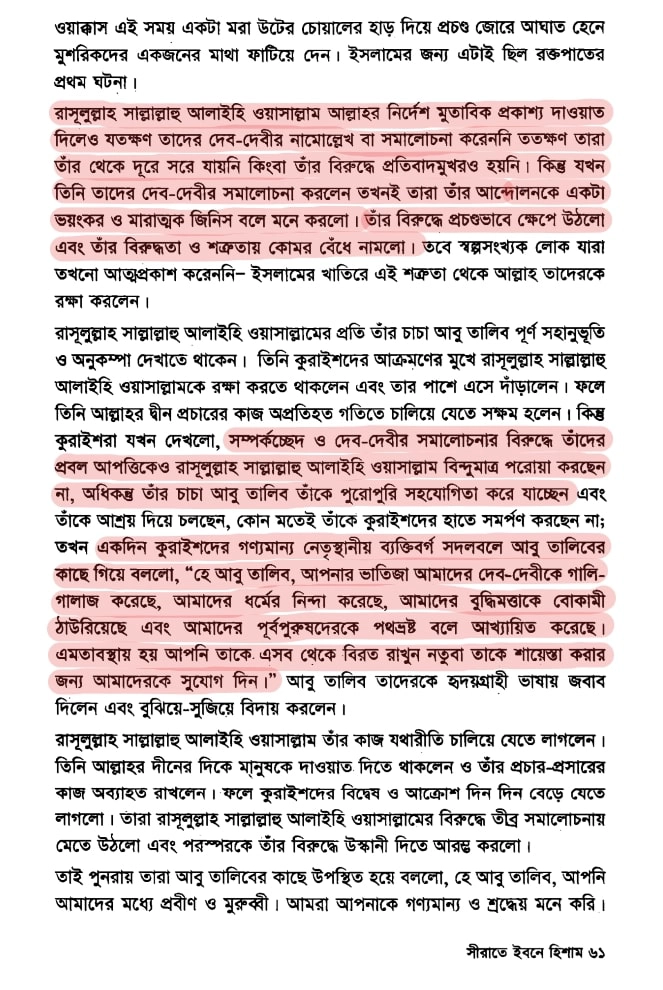
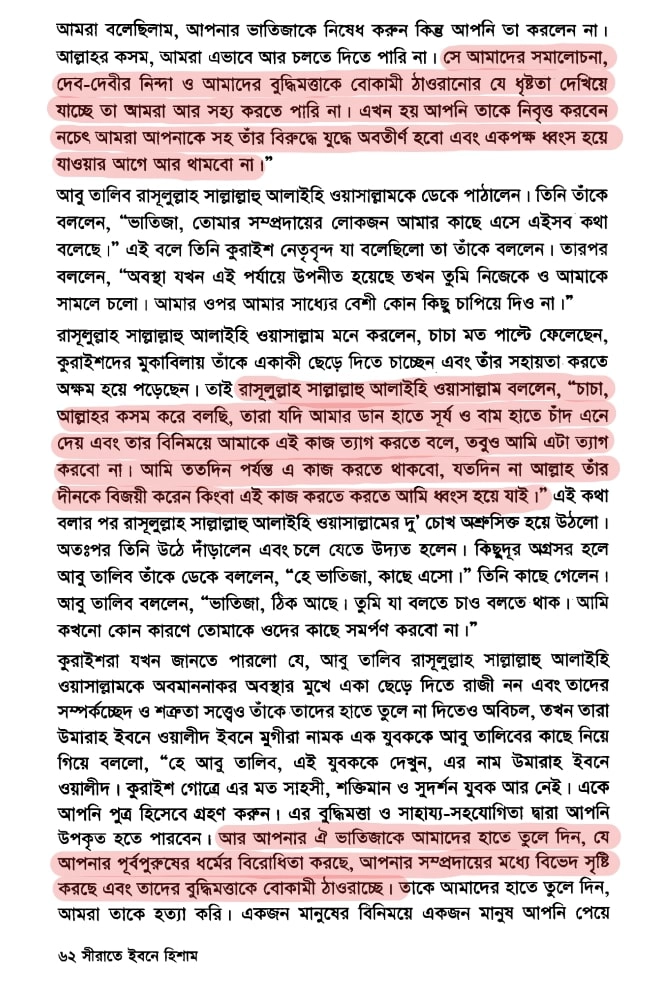
Let us examine another reference. [44]—
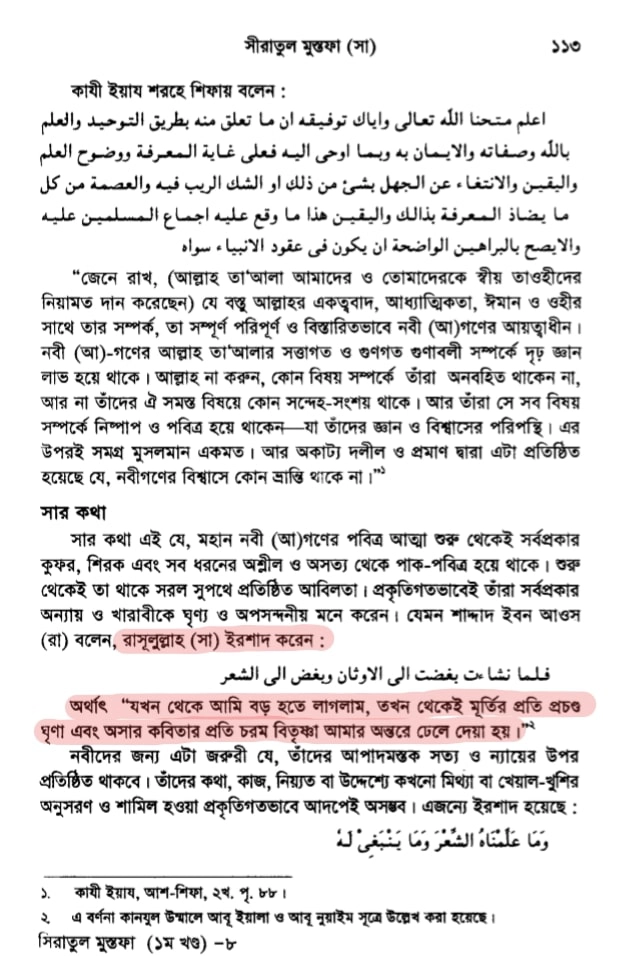
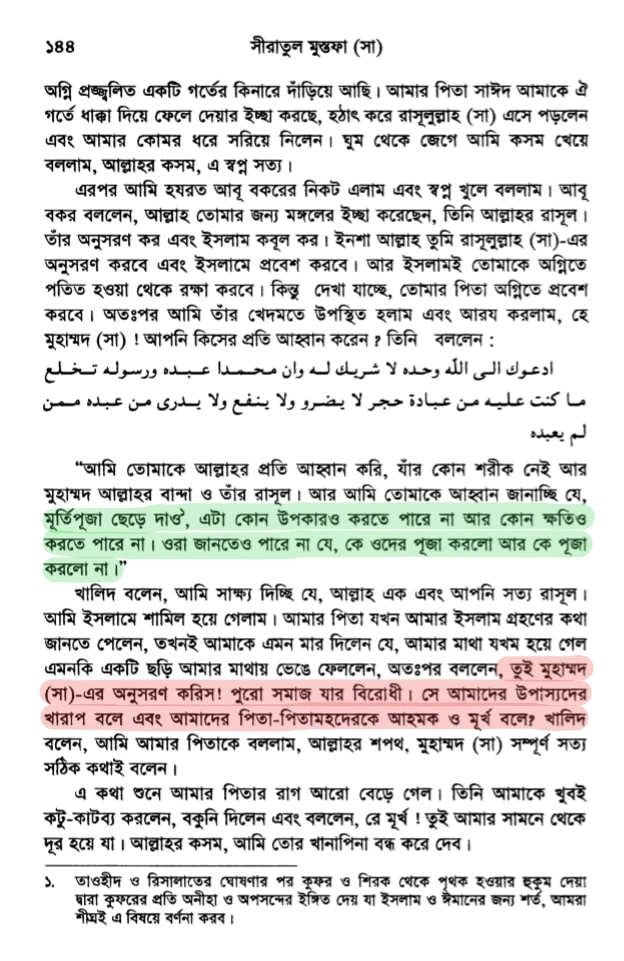
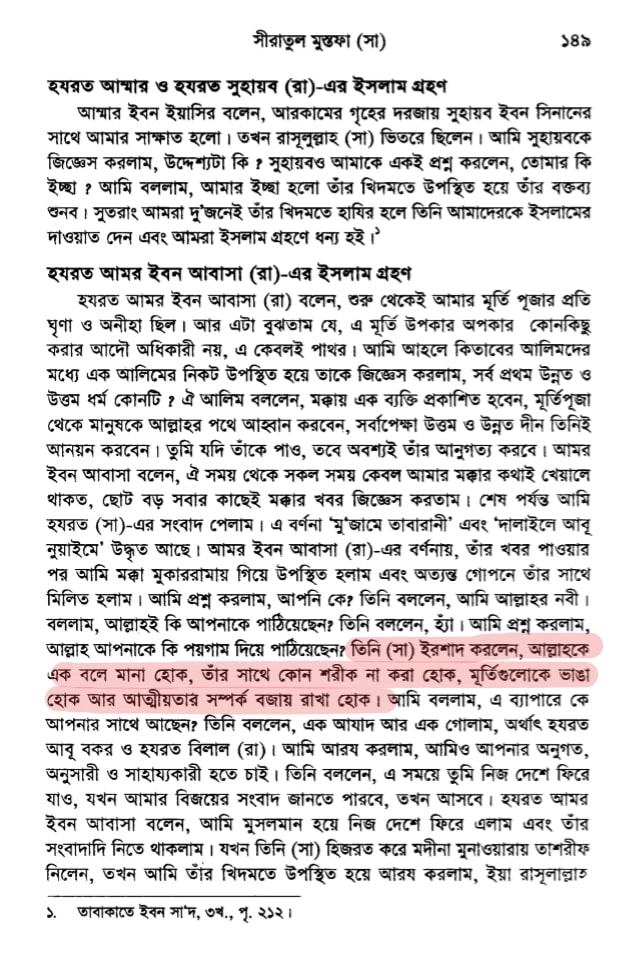
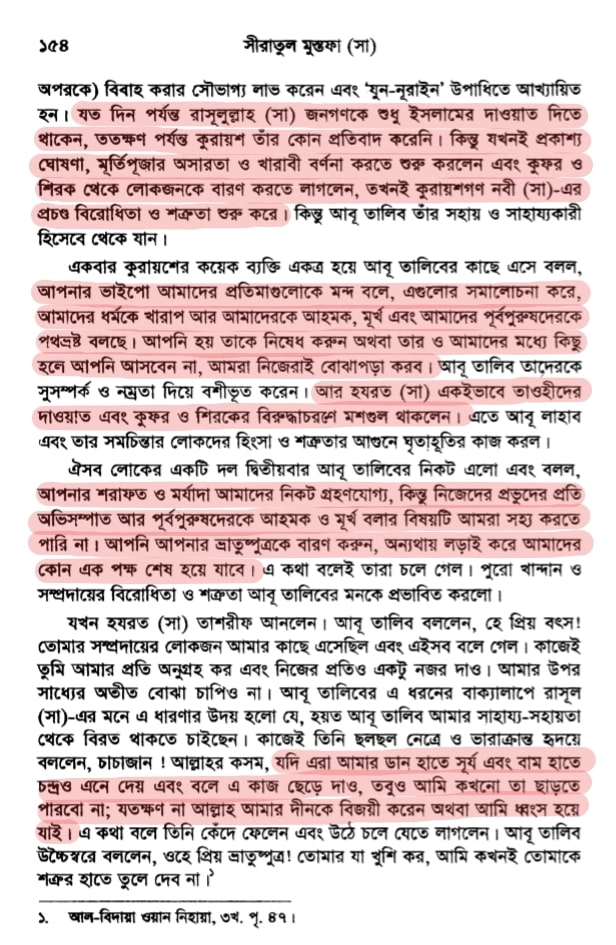
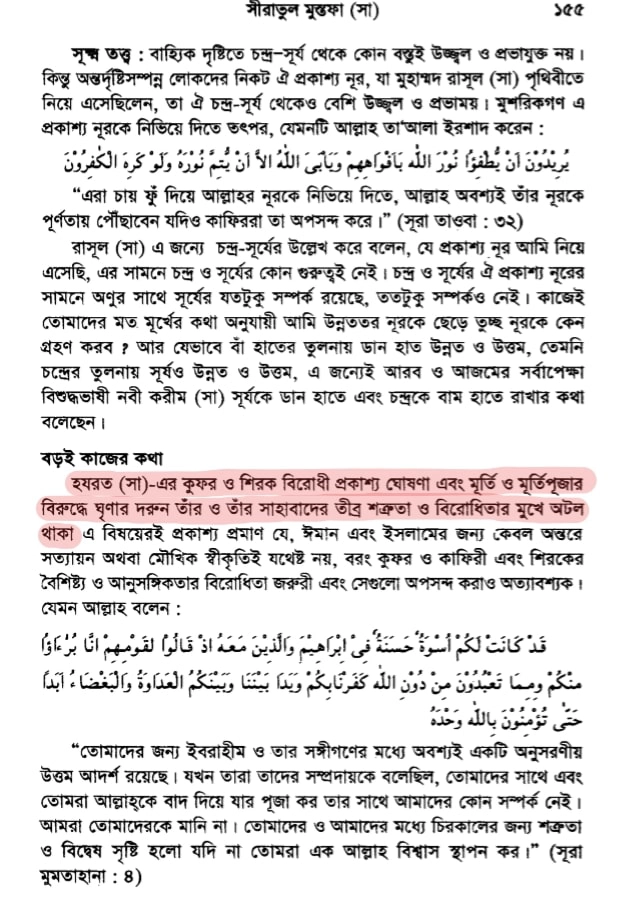
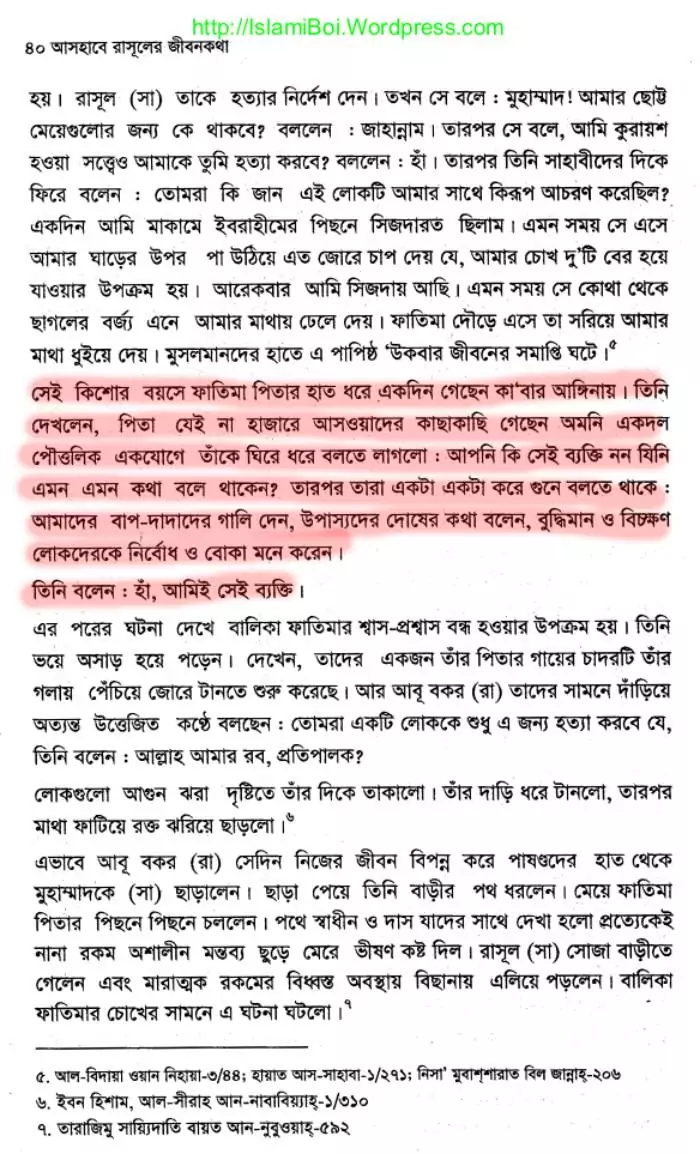
Let us read evidence from Ibn Hisham’s al-Sirah al-Nabawiyyah, cited in Life Stories of the Messenger’s Companions. Some pagans came and asked the Prophet: are you the person who abuses the pagans’ forefathers, speaks of faults in their deities, and considers their discerning and intelligent people foolish? The Prophet answered, ‘Yes, I am that person.’ He thus acknowledged engaging in all these acts. [45]—
The Prophet Cursed Entire Communities
Famine is terrible. As a civilised person, I could not wish a famine upon even my worst enemy. When famine strikes a region, children die in large numbers, along with women, elderly people, and people with disabilities. Even if someone is a known criminal, I would never wish them to die slowly from starvation. Yet the Prophet cursed people with famine, in which children, women, disabled people, and the elderly could all die! [46]
Sahih al-Bukhari (Islamic Foundation)
Book: 15. Supplication for Rain
Chapter: 636. The Prophet’s Supplication: Grant Them Years of Famine like the Years of Joseph
952. Qutaybah ibn Sa‘id … narrated from Abu Hurayrah: When the Prophet raised his head in the final unit of prayer, he said, ‘Allah, free ‘Ayyash ibn Abi Rabi‘ah. Allah, free Salamah ibn Hisham. Allah, protect al-Walid ibn al-Walid. Allah, free the weak believers. Allah, intensify Your punishment upon Mudar. Allah, grant them, as in the famine years of Joseph, several years of famine.’ The Prophet also said, ‘Ghifar—may Allah forgive them. Aslam—may Allah keep them safe.’ Ibn Abi Zinad relates from his father that these supplications were made in the dawn prayer.
Hadith grading: Sahih (Authentic)
Narrator: Abu Hurayrah
The Promise-Breaking, Lying Prophet
Muhammad was a liar who broke promises. Through a clever manoeuvre, however, he placed responsibility for breaking them upon Allah and presented his own wrongdoing as Allah’s instruction. Direct evidence appears in Sahih al-Bukhari. Read the hadith below: if someone makes a commitment but later considers its opposite better, they may perform the opposite act after making expiation for the commitment. This is straightforward falsehood and promise-breaking. Does making expiation absolve everything? [47]
Sahih al-Bukhari (Tawhid edition)
Book: 93. Judgments
Chapter: 93/6. Whoever Seeks Leadership Is Left Responsible for It
7147. Narrated ‘Abd al-Rahman ibn Samurah: The Prophet said to me, ‘Do not ask for leadership, ‘Abd al-Rahman ibn Samurah. If it is given after you request it, all its responsibilities will be left to you. If it is given without your asking, you will receive assistance from Allah. And if, concerning a matter, you swear an oath and later consider its opposite better, perform the better act and make expiation for your oath.’ (6622.) (Adhunik Prakashani: 6648; Islamic Foundation: 6662.)
Hadith grading: Sahih (Authentic)
Narrator: ‘Abd al-Rahman ibn Samurah
The Prophet also did this himself. After making a promise to someone, if he subsequently considered the opposite act better or more advantageous, he would make some expiation and perform the opposite act—in other words, break the promise. [48]
Sahih al-Bukhari (Islamic Foundation)
Book: 59. Slaughter and Hunting
Chapter: 2192. Chicken Meat
Islamic Foundation numbering: 5121; international numbering: 5517–5518.
5121. Yahya … narrated from Abu Musa al-Ash‘ari, who said: I saw the Prophet eating chicken.
Abu Ma‘mar … narrated from Zahdam: We were with Abu Musa al-Ash‘ari. A bond of brotherhood existed between this tribe of Jarm and us. Food containing chicken was brought. A reddish-complexioned man was seated among us. He approached the food, and Abu Musa said, ‘Come forward. I have seen the Prophet eat chicken.’ He said, ‘I saw it eating something that made me dislike eating it, so I swore that I would not eat it.’ Abu Musa said, ‘Come forward; I will tell you,’ or, ‘I will narrate a hadith to you.’
I came to the Messenger of Allah with a group of Ash‘aris. We approached while he was angry and distributing animals given in charity. We asked him for mounts. He swore that he would not give us mounts and said, ‘I have no animals to give you for riding.’ Afterwards, camels taken as booty were brought to him. He asked, ‘Where are the Ash‘aris? Where are the Ash‘aris?’
Abu Musa said: He then gave us five strong camels with white hair. We went a short distance and stopped. I told my companions, ‘The Messenger of Allah has forgotten his oath. By Allah, if we leave him unaware of it, we will never prosper.’ We returned and said, ‘Messenger of Allah, we asked you for mounts, and you swore not to give them to us. We think you have forgotten your oath.’
The Prophet said, ‘Allah Himself has given us the riding animals. By Allah, when I swear an oath and then consider the opposite act more beneficial, I perform the beneficial act and make it lawful for myself through expiation.’
Hadith grading: Sahih (Authentic)
Narrator: Abu Musa al-Ash‘ari
Permitting Lies
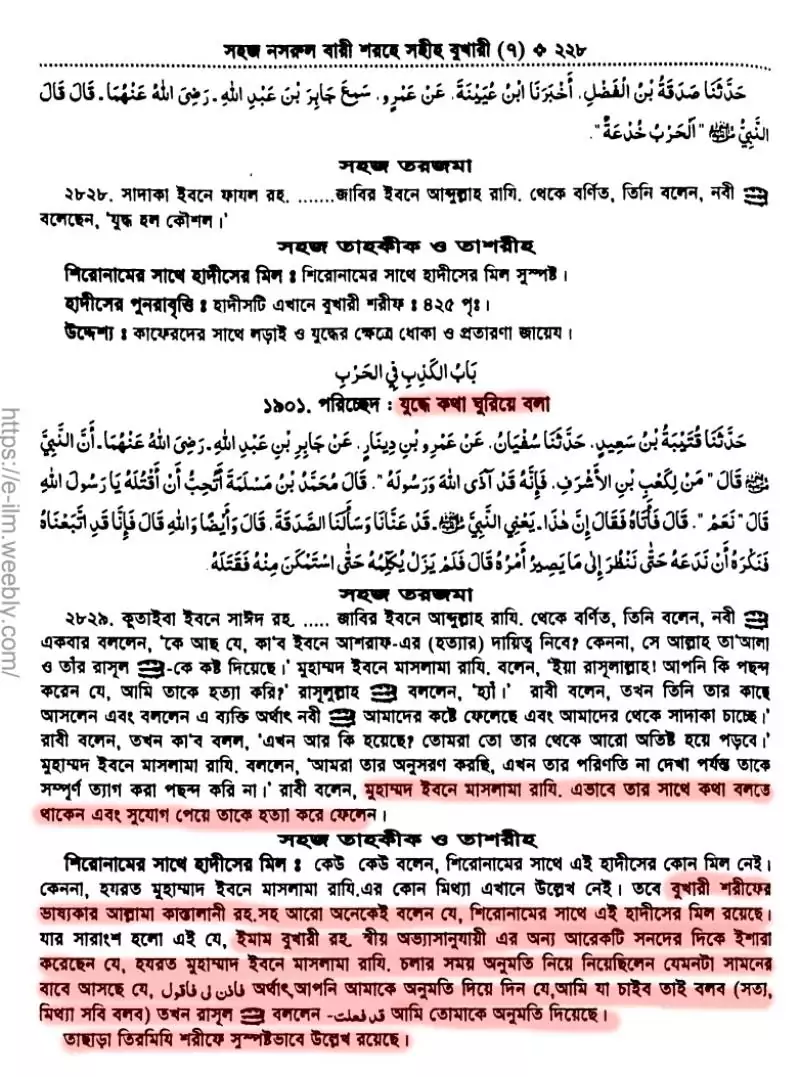
Muhammad sent a Companion to kill an enemy. When the Companion sought permission to lie and kill the man when the opportunity arose, Muhammad permitted it. The principal hadith are quoted elsewhere; only their explanation is given here. [49]
The Prophet Used Bribes to Promote Religion
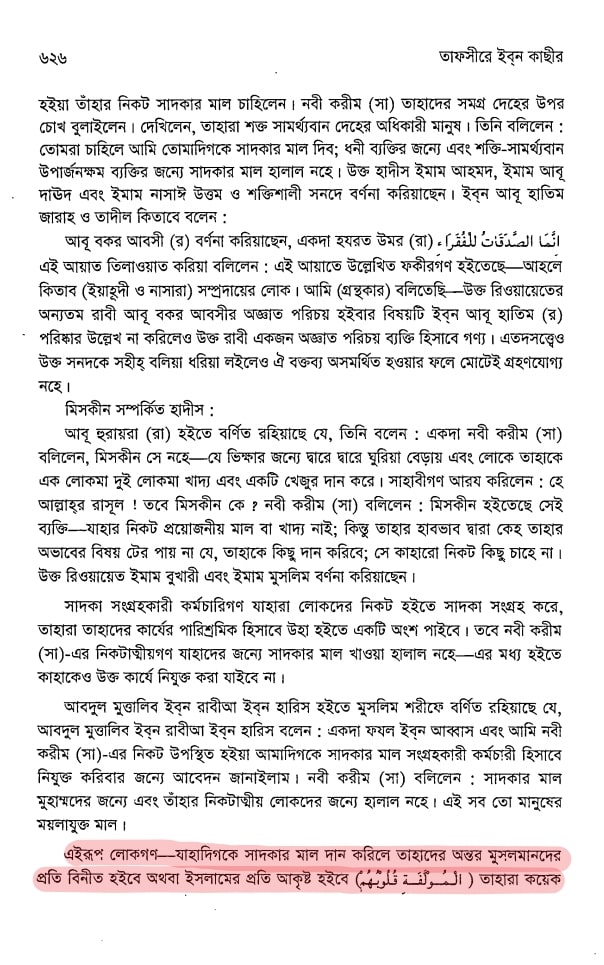
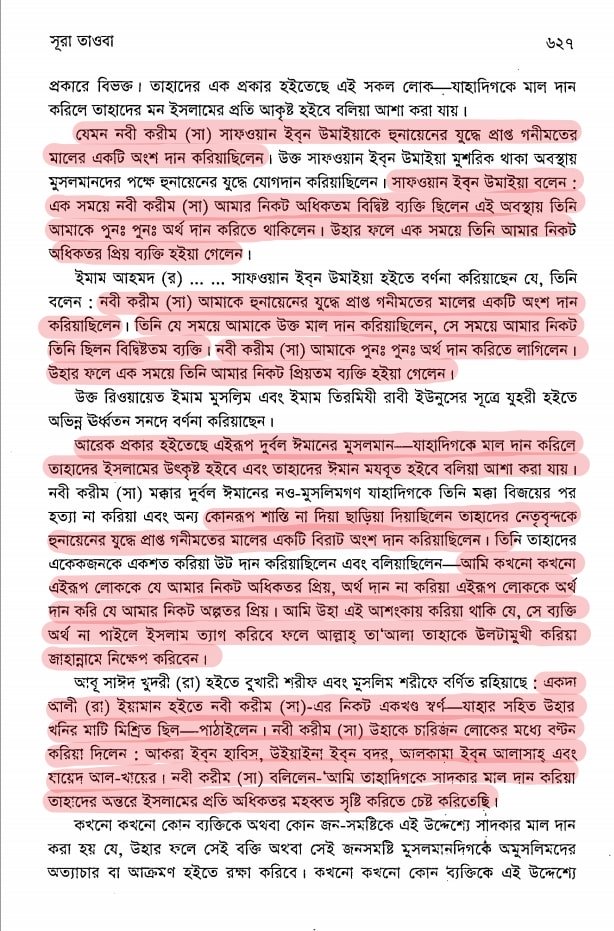
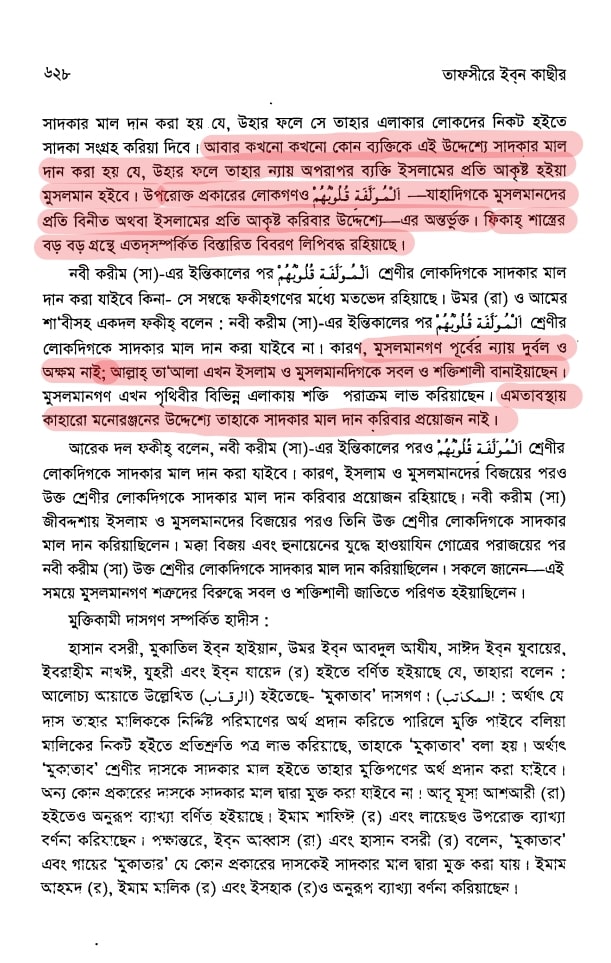
Muhammad gave unbelievers bribes in the form of wealth and war booty to attract them to Islam. He said without concealment that receiving wealth would attract non-Muslims to Islam, and that he gave it to them for this purpose. This is described in Tafsir Ibn Kathir. [50]—
The Prophet Used Abusive Language When Angry
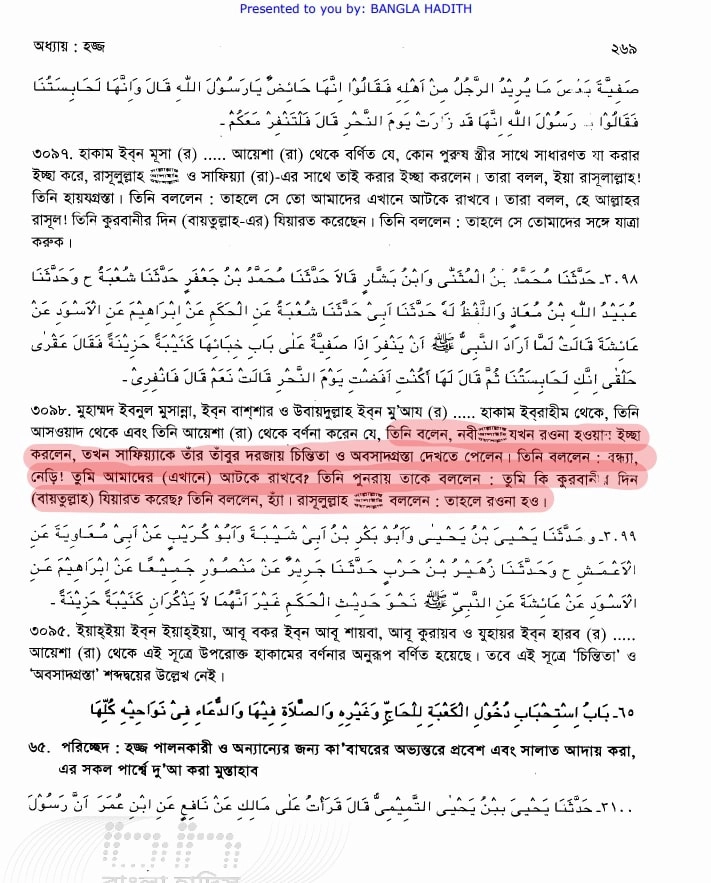
When a wife cannot bear children, society subjects her to various forms of humiliation. She is taunted as a barren woman and insulted with such language, as though a woman has no value unless she gives birth. Calling her barren is among the most insulting and degrading things one can say. A humane person does not remind a childless woman of this. Yet the Prophet himself taunted and abused his wife about it! [51] [52] [53]—
Sahih Muslim (Islamic Foundation)
Book: 16. Pilgrimage
Chapter: 64. The Farewell Circumambulation Is Obligatory but Waived for Menstruating Women
3098. Muhammad ibn al-Muthanna, Ibn Bashshar, and ‘Ubaydullah ibn Mu‘adh … narrated through al-Hakam, from Ibrahim, from al-Aswad, from ‘A’ishah, who said: When the Prophet intended to depart, he found Safiyyah anxious and downcast at the entrance to her tent. He said, ‘Barren, shaven-headed woman! Will you hold us here?’ He then asked, ‘Did you visit the House on the day of sacrifice?’ She replied, ‘Yes.’ The Messenger of Allah said, ‘Then depart.’
Hadith grading: Sahih (Authentic)
Sunan Ibn Majah
Tawhid Publications
Book: 19. Pilgrimage
Chapter: 19/83. A Menstruating Woman May Depart without the Farewell Circumambulation
2/3073. Narrated ‘A’ishah: When the Messenger of Allah asked about Safiyyah, we said that she had begun menstruating. He said, ‘Barren, shaven-headed woman; she has held us up.’ I said, ‘Messenger of Allah, she performed circumambulation on the day of sacrifice.’ He said, ‘Then there is no problem. Tell her to depart.’
Sahih al-Bukhari 328, 1561, 1733, 1757, 1762, 1772, 4401, 5329, 6157, 7229; Muslim 1211; al-Tirmidhi 943; al-Nasa’i 391; Abu Dawud 2003; Ahmad 23581, 23589, 24004, 24037, 24153, 24385, 24781, 24897, 24914, 24991, 25075, 25134, 25193, 25249, 25347, 25413, 25628; Muwatta’ Malik 943, 945; al-Darimi 942, 1917; Irwa’ 4/261. Al-Albani’s assessment: authentic.
Hadith grading: Sahih (Authentic)
The Prophet Told People to Bite Their Father’s Penis
Those of us who advocate free thought also oppose boasting about ancestry. Muhammad, however, made an obscene statement about those who do so. Interestingly, he himself took pride in his Qurayshi ancestry and placed the Quraysh in the highest position. [54]—
Hadith Sambhar
Book: 22. Prohibited Acts
Chapter: Pride in Ancestry
(2037). Narrated Ubayy ibn Ka‘b: The Messenger of Allah said, ‘If you see someone invoking ancestral affiliation from the age of ignorance, tell him to bite his father’s penis, and do not use a euphemism; say it explicitly.’
(Ahmad 21236; al-Nasa’i, al-Kubra 10810; al-Tabarani 532; Sahih al-Jami‘, hadith 567.)
Hadith grading: Sahih (Authentic)
Narrator: Ubayy ibn Ka‘b
The Prophet Abused Unbelievers
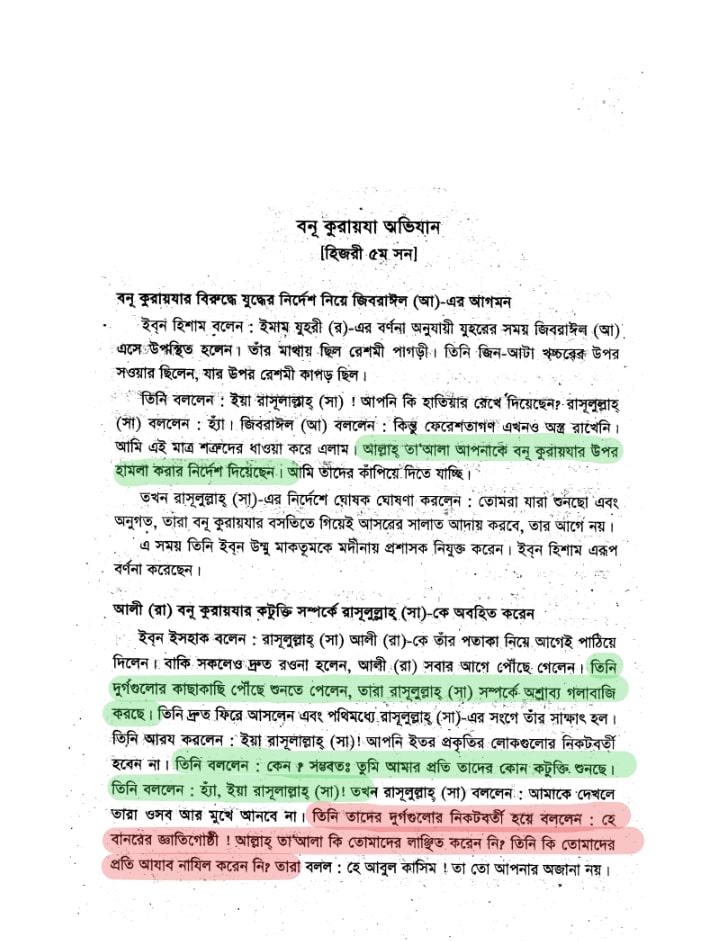
During the attack on Banu Qurayzah, the Prophet abused them as relatives of apes. Abusing an entire community because of its religious beliefs—women, children, elderly people, the guilty and innocent together—expresses an intensely sectarian and degrading mentality. [55]
Distorting Abu al-Hakam’s Name
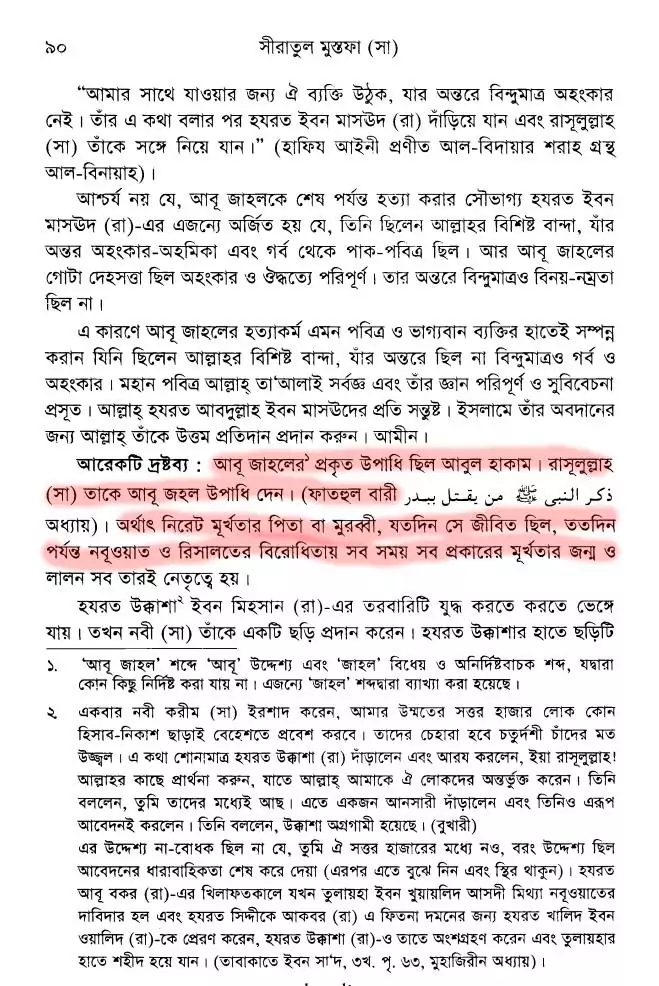
‘Amr ibn Hisham, or Abu al-Hakam, meaning ‘father of wisdom,’ was a prominent Qurayshi leader in Mecca and a polytheist or idol-worshipper. He came into intense conflict with Muhammad and the Muslims of Mecca. Muhammad therefore began insulting him as Abu Jahl, ‘father of ignorance.’ Since then, Muslims have called Abu al-Hakam by the name Abu Jahl. [56]—
The Prophet Was Condemned by His Tribe
The Accusation of Theft against the Prophet
Islamic history presents Muhammad as the ultimate symbol of honesty. Islamists frequently claim that even the Arab unbelievers trusted him without question. They have long cited his title ‘al-Amin,’ or ‘the trustworthy,’ as proof of his honesty. Some historical documents and hadith, however, suggest an accusation that Muhammad had stolen an embroidered red cloak from the booty of Badr. The accusation was not proved, because immediately afterwards the Prophet’s fake identity, Allah, acted as his advocate, revealed a verse on his behalf, and informed the Companions that he was not a thief. Nevertheless, the existence of the accusation raises questions requiring impartial examination.
Let us begin by reading the relevant verse. [57]
No prophet can betray a trust. Whoever does so will appear on the Day of Judgment with what he misappropriated. Everyone will then receive in full what they earned, and no one will suffer any injustice.
— Taisirul Quran (translated from Bengali)
It is not fitting for a prophet to conceal anything. Whoever conceals something will have what he concealed brought forth on the Day of Resurrection. Each person will then receive in full what they earned, and they will not be wronged.
— Sheikh Mujibur Rahman (translated from Bengali)
It is not proper for a prophet to betray a trust. Whoever does so will appear on the Day of Judgment with what he misappropriated. Every person will then receive in full what they earned, and they will not be wronged.
— Rawai al-Bayan (translated from Bengali)
It is impossible for any prophet to commit ghulul [1], concealing property unlawfully. Whoever unlawfully conceals anything will bring it with them on the Day of Judgment [2]. Everyone will then receive in full what they earned, and they will suffer no injustice [3].
— Dr. Abu Bakr Muhammad Zakaria (translated from Bengali)
Now let us read a hadith.
Sunan Abi Dawud (Verified Edition)
Book: 25. Qur’anic Recitation and Rules of Reading
Chapter: Qur’anic Recitation and Rules of Reading
3971. Narrated Ibn ‘Abbas: ‘It is not fitting for a prophet to betray a trust.’ This verse was revealed at the time of Badr. When a red cloak went missing, some people said that the Messenger of Allah might have taken it. Allah then revealed this verse: ‘It is not fitting for a prophet to betray a trust. Whoever betrays a trust will appear on the Day of Judgment with what he misappropriated. Everyone will then receive the full recompense for their deeds, and they will not be wronged in the slightest.’ (Surah Al ‘Imran: 161.) Abu Dawud says that the letter ya in yaghullu takes a fathah. [1]
Authentic.
[1] Al-Tirmidhi. Al-Tirmidhi says: This hadith is hasan and gharib.
Hadith grading: Sahih (Authentic)
Narrator: ‘Abdullah ibn ‘Abbas
Let us examine passages from the explanations of this verse in Tafsir al-Mazhari, Tafsir al-Jalalayn, and Tafsir Ibn Kathir. [58] [59] [60]
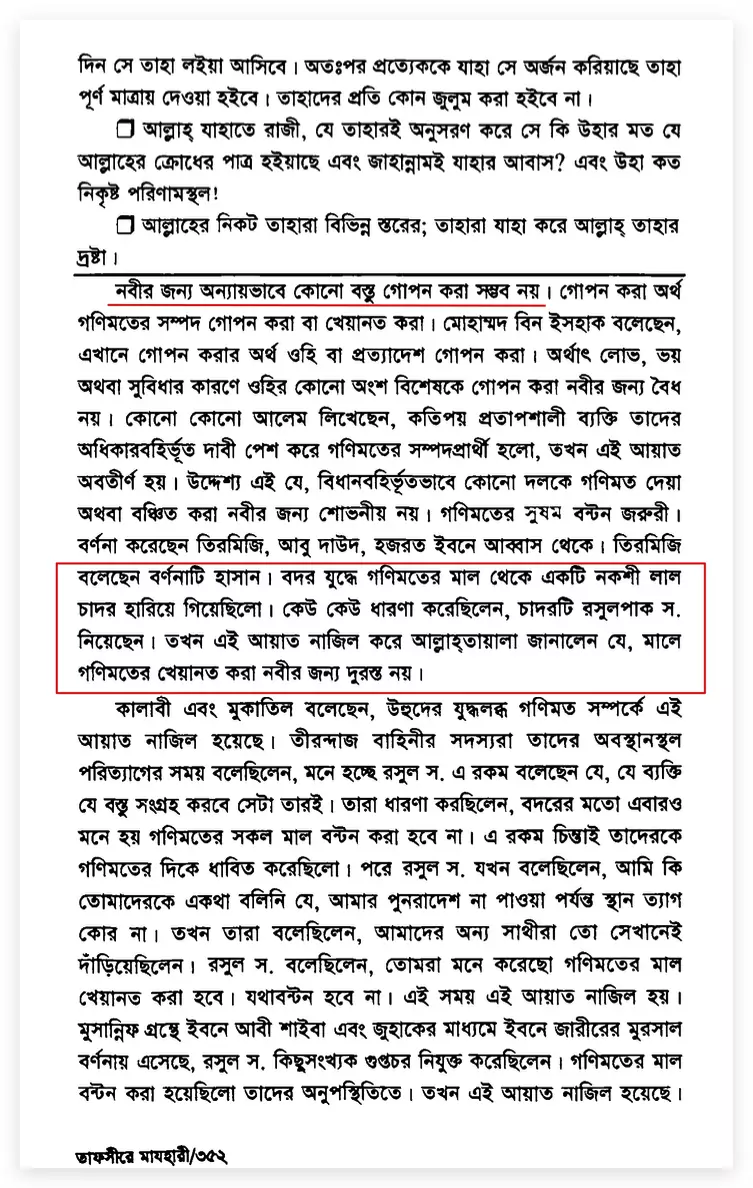
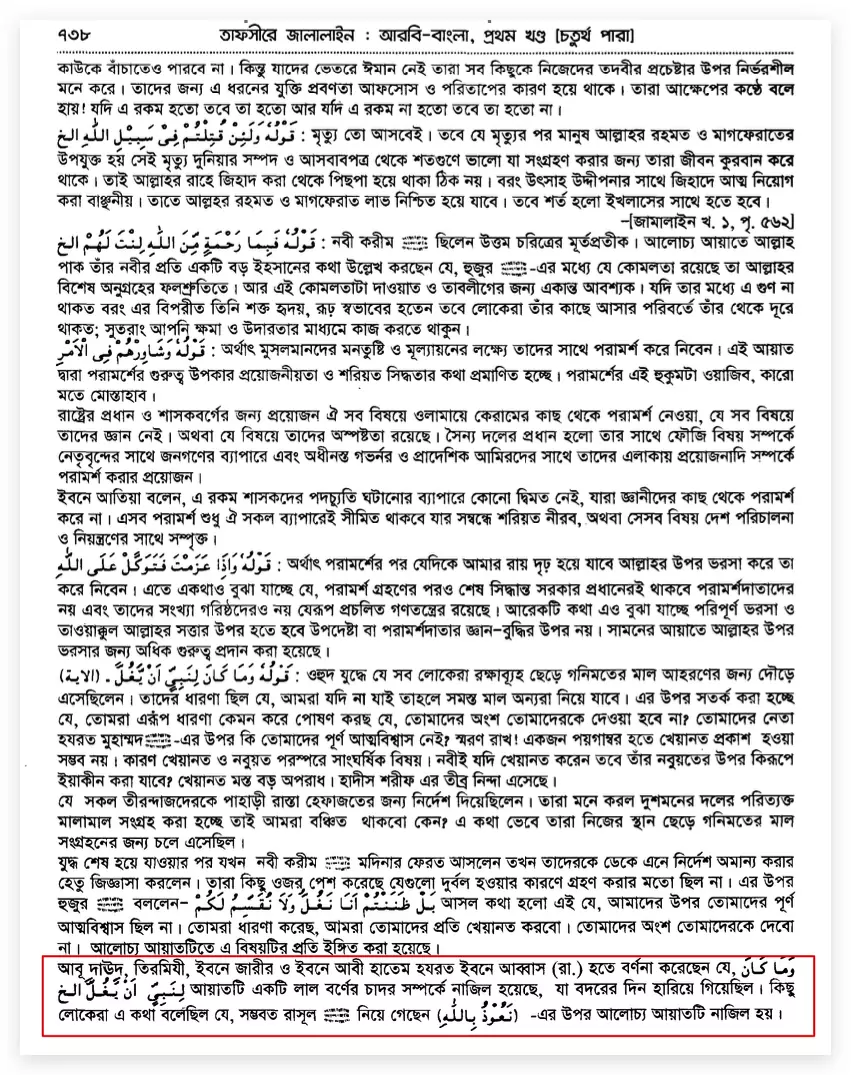
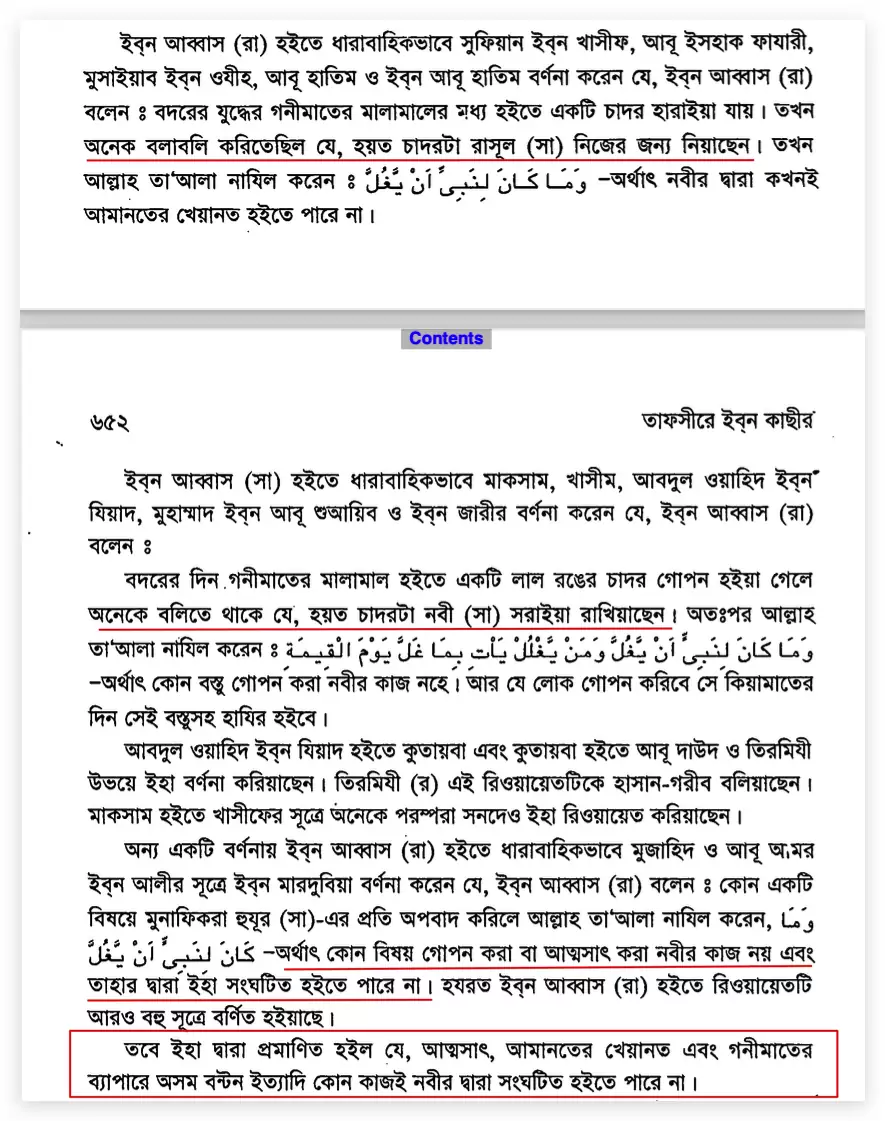
We learn from this that confusion arose over the distribution of plunder after Badr and that the Prophet was accused of stealing a cloak. Although Islamic accounts ultimately declare him innocent, the accusation itself raises an important question: if the unbelievers of his time regarded him as al-Amin because of his supposedly unparalleled honesty, why did such an allegation come from his own Companions? Ordinarily, accusations of theft or unethical conduct do not arise readily against an exceptionally honest and reliable person, because those around him fully trust his honesty. The accusation means that at least some people still doubted his honesty at that time. It prompts readers of history to ask whether nobody really ever questioned his honesty. We can see that even his own Companions did so.
Another complicated aspect of the accusation is the Prophet’s wearing an embroidered red cloak. Numerous hadith describe him wearing such a garment, indicating that he was certainly very fond of it. Where he obtained that red cloak is not known.
Sahih al-Bukhari (Islamic Foundation)
Book: 50. Prophets
Chapter: 2073. Description of the Prophet
Islamic Foundation numbering: 3299; international numbering: 3551.
3299. Hafs ibn ‘Umar … narrated from al-Bara’ ibn ‘Azib: The Prophet was of medium build, with broad shoulders. His hair reached his earlobes. I saw him wearing a pair of red-striped garments. I have never seen anyone more handsome. Yusuf ibn Abi Ishaq, narrating from his father, says that the Prophet’s hair reached his shoulders.
Hadith grading: Sahih (Authentic)
Narrator: Al-Bara’ ibn ‘Azib
Sahih Muslim (Hadith Academy)
Book: 4. Prayer
Chapter: 47. Placing a Screen before Someone Praying
Hadith Academy numbering: 1006; international numbering: 503.
1006-(249/503). Abu Bakr ibn Abi Shaybah and Zuhayr ibn Harb … narrated through ‘Awn ibn Abi Juhayfah from his father: I came to the Prophet in Mecca while he was staying in a red leather tent at al-Abtah, also called al-Muhassab. Bilal brought water from his ablution. Some obtained some, while those who did not took a little from others.* The Prophet emerged wearing a red cloak. I can still seem to see the whiteness of his lower legs. He performed ablution, and Bilal called to prayer. I followed him with my gaze as he turned his face to either side. Turning right and left, he said, ‘Come to prayer’ and ‘Come to success.’ A spear was then planted upright. The Prophet advanced and performed two obligatory units of the noon prayer. Donkeys, dogs, and other creatures passed in front of his screen, but he did not stop them. He also performed two obligatory units of the afternoon prayer and continued praying two units in this way until returning to Medina. (Islamic Foundation: 1000; Islamic Centre: 1011.)
* The Companions used the Prophet’s used ablution water for blessing; this was their competition to obtain it.
Hadith grading: Sahih (Authentic)
Narrator: ‘Awn ibn Abi Juhayfah
Sunan Abi Dawud (Islamic Foundation)
Book: 27. Clothing
Chapter: 18. Permission to Use Red
4029. Musaddad … narrated through Hilal ibn ‘Amir from his father: I once saw the Messenger of Allah wearing a red cloak while delivering a sermon from a mule’s back at Mina. ‘Ali stood before him, conveying his words to the people.
Hadith grading: Sahih (Authentic)
Narrator: Hilal ibn ‘Amir
Mishkat al-Masabih
Book: 22. Clothing
Chapter: Second Section
4363-[60]. Hilal ibn ‘Amir narrated from his father: I saw the Messenger of Allah delivering a sermon while seated on a mule at Mina. He was wearing a red cloak, and ‘Ali stood before him conveying his words to the people so that they could hear. (Abu Dawud.) [1]
[1] Authentic: Abu Dawud 4073; Tahqiq Musnad Ahmad 15962; al-Sunan al-Kubra of al-Bayhaqi 6196; al-Sunan al-Kubra of al-Nasa’i 4094.
Hadith grading: Sahih (Authentic)
Narrator: Hilal ibn ‘Amir
Sahih Shama’il al-Tirmidhi
8. The Clothing of the Messenger of Allah
Chapter: He Also Wore an Embroidered Red Cloak
49. Narrated Abu Juhayfah: I saw the Prophet wearing an embroidered red cloak. I can still seem to see the brightness of his ankles. [1]
[1] Sahih Muslim, hadith 1147; Musnad Ahmad, hadith 18781.
Hadith grading: Sahih (Authentic)
Sahih Shama’il al-Tirmidhi
1. The Physical Appearance of the Messenger of Allah
Chapter: He Was More Beautiful than the Full Moon
7. Narrated Jabir ibn Samurah: One night, in the gentle light of the full moon, I saw the Messenger of Allah wearing a red cloak and lower garment. I looked alternately at him and at the moon. To me, he appeared more beautiful than the full moon. [1]
[1] Al-Mustadrak of al-Hakim, hadith 7383; Ma‘rifat al-Sahabah, hadith 1435; Mishkat, hadith 5794.
Hadith grading: Sahih (Authentic)
Readers of history know that even prominent people sometimes face groundless accusations arising from distrust or envy. In the context of the Prophet’s life and conduct, however, the question becomes more serious. Does such an accusation against a genuinely just and upright person indicate a lack of trust among those around him, or result from a political or social strategy? I am reaching no conclusion and am not saying that the Prophet stole the red cloak, because establishing the correct facts is no longer possible today. It is clear, however, that his own Companions accused him of theft. At the same time, accounts describe Muhammad owning a red cloak, which was placed in his grave when he died. Why it was placed there could be a subject of investigation. The hadith above clearly suggest that he probably had an embroidered red cloak of which he was very fond. Perhaps that is why it was placed in his grave after his death! Although nothing certain can be said after so many years, many questions arise.
Sahih Muslim (Islamic Foundation)
Book: 12. Funerals
Chapter: 24. Using a Cloak in the Grave
2113. Yahya ibn Yahya, Abu Bakr ibn Abi Shaybah, and Muhammad ibn al-Muthanna … narrated from Ibn ‘Abbas: A red cloak was placed in the Messenger of Allah’s grave.
Muslim says: The narrator Abu Jamrah’s name was Nasr ibn ‘Imran, and Abu al-Tayyah’s name was Yazid ibn Humayd. Both died in Sarakhs.
Hadith grading: Sahih (Authentic)
Narrator: ‘Abdullah ibn ‘Abbas
Sunan al-Nasa’i (Islamic Foundation)
Book: 21. Funerals
Chapter: 88. Placing Cloth in the Grave
2016. Isma‘il ibn Mas‘ud … narrated from Ibn ‘Abbas: When the Messenger of Allah was buried, a piece of red cloth was placed beneath him.
Hadith grading: Sahih (Authentic)
Narrator: ‘Abdullah ibn ‘Abbas
Mishkat al-Masabih
Book: 5. Funerals
Chapter: 6. First Section: Burial of the Dead
1694-[2]. Narrated ‘Abdullah ibn ‘Abbas: A red cloak was spread in the Messenger of Allah’s grave. (Muslim.) [1]
[1] Authentic: Muslim 967; al-Tirmidhi 1048; al-Nasa’i 2012; Ibn Abi Shaybah 11754; Ahmad 3341; Ibn Hibban 6631.
Hadith grading: Sahih (Authentic)
Let us turn to the most important point. Numerous hadith, as shown above, describe Muhammad wearing a red cloak. Yet the same Prophet became intensely displeased with someone else for wearing a red cloak and advised him not to wear it again. One scarcely understands what hypocrisy is, how many forms it takes, and how it operates without reading the Prophet’s life. Let us read the hadith.
Sunan Abi Dawud (Verified Edition)
Book: 27. Clothing
Chapter: 19. Wearing Red
4066. ‘Amr ibn Shu‘ayb narrated through his father from his grandfather: We were descending a hill with the Messenger of Allah. He looked at me while I wore a cloak of yellow mixed with a little red. He asked, ‘Why are you wearing this cloak?’ I recognised his displeasure and, on returning home, found my family cooking at the stove.
I threw the cloak into the fire. When I came to him the next morning, he asked, ‘Servant of Allah, what did you do with that cloak?’ I told him. He said, ‘You could instead have given it to a woman in your family to wear, because there is no problem with it for women.’ [1]
Hasan.
[1] Ibn Majah; Ahmad.
Hadith grading: Hasan (Good)
Narrator: ‘Amr ibn Shu‘ayb
Although the allegation that Muhammad stole a cloak was not proved, its existence highlights an important historical fact: if he had acquired the highest reputation for character, suspicions, questions, or accusations of theft could not arise. The question remains: how could the Companions who followed him at Badr, held in the highest honour in Islam, accuse him of stealing a red cloak? If he were truly the embodiment of unblemished honesty, such an accusation should never have arisen. His later wearing of a red cloak raises further complicated questions in light of the accusation. These matters offer new perspectives for analysing Islamic history and the Prophet’s life.
The Prophet Was Called Mad or Insane
In numerous Qur’anic passages, Allah comforts Muhammad by telling him that, although the polytheists call him mad, he is not mad or insane. [61] [62] Many other verses also state that people laughed at him as a madman.
Messenger, concerning the blessing of prophethood Allah has granted you, you are not mad. You are free of the accusation of madness made by the polytheists.
— Bengali Mukhtasar (translated from Bengali)
By your Lord’s grace, you are not mad.
— Taisirul Quran (translated from Bengali)
By your Lord’s grace, you are not insane.
— Sheikh Mujibur Rahman (translated from Bengali)
By your Lord’s grace, you are not mad.
— Rawai al-Bayan (translated from Bengali)
By your Lord’s grace, you are not insane.
— Dr. Abu Bakr Muhammad Zakaria (translated from Bengali)
The Meccan unbelievers said to the Messenger: ‘You who claim to have received the Qur’an, this claim certainly demonstrates that you are mad. You behave like a madman through it.’
— Bengali Mukhtasar (translated from Bengali)
They say, ‘You to whom the Qur’an has been revealed, you are certainly mad.’
— Taisirul Quran (translated from Bengali)
They say, ‘You to whom the Qur’an has been revealed, you are surely insane.’
— Sheikh Mujibur Rahman (translated from Bengali)
They said, ‘You upon whom the Qur’an has been sent down, you are certainly mad.’
— Rawai al-Bayan (translated from Bengali)
They say, ‘You to whom the Reminder [1] has been sent down, you are certainly insane [2].’
— Dr. Abu Bakr Muhammad Zakaria (translated from Bengali)
The Prophet Was Called Mudhammam
Many Muslims say that the Prophet’s own tribespeople called him al-Amin. What they conceal or fail to publicise is that he was also called many unpleasant names. Hadith and biographies report that unbelievers called Muhammad Mudhammam, meaning ‘the condemned’ or ‘the blameworthy.’ They thus regarded him as a person deserving condemnation. [63]
Let us examine this in hadith. [64] [65]
Mishkat al-Masabih
Book: 29. Character and Virtues
Chapter: First Section: The Prophet’s Names and Qualities
5778-[3]. Narrated Abu Hurayrah: One day, the Messenger of Allah said to the Companions, ‘Are you not astonished at how Allah has turned the Quraysh’s abuse and curses away from me? They abuse someone called Mudhammam, “the condemned,” and curse Mudhammam, whereas I am Muhammad, “the praised,” not Mudhammam.’ (Al-Bukhari.)
Authentic: al-Bukhari 3533; al-Nasa’i 3438; Musnad ‘Abd ibn Humayd 1136; al-Sunan al-Kubra of al-Nasa’i 56, 17603.
Hadith grading: Sahih (Authentic)
Narrator: Abu Hurayrah
Sunan al-Nasa’i (Islamic Foundation)
Book: 27. Divorce
Chapter: 25. Saying Something without Taking Its Apparent Meaning
3442. ‘Imran ibn Bakkar … narrated from Abu Hurayrah: The Messenger of Allah said, ‘See how Allah has removed the Quraysh’s abuse and curses from me. They abuse and curse someone called Mudhammam, whereas I am Muhammad.’
Assessment: authentic.
Hadith grading: Sahih (Authentic)
Narrator: Abu Hurayrah
Muhammad ibn Abi Kabshah
Several hadith state that the pagan Quraysh called Muhammad ‘Ibn Abi Kabshah,’ meaning ‘the son of Abu Kabshah.’ Who was Abu Kabshah? He was the husband of Muhammad’s wet nurse Halimah and reportedly did not worship idols. For this reason, the Quraysh addressed Muhammad as Abu Kabshah’s son. Let us examine the reports. [66] [67]—
Sahih al-Bukhari (Tawhid Publications)
Book: 56. Jihad and Conduct during War
Chapter: 56/122. The Messenger’s Statement: I Have Been Helped through Fear Cast into the Hearts of Enemies a Month’s Journey Away
2978. Narrated Ibn ‘Abbas: Abu Sufyan informed him that Heraclius summoned me while staying in Aelia. The emperor ordered the Messenger of Allah’s letter brought. When it had been read, considerable commotion and shouting arose, and we were led outside. As we were being expelled, I said to my companions, ‘The son of Abu Kabshah’s [1] affair has become important: even the Byzantine king fears him.’ (7.) (Adhunik Prakashani: 2757; Islamic Foundation: 2767.)
[1] Abu Kabshah was the husband of the Messenger of Allah’s wet nurse Halimah.
Hadith grading: Sahih (Authentic)
Narrator: ‘Abdullah ibn ‘Abbas
Sahih al-Bukhari (Islamic Foundation)
Book: 48. Jihad
Chapter: 1863. The Messenger’s Statement: I Have Been Helped through Fear Cast into Enemies from a Month’s Journey Away. Allah’s statement: ‘I will cast fear into the unbelievers’ hearts because they associated partners with Allah’ (3:151). Jabir cited a hadith from the Messenger on this subject.
Islamic Foundation numbering: 2770; international numbering: 2978.
2770. Abu al-Yaman … narrated from Ibn ‘Abbas, who was informed by Abu Sufyan: The Byzantine emperor Heraclius summoned me while staying in Aelia, in present-day Palestine. He ordered the Messenger of Allah’s letter brought. When it had been read, considerable commotion and shouting arose. We were then led outside the court. As we were expelled, I told my companions, ‘The son of Abu Kabshah’s* affair has become important: even the Byzantine king fears him.’
* Abu Kabshah was the Messenger’s wet nurse Halimah’s husband. This occurred before Abu Sufyan accepted Islam, and he contemptuously called the Messenger ‘the son of Abu Kabshah.’
Hadith grading: Sahih (Authentic)
Narrator: ‘Abdullah ibn ‘Abbas
Superstitious and Blindly Credulous
The Prophet Believed in Incantations
Muhammad was intensely superstitious. Numerous superstitions and ridiculous ideas therefore entered Islam itself. Considering the circumstances of his time, however, he cannot be blamed too heavily: born into an uncivilised, barbaric society, he surely grew up learning such beliefs. No healthy, educated person today can accept them. [68] [69] [70] [71] [72]—
Sunan al-Tirmidhi (Verified Edition)
Publisher: Husayn al-Madani
Book: 26. Medicine
2056. Narrated Anas: In cases of fever, the evil eye, and small sores or eruptions, the Messenger of Allah permitted incantations to be performed.
Authentic; Muslim.
Hadith grading: Sahih (Authentic)
Sahih Muslim (Hadith Academy)
Book: 40. Greetings
Chapter: 21. For the Evil Eye, Sores, Poison from Venomous Creatures, and Affliction, Incantations Are Recommended
5612-(54/2194). Abu Bakr ibn Abi Shaybah, Zuhayr ibn Harb, and Ibn Abi ‘Umar … narrated from ‘A’ishah: When someone felt illness in part of the body, or had a sore or injury, the Messenger of Allah customarily moved his finger like this. To demonstrate the gesture, the narrator Sufyan placed his thumb on the ground and lifted it. At that time he recited: بِاسْمِ اللَّهِ تُرْبَةُ أَرْضِنَا بِرِيقَةِ بَعْضِنَا لِيُشْفَى بِهِ سَقِيمُنَا بِإِذْنِ رَبِّنَا — meaning, ‘In Allah’s name: the dust of our land mixed with some of our saliva, applied so that our sick person may recover through it by our Lord’s permission.’ Ibn Abi Shaybah used يُشْفَى, ‘is healed,’ while Zuhayr used لِيُشْفَى, ‘so that our patient may recover.’ (Islamic Foundation: 5531; Islamic Centre: 5556.)
Hadith grading: Sahih (Authentic)
Sahih Muslim (Hadith Academy)
Book: 40. Greetings
Chapter: 21. For the Evil Eye, Sores, Poison from Venomous Creatures, and Affliction, Incantations Are Recommended
5620-(61/2199). Muhammad ibn Hatim … narrated from Jabir ibn ‘Abdullah: The Messenger of Allah permitted Banu ‘Amr to perform incantations for someone bitten by a snake. Abu al-Zubayr adds: I also heard Jabir say that a scorpion stung one of our men while we were sitting with the Messenger of Allah. A man asked, ‘Messenger of Allah, may I perform an incantation for him?’ He replied, ‘If any of you can benefit his brother, let him do so.’ (Islamic Foundation: 5539; Islamic Centre: 5564.)
Hadith grading: Sahih (Authentic)
Sunan Abi Dawud (Verified Edition)
Book: 23. Medicine
18. Incantations
3887. Narrated al-Shifa’ bint ‘Abdullah: I was once with Hafsah when the Prophet came to me and said, ‘Why do you not teach her the incantation for ant bites, just as you taught her writing?’ (1)
Authentic.
(1) Ahmad.
Hadith grading: Sahih (Authentic)
Sunan Abi Dawud (Verified Edition)
Book: 23. Medicine
17. Wearing Amulets
3884. Narrated ‘Imran ibn Husayn: The Prophet said, ‘Only for the evil eye or the sting of a venomous creature may an incantation be used as treatment.’ (1)
Authentic.
(1) Al-Bukhari, in mawquf form; al-Tirmidhi; Ahmad; al-Humaydi.
Hadith grading: Sahih (Authentic)
The Prophet Believed in Magic and Witchcraft
Muhammad believed in magic and witchcraft. Like others of his time, he believed that casting spells and practising magic were real. This was natural in that historical setting. Our grandmothers also believed such superstitions. Modern educated people, however, regard them as antiquated superstitions or psychological disorders. [73]
Sahih Muslim (Islamic Foundation)
Book: 40. Greetings
Chapter: 17. Magic
5515. Abu Kurayb … narrated from ‘A’ishah: A man named Labid ibn al-A‘sam, a Jew of Banu Zurayq, bewitched the Messenger of Allah. Under the spell’s influence, he sometimes imagined doing a worldly act that he was not actually doing. Eventually, one day or night, he prayed repeatedly. He then said, ‘ ‘A’ishah, do you know that Allah has given me a solution to the matter about which I sought His help? Two angels came to me in the form of two men. One sat by my head and the other by my feet. The man by my head asked the one by my feet—or the reverse—“What illness does this man have?”’
The other replied, ‘He has been bewitched.’ The first asked, ‘Who bewitched him?’ The second replied, ‘Labid ibn al-A‘sam.’ The first asked, ‘With what?’ The second replied, ‘A broken comb, hair that came out during combing, and the covering of a male date-palm flower.’ The first asked, ‘Where is it?’ The second replied, ‘In the well of Dhi Arwan.’
‘A’ishah said: The Messenger of Allah went there with several Companions. On returning, he said, ‘By Allah, ‘A’ishah, its water looked like water in which henna leaves had been steeped, and the palm trees looked like devils’ heads.’ I asked, ‘Messenger of Allah, why did you not burn it publicly?’ He replied, ‘No; I did not consider that appropriate. Allah has healed me, and I dislike stirring people towards harm. I ordered that it be buried.’
Hadith grading: Sahih (Authentic)
Narrator: ‘A’ishah
The Prophet Believed in Jinn, Spirits, and Angels
Muhammad believed in the beings accepted in Arab society at the time, including jinn, fairies, angels, and Satan. Such beliefs vary by region. Had he been born in India, he might have believed in Indian ghosts and female spirits. Born in Arabia, he believed in jinn and fairies. [74] [75] [76]—
Sahih al-Bukhari (Tawhid edition)
Book: 63. The Virtues of the Ansar
Chapter: 63/32. Mention of the Jinn
3860. Narrated Abu Hurayrah: I followed the Prophet carrying a container of water for his ablution and cleansing after relieving himself. Suddenly he turned and asked, ‘Who is there?’ I said, ‘Abu Hurayrah.’ He said, ‘Find some stones for me to cleanse myself with, (1) but do not bring bones or dung.’ I brought stones in the edge of my garment, placed them beside him, and moved some distance away. When he finished, I approached and asked, ‘What is the matter with bones and dung?’ He said, ‘They are food for the jinn. A delegation of good jinn came to me from Nasibin (2) and asked for food. I prayed to Allah that whenever they found bones or dung, they might find food in them.’ (3) (155.) (Adhunik Prakashani: 3573; Islamic Foundation: 3578.)
Hadith grading: Sahih (Authentic)
Sahih al-Bukhari (Tawhid edition)
Book: 19. Night Prayer
Chapter: 19/13. Satan Urinates in the Ear of Someone Who Sleeps without Praying
1144. Narrated ‘Abdullah ibn Mas‘ud: A man was discussed before the Prophet who had slept until morning and had not awakened for prayer. The Prophet said: ‘Satan has urinated in his ear.’ (3270; Muslim 6/28, hadith 774.) (Adhunik Prakashani: 1073; Islamic Foundation: 1078.)
Hadith grading: Sahih (Authentic)
Mishkat al-Masabih
Hadith Academy
Book: 4. Prayer
Chapter: 33. First Section: Encouragement to Perform Night Prayer
1221-(3). Narrated ‘Abdullah ibn Mas‘ud: A man was mentioned before the Prophet. He was told that the man slept continuously until morning without rising for prayer. He said, ‘In this man’s ear’—or he said, ‘in both his ears—Satan has urinated.’ (Al-Bukhari and Muslim.)
Authentic: al-Bukhari 3270; Muslim 774.
Hadith grading: Sahih (Authentic)
The Prophet Suffered from Psychological Problems
The Prophet Had Psychological Problems
Some hadith describe Muhammad developing problems that made him imagine having visited his wives when he had not, or having performed acts he had not actually performed. He later attributed this to magic. [77] [78]—
Sahih al-Bukhari (Tawhid edition)
Book: 76. Medicine
Chapter: 76/49. May Magic Be Treated?
Qatadah says: I asked Sa‘id ibn al-Musayyab whether a person who had been bewitched, or prevented through magic from approaching his wife, could have the spell removed. Sa‘id said, ‘There is no harm, because they intend to make him well, and what is beneficial is not forbidden.’
5765. Narrated ‘A’ishah: The Messenger of Allah was once bewitched. His condition became such that he imagined approaching his wives although he had not approached them at all. Sufyan says that this was an extreme effect of magic. The narrator says: One day, the Messenger woke from sleep and said, ‘ ‘A’ishah, know that Allah has told me what I asked Him about. In a dream, two men came to me. One sat by my head and the other by my feet. The man beside me asked the other, “What is this man’s condition?” He answered, “He has been bewitched.” The first asked, “Who bewitched him?” The second said, “Labid ibn al-A‘sam, a hypocrite from Zurayq, a tribe allied with the Jews.”’
The first asked, ‘In what was the magic placed?’ The second answered, ‘In a comb and hair lost while combing.’ The first asked, ‘Where are they?’ The second said, ‘Inside the covering of a male palm flower, beneath a stone in the well of Dharwan.’ The Messenger came to the well, removed them, and said, ‘This is the well shown to me in my dream. Its water resembles the sediment of henna water, and the tops of the surrounding palms look like devils’ heads.’ The narrator says that he removed the objects. ‘A’ishah said: I asked, ‘Will you not make this public?’ He said, ‘By Allah, He has healed me, and I dislike encouraging people towards something harmful.’ (3175; Muslim 39/17, hadith 2189; Ahmad 24354.) (Adhunik Prakashani: 5344; Islamic Foundation: 5240.)
Hadith grading: Sahih (Authentic)
Narrator: ‘A’ishah
Al-Lu’lu’ wa al-Marjan
Book: 39. Greetings
Chapter: 39/17. Magic
1412. Narrated ‘A’ishah: The Messenger of Allah was once bewitched. His condition became such that he imagined approaching his wives although he had not approached them at all. Sufyan says that this was an extreme effect of magic. The narrator says: One day, the Messenger woke from sleep and said, ‘ ‘A’ishah, know that Allah has informed me about the matter I asked Him about. In a dream, two men came to me. One sat by my head and the other by my feet. The man beside me asked the other, “What is this man’s condition?” He answered, “He has been bewitched.” The first asked, “Who bewitched him?” The second said, “Labid ibn al-A‘sam, a hypocrite from Zurayq, a tribe allied with the Jews.”’
The first asked, ‘In what was the magic placed?’ The second answered, ‘In a comb and hair lost while combing.’ The first asked, ‘Where are they?’ The second said, ‘Inside the covering of a male palm flower, beneath a stone in the well of Dharwan.’ The Messenger came to the well, removed them, and said, ‘This is the well shown to me in my dream. Its water resembles the sediment of henna water, and the tops of the surrounding palms look like devils’ heads.’ The narrator says that he removed the objects. ‘A’ishah said: I asked, ‘Will you not publicise this?’ He said, ‘By Allah, He has instructed me, and I dislike encouraging people towards something harmful.’
Sahih al-Bukhari, Book 76: Medicine, chapter 49, hadith 5765; Muslim, Book 39: Greetings, chapter 17, hadith 2189.
Hadith grading: Sahih (Authentic)
Narrator: ‘A’ishah
The Prophet Encouraged His Companions to Drink Urine
Al-Qastallani mentions this hadith in al-Mawahib al-Ladunniyyah, vol. 1, pp. 284–285—
ﻋﻦ ﺍﻡ ﺍﻳﻤﻦ ﻗﺎﻟﺖ ﻗﺎﻡ ﺭﺳﻮﻝ ﺍﻟﻠﻪ ﺻﻠﻰ ﺍﻟﻠﻪ ﻋﻠﻴﻪ ﻭﺳﻠﻢ ﻣﻦ ﺍﻟﻠﻴﻞ ﺍﻟﻰ ﻓﺨﺎﺭﺓ ﻓﻰ ﺟﺎﻧﺐ ﺍﻟﺒﻴﺖ
ﻓﺒﺎﻝ ﻓﻴﻬﺎ ﻓﻘﻤﺖ ﻣﻦ ﺍﻟﻠﻴﻞ ﻭﺍﻧﺎ ﻋﻄﺸﺎ ﻧﺔ ﻓﺸﺮﺑﺖ ﻣﺎ ﻓﻴﻬﺎ ﻭﺍﻧﺎﻻ ﺍﺷﻌﺮ ﻓﻠﻤﺎ ﺍﺻﺒﺢ ﺍﻟﻨﺒﻰ
ﺻﻠﻰ ﺍﻟﻠﻪ ﻋﻠﻴﻪ ﻭﺳﻠﻢ ﻗﺎﻝ ﻳﺎ ﺍﻡ ﺍﻳﻤﻦ ﻗﻮﻣﻰ ﻓﺎﻫﺮﻳﻘﻰ ﻣﺎ ﻓﻰ ﺗﻠﻚ ﺍﻟﻔﺨﺎﺭﺓ ﻓﻘﻠﺖ ﻗﺪ ﻭﺍﻟﻠﻪ
ﺷﺮﺑﺖ ﻣﺎ ﻓﻴﻬﺎ ﻗﺎﻟﺖ ﻓﻀﺤﻚ ﺭﺳﻮﻝ ﺍﻟﻠﻪ ﺻﻠﻰ ﺍﻟﻠﻪ ﻋﻠﻴﻪ ﻭﺳﻠﻢ ﺣﺘﻰ ﺑﺪﺕ ﻧﻮﺍﺟﺬﻩ ﺛﻢ ﻗﺎﻝ ﺃﻣﺎ
ﻭﺍﻟﻠﻪ ﻻﻳﻴﺠﻌﻦ ﺑﻄﻨﻚ ﺍﺑﺪﺍ .
Meaning: Narrated Umm Ayman: One night, the Messenger of Allah rose from sleep and urinated into an earthen vessel beside the room. I woke during the night feeling very thirsty, and drank what was in the vessel. I had no idea what it contained. In the morning, the Prophet addressed me: ‘Umm Ayman, wake up and empty what is in that vessel.’ I said, ‘By Allah, I have drunk everything in it.’ Umm Ayman says: The Messenger immediately laughed until his back teeth became visible. He then said, ‘By Allah, you will never suffer a stomach illness.’
Qadi ‘Iyad mentions in al-Shifa’, vol. 1, p. 65—
ﻗﺪ ﺭﻭﻯ ﻧﺤﻮ ﻣﻦ ﻫﺬﺍ ﻋﻨﻪ ﻓﻰ ﺍﻣﺮﺃﺓ ﺷﺮﺑﺖ ﺑﻮﻟﻪ ﻓﻘﺎﻝ ﻟﻬﺎ ﻟﻦ ﺗﺸﺘﻜﻰ ﻭﺟﻊ ﺑﻄﻨﻚ ﺍﺑﺪﺍ ﻭﻟﻢ
ﻳﺎﻣﺮ ﻭﺍﺣﺪﺍ ﻣﻨﻬﻢ ﺑﻐﺴﻞ ﻓﻢ ﻭﻻﻧﻬﺎﻩ ﻋﻦ ﻋﻮﺩﺓ ﻭﺣﺪﻳﺚ ﻫﺬﻩ ﺍﻟﻤﺮﺃﺓ ﺍﻟﺘﻰ ﺷﺮﺑﺖ ﺑﻮﻟﻪ ﺻﺤﻴﺢ
ﺍﻟﺰﻡ ﺍﻟﺪﺍﺭ ﻗﻄﻨﻰ ﻣﺴﻠﻤﺎ ﻭﺍﻟﺒﺨﺎﺭﻯ ﺍﺧﺮﺍﺟﻪ ﻓﻰ ﺍﻟﺼﺤﻴﺢ . ﻭﺍﺳﻢ ﻫﺬﻩ ﺍﻟﻤﺮﺃﺓ ﺑﺮﻛﺔ ﻭﺍﺧﺘﻠﻒ ﻓﻰ
ﻧﺴﺒﻬﺎ ﻭﻗﻴﻞ ﻫﻰ ﺍﻡ ﺍﻳﻤﻦ .
Meaning: Similar hadith are narrated concerning a woman drinking the Prophet’s urine. When a woman drank his urine, the Messenger told her, ‘You will never suffer any illness.’ He neither instructed any of those who drank his blood or urine to wash their mouths nor forbade them to drink it again. Qadi ‘Iyad says that the hadith concerning the woman who drank the Prophet’s urine is authentic. Al-Daraqutni mildly criticised Muslim and regarded al-Bukhari’s narration as belonging among authentic reports. The woman’s name was Barakah, who came from Abyssinia with Umm Habibah, one of the Mothers of the Believers. Others said that her name was Umm Ayman.
Let us examine this in al-Shifa’. [79]—
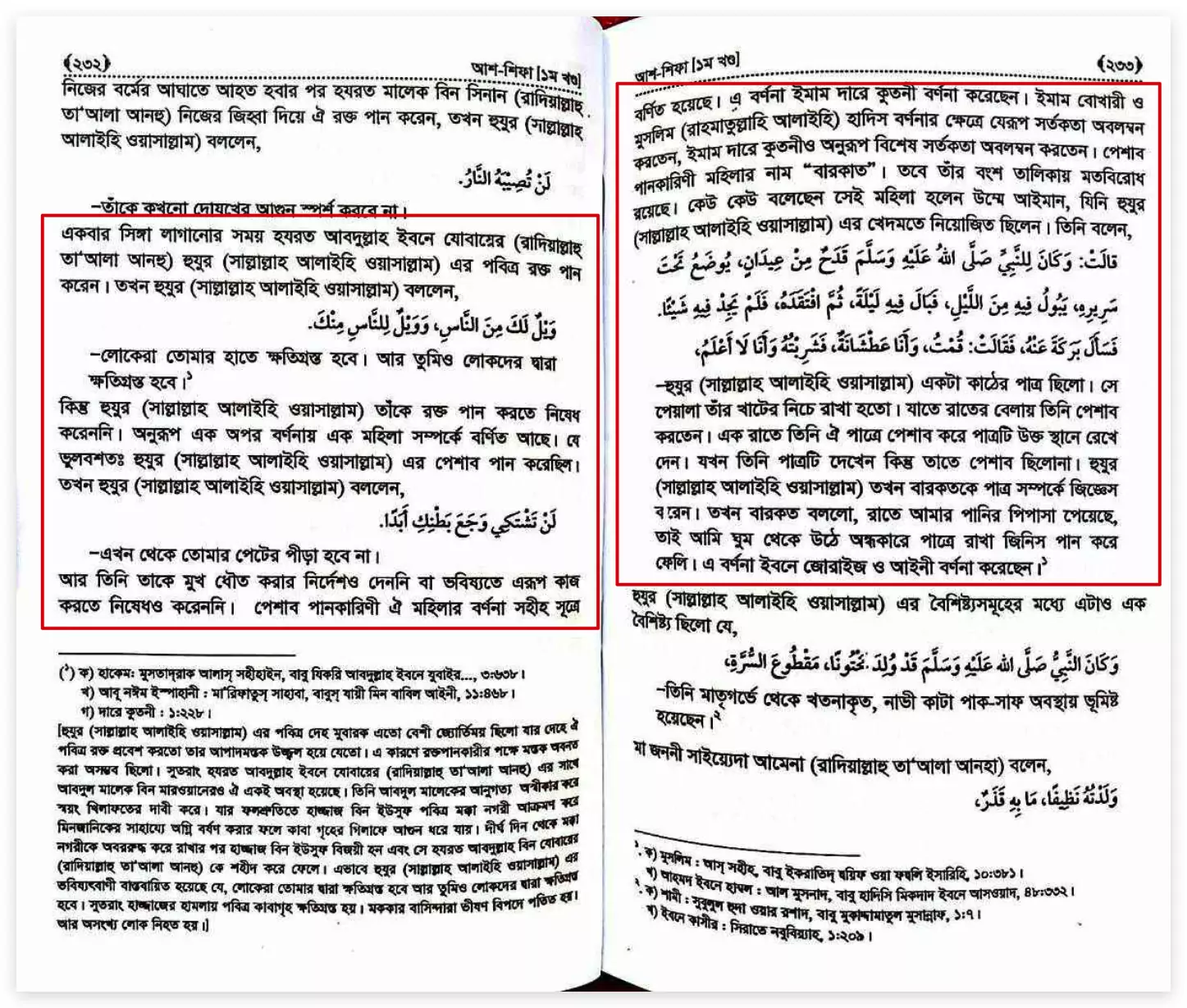
The matter is also mentioned in al-Bidayah wa al-Nihayah. [80]
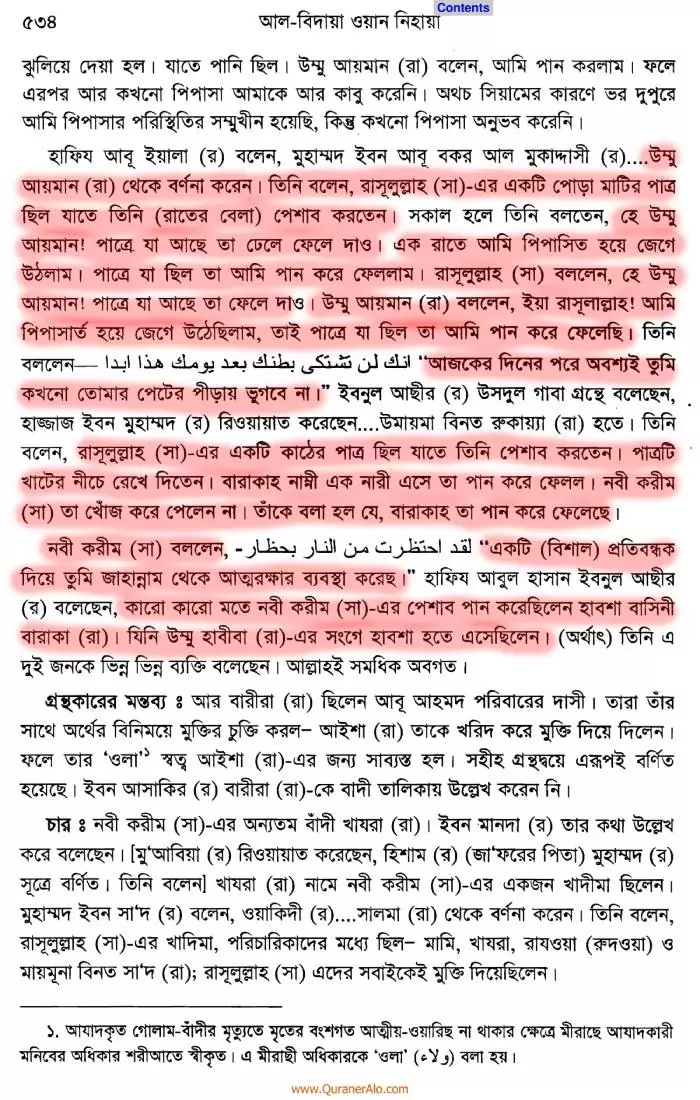
Let us hear several scholars discuss how authentic these reports are.
The Prophet Was Frightened by Nightmares
Muhammad was frightened by nightmares during sleep. A legend circulated at the time that Dhu al-Qarnayn had built a wall beyond which lived violent, humanlike creatures, a thousand times more numerous than humanity. The wall prevented them from coming out. Once it broke, they would attack the earth’s inhabitants. These creatures were called Gog and Magog. In the age of Google Earth, children may find such tales entertaining, but they are best suited to children’s fairy tales. [81]—
Sunan al-Tirmidhi (Verified Edition)
Chapter: 23. The Emergence of Gog and Magog
2187. Narrated Zaynab bint Jahsh: One day, the Messenger of Allah awoke with his face reddened. He began saying, ‘There is no deity but Allah.’ After repeating it three times, he said, ‘Woe to the Arabs from the approaching calamity! Today, an opening this large has appeared in the wall of Gog and Magog.’ He indicated a circle representing ten with his index finger and thumb. Zaynab said: I asked, ‘Messenger of Allah, will we perish even with righteous people among us?’ He said, ‘Yes, when wickedness becomes widespread.’
Authentic: Ibn Majah 3953; al-Bukhari; Muslim.
Hadith grading: Sahih (Authentic)
Narrator: Zaynab bint Jahsh
Muhammad Was Suicidal
Authentic hadith describes his attempting suicide several times when Allah’s revelation stopped arriving. He therefore had suicidal tendencies. Such behaviour is natural when someone suffers severe psychological problems. Had he been born in modern times, a good psychiatrist might have provided proper treatment.
Sahih al-Bukhari (Tawhid edition)
Book: 91. Interpretation of Dreams
Tawhid Publications
… Waraqah died shortly afterwards, and revelation stopped for some time. The Prophet became deeply distressed by this condition. From what we have learned about him, he repeatedly hurried to mountain peaks intending to throw himself down. Whenever he reached a peak to cast himself off, Gabriel appeared before him and said, ‘Muhammad, you are undoubtedly Allah’s Messenger.’ His agitation subsided and he felt reassured, so he returned. When the interruption of revelation became prolonged, he again hurried off with the same intention. Whenever he reached the peak, Gabriel appeared and spoke as before.
Hadith grading: Sahih (Authentic)
The Prophet Had Episodes of Losing Consciousness
An incident in Muhammad’s life describes his uncle ‘Abbas removing his lower garment before everyone during the rebuilding of the Kaaba. Muhammad lost consciousness from shame and humiliation. This indicates that he could not tolerate intense emotion and would faint. [82] [83].
Sahih al-Bukhari (Tawhid edition)
Book: 63. The Virtues of the Ansar
Chapter: 63/25. Building the Kaaba
3829. Narrated Jabir ibn ‘Abdullah: When the Kaaba was being rebuilt, the Prophet and ‘Abbas were carrying stones. ‘Abbas told the Prophet, ‘Place your lower garment on your shoulder; it will protect you from the stones rubbing against you.’ On removing it, he fainted and fell to the ground. His eyes were fixed towards the sky. When he regained consciousness, he said, ‘My garment, my garment!’ It was immediately put back on him. (364.) (Adhunik Prakashani: 3544; Islamic Foundation: 3549.)
Hadith grading: Sahih (Authentic)
How old was the Prophet at this time? Was he merely a young boy, or an adult? Tafsir Ibn Kathir answers that question. Imagine a naked, thirty-five-year-old Prophet lying beside the Kaaba, having fainted after removing his lower garment. [84]
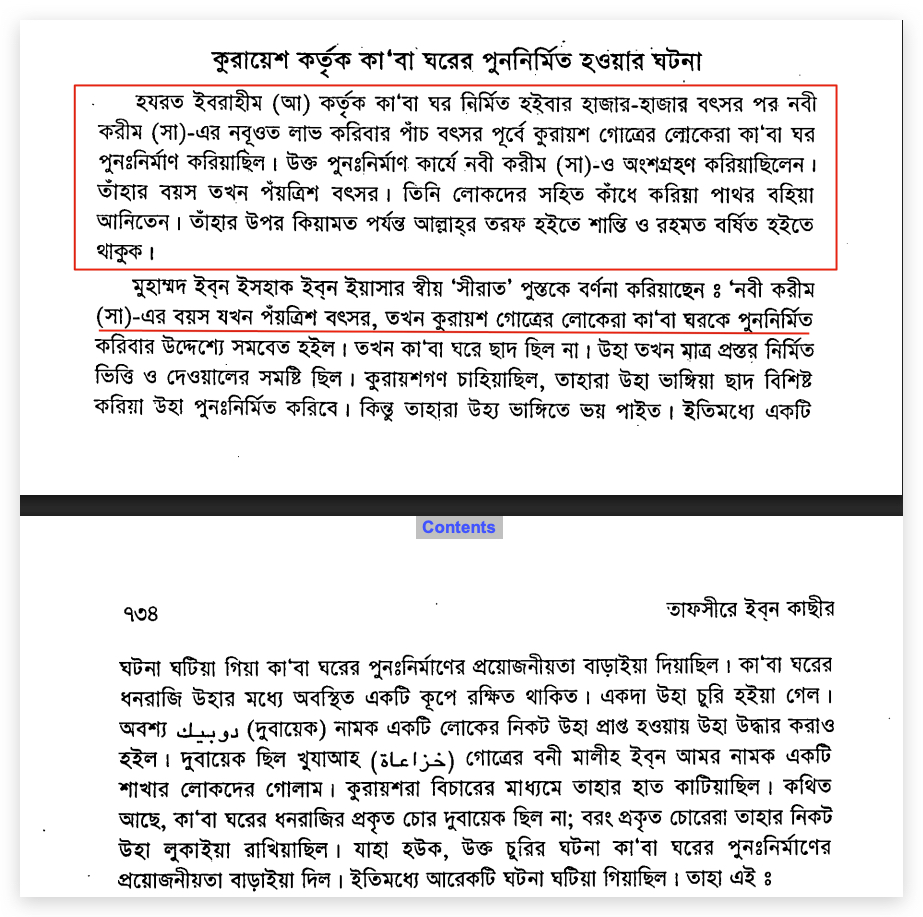
The Prophet Experienced Hallucinations
The Prophet wanted to regard himself as so important that he hallucinated stones along the road greeting him. Such psychological problems arise when a person receives little attention or importance. An intense desire to feel important can lead people to perceive imaginary things. This tendency is especially noticeable among children: when no one includes them in games or befriends them, they find friends or followers among stones or dolls. There was a mentally disturbed man in our neighbourhood who supposedly received greetings from roadside trees.
Sahih Muslim (Hadith Academy)
Book: 44. Virtues
Chapter: 1. The Virtue of the Prophet’s Lineage and Stones Greeting Him before His Prophethood
5833-(2/2277). Abu Bakr ibn Abi Shaybah … narrated from Jabir ibn Samurah: The Messenger of Allah said, ‘I know a stone in Mecca that greeted me even before I was sent as a prophet. I can still identify it without doubt.’ (Islamic Foundation: 5740; Islamic Centre: 5771.)
Hadith grading: Sahih (Authentic)
Narrator: Jabir ibn Samurah
Only the Prophet Saw Gabriel
Interestingly, Muhammad alone saw Gabriel. Sometimes he told ‘A’ishah that Gabriel had come into the room and greeted her. ‘A’ishah could see nothing. The matter is quite ridiculous.
Sahih al-Bukhari (Islamic Foundation)
Book: 66. Seeking Permission
Chapter: 2576. Men Greeting Women and Women Greeting Men
5815. Ibn Muqatil … narrated from ‘A’ishah: One day, the Messenger of Allah said, ‘ ‘A’ishah, this is Gabriel; he has greeted you.’ I replied, ‘Peace and Allah’s mercy be upon him.’ Addressing the Messenger, she said, ‘You see what we do not see.’ Yunus, narrating through al-Zuhri, adds ‘and His blessings.’
Hadith grading: Sahih (Authentic)
Narrator: ‘A’ishah
The Prophet Spat into Other People’s Faces
Muhammad spat water from his mouth into a five-year-old boy’s face. Such filthy conduct is possible only for a vulgar person of low character. A child also possesses self-respect. Spitting water into his face is a thoroughly unpleasant act, even if done in play.
Sahih al-Bukhari (Islamic Foundation)
Book: 3. Knowledge
Chapter: 60. At What Age May a Boy’s Account of What He Heard Be Accepted?
77. Muhammad ibn Yusuf … narrated from Mahmud ibn al-Rabi‘: I remember that the Prophet once took water from a bucket and expelled a mouthful into my face when I was a five-year-old boy.
Hadith grading: Sahih (Authentic)
Narrator: Mahmud ibn al-Rabi‘
The Companions Rubbed the Prophet’s Spittle on Their Bodies
Muhammad left behind blindly believing, fanatical Companions who rubbed his spittle on their bodies. [85] [86]—
Sahih al-Bukhari (Tawhid Publications)
Book: 54. Conditions
Chapter: 54/15. Conditions Concerning Warfare and Reconciliation with Opponents, and Recording Verbal Conditions Made with People
2731–2732
… He said, ‘By Allah, whenever the Messenger of Allah spat, it fell into a Companion’s hand, and they rubbed it on their bodies and faces.’ …
Hadith grading: Sahih (Authentic)
Narrator: Al-Miswar ibn Makhramah
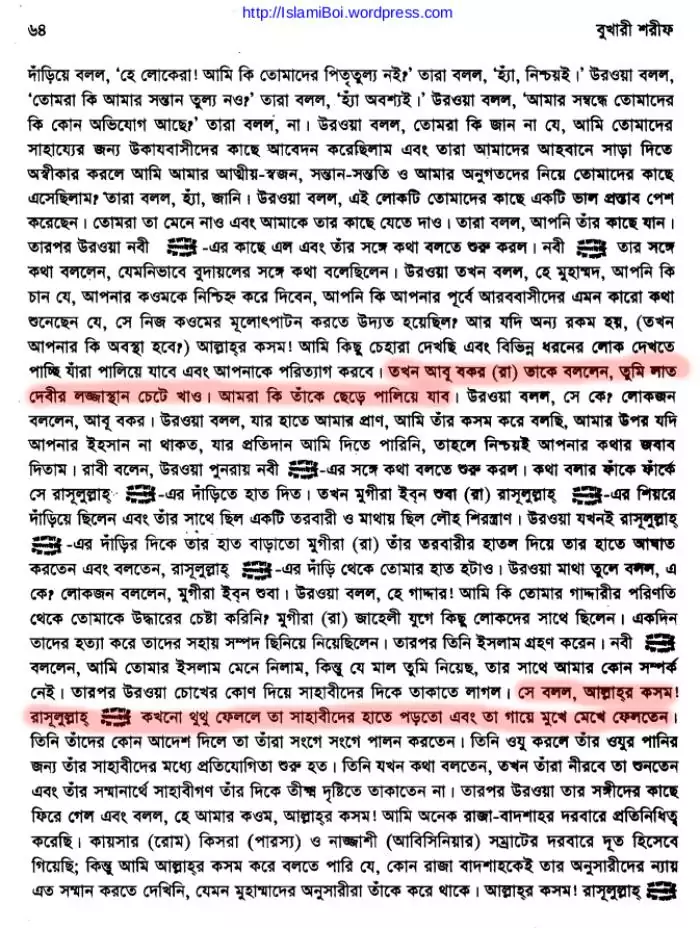
The Prophet Fed His Spittle to Children
Muhammad took a kind of perverse pleasure in feeding children his spittle. Similar behaviour could also be seen among our grandmothers. It is profoundly disgusting and filthy.
Sahih al-Bukhari (Islamic Foundation)
Book: 50. Prophets
Chapter: 2154. The Migration of the Prophet and His Companions to Medina. ‘Abdullah ibn Zayd and Abu Hurayrah narrate from the Prophet: ‘Were it not for the virtue of migration, I would have been one of the Ansar.’ Abu Musa narrates from the Prophet: ‘I dreamed that I was migrating from Mecca to a place with date orchards. I thought it would be al-Yamamah or Hajar, but it turned out to be Medina, Yathrib.’
3629. Qutaybah … narrated from ‘A’ishah: After the migration, ‘Abdullah ibn al-Zubayr was the first child born into a Muslim household in Medina. They brought him to the Prophet, who chewed a date and placed it in his mouth. Thus the first thing to enter his stomach was the Prophet’s spittle.
Hadith grading: Sahih (Authentic)
The Prophet Made Others Drink His Mouth-Rinsing Water
Muhammad liked making followers drink water with which he had rinsed his mouth. He also had them wash their faces with it.
Sahih Muslim (Islamic Foundation)
Book: 46. The Virtues of the Companions
Chapter: 38. The Virtues of Abu Musa al-Ash‘ari and Abu ‘Amir al-Ash‘ari
6180. Abu ‘Amir al-Ash‘ari and Abu Kurayb … narrated from Abu Musa al-Ash‘ari: I was with the Prophet while he was staying at al-Ji‘ranah, between Mecca and Medina. Bilal was also with him. A Bedouin came and asked, ‘Muhammad, will you not fulfil your promise to me?’ The Messenger said, ‘Receive glad tidings.’ The man replied, ‘You have said “receive glad tidings” many times.’ The Messenger, expressing displeasure, turned to Abu Musa and Bilal and said, ‘This man has rejected the glad tidings, so you two accept them.’
They replied, ‘Messenger of Allah, we accept.’ He had a bowl of water brought, washed his hands and face, and rinsed his mouth into it. He said, ‘Drink from this water, pour it over your faces and chests, and receive glad tidings.’ They took the bowl and followed his instructions. Umm Salamah, a Mother of the Believers, called from behind the curtain, ‘Leave some water in your vessel for your mother.’ They left a little for her.
Hadith grading: Sahih (Authentic)
Narrator: Abu Musa al-Ash‘ari
The Prophet Disliked Music
Hadith Sambhar
Book: 22. Prohibited Acts
Chapter: Singing, Musical Instruments, and Dancing
(2309). Narrated Anas: The Messenger of Allah said, ‘Some in my community will certainly be destroyed by the earth swallowing them, stones raining upon them, and transformation of their forms. This punishment will come when they drink wine, keep dancing women, and play musical instruments. ’
(Ibn Abi al-Dunya; Sahih al-Jami‘ 5467.)
Hadith grading: Sahih (Authentic)
Narrator: Anas ibn Malik
Hostility towards Drawing and Artists
Riyad al-Salihin
Tawhid Publications
Book: 18. Prohibited Matters
Chapter: 305. It Is Forbidden to Carve Images of Living Creatures on Stone, Walls, Ceilings, Coins, and Similar Objects; Likewise, Drawing Them on Walls, Ceilings, Beds, Pillows, Curtains, Turbans, Clothing, and Similar Objects Is Forbidden, and Images Must Be Destroyed
3/1689. Narrated Ibn ‘Abbas: I heard the Messenger of Allah say, ‘Every maker of images or statues will enter Hell. For every image he made, a living being will be created to punish him in Hell.’ Ibn ‘Abbas said, ‘If you must do it, make images of trees and lifeless objects.’ (Al-Bukhari and Muslim.) (1)
(1) Sahih al-Bukhari 2225, 5963, 7042; Muslim 2110; al-Tirmidhi 1751, 2283; al-Nasa’i 5358, 5359; Abu Dawud 5024; Ibn Majah 3916; Ahmad 1869, 2163, 2214, 2806, 3262, 3373, 3384.
Hadith grading: Sahih (Authentic)
Riyad al-Salihin
Tawhid Publications
Book: 18. Prohibited Matters
Chapter: 305. It Is Forbidden to Carve Images of Living Creatures on Stone, Walls, Ceilings, Coins, and Similar Objects; Likewise, Drawing Them on Walls, Ceilings, Beds, Pillows, Curtains, Turbans, Clothing, and Similar Objects Is Forbidden, and Images Must Be Destroyed
1/1687. Narrated Ibn ‘Umar: The Messenger of Allah said, ‘Those who make images or statues of living creatures will be punished on the Day of Judgment. They will be told, “Give life to what you made.”’ (Al-Bukhari.) (1)
(1) Sahih al-Bukhari 5951, 7558; Muslim 2108; al-Nasa’i 5361; Ahmad 4461, 4693, 4777, 5146, 5733, 6048, 6205, 6226, 6290.
Hadith grading: Sahih (Authentic)
Sahih al-Bukhari (Tawhid edition)
Book: 34. Sales
Chapter: 34/104. Buying and Selling Images of Lifeless Objects, and Images Considered Objectionable or Forbidden
2225. Narrated Sa‘id ibn Abi al-Hasan: I was with Ibn ‘Abbas when a man came and said, ‘Abu ‘Abbas, I earn my livelihood through handicrafts, making these images.’ Ibn ‘Abbas said, ‘I will tell you only what I heard the Messenger of Allah say about this. I heard him say: “Allah will punish whoever makes an image until he gives it life,” and he will never be able to give it life.’ The man became intensely frightened and his face turned pale. Ibn ‘Abbas said, ‘Woe to you! If you cannot abandon this occupation, make images of trees and things without life.’ Abu ‘Abdullah, al-Bukhari, says: Sa‘id said, ‘I heard al-Nadr ibn Anas say that he was with Ibn ‘Abbas when he narrated this hadith.’ Al-Bukhari adds that this was the only hadith Sa‘id ibn Abi ‘Arubah heard from al-Nadr ibn Anas. (5963, 7042; Muslim 37/26, hadith 2110; Ahmad 2162.) (Adhunik Prakashani: 2068; Islamic Foundation: 2084.)
Hadith grading: Sahih (Authentic)
Disliking Humour and Preferring Weeping
Muhammad disliked humour, jokes, and enjoyment, and preferred weeping, lamentation, and sadness.
Sahih al-Bukhari (Tawhid edition)
Book: 83. Oaths and Vows
Chapter: 83/3. What Were the Prophet’s Oaths Like?
6631. Narrated ‘A’ishah from the Prophet: ‘Community of Muhammad, by Allah, if you knew what I know, you would certainly laugh less and weep more.’ (1) (1044.) (Adhunik Prakashani: 6169; Islamic Foundation: 6177.)
(1) The Messenger of Allah was shown the punishment of the grave, the terrors of the gathering on Judgment Day, the bridge over Hell, the weighing of good and evil deeds, and the severe punishments of Hell. He saw them clearly. People believe in them but have not seen them; if they did, they would laugh less and weep more.
Hadith grading: Sahih (Authentic)
Narrator: ‘A’ishah
The Prophet Had Unclean Habits
The Prophet Urinated Indoors
Muhammad urinated inside his room. The urine remained there all night, spreading its smell. He slept there and had intercourse with his wife amid that smell.
Mishkat al-Masabih
Hadith Academy
Book: 3. Purification
Chapter: 2. Second Section: Etiquette of Defecation and Urination
362-(29). Narrated Umaymah bint Ruqayqah: The Prophet had a wooden bowl beneath his bed. He urinated into it at night. (Abu Dawud and al-Nasa’i.) (1)
(1) Authentic: Abu Dawud 24; al-Nasa’i 32; Sahih al-Jami‘ 4832.
Hadith grading: Sahih (Authentic)
Sunan Abi Dawud (Verified Edition)
Al-Albani Academy
Book: 1. Purification
Chapter: 13. Urinating in a Vessel at Night and Keeping It Nearby
24. Hukaymah bint Umaymah bint Ruqayqah narrated from her mother: The Prophet had a wooden vessel beneath his bed. He urinated into it at night. (1)
Hasan sahih.
Hadith grading: Hasan (Good)
Islamic apologists often argue that the Prophet urinated indoors at night for fear of attack by enemies. What kind of reasoning is this, however, when the omnipotent Allah of the universe was his friend and an army of angels was constantly assigned to protect him, yet he urinated inside at night out of fear?
The Prophet Defecated Indoors
The Prophet did more than urinate indoors: he also defecated there. Let us examine the hadith.
Sahih al-Bukhari (Islamic Foundation)
Book: 4. Ablution
Chapter: 109. Relieving Oneself Indoors
Islamic Foundation numbering: 151; international numbering: 149.
151. Ya‘qub ibn Ibrahim … narrated from ‘Abdullah ibn ‘Umar: One day I climbed onto our house. I saw the Messenger of Allah seated on two bricks, relieving himself facing Jerusalem.
Hadith grading: Sahih (Authentic)
Narrator: ‘Abdullah ibn ‘Umar
Sahih al-Bukhari (Islamic Foundation)
Book: 4. Ablution
Chapter: 109. Relieving Oneself Indoors
Islamic Foundation numbering: 150; international numbering: 148.
150. Ibrahim ibn al-Mundhir … narrated from ‘Abdullah ibn ‘Umar: For a particular need, I climbed onto the roof of Hafsah’s house. I saw the Messenger of Allah relieving himself with his back towards the qiblah and his face towards Syria.
Hadith grading: Sahih (Authentic)
Narrator: ‘Abdullah ibn ‘Umar
The Prophet Had Lice in His Hair
Hadith describes the Prophet having lice in his hair and having others pick them out. Lice commonly occur among people with unclean habits who do not keep their hair clean.
Sahih al-Bukhari (Islamic Foundation)
Book: 80. Interpretation of Dreams
Chapter: 2940. Dreams during the Day. Ibn ‘Awn narrates from Ibn Sirin that daytime dreams are like nighttime dreams.
6530. ‘Abdullah ibn Yusuf … narrated from Anas ibn Malik: The Messenger of Allah often visited Umm Haram bint Milhan, the wife of ‘Ubadah ibn al-Samit. One day he visited her. She fed him, then began picking lice from his hair, and the Messenger fell asleep. After a while he awoke smiling. Umm Haram says: I asked, ‘Messenger of Allah, why did you smile?’ He replied, ‘A group of my community was shown to me, fighting in Allah’s cause, riding ships at sea, seated like kings on thrones’—or, ‘as kings upon thrones.’ The narrator Ishaq expressed uncertainty. Umm Haram said, ‘Messenger of Allah, pray that Allah includes me among them.’ He prayed for her.
He laid his head down and slept again, then awoke smiling. I asked why, and he said, ‘A group from my community fighting in Allah’s cause was shown to me,’ describing them as before. Umm Haram said, ‘Pray that Allah includes me among this group.’ He replied, ‘You are among the first group.’
During Mu‘awiyah ibn Abi Sufyan’s rule, Umm Haram boarded a ship. After crossing the sea, she fell from her mount and died.
Hadith grading: Sahih (Authentic)
Narrator: Anas ibn Malik
Water Remained Pure Even with Menstrual Cloths and Dead Animals in It
Sunan Abi Dawud (Verified Edition)
Book: 1. Purification
34. The Well of Buda‘ah
66. Narrated Abu Sa‘id al-Khudri: The Messenger of Allah was asked, ‘May we perform ablution with water from the well of Buda‘ah in Medina? Women’s menstrual rags, dog flesh, and various foul-smelling things were thrown into it.’ He replied, ‘Water is pure; nothing can make it impure.’ (1)
Authentic.
(1) Al-Tirmidhi, Book of Purification, chapter ‘Nothing Makes Water Impure,’ hadith 66; he calls it hasan. Al-Nasa’i, Book of Water, chapter on Buda‘ah, hadith 325; Ahmad 3/15, 16, 31, 86; al-Daraqutni 1/30–31, through Abu Sa‘id al-Khudri. Its chain is authentic. Lesson from the hadith: water ceases to be pure if an impurity changes one of its characteristics. The general wording of this hadith is restricted by other reports.
Hadith grading: Sahih (Authentic)
The Prophet Immersed Flies in Water before Drinking It
If a fly fell into a vessel of water or food, the Prophet thoroughly immersed it and then consumed the water or food.
Sahih al-Bukhari (Tawhid edition)
Book: 76. Medicine
5782. Narrated Abu Hurayrah: The Messenger of Allah said: ‘When a fly falls into any of your food vessels, immerse it completely, then throw it away, because on its one wing is a cure, and on the other is disease.’ (3320.) (Adhunik Prakashani: 5357; Islamic Foundation: 5253.)
Hadith grading: Sahih (Authentic)
Sunan Abi Dawud (Islamic Foundation)
Book: 21. Food
3801. Ahmad ibn Hanbal … narrated from Abu Hurayrah: The Messenger of Allah said, ‘When a fly falls into your food vessel, immerse it completely. On its one wing is disease and on the other a cure. When it falls into food, it puts forward the wing carrying disease germs. Therefore immerse it in the vessel.’
Hadith grading: Sahih (Authentic)
Sahih al-Bukhari (Islamic Foundation)
Book: 63. Medicine
5366. Qutaybah … narrated from Abu Hurayrah: The Messenger of Allah said, ‘When a fly falls into any of your food vessels, immerse it completely, then throw it away. On its one wing is a cure, and on the other are disease germs.’
Hadith grading: Sahih (Authentic)
The Prophet Had Others Lick His Hands after Eating
After eating, the Prophet had others lick his hands and fingers.
Sahih Muslim (Islamic Foundation)
Book: 37. Drinks
Chapter: 17. It Is Recommended to Lick Fingers and Vessels and Remove Dirt from Fallen Food before Eating It; Wiping the Hand before Licking Is Disliked, since Blessing May Remain in the Food, and Eating with Three Fingers Is Sunnah
5130. Ishaq ibn Ibrahim and Muhammad ibn Rafi‘ … narrated a similar report through Sufyan with the chain mentioned. Both versions contain: He should not wipe his hand with a cloth until he licks it himself or has someone else lick it. They then narrated the remainder.
Hadith grading: Sahih (Authentic)
Narrator: Sufyan
A Sex Marathon with a Single Bath
With a single bath, the Prophet engaged in continuous sexual activity with nine wives in succession during the same day or night. One woman’s bodily fluids thus passed to another woman’s body, and hers to someone else’s.
Sahih al-Bukhari (Tawhid edition)
Book: 5. Bathing
5/12. Taking One Bath after Repeated Intercourse or Intercourse with Several Wives
268. Narrated Anas ibn Malik: The Prophet visited his wives in succession at one time during the day or night. They were eleven. The narrator says: I asked Anas, ‘Did he possess so much strength?’ He replied, ‘We used to say among ourselves that he had been given the strength of thirty men.’ Sa‘id narrates from Qatadah that, when Anas related this hadith to them, he mentioned nine wives rather than eleven. (See 284, 5068, 5215.) (Adhunik Prakashani: 261; Islamic Foundation: 266.)
Hadith grading: Sahih (Authentic)
The Prophet Was a Bad Judge
Judgment without Evidence or Witnesses
Islamic law clearly requires an accusation of zina, or unlawful sexual intercourse, to enter judicial proceedings with four witnesses; a judge may then pronounce judgement after examining all the evidence. In Muhammad’s personal family life, however, this process was reversed. He paid no attention to witnesses or evidence and simply ordered killing. A well-known hadith provides evidence: his enslaved woman Mariyah al-Qibtiyyah had become pregnant by him. Someone alleged that she had an unlawful relationship with another man. Immediately on hearing it, the Prophet sent ‘Ali to kill the man accused of a sexual relationship with Mariyah. He awaited no witnesses or proof. This is an example of extremely poor judgement. If a judge decides to kill out of personal anger, that is murder, rather than justice. Although ‘Ali’s intelligence prevented the man from being killed, the Prophet’s instruction was to kill him without witnesses or evidence. [87] [88] [89]—
Sahih Muslim (Hadith Academy)
Book: 50. Repentance
Chapter: 11. The Messenger’s Honour Being Free from Suspicion
Hadith Academy numbering: 6916; international numbering: 2771.
6916-(59/2771). Zuhayr ibn Harb … narrated from Anas: An accusation was made against a man concerning the Messenger of Allah’s umm walad, an enslaved woman who had borne him a child. Then the Messenger told ‘Ali, ‘Go and behead him.’ ‘Ali found him cooling himself in a well and told him to come out. The man extended his hand, and ‘Ali pulled him out and saw that his genitals had been completely cut off; he had no penis. ‘Ali refrained from killing him, returned to the Prophet, and said, ‘Messenger of Allah, he is castrated; he has no penis.’ (Islamic Foundation: 6766; Islamic Centre: 6821.)
Hadith grading: Sahih (Authentic)
Narrator: Anas ibn Malik
Sahih Muslim (Islamic Foundation)
Book: 51. Repentance
Chapter: 11. The Messenger’s Household Being Free from Suspicion
6766. Zuhayr ibn Harb … narrated from Anas: An accusation was raised concerning the Messenger of Allah’s umm walad and a man. The Messenger told ‘Ali, ‘Go and strike off his head.’ ‘Ali found him cooling himself in a well and told him to come out. The man extended his hand, and ‘Ali pulled him out and saw that his genitals had been cut off; he had no penis. ‘Ali refrained from killing him, returned to the Prophet, and said, ‘Messenger of Allah, he is castrated; he has no penis.’
Hadith grading: Sahih (Authentic)
Narrator: Anas ibn Malik
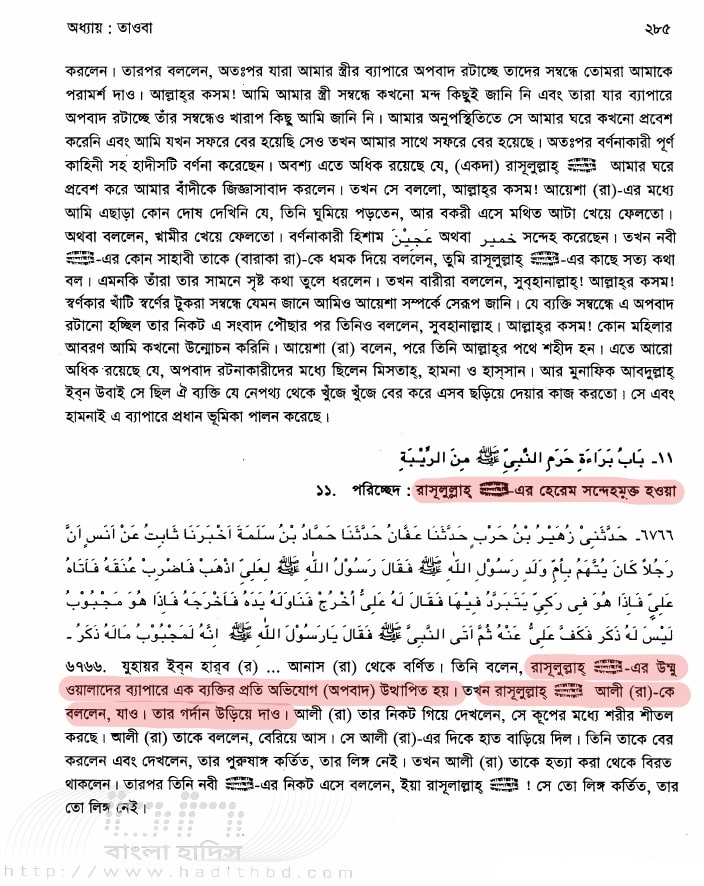
A Different Judgment for Killing an Unbeliever
Muhammad was a sectarian and a poor judge. He stated that an unbeliever who kills a Muslim must be sentenced to death, but that a Muslim who kills an unbeliever must not be executed for that murder.
Sahih al-Bukhari (Tawhid edition)
Book: 87. Blood Money
Chapter: 87/31. A Muslim Must Not Be Killed in Retaliation for an Unbeliever
6915. Narrated Abu Juhayfah: I asked ‘Ali, ‘Do you possess anything not contained in the Qur’an?’ He replied, ‘The rules of blood money, freeing captives, and the rule that a Muslim may not be killed in retaliation for an unbeliever.’ (111.) (Adhunik Prakashani: 6435; Islamic Foundation: 6447.)
Hadith grading: Sahih (Authentic)
Sunan Ibn Majah
Tawhid Publications
Book: 15. Blood Money
Chapter: 15/21. A Muslim Must Not Be Killed for Killing an Unbeliever
1/2658. Narrated Abu Juhayfah: I asked ‘Ali ibn Abi Talib, ‘Do you possess knowledge unknown to others?’ He said, ‘No, by Allah! We possess no special knowledge beyond what people possess, except an understanding of the Qur’an Allah grants someone, and what this document contains from the Messenger concerning blood money and related matters. This document also states: a Muslim must not be killed for the offence of killing an unbeliever.’
Sahih al-Bukhari 111, 1870, 3047, 3034, 3172, 3180, 6755, 6903, 6915, 7300; Muslim 1370; al-Tirmidhi 1412, 2127; al-Nasa’i 4734, 4735, 4744, 4745, 4746, 4530; Ahmad 600, 616, 484, 962, 994, 1040; al-Darimi 2356; Irwa’ 2209. Al-Albani’s assessment: authentic.
Hadith grading: Sahih (Authentic)
The Prophet Killed a Person with a Psychological Disorder
Kleptomania is a psychological disorder in which an affected person steals because of the condition. Modern psychology recognises it as a mental disorder. The hadith below indicates that Muhammad had a person with kleptomania killed with extreme brutality. This is an appalling injustice against someone with a psychological illness.
Sunan Abi Dawud (Islamic Foundation)
Book: 33. Punishments
Chapter: 20. Punishment for Repeated Theft
4358. Muhammad ibn ‘Abdullah … narrated from Jabir ibn ‘Abdullah: A thief was brought before the Prophet, who ordered him killed. The Companions said, ‘Messenger of Allah, he has only stolen!’ He said, ‘Then cut off his hand,’ and the man’s right hand was cut off. When he stole a second time, he was brought to the Prophet, who again ordered him killed. The Companions said, ‘He has only stolen.’ He said, ‘Cut off his foot,’ and the left foot was cut off. When brought a third time, the Prophet ordered him killed. The Companions again said that he had stolen. He ordered an amputation, and the left hand was cut off. When brought a fourth time, he ordered him killed. Again the Companions said, ‘Messenger of Allah, this man has stolen.’ He ordered an amputation, and the right foot was cut off. When brought before the Prophet for a fifth offence, he ordered him killed. Jabir says: We took him into the open and killed him, dragged his body to a well, threw it in, and then threw stones upon his corpse.
Hadith grading: Hasan (Good)
The Prophet Cut Off Thieves’ Hands
The Prophet cut off thieves’ hands and established this ancient barbaric practice as law. A ruler like this today would be spat upon by people across the world, because it is an explicit violation of international human rights.
Sahih Muslim (Islamic Foundation)
Book: 30. Punishments for Offences
4259. Yahya ibn Yahya … narrated from Ibn ‘Umar that the Messenger of Allah cut off a thief’s hand for stealing a shield worth three dirhams.
Hadith grading: Sahih (Authentic)
Sahih Muslim (Islamic Foundation)
Book: 30. Punishments for Offences
4251. Yahya ibn Yahya, Ishaq ibn Ibrahim, and Ibn Abi ‘Umar … narrated from ‘A’ishah that the Messenger of Allah cut off a thief’s hand for stealing property worth a quarter of a dinar or more.
Hadith grading: Sahih (Authentic)
Sunan Ibn Majah
Tawhid Publications
Book: 14. Prescribed Punishments
1/2583. Narrated Abu Hurayrah: The Messenger of Allah said, ‘Allah curses the thief whose hand is cut off for stealing an egg, and whose hand is cut off for stealing a rope.’
Hadith grading: Sahih (Authentic)
Sahih Muslim (Islamic Foundation)
Book: 30. Punishments for Offences
4261. Abu Bakr ibn Abi Shaybah and Abu Kurayb … narrated from Abu Hurayrah: The Messenger of Allah said that Allah curses the thief who steals an egg, or something worth an egg, and has his hand cut off; and the person who steals a rope, or something of equal value, also has his hand cut off.
Hadith grading: Sahih (Authentic)
The Woman-Hungry, Sexually Driven, Lustful Prophet
Many Muslims today shamelessly claim that even the unbelievers of the Prophet’s time never questioned Muhammad’s character, his attraction to women, or his obsession with numerous marriages and enslaved women. These are utterly shameless lies. The fact is that people in his own time questioned his polygyny and appetite for women. The Companions also brutally killed such people. Only blind followers were spared. Consequently, no books, documents, or historical writings survive from those who opposed him or were unbelievers; only histories produced by his blindly devoted followers remain. Yet even these preserve evidence of statements made by unbelievers, which Muslims contemptuously called slander. Evidence appears in al-Bidayah wa al-Nihayah. [24]—
Did the Prophet Have No Desire for Women?
Many Islamic speakers today say that their Prophet had no appetite for women: he supposedly married women in large numbers and had sex with enslaved women only because he was compelled to do so. He had no wish to do it, acting solely at Allah’s command despite extreme reluctance. The Qur’an itself, however, states that Muhammad was attracted by women’s appearance.
No women are lawful for you after this, nor may you replace them with other wives, even if their beauty delights you, except enslaved women. Allah watches over everything. Surah al-Ahzab: 52
The Qur’an also states:
Prophet, We have made lawful for you the wives to whom you have paid their dowers, and the enslaved women Allah has placed in your possession. We have also made lawful in marriage your paternal and maternal cousins who migrated with you. If a believing woman offers herself to the Prophet, and he wishes to marry her, she too is lawful. This is exclusively for you, not for other believers, to remove difficulty from you. We know what We have prescribed concerning believers’ wives and enslaved women. Allah is forgiving and merciful. Qur’an 33:50
One phrase in the verse is ‘to remove difficulty from you.’ What difficulty was Muhammad experiencing that required Allah to make so many women lawful for him? What kind of difficulty makes that many women lawful for someone?
‘A’ishah’s statement in Tafsir al-Mazhari’s commentary on Surah al-Ahzab deserves particular mention. In this account, she says rather sharply, ‘I see that Allah leaves none of your desires unfulfilled.’ [90]—
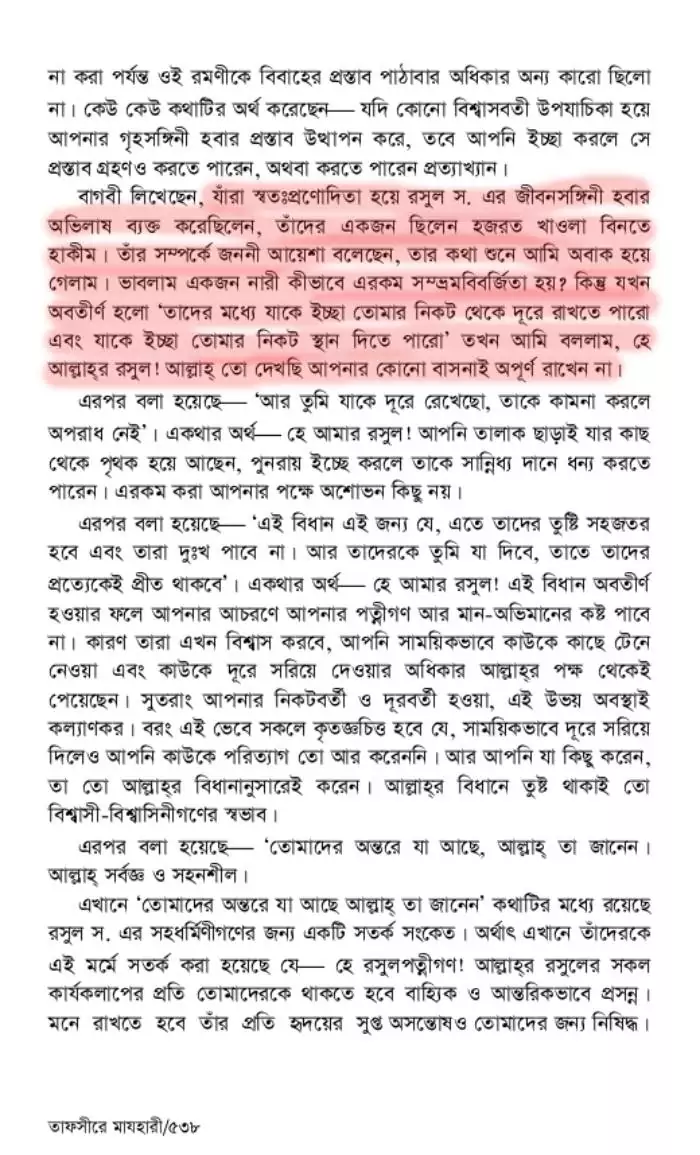
A very famous hadith from ‘A’ishah concerning this matter is essential reading. It makes clear just how elevated Muhammad’s character was! [91] [92] [93] [94]
Sahih Muslim (Hadith Academy)
Book: 18. Breastfeeding
Chapter: 14. Giving One’s Turn to a Co-Wife Is Permissible
Hadith Academy numbering: 3523; international numbering: 1464.
3523-(49/1464). Abu Kurayb Muhammad ibn al-‘Ala’ … narrated from ‘A’ishah: I expressed astonishment at the shamelessness of women who offered themselves to become the Messenger of Allah’s wives, saying, ‘Can a woman offer herself so shamelessly?’ Later Allah revealed: ‘You may defer whichever of them you wish and bring whichever you wish close to you; if you desire someone you previously set aside, there is no blame upon you.’ (Surah al-Ahzab 33:51.) ‘A’ishah said: I then said, ‘By Allah, I see that your Lord responds quickly to fulfil your desires.’ (Islamic Foundation: 3496; Islamic Centre: 3495.)
Hadith grading: Sahih (Authentic)
Narrator: ‘A’ishah bint Abi Bakr al-Siddiq
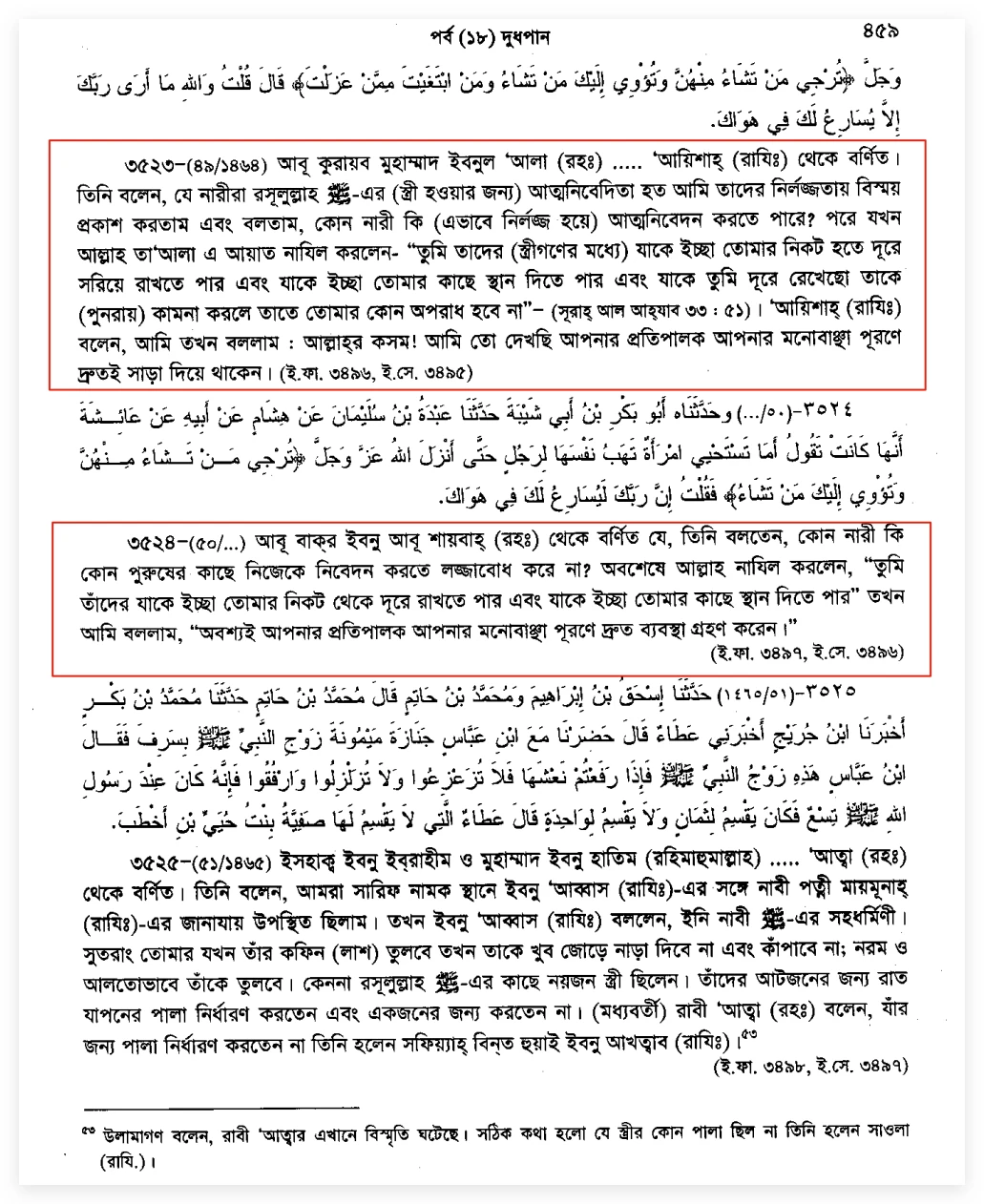
Sahih al-Bukhari (Islamic Foundation)
Book: 52. Qur’anic Commentary
Chapter: Allah’s statement: ترجئ من تشاء منهن وتؤوي إليك من تشاء ومن ابتغيت ممن عزلت فلا جناح عليك — ‘You may keep whichever of them you wish away from you and give whichever you wish a place with you. If you desire someone you set aside, there is no blame upon you.’ Ibn ‘Abbas says that ترجئ means ‘you may keep away’; أرجئه means ‘put him aside, grant respite.’
4425. Zakariyya ibn Yahya … narrated from ‘A’ishah: I disliked the women who offered themselves as gifts to the Messenger. I wondered whether women could give themselves away. When Allah revealed, ‘You may keep whichever of them you wish away from you and give whichever you wish a place with you. If you desire someone you set aside, there is no blame upon you,’ I said, ‘I see that your Lord fulfils whatever you desire.’
Hadith grading: Sahih (Authentic)
Narrator: ‘A’ishah
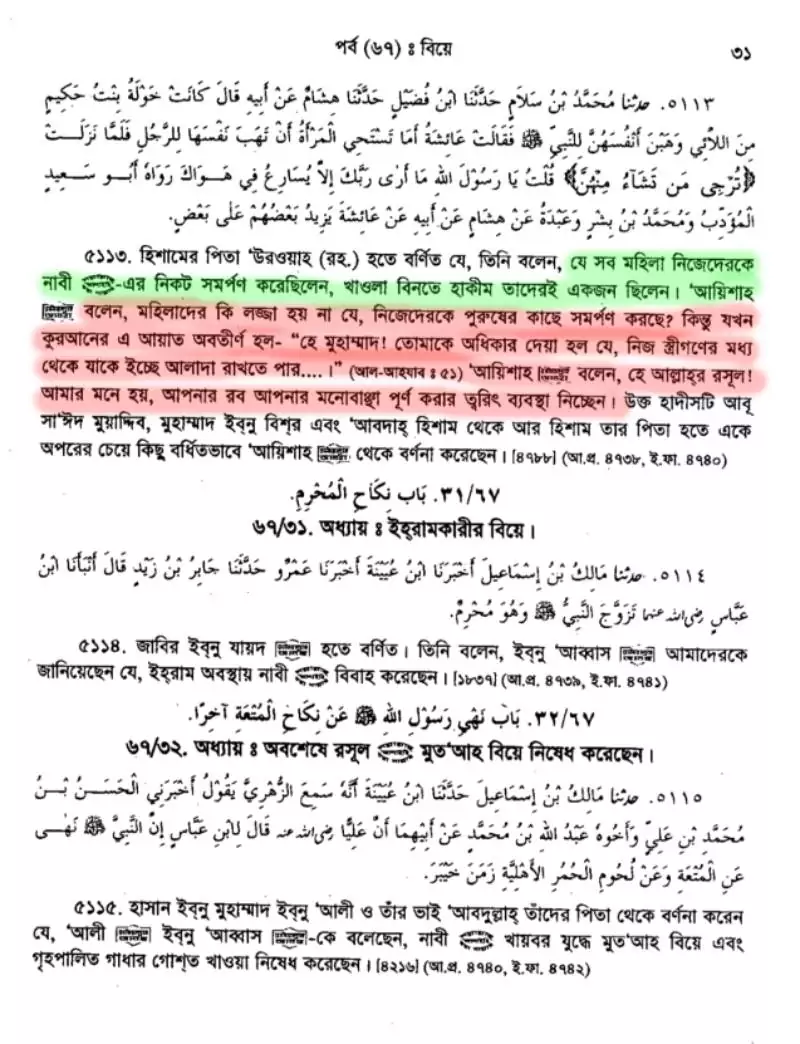
Hadith also describes women as among Muhammad’s favourite things:
‘Of your world, three things are particularly dear to me: women, perfume, and the comfort of my eyes is found in prayer.’ (Sunan al-Nasa’i, hadith 3939.)
It is also narrated that the lustful Prophet Muhammad became intensely aroused on seeing women in the street, then had to rush home to satisfy his desire:
Sahih Muslim (Hadith Academy)
Book: 17. Marriage
Chapter: 2. A Man Who Feels Sexual Desire on Seeing a Woman Should Go and Have Intercourse with His Wife or Enslaved Woman
3298-(9/1403). ‘Amr ibn ‘Ali … narrated from Jabir: The Messenger of Allah saw a woman. He then went to his wife Zaynab, who was busy tanning a hide, and satisfied his need. Afterwards, he came out to the Companions and said, ‘A woman approaches in the form of Satan and departs in the form of Satan. If any of you sees a woman, let him go to his wife, because that removes what is in his heart.’ (Islamic Foundation: 3273; Islamic Centre: 3271.)
Hadith grading: Sahih (Authentic)
The Prophet Had Multiple Sexual Partners
The Prophet kept several wives simultaneously and had sex with them in succession. The relevant hadith appear above.
Despite Having Nine Wives, the Prophet Had Intercourse with Enslaved Women
Sunan al-Nasa’i (Islamic Foundation)
Book: 37. Treatment of Wives
3961. Ibrahim ibn Yunus ibn Muhammad al-Harami … narrated from Anas: The Messenger of Allah had an enslaved woman with whom he had intercourse. ‘A’ishah and Hafsah repeatedly pressed him about this until he made her forbidden to himself. Allah then revealed: (يَا أَيُّهَا النَّبِيُّ لِمَ تُحَرِّمُ مَا أَحَلَّ اللَّهُ لَكَ) ‘Prophet, why do you forbid for yourself what Allah has made lawful for you?’ (Surah al-Tahrim: 1.)
Hadith grading: Sahih (Authentic)
Assessment: authentic.
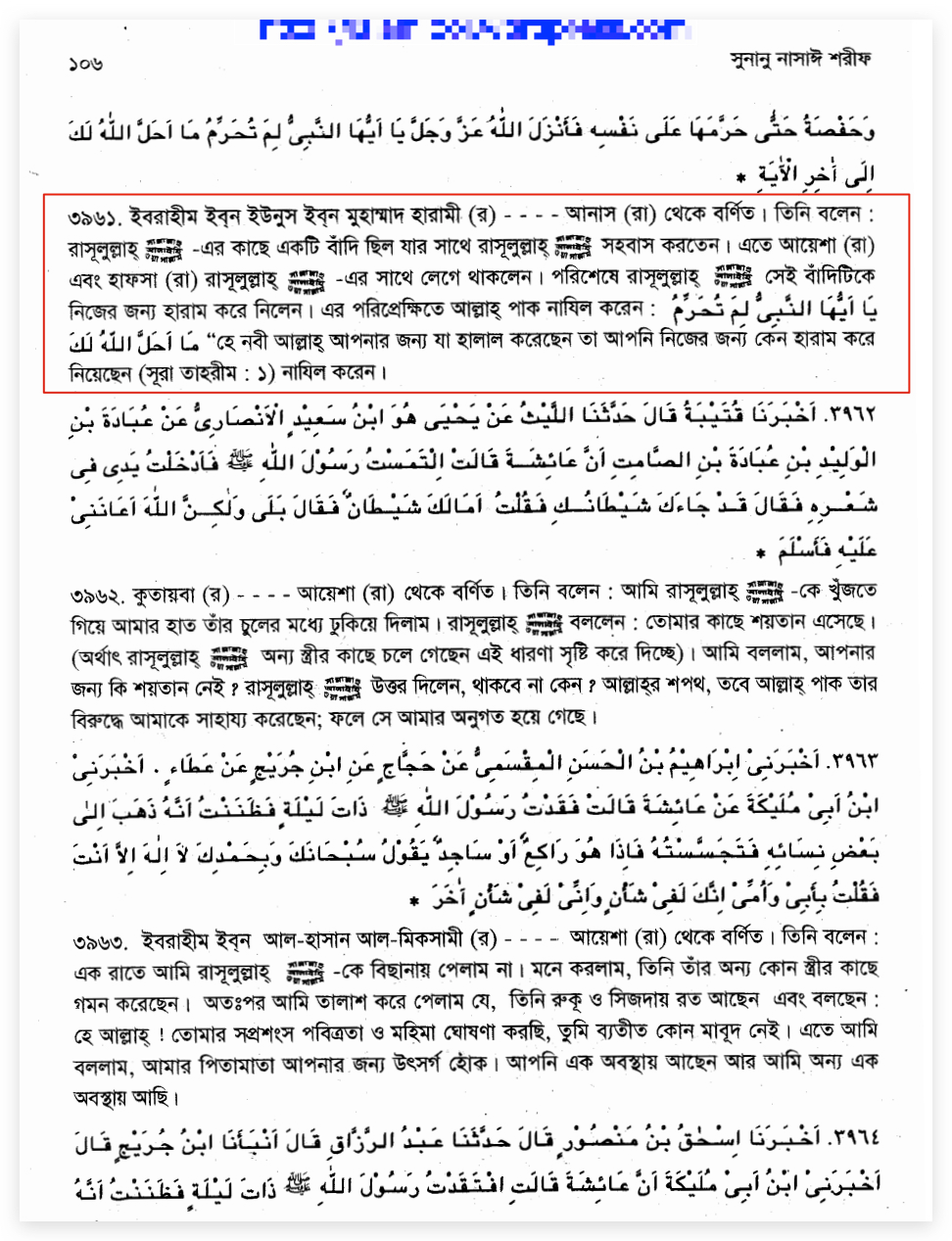
A Sex Marathon within the Same Day or Night
Sahih al-Bukhari (Tawhid edition)
Book: 5. Bathing
5/12. Taking One Bath after Repeated Intercourse or Intercourse with Several Wives
268. Narrated Anas ibn Malik: The Prophet visited his wives in succession at one time during the day or night. They were eleven. The narrator says: I asked Anas, ‘Did he possess so much strength?’ He said, ‘We used to say among ourselves that he had been given the strength of thirty men.’ Sa‘id narrates from Qatadah that, when Anas related the hadith to them, he mentioned nine wives rather than eleven. (See 284, 5068, 5215.) (Adhunik Prakashani: 261; Islamic Foundation: 266.)
Hadith grading: Sahih (Authentic)
Sahih al-Bukhari (Islamic Foundation)
Book: 54. Marriage
Chapter: 2429. Polygyny
4697. Ibrahim ibn Musa … narrated from ‘Ata’: We attended the funeral of the Messenger’s wife Maymunah at Sarif with Ibn ‘Abbas. He said, ‘She is the Messenger’s wife. When lifting her bier, do not jostle or shake it vigorously; carry it gently. The Messenger had nine wives. He spent nights with eight in turn, but one had no allotted overnight turn.’
Hadith grading: Sahih (Authentic)
The Prophet Became Aroused on Seeing Women in the Street
Sahih Muslim (Hadith Academy)
Book: 17. Marriage
Chapter: 2. A Man Who Feels Sexual Desire on Seeing a Woman Should Go and Have Intercourse with His Wife or Enslaved Woman
3300-(10/…). Salamah ibn Shabib … narrated from Jabir: I heard the Prophet say, ‘If seeing a woman arouses something in any of you, let him go to his wife and have intercourse with her. This will remove what is in his heart.’ (Islamic Foundation: 3275; Islamic Centre: 3273.)
Hadith grading: Sahih (Authentic)
Sahih Muslim (Hadith Academy)
Book: 17. Marriage
Chapter: 2. A Man Who Feels Sexual Desire on Seeing a Woman Should Go and Have Intercourse with His Wife or Enslaved Woman
3298-(9/1403). ‘Amr ibn ‘Ali … narrated from Jabir: The Messenger of Allah saw a woman. He went to his wife Zaynab, who was busy tanning a hide, and satisfied his need. Afterwards, he came out to the Companions and said, ‘A woman approaches in the form of Satan and departs in the form of Satan. If any of you sees a woman, let him go to his wife, because that removes what is in his heart.’ (Islamic Foundation: 3273; Islamic Centre: 3271.)
Hadith grading: Sahih (Authentic)
The Prophet Engaged in Intimacy Even During Menstruation
Muhammad had nine wives and two enslaved women at the same time; accounts also describe his relationships with various other women at different times. Even with nine wives and two enslaved women, he engaged in intimacy with a menstruating wife. During menstruation, we generally refrain from intercourse and control our desires. With so many wives and enslaved women, he could naturally have gone to another wife to satisfy his sexual needs. Yet he did not leave his wives alone even during their periods. He had their genital area covered with cloth and used other parts of their bodies to satisfy himself sexually. In other words, he presumably rubbed his genitals against their knees, breasts, mouths and so forth. Several hadiths provide evidence of this: [95] [96]
Sahih Muslim (Islamic Foundation)
3/ Menstruation
Chapter: 1. Intimacy with a menstruating woman above the waist-wrapper
572. Abu Bakr ibn Abi Shaybah, Zuhayr ibn Harb and Ishaq ibn Ibrahim … narrated from ‘A’ishah. She said: Whenever one of us was menstruating, she would, at the Messenger of Allah’s instruction, securely wrap a cloth around her lower body. The Messenger of Allah would then engage in intimacy with her.
Hadith grading: Sahih (Authentic)
Narrator: ‘A’ishah bint Abi Bakr al-Siddiq
Sunan al-Nasa’i (Islamic Foundation)
3/ Menstruation and Irregular Bleeding
Chapter: 12/ Bodily contact with a menstruating wife
374. Ishaq ibn Ibrahim … narrated from ‘A’ishah. She said: When one of us was menstruating, the Messenger of Allah would instruct her to wear a waist-wrapper. He would then bring his body into contact with hers.
Hadith grading: Sahih (Authentic)
Narrator: ‘A’ishah bint Abi Bakr al-Siddiq
The Prophet Established a Harem
The word harem means a residence for concubines. Wives are not kept in a harem; only concubines are. The Prophet had a harem for his concubines.
Sahih Muslim (Islamic Foundation)
Book: 51/ Repentance
Chapter: 11. The Messenger of Allah’s harem being cleared of suspicion
6766. Zuhayr ibn Harb … narrated from Anas. He said: An accusation was made against a man concerning the Messenger of Allah’s umm walad, an enslaved woman who had borne him a child. The Messenger of Allah then said to ‘Ali: Go and strike off his head. ‘Ali went to him and found him cooling himself in a well. ‘Ali said: Come out. The man extended his hand towards ‘Ali, who pulled him out and saw that he had been castrated and had no penis. ‘Ali therefore refrained from killing him. He returned to the Prophet and said: Messenger of Allah, he has been castrated; he has no penis.
Hadith grading: Sahih (Authentic)
‘A’ishah Knew of the Prophet’s Lechery
Juwayriyah bint al-Harith was a woman taken captive in the conflict with the Banu al-Mustaliq tribe, whose chief was her father. Her husband, Mustafa ibn Safawan, was killed in the attack. Juwayriyah initially fell to the Companion Thabit ibn Qays ibn al-Shammas as his share of the spoils. She then went to Muhammad and asked to be released as the tribal chief’s daughter. Muhammad rejected that request and proposed marriage instead. The crucial point is that Juwayriyah was exceptionally beautiful. ‘A’ishah had therefore already realised that the sight of this woman would arouse her husband’s lust. [97]
Sunan Abi Dawud (Verified Edition)
24/ Manumission
Chapter: 2. Selling a mukatab, a slave under a contract of emancipation, when the contract is broken
3931. Narrated from ‘A’ishah. She said: In the campaign against Banu al-Mustaliq, Juwayriyah bint al-Harith ibn al-Mustaliq was taken captive and fell to Thabit ibn Qays ibn Shammas, or to his cousin. She then entered into a contract to obtain her freedom. She was a very beautiful woman, with a striking appearance. ‘A’ishah said: She came to the Messenger of Allah seeking help with the payment stipulated in her contract. As soon as she stood at the door, I saw her and felt displeased. I thought that the Messenger of Allah would soon see the same beauty and charm that I had seen.
She then said: Messenger of Allah, I am Juwayriyah bint al-Harith. My social standing is surely known to you. I have fallen to Thabit ibn Qays ibn Shammas. I have entered into a contract for my freedom and have come to seek your help in paying the stipulated amount. The Messenger of Allah said: Would you agree to something better than that? She asked: What proposal, Messenger of Allah? He said: I would like to pay everything due under your contract and marry you. She said: Yes, I agree to your proposal.
‘A’ishah said: News spread that the Messenger of Allah had married Juwayriyah. People began releasing all the captives in their possession, saying: These are the Messenger of Allah’s relatives by marriage. ‘A’ishah said: I have never seen a woman bring greater blessings to her people than she did. Through her alone, one hundred families of Banu al-Mustaliq were freed. Imam Abu Dawud said: This hadith establishes that a Muslim ruler may marry directly.[1]
Hasan.
[1]. Ahmad.
Hadith grading: Hasan (Good)
Narrator: ‘A’ishah bint Abi Bakr al-Siddiq
This account is also found in the biographies of the Prophet. [98]
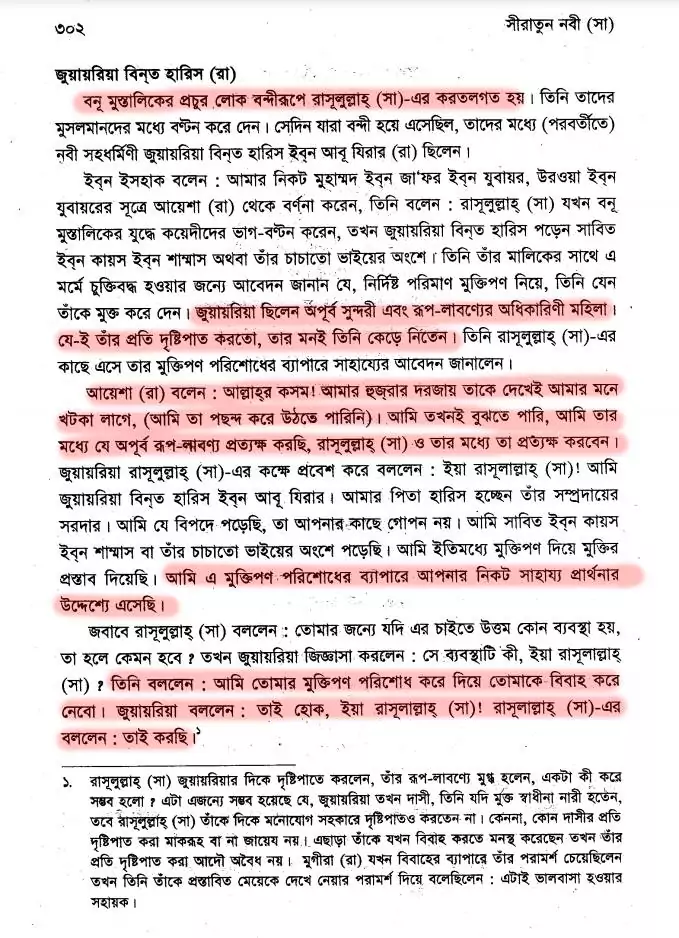
The Prophet’s biography records that even on his deathbed, ‘A’ishah told him that if she died before he did, he would bury her and then bring another wife into her room. In other words, ‘A’ishah knew and understood the Prophet’s character very well. [99]
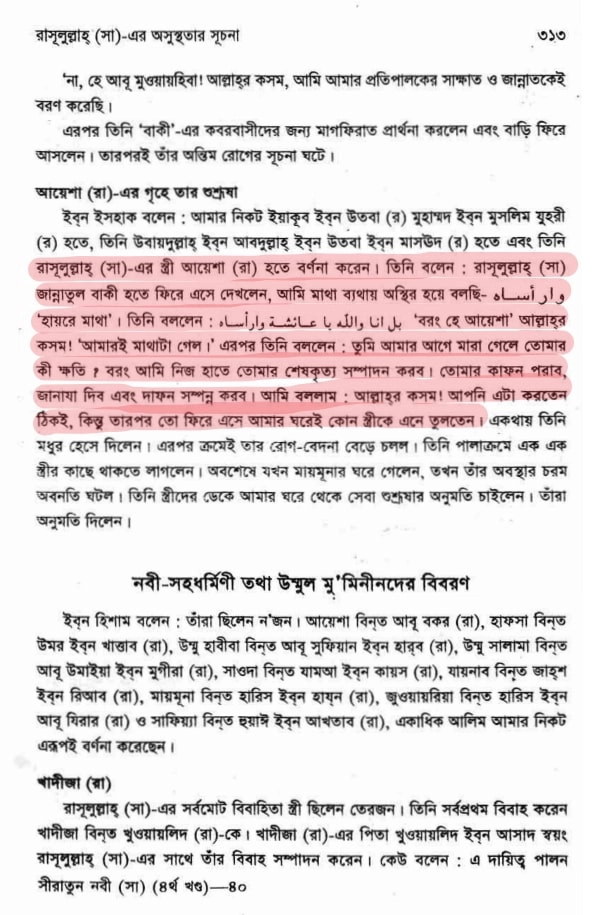
The account appears even more explicitly in Sahih al-Bukhari: [100]
Sahih al-Bukhari (Islamic Foundation)
62/ Accounts Concerning the Sick
Chapter: 2265. A sick person saying, ‘I am suffering’, ‘My head!’ or ‘My pain has become severe’; and Job’s statement: My Lord, suffering has touched me, and You are the most merciful
5264. Yahya ibn Yahya Abu Zakariyya … narrated from al-Qasim ibn Muhammad. He said: ‘A’ishah said: Oh, my head! The Messenger of Allah replied: If that happens while I am still alive, I shall ask forgiveness for you and pray for you. ‘A’ishah said: Alas! By Allah, I think you would like me to die, so that the very next day you could spend the night with your other wives. The Prophet said: Rather, I have more reason to say, ‘My head!’ I had intended—or he said, I had decided—to send for Abu Bakr and his son and leave instructions, so that people would have no opportunity to make claims, or so that those with ambitions would have no opportunity to pursue them. Then I realised that Allah would disapprove of anyone other than Abu Bakr aspiring to the caliphate, and the believers would reject it. Or he said: Allah would reject it and the believers would disapprove of it.
Hadith grading: Sahih (Authentic)
Narrator: al-Qasim ibn Muhammad
The Prophet Did Not Die Before Satisfying His Desires
According to ‘A’ishah’s account, the Prophet did not die until he had been able to take and enjoy women according to his wishes. In other words, Allah did not let him die until his desire for enjoyment had been completely fulfilled.
Sunan al-Nasa’i (Islamic Foundation)
26/ Marriage
Chapter: 2. What Allah made obligatory upon His Messenger and prohibited for others, for the purpose of increasing closeness to Allah
3207. Muhammad ibn Mansur … ‘Ata’ said: ‘A’ishah said that the Messenger of Allah did not die until it had been made lawful for him, among women, to take whomever he wished.
Verification: Sahih.
Hadith grading: Sahih (Authentic)
Narrator: ‘Ata’ ibn Abi Rabah
The Prophet Entered into Mut‘ah Marriage
A large proportion of Sunnis hold that mut‘ah marriage has been prohibited, although a large proportion of Shi‘a Muslims still regard it as lawful. An authentic hadith in the collection compiled by Imam Ahmad ibn Hanbal establishes that Muhammad himself entered into mut‘ah marriage. Indeed, it is a practice of the Prophet’s Sunnah.
Musnad Ahmad
Musnad of ‘Umar ibn al-Khattab (Hadiths Narrated by ‘Umar)
351. Ibrahim, the son of Abu Musa, narrated that Abu Musa used to issue fatwas in favour of mut‘ah, temporary marriage. A man said to Abu Musa: Be a little more cautious with some of your fatwas, because you do not know what new practice the Commander of the Faithful has introduced concerning Hajj since your departure. Abu Musa eventually met ‘Umar and asked him about it. ‘Umar replied: I have been informed that the Messenger of Allah and his Companions practised it. However, I dislike people spending their wedding nights with their wives from mut‘ah marriages and then going to Hajj while drops of water are still trickling down from their hair.
(Muslim 1222)
Hadith grading: Sahih (Authentic)
Musnad Ahmad
Musnad of ‘Umar ibn al-Khattab (Hadiths Narrated by ‘Umar)
342. Abu Musa narrated that ‘Umar said: That is, mut‘ah, temporary marriage, is a Sunnah of the Messenger of Allah. Yet I fear that people will spend their wedding nights with these wives beneath acacia trees and then take them to Hajj.
(Hadith 351)
Hadith grading: Sahih (Authentic)
Let us also examine these two hadiths directly in Musnad Ahmad itself. [101]
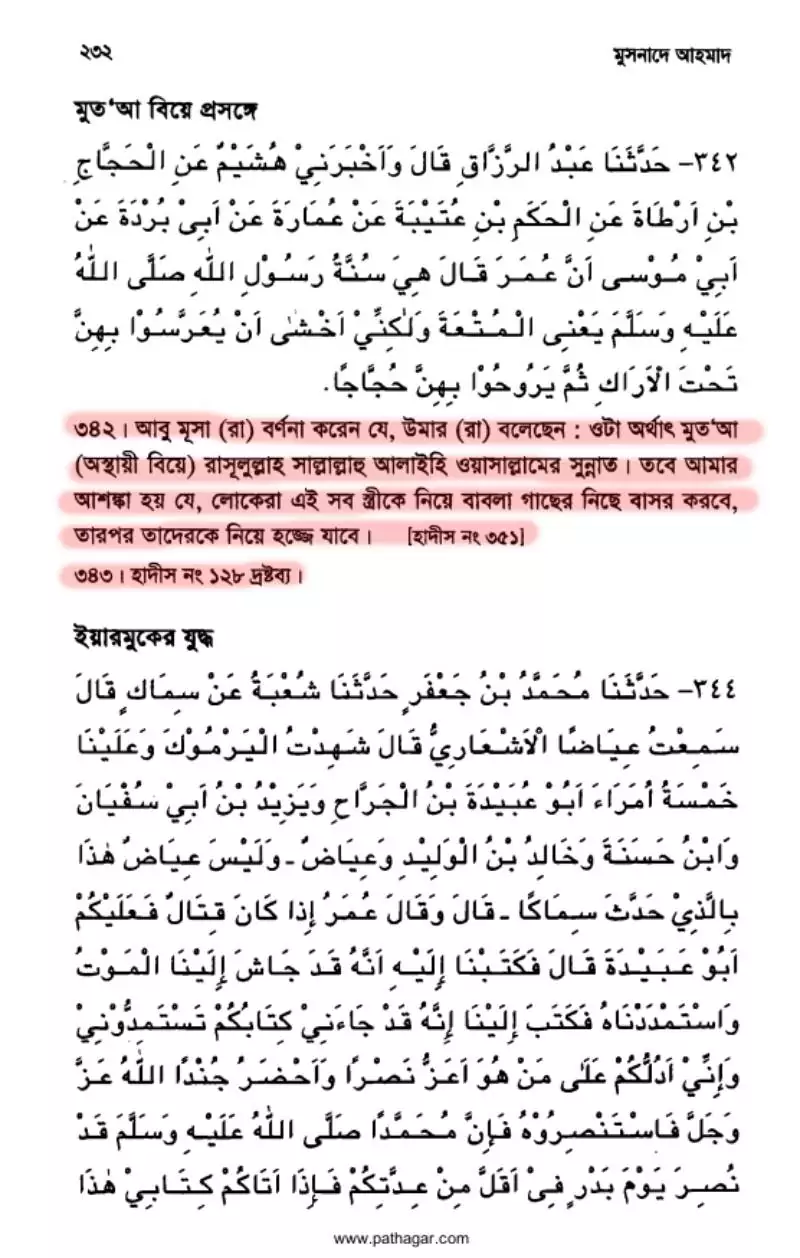
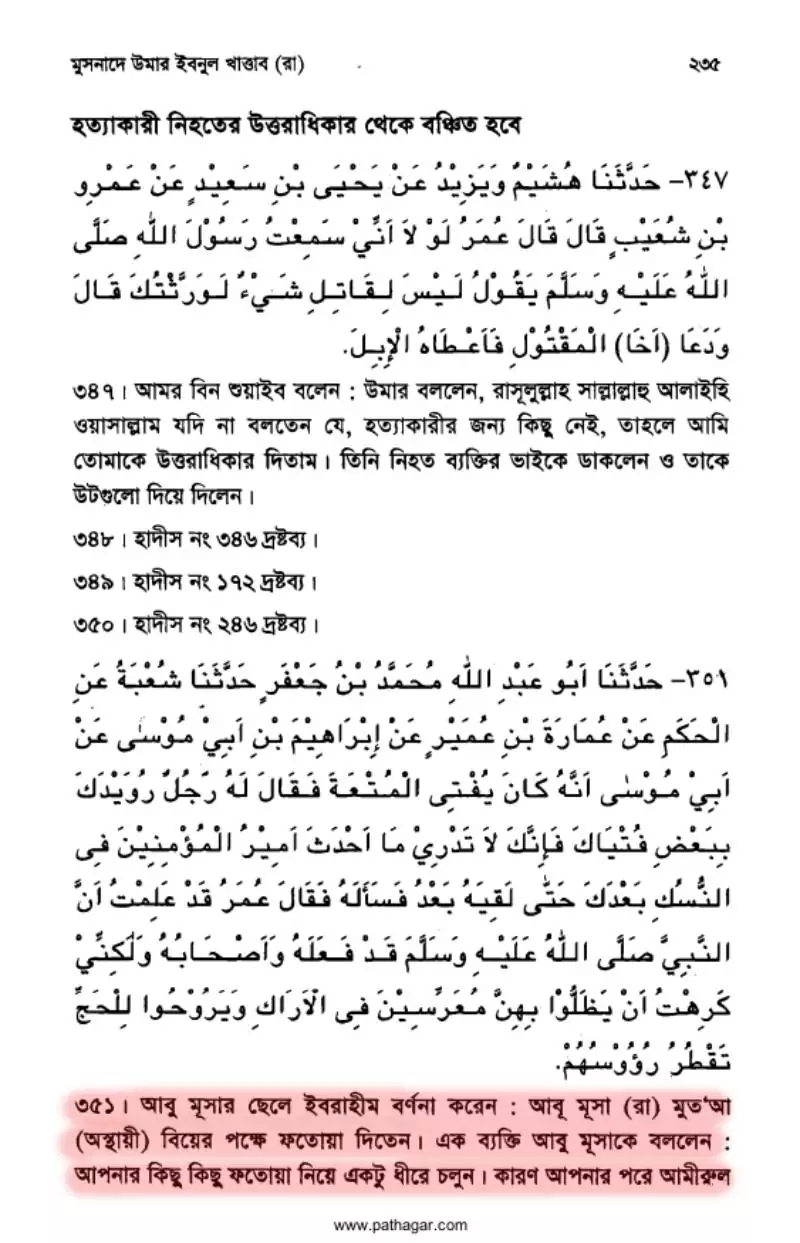
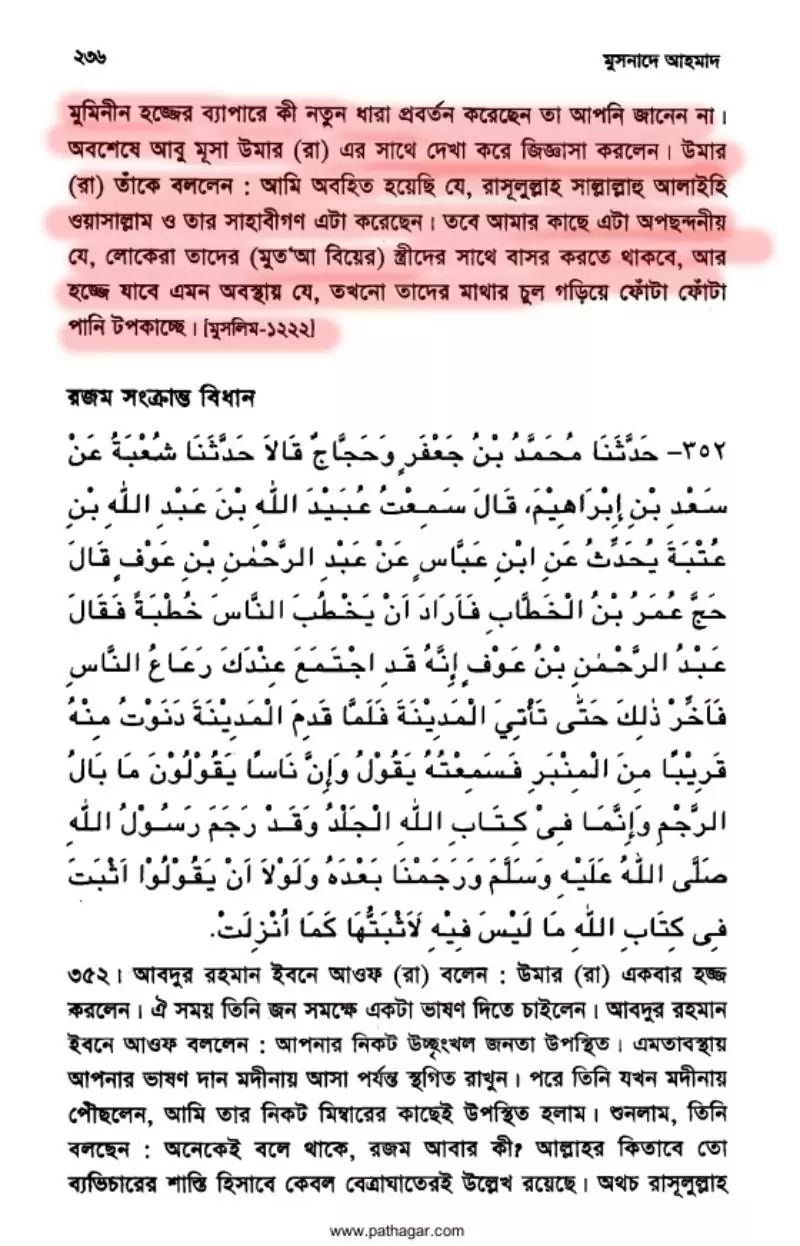
The two hadiths above show that mut‘ah marriage was a Sunnah of Muhammad himself. The Prophet himself practised it.
The Prophet Was a Rapist
We must first understand what the word rape means and how it is defined. Rape means engaging in sexual relations with someone through physical force, any other form of pressure, blackmail or abuse of authority. Sexual intercourse with someone incapable of giving consent—for example, an unconscious person, a person with a disability that prevents consent, a person with an intellectual disability, or a minor—also falls within the definition of rape, however it is carried out. In other words, any sexual intercourse with a person who has not freely and knowingly consented as an adult constitutes rape. Let us now examine whether the Prophet was a rapist.
Touching a Woman Against Her Will
Sahih al-Bukhari records that the Prophet pressured a princess to engage in sexual activity and touched her body. The woman rejected him with disgust and insulted him as a common market fellow. He subsequently let her go after she invoked Allah’s protection. This woman was an underage girl whom the Prophet had forcibly married. This matter will be discussed in detail in another article. For now, consider the point to which I am drawing attention here. [102]
Sahih al-Bukhari (Tawhid)
68/ Divorce
Chapter: 68/3. Must a husband pronounce divorce in his wife’s presence?
5255. Narrated from Abu Usayd. He said: We went out with the Prophet and, passing the garden called al-Shawt, reached two gardens and sat between them. The Prophet said: Remain seated here. He went inside. The woman from al-Jawn was brought to a house in the date-palm garden of Umaymah, the daughter of Nu‘man ibn Sharahil. A nurse was also there to attend to her. When the Prophet approached her and said, ‘Give yourself to me’, she replied: Would a princess give herself to a common market fellow? The narrator said: He then extended his hand to place it on her body, to calm her. She said: I seek refuge in Allah from you. He said: You have sought refuge with the proper One. He then came out to us and said: Abu Usayd, give her two linen garments and take her back to her family. (5257; Adhunik Prakashani 4871; Islamic Foundation 4765)
Hadith grading: Sahih (Authentic)
Narrator: Abu Usayd
Let us try to understand what was meant here by a ‘market fellow’, and precisely what sort of person that expression indicated at the time, through another authentic hadith. [103]
Sahih Muslim (Islamic Foundation)
46/ The Virtues of the Companions
Chapter: 16. The virtues of Umm Salamah, Mother of the Believers
6093. ‘Abd al-A‘la ibn Hammad and Muhammad ibn ‘Abd al-A‘la al-Qaysi … narrated from Salman. He said: If you can, do not be the first to enter the marketplace or the last to leave it. The marketplace is Satan’s haunt, and there he raises his banner. Salman said: I was also informed that Gabriel came to the Prophet while Umm Salamah was beside him. The narrator said: Gabriel spoke and then departed.
The Messenger of Allah then asked Umm Salamah: Who was that? Or he said something similar. Umm Salamah replied: Dihyah al-Kalbi. She said: By Allah, I thought he was Dihyah al-Kalbi until I heard the Messenger of Allah’s address. He was telling us about their conversation—or said something to that effect—meaning that he was describing Gabriel’s arrival. The narrator said: I asked Abu ‘Uthman, the transmitter: From whom did you hear this hadith? He replied: From Usamah ibn Zayd.
Hadith grading: Sahih (Authentic)
Narrator: Salman al-Farisi
Now let us read the next hadith. [104]
Sahih al-Bukhari (Tawhid Publications)
68/ Divorce
Chapter: 68/3. Must a husband pronounce divorce in his wife’s presence?
5256–5257. Through a different chain, Sahl ibn Sa‘d and Abu Usayd narrated: The Prophet married Umaymah bint Sharahil. When she was subsequently brought to him, he extended his hand towards her. She disliked this. The Prophet therefore instructed Abu Usayd to gather her belongings, give her two linen garments and take her back to her family. [5255] Adhunik Prakashani 4871, concluding part; Islamic Foundation 4765.
A similar account is narrated from Abu Usayd and Sahl ibn Sa‘d. [5237] Adhunik Prakashani: not included; Islamic Foundation 4766.
Hadith grading: Sahih (Authentic)
Narrator: Sahl ibn Sa‘d
Many Islamic preachers engage in various forms of dishonesty concerning these hadiths. For that reason, I am presenting the two hadiths to you very carefully. Pay close attention to the names. The images have been taken directly from the book. [105]
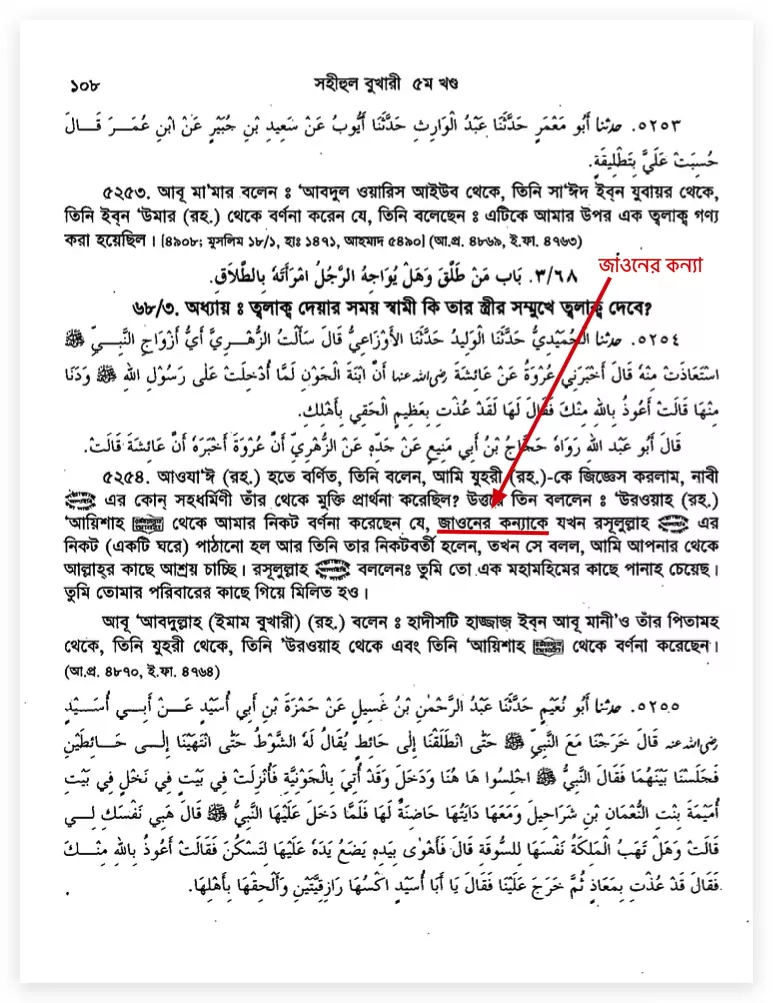
Now let us read the next hadith. [105] Notice that Umaymah, the daughter of Nu‘man ibn Sharahil, and al-Jawniyyah, the daughter of al-Jawn, are two different people. The Prophet is reported to have married Umaymah, but there is no specific evidence that he married al-Jawniyyah. Rather, the sequence of events suggests that she was brought to that garden house for his sexual enjoyment, something her displeasure makes fairly clear. To protect the Prophet’s reputation, many believers may discard all sense of shame and try to pass the two off as the same person. I am therefore distinguishing them very clearly. Read carefully. [106]
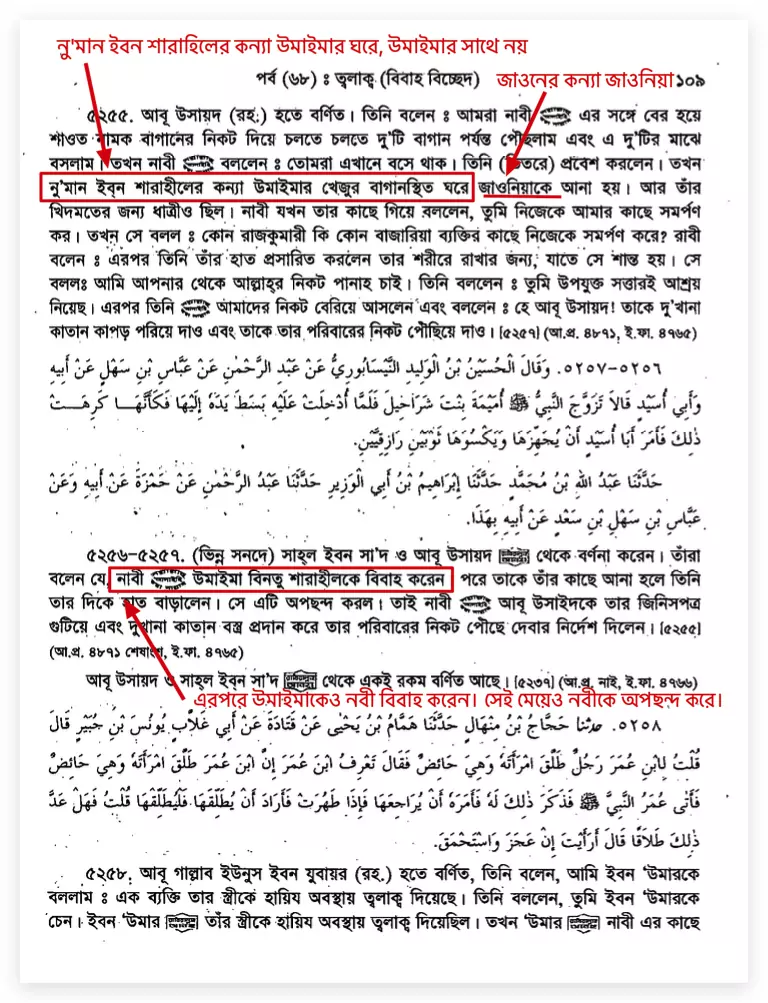
After casting lustful eyes on two women in succession and failing to get what he wanted, the Prophet must have been deeply distressed. Let us see what he did next. To find out what one of his Companions said on seeing him in this humiliating predicament, we must consult al-Bidayah wa al-Nihayah. [107] Readers should notice that the Prophet was then inflamed with lust but could not find a woman for sexual activity. Reaching towards two women had achieved nothing. Two women in succession had refused sex with him. One of his followers then comforted the poor Prophet by saying that he had a beautiful sister and would bring her if the Prophet wanted! He actually tempted him by describing his sister’s beauty and brought his sister Qatilah, so that the lustful Muhammad could quench his desire. What magnificent people the Prophet’s followers were—it is astonishing to contemplate! If one is unavailable, try another; if that one is unavailable, try yet another. Apparently any opening will do!
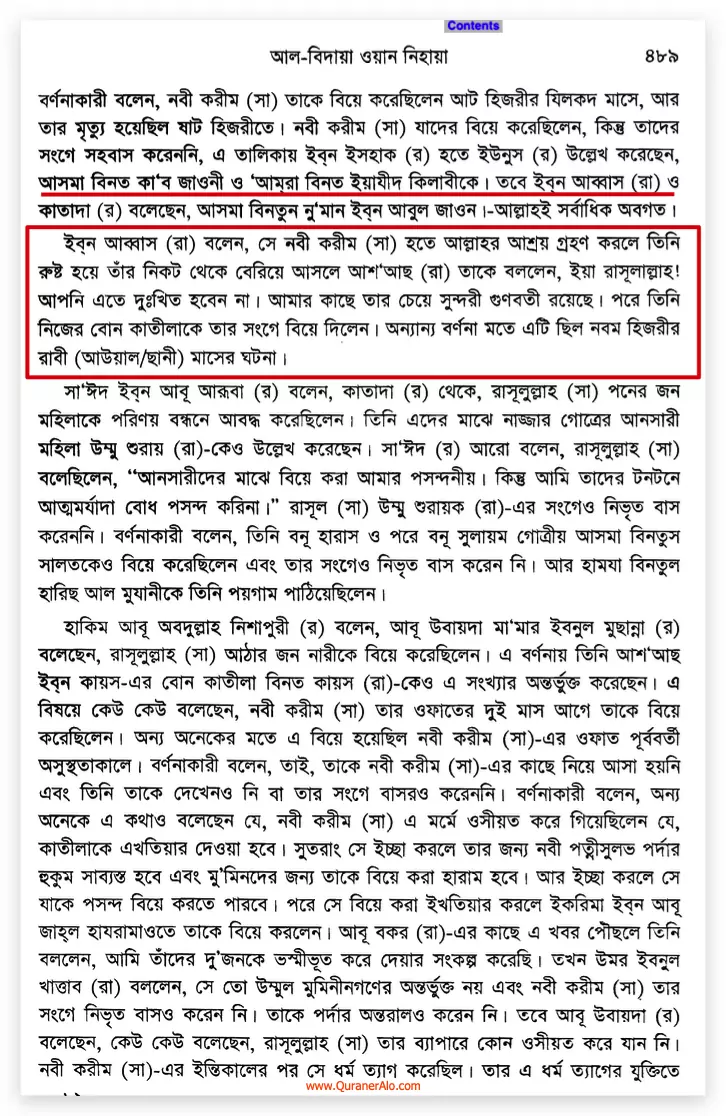
The entire incident is also recorded in Volume 5 of the well-known work of Islamic history, al-Bidayah wa al-Nihayah. Intending to engage in sexual activity with a woman, the Prophet told her to give herself to him. She openly insulted Muhammad, calling him a lowly market fellow, and said that she did not want sexual relations with him. Muhammad then touched her body, but she invoked Allah and told him to stop. After she invoked Allah, he did not force her into sexual activity.
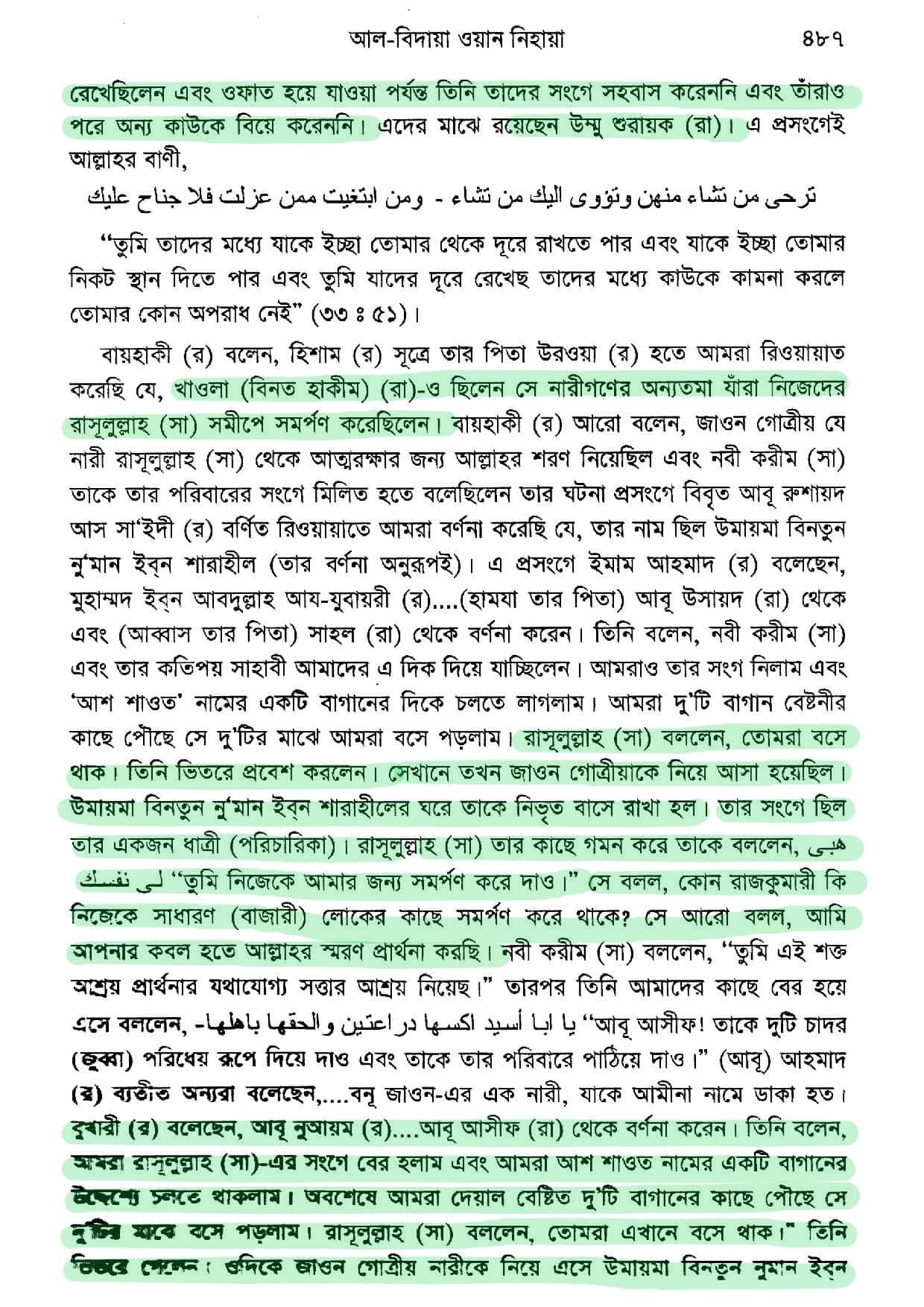
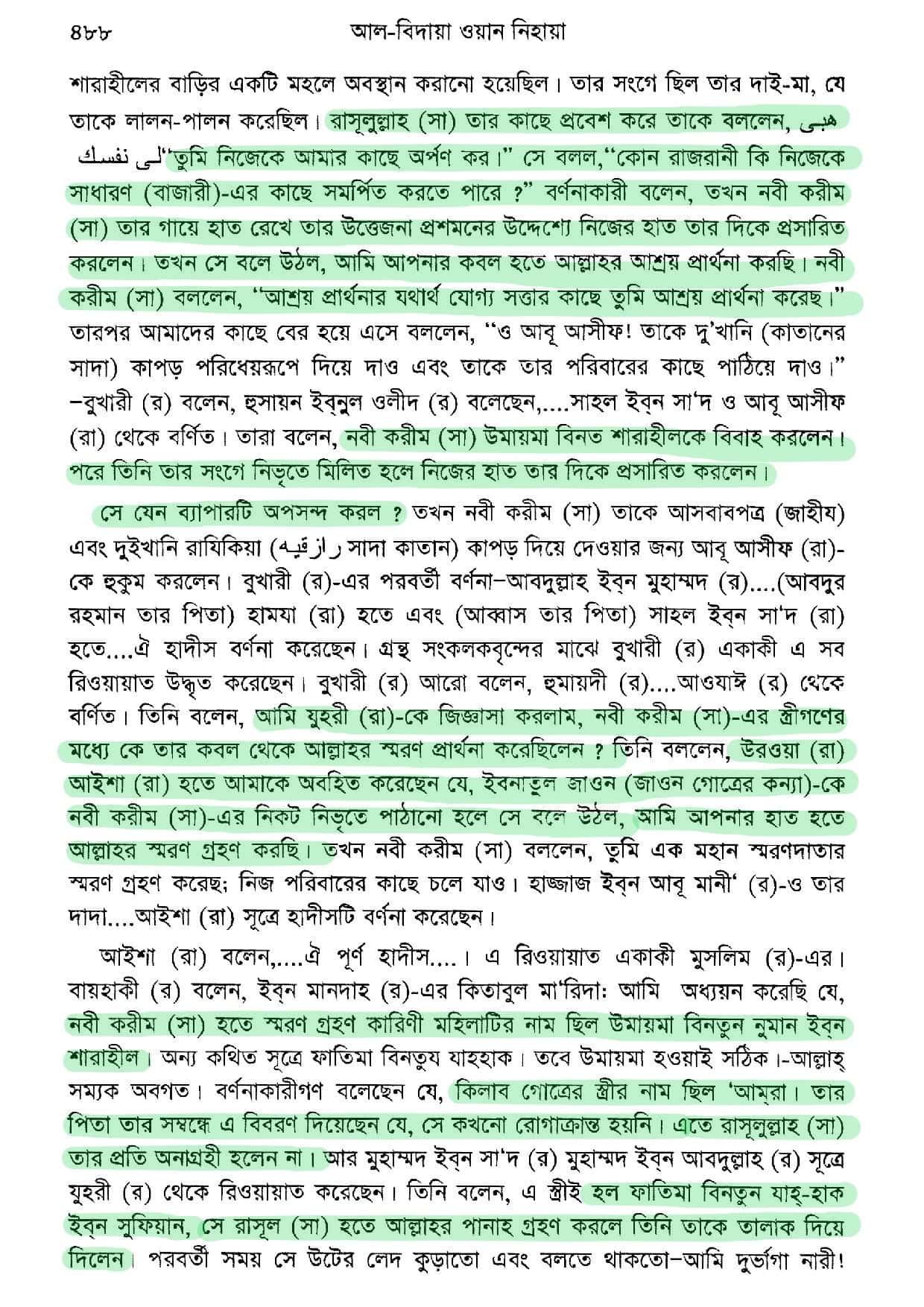
The Prophet Raped Enslaved Women
Muhammad accepted beautiful women as gifts. He accepted an exceptionally beautiful young woman named Mariyah al-Qibtiyyah as a gift and, without marrying her, fathered a child with her named Ibrahim. Mariyah al-Qibtiyyah had been sent as an enslaved woman. An enslaved woman has no meaningful right of consent. Had Mariyah freely chosen the Prophet and engaged in sexual relations with him, there would have been no objection. But an enslaved woman sent as a gift does not possess the right to choose the person she loves. She must have sex with the person to whom she has been given; in other words, she is compelled to engage in sexual activity. This too constitutes rape.
The Prophet Raped a Child
A child cannot give sexual consent. Until a child becomes an adult, understands sexuality and acquires knowledge of it, and can exercise judgement about right and wrong, the child must under no circumstances be involved in sexual activity. Yet Muhammad had sex with ‘A’ishah when she was nine years old. This clearly falls within the definition of rape as well.
The Prophet Raped Female Prisoners of War
Muhammad himself killed unbelievers and divided their captive women like property, allocating them to his Companions as well. He encouraged sexual intercourse with them. A female prisoner of war will not voluntarily have sex with fighters from the army that killed her father, husband or brother. This too falls within the definition of rape.
The Prophet Authorised Marital Rape
It is essential to remember that even after marriage, a person can be raped by their spouse. Most people in our country are unfamiliar with this concept. In developed and civilised countries, however, the law takes action when a husband or wife alleges rape—that is, forced sexual activity without consent. This is called marital rape. Muhammad made this lawful for men. In other words, a husband’s desire takes precedence; his wife’s wishes receive no consideration.
The Prophet Was a Misogynist
The lustful Muhammad was an intensely misogynistic man. He held deeply degrading and objectionable attitudes towards women. Those attitudes are set out here.
Where Will Murdered Children Go?
We often hear Islamic scholars say that girls were buried alive in the age of ignorance and that the compassionate Prophet, who loved women, supposedly ended this practice. Yet no such source is known. Rather, the histories of Khadijah and other women suggest that women actually possessed power at the time. But did the Prophet really feel love for girls who were buried alive? Did he grieve for them? Muhammad said that the polytheists who buried their daughters alive would go to Hell—and that the children who had been buried alive, who had accumulated neither sins nor good deeds, would also go to Hell.
Sunan Abi Dawud (Islamic Foundation)
35/ Sunnah
Chapter: 18. The children of polytheists
4642. Ibrahim ibn Musa … narrated from ‘Amir. He said: The Messenger of Allah said: The girl buried alive and her mother are both destined for Hell.
Hadith grading: Sahih (Authentic)
Narrator: al-Sha‘bi
The Prophet Described Women as Objects of Enjoyment
Muhammad said that a woman is an article of enjoyment, an object to be consumed. If women were created to entertain men, that certainly does not recognise a woman as an independent person in her own right; rather, it identifies her as an object for male enjoyment, as a sexual instrument. Read the following hadith as well.
Sahih Muslim (Islamic Foundation)
Book: 18/ Breastfeeding
Chapter: 9. Instructions concerning women
3512. Muhammad ibn ‘Abd Allah ibn Numayr al-Hamdani … narrated from ‘Abd Allah ibn ‘Amr that the Messenger of Allah said: The world is an article of enjoyment, and the best article of enjoyment in the world is a virtuous woman.
Hadith grading: Sahih (Authentic)
Women Are the Cause of All Human Misery
Sahih al-Bukhari (Tawhid)
Book: 60/ The Prophets
Chapter: 60/1a. The words of Allah
3330. A similar account is narrated from Abu Hurayrah through the Prophet. The Prophet said: Were it not for the Children of Israel, meat would not become foul-smelling. And were it not for Eve, no woman would betray her husband.
* (5184, 5186) (Muslim 17/19, Hadith 1470; Ahmad 8038) (Adhunik Prakashani 3084; Islamic Foundation 3092)
* The Children of Israel received an unrestricted supply from Allah of the flesh of birds called salwa for food. Nevertheless, their storing it caused meat to begin rotting. Mother Eve influenced Adam to eat the forbidden fruit.
Hadith grading: Sahih (Authentic)
The Prophet Described Women as Crooked
Sahih Muslim (Islamic Foundation)
Book: 18/ Breastfeeding
Chapter: 9. Instructions concerning women
3513. Harmalah ibn Yahya … narrated from Abu Hurayrah. He said: The Messenger of Allah said: A woman is like a rib—crooked. If you try to straighten her, you will break her; and you will derive benefit from her while leaving her crookedness intact.
Zuhayr ibn Harb and ‘Abd ibn Humayd … through al-Zuhri’s nephew from his uncle al-Zuhri, narrated an identical report from Ibn Shihab through a chain similar to the preceding one.
Hadith grading: Sahih (Authentic)
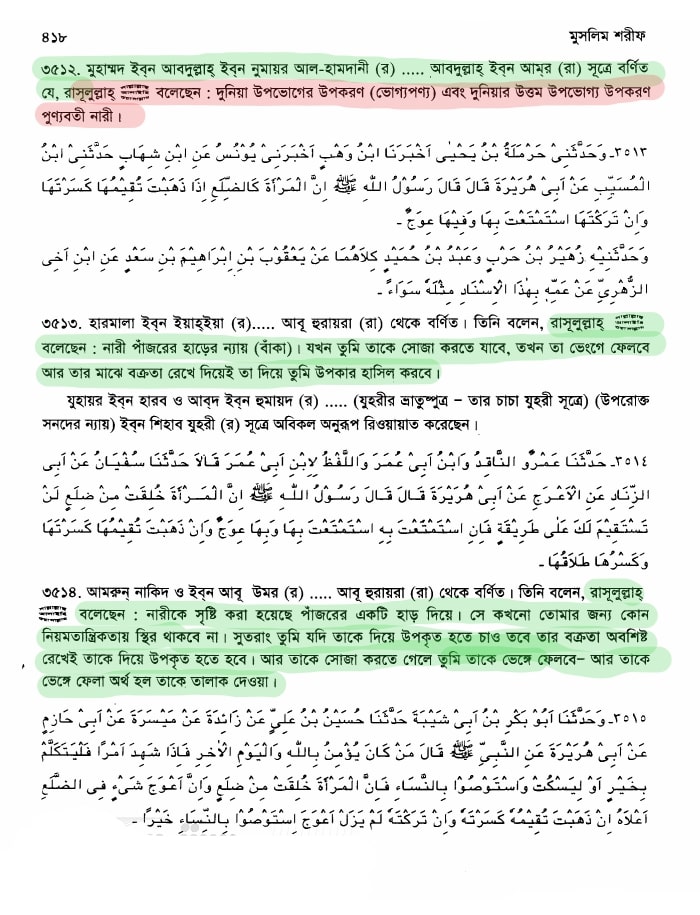
Women Are Inauspicious, or Misfortune Resides in Women
Sahih al-Bukhari (Tawhid Publications)
76/ Medicine
Chapter: 76/43. Determining good and bad omens by driving away animals and birds
5753. Narrated from Ibn ‘Umar that the Messenger of Allah said: There is no contagion and no good or bad omen. Misfortune exists in three things: women, houses and animals.[1] [2099; Muslim 39/34, Hadith 2225; Ahmad 4544] (Adhunik Prakashani 5333; Islamic Foundation 5229)
[1] Some women disobey their husbands, while others are childless. Some houses are troubled by wicked jinn, while others become places of unrest because of neighbours’ oppression. Performing prayers and remembering Allah in the home can protect against the misfortune caused by jinn. Some animals are disobedient and unruly.
Hadith grading: Sahih (Authentic)
Narrator: ‘Abd Allah ibn ‘Umar
Sahih Muslim (Islamic Foundation)
Book: 40/ Greetings
Chapter: 33. Bad omens, good omens, auspicious signs and things that may be unlucky
5613. Ahmad ibn ‘Abd Allah ibn Hakam … narrated from Ibn ‘Umar through the Prophet, who said: If misfortune exists in anything, it is in horses, houses and women.
Hadith grading: Sahih (Authentic)
Women Are a Source of Upheaval
Sunan Ibn Majah
Tawhid Publications
Book: 30/ Discord and Upheaval
Chapter: 30/19. The upheaval caused by women
1/3998. Narrated from Usamah ibn Zayd. He said: The Messenger of Allah said: I shall leave behind no trial more disastrous for men than women.
Sahih al-Bukhari 5096; Muslim 2840, 2841; al-Tirmidhi 2880; Ahmad 21239, 21322; al-Sahihah 2701. Al-Albani’s verification: Sahih.
Hadith grading: Sahih (Authentic)
Women, Donkeys and Black Dogs
Bulugh al-Maram
Tawhid Publications
Book: Part 2/ Prayer
Chapter: 4. The sutrah, or barrier, of a person praying; things that invalidate prayer
231. Narrated from Abu Dharr al-Ghifari. He said: The Messenger of Allah said: If, while praying, one does not place a barrier the height of the rear post of a camel’s saddle, and an adult woman, a donkey or a black dog passes in front of the worshipper, the prayer—or its concentration—will be disrupted. This is an excerpt from a lengthy hadith, which also states: A black dog is Satan.
Hadith grading: Sahih (Authentic)
Sunan Ibn Majah
Tawhid Publications
Book: 5/ Establishing Prayer and Its Rules
Chapter: 5/38. Things that invalidate prayer
6/952. Narrated from Abu Dharr. The Prophet said: If there is no object like the post of a camel litter in front of a worshipper, a woman, a donkey or a black dog invalidates his prayer. A later transmitter said: I asked, ‘What is the difference between a black dog and a red dog?’ He replied: I asked the Messenger of Allah just as you have asked me. He said: A black dog is Satan.
References in the six collections: Muslim 510; al-Tirmidhi 338; al-Nasa’i 750; Abu Dawud 702; Ahmad 20816, 20835, 20870, 20914, 20920; al-Darimi 1414. Al-Albani’s verification: Sahih. Al-Albani’s reference: Sahih Abi Dawud 699.
Hadith grading: Sahih (Authentic)
Sunan al-Nasa’i (Islamic Foundation)
Book: 9/ The Qiblah
Chapter: 7/ What invalidates prayer, and what does not, when there is no barrier in front of the worshipper
751. ‘Amr ibn ‘Ali … narrated from Abu Dharr. He said: The Messenger of Allah said: When one of you stands to pray, he should screen himself with something like the backrest of a camel litter placed before him. If he has nothing like that before him, his prayer will be invalidated by a woman, a donkey or a black dog. I asked: What is the distinction between a black dog and red or yellow dogs? He replied: I asked the Messenger of Allah as you have asked me. He said: A black dog is Satan.
Sahih; Ibn Majah, Hadith 952; Muslim (Islamic Centre), Hadith 1029.
Hadith grading: Sahih (Authentic)
Women Have Less Intelligence Than Men
Sahih Muslim (Islamic Foundation)
Book: 1/ Faith
Chapter: 34. Faith decreases through shortcomings in worship; the word kufr also applies to denying favours and commands, besides disbelief in Allah
145. Muhammad ibn Rumh ibn Muhajir al-Misri … narrated from ‘Abd Allah ibn ‘Umar that the Messenger of Allah said: Women, give charity and frequently ask forgiveness, for I have seen that most inhabitants of Hell are women. An intelligent woman asked: Messenger of Allah, why are we the majority in Hell? He replied: You frequently curse and show ingratitude towards your husbands. I have never seen a group deficient in religion and intellect exert greater influence over intelligent men than you.
The woman asked: Messenger of Allah, in what respect are our intellect and religion deficient? He said: Your intellectual deficiency is that the testimony of two women equals that of one man; this is the proof of your deficient intellect. A woman refrains from prayer for several days each month and breaks her fast during Ramadan because of menstruation; this is the deficiency in religion.
Hadith grading: Sahih (Authentic)
Sahih al-Bukhari (Tawhid)
Book: 24/ Zakat
Chapter: 24/44. Giving zakat to close relatives
1462. Narrated from Abu Sa‘id al-Khudri. He said: On an Eid al-Adha or Eid al-Fitr, the Messenger of Allah went to the prayer ground and completed the prayer. He then advised the people and instructed them to give charity, saying: People, give charity. He then approached the women and said: Women, give charity. I have been shown that you are the majority in Hell. They asked: Messenger of Allah, why is that? He replied: You curse frequently and are ungrateful to your husbands. Women, despite being deficient in intellect and religion, I have never seen anyone like you for robbing a resolute man of his reason. When he returned home, Zaynab, the wife of Ibn Mas‘ud, requested permission to enter. He was told: Messenger of Allah, Zaynab has come. He asked: Which Zaynab? They replied: Ibn Mas‘ud’s wife. He said: Yes, let her come. Permission was granted. She said: Prophet of Allah, today you instructed us to give charity. I have jewellery and intend to give it as charity. Ibn Mas‘ud thinks that he and his children have a greater claim to this charity of mine. The Messenger of Allah said: Ibn Mas‘ud is right. Your husband and children have a greater claim to your charity. (304; Muslim 12/2, Hadith 982; Ahmad 7299) (Adhunik Prakashani 1368; Islamic Foundation 1374)
Hadith grading: Sahih (Authentic)
Women Form the Majority in Hell
Sahih al-Bukhari (Islamic Foundation)
Book: 2/ Faith
Chapter: 21/ Ingratitude towards husbands
28. ‘Abd Allah ibn Maslamah … narrated from Ibn ‘Abbas. He said: The Messenger said: I was shown Hell and saw that most of its inhabitants were women, because they commit kufr. He was asked: Do they disbelieve in Allah? He replied: They disobey their husbands and deny kindness. If you treat one of them kindly for a long time, and she then sees the slightest neglect from you, she says: I have never received any kindness from you.
Hadith grading: Sahih (Authentic)
All Women Except Three Are Imperfect
Sahih al-Bukhari (Tawhid)
Book: 60/ The Prophets
Chapter: 60/46. The words of Almighty Allah
3433. Narrated from Abu Musa al-Ash‘ari. He said: The Prophet said: ‘A’ishah’s superiority over all women is like the superiority of tharid over all other foods. Many men have attained perfection, but among women, none has attained perfection except Mary, the daughter of ‘Imran, and Asiyah, Pharaoh’s wife. (3411) (Adhunik Prakashani 3180, first part; Islamic Foundation 3189, first part)
Hadith grading: Sahih (Authentic)
Women Must Not Walk in the Middle of the Road
Sunan Abi Dawud (Islamic Foundation)
Book: 38/ Greetings
5182. ‘Abd Allah ibn Maslamah … Abu Usayd al-Ansari narrated from his father that he heard the Messenger of Allah speaking when, on leaving the mosque, he saw men mixing with women in the middle of the road. The Messenger of Allah said to the women: Wait! You should not walk in the middle of the road; instead, walk along one side. Thereafter, the women walked so close to the walls that their clothes would often catch against them.
Hadith grading: Hasan (Good)
The Prophet Divorced a Wife Because of Illness
The Prophet divorced a wife from Banu ‘Amr ibn Kilab because she had leprosy, despite supposedly possessing miraculous powers. The man whose touch could miraculously cure a leper, the man whom Allah had honoured above all others, divorced his sick wife. [108] [109]
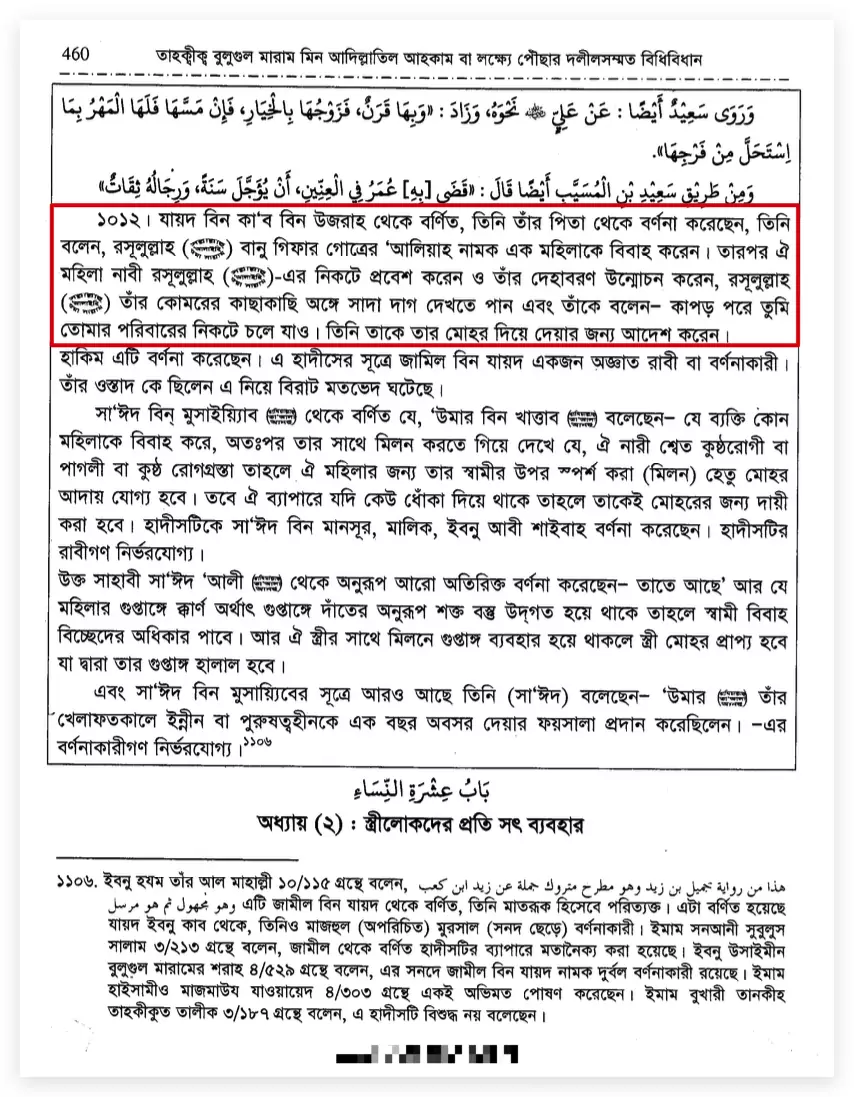
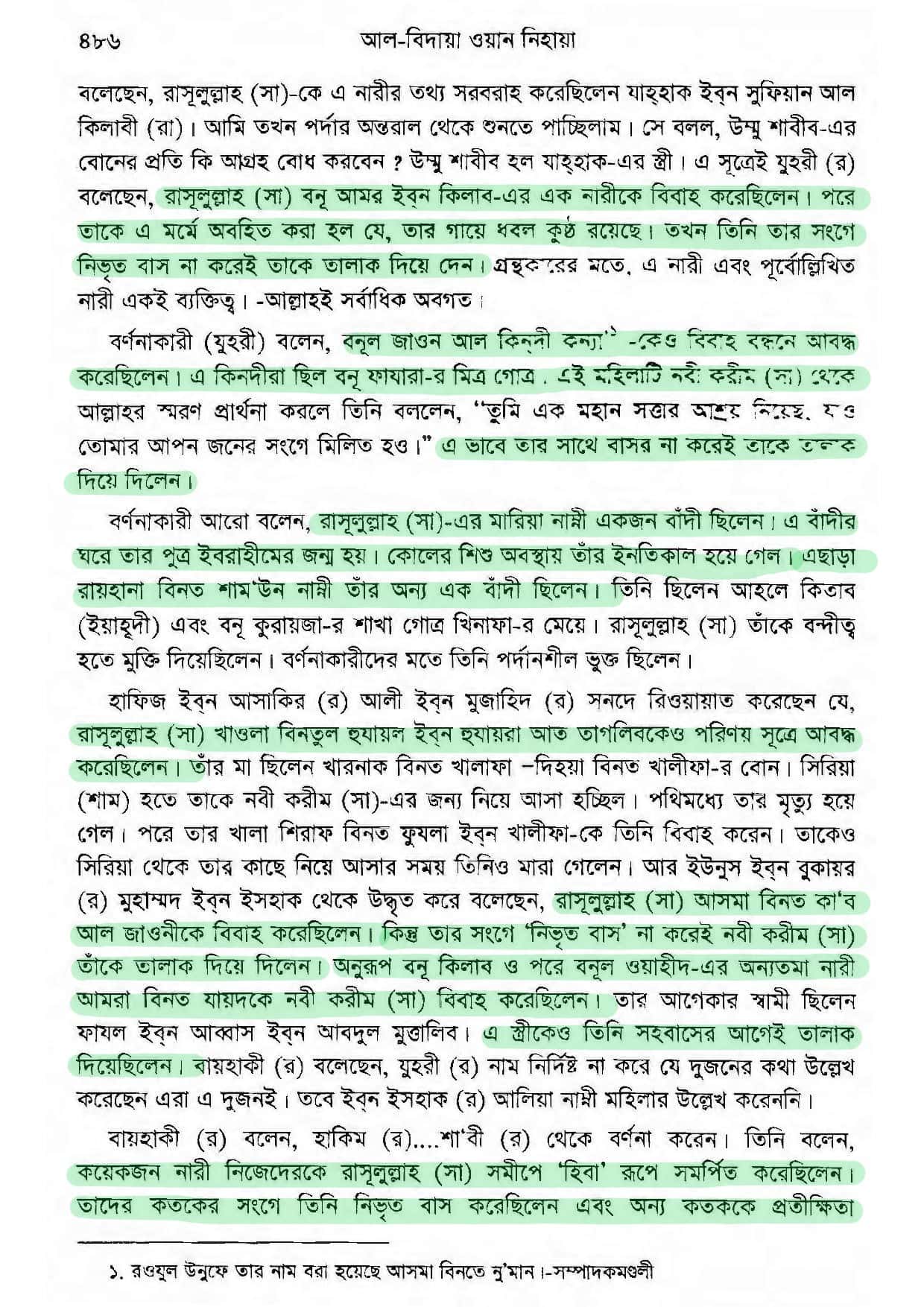
Marriage and Intercourse with Underage Girls
An older man may marry an underage girl, a practice the Prophet made lawful. Muhammad himself married six-year-old ‘A’ishah when he was fifty-three and had sexual intercourse with her at nine, before she began menstruating.
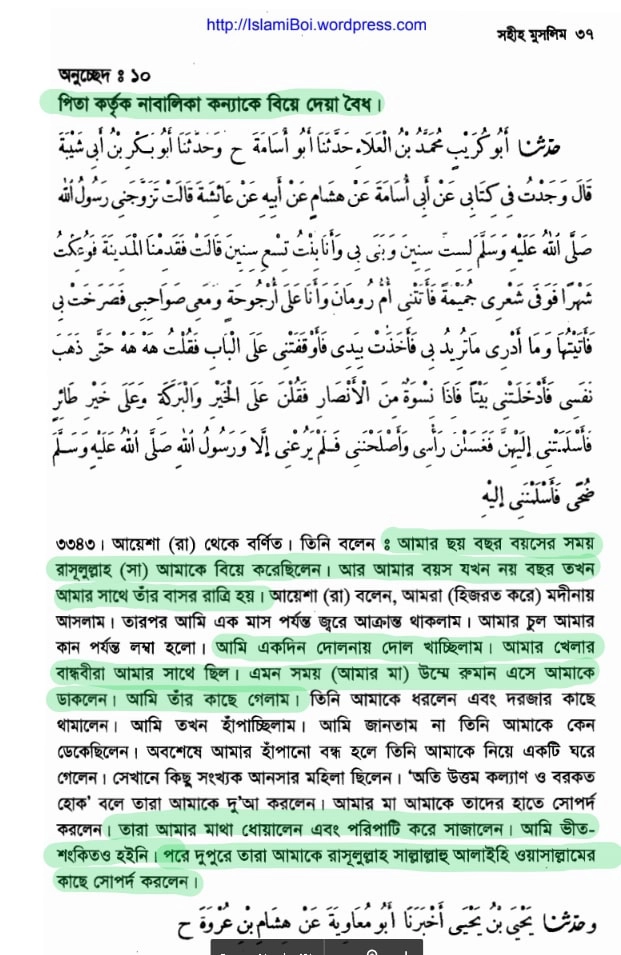
Infertile Women Must Not Be Married
From the Islamic perspective, a woman is a machine for producing children. Since infertile women cannot bear children, they were worth less to Muhammad. For that reason, he prohibited marrying infertile women. This is deeply degrading to women.
Sunan al-Nasa’i (Islamic Foundation)
26/ Marriage
Chapter: 11. It is inappropriate to marry an infertile woman
3230. ‘Abd al-Rahman ibn Khalid … Ma‘qil ibn Yasar said: A man submitted to the Messenger of Allah: I have found a woman of distinguished lineage and high standing, but she is infertile. Should I marry her? He prohibited him. When he came to him on the second day, he again prohibited him. When he came on the third day, he prohibited him and said: Marry women who bear many children and love you, for through you I shall gain numerical superiority.
Verification: Hasan. Irwa’ 1784; Adab al-Zifaf 16; Sahih Abi Dawud 1789.
Hadith grading: Hasan (Good)
Narrator: Ma‘qil ibn Yasar
Sunan Abi Dawud (Verified Edition)
6/ Marriage
Chapter: 4. The prohibition on marrying a woman unable to bear children
2050. Narrated from Ma‘qil ibn Yasar. He said: A man came to the Prophet and said: I have found a beautiful woman of high standing, but she is infertile. Should I marry her? He said: No. The man came a second time and asked him, and he prohibited him. When the man came a third time, he said: Marry women who are loving and bear many children, for I shall boast of your great numbers before other communities.(1)
Hasan Sahih.
(1). Al-Nasa’i.
Hadith grading: Hasan (Good)
Narrator: Ma‘qil ibn Yasar
Advising Men to Marry Young Virgins
Muhammad encouraged his Companions to marry young virgin girls. Several hadiths concern this matter. [110] [111]
Sahih al-Bukhari (Tawhid)
67/ Marriage
Chapter: 67/10. Marrying a divorced woman or a widow
5080. Narrated from Jabir ibn ‘Abd Allah. He said: When I married, the Messenger of Allah asked me: What kind of woman have you married? I said: A previously married woman. He said: Do you not desire virgin girls and their playfulness? The transmitter Muhajir said: When I told ‘Amr ibn Dinar about this incident, he said: I heard Jabir ibn ‘Abd Allah say that the Prophet told me: Why did you not marry a virgin girl, with whom you could play and who could play with you? (443) (Adhunik Prakashani 4707; Islamic Foundation 4709)
Hadith grading: Sahih (Authentic)
Narrator: Jabir ibn ‘Abd Allah al-Ansari
Sunan al-Tirmidhi (Verified Edition)
9/ Marriage
Chapter: 13. Marrying a virgin girl
1100. Narrated from Jabir ibn ‘Abd Allah. He said: After marrying a woman, I went to the Messenger of Allah. He asked: Jabir, have you married? I said: Yes. He asked: A virgin or a widow?
I said: No, a widow. He said: Why did you not marry a virgin? You could have enjoyed yourself with her, and she could have enjoyed herself with you. I said: Messenger of Allah, when ‘Abd Allah, my father, died, he left seven or nine daughters. I therefore brought a woman who could look after them. He then prayed for me.
— Sahih; Irwa’ (178); al-Bukhari; Muslim.
Hadiths on this subject are also narrated from Ubayy ibn Ka‘b and Ka‘b ibn ‘Ujrah. Abu ‘Isa described Jabir’s hadith as Hasan Sahih.
Hadith grading: Sahih (Authentic)
Narrator: Jabir ibn ‘Abd Allah al-Ansari
Let us also examine these hadiths directly in Ibn Majah’s collection. [112]
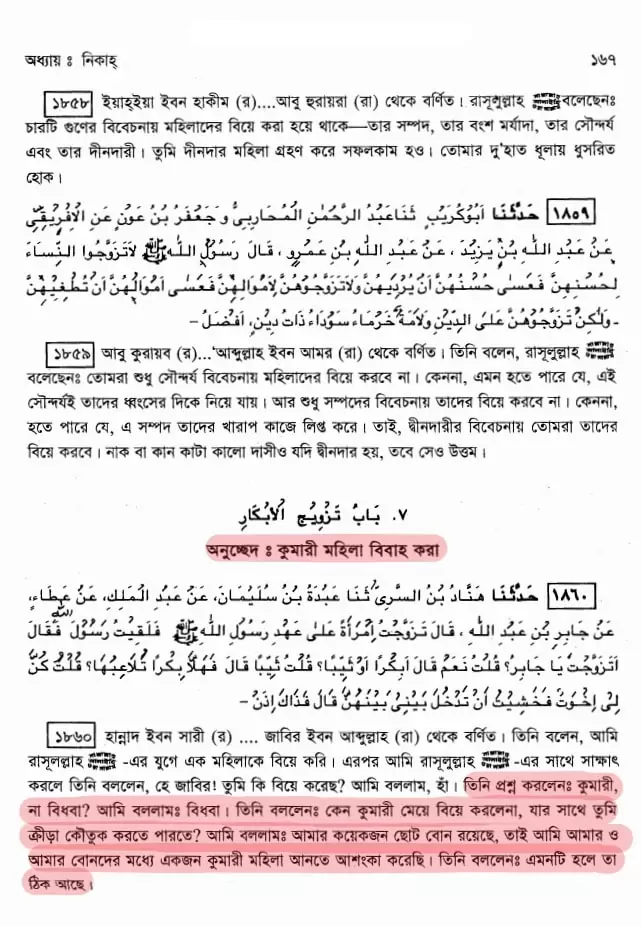
An Obsession with Virgin Girls
Muhammad had an obsession with virgin girls. For that reason, while he spent three nights with previously married wives, he spent seven nights with a virgin wife. [113]
Sahih al-Bukhari (Tawhid)
67/ Marriage
Chapter: 67/101. When a man marries a virgin while already having a previously married wife
67/100. Chapter: Treating one’s wives justly
Allah says: ‘You will never be able to maintain equality between wives, however strongly you desire it … Allah is All-Encompassing, All-Wise.’ (Surah al-Nisa’ 4:129–130)
5213. Narrated from Anas. He said: The Prophet’s Sunnah is that if someone marries a virgin girl, he should spend seven days and nights with her; and if someone marries a widow, he should spend three days with her. (5214; Muslim 17/12, Hadith 1461; Ahmad 12970) (Adhunik Prakashani 4830; Islamic Foundation 4833)
Hadith grading: Sahih (Authentic)
Narrator: Anas ibn Malik
Virgins’ Vaginas Are Warmer
Muhammad said that virgin girls’ vaginas are comparatively warmer. He therefore advised marrying virgins.
Hadith Compilation
Book: 24/ Marriage and Married Life
Chapter: Choosing a wife
(2558) Narrated by several Companions: The Prophet said: Marry virgins. For virgins have sweeter mouths, wombs that bear more children, warmer vaginal passages, less guile, and greater contentment with little.
(Ibn Majah 1861; Ibn al-Sunni; al-Tabarani; Silsilat al-Sahihah 623; Sahih al-Jami‘, Hadith 4053)
Hadith grading: Sahih (Authentic)
A Husband Is Worthy of Prostration
Sunan al-Darimi
Publisher: Bangla Hadith
Book: 2/ Prayer
Chapter: 159. Prostrating to anyone other than Allah is prohibited
1501. Narrated from Qays ibn Sa‘d. He said: When we went to the Persian city of Hirah, we saw people prostrating to their leader or king. I then asked: Messenger of Allah, should we not prostrate to you? He replied: ‘If I were to instruct anyone to prostrate to another person, I would certainly instruct women to prostrate to their husbands, because Allah has assigned husbands very extensive rights over their wives.’(1)
Hadith grading: Hasan (Good)
Obliged to Satisfy a Husband’s Sexual Demands
Sahih Muslim (Hadith Academy)
Book: 17/ Marriage
Chapter: 20. A wife is prohibited from avoiding her husband’s bed
3433—(122/…) Abu Bakr ibn Shaybah, Abu Kurayb, Abu Sa‘id al-Ashajj and Zuhayr ibn Harb … narrated from Abu Hurayrah. He said: The Messenger of Allah said: When a husband calls his wife to bed and she does not come, and he spends the night displeased with her, the angels continue cursing that wife until dawn. (Islamic Foundation 3406; Islamic Centre 3405)
Hadith grading: Sahih (Authentic)
A Wife Must Have Intercourse Whenever Her Husband Demands It
Sunan Ibn Majah
Tawhid Publications
Book: 9/ Marriage
2/1853. Narrated from ‘Abd Allah ibn Abi Awfa. He said: When Mu‘adh returned from Syria, he prostrated to the Prophet. The Prophet asked: Mu‘adh, what is this? He replied: I went to Syria and saw people there prostrating to their religious leaders and rulers. I therefore inwardly wished to do the same before you. The Messenger of Allah said: Do not do that. If I were to instruct anyone to prostrate to someone other than Allah, I would instruct a wife to prostrate to her husband. By the One in whose hand is Muhammad’s life, a wife cannot fulfil the rights due to her Lord until she fulfils the rights due to her husband. If a husband wishes to satisfy his sexual needs with his wife while she is in a camel litter, it is improper for her to refuse.
Hadith grading: Hasan (Good)
It was narrated that: Abdullah bin Abu Awfa said “When Muadh bin Jabal came from Sham, he prostrated to the Prophet who said: ‘What is this, O Muadh?’ He said: ‘I went to Sham and saw them prostrating to their bishops and patricians and I wanted to do that for you.’ The messenger of Allah said: ‘Do not do that. If I were to command anyone to prostrate to anyone other than Allah, I would have commanded women to prostrate to their husbands. By the One in Whose Hand is the soul of Muhammad! No woman can fulfill her duty towards Allah until she fulfills her duty towards her husband. If he asks her (for intimacy) even if she is on her camel saddle, she should not refuse.’ ”
Mishkat al-Masabih (Mishkat)
Publisher: Hadith Academy
Book: Part 13/ Marriage
Chapter: 10. Second section: treating wives well and the mutual rights and obligations of husband and wife
3255—(18) Narrated from Abu Hurayrah. He said: The Messenger of Allah said: If I were to instruct a human being to prostrate to another, I would instruct a wife to prostrate to her husband. (Al-Tirmidhi)
Hadith grading: Hasan (Good).
The Prophet Abused His Wives
Narrated from ‘A’ishah: He—Muhammad—struck me on the chest, which caused me pain. [114]
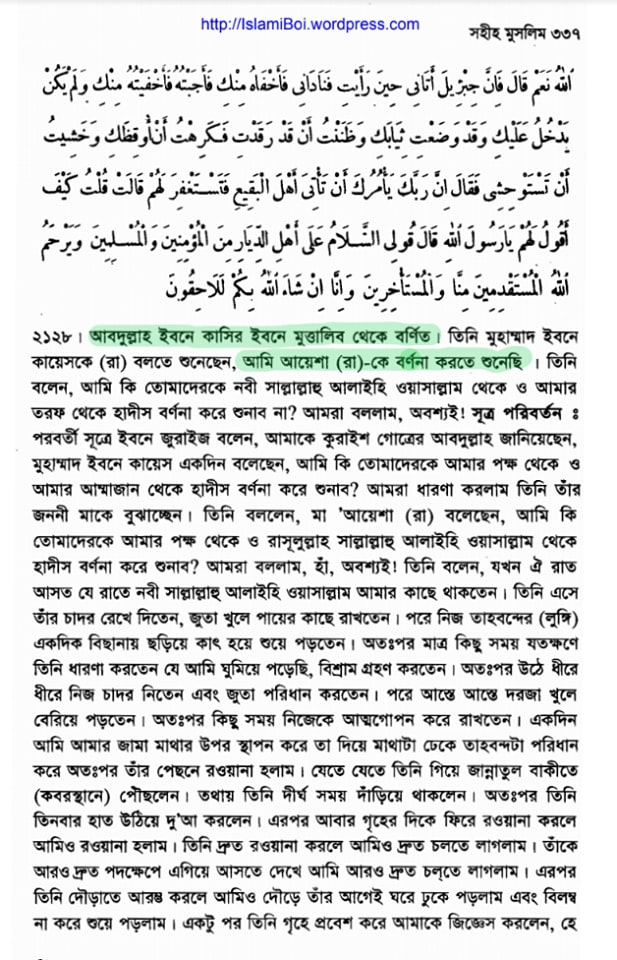
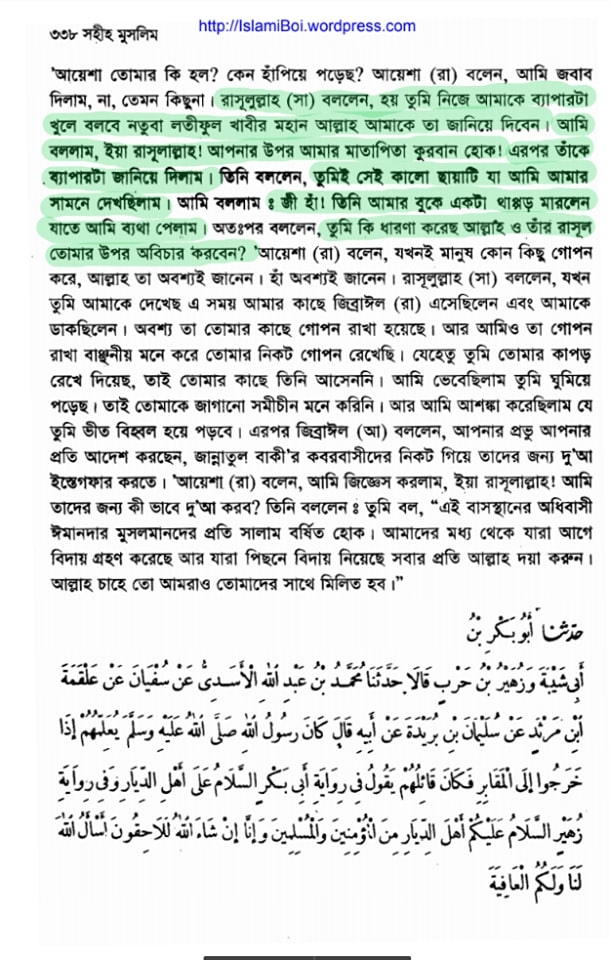
A man will not be questioned on the Day of Judgement about why he beat his wife. (Abu Dawud, Book 11, Hadith 2142)
Note on hadith grading: Some prominent scholars, such as al-Albani, have classified this hadith as weak. However, the English translation published by the well-known Saudi Islamic publisher Darussalam grades it ‘Hasan’. The download link and reference for the Darussalam edition are provided below. [115]
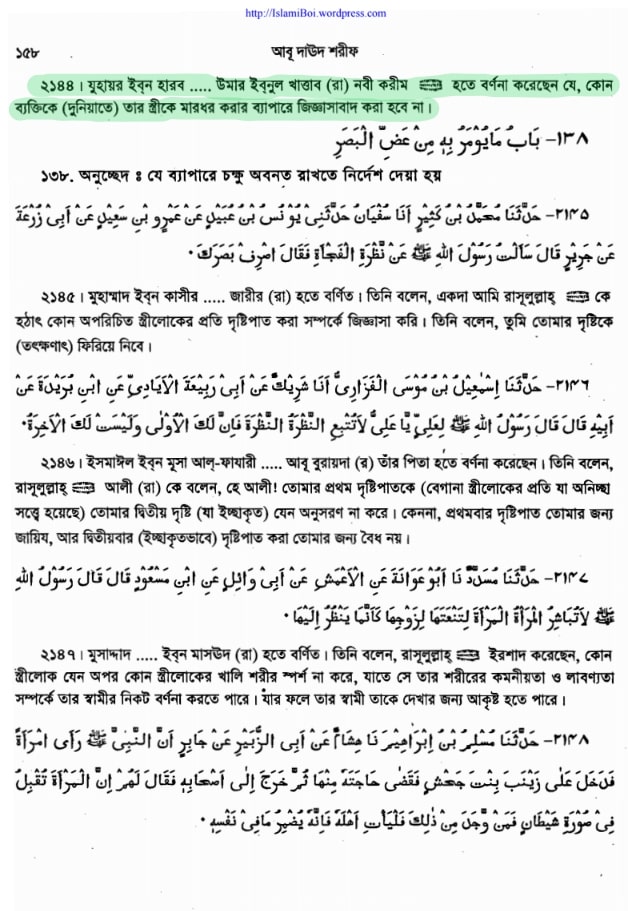
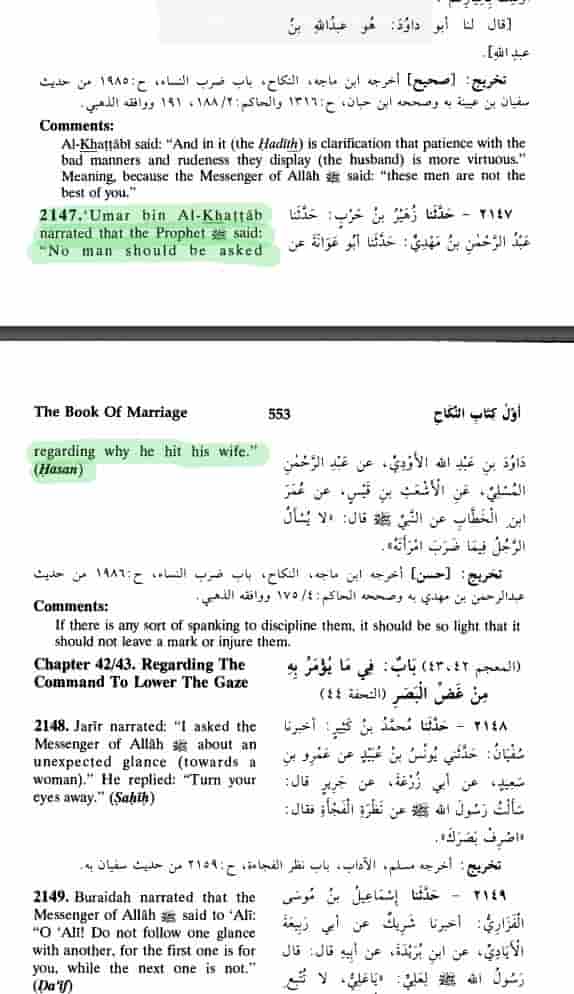
Muhammad did, however, prohibit beating wives like slaves, explaining that a man would have intercourse with the same wife that night. They were therefore not to be beaten like slaves, so that the beating would not create problems for intercourse at night. [116]
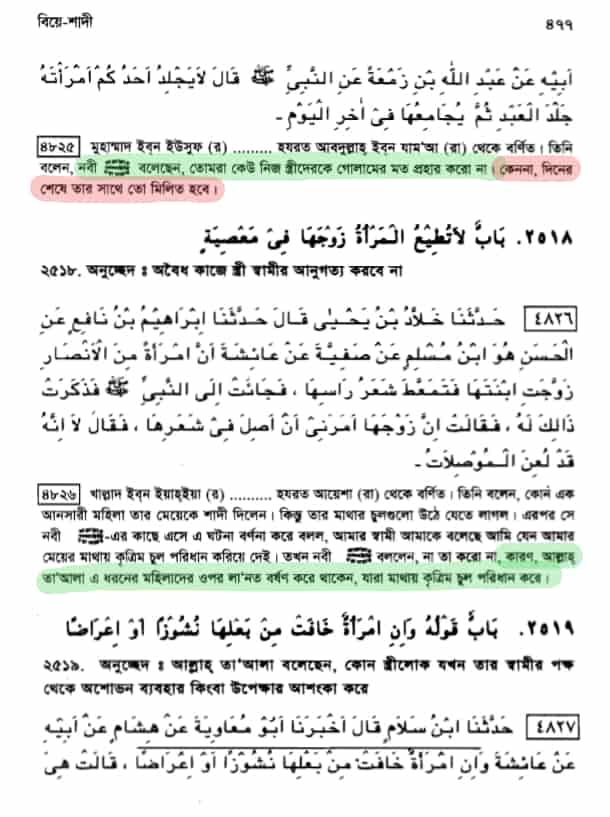
Killing upon Seeing One’s Wife with Another Man
One of Muhammad’s Companions was named Sa‘d ibn ‘Ubadah. He said that if he saw his wife with another man, ‘I would strike him with the sharp edge of my sword.’ When this statement reached Muhammad, he praised the Companion and described him as a man of honour. Careful reflection on this hadith reveals how deeply degrading it is to women’s rights, dignity and safety. The horrifying and inhumane consequences of such attitudes and violence towards women in a civilised society are almost beyond imagination.
In this hadith, the Companion Sa‘d ibn ‘Ubadah explicitly said that he would kill his wife if he saw her with another man. Under Islam, at least four witnesses are required to establish zina or an offence of this kind. Instead of complying with that law, however, Sa‘d ibn ‘Ubadah expressed his intention to inflict violence on his wife with his own hands. On hearing the statement, Muhammad praised the Companion and said that Sa‘d was a man of honour. Such an attitude displays extreme disrespect for a woman’s rights and dignity.
First, this hadith is extremely dangerous for women’s safety. It presents violence against women and the taking of their lives as normal. If a wife acts against her husband’s wishes, or if her husband becomes suspicious, the desire to kill her directly denies her fundamental rights and makes her subordinate to men.
This hadith essentially offers a distorted interpretation of male dignity and honour. A man’s sense of honour does not depend solely on his ability to control his wife. This reflects a warped patriarchal mindset that treats women as property, renders their lives worthless, and conveys the message that a husband’s wishes matter more than his wife’s life. A society that values women’s lives and individual rights according to men’s wishes can never be safe for women. The oppression and violence against women that this can generate are gravely harmful to a civilised society. Establishing violence as a symbol of honour while disregarding women’s rights and dignity harms not only women but society’s overall development. Let us read the hadiths.
Sahih Muslim (Hadith Academy)
20/ Li‘an, Mutual Imprecation
Chapter: No chapter heading
3655—(16/…) Abu Bakr ibn Abi Shaybah … narrated from Abu Hurayrah. He said: Sa‘d ibn ‘Ubadah asked: Messenger of Allah, if I find a man with my wife, must I not seize him until I produce four witnesses? The Messenger of Allah said: Yes, you must not. Sa‘d said: That cannot be! By the great Being who sent you with the truth, before producing four witnesses I shall certainly strike him with my sword without delay. The Messenger of Allah then said: Listen to what your leader is saying. He certainly possesses an intense sense of honour. I possess an even greater sense of honour than he does, and Allah possesses a greater sense of honour than I do. (Islamic Foundation 3621; Islamic Centre 3621)
Hadith grading: Sahih (Authentic)
Narrator: Abu Hurayrah
Sahih Muslim (Hadith Academy)
20/ Li‘an, Mutual Imprecation
Chapter: No chapter heading
3656—(17/1499) ‘Ubayd Allah ibn ‘Umar al-Qawariri and Abu Kamil Fudayl ibn Husayn al-Jahdari … narrated from al-Mughirah ibn Shu‘bah. He said: Sa‘d ibn ‘Ubadah said: If I see another man with my wife, I shall certainly strike him with the sharp edge of my sword, not its flat side. This reached the Prophet. He said: Are you surprised at Sa‘d’s sense of honour? By Allah, I possess a greater sense of honour than he does, and Allah possesses a greater sense of honour than I do. Because of His sense of honour, Allah has prohibited all indecencies, both open and concealed. No one possesses a greater sense of honour than Allah, and no one likes excuses more than Allah.* For this reason, Allah has sent His prophets and messengers as bearers of good news and warnings. No one loves praise more than Allah. For this reason, He has promised Paradise. (Islamic Foundation 3622; Islamic Centre 3622)
* No one likes excuses more than Allah. Here ‘excuse’ carries the meanings of pardon and warning. Before apprehending people for punishment, Allah sent messengers to warn them. (Verified Sahih Muslim, Fu’ad ‘Abd al-Baqi, Volume 2, p. 574)
Hadith grading: Sahih (Authentic)
Narrator: Shu‘bah
The violent attitude towards a woman’s life and the perspective legitimising her killing expressed through this hadith are socially extremely dangerous for women. If a society disregards women’s lives and safety in this way, protecting their dignity and rights becomes impossible. Hadiths of this kind increase the tendency towards violence against women and invest men with power over their wives or women generally—something entirely uncivilised, medieval and unacceptable.
This Islamic hadith severely undermines women’s lives, dignity and rights. It grants men legitimacy for killing women and establishes violence as a symbol of honour. It disregards women’s fundamental rights and safety and forces them to become victims of male suspicion and anger. From the perspective of human rights and women’s rights, its message is extremely harmful and urgently requires criticism. To protect women’s dignity and safety, such hadiths should be rejected and women’s rights given the highest priority. Violence against women can never be a symbol of honour; it reflects a barbaric and inhumane mentality.
The Right to Divorce Belongs to the Husband
Islam’s ruling is that only a husband may pronounce divorce. A wife, however, does not possess the same right.
Mishkat al-Masabih (Mishkat)
Publisher: Hadith Academy
Book: Part 13/ Marriage
Chapter: 11. Second section: khul‘ and divorce
3279—(6) Narrated from Thawban. He said: The Messenger of Allah said: A woman who asks her husband for divorce without a reason will not even smell Paradise. (Ahmad; al-Tirmidhi; Abu Dawud; Ibn Majah; al-Darimi)(1)
(1) Sahih: Abu Dawud 2226; al-Tirmidhi 1187; Ibn Majah 2500; al-Darimi 1316; Ahmad 22440; Irwa’ 2035; Sahih al-Jami‘ 2706; Sahih al-Targhib 2018.
Hadith grading: Sahih (Authentic)
Explanation:
Explanation: Divorce is the husband’s right, not the wife’s. If a wife has a legitimate reason, she may separate from her husband through khul‘. A woman must not request divorce from her husband without a compelling reason. Some reports also state that a woman must not request divorce for herself or another woman.
The fragrance of Paradise is forbidden to a woman who asks her husband for divorce without a reason; that is, entry into Paradise is prohibited. This is a statement of warning and intimidation. Unlike those who do good or are righteous, who receive the fragrance of Paradise at the very first stage, such women will not receive that fragrance. Qadi ‘Iyad says: It may also mean that even if she enters Paradise, she will be deprived of its fragrance. (Mirqat al-Mafatih)
A Divorced Woman Receives No Maintenance
Sahih al-Bukhari (Tawhid)
Book: 68/ Divorce
Chapter: 68/41. The incident concerning Fatimah bint Qays
5323–5324. Narrated from ‘A’ishah. She said: What is wrong with Fatimah? Why does she not fear Allah? She meant Fatimah’s statement that a divorced woman receives neither food nor accommodation from her husband. (5321, 5322) (Adhunik Prakashani 4932; Islamic Foundation 4827)
Hadith grading: Sahih (Authentic)
Sahih Muslim (Hadith Academy)
Book: 19/ Divorce
Chapter: 6. No maintenance for a wife divorced irrevocably*
3600—(44/…) Muhammad ibn al-Muthanna and Ibn Bashshar … narrated through Fatimah bint Qays from the Prophet concerning a woman divorced three times. He said: She is entitled to neither accommodation nor maintenance. (Islamic Foundation 3570; Islamic Centre 3570)
Hadith grading: Sahih (Authentic)
Settling Rape by Paying a Dower
Muwatta’ Malik
Publisher: Islamic Foundation
Book: 36/ Judicial Decisions
Chapter: 16. The ruling when a woman is subjected to forced zina
Report 14. Narrated from Ibn al-Zuhri: ‘Abd al-Malik ibn Marwan issued the following ruling concerning a woman subjected to forced zina: The man who committed the act must pay the woman a dower.
Malik said: Our ruling is that if a man forces himself upon a woman, whether a virgin or previously married, and she is free, he must pay her the customary equivalent dower.
If she is an enslaved woman, he must pay for the reduction in her value caused by the sexual violation, and the offender must also be punished. The woman herself receives no punishment. If the offender is a slave, his master must pay the fine, unless he surrenders the slave as compensation.
Female Circumcision
The Prophet prohibited cutting too deeply during female circumcision because, if too much were cut away, husbands would no longer enjoy sex.
Sunan Abi Dawud (Verified Edition)
Publisher: Allamah Albani Academy
Book: 36/ Etiquette
Chapter: 180. Circumcision
5271. Narrated from Umm ‘Atiyyah al-Ansariyyah. A woman used to perform circumcision in Medina. The Prophet told her: Do not cut deeply, for that is more comfortable for the woman and more pleasing to the husband. Imam Abu Dawud said: A report with the same meaning and chain has been narrated through ‘Abd al-Malik from ‘Ubayd Allah ibn ‘Amr. Imam Abu Dawud said: The chain of this hadith is weak.(1)
Sahih.
(1). Al-Bayhaqi.
Hadith grading: Sahih (Authentic)
Women Cannot Exercise Leadership
Muhammad stated that no woman can be qualified to lead a country or state. In other words, women are supposedly unfit.
Sahih al-Bukhari (Islamic Foundation)
Book: 81/ Tribulations
Chapter: 2994. No chapter heading
6618. ‘Uthman ibn al-Haytham … narrated from Abu Bakrah. He said: Allah benefited me greatly through a certain statement at the Battle of the Camel. That statement was: When news reached the Prophet that the people of Persia had appointed Kisra’s daughter as their ruler, he said: A nation that entrusts its rule to a woman will never prosper.
Hadith grading: Sahih (Authentic)
Sahih al-Bukhari (Tawhid)
Book: 92/ Tribulations
Chapter: 92/18. No chapter heading
7099. Narrated from Abu Bakrah. He said: Allah benefited me greatly through a certain statement at the Battle of the Camel. When news reached the Prophet that the people of Persia had appointed Kisra’s daughter as their ruler, he said: A nation that entrusts its rule to a woman will never prosper.(1) (4425) (Adhunik Prakashani 6604; Islamic Foundation 6618)
(1) If Muslims wish to achieve success, they must certainly avoid female leadership.
Hadith grading: Sahih (Authentic)
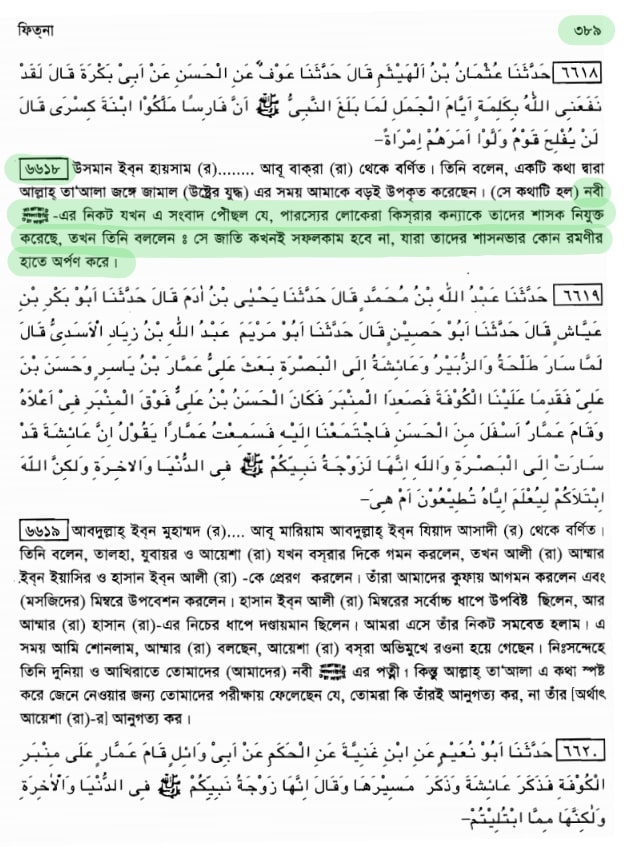
Sahih al-Bukhari (Tawhid)
Book: 64/ Military Campaigns
Chapter: 64/83. The Prophet sending letters to Kisra of Persia and Caesar, ruler of Rome
4425. Narrated from Abu Bakrah. He said: Allah greatly benefited me on the day of the Battle of the Camel through a statement I had heard from the Messenger of Allah, when I was almost ready to join the Companions in that battle. Abu Bakrah said: The statement was that when news reached the Prophet that the Persians had appointed Kisra’s daughter as their sovereign, he said: A nation whose administrator is a woman will never succeed. (7099) (Adhunik Prakashani 4077; Islamic Foundation 4080)
Hadith grading: Sahih (Authentic)
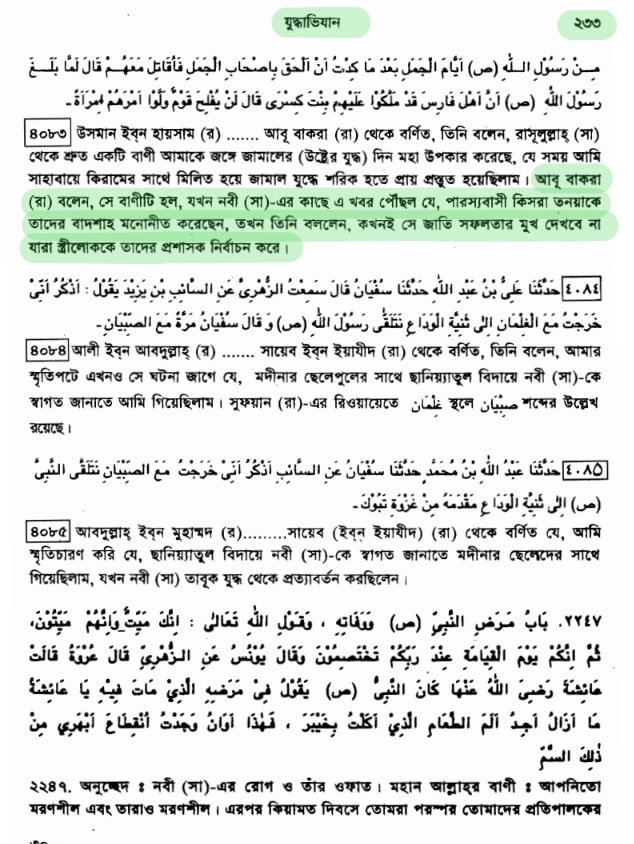
Women Who Wear Perfume Are Adulteresses
Mishkat al-Masabih (Mishkat)
Publisher: Hadith Academy
Book: Part 4/ Prayer
Chapter: 23. Second section: congregational prayer and its virtues
1065—(14) Narrated from Abu Musa al-Ash‘ari. He said: The Messenger of Allah said: Every eye commits adultery. And a woman who wears perfume and goes to a gathering of men is such-and-such—that is, an adulteress. (Al-Tirmidhi; Abu Dawud; al-Nasa’i)(1) (1) Hasan: al-Tirmidhi 2786; Abu Dawud 4173; Sahih al-Targhib 2019; al-Sunan al-Kubra 9422; Ibn Khuzaymah 1641; Ibn Hibban 4424.
Hadith grading: Hasan (Good)
Adornment and Beauty Treatments Are Forbidden
Sahih Muslim (Islamic Foundation)
Book: 38/ Clothing and Adornment
Chapter: 28. The acts of women who add hair extensions or seek them, tattoo or seek tattoos, pluck eyebrows or seek eyebrow-plucking, create attractive gaps between the teeth, and alter Allah’s creation are forbidden
5388. Ishaq ibn Ibrahim and ‘Uthman ibn Abi Shaybah … narrated from ‘Abd Allah. He said: Allah curses women who tattoo or seek tattoos, women who pluck the hair of their foreheads and eyebrows to make them appear larger or seek such plucking, and women who create evenly spaced gaps between their teeth to enhance beauty, thereby altering Allah’s creation.
The narrator said: This account of ‘Abd Allah’s hadith reached a woman of the Asad tribe named Umm Ya‘qub, who was accustomed to reading the Qur’an. She came to him and said: What is this hadith that has reached me from you—that you curse women who tattoo or seek tattoos, pluck their foreheads and eyebrows or seek such plucking, and create gaps between their teeth for beauty, thereby altering Allah’s creation?
‘Abd Allah said: What reason would I have not to curse those whom the Messenger of Allah cursed, when this is in Allah’s Book? The woman said: I have read everything between the bound covers of the sacred Book, the Qur’an, from beginning to end, but I found it nowhere. He said: Had you read attentively, you would certainly have found it. Almighty Allah said: وَمَا آتَاكُمُ الرَّسُولُ فَخُذُوهُ وَمَا نَهَاكُمْ عَنْهُ فَانْتَهُوا
Whatever the Messenger presents to you, hold to it; and whatever he prohibits, refrain from it.
The woman said: I am almost certain that if I went now, I would find some of these things in your wife. He said: Go and look. The narrator said: The woman went to ‘Abd Allah’s wife but found none of those things. She returned and said: I did not find them. He said: Listen! If there were anything of that kind, we would not live together.
Hadith grading: Sahih (Authentic)
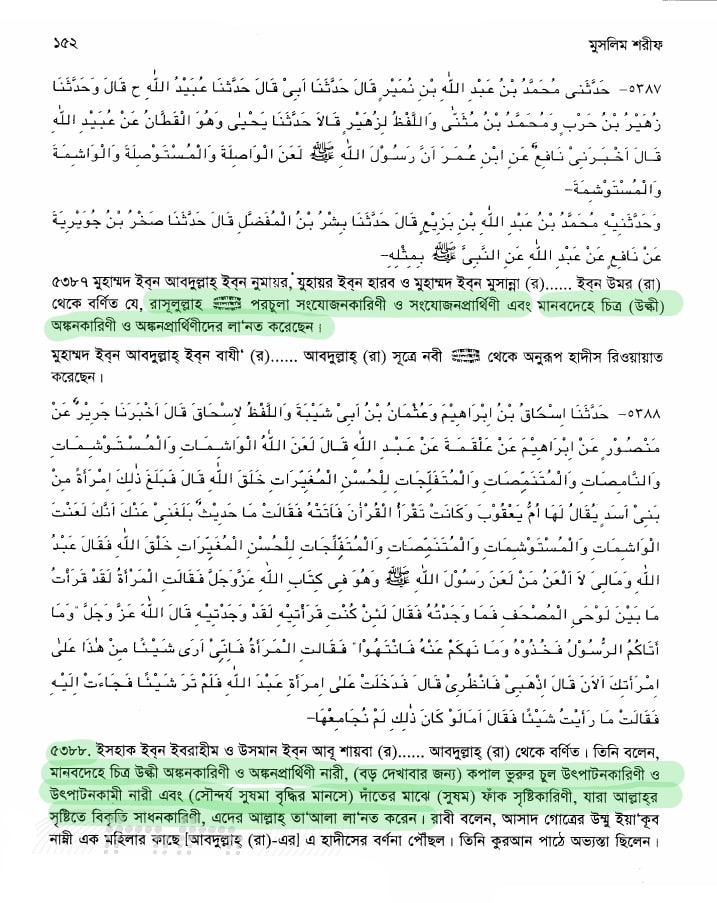
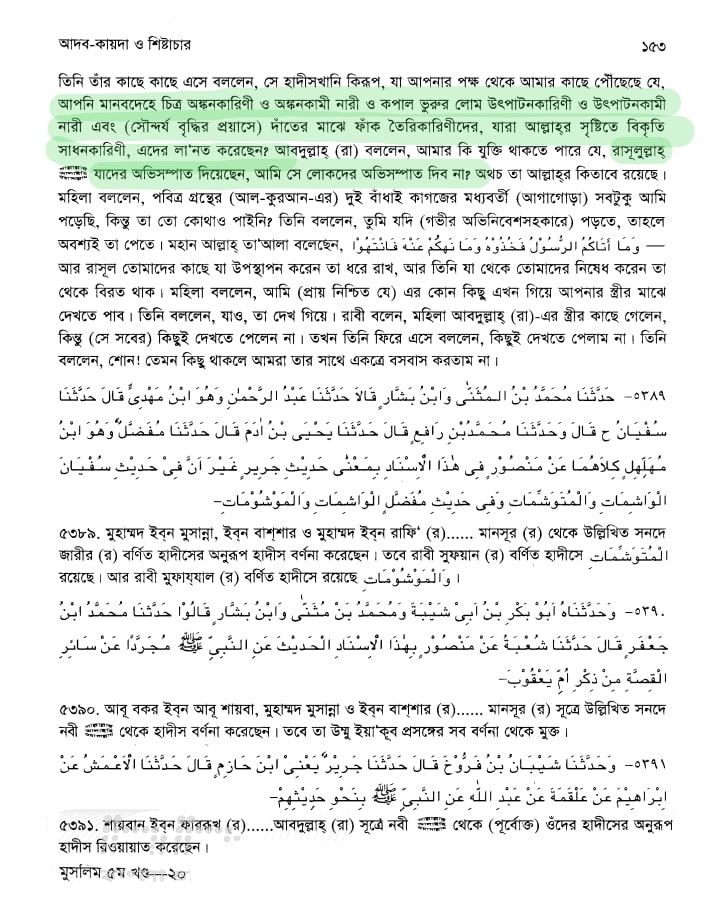
The Prophet Hated Hijra and Transgender People
Hijra People Must Be Expelled from Homes
Muhammad hated hijra people. He instructed people to expel them from their homes.
Sahih al-Bukhari (Tawhid)
Book: 86/ Penal Law
Chapter: 86/33. Banishing sinners and effeminate men
6834. Narrated from Ibn ‘Abbas. He said: The Prophet cursed men who assumed the appearance of women and women who assumed the appearance of men, and said: Expel them from your homes. He himself expelled so-and-so and so-and-so. (Adhunik Prakashani 6360; Islamic Foundation 6373)
Hadith grading: Sahih (Authentic)
Sahih al-Bukhari (Islamic Foundation)
Book: 75/ Unbelievers and Apostate Rebels
Chapter: 2852. Banishing sinners and hijra people
6373. Muslim ibn Ibrahim … narrated from Ibn ‘Abbas. He said: The Prophet cursed men who assumed the appearance of women and women who assumed the appearance of men, and said: Expel them from your homes. He himself expelled so-and-so and so-and-so.
Hadith grading: Sahih (Authentic)
Cursing Hijra People
1. Abu Hurayrah said: The Messenger cursed a man who wears women’s clothing and a woman who wears men’s clothing. (Abu Dawud; Mishkat, Hadith 4469; Bengali edition, Volume 8, Hadith 4270; hadith authentic.)
2. Ibn ‘Abbas said: The Prophet cursed men who adopted the appearance of hijra people and women who adopted the appearance of men. (Al-Bukhari; Mishkat, Hadith 4428.)
3. Ibn ‘Umar said: The Messenger said: ‘Three categories of people will not enter Paradise: (1) children disobedient to their parents; (2) those who allow shamelessness in their homes; (3) women who assume the appearance of men.’ (Al-Nasa’i; hadith authentic; Sahih al-Targhib, Hadith 2070.)
4. Abu Mulaykah said: ‘A’ishah was once told that a girl wore men’s shoes. ‘A’ishah then said: The Messenger cursed women who assume the appearance of men. (Abu Dawud; Mishkat, Hadith 4470; hadith authentic.)
Homophobia and Hatred of Gay People
Muhammad also hated gay people.
Sunan Abi Dawud (Verified Edition)
Book: 33/ Crimes and Their Punishments
29. A person committing an act like that of the people of Lot
4462. Narrated from Ibn ‘Abbas. He said: The Messenger of Allah said: If you find anyone committing the act of the people of Lot, kill both the one who performs it and the one with whom it is performed.(1)
Hasan Sahih.
(1). Al-Tirmidhi; Ibn Majah; Ahmad; al-Hakim. Imams al-Hakim and al-Dhahabi said: The hadith is authentic.
Hadith grading: Hasan (Good)
Sunan Abi Dawud (Verified Edition)
Book: 33/ Crimes and Their Punishments
29. A person committing an act like that of the people of Lot
4463. Narrated from Ibn ‘Abbas. He said: Unmarried people found engaging in anal intercourse are to be stoned. Imam Abu Dawud said: The hadith narrated through ‘Asim demonstrates the weakness of the hadith of ‘Amr ibn Abi ‘Amr.(1)
Authentic chain; mawquf, stopping at the Companion.
(1). Al-Bayhaqi.
Hadith grading: Sahih (Authentic)
Sunan Ibn Majah
Book: 14/ Prescribed Punishments
14/12. A person committing an act like that of the people of Lot
1/2561. Narrated from Ibn ‘Abbas. The Messenger of Allah said: If you find anyone committing the act of the people of Lot, kill him and the person with whom it is performed.
Al-Tirmidhi 1456; Abu Dawud 4462; al-Bayhaqi, al-Sunan 8/232; Irwa’ 2350; Mishkat 3575. Al-Albani’s verification: Sahih. Concerning the transmitter ‘Abd al-‘Aziz ibn Muhammad, Muhammad ibn Sa‘d said that he mixes reports when narrating hadith. Ibn Hibban said that he makes mistakes in narrating hadith. Malik ibn Anas called him trustworthy. Ahmad ibn Shu‘ayb al-Nasa’i said that he was not reliable. Ibn Hajar al-‘Asqalani said that he was truthful but made mistakes when narrating hadith from sources other than his own book. (Tahdhib al-Kamal: narrator 3470; p. 18/187)
Hadith grading: Sahih (Authentic)
The Prophet Was Intensely Sectarian
The Prophet Was Antisemitic
Riyad al-Salihin
18/ Various Engaging Hadiths
Chapter: 370. The Dajjal and the signs of the Last Hour
Tawhid Publications number: 1829; international number: 1820
13/1829. Narrated from Abu Hurayrah. He said: The Messenger of Allah said: ‘The Last Hour will not come until Muslims fight the Jews. Even when a Jew hides behind a stone or a tree, the stone or tree will say: “Muslim, there is a Jew behind me. Come and kill him.” But the gharqad tree will not say this, for it is the Jews’ tree.’ (Al-Bukhari and Muslim) [1]
[1] Sahih al-Bukhari 2926; Muslim 157, 2922; Ahmad 8921, 10476, 20502.
Hadith grading: Sahih (Authentic)
Narrator: Abu Hurayrah
The Prophet Expelled People from Their Own Land
Sahih Muslim (Islamic Foundation)
Book: 33/ Jihad and Its Principles
Chapter: 21. Expelling Jews and Christians from the Arabian Peninsula
4442. Zuhayr ibn Harb and Muhammad ibn Rafi‘ … Jabir ibn ‘Abd Allah said: ‘Umar ibn al-Khattab narrated to me that he heard the Messenger of Allah say: I shall certainly expel the Jewish and Christian communities from the Arabian Peninsula. Ultimately, I shall allow no one except Muslims to remain here.
Hadith grading: Sahih (Authentic)
Sahih Muslim (Hadith Academy)
Book: 33/ Jihad and Expeditions
Chapter: 21. Expelling Jews and Christians from the Arabian Peninsula
4486—(63/1767) Zuhayr ibn Harb and Muhammad ibn Rafi‘ … Jabir ibn ‘Abd Allah said: ‘Umar ibn al-Khattab narrated to me that he heard the Messenger of Allah say: I shall certainly expel the Jewish and Christian communities from the Arabian Peninsula. Thereafter, I shall allow no one except Muslims to remain here. (Islamic Foundation 4442; Islamic Centre 4444)
Zuhayr ibn Harb and Salamah ibn Shabib … both narrated a similar account through this chain from Abu al-Zubayr. (Islamic Foundation 4442; Islamic Centre 4445)
Hadith grading: Sahih (Authentic)
Sunan al-Tirmidhi (Verified Edition)
Publisher: Husayn al-Madani
Book: 19/ Military Campaigns
Chapter: 43. Expelling Jews and Christians from the Arabian Peninsula
1607. Narrated from ‘Umar ibn al-Khattab that he heard the Messenger of Allah say: I shall certainly expel Jews and Christians from the Arabian Peninsula. I shall allow no one except Muslims to live there.
Sahih; al-Sahihah (1134); Sahih Abi Dawud; Muslim.
Abu ‘Isa described this hadith as Hasan Sahih.
Hadith grading: Sahih (Authentic)
Forcing People to the Edge of the Road
Sunan al-Tirmidhi (Verified Edition)
Publisher: Husayn al-Madani
Book: 19/ Military Campaigns
Chapter: 41. Greeting the People of the Book
1602. Narrated from Abu Hurayrah that the Messenger of Allah said: Do not greet Jews and Christians first. When you encounter any of them on the road, force him to its edge.
Sahih; al-Sahihah (704); Irwa’ (1271); Muslim; al-Bukhari’s al-Adab al-Mufrad. Discussion of Hadith 2855 will follow.
Hadiths on this subject are also narrated from Ibn ‘Umar, Anas and Abu Basrah al-Ghifari. Abu ‘Isa described this hadith as Hasan Sahih.
Hadith grading: Sahih (Authentic)
The Prophet Even Prohibited Giving Food to Non-Muslims
Sunan Abi Dawud (Verified Edition)
Book: 36/ Etiquette
19. Those whose company one should keep
4832. Narrated from Abu Sa‘id. The Prophet said: Do not take anyone other than a believer as your companion, and let only a pious person eat your food.(1)
Hasan.
(1). Al-Tirmidhi; Ahmad.
Hadith grading: Hasan (Good)
Living with Non-Muslims Is Prohibited
Sunan Abi Dawud (Verified Edition)
Book: 9/ Jihad
182. Residing in the territory of polytheists
2787. Narrated from Samurah ibn Jundub. The Messenger of Allah then said: Anyone who keeps company with a polytheist and lives with them is like them.(1)
(1). Sahih.
Hadith grading: Sahih (Authentic)
The Prophet Destroyed the Idols of Other Religions
Muhammad destroyed the idols of other religions, for which numerous references exist. Only the hadiths concerning Dhu al-Khalasah are provided here.
Sahih al-Bukhari (Islamic Foundation)
Book: 50/ The Prophets
Chapter: 2131. Discussion of Jarir ibn ‘Abd Allah al-Bajali
3549. Ishaq al-Wasiti … narrated from Jarir ibn ‘Abd Allah. He said: After I embraced Islam, the Messenger of Allah never prevented me from entering his house, and whenever he saw me, he smiled. Jarir also said: In the pre-Islamic period, there was a house called Dhu al-Khalasah, a temple containing an idol of the Khath‘am tribe. It was called the Yemeni Ka‘bah and the Syrian Ka‘bah. The Messenger of Allah said to me: Can you give me peace concerning Dhu al-Khalasah? Jarir said: I set out with one hundred and fifty horsemen from the Ahmas tribe and destroyed the idol-house. I killed those I found there. On returning, I informed the Messenger of Allah. He was extremely pleased and prayed for us and for the Ahmas tribe.
Hadith grading: Sahih (Authentic)
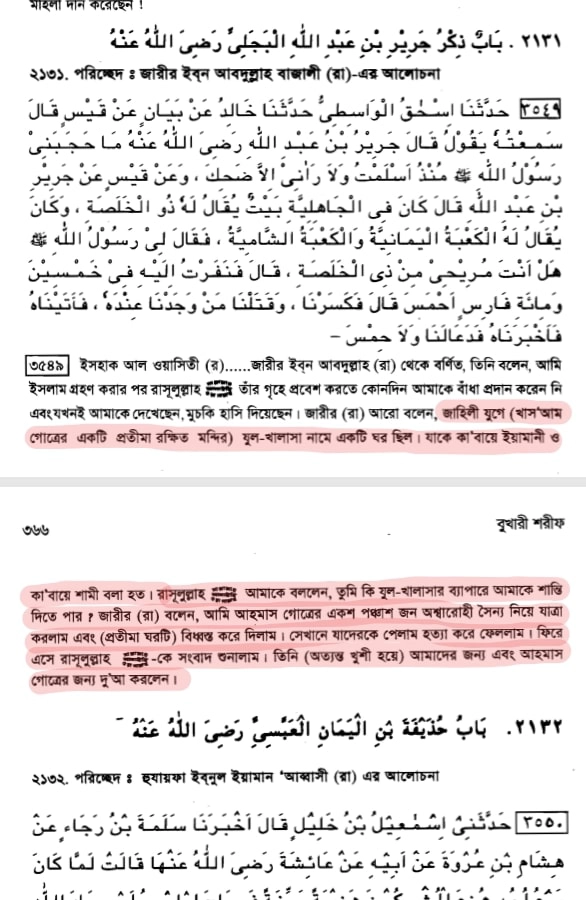
Sahih al-Bukhari (Islamic Foundation)
Book: 51/ Military Campaigns
Chapter: 2226. The campaign against Dhu al-Khalasah
4018. Yusuf ibn Musa … narrated from Jarir. He said: The Messenger of Allah asked me: Will you not relieve me of the trouble of Dhu al-Khalasah? I said: Certainly. I then set out with one hundred and fifty horsemen from our Ahmas tribe. All were skilled riders, but I still could not sit steadily on a horse. I informed the Messenger of Allah of this, and he struck my chest with his hand.
I could even see the mark of his hand on my chest. He prayed: ‘Allah, enable him to sit steadily and make him one who guides and is guided.’ Jarir said: After that, I never fell from my horse again. He also said that Dhu al-Khalasah was a sanctuary of the Khath‘am and Bajilah tribes in Yemen. It contained several idols that people worshipped, and this house was called the Ka‘bah.
The narrator said: He went there, set the house on fire and demolished even its foundations. The narrator also said: When Jarir arrived in Yemen, a man there practised divination with arrows. He was told: The Messenger of Allah’s representative is here. If he gets the opportunity to seize you, he will cut off your head.
The narrator said: One day, while the man was engaged in divination, Jarir reached him and said: Break the arrows and testify that there is no deity except Allah, or I shall cut off your head. The man broke the arrows and testified that there was no deity except Allah. Jarir then sent a man of the Ahmas tribe named Abu Artat to bring the good news to the Messenger of Allah. The man came to him and said: ‘Messenger of Allah, by the Being who sent you with the message of truth, I have left the house blackened like a camel afflicted with mange.’ On hearing this, the Messenger of Allah prayed five times for the overall well-being and blessings of the Ahmas tribe’s mounted and foot soldiers.
Hadith grading: Sahih (Authentic)
The Prophet also sent men to various regions with instructions to destroy numerous places of worship and sacred idols belonging to non-Muslims. [117]
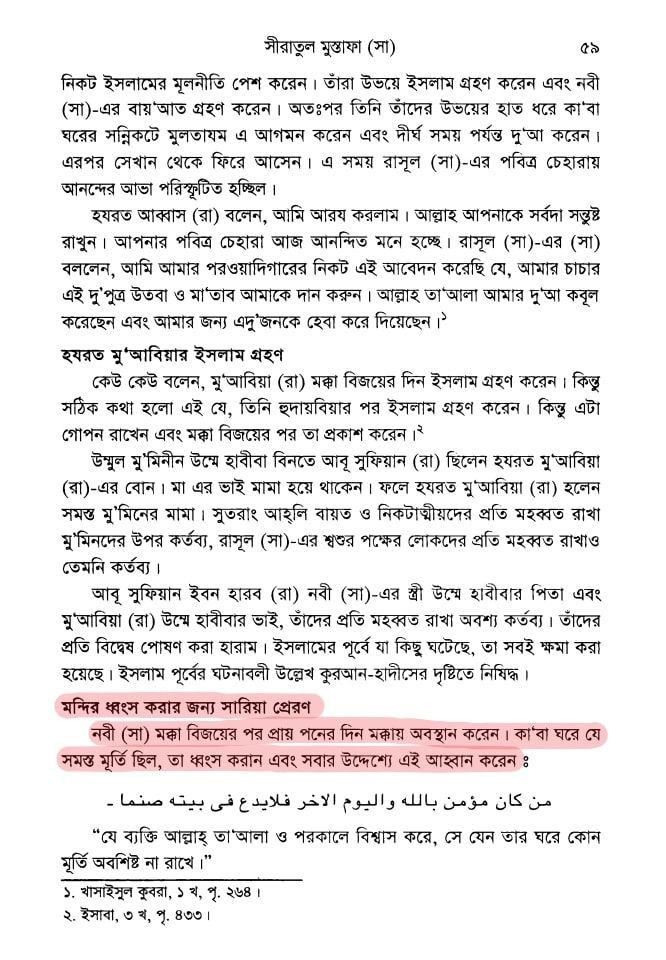
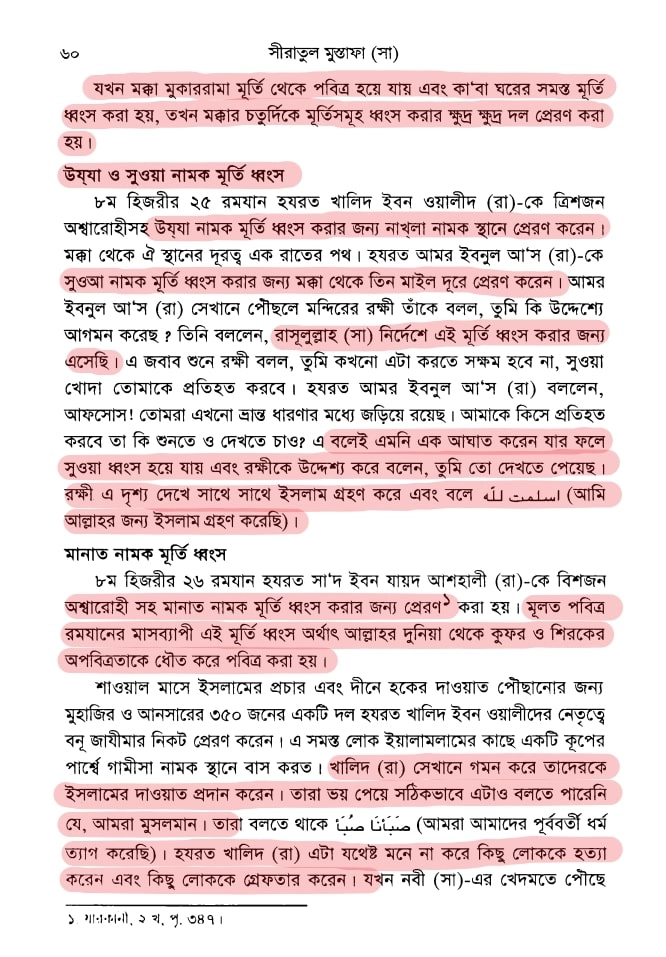
Sectarianism Even in His Final Instructions before Death
Even in his final moments, while suffering the agony of death, Muhammad left instructions to expel non-Muslims.
Sahih al-Bukhari (Islamic Foundation)
Book: 48/ Jihad
Chapter: 1917. Giving gifts to delegations
1916. Chapter: Whether one may intercede for dhimmis, and how to treat them
2838. Qabisah … narrated from Ibn ‘Abbas. He once said: Thursday! Alas, Thursday! He then began to weep until his tears wet the pebbles on the ground. He said: On Thursday, the Messenger of Allah’s illness and pain intensified. He said: Bring me something to write with, so that I may have something written for you after which you will never go astray. The Companions disagreed with one another, although disagreement in the Prophet’s presence was inappropriate. Some said: Has the Messenger of Allah left this world?
He said: Leave me in my present condition. The state I am in is better than the one to which you are calling me. Finally, at his death, he left instructions concerning three matters: (1) Expel the polytheists from the Arabian Peninsula; (2) give gifts to delegations as I have done. The narrator said: I have forgotten the third instruction. Abu ‘Abd Allah said: Ibn Muhammad and Ya‘qub said: I asked al-Mughirah ibn ‘Abd al-Rahman about the Arabian Peninsula, and he replied: It consists of Mecca, Medina, Yamamah and Yemen. Ya‘qub said: Tihamah begins at al-‘Arj.
Hadith grading: Sahih (Authentic)
Narrator: ‘Abd Allah ibn ‘Abbas
The Prophet Was a Terrorist, a Barbarian and a Plunderer
The Prophet Practised Deception in Warfare
Muhammad said that war is a place for deception. He therefore instructed that unbelievers be defeated in war through deceit and fraud. Defeating an enemy in war through fraud or deception is a deeply dishonourable act.
Sahih Muslim (Hadith Academy)
33/ Jihad and Expeditions
Chapter: 5. The permissibility of deceiving the enemy in warfare
Hadith Academy number: 4431; international number: 1739
4431—(17/1739) ‘Ali ibn Hujr al-Sa‘di, ‘Amr al-Naqid and Zuhayr ibn Harb … narrated from Jabir that the Messenger of Allah said: War is strategy and deception. (Islamic Foundation 4389; Islamic Centre 4389)
Hadith grading: Sahih (Authentic)
Narrator: Jabir ibn ‘Abd Allah al-Ansari
Sahih Muslim (Hadith Academy)
33/ Jihad and Expeditions
Chapter: 5. The permissibility of deceiving the enemy in warfare
Hadith Academy number: 4432; international number: 1740
4432—(18/1740) Muhammad ibn ‘Abd al-Rahman ibn Sahm … narrated from Abu Hurayrah. He said: The Messenger of Allah said: War is stratagem. (Islamic Foundation 4390; Islamic Centre 4390)
Hadith grading: Sahih (Authentic)
Narrator: Abu Hurayrah
Let us read the explanation of this hadith in Nasr al-Bari. [118]
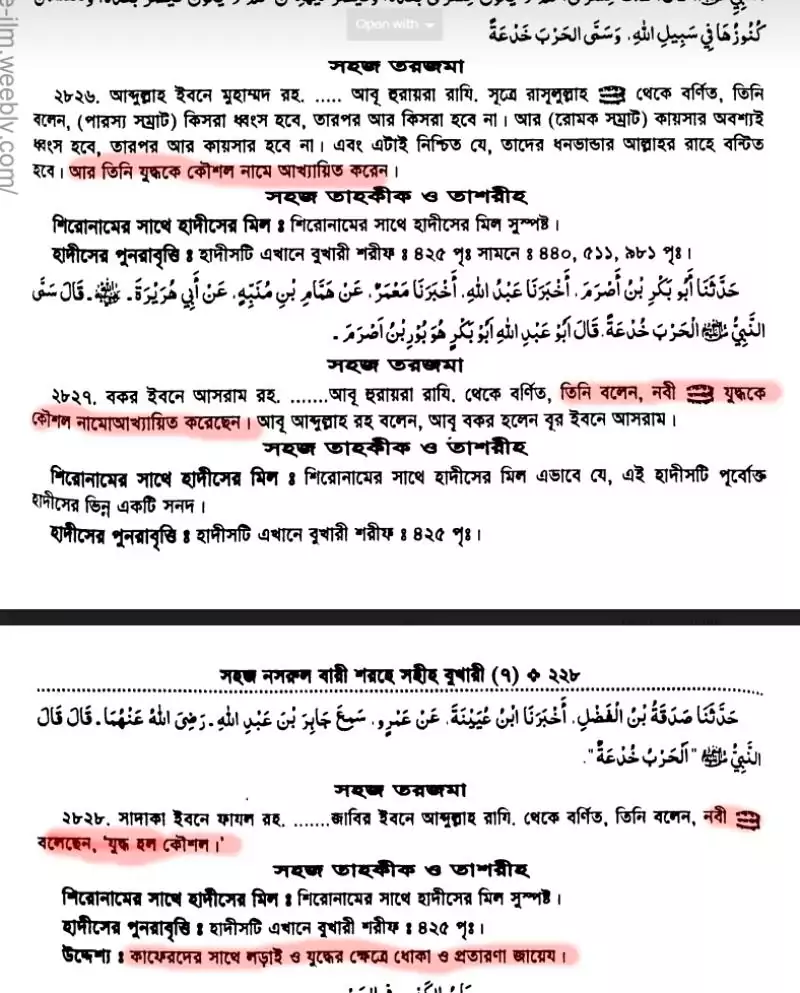
The Prophet Established Religion through Terror
Sunan al-Nasa’i (Islamic Foundation)
Book: 38/ The Prohibition of Killing
Chapter: 1. The prohibition of killing a Muslim
3979. Ishaq ibn Ibrahim … narrated from Abu Hurayrah. He said: The Messenger of Allah said: I have been commanded to fight people until they say, ‘There is no deity except Allah.’ If they say this, they protect their lives and property from me, except for its rightful claims. Their reckoning rests with Allah.
Verification: Sahih.
Hadith grading: Sahih (Authentic)
Sahih Muslim (Hadith Academy)
Book: 1/ Faith
Chapter: 8. The command to wage jihad against people until they acknowledge that there is no true deity except Allah, that Muhammad is Allah’s Messenger, establish prayer, give zakat and believe in the Sharia rulings brought by the Prophet; whoever does this gains security for life and property except on grounds permitted by Sharia, while knowledge of the heart rests with Allah; the command to fight those who refuse zakat and other Islamic obligations, and the imam’s insistence on establishing the distinctive practices of Islam
35—(35/…) Abu Bakr ibn Abi Shaybah … narrated from Jabir, Abu Hurayrah and Abu Salih that the Messenger of Allah said: I have been commanded to fight people. The remainder resembles the hadith narrated by Ibn al-Musayyab from Abu Hurayrah.
Abu Bakr ibn Shaybah and Muhammad ibn al-Muthanna … narrated from Jabir that the Messenger of Allah said: I have been commanded to fight people until they acknowledge that there is no true deity except Allah. When they acknowledge this, they gain security for their lives and property from me, except on grounds permitted by Sharia. Their reckoning rests with Allah. He then recited: ‘You are only an admonisher. You are not a controller over them.’ (Surah al-Ghashiyah 88:21–22) (Islamic Foundation 35; Islamic Centre 35–36)
Hadith grading: Sahih (Authentic)
Sunan Ibn Majah
Publisher: Tawhid Publications
Book: 30/ Discord and Upheaval
Chapter: 30/1. Refraining from interference with anyone who says, ‘There is no deity except Allah’
3/3929. Aws said: We were sitting with the Prophet, who was advising us by recounting past events. A man then came and spoke privately to him. The Prophet said: Take him away and kill him. When the man turned away, the Messenger of Allah called him back and asked: Do you testify that there is no deity except Allah? He said: Yes. He said: Go; let him go on his way. For I have been commanded to fight people until they say, ‘There is no deity except Allah.’ When they do so, interference with their lives and property becomes forbidden to me.
Al-Nasa’i 3979, 3982, 3983; Ahmad 15727; al-Darimi 2446. Al-Albani’s verification: Sahih.
Hadith grading: Sahih (Authentic)
Muhammad Was a Creator of Terror and Fear
Muhammad said that he was a figure who instilled terror and fear. Let us read the following hadith.
Sunan al-Nasa’i (Islamic Foundation)
Book: 4/ Ritual Bathing and Dry Ablution
Chapter: 26/ Performing dry ablution with earth
432. Hasan ibn Isma‘il ibn Sulayman … narrated from Jabir ibn ‘Abd Allah. He said: The Messenger of Allah said: I have been given five things that were given to no one before me. I have been helped by the power to instil fear in the enemy from a distance of one month’s travel. The earth has been made a mosque and a means of purification for me. Therefore, wherever a member of my community finds himself when prayer is due, he may pray there. I have been granted intercession, which was not granted to any prophet before me, and I have been sent to all humanity. Each prophet before me was sent to a particular community.
Sahih; Irwa’ al-Ghalil 1/315–316; al-Bukhari, Hadiths 335, 438; Muslim (Islamic Centre), Hadith 1054.
Hadith grading: Sahih (Authentic)
It was narrated that Jabir bin ‘Abdullah said: “The Messenger of Allah (ﷺ) said: ‘I have been given five things that were not given to anyone before me:I have been supported with fear being struck into the hearts of my enemy for a distance of one month’s travel; the earth has been made a place of prostration and a means of purification for me, so wherever a man of my Ummah is when the time for prayer comes, let him pray; I have been given the intercession which was not given to any Prophet before me; and I have been sent to all of mankind whereas the Prophets before me were sent to their own people.” (4)
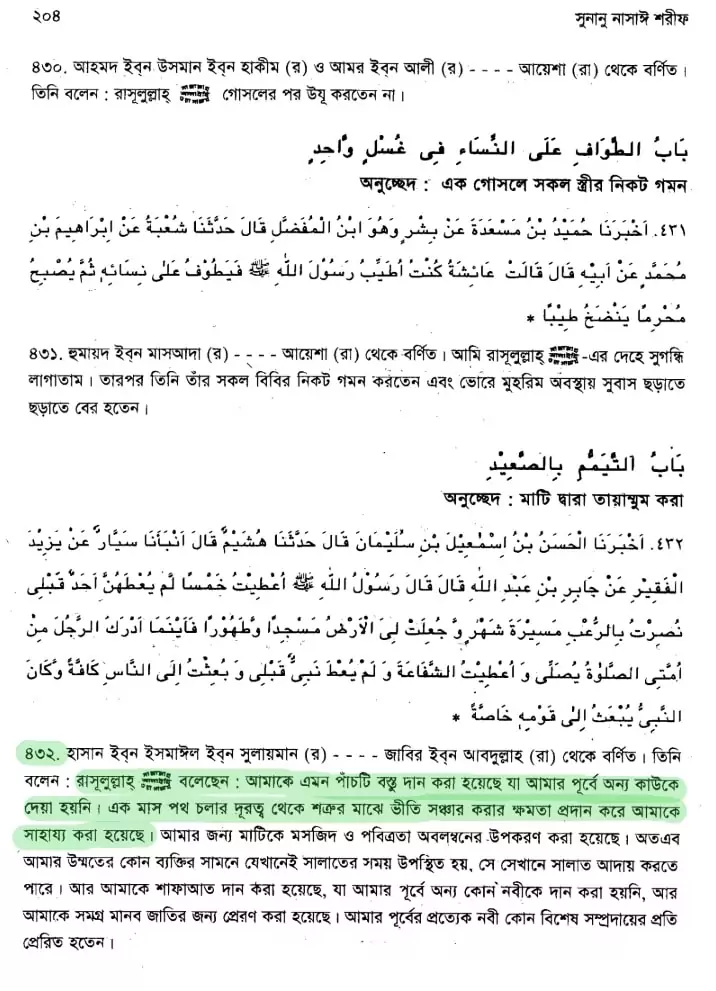
[119]
On this subject, Nasr al-Bari, the commentary on Sahih al-Bukhari, states the following. [120]
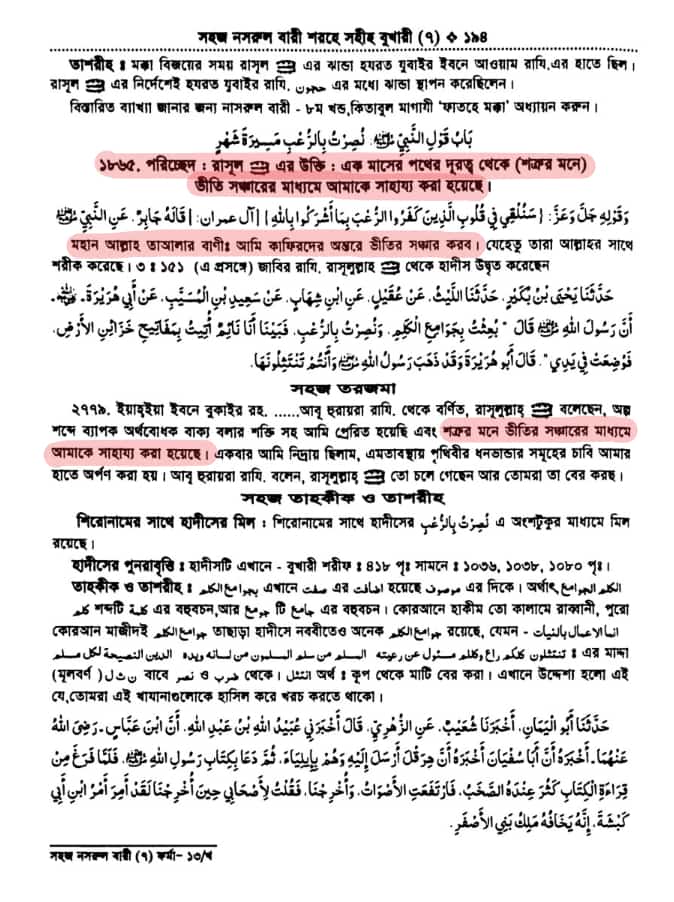
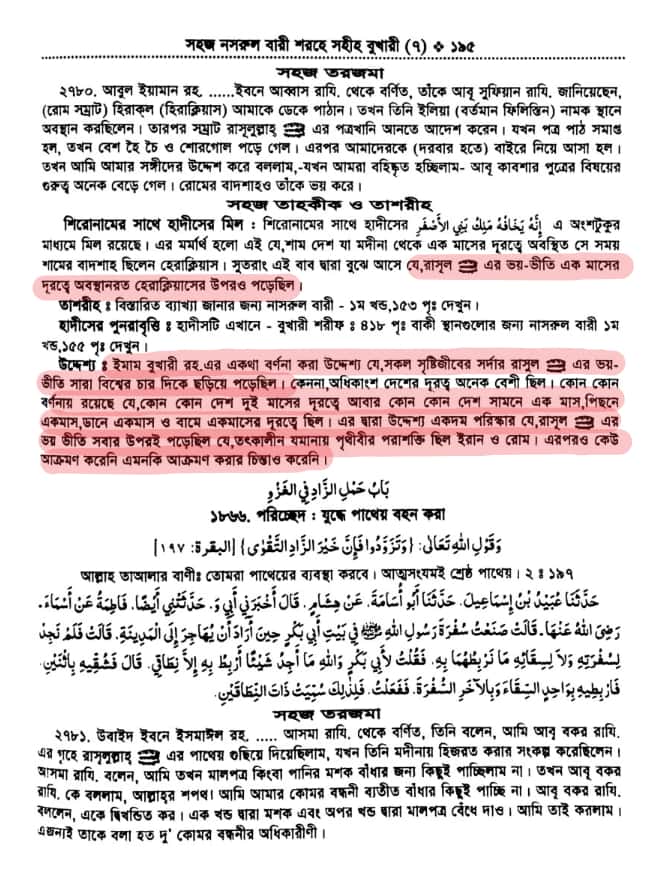
Muhammad also said that Paradise lies beneath the shade of swords.
Sahih al-Bukhari (Tawhid)
Book: 56/ Jihad and Conduct during Warfare
Chapter: 56/22. Paradise lies beneath the flashing of swords.
Al-Mughirah ibn Shu‘bah said: The Prophet conveyed to us our Lord’s message: Whoever among us is martyred reaches Paradise.
‘Umar asked the Prophet: Are our martyrs not inhabitants of Paradise, and their dead inhabitants of Hell? The Messenger of Allah said: Yes.
2818. Narrated from Salim Abu al-Nadr, the freed slave and scribe of ‘Umar ibn ‘Ubayd Allah. He said: ‘Abd Allah ibn Abi Awfa wrote to him that the Messenger of Allah said: Know that Paradise lies beneath the shade of swords.
Al-Uwaysi, narrating through Ibn Abi al-Zinad from Musa ibn ‘Uqbah, corroborated the hadith narrated by Mu‘awiyah ibn ‘Amr through Abu Ishaq from Musa ibn ‘Uqbah. (2833, 2966, 3024, 7237) (Muslim 32/6, Hadith 1742; Ahmad 19136) (Adhunik Prakashani 2608; Islamic Foundation 2620)
Hadith grading: Sahih (Authentic)
What Was the Prophet’s Occupation?
Without any concealment, Muhammad stated quite directly that his livelihood lay beneath the shade of his spear. In other words, he did not sustain himself through business, promoting education or employment. He lived on warfare and the spoils obtained through it. His occupation was fighting and plundering the possessions of unbelievers. [121]
Hadith Compilation
20/ Jihad in Allah’s Cause
Chapter: Jihad is obligatory, and the merit of morning and evening expeditions
(1900) Narrated from Ibn ‘Umar: The Messenger of Allah said: I have been sent with the sword before the Last Hour so that Allah may be worshipped without partners. My livelihood has been placed beneath the shade of my spear. Humiliation and disgrace have been assigned to those who oppose my command. Whoever imitates a people belongs to them.
(Ahmad 5114–5115, 5667; Shu‘ab al-Iman 98; Sahih al-Jami‘ 2831)
Hadith grading: Sahih (Authentic)
Narrator: ‘Abd Allah ibn ‘Umar
The Prophet Became Wealthy through Plunder
Muhammad was destitute and tended sheep and camels. He had no occupation. Nor did he have a business or other source of income sufficient to support eleven wives and a harem filled with enslaved women. His principal source of income was attacking unbelievers, plundering their possessions and taking his share. Many believers today try to say that the Prophet was extremely poor, unable even to eat two meals a day. The question is: If he was so poor, yet married women by the dozen, kept enslaved women and filled his harem with concubines, did the money to support all these women descend from the sky, or did it come from the property plundered after killing unbelievers? The Qur’an itself says: [122]
He found you destitute, then made you free of want.
Many of you have surely read the biographies’ accounts of the early years in Medina. They describe the Prophet’s house having no food, with no fire being lit in the stove for several days because there was nothing to cook. Alongside these accounts, it is necessary to know how much the Prophet plundered after beginning offensive jihad, taking spoils from unbelievers. To illustrate the scale of Muhammad’s plunder, I provide one calculation. Readers should note how much booty could be obtained from a single battle. He conducted many such battles. [123]
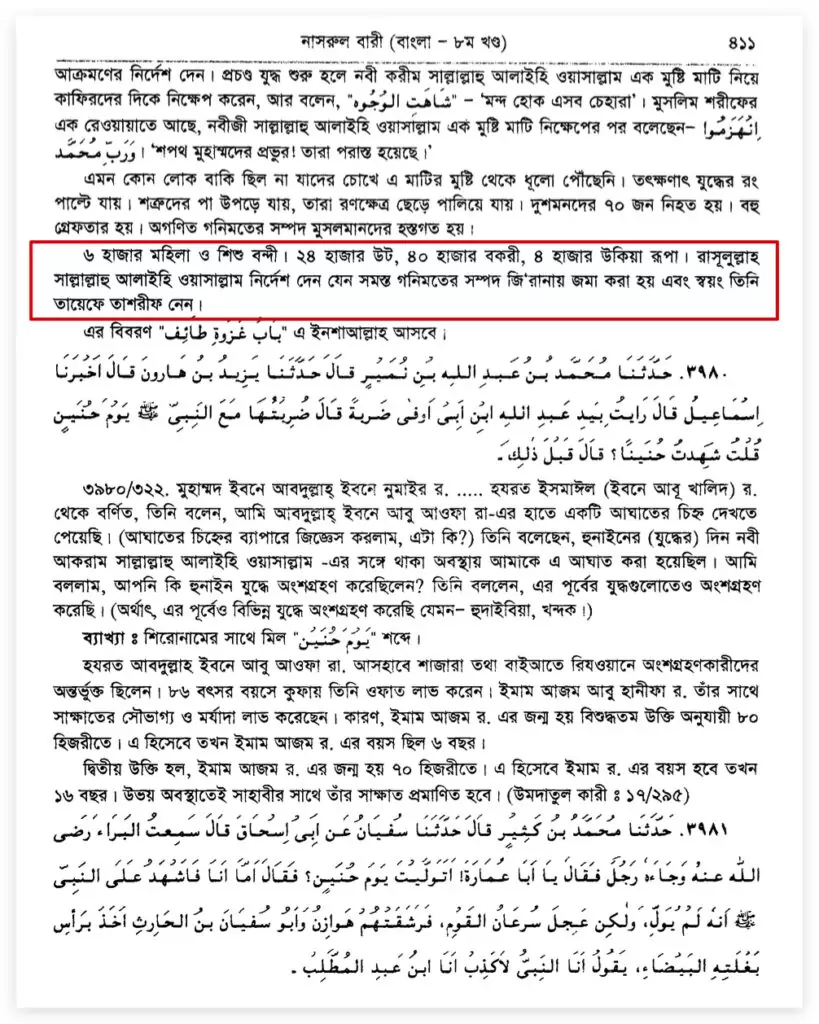
The Prophet Took Twenty Per Cent of the Plunder
Surah al-Anfal means the goods plundered in war. This chapter, named after plunder, clearly states that Muhammad would take one-fifth of the spoils. [124]
Sahih al-Bukhari (Tawhid)
Book: 57/ Khums, One-Fifth
Chapter: 57/7. Allah’s words: ‘Indeed, one-fifth belongs to Allah and the Messenger’ (al-Anfal 41). The authority to distribute it belongs to the Messenger. The Messenger of Allah said: I am the distributor and custodian, while Allah is the giver.
3117. Narrated from Abu Hurayrah. The Messenger of Allah said: ‘I neither give to you nor deprive you. I am only a distributor and spend as I am instructed.’ (Adhunik Prakashani 2883; Islamic Foundation 2894)
Hadith grading: Sahih (Authentic)
Narrator: Abu Hurayrah
The Prophet Forced People to Accept His Religion
Muhammad intimidated people into accepting Islam. Numerous examples provide evidence of this; a few are presented here.
Sahih al-Bukhari (Islamic Foundation)
85/ Holding Firmly to the Qur’an and Sunnah
Chapter: 3092. Almighty Allah’s words: ‘Humankind is argumentative in most matters’ (18:54); and ‘Do not argue with the People of the Book …’ (29:46)
6847. Qutaybah … narrated from Abu Hurayrah. He said: One day we were in the Prophet’s Mosque. The Messenger of Allah came out and said: Let us go to the Jews. We went with him until we reached Bayt al-Midras, their place of learning. The Prophet stood there and addressed them: Jewish people, accept Islam and you will be safe. They said: Abu al-Qasim, you have fulfilled your duty of conveying the message. He then said: I wish you to accept Islam and live in peace. They again said: Abu al-Qasim, you have fulfilled your duty of conveying the message. The Messenger of Allah told them: That is indeed my wish. He said the same a third time. Finally, he said: Know that the land belongs solely to Allah and His Messenger. I intend to expel you from this territory. Therefore, whoever among you has movable property should sell it. Otherwise, know that the land belongs to Allah and His Messenger.
Hadith grading: Sahih (Authentic)
Narrator: Abu Hurayrah
Sunan Abi Dawud (Verified Edition)
Allamah Albani Academy
Book: 14/ Taxes, Fay’ and Administration
Hadith number: 3003
3003. Narrated from Abu Hurayrah. He said: We were in the mosque when the Messenger of Allah came out to us and said: Let us go to the Jews’ territory. We went with him and reached them. The Messenger of Allah stood and called to them: Jewish people, accept Islam and you will live in peace. They said: Abu al-Qasim, you have conveyed the message. The Messenger of Allah again said: Accept Islam and you will have security. They said: Abu al-Qasim, you have conveyed the message. The Messenger of Allah told them: Conveying this invitation was my purpose. He repeated the same words a third time and said: Know that ownership of this land belongs to Allah and His Messenger. I intend to expel you from it. Therefore, if you can sell anything, sell it. Otherwise, know that this land belongs to Allah and His Messenger.
Hadith grading: Sahih (Authentic)
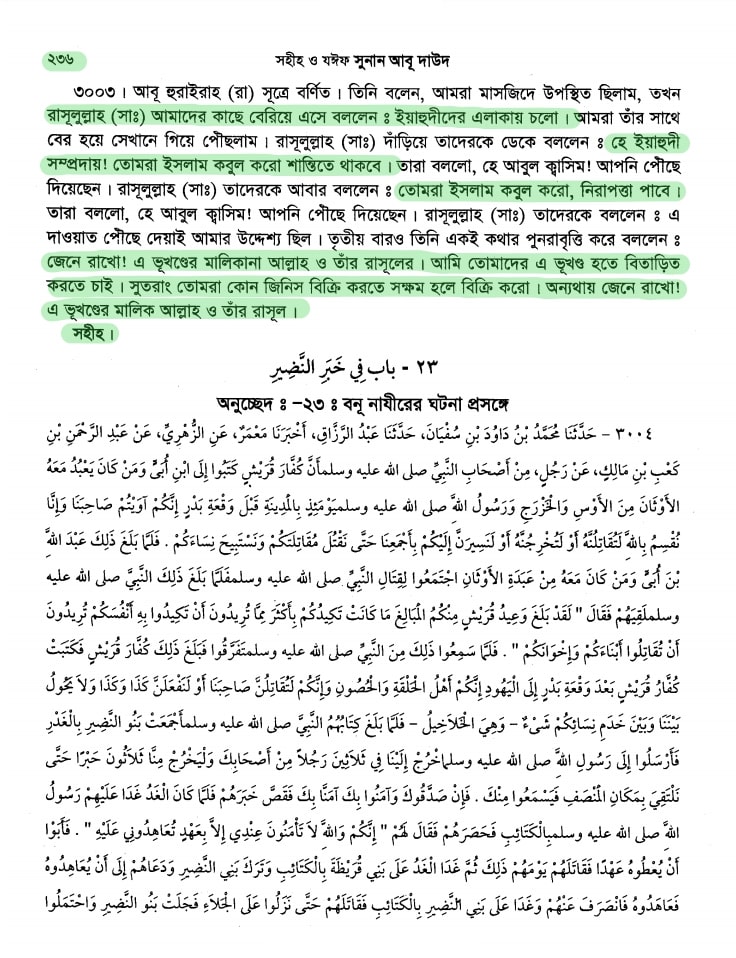
Cruelty and Physical Torture
In a civilised society, ethical principles and human rights receive serious consideration when punishing any crime, however grave the offender’s wrongdoing. Physical torture is not regarded as an ethical or acceptable punishment. Instead, depending on the severity of the offence, a person may receive imprisonment, a fine or an opportunity for reform. The primary aim is not simply harsh punishment but rehabilitation that enables the offender to return to society responsibly. Under Muhammad, however, punishments were entirely different: physical torture and even brutal killing formed part of the penal system. Accounts describe him ordering barbaric punishments such as gouging out eyes, striking eyes with heated iron rods and denying water to dying prisoners. Although many rulers in antiquity displayed similar cruelty, they have never been regarded as ideal human beings for all time. In Islam, however, Muhammad is considered the highest moral exemplar, a position that conflicts with the history of his brutality and oppression. Judged by modern ethical standards, such punitive practices and torture therefore appear as examples of barbarism. [125] [126] [127] [128]
Sahih al-Bukhari (Tawhid Publications)
76/ Medicine
Chapter: 76/5. Treatment with camels’ milk
5685. Narrated from Anas. Some people became ill and said: Messenger of Allah, give us shelter and food. When they recovered, they said: Medina’s air and climate do not suit us. He allowed them to stay at al-Harrah with some of his camels and said: Drink their milk. When they recovered, they killed the Prophet’s herdsman and drove away his camels. He sent pursuers after them. Then he cut off their hands and feet and pierced their eyes. The narrator said: I saw one of them licking and biting the earth until he died. [233]
The transmitter Sallam said: I was informed that al-Hajjaj ibn Yusuf had said to Anas: Tell me about the harshest punishment the Prophet inflicted. Anas then narrated this hadith. When al-Hasan al-Basri heard of this, he said: In my opinion, it would have been better if he had not narrated this hadith. (Adhunik Prakashani 5274; Islamic Foundation 5170)
Hadith grading: Sahih (Authentic)
Narrator: Anas ibn Malik
Mishkat al-Masabih (Mishkat)
Part 16/ Qisas, Retaliation
Chapter: 4. First section: killing apostates and those who create disorder
3539—(7) Narrated from Anas. He said: Some people from ‘Ukl came to the Prophet and embraced Islam. Medina’s climate, however, proved unsuitable for them. He instructed them to go to the charity camels and drink their milk and urine. Following these instructions, they recovered. After recovering, however, they apostatised, killed the herdsmen and drove away the camels. On hearing this, the Prophet sent men after them. When they were captured and brought back, he cut off both their hands and feet and pierced their eyes. He then left their bleeding wounds uncauterised so that they would die.
Another account states that people seared their eyes with iron rods. Another says: He ordered iron rods to be brought and heated, then applied to their eyes. They were subsequently left on the burning ground. They asked for water but were given none. Eventually, they died in that pitiable condition. (Al-Bukhari and Muslim)(1)
(1) Sahih: al-Bukhari 3018, 6802; Muslim 1671; Abu Dawud 4364; al-Nasa’i 4025; Ibn Majah 2578; Ahmad 12639.
Hadith grading: Sahih (Authentic)
Narrator: Anas ibn Malik
Sahih Muslim (Islamic Foundation)
Book: 29/ Qasamah, Special Oaths in Homicide Cases; Muharibin, Enemy Combatants; Qisas, Retaliation for Murder; and Diyat, Financial Compensation for Homicide
Chapter: 2. The trial of enemy combatants and apostates
4207. Abu Ja‘far Muhammad ibn al-Sabbah and Abu Bakr ibn Abi Shaybah … narrated from Anas that eight men from the ‘Ukl tribe came to the Messenger of Allah and pledged allegiance to Islam. The climate did not suit them and they became ill. They complained to the Messenger of Allah, who asked: Can you go with our herdsman, use the camels’ urine and drink their milk? They said: Yes. They went, used the urine and drank the milk, and recovered.
They then killed the herdsman and drove away the camels. When the news reached the Messenger of Allah, he sent men after them. They were captured and brought back. An order was issued concerning them: their hands and feet were cut off and heated iron rods were inserted into their eyes. They were then thrown out into the sun, where they eventually died.
Ibn al-Sabbah’s narration has وَاطَّرَدُوا النَّعَمَ in place of وَطَرَدُوا الإِبِل, and his account also includes وَسُمِّرَتْ أَعْيُنُهُمْ.
Hadith grading: Sahih (Authentic)
Narrator: Anas ibn Malik
Sahih Muslim (Hadith Academy)
Book: 29/ Qasamah, Oaths when Homicide Is Denied; Muharibin, Fighting; Qisas, Retaliation for Murder; and Diyat, Financial Compensation for Homicide
4246—(10/…) Abu Ja‘far Muhammad ibn al-Sabbah and Abu Bakr ibn Abi Shaybah … narrated from Anas that eight men from the ‘Ukl tribe came to the Messenger of Allah and pledged allegiance to Islam. Medina’s climate proved unsuitable and they fell ill, so they complained to him. The Prophet asked: Can you go with our herdsman and drink the camels’ urine and milk? They said: Yes. They went and drank the camels’ urine and milk, and recovered. They then killed the herdsman and drove away the camels. When this news reached the Messenger of Allah, he sent men after them. They captured them and brought them back, and an order was issued concerning them. Their hands and feet were cut off and heated iron rods were inserted into their eyes. They were then thrown out into the sun, where they eventually died.
Ibn al-Sabbah’s narration has وَاطَّرَدُوا النَّعَمَ in place of وَطَرَدُوا الإِبِلَ. The narrator said: Their eyes were then gouged out. (Islamic Foundation 4207; Islamic Centre 4207)
Hadith grading: Sahih (Authentic)
Narrator: Anas ibn Malik
Now let us learn the Islamic ruling on this matter from Mukhtasar Zad al-Ma‘ad, written by Imam Ibn al-Qayyim. [129]
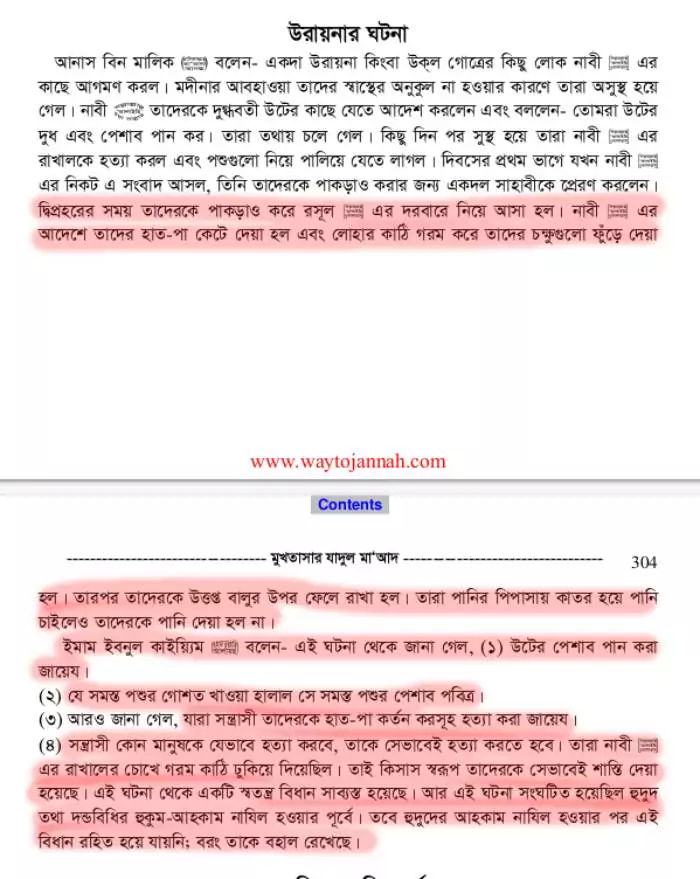
Let us now establish the specific reason they were killed. [130]
Sunan al-Nasa’i (Islamic Foundation)
1/ Purification
Chapter: 191/ The urine of lawful animals
307. Muhammad ibn Wahb … narrated from Anas ibn Malik. He said: Some Bedouins of the ‘Uraynah tribe came to the Messenger of Allah and accepted Islam. Living in Medina did not suit them: their complexion became pale and their bellies swelled. The Messenger of Allah sent them to his herd of milch camels and instructed them to drink the milk and urine. They recovered, then killed the herdsman and drove away the camels. The Prophet sent men to find them. They were brought back, their hands and feet were cut off, and heated rods were inserted into their eyes.
On hearing this hadith from Anas, the Commander of the Faithful, ‘Abd al-Malik, asked: Was this punishment for disbelief or for sin? He replied: For disbelief. Abu ‘Abd al-Rahman, Imam al-Nasa’i, said: We know of no one other than Talhah who includes this statement from Yahya through Anas in the chain of this hadith. The correct account—Allah knows best—is that Yahya narrated it as a mursal report from Sa‘id ibn al-Musayyab.
Hadith grading: Sahih (Authentic)
Narrator: Anas ibn Malik
Brutally Killing Someone for Insults
Many women and men in our society use language that we consider somewhat crude. When I was a child, a woman worked in our home whose language was extremely foul. Such matters usually depend on a person’s upbringing, family education and surroundings. None of us expects polished, refined language from someone living in a slum. We understand that their circumstances may not have allowed them to learn courteous speech from childhood. Yet we never punish someone for so minor a matter. We dislike insults, but we do not kill people for using them.
Consider the following hadith. A blind man brutally kills an enslaved woman with whom he had fathered children, simply because she insulted the Prophet. On learning of this, Muhammad is pleased and declares that the killing carries no liability. This hadith provides vivid evidence of Muhammad’s boundless cruelty and barbarity towards anyone who insulted or criticised him. [131] [132] [133] [134] [135]
Sunan Abi Dawud (Verified Edition)
Publisher: Allamah Albani Academy
Book: 33/ Crimes and Their Punishments
Chapter: 2. The ruling concerning someone who insults the Prophet
4361. Narrated from Ibn ‘Abbas. A blind man had an enslaved woman, an umm walad who had borne him children. She insulted the Prophet and spoke ill of him. Although the blind man forbade her, she would not stop. He rebuked her, but she still would not stop. One night, when she began insulting the Prophet and speaking ill of him, he took a sharp dagger, thrust it into her belly and pressed upon it, killing her. A child fell between her feet and was covered in blood. In the morning, the Prophet was informed of the incident. He gathered the people and said: I swear by Allah that the person who did this must stand, for I have a right over him.
On hearing this, the blind man pushed through the crowd, trembling, and sat before the Prophet. He said: Messenger of Allah, I am the master of the slain woman. She insulted you and spoke offensively about you. I forbade her, but she would not stop. I reprimanded her, but she still would not stop. I have two sons by her who are like pearls, and she was very dear to me. Last night she began insulting you and speaking offensively about you. I took a sharp knife, placed it against her belly, pressed upon it and killed her. The Prophet said: Bear witness that her blood carries no liability.(1)
Sahih.
(1). Al-Nasa’i.
Hadith grading: Sahih (Authentic)
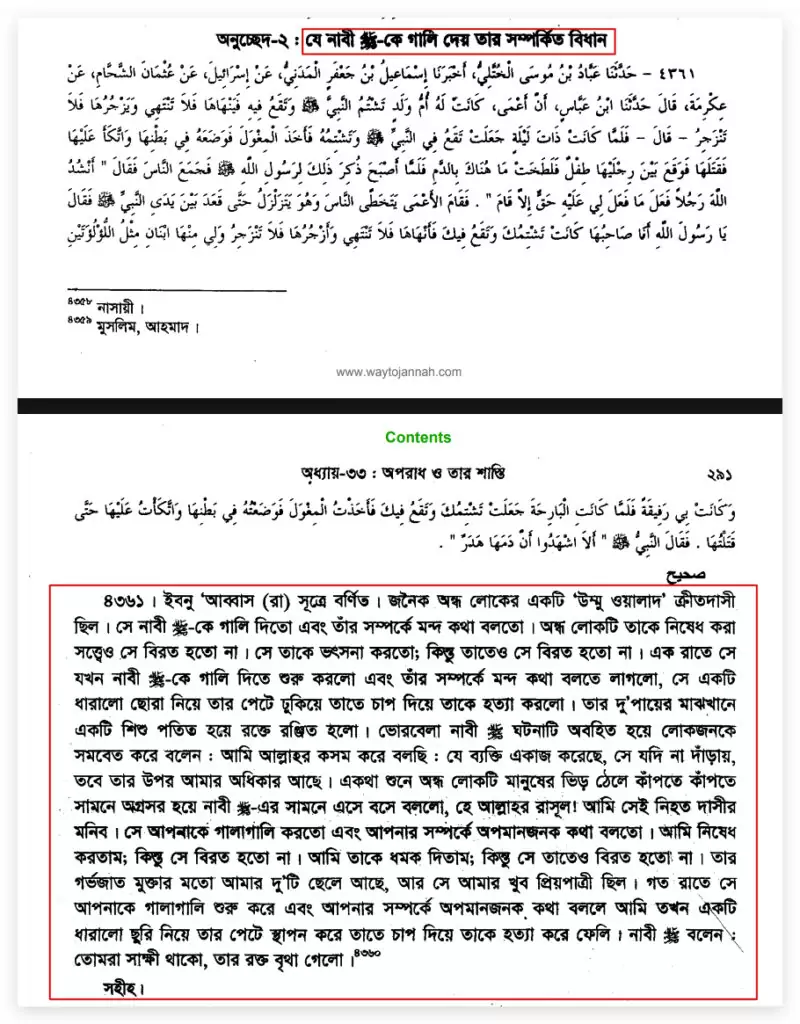
Sunan Abi Dawud (Islamic Foundation)
33/ Penal Rulings
Chapter: 2. The punishment for a person who dishonours the Prophet
4310. ‘Abbad ibn Musa … narrated from Ibn ‘Abbas. He said: A blind man had an enslaved woman who spoke disrespectfully about the Prophet. He forbade her, but she did not obey. He reprimanded her, but she still did not stop. One night, when she began speaking dishonourably about the Prophet, the blind man took a dagger and struck her belly forcefully, causing her death. At that moment, one of her sons fell upon her feet, and the place where she had been sitting became flooded with blood.
The next morning, when the matter was discussed before the Messenger of Allah, he gathered everyone and said: I swear by Allah that I wish to know the truth of this incident, and this is my right over the person responsible. Whoever killed her must therefore stand. The blind man pushed through the rows of people and, trembling, sat before the Prophet. He said: Messenger of Allah, I killed her.
She spoke offensively about you and insulted you. I forbade and reprimanded her, but she paid no attention. I have two children by this woman, who are like gems and pearls, and she herself was dear to me. Last night, however, when she again began speaking offensively about you and insulting you, I lost control of myself and struck her belly forcefully with a dagger, killing her. The Prophet said: Bear witness that this woman’s blood warrants no compensation and has no value.
Hadith grading: Sahih (Authentic)
Narrator: ‘Abd Allah ibn ‘Abbas
Bulugh al-Maram
Part 9/ Crimes
Chapter: 4. A person killed while protecting property; killing those who disparage the Prophet is obligatory
1204. Narrated from Ibn ‘Abbas: A blind Companion had an enslaved woman who was the mother of his child. She insulted the Prophet and made indecent remarks about him. The Companion forbade her, but she would not stop. One night, exasperated by her conduct, he plunged an axe-like weapon into her belly, sat upon her and killed her. When news reached the Prophet, he said: Bear witness that this killing carries no liability; no compensation is payable.[1]
[1] Abu Dawud 4361; al-Nasa’i 4070.
Narrated from ‘Ikrimah. He said: A group of zindiqs—atheists and apostates—was brought before ‘Ali, who burned them. When Ibn ‘Abbas heard of this, he said: I would not have burned them, because the Messenger of Allah prohibited it, saying: Do not punish with Allah’s punishment. Rather, I would have killed them, because the Messenger of Allah instructed … He then narrated the preceding hadith.
Hadith grading: Sahih (Authentic)
Narrator: ‘Abd Allah ibn ‘Abbas
Sunan al-Nasa’i (Islamic Foundation)
38/ The Prohibition of Killing
Chapter: 16. The punishment for speaking ill of the Messenger of Allah
4071. ‘Uthman ibn ‘Abd Allah … narrated from ‘Uthman al-Shahham. He said: I was a blind man’s guide. One day I took him to ‘Ikrimah, who narrated to us that Ibn ‘Abbas said: During the Messenger of Allah’s lifetime there was a blind man with an enslaved woman who had borne him two sons. She constantly mentioned the Messenger of Allah and spoke ill of him. The blind man rebuked her, but she paid no attention. He forbade her, but she still did not stop. The blind man said: One night, when I mentioned the Messenger of Allah, she began disparaging him. Unable to endure it, I took a weapon and thrust it into her belly, killing her.
In the morning, people found her dead and reported the matter to the Messenger of Allah. He gathered everyone and said: I adjure by Allah the person who did this to come forward. On hearing this, the blind man rose fearfully and came, saying: Messenger of Allah, I did this. She was my enslaved woman, very affectionate towards me and my companion. I have two sons by her who are like pearls. Yet she often spoke ill of you and insulted you. When I forbade her, she paid no attention; when I rebuked her, she did not stop. Last night, when I mentioned you, she began speaking ill of you. I picked up a weapon, placed it against her belly and pressed upon it, killing her. The Messenger of Allah said: Bear witness that no compensation is payable for this woman’s blood.
Verification: Sahih.
Hadith grading: Sahih (Authentic)
Narrator: ‘Uthman al-Shahham
Barbarity Even towards Corpses
When a person dies and becomes a corpse, treating the body inhumanely or barbarically reflects a deeply degraded mentality. Histories of great warriors in major wars show that even after bloody battles against bitter enemies, and even after killing them, warriors returned their opponents’ bodies with due dignity or buried them respectfully. No one has an enmity with a corpse. After the Battle of Badr, Muhammad and his companions threw the dead unbelievers into a filthy, foul-smelling well. They justified this by saying that the unbelievers were enemies of Muslims, impure and hateful. The Prophet thus taught violent treatment even of their corpses. [136] [137]
Sahih al-Bukhari (Islamic Foundation)
51/ Military Campaigns
Chapter: 2170. The killing of Abu Jahl
Islamic Foundation number: 3689; international number: 3976
3689. ‘Abd Allah ibn Muhammad … narrated from Abu Talhah that on the day of the Battle of Badr, at the Prophet’s command, the bodies of twenty-four Quraysh chiefs were thrown into a foul well filled with rubbish on the plain of Badr. Whenever the Messenger of Allah defeated a people, he stayed on the outskirts of that place for three days. On the third day of his stay at Badr, he ordered his mount to be prepared, and it was saddled. The Messenger of Allah then walked some distance, followed by the Companions.
They said: We thought he was going somewhere for some purpose. Eventually, he stood at the edge of that well and began addressing the dead men cast into it by their own and their fathers’ names: So-and-so, son of so-and-so! So-and-so, son of so-and-so! Do you now realise that obeying Allah and His Messenger would have been a great source of happiness for you? We have found our Lord’s promise true. Have you also found what your Lord told you to be true? The narrator said: On hearing this, ‘Umar asked: Messenger of Allah, what are you saying to bodies without souls?
The Prophet said: By the great Being in whose hand is Muhammad’s life, you do not hear what I am saying any better than they do. Qatadah said: Allah temporarily restored life to their bodies so that they could hear His Messenger, as a threat and humiliation, bringing them suffering, regret and shame.
Hadith grading: Sahih (Authentic)
Narrator: Abu Talhah
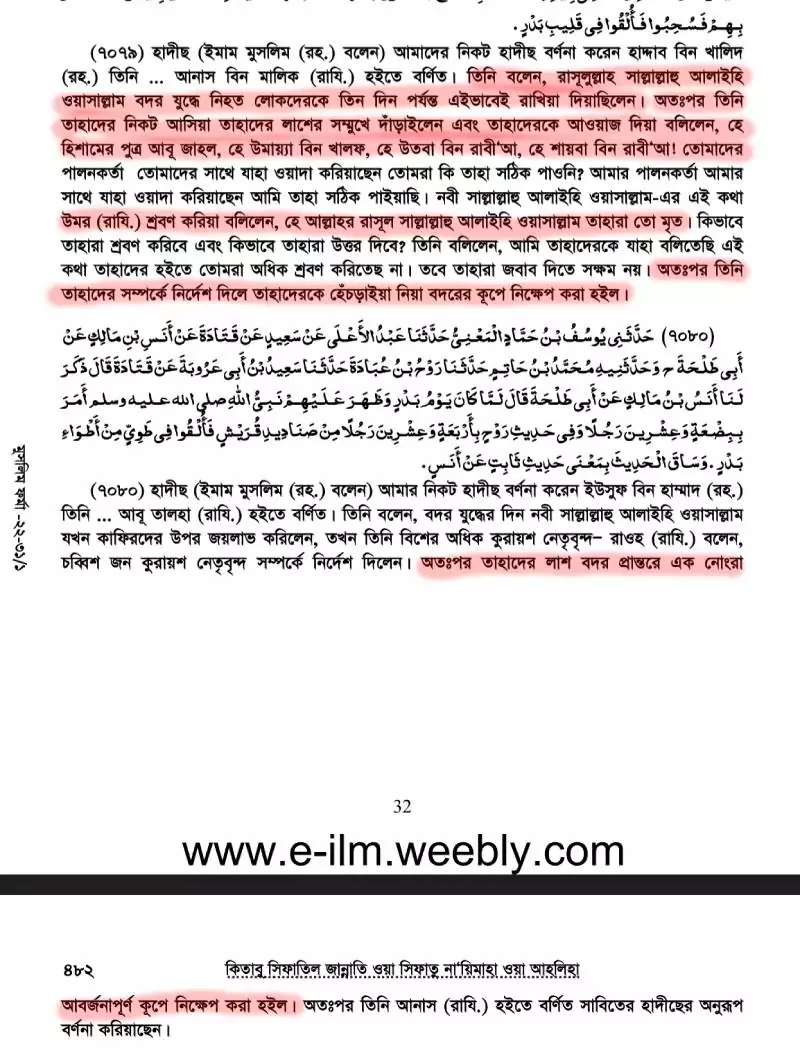
The same incident appears in Sirat al-Mustafa. [138] Read the preceding portion of the account as well, and notice Abu Hudhayfah’s sorrowful expression on seeing his father’s body. Even the body of his beloved biological father was supposedly unworthy of respect because he was an unbeliever.
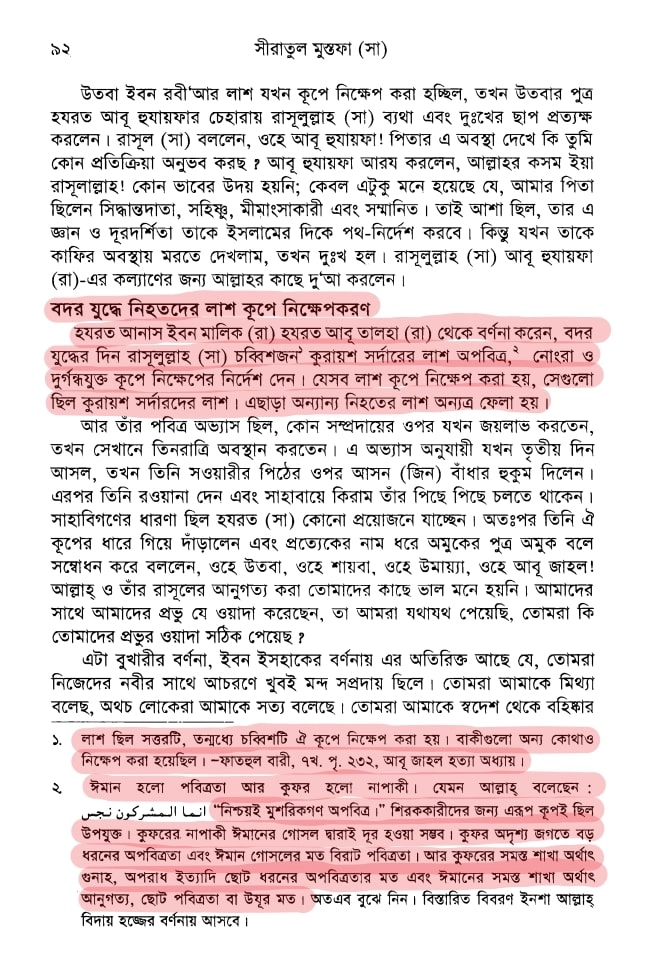
Throwing Knives to Destroy Eyes
Peeping into a house or room without permission, or secretly trying to see what is happening inside, is undoubtedly unethical. But it is not so unethical that the person’s eyes must be gouged out or pierced with stones! It is in no sense an offence grave enough to warrant mutilation. Yet Muhammad permitted this, and when he himself saw such a person, he would throw a knife to destroy the person’s eyes. [139]
Sahih al-Bukhari (Tawhid Publications)
87/ Blood Money
Chapter: 87/15. Enforcing one’s rights or taking retaliation without bringing a case before a judge
6888. The same hadith also reports that he said: If someone peeps into your home without your permission and you throw a stone that pierces his eye, you incur no sin. [6702; Muslim 38/9, Hadith 2158; Ahmad 19530] (Adhunik Prakashani 6408; Islamic Foundation 6422)
Hadith grading: Sahih (Authentic)
Sahih al-Bukhari (Tawhid Publications)
87/ Blood Money
Chapter: 87/15. Enforcing one’s rights or taking retaliation without bringing a case before a judge
6889. Narrated from Humayd that a man peeped into the Prophet’s house. The Prophet prepared to throw a knife at him. I asked: Who narrated this hadith to you? He replied: Anas ibn Malik. [6242] (Adhunik Prakashani 6409; Islamic Foundation 6422)
Hadith grading: Sahih (Authentic)
Narrator: Humayd
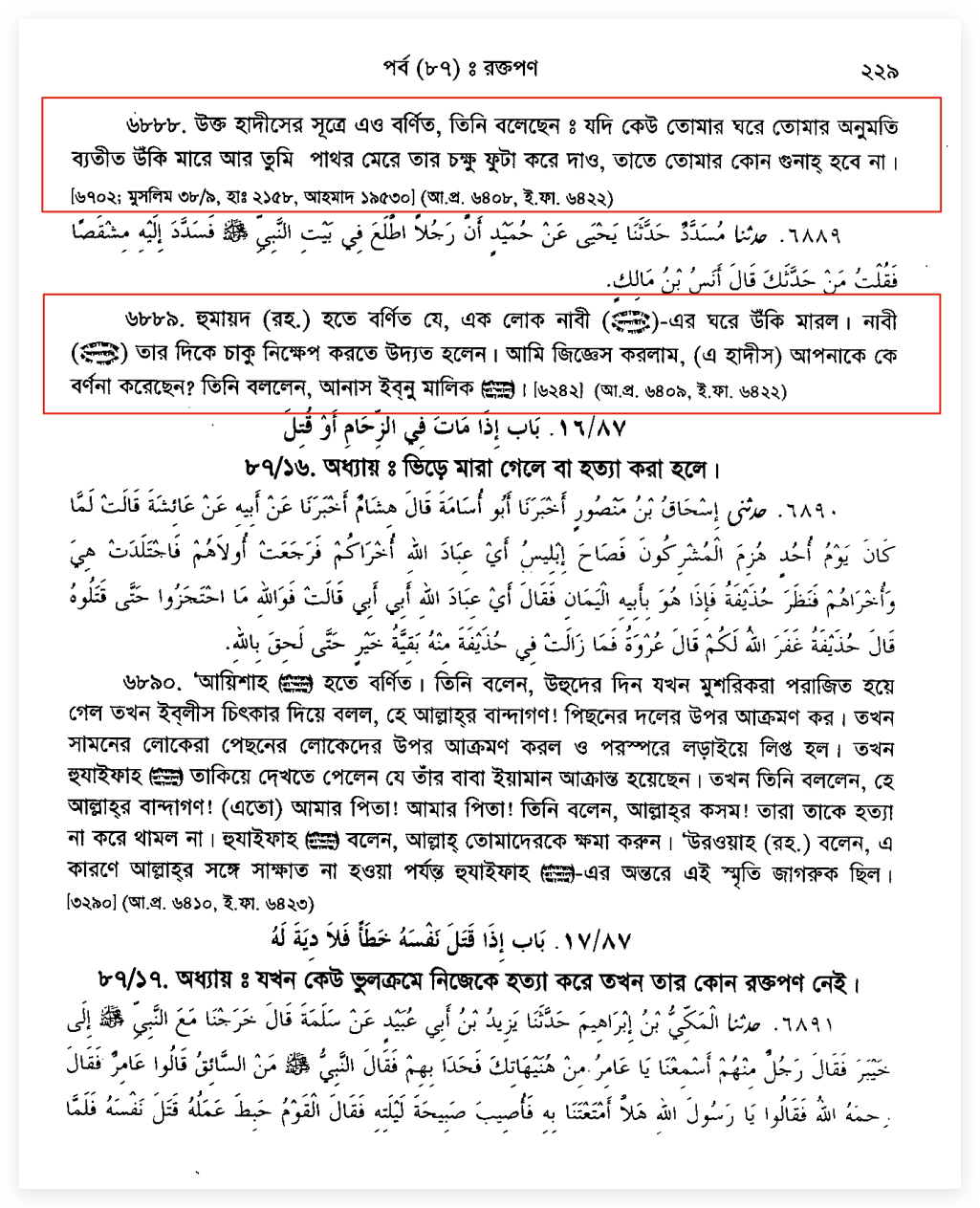
The Prophet Supported Slavery
The Prophet Told Slaves to Serve Their Masters
Sahih al-Bukhari (Islamic Foundation)
Book: 41/ Manumission
Chapter: 1600. A slave is the custodian of his master’s property. The Prophet attributed the property to the master.
2389. Abu al-Yaman … narrated from ‘Abd Allah ibn ‘Umar that the Messenger of Allah said: Each of you is responsible and will be questioned about those under your authority. The imam, or ruler, is responsible and will be questioned about those under his authority. A man is responsible for his family and will be questioned about those under his authority. A wife is responsible for her husband’s home and will be questioned about those under her authority. A servant is the custodian of his master’s property and will be questioned about what is entrusted to him.
‘Abd Allah ibn ‘Umar said: I definitely heard the Prophet speak about these people. I think he also said: A child is the custodian of his father’s property and will be questioned about what is entrusted to him. In short, each of you is responsible, and each will be questioned about those under their authority.
Hadith grading: Sahih (Authentic)
Narrator: ‘Abd Allah ibn ‘Umar
Slaves Are Forbidden to Escape
Muhammad prohibited slaves from escaping. Imam Abu Bakr Ahmad ibn al-Husayn ibn ‘Ali al-Bayhaqi’s Shu‘ab al-Iman states the following with reference to an authentic hadith. [140]
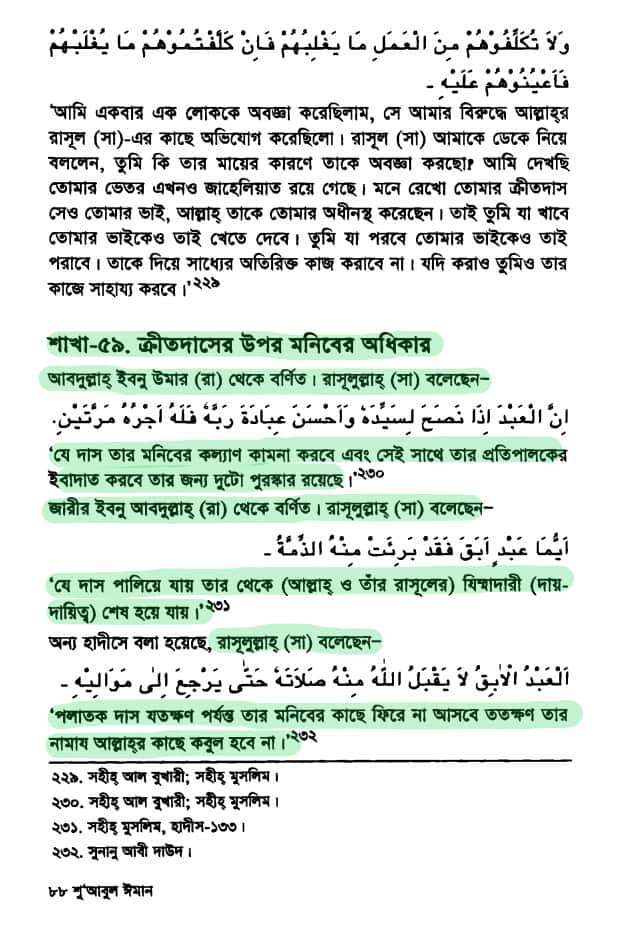
The Prophet Laughed at a Slave Being Beaten
Hadith collections provide evidence that when Abu Bakr—one of Islam’s most important figures and caliph of the Islamic empire after Muhammad—beat a slave for losing a camel, Muhammad smiled at the sight. [141]
Sunan Abi Dawud (Islamic Foundation)
5/ Hajj
Chapter: 28. A person beating his slave while in ihram
1818. Ahmad ibn Hanbal … narrated from Asma’ bint Abi Bakr. She said: We set out with the Messenger of Allah for the Farewell Pilgrimage. When we reached al-‘Arj, the Messenger of Allah dismounted, and we did likewise. ‘A’ishah sat beside the Prophet, and I sat beside my father, Abu Bakr. Abu Bakr’s and the Messenger of Allah’s food, drink and travelling equipment were kept together on a camel under the care of one of Abu Bakr’s slaves.
Abu Bakr waited for the slave so that we could eat and drink. The slave arrived, however, without the camel. Abu Bakr asked: Where is your camel? He replied: I lost it yesterday. Abu Bakr said: There was only one camel, and you lost even that? The narrator said: He then beat him. The Messenger of Allah smiled and said: Look at what this man in ihram is doing. The transmitter Ibn Abi Rizmah said: The Messenger said nothing beyond, ‘Look at what this man in ihram is doing’, and he was smiling.
Hadith grading: Hasan (Good)
Narrator: Asma’ bint Abi Bakr
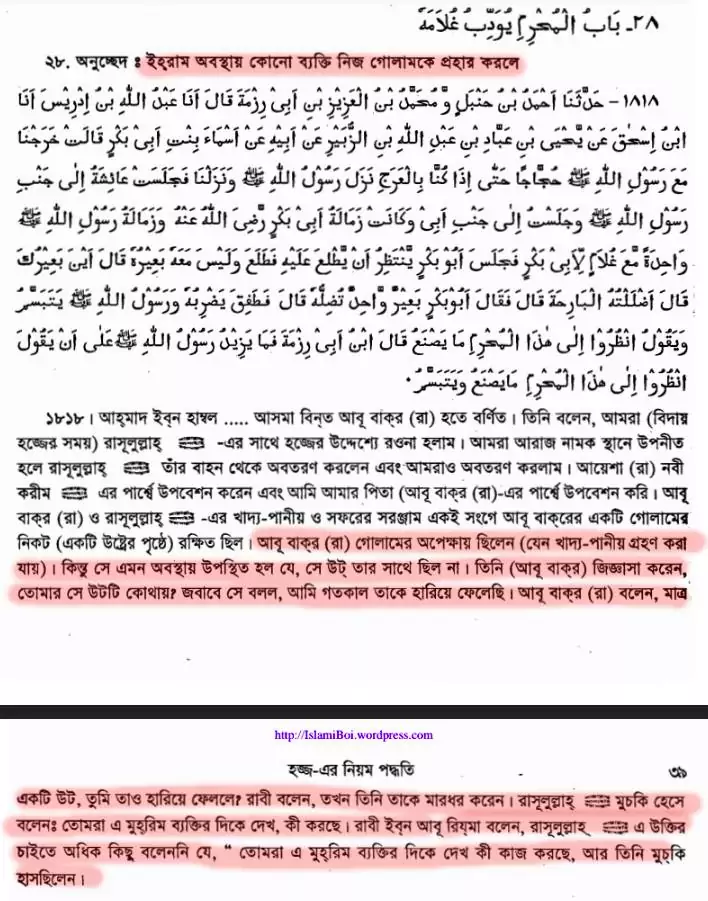
The Prophet Accepted Slaves as Gifts
Sahih al-Bukhari (Tawhid)
Book: 83/ Oaths and Vows
Chapter: 83/33. Whether land, sheep, crops and furnishings are included in oaths and vows
The hadith of Ibn ‘Umar: ‘Umar once submitted to the Prophet: I have acquired a piece of land better than any property I have ever obtained. He said: If you wish, you may retain its principal ownership and give its produce in charity. Abu Talhah submitted to the Prophet: My garden called Bayruha’, whose wall faces the Prophet’s Mosque, is my most beloved possession.
6707. Narrated from Abu Hurayrah. He said: We went out with the Messenger of Allah on the day of the Khaybar campaign. We obtained no gold or silver as booty, only goods, furnishings and clothing. A man of the Zubayr tribe named Rifa‘ah ibn Zayd gave the Messenger of Allah a slave named Mid‘am. The Messenger of Allah set out towards Wadi al-Qura. On reaching it, Mid‘am was unloading the Messenger of Allah’s camel litter when an arrow suddenly struck and killed him.
People said: May he attain Paradise. The Messenger of Allah said: Never! By the Being in whose hand is my life, the cloak he took from the spoils at Khaybar before their distribution will burn upon him as a flame. On hearing this, a man brought one or two straps to the Prophet. He said: This is one strap from Hell—or two straps from Hell.(1) (4234) (Adhunik Prakashani 6234; Islamic Foundation 6250)
(1) Hellfire awaits those who misappropriate property.
Hadith grading: Sahih (Authentic)
Narrator: Abu Hurayrah
Re-Enslaving Freed Slaves
Sahih al-Bukhari (Islamic Foundation)
Book: 41/ Manumission
Chapter: 1590. Selling a mudabbar, a slave promised freedom upon the owner’s death
2367. Adam ibn Abi Iyas … narrated from Jabir ibn ‘Abd Allah. He said: One of our people declared his slave free as a mudabbar. The Prophet summoned the slave and sold him elsewhere. Jabir said: The slave died that same year.
Hadith grading: Sahih (Authentic)
Narrator: Jabir ibn ‘Abd Allah al-Ansari
Narrated Jabir bin `Abdullah:
A man amongst us declared that his slave would be freed after his death. The Prophet (ﷺ) called for that slave and sold him. The slave died the same year.
Sunan Abi Dawud (Islamic Foundation)
Book: 24/ Manumission
Chapter: 10. A person freeing slaves within less than one-third of his estate
3920. Musaddad … narrated from ‘Imran ibn Husayn that, at his death, a man freed his six slaves, and he had no property other than these six slaves. When this news reached the Prophet, he arranged a lottery among the slaves, freed two and kept the remaining four enslaved.
Hadith grading: Sahih (Authentic)
Narrator: ‘Imran ibn Husayn
Giving a Slave Away Brings More Reward than Freeing One
Muhammad said that giving a slave to relatives brings greater religious reward than freeing that slave. In other words, he indirectly discouraged manumission.
Sahih al-Bukhari (Tawhid)
Book: 51/ Gifts and Their Virtues
Chapter: 51/15. A married woman giving gifts to someone other than her husband or freeing slaves: permissible if she is not foolish, impermissible if she is
2592. Narrated from Maymunah bint al-Harith. She freed her enslaved woman without the Prophet’s permission. On the day the Prophet stayed in her home, she said: Messenger of Allah, do you know that I have freed my enslaved woman? He asked: Have you done that? Maymunah said: Yes. He said: Listen! Had you given her to your maternal uncles, you would have earned a greater reward. (2594)
Through another chain, Bakr ibn Mudar … narrated from Kurayb that Maymunah freed a slave. (Muslim 12/14, Hadith 999; Ahmad 26886) (Adhunik Prakashani 2404; Islamic Foundation 2421)
Hadith grading: Sahih (Authentic)
Narrator: Maymunah
Sectarianism Even in Manumission
The Prophet was sectarian even regarding the liberation of slaves. He said that freeing believing Muslim slaves brings religious reward.
Sahih Muslim (Islamic Foundation)
Book: 21/ Manumission
Chapter: 4. The virtues of manumission
3655. Qutaybah ibn Sa‘id … narrated from Abu Hurayrah. He said: I heard the Messenger of Allah say: Whoever frees a believing slave, Allah will save each of his limbs from Hell in exchange for the freed slave’s corresponding limb, even saving the liberator’s private parts in exchange for the freed slave’s private parts.
Hadith grading: Sahih (Authentic)
Narrator: Abu Hurayrah
A Slave’s Escape Is Disbelief
According to an authentic hadith, if a slave escapes from his master, this is regarded as kufr, or disbelief. This means that just as associating partners with Allah is disbelief, escaping from a master is also disbelief—an unforgivable offence in Islam. When slavery was practised, many slaves fled, or at least tried to flee, because they could no longer endure enslaved life. Islam, however, identified such escape as the gravest offence and thereby arranged to keep slaves bound in slavery’s chains in their owners’ interests.
Sahih Muslim (Islamic Foundation)
1/ Faith
Chapter: 31. Calling a fugitive slave an unbeliever
132. ‘Ali ibn Hujr al-Sa‘di … narrated from al-Sha‘bi that he heard Jarir say: A slave who escapes from his master commits disbelief until he returns to his master. Mansur said: By Allah, this hadith was narrated from the Prophet, but I dislike its being narrated from me here in Basra.*
* Because many Kharijites and Mu‘tazilites live here, who regard this as actual disbelief.
Hadith grading: Sahih (Authentic)
Narrator: al-Sha‘bi
Sahih Muslim (Islamic Foundation)
1/ Faith
Chapter: 31. Calling a fugitive slave an unbeliever
133. Abu Bakr ibn Abi Shaybah … narrated from Jarir that the Messenger of Allah said: When a slave escapes, Allah and His Messenger’s protection of him comes to an end.
Hadith grading: Sahih (Authentic)
Narrator: Jarir ibn ‘Abd Allah al-Bajali
Sahih Muslim (Islamic Foundation)
1/ Faith
Chapter: 31. Calling a fugitive slave an unbeliever
134. Yahya ibn Yahya … narrated from Jarir ibn ‘Abd Allah that the Prophet said: When a slave escapes, his prayers are not accepted.
Hadith grading: Sahih (Authentic)
Narrator: Jarir ibn ‘Abd Allah al-Bajali
Hadith Compilation
21/ Slaves
Chapter: A slave is forbidden to flee his master’s home
(2028) Narrated by the same narrator: The Prophet said: When a slave escapes, his prayers will not be accepted.
(Muslim 239) Another account states: ‘He commits disbelief.’ (Ibid., 237)
Hadith grading: Sahih (Authentic)
Narrator: Jarir ibn ‘Abd Allah al-Bajali
The Prophet Killed People
Muhammad’s Assassinations
Ordering a person’s killing on the basis of religious ideals or beliefs, killing people in fulfilment of those orders, and sending assassins to murder under cover of darkness are not merely dark chapters of history but extreme examples of human rights violations. Such events deeply affect a people’s social and moral values. They shape the direction of a community’s moral foundations. Killing for criticism, insults or opposition—particularly attempts to silence dissenting voices—becomes still more significant when perpetrated by a religious leader, since such leaders are usually regarded as guides for a community or nation and as models to follow or imitate. Another article is essential reading in this connection: it describes the brutal killing of a blind Companion’s enslaved woman, which subsequently received Muhammad’s satisfaction and approval. [142]
An Assassination Order: The Jewish Critic Ka‘b ibn al-Ashraf
Authentic hadiths record that Muhammad ordered the killing of Ka‘b ibn al-Ashraf because he had hurt Allah and Muhammad by composing satirical poetry against Muhammad and speaking offensively about Muslim women. From a state’s perspective, ridicule or offensive speech might warrant an ordinary penalty, but sending assassins to kill someone extrajudicially is profoundly inhumane. Punishment for an offence must proceed through a court, with a proper investigation and an opportunity for the accused to defend themselves. Carrying out this assassination order as a religious punishment effectively laid the foundation for Sharia rulings on insulting the Messenger. Through these hadiths, even slight criticism of Muhammad came to be treated in the Islamic judicial system as an offence warranting immediate killing. As a result, extrajudicial killings and mob justice occur frequently across the Muslim world. Someone alleges that a person has insulted the Prophet, and a crowd proclaiming monotheism arrives, beats that person to death, sets the body on fire and departs. Pakistan and Bangladesh have countless examples of this—too many to enumerate.
Let us examine those hadiths. The following reports make it clear that the Prophet sent assassins to kill his critics.
Sahih al-Bukhari (Tawhid)
Book: 56/ Jihad and Conduct during Warfare
Chapter: 56/159. Secretly killing a harbi, a member of an enemy community
3032. Narrated from Jabir through the Prophet. He said: The Prophet asked: ‘Who will undertake to kill Ka‘b ibn al-Ashraf?’ Muhammad ibn Maslamah asked: ‘Would you like me to kill him?’ The Messenger of Allah replied: Yes. Muhammad ibn Maslamah said: ‘Then permit me to say something to him.’ He said: ‘I give permission.’ (2510) (Adhunik Prakashani 2807; Islamic Foundation 2817)
Hadith grading: Sahih (Authentic)
Sahih al-Bukhari (Tawhid)
Book: 64/ Military Campaigns
Chapter: 64/15. The killing of Ka‘b ibn al-Ashraf
(Ka‘b ibn al-Ashraf was a poet and leader of the Banu Qurayzah tribe who repeatedly circulated satirical remarks about the Messenger of Allah. He even composed ugly, indecent and outrageous statements about the wives and daughters of respectable Muslims. Exasperated by these activities, the Messenger of Allah finally instructed Muhammad ibn Maslamah to kill him in Rabi‘ al-Awwal of the third year after the Hijrah. He was killed in accordance with that order.)
4037. Narrated from Jabir ibn ‘Abd Allah. One day the Messenger of Allah said: Who is ready to kill Ka‘b ibn al-Ashraf? He has hurt Allah and His Messenger. Muhammad ibn Maslamah stood and asked: Messenger of Allah, do you want me to kill him? He said: Yes. Muhammad ibn Maslamah then said: Permit me to say some deceptive things. The Messenger of Allah said: Yes, say them. Muhammad ibn Maslamah went to Ka‘b ibn al-Ashraf and said: This man—the Messenger—demands charity and has put us through great hardship. I have therefore come to you for a loan. Ka‘b ibn al-Ashraf said: By Allah, he will trouble and torment you still more. Muhammad ibn Maslamah replied: We are following him. We do not think it wise to leave him before seeing how matters turn out. I now ask you to lend me one or two wasqs of food.
The transmitter Sufyan said: ‘Amr narrated this hadith to me several times, but did not mention one or two wasqs. I told him: This hadith includes one or two wasqs. He replied: I think the hadith does mention one or two wasqs. Ka‘b ibn al-Ashraf said: You may have the loan, but leave something as security. Muhammad ibn Maslamah asked: What do you want as security? He said: Pledge your wives. Muhammad ibn Maslamah said: You are one of the most handsome men among the Arabs. How could we pledge our wives to you? He then said: Pledge your sons. Muhammad ibn Maslamah replied: How could we pledge our sons to you? They would be taunted for having been pledged in exchange for merely one or two wasqs. That would be deeply shameful for us. We can, however, pledge our weapons. The transmitter Sufyan said: The word al-lamah means weapons. Muhammad ibn Maslamah then left, promising to return. Later, he went to Ka‘b at night with Abu Na’ilah, Ka‘b’s foster-brother. Ka‘b invited them into the fortress and prepared to come downstairs. His wife asked: Where are you going at this hour? He said: Muhammad ibn Maslamah and my brother Abu Na’ilah have come. Transmitters other than ‘Amr state that Ka‘b’s wife said: I hear a summons that seems to drip with blood. Ka‘b ibn al-Ashraf replied: It is Muhammad ibn Maslamah and my foster-brother Abu Na’ilah, not strangers. An honourable man should respond when summoned at night, even to be pierced with a spear. The narrator said: Muhammad ibn Maslamah went there with two other men. Sufyan was asked whether ‘Amr had named them both. Sufyan replied: He named one. ‘Amr narrated that he brought two other men and said: When Ka‘b ibn al-Ashraf comes … Transmitters other than ‘Amr name Muhammad ibn Maslamah’s companions as Abu ‘Abs ibn Jabr, al-Harith ibn Aws and ‘Abbad ibn Bishr. ‘Amr said: He brought two other men and told them: When he comes, I shall take hold of his hair and smell it. When you see me holding his head firmly, strike him with your swords. Muhammad ibn Maslamah once said: I shall let you smell it too. Ka‘b came downstairs wrapped in a cloak, and fragrance emanated from his body. Muhammad ibn Maslamah said: I have never encountered perfume as fine as today’s. Transmitters other than ‘Amr report that Ka‘b said: I have a noble, high-ranking woman among the Arabs who uses perfume. ‘Amr said: Muhammad ibn Maslamah asked: Will you allow me to smell your head? He said: Yes. He smelled his head and then let his companions smell it. He asked again: Will you allow me to smell it once more? He said: Yes. Muhammad ibn Maslamah then seized him firmly and told his companions: Kill him. They killed him and subsequently brought the news to the Prophet. (2510; Muslim 32/43, Hadith 1801) (Adhunik Prakashani 3735; Islamic Foundation 3739)
Archived link to the hadith
Hadith grading: Sahih (Authentic)
Sahih al-Bukhari (Islamic Foundation)
Book: 48/ Jihad
Chapter: 1900. Secretly killing a harbi
2820. ‘Abd Allah ibn Muhammad … narrated from Jabir through the Prophet. He said: The Prophet asked: ‘Who will undertake to kill Ka‘b ibn al-Ashraf?’ Muhammad ibn Maslamah asked: ‘Would you like me to kill him?’ The Messenger of Allah replied: Yes. Muhammad ibn Maslamah said: ‘Then permit me to say something to him.’ He said: ‘I give permission.’
Hadith grading: Sahih (Authentic)
Let us see what Easy Nasr al-Bari says about this assassination. [143]
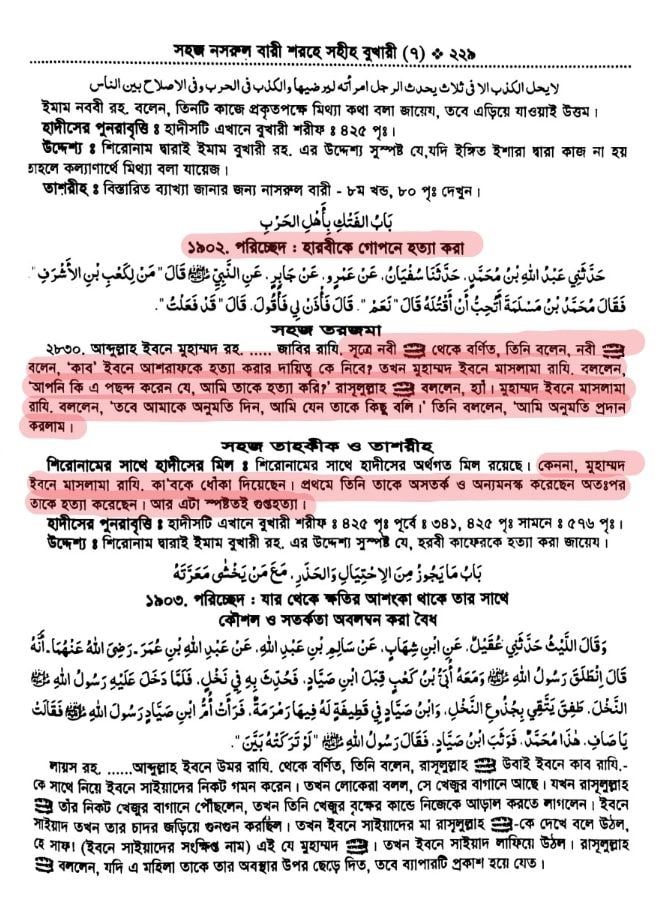
Killing a Sleeping Polytheist: Abu Rafi‘
In a civilised world, killing a sleeping person is almost unimaginable. Killing someone in their sleep is an act of extreme cowardice and shamelessness. A sleeping person can harm no one in that condition, cannot know why they are being killed, and cannot defend themselves. Yet the Prophet sent assassins even to kill such sleeping people.
Abu Rafi‘’s original name was ‘Abd Allah ibn Abi al-Huqayq. He was also called Sallam ibn Abi al-Huqayq; his epithet was Abu Rafi‘. He was a wealthy merchant of the Hijaz and lived in a fortified stronghold near Khaybar. Muhammad sent one of his Companions to murder this man while he slept.
Sahih al-Bukhari (Islamic Foundation)
Book: 48/ Jihad
Chapter: 1896. Killing a sleeping polytheist
2813. ‘Ali ibn Muslim … narrated from al-Bara’ ibn ‘Azib. He said: The Messenger of Allah sent a group of Ansar to kill Abu Rafi‘ the Jew. One of them advanced and entered the Jewish fortress. He said: I then entered their animal stable. They closed the fortress gates. They had lost a donkey and went out looking for it. I went out with them, intending them to think that I too was searching for the donkey. They eventually found it, returned to the fortress, and I entered as well. At night, they closed the gates and placed the keys in a niche where I could see them. When they fell asleep, I took the keys and opened the fortress gate. I reached Abu Rafi‘ and called: Abu Rafi‘! He answered. I struck with my sword towards the sound of his voice, and he cried out.
I went out and entered again as though coming to help him. Changing my voice, I called: Abu Rafi‘! He said: What is wrong with you? May you perish! I asked: What has happened to you? He replied: I do not know who came here and struck me. The narrator said: I then placed my sword against his belly and pressed with all my strength until it reached his bones with a cracking sound. I went out in fear and approached their staircase to descend. I fell and injured my leg. I rejoined my companions and told them: I shall not leave until I hear the voice announcing his death. I did not leave until I heard the death of Abu Rafi‘, the merchant of the Hijaz, announced. He said: I then rose and felt no pain at all. Eventually I reached the Messenger and informed him of the matter.
Hadith grading: Sahih (Authentic)
Sahih al-Bukhari (Tawhid)
Book: 56/ Jihad and Conduct during Warfare
Chapter: 56/155. Killing a sleeping polytheist.
3022. Narrated from al-Bara’ ibn ‘Azib. He said: The Messenger of Allah sent a group of Ansar to kill Abu Rafi‘ the Jew. One of them advanced and entered the Jewish fortress. He said: I entered their animal stable, and they closed the fortress gates. They had lost a donkey and went out searching for it. I went out with them, intending them to think that I too was searching for the donkey. They eventually found it and returned to the fortress, and I entered as well. At night they closed the gates and placed the keys in a niche, where I saw them. When they fell asleep, I took the keys and opened the fortress gate. I reached Abu Rafi‘ and called: Abu Rafi‘! He answered. I struck with my sword towards the sound of his voice, and he cried out. I went out and entered again as though coming to help him. Changing my voice, I called: Abu Rafi‘! He said: What is wrong with you? May your mother perish! I asked: What has happened to you? He replied: I do not know who came here and struck me. The narrator said: I then placed my sword against his belly and pressed with all my strength until there was a sound of it striking his bones. I went out in fear and approached their staircase to descend. I fell and injured my leg. I rejoined my companions and told them: I shall not leave until I hear the voice announcing his death. I did not leave until I heard the death of Abu Rafi‘, the merchant of the Hijaz, announced. He said: I then stood and felt no pain. Eventually I reached the Messenger of Allah and gave him the news. (3023, 4038, 4039, 4040) (Adhunik Prakashani 2800; Islamic Foundation 2810)
Hadith grading: Sahih (Authentic)
Let us read the explanation of this hadith. [144]
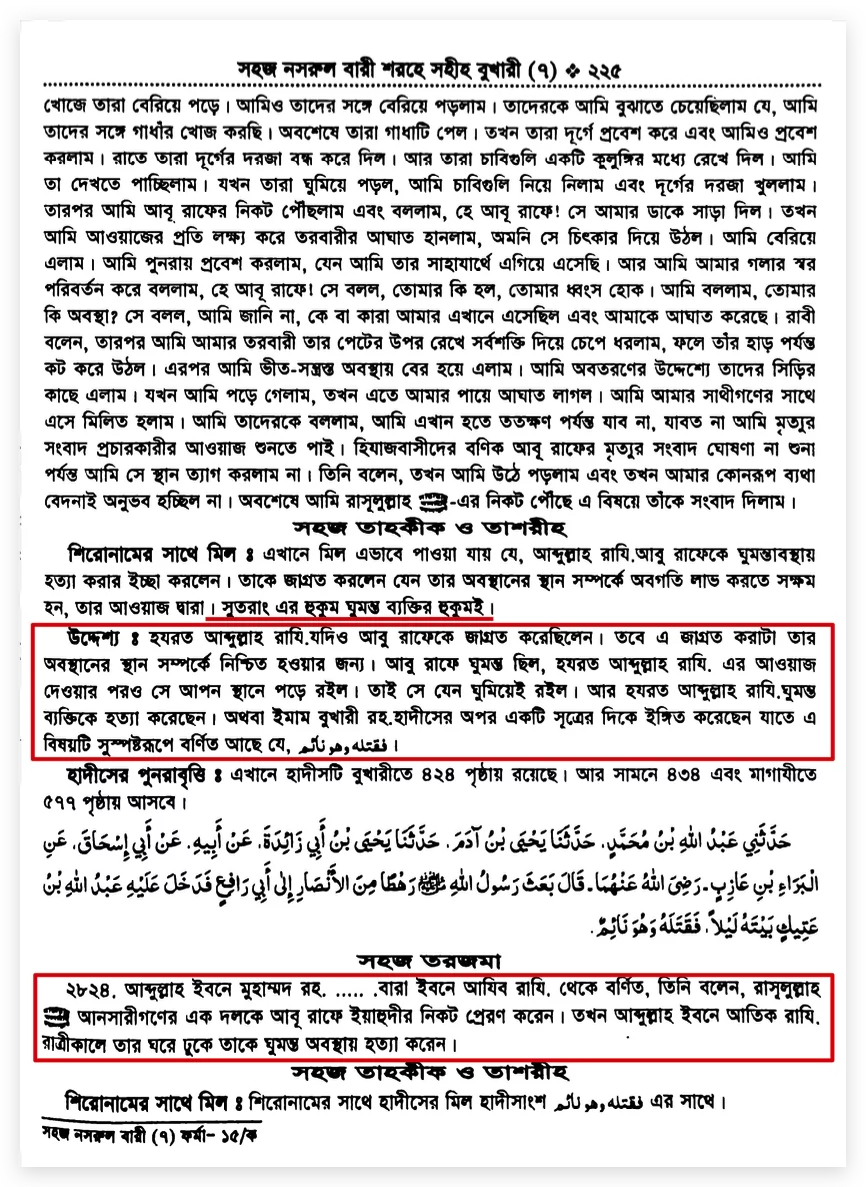
Killing a Jewish Woman Poet: ‘Asma’ bint Marwan
Sirat al-Mustafa, written in Urdu by Idris Kandhlawi, is a highly informative biography of the Prophet. It is accorded particular respect among works of prophetic biography. The book states: [145]
The Killing of ‘Asma’ (26 Ramadan, 2 AH)
‘Asma’ was a Jewish woman who composed defamatory poetry against the Messenger of Allah and hurt him in various ways. She incited people to rebel against the Prophet and Islam. Before the Prophet had returned from Badr, she recited such poetry again. This provoked ‘Umayr ibn ‘Adi, who vowed: If, by Allah’s grace, the Messenger of Allah returns safely from Badr, I shall kill her.
When the Messenger of Allah returned from Badr in good health and safety by Allah’s grace, ‘Umayr set out at night with a sword and entered her home. As he was blind, he felt his way around and moved aside the children surrounding ‘Asma’. He placed the sword upon her chest and pressed so forcefully that it emerged through her back.
Having fulfilled his vow, he returned and performed the dawn prayer with the Messenger of Allah. He then recounted the entire incident and asked: Messenger of Allah, will I incur any penalty for this? He said: No. ‘Not even two sheep will butt heads over this.’ That is, it was no act over which anyone could disagree or protest.
How could killing an offender against the dignity of true prophets be considered something warranting retaliation? Rather, it is counted among the highest means of attaining closeness to Allah and the best acts of worship. No one can object to it; even animals regard it as lawful.
The Musannaf of Hammad ibn Salamah records that this woman used to bring cloths stained with women’s menstrual blood and place them in the mosque.
In short, the Messenger of Allah was very pleased with ‘Umayr’s deed and told the Companions: ‘Whoever wishes to see a man who secretly assists Allah and His Messenger should look at ‘Umayr ibn ‘Adi.’
‘Umar said: Look at that blind man, how he secretly set out in obedience to Allah. The Messenger of Allah said: Do not call him blind; he has sight. That is, although outwardly blind, he possessed inward sight. This woman was killed with five nights remaining in the sacred month of Ramadan. For details, consult al-Zurqani, Volume 1, p. 453, and the work of Ibn Taymiyyah. (See Tabaqat Ibn Sa‘d, Volume 2, p. 18; ‘Uyun al-Athar, Volume 2, p. 293.)
Jabir narrated that when ‘Umayr once fell ill, the Messenger of Allah said: ‘Take us to that man with sight who lives among Banu Waqif. We shall visit and care for him.’
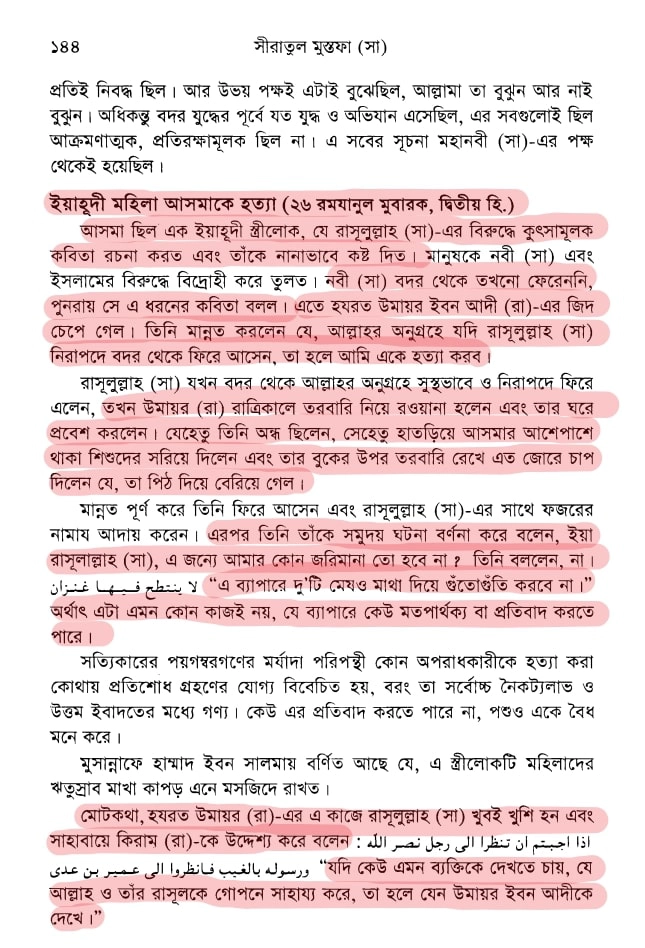
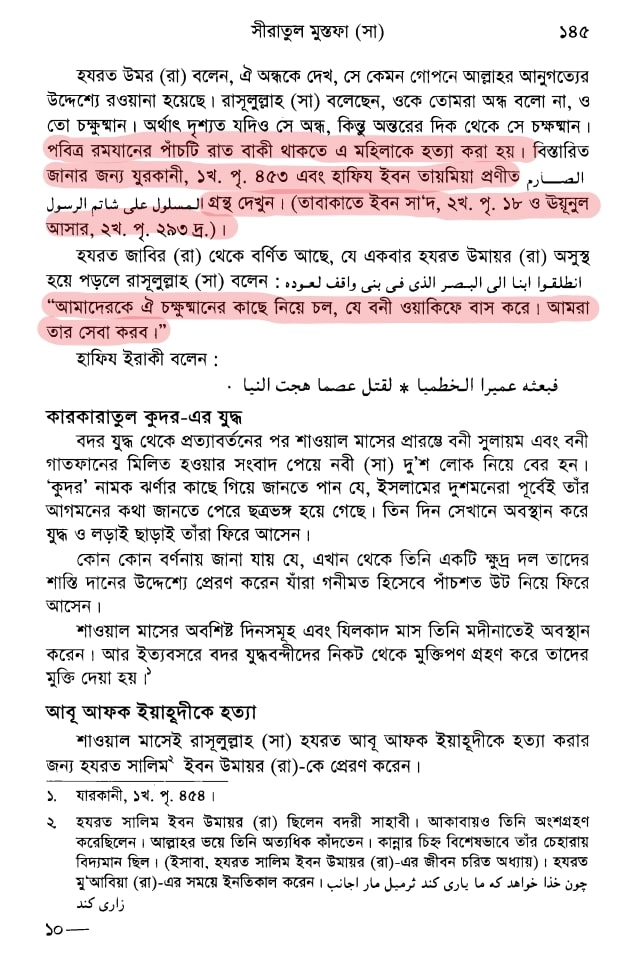
Now let us consult Sirat al-Rasul, written by Muhammad Asadullah al-Ghalib. [146]
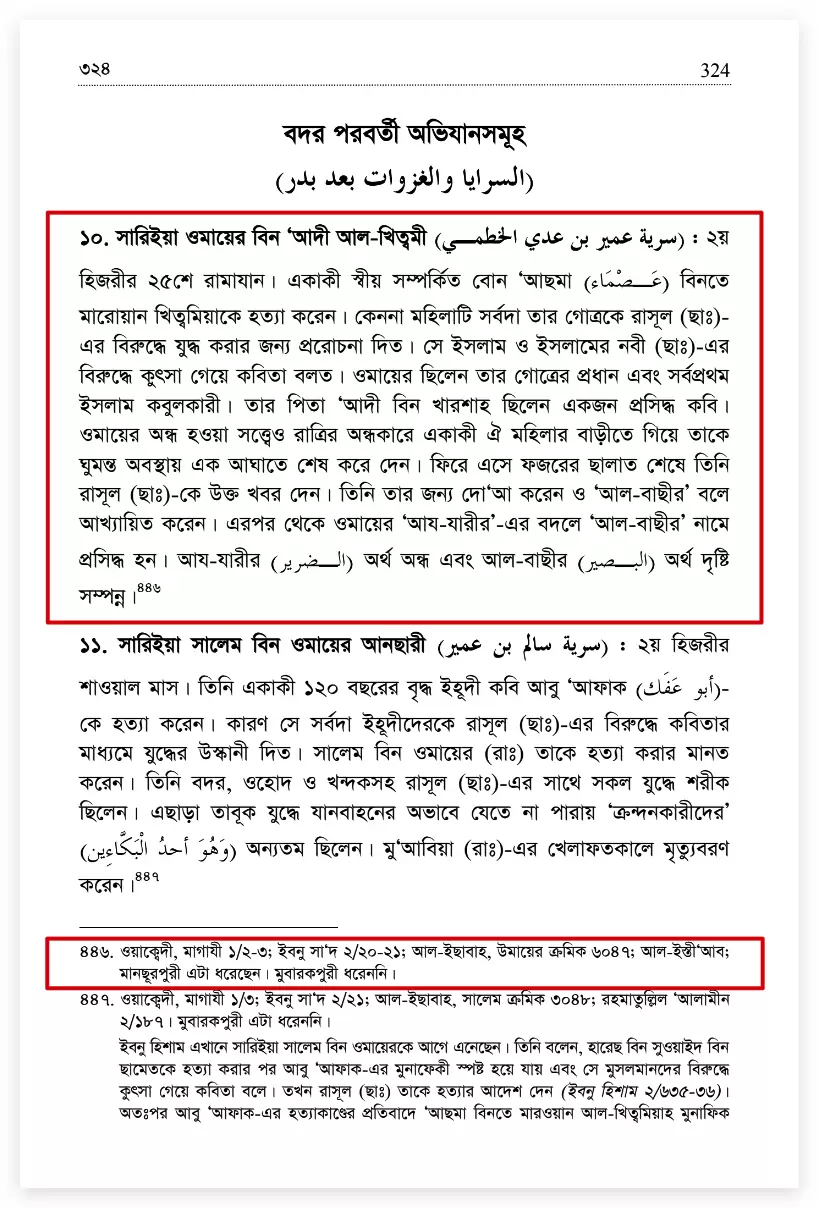
Let us now see what the most famous prophetic biography, Sirat Rasul Allah, says on this matter. [147]
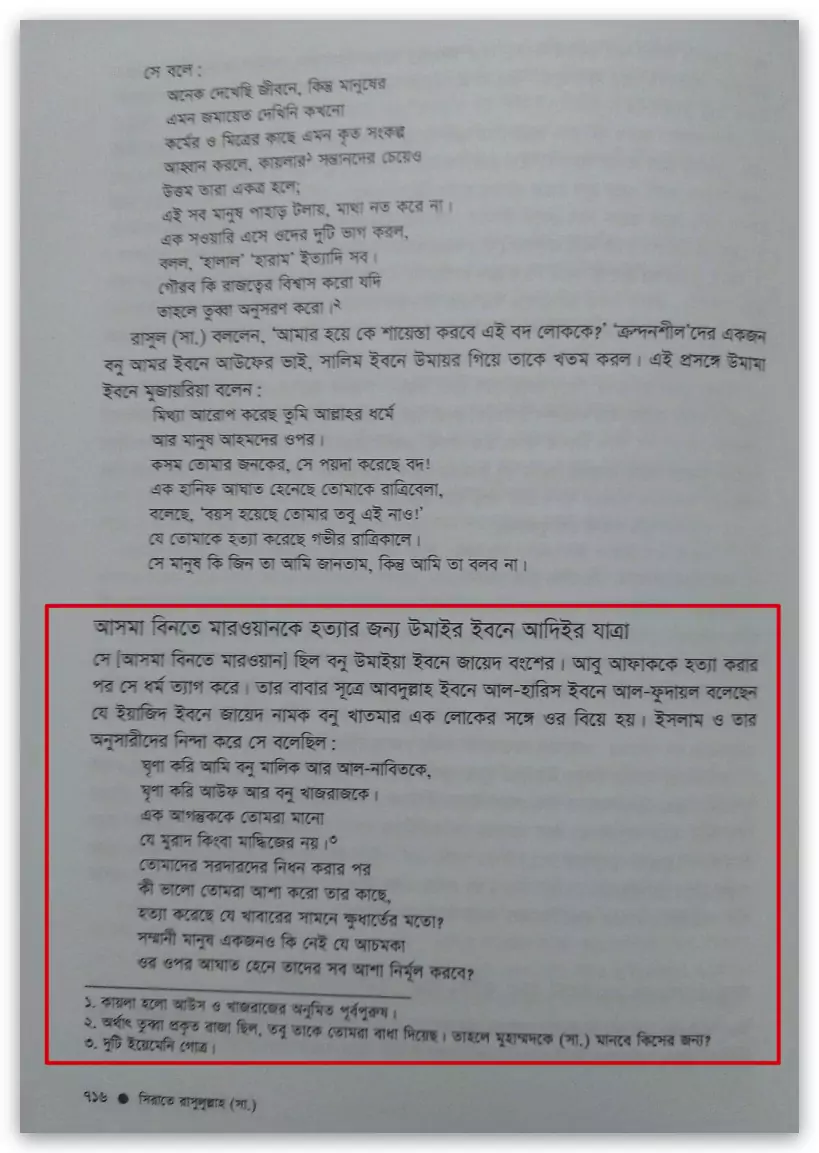
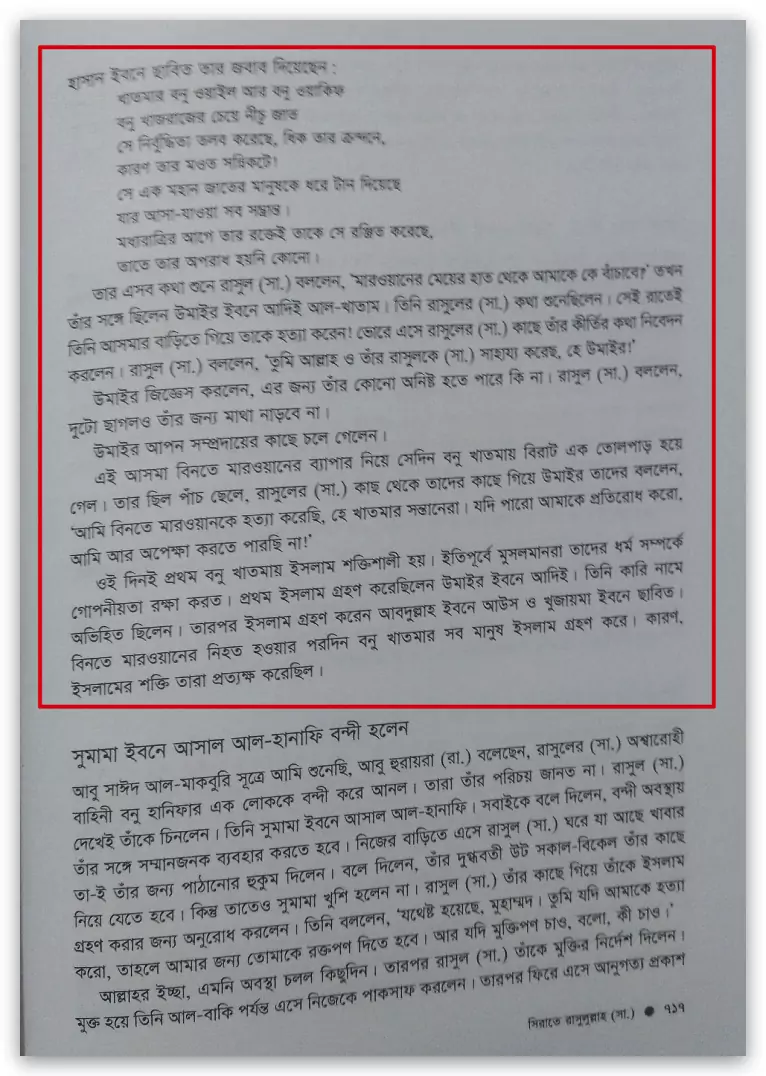
Let us also examine the accounts in another important work, A Biography of the Prophet of Islam, in the Light of the Original Sources: An Analytical Study, Volumes 1 and 2, by Dr Mahdi Rizqullah Ahmad. [148]
It was also documented by Abu Dawud in his Sunan (4/528-29/The Book of Hudud, rulings on those who insulted the Prophet. He follows a chain other than that of Ibn Ishaq through a chain that is Connected and its transmitters reliable as ruled by Ibn Hajar in Bulugh Al-Maram (2/241). Nasa’i has also collected this report in his Sunan (7/107-108) as well as Tabarani in his Kabir.
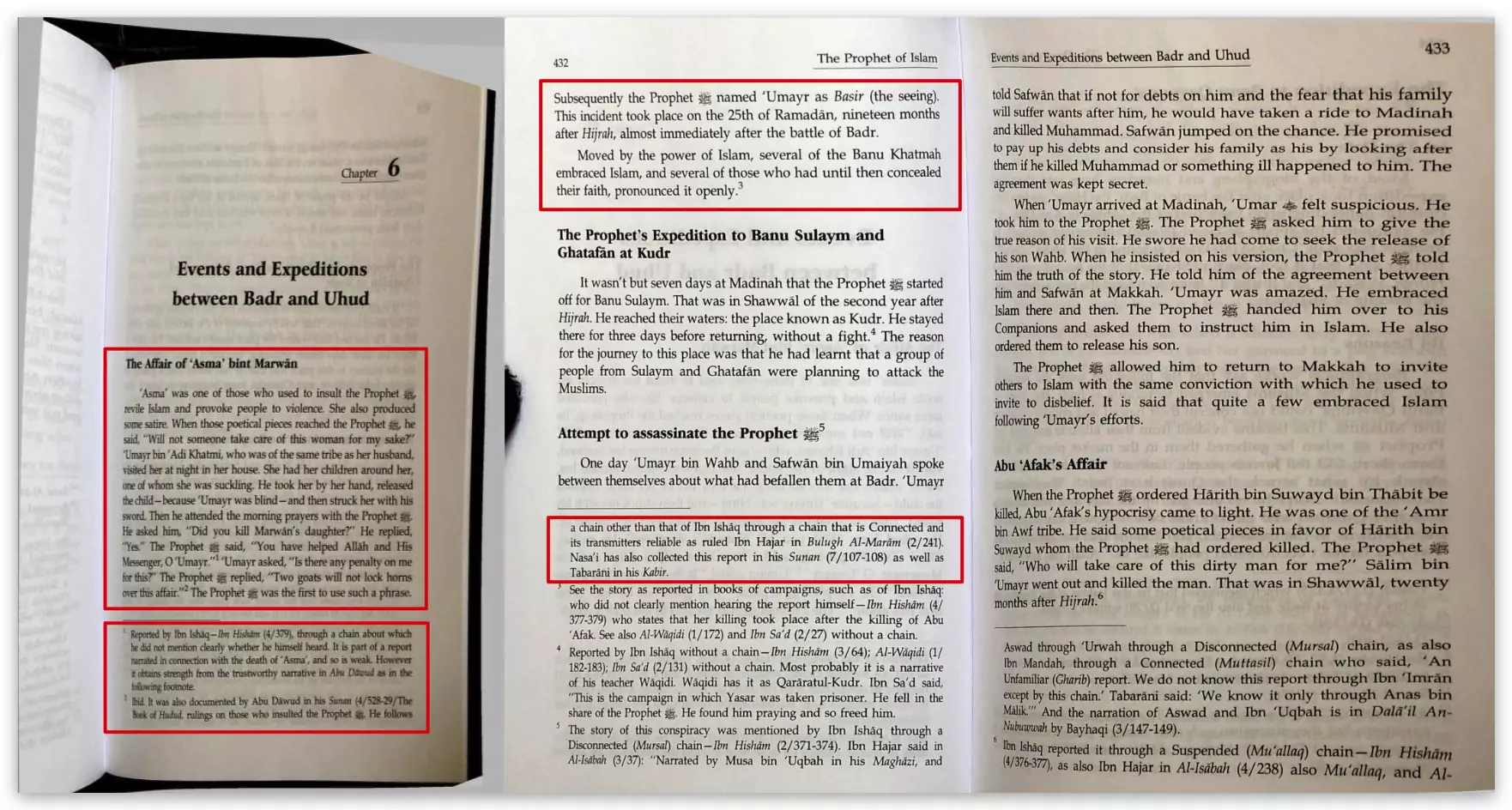
The Prophet Was Pleased to See an Enemy’s Severed Head
Muhammad’s followers cut off enemies’ heads and brought them as gifts to the man claimed to be humanity’s saviour and the most humane person in the universe. Muhammad accepted these gifts with pleasure.
وَفِي رِوَايَةِ بن سَعْدٍ فَلَمَّا بَلَغُوا بَقِيعَ الْغَرْقَدِ كَبَّرُوا وَقَدْ قَامَ رَسُولُ اللَّهِ صَلَّى اللَّهُ عَلَيْهِ وَسَلَّمَ تِلْكَ اللَّيْلَةَ يُصَلِّي فَلَمَّا سَمِعَ تَكْبِيرَهُمْ كَبَّرَ وَعَرَفَ أَنْ قَدْ قَتَلُوهُ ثُمَّ انْتَهَوْا إِلَيْهِ فَقَالَ أَفْلَحَتِ الْوُجُوهُ فَقَالُوا وَوَجْهُكَ يَا رَسُولَ اللَّهِ وَرَمُوا رَأْسَهُ بَيْنَ يَدَيْهِ فَحَمِدَ اللَّهَ عَلَى قَتْلِهِ
‘Ibn Sa‘d’s account states that when the Companions reached Baqi‘ al-Gharqad after killing Ka‘b ibn al-Ashraf, described as the wicked enemy of Islam, they all proclaimed “Allahu akbar”. The Messenger of Allah was standing in prayer that night. On hearing their proclamation, he too proclaimed “Allahu akbar” and understood that they had killed him. When the Companions reached him, he said: May your faces prosper. They replied: And may your face prosper too, Messenger of Allah. When they threw his severed head before him, he praised Allah for his killing.’
(Fath al-Bari, 7/340; publisher: Dar al-Ma‘rifah, Beirut)
This is not the only example. There are others. [149]
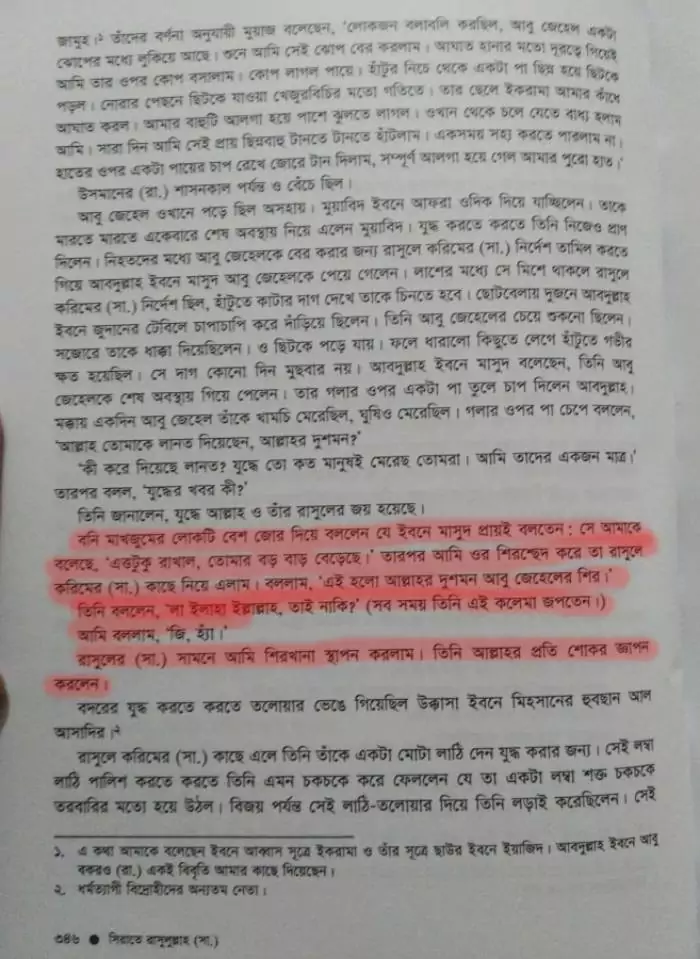
Killing through Assassins: A Profound Collapse of Humanity
In the hadiths above, Muhammad tasked Muhammad ibn Maslamah with killing Ka‘b ibn al-Ashraf and permitted him to use deception in doing so. Ordering a person’s killing through deceit and carrying it out constitutes a grave violation of human rights. Murder by deception or in secret denies a person the opportunity to defend themselves. It is a complete violation of ethics and human rights and a profound collapse of humanity.
In an orderly society, every individual has the right to a trial, which should follow the principle of impartiality. Secret killing deprives a person of the right to life, imposes punishment without trial and murders by deception without allowing self-defence, all of which fundamentally violate human rights. Such killings cannot in any way be explained as a just system. They do not merely harm a particular individual or group; they disrupt society’s peace and stability.
The Prophet Perpetrated Massacres
The Prophet of Islam carried out outright massacres against several tribes. This subject is extensive and has therefore been discussed separately. Interested readers are requested to read these articles. [150] [151]
Sunan Abi Dawud (Verified Edition)
Book: 14/ Taxes, Fay’ and Administration
Chapter: 23. The incident concerning Banu al-Nadir
3005. Narrated from Ibn ‘Umar. When the Jewish tribes of Banu Qurayzah and Banu al-Nadir took up arms against the Messenger of Allah, he expelled Banu al-Nadir but showed favour to Banu Qurayzah by not expelling them. Subsequently, when Banu Qurayzah entered into conflict, the Prophet killed them and distributed their women, children and property among the Muslims. Some of their people joined the Messenger of Allah, who granted them protection, and they accepted Islam. The Messenger of Allah expelled all the Jewish tribes living in Medina, just as he expelled the other Jews residing there.(1)
(1). Sahih.
Hadith grading: Sahih (Authentic)
Narrator: ‘Abd Allah ibn ‘Umar
The Prophet Killed Apostates
Sahih al-Bukhari (Tawhid)
Book: 56/ Jihad and Conduct during Warfare
56/149. No one may be punished with Allah’s punishment
3017. Narrated from ‘Ikrimah. ‘Ali burned a group of people. When ‘Abd Allah ibn ‘Abbas heard of this, he said: ‘Had it been me, I would not have burned them, because the Prophet said: Do not punish anyone with Allah’s punishment. Rather, I would have killed them, as the Prophet said: Whoever changes his religion, kill him.’ (6922) (Adhunik Prakashani 2795; Islamic Foundation 2805)
Hadith grading: Sahih (Authentic)
Sahih Muslim (Hadith Academy)
Book: 29/ Qasamah, Oaths when Homicide Is Denied; Muharibin, Fighting; Qisas, Retaliation for Murder; and Diyat, Financial Compensation for Homicide
6. Circumstances in which killing a Muslim is lawful
4267—(25/1676) Abu Bakr ibn Abi Shaybah … narrated from ‘Abd Allah. He said: The Messenger of Allah said: It is not lawful to kill a Muslim who testifies that there is no deity except Allah and that I am Allah’s Messenger, except in one of three circumstances:
1. A married person committing adultery; 2. a life for a life, that is, killing someone; 3. and someone who abandons his religion and separates from the Muslim community as an apostate. (Islamic Foundation 4228; Islamic Centre 4228)
Hadith grading: Sahih (Authentic)
Sunan Abi Dawud (Islamic Foundation)
Book: 33/ Penal Rulings
4300. Ahmad ibn Muhammad … narrated from ‘Ikrimah that ‘Ali burned people who had apostatised. When Ibn ‘Abbas heard this, he said: Had I been there, I would not have allowed them to be burned, because the Messenger of Allah said: Do not punish anyone with the means of punishment belonging to Allah. I would, however, have killed them according to Allah’s Messenger’s command, for he said: If anyone abandons the religion and becomes an apostate, kill him. On hearing Ibn ‘Abbas’s instruction, ‘Ali said: Well said! Well said! Ibn ‘Abbas has spoken the truth, and this is the Prophet’s instruction.
Hadith grading: Sahih (Authentic)
Sunan Abi Dawud (Islamic Foundation)
Book: 33/ Penal Rulings
4301. ‘Amr ibn ‘Awn … narrated from ‘Abd Allah. He said: The Messenger of Allah said: The blood of a Muslim who testifies that there is no deity except Allah and that I am Allah’s Messenger is not lawful. However, a Muslim’s blood may lawfully be shed for three reasons: (1) a married person committing zina; (2) killing someone, for which he is killed in retaliation; (3) a person abandoning the religion, becoming an apostate and leaving the Muslim community.
Hadith grading: Sahih (Authentic)
Sunan Abi Dawud (Islamic Foundation)
Book: 33/ Penal Rulings
4302. Muhammad ibn Sinan … narrated from ‘A’ishah. She said: The Messenger of Allah said: The blood of a Muslim who testifies that there is no deity except Allah and that Muhammad is Allah’s Messenger is not lawful, except for one of three reasons: (1) someone who commits zina after marriage is to be stoned to death; (2) someone who sets out to wage war against Allah and His Messenger is to be killed, crucified or expelled from the country; (3) someone who kills another person is to be killed in exchange for that life.
Hadith grading: Sahih (Authentic)
Sunan Ibn Majah
Book: 14/ Prescribed Punishments
14/2. A person abandoning his religion and becoming an apostate
1/2535. Narrated from Ibn ‘Abbas. He said: The Messenger of Allah said: Kill the Muslim who changes his religion.
Sahih al-Bukhari 3017, 6922; al-Tirmidhi 1458; al-Nasa’i 4059, 4046, 4061, 4062, 4064, 4065; Abu Dawud 4351; Ahmad 1874, 2547, 2960; al-Bayhaqi, al-Sunan 5/67, 202, 8/195; Ibn Hibban 4476, 5606; al-Humaydi 533; al-Hakim, al-Mustadrak 3/538; Irwa’ 2471; Ibn al-Salam’s Takhrij al-Iman 86. Al-Albani’s verification: Sahih.
Hadith grading: Sahih (Authentic)
Killing Apostates during Muhammad’s Lifetime
Several hadiths in al-Bukhari and Muslim describe apostates being held captive during Muhammad’s lifetime and killed while in chains. Had this not followed Muhammad’s direct instructions, he would certainly have intervened to stop it.
Sahih al-Bukhari (Islamic Foundation)
77/ Calling Those Who Rebel against Allah and Apostates to Repentance, and Fighting Them
Chapter: 2899. The ruling concerning male and female apostates
6455. Musaddad … narrated from Abu Musa. He said: I came to the Prophet. Two men from the Ash‘ari tribe accompanied me, one on my right and the other on my left. The Messenger was then using a tooth-stick. Both men made requests of him. He said: Abu Musa! Or he said: ‘Abd Allah ibn Qays! The narrator said: I replied: By the Being who sent you with the true religion, they did not tell me what was in their hearts, and I had not realised that they would ask for employment. I can almost see the tooth-stick below his lip, shifted to one side. He said: We shall not appoint—or do not appoint—to our work someone who himself asks for it. Rather, Abu Musa—or, ‘Abd Allah ibn Qays—go to Yemen.
He subsequently sent Mu‘adh ibn Jabal after him. When Mu‘adh arrived, Abu Musa spread a cushion for him and said: Dismount. A man happened to be chained beside him. Mu‘adh asked: Who is that man? Abu Musa said: He was originally Jewish, became Muslim, and then became Jewish again. Abu Musa said: Sit. Mu‘adh said: No, I shall not sit until he is killed. That is the judgement of Allah and His Messenger. He said this three times. An order was then issued concerning the man, and he was killed. The two then discussed standing in prayer at night. One said: I both worship and sleep, and I hope for the same reward during sleep as during worship.
Hadith grading: Sahih (Authentic)
Narrator: Abu Musa al-Ash‘ari
Sahih Muslim (Islamic Foundation)
34/ State Authority and Administration
Chapter: 3. The prohibition on seeking leadership and coveting power
4567. ‘Ubayd Allah ibn Sa‘id and Muhammad ibn Hatim … narrated from Abu Musa. He said: I once came to the Prophet. Two men of the Ash‘ari clan accompanied me, one on my right and one on my left. Both requested appointments. The Prophet was using a tooth-stick. Addressing me, he said: Abu Musa—or, ‘Abd Allah ibn Qays—what do you say? I replied: By the sacred Being who sent you as a prophet, they never told me what was in their hearts, and I never realised they would ask you for appointments.
The narrator said: I can almost clearly see the tooth-stick beneath his lip, with his gums exposed. He said: We never appoint to any of our work someone who covets it. Rather, you go, Abu Musa—or he said, ‘Abd Allah ibn Qays. He sent him as governor of Yemen, then sent Mu‘adh ibn Jabal to assist him. When Mu‘adh arrived, Abu Musa said: Dismount, and immediately spread a seat for him. A man was beside him with his hands and feet bound. Mu‘adh asked: Who is this man? Abu Musa replied: He was originally Jewish, then accepted Islam, then returned to his false religion and became Jewish again.
Mu‘adh said: I shall not sit until he is killed according to the ruling of Allah and His Messenger. Abu Musa said: Sit; it will be done. Mu‘adh repeated that he would not sit until the man was killed according to the ruling of Allah and His Messenger. They exchanged these words three times. He then ordered the man’s killing, and he was killed.
They subsequently discussed staying awake for night prayer. Mu‘adh said: My practice is to sleep during part of the night and remain awake in worship during another part. I hope for the same reward in my sleep as I hope for in my wakefulness and worship.
Hadith grading: Sahih (Authentic)
Narrator: Abu Musa al-Ash‘ari
Attacking without Warning
Muhammad attacked unbelieving tribes while they were unprepared, killed all the adult men and enslaved all the women and children. Read the hadith concerning this. [152] [153]
Sahih Muslim (Islamic Foundation)
Book: 33/ Jihad and Its Principles
Chapter: 1. It is lawful to attack, without prior warning, non-Muslims who have already received the invitation to Islam
4370. Yahya ibn Yahya al-Tamimi … narrated from Ibn ‘Awn. He said: I wrote to Nafi‘ to ask whether non-Muslims must be invited to the religion before warfare. He wrote back: That rule belonged to Islam’s earliest period. The Messenger of Allah attacked Banu al-Mustaliq while they were unprepared and unaware; their animals were being watered. He killed their fighters—the adult men—and captured the remainder, the women and children. On that day he also acquired Juwayriyah—or, Yahya said, I think he said Juwayriyah, but he certainly said the daughter of al-Harith. The narrator said: ‘Abd Allah ibn ‘Umar narrated this hadith to me; he was in that army.
Hadith grading: Sahih (Authentic)
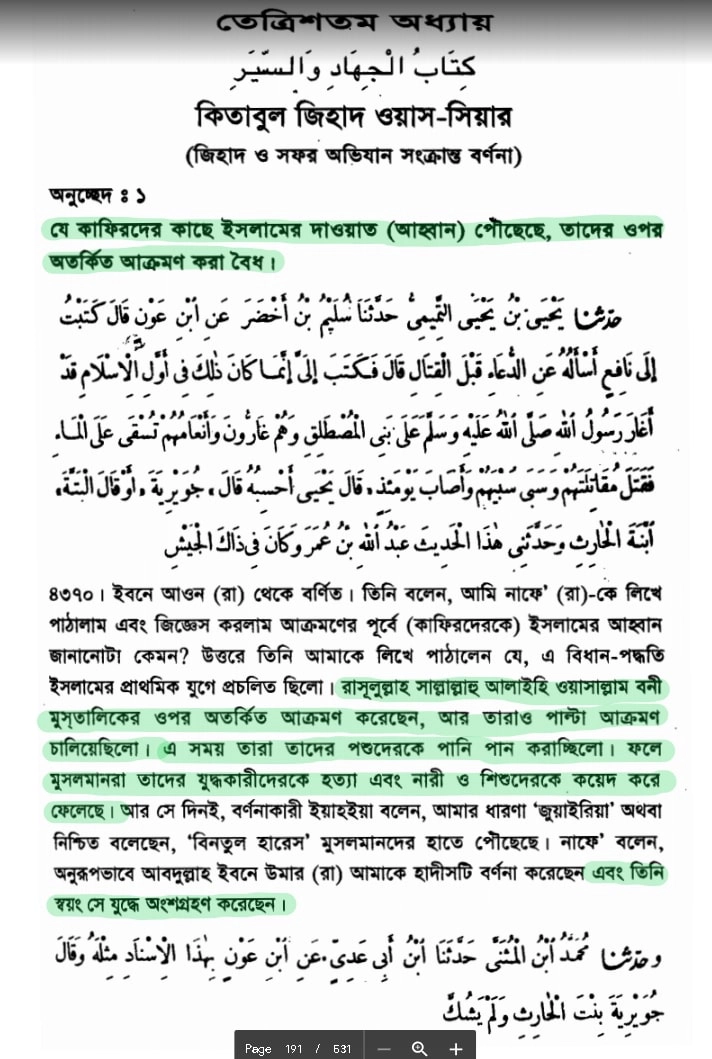
Sahih Muslim (Islamic Foundation)
Book: 4/ Prayer
Chapter: 6. Refraining from attacking a tribe in the abode of unbelief, or a non-Muslim country, when the call to prayer is heard
733. Zuhayr ibn Harb … narrated from Anas ibn Malik. He said: The Messenger of Allah attacked the enemy at dawn. He waited to hear the call to prayer. If he heard it, he refrained from attacking; if he did not hear it, he attacked. Once he heard a man say اللَّهُ أَكْبَرُ اللَّهُ أَكْبَرُ. The Messenger of Allah said: You follow the natural disposition, the religion of Islam. The man then said أَشْهَدُ أَنْ لاَ إِلَهَ إِلاَّ اللَّهُ أَشْهَدُ أَنْ لاَ إِلَهَ إِلاَّ اللَّهُ. The Messenger of Allah said: You have come out of Hell. Looking at the man, the Companions saw that he was a shepherd.
Hadith grading: Sahih (Authentic)
Killing Captive People
In Bangladesh, many people are killed by RAB or the police in so-called crossfire incidents. Those people may be criminals, bad or vile individuals. They could be tried properly, with an opportunity to defend themselves. Yet killing someone in captivity with hands and feet bound can never constitute civilised conduct. Tragically, Muhammad killed people while they were captive and bound hand and foot. [154]
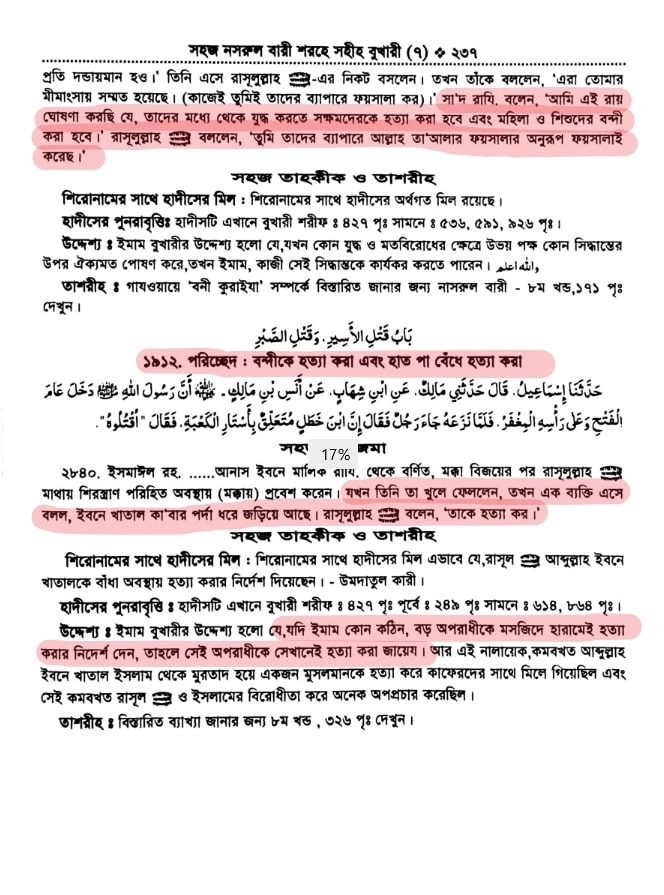
Inhumanity towards Children
The Prophet Authorised Physical Punishment of Children
Legitimising physical violence in the name of ‘educating’ a child is child abuse by any civilised and humane ethical standard. The question here is not the importance of religious observance; it concerns the ethics of the method. Using an adult’s physical strength to compel a child—especially to compel religious behaviour—is a direct assault on the child’s freedom, safety and psychological development.
More frightening still, this instruction does not concern merely a reprimand or scolding. The hadith explicitly prescribes beating or punishment at the age of ten for not praying. Physical punishment is thus made a legitimate instrument for imposing religious observance on children. In a culture that sanctifies this instruction as ‘Sunnah’ or ‘religious discipline’, many families will naturally treat it as a religious duty and regard beating children as justified. Consequently, children do not learn religion simply as a habit; they grow up with fear, guilt and dread of punishment.
Another important point is that the child is only ten years old. At that age, reasoning, emotions and psychological structure are still developing. Imposing religion through physical punishment means controlling belief through the body rather than through reason. It turns religion into a disciplinary system in which compliance is secured by breaking a child rather than by helping the child understand.
Someone may say: ‘This is simply to teach discipline.’ But teaching discipline and beating are different things. Ethical ways to teach discipline include explanation, building habits and routines, setting examples and offering encouragement. Beating is an exercise of power that normalises adults’ authority over children. When that authority receives religious endorsement, the child learns: ‘Whatever the powerful person says is true; questioning brings punishment.’
Reading these two hadiths together shows that this is not an isolated story with a weak chain: the same instruction is reported in two forms. A tendency to establish physical punishment of children as a religious method is therefore evident here. [155] [156]
Sunan Abi Dawud (Islamic Foundation)
Book: 2/ Prayer
495. Mu’ammal ibn Hisham … narrated from ‘Amr ibn Shu‘ayb, through his father and grandfather. The grandfather said: The Messenger of Allah said: When your children reach seven, instruct them to pray; and when they reach ten, beat them if they do not pray , and separate their beds, those of boys and girls.
Hadith grading: Hasan (Good)
Sunan Abi Dawud (Islamic Foundation)
Book: 2/ Prayer
494. Muhammad ibn ‘Isa … narrated from ‘Abd al-Malik through his father and grandfather. He said: The Prophet said: Instruct your children to pray when they reach seven, and when they reach ten, if they do not pray, punish them for it. (Al-Tirmidhi; Musnad Ahmad)
Hadith grading: Hasan (Good)
The Prophet Authorised the Killing of Children in Principle
The most frightening matter here is not the chaos of war but the collapse of moral standards. According to Islamic accounts, children should be regarded as innocent. Yet Islamic sources show that, instead of age, wrongdoing or participation in warfare, physical signs were made the criterion for a death sentence for children and adolescents. The distinction between a child and an adult was decided according to whether pubic hair had grown. This is no form of civilised justice. It is a primitive and exceptionally cruel method in which entering puberty suddenly turns a person from a child into someone who may be killed, without proof of any offence.
Killing Children and Adolescents by Making Pubic Hair the Basis of ‘Judgement’
Bringing forward children and adolescents captured after a war, examining their bodies, killing those with pubic hair and releasing those without it essentially means imposing a death sentence upon the onset of puberty. When this behaviour is compared with a figure promoted as a moral exemplar or a ‘Prophet of Mercy’, the contradiction delivers a profound moral shock.
Sunan al-Tirmidhi (Islamic Foundation)
Book: 24/ Campaigns
Chapter: A person surrendering on a Muslim’s terms
1590. Hannad … narrated from ‘Atiyyah al-Qurazi. He said: During the Qurayzah campaign, we were presented before the Messenger of Allah. He killed those whose pubic hair had grown and released those whose pubic hair had not grown. I was among those whose pubic hair had not grown, so I was allowed to go my way. Sahih; Ibn Majah 2541; al-Tirmidhi, Hadith 1584, al-Madani Publications.
Hadith grading: Sahih (Authentic)
‘Unintentional’ Killing of Children: No Blame
Authentic Islamic hadiths state that women and children may be killed in surprise attacks at night without blame, because ‘they are part of them’. This phrase is particularly significant because it dismantles moral accountability. An ethical framework would ordinarily say that avoiding the deaths of non-combatant women and children is a duty, and that at least making the effort is obligatory. Here, however, the wording suggests that this is no major problem because they are ‘part of them’. The result is to turn the killing of women and children from a harm into an acceptable side effect.
Sahih Muslim (Islamic Foundation)
Book: 33/ Jihad and Its Principles
Chapter: 9. No blame for unintentionally killing women and children in surprise attacks at night
4399. Yahya ibn Yahya, Sa‘id ibn Mansur and ‘Amr al-Naqid … narrated from al-Sa‘b ibn Jaththamah that the Messenger of Allah was asked about polytheists’ women and children, who are also struck when surprise attacks occur under cover of darkness. The Messenger of Allah said: They are also part of the polytheists.
Hadith grading: Sahih (Authentic)
Sahih Muslim (Hadith Academy)
Book: 33/ Jihad and Expeditions
Chapter: 9. No blame for unintentionally killing women and children in sudden attacks at night
4442—(27/…) ‘Abd ibn Humayd … narrated from al-Sa‘b ibn Jaththamah. He said: I asked the Messenger of Allah: Messenger of Allah, we also strike the polytheists’ children in sudden attacks under cover of darkness. The Messenger of Allah said: They are counted among the polytheist fighters. (Islamic Foundation 4400; Islamic Centre 4400)
Hadith grading: Sahih (Authentic)
Sunan Ibn Majah
Tawhid Publications
Book: 18/ Jihad
1/2839. Narrated from al-Sa‘b ibn Jaththamah. He said: The Prophet was asked about surprise attacks at night on polytheist settlements in which women and children are killed. He said: They—the women and children—are also part of them.
Hadith grading: Sahih (Authentic)
The ‘Permissibility’ of Trampling Women and Children to Death in Their Homes
Surprise attacks on women and children in their homes, or children dying beneath the hooves of cavalry horses, may be passed off as inevitable consequences of warfare. Ethically, however, the question is: Where is the instruction to minimise this supposed inevitability? Or does the language instead say that they are ‘part of them’, so there is no responsibility? Such a position does not teach ethical limits in warfare; it breaks those limits down. [157]
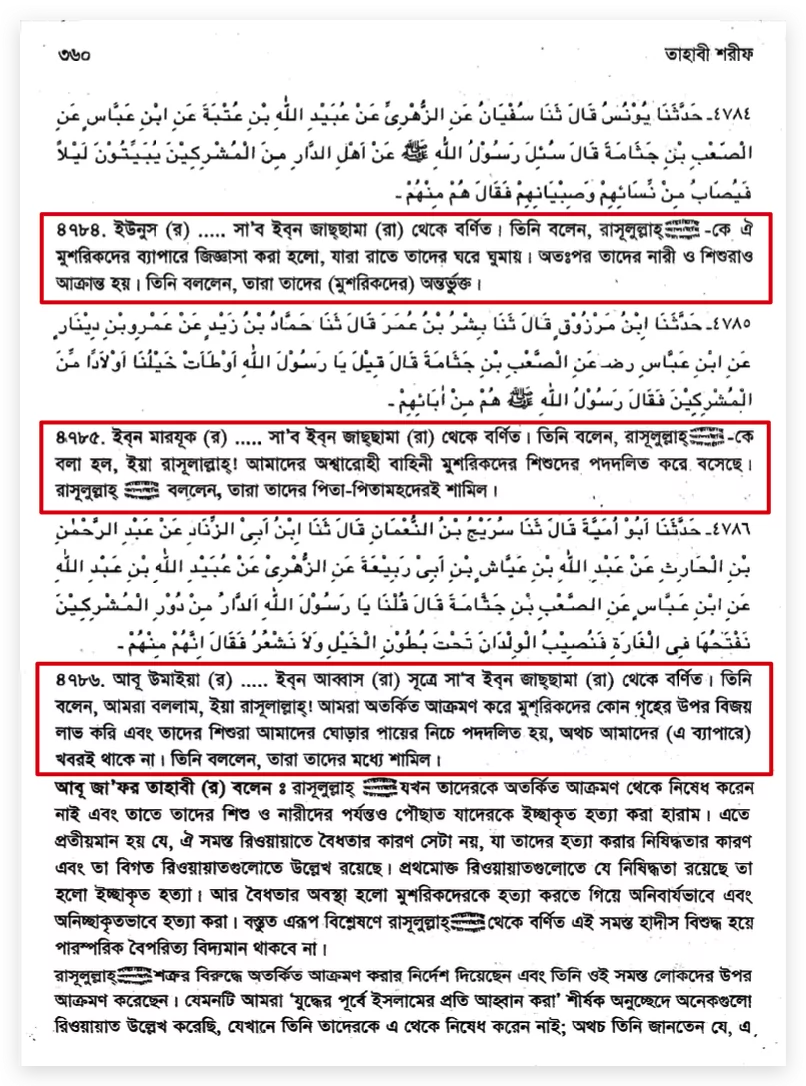
The Prophet Was a Paedophile
Even the sight of a little crawling child made Muhammad want to marry her. In other words, seeing a crawling infant could awaken his desire for marriage. A reference to this appears in Ibn Ishaq’s work. [158]
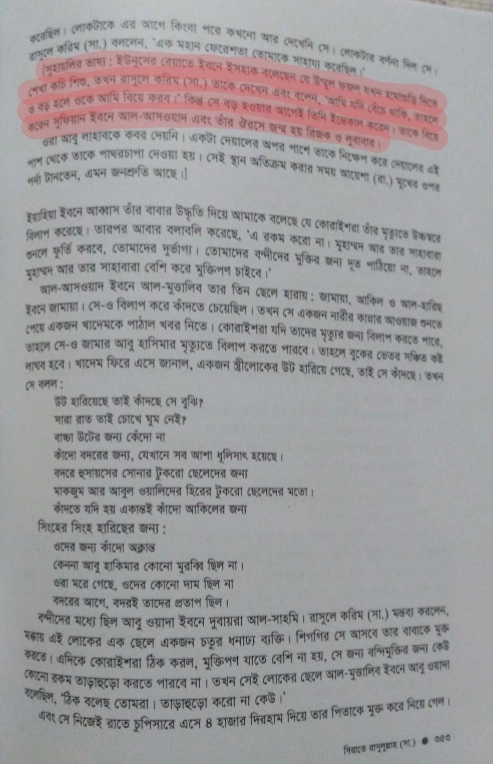
The same account appears in Guillaume’s biography. [159]
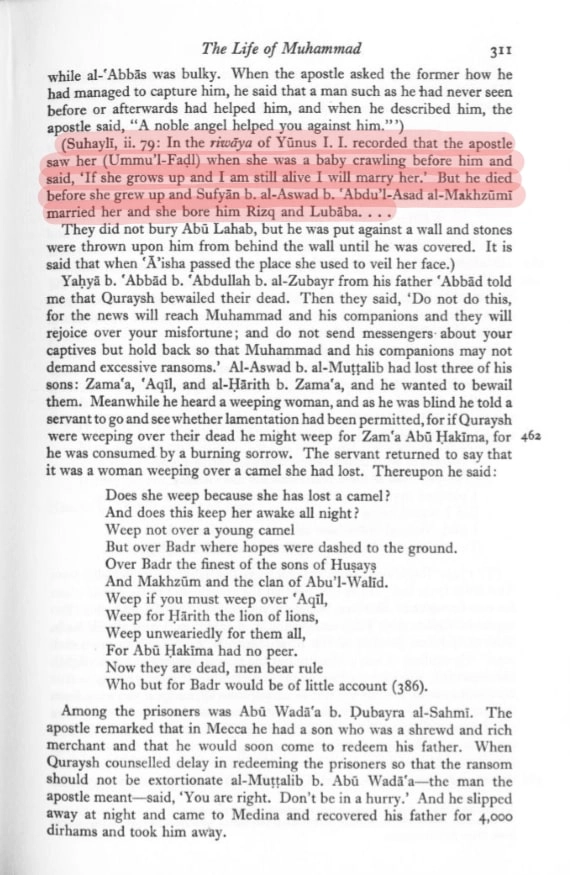
Muhammad also had sexual intercourse with ‘A’ishah before she reached puberty.
Narrated `Aisha:
I used to play with the dolls in the presence of the Prophet, and my girl friends also used to play with me. When Allah’s Messenger (ﷺ) used to enter (my dwelling place) they used to hide themselves, but the Prophet would call them to join and play with me. (The playing with the dolls and similar images is forbidden, but it was allowed for `Aisha at that time, as she was a little girl, not yet reached the age of puberty.) (Fath-ul-Bari page 143, Vol.13)
Reference : Sahih al-Bukhari 6130
In-book reference : Book 78, Hadith 157
USC-MSA web (English) reference : Vol. 8, Book 73, Hadith 151
The Prophet Killed Innocent Animals
Muhammad not only killed many innocent people and enslaved civilian women and children as spoils of war; he also killed harmless animals or ordered their killing. Many of us sometimes kill harmful animals, but we always try to avoid killing any innocent, defenceless creature, even accidentally. Muhammad, however, ordered animals killed on the basis of their colour alone, without their being particularly harmful. At other times, he ordered certain animals killed without any reason. Let us read the hadiths. [160] [161] [161] [162]
Sunan Abi Dawud (Islamic Foundation)
Book: 11/ Hunting
Chapter: 99. Keeping dogs for hunting or other purposes
2836. Musaddad … narrated from ‘Abd Allah ibn Mughaffal. He said: The Messenger of Allah said: If dogs were not one community among Allah’s many communities of creatures, I would order them killed. For now, kill only the black dogs among them.
Hadith grading: Sahih (Authentic)
Sahih al-Bukhari (Islamic Foundation)
Book: 49/ The Beginning of Creation
Chapter: 1999. If a fly falls into your drink, submerge it, for one wing carries disease and the other healing
3089. ‘Abd Allah ibn Yusuf … narrated from ‘Abd Allah ibn ‘Umar: The Messenger of Allah ordered dogs killed.
Hadith grading: Sahih (Authentic)
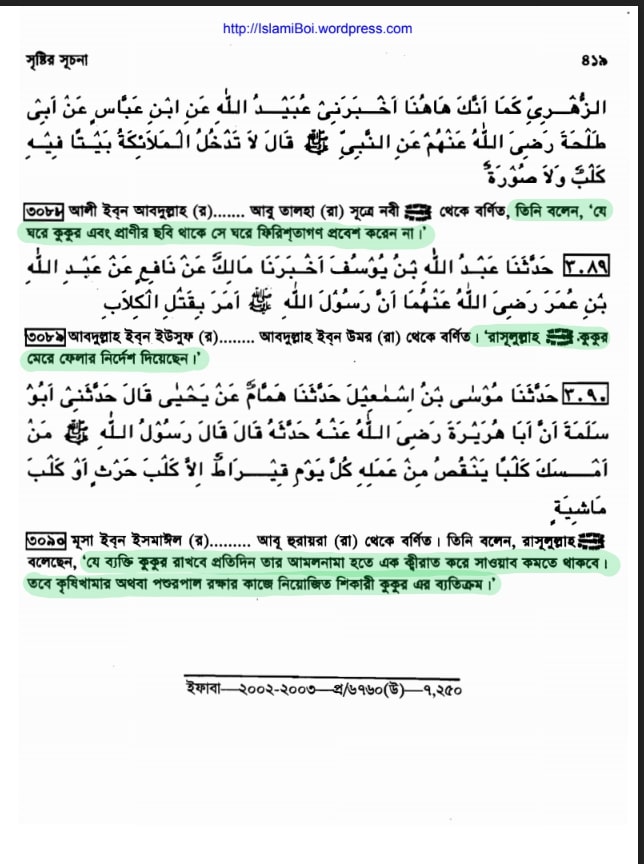
Sahih al-Bukhari (Tawhid)
Book: 59/ The Beginning of Creation
Chapter: 59/17. If a fly falls into a drink, submerge it, for one wing carries disease and the other a means of healing
3323. Narrated from ‘Abd Allah ibn ‘Umar: ‘The Messenger of Allah ordered dogs killed.’ (Muslim 22/10, Hadith 1570; Ahmad 5932) (Adhunik Prakashani 3077; Islamic Foundation 3086)
Hadith grading: Sahih (Authentic)
Sahih al-Bukhari (Tawhid)
Book: 59/ The Beginning of Creation
Chapter: 59/17. If a fly falls into a drink, submerge it, for one wing carries disease and the other a means of healing.
3322. Narrated from Abu Talhah through the Prophet. He said: ‘Angels do not enter a house containing a dog or an image of a living creature.’ (2325) (Adhunik Prakashani 3076; Islamic Foundation 3085)
Hadith grading: Sahih (Authentic)
Sunan al-Tirmidhi (Islamic Foundation)
Book: 21/ Various Rulings and Their Benefits
Chapter: How much religious reward is deducted for keeping a dog
1495. ‘Ubayd ibn Asbat ibn Muhammad al-Qurashi … narrated from ‘Abd Allah ibn Mughaffal. He said: I was among those removing date-palm branches from the Messenger of Allah’s face while he delivered a sermon that day. He said: If dogs were not one community among Allah’s created communities, I would order them killed. Therefore, kill those that are entirely black. Whoever keeps a dog other than one for hunting, guarding crops or herding has one qirat deducted from his good deeds each day. Sahih; Ibn Majah 3205; al-Tirmidhi, Hadith 1489, al-Madani Publications.
Hadith grading: Sahih (Authentic)
Sahih Muslim (Hadith Academy)
Book: 23/ Musaqah, a Share of the Crop in Return for Irrigation
Chapter: 10. The command to kill dogs and its abrogation; the prohibition on keeping dogs except for hunting, guarding fields or livestock, or similar purposes
3909—(44/…) Abu Bakr ibn Abi Shaybah … narrated from Ibn ‘Umar. He said: The Messenger of Allah ordered dogs killed and sent men around Medina to kill them. (Islamic Foundation 3872; Islamic Centre 3871)
Hadith grading: Sahih (Authentic)
Sahih Muslim (Islamic Foundation)
Book: 23/ Irrigation and Sharecropping
Chapter: 9. The command to kill dogs and its abrogation; the prohibition on keeping dogs except for hunting, guarding fields or livestock, or similar purposes
3872. Abu Bakr ibn Abi Shaybah … narrated from Ibn ‘Umar. He said: The Messenger of Allah ordered dogs killed. He then sent men around Medina with instructions that dogs be killed.
Hadith grading: Sahih (Authentic)
Sahih Muslim (Islamic Foundation)
Book: 23/ Irrigation and Sharecropping
Chapter: 9. The command to kill dogs and its abrogation; the prohibition on keeping dogs except for hunting, guarding fields or livestock, or similar purposes
3873. Humayd ibn Mas‘adah … narrated from ‘Abd Allah ibn ‘Umar. He said: The Messenger of Allah used to order dogs killed. I would pursue dogs within Medina and around it. We left no dog alive, even killing the dogs accompanying Bedouins’ milch camels.
Hadith grading: Sahih (Authentic)
Sahih Muslim (Hadith Academy)
Book: 23/ Musaqah, a Share of the Crop in Return for Irrigation
Chapter: 10. The command to kill dogs and its abrogation; the prohibition on keeping dogs except for hunting, guarding fields or livestock, or similar purposes
3911—(46/1571) Yahya ibn Yahya … narrated from Ibn ‘Umar that the Messenger of Allah ordered dogs killed, except hunting dogs, dogs guarding sheep or dogs guarding other livestock. Ibn ‘Umar was told that Abu Hurayrah also mentioned dogs guarding fields. Ibn ‘Umar said: Abu Hurayrah has fields. (Islamic Foundation 3874; Islamic Centre 3873)
Hadith grading: Sahih (Authentic)
Sahih Muslim (Islamic Foundation)
Book: 23/ Irrigation and Sharecropping
Chapter: 9. The command to kill dogs and its abrogation; the prohibition on keeping dogs except for hunting, guarding fields or livestock, or similar purposes
3874. Yahya ibn Yahya … narrated from Ibn ‘Umar that the Messenger of Allah ordered dogs killed, except hunting dogs, dogs guarding sheep or dogs guarding other livestock. Ibn ‘Umar was then told that Abu Hurayrah also mentioned dogs guarding fields. Ibn ‘Umar said: Abu Hurayrah has fields.
Hadith grading: Sahih (Authentic)
Sahih Muslim (Islamic Foundation)
Book: 41/ Killing Snakes and Other Creatures
Chapter: No chapter heading
5632. Hajib ibn al-Walid … narrated from Ibn ‘Umar. He said: I heard the Messenger of Allah issue orders to kill dogs, saying: Kill the snakes and the dogs. Especially kill snakes with two white stripes on their backs and those without tails, for these two kinds take away people’s sight and cause pregnant women to miscarry. The intermediate transmitter al-Zuhri said: We think this is because of their poison, but Allah knows best. The transmitter Salim said: ‘Abd Allah ibn ‘Umar said: Thereafter, whenever I saw a snake, I never left it alive.
One day I was pursuing a snake of the kind that lives in houses. Zayd ibn al-Khattab or Abu Lubabah passed me while I was pursuing it and said: Stop, ‘Abd Allah! I replied: The Messenger of Allah ordered us to kill them. He said: The Messenger of Allah also prohibited killing snakes that live in houses.
Harmalah ibn Yahya, ‘Abd ibn Humayd and Hasan al-Hulwani … narrated the hadith from al-Zuhri through the stated chain. However, Salih, the transmitter in the final chain, said: Eventually Abu Lubabah ibn ‘Abd al-Mundhir and Zayd ibn al-Khattab saw me … and both said that the Messenger had prohibited killing snakes living in houses. The hadith narrated by Yunus in the first chain states: ‘Kill all snakes.’ He did not specifically mention those with two white stripes or without tails.
Hadith grading: Sahih (Authentic)
Sahih Muslim (Islamic Foundation)
Book: 2/ Purification
Publisher: Islamic Foundation
Chapter: 27. Rulings on a dog’s leftovers
546. ‘Ubayd Allah ibn Mu‘adh … narrated from Ibn al-Mughaffal. He said: The Messenger of Allah once ordered dogs killed. Later he said: What is wrong with them, that they pursue dogs? He then permitted keeping hunting dogs and dogs guarding sheep, and said: When a dog drinks from a vessel, wash it seven times and rub it with earth the eighth time.
Hadith grading: Sahih (Authentic)
Let us now learn the underlying reason for the indiscriminate killing of dogs. Reading it leaves one astonished: can this possibly count as a reason for killing dogs en masse? [163]
Sahih Muslim (Islamic Foundation)
Book: 38/ Clothing and Adornment
Islamic Foundation
Chapter: 21. The prohibition on drawing images of animals; the prohibition on using cloths and similar items bearing clear images not treated disrespectfully; angels do not enter a house containing dogs or images
5335. Harmalah ibn Yahya … narrated from ‘Abd Allah ibn ‘Abbas. He said: Maymunah informed me that one morning the Messenger of Allah rose in a distressed mood. Maymunah said: Messenger of Allah, you look dejected today! He replied: Gabriel promised to meet me last night, but did not meet me. Know that, by Allah, he has never broken a promise to me. The Messenger of Allah spent that day in this state.
He then remembered a puppy beneath our screened bed and ordered it removed. He took a little water in his hand and sprinkled it over the place where the puppy had been. In the evening Gabriel met him. He said: You promised to meet me last night. Gabriel replied: Yes, but we angels do not enter a house containing a dog or an image of a living creature.
The Prophet then ordered dogs killed early that morning, even ordering the killing of dogs guarding small gardens, while sparing those in large gardens.
Hadith grading: Sahih (Authentic)
The Prophet Destroyed Trees and Vegetation
Muhammad did not stop at killing people and animals; trees and vegetation were not spared his violent attacks either. Evidence appears in the hadiths of al-Bukhari and Muslim. [164] [165] [166]
Sahih al-Bukhari (Islamic Foundation)
33/ Sharecropping
Chapter: 1450. Cutting down date palms and other trees. Anas said: The Prophet ordered date palms cut down, and they were cut down.
Islamic Foundation number: 2175; international number: 2326
2175. Musa ibn Isma‘il … narrated from ‘Abd Allah ibn ‘Umar through the Prophet that the Prophet burned the date palms and cut down the trees of the Banu al-Nadir tribe’s garden at al-Buwayrah. Concerning this, Hassan said in his poetry: The garden at al-Buwayrah burns with a blazing fire, and the chiefs of Banu Lu’ayy accepted it easily.
Hadith grading: Sahih (Authentic)
Narrator: ‘Abd Allah ibn ‘Umar
Sahih Muslim (Hadith Academy)
33/ Jihad and Expeditions
Chapter: 10. Cutting down and burning unbelievers’ trees and vegetation is lawful
Hadith Academy number: 4444; international number: 1746
4444—(29/1746) Yahya ibn Yahya, Muhammad ibn Rumh and Qutaybah ibn Sa‘id … narrated from ‘Abd Allah that the Messenger of Allah burned and cut down the date-palm garden of the Nadir tribe. The garden was named al-Buwayrah. Qutaybah and Ibn Rumh both added to their reports that Almighty Allah subsequently revealed: ‘Whatever date palms you cut down or left standing on their trunks was by Allah’s command, so that He might humiliate the wrongdoers.’ (Islamic Foundation 4402; Islamic Centre 4402)
Hadith grading: Sahih (Authentic)
Narrator: ‘Abd Allah ibn ‘Umar
Sahih Muslim (Hadith Academy)
33/ Jihad and Expeditions
Chapter: 10. Cutting down and burning unbelievers’ trees and vegetation is lawful
Hadith Academy number: 4445; international number: 1746
4445—(30/…) Sa‘id ibn Mansur … narrated from Ibn ‘Umar that the Messenger of Allah cut down and burned the Nadir tribe’s date-palm garden. Concerning this, the poet Hassan said: ‘The leaders of Banu Lu’ayy—that is, Quraysh—have found the blazing flames at al-Buwayrah very easy to accept.’ Concerning this, the verse was revealed: ‘Whatever date palms you cut down or left standing on their trunks’, to the end of the verse. (Islamic Foundation 4403; Islamic Centre 4403)
Hadith grading: Sahih (Authentic)
Narrator: ‘Abd Allah ibn ‘Umar
The destruction of trees and vegetation is also discussed in the chapter on jihad in al-Hidayah. [167]

Disobeying Allah’s Command
The Prophet Disobeyed the Prohibition on Further Marriage
Allah, Islam’s revered deity, revealed a verse explicitly prohibiting Muhammad from marrying any more women. Allah said: [168]
No further women are lawful for you, nor is it lawful to replace them with other wives, even if their beauty pleases you; enslaved women, however, are an exception. Allah keeps watch over all things.
Even after this chapter was revealed, Muhammad entered into several marriages. He even married shortly before his death. Evidence of this appears in Ibn Kathir’s al-Bidayah wa al-Nihayah. [169]
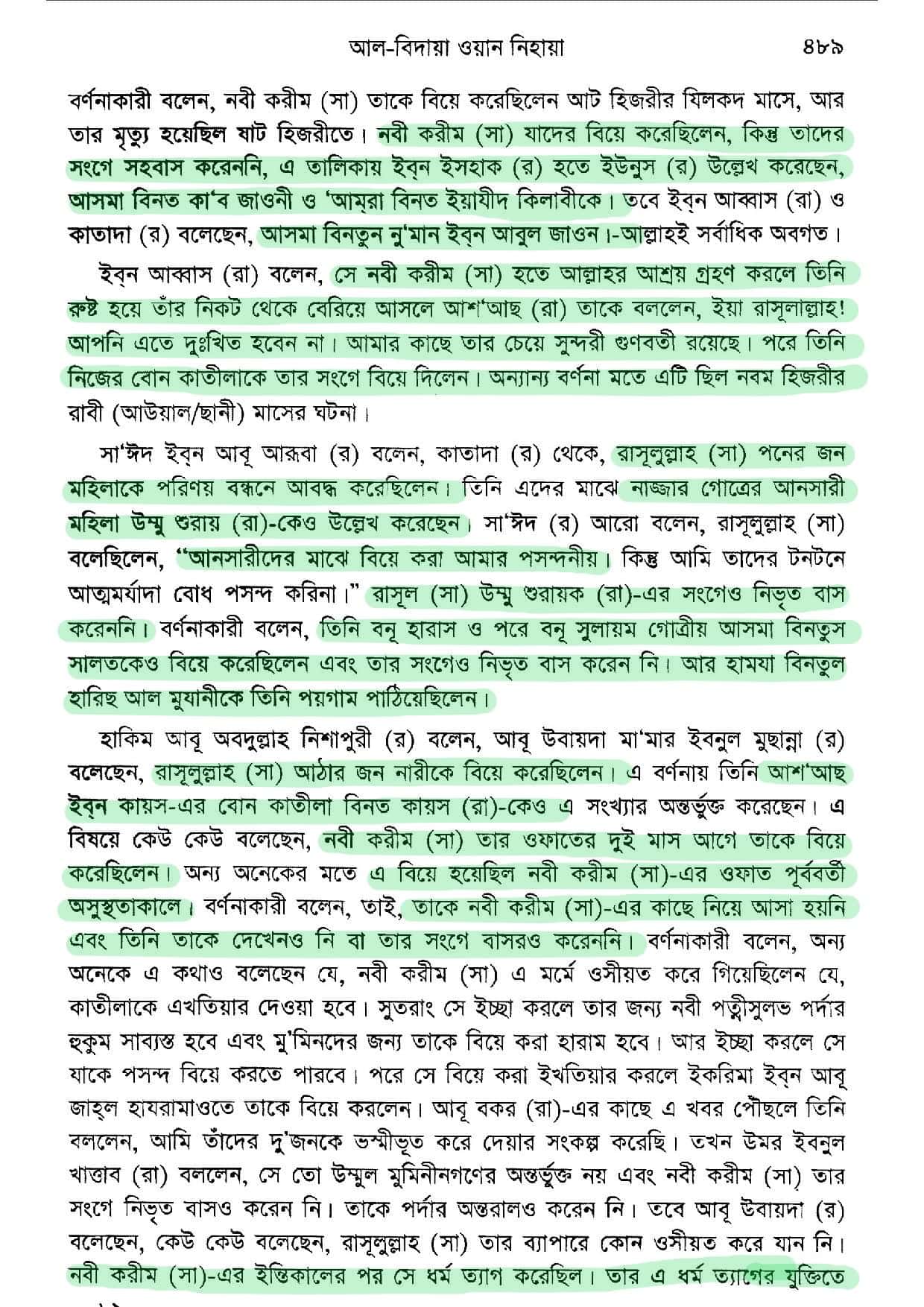
Believers claim that Allah later permitted him to marry again. Yet according to the principles of Qur’anic interpretation and the rules of abrogation, to cancel or abrogate a Qur’anic verse, another verse from Allah that is better or equivalent is required. [170]
Whenever I abrogate a verse or cause it to be forgotten, I bring a better one or one equal to it. Do you not know that Allah has power over all things?
The question is: In which chapter and verse of the Qur’an did Allah abrogate the earlier verse and again instruct him to marry? There is no such verse. Why, then, did Muhammad disobey Allah’s command? Was this why he died in terrible agony? It is only through hadith that we learn that Allah supposedly permitted the Prophet to marry again. [171]
Sunan al-Nasa’i (Islamic Foundation)
26/ Marriage
Chapter: 2. What Allah made obligatory upon His Messenger and prohibited for others, for the purpose of increasing closeness to Allah
3208. Muhammad ibn ‘Abd Allah ibn Mubarak … narrated from ‘A’ishah. She said: Before the Messenger of Allah’s death, Allah made it lawful for him to marry whichever women he wished.
Verification: Sahih.
Hadith grading: Sahih (Authentic)
Narrator: ‘A’ishah bint Abi Bakr al-Siddiq
Conclusion
Every person may have good qualities as well as bad ones; this is normal. The question here, however, is not the mixture of good and bad but moral standards. When someone is established as the greatest human being of all time, an ideal for humanity and a character to emulate, isolated mistakes or stories of personal weaknesses are insufficient to settle the matter. What is required is a consistently developed character that meets, at a minimum, the standards of being coherent, ethically acceptable and a safe example for others to follow.
The accounts and documents presented throughout this article reveal more than isolated human mistakes. In many instances, they display a long pattern of double standards centred on power, exceptions to rules for personal advantage, the suppression of criticism and ethically questionable conduct. In this context, the reasonableness of calling someone ‘the greatest human being of all time’ deserves serious reflection. Indeed, greatness for all time is a far more ambitious claim: even by the minimum standards of an ordinary, normal and civilised person, I find it impossible to accept such a character as an ideal.
After reading carefully, ask yourself a straightforward question: Do these facts disturb you? If they do, this is not because your faith is weak; it is the result of normal human sensibilities, moral judgement and the ability to compare claims with reality. If they do not, another question is reasonable: Are you actually examining the evidence, or interpreting it through beliefs already formed?
I leave this article primarily as a repository of evidence drawn from accounts and sources concerning Muhammad’s life, so that readers can verify matters quickly, consult the documents in one place and reach conclusions through reason rather than emotion. Readers’ participation is essential: verify the information, cross-check the references, and after examining the evidence, learn to question your own beliefs through reason. That is the purpose of this article, and it is what makes the effort worthwhile.
References
- Narcissistic personality disorder ↩︎
- Messiah complex ↩︎
- Sahih al-Bukhari, Tawhid Publications, hadith 14 ↩︎
- Sunan al-Tirmidhi, critically assessed edition, verification by Nasir al-Din al-Albani, Husayn al-Madani Publications, vol. 6, hadith 3895 ↩︎
- Surah al-Tahrim, verse 5 ↩︎
- Behind the Threat to Divorce the Prophet’s Wives ↩︎
- Riyad al-Salihin, hadith 1408 ↩︎
- Sahih Muslim, Islamic Foundation, hadith 5837 ↩︎
- Sahih Muslim, Islamic Foundation, vol. 5, p. 313 ↩︎
- Sahih al-Bukhari, Islamic Foundation, hadith 5645 ↩︎
- Sunan Ibn Majah, hadith 4177 ↩︎
- Sahih al-Bukhari, Islamic Foundation, hadith 4850 ↩︎
- Sahih al-Bukhari, Islamic Foundation, vol. 8, pp. 490–491 ↩︎
- Bukhari Sharif, Bengali Translation and Commentary, vol. 6, p. 229 ↩︎
- Al-Lu’lu’ wa al-Marjan, hadith 1592 ↩︎
- Sahih al-Bukhari, Tawhid Publications, vol. 5, p. 27 ↩︎
- Muhammad Also Gave Women to His Son-in-Law ↩︎
- Al-Bidayah wa al-Nihayah, Islamic Foundation, vol. 7, p. 589 ↩︎
- Tafsir Ibn Kathir, Islamic Foundation, vol. 9, pp. 136–137 ↩︎
- Sunan al-Tirmidhi, critically assessed edition, hadith 9 ↩︎
- Mishkat al-Masabih, hadith 364 ↩︎
- Sahih Shama’il al-Tirmidhi, hadith 126 ↩︎
- Sunan al-Darimi, HadithBD edition, hadith 45 ↩︎
- Al-Bidayah wa al-Nihayah, vol. 2, Islamic Foundation Bangladesh, pp. 39–40 1 2
- Sahih al-Bukhari, Tawhid Publications, hadith 2885 ↩︎
- Sahih Muslim, Islamic Foundation, hadith 4490 1 2
- Sahih al-Bukhari, Islamic Foundation, hadith 5320 ↩︎
- Sahih al-Bukhari, Islamic Foundation, hadith 6965 ↩︎
- Sahih al-Bukhari, Islamic Foundation, hadith 2467 ↩︎
- Sahih Muslim, Islamic Foundation, hadith 7140 ↩︎
- Sahih Muslim, Islamic Foundation, hadith 7142 ↩︎
- Sahih Muslim, Islamic Foundation, hadith 5915 ↩︎
- Sahih Muslim, Islamic Foundation, hadith 5916 ↩︎
- Sahih al-Bukhari, Tawhid Publications, hadith 5684 ↩︎
- Sunan Abi Dawud, Islamic Foundation, hadith 3607 ↩︎
- Sahih Muslim, Hadith Academy, hadith 7251 ↩︎
- Mishkat al-Masabih, hadith 5474 ↩︎
- The Prophet Who Failed the Test of Miracles ↩︎
- Tafsir al-Mazhari, Hakimabad Khanqah-e-Mujaddidiyyah Publications, vol. 7, pp. 204–205 ↩︎
- Tafsir al-Mazhari, Hakimabad Khanqah-e-Mujaddidiyyah Publications, vol. 4, p. 281 ↩︎
- Al-Bidayah wa al-Nihayah, Islamic Foundation, vol. 4, p. 148 ↩︎
- Sunan Abi Dawud, Islamic Foundation, hadith 2994 ↩︎
- Sirat Ibn Hisham: Biography of Muhammad, Akram Faruq, pp. 61–62 ↩︎
- Sirat al-Mustafa, author: Idris Kandhlawi, Islamic Foundation Bangladesh, vol. 1, pp. 113, 144, 149, 154–155 ↩︎
- Life Stories of the Messenger’s Companions, vol. 6, p. 40 ↩︎
- Sahih al-Bukhari, Islamic Foundation, hadith 952 ↩︎
- Sahih al-Bukhari, Tawhid Publications, hadith 7147 ↩︎
- Sahih al-Bukhari, Islamic Foundation, hadith 5121 ↩︎
- Sahaj Nasr al-Bari: Sharh Sahih al-Bukhari, Arabic–Bengali, Simple Translation and Detailed Commentary, ‘Uthman Ghani, al-Kawsar Publications, vol. 7, p. 228 ↩︎
- Tafsir Ibn Kathir, Islamic Foundation, vol. 4, pp. 626–628 ↩︎
- Sahih Muslim, Islamic Foundation, hadith 3098 ↩︎
- Sahih Muslim, Islamic Foundation, vol. 3, p. 269, hadith 3098 ↩︎
- Sunan Ibn Majah, Tawhid Publications, hadith 3073 ↩︎
- Hadith Sambhar, hadith 2037 ↩︎
- Sirat al-Nabi, Ibn Hisham, Islamic Foundation Bangladesh, vol. 3, p. 231 ↩︎
- Sirat al-Mustafa, author: Idris Kandhlawi, Islamic Foundation Bangladesh, vol. 2, p. 90 ↩︎
- Surah Al ‘Imran, verse 161 ↩︎
- Tafsir al-Mazhari, vol. 2, p. 352 ↩︎
- Tafsir al-Jalalayn, vol. 1, p. 738 ↩︎
- Tafsir Ibn Kathir, vol. 2, pp. 651–652 ↩︎
- Surah al-Qalam, verse 2 ↩︎
- Surah al-Hijr, verse 6 ↩︎
- Sirat Ibn Hisham, translated by Akram Faruq, Bangladesh Islamic Centre, p. 120 ↩︎
- Mishkat al-Masabih, hadith 5778 ↩︎
- Sunan al-Nasa’i, Islamic Foundation, hadith 3442 ↩︎
- Sahih al-Bukhari, Tawhid Publications, hadith 2978 ↩︎
- Sahih al-Bukhari, Islamic Foundation, hadith 2770 ↩︎
- Sunan al-Tirmidhi, critically assessed edition, Husayn al-Madani Publications, hadith 2056 ↩︎
- Sahih Muslim, Hadith Academy, hadith 5612 ↩︎
- Sahih Muslim, Hadith Academy, hadith 5620 ↩︎
- Sunan Abi Dawud, critically assessed edition, hadith 3887 ↩︎
- Sunan Abi Dawud, critically assessed edition, hadith 3884 ↩︎
- Sahih Muslim, Islamic Foundation, hadith 5515 ↩︎
- Sahih al-Bukhari, Tawhid Publications, hadith 3860 ↩︎
- Sahih al-Bukhari, Tawhid Publications, hadith 1144 ↩︎
- Mishkat al-Masabih, Hadith Academy, hadith 1221 ↩︎
- Sahih al-Bukhari, Tawhid Publications, hadith 5765 ↩︎
- Al-Lu’lu’ wa al-Marjan, hadith 1412 ↩︎
- Al-Shifa’, vol. 1, pp. 232–233 ↩︎
- Al-Bidayah wa al-Nihayah, Islamic Foundation, vol. 5, p. 534 ↩︎
- Sunan al-Tirmidhi, critically assessed edition, hadith 2187 ↩︎
- Sahih al-Bukhari, Tawhid Publications, hadith 3829 ↩︎
- Sahih al-Bukhari, Islamic Foundation, vol. 6, p. 371 ↩︎
- Tafsir Ibn Kathir, Islamic Foundation, vol. 1, pp. 733–734 ↩︎
- Sahih al-Bukhari, Tawhid Publications, hadith 2731–2732 ↩︎
- Sahih al-Bukhari, Islamic Foundation, vol. 5, p. 64 ↩︎
- Sahih Muslim, Hadith Academy, hadith 6916 ↩︎
- Sahih Muslim, Islamic Foundation, hadith 6766 ↩︎
- Sahih Muslim, Islamic Foundation, vol. 6, p. 285, download link ↩︎
- Tafsir al-Mazhari, vol. 9, p. 538 ↩︎
- Sahih Muslim, Hadith Academy, hadith 3523 ↩︎
- Sahih Muslim, Ahl al-Hadith Library, vol. 3, p. 459 ↩︎
- Sahih al-Bukhari, Islamic Foundation, hadith 4425 ↩︎
- Sahih al-Bukhari, Tawhid Publications, vol. 5, p. 31 ↩︎
- Sahih Muslim, Islamic Foundation, Hadith 572 ↩︎
- Sunan al-Nasa’i, Islamic Foundation, Hadith 374 ↩︎
- Sunan Abi Dawud, verified edition, Hadith 3931 ↩︎
- Sirat al-Nabi, Ibn Hisham, Volume 3, p. 302 ↩︎
- Sirat al-Nabi, Ibn Hisham, Islamic Foundation Bangladesh, translated under the supervision of the editorial board, Volume 4, p. 313 ↩︎
- Sahih al-Bukhari, Islamic Foundation, Hadith 5264 ↩︎
- Musnad Ahmad, Islamic Centre, Volume 1, pp. 232, 235–236 ↩︎
- Sahih al-Bukhari, Tawhid Publications, Hadith 5255 ↩︎
- Sahih Muslim, Islamic Foundation, Hadith 6093 ↩︎
- Sahih al-Bukhari, Tawhid Publications, Hadiths 5256–5257 ↩︎
- Sahih al-Bukhari, Volume 5, p. 108 1 2
- Sahih al-Bukhari, Volume 5, p. 109 ↩︎
- Al-Bidayah wa al-Nihayah, Volume 5, p. 489 ↩︎
- Verified Bulugh al-Maram min Adillat al-Ahkam, or Evidence-Based Rulings for Reaching the Goal, Tawhid Publications, p. 460 ↩︎
- Al-Bidayah wa al-Nihayah, Ibn Kathir, Islamic Foundation Bangladesh, Volume 5, p. 486 ↩︎
- Sahih al-Bukhari, Tawhid Publications, Hadith 5080 ↩︎
- Sunan al-Tirmidhi, verified edition, Hadith 1100 ↩︎
- Sunan Ibn Majah, Islamic Foundation, Volume 2, pp. 167–168 ↩︎
- Sahih al-Bukhari, Tawhid Publications, Hadith 5213 ↩︎
- Sahih Muslim, Book 4, Hadith 2127 ↩︎
- Sunan Abi Dawud, Volume 2, English, Darussalam Publications, pp. 552–553 ↩︎
- Sahih al-Bukhari, Islamic Foundation, Volume 8, p. 477 ↩︎
- Sirat al-Mustafa, Idris Kandhlawi, Islamic Foundation Bangladesh, Volume 3, pp. 59–60 ↩︎
- Easy Nasr al-Bari: Commentary on Sahih al-Bukhari, Arabic–Bengali, Simple Translation and Detailed Explanation and Analysis, Mawlana ‘Uthman Ghani, al-Kawthar Publications, Volume 7, pp. 227–228 ↩︎
- Sunan al-Nasa’i (Islamic Foundation), Volume 1, p. 204 ↩︎
- Easy Nasr al-Bari: Commentary on Sahih al-Bukhari, Arabic–Bengali, Simple Translation and Detailed Explanation and Analysis, Mawlana ‘Uthman Ghani, al-Kawthar Publications, Volume 7, pp. 194–195 ↩︎
- Hadith Compilation, Hadith 1900 ↩︎
- Qur’an 93:8 ↩︎
- Easy Nasr al-Bari: Commentary on Sahih al-Bukhari, Volume 8, Arabic–Bengali, Simple Translation and Detailed Explanation and Analysis, Mawlana Muhammad ‘Uthman Ghani, al-Kawthar Publications, p. 411 ↩︎
- Sahih al-Bukhari, Tawhid Publications, Hadith 3117 ↩︎
- Sahih al-Bukhari, Tawhid Publications, Hadith 5685 ↩︎
- Mishkat al-Masabih, Hadith 3539 ↩︎
- Sahih Muslim, Islamic Foundation, Hadith 4207 ↩︎
- Sahih Muslim, Hadith Academy, Hadith 4246 ↩︎
- Mukhtasar Zad al-Ma‘ad, Imam Ibn al-Qayyim, Wahidiyyah Islamiyyah Library, pp. 303–304 ↩︎
- Sunan al-Nasa’i, Islamic Foundation, Hadith 307 ↩︎
- Sunan Abi Dawud, verified edition, Allamah Albani Academy, Hadith 4361 ↩︎
- Sunan Abi Dawud, verified edition, Allamah Albani Academy, Volume 5, pp. 290–291 ↩︎
- Sunan Abi Dawud, Islamic Foundation, Hadith 4310 ↩︎
- Bulugh al-Maram, Hadith 1204 ↩︎
- Sunan al-Nasa’i, Islamic Foundation, Hadith 4071 ↩︎
- Sahih al-Bukhari, Islamic Foundation, Hadith 3689 ↩︎
- Sahih Muslim, Bengali Translation with Necessary Explanations, Maktabat al-Hadith Publications, Volumes 21–22, pp. 481–482 ↩︎
- Sirat al-Mustafa, Idris Kandhlawi, Islamic Foundation Bangladesh, Volume 2, p. 92 ↩︎
- Sahih al-Bukhari, Tawhid Publications, Volume 6, p. 229 ↩︎
- Shu‘ab al-Iman, p. 88 ↩︎
- Sunan Abi Dawud, Islamic Foundation, Volume 3, pp. 38–39 ↩︎
- Brutally Killing Someone for Insults ↩︎
- Easy Nasr al-Bari: Commentary on Sahih al-Bukhari, Volume 7, Arabic–Bengali, Simple Translation and Detailed Explanation and Analysis, Mawlana Muhammad ‘Uthman Ghani, al-Kawthar Publications, p. 229 ↩︎
- Easy Nasr al-Bari: Commentary on Sahih al-Bukhari, Volume 7, p. 225 ↩︎
- Sirat al-Mustafa, Idris Kandhlawi, Islamic Foundation Bangladesh, Volume 2, pp. 144–145 ↩︎
- Sirat al-Rasul, Muhammad Asadullah al-Ghalib, p. 324 ↩︎
- Sirat Rasul Allah, Ibn Ishaq, Prothoma Publications, pp. 716–717 ↩︎
- A Biography of the Prophet of Islam In the Light of Original Sources: An Analytical Study, by Dr. Mahdi Rizqullah Ahmad, translated by Syed Iqbal Zaheer [Darussalam Publishers and Distributors, Riyadh, Jeddah, Sharjah, Lahore, London, Houston, New York; First Edition: November 2005], Volume 1, Chapter 6: Events and Expeditions between Badr and Uhud, pp. 431–432; underline emphasis ours ↩︎
- Sirat Rasul Allah, Ibn Ishaq, translated by Shahid Akhand, Islamic Foundation, p. 346 ↩︎
- The Banu Qurayzah Expedition ↩︎
- The Banu Qurayzah Massacre ↩︎
- Sahih Muslim, Islamic Foundation, Hadith 4370 ↩︎
- Sahih Muslim, Volume 6, p. 181 ↩︎
- Easy Nasr al-Bari: Commentary on Sahih al-Bukhari, Arabic–Bengali, Simple Translation and Detailed Explanation and Analysis, Mawlana ‘Uthman Ghani, al-Kawthar Publications, Volume 7, p. 237 ↩︎
- Sunan Abi Dawud, Islamic Foundation, Hadith 495 ↩︎
- Sunan Abi Dawud, Islamic Foundation, Hadith 494 ↩︎
- Tahawi Sharif, Hadiths 4784, 4785, 4786, Islamic Foundation, Volume 3, p. 360 ↩︎
- Sirat Rasul Allah, translated by Shahid Akhand, Prothoma Publications, p. 353 ↩︎
- The Life of Muhammad, Alfred Guillaume, p. 311 ↩︎
- Sunan Abi Dawud, Islamic Foundation, Hadith 2836 ↩︎
- Sahih al-Bukhari, Islamic Foundation, Hadith 3089 1 2
- Sahih al-Bukhari, Islamic Foundation, Volume 5, p. 419 ↩︎
- Sahih Muslim, Islamic Foundation, Hadith 5335 ↩︎
- Sahih al-Bukhari, Islamic Foundation, Hadith 2175 ↩︎
- Sahih Muslim, Hadith Academy, Hadith 4444 ↩︎
- Sahih Muslim, Hadith Academy, Hadith 4445 ↩︎
- Al-Hidayah, Burhan al-Din ‘Ali ibn Abi Bakr al-Farghani al-Marghinani, Islamic Foundation Bangladesh, Volume 2, p. 432 ↩︎
- Qur’an 33:52 ↩︎
- Al-Bidayah wa al-Nihayah, Ibn Kathir, Volume 5, p. 489 ↩︎
- Qur’an, Surah al-Baqarah, verse 106 ↩︎
- Sunan al-Nasa’i, Islamic Foundation, Hadith 3208 ↩︎
About This Article
Genre: Semi-Academic Historical, Ethical, and Source-Based Character Critique
Epistemic Position: Secular Humanist Ethics, Historical Criticism, Moral Philosophy, and Anti-Apologetic Source Analysis
This article critically examines the religious claim that Muhammad represents the greatest moral example for humanity by comparing that claim with narratives preserved in Islamic sources themselves.
Its purpose is not devotional interpretation, emotional balance, prophet-protection, or apologetic rehabilitation. The article asks whether the image of Muhammad as a universally perfect moral model remains coherent when tested against reports concerning authority, self-glorification, women, sexuality, slavery, violence, punishment, dissent, and moral double standards.
This article does not treat childhood stories, popular sermons, inherited reverence, or devotional propaganda as historical evidence. Claims about moral greatness must be tested through sources, conduct, consistency, power relations, treatment of critics, and the ethical implications of reported actions.
Modern apologetic explanations are not accepted by default. If a disturbing report is reinterpreted only after moral criticism arises, or if a rule is defended for ordinary believers but exempted for Muhammad, then that explanation must be treated as a possible ad hoc defense rather than a serious resolution.
Strong criticism in this article should not be mistaken for hatred or bias. When a figure is presented as the highest moral authority for all humanity, his actions, privileges, contradictions, sexual ethics, treatment of women, and use of religious authority deserve stricter scrutiny—not softer treatment.
This article should be evaluated through source transparency, consistency in source criticism, moral reasoning, historical plausibility, and logical coherence—not through theological sensitivity, inherited devotion, emotional discomfort, accusations of disrespect, or demands that criticism of sacred figures must remain rhetorically soft.