
The Quran Without Hadith: Can Islamic Sharia Function?
Introduction
A section of Muslims embarrassed by the uncomfortable accounts in hadith adopt a convenient position in religious debates: they do not accept hadith; the Quran alone is enough. Faced with criticism from freethinking atheists, agnostics and skeptics concerning Muhammad’s statements, conduct and the rules circulated in his name, they use this declaration to try to place the very subject of criticism outside Islam. They claim that everything that needed to be said has already been said in the Quran; accounts outside the Quran are distorted, unnecessary or unacceptable. Yet many specific rules governing worship, lawful and unlawful conduct, marriage, inheritance and criminal punishment in traditional Islam are absent from the Quranic text. Using the authority of hadith when accepting those rules, then denying that authority when faced with criticism, is inconsistent. The same source cannot serve as the foundation of religion for convenient rules and become something outside religion for uncomfortable ones: this is not a consistent use of evidence; it is the dishonesty of selecting religious authority according to personal preference.
Ignorance about the history of the preservation of the Quran and hadith makes this position even more misleading. Memorization, writing and teaching the text from teacher to student played a role in preserving the Quran. Memorization, written records, teaching and continuity of transmission were also used for hadith. Alongside memorizers of the Quran, Islamic history also had memorizers of hadith; they preserved knowledge of vast numbers of reports and their chains of transmission. Teachers taught hadith to students, required them to memorize it, and instructed them in reading, wording and pronunciation. The compilation processes of the Quran and hadith were not exactly identical, but human memory, written materials and teaching across generations played a role in preserving both. Personal written preservation of hadith and later large-scale book compilations are also separate matters. Concluding that no written reports existed before the large compilations because those compilations were produced later is wrong. Nor does the existence of accounts of early written preservation establish that every word of every later hadith was preserved accurately. Whether a source has authority in sharia and how historically reliable each statement in that source is are separate questions.
The Quran itself commands people to follow Muhammad, accept his instructions and submit to his judgments. He is also assigned responsibility for explaining to people the statements revealed to them. To put these commands into effect, it is necessary to know what Muhammad said, what he prohibited, which conduct he approved and how he applied particular verses. After his death, this information is obtained through preserved reports and practices outside the Quran. Even when the Quran contains a general command to perform an act, if its specific method is determined by Muhammad’s practice, the same rule cannot be obtained after excluding the account of that practice. A declaration of obedience to the Messenger does not supply the content of his instructions; reported information is needed to know what the instruction was. Consequently, the claim to follow Muhammad in accordance with the Quran’s commands conflicts with the claim to reject indiscriminately the sources through which his instructions are known.
The role of hadith is not limited to explaining the meanings of a few difficult words in the Quran. Hadith provides the detailed form of general Quranic commands, determines the scope of rules, establishes exceptions, and also supplies rules not directly mentioned in the Quran. The Quran commands the establishment of prayer, but it does not set out the complete arrangement of traditional prayer, its numbers of rak’ahs and many specific actions as a continuous manual. Although it commands zakat, it does not provide the complete list of which assets are subject to zakat and how much must be paid. Although there are various commands concerning hajj, accounts of Muhammad’s practice are needed to know its complete traditional ritual code. Similarly, the verse prescribing punishment for theft does not supply the complete rules concerning the minimum value of stolen property, the conditions governing who is punishable, or other exceptions. Reports outside the Quran also determine legal outcomes concerning the validity of marriage, milk kinship, inheritance, bequests and food rules. Having a written command and turning that command into a complete rule applicable to particular cases are not the same thing.
Understanding the linguistic meaning of the Quran and fixing the specific, binding meaning of a verse under sharia are also separate tasks. Information about which event a verse concerns, whom it addresses, the circumstances in which it applies and the extent of its command is not always written within the verse itself. Much of the information concerning the time and context of revelation and the occasions of revelation is preserved in hadith and the related transmitted tradition. Without this information, it may still be possible to read a sentence’s general meaning, but the basis for the specific rules derived from that sentence in traditional Islam is lost. Accounts of Muhammad’s explanations and applications are also used to determine which of several readings of the same verse must be accepted as the meaning he established. Rejecting those accounts and declaring one’s own chosen meaning to be Muhammad’s rule places personal interpretation in the position of the Prophet’s authority. The Quranic text remains, but specific sharia rulings established in its name are no longer proved solely by that text.
The traditional Islamic system of interpretation uses as authoritative foundations how Muhammad explained and practiced the Quran, what the Companions received from him, and how that teaching was preserved through the Successors and the Successors of the Successors. Hadith, athar and related reports are therefore not a collection of disconnected stories lying outside Islam; they are important components of the religious practices and rules established in the Quran’s name. Reports preserved in Muhammad’s name also contain warnings against accepting only instructions found in the Quran while rejecting his other instructions. In Islamic tradition, these reports have been used to establish the binding authority of prophetic instructions outside the Quran. Declaring the entire hadith tradition unnecessary without knowing its compilation, content and legal role demonstrates ignorance of the system’s basic structure. After denying the report through which a rule was established, that rule cannot continue to be presented as established in the same way as before.
Much information about the compilation and textual history of the Quran is also obtained from reports outside the Quran, rather than from its own statements. To answer which statements were accepted as Muhammad’s ordinary speech and which as parts of the Quran, how the verses were collected and how the compiled text was disseminated, Islamic tradition relies on preserved accounts. Finding a Quranic manuscript and knowing the history of the source, collection and religious status of each of its parts are separate matters. Taking help from transmitted tradition to establish an acceptable history of the Quran while declaring that same tradition unacceptable in principle is an inconsistent position. A book’s claim to be Allah’s word does not independently establish the history and truth of that claim merely because the book makes it.
Removing hadith and the related transmitted tradition deprives the Quran of the foundation necessary for it to remain effective as a complete code of traditional sharia. The established method of prayer, specific zakat rates, additional prohibitions on marriage, exceptions in inheritance and particular criminal penalties can no longer be maintained in the same way. Some rules will disappear, some will change, and some will rest on new interpretations. Claiming after this change that the former sharia remains unchanged is false. The sense in which the Quran can be called a lifeless book without hadith is this legal incapacity: the text remains present, but it does not contain the complete system of specific rules and binding application of traditional sharia. Accepting interpretations according to personal preference and declaring them Allah’s immutable law puts personal preference into effect in the name of divine authority. The claim of the Quran’s sanctity does not create these missing rules, nor does it turn law founded on hadith into self-sufficient Quranic law after hadith has been denied.
What Is Hadith?
The literal meaning of hadith is new, the opposite of ancient or old. Its other meanings include speech, a statement or news. In Islamic terminology, hadith denotes preserved reports concerning the words, actions and approval of the Prophet Muhammad, as well as his character and attributes. What he said on a subject, what he did himself, and how he gave verbal or tacit approval to others’ words or actions of which he was aware are included in these reports. Hadith also contains accounts of how Muhammad explained and carried out Allah’s commands according to Islamic belief. Hadith instructions are one of the foundations of Muslim conduct and practice; the Quran and hadith are used as the principal sources of Islam’s principles, law and interpretation. Hadith collections also preserve accounts of what the Companions learned from Muhammad and how they practiced it. The same books may also contain reports of the Companions’ own statements and actions. For example, accounts of how Umar administered the state during his rule are preserved as athar; reports of his own statements and actions are termed mawquf, distinct from marfu’ hadith attributed directly to Muhammad [1]
وهو ما يروى عن الصحابة رضي الله عنهم من أقوالهم أو أفعالهم ونحوها، فيوقف عليهم، ولا يتجاوز به إلى رسول الله – صلى الله عليه وسلم -. ثم إن منه ما يتصل الإسناد فيه إلى الصحابي، فيكون من الموقوف الموصول. ومنه ما لا يتصل إسناده، فيكون من الموقوف غير الموصول، على حسب ما عرف مثله في المرفوع إلى رسول الله – صلى الله عليه وسلم -، والله أعلم.
English translation:Mawquf consists of reports about the Companions’—may Allah be pleased with them—words, actions and similar matters that stop at them; they are not carried up to the Messenger of Allah. Some such reports have chains connected as far as a Companion; these are connected mawquf reports. Others do not have connected chains; these are disconnected mawquf reports. Similar questions of connection and disconnection also arise concerning marfu’ reports attributed to the Messenger of Allah. Allah knows best.
Hadith is one of the principal materials used in Islam to understand the Quran’s interpretation and application. Sira, or biographies written by various historians, is also used alongside it. Tafsir is composed on the basis of Quranic verses, hadith, reports from the Companions and Successors, language and accounts of the relevant events. In the report-based tradition of tafsir, accounts of Muhammad’s explanations and practice receive particular importance after the Quran. Hadith classified as sahih and hasan is regarded as acceptable in Islamic hadith scholarship and is used to determine sharia rules. These classifications are determined by assessments of narrators, connections in the chain of transmission, the quality of preservation and defects in the report. Such an assessment cannot be called a guarantee of every report’s infallible historical truth. That a report has legal authority within the Islamic system is one fact; that every word and detail of the report is free of every possibility of error is a separate and stronger claim.
According to whether they report Muhammad’s words, actions or approval, the three principal types of hadith are qawli, fi’li and taqriri. Words may convey a command or prohibition directly; actions provide accounts of how a command was carried out; approval is used to determine whether another person’s conduct was acceptable to him. Hadith content is therefore not confined to Muhammad’s spoken words. His practice and approval of conduct known to him are also used to determine Islam’s practical rules.
| Type of Hadith | Definition |
|---|---|
| Qawli Hadith | What the Prophet Muhammad said on any subject—that is, a hadith relating something he said—is called qawli hadith, or hadith concerning speech. |
| Fi’li Hadith | Accounts of Muhammad’s practice are obtained through his actions, character and conduct. A hadith containing an account of one of his actions is called fi’li hadith, or hadith concerning action. |
| Taqriri Hadith | The sharia position can also be understood from reports of the Companions’ words or actions that received Muhammad’s approval and support. These are called taqriri hadith, or hadith of approval. In cases of tacit approval, his awareness of the relevant action is a necessary element of the account. |
Isnad: Hadith has two parts: the isnad and the matn. The chain through which the main statement of a hadith is reported to have reached the book’s compiler is called its isnad. It lists narrators’ names in succession and identifies who received the report from whom. Through the person from whom the compiler heard it, that person’s teacher and the preceding narrators, the chain reaches an earlier source. The isnad is thus a statement’s transmission path; whether the statement explains a Quranic verse, provides details of a command or establishes a separate rule is found in the matn.
Matn: The main statement of a hadith and its wording are called its matn. A command attributed to Muhammad, an account of his action, an answer to a question or approval of someone’s conduct may constitute the matn. The isnad lists the people through whom the information came; the matn contains what that information says. The statements in the matn are used to determine sharia rules. Specific decisions about the extent to which a verse’s general command applies, how an act is performed or what is prohibited concern the content of the report. The transmission path and the transmitted statement are therefore two distinct but interconnected elements of hadith.
Sunnah or sunnat means a path followed, an established practice, and the principles and methods of conduct. In Islamic terminology, the way and practice Muhammad followed and the ideals he preached constitute his Sunnah. In hadith scholarship, hadith and Sunnah are often used in closely related or synonymous senses. To express the relationship between a report and a practice, hadith can be described as the account of words, actions and approval, and Sunnah as the exemplary model known through it. Hadith is therefore not used merely to learn about an event in the past; a practice is accepted as one to follow or an instruction as binding on the basis of that report. Accounts of Muhammad’s practice being learned and passed on through others are also part of this transmitted tradition.
Many rules of traditional Islam are determined by combining two elements: a Quranic command and an account of how Muhammad applied that command. When the Quran commands prayer, his practice of prayer is used as the command’s specific form; when a prohibition is general, hadith is used to determine its scope or exceptions. Hadith also preserves commands and prohibitions not directly mentioned in the Quran. It is therefore not an unnecessary collection of biographies placed beside the Quran. It has a direct role in determining the content of religious conduct and legal rules established in the Quran’s name. Removing these reported materials also removes the evidence for the particular rules founded on them.
Was Hadith Written 200 Years Later?
In contemporary religious discussions online, on Facebook and on YouTube, some Islamic speakers tell their followers that accepting hadith is unnecessary because hadith was written 200 years after Muhammad’s death. Placing the first written preservation of all hadith within this period is wrong and misleading. Islamic sources themselves contain accounts of Muhammad’s statements being written during his lifetime; personal records, organized collection and later large-scale compilations are distinct forms of written hadith preservation. Confining the entire history to a single number without understanding this distinction demonstrates a lack of common knowledge. Concluding from the later compilation of a particular book that no reports were written before it is ignorant stupidity. Presenting the compilation dates of Bukhari or Muslim as the first writing of all hadith conflates distinct historical events.
In the report preserved in Sunan Abi Dawud in the name of Abdullah ibn Amr, he states that he used to write down what he heard from Muhammad in order to remember it. After the Quraysh objected, he stopped writing and informed Muhammad. In the report, Muhammad tells him to write again and, pointing to his own mouth, claims the truth of his statements. Three things are preserved here: personal writing of statements, objections to writing, and renewed instructions to write. In this account, the writing takes place during Muhammad’s lifetime, rather than in the period of later compilers such as Bukhari [2]
كُنْتُ أَكْتُبُ كُلَّ شَىْءٍ أَسْمَعُهُ مِنْ رَسُولِ اللَّهِ صلى الله عليه وسلم أُرِيدُ حِفْظَهُ فَنَهَتْنِي قُرَيْشٌ وَقَالُوا أَتَكْتُبُ كُلَّ شَىْءٍ تَسْمَعُهُ وَرَسُولُ اللَّهِ صلى الله عليه وسلم بَشَرٌ يَتَكَلَّمُ فِي الْغَضَبِ وَالرِّضَا فَأَمْسَكْتُ عَنِ الْكِتَابِ فَذَكَرْتُ ذَلِكَ لِرَسُولِ اللَّهِ صلى الله عليه وسلم فَأَوْمَأَ بِأُصْبُعِهِ إِلَى فِيهِ فَقَالَ «اكْتُبْ فَوَالَّذِي نَفْسِي بِيَدِهِ مَا يَخْرُجُ مِنْهُ إِلاَّ حَقٌّ».
English translation:I used to write down everything I heard from the Messenger of Allah in order to remember it. The Quraysh stopped me and said, “Do you write down everything you hear? The Messenger of Allah is a human being; he speaks both in anger and in satisfaction.” I then stopped writing and informed the Messenger of Allah. Pointing to his mouth with his finger, he said, “Write. By the One in whose hand is my soul, nothing but the truth comes out of this mouth.”
There is a distinction between personally writing down statements and collecting reports scattered among different people to establish arrangements for teaching and dissemination. An instruction Umar ibn Abd al-Aziz sent to Abu Bakr ibn Hazm is preserved in a chapter heading in the Book of Knowledge in Sahih al-Bukhari. It calls for hadith to be sought out and written down because there was concern about the disappearance of knowledge and the deaths of scholars. The instruction also calls for spreading knowledge and teaching those who do not know. Alongside personal records, the need for organized collection and teaching appears in this account as part of the Islamic history of preservation [3]
وَكَتَبَ عُمَرُ بْنُ عَبْدِ الْعَزِيزِ إِلَى أَبِي بَكْرِ بْنِ حَزْمٍ انْظُرْ مَا كَانَ مِنْ حَدِيثِ رَسُولِ اللَّهِ صَلَّى اللَّهُ عَلَيْهِ وَسَلَّمَ فَاكْتُبْهُ، فَإِنِّي خِفْتُ دُرُوسَ الْعِلْمِ وَذَهَابَ الْعُلَمَاءِ، وَلاَ تَقْبَلْ إِلاَّ حَدِيثَ النَّبِيِّ صَلَّى اللَّهُ عَلَيْهِ وَسَلَّمَ، وَلْتُفْشُوا الْعِلْمَ، وَلْتَجْلِسُوا حَتَّى يُعَلَّمَ مَنْ لاَ يَعْلَمُ، فَإِنَّ الْعِلْمَ لاَ يَهْلِكُ حَتَّى يَكُونَ سِرًّا.
English translation:Umar ibn Abd al-Aziz wrote to Abu Bakr ibn Hazm: “Seek out whatever hadith of the Messenger of Allah exists and write it down, for I fear the disappearance of knowledge and the passing of scholars. Accept nothing other than the Prophet’s hadith. Spread knowledge and sit to teach so that those who do not know are also taught. Knowledge does not perish until it is concealed.”
The history of written preservation cannot be understood by conflating personal sahifas or notes, organized collection of reports preserved in different places, and large books arranged by subject or narrator. Memorization, writing and teaching from teacher to student can also take place at the same time. If a compiler later gathers those reports into a book, a new book has been compiled; it does not follow that every statement it contains was first written at that moment. The publication date of a collection, a report’s earlier written presence and the date of the event claimed in its name are separate facts. Distinguishing these facts determines the specific meaning and truth of the assertion that hadith was “written 200 years later.”
The existence of accounts of early writing in Islamic sources and the exact preservation of every word of a particular report available today since that time are not the same claim. The relationship between an early personal record, its later copies and the text included in a large compilation must be examined report by report. Similarly, the claim that all the contents of a book were created in its compiler’s era because the book was compiled later requires separate evidence. A compilation date cannot erase all of a report’s earlier history. The number “200 years later” alone neither proves a particular report true or false nor eliminates its documented use in sharia.
Did Muhammad Prohibit Writing Hadith?
Sahih Muslim contains a report that Muhammad prohibited writing down hadith. In Abu Sa’id al-Khudri’s report, writing anything from him other than the Quran is prohibited, and anything already written is to be erased. The same report also permits his words to be narrated to others. Prohibiting writing and prohibiting narration are therefore not the same thing; the quoted instruction contains the former, not the latter. The information about this prohibition also comes from hadith itself, rather than from any Quranic verse. Had the report not been preserved and compiled, later people would not have known the wording of this particular instruction. Accepting the instruction as Muhammad’s statement means accepting this hadith as a source of information for determining his instructions. Hadith is supplying this information, which is absent from the Quran’s direct text. [4] [5]
حَدَّثَنَا هَدَّابُ بْنُ خَالِدٍ الأَزْدِيُّ، حَدَّثَنَا هَمَّامٌ، عَنْ زَيْدِ بْنِ أَسْلَمَ، عَنْ عَطَاءِ بْنِ يَسَارٍ، عَنْ أَبِي سَعِيدٍ الْخُدْرِيِّ، أَنَّ رَسُولَ اللَّهِ صلى الله عليه وسلم قَالَ «لاَ تَكْتُبُوا عَنِّي وَمَنْ كَتَبَ عَنِّي غَيْرَ الْقُرْآنِ فَلْيَمْحُهُ وَحَدِّثُوا عَنِّي وَلاَ حَرَجَ وَمَنْ كَذَبَ عَلَىَّ — قَالَ هَمَّامٌ أَحْسِبُهُ قَالَ — مُتَعَمِّدًا فَلْيَتَبَوَّأْ مَقْعَدَهُ مِنَ النَّارِ».
English translation:
Sahih Muslim (Islamic Foundation)
56/ Reports Concerning Asceticism and Lack of Attachment to the World
Chapter: 16. Narrating Hadith Calmly and the Ruling on Recording Knowledge
7238. Haddab ibn Khalid al-Azdi (may Allah have mercy on him) … narrated from Abu Sa’id al-Khudri (may Allah be pleased with him): The Messenger of Allah (peace and blessings of Allah be upon him) said: Do not write down my words. If anyone has written down my words other than the Quran, let him erase them. Narrate my hadith; there is no harm in that. Whoever attributes a lie to me—Hammam (may Allah have mercy on him) said, I think he said, deliberately—let him take his place in Hell.
Hadith grade: Sahih (Sahih)
Narrator: Abu Sa’id al-Khudri (may Allah be pleased with him)
The same hadith literature also contains reports permitting hadith to be written down. In Abdullah ibn Amr’s report, he used to write down what he heard from Muhammad to preserve it. Members of the Quraysh objected that Muhammad was human and spoke both in anger and in satisfaction; therefore, all his words should not be written down. This objection caused Abdullah to stop writing. When he informed Muhammad, Muhammad pointed to his own mouth, instructed him to write and claimed that nothing but the truth came from it. The immediate cause of stopping writing here is the Quraysh’s objection; it is not described as a prohibition issued by Muhammad. Nor does this report give an explanation or chronology in which the earlier prohibition was lifted because the number of Quran memorizers had increased. [6] [7]
حَدَّثَنَا مُسَدَّدٌ، وَأَبُو بَكْرِ بْنُ أَبِي شَيْبَةَ قَالاَ حَدَّثَنَا يَحْيَى، عَنْ عُبَيْدِ اللَّهِ بْنِ الأَخْنَسِ، عَنِ الْوَلِيدِ بْنِ عَبْدِ اللَّهِ بْنِ أَبِي مُغِيثٍ، عَنْ يُوسُفَ بْنِ مَاهَكَ، عَنْ عَبْدِ اللَّهِ بْنِ عَمْرٍو، قَالَ كُنْتُ أَكْتُبُ كُلَّ شَىْءٍ أَسْمَعُهُ مِنْ رَسُولِ اللَّهِ صلى الله عليه وسلم أُرِيدُ حِفْظَهُ فَنَهَتْنِي قُرَيْشٌ وَقَالُوا أَتَكْتُبُ كُلَّ شَىْءٍ تَسْمَعُهُ وَرَسُولُ اللَّهِ صلى الله عليه وسلم بَشَرٌ يَتَكَلَّمُ فِي الْغَضَبِ وَالرِّضَا فَأَمْسَكْتُ عَنِ الْكِتَابِ فَذَكَرْتُ ذَلِكَ لِرَسُولِ اللَّهِ صلى الله عليه وسلم فَأَوْمَأَ بِأُصْبُعِهِ إِلَى فِيهِ فَقَالَ «اكْتُبْ فَوَالَّذِي نَفْسِي بِيَدِهِ مَا يَخْرُجُ مِنْهُ إِلاَّ حَقٌّ».
English translation:
Sunan Abi Dawud (Islamic Foundation)
19/ Education and Learning (Knowledge and Science)
Chapter: 417. Concerning the Recording of Knowledge.
3607. Musaddad (may Allah have mercy on him) ….. narrated from Abdullah ibn Amr (may Allah be pleased with him). He said: I used to write down everything I heard from the Messenger of Allah (peace and blessings of Allah be upon him). I wanted to preserve all of it. But the Quraysh forbade me to do this and said: You write down everything you hear, yet the Messenger of Allah (peace and blessings of Allah be upon him) is human; he sometimes speaks in anger and also speaks when pleased. On hearing this, I stopped writing and informed the Messenger of Allah (peace and blessings of Allah be upon him). He then pointed to his own mouth with his finger and said: Keep writing. By the One in whose hand is my life, everything that comes out of this mouth is true.
Hadith grade: Sahih (Sahih)
Narrator: Abdullah ibn Amr ibn al-As (may Allah be pleased with him)
The explanation that writing was initially prohibited because of concern that hadith might become mixed with the Quran, then permitted once that concern had passed, is mentioned in Nawawi’s commentary on Sahih Muslim. Nawawi introduces it with “it has been said”; he also mentions another explanation that the prohibition concerned writing the Quran and hadith together on the same sahifa. The reports of prohibition and permission themselves supply no specific dates, nor do these quotations determine which instruction was given first and which later. Presenting the chronology of the prohibition’s repeal and the concern about mixing Quran and hadith as the narrator’s direct statements is therefore wrong. These are interpretations by later commentators, which they used to determine the relationship between the preserved reports. [8]
وقيل : إن حديث النهي منسوخ بهذه الأحاديث ، وكان النهي حين خيف اختلاطه بالقرآن فلما أمن ذلك أذن في الكتابة ، وقيل : إنما نهى عن كتابة الحديث مع القرآن في صحيفة واحدة ; لئلا يختلط ، فيشتبه على القارئ في صحيفة واحدة . والله أعلم .
English translation:
It has been said: the hadith of prohibition was abrogated by these hadiths. Writing was prohibited when there was concern that it might become mixed with the Quran; when that concern passed, writing was permitted. It has also been said: what was prohibited was writing hadith together with the Quran on the same sahifa, so that the two would not become mixed and cause confusion for the reader on that same sahifa. Allah knows best.
The prohibition of writing, permission to write and explanation of the prohibition’s abrogation all rest on reports outside the Quran and their commentaries. What Muhammad prohibited people from writing, whom he instructed to write and which words he permitted to be preserved as his statements cannot be answered solely from the Quranic text. Even invoking Muhammad’s authority against writing hadith requires reliance on hadith preserved in his name. Excluding the part of the prohibition report that says “Narrate my hadith” and turning the prohibition into a command to reject all prophetic reports changes the source’s meaning. This dependence in determining the scope of Muhammad’s instructions within Islamic tradition shows that excluding statements preserved outside the Quran leaves the system of instructions current in his name different from what it was before.
When Was Hadith Written?
Hadith books contain reports that hadith was written down personally during Muhammad’s own lifetime. Abu Hurayra’s report also mentions Abdullah ibn Amr’s writing; to explain the difference between them, Abu Hurayra said that Abdullah wrote, whereas he did not. Writing in personal sahifas, memorizing and narrating, and gathering numerous reports into large books arranged by subject are different activities. Treating the dates of later compilations such as Bukhari and Muslim as the first writing of all hadith and saying that “hadith began to be written two hundred years after Muhammad’s death” is wrong. This statement ignores reports of early sahifas and leaves collections such as the Muwatta of the second Islamic century out of account. These different methods of preservation are clearly present in Abu Hurayra’s reports concerning writing and memory. [9] [10] [11] [12]
حَدَّثَنَا عَلِيُّ بْنُ عَبْدِ اللَّهِ، قَالَ حَدَّثَنَا سُفْيَانُ، قَالَ حَدَّثَنَا عَمْرٌو، قَالَ أَخْبَرَنِي وَهْبُ بْنُ مُنَبِّهٍ، عَنْ أَخِيهِ، قَالَ سَمِعْتُ أَبَا هُرَيْرَةَ، يَقُولُ مَا مِنْ أَصْحَابِ النَّبِيِّ صلى الله عليه وسلم أَحَدٌ أَكْثَرَ حَدِيثًا عَنْهُ مِنِّي، إِلاَّ مَا كَانَ مِنْ عَبْدِ اللَّهِ بْنِ عَمْرٍو فَإِنَّهُ كَانَ يَكْتُبُ وَلاَ أَكْتُبُ. تَابَعَهُ مَعْمَرٌ عَنْ هَمَّامٍ عَنْ أَبِي هُرَيْرَةَ.
English translation:
Sahih al-Bukhari (Islamic Foundation)
3/ Ilm or Knowledge
Chapter: 81. Recording Knowledge
114. Ali ibn Abdullah (may Allah have mercy on him) …. narrated from Abu Hurayra (may Allah be pleased with him), who said: Among the Companions of the Prophet (peace and blessings of Allah be upon him), Abdullah ibn Amr (may Allah be pleased with him) is the only one who has more hadith than I do. Because he used to write them down, whereas I did not write. Ma’mar (may Allah have mercy on him) narrated a similar report from Abu Hurayra (may Allah be pleased with him) through Hammam (may Allah have mercy on him).
Hadith grade: Sahih (Sahih)
Narrator: Abu Hurayra (may Allah be pleased with him)
Another report from Abu Hurayra says that he heard many hadiths and forgot them, and claims that after spreading out his cloak he never forgot anything again. There is no mention of a sahifa, a writer or a written record here; it is a report about his memory. Using this incident as evidence that hadith was written therefore erases the distinction between written preservation and memorization. Writing is explicitly mentioned in Abdullah ibn Amr’s case, whereas this report from Abu Hurayra claims a change in memory. Both kinds of account have a place in compiled hadith literature, and both methods are mentioned in the history of transmitting Muhammad’s statements to later generations. [10] [13]
حَدَّثَنَا أَحْمَدُ بْنُ أَبِي بَكْرٍ أَبُو مُصْعَبٍ، قَالَ حَدَّثَنَا مُحَمَّدُ بْنُ إِبْرَاهِيمَ بْنِ دِينَارٍ، عَنِ ابْنِ أَبِي ذِئْبٍ، عَنْ سَعِيدٍ الْمَقْبُرِيِّ، عَنْ أَبِي هُرَيْرَةَ، قَالَ قُلْتُ يَا رَسُولَ اللَّهِ، إِنِّي أَسْمَعُ مِنْكَ حَدِيثًا كَثِيرًا أَنْسَاهُ. قَالَ «ابْسُطْ رِدَاءَكَ» فَبَسَطْتُهُ. قَالَ فَغَرَفَ بِيَدَيْهِ ثُمَّ قَالَ «ضُمَّهُ» فَضَمَمْتُهُ فَمَا نَسِيتُ شَيْئًا بَعْدَهُ.
English translation:
Sahih al-Bukhari (Islamic Foundation)
3/ Ilm or Knowledge
Chapter: 84. Memorizing Knowledge
120. Abu Mus’ab Ahmad ibn Abi Bakr (may Allah have mercy on him) … narrated from Abu Hurayra (may Allah be pleased with him), who said: I said, O Messenger of Allah! I hear many hadiths from you but forget them. He said: Spread out your cloak. I spread it out. Cupping his hands as though pouring something into it, he said: Hold it against your chest. I held it against my chest. After that I never forgot anything again.
Hadith grade: Sahih (Sahih)
Narrator: Abu Hurayra (may Allah be pleased with him)
Explaining why he narrated so many hadiths, Abu Hurayra referred to the Emigrants’ work in the markets, the Helpers’ work on their lands and his own constant attendance on Muhammad. According to his account, he was present when others were absent and memorized what others did not memorize. The same report uses two Quranic verses as the reason for not concealing knowledge. Those verses do not give the details of the events he narrated; he quoted them to explain his obligation to disseminate the statements he knew. A general Quranic command and information an individual preserved about Muhammad work together here, but the information itself is not present in the Quranic verses. [11] [14]
حَدَّثَنَا عَبْدُ الْعَزِيزِ بْنُ عَبْدِ اللَّهِ، قَالَ حَدَّثَنِي مَالِكٌ، عَنْ ابْنِ شِهَابٍ، عَنْ الأَعْرَجِ، عَنْ أَبِي هُرَيْرَةَ، قَالَ إِنَّ النَّاسَ يَقُولُونَ أَكْثَرَ أَبُو هُرَيْرَةَ، وَلَوْلاَ آيَتَانِ فِي كِتَابِ اللَّهِ مَا حَدَّثْتُ حَدِيثًا، ثُمَّ يَتْلُو {إِنَّ الَّذِينَ يَكْتُمُونَ مَا أَنْزَلْنَا مِنَ الْبَيِّنَاتِ} إِلَى قَوْلِهِ {الرَّحِيمُ} إِنَّ إِخْوَانَنَا مِنَ الْمُهَاجِرِينَ كَانَ يَشْغَلُهُمُ الصَّفْقُ بِالأَسْوَاقِ، وِإِنَّ إِخْوَانَنَا مِنَ الأَنْصَارِ كَانَ يَشْغَلُهُمُ الْعَمَلُ فِي أَمْوَالِهِمْ، وَإِنَّ أَبَا هُرَيْرَةَ كَانَ يَلْزَمُ رَسُولَ اللَّهِ صلى الله عليه وسلم بِشِبَعِ بَطْنِهِ وَيَحْضُرُ مَا لاَ يَحْضُرُونَ، وَيَحْفَظُ مَا لاَ يَحْفَظُونَ.
English translation:
Sahih al-Bukhari (Islamic Foundation)
3/ Ilm or Knowledge
Chapter: 84. Memorizing Knowledge
119. Abd al-Aziz ibn Abdullah (may Allah have mercy on him) … narrated from Abu Hurayra (may Allah be pleased with him), who said: People say that Abu Hurayra (may Allah be pleased with him) narrates far too many hadiths. (Know that) if there were not two verses in the Book, I would not have narrated even a single hadith. He then recited:
“Those who conceal the clear signs and guidance I have sent down, even after I have made them clear to people in the Book, are cursed by Allah and by those who curse. Except those who repent, reform themselves and clearly disclose the truth: it is to them that I turn in forgiveness, and I am the Most Merciful.” (Surah al-Baqarah: 159–160)
(The actual situation was that) my Emigrant brothers were occupied buying and selling in the market, and my Helper brothers were occupied working on their lands. And Abu Hurayra (may Allah be pleased with him), content whether he had food or not, remained constantly with the Messenger of Allah (peace and blessings of Allah be upon him). He was therefore present when they were absent, and he memorized what they did not memorize.
Hadith grade: Sahih (Sahih)
Narrator: Abu Hurayra (may Allah be pleased with him)
Sahih al-Bukhari also reports that Ali, Muhammad’s close Companion, possessed a sahifa. Alongside the Quran, he mentioned this sahifa received from Muhammad and described some of its rules. They concern the boundaries of Medina’s protected area, committing an offense there or sheltering an offender, violating security granted by a Muslim, and changing a relationship of wala’. The report speaks of Ali possessing written material; the quoted statement does not specify whether he wrote it with his own hand. Mentioning a separate sahifa alongside the Quran and describing its rules shows that written instructions outside the Quran were also preserved as sources of legal information in the Islamic reporting tradition. [15] [16]
حَدَّثَنَا مُحَمَّدُ بْنُ بَشَّارٍ، حَدَّثَنَا عَبْدُ الرَّحْمَنِ، حَدَّثَنَا سُفْيَانُ، عَنِ الأَعْمَشِ، عَنْ إِبْرَاهِيمَ التَّيْمِيِّ، عَنْ أَبِيهِ، عَنْ عَلِيٍّ — رضى الله عنه — قَالَ مَا عِنْدَنَا شَىْءٌ إِلاَّ كِتَابُ اللَّهِ، وَهَذِهِ الصَّحِيفَةُ عَنِ النَّبِيِّ صلى الله عليه وسلم «الْمَدِينَةُ حَرَمٌ، مَا بَيْنَ عَائِرٍ إِلَى كَذَا، مَنْ أَحْدَثَ فِيهَا حَدَثًا، أَوْ آوَى مُحْدِثًا، فَعَلَيْهِ لَعْنَةُ اللَّهِ وَالْمَلاَئِكَةِ وَالنَّاسِ أَجْمَعِينَ، لاَ يُقْبَلُ مِنْهُ صَرْفٌ وَلاَ عَدْلٌ». وَقَالَ «ذِمَّةُ الْمُسْلِمِينَ وَاحِدَةٌ، فَمَنْ أَخْفَرَ مُسْلِمًا فَعَلَيْهِ لَعْنَةُ اللَّهِ وَالْمَلاَئِكَةِ وَالنَّاسِ أَجْمَعِينَ، لاَ يُقْبَلُ مِنْهُ صَرْفٌ وَلاَ عَدْلٌ، وَمَنْ تَوَلَّى قَوْمًا بِغَيْرِ إِذْنِ مَوَالِيهِ، فَعَلَيْهِ لَعْنَةُ اللَّهِ وَالْمَلاَئِكَةِ وَالنَّاسِ أَجْمَعِينَ، لاَ يُقْبَلُ مِنْهُ صَرْفٌ وَلاَ عَدْلٌ».
English translation:
It is narrated from Ali (may Allah be pleased with him), who said: We have nothing other than the Book of Allah and this sahifa received from the Prophet (peace and blessings of Allah be upon him). It contains: “Medina is a sanctuary from Ayr to such-and-such a place. Whoever commits an offense there or shelters an offender is under the curse of Allah, the angels and all people. None of his voluntary or obligatory worship will be accepted.” He also said: “The pledge of security granted by Muslims is one. Whoever violates a pledge of security granted by a Muslim is under the curse of Allah, the angels and all people. None of his voluntary or obligatory worship will be accepted. Whoever establishes a relationship of wala’ with another group without the permission of his manumitting masters is under the curse of Allah, the angels and all people. None of his voluntary or obligatory worship will be accepted.”
The Bengali translation published by the Islamic Foundation:
Sahih al-Bukhari (Islamic Foundation)
22/ Hajj (Hajj)
Chapter: 1170. Medina Being a Sanctuary
1749. Muhammad ibn Bashshar (may Allah have mercy on him) … narrated from Ali (may Allah be pleased with him), who said: We have the Book of Allah and this sahifa narrated from the Prophet (peace and blessings of Allah be upon him), and nothing else. He also said: Medina is a sanctuary from the place called Ayr to such-and-such a place. If anyone does anything improper there contrary to the Quran and Sunnah, or shelters someone whose conduct is contrary to the Quran and Sunnah, he is under the curse of Allah and all the angels and people. None of that person’s voluntary or obligatory worship will be accepted.
He also said: Muslims’ right to grant security is equal for everyone. Therefore, whoever violates the security granted by a Muslim is under the curse of Allah, all people and the angels. None of their voluntary or obligatory worship will be accepted. Whoever establishes friendship with another people without his mawla’s (ally’s) permission is also under the curse of Allah, all the angels and people. None of that person’s voluntary or obligatory worship will be accepted. Abu Abdullah (may Allah have mercy on him) said, “Adlun” means compensation.
Hadith grade: Sahih (Sahih)
Narrator: Ali ibn Abi Talib (may Allah be pleased with him)
The published Bengali translation changes the rule’s meaning by translating “mawla” as “ally” and “tawalla” in the language of ordinary friendship. Wala’ here denotes the bond of allegiance linking a freed slave to his manumitting masters; the Arabic sentence concerns transferring that bond to another group without permission. Another report of the same sahifa contains rules concerning blood money, freeing captives and not killing a Muslim in retaliation for a disbeliever. These contents of the sahifa are directly legal; the report says that offenses, security, a freed slave’s relationship, compensation and homicide rules were preserved together in this written material. When Abu Juhayfa asked Ali what he possessed outside the Quran, Ali spoke of the ability to understand the Quran and the contents of this sahifa. [17] [18]
حَدَّثَنَا أَحْمَدُ بْنُ يُونُسَ، حَدَّثَنَا زُهَيْرٌ، حَدَّثَنَا مُطَرِّفٌ، أَنَّ عَامِرًا، حَدَّثَهُمْ عَنْ أَبِي جُحَيْفَةَ — رضى الله عنه — قَالَ قُلْتُ لِعَلِيٍّ — رضى الله عنه — هَلْ عِنْدَكُمْ شَىْءٌ مِنَ الْوَحْىِ إِلاَّ مَا فِي كِتَابِ اللَّهِ قَالَ وَالَّذِي فَلَقَ الْحَبَّةَ وَبَرَأَ النَّسَمَةَ مَا أَعْلَمُهُ إِلاَّ فَهْمًا يُعْطِيهِ اللَّهُ رَجُلاً فِي الْقُرْآنِ، وَمَا فِي هَذِهِ الصَّحِيفَةِ. قُلْتُ وَمَا فِي الصَّحِيفَةِ قَالَ الْعَقْلُ وَفَكَاكُ الأَسِيرِ، وَأَنْ لاَ يُقْتَلَ مُسْلِمٌ بِكَافِرٍ.
English translation:
Sahih al-Bukhari (Islamic Foundation)
48/ Jihad
Chapter: 1912. Freeing a Captive. A hadith from the Prophet (peace and blessings of Allah be upon him) is narrated on this subject by Abu Musa (may Allah be pleased with him)
2833. Ahmad ibn Yunus (may Allah have mercy on him) … narrated from Abu Juhayfa (may Allah be pleased with him), who said: I asked Ali (may Allah be pleased with him), Do you possess anything of revelation other than what is in Allah’s Quran? He said: No, by Allah Most High, who splits the grain and creates living beings. Allah has given people understanding of the Quran, and there is what the sahifa contains; apart from this I know nothing else. I said: What does this sahifa contain? He said: ‘The rules of blood money, freeing captives and not killing a Muslim in retaliation for a disbeliever (instructions concerning these matters).’
Hadith grade: Sahih (Sahih)
Narrator: Abu Juhayfa (may Allah be pleased with him)
Malik’s Muwatta is one of the earliest and most influential hadith collections. Calling it the very first compilation of all hadith books is wrong; the compilation history quoted in Zurqani’s introduction mentions Ibn Jurayj’s work in Mecca, Ma’mar’s collection in Yemen and subsequently the Muwatta in Medina. The same account also mentions books by Ibn Uyayna and Sufyan al-Thawri. The Muwatta’s importance is therefore not determined by a claim that it was the very first writing; it is a principal collection within the tradition of gathering reports, arranging them by subject and reading books to students that became established in the second Islamic century. Presenting this development from personal sahifas to large books as beginning with the later collections of Bukhari or Muslim is inconsistent with compilation history. [19]
وقال أبو طالب المكي في ” القوت ” : هذه الكتب حادثة بعد سنة عشرين أو ثلاثين ومائة ، ويقال أول ما صنف كتاب ابن جريج بمكة في الآثار وحروف من التفاسير ، ثم كتاب معمر باليمن جمع فيه سننا منثورة مبوبة ، ثم ” الموطأ ” بالمدينة ، ثم ابن عيينة ” الجامع ” ، والتفسير في أحرف من علم القرآن وفي الأحاديث المتفرقة ، و ” جامع ” سفيان الثوري صنفه أيضا في هذه المدة وقيل : إنها صنفت سنة ستين ومائة ، انتهى .
English translation:
Abu Talib al-Makki said in al-Qut: These books were composed after 120 or 130 AH. It is said that the first compilation was Ibn Jurayj’s book in Mecca, containing athar and some matters of tafsir. Then came Ma’mar’s book in Yemen, in which he brought scattered sunnahs together in chapters arranged by subject. Then came al-Muwatta in Medina; then Ibn Uyayna’s al-Jami’ and a tafsir containing some knowledge concerning the Quran and various hadiths. Sufyan al-Thawri’s al-Jami’ was also compiled at this time. It has also been said that these were compiled in 160 AH. End of quotation.
The widely accepted dates of Malik’s birth and death are 93 AH or 711 CE and 179 AH or 795 CE. Zurqani’s introduction also mentions alternative years for his birth; it gives accounts placing his death on the tenth or fourteenth of Rabi al-Awwal. Accounts of compilation and biography also mention his selecting from one hundred thousand hadiths. The figure of approximately nineteen hundred reports given for the Muwatta does not express a uniform number across all transmission versions. Zurqani quotes accounts of a reduction from ten thousand to five hundred in one place, from nine thousand to seven hundred in another, and from more than four thousand to just over one thousand in another account. In Abu Bakr al-Abhari’s count, the total of 1,720 reports includes statements by Companions and Successors as well as prophetic reports. These figures are not a single set of statistics produced by the same counting method. [20]
قال القاضي أبو بكر بن العربي في شرح الترمذي : الموطأ هو الأصل الأول ، و ” اللباب ” و ” البخاري ” الأصل الثاني في هذا الباب ، وعليها بنى الجميع كمسلم والترمذي . قال : وذكر ابن الهياب أن مالكا روى مائة ألف حديث جمع منها الموطأ عشرة آلاف ، ثم لم يزل يعرضها على الكتاب والسنة ويختبرها بالآثار والأخبار حتى رجعت إلى خمسمائة . وقال إلكيا الهراسي : موطأ مالك كان تسعة آلاف حديث ثم لم يزل ينتقي حتى رجع إلى سبعمائة . وفي ” المدارك ” عن سليمان بن بلال : ألف مالك الموطأ وفيه أربعة آلاف حديث أو أكثر ، ومات وهي ألف حديث ونيف ، يخلصها عاما عاما بقدر ما يرى أنه أصلح للمسلمين وأمثل في الدين . وقال أبو بكر الأبهري : جملة ما في الموطأ من الآثار عن النبي صلى الله عليه وسلم وعن الصحابة والتابعين ألف وسبعمائة وعشرون حديثا ، المسند منها ستمائة حديث ، والمرسل مائتان واثنان وعشرون حديثا ، والموقوف ستمائة وثلاثة عشر . ومن قول التابعين مائتان وخمسة وثمانون . وقال الغافقي : ” مسند الموطأ ” ستمائة حديث وستة وستون حديثا .
English translation:
Qadi Abu Bakr ibn al-Arabi said in his commentary on Tirmidhi: The Muwatta is the first foundation; al-Lubab and al-Bukhari are the second foundation in this subject. Everyone, including Muslim and Tirmidhi, composed their works on these foundations. He said: Ibn al-Hiyab mentioned that Malik narrated one hundred thousand hadiths; from them he gathered ten thousand in the Muwatta. He then continued examining them against the Book and Sunnah and with the help of athar and reports until they were reduced to five hundred. Ilkiya al-Harrasi said: Malik’s Muwatta contained nine thousand hadiths; he continued selecting until he reduced them to seven hundred. In al-Madarik, Sulayman ibn Bilal reports: When Malik compiled the Muwatta, it contained four thousand or more hadiths. At his death it contained a little over one thousand; he selected from it year after year, considering this more beneficial for Muslims and better for religion. Abu Bakr al-Abhari said: The total number of reports in the Muwatta from the Prophet (peace and blessings of Allah be upon him), the Companions and the Successors is one thousand seven hundred and twenty. Of these, six hundred are musnad, two hundred and twenty-two are mursal, six hundred and thirteen are mawquf, and two hundred and eighty-five are statements of the Successors. Al-Ghafiqi said: Musnad al-Muwatta contains six hundred and sixty-six hadiths.
The Muwatta became a major focus for Muslim scholars studying hadith and acquired an important place in the tradition of collecting reports and reading books. Biographical discussions also mention Abu Hanifa’s earlier travels through different lands to collect hadith and select legal reports from forty thousand. The statement quoted in Imam Ibn Majah aur Ilm-e Hadith through Sadr al-A’imma Muwaffaq ibn Ahmad’s Manaqib al-Imam al-A’zam is: “Imam Abu Hanifa (may Allah have mercy on him) wrote Kitab al-Athar by selecting from 40,000 hadiths.” This number of forty thousand is quoted as a biographical claim about his collecting and selecting. The compilations circulated under the name Kitab al-Athar are preserved through his students Abu Yusuf and Muhammad ibn Hasan al-Shaybani. Personal collection, students receiving reports from their teacher, and later compilation are interconnected stages in the history of hadith books. [21]
In the subsequent development of this compilation tradition, Shafi’i’s Kitab al-Umm and Ahmad ibn Hanbal’s Musnad occupy important places. Al-Umm is a book of jurisprudence in which hadith is also used as a source for legal discussion; the Musnad is a large collection of prophetic reports. Within the tradition of gathering and compiling reports from different regions in the third Islamic century, the books of Bukhari, Muslim, Abu Dawud, Tirmidhi, Nasa’i and Ibn Majah became particularly well known. Their collections are respectively Sahih al-Bukhari, Sahih Muslim, Sunan Abi Dawud, Jami’ or Sunan al-Tirmidhi, Sunan al-Nasa’i and Sunan Ibn Majah. These six books are called the Kutub al-Sittah; the name Sihah Sittah is also common. Using the latter name literally as a declaration of the soundness of every report in all six books is wrong. The compilation methods and quality of reports in the Sunan books are not identical to those in Bukhari and Muslim; the Sunan books contain sahih, hasan and weak reports. Iraqi also explicitly characterized calling all the Sunan books “sahih” as imprecision. [22]
أي ومن أطلق الصحيح على كتب السنن ، فقد تساهل ، كأبي طاهر السلفي حيث قال في الكتب الخمسة: اتفق على صحتها علماء المشرق والمغرب وكأبي عبد الله الحاكم حيث أطلق على الترمذي الجامع الصحيح ، وكذلك الخطيب أطلق عليه ، وعلى النسائي اسم الصحيح.
English translation:
That is, whoever has called the Sunan books “sahih” has been imprecise. For example, Abu Tahir al-Silafi said of the five books: Scholars of the East and West have agreed that they are sahih. Similarly, Abu Abdullah al-Hakim called Tirmidhi’s book al-Jami’ al-Sahih. Al-Khatib also used the name “sahih” for the books of Tirmidhi and Nasa’i.
The principal hadith compilations developed in the Abbasid period; the claim that all work of recording hadith ended then is wrong. Further compilation, transmission of existing books’ reports, commentary, rearrangement and writing about narrators continued after the large collections. Across this tradition, from personal sahifas to topical books, musnads and sunans, humans collected, selected and arranged statements preserved in Muhammad’s name. Accounts of early writing do not eliminate that selection process. From the contents of Ali’s sahifa to legal rulings in the Muwatta and Sunan books, reports preserved outside the Quran have carried legal information. Excluding hadith books therefore excludes more than some historical stories; it excludes the sources for many rules, conditions, interpretations and applications of traditional sharia. The Quranic text remains, but the entire content of this specific legal system associated with it does not become transferred into the Quran’s verses.
Sahih, Hasan, Da’if and Fabricated Hadith
Sahih, hasan, da’if and fabricated are classifications assigned by assessing a hadith’s transmission chains and content. The traditional conditions for being sahih are a connected chain, trustworthy narrators with adequate powers of preservation, absence of anomalous reports and absence of hidden defects that impair acceptability. In Nawawi’s definition, “shudhudh” and “illah” are problems in the report; translating them merely as the presence of rare or defective narrators changes the definition’s meaning. The number of narrators and the acceptability of their reports are also separate assessments. The first determines mutawatir and ahad classifications; the second determines classifications of sahih, hasan and weak reports. Mawlana Muhammad Abdur Rahim’s book explains these divisions concerning connection, narrators’ qualities and narrators’ numbers together. [23]
5. Hadiths whose chains lack continuity, with a narrator in the middle left unnamed or omitted, are called ‘hadith munqati’ حدیث منقطع.50
Hadith is also divided into several categories according to differences in the narrators’ own qualities, each with its own technical name. These are:
1. A hadith whose chain of transmission is continuous, with the narrator at each level correctly named, whose narrators are wholly trustworthy—thiqa—with exceptionally sharp memories and whose number at no level has been only one, is technically called ‘sahih hadith’ )حدیث صحیح(.
Imam Nawawi wrote:
الصَّحِيحُ فَهُوَ مَا اتَّصَلَ سَنَدُهُ بِالْعُدُولِ الضَّابِطِينَ مِنْ غَيْرِ شُذُوذٍ وَلَا عِلَّةٍ
A hadith whose chain is complete through reliable narrators who preserve accurately, and which contains not a single rare or defective narrator, is ‘sahih hadith’. 51
2. If all the above qualities are present but the narrators’ memories prove somewhat weak, the hadith’s technical name is ‘hasan hadith’.
ا ( حديث حسن )
Defining it, Imam Nawawi wrote:
الْحَسَنُ مَا عُرِفَ مَخْرَجُهُ وَاشْتَهَرَ رِجَالُهُ
A hadith whose source is widely known and whose narrators are renowned is hasan hadith. 52
3. If all the above qualities are found to a lesser degree in the narrators, the hadith they narrate is called ‘da’if hadith’ حديث ضعيف. 50
Imam Nawawi said:
الضَّعِيفُ فَهُوَ مَا لَمْ يُوجَدُ فِيهِ شُروط الصحة وَلَا شُرُوطُ الْحَسَنِ
A hadith in which the conditions of sahih and hasan hadith are not found is ‘da’if hadith’. 54
Classification of Hadith by the Number of Narrators
The number of narrators of hadith has not been the same in all cases. Different hadiths have different numbers of narrators. From this perspective, hadith has several categories, each with its own technical name. A brief description of these categories is given here.
1. Mutawatir (متواتر): A hadith with such a large number of narrators at every level of its chain that it appears naturally impossible for them all to gather together to fabricate or utter a lie is called ‘mutawatir hadith’. For example, the hadith انما الا عمال بالنيات—all actions are evaluated according to intentions. This hadith has been narrated through more than seven hundred chains of transmission. 55
2. Khabar wahid (خبر واحد): A hadith whose number of narrators and chains is somewhat less than that of mutawatir hadith is khabar wahid. Hadith of this kind has three types:
a. If the number of narrators at any level after the Companions is not less than three, it is ‘mashhur hadith’ )حدیث مشهور(.
b. If the number of narrators is not less than two at any level, it is ‘aziz hadith’ )حديث عزیز(.
c. If there is only one narrator at any level, that hadith is known as ‘gharib hadith’ )حدیث غریب(.
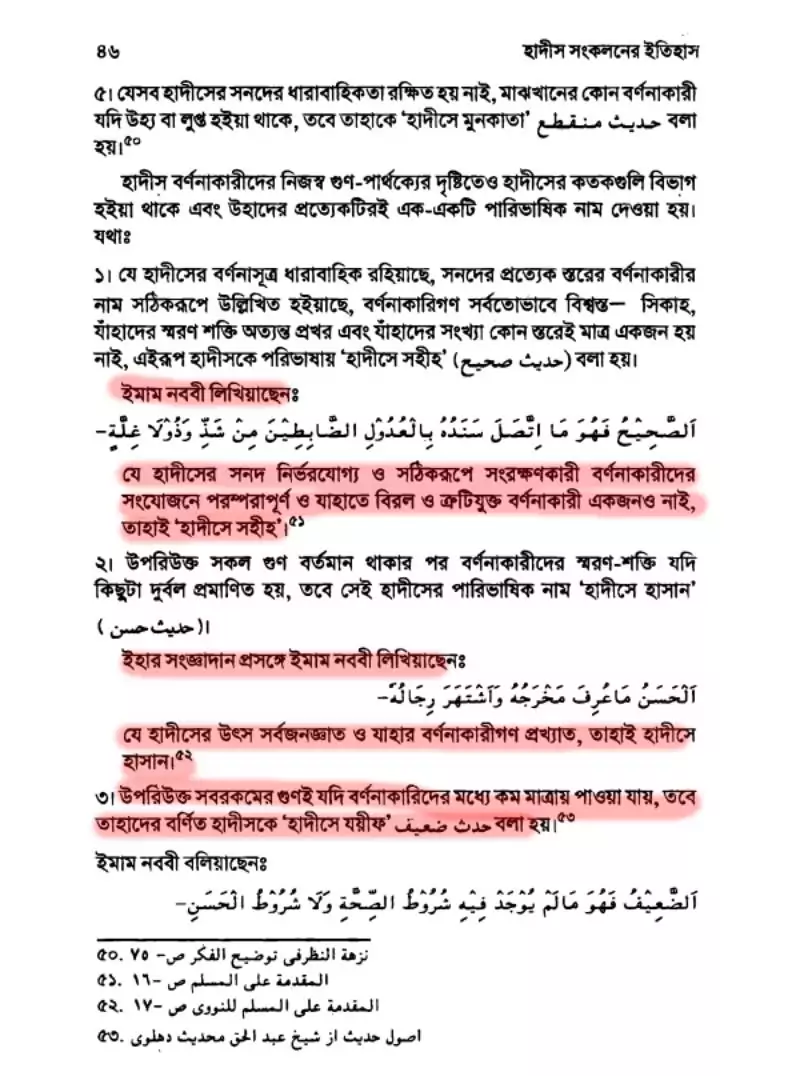
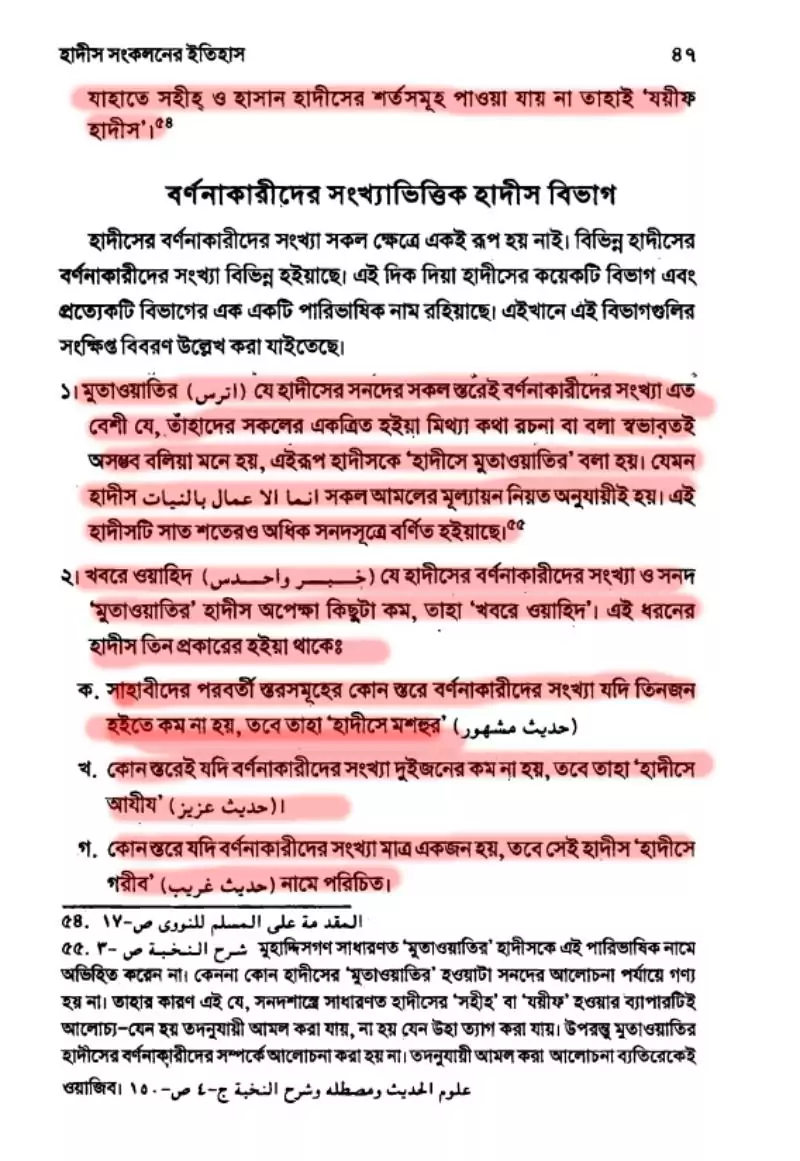
Accepting the quoted book’s phrase “whose number at no level has been only one” as a mandatory condition of sahih hadith is wrong. A hadith can be sahih even when transmitted by one narrator at some level of its chain; the classification “gharib” based on the number of narrators and “sahih” based on acceptability can therefore apply simultaneously. Nawawi’s definition of sahih does not require multiple narrators at every level. Discussing different levels of sahih, he also mentions the distinction between certain knowledge and probabilistic acceptance. In his quoted discussion, a report’s acceptance by Bukhari or Muslim is not treated as making it indisputably true for everyone; the view that it yields probabilistic knowledge unless it is mutawatir is also explicitly present. [24]
الخامسة: الصحيح أقسام: أعلاها ما اتفق عليه البخاري ومسلم، ثم ما انفرد به البخاري، ثم مسلم، ثم ما على شرطهما، ثم على شرط البخاري، ثم مسلم، ثم صحيح عند غيرهما، وإذا قالوا صحيح متفق عليه أو على صحته فمرادهم اتفاق الشيخين، وذكر الشيخ تقي الدين أن ما روياه أو أحدهما فهو مقطوع بصحته والعلم القطعي حاصل فيه، وخالفه المحققون والأكثرون، فقالوا: يفيد الظن ما لم يتواتر، والله أعلم.
English translation:
Fifth discussion: Sahih has several categories. The highest is a report on which Bukhari and Muslim agree; then what Bukhari alone narrated; then Muslim alone; then what is sahih according to both their conditions; then according to Bukhari’s conditions; then Muslim’s conditions; then what is sahih according to others. When “sahih, agreed upon” or “agreed to be sahih” is said, they mean the agreement of the two shaykhs. Shaykh Taqi al-Din mentioned that what both or either of them narrated is certainly sahih and yields certain knowledge. Researchers and most scholars disagreed with him and said: It yields probabilistic knowledge unless it is mutawatir. Allah knows best.
For a hasan report, a narrator merely being known is insufficient; his acceptability, powers of preservation, the state of the chain and defects in the report are also assessed. The quoted Bengali book attributes the definition “a hadith whose source is widely known and whose narrators are renowned” to Nawawi. In his own book, Nawawi quotes this as Khattabi’s statement and then provides further detail. His discussion concerns, on one side, reports supported by other transmission chains and, on the other, narrators known for truthfulness and trustworthiness who nevertheless have not reached the sahih level of preservation and accuracy. “Hasan” is therefore not simply a name for popularity or familiarity; it is a specific assessment of a report’s acceptability. [25]
قال الخطابي رحمه الله: هو ما عرف مخرجه واشتهر رجاله، وعليه مدار أكثر الحديث، ويقبله أكثر العلماء، ويستعمله عامة الفقهاء. قال الشيخ: هو قسمان أحدهما لا يخلو إسناده من مستور لم تتحقق أهليته وليس مغفلا كثير الخطأ ولا ظهر منه سبب مفسق، ويكون متن الحديث معروفا برواية مثله أو نحوه من وجه آخر. الثاني أن يكون راويه مشهورا بالصدق والأمانة ولم يبلغ درجة الصحيح لقصوره في الحفظ والإتقان، وهو مرتفع عن حال من يعد تفرده منكرا ثم الحسن كالصحيح في الاحتجاج به وإن كان دونه في القوة؛ ولهذا أدرجته طائفة في نوع الصحيح، والله أعلم.
English translation:
Khattabi said: This is a report whose source is known and whose narrators are known. The use of most hadith depends on it; most scholars accept it, and jurists generally use it. The shaykh said: It has two types. The chain of the first contains a narrator of undisclosed status whose qualifications have not been fully established; but he is neither inattentive nor prone to frequent errors, and no cause of moral disqualification has appeared in him. The report’s content is known through another chain transmitting the same or similar content. The narrator of the second is known for truthfulness and trustworthiness but has not reached the sahih level because of shortcomings in preservation and accuracy; his condition is better than that of someone whose solitary report is considered munkar. Hasan is like sahih in its use as evidence, although lower in strength; for this reason a group has included it among the categories of sahih. Allah knows best.
Being da’if does not mean that all the narrators’ qualities are deficient together; a report can be da’if if any required condition of acceptability is absent. A disconnected chain, a narrator’s unknown identity, weakness in preservation or another defect in the report are different causes of weakness. The claim concerning fabricated or mawdu’ reports is more specific: a statement has been invented and attributed to someone. Failure to prove a chain acceptable and proving a statement fabricated are therefore not the same conclusion. In defining mawdu’, Nawawi mentions signs for identifying invented reports; he also criticizes Ibn al-Jawzi’s collection of fabricated reports for including many reports whose fabrication is unproven and which are instead weak. [26]
هو المختلق المصنوع وشر الضعيف، ويحرم روايته مع العلم به في أي معنى كان إلا مبينا، ويعرف الوضع بإقرار واضعه أو معنى إقراره، أو قرينة في الراوي أو المروي، فقد وضعت أحاديث يشهد بوضعها ركاكة لفظها ومعانيها، وقد أكثر جامع الموضوعات في نحو مجلدين، أعني أبا الفرج بن الجوزي، فذكر كثيرا مما لا دليل على وضعه، بل هو ضعيف.
English translation:
This is an invented and fabricated report, and the worst kind of weak report. If it is known to be fabricated, narrating it on any subject without making its fabrication clear is prohibited. Fabrication is identified by the fabricator’s admission, a statement equivalent to an admission, or an indication in the narrator or the narrated statement. Hadiths have also been invented whose incongruous wording and meaning testify to their fabrication. The compiler of fabricated reports in approximately two volumes—that is, Abu al-Faraj ibn al-Jawzi—has included too much in this category; he mentions many reports whose fabrication is unproven and which are instead weak.
In classifications based on the number of narrators, the situation at each level is also considered separately. A multitude of later chains is insufficient for a report to be mutawatir; the required multiplicity must hold from the beginning of the transmission flow. For mashhur, aziz and gharib, the level with the fewest narrators is important: without satisfying the conditions of mutawatir, a minimum level of three is mashhur, a minimum of two is aziz, and a single narrator at any level makes a report gharib. Giving “Innama al-a’malu bi al-niyyat” as an example of mutawatir is therefore wrong. Ibn Rajab makes the report’s early single line explicit; the figure of seven hundred narrators concerns transmission from Yahya ibn Sa’id at a later stage. Later multiplicity does not turn an early single line into multiple sources. [27]
هذا الحديث تفرد بروايته يحيى بن سعيد الأنصاري ، عن محمد بن إبراهيم التيمي ، عن علقمة بن أبي وقاص الليثي ، عن عمر بن الخطاب رضي الله عنه ، وليس له طريق تصح غير هذا الطريق ، كذا قال علي بن المديني وغيره . وقال الخطابي : لا أعلم خلافا بين أهل الحديث في ذلك ، مع أنه قد روي من حديث أبي سعيد وغيره ، وقد قيل إنه قد روي من طرق كثيرة ، لكن لا يصح من ذلك شيء عند الحفاظ . ثم رواه عن الأنصاري الخلق الكثير والجم الغفير ، فقيل : رواه عنه أكثر من مائتي راو ، وقيل : رواه عنه سبعمائة راو ، ومن أعيانهم : مالك ، والثوري ، والأوزاعي ، وابن المبارك ، والليث بن سعد وحماد بن زيد ، وشعبة ، وابن عيينة ، وغيرهم .
English translation:
Yahya ibn Sa’id al-Ansari alone narrated this hadith from Muhammad ibn Ibrahim al-Taymi, from Alqama ibn Abi Waqqas al-Laythi, from Umar ibn al-Khattab. It has no other sahih chain besides this one—Ali ibn al-Madini and others said this. Khattabi said: I know of no disagreement among hadith experts on this matter. Although it has also been narrated from Abu Sa’id and others, and it has been said to have many chains, none of those is sahih according to the hadith memorizers. A vast number of people then narrated it from al-Ansari. It has been said that more than two hundred narrators transmitted it from him; it has also been said that seven hundred narrators transmitted it. Their leading figures include Malik, Thawri, Awza’i, Ibn al-Mubarak, Layth ibn Sa’d, Hammad ibn Zayd, Shu’ba, Ibn Uyayna and others.
Sahih–da’if assessments and mutawatir–ahad divisions do not answer the same question. A report can be ahad while being sahih according to hadith scholarship; conversely, even when multiple sources are claimed, the acceptability of each source must be examined. Numerous later repetitions of the same earlier source do not become independent testimony. This classification is an internal method of evaluating hadith, not a universal measure of the truth of every historical event or the moral acceptability of a rule. Quranic verses do not determine these reports’ individual chains, narrators’ qualities or classifications. Human compilation and assessment play an indispensable role in decisions about which reports are accepted for traditional sharia and which interpretations or applications of verses are established through them.
The Hadith Collection Conditions of the Sihah Sittah
The compilers of the six famous hadith books did not collect all reports for the same purpose, in the same arrangement or at the same level of quality. The conditions for the main collections of Sahih al-Bukhari and Sahih Muslim differ from the compilation methods of the Sunan or Jami’ books. Although the name “Sihah Sittah” is common, it cannot establish every report in the six books as sahih of the same quality. A compiler’s own statements, the reports actually included in his book and the conditions later researchers inferred by examining that book are also three different kinds of information. Mawlana Muhammad Abdur Rahim provides a detailed account of the compilation conditions of Bukhari, Muslim, Nasa’i, Abu Dawud, Tirmidhi and Ibn Majah, covering narrators’ identities, connections, meetings, preservation and the use of reports. [28]
Conditions of the Compilers of the Sihah Sittah
The compilers of the Sihah Sittah books also individually imposed numerous essential conditions for accepting hadith. Each compiler’s conditions are listed separately here.
Imam Bukhari (may Allah have mercy on him)
1. The sequence of a hadith’s transmission chain )سلسلة سند( must be continuous, connected and uninterrupted )متصل(. Hakim Abu Abdullah al-Nishapuri (may Allah have mercy on him) wrote:
الدَّرَجَةُ الأولى مِنَ الصَّحِيحِ وَهُوَ أَنْ يُرْوَى الْحَدِيثَ عَنِ النَّبِيُّ صَلَّى اللَّهُ عَلَيْهِ وَسَلَّمَ الصَّحَابِيُّ الْمَشْهُورُ وَلَهُ رَاوِيَانِ ثِقَتَانِ ثُمَّ يَرْوِي عَنْهُ اتَّابِعِي الْمَشْهُورُ بِارِّوَايَةِ عَنِ الصَّحَابِي وَلَهُ رَاوِيَانِ ثِقَتَانِ ثُمَّ يَرْوِيْهِ عَنْهُ مِنْ أَتْبَاعِ التَّابِعِينَ حَافِظٌ مُتْقِنٌ وَلَهُ رُوَاةٌ ثِقَاتُ مِنَ الطَّبْقَةِ الرَّابِعَةِ ثُمَّ يَكُونُ شَيْخُ الْبُخَارِي حَافِظًا مَشْهُورًا بِالْعَدَالَةِ فِي رِوَايَتِهِ
A first-class sahih hadith is one narrated from the Noble Messenger by a renowned Companion, with at least two other reliable narrators of that hadith. Then a Successor generally renowned for narrating hadith from that Companion will narrate it from him, and at this level it will also have two reliable narrators. Then Successors of the Successors who are hadith memorizers and exceptionally cautious will narrate it. At one level its narrators will be numerous and reliable, counted among fourth-level narrators. Then will come Imam Bukhari’s teacher, a hadith memorizer renowned for maintaining trustworthiness in narrating hadith. 1144
2. A hadith narrator must have spent a considerable time in the company of his teachers.
3. A narrator must be counted among first-class narrators, well known and reliable. (t)
4. An actual meeting between the narrator and the person from whom he narrates hadith must be established.
Imam Muslim (may Allah have mercy on him)
Shaykh Abu Amr Ibn al-Salah wrote:
شَرَطَ مُسْلِمُ فِي صَحِيحِهِ أَنْ يَكُونَ الْحَدِيثُ مُتَّصِلُ لِإِسْنَادِ بِنَقْلِ الثَّقَةِ عَنِ
الثَّقَةِ مِنْ أَوْلِهِ إِلَى مُنْتَهَاهُ سَالِمًا مِنَ الشُّذُوذِ وَالْعِلَّةِ
Imam Muslim imposed the condition for accepting hadith in his Sahih that its chain must be ‘muttasil’—connected and uninterrupted—with one thiqa person narrating from another thiqa person throughout the chain from beginning to end, and free of shadh )شاذ( and illah )علت(.
2. The narrator and the person from whom he narrates must both have lived in the same era and at the same time.
3. No narrator of a hadith may be majhul )مجهول(, of unknown identity. He must be widely known.
4. There must be no defects in the main hadith.
Imam Bukhari and Muslim differ in their conditions for accepting hadith. Consequently, many hadiths are sahih according to Imam Bukhari but not according to Imam Muslim, and vice versa. The number of shaykhs or hadith teachers from whom Imam Bukhari accepted hadith but Imam Muslim did not, or from whom Imam Muslim accepted hadith but Imam Bukhari did not, is therefore 625. 1145
Imam Nasa’i and Imam Abu Dawud (may Allah have mercy on them)
1. The hadiths included in the two principal sahih hadith books, Bukhari and Muslim, through those chains of transmission are certainly acceptable to these two imams.
2. All hadiths meeting the conditions followed in accepting hadith in the two principal books are acceptable.
3. Hadiths that have not been unanimously rejected by consensus among hadith scholars, and whose chains are muttasil—with no narrator omitted from the continuous transmission sequence—must be accepted. If the main hadith is sahih and is neither mursal )مرسل( nor munqati’ )منقطع(, it is also acceptable.
4. Hadiths transmitted by good narrators among fourth-level narrators are also acceptable.
5. When supported by a genuinely sahih hadith, Imam Abu Dawud also accepts a hadith whose narrator is da’if, weak and unnamed.
These conditions are accepted equally by Imam Nasa’i and Imam Abu Dawud. But
in several areas the conditions imposed by Imam Nasa’i are even higher and stricter than Imam Abu Dawud’s. Imam Nasa’i exercised greater caution regarding narrators when accepting hadith. He considered it necessary to investigate their circumstances more thoroughly. For this reason, Imam Nasa’i did not accept reports from many narrators from whom Imam Abu Dawud and Imam Tirmidhi accepted hadith. Hafiz Ibn Hajar al-Asqalani (may Allah have mercy on him) said concerning this that their narrated hadiths are also acceptable.
كَمْ مِنْ رَجُلٍ أَخْرَجَ لَهُ أَبُو دَاوُدَ وَ التَّرْمِذِى تَجَنَّبَ النَّسَائِيُّ إِخْرَاجَ حَدِيْثِهِ بَلْ تَجَنَّبَ النَّسَائِيُّ إِخْرَاجَ حَدِيْثِ جَمَاعَةٍ مِّنْ رِّجَالِ الصَّحِيحَيْنِ
There are many narrators from whom Imam Abu Dawud and Tirmidhi accepted hadith, but Imam Nasa’i refrained from accepting their reports. Indeed, Imam Nasa’i was unwilling to accept reports even from a large number of narrators whose reports were accepted in Bukhari and Muslim. 1146
Imam Tirmidhi (may Allah have mercy on him)
1. All hadiths quoted in the first two Sahih books, Bukhari and Muslim, are acceptable.
2. Other hadiths that meet the conditions imposed principally by the hadith scholars Imam Bukhari and Imam Muslim and are established as sahih are acceptable.
3. Hadiths accepted by Imam Abu Dawud and Imam Nasa’i, whose defects they have removed, are also acceptable.
4. Hadiths on which jurists have acted are also acceptable.
5. Hadiths whose central subject is an instruction that has always been in effect are also acceptable.
6. Hadiths from thiqa narrators who have been criticized and about whom everything has been clearly disclosed are also acceptable.
7. Reports from narrators whose narrated hadiths have been criticized and whose trustworthiness has also been established are acceptable.
Imam Ibn Majah (may Allah have mercy on him)
1. Hadiths accepted by the first-mentioned five hadith scholars are also acceptable to him.
2. Other hadiths that can satisfy the conditions imposed by those five are also acceptable.
3. Hadiths on which trustworthy and reliable scholars act are also acceptable.
4. Hadiths narrated by good fourth-level narrators that are established as sahih after scrutiny and examination are also acceptable.
Indeed, even the enemies of Islam are compelled to acknowledge the importance and soundness of the conditions imposed by the imams of hadith scholarship and their methods of hadith criticism. 1147
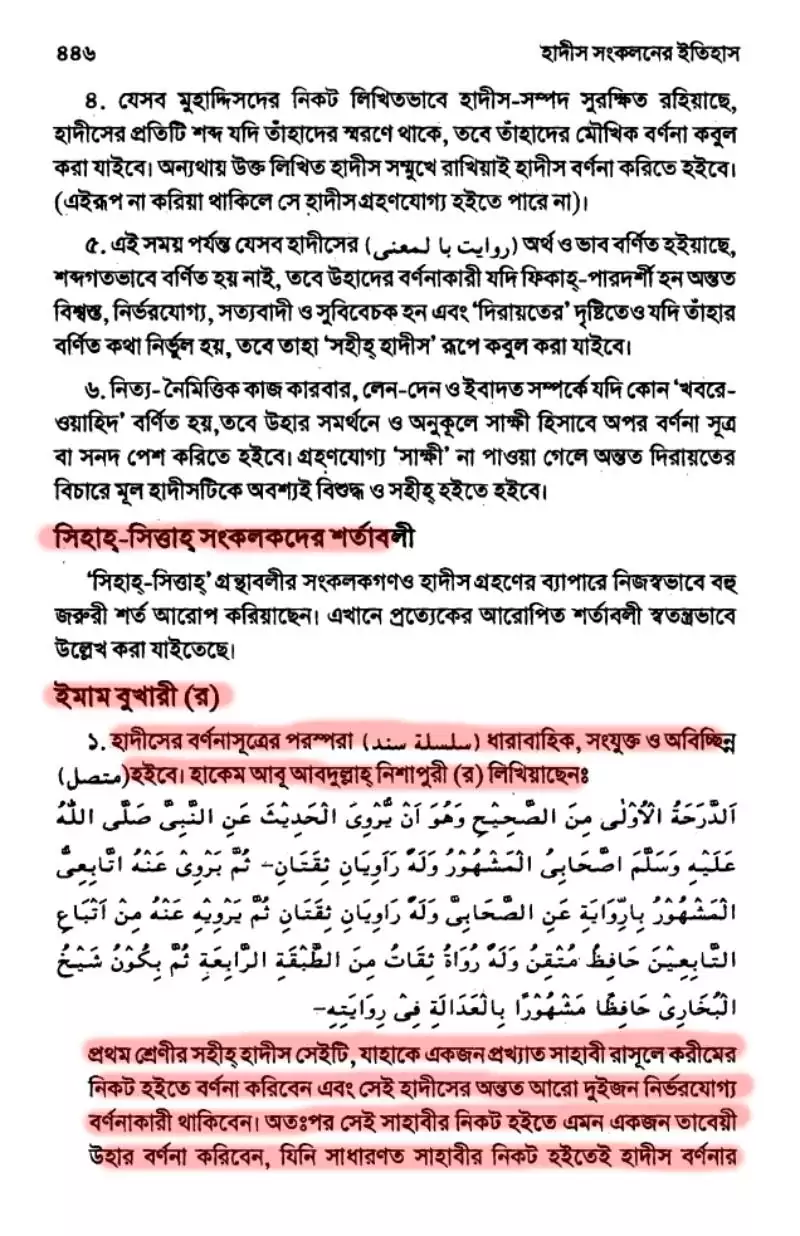
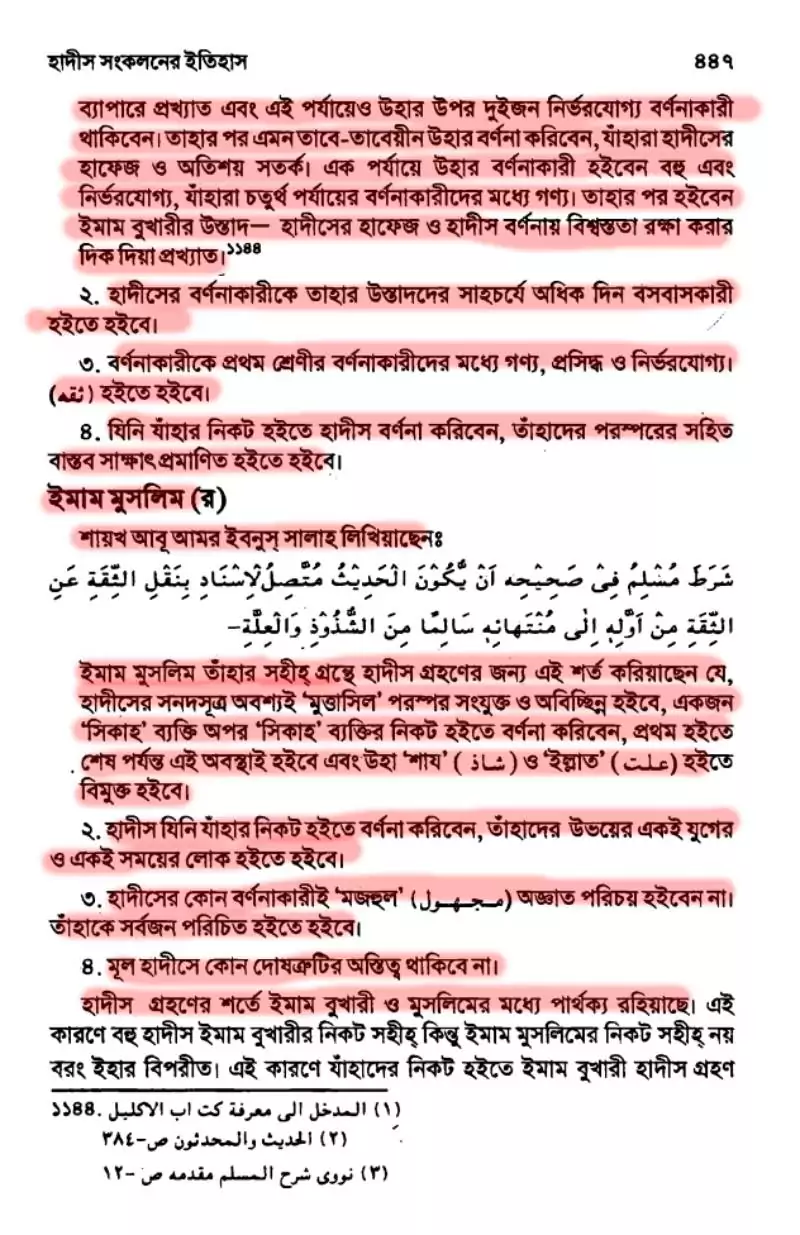
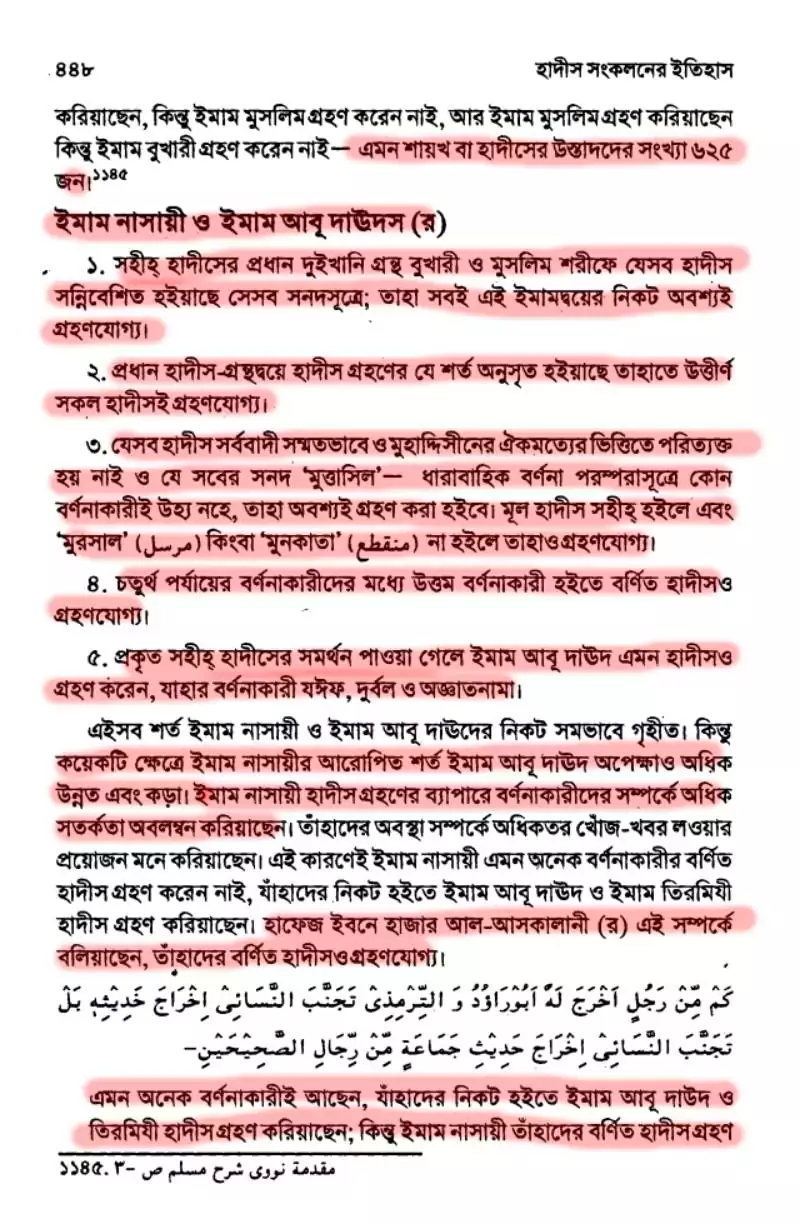
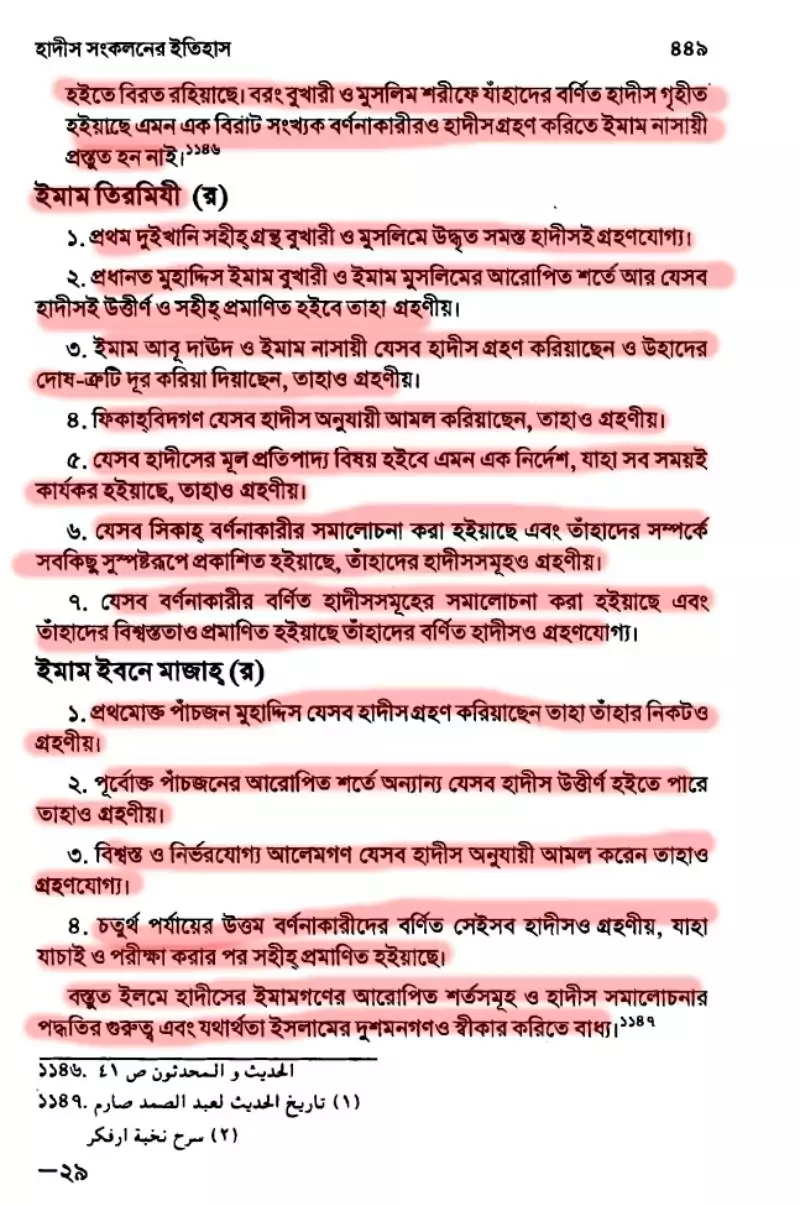
Not every sentence in this account of compilation conditions states a rule announced by the compilers themselves. In Shurut al-A’imma al-Sittah, Ibn Tahir al-Maqdisi says that specific declarations of conditions are not available from each of these compilers; their conditions are inferred by examining their books. A later author’s list of conditions and a compiler’s direct statement therefore occupy different evidential levels. Nor does he impose a mandatory condition that Bukhari and Muslim require at least two narrators of the same hadith at every level. He mentions that they compiled reports even when a Companion had only one narrator, provided the chain reaching him was sahih. The quoted Arabic from Hakim speaks of a narrator having two trustworthy narrators; this is not the same as claiming two independent chains for each specific hadith. [29]
قلت: اعلم أن البخاري ومسلما ومن ذكرنا بعدهم، لم ينقل عن واحد منهم أنه قال: شرطت أن أخرج في كتابي ما يكون على الشرط الفلان، وإنما يُعرف ذلك مِن سَبْر كتبهم، فيعلم بذلك شرط كل رجل منهم. فاعلم أن شرط البخاري ومسلم: أن يخرجا الحديث المتفق علي ثقة نقلته إلى الصحابي المشهور، من غير اختلاف بين الثقات الأثبات. ويكون إسناده متصلا غير مقطوع. فإن كان للصحابي راويان فصاعدا فحسن، وإن لم يكن له إلا راو واحد إذا صح الطريق إلى ذلك الراوي أخرجاه، إلا أن مسلما أخرج أحاديث أقوام ترك البخاري حديثهم – لشبهة وقعت في نفسه – أخرج مسلم أحاديثهم بإزالة الشبهة: مثل حماد بن سلمة وسهيل بن أبي صالح وداود بن أبي هند وأبي الزبير والعلاء بن عبد الرحمن وغيرهم. جعلنا هؤلاء الخمسة مثالا لغيرهم لكثرة روايتهم وشهرتهم.
English translation:
I say: Know that no statement has been quoted from Bukhari, Muslim or any of those I mentioned after them saying, “I stipulated that reports should be included in my book according to such-and-such specific conditions.” This is learned by examining their books, through which each one’s conditions are inferred. The condition of Bukhari and Muslim is to compile hadiths whose narrators’ trustworthiness is acknowledged as far as the well-known Companion, without disagreement among trustworthy and accurate narrators. The chain must be connected and free of disconnection. It is good if a Companion has two or more narrators; even with one narrator, they have compiled it if the chain reaching him is sahih. Muslim also compiled reports from some people whose reports Bukhari omitted because of a doubt he held; Muslim resolved that doubt and compiled their reports. Examples include Hammad ibn Salama, Suhayl ibn Abi Salih, Dawud ibn Abi Hind, Abu al-Zubayr, Ala ibn Abd al-Rahman and others. I have mentioned these five as examples of the others because of their numerous reports and their familiarity.
Explaining the difference between Bukhari and Muslim’s meeting conditions merely by saying “For Muslim, being contemporaries is enough” is incomplete. Muslim’s statement combines trustworthy narrators, contemporaneity, a real possibility of meeting and hearing, and the absence of clear evidence that meeting or hearing did not occur. He says that in such circumstances the report is treated as based on hearing, even if no separate account of their meeting is available. The same discussion also calls for examining hearing in the case of known mudallis narrators. He therefore did not impose a condition under which all reports of two people become acceptable merely because their birth and death dates somehow overlap. What appears here is a method of determining connections in a chain through possibility, direct information and the narrator’s circumstances. [30]
وذلك أن القول الشائع المتفق عليه بين أهل العلم بالأخبار والروايات قديما وحديثا أن كل رجل ثقة روى عن مثله حديثا وجائز ممكن له لقاؤه والسماع منه لكونهما جميعا كانا في عصر واحد وإن لم يأت في خبر قط أنهما اجتمعا ولا تشافها بكلام فالرواية ثابتة والحجة بها لازمة إلا أن يكون هناك دلالة بينة أن هذا الراوي لم يلق من روى عنه أو لم يسمع منه شيئا فأما والأمر مبهم على الأمكان الذي فسرنا فالرواية على السماع أبدا حتى تكون الدلالة التي بينا.
English translation:
The reason is that the established and accepted view among earlier and present experts in reports and accounts is this: When a trustworthy person narrates a hadith from another person like himself, and their being contemporaries makes meeting him and hearing from him possible, that report is established and must be used as evidence. This ruling applies even if no account has arrived of their ever meeting or speaking face to face. The exception is clear evidence that the narrator did not meet the person from whom he narrated or heard nothing from him. If the matter remains unspecified within the possibility we have explained, the report will be regarded as based on hearing until the stated evidence appears.
A hadith’s inclusion in one book and absence from another does not imply that the second compiler regarded it as da’if. Likewise, a narrator’s reports being absent from a book does not prove that all his reports were rejected. The quoted book’s figure of 625 people is a claim about differences in the two collections’ use of narrators; that number does not determine the quality of every report from each person. Nawawi says that Bukhari and Muslim neither gathered all sahih hadiths nor undertook to do so. Conflating absence from a collection with being non-sahih therefore turns the decision to include a report in a book into a complete verdict on its truth or acceptability. This distinction between a compiler’s selection and a report’s quality also applies to determining the meaning of compilation conditions. [31]
الثانية: أول مصنف في الصحيح المجرد، صحيح البخاري، ثم مسلم، وهما أصح الكتب بعد القرآن، والبخاري أصحهما وأكثرهما فوائد، وقيل مسلم أصح، والصواب الأول، واختص مسلم بجمع طرق الحديث في مكان، ولم يستوعبا الصحيح ولا التزماه، قيل لم يفتهما منه إلا قليل وأنكر هذا، والصواب أنه لم يفت الأصول الخمسة إلا اليسير، أعني الصحيحين، وسنن أبي داود والترمذي، والنسائي.
English translation:
Second discussion: The first collection containing only sahih reports was Sahih al-Bukhari, followed by Muslim. These are the two most sahih books after the Quran; of the two, Bukhari is more sahih and more beneficial. It has been said that Muslim is more sahih; the first view is correct. Muslim’s distinctive feature is gathering the transmission chains of a hadith in the same place. They did not include all sahih reports or undertake to do so. It has been said that only a few sahih reports lie outside them; this view has been rejected. The correct view is that a few sahih reports lie outside the five principal books—that is, the two Sahih books and the Sunan of Abu Dawud, Tirmidhi and Nasa’i.
The idea that all chains in Abu Dawud’s Sunan are uninterrupted and all reports are sahih of the same quality does not match his own statements. In his letter to the people of Mecca, he acknowledges reports with serious weakness in his book and chains that are not sahih; he also claims to have disclosed serious weaknesses. He calls reports about which he said nothing “salih” and says that some reports are more sahih than others. Making “salih” synonymous with “sahih” in every instance erases the distinction between the terms he uses. In the same letter, he claims that his book is particularly necessary for people to learn after the Quran. The compilation is therefore presented not merely as a list of reports but as a specific means of learning Islamic instructions and law. [32]
وما كان في كتابي من حديث فيه وهن شديد فقد بينته ومنه ما لا يصح سنده. ما لم أذكر فيه شيئا فهو صالح وبعضها أصح من بعض. وهذا لو وضعه غيري لقلت أنا فيه أكثر استقصاؤه وهو كتاب لا ترد عليك سنة عن النبي صلى الله عليه وسلم بإسناد صالح إلا وهي فيه إلا أن يكون كلام استخرج من الحديث ولا يكاد يكون هذا. ولا أعلم شيئا بعد القرآن ألزم للناس أن يتعلموه من هذا الكتاب ولا يضر رجلا أن لا يكتب من العلم بعد ما يكتب هذه الكتب شيئا وإذا نظر فيه وتدبره وتفهمه حينئذ يعلم مقداره.
English translation:
I have made clear any hadith in my book that contains serious weakness; these include reports whose chains are not sahih. A report about which I have mentioned nothing is salih; some reports are more sahih than others. If someone else had composed this book, I would have said that extensive investigation had gone into it. This is a book such that if a sunnah from the Prophet (peace and blessings of Allah be upon him) reaches you through a salih chain, it will be in this book; the exception is a statement inferred from a hadith, and that rarely occurs. After the Quran, I know of nothing more necessary for people to learn than this book. A person would suffer no loss if he wrote nothing else after writing these books. When he examines it, reflects on it and understands it, he will appreciate its value.
Tirmidhi’s collection discusses a report’s juristic use, assessment of narrators and its own classification together. Explaining his term “hasan,” he does not merely say “scholars have acted on it”; he specifies the absence of anyone accused of lying from the chain, the report not being shadh, and similar reports arriving through other chains. This explanation includes the words “according to us”—the language of his determination of acceptability. In the same discussion, he also explains different uses of “gharib” and shows that a report transmitted by many people from one person at a later stage may become famous while remaining solitary at its original source. A collection’s name, dissemination and use, and a report’s classification are therefore not substitutes for one another. [33]
قال أبو عيسى وما ذكرنا في هذا الكتاب حديث حسن فإنما أردنا به حسن إسناده عندنا كل حديث يروى لا يكون في إسناده من يتهم بالكذب ولا يكون الحديث شاذا ويروى من غير وجه نحو ذاك فهو عندنا حديث حسن وما ذكرنا في هذا الكتاب حديث غريب فإن أهل الحديث يستغربون الحديث لمعان رب حديث يكون غريبا لا يروى إلا من وجه واحد مثل ما حدث حماد بن سلمة عن أبي العشراء عن أبيه قال قلت يا رسول الله أما تكون الذكاة إلا في الحلق واللبة فقال لو طعنت في فخذها أجزأ عنك فهذا حديث تفرد به حماد بن سلمة عن أبي العشراء ولا يعرف لأبي العشراء عن أبيه إلا هذا الحديث وإن كان هذا الحديث مشهورا عند أهل العلم وإنما اشتهر من حديث حماد بن سلمة لا يعرف إلا من حديثه فيشتهر الحديث لكثرة من روى عنه.
English translation:
Abu Isa said: When we have called a hadith hasan in this book, we mean that its isnad is hasan in our assessment. A report whose isnad contains no person accused of lying, which is not shadh, and for which a similar report also comes through another route is a hasan hadith in our assessment. As for what we have called a gharib hadith in this book, hadith specialists call reports gharib for various reasons. A hadith may be gharib and come through only one route. For example, Hammad ibn Salamah narrated from Abu Ushara, who narrated from his father: I said, O Messenger of Allah, is slaughter performed only at the throat and the base of the throat? He said: Had you struck its thigh, that too would have sufficed for you. In this report, Hammad ibn Salamah is the sole narrator from Abu Ushara; no other hadith of his from Abu Ushara’s father is known. Although this hadith is known among scholars, it became known through the narration of Hammad ibn Salamah; it is not known apart from his narration. The hadith became well known because many people narrated it from him.
The quoted Bengali book claims that “even the enemies of Islam are compelled to acknowledge” the importance and soundness of the conditions. This sentence does not eliminate errors in the actual application of those conditions, differences in the compilers’ selections, or the limits of the assessment of a report. The conditions of compilation, the classification of reports, and their application as law have been determined through human collection of information, judgment, and interpretation. The Quran does not declare the isnad of a particular hadith sahih, does not itself select a compiler’s list, and does not determine the separate decisions to include reports in the six books. These selected reports are used in conventional sharia to determine the operative content of the Quran’s instructions. Consequently, presenting the Quran as a self-sufficient, operative book of law conceals this layer of human-determined information and assessment that is indispensable to its application.
Problems with Disregarding Hadith
The fundamental basis of Islam is belief: the existence of Allah, Muhammad’s prophethood, revelation through Gabriel, and reward and punishment in the afterlife are unproven claims based on belief. Hadith literature is one of the principal sources of information for the detailed religious practices and legal system that have developed around these beliefs. Hadith preserve accounts of Muhammad’s statements, instructions, advice, actions, and direct, indirect, or tacit approvals. These reports also provide information about how he understood a Quranic instruction, how he followed it, and how he taught it to the Companions. Rejecting hadith collapses the foundation of these specific codes of conduct and sharia in conventional Islam. Anyone can then devise new interpretations of verses as they please; the prophetic reports needed to establish those interpretations as the meaning and application taught by Muhammad are precisely what have been excluded.
The presence of instructions for prayer, fasting, zakat, and Hajj in the Quran does not mean that all their operative rules are present within the Quran. Prophetic statements and conduct have been used to determine the specific number of rak’ahs in prayer, its complete method, the detailed application of Hajj rituals, and various rules of fasting. In his “Al-Risalah,” al-Shafi’i directly distinguished the Quran’s concise instructions from their detailed explanation through the Prophet. He also discussed rules for which no specific instruction exists in the Quran but which the Prophet instituted. Thus, in the Islamic legal system he presented, hadith are not merely additional information placed alongside verses; they are a source for determining the content, quantities, and application of rules. Removing this source does not merely remove a book of explanation; it removes a large part of the information the legal system requires. [34]
قال الشافعي: فجِمَاع ما أبان الله لخلقه في كتابه، مما تَعَبَّدَهم به، لما مضى من حكمه جل ثناؤه: من وجوه. فمنها ما أبانه لخلقه نصا. مثلُ جمُل فرائضه، في أن عليهم صلاةً وزكاةً وحجا وصوما وأنه حرَّم الفواحش، ما ظهر منها، وما بطن، ونصِّ الزنا والخمر، وأكل الميتة والدم، ولحم الخنزير، وبيَّن لهم كيف فَرْضُ الوضوء، مع غير ذلك مما بين نصا. ومنه: ما أَحكم فرضه بكتابه، وبيَّن كيف هو على لسان نبيه؟ مثل عدد الصلاة، والزكاة، ووقتها، وغير ذلك من فرائضه التي أنزل من كتابه. ومنه: ما سَنَّ رسول الله ﷺ مما ليس لله فيه نصُّ حكم، وقد فرض الله في كتابه طاعة رسوله ﷺ، والانتهاء إلى حكمه، فمَن قبل عن رسول الله فبِفَرْضِ الله قَبِل.
English translation:
Al-Shafi’i said: The matters Allah has clarified to creation in His Book and the duties He has assigned to them according to His predetermined decree are of several kinds. Among them are matters He has clarified directly in the text. These include the general instructions for His obligatory duties: prayer, zakat, Hajj, and fasting are incumbent on them; He has forbidden public and hidden indecencies, zina, alcohol, and eating carrion, blood, and pork; He has clarified directly in the text how the obligatory duties of ablution are to be performed, as well as other matters. There are also matters whose obligatory status He has established in the Book and whose manner of performance He has explained through the words of His Prophet. These include the number of prayers, zakat and its timing, and His other obligatory duties revealed in the Book. There are also matters instituted by the Messenger of Allah concerning which Allah has no specific ruling in the text. Allah has made obedience to the Messenger and acceptance of his rulings obligatory in His Book. Thus, whoever accepts a ruling from the Messenger accepts it because of the obligation imposed by Allah.
In the account of teaching the method of prayer, Muhammad instructed people to follow the conduct he demonstrated. According to Malik ibn Huwayrith’s report, after staying with him for twenty days, some young men were instructed to return to their families and teach them. They were told to pray as they had seen him pray. Here, a model for an action is established through prophetic conduct directly witnessed. Later generations cannot learn prayer by watching Muhammad; they depend on reports preserved in his name and the established teaching of that conduct. The Quran’s instruction to “establish prayer” does not contain the complete description of this demonstrated method. Thus, if only the wording of the instruction is retained while information about the demonstrated method is discarded, the specific form of conventional prayer cannot be reconstructed from that wording. [35]
حَدَّثَنَا مُحَمَّدُ بْنُ الْمُثَنَّى، قَالَ حَدَّثَنَا عَبْدُ الْوَهَّابِ، قَالَ حَدَّثَنَا أَيُّوبُ، عَنْ أَبِي قِلاَبَةَ، قَالَ حَدَّثَنَا مَالِكٌ، أَتَيْنَا إِلَى النَّبِيِّ صلى الله عليه وسلم وَنَحْنُ شَبَبَةٌ مُتَقَارِبُونَ، فَأَقَمْنَا عِنْدَهُ عِشْرِينَ يَوْمًا وَلَيْلَةً، وَكَانَ رَسُولُ اللَّهِ صلى الله عليه وسلم رَحِيمًا رَفِيقًا، فَلَمَّا ظَنَّ أَنَّا قَدِ اشْتَهَيْنَا أَهْلَنَا أَوْ قَدِ اشْتَقْنَا سَأَلَنَا عَمَّنْ تَرَكْنَا بَعْدَنَا فَأَخْبَرْنَاهُ قَالَ «ارْجِعُوا إِلَى أَهْلِيكُمْ فَأَقِيمُوا فِيهِمْ وَعَلِّمُوهُمْ وَمُرُوهُمْ ـ وَذَكَرَ أَشْيَاءَ أَحْفَظُهَا أَوْ لاَ أَحْفَظُهَا ـ وَصَلُّوا كَمَا رَأَيْتُمُونِي أُصَلِّي، فَإِذَا حَضَرَتِ الصَّلاَةُ فَلْيُؤَذِّنْ لَكُمْ أَحَدُكُمْ وَلْيَؤُمَّكُمْ أَكْبَرُكُمْ».
English translation:
Through Muhammad ibn al-Muthanna, Abd al-Wahhab, Ayyub, and Abu Qilabah, Malik narrated: We came to the Prophet, may Allah bless him and grant him peace; we were young men of similar ages. We stayed with him for twenty days and nights. The Messenger of Allah was kind and gentle in his conduct. When he thought we wanted to go to our families or were longing for them, he asked us whom we had left behind. We told him. He said: “Return to your families, stay among them, teach them, and instruct them.” He mentioned some other matters that I remember or do not remember. “And pray as you have seen me pray. When the time for prayer comes, one of you should give the adhan for you, and the eldest among you should lead the prayer.”
In fasting, too, a general instruction is not the same as its complete rules of application. Verse 2:187 of Surah al-Baqarah states that sexual intercourse with wives is permitted during the nights of fasting, that one may eat and drink until true dawn, that the fast is to be completed until night, and that one must not have sexual intercourse during i’tikaf in mosques. These instructions in the verse grant permission for specific actions and set time limits. The expiation found in conventional sharia after sexual intercourse while fasting—freeing a slave, fasting for two consecutive months, or feeding sixty poor people—is not described in this verse. Thus, accepting the verse on fasting and accepting all the rules of conventional sharia concerning fasting are not the same act. Reports outside the Quran have also been used to connect the former with the latter. [36]
أُحِلَّ لَكُمْ لَيْلَةَ الصِّيَامِ الرَّفَثُ إِلَىٰ نِسَائِكُمْ ۚ هُنَّ لِبَاسٌ لَكُمْ وَأَنْتُمْ لِبَاسٌ لَهُنَّ ۗ عَلِمَ اللَّهُ أَنَّكُمْ كُنْتُمْ تَخْتَانُونَ أَنْفُسَكُمْ فَتَابَ عَلَيْكُمْ وَعَفَا عَنْكُمْ ۖ فَالْآنَ بَاشِرُوهُنَّ وَابْتَغُوا مَا كَتَبَ اللَّهُ لَكُمْ ۚ وَكُلُوا وَاشْرَبُوا حَتَّىٰ يَتَبَيَّنَ لَكُمُ الْخَيْطُ الْأَبْيَضُ مِنَ الْخَيْطِ الْأَسْوَدِ مِنَ الْفَجْرِ ۖ ثُمَّ أَتِمُّوا الصِّيَامَ إِلَى اللَّيْلِ ۚ وَلَا تُبَاشِرُوهُنَّ وَأَنْتُمْ عَاكِفُونَ فِي الْمَسَاجِدِ ۗ تِلْكَ حُدُودُ اللَّهِ فَلَا تَقْرَبُوهَا ۗ كَذَٰلِكَ يُبَيِّنُ اللَّهُ آيَاتِهِ لِلنَّاسِ لَعَلَّهُمْ يَتَّقُونَ.
English translation:
Sexual intercourse with your wives during the nights of fasting has been permitted for you. They are your garments, and you are their garments. Allah knew that you were betraying yourselves; so He accepted your repentance and forgave you. Now have sexual intercourse with them and seek what Allah has ordained for you. And eat and drink until the white thread of dawn becomes distinct to you from the black thread. Then complete the fast until night. Do not have sexual intercourse with them while you are in i’tikaf in mosques. These are the limits set by Allah; do not approach them. Thus Allah makes His verses clear to people so that they may exercise restraint.
In Abu Hurayrah’s report, a man who had sexual intercourse with his wife while fasting came to Muhammad and told him of his predicament. Muhammad asked him, in turn, whether he could free a slave, fast for two consecutive months, or feed sixty poor people. Finally, after hearing about his poverty, he told him to feed his own family with the dates he had received. This report contains information about the ruling following the act, alternative arrangements, and consideration of the individual’s ability. These specific numbers, arrangements, and the final decision in the incident cannot emerge on their own from the Quran’s instruction to fast. Hadith of this kind are used to establish the conventional rules of expiation. Maintaining the same expiation while discarding hadith means accepting the result while excluding the source of information from which the rule was taken. [37]
حَدَّثَنَا أَبُو الْيَمَانِ، أَخْبَرَنَا شُعَيْبٌ، عَنِ الزُّهْرِيِّ، قَالَ أَخْبَرَنِي حُمَيْدُ بْنُ عَبْدِ الرَّحْمَنِ، أَنَّ أَبَا هُرَيْرَةَ ـ رضى الله عنه ـ قَالَ بَيْنَمَا نَحْنُ جُلُوسٌ عِنْدَ النَّبِيِّ صلى الله عليه وسلم إِذْ جَاءَهُ رَجُلٌ، فَقَالَ يَا رَسُولَ اللَّهِ هَلَكْتُ. قَالَ «مَا لَكَ». قَالَ وَقَعْتُ عَلَى امْرَأَتِي وَأَنَا صَائِمٌ. فَقَالَ رَسُولُ اللَّهِ صلى الله عليه وسلم «هَلْ تَجِدُ رَقَبَةً تُعْتِقُهَا». قَالَ لاَ. قَالَ «فَهَلْ تَسْتَطِيعُ أَنْ تَصُومَ شَهْرَيْنِ مُتَتَابِعَيْنِ». قَالَ لاَ. فَقَالَ «فَهَلْ تَجِدُ إِطْعَامَ سِتِّينَ مِسْكِينًا». قَالَ لاَ. قَالَ فَمَكَثَ النَّبِيُّ صلى الله عليه وسلم، فَبَيْنَا نَحْنُ عَلَى ذَلِكَ أُتِيَ النَّبِيُّ صلى الله عليه وسلم بِعَرَقٍ فِيهَا تَمْرٌ ـ وَالْعَرَقُ الْمِكْتَلُ ـ قَالَ «أَيْنَ السَّائِلُ». فَقَالَ أَنَا. قَالَ «خُذْهَا فَتَصَدَّقْ بِهِ». فَقَالَ الرَّجُلُ أَعَلَى أَفْقَرَ مِنِّي يَا رَسُولَ اللَّهِ فَوَاللَّهِ مَا بَيْنَ لاَبَتَيْهَا ـ يُرِيدُ الْحَرَّتَيْنِ ـ أَهْلُ بَيْتٍ أَفْقَرُ مِنْ أَهْلِ بَيْتِي، فَضَحِكَ النَّبِيُّ صلى الله عليه وسلم حَتَّى بَدَتْ أَنْيَابُهُ ثُمَّ قَالَ «أَطْعِمْهُ أَهْلَكَ».
English translation:
Through Abu al-Yaman, Shu’ayb, al-Zuhri, and Humayd ibn Abd al-Rahman, Abu Hurayrah (may Allah be pleased with him) narrated: We were sitting with the Prophet, may Allah bless him and grant him peace. A man then came and said: O Messenger of Allah, I am ruined. He said: “What has happened to you?” The man said: I have had sexual intercourse with my wife while fasting. The Messenger of Allah said: “Do you have a slave you can free?” He said: No. He said: “Can you fast for two consecutive months?” The man said: No. He said: “Can you feed sixty poor people?” The man said: No. The Prophet then waited for a while. While we were in that situation, a basket full of dates was brought to him. He said: “Where is the questioner?” The man said: Here I am. He said: “Take this and give it in charity.” The man said: To someone poorer than me, O Messenger of Allah? By Allah, between these two rocky tracts there is no family poorer than my family. The Prophet then laughed so that his teeth became visible. Then he said: “Feed this to your family.”
Disregarding hadith removes the informational basis of many specific rules of conventional sharia associated with the instructions for prayer, Hajj, and fasting. This information is indispensable in matters such as the complete form and number of rak’ahs of prayer, the detailed practices of Hajj, and the application of fasting and its expiation. A concise command to perform an action does not itself determine all the rules for that action or the remedy for breaking them. Readers can then devise their own rules, but the claim that these are rules Muhammad demonstrated or approved again requires preserved information about him. It is inconsistent to exclude Muhammad’s role as the interpreter and implementer of the Quran while calling the same sharia the Quran’s self-sufficient prescription. The wording of verses and the operative legal system established upon that wording are not the same thing; when the information in hadith is excluded, the full content of the conventional legal system does not automatically appear within the verses.
How Can the Quran and Hadith Be Distinguished?
Hadith means accounts of Muhammad’s statements, instructions, advice, way of life, actions, and direct, indirect, or tacit consent. An account of his declaration that a statement is a Quranic verse is also a report concerning his speech. The declared verse is part of the Quran; the account of when, where, and how he introduced it as revelation is preserved outside the verse. Claims that he determined the placement of a verse or instructed that a verse be attached to a particular surah likewise require information about that instruction. The divine origin of a sentence cannot be directly identified merely by reading it. The text of the Quran, accounts in Muhammad’s name of its declaration, and the claim that this declaration is divine are separate matters; within the Islamic tradition, they are connected by reports and teachings preserved by people.
The conventional account of the Quran’s revelation to Muhammad describes revelation arriving gradually on separate occasions over 23 years. Ibn Abbas’s report mentions thirteen years in Mecca and ten years after the migration; adding these two periods produces the calculation of twenty-three years. This chronology is not written as a date alongside every verse of the Quran; it comes from preserved reports about Muhammad’s life and revelation. The declaration of verses at different times, and the questions, circumstances, and instruction of the people involved concerning those verses, have therefore been preserved as parts of the same tradition. In this account of statements being declared on separate occasions, the time and occasion of the declaration and the experiences of those present are included; this information is not determined solely by the verses’ positions in the present mushaf. The sources of information for claims about the specific chronology are also present in hadith literature. [38]
حَدَّثَنَا مَطَرُ بْنُ الْفَضْلِ، حَدَّثَنَا رَوْحٌ، حَدَّثَنَا هِشَامٌ، حَدَّثَنَا عِكْرِمَةُ، عَنِ ابْنِ عَبَّاسٍ ـ رضى الله عنهما ـ قَالَ بُعِثَ رَسُولُ اللَّهِ صلى الله عليه وسلم لأَرْبَعِينَ سَنَةً، فَمَكُثَ بِمَكَّةَ ثَلاَثَ عَشْرَةَ سَنَةً يُوحَى إِلَيْهِ، ثُمَّ أُمِرَ بِالْهِجْرَةِ فَهَاجَرَ عَشْرَ سِنِينَ، وَمَاتَ وَهُوَ ابْنُ ثَلاَثٍ وَسِتِّينَ.
English translation:
Through Matar ibn al-Fadl, Rawh, Hisham, and Ikrimah, Ibn Abbas (may Allah be pleased with him) narrated: The Messenger of Allah, may Allah bless him and grant him peace, was sent at the age of forty. He then remained in Mecca for thirteen years, during which revelation came to him. He was then commanded to migrate. After the migration, he remained for ten years and died at the age of sixty-three.
The question of why the Quran was not revealed all at once also appears in the Quran. Verses 25:32–33 of Surah al-Furqan respond to the question of revealing the entire Quran together by referring to strengthening Muhammad’s heart, arranging the recitation in good order, and answering the statements raised. The relationship between gradual declaration, listeners’ questions, and explanatory answers to those questions is directly present in the verses. This account of declaration over a long period includes the process of delivering the text, answering questions, and explaining it under Muhammad’s authority. Knowing the details of the process in which Muhammad declared verses on specific occasions and answered related questions or actions requires information about the statements and events of that time. The present text of a surah does not contain the identity of every questioner, the date of the incident, or a complete account of the related conversation. [39] [40]
وَقَالَ الَّذِينَ كَفَرُوا لَوْلَا نُزِّلَ عَلَيْهِ الْقُرْآنُ جُمْلَةً وَاحِدَةً ۚ كَذَٰلِكَ لِنُثَبِّتَ بِهِ فُؤَادَكَ ۖ وَرَتَّلْنَاهُ تَرْتِيلًا. وَلَا يَأْتُونَكَ بِمَثَلٍ إِلَّا جِئْنَاكَ بِالْحَقِّ وَأَحْسَنَ تَفْسِيرًا.
English translation:
Those who disbelieved said: “Why was the entire Quran not revealed to him all at once?” Thus it is, so that We may strengthen your heart through it; and We have recited it in an orderly manner. Whenever they bring you a statement or example, We bring you the truth and its best explanation.
In Anas ibn Malik’s report, Muhammad told those present that a surah had just been revealed to him. He then recited Surah al-Kawthar and explained what Kawthar was. The surah’s three verses and the wording of Muhammad’s declaration have been preserved separately here: the first is the Quranic text, and the second is the hadith announcing and explaining the revelation of that text. The surah’s own verses contain neither the identities of the listeners present nor an account of this conversation. Nor do the surah’s three verses contain the detailed statement linking Kawthar to a river, a pool, and the events of the Day of Resurrection. This report carries information both about which words Muhammad called a surah and which specific meaning he assigned to that surah’s words. Here, the relationship of hadith to the identification of the Quran and its prophetic explanation is directly visible. [41]
حَدَّثَنَا عَلِيُّ بْنُ حُجْرٍ السَّعْدِيُّ، حَدَّثَنَا عَلِيُّ بْنُ مُسْهِرٍ، أَخْبَرَنَا الْمُخْتَارُ بْنُ فُلْفُلٍ، عَنْ أَنَسِ بْنِ مَالِكٍ، ح وَحَدَّثَنَا أَبُو بَكْرِ بْنُ أَبِي شَيْبَةَ، ـ وَاللَّفْظُ لَهُ ـ حَدَّثَنَا عَلِيُّ بْنُ مُسْهِرٍ، عَنِ الْمُخْتَارِ، عَنْ أَنَسٍ، قَالَ بَيْنَا رَسُولُ اللَّهِ صلى الله عليه وسلم ذَاتَ يَوْمٍ بَيْنَ أَظْهُرِنَا إِذْ أَغْفَى إِغْفَاءَةً ثُمَّ رَفَعَ رَأْسَهُ مُتَبَسِّمًا فَقُلْنَا مَا أَضْحَكَكَ يَا رَسُولَ اللَّهِ قَالَ «أُنْزِلَتْ عَلَىَّ آنِفًا سُورَةٌ». فَقَرَأَ «بِسْمِ اللَّهِ الرَّحْمَنِ الرَّحِيمِ {إِنَّا أَعْطَيْنَاكَ الْكَوْثَرَ * فَصَلِّ لِرَبِّكَ وَانْحَرْ * إِنَّ شَانِئَكَ هُوَ الأَبْتَرُ}». ثُمَّ قَالَ «أَتَدْرُونَ مَا الْكَوْثَرُ». فَقُلْنَا اللَّهُ وَرَسُولُهُ أَعْلَمُ. قَالَ «فَإِنَّهُ نَهْرٌ وَعَدَنِيهِ رَبِّي عَزَّ وَجَلَّ عَلَيْهِ خَيْرٌ كَثِيرٌ هُوَ حَوْضٌ تَرِدُ عَلَيْهِ أُمَّتِي يَوْمَ الْقِيَامَةِ آنِيَتُهُ عَدَدُ النُّجُومِ فَيُخْتَلَجُ الْعَبْدُ مِنْهُمْ فَأَقُولُ رَبِّ إِنَّهُ مِنْ أُمَّتِي. فَيَقُولُ مَا تَدْرِي مَا أَحْدَثَتْ بَعْدَكَ». زَادَ ابْنُ حُجْرٍ فِي حَدِيثِهِ بَيْنَ أَظْهُرِنَا فِي الْمَسْجِدِ. وَقَالَ «مَا أَحْدَثَ بَعْدَكَ».
English translation:
Through Ali ibn Hujr al-Sa’di and Abu Bakr ibn Abi Shaybah, by way of Ali ibn Mushir and Mukhtar ibn Fulful, Anas ibn Malik narrated: One day the Messenger of Allah, may Allah bless him and grant him peace, was among us. He dozed for a while, then raised his head smiling. We said: O Messenger of Allah, what made you smile? He said: “A surah has just been revealed to me.” He then recited: “In the name of Allah, the Most Merciful, the Compassionate. Indeed, We have given you Kawthar. So pray to your Lord and sacrifice. Indeed, your enemy is the one cut off.” Then he said: “Do you know what Kawthar is?” We said: Allah and His Messenger know best. He said: “It is a river that my Lord has promised to give me; in it is abundant good. It is a pool to which my community will come on the Day of Resurrection. Its vessels are as numerous as the stars. One of them will be removed. I will say: O my Lord, he is a member of my community. Then it will be said: You do not know what new things he introduced after you.” Ibn Hujr added “among us in the mosque” in his report and said at the end: “What new things he introduced after you.”
The accounts of dictating verses also contain the same informational relationship. According to Zayd ibn Thabit’s report, Muhammad was dictating the wording of verse 4:95 of Surah al-Nisa to him. At that time, the blind man Ibn Umm Maktum mentioned his disability; the account then describes the revelation of the words making an exception for people with disabilities. The exception is in the verse, but the verse does not contain the name of the person involved, his conversation, the time of dictation, or Zayd’s experience. This information comes from accounts of Muhammad’s declaration, the scribe’s hearing, and the incident involving the person present. Thus, the relationship of preserved hadith to the claims that a statement was written as a Quranic verse and that a part of it was added under particular circumstances is inseparable. This specific account of the incident cannot be recovered solely from the verse’s present wording. [42]
حَدَّثَنَا إِسْمَاعِيلُ بْنُ عَبْدِ اللَّهِ، قَالَ حَدَّثَنِي إِبْرَاهِيمُ بْنُ سَعْدٍ، عَنْ صَالِحِ بْنِ كَيْسَانَ، عَنِ ابْنِ شِهَابٍ، قَالَ حَدَّثَنِي سَهْلُ بْنُ سَعْدٍ السَّاعِدِيُّ، أَنَّهُ رَأَى مَرْوَانَ بْنَ الْحَكَمِ فِي الْمَسْجِدِ، فَأَقْبَلْتُ حَتَّى جَلَسْتُ إِلَى جَنْبِهِ، فَأَخْبَرَنَا أَنَّ زَيْدَ بْنَ ثَابِتٍ أَخْبَرَهُ أَنَّ رَسُولَ اللَّهِ صلى الله عليه وسلم أَمْلَى عَلَيْهِ لاَ يَسْتَوِي الْقَاعِدُونَ مِنَ الْمُؤْمِنِينَ وَالْمُجَاهِدُونَ فِي سَبِيلِ اللَّهِ فَجَاءَهُ ابْنُ أُمِّ مَكْتُومٍ وَهْوَ يُمِلُّهَا عَلَىَّ قَالَ يَا رَسُولَ اللَّهِ، وَاللَّهِ لَوْ أَسْتَطِيعُ الْجِهَادَ لَجَاهَدْتُ ـ وَكَانَ أَعْمَى ـ فَأَنْزَلَ اللَّهُ عَلَى رَسُولِهِ صلى الله عليه وسلم وَفَخِذُهُ عَلَى فَخِذِي، فَثَقُلَتْ عَلَىَّ حَتَّى خِفْتُ أَنْ تُرَضَّ فَخِذِي، ثُمَّ سُرِّيَ عَنْهُ، فَأَنْزَلَ اللَّهُ {غَيْرَ أُولِي الضَّرَرِ}.
English translation:
Through Isma’il ibn Abd Allah, Ibrahim ibn Sa’d, Salih ibn Kaysan, and Ibn Shihab, Sahl ibn Sa’d al-Sa’idi narrated: He saw Marwan ibn al-Hakam in the mosque and went and sat beside him. Marwan related that Zayd ibn Thabit had told him that the Messenger of Allah, may Allah bless him and grant him peace, had dictated to him: “Those among the believers who remain seated and those who engage in jihad in the way of Allah are not equal.” Zayd said: While he was dictating this to me, Ibn Umm Maktum came and said: O Messenger of Allah, by Allah, if I were able to engage in jihad, I would certainly do so. He was blind. Then Allah sent revelation upon His Messenger. His thigh was on my thigh and became so heavy that I feared my thigh would be crushed. Then that state passed from him, and Allah revealed: “Except those with disabilities.”
In many cases, reports preserved outside the Quran supply the answers to specific questions: when a verse was declared, in what incident a statement within it arose, who among those present heard it, and how Muhammad explained it. Discarding this information also discards that specific context associated with the verse. This information about the declaration is also important in establishing the traditional distinction between Muhammad’s general advice and the statements he declared to be the Quran. Whether the claim “This is revelation from Allah” is true and whether Muhammad declared a statement to be revelation are not the same question. The first is a claim of divine origin; the second is a claim of information about his speech. The preservation of a hadith about a declaration does not by itself prove divine origin, but the report carries information about the identification and explanation of that declaration.
If the declarations and explanations preserved in Muhammad’s name are discarded, the informational basis of the distinction between interpreting a verse as his own advice, an instruction for a specific situation, or immutable revelation received through Gabriel does not remain the same. Giving one interpretation a binding status over other interpretations by invoking the Prophet’s authority requires information about what he said or did. It is therefore inconsistent to reject hadith while retaining the authority of Muhammad’s specific explanation. In conventional sharia, the answer to the question of in which circumstances and in what sense a Quranic verse is to be applied is determined with the help of these additional reports. Discarding them disconnects the framework of prophetic explanation and application attached to the wording of verses, and later readers’ own interpretations take its place.
The Kalimah of Shahadah: Where Is It in the Quran?
One of the foundations of Islam is the kalimah, or declaration of belief. Kalimah refers to several Arabic sentences containing the fundamental beliefs of Islam. Through it, the first pillar of Islam, shahadah or testimony of belief, is expressed; the Arabic word “shahadah” means bearing witness. The conventional kalimah of shahadah means testifying to belief in the oneness of Allah and that Muhammad is Allah’s messenger. The expression “Rasulullah” in the declaration below means Allah’s messenger; “the last prophet” is not a direct translation of this expression. This testimony has been placed among the five pillars of Sunni Islam. Thus, the issue here is not merely understanding the meaning of two religious statements; it also involves accepting them as a specific declaration of belief and establishing that declaration as a foundational religious duty.
In Arabic: أشهد أن لا إله إلاَّ الله، وأشهد أن محمدًا رسول الله
English translation: I testify that there is none worthy of worship except Allah, and I testify that Muhammad is the messenger of Allah.
English translation: I testify that there is nothing worthy of worship except Allah, and I testify that Muhammad (may Allah bless him and grant him peace) is Allah’s messenger|
The first statement of the shahadah—that there is no deity except Allah—is present in the Quran. Verse 47:19 of Surah Muhammad instructs people to know this and to seek forgiveness for their own sin and for believing men and women. The wording of this verse conveys a statement of belief and an instruction to seek forgiveness. It does not contain the full sentence combining the two parts of the conventional shahadah with the words “I testify”; nor does the verse identify this declaration as the first of Islam’s five pillars. The presence of a statement in the Quran and the placement of that statement within a specific religious declaration and framework are separate matters. All the subsequent rules cannot be obtained from the wording of the verse itself; instructions preserved in the Prophet’s name have been used to form the conventional religious framework. [43]
فَاعْلَمْ أَنَّهُ لَا إِلَٰهَ إِلَّا اللَّهُ وَاسْتَغْفِرْ لِذَنْبِكَ وَلِلْمُؤْمِنِينَ وَالْمُؤْمِنَاتِ ۗ وَاللَّهُ يَعْلَمُ مُتَقَلَّبَكُمْ وَمَثْوَاكُمْ.
English translation:
So know that there is no deity except Allah. And seek forgiveness for your sin and for believing men and believing women. Allah knows your movements and your place of residence.
The second statement of the shahadah—that Muhammad is Allah’s messenger—is directly present in verse 48:29 of Surah al-Fath. The rest of the verse contains statements about his companions’ conduct, the marks of prostration, and the reward for belief and deeds. Here, the claim that Muhammad is a messenger is declared; the verse does not contain the complete instruction to join this with the first part of the shahadah and make a specific spoken declaration the first pillar of Islam. Thus, the content of the shahadah’s beliefs is in the Quran, while the specific account of its conventional combined form and its position among the five pillars is found in hadith. This is the role of prophetic instruction in establishing two separate Quranic statements together as a religious duty. Merely pointing to the presence of the two separate sentences does not justify claiming that this additional instruction is also present within the Quran. [44]
مُحَمَّدٌ رَسُولُ اللَّهِ ۚ وَالَّذِينَ مَعَهُ أَشِدَّاءُ عَلَى الْكُفَّارِ رُحَمَاءُ بَيْنَهُمْ ۖ تَرَاهُمْ رُكَّعًا سُجَّدًا يَبْتَغُونَ فَضْلًا مِنَ اللَّهِ وَرِضْوَانًا ۖ سِيمَاهُمْ فِي وُجُوهِهِمْ مِنْ أَثَرِ السُّجُودِ ۚ ذَٰلِكَ مَثَلُهُمْ فِي التَّوْرَاةِ ۚ وَمَثَلُهُمْ فِي الْإِنْجِيلِ كَزَرْعٍ أَخْرَجَ شَطْأَهُ فَآزَرَهُ فَاسْتَغْلَظَ فَاسْتَوَىٰ عَلَىٰ سُوقِهِ يُعْجِبُ الزُّرَّاعَ لِيَغِيظَ بِهِمُ الْكُفَّارَ ۗ وَعَدَ اللَّهُ الَّذِينَ آمَنُوا وَعَمِلُوا الصَّالِحَاتِ مِنْهُمْ مَغْفِرَةً وَأَجْرًا عَظِيمًا.
English translation:
Muhammad is Allah’s messenger. And those with him are stern toward disbelievers and merciful among themselves. You see them bowing and prostrating; they seek Allah’s bounty and pleasure. Their marks are on their faces from the effects of prostration. This is their description in the Torah. And their likeness in the Gospel is that of a crop that brings forth its shoot, then strengthens it; it then grows thick and stands on its stem, delighting the cultivators—to enrage the disbelievers through them. Allah has promised forgiveness and a great reward to those among them who have believed and done righteous deeds.
The specific arrangement that Islam is founded on five things is explicitly present in Bukhari’s hadith. Through Ibn Umar, the following has been preserved as Muhammad’s statement: the testimony that there is no deity except Allah and Muhammad is Allah’s Messenger, establishing prayer, giving zakat, Hajj, and fasting in Ramadan. It is here that the statement combining the two beliefs of the shahadah into the same testimony and designating that testimony as one of the foundations of the religion is found. The mention of these matters in various places in the Quran does not itself produce the specific text of this combined arrangement of five foundations. Sources such as this report have been used to accept the familiar framework of conventional Islam. If hadith are discarded while the same five pillars are maintained as the arrangement determined by Muhammad, the source of information about his declaration is itself discarded. [45]
حَدَّثَنَا عُبَيْدُ اللَّهِ بْنُ مُوسَى، قَالَ أَخْبَرَنَا حَنْظَلَةُ بْنُ أَبِي سُفْيَانَ، عَنْ عِكْرِمَةَ بْنِ خَالِدٍ، عَنِ ابْنِ عُمَرَ ـ رضى الله عنهما ـ قَالَ قَالَ رَسُولُ اللَّهِ صلى الله عليه وسلم «بُنِيَ الإِسْلاَمُ عَلَى خَمْسٍ شَهَادَةِ أَنْ لاَ إِلَهَ إِلاَّ اللَّهُ وَأَنَّ مُحَمَّدًا رَسُولُ اللَّهِ، وَإِقَامِ الصَّلاَةِ، وَإِيتَاءِ الزَّكَاةِ، وَالْحَجِّ، وَصَوْمِ رَمَضَانَ».
English translation:
Ubayd Allah ibn Musa narrated to us. He said: Hanzalah ibn Abi Sufyan informed us, through Ikrimah ibn Khalid, from Ibn Umar (may Allah be pleased with him). He said: The Messenger of Allah, may Allah bless him and grant him peace, said, “Islam is founded on five things: testifying that there is no deity except Allah and that Muhammad is Allah’s Messenger; establishing prayer; giving zakat; performing Hajj; and fasting in Ramadan.”
Hadith also contain an account connecting this declaration of belief with a specific religious practice. In Sahih Muslim, testifying to the oneness of Allah and that Muhammad is Allah’s slave and Messenger after completing ablution is linked to the promise that the eight gates of Paradise will be opened. The same report also contains the promised reward for praying two rak’ahs attentively after ablution. Thus, hadith supply not just the content of the declaration but also additional details about when to say it, after which practice to say it, and what religious outcome is associated with it. The separate Quranic statements about monotheism and the Messenger do not contain this complete code of practice. Rejecting hadith leaves no informational basis for accepting these rules and promises under the same prophetic authority. [46]
حَدَّثَنِي مُحَمَّدُ بْنُ حَاتِمِ بْنِ مَيْمُونٍ، حَدَّثَنَا عَبْدُ الرَّحْمَنِ بْنُ مَهْدِيٍّ، حَدَّثَنَا مُعَاوِيَةُ بْنُ صَالِحٍ، عَنْ رَبِيعَةَ ـ يَعْنِي ابْنَ يَزِيدَ ـ عَنْ أَبِي إِدْرِيسَ الْخَوْلاَنِيِّ، عَنْ عُقْبَةَ بْنِ عَامِرٍ، ح وَحَدَّثَنِي أَبُو عُثْمَانَ، عَنْ جُبَيْرِ بْنِ نُفَيْرٍ، عَنْ عُقْبَةَ بْنِ عَامِرٍ، قَالَ كَانَتْ عَلَيْنَا رِعَايَةُ الإِبِلِ فَجَاءَتْ نَوْبَتِي فَرَوَّحْتُهَا بِعَشِيٍّ فَأَدْرَكْتُ رَسُولَ اللَّهِ صلى الله عليه وسلم قَائِمًا يُحَدِّثُ النَّاسَ فَأَدْرَكْتُ مِنْ قَوْلِهِ «مَا مِنْ مُسْلِمٍ يَتَوَضَّأُ فَيُحْسِنُ وُضُوءَهُ ثُمَّ يَقُومُ فَيُصَلِّي رَكْعَتَيْنِ مُقْبِلٌ عَلَيْهِمَا بِقَلْبِهِ وَوَجْهِهِ إِلاَّ وَجَبَتْ لَهُ الْجَنَّةُ». قَالَ فَقُلْتُ مَا أَجْوَدَ هَذِهِ. فَإِذَا قَائِلٌ بَيْنَ يَدَىَّ يَقُولُ الَّتِي قَبْلَهَا أَجْوَدُ. فَنَظَرْتُ فَإِذَا عُمَرُ قَالَ إِنِّي قَدْ رَأَيْتُكَ جِئْتَ آنِفًا قَالَ «مَا مِنْكُمْ مِنْ أَحَدٍ يَتَوَضَّأُ فَيُبْلِغُ ـ أَوْ فَيُسْبِغُ ـ الْوُضُوءَ ثُمَّ يَقُولُ أَشْهَدُ أَنْ لاَ إِلَهَ إِلاَّ اللَّهُ وَأَنَّ مُحَمَّدًا عَبْدُ اللَّهِ وَرَسُولُهُ إِلاَّ فُتِحَتْ لَهُ أَبْوَابُ الْجَنَّةِ الثَّمَانِيَةُ يَدْخُلُ مِنْ أَيِّهَا شَاءَ».
English translation:
Muhammad ibn Hatim ibn Maymun narrated to me; Abd al-Rahman ibn Mahdi narrated to us; Mu’awiyah ibn Salih narrated to us, from Rabi’ah—that is, Ibn Yazid—through Abu Idris al-Khawlani, from Uqbah ibn Amir. And Abu Uthman narrated to me, through Jubayr ibn Nufayr, from Uqbah ibn Amir. He said: We were responsible for tending the camels. When my turn came, I brought the camels back in the evening and found the Messenger of Allah, may Allah bless him and grant him peace, standing and speaking to the people. I heard this part of his speech: “If a Muslim performs ablution well, then stands and prays two rak’ahs with his heart and face attentive, Paradise becomes assured for him.” I said: What a wonderful statement! Then someone in front of me said: The preceding statement was even more wonderful. I looked and saw that it was Umar. He said: I saw that you have just arrived. He said: “If any of you performs ablution and completes it—or performs it well—and then says, ‘I testify that there is no deity except Allah and that Muhammad is Allah’s slave and His Messenger,’ the eight gates of Paradise are opened for him; he may enter through whichever gate he wishes.”
In the case of the shahadah, the need for hadith therefore extends to the religion’s most basic identity. The statements of Allah’s oneness and Muhammad’s status as Messenger, the combined testimony of those statements, its position among the five pillars, and the promised outcome of saying it after ablution are not the same information. They are accepted together within the conventional religious system, yet the specific details of this entire system are not given in the Quran. If hadith are discarded, a later individual may devise a declaration and code of practice, but calling it the declaration and code of practice taught by Muhammad requires reports of his statements. This dependence on prophetic reports preserved by people does not disappear in the process of turning Quranic statements into a specific religious identity and set of duties.
The Punishment for Theft in Islam: How Much of the Hand Is to Be Cut Off?
As punishment for theft in Islam, the Quran says to cut off the hands of a thief, whether male or female. The Arabic text of verse 5:38 of Surah al-Ma’idah does not say “right hand,” nor does it specify how much of the hand is to be cut off. The same verse does not determine a minimum value for the stolen property either. If someone takes a mango from a tree or steals a piece of bread, this verse does not answer what threshold of value and conditions must be met for the ruling of amputation to apply to these acts. Nor are exceptions concerning the liability of minors and mentally disabled people lacking judgment written here. Yet applying an irreversible punishment such as cutting off a person’s limb requires specific answers to these questions. In conventional sharia, those limits and applications have been determined using outside sources, including hadith. [47]
وَالسَّارِقُ وَالسَّارِقَةُ فَاقْطَعُوا أَيْدِيَهُمَا جَزَاءً بِمَا كَسَبَا نَكَالًا مِنَ اللَّهِ ۗ وَاللَّهُ عَزِيزٌ حَكِيمٌ.
English translation:
And the male thief and female thief, cut off their hands, as the consequence of their deeds, an exemplary punishment from Allah. Allah is the Almighty, the All-Wise.
Taisirul Quran
And the man who steals and the woman who steals, as punishment for their deeds, cut off their (right hands), this is a punishment from Allah, and Allah is exceedingly powerful, supremely wise.
Sheikh Mujibur Rahman
And the male thief and female thief, cut off the hands of both of them as recompense for what they have earned and as an instructive punishment from Allah, and Allah is almighty, wise.
Rawai Al-bayan
And the male thief and female thief, cut off the hands of both of them; as the consequence of their deeds and as an exemplary punishment from Allah (1). And Allah is mighty, wise.
Dr. Abu Bakr Muhammad Zakaria
( Quran 5:38 )
One of the quoted translations adds “right hand” in parentheses. The word “aydiyahuma” in the Arabic verse does not name the right or left side; the reference to the right hand is the translator’s explanatory addition. Treating this addition as the verse’s own wording erases the distinction between translation and interpretation. Similarly, the verse does not state the specific application of how far the word “hand” extends as a limb and from where it must be severed. The presence of a command to amputate and the presence of the complete rules for implementing that command are separate matters. Accepting the parenthetical explanation in the translation or the conventional application means accepting information from outside the verse. It is then inconsistent to discard that additional information and present the complete rule as the Quran’s direct, self-sufficient instruction.
Concerning the value threshold for stolen property, the statement preserved in Bukhari through Aishah is that the hand is to be cut off for theft worth a quarter of a dinar or more. Here, a specific amount is attached to the general command of amputation. This number is not in verse 5:38 of Surah al-Ma’idah, nor can a quarter of a dinar be obtained from the general meaning of the word “thief.” In the earlier examples of taking bread or fruit, too, instructions of this kind outside the verse are needed to link the value of the stolen item to eligibility for punishment. Thus, accepting the value-related limit of the conventional rule and accepting only the Quranic verse are not the same act. Rejecting hadith while retaining this specific limit means accepting the ruling while rejecting the report from which the limit was taken. [48]
حَدَّثَنَا عَبْدُ اللَّهِ بْنُ مَسْلَمَةَ، حَدَّثَنَا إِبْرَاهِيمُ بْنُ سَعْدٍ، عَنِ ابْنِ شِهَابٍ، عَنْ عَمْرَةَ، عَنْ عَائِشَةَ، قَالَ النَّبِيُّ صلى الله عليه وسلم «تُقْطَعُ الْيَدُ فِي رُبُعِ دِينَارٍ فَصَاعِدًا». تَابَعَهُ عَبْدُ الرَّحْمَنِ بْنُ خَالِدٍ وَابْنُ أَخِي الزُّهْرِيِّ وَمَعْمَرٌ عَنِ الزُّهْرِيِّ.
English translation:
Abd Allah ibn Maslamah narrated to us; Ibrahim ibn Sa’d narrated to us, from Ibn Shihab, through Amrah, from Aishah. The Prophet, may Allah bless him and grant him peace, said: “The hand is to be cut off for theft worth a quarter of a dinar or more.” Abd al-Rahman ibn Khalid, al-Zuhri’s nephew, and Ma’mar also followed him in this report from al-Zuhri.
Sunan Abi Dawud also distinguishes several situations concerning taking fruit from a tree. If a needy person eats some fruit there without collecting it to carry away, he bears no liability; if someone carries away some fruit, double compensation and punishment are prescribed. Again, if fruit is stolen after being placed in storage and its value reaches the price of a shield, amputation is prescribed. Thus, this is not an account placing every instance of taking fruit under the same punishment; different outcomes are determined according to the manner of taking, the state of storage, and the value. In the example of taking a mango or another fruit, information about these distinctions is not in verse 5:38. Accounts of prophetic instructions therefore become indispensable in determining the scope of the conventional punishment. [49]
حَدَّثَنَا قُتَيْبَةُ بْنُ سَعِيدٍ، حَدَّثَنَا اللَّيْثُ، عَنِ ابْنِ عَجْلاَنَ، عَنْ عَمْرِو بْنِ شُعَيْبٍ، عَنْ أَبِيهِ، عَنْ جَدِّهِ عَبْدِ اللَّهِ بْنِ عَمْرِو بْنِ الْعَاصِ، عَنْ رَسُولِ اللَّهِ صلى الله عليه وسلم أَنَّهُ سُئِلَ عَنِ الثَّمَرِ الْمُعَلَّقِ فَقَالَ «مَنْ أَصَابَ بِفِيهِ مِنْ ذِي حَاجَةٍ غَيْرَ مُتَّخِذٍ خُبْنَةً فَلاَ شَىْءَ عَلَيْهِ وَمَنْ خَرَجَ بِشَىْءٍ مِنْهُ فَعَلَيْهِ غَرَامَةُ مِثْلَيْهِ وَالْعُقُوبَةُ وَمَنْ سَرَقَ مِنْهُ شَيْئًا بَعْدَ أَنْ يُئْوِيَهُ الْجَرِينُ فَبَلَغَ ثَمَنَ الْمِجَنِّ فَعَلَيْهِ الْقَطْعُ». وَذَكَرَ فِي ضَالَّةِ الإِبِلِ وَالْغَنَمِ كَمَا ذَكَرَهُ غَيْرُهُ قَالَ وَسُئِلَ عَنِ اللُّقَطَةِ فَقَالَ «مَا كَانَ مِنْهَا فِي طَرِيقِ الْمِيتَاءِ أَوِ الْقَرْيَةِ الْجَامِعَةِ فَعَرِّفْهَا سَنَةً فَإِنْ جَاءَ طَالِبُهَا فَادْفَعْهَا إِلَيْهِ وَإِنْ لَمْ يَأْتِ فَهِيَ لَكَ وَمَا كَانَ فِي الْخَرَابِ ـ يَعْنِي ـ فَفِيهَا وَفِي الرِّكَازِ الْخُمُسُ».
English translation:
Qutaybah ibn Sa’id narrated to us; al-Layth narrated to us, from Ibn Ajlan, through Amr ibn Shu’ayb, from his father, from his grandfather Abd Allah ibn Amr ibn al-As. The Messenger of Allah, may Allah bless him and grant him peace, was asked about fruit hanging on trees. He said: “If a needy person eats some without collecting it in his garment to carry away, he bears no liability. Whoever carries away some fruit is liable for double compensation and punishment. And if someone steals some after the fruit has been placed in a location for drying and storage, and its value reaches the price of a shield, he is subject to the punishment of having his hand cut off.” He mentioned lost camels and sheep as the other narrators did. The narrator said: When he was asked about found property, he said: “Whatever is found on a traveled road or in an inhabited settlement, announce it for one year. If its claimant comes, give it to him; if not, it is yours. As for what is found in an abandoned place—that is—one-fifth of it and of treasure buried in the ground must be paid.”
The question of the liability of minors and people lacking judgment because of mental disability also appears in hadith. Through Aishah, Abu Dawud preserves the statement that the pen is lifted from a sleeping person until they wake, an afflicted person until they recover, and a child until they grow up. The report is placed in the chapter entitled “When a mentally disabled person steals or commits an offense subject to a hadd punishment.” Here, the person’s condition and capacity to bear responsibility are incorporated into the application of a general rule. The theft verse of Surah al-Ma’idah contains only the general statement of the crime and punishment; the exceptions for these three conditions are not there. Thus, reports about responsibility outside the verse have been used in the conventional decision not to subject a child or someone lacking judgment to the same rule of amputation. Discarding hadith also discards the prophetic source of information for that specific exception. [50]
حَدَّثَنَا عُثْمَانُ بْنُ أَبِي شَيْبَةَ، حَدَّثَنَا يَزِيدُ بْنُ هَارُونَ، أَخْبَرَنَا حَمَّادُ بْنُ سَلَمَةَ، عَنْ حَمَّادٍ، عَنْ إِبْرَاهِيمَ، عَنِ الأَسْوَدِ، عَنْ عَائِشَةَ، رضى الله عنها أَنَّ رَسُولَ اللَّهِ صلى الله عليه وسلم قَالَ «رُفِعَ الْقَلَمُ عَنْ ثَلاَثَةٍ عَنِ النَّائِمِ حَتَّى يَسْتَيْقِظَ وَعَنِ الْمُبْتَلَى حَتَّى يَبْرَأَ وَعَنِ الصَّبِيِّ حَتَّى يَكْبَرَ».
English translation:
Uthman ibn Abi Shaybah narrated to us; Yazid ibn Harun narrated to us; Hammad ibn Salamah informed us, from Hammad, through Ibrahim, from al-Aswad, from Aishah (may Allah be pleased with her). The Messenger of Allah, may Allah bless him and grant him peace, said: “The pen has been lifted from three people: the sleeping person until they wake; the afflicted person until they recover; and the child until they grow up.”
The account of the conventional application concerning how much of the hand is to be cut off also exists outside this Quranic verse. Ibn Qudamah’s “Al-Mughni” describes tying and pulling the hand to expose the joint between the palm and forearm and severing it at that joint with a sharp knife. This is a specific method of amputation at the wrist; the sentence “cut off the hand” alone does not state this physical boundary or method. Thus, additional information about interpretation and application has been used to move from the Quranic command to actually severing a person’s limb. The complete form of the conventional rule is formed by combining the verse’s wording, the conditions of punishment preserved in the Prophet’s name, and the procedure prescribed in legal books. After accepting this additional information, claiming that the complete rule is present solely within the verse is wrong. [51]
فصل ويقطع السارق بأسهل ما يمكن، فيجلس ويضبط لئلا يتحرك فيجني على نفسه، وتشد يده بحبل، وتجر حتى يبين مفصل الكف من مفصل الذراع، ثم يوضع بينهما سكين حاد، ويدق فوقهما بقوة ليقطع في مرة واحدة، أو توضع السكين على المفصل وتمدى مدة واحدة. وإن علم قطع أوحى من هذا، قطع به.
English translation:
Section: The thief’s limb is to be cut off by the easiest possible method. He is to be seated and restrained so that he does not cause himself further injury by moving. His hand is to be tied with a rope and pulled so that the joint between the palm and forearm becomes clear. A sharp knife is then to be placed between them and struck forcefully so that it is severed in one blow; alternatively, the knife is to be placed at the joint and the cut made in one stroke. If a faster method of cutting is known, it is to be used.
The problem of discarding hadith in the punishment for theft is therefore a problem of several missing pieces of information: the value threshold of the offense, the manner of taking, the person’s capacity to bear responsibility, and the specific application of the punishment. Answers to these questions are needed to implement the verse’s command of amputation, yet the conventional answers cannot be obtained solely from the verse’s words. If hadith are discarded, these limits and exceptions must again be determined by human decisions; if reports preserved by people are accepted, sharia depends on those reports. In either case, calling the complete conventional rule the Quran’s own self-sufficient law is false. Amputation causes permanent injury to the human body. Merely calling such a punishment an immutable divine command does not establish its ethical acceptability; the claim of religious authority supplies no justification for permanently destroying a person’s limb.
Where Does the Quran Make Dead Fish Halal?
The Quran forbids eating dead animals and blood. Verse 2:173 of Surah al-Baqarah and verse 5:3 of Surah al-Ma’idah mention dead animals, blood, pork, and animals dedicated in the name of someone other than Allah. The second verse also mentions animals that die from strangulation, blows, falls, or goring, and animals eaten by predators. Dietary rules are determined by combining this general prohibition with permission for aquatic food and the specific description of blood. Thus, the conventional rules of eating fish without slaughtering them, the status of dead fish, and consuming liver and spleen are not determined merely by reading a single sentence of prohibition. Other Quranic verses and explanations and approvals preserved in the Prophet’s name have been used in these matters. [52] [53]
إِنَّمَا حَرَّمَ عَلَيْكُمُ الْمَيْتَةَ وَالدَّمَ وَلَحْمَ الْخِنْزِيرِ وَمَا أُهِلَّ بِهِ لِغَيْرِ اللَّهِ ۖ فَمَنِ اضْطُرَّ غَيْرَ بَاغٍ وَلَا عَادٍ فَلَا إِثْمَ عَلَيْهِ ۚ إِنَّ اللَّهَ غَفُورٌ رَحِيمٌ.
English translation:
Dead animals, blood, pork, and what is dedicated in the name of someone other than Allah—only these has He made haram for you. But if someone is compelled to eat these and has no desire to eat them and does not eat more than necessary, there will be no sin upon them. Allah certainly forgives much; He is continually merciful.
( Quran 2:173 )
حُرِّمَتْ عَلَيْكُمُ الْمَيْتَةُ وَالدَّمُ وَلَحْمُ الْخِنْزِيرِ وَمَا أُهِلَّ لِغَيْرِ اللَّهِ بِهِ وَالْمُنْخَنِقَةُ وَالْمَوْقُوذَةُ وَالْمُتَرَدِّيَةُ وَالنَّطِيحَةُ وَمَا أَكَلَ السَّبُعُ إِلَّا مَا ذَكَّيْتُمْ وَمَا ذُبِحَ عَلَى النُّصُبِ وَأَنْ تَسْتَقْسِمُوا بِالْأَزْلَامِ ۚ ذَٰلِكُمْ فِسْقٌ ۗ الْيَوْمَ يَئِسَ الَّذِينَ كَفَرُوا مِنْ دِينِكُمْ فَلَا تَخْشَوْهُمْ وَاخْشَوْنِ ۚ الْيَوْمَ أَكْمَلْتُ لَكُمْ دِينَكُمْ وَأَتْمَمْتُ عَلَيْكُمْ نِعْمَتِي وَرَضِيتُ لَكُمُ الْإِسْلَامَ دِينًا ۚ فَمَنِ اضْطُرَّ فِي مَخْمَصَةٍ غَيْرَ مُتَجَانِفٍ لِإِثْمٍ فَإِنَّ اللَّهَ غَفُورٌ رَحِيمٌ.
English translation:
Forbidden to you are dead animals, blood, pork, animals dedicated in the name of someone other than Allah, those that die from strangulation, those that die from a blow, those that die by falling from a height, those that die from goring, and those eaten by a predatory animal, except those you have slaughtered. Also forbidden are what is slaughtered on altars and determining fortune through arrows. These are disobedience. Today the disbelievers have despaired of your religion; so do not fear them, fear Me. Today I have perfected your religion for you, completed My favor upon you, and accepted Islam as your religion. If someone is compelled by severe hunger without inclining toward sin, Allah is forgiving, merciful.
( Quran 5:3 )
Verse 5:96 of Surah al-Ma’idah is also relevant when determining the status of fish in relation to the prohibition of dead animals. Here, the catch of bodies of water and their food are permitted, while hunting on land is forbidden in the state of ihram. The expression “wa ta’amuhu” in the verse means “and its food”; it is not merely a repetition of the act of hunting. Thus, the claim that the verse permits only catching living animals and does not consider any other state of food does not fit the verse’s complete wording. The specific prophetic explanation of how dead fish are counted within this food and how they relate to the general rules of slaughter is found in hadith. In conventional dietary rules, the general prohibition, the permission for aquatic food, and this explanation have been used together. [54]
أُحِلَّ لَكُمْ صَيْدُ الْبَحْرِ وَطَعَامُهُ مَتَاعًا لَكُمْ وَلِلسَّيَّارَةِ ۖ وَحُرِّمَ عَلَيْكُمْ صَيْدُ الْبَرِّ مَا دُمْتُمْ حُرُمًا ۗ وَاتَّقُوا اللَّهَ الَّذِي إِلَيْهِ تُحْشَرُونَ.
English translation:
For you the catch of the sea and its food have been made halal. For the benefit of you and travelers. And hunting on land is forbidden to you as long as you remain in ihram. Fear Allah, to whom you will be gathered.
( Quran 5:96 )
The Quran’s wording concerning bodies of water is not limited to salty seas. Verse 35:12 of Surah Fatir refers to fresh, drinkable water and salty, bitter water as two “bahr” and speaks of eating fresh meat from both. Thus, it is wrong to say that the Quran does not permit eating fish from rivers or fresh water. At the same time, this verse does not supply every circumstance of a fish’s death, the exception to slaughter, or an account of the incident of the Prophet’s approval. This distinction exists between a general mention of aquatic food and a direct prophetic declaration concerning dead fish. Statements preserved in Muhammad’s name are also used to establish the conventional rule as his explanation and approval; restricting the word “bahr” to the meaning of salty sea distorts the Quran’s own wording. [55]
وَمَا يَسْتَوِي الْبَحْرَانِ هَٰذَا عَذْبٌ فُرَاتٌ سَائِغٌ شَرَابُهُ وَهَٰذَا مِلْحٌ أُجَاجٌ ۖ وَمِنْ كُلٍّ تَأْكُلُونَ لَحْمًا طَرِيًّا وَتَسْتَخْرِجُونَ حِلْيَةً تَلْبَسُونَهَا ۖ وَتَرَى الْفُلْكَ فِيهِ مَوَاخِرَ لِتَبْتَغُوا مِنْ فَضْلِهِ وَلَعَلَّكُمْ تَشْكُرُونَ.
English translation:
The two bodies of water are not alike: this one is fresh, thirst-quenching, and suitable for drinking; and this one is salty and bitter. From both you eat fresh meat and extract ornaments that you wear. And you see ships in it cutting through the water, so that you may seek His bounty and be grateful.
Concerning dead fish and liver and spleen, Ibn Majah’s report directly declares permission for two dead animals and two kinds of blood. The statement preserved through Abd Allah ibn Umar names fish and locusts as the dead animals and liver and spleen as blood. Here, these four foods are not being determined by inference from a general word; permission with specific names has been preserved in Muhammad’s name. In conventional sharia, accepting this report gives permission for these foods prophetic authority. Rejecting hadith also rejects this specific declaration. Devising a dietary interpretation from other Quranic verses and establishing that interpretation on the basis of this declaration by Muhammad are separate acts; this report is the source of information for the second. [56] [57]
حَدَّثَنَا أَبُو مُصْعَبٍ، حَدَّثَنَا عَبْدُ الرَّحْمَنِ بْنِ زَيْدِ بْنِ أَسْلَمَ، عَنْ أَبِيهِ، عَنْ عَبْدِ اللَّهِ بْنِ عُمَرَ، أَنَّ رَسُولَ اللَّهِ ـ صلى الله عليه وسلم ـ قَالَ «أُحِلَّتْ لَنَا مَيْتَتَانِ وَدَمَانِ فَأَمَّا الْمَيْتَتَانِ فَالْحُوتُ وَالْجَرَادُ وَأَمَّا الدَّمَانِ فَالْكَبِدُ وَالطِّحَالُ».
English translation:
Sunan Ibn Majah
Chapter: 23/ Food and Its Etiquette
Publisher: Tawhid Publication
Section: 23/31. Liver and Spleen.
1/3314. Narrated from Abd Allah ibn Umar (may Allah be pleased with him). The Messenger of Allah, may Allah bless him and grant him peace, said: Two kinds of dead animals and two kinds of blood have been made halal for you. The two dead animals are fish and locusts, and the two kinds of blood are liver and spleen.
Ahmad 56, 90, Sahihah 1118. Al-Albani’s assessment: sahih. Concerning Abd al-Rahman ibn Zayd ibn Aslam, a narrator of this hadith, Abu al-Faraj Ibn al-Jawzi says that everyone agrees on his weakness. Abu al-Qasim ibn Bishkuwal says that his brother called him weak. Abu Bakr al-Bayhaqi says that his hadith is not acceptable as evidence; he is weak. Abu Zur’ah al-Razi and Imam al-Tirmidhi say that he is weak in narrating hadith. (Tahdhib al-Kamal: Narrator No. 3820, Page 17/114) This hadith is sahih, but its isnad is weak because of Abd al-Rahman ibn Zayd ibn Aslam. The hadith has 29 supporting hadith: 10 very weak, 9 weak, 8 hasan, and 2 sahih hadith are found. Notable among them are: Ahmad 5690, al-Daraqutni 4687, Sharh al-Sunnah 2803.
Hadith grade: Sahih (Sahih)
In the matter of liver and spleen, the Quran’s wording concerning blood also has a specific qualification. Verse 6:145 of Surah al-An’am calls the prohibited blood “daman masfuhan,” meaning shed or flowing blood. Thus, applying a general mention of blood equally to any blood-related organ does not fit the verse’s complete wording. Ibn Majah’s report places liver and spleen within a separate permission as “two kinds of blood”; the Quranic verse, in turn, specifies the state of the blood through an adjective. In conventional dietary rules, these texts are combined to determine the limits of the prohibition and the explanation of permission. The role of hadith here is to supply information about a specific prophetic declaration; erasing the Quran’s adjective concerning blood and calling hadith the sole source of all dietary permissions discards information in the verse. [58]
قُلْ لَا أَجِدُ فِي مَا أُوحِيَ إِلَيَّ مُحَرَّمًا عَلَىٰ طَاعِمٍ يَطْعَمُهُ إِلَّا أَنْ يَكُونَ مَيْتَةً أَوْ دَمًا مَسْفُوحًا أَوْ لَحْمَ خِنزِيرٍ فَإِنَّهُ رِجْسٌ أَوْ فِسْقًا أُهِلَّ لِغَيْرِ اللَّهِ بِهِ ۚ فَمَنِ اضْطُرَّ غَيْرَ بَاغٍ وَلَا عَادٍ فَإِنَّ رَبَّكَ غَفُورٌ رَحِيمٌ.
English translation:
Say: In the revelation that has come to me, I find no food forbidden to anyone who eats, unless it is a dead animal, shed blood, or pork—for it is impure—or an act of disobedience dedicated in the name of someone other than Allah. If someone is compelled without being rebellious or transgressing, your Lord is forgiving, merciful.
Abu Dawud contains an even more direct statement concerning dead animals of the sea through Abu Hurayrah. A man who traveled by sea mentioned the risk of thirst if he used his small supply of drinking water for ablution and asked whether he could perform ablution with seawater. The answer preserved in Muhammad’s name states that seawater is pure and its dead animals are halal. Although the question concerns ablution, the answer also determines the status of food. Thus, hadith carry not merely a general mention of aquatic food but also information establishing permission for dead animals as Muhammad’s specific statement. Excluding this report from the conventional rule also excludes the relevant evidence for the claim that “Muhammad directly declared dead marine animals halal.” [59]
حَدَّثَنَا عَبْدُ اللَّهِ بْنُ مَسْلَمَةَ، عَنْ مَالِكٍ، عَنْ صَفْوَانَ بْنِ سُلَيْمٍ، عَنْ سَعِيدِ بْنِ سَلَمَةَ ـ مِنْ آلِ ابْنِ الأَزْرَقِ ـ أَنَّ الْمُغِيرَةَ بْنَ أَبِي بُرْدَةَ ـ وَهُوَ مِنْ بَنِي عَبْدِ الدَّارِ ـ أَخْبَرَهُ أَنَّهُ سَمِعَ أَبَا هُرَيْرَةَ يَقُولُ سَأَلَ رَجُلٌ النَّبِيَّ صلى الله عليه وسلم فَقَالَ يَا رَسُولَ اللَّهِ إِنَّا نَرْكَبُ الْبَحْرَ وَنَحْمِلُ مَعَنَا الْقَلِيلَ مِنَ الْمَاءِ فَإِنْ تَوَضَّأْنَا بِهِ عَطِشْنَا أَفَنَتَوَضَّأُ بِمَاءِ الْبَحْرِ فَقَالَ رَسُولُ اللَّهِ صلى الله عليه وسلم «هُوَ الطَّهُورُ مَاؤُهُ الْحِلُّ مَيْتَتُهُ».
English translation:
Abd Allah ibn Maslamah narrated to us, from Malik, through Safwan ibn Sulaym, from Sa’id ibn Salamah—a member of the family of Ibn al-Azraq. Al-Mughirah ibn Abi Burdah—a member of Banu Abd al-Dar—informed him that he heard Abu Hurayrah say: A man asked the Prophet, may Allah bless him and grant him peace: O Messenger of Allah, we travel by sea and carry little water with us. If we perform ablution with that water, we will become thirsty. Can we perform ablution with seawater? The Messenger of Allah said: “Its water is pure, and its dead animals are halal.”
In dietary rules, the role of hadith is to connect specific permissions, exceptions, and the authority of Muhammad’s statements with general prohibitions. The Quran mentions aquatic food and shed blood; hadith contain accounts of direct permission concerning fish, locusts, liver, spleen, and dead marine animals. Discarding these reports while calling the same permissions rules declared by Muhammad requires some other preserved information about his statements. The quoted edition of Ibn Majah discusses the weakness of the isnad and the overall classification as sahih; this classification is an assessment internal to hadith scholarship, not independent proof of divine origin or infallible historical truth. What is operative in sharia is that the authority of these preserved reports has been used to turn the general Quranic text into specific prophetic dietary rules.
The Biggest Problem with Not Accepting Hadith
Verse 33:52 of Surah al-Ahzab prohibits Muhammad from taking new women thereafter and replacing his existing wives with other wives; the prohibition is stated even if the women’s beauty attracts him. The same sentence makes an exception for the female slaves he owns. Accepting this prohibition in the verse as an operative rule of marriage also raises questions about when it became applicable, whether it remained in force later, and whether another instruction changed its application. The present verse does not contain the date of its own revelation or a complete account of subsequent changes to the rule. Thus, determining whether a marriage of Muhammad’s fell under this prohibition requires additional information about the events of his life and the chronology of the rule. [60]
لَا يَحِلُّ لَكَ النِّسَاءُ مِنْ بَعْدُ وَلَا أَنْ تَبَدَّلَ بِهِنَّ مِنْ أَزْوَاجٍ وَلَوْ أَعْجَبَكَ حُسْنُهُنَّ إِلَّا مَا مَلَكَتْ يَمِينُكَ ۗ وَكَانَ اللَّهُ عَلَىٰ كُلِّ شَيْءٍ رَقِيبًا.
English translation:
No woman is lawful for you after this, nor is it lawful to take other wives in their place, even if their beauty captivates you, but the matter of female slaves is different. Allah keeps a vigilant watch over all things.
( Quran 33:52 )
Ibn Kathir’s “Al-Bidayah wa al-Nihayah” contains accounts of Muhammad’s various marriages and marriages that were not consummated. Following the discussion of Fatimah bint Dahhak come accounts of Asma, Amrah, Umm Shurayk, and Qatilah bint Qays. One account of Qatilah’s marriage mentions the month of Rabi in the ninth year after the Hijrah; other reports mention two months before his death or the period of his final illness. These are separate reports compiled in the book, not a single certain date for the same event. Determining the relationship between these accounts of marriages late in his life and verse 33:52 also requires information about prohibitions and permissions at the relevant time. A general dating of the entire surah alone does not establish the specific time of revelation of each of its verses. Discussion of marriage. [61] [62]
قال وتزوجها في ذي القعدة سنة ثمان، وماتت سنة ستين (3). وذكر يونس عن ابن إسحاق فيمن تزوجها عليه السلام ولم يدخل بها أسماء بنت كعب الجونية وعمرة بنت يزيد الكلابية. وقال ابن عباس وقتادة: أسماء بنت النعمان بن أبي الجون. فالله أعلم. قال ابن عباس لما استعاذت منه خرج من عندها مغضبا، فقال له الاشعث: لا يسؤك ذلك يا رسول الله فعندي أجمل منها، فزوجه أخته قتيلة. وقال غيره كان ذلك في ربيع سنة تسع. وقال سعيد بن أبي عروبة عن قتادة: تزوج رسول الله صلى الله عليه وسلم خمس عشرة امرأة، فذكر منهن أم شريك الانصارية النجارية قال: وقد قال رسول الله صلى الله عليه وسلم: “إني لاحب أن أتزوج من الانصار ولكني أكره غيرتهن” ولم يدخل بها. قال وتزوج أسماء (4) بنت الصلت من بني حرام ثم من بني سلم ولم يدخل بها، وخطب حمزة (5) بنت الحارث المزنية. وقال الحاكم أبو عبد الله النيسابوري وقال أبو عبيدة معمر بن المثنى: تزوج رسول الله ثماني عشرة امرأة، فذكر منهن قتيلة بنت قيس أخت الاشعث بن قيس، فزعم بعضهم أنه تزوجها قبل وفاته بشهرين، وزعم آخرون أنه تزوجها في مرضه. قال ولم يكن قدمت عليه ولا رآها ولم يدخل بها. قال: وزعم آخرون أنه عليه السلام أوصى أن تخير قتيلة فإن شاءت يضرب عليها الحجاب وتحرم على المؤمنين، وإن شاءت فلتنكح من شاءت، فاختارت النكاح فتزوجها عكرمة بن أبي جهل بحضرموت، فبلغ ذلك أبا بكر فقال: لقد هممت أن أحرق عليهما. فقال عمر بن الخطاب: ما هي من أمهات المؤمنين ولا دخل بها ولا ضرب عليها الحجاب قال أبو عبيدة: وزعم بعضهم أن رسول الله صلى الله عليه وسلم لم يوص فيها بشئ، وأنها ارتدت بعده فاحتج عمر على أبي بكر بارتدادها أنها ليست من أمهات المؤمنين.
English translation:
The narrator says that the noble Prophet (may Allah bless him and grant him peace) married her in the month of Dhu al-Qa’dah in 8 AH, and she died in 60 AH. In the list of women whom the noble Prophet (may Allah bless him and grant him peace) married but with whom he did not have sexual intercourse, Yunus (may Allah have mercy on him), from Ibn Ishaq (may Allah have mercy on him), mentions Asma bint Ka’b al-Jawniyyah and Amrah bint Yazid al-Kilabiyyah. But Ibn Abbas (may Allah be pleased with him) and Qatadah (may Allah have mercy on him) said: Asma bint al-Nu’man ibn Abi al-Jawn.—Allah knows best.
Ibn Abbas (may Allah be pleased with him) says that when she sought Allah’s protection from the noble Prophet (may Allah bless him and grant him peace), he became angry and left her. Al-Ash’ath (may Allah be pleased with him) then said to him: O Messenger of Allah! Do not be saddened by this. I have someone more beautiful and virtuous than her. He later married his own sister Qatilah to him. According to other reports, this took place in the month of Rabi (al-Awwal/al-Thani) in 9 AH.
Sa’id ibn Abi Arubah (may Allah have mercy on him) says, from Qatadah (may Allah have mercy on him), that the Messenger of Allah (may Allah bless him and grant him peace) married fifteen women. Among them, he also mentioned Umm Shuray (may Allah be pleased with her), an Ansari woman of the Najjar tribe. Sa’id (may Allah have mercy on him) also says that the Messenger of Allah (may Allah bless him and grant him peace) said, “I like marrying among the Ansar. But I do not like their keen sense of self-respect.” The Messenger (may Allah bless him and grant him peace) did not spend time in seclusion with Umm Shurayk (may Allah be pleased with her) either. The narrator says that he also married Asma bint al-Salt, of Banu Harith and later of the Banu Sulaym tribe, and did not spend time in seclusion with her either. And he sent a marriage proposal to Hamzah bint al-Harith al-Muzaniyyah.
Hakim Abu Abd Allah al-Nishapuri (may Allah have mercy on him) says that Abu Ubaydah Ma’mar ibn al-Muthanna (may Allah have mercy on him) said that the Messenger of Allah (may Allah bless him and grant him peace) married eighteen women. In this report, he included Qatilah bint Qays (may Allah be pleased with her), the sister of al-Ash’ath ibn Qays, in this number. On this matter, some have said that the noble Prophet (may Allah bless him and grant him peace) married her two months before his death. According to many others, this marriage took place during the noble Prophet’s (may Allah bless him and grant him peace) illness before his death. The narrator says that she was therefore not brought to the noble Prophet (may Allah bless him and grant him peace), and he neither saw her nor consummated the marriage with her. The narrator says that others have also said that the noble Prophet (may Allah bless him and grant him peace) left an instruction that Qatilah would be given a choice. If she wished, the rules of veiling applicable to the Prophet’s wives would therefore apply to her, and marrying her would be haram for believers. Or, if she wished, she could marry whomever she liked. Later, when she chose to marry, Ikrimah ibn Abi Jahl married her in Hadramawt. When this news reached Abu Bakr (may Allah be pleased with him), he said: I have resolved to burn them both to ashes. Umar ibn al-Khattab (may Allah be pleased with him) then said: She is not among the Mothers of the Believers, and the noble Prophet (may Allah bless him and grant him peace) did not spend time in seclusion with her. Nor did he place her behind a veil. However, Abu Ubaydah (may Allah have mercy on him) said that some have said that the Messenger of Allah (may Allah bless him and grant him peace) left no instruction concerning her. After the death of the noble Prophet (may Allah bless him and grant him peace), she abandoned the religion. On the grounds of this abandonment of the religion, Umar told Abu Bakr that she was not among the Mothers of the Believers.
If a prohibited marriage took place while the prohibition was in force, it would violate the command. But the present existence of the verse of prohibition, the time of the marriage, and whether the prohibition remained in force at that time are separate questions of information. The statement preserved in al-Nasa’i through Aishah is that, before Muhammad’s death, he was permitted to marry whichever woman he wished. This report claims a change in permission; it does not describe an incident establishing that he certainly entered into a new marriage after receiving permission. Reports of this kind are therefore used to establish the conventional sequence of prohibition and permission. If hadith are discarded, the wording of the verse does not itself yield the declaration granting that permission before his death; the relevant source of information for that declaration is what has been discarded. [63] [64]
أَخْبَرَنَا مُحَمَّدُ بْنُ عَبْدِ اللَّهِ بْنِ الْمُبَارَكِ، قَالَ حَدَّثَنَا أَبُو هِشَامٍ ـ وَهُوَ الْمُغِيرَةُ بْنُ سَلَمَةَ الْمَخْزُومِيُّ ـ قَالَ حَدَّثَنَا وُهَيْبٌ، قَالَ حَدَّثَنَا ابْنُ جُرَيْجٍ، عَنْ عَطَاءٍ، عَنْ عُبَيْدِ بْنِ عُمَيْرٍ، عَنْ عَائِشَةَ، قَالَتْ مَا تُوُفِّيَ رَسُولُ اللَّهِ صلى الله عليه وسلم حَتَّى أَحَلَّ اللَّهُ لَهُ أَنْ يَتَزَوَّجَ مِنَ النِّسَاءِ مَا شَاءَ.
English translation:
Sunan al-Nasa’i (Islamic Foundation)
26/ Nikah (Marriage)
Section: 2. What Allah Most High Made Obligatory upon His Messenger and Forbidden for Others—for the Purpose of Increasing Closeness to Allah
3208. Muhammad ibn Abd Allah ibn Mubarak (may Allah have mercy on him) informed us. He said: Abu Hisham—that is, Mughirah ibn Salamah al-Makhzumi—narrated to us. He said: Wuhayb narrated to us. He said: Ibn Jurayj narrated to us, from Ata, through Ubayd ibn Umayr, from Aishah (may Allah be pleased with her). She said, Before the death of the Messenger of Allah, may Allah bless him and grant him peace, Allah Most High had made it lawful for him to marry whichever woman he wished.
Assessment: sahih.
Hadith grade: Sahih (Sahih)
Narrator: Aishah bint Abi Bakr al-Siddiq (may Allah be pleased with her)
The claim that a ruling was abrogated, or became mansukh, also relates to verse 2:106 of Surah al-Baqarah. The verse speaks of bringing a better or equivalent verse after abrogating a verse or causing it to be forgotten. But this general statement supplies no list of which specific verse was abrogated when. Establishing the conclusion that the prohibition in verse 52 of Surah al-Ahzab was abrogated therefore requires information about the identity and timing of the specific change. The present mushaf contains no separate declaration that “this prohibition in verse 52 is now abrogated.” The present placement of verses concerning permission and the time of their revelation are not the same information either. Thus, reports of changes to rules preserved outside the Quran have been used to determine whether a verse’s legal effect remained in force or changed. [65]
مَا نَنْسَخْ مِنْ آيَةٍ أَوْ نُنْسِهَا نَأْتِ بِخَيْرٍ مِنْهَا أَوْ مِثْلِهَا ۗ أَلَمْ تَعْلَمْ أَنَّ اللَّهَ عَلَىٰ كُلِّ شَيْءٍ قَدِيرٌ.
English translation:
Whenever I abrogate a verse or cause it to be forgotten, I bring a better verse or one equivalent to it. Do you not know that Allah has power over all things?
( Surah al-Baqarah: 106 )
Verse 33:51 of Surah al-Ahzab gives Muhammad the right to defer whichever woman he wishes, take to himself whichever he wishes, and take back someone he previously set aside. In the present mushaf, the prohibition in verse 52 follows this verse immediately. The wording of verse 51 does not declare itself a later instruction than verse 52 or the abrogator of its ruling. Thus, if an interpretation accepts verse 51 as abrogating the prohibition in verse 52, the claim that it was revealed later also rests on separate information. That chronology cannot be obtained from the mushaf’s reading order. This additional declaration plays a role in determining the relationship between prohibition and permission; the conventional history of changes to the rule cannot be reconstructed solely from the verses’ sequential numbers. [66]
تُرْجِي مَنْ تَشَاءُ مِنْهُنَّ وَتُؤْوِي إِلَيْكَ مَنْ تَشَاءُ ۖ وَمَنِ ابْتَغَيْتَ مِمَّنْ عَزَلْتَ فَلَا جُنَاحَ عَلَيْكَ ۚ ذَٰلِكَ أَدْنَىٰ أَنْ تَقَرَّ أَعْيُنُهُنَّ وَلَا يَحْزَنَّ وَيَرْضَيْنَ بِمَا آتَيْتَهُنَّ كُلُّهُنَّ ۚ وَاللَّهُ يَعْلَمُ مَا فِي قُلُوبِكُمْ ۚ وَكَانَ اللَّهُ عَلِيمًا حَلِيمًا.
English translation:
You may defer whichever of them you wish and take to yourself whichever you wish. If you wish to take back any of those you have set aside, there is no blame upon you. This is more likely to bring comfort to their eyes, to keep them from grieving, and to make them content with what you have given all of them. Allah knows what is in your hearts; and Allah is knowing, forbearing.
In Ibn Kathir’s tafsir, reports from Aishah and Umm Salamah are connected with the explanation of the prohibition’s abrogation. Umm Salamah’s report quotes the wording of verse 51 and states that he was permitted to marry whomever he wished; Ibn Kathir used this to explain the abrogation of the ruling in the verse that follows in reading order. In the same discussion, he said that Muhammad entered into no new marriage after the prohibition was lifted. Thus, this conclusion in his tafsir and the various accounts of marriages late in Muhammad’s life compiled in his historical work cannot be presented as accounts of the same certain event. A declaration of permission, an account of a marriage, and a conclusion about the prohibition’s abrogation are three separate matters. Here, the reports are being accepted as necessary sources of information to establish the claim of a change in the rule. [67]
ذكر غير واحد من العلماء – كابن عباس ، ومجاهد ، والضحاك ، وقتادة ، وابن زيد ، وابن جرير ، وغيرهم – أن هذه الآية نزلت مجازاة لأزواج النبي صلى الله عليه وسلم ورضا عنهن ، على حسن صنيعهن في اختيارهن الله ورسوله والدار الآخرة ، لما خيرهن رسول الله صلى الله عليه وسلم ، كما تقدم في الآية . فلما اخترن رسول الله صلى الله عليه وسلم ، كان جزاؤهن أن [ الله ] قصره عليهن ، وحرم عليه أن يتزوج بغيرهن ، أو يستبدل بهن أزواجا غيرهن ، ولو أعجبه حسنهن إلا الإماء والسراري فلا حجر عليه فيهن . ثم إنه تعالى رفع عنه الحجر في ذلك ونسخ حكم هذه الآية ، وأباح له التزوج ، ولكن لم يقع منه بعد ذلك تزوج لتكون المنة للرسول صلى الله عليه وسلم عليهن . قال الإمام أحمد : حدثنا سفيان ، عن عمرو ، عن عطاء ، عن عائشة ، رضي الله عنها ، قالت : ما مات رسول الله صلى الله عليه وسلم حتى أحل الله له النساء . ورواه أيضا من حديث ابن جريج ، عن عطاء ، عن عبيد بن عمير ، عن عائشة . ورواه الترمذي والنسائي في سننيهما . وقال ابن أبي حاتم : حدثنا أبو زرعة ، حدثنا عبد الرحمن بن عبد الملك بن شيبة ، حدثني عمر بن أبي بكر ، حدثني المغيرة بن عبد الرحمن الحزامي ، عن أبي النضر مولى عمر بن عبيد الله ، عن عبد الله بن وهب بن زمعة ، عن أم سلمة أنها قالت : لم يمت رسول الله صلى الله عليه وسلم حتى أحل الله له أن يتزوج من النساء ما شاء ، إلا ذات محرم ، وذلك قول الله عز وجل : ( ترجي من تشاء منهن وتؤوي إليك من تشاء ) . فجعلت هذه ناسخة للتي بعدها في التلاوة ، كآيتي عدة الوفاة في البقرة ، الأولى ناسخة للتي بعدها ، والله أعلم .
English translation:
Several scholars, including Ibn Abbas, Mujahid, al-Dahhak, Qatadah, Ibn Zayd, and Ibn Jarir, mentioned that this verse was revealed as a reward for the Prophet’s wives and as an expression of satisfaction with them; for when the Messenger gave them a choice, they chose Allah, His Messenger, and the afterlife, as discussed under the preceding verse. After they chose the Messenger, their reward was that Allah restricted him to them and forbade him from marrying other women or replacing them with other wives, even if their beauty attracted him. This prohibition did not apply to female slaves and female slaves owned for sexual intercourse. Allah then lifted this restriction, abrogated the ruling of the verse, and permitted him to marry. But no new marriage of his took place afterward, so that the favor toward them would come from the Messenger himself. Imam Ahmad said: Sufyan narrated to us, from Amr, through Ata, from Aishah (may Allah be pleased with her). She said: The Messenger of Allah, may Allah bless him and grant him peace, did not die until Allah had permitted women for him. He also narrated this from Aishah through Ibn Jurayj, Ata, and Ubayd ibn Umayr. Al-Tirmidhi and al-Nasa’i also narrated this in their Sunan. Ibn Abi Hatim said: Abu Zur’ah narrated to us; Abd al-Rahman ibn Abd al-Malik ibn Shaybah narrated to us; Umar ibn Abi Bakr narrated to me; Mughirah ibn Abd al-Rahman al-Hizami narrated to me, from Abu al-Nadr, the freed slave of Umar ibn Ubayd Allah, through Abd Allah ibn Wahb ibn Zam’ah, from Umm Salamah. She said: The Messenger of Allah did not die until Allah permitted him to marry whichever woman he wished, except mahram women. And that is this statement of Allah: “You may defer whichever of them you wish and take to yourself whichever you wish.” Thus, he regarded it as abrogating the ruling of the verse that follows it in recitation order; just as the first of the two verses in Surah al-Baqarah concerning the waiting period after death abrogated the ruling of the later one. Allah knows best.
In these events, dependence on hadith is not limited to explaining the words of a verse; reports have also been used to determine which instruction was operative, when its application changed, and how it related to Muhammad’s conduct. If a prohibited act occurred during the prohibition, the question of violating the command would arise; if it is said that the prohibition was later lifted, evidence of that change would be required. The present Quranic text alone does not provide the date of the relevant marriage or the complete account of the declaration of change. Rejecting hadith also rejects the sources of information for this conventional sequence of prohibition and permission. There is then no basis for maintaining the same change of rule as an established prophetic ruling from Muhammad’s life. Without reports preserved by people, this specific chronology and operation of conventional sharia do not emerge automatically from the wording of the verses.
What Does the Quran Say about Hadith?
The Quran repeatedly instructs people to follow Muhammad and accept his decisions. Verse 33:36 of Surah al-Ahzab denies believing men and women the right to make a different decision on a matter when Allah and the Messenger have decided it. Disobeying them is called clear misguidance. Thus, the Messenger’s decision is not present here merely as advice or a matter of personal preference; it is present as binding authority over the believer. Applying this authority in practice also requires information about what Muhammad decided on which matter. The verse instructs people to accept his decisions but does not give an account of all the decisions in his life. In conventional sharia, preserved reports of his statements, actions, and approvals have been used to determine that specific content. [68]
وَمَا كَانَ لِمُؤْمِنٍ وَلَا مُؤْمِنَةٍ إِذَا قَضَى اللَّهُ وَرَسُولُهُ أَمْرًا أَنْ يَكُونَ لَهُمُ الْخِيَرَةُ مِنْ أَمْرِهِمْ ۗ وَمَنْ يَعْصِ اللَّهَ وَرَسُولَهُ فَقَدْ ضَلَّ ضَلَالًا مُبِينًا.
English translation:
When Allah and His Messenger give an instruction, no believing man or believing woman has any right to depart from that instruction. Whoever disobeys Allah and His Messenger has clearly strayed far from the true path.
Taisirul Quran
When Allah and His Messenger give an instruction on a matter, no believing man or believing woman will have the right to make a decision on that matter. Whoever disobeys Allah and His Messenger is clearly misguided.
Sheikh Mujibur Rahman
And when Allah and His Messenger give an instruction, no believing man or woman has the right to choose something else in their affairs; and whoever disobeys Allah and His Messenger will be clearly misguided.
Rawai Al-bayan
And when Allah and His Messenger decide a matter, it is not proper for any believing man or believing woman to have any choice (of a different decision) in that matter. And whoever disobeys Allah and His Messenger has clearly gone astray (1).
Dr. Abu Bakr Muhammad Zakaria
( Quran 33:36 )
The Quran also speaks of clarifying revealed statements to people as Muhammad’s responsibility. Verse 16:44 of Surah al-Nahl connects the revelation of the “dhikr” to him with the responsibility to explain to people what was revealed for them. Here, the revelation of the text and the task of explaining that text to people are present as separate actions. The specific information about the words in which Muhammad explained it, what he said in answer to which question, and the conduct through which he demonstrated obedience to an instruction is not written in the verse’s general declaration. Thus, giving his explanation authority over other explanations requires accepting information about the statements and conduct preserved in his name. Discarding hadith discards precisely the reports needed to maintain the same prophetic explanation. [69]
بِالْبَيِّنَاتِ وَالزُّبُرِ ۗ وَأَنْزَلْنَا إِلَيْكَ الذِّكْرَ لِتُبَيِّنَ لِلنَّاسِ مَا نُزِّلَ إِلَيْهِمْ وَلَعَلَّهُمْ يَتَفَكَّرُونَ.
English translation:
(We sent the messengers of the past) with clear evidence and books; and now We are revealing the Quran to you so that you may clearly explain to people what has been revealed to them and so that they may reflect.
Taisirul Quran
We sent them with clear signs and books, and We have revealed the Quran to you so that you may clearly explain to people what had been revealed to them, so that they may reflect.
Sheikh Mujibur Rahman
(We sent them) with clear evidence and books, and We have revealed the Quran to you so that you may clarify for people what has been revealed to them. And so that they may reflect.
Rawai Al-bayan
With clear evidence and books (1). And We have revealed the Quran to you so that you may clearly explain to people what has been revealed to them (2), and so that they may reflect.
Dr. Abu Bakr Muhammad Zakaria
( Quran 16:44 )
Verse 59:7 of Surah al-Hashr instructs people to accept what the Messenger gives and abstain from what he forbids. The first part of the verse speaks of distributing property obtained from settlements and ensuring that it does not circulate only among the wealthy. Within this complete wording appears the authority of the Messenger’s giving and prohibiting. Hadith literature contains an account of using this instruction as a basis for obeying prophetic prohibitions beyond the distribution of property. Thus, information about that application is joined to the original text in determining the relationship between the verse’s meaning and its later religious application. Without knowing which things Muhammad gave or forbade, the instructions “accept” and “abstain” alone do not reveal the content of a specific rule. [70]
مَا أَفَاءَ اللَّهُ عَلَىٰ رَسُولِهِ مِنْ أَهْلِ الْقُرَىٰ فَلِلَّهِ وَلِلرَّسُولِ وَلِذِي الْقُرْبَىٰ وَالْيَتَامَىٰ وَالْمَسَاكِينِ وَابْنِ السَّبِيلِ كَيْ لَا يَكُونَ دُولَةً بَيْنَ الْأَغْنِيَاءِ مِنْكُمْ ۚ وَمَا آتَاكُمُ الرَّسُولُ فَخُذُوهُ وَمَا نَهَاكُمْ عَنْهُ فَانْتَهُوا ۚ وَاتَّقُوا اللَّهَ ۖ إِنَّ اللَّهَ شَدِيدُ الْعِقَابِ.
English translation:
The property Allah has given His Messenger from the inhabitants of the settlements is for Allah, the Messenger, close relatives, orphans, the poor, and travelers, so that it does not circulate only among your wealthy people. Accept what the Messenger gives you and abstain from what he forbids. Fear Allah; surely Allah is severe in punishment.
Taisirul Quran:
Accept what the Messenger gives you, and abstain from what he forbids you, fear Allah, Allah is a severe punisher.
Taisirul Quran
Therefore, accept what the Messenger gives you and abstain from what he forbids you. Fear Allah; Allah is severe in punishment.
Sheikh Mujibur Rahman
Accept what the Messenger gives you, and abstain from what he forbids you and fear Allah alone; surely Allah is severe in punishment.
Rawai Al-bayan
Accept what the Messenger gives you and abstain from what he forbids you (2) and be mindful of Allah; surely Allah is severe in punishment.
Dr. Abu Bakr Muhammad Zakaria
( Quran 59:7 )
In Bukhari’s report, Abd Allah ibn Mas’ud spoke of Muhammad’s curse concerning tattooing and having tattoos done, removing facial hair, and creating gaps between the teeth for beauty. A woman named Umm Ya’qub said that she had read the entire Quran without finding this statement. In reply, Ibn Mas’ud quoted the instruction in Surah al-Hashr to “accept what the Messenger gives” and said that the Messenger had forbidden these things. Here, the content of the specific prohibition is not in that Quranic sentence; it comes from a statement preserved in Muhammad’s name. The verse is being used as authority for accepting that statement. Thus, the method of establishing a religious rule by combining a verse of general obedience with a specific prophetic prohibition is directly present in the report. If hadith are discarded, these specific prohibitions cannot be recovered from the sentence of general authority. [71]
حَدَّثَنَا مُحَمَّدُ بْنُ يُوسُفَ ، حَدَّثَنَا سُفْيَانُ ، عَنْ مَنْصُورٍ ، عَنْ إِبْرَاهِيمَ ، عَنْ عَلْقَمَةَ ، عَنْ عَبْدِ اللَّهِ ، قَالَ لَعَنَ اللَّهُ الْوَاشِمَاتِ وَالْمُوتَشِمَاتِ وَالْمُتَنَمِّصَاتِ وَالْمُتَفَلِّجَاتِ لِلْحُسْنِ الْمُغَيِّرَاتِ خَلْقَ اللَّهِ. فَبَلَغَ ذَلِكَ امْرَأَةً مِنْ بَنِي أَسَدٍ يُقَالُ لَهَا أُمُّ يَعْقُوبَ، فَجَاءَتْ فَقَالَتْ إِنَّهُ بَلَغَنِي أَنَّكَ لَعَنْتَ كَيْتَ وَكَيْتَ. فَقَالَ وَمَا لِي لاَ أَلْعَنُ مَنْ لَعَنَ رَسُولُ اللَّهِ صلى الله عليه وسلم وَمَنْ هُوَ فِي كِتَابِ اللَّهِ فَقَالَتْ لَقَدْ قَرَأْتُ مَا بَيْنَ اللَّوْحَيْنِ فَمَا وَجَدْتُ فِيهِ مَا تَقُولُ. قَالَ لَئِنْ كُنْتِ قَرَأْتِيهِ لَقَدْ وَجَدْتِيهِ، أَمَا قَرَأْتِ {وَمَا آتَاكُمُ الرَّسُولُ فَخُذُوهُ وَمَا نَهَاكُمْ عَنْهُ فَانْتَهُوا}. قَالَتْ بَلَى. قَالَ فَإِنَّهُ قَدْ نَهَى عَنْهُ. قَالَتْ فَإِنِّي أَرَى أَهْلَكَ يَفْعَلُونَهُ. قَالَ فَاذْهَبِي فَانْظُرِي. فَذَهَبَتْ فَنَظَرَتْ فَلَمْ تَرَ مِنْ حَاجَتِهَا شَيْئًا، فَقَالَ لَوْ كَانَتْ كَذَلِكَ مَا جَامَعْتُها.
English translation:
Muhammad ibn Yusuf narrated to us; Sufyan narrated to us, from Mansur, through Ibrahim, from Alqamah, from Abd Allah. He said: Allah has cursed the women who tattoo and have tattoos done, remove facial hair, and create gaps between the teeth for beauty, altering Allah’s creation. When this reached a woman from Banu Asad named Umm Ya’qub, she came and said: I have heard that you cursed such-and-such women. He said: Why should I not curse those whom the Messenger of Allah, may Allah bless him and grant him peace, cursed and whose mention is in Allah’s Book? The woman said: I have read all the text between the Book’s two covers; I did not find what you are saying. He said: If you have read it, you must have found it. Have you not read, “Accept what the Messenger gives you and abstain from what he forbids”? She said: Yes. Ibn Mas’ud said: He forbade these things. The woman said: But I see your wife doing these things. He said: Go and look. She went and looked but found nothing to support her accusation. Then Ibn Mas’ud said: If she were like that, I would not live with her as my wife.
The command to obey the Messenger alongside Allah is repeated in several verses. Verse 4:80 of Surah an-Nisa declares obedience to the Messenger to be obedience to Allah. Here, following Muhammad’s instructions is religiously linked to following Allah’s instructions. Consequently, an order established in his name no longer has merely the status of human advice; through the authority of the verse, it becomes a matter of religious obedience. To make this connection operative, the identity and content of his actual instructions must be known. The sentence ‘Obey the Messenger’ does not supply a complete list of those instructions. For later generations, preserved accounts of his statements and conduct are therefore sources of information for determining the specific content of obedience. The declaration of general authority and the rules established under that authority are accepted together. [72] [73] [74] [75] [76] [77]
مَنْ يُطِعِ الرَّسُولَ فَقَدْ أَطَاعَ اللَّهَ ۖ وَمَنْ تَوَلَّىٰ فَمَا أَرْسَلْنَاكَ عَلَيْهِمْ حَفِيظًا.
English translation:
Whoever obeys the Messenger has indeed obeyed Allah, if anyone turns away, I have not sent you as a guardian over them (to force them onto the right path).
Taisirul Quran
Whoever is obedient to the Messenger is certainly obedient to Allah, and whoever turns away, I have not sent you as a protector for him.
Sheikh Mujibur Rahman
Whoever obeys the Messenger has obeyed Allah. And whoever turns away, I have not sent you as an overseer over them.
Rawai Al-bayan
If anyone obeys the Messenger, he has indeed obeyed Allah (1), and if anyone turns away, We have not sent you as an overseer over them.
Dr. Abu Bakr Muhammad Zakaria
( Quran 4:80 )
Verse 47:33 of Surah Muhammad includes a command not to invalidate one’s deeds alongside the command to obey Allah and the Messenger. Obedience is linked here to the religious acceptability of a believer’s deeds. Thus, knowing what the Messenger’s instructions were is not simply a matter of knowing information about an event; it is also part of the question of which conduct must be accepted as a duty. If the instructions preserved in Muhammad’s name are excluded while the same acceptability and obligation of customary religious practices are maintained, the question of the source of their specific rules remains. The verse declares the demand for obedience; the details of every prophetic instruction concerning prayer, transactions, marriage, or food are not contained in this sentence. The additional accounts used to determine these specific rules are information beyond the general declaration of obedience. [73]
يَا أَيُّهَا الَّذِينَ آمَنُوا أَطِيعُوا اللَّهَ وَأَطِيعُوا الرَّسُولَ وَلَا تُبْطِلُوا أَعْمَالَكُمْ.
English translation:
O believers! Obey Allah and obey the Messenger and do not invalidate your deeds.
Taisirul Quran
O believers! Obey Allah, obey the Messenger and do not invalidate the fruits of your deeds.
Sheikh Mujibur Rahman
O believers, obey Allah and obey the Messenger. And do not invalidate your deeds.
Rawai Al-bayan
O believers! Obey Allah and obey the Messenger, and do not invalidate your deeds.
Dr. Abu Bakr Muhammad Zakaria
( Quran 47:33 )
Verse 5:92 of Surah al-Ma’idah commands caution alongside obedience to Allah and the Messenger. The same verse describes the Messenger’s responsibility, if people turn away, as the responsibility of clearly conveying the message. Conveying an instruction and obeying that instruction are presented here as separate tasks of the sender and the recipient. Without knowing specifically which instructions Muhammad conveyed under his authority, the general demand for obedience cannot determine the practical content of those instructions. Whether a rule appears directly in the text of the Quran and whether an instruction explaining or applying it has been preserved in Muhammad’s name are separate questions of information. Both types of information have been used in customary sharia. In accepting instructions in hadith, this verse supplies the religious authority for obedience. [74]
وَأَطِيعُوا اللَّهَ وَأَطِيعُوا الرَّسُولَ وَاحْذَرُوا ۚ فَإِنْ تَوَلَّيْتُمْ فَاعْلَمُوا أَنَّمَا عَلَىٰ رَسُولِنَا الْبَلَاغُ الْمُبِينُ.
English translation:
Obey Allah and obey His Messenger and be cautious (against evil), and if you turn away, then know that My Messenger’s responsibility is to convey (My message) clearly.
Taisirul Quran
And continue obeying Allah and be obedient to the Messenger and be cautious, and if you turn away, then know that My Messenger’s responsibility was only to convey (the command) clearly.
Sheikh Mujibur Rahman
And obey Allah and obey the Messenger and be cautious. Then if you turn away, know that My Messenger’s responsibility is only clear proclamation.
Rawai Al-bayan
And obey Allah and obey the Messenger. And exercise caution; then if you turn away, know that Our Messenger’s responsibility is only to proclaim clearly.
Dr. Abu Bakr Muhammad Zakaria
( Quran 5:92 )
Verse 24:54 of Surah an-Nur separately states the responsibility placed upon the Messenger and the responsibility placed upon believers. It also speaks of finding the right path by obeying him. Thus, this division of responsibility does not render the Messenger’s authority unnecessary; it maintains the demand that the believer obey his instructions. Applying that demand to the conduct of later generations requires specific details of his instructions and teachings. The general language of obedience in a single verse alone does not reveal how he answered a particular question or how he observed a particular rule. Statements and conduct preserved in hadith are used as sources of this missing information. Excluding these accounts removes the informational basis for establishing the same specific conduct as the right path he showed. [75]
قُلْ أَطِيعُوا اللَّهَ وَأَطِيعُوا الرَّسُولَ ۖ فَإِنْ تَوَلَّوْا فَإِنَّمَا عَلَيْهِ مَا حُمِّلَ وَعَلَيْكُمْ مَا حُمِّلْتُمْ ۖ وَإِنْ تُطِيعُوهُ تَهْتَدُوا ۚ وَمَا عَلَى الرَّسُولِ إِلَّا الْبَلَاغُ الْمُبِينُ.
English translation:
Say: Obey Allah and obey the Messenger, then if you turn away, he (that is, the Messenger) is responsible for the duty placed upon him, and you are responsible for the duty placed upon you; if you obey him, you will find the right path. The Messenger’s responsibility is to convey (the message) clearly.
Taisirul Quran
Say: Obey Allah and obey the Messenger; then if you turn away, he is responsible for the duty placed upon him and you are responsible for the duty placed upon you; and if you obey him, you will find the right path. The Messenger’s responsibility is only to convey clearly.
Sheikh Mujibur Rahman
Say, ‘Obey Allah and obey the Messenger.’ Then if you turn away, he is responsible only for the duty placed upon him, and you are responsible for the duty placed upon you. And if you obey him, you will be guided. And the Messenger’s responsibility is only to convey clearly.
Rawai Al-bayan
Say, ‘Obey Allah and obey the Messenger.’ Then if you turn away, he is responsible for the duty placed upon him and you are responsible for the duty placed upon you; and if you obey him, you will find the right path. Essentially, the Messenger’s responsibility is only to convey clearly.
Dr. Abu Bakr Muhammad Zakaria
( Quran 24:54 )
Verse 64:12 of Surah at-Taghabun also presents obedience to Allah and the Messenger alongside the Messenger’s responsibility to convey the message clearly. This repetition of the same authority provides a basis for accepting Muhammad’s instructions as a source of religious rules in the customary Islamic system. After his death, it is not possible to question him directly or observe his conduct; those instructions are learned from the accounts and teachings people have preserved about him. Thus, maintaining the demand for obedience while disregarding the relevant sources of information creates a problem in identifying specific duties. The general demand in the verse does not automatically turn a new rule made by someone into Muhammad’s rule. To identify it as such requires information about statements, deeds, or approvals preserved in his name. [76]
وَأَطِيعُوا اللَّهَ وَأَطِيعُوا الرَّسُولَ ۚ فَإِنْ تَوَلَّيْتُمْ فَإِنَّمَا عَلَىٰ رَسُولِنَا الْبَلَاغُ الْمُبِينُ.
English translation:
Obey Allah and obey the Messenger. Then if you turn away (no force will be used to bring you back to the right path), for My Messenger’s responsibility is only to convey (My message) clearly.
Taisirul Quran
Obey Allah and obey His Messenger, if you turn away, My Messenger’s responsibility is only to proclaim clearly.
Sheikh Mujibur Rahman
Obey Allah and obey the Messenger. but if you turn away, My Messenger’s sole responsibility is to convey the message clearly.
Rawai Al-bayan
And obey Allah and obey the Messenger; Then if you turn away, Our Messenger’s responsibility is only to proclaim clearly.
Dr. Abu Bakr Muhammad Zakaria
( Quran 64:12 )
Following Muhammad is also linked to the promise of Allah’s love and forgiveness of sins. Verse 3:31 of Surah Al Imran commands those who claim to love Allah to follow Muhammad. Thus, following him here is not merely a matter of administrative obedience or social custom; it is part of the claim about the believer’s relationship with God. On the basis of this relationship, his conduct is accepted as a religious ideal. Without specific information about which conduct was his and which acts he approved or prohibited, the content of following him cannot be established. Hadith accounts supply that information, and it is linked to the Quran’s general command to follow him. Maintaining the same ideal as a specific form of following Muhammad while excluding the accounts therefore does not avoid the question of dependence on sources of information. [77]
قُلْ إِنْ كُنْتُمْ تُحِبُّونَ اللَّهَ فَاتَّبِعُونِي يُحْبِبْكُمُ اللَّهُ وَيَغْفِرْ لَكُمْ ذُنُوبَكُمْ ۗ وَاللَّهُ غَفُورٌ رَحِيمٌ.
English translation:
Say, ‘If you love Allah, then follow me, Allah will love you and forgive all your sins; indeed, Allah is most forgiving, most merciful.’
Taisirul Quran
Say: If you love Allah, then follow me, so that Allah loves you and forgives your offenses; and Allah is forgiving, merciful.
Sheikh Mujibur Rahman
Say, ‘If you love Allah, then follow me, Allah will love you and forgive your sins. And Allah is most forgiving, most merciful.’
Rawai Al-bayan
Say, ‘If you love Allah, then follow me (1), Allah will love you and forgive your offenses. Allah is most forgiving, most merciful.’
Dr. Abu Bakr Muhammad Zakaria
( Quran 3:31 )
The Quran also brings the Messenger’s authority to the fore in settling disagreements. After commanding obedience to Allah, the Messenger, and those in authority among yourselves, verse 4:59 of Surah an-Nisa says that any matter of dispute should be referred back to Allah and the Messenger. Applying this instruction to legal disputes in later times requires information about Muhammad’s decisions. Seeking judgment from him directly during his lifetime and accepting decisions preserved in his name after his death are not the same process of obtaining information. Later generations must turn to accounts of his statements and conduct. Consequently, hadith information is used to translate the Quran’s general instruction to resolve disputes into specific prophetic decisions; the verse does not itself spell out a complete decision for every later dispute. [78]
يَا أَيُّهَا الَّذِينَ آمَنُوا أَطِيعُوا اللَّهَ وَأَطِيعُوا الرَّسُولَ وَأُولِي الْأَمْرِ مِنْكُمْ ۖ فَإِنْ تَنَازَعْتُمْ فِي شَيْءٍ فَرُدُّوهُ إِلَى اللَّهِ وَالرَّسُولِ إِنْ كُنْتُمْ تُؤْمِنُونَ بِاللَّهِ وَالْيَوْمِ الْآخِرِ ۚ ذَٰلِكَ خَيْرٌ وَأَحْسَنُ تَأْوِيلًا.
English translation:
O believers, obey Allah, obey the Messenger, and those in authority among you. If you disagree over a matter, refer it back to Allah and the Messenger, if you believe in Allah and the Last Day. This is better and best in its outcome.
Verse 4:65 of Surah an-Nisa presents this judicial authority even more forcefully. Recognition of faith is linked to accepting Muhammad as judge in one’s disputes, having no inward objection to his decision, and submitting completely. Here the demand is not merely to obey an order outwardly; inward acceptance of the verdict is also demanded. Thus, once a decision is established as Muhammad’s, its religious authority takes precedence over the believer’s own objection. To determine the actual content of this authority, information about the judgments he made becomes indispensable. Excluding hadith provides no basis for accepting a later person’s decision as an equally binding prophetic decision. The verse about general judgeship is no substitute for accounts of the events and statements of specific judgments. [79]
فَلَا وَرَبِّكَ لَا يُؤْمِنُونَ حَتَّىٰ يُحَكِّمُوكَ فِيمَا شَجَرَ بَيْنَهُمْ ثُمَّ لَا يَجِدُوا فِي أَنْفُسِهِمْ حَرَجًا مِمَّا قَضَيْتَ وَيُسَلِّمُوا تَسْلِيمًا.
English translation:
No, by your Lord, they will not be believers until they accept you as judge in disputes arising among themselves; then they find no objection within themselves to the decision you give and submit completely.
The Quran also connects disobedience to Muhammad with the threat of punishment. After the responsibility of conveying Allah’s words and messages, verse 72:23 of Surah al-Jinn speaks of the fire of Hell and an everlasting stay there for those who disobey Allah and the Messenger. Thus, the demand for obedience is established within a system of religious reward and punishment. Information about which instruction is being accepted as the Messenger’s instruction is linked here to the believer’s conduct and claims concerning the afterlife. When a prohibition preserved in the name of hadith is accepted as his prohibition, this general authority of obedience is imposed upon it. Although the specific content of the account is not present in the verse, the claim to religious authority is established with the aid of the verse. [80]
إِلَّا بَلَاغًا مِنَ اللَّهِ وَرِسَالَاتِهِ ۚ وَمَنْ يَعْصِ اللَّهَ وَرَسُولَهُ فَإِنَّ لَهُ نَارَ جَهَنَّمَ خَالِدِينَ فِيهَا أَبَدًا.
English translation:
My task is to convey Allah’s words and proclaim His message. Whoever disobeys Allah and His Messenger, for him is the fire of Hell; they will remain in it forever।
Taisirul Quran
My task is only to convey Allah’s words and proclaim them. For those who disobey Allah and His Messenger there is the fire of Hell; they will remain there forever.
Sheikh Mujibur Rahman
The responsibility is only to convey Allah’s words and His message. And whoever disobeys Allah and His Messenger, for him is the fire of Hell. They will remain in it forever.
Rawai Al-bayan
‘My responsibility is only to convey on Allah’s behalf and proclaim the words of His message. And whoever disobeys Allah and His Messenger, for him is the fire of Hell; they will remain there forever (1).’
Dr. Abu Bakr Muhammad Zakaria
( Quran 72:23 )
These Quranic instructions establish Muhammad’s decisions, explanations, giving, prohibitions, following, and judicial authority. Specific statements and conduct preserved in his name in hadith are accepted as the content of that authority. Consequently, the accounts supply necessary information between the Quran’s general instructions and the detailed rules of sharia. If they are excluded, a later person can devise his own interpretations and rules, but claiming that those rules are Muhammad’s specific instructions or demonstrated conduct requires information about him. All prophetic decisions cannot be recovered from a general sentence commanding obedience. Thus, in applying the Quran’s authority in customary sharia, the authority of accounts preserved by people has also been used; excluding hadith information leaves no basis for maintaining the same detailed system.
Can Muhammad make things halal or haram?
The Quran directly describes Muhammad’s role in determining what is halal and haram. Verse 7:157 of Surah al-A’raf mentions him as one who commands good deeds, forbids evil deeds, permits pure things, and prohibits impure things. Thus, this is not only a responsibility to convey a text to people; it also includes authority to permit and prohibit specific acts and things. The general descriptions in the verse do not provide a complete list of the things or conduct he permitted or prohibited. Nor are the words ‘pure’ and ‘impure’ substitutes for the name of each specific food or social practice. Customary sharia has established these specific permissions and prohibitions using statements and conduct preserved in his name. Excluding that information makes it impossible to maintain the identity of the same detailed prophetic rules. [81]
الَّذِينَ يَتَّبِعُونَ الرَّسُولَ النَّبِيَّ الْأُمِّيَّ الَّذِي يَجِدُونَهُ مَكْتُوبًا عِنْدَهُمْ فِي التَّوْرَاةِ وَالْإِنْجِيلِ يَأْمُرُهُمْ بِالْمَعْرُوفِ وَيَنْهَاهُمْ عَنِ الْمُنْكَرِ وَيُحِلُّ لَهُمُ الطَّيِّبَاتِ وَيُحَرِّمُ عَلَيْهِمُ الْخَبَائِثَ وَيَضَعُ عَنْهُمْ إِصْرَهُمْ وَالْأَغْلَالَ الَّتِي كَانَتْ عَلَيْهِمْ ۚ فَالَّذِينَ آمَنُوا بِهِ وَعَزَّرُوهُ وَنَصَرُوهُ وَاتَّبَعُوا النُّورَ الَّذِي أُنْزِلَ مَعَهُ ۙ أُولَٰئِكَ هُمُ الْمُفْلِحُونَ.
English translation:
Those who follow the sent, unlettered Prophet whom they will find written about in the Torah and Gospel kept with them. He commands them to do good deeds, forbids them to do evil deeds, makes pure things halal for them, prohibits impure things for them, removes from them their heavy burdens and the shackles (fabricated rules of halal and haram) in which they were bound. So those who believe in him, honor him, help and support him, and follow the light revealed to him are the successful ones.
Taisirul Quran
Those who follow that unlettered Messenger whom they find written about in the books of the Torah and Gospel kept with them, who commands people to do good deeds and forbids them to do wrong, and he makes pure things lawful for them and impure and evil things unlawful for them, and frees them from the burdens and bonds imposed upon them. Thus, those who believe in him, honor and help him and express sympathy for him, and follow the light revealed with him will attain success (in this life and the afterlife).
Sheikh Mujibur Rahman
Those who follow the Messenger, the unlettered Prophet; whose qualities they find written in the Torah and Gospel with them, who commands them to do good deeds and forbids evil deeds, and makes pure things halal for them and impure things haram. And removes from them the burdens and shackles that were upon them. So those who believe in him, honor him, help him, and follow the light revealed with him are the successful ones.
Rawai Al-bayan
‘Those who follow the Messenger, the unlettered (1) Prophet, whom they find mentioned in writing in the Torah and Gospel with them (2), who commands them to do good deeds and forbids evil deeds, makes pure things halal for them and impure things haram (3). And frees them from their heavy burdens and shackles that were upon them (4). So those who believe in him, honor him, help him, and follow the light revealed with him are the successful ones (5).
Dr. Abu Bakr Muhammad Zakaria
( Quran 7:157 )
The account preserved in the name of Miqdam ibn Ma’dikarib claims that something like the Book was given alongside it and speaks against the position of accepting only what the Quran directly declares halal and haram. This core statement is quoted in Hadith Sambhar; Mishkat’s full account also includes specific rules concerning domestic donkeys, predatory animals with fangs, the lost property of a person under a treaty, and hospitality to guests. Here, the claim of general prophetic authority and the establishment of specific rules under that authority appear within the same account. The statement ‘What Allah’s Messenger makes haram is like what Allah makes haram’ places the Prophet’s prohibitions on the same level of religious obligation. Thus, this account does not make accepting hadith rules conditional upon the same wording of every prohibition being repeated in the Quran. [82] [83] [84]
وَعَن الْمِقْدَام بن معدي كرب عَنْ رَسُولِ اللَّهِ صَلَّى اللَّهُ عَلَيْهِ وَسَلَّمَ أَنه قَالَ: «أَلا إِنِّي أُوتيت الْكتاب وَمِثْلَهُ مَعَهُ أَلَا يُوشِكُ رَجُلٌ شَبْعَانٌ عَلَى أَرِيكَتِهِ يَقُولُ عَلَيْكُمْ بِهَذَا الْقُرْآنِ فَمَا وَجَدْتُمْ فِيهِ مِنْ حَلَالٍ فَأَحِلُّوهُ وَمَا وَجَدْتُمْ فِيهِ مِنْ حَرَامٍ فَحَرِّمُوهُ وَإِنَّ مَا حَرَّمَ رَسُولُ الله كَمَا حَرَّمَ اللَّهُ أَلَا لَا يَحِلُّ لَكُمُ لحم الْحِمَارُ الْأَهْلِيُّ وَلَا كُلُّ ذِي نَابٍ مِنَ السَّبع وَلَا لُقَطَةُ مُعَاهَدٍ إِلَّا أَنْ يَسْتَغْنِيَ عَنْهَا صَاحِبُهَا وَمَنْ نَزَلَ بِقَوْمٍ فَعَلَيْهِمْ أَنْ يُقْرُوهُ فَإِنْ لَمْ يَقْرُوهُ فَلَهُ أَنْ يُعْقِبَهُمْ بِمِثْلِ قِرَاهُ» رَوَاهُ أَبُو دَاوُدَ وَرَوَى الدَّارِمِيُّ نَحْوَهُ وَكَذَا ابْنُ مَاجَهْ إِلَى قَوْلِهِ: «كَمَا حَرَّمَ الله»
English translation:
Hadith Sambhar
13/ Sunnah
Chapter: The importance of observing the Sunnah and some of its etiquettes
(1499) Miqdam ibn Ma’dikarib says, Allah’s Messenger, peace and blessings be upon him, said, Listen! I have been given the Quran and, along with it, something like it (the Sunnah). Listen! Perhaps some satiated man sitting on his couch will say, ‘Follow this Quran; whatever you find halal in it, consider halal, and whatever you find haram in it, consider haram.’ Beware! What Allah’s Messenger makes haram is also like what Allah makes haram. The meat of domestic donkeys, predatory animals with fangs, and the lost property of a person under a treaty are not permitted to you, unless its owner no longer needs it. If someone is a guest among a people, they must entertain him. If they do not, he has the right to exact from them the equivalent of that hospitality. Abu Dawud narrated this, and Darimi narrated something similar. Ibn Majah also narrated it up to the statement ‘like what Allah makes haram.’
(Abu Dawud 4604, Ibn Majah 12, Darimi 586, Mishkat 163)
Hadith grade: Sahih (Sahih)
Narrator: Miqdam (may Allah be pleased with him)
The account in Ibn Majah asserts the same authority even more directly: after hearing a hadith of Muhammad, the position of accepting only the halal and haram found in the Book by saying ‘Between us and you is Allah’s Book’ is rejected. The Messenger’s prohibitions are then declared to be like Allah’s prohibitions. Thus, it is clear here how the Quran’s general verse of obedience is linked to additional prophetic rules. Even if a prohibition of an act is not found directly in the wording of a verse, a religious demand to accept that prohibition in Muhammad’s name is established. Maintaining this same demand while excluding hadith removes the very source of the specific statement of prohibition. The content of the customary law has been determined by combining the Quran’s general authority and the specific rule in hadith. [85]
حَدَّثَنَا أَبُو بَكْرِ بْنُ أَبِي شَيْبَةَ ، حَدَّثَنَا زَيْدُ بْنُ الْحُبَابِ ، عَنْ مُعَاوِيَةَ بْنِ صَالِحٍ ، حَدَّثَنِي الْحَسَنُ بْنُ جَابِرٍ ، عَنِ الْمِقْدَامِ بْنِ مَعْدِيكَرِبَ الْكِنْدِيِّ ، أَنَّ رَسُولَ اللَّهِ ـ صلى الله عليه وسلم ـ قَالَ “ يُوشِكُ الرَّجُلُ مُتَّكِئًا عَلَى أَرِيكَتِهِ يُحَدَّثُ بِحَدِيثٍ مِنْ حَدِيثِي فَيَقُولُ بَيْنَنَا وَبَيْنَكُمْ كِتَابُ اللَّهِ عَزَّ وَجَلَّ فَمَا وَجَدْنَا فِيهِ مِنْ حَلاَلٍ اسْتَحْلَلْنَاهُ وَمَا وَجَدْنَا فِيهِ مِنْ حَرَامٍ حَرَّمْنَاهُ . أَلاَ وَإِنَّ مَا حَرَّمَ رَسُولُ اللَّهِ ـ صلى الله عليه وسلم ـ مِثْلُ مَا حَرَّمَ اللَّهُ ” .
English translation:
Abu Bakr ibn Abi Shaybah narrated to us; Zayd ibn Hubab narrated to us, through Mu’awiyah ibn Salih. Hasan ibn Jabir narrated to me, from Miqdam ibn Ma’dikarib al-Kindi. Allah’s Messenger, peace and blessings be upon him, said: ‘Soon there will be a person reclining on his seat. When a hadith of mine is related to him, he will say, Between us and you is Allah’s Book; whatever we find halal in it, we accept as halal, and whatever we find haram in it, we accept as haram. Know that what Allah’s Messenger has made haram is like what Allah has made haram.’
This distinct source of specific rules can be seen in the prohibition of domestic donkeys and predatory animals with fangs. The general statements in Surah al-A’raf about ‘pure things being halal’ and ‘impure things being haram’ do not themselves name those animals; Miqdam’s account names and prohibits them. The same account also specifies the rights of the owner of lost property and the rule allowing a guest to exact the equivalent of hospitality if it is not provided. Thus, prophetic authority is not limited to explaining the meaning of the words of a verse; it becomes a source for establishing permissions, prohibitions, and rights regarding specific acts. Excluding this hadith information also excludes the relevant evidence for establishing the same rules as rules declared by Muhammad. The verse of general authority then cannot supply the full content of those specific rules.
In this system, a prohibition preserved in Muhammad’s name is turned into a binding religious rule with the aid of the Quran’s general command of obedience and its authority to determine halal and haram. Later people learn what that prohibition was from accounts preserved by people. Thus, the very claim that specific rules of customary sharia are immutable divine laws contains dependence on human preservation and narration. Disregarding hadith excludes the source of information for that specific rule; accepting it confers religious authority upon the content of that account. A verse commanding obedience alone does not establish the historical truth or ethical acceptability of a specific prohibition. A rule being preserved in someone’s name and accepting that rule as just and immutable law for all times are separate claims.
Is Muhammad the last Messenger?
The Quran refers to Muhammad as the last prophet. The Arabic expression used in verse 33:40 of Surah al-Ahzab is ‘khatam an-nabiyyin’; it is associated with the concept of a seal or seal stamp, and also with the meaning of completion and being the last. When different people take its meaning differently, different beliefs about the end of prophethood are established from the same scripture. The Ahmadis have interpreted this verse differently. Another point to note is that the verse calls Muhammad Allah’s Messenger and the khatam of the prophets; it does not separately use the expression ‘khatam al-mursalin’ or ‘last Messenger.’ This difference in wording does not itself prove the legitimacy of a new messenger. If someone rejects hadith and claims to be another messenger, the direct declarations of Muhammad used to reject that claim in customary belief are also excluded. Therefore, hadith statements have been used alongside the verse to establish the specific wording of the customary doctrine about the end of prophethood and messengership. [86] [87]
مَا كَانَ مُحَمَّدٌ أَبَا أَحَدٍ مِنْ رِجَالِكُمْ وَلَٰكِنْ رَسُولَ اللَّهِ وَخَاتَمَ النَّبِيِّينَ ۗ وَكَانَ اللَّهُ بِكُلِّ شَيْءٍ عَلِيمًا.
English translation:
Muhammad (peace and blessings be upon him) is not the father of any man among you, but (he is) Allah’s Messenger and the last prophet. Allah knows all things.
Taisirul Quran
Muhammad (peace and blessings be upon him) is not the father of any man among you, but (he is) Allah’s Messenger and the last prophet. Allah knows all things.
Sheikh Mujibur Rahman
Muhammad is not the father of any of your men; but Allah’s Messenger and the final prophet.* And Allah knows all things. * Muhammad, peace and blessings be upon him, is the final prophet; no prophet will come after him—this is conclusively proven by this verse of the Quran.
Rawai Al-bayan
Muhammad is not the father of any man among you (1); rather, he is Allah’s Messenger and the last prophet. And Allah knows everything.
Dr. Abu Bakr Muhammad Zakaria
( Quran 33:40 )
The meaning of the Arabic word is not limited to the material concept of a seal stamp. The dictionary Lisan al-Arab gives uses of ‘khitam al-qawm,’ ‘khatimuhum,’ and ‘khatamuhum’ to mean the last person of a people. The same discussion links calling Muhammad the khatam of the prophets with the meaning of being the last. Thus, finding the translation ‘seal’ does not make the meaning ‘last’ linguistically unacceptable. A word’s possible meanings, its use in a sentence, and the specific meaning assigned to that use in a religious doctrine are three different matters. The customary interpretation of the end of prophethood accepts the word’s usage concerning completion and links declarations preserved in Muhammad’s name to that interpretation. That specific doctrine is established using dictionary meanings and prophetic statements together. [88]
وختام الوادي : أقصاه . وختام القوم وخاتمهم وخاتمهم : آخرهم ; عن اللحياني ; ومحمد – صلى الله عليه وسلم – خاتم الأنبياء ، عليه وعليهم الصلاة والسلام . التهذيب : والخاتم والخاتم من أسماء النبي – صلى الله عليه وسلم – . وفي التنزيل العزيز : ما كان محمد أبا أحد من رجالكم ولكن رسول الله وخاتم النبيين ; أي آخرهم ، قال : وقد قرئ وخاتم ; وقول العجاج : مبارك للأنبياء خاتم إنما حمله على القراءة المشهورة فكسر ، ومن أسمائه العاقب أيضا ومعناه آخر الأنبياء .
English translation:
The khitam of a valley is its far end. The khitam of a people, their khatim and khatam, is their last person; this is narrated through al-Lihyani. Muhammad, peace and blessings be upon him, is the khatim of the prophets; peace be upon him and them. The book Tahdhib states: Khatim and Khatam are among the names of the Prophet, peace and blessings be upon him. The Quran states: ‘Muhammad is not the father of any of your men; rather, Allah’s Messenger and the khatam of the prophets’—that is, their last person. He said: It has also been read as ‘khatim.’ Al-Ajjaj’s statement: ‘A blessed khatim for the prophets.’ He pronounced the word with a kasrah in accordance with the customary reading. Among his names is also ‘Aqib’; this also means the last prophet.
Bukhari’s account uses the analogy of a building to convey the conclusion of the succession of prophets. Muhammad and the prophets before him are compared to a beautiful building with a space for one brick left empty in a corner. People admire the building but speak of putting a brick in the empty space. In the account, Muhammad calls himself that brick and the khatam of the prophets. Here, the designation khatam appears within the analogy of filling the last empty space in an incomplete building. Thus, accepting the meaning of completion does not rely solely on a Bengali translation; the explanatory analogy preserved in hadith is also used. This account provides additional content in establishing the specific religious meaning of the same expression in the Quran. Excluding hadith also excludes this analogy preserved in Muhammad’s name from the sources of information for interpretation. [89]
حَدَّثَنَا قُتَيْبَةُ بْنُ سَعِيدٍ ، حَدَّثَنَا إِسْمَاعِيلُ بْنُ جَعْفَرٍ ، عَنْ عَبْدِ اللَّهِ بْنِ دِينَارٍ ، عَنْ أَبِي صَالِحٍ ، عَنْ أَبِي هُرَيْرَةَ ـ رضى الله عنه ـ أَنَّ رَسُولَ اللَّهِ صلى الله عليه وسلم قَالَ ” إِنَّ مَثَلِي وَمَثَلَ الأَنْبِيَاءِ مِنْ قَبْلِي كَمَثَلِ رَجُلٍ بَنَى بَيْتًا فَأَحْسَنَهُ وَأَجْمَلَهُ، إِلاَّ مَوْضِعَ لَبِنَةٍ مِنْ زَاوِيَةٍ، فَجَعَلَ النَّاسُ يَطُوفُونَ بِهِ وَيَعْجَبُونَ لَهُ، وَيَقُولُونَ هَلاَّ وُضِعَتْ هَذِهِ اللَّبِنَةُ قَالَ فَأَنَا اللَّبِنَةُ، وَأَنَا خَاتِمُ النَّبِيِّينَ ”.
English translation:
Qutaybah ibn Sa’id narrated to us; Isma’il ibn Ja’far narrated to us, through Abdullah ibn Dinar, through Abu Salih, from Abu Hurayrah, may Allah be pleased with him. Allah’s Messenger, peace and blessings be upon him, said: ‘The example of me and the prophets before me is like a man who built a house and made it beautiful and pleasing, but left a space for one brick in a corner. People walk around the house, admire it, and say, Why has this brick not been placed? I am that brick, and I am the khatam of the prophets.’
Another account in Tirmidhi follows the same designation directly with the sentence ‘There is no prophet after me.’ It speaks of thirty false claimants to prophethood and sets Muhammad’s declaration of the end of prophethood against their claims. In this account, the expression ‘khatam an-nabiyyin’ and the statement that there will be no prophet after him appear side by side. Thus, a direct prophetic declaration is available for the specific meaning in which the word in the verse is accepted in customary belief. The sentence of this declaration is not the exact sentence of Quran 33:40; it is a separate statement in hadith. A specific doctrine is established by combining the designation in the verse and the declaration in hadith. Excluding the hadith statement leaves no source for quoting the same declaration as Muhammad’s own statement. [90]
حَدَّثَنَا قُتَيْبَةُ ، حَدَّثَنَا حَمَّادُ بْنُ زَيْدٍ ، عَنْ أَيُّوبَ ، عَنْ أَبِي قِلاَبَةَ ، عَنْ أَبِي أَسْمَاءَ الرَّحَبِيِّ ، عَنْ ثَوْبَانَ ، قَالَ قَالَ رَسُولُ اللَّهِ صلى الله عليه وسلم “ لاَ تَقُومُ السَّاعَةُ حَتَّى تَلْحَقَ قَبَائِلُ مِنْ أُمَّتِي بِالْمُشْرِكِينَ وَحَتَّى يَعْبُدُوا الأَوْثَانَ وَإِنَّهُ سَيَكُونُ فِي أُمَّتِي ثَلاَثُونَ كَذَّابُونَ كُلُّهُمْ يَزْعُمُ أَنَّهُ نَبِيٌّ وَأَنَا خَاتَمُ النَّبِيِّينَ لاَ نَبِيَّ بَعْدِي ” . قَالَ أَبُو عِيسَى هَذَا حَدِيثٌ حَسَنٌ صَحِيحٌ .
English translation:
Qutaybah narrated to us; Hammad ibn Zayd narrated to us, through Ayyub, through Abu Qilabah, from Abu Asma ar-Rahabi, from Thawban. He said that Allah’s Messenger, peace and blessings be upon him, said: ‘The Hour will not occur until some tribes of my ummah join the polytheists and worship idols. There will be thirty liars within my ummah; each will claim to be a prophet. I am the khatam of the prophets; there is no prophet after me.’ Abu Isa said: This hadith is hasan sahih.
On the question of the distinction between the words messenger and prophet, Tirmidhi’s account from Anas contains an even more specific statement. It declares the end of both messengership and prophethood and states that there will be no messenger or prophet after Muhammad. The same account includes people’s questions, their distress at that declaration, and a Muslim’s dreams as the remaining glad tidings. Thus, customary belief does not infer only from the word ‘prophet’ in rejecting the claim of a new messenger; hadith also provides a direct declaration of the end using the word ‘messenger.’ This additional sentence is absent from the Quranic verse under discussion. Disregarding hadith also requires disregarding this explicit language preserved in Muhammad’s name concerning the end of prophethood and messengership. The verse of general designation and the hadith of detailed declaration are used here as two sources of information for the same doctrine. [91]
حَدَّثَنَا الْحَسَنُ بْنُ مُحَمَّدٍ الزَّعْفَرَانِيُّ ، حَدَّثَنَا عَفَّانُ بْنُ مُسْلِمٍ ، حَدَّثَنَا عَبْدُ الْوَاحِدِ يَعْنِي ابْنَ زِيَادٍ ، حَدَّثَنَا الْمُخْتَارُ بْنُ فُلْفُلٍ ، حَدَّثَنَا أَنَسُ بْنُ مَالِكٍ ، قَالَ قَالَ رَسُولُ اللَّهِ صلى الله عليه وسلم “ إِنَّ الرِّسَالَةَ وَالنُّبُوَّةَ قَدِ انْقَطَعَتْ فَلاَ رَسُولَ بَعْدِي وَلاَ نَبِيَّ ” . قَالَ فَشَقَّ ذَلِكَ عَلَى النَّاسِ فَقَالَ ” لَكِنِ الْمُبَشِّرَاتُ ” . قَالُوا يَا رَسُولَ اللَّهِ وَمَا الْمُبَشِّرَاتُ قَالَ ” رُؤْيَا الْمُسْلِمِ وَهِيَ جُزْءٌ مِنْ أَجْزَاءِ النُّبُوَّةِ ” . وَفِي الْبَابِ عَنْ أَبِي هُرَيْرَةَ وَحُذَيْفَةَ بْنِ أَسِيدٍ وَابْنِ عَبَّاسٍ وَأُمِّ كُرْزٍ . قَالَ هَذَا حَدِيثٌ حَسَنٌ صَحِيحٌ غَرِيبٌ مِنْ هَذَا الْوَجْهِ مِنْ حَدِيثِ الْمُخْتَارِ بْنِ فُلْفُلٍ .
English translation:
Hasan ibn Muhammad az-Za’farani narrated to us; Affan ibn Muslim narrated to us; Abdul Wahid, that is, Ibn Ziyad, narrated to us; Mukhtar ibn Filfil narrated to us; Anas ibn Malik narrated to us. He said that Allah’s Messenger, peace and blessings be upon him, said: ‘Messengership and prophethood have ended; there is no messenger after me and no prophet either.’ Anas said: This distressed the people. He said: ‘But glad tidings will remain.’ They said: O Allah’s Messenger, what are the glad tidings? He said: ‘A Muslim’s dreams; they are one of the parts of prophethood.’ On this subject there are also accounts through Abu Hurayrah, Hudhayfah ibn Asid, Ibn Abbas, and Umm Kurz. He said: This hadith is hasan sahih gharib through this route from Mukhtar ibn Filfil.
Ibn Kathir’s tafsir uses the interpretation of the verse, the categorical relationship between prophet and messenger, and hadith statements together. In his explanation, every messenger is a prophet, but not every prophet is a messenger; therefore, if there is no prophet, there will be no messenger either. He also links this conclusion to hadith narrated through a group of Companions. Thus, his tafsir makes clear the method of reaching the conclusion ‘last messenger’ from ‘last prophet.’ This does not insert the words ‘khatam al-mursalin’ anew into the Arabic sentence; it draws a conclusion on the basis of an explanation of the prophet–messenger relationship and preserved accounts. This interpretive relationship also operates in determining the meaning of the customary doctrine. The Quranic sentence, its interpretation, and the hadith supporting the interpretation together produce the specific content of religious authority here. [92]
وقوله : ( ولكن رسول الله وخاتم النبيين وكان الله بكل شيء عليما ) كقوله : ( الله أعلم حيث يجعل رسالته ) [ الأنعام : 124 ] فهذه الآية نص في أنه لا نبي بعده ، وإذا كان لا نبي بعده فلا رسول [ بعده ] بطريق الأولى والأحرى; لأن مقام الرسالة أخص من مقام النبوة ، فإن كل رسول نبي ، ولا ينعكس . وبذلك وردت الأحاديث المتواترة عن رسول الله صلى الله عليه وسلم من حديث جماعة من الصحابة .
English translation:
His statement, ‘Rather, Allah’s Messenger and the khatam of the prophets; and Allah knows all things’—this is like His statement: ‘Allah knows best where to place His message’ [al-An’am: 124]. This verse is an explicit text stating that there is no prophet after him. If there is no prophet after him, then all the more certainly there is no messenger after him either; for the status of messengership is more specific than the status of prophethood. Every messenger is a prophet, but the reverse is not true. On this subject, mutawatir hadith have been narrated from Allah’s Messenger, peace and blessings be upon him, through a group of Companions.
In establishing belief in the end of prophethood, an expression in the Quran has been linked with the analogy of a building’s last brick, the declaration ‘There is no prophet after me,’ and the declaration ‘There is no messenger after me either.’ Hadith is present here not merely as an account of some past event; it also serves as a source for defining the boundaries of belief and conferring authority on a specific meaning of the same verse. Excluding these accounts removes those specific prophetic interpretations and declarations linked to the Quranic text. The sources of information used to accept or reject an interpretation by comparing it with Muhammad’s declaration then also narrow. Thus, in establishing the content of the specific form of customary Islamic belief described as immutable, prophetic accounts preserved by people play an effective role alongside the Quran.
Muhammad’s warning about them
Accounts preserved in Muhammad’s name contain warnings against the position of accepting only rules found directly in the Quran while disregarding his commands and prohibitions. Such statements by the Prophet Muhammad are narrated in hadith classified as sahih. Abu Dawud’s account from Abu Rafi rejects the position of a person who, on receiving news of a duty or prohibition from him, says, ‘We will follow only what we find in Allah’s Book.’ There is no objection here to reading the Quran; the objection is to the position of refusing to accept an instruction conveyed in Muhammad’s name if it is not found in the Quran’s direct wording. Thus, the religious function of this account is to give prophetic commands and prohibitions separate authority. If the same authority is accepted while hadith information is excluded, the source of information about the specific commands being established under that authority is excluded. [93] [94] [95] [96] [97] [98] [99] [100]
حَدَّثَنَا أَحْمَدُ بْنُ مُحَمَّدِ بْنِ حَنْبَلٍ ، وَعَبْدُ اللَّهِ بْنُ مُحَمَّدٍ النُّفَيْلِيُّ ، قَالاَ حَدَّثَنَا سُفْيَانُ ، عَنْ أَبِي النَّضْرِ ، عَنْ عُبَيْدِ اللَّهِ بْنِ أَبِي رَافِعٍ ، عَنْ أَبِيهِ ، عَنِ النَّبِيِّ صلى الله عليه وسلم قَالَ ” لاَ أُلْفِيَنَّ أَحَدَكُمْ مُتَّكِئًا عَلَى أَرِيكَتِهِ يَأْتِيهِ الأَمْرُ مِنْ أَمْرِي مِمَّا أَمَرْتُ بِهِ أَوْ نَهَيْتُ عَنْهُ فَيَقُولُ لاَ نَدْرِي مَا وَجَدْنَا فِي كِتَابِ اللَّهِ اتَّبَعْنَاهُ ” .
English translation:
Ahmad ibn Muhammad ibn Hanbal and Abdullah ibn Muhammad an-Nufayli narrated; they said, Sufyan narrated to us, through Abu an-Nadr.
Sunan Abu Dawud (critically verified)
35/ Sunnah
Chapter: 6. Following the Sunnah is obligatory
4605. Narrated from Ubaydullah ibn Abu Rafi (may Allah have mercy on him), through his father. The Prophet, peace and blessings be upon him, says: Soon a person among you, reclining on his cushioned seat, will receive news of some duty or prohibition commanded by me; then he will say, I am not aware of it. We will follow only what we find in Allah’s Book.(1)
Sahih.
(1). Tirmidhi, Hakim. Imam Tirmidhi says: This hadith is hasan sahih. Imam Hakim and Dhahabi called it sahih according to the conditions of the two shaykhs.
Hadith grade: Sahih (Sahih)
Narrator: Ubaydullah ibn Abu Rafi (may Allah be pleased with him)
Tirmidhi’s account from Abu Rafi also contains a statement against the same position. It does not accept the declaration of following only what is found in Allah’s Book after receiving news of something Muhammad commanded or prohibited. The account establishes prophetic statements as sources of information for religious commands. Along with this, the author has preserved information about how the different isnads of the account were transmitted. Thus, the same statement appearing in Abu Dawud, Tirmidhi, and other books does not mean that completely independent historical testimony is obtained from each book; the quotations present different compilations and transmission routes of the same account from Abu Rafi. Their practical role in the religious system is to make Muhammad’s instructions a source of acceptable rules beyond the Quran’s direct wording. The account used to learn the content of this instruction is itself information outside the Quran. [101] [102]
حَدَّثَنَا قُتَيْبَةُ، حَدَّثَنَا سُفْيَانُ بْنُ عُيَيْنَةَ، عَنْ مُحَمَّدِ بْنِ الْمُنْكَدِرِ، وَسَالِمٍ أَبِي النَّضْرِ، عَنْ عُبَيْدِ اللَّهِ بْنِ أَبِي رَافِعٍ، عَنْ أَبِي رَافِعٍ، وَغَيْرُهُ، رَفَعَهُ قَالَ “ لاَ أُلْفِيَنَّ أَحَدَكُمْ مُتَّكِئًا عَلَى أَرِيكَتِهِ يَأْتِيهِ أَمْرٌ مِمَّا أَمَرْتُ بِهِ أَوْ نَهَيْتُ عَنْهُ فَيَقُولُ لاَ أَدْرِي مَا وَجَدْنَا فِي كِتَابِ اللَّهِ اتَّبَعْنَاهُ ” . قَالَ أَبُو عِيسَى هَذَا حَدِيثٌ حَسَنٌ . وَرَوَى بَعْضُهُمْ عَنْ سُفْيَانَ عَنِ ابْنِ الْمُنْكَدِرِ عَنِ النَّبِيِّ صلى الله عليه وسلم مُرْسَلاً وَسَالِمٍ أَبِي النَّضْرِ عَنْ عُبَيْدِ اللَّهِ بْنِ أَبِي رَافِعٍ عَنْ أَبِيهِ عَنِ النَّبِيِّ صلى الله عليه وسلم . وَكَانَ ابْنُ عُيَيْنَةَ إِذَا رَوَى هَذَا الْحَدِيثَ عَلَى الاِنْفِرَادِ بَيَّنَ حَدِيثَ مُحَمَّدِ بْنِ الْمُنْكَدِرِ مِنْ حَدِيثِ سَالِمٍ أَبِي النَّضْرِ وَإِذَا جَمَعَهُمَا رَوَى هَكَذَا . وَأَبُو رَافِعٍ مَوْلَى النَّبِيِّ صلى الله عليه وسلم اسْمُهُ أَسْلَمُ .
English translation:
Qutaybah narrated; Sufyan ibn Uyaynah narrated to him, through Muhammad ibn al-Munkadir and Salim Abu an-Nadr, from Ubaydullah ibn Abu Rafi, through Abu Rafi and others, as a statement of the Prophet, peace and blessings be upon him.
Sunan at-Tirmidhi (critically verified)
39/ Knowledge
Chapter: 10. What is forbidden to say concerning the hadith of Allah’s Messenger, peace and blessings be upon him
2663. Narrated from Abu Rafi (may Allah be pleased with him), Allah’s Messenger, peace and blessings be upon him, said: Let me not find any of you in such a state that he reclines on his well-appointed seat and, when a hadith containing something I commanded or prohibited is presented to him, says (disdainfully), I do not know it; we will follow whatever we find in the Book of Allah Most High.
Sahih: Ibn Majah (13)
Abu Isa says, This hadith is hasan. Some narrators have narrated this hadith in mursal form from the Prophet, peace and blessings be upon him, through Sufyan–Ibn al-Munkadir (may Allah have mercy on him). Other narrators have narrated it through Salim Abu an-Nadr, from Ubaydullah ibn Abi Rafi, from his father, from the Prophet, peace and blessings be upon him.
When Ibn Uyaynah mentioned the two isnads separately, he narrated Muhammad ibn al-Munkadir’s account separately from Salim Abu an-Nadr’s account, and when he narrated the two isnads together, he mentioned the isnad in the first-mentioned manner. Abu Rafi (may Allah be pleased with him) was the freed slave of the Prophet, peace and blessings be upon him; his name was Aslam.
Hadith grade: Sahih (Sahih)
Narrator: Abu Rafi (may Allah be pleased with him)
Ibn Majah’s account through Miqdam not only rejects the position of disregarding prophetic instructions; it also declares that what the Messenger has made haram is like what Allah has made haram. Thus, a religious basis is created for accepting a prohibition as Muhammad’s prohibition even if the same wording of that prohibition is not found in the Quran’s direct text. A rule is established by combining news of a specific command or prohibition in one account with the authority to accept that news in another statement. Here, hadith is not limited to stating the general linguistic meaning of a Quranic word; it also carries a claim about determining the religious status of prohibitions. Excluding this source of information makes it impossible to recover the complete content of the same specific prohibition from the Quran’s general sentence of obedience. [85]
حَدَّثَنَا أَبُو بَكْرِ بْنُ أَبِي شَيْبَةَ ، حَدَّثَنَا زَيْدُ بْنُ الْحُبَابِ ، عَنْ مُعَاوِيَةَ بْنِ صَالِحٍ ، حَدَّثَنِي الْحَسَنُ بْنُ جَابِرٍ ، عَنِ الْمِقْدَامِ بْنِ مَعْدِيكَرِبَ الْكِنْدِيِّ ، أَنَّ رَسُولَ اللَّهِ ـ صلى الله عليه وسلم ـ قَالَ “ يُوشِكُ الرَّجُلُ مُتَّكِئًا عَلَى أَرِيكَتِهِ يُحَدَّثُ بِحَدِيثٍ مِنْ حَدِيثِي فَيَقُولُ بَيْنَنَا وَبَيْنَكُمْ كِتَابُ اللَّهِ عَزَّ وَجَلَّ فَمَا وَجَدْنَا فِيهِ مِنْ حَلاَلٍ اسْتَحْلَلْنَاهُ وَمَا وَجَدْنَا فِيهِ مِنْ حَرَامٍ حَرَّمْنَاهُ . أَلاَ وَإِنَّ مَا حَرَّمَ رَسُولُ اللَّهِ ـ صلى الله عليه وسلم ـ مِثْلُ مَا حَرَّمَ اللَّهُ ” .
English translation:
Abu Bakr ibn Abi Shaybah narrated; Zayd ibn Hubab narrated to him, through Mu’awiyah ibn Salih. Hasan ibn Jabir narrated to him through Miqdam ibn Ma’dikarib.
Sunan Ibn Majah
Introduction
Chapter: 2. Showing respect for the hadith of Allah’s Messenger, peace and blessings be upon him, and maintaining a stern attitude toward its opponents.
1/12. Narrated from al-Miqdam ibn Ma’dikarib al-Kindi (may Allah be pleased with him). Allah’s Messenger, peace and blessings be upon him, says: Soon a person will be sitting reclining on his seat, and a hadith of mine will be narrated before him; then he will say, The Book of Allah, the Most Glorious, is sufficient between us and you. Whatever we find halal in it we will consider halal, and whatever we find haram in it we will consider haram. (The great Prophet [peace and blessings be upon him] says) Beware! Surely what Allah’s Messenger, peace and blessings be upon him, has made haram is like what Allah has made haram.
Takhrij in the Six Books: Tirmidhi 2664, Abu Dawud 4604, Darimi 586.
Albani’s verification: Sahih. Albani’s takhrij: Takhrij al-Mishkat 163.
Hadith grade: Sahih (Sahih)
Narrator: Miqdam (may Allah be pleased with him)
The next account in Ibn Majah comes through Abu Rafi and again rejects the position of saying ‘We will follow what we find in Allah’s Book’ after Muhammad’s command or prohibition has been conveyed. Its statement therefore cannot be limited to a general exhortation to obey religious prohibitions. The question brought forward here is making the direct presence of an instruction in the Quran the sole condition for accepting it. The account demands acceptance of additional reports concerning Muhammad’s instructions. After his death, the way to learn these additional reports is through accounts of statements and events preserved by people. Thus, following the Quran is linked to accepting the authority of those accounts as well. Information outside the Quran is being used to turn a general command of obedience into specific prophetic rules. [103]
حَدَّثَنَا نَصْرُ بْنُ عَلِيٍّ الْجَهْضَمِيُّ ، حَدَّثَنَا سُفْيَانُ بْنُ عُيَيْنَةَ ، فِي بَيْتِهِ أَنَا سَأَلْتُهُ، عَنْ سَالِمٍ أَبِي النَّضْرِ ، ثُمَّ مَرَّ فِي الْحَدِيثِ قَالَ أَوْ زَيْدِ بْنِ أَسْلَمَ عَنْ عُبَيْدِ اللَّهِ بْنِ أَبِي رَافِعٍ عَنْ أَبِيهِ أَنَّ رَسُولَ اللَّهِ ـ صلى الله عليه وسلم ـ قَالَ “ لاَ أُلْفِيَنَّ أَحَدَكُمْ مُتَّكِئًا عَلَى أَرِيكَتِهِ يَأْتِيهِ الأَمْرُ مِمَّا أَمَرْتُ بِهِ أَوْ نَهَيْتُ عَنْهُ فَيَقُولُ لاَ أَدْرِي مَا وَجَدْنَا فِي كِتَابِ اللَّهِ اتَّبَعْنَاهُ ” .
English translation:
Nasr ibn Ali al-Jahdami narrated: When I questioned Sufyan ibn Uyaynah in his house, he narrated through Salim Abu an-Nadr. Then, within the account, he said: Or through Zayd ibn Aslam, from Ubaydullah ibn Abu Rafi, through his father.
Sunan Ibn Majah
Introduction
Chapter: 2. Showing respect for the hadith of Allah’s Messenger, peace and blessings be upon him, and maintaining a stern attitude toward its opponents.
2/13. Narrated from Abu Rafi (may Allah be pleased with him). Allah’s Messenger, peace and blessings be upon him, says: Let me not find any of you in such a state that he reclines on his seat and (in that state), when a command or prohibition given by me reaches him, says, I know nothing; we will follow whatever we find in Allah’s Book.
Takhrij in the Six Books: Tirmidhi 2663, Abu Dawud 4605, Ahmad 23249.
Albani’s verification: Sahih. Albani’s takhrij: Takhrij al-Mishkat 162.
Hadith grade: Sahih (Sahih)
Narrator: Abu Rafi (may Allah be pleased with him)
This account of the Farewell Pilgrimage sermon preserved in Ibn Abbas’s name speaks of avoiding misguidance by holding fast to both the Book and the Prophet’s Sunnah. The same sermon also instructs Muslims about mutual brotherhood, voluntary consent in taking another’s property, and not reverting to unbelief by striking one another’s necks. Thus, the joint authority of the Book and Sunnah appears within instructions concerning social conduct and property rights. Here, the word ‘Sunnah’ means the Prophet’s way and rules; it is not the name of a specific book by a later compiler. The specific content of that way reaches later people through preserved accounts. Comparing the quotation in Hadith Sambhar with the full statement in Hakim’s al-Mustadrak makes clear the demand to accept prophetic conduct and instructions alongside the Book. [104]
عَنِ ابْنِ عَبَّاسٍ ، أَنَّ رَسُولَ اللَّهِ صَلَّى اللَّهُ عَلَيْهِ وَسَلَّمَ خَطَبَ النَّاسَ فِي حَجَّةِ الْوَدَاعِ ، فَقَالَ : ” قَدْ يَئِسَ الشَّيْطَانُ بِأَنْ يُعْبَدَ بِأَرْضِكُمْ ، وَلَكِنَّهُ رَضِيَ أَنْ يُطَاعَ فِيمَا سِوَى ذَلِكَ مِمَّا تُحَاقِرُونَ مِنْ أَعْمَالِكُمْ ، فَاحْذَرُوا يَا أَيُّهَا النَّاسُ إِنِّي قَدْ تَرَكْتُ فِيكُمْ مَا إِنِ اعْتَصَمْتُمْ بِهِ فَلَنْ تَضِلُّوا أَبَدًا كِتَابَ اللَّهِ وَسُنَّةَ نَبِيِّهِ صَلَّى اللَّهُ عَلَيْهِ وَسَلَّمَ ، إِنَّ كُلَّ مُسْلِمٍ أَخٌ مُسْلِمٌ ، الْمُسْلِمُونَ إِخْوَةٌ ، وَلَا يَحِلُّ لِامْرِئٍ مِنْ مَالِ أَخِيهِ إِلَّا مَا أَعْطَاهُ عَنْ طِيبِ نَفْسٍ ، وَلَا تَظْلِمُوا ، وَلَا تَرْجِعُوا مِنْ بَعْدِي كُفَّارًا يَضْرِبُ بَعْضُكُمْ رِقَابَ بَعْضٍ ” .
English translation:
Hadith Sambhar
13/ Sunnah
Chapter: The importance of observing the Sunnah and some of its etiquettes
(1501) Narrated directly from Ibn Abbas (may Allah be pleased with him), Allah’s Messenger, peace and blessings be upon him, delivered a khutbah (sermon) among the people at the Farewell Pilgrimage. In it, he said, ‘Satan has despaired of being worshiped on this land of yours. But he is content that, apart from this, he will be obeyed in all those acts you regard as insignificant. So be cautious! I am certainly leaving among you something which, if you hold firmly to it, you will never go astray; and it is Allah’s Book and the Sunnah of His Prophet (Quran and hadith) Every Muslim is another Muslim’s brother; Muslims are brothers. It is not lawful for anyone to take his brother’s property except what he gives voluntarily. Do not commit oppression, and do not revert to unbelief after me by striking one another’s necks.’
(Hakim 318, Sahih at-Targhib 36)
Hadith grade: Sahih (Sahih)
Narrator: Abdullah ibn Abbas (may Allah be pleased with him)
The account from Abdullah ibn Amr speaks of intense zeal in religious practice and the slackening that follows it. It speaks of guidance if that slackening remains within Muhammad’s Sunnah and destruction if it goes in another direction. Thus, the amount of a person’s worship is not made the sole criterion here; its relationship to the prophetic method is made the criterion of acceptability. Determining which conduct falls within that method also requires information about Muhammad’s statements and conduct. The Quran’s general instructions to worship do not themselves supply this account’s specific criterion and explanation of events. Thus, additional information about the Prophet is accepted in order to use his Sunnah as the boundary of religious acceptability. Excluding this information leaves no basis for declaring the same boundary to be the one Muhammad established. [105]
ثنا أَبُو بَكْرِ بْنُ أَبِي شَيْبَةَ ثنا ابْنُ فُضَيْلٍ عَنْ حُصَيْنٍ عَنْ مُجَاهِدٍ عَنْ عبد الله بْنِ عَمْرٍو قَالَ: قَالَ رَسُولُ اللَّهِ صَلَّى اللَّهُ عَلَيْهِ وَسَلَّمَ: “لِكُلِّ عَمَلٍ شِرَّةٌ وَلِكُلِّ شِرَّةٍ فَتْرَةٌ فَمَنْ كَانَتْ فَتْرَتُهُ إِلَى سُنَّتِي فَقَدِ اهْتَدَى وَمَنْ كَانَتْ فَتْرَتُهُ إِلَى غَيْرِ ذَلِكَ فَقَدْ هلك”. إسناده صحيح على شرط الشيخين.
English translation:
Abu Bakr ibn Abi Shaybah narrated; Ibn Fudayl narrated to him, through Husayn, through Mujahid, from Abdullah ibn Amr.
Hadith Sambhar
13/ Sunnah
Chapter: The importance of observing the Sunnah and some of its etiquettes
(1503) Narrated by Abdullah ibn Amr (may Allah be pleased with him), Allah’s Messenger, peace and blessings be upon him, says, Every act has zeal, and every zeal has a slackening. Thus, whoever’s slackening remains within the bounds of my Sunnah is guided, and whoever’s slackening extends to something other than this (abandoning the Sunnah) is destroyed.
The isnad is sahih according to the conditions of Bukhari and Muslim.
(Ibn Abi Asim, Ibn Hibban, Ahmad 6958, Tahawi, Sahih at-Targhib 56)
Hadith grade: Sahih (Sahih)
Narrator: Abdullah ibn Amr ibn al-As (may Allah be pleased with him)
The lengthy account in Musnad Ahmad links this statement with details of Abdullah ibn Amr’s daily conduct. It discusses his not going to his wife because he was occupied with fasting and prayer, the instruction to fast three days a month, the instruction to alternate a day of fasting with a day off after he wanted to do more, and the setting of time limits for reading the Quran. These specific instructions are not equivalent to general sentences such as ‘Worship’ or ‘Read the Quran.’ Practical matters such as how frequently to fast and how many days to take to complete the reading are also determined through prophetic instructions. Thus, in the actual application of a general religious duty, accounts of events preserved by people become sources of additional rules. The lengthy account supplies specific information about which conduct was meant by the bounds of the Sunnah. [106]
عن عبد الله بن عمرو: أنه تزوج امرأة من قريش، فكان لا يأتيها، كان يشغله الصوم والصلاة، فذكر ذلك للنبي صلى الله عليه وسلم، فقال: ” صم من كل شهر ثلاثة أيام “، قال: إني أطيق أكثر من ذلك، فما زال به حتى قال له: ” صم يوما، وأفطر يوما ” وقال له: ” اقرإ القرآن في كل شهر “، قال: إني أطيق أكثر من ذلك، قال: ” اقرأه في كل خمس عشرة “، قال: إني أطيق أكثر من ذلك، قال: ” اقرأه في كل سبع “، حتى قال: ” اقرأ في كل ثلاث ” وقال النبي صلى الله عليه وسلم: ” إن لكل عمل شرة، ولكل شرة فترة، فمن كانت فترته إلى سنتي، فقد أفلح، ومن كانت فترته إلى غير ذلك، فقد هلك “
English translation:
Narrated from Abdullah ibn Amr: He married a woman of Quraysh, but did not go to his wife; fasting and prayer kept him occupied. When the matter was reported to the Prophet, peace and blessings be upon him, he said: ‘Fast three days every month.’ Abdullah said: I can do more than this. The discussion with him continued until he eventually said: ‘Fast one day and leave off fasting for one day.’ He also told him: ‘Read the Quran every month.’ Abdullah said: I can do more than this. He said: ‘Read it in fifteen days.’ Abdullah said: I can do more than this. He said: ‘Read it in seven days.’ Eventually he said: ‘Read it in three days.’ The Prophet, peace and blessings be upon him, said: ‘Every act has intense zeal, and every zeal has a slackening. Whoever’s slackening is directed toward my Sunnah has succeeded; whoever’s slackening is directed elsewhere has been destroyed.’
Anas’s account compares three people’s plans for worship with Muhammad’s own conduct. They planned to pray all night, fast continuously, and remain away from women and never marry. The response preserved as Muhammad’s statement speaks of fasting and taking breaks, praying and sleeping, and marrying women. At the end, turning away from his Sunnah is linked to falling outside his following. Thus, Sunnah here presents a religious ideal with specific conduct. The account itself supplies information about that conduct. The Quran’s general command of obedience does not reveal the events of the three people’s plans and this specific response from Muhammad. The content of his ideal is determined in the customary system by accepting that account. [107] [108]
حَدَّثَنَا سَعِيدُ بْنُ أَبِي مَرْيَمَ ، أَخْبَرَنَا مُحَمَّدُ بْنُ جَعْفَرٍ ، أَخْبَرَنَا حُمَيْدُ بْنُ أَبِي حُمَيْدٍ الطَّوِيلُ ، أَنَّهُ سَمِعَ أَنَسَ بْنَ مَالِكٍ ـ رضى الله عنه ـ يَقُولُ جَاءَ ثَلاَثَةُ رَهْطٍ إِلَى بُيُوتِ أَزْوَاجِ النَّبِيِّ صلى الله عليه وسلم يَسْأَلُونَ عَنْ عِبَادَةِ النَّبِيِّ صلى الله عليه وسلم فَلَمَّا أُخْبِرُوا كَأَنَّهُمْ تَقَالُّوهَا فَقَالُوا وَأَيْنَ نَحْنُ مِنَ النَّبِيِّ صلى الله عليه وسلم قَدْ غُفِرَ لَهُ مَا تَقَدَّمَ مِنْ ذَنْبِهِ وَمَا تَأَخَّرَ. قَالَ أَحَدُهُمْ أَمَّا أَنَا فَإِنِّي أُصَلِّي اللَّيْلَ أَبَدًا. وَقَالَ آخَرُ أَنَا أَصُومُ الدَّهْرَ وَلاَ أُفْطِرُ. وَقَالَ آخَرُ أَنَا أَعْتَزِلُ النِّسَاءَ فَلاَ أَتَزَوَّجُ أَبَدًا. فَجَاءَ رَسُولُ اللَّهِ صلى الله عليه وسلم فَقَالَ ” أَنْتُمُ الَّذِينَ قُلْتُمْ كَذَا وَكَذَا أَمَا وَاللَّهِ إِنِّي لأَخْشَاكُمْ لِلَّهِ وَأَتْقَاكُمْ لَهُ، لَكِنِّي أَصُومُ وَأُفْطِرُ، وَأُصَلِّي وَأَرْقُدُ وَأَتَزَوَّجُ النِّسَاءَ، فَمَنْ رَغِبَ عَنْ سُنَّتِي فَلَيْسَ مِنِّي ”.
English translation:
Sa’id ibn Abi Maryam narrated; Muhammad ibn Ja’far informed him; Humayd ibn Abi Humayd at-Tawil informed him that he heard from Anas ibn Malik.
Hadith Sambhar
13/ Sunnah
Chapter: The importance of observing the Sunnah and some of its etiquettes
(1504) Anas (may Allah be pleased with him) says, Three men came to the homes of the wives of the Prophet, peace and blessings be upon him. They asked about the worship of the Prophet, peace and blessings be upon him. Then, when they were informed of it, they seemed to regard it as little and said, ‘How can we be compared with the Prophet, peace and blessings be upon him? All his past and future sins have been forgiven. (Therefore, we need to worship more than him.)’ So one of them said, ‘I will pray all night for the rest of my life.’
The second said, ‘I will fast for the rest of my life and never leave off fasting.’ The third said, ‘I will stay away from women and never marry throughout my life.’ Then Allah’s Messenger, peace and blessings be upon him, came to them and said, ‘Did you say such and such? Listen! By Allah! I fear Allah more than you, and hold greater fear of Him in my heart than you. But I fast (voluntarily) and also leave off fasting, pray and also sleep. And I marry women as well. So whoever turns away from my Sunnah does not belong to my group.’’
(Bukhari 5063, Muslim 3469)
Hadith grade: Sahih (Sahih)
Narrator: Anas ibn Malik (may Allah be pleased with him)
In these accounts, the demand to accept the Sunnah is linked to religious authority, the status of halal and haram, guidance, destruction, and the bounds of being a follower. Thus, hadith does not merely function as an optional history book placed beside the Quran; it is also used to determine the content of which beliefs are to be accepted, which prohibitions must be obeyed, and which conduct is considered the Prophet’s way in the customary religious system. A general verse commanding obedience does not itself provide details of all prophetic commands, prohibitions, and conduct. That missing information is taken from accounts preserved by people, and religious obligation is imposed upon it. Without the content of the accounts, the same detailed system cannot be maintained. Thus, dependence on human preservation and narration of hadith is directly present within the claim of applying the Quran’s authority.
Is following only the Prophet’s instructions enough?
Hadith preserved in Muhammad’s name speak of him giving several people glad tidings of Paradise during his lifetime. The Arabic word ashara means ten, and mubashshara means those given glad tidings; al-ashara al-mubashshara refers to the ten who were given glad tidings. In Islamic terminology, this is used as a designation for ten male Companions who, according to hadith, received the promise of Paradise. There are also accounts of women receiving glad tidings of Paradise. In account number 133 of Ibn Majah, Muhammad himself appears in the count as the tenth person; Sa’id ibn Zayd identified himself as the ninth. Thus, the count in this account and the count in the customary list of ten Companions are not constructed in the same way. This status of specific individuals is not given by name in Quranic verses; this religious identity concerning them is established by accepting hadith information. [109] [110]
حَدَّثَنَا هِشَامُ بْنُ عَمَّارٍ ، حَدَّثَنَا عِيسَى بْنُ يُونُسَ ، حَدَّثَنَا صَدَقَةُ بْنُ الْمُثَنَّى أَبُو الْمُثَنَّى النَّخَعِيُّ ، عَنْ جَدِّهِ، رِيَاحِ بْنِ الْحَارِثِ سَمِعَ جَدَّهُ، سَعِيدَ بْنَ زَيْدِ بْنِ عَمْرِو بْنِ نُفَيْلٍ يَقُولُ كَانَ رَسُولُ اللَّهِ ـ صلى الله عليه وسلم ـ عَاشِرَ عَشَرَةٍ فَقَالَ “ أَبُو بَكْرٍ فِي الْجَنَّةِ وَعُمَرُ فِي الْجَنَّةِ وَعُثْمَانُ فِي الْجَنَّةِ وَعَلِيٌّ فِي الْجَنَّةِ وَطَلْحَةُ فِي الْجَنَّةِ وَالزُّبَيْرُ فِي الْجَنَّةِ وَسَعْدٌ فِي الْجَنَّةِ وَعَبْدُ الرَّحْمَنِ فِي الْجَنَّةِ ” . فَقِيلَ لَهُ مَنِ التَّاسِعُ قَالَ أَنَا .
English translation:
Hisham ibn Ammar narrated; Isa ibn Yunus narrated to him; Sadaqah ibn al-Muthanna Abu Muthanna an-Nakha’i narrated to him through his grandfather Riyah ibn al-Harith.
Sunan Ibn Majah
Introduction
Chapter: 18. The honor of the ten Companions (may Allah be pleased with them) given glad tidings of Paradise
1/133. Narrated through Riyah ibn al-Harith from Sa’id ibn Zayd ibn Amr ibn Nufayl (may Allah be pleased with him). He says: Allah’s Messenger, peace and blessings be upon him, is the tenth among ten people. He says: Abu Bakr is in Paradise, Umar is in Paradise, Uthman is in Paradise, Ali is in Paradise, Talhah is in Paradise, Zubayr is in Paradise, Sa’d is in Paradise, and Abdur Rahman ibn Awf is in Paradise. Sa’id (may Allah be pleased with him) was asked, Who is the ninth person? He says, I am.
Takhrij in the Six Books: Tirmidhi 3748
Albani’s verification: Sahih. Albani’s takhrij: Mishkat.
Hadith grade: Sahih (Sahih)
Tirmidhi’s account from Abdur Rahman ibn Awf names ten Companions together; it also includes Abu Ubaydah ibn al-Jarrah. Comparing this list with the count in the earlier account in Ibn Majah makes clear how the designation concerning glad tidings of Paradise is formed from information in specific accounts. Accounts of the same religious status have been preserved through different sources, and those accounts are used to determine the customary designation. Calling someone an honored person or someone given glad tidings of Paradise and declaring every statement of his to be above error are separate claims. The quoted account claims glad tidings; it does not declare every decision of the individuals concerned to be infallible. This information outside the Quran is needed to know the content of the Companions’ special status. [111]
حَدَّثَنَا قُتَيْبَةُ ، قَالَ حَدَّثَنَا عَبْدُ الْعَزِيزِ بْنُ مُحَمَّدٍ ، عَنْ عَبْدِ الرَّحْمَنِ بْنِ حُمَيْدٍ ، عَنْ أَبِيهِ ، عَنْ عَبْدِ الرَّحْمَنِ بْنِ عَوْفٍ ، قَالَ قَالَ رَسُولُ اللَّهِ صلى الله عليه وسلم “ أَبُو بَكْرٍ فِي الْجَنَّةِ وَعُمَرُ فِي الْجَنَّةِ وَعُثْمَانُ فِي الْجَنَّةِ وَعَلِيٌّ فِي الْجَنَّةِ وَطَلْحَةُ فِي الْجَنَّةِ وَالزُّبَيْرُ فِي الْجَنَّةِ وَعَبْدُ الرَّحْمَنِ بْنُ عَوْفٍ فِي الْجَنَّةِ وَسَعْدٌ فِي الْجَنَّةِ وَسَعِيدٌ فِي الْجَنَّةِ وَأَبُو عُبَيْدَةَ بْنُ الْجَرَّاحِ فِي الْجَنَّةِ ” . أَخْبَرَنَا أَبُو مُصْعَبٍ ، قِرَاءَةً عَنْ عَبْدِ الْعَزِيزِ بْنِ مُحَمَّدٍ ، عَنْ عَبْدِ الرَّحْمَنِ بْنِ حُمَيْدٍ ، عَنْ أَبِيهِ ، عَنِ النَّبِيِّ صلى الله عليه وسلم نَحْوَهُ وَلَمْ يَذْكُرْ فِيهِ عَنْ عَبْدِ الرَّحْمَنِ بْنِ عَوْفٍ . قَالَ وَقَدْ رُوِيَ هَذَا الْحَدِيثُ عَنْ عَبْدِ الرَّحْمَنِ بْنِ حُمَيْدٍ عَنْ أَبِيهِ عَنْ سَعِيدِ بْنِ زَيْدٍ عَنِ النَّبِيِّ صلى الله عليه وسلم نَحْوَ هَذَا وَهَذَا أَصَحُّ مِنَ الْحَدِيثِ الأَوَّلِ .
English translation:
Qutaybah narrated; Abdul Aziz ibn Muhammad narrated to him, through Abdur Rahman ibn Humayd, through his father, from Abdur Rahman ibn Awf. Allah’s Messenger, peace and blessings be upon him, said: ‘Abu Bakr is in Paradise, Umar is in Paradise, Uthman is in Paradise, Ali is in Paradise, Talhah is in Paradise, Zubayr is in Paradise, Abdur Rahman ibn Awf is in Paradise, Sa’d is in Paradise, Sa’id ibn Zayd is in Paradise, and Abu Ubaydah ibn al-Jarrah is in Paradise.’ Abu Mus’ab reported something similar by reading from Abdul Aziz ibn Muhammad, through Abdur Rahman ibn Humayd, through his father, from the Prophet, peace and blessings be upon him; he did not mention Abdur Rahman ibn Awf’s name in the transmission chain there. He said: This hadith has also been similarly narrated from Abdur Rahman ibn Humayd, through his father, from Sa’id ibn Zayd, as a statement of the Prophet, peace and blessings be upon him; this is more correct than the first account.
Concerning Khadijah, Muslim’s account speaks of greetings from her Lord through Gabriel and glad tidings of a house in Paradise. These specific glad tidings are also not obtained from a Quranic verse naming Khadijah; they are information obtained from an account of the Prophet’s life. Thus, excluding hadith excludes not only legal rules but also information about many established religious statuses of individuals. This specific content of Khadijah’s position in customary Islamic memory and belief depends on preserved accounts. The Quran’s general promise of Paradise and an account of a specific person being given glad tidings of a house are not the same information. The account itself supplies the identity of the particular person, how the event happened, and what was said. [112]
حَدَّثَنَا أَبُو بَكْرِ بْنُ أَبِي شَيْبَةَ ، وَأَبُو كُرَيْبٍ وَابْنُ نُمَيْرٍ قَالُوا حَدَّثَنَا ابْنُ فُضَيْلٍ ، عَنْ عُمَارَةَ ، عَنْ أَبِي زُرْعَةَ ، قَالَ سَمِعْتُ أَبَا هُرَيْرَةَ ، قَالَ أَتَى جِبْرِيلُ النَّبِيَّ صلى الله عليه وسلم فَقَالَ يَا رَسُولَ اللَّهِ هَذِهِ خَدِيجَةُ قَدْ أَتَتْكَ مَعَهَا إِنَاءٌ فِيهِ إِدَامٌ أَوْ طَعَامٌ أَوْ شَرَابٌ فَإِذَا هِيَ أَتَتْكَ فَاقْرَأْ عَلَيْهَا السَّلاَمَ مِنْ رَبِّهَا عَزَّ وَجَلَّ وَمِنِّي وَبَشِّرْهَا بِبَيْتٍ فِي الْجَنَّةِ مِنْ قَصَبٍ لاَ صَخَبَ فِيهِ وَلاَ نَصَبَ . قَالَ أَبُو بَكْرٍ فِي رِوَايَتِهِ عَنْ أَبِي هُرَيْرَةَ وَلَمْ يَقُلْ سَمِعْتُ . وَلَمْ يَقُلْ فِي الْحَدِيثِ وَمِنِّي .
English translation:
Abu Bakr ibn Abi Shaybah, Abu Kurayb, and Ibn Numayr narrated: Ibn Fudayl narrated to us, through Umarah, through Abu Zur’ah. He said: I heard from Abu Hurayrah. He said: Gabriel came to the Prophet, peace and blessings be upon him, and said, O Allah’s Messenger, Khadijah is coming to you; she has a vessel containing a cooked dish, food, or drink. When she comes, convey greetings to her from her Lord and from me, and give her glad tidings of a house made of pearls in Paradise, where there is neither noise nor fatigue. Abu Bakr said ‘from Abu Hurayrah’ in his account; he did not say ‘I heard,’ and he also did not say ‘from me’ in the hadith.
The account from Irbad preserved in Muhammad’s name instructs people to follow the Sunnah of the rightly guided caliphs alongside his own Sunnah. The account speaks of holding it firmly with the teeth; another analogy of obedience compares the believer to a camel with a bridle through its nostrils, which goes wherever it is pulled. The two analogies are parts of separate statements. Here, it does not merely report a command of the Prophet; it also demands following the way of later leadership and holding to a specific authority amid disagreement. Determining the content of that demand in the customary religious system requires accounts about the leadership, their Sunnah, and their conduct. The Quran’s general sentence of obedience does not supply full details of all those specific practices. [113] [114]
حَدَّثَنَا إِسْمَاعِيلُ بْنُ بِشْرِ بْنِ مَنْصُورٍ ، وَإِسْحَاقُ بْنُ إِبْرَاهِيمَ السَّوَّاقُ ، قَالاَ حَدَّثَنَا عَبْدُ الرَّحْمَنِ بْنُ مَهْدِيٍّ ، عَنْ مُعَاوِيَةَ بْنِ صَالِحٍ ، عَنْ ضَمْرَةَ بْنِ حَبِيبٍ ، عَنْ عَبْدِ الرَّحْمَنِ بْنِ عَمْرٍو السَّلَمِيِّ ، أَنَّهُ سَمِعَ الْعِرْبَاضَ بْنَ سَارِيَةَ ، يَقُولُ وَعَظَنَا رَسُولُ اللَّهِ ـ صلى الله عليه وسلم ـ مَوْعِظَةً ذَرَفَتْ مِنْهَا الْعُيُونُ وَوَجِلَتْ مِنْهَا الْقُلُوبُ فَقُلْنَا يَا رَسُولَ اللَّهِ إِنَّ هَذِهِ لَمَوْعِظَةُ مُوَدِّعٍ فَمَاذَا تَعْهَدُ إِلَيْنَا قَالَ “ قَدْ تَرَكْتُكُمْ عَلَى الْبَيْضَاءِ لَيْلُهَا كَنَهَارِهَا لاَ يَزِيغُ عَنْهَا بَعْدِي إِلاَّ هَالِكٌ مَنْ يَعِشْ مِنْكُمْ فَسَيَرَى اخْتِلاَفًا كَثِيرًا فَعَلَيْكُمْ بِمَا عَرَفْتُمْ مِنْ سُنَّتِي وَسُنَّةِ الْخُلَفَاءِ الرَّاشِدِينَ الْمَهْدِيِّينَ عَضُّوا عَلَيْهَا بِالنَّوَاجِذِ وَعَلَيْكُمْ بِالطَّاعَةِ وَإِنْ عَبْدًا حَبَشِيًّا فَإِنَّمَا الْمُؤْمِنُ كَالْجَمَلِ الأَنِفِ حَيْثُمَا قِيدَ انْقَادَ ” .
English translation:
Isma’il ibn Bishr ibn Mansur and Ishaq ibn Ibrahim as-Sawwaq narrated: Abdur Rahman ibn Mahdi narrated to us, through Mu’awiyah ibn Salih, through Damrah ibn Habib, from Abdur Rahman ibn Amr as-Sulami. He heard from Irbad ibn Sariyah.
Sunan Ibn Majah
Chapter: Introduction
Chapter: 6. Following the Sunnah of the rightly guided caliphs.
2/43. Irbad ibn Sariyah (may Allah be pleased with him) says, Allah’s Messenger, peace and blessings be upon him, gave us such a moving exhortation that (our) eyes shed tears and hearts trembled. We said, O Allah’s Messenger! This certainly seems like a farewell sermon. So what pledge will you take from us (what will you command)? He says: I am leaving you upon a luminous religion; its night is as (bright as) its day. After me, only someone destroying himself will abandon this religion and go astray.
Whoever among you lives on will soon see many disagreements. Therefore, it is your obligatory duty to follow my way known to you and the way of the rightly guided caliphs. You will hold it firmly with your teeth. You must certainly obey, even if an Abyssinian slave is (appointed as your leader). For a believer is like a camel with a bridle through its nostrils. Whichever way it is pulled by the bridle, it is compelled to go that way.
Albani’s verification: Sahih.
Albani’s takhrij: Sahihah 937.
Hadith grade: Sahih (Sahih)
Narrator: Irbad ibn Sariyah (may Allah be pleased with him)
The declaration of the superiority of Muhammad’s era, the next generation, and the generation after that is also preserved in hadith. In Islamic terminology, this sequence is linked to the designations Companions, Tabi’un, and Tabi al-Tabi’in. Their accounts and understanding of Islamic rules have been used as important foundations of customary interpretation. In this account from Bukhari, the superiority of the early generations is followed by criticism of the state of later people’s testimony and oaths. The conclusion that every interpretation by each individual is infallible, or that all later interpretations are automatically invalid, does not follow from the superiority of a generation. This account of superiority is used to confer religious status on older interpretations over later ones; the informational basis of that use is also hadith. The Quran’s general wording does not itself provide this specific declaration concerning generations and its account of events. [115] [116] [117] [118] [119]
حَدَّثَنَا عَبْدَانُ ، عَنْ أَبِي حَمْزَةَ ، عَنِ الأَعْمَشِ ، عَنْ إِبْرَاهِيمَ ، عَنْ عَبِيدَةَ ، عَنْ عَبْدِ اللَّهِ ـ رضى الله عنه ـ عَنِ النَّبِيِّ صلى الله عليه وسلم قَالَ ” خَيْرُ النَّاسِ قَرْنِي، ثُمَّ الَّذِينَ يَلُونَهُمْ، ثُمَّ الَّذِينَ يَلُونَهُمْ، ثُمَّ يَجِيءُ مِنْ بَعْدِهِمْ قَوْمٌ تَسْبِقُ شَهَادَتُهُمْ أَيْمَانَهُمْ وَأَيْمَانُهُمْ شَهَادَتَهُمْ ”.
English translation:
Abdan narrated, through Abu Hamzah, through al-A’mash, from Ibrahim, through Ubaydah, from Abdullah.
Sahih al-Bukhari (Islamic Foundation)
68/ Softening
Chapter: 2689. Caution against worldly splendor and attachment to the world
5986. Narrated from Abdan (may Allah have mercy on him) … Abdullah ibn Mas’ud (may Allah be pleased with him), that The Prophet, peace and blessings be upon him, said: The best are the people of my time. Then the best are the people of the time after them, then the best are the people of the time after them. Then people will appear whose testimony will precede their oaths, and whose oaths will precede their testimony.
Hadith grade: Sahih (Sahih)
Narrator: Abdullah ibn Mas’ud (may Allah be pleased with him)
Muslim’s account through Hasan ibn Ali al-Hulwani also speaks of the superiority of the early generations and the inconsistency of later people’s testimony and oaths. It also preserves the narrator’s uncertainty about the third or fourth mention. Thus, the statement determining customary religious status has come through human narration, and information concerning memory appears as part of the wording of that narration. Accepting hadith creates a religious basis for giving priority to a generation. That basis and the claim that every statement by every member of that generation is infallible are not the same. The religious status of ancient interpretations is not created merely by their age or being old; it is established with the aid of a declaration preserved in Muhammad’s name. Thus, the claim to that status also depends on preserved information outside the Quran. [120]
وَحَدَّثَنِي الْحَسَنُ بْنُ عَلِيٍّ الْحُلْوَانِيُّ ، حَدَّثَنَا أَزْهَرُ بْنُ سَعْدٍ السَّمَّانُ ، عَنِ ابْنِ عَوْنٍ ، عَنْ إِبْرَاهِيمَ ، عَنْ عَبِيدَةَ ، عَنْ عَبْدِ اللَّهِ ، عَنِ النَّبِيِّ صلى الله عليه وسلم قَالَ ” خَيْرُ النَّاسِ قَرْنِي ثُمَّ الَّذِينَ يَلُونَهُمْ ثُمَّ الَّذِينَ يَلُونَهُمْ ” . فَلاَ أَدْرِي فِي الثَّالِثَةِ أَوْ فِي الرَّابِعَةِ قَالَ ” ثُمَّ يَتَخَلَّفُ مِنْ بَعْدِهِمْ خَلْفٌ تَسْبِقُ شَهَادَةُ أَحَدِهِمْ يَمِينَهُ وَيَمِينُهُ شَهَادَتَهُ ” .
English translation:
Hasan ibn Ali al-Hulwani narrated; Azhar ibn Sa’id as-Samman narrated to him, through Ibn Awn, through Ibrahim, from Ubaydah, from Abdullah.
Sahih Muslim (Islamic Foundation)
46/ The virtues of the Companions (may Allah be pleased with them)
Chapter: 52. The Companions, then those nearest to them, then those nearest to them (that is, the Tabi’un and Tabi al-Tabi’in): their virtues
6242. Hasan ibn Ali al-Hulwani (may Allah have mercy on him) … through Abdullah (may Allah be pleased with him), narrated from the Prophet, peace and blessings be upon him, that he said: The best people are those of my era (that is, the Companions), then those connected to them (that is, the Tabi’un), then those connected to them (that is, the Tabi al-Tabi’in). Then he says, I do not know precisely about the third or fourth. He (the narrator) says, Then after them people will come, some of whom will testify before swearing an oath and swear an oath before testifying.
Hadith grade: Sahih (Sahih)
Narrator: Abdullah ibn Mas’ud (may Allah be pleased with him)
In Nasa’i’s account from Imran ibn Husayn, the superiority of the early generations is followed by mention of betrayal, failure to keep trusts, giving testimony without being asked, and failure to fulfill vows. Here, criticism of later society’s conduct is linked to the status of the early generations. The specific wording of this account is absent from any general sentence of obedience in the Quran. The account supplies information for identifying the era of the religious ideal and forming the idea of which historical society’s conduct is to be given priority. The number of the same hadith varies by edition: the Islamic Foundation number of the original Bengali quotation is 3810, while the current number in the linked Arabic–English edition is 3809. The account is identified by matching the narrator and the full statement, rather than merely putting one edition’s number into another edition. [121]
أَخْبَرَنَا مُحَمَّدُ بْنُ عَبْدِ الأَعْلَى ، قَالَ حَدَّثَنَا خَالِدٌ ، قَالَ حَدَّثَنَا شُعْبَةُ ، عَنْ أَبِي جَمْرَةَ ، عَنْ زَهْدَمٍ ، قَالَ سَمِعْتُ عِمْرَانَ بْنَ حُصَيْنٍ ، يَذْكُرُ أَنَّ رَسُولَ اللَّهِ صلى الله عليه وسلم قَالَ “ خَيْرُكُمْ قَرْنِي ثُمَّ الَّذِينَ يَلُونَهُمْ ثُمَّ الَّذِينَ يَلُونَهُمْ ثُمَّ الَّذِينَ يَلُونَهُمْ ” . فَلاَ أَدْرِي أَذَكَرَ مَرَّتَيْنِ بَعْدَهُ أَوْ ثَلاَثًا ثُمَّ ذَكَرَ قَوْمًا يَخُونُونَ وَلاَ يُؤْتَمَنُونَ وَيَشْهَدُونَ وَلاَ يُسْتَشْهَدُونَ وَيُنْذِرُونَ وَلاَ يُوفُونَ وَيَظْهَرُ فِيهِمُ السِّمَنُ . قَالَ أَبُو عَبْدِ الرَّحْمَنِ هَذَا نَصْرُ بْنُ عِمْرَانَ أَبُو جَمْرَةَ .
English translation:
Muhammad ibn Abdul A’la reported; Khalid narrated to him; Shu’bah narrated to him, through Abu Jamrah, through Zahdam.
Sunan an-Nasa’i (Islamic Foundation)
35/ Vows and oaths
Chapter: 28. Fulfilling vows
3810. Narrated from Muhammad ibn Abdul A’la (may Allah have mercy on him) … Imran ibn Husayn (may Allah be pleased with him), that Allah’s Messenger, peace and blessings be upon him, said: The best among you are the people of my time, then those nearest to them. Then those after them, then those after them. The narrator says: I do not remember whether he said it twice or three times. Then he spoke of those people who betray and do not keep trusts. They testify although they are not called to testify; they make vows but do not fulfill their vows. And they will become fat and well-fed.
Abu Abdur Rahman said: This person is Nasr ibn Imran Abu Jamrah.
Verification: Sahih. Sahih at-Tirmidhi 2222, Sahih al-Jami 3317.
Hadith grade: Sahih (Sahih)
Narrator: Imran ibn Husayn (may Allah be pleased with him)
Tirmidhi’s account from Ibn Mas’ud also contains the same status of the early generations and criticism of the state of later testimony and oaths. This repetition supplies information that the same statement has been preserved in different compilations. Automatically counting each compilation as wholly independent testimony excludes the relationships among transmission chains. Here, the relationship between Ibn Mas’ud’s account and the relevant transmission routes is visible in the quotations from Bukhari, Muslim, and Tirmidhi. In the customary system, these accounts are used in the method of giving status to interpretations and religious teachings received from them. Thus, retaining only the Quranic text does not automatically establish the authority of the same historical generations; information about their identities, statements, and status must also be accepted. Excluding hadith information excludes part of the specific basis of that religious authority. [122]
حَدَّثَنِي هَنَّادٌ ، حَدَّثَنَا أَبُو مُعَاوِيَةَ ، عَنِ الأَعْمَشِ ، عَنْ إِبْرَاهِيمَ ، عَنْ عَبِيدَةَ، هُوَ السَّلْمَانِيُّ عَنْ عَبْدِ اللَّهِ بْنِ مَسْعُودٍ ، قَالَ قَالَ رَسُولُ اللَّهِ صلى الله عليه وسلم “ خَيْرُ النَّاسِ قَرْنِي ثُمَّ الَّذِينَ يَلُونَهُمْ ثُمَّ الَّذِينَ يَلُونَهُمْ ثُمَّ يَأْتِي قَوْمٌ مِنْ بَعْدِ ذَلِكَ تَسْبِقُ أَيْمَانُهُمْ شَهَادَاتِهِمْ أَوْ شَهَادَاتُهُمْ أَيْمَانَهُمْ ” . وَفِي الْبَابِ عَنْ عُمَرَ وَعِمْرَانَ بْنِ حُصَيْنٍ وَبُرَيْدَةَ . هَذَا حَدِيثٌ حَسَنٌ صَحِيحٌ .
English translation:
Hannad narrated; Abu Mu’awiyah narrated to him, through al-A’mash, through Ibrahim, from Ubaydah as-Salmani, from Abdullah ibn Mas’ud.
Sunan at-Tirmidhi (critically verified)
46/ The status of Allah’s Messenger ﷺ and his Companions
Chapter: 57. The status of a person who saw Allah’s Messenger, peace and blessings be upon him, and enjoyed his companionship
3859. It is narrated from Abdullah ibn Mas’ud (may Allah be pleased with him), who says, Allah’s Messenger, peace and blessings be upon him, said: The people of my era are the best. Then those after them, then those after them. Then people will come who will swear an oath before giving testimony or give testimony before swearing an oath.
Sahih: Ibn Majah (2362), Bukhari and Muslim.
In this section, hadith have also been narrated by Umar, Imran ibn Husayn, and Buraydah (may Allah be pleased with them). Abu Isa says, This hadith is hasan sahih.
Hadith grade: Sahih (Sahih)
Narrator: Abdullah ibn Mas’ud (may Allah be pleased with him)
The history of hadith compilation
In the history of hadith compilation, personal written sahifahs, students’ narration from teachers, administrative initiatives to collect material, works arranged by subject, and later major compilations are distinct stages. The conclusion that a major compilation being produced in a later century means all its material was first created in that century is wrong. Likewise, the existence of some earlier written material does not establish the accuracy of all later accounts. The time of compilation, the prior existence of the material included, the age of the surviving manuscript, and the truth of a specific event are separate questions. Human memory, writing, teaching, selection, and editing operated at these stages. Information used as religious rules reached later society through these human processes. The claim that information has been preserved and the claim that rules based on that information are immutable divine laws are also separate.
The Sahifah of Hammam ibn Munabbih is a hadith compilation associated with Hammam ibn Munabbih, a student of Abu Hurayrah. He was the brother of Wahb ibn Munabbih and was among the narrators of the seventh–eighth centuries CE. Although the exact year in which the sahifah was compiled is not known, its initial material is placed in the first Hijri century on the basis of its collection from Abu Hurayrah during his lifetime. If 58 AH is accepted for Abu Hurayrah’s death, collection from him would have occurred before that; this is not a claim about the age of the surviving manuscript. [123] In the twentieth century, Muhammad Hamidullah critically edited and published it. He edited it using two copies found in Damascus and Berlin and wrote an extensive introduction. The account of publication in Urdu and French is also connected with the Arabic publication. [124] Equating the possible time of initial collection with the time of later surviving copies omits important stages in the history of preservation.
Bukhari’s Kitab al-Ilm quotes Umar ibn Abdul Aziz’s instruction to write down hadith. It speaks of collecting the Prophet’s hadith and spreading education, expressing fear of knowledge diminishing and scholars disappearing. In the wording of this instruction, preservation is a deliberate human task; the fear of loss and disappearance is also explicit. Thus, the presence of a compilation does not allow the conclusion that all material was beyond destruction. The instruction for this work came precisely because arrangements for writing, teaching, and dissemination were necessary. The information on which later religious rules depend has been transmitted with the aid of such processes of collection and education. The history of compilation therefore also carries a direct account of the content of rules depending on human preservation. [125]
وَكَتَبَ عُمَرُ بْنُ عَبْدِ الْعَزِيزِ إِلَى أَبِي بَكْرِ بْنِ حَزْمٍ انْظُرْ مَا كَانَ مِنْ حَدِيثِ رَسُولِ اللَّهِ صَلَّى اللَّهُ عَلَيْهِ وَسَلَّمَ فَاكْتُبْهُ، فَإِنِّي خِفْتُ دُرُوسَ الْعِلْمِ وَذَهَابَ الْعُلَمَاءِ، وَلاَ تَقْبَلْ إِلاَّ حَدِيثَ النَّبِيِّ صَلَّى اللَّهُ عَلَيْهِ وَسَلَّمَ، وَلْتُفْشُوا الْعِلْمَ، وَلْتَجْلِسُوا حَتَّى يُعَلَّمَ مَنْ لاَ يَعْلَمُ، فَإِنَّ الْعِلْمَ لاَ يَهْلِكُ حَتَّى يَكُونَ سِرًّا. حَدَّثَنَا الْعَلاَءُ بْنُ عَبْدِ الْجَبَّارِ قَالَ: حَدَّثَنَا عَبْدُ الْعَزِيزِ بْنُ مُسْلِمٍ عَنْ عَبْدِ اللَّهِ بْنِ دِينَارٍ بِذَلِكَ، يَعْنِي حَدِيثَ عُمَرَ بْنِ عَبْدِ الْعَزِيزِ إِلَى قَوْلِهِ ذَهَابَ الْعُلَمَاءِ.
English translation:
Umar ibn Abdul Aziz wrote to Abu Bakr ibn Hazm: Look for whatever hadith there are of Allah’s Messenger, peace and blessings be upon him, and write them down. I fear knowledge diminishing and scholars disappearing. Accept nothing except the hadith of the Prophet, peace and blessings be upon him. Spread knowledge and sit to teach, so that those who do not know may learn. Knowledge is not destroyed until it becomes concealed. Ala ibn Abdul Jabbar narrated to us; Abdul Aziz ibn Muslim narrated this to him through Abdullah ibn Dinar—that is, up to the part of Umar ibn Abdul Aziz’s statement about ‘scholars disappearing.’
There are hadith compilation works associated with Imam Abu Hanifah [126] , Malik’s Muwatta is also an important work in this early tradition of compilation [127]. Muhammad Abdur Rahim discusses this history of collection, organization into books, and dissemination in his work; it contains details about the identity of compilations through various students, chapters arranged by subject, the inclusion of statements of the Companions and Tabi’un, and the selection of material from compilations. These processes determine a book’s form and the content of its legal use. An imam’s name being associated with the title of a compilation and its present form being the original copy written in his own hand are not the same information. A book’s specific text reaches later times through narrators, students, copyists, and editors. [128]
Salim wrote out in full what he had been instructed to provide and sent it. Along with it, he (Salim) also wrote to him that if, during your rule, you do similar work among the people of your time to what Hazrat Umar (may Allah be pleased with him) did among the people of his time during his rule, you will be regarded and counted by Allah as a better person even than Umar Faruq. 767
On this matter, Muhammad ibn Abdur Rahman Ansari says:
لَمَّا اسْتَخْلَفَ عُمَرُ بْنِ عَبْدِ الْعَزِيزِ أَرْسَلَ إِلَى الْمَدِينَةِ يَلْتَمِسُ كِتَابَ رَسُولِ اللهِ صَلَّى اللهُ عَلَيْهِ وَسَلَّمَ فِى الصَّدَقَاتِ وَكِتَابُ عُمَرَ بْنِ الْخَطَّابِ فَوُجِدَ عِنْدَ الِ عُمَرُ بْنِ حَزَمٍ كِتَابَ رَسُولِ اللهِ صَلَّى اللَّهُ عَلَيْهِ وَسَلَّمَ إِلَى عُمَرُو بْنِ حَزَمٍ فِي الصَّدَقَاتِ وَوُجِدَ عِنْدَ آلِ عُمَرَ كِتَابٌ عُمَرَ فِي الصَّدَقَاتِ مِثْلُ كِتَابِ رَسُولِ اللَّهِ صَلَّى اللهُ عَلَيْهِ وَسَلَّمَ قَالَ فَنُعِيْنَا لَهُ
When Umar ibn Abdul Aziz was chosen as caliph, he sent an urgent request to Medina for the collection of the written documents of the Noble Messenger and Hazrat Umar concerning zakat and other matters. Subsequently, the Noble Messenger’s written document was found with the descendants of Amr ibn Hazm, and a similar written document of the Noble Messenger was found with the descendants of Hazrat Umar. 768
Umar ibn Abdul Aziz specifically appointed Imam Juri to compile hadith. 769 Umar ibn Abdul Aziz himself said of Imam Zuhri:
لَمْ يَبْقِ أَحَدٌ أَعْلَمُ بِسُنَّةٍ مَاضِيَّةٍ مِنَ الزُّهْرِى
No scholar from earlier times greater than Zuhri in knowledge of Sunnah and hadith remains alive. 770
On this matter, Imam Ibn Shihab Zuhri (may Allah have mercy on him) himself says:
أَمَرَنَا عُمَرُ بْنِ عَبْدِ الْعَزِيزِ بِجَمْعِ السُّنَنِ فَكَتَيْنَاهَا دَفْتَرًا دَفْتَرًا فَبَعَثَ إِلَى كُلِّ أَرْضِ لَهُ عَلَيْهَا سُلْطَانُ دَفْتَرًا –
Umar ibn Abdul Aziz ordered us to collect and compile hadith. Upon receiving this order, we wrote a large book of hadith and sent it to him. He then personally sent one copy of the book to each
province within his kingdom. ‘771
This proves beyond doubt that none of the collected wealth of hadith was lost.
Imam Malik (may Allah be pleased with him) said:
أوَّلُ مَنْ دَوْنَ الْعِلْمَ ابْنُ شِهَابٍ
The first person to compile hadith was Ibn Shihab Zuhri. 772
Another scholar, Imam Abdul Aziz Darawardi, also affirmed this statement. He said:
أَوَّلُ مَنْ رَونَ الْعِلْمَ وَكَتَبَهُ بْنُ شِهَابٍ
Ibn Shihab Zuhri was the first to undertake the compilation and recording of hadith. 773
Claiming this distinction, Imam Zuhri himself said:
لمْ يُدَوِّنَ هَذَا لَعِلْمَ أَحَدٌ قَبْلَ تَدْوينِي
No one before me compiled the knowledge of hadith. 774
Umar ibn Abdul Aziz not only ordered the collection and recording of hadith, but also sent explicit decrees to arrange for its widespread teaching everywhere.
A decree was sent to another governor in the following words:
أَمَّا بَعْدُ فَأَمُرْ أَهْلِ الْعِلْمِ أَنْ يُنْشِرُوا الْعِلْمَ فِى مَسَاجِدِهِمْ فَإِنَّ السُّنَّةَ كَانَتْ قدا مينت
Order the hadith specialists and learned people to teach hadith in every mosque and disseminate it widely. For knowledge of hadith is on the verge of almost disappearing. 775
On the basis of the above quotations and historical documentary evidence, there is no doubt that Umar ibn Abdul Aziz’s decree concerning the collection of hadith was not sent to just one particular place; rather, it was sent throughout the Islamic realm, and as a result, the campaign to collect and compile hadith began successfully everywhere. As an inevitable result of this campaign, hadith was compiled everywhere. Almost all the hadith specialists then alive devoted themselves to the great work of compiling hadith, and the immense wealth they compiled has remained valued and preserved by Muslim society as an everlasting, priceless treasure.
There are accounts that Umar ibn Abdul Aziz (may Allah have mercy on him) did not stop at giving orders to others; he also began writing down hadith himself.
Abu Qilaba, 776 a renowned Tabi’i and narrator of hadith from Hazrat Anas, said:
خَرَجَ عَلَيْنَا عُمَرُ بْنِ عَبْدِ الْعَزِيزِ لِصَلوةِ الظُّهْرِ وَمَعَهُ قِرْطَاسٌ ثُمَّ خَرَجَ عَلَيْنَا لصلوةِ الْعَصْرِ وَهُوَ مَعَهُ فَقُلْتُ لَهُ يَا أَمِيرَ الْمُؤْمِنِينَ مَا هَذَا الْكِتَابُ قَالَ هُذَا حَدِيثٌ حَدَّثَنِي بِهِ عَوْنُ بْنِ عَبْدِ اللَّهِ فَأَعْجَبَنِي فَكَتَبَتُهُ فَإِذَا فِيهِ هَذَا الْحَدِيثُ
Once, when Umar ibn Abdul Aziz came to the mosque for the Zuhr prayer, we saw some papers in his hand. Later, when he came out for the Asr prayer, we saw the same papers with him. I asked: O Commander of the Faithful! What is this written material? In reply, he said: Awn ibn Abdullah narrated hadith to me; I liked it very much and wrote it down. This hadith is among them too. 777
Among the scholars who compiled hadith and wrote books at various centres of the Islamic state after Imam Zuhri, the following are noteworthy:
In holy Mecca, Ibn Jurayj (150 AH); in Medina, Ibn Ishaq (151 AH) and Imam Malik (179 AH); in Basra, Rubay ibn Subayh (160 AH), Sa’id ibn
Abu Aruba (156 AH) and Hammad ibn Salama (176 AH); in Kufa, Sufyan al-Thawri (161 AH); in Syria, Imam Awza’i (156 AH); in Wasit, Hushaym (188 AH); in Yemen, Ma’mar (153 AH); and in Khurasan, Jarir ibn Abdul Hamid (188 AH) and Abdullah ibn Mubarak (may Allah have mercy on him) (181 AH). 778
The dates mentioned alongside each name above clearly show that they were all contemporaries and people of almost the same period, and that, at the same time in different places, they collected the wealth of hadith of the Noble Messenger (peace be upon him) and compiled hadith books. Thus, it is impossible to say with certainty who among them did this work first. However, Allama Ibn Hajar Asqalani established an order of precedence among them. He said:
فَتَأَوَّلُ مَنْ جَمَعَ ذَلِكَ الرَّبَيْعُ بْنِ صُبَيْحِ وَسَعَدُ بْنِ أَبِي عَرُوبَةً وَغَيْرُ هُمَا فَكَانُوا يُصَنِّفُونَ كُلِّ بَابٍ عَلَى حِدَةٍ
The first to collect and compile hadith were Rubay ibn Subayh, Sa’d ibn Abu Aruba, and some others besides them. They made each chapter of hadith into a separate book. 779
At this stage, Imam Makkal’s name is also noteworthy. For, before the writing of books began on a large scale, he wrote a book of hadith called ‘Kitab al-Sunan’. 780
In the city of Kufa, Imam Sha’bi was the first to begin assembling hadith on the same subject in one place. 781 Initially, he did not favour writing hadith or producing hadith books, but he began producing hadith books solely upon receiving the instruction of the caliph of the Muslims, Umar ibn Abdul Aziz. For he was the judge appointed by Umar ibn Abdul Aziz in the province of Kufa. 782
Allama Suyuti quoted Ibn Hajar Asqalani:
إِمَّا جَمْعُ حَدِيثٍ إِلَى مِثْلِهِ فَقَدْ سَبَقَ إِلَيْهِ الشَّعْبِي فَإِنَّهُ رَوَى عَنْهُ إِنَّهُ قَالَ هُذَا بَابٌ مِّنَ الطَّلَاقِ جَسِيمُ وَسَاقَ فِيْهِ أَحَادِيثَ
Imam Sha’bi was the first to compile hadith on the same subject together. For it is reported of him that, saying ‘This is a large chapter on divorce’, he wrote many hadith together in it. 783
Imam Sha’bi was born in 22 AH during the caliphate of Hazrat Umar ibn al-Khattab, and died in 104 AH. Imam Mahul died in 124 AH. Imam Zuhri, too, died in 123, 124 or 125 AH. On the basis of these dates, it can be said that Imam Makhul was the first person to produce a hadith book.
But on closer examination, the conclusion must be accepted that the first to collect and compile hadith were the hadith specialists of Medina—Abu Bakr ibn Hazm, Salim, Imam Zuhri and others. And the hadith specialists of Kufa—Imam Sha’bi and others—produced hadith books arranged by chapters. 784
The Umayyad ‘rightly guided caliph’, Umar ibn Abdul Aziz, did not live long after issuing his decree to collect and compile hadith. But the surge of hadith collection and compilation set in motion by his decree continued for several centuries thereafter. The scholars and hadith specialists who came after Imam Zuhri devoted themselves fully to collecting and compiling hadith. Subsequently, this work continued with full vigour.
Hadith compilation in the second century AH
Umar ibn Abdul Aziz died on 25 Rajab 101 AH. His caliphate lasted two years and five months. The hadith books compiled by Imam Sha’bi, Imam Zuhri, Imam Makhul Dimashqi and Qadi Abu Bakr ibn Hazm are an enduring contribution of his caliphate. The compilation of these books was completed within the first century AH.
Although the work accomplished at this stage in the first century AH was not enormous in quantity or size, it is undeniable that it opened the way for the compilation of hadith books. Consequently, from the very beginning of the second century AH, this work began to be carried out with due importance. At this stage, the hadith books of this period accommodated not only hadith concerning the words and deeds of the Messenger (peace be upon him), but also the statements and fatwas of the noble Companions, the various Quran- and hadith-based fatwas of the Tabi’in, and even their discussions and words of advice concerning important matters of religion.
Kitab al-Athar
The hadith books compiled by the hadith specialists of the Tabi’in period did not reach later students of hadith as independently existing works. In this respect, only one book still available to us can be named, namely ‘Kitab al-Athar’. Appointed as the head teacher of the renowned educational centre in Kufa’s congregational mosque, established 785 in the time of Hazrat Abdullah ibn Mas’ud (may Allah be pleased with him), Imam Abu Hanifa (may Allah have mercy on him) laid the foundation of the science of fiqh on the one hand, and at the same time, on the other, produced a collection of hadith containing the commands and prohibitions of the Messenger (peace be upon him), bringing together hadith collected through reliable sources. This book is called ‘Kitab al-Athar’. There is perhaps no older hadith book still available among the Muslims of the world. Or it can be said that this is the oldest of the hadith books available to the Muslim community. Before Imam Abu Hanifa, hadith collectors had merely collected and compiled hadith in a haphazard manner. No hadith book had been written following the proper method of book production. Imam Sha’bi did gather hadith on the same subject in one place and give them the form of a
book; but it was limited to only a few chapters, and he was unable to do more than this. This work did not progress further afterwards either. For this reason, the work of systematically compiling hadith into sections (kitab) and chapters (bab), according to the methods and procedures of book production, remained incomplete even then. By producing ‘Kitab al-Athar’, Imam Abu Hanifa (may Allah have mercy on him) fulfilled this responsibility with particular competence and wisdom. Hafiz Suyuti wrote of Imam Abu Hanifa (may Allah have mercy on him):
مِنْ مَنَاقِبِ أَبِي حَنِيفَةَ الَّتِي انْفَرَدَ بِهَا إِنَّهُ أَوَّلُ مَنْ دَوْنَ عِلْمَ الشَّرِيعَةِ وَرَتَّبَهُ أَبْوَابًا ثُمَّ تَبِعَهُ مَالِكُ بْنِ أَنَسٍ فِي تَرْتِيبِ الْمُوَطًا وَلَمْ يَسْبُقَ أَبَا حَنِيفَةَ
A particular achievement of Imam Abu Hanifa (may Allah have mercy on him), in which he stands alone, is that he was the first to systematize the knowledge of sharia and compile it by chapters. Imam Malik (may Allah have mercy on him) followed him in producing ‘Muwatta’. But no one preceded Imam Abu Hanifa (may Allah have mercy on him) in producing a book of this kind. ‘786
Regarding ‘Kitab al-Athar’, compiled by Imam Abu Hanifa (may Allah have mercy on him), Hafiz Ibn Hajar al-Asqalani wrote:
وَالْمَوْجُودَ مِنْ حَدِيثٍ أَبِي حَنِيفَةَ مُفْرَدًا إِنَّمَا هُوَ كِتَابُ الْآثَارِ الَّتِي رَوَاهَا مُحَمَّدُ بْنِ حَسَنٍ عَنْهُ
An independent hadith book narrated by Imam Abu Hanifa (may Allah have mercy on him) exists. It is ‘Kitab al-Athar’; Muhammad ibn Hasan narrated it from him. 787
Imam Alauddin ‘Kasani’ referred to this book as آثار ابی حنیفه ‘Kitab al-Athar’, compiled by Imam Abu Hanifa (may Allah have mercy on him). 788
In producing the hadith book called ‘Kitab al-Athar’, Imam Abu Hanifa (may Allah have mercy on him) collected hadith extensively and sifted and selected them. Sadr al-A’imma Muwaffaq ibn Ahmad Makki wrote in his book:
وَانْتَخَبَ أَبُو حَنِيفَةَ رَحِمَهُ اللهُ الْآثَارَ مِنْ أَرْبَعِينَ أَلْفَ حَدِيثٍ –
Imam Abu Hanifa (may Allah have mercy on him) produced this book, ‘Kitab al-Athar’, by sifting and selecting from forty thousand hadith. 789
All those proficient in hadith have acknowledged his exceptional caution in selecting and accepting hadith. Imam Waki (may Allah have mercy on him) said:
لقد وجدَ الوَرْعُ عَنْ أَبِي حَنِيفَةَ فِي الْحَدِيثِ مَا لَمْ يُوْجَدْ عَنْ غَيْرِهِ
No one else exercised the kind of caution that Imam Abu Hanifa (may Allah have mercy on him) exercised in accepting hadith. 790
It seems that for precisely this reason, when criticizing Imam Abu Hanifa (may Allah have mercy on him), the hadith specialists described him as—مشدد في الرواية ‘a very strict and exacting man in narrating hadith’, and for this reason the number of hadith he narrated could not be very large. In explaining the reason for this, the historian Allama Ibn Khaldun wrote:
وَلَاِمَامُ أَبُو حَنِيفَةَ إِنَّمَا قَلَتْ رَوَايَتُهُ لِمَا شَدَّدَ فِي شُرُوطِ الرِّوَايَةِ وَالتَّحَمل The reason the number of hadith narrated by Imam Abu Hanifa (may Allah have mercy on him) is relatively small is that strict ethical conditions on accepting and narrating hadith
were imposed by him. 791
Regarding the vast quantity of hadith collected by Imam Abu Hanifa (may Allah have mercy on him) and his narration of only a small portion of it, a statement from Imam Abu Hanifa (may Allah have mercy on him) himself is noteworthy here. He said:
عِنْدِي صَنَادِيقُ مِنَ الْحَدِيثِ مَا أَخْرَجْتُ مِنْهَا إِلَّا الْيَسِيرَ الَّذِي يُنْتَفَعُ بِهِ
I have several chests full of written hadith material in my possession. But I have published and narrated only a very small number from it that will benefit people in their practical lives. 792
Like other hadith books, ‘Kitab al-Athar’ has ‘nuskhas’ (copies). For this reason, it became well known under the names of individual students. Otherwise, the original work is only one hadith book compiled by Imam Abu Hanifa. Among those who published these ‘nuskhas’, the following names are noteworthy:
1. Imam Zufar ibn al-Huzayl: Regarding this, authoritative books state:
أَحْمَدُ بْنِ بَكْرٍ رَوَى أَبُو وَهَبٍ عَنْ زُفَرِ بْنِ الْهُزَيْلِ عَنْ أَبِي حَنِيفَةً كِتَابَ لَأَثَارِ
Ahmad ibn Bakr narrated ‘Kitab al-Athar’, compiled by Abu Hanifa (may Allah have mercy on him), from Abu Wahb, a student of Zufar ibn al-Huzayl. 793
2. Imam Abu Yusuf ibn Abu Yusuf: It is stated regarding him:
روى كِتَابَ الْأَثَارِ عَنْ أَبِيهِ عَنْ أَبِي حَنِيفَةً وَهُوَ مُجَلَّدُ ضَخْمُ
He narrated ‘Kitab al-Athar’, compiled by Imam Abu Hanifa (may Allah have mercy on him), from him through his father. It is a very large book. 794
3. Imam Muhammad ibn Hasan Shaybani: The compilation he prepared is the well-known one, and it is now mistakenly known as ‘Kitab al-Athar’, compiled by Imam Muhammad (may Allah have mercy on him).
4. Imam Hasan ibn Ziyad Lu’lu’i: Ibn Hajar Asqalani (may Allah have mercy on him) wrote about it in his discussion of Muhammad ibn Ibrahim: مُحَمَّدُ بْنِ إِبْرَاهِيمَ رَوَى عَنْ مُحَمَّدِ بْنِ شُجَاعٍ عَنِ الْحَسَنِ بْنِ زِيَادٍ عَنْ أَبِي حَنِيفَةً كِتَابَ الْأَثَارِ
Muhammad ibn Ibrahim narrated Imam Abu Hanifa’s (may Allah have mercy on him) ‘Kitab al-Athar’ through Muhammad ibn Shuja and his teacher Hasan ibn Ziyad. 795
Imam Malik’s Muwatta
As the hadith book compiled immediately after ‘Kitab al-Athar’, compiled by Imam Abu Hanifa (may Allah have mercy on him), we find ‘Muwatta’, compiled by Imam Malik (may Allah have mercy on him).
One principal difference between Kitab al-Athar and the Muwatta of Imam Malik (may Allah have mercy on him) is that the former contains hadith narrated by narrators from the Hijaz, Iraq, Syria and other parts of the Muslim world; but ‘Imam Malik’s Muwatta’ contains only hadith narrated by hadith specialists residing in Medina. For, from the earlier discussion of Imam Malik (may Allah have mercy on him), we have seen that he never travelled outside Medina to collect hadith.
The contents of ‘Muwatta’ are arranged so that the hadith of the Noble Messenger (peace be upon him)—accounts of his words or deeds—are mentioned first. Then it includes the statements of the noble Companions and the Quran- and hadith-based fatwas of the Tabi’in. 796
Imam Malik (may Allah have mercy on him) compiled this hadith book on the orders of the Abbasid caliph al-Mansur. Muhammad Abu Yahu, an Egyptian author of this age, wrote:
طَلَبَ أَبُو جَعْفَرَ الْمَنْصُورُ الْخَلِيفَةُ الْعَبَّاسِي إِلَى الْإِمَامِ مَالِكِ أَنْ يَجْمَعَ مَا ثَبَتَ لَدَيْهِ وَيُدَوِّنَهُ فِي كِتَابٍ وَيُؤْطَنُهُ لِلنَّاسِ فَتَالَّفَ كِتَابَهُ هُذَا وَسَمَّاهُ الموطاء
The Abbasid caliph Abu Ja’far al-Mansur summoned Imam Malik (may Allah have mercy on him) and told him to compile the hadith that he himself had established as proven and sahih, produce them in the form of a book, and designate it for application in people’s practical lives. He then produced this book and named it ‘Al-Muwatta’. 797
Imam Malik (may Allah have mercy on him) devoted immense labour, unfailing patience and perseverance to producing this book. Imam Suyuti stated through Ibn al-Hubab:
أَنَّ مَالِكًا رَوَى مِائَةَ أَلْفَ حَدِيثٍ جَمَعَ مِنْهُ الْمُوَطًا عَشَرَةَ الْآفِ ثُمَّ لَمْ يَزِلْ يَعْرِضُهَا عَلَى الْكِتَابِ وَالسُّنَّةِ وَيُخْبِرُهَا بِلَاثَارِ وَلَأَخْبَارِ حَتَّى رَجَعَتْ إِلَى خَمْسَمِائَة
Imam Malik (may Allah have mercy on him) initially narrated one hundred thousand hadith. From these, he compiled the book ‘Muwatta’, consisting of ten thousand hadith. He then continued to examine it in the light of the Quran and
Sunnah. He also examined it on the basis of the Companions’ athar and other reports. In the end, he included only five hundred hadith in it. 798
Imam Suyuti also quoted the following account through Atiq ibn Ya’qub: وَضَعَ مَالِكُ الْمُوَطًا نَحْوَ مِنْ عَشَرَةَ الْآفِ حَدِيثٍ فَلَمْ يَزِلْ يَنْظُرُ فِيْهِ كُلَّ سَنَةٍ وَيُسْقِطْ مِنْهُ حَتَّى بَقِيَ مِنْهُ هُذَا –
Imam Malik composed ‘Mayatta’ with approximately ten thousand hadith. He then continued to review and examine it every year and remove hadith from it. Eventually, it reached completion in its present form. 799
It took Imam Malik a full forty years to complete the production of this book. Regarding this, it has been said:
قَالُوا إِنَّهُ مَكَثَ فِي تَالِيفِهِ أَرْبَعِينَ سَنَةٌ كَامِلَةٌ يُنَقِحُهُ وَيُهَذِّبُهُ –
The hadith specialists have said that Imam Malik spent a full forty years producing this book. Throughout this long period, he examined and pruned it, and was occupied with arranging it systematically, making it accurate and bringing it into order. 800
Regarding the naming of this book, Imam Malik himself said:
عَرَّضْتُ كِتَابِي هُذَا عَلَى سَبْعِينَ فَقِيْهَا مِنْ فُقَهَاءِ الْمَدِينَةِ فَكُلُّهُمْ وَطَانِي عَلَيْهِ فَسَمَّيْتُهُ الْمُوَطَّاء
I presented this book of mine before seventy jurists residing in Medina. Each of them gave me advice about it. For this reason, I named it ‘Muwatta’. 801
From Imam Suyuti’s quotation through Ibn al-Hubab mentioned above, it is known that Imam Malik sifted and selected from ten thousand hadith and retained only five hundred hadith in his book. But the total number of hadith ultimately included in ‘Muwatta’ is not known from this quotation. The exact number is known from the following quotation of Imam Suyuti. He stated through Abu Bakr al-Abrahi:
The conclusion that ‘none of the collected wealth of hadith was lost’ does not follow from accounts of sending books and initiatives to expand teaching. When a collection is sent to several regions, the fact that it was sent becomes known; this does not reveal the subsequent history of all collections and all copies. Nor can the extent of the successfully preserved portions and the lost portions be determined solely from an administrative order. Similarly, the fact that someone’s death preceded or followed someone else’s death does not establish with certainty that his book was written earlier. Separate information about the time of its composition is needed. The meaning of a claim to be ‘the first’ in compilation must also be specified according to the type of work: personal writing, a larger collection and the arrangement of a book by chapters are not names for the same activity.
Accounts associating the names of Abu Hanifa and various students with Kitab al-Athar show the human layers of book preservation. A student may collect a teacher’s narrations, another student may transmit that student’s text, and different copies in that line may later be edited. Such a relationship does not establish that every copy is an identical reproduction of the teacher’s own written original book. Even when the same statement is repeated in several books, the number of independent testimonies does not increase if they depend on one another. Thus, the relationships between narrations, copies and texts matter in determining a compilation’s identity and acceptability. The specific rulings of conventional sharia are taken from this preserved material. A book’s religious status does not erase the human process through which that material was preserved.
The account of the Muwatta mentions the inclusion of the Companions’ statements and the Tabi’in’s fatwas alongside the Prophet’s words and deeds. Thus, counting all the material in an early compilation as the same kind of prophetic statement loses the distinctions within the book. The total number of narrations, the number of only direct prophetic narrations, the number of narrations without isnads or with disconnected isnads, and a count including repetitions of the same statement do not produce the same result. Accounts of the compiler’s selection and later removal of material also reveal the role of human decisions in shaping the book. Classifying the compilation is necessary to determine which statement is to be accepted as which type of evidence. Merely proclaiming the book’s sacred status while omitting this information does not reveal the source and legal role of each of its components.
The course of hadith compilation was not a process of creating one uniform book completed in a single day. Personal sahifas, orders to collect material, compilations by subject, specific channels of narration and selection for large books together produced the existing literature. Earlier material may have been preserved later within it, while layers of later editing and narration may also be present. The date and acceptability of a particular narration cannot be determined through a single declaration about the entire literature. The identity of the statement selected for use as law is connected to this history of collection and preservation. The claim to religious authority therefore does not stand outside history; it becomes effective by conferring authority on information that people have preserved.
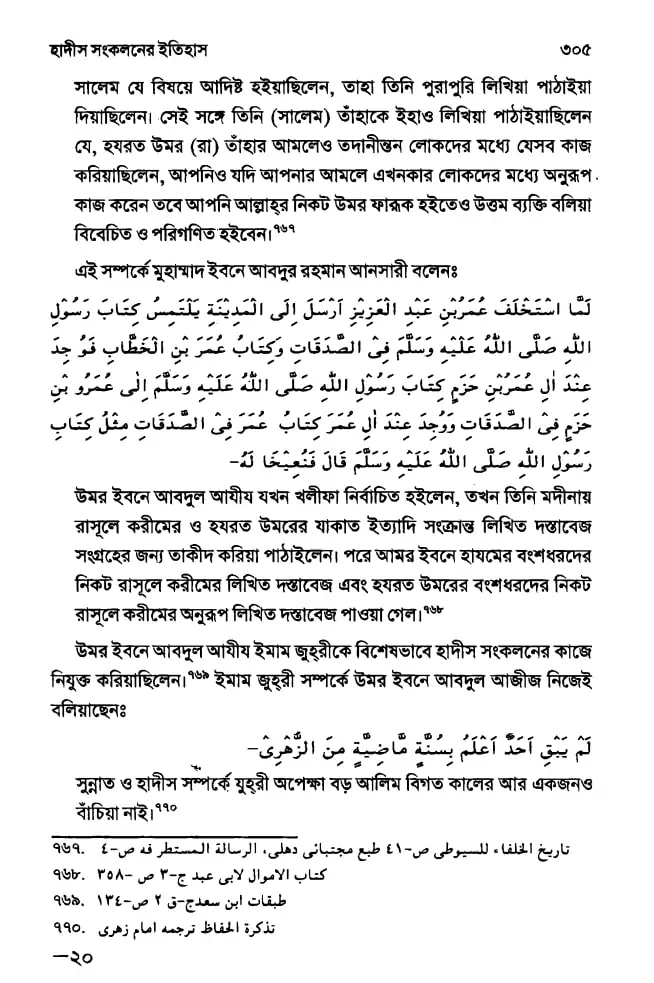
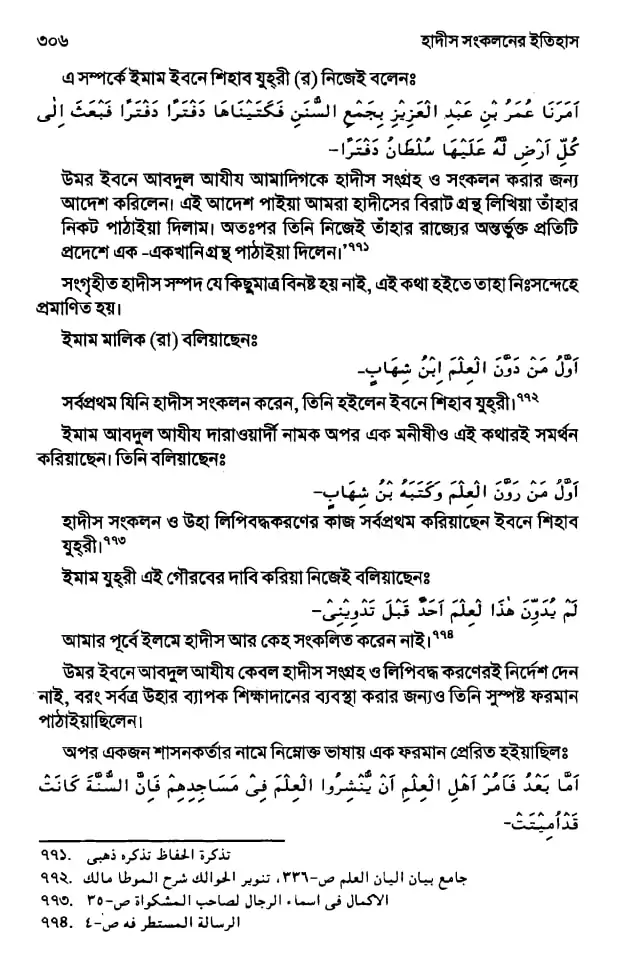
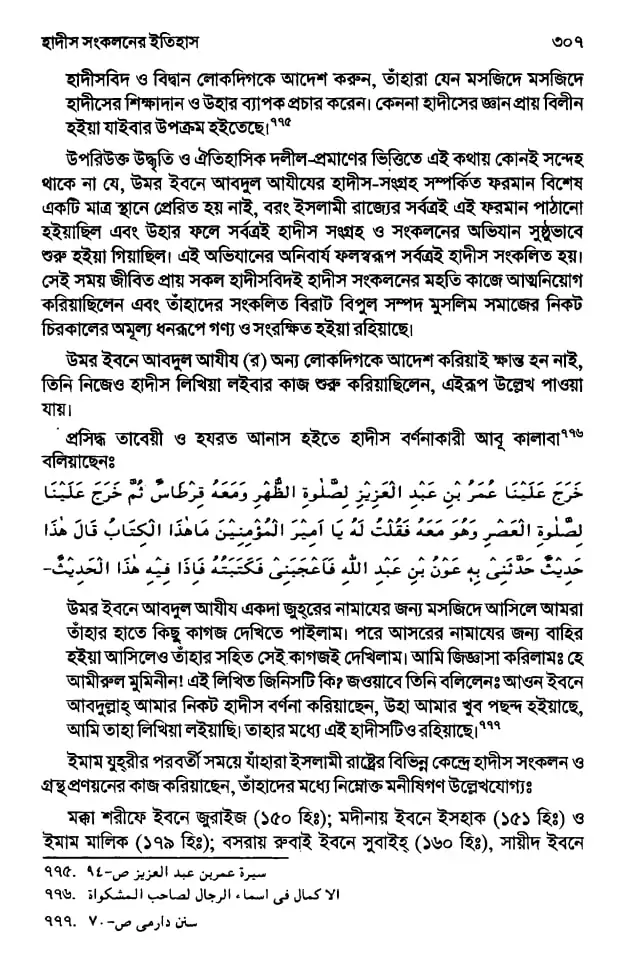
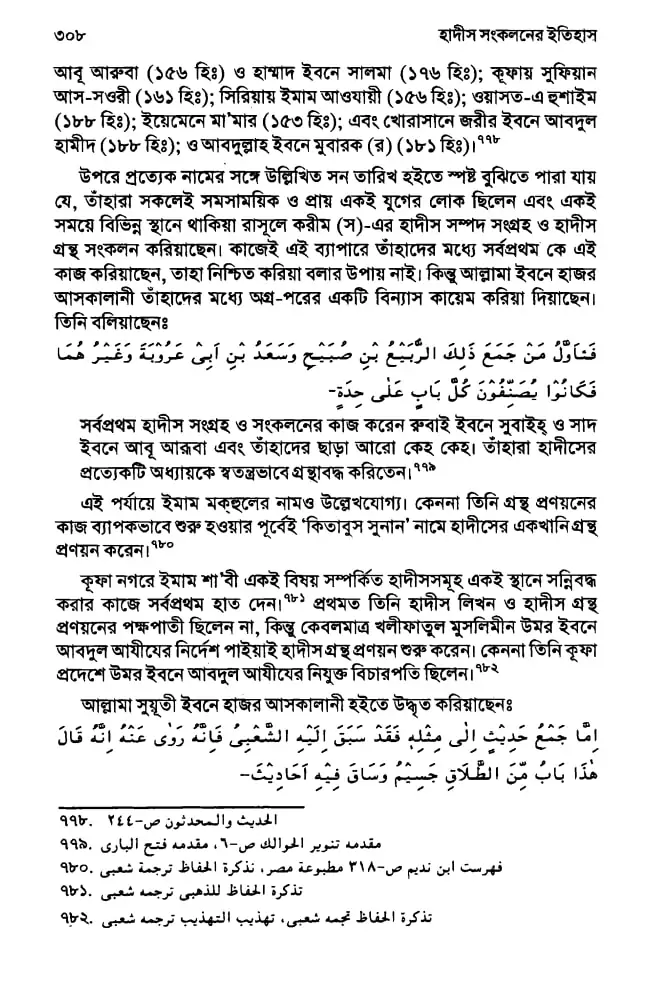
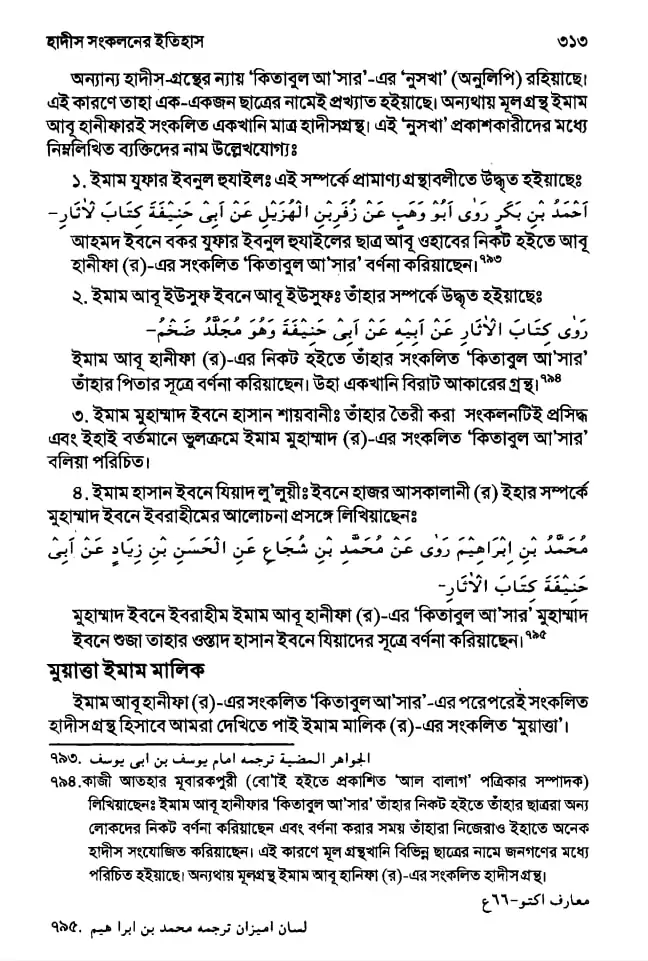
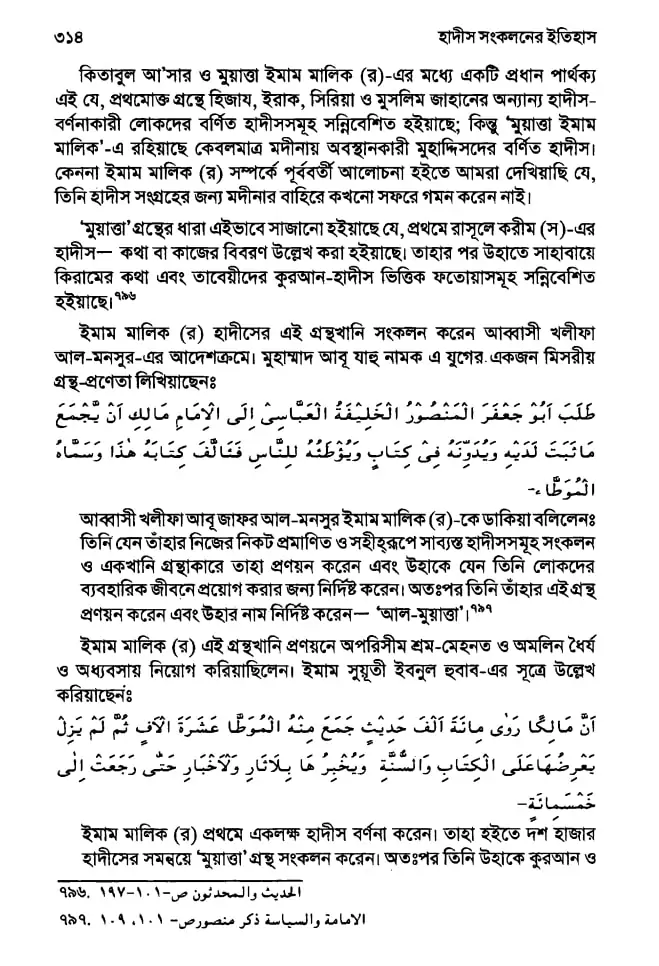
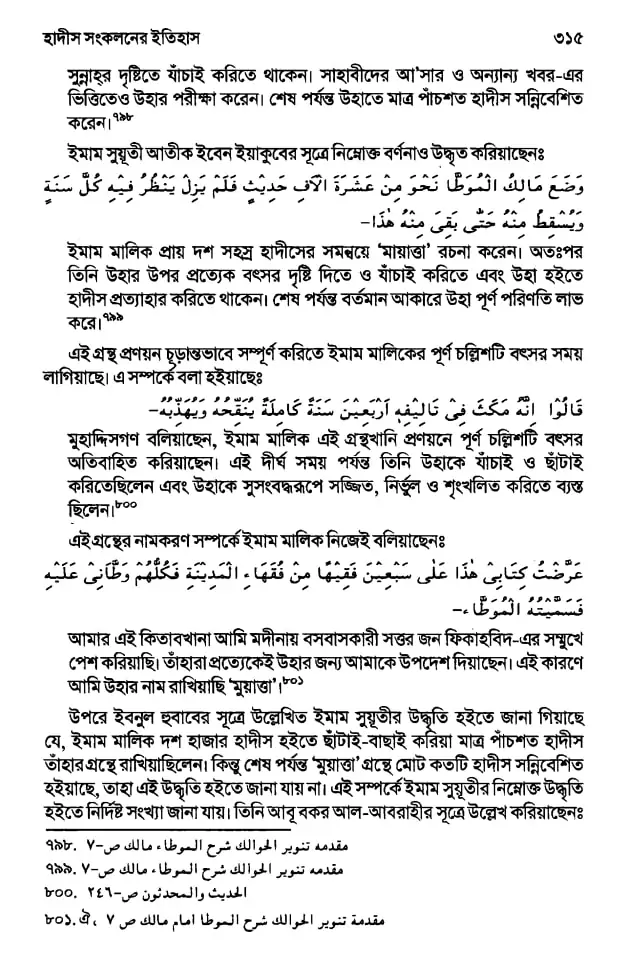
Statements of the Saudi Fatwa Committee and IslamQA
IslamQA is a religious question-and-answer website operated under the supervision of Muhammad Salih al-Munajjid. Its answer number 115125 calls Sunnah the second source of sharia and quotes a severe judgment on the religious standing of a person who denies the authority of Sunnah in general. The answer uses statements from the Saudi Permanent Fatwa Committee, Suyuti, Ibn al-Wazir, Shafi’i, Ahmad, Barbahari and Ibn Taymiyya. Thus, it documents a specific fatwa-based position in which the Quran’s general demand for obedience is linked to accepting specific statements in hadith. The answer distinguishes between rejecting a statement classified as ‘sahih’ while knowing it to be Muhammad’s statement, and disputing whether the statement is his. The first is associated with discussion of disbelief, and the second with criticism subject to conditions. According to this distinction, the religious judgment on rejection is also determined differently. [129] [130] [131]
هل يكفر من يرد الحديث الصحيح ؟ أحد الإخوة يرد بعض الأحاديث الصحيحة الواردة فی الصحيح : البخاری ومسلم وغيرها… بحجة أنها تعارض القرآن ، فما حکم من يرد الحديث الصحيح ، هل يکفر ؟
الحمد لله والصلاة والسلام على رسول الله، وبعد:
أولا :
السنة النبوية هي المصدر الثاني للتشريع ، فقد كان الوحي ينزل على النبي صلى الله عليه وسلم بالسنة كما ينزل عليه بالقرآن ، ومصداق ذلك قول الله تعالى : ( وَمَا يَنْطِقُ عَنِ الْهَوَى . إِنْ هُوَ إِلَّا وَحْيٌ يُوحَى ) النجم/3-4.
وقد أوجب الله تعالى على المؤمنين التسليم التام لكلام النبي صلى الله عليه وسلم وحديثه وحكمه ، حتى لقد أقسم بنفسه سبحانه أن من سمع كلام النبي صلى الله عليه وسلم ثم رده ولم يقبل به : أنه ليس من الإيمان في شيء ، فقال عز وجل : ( فَلَا وَرَبِّكَ لَا يُؤْمِنُونَ حَتَّى يُحَكِّمُوكَ فِيمَا شَجَرَ بَيْنَهُمْ ثُمَّ لَا يَجِدُوا فِي أَنْفُسِهِمْ حَرَجًا مِمَّا قَضَيْتَ وَيُسَلِّمُوا تَسْلِيمًا ) النساء/65.
ولذلك وقع الاتفاق بين أهل العلم على أنَّ مَن أنكر حجية السنة بشكل عام ، أو كذَّبَ حديث النبي صلى الله عليه وسلم – وهو يعلم أنه من كلامه صلى الله عليه وسلم – فهو كافر ، لم يحقق أدنى درجات الإسلام والاستسلام لله ورسوله .
قال الإمام إسحاق بن راهويه رحمه الله :
” من بلغه عن رسول الله صلى الله عليه وسلم خبرٌ يُقرُّ بصحته ثم رده بغير تقية فهو كافر” انتهى.
وقال السيوطي رحمه الله :
” اعلموا رحمكم الله أنَّ مَن أنكر كون حديث النبي صلى الله عليه وسلم – قولا كان أو فعلا بشرطه المعروف في الأصول – حجة كفر ، وخرج عن دائرة الإسلام ، وحشر مع اليهود والنصارى أو من شاء من فرق الكفرة ” انتهى.
“مفتاح الجنة في الاحتجاج بالسنة” (ص/14)
وقال العلامة ابن الوزير رحمه الله :
” التكذيب لحديث رسول الله صلى الله عليه وسلم مع العلم أنه حديثه كفر صريح ” انتهى.
“العواصم والقواصم” (2/274)
جاء في “فتاوى اللجنة الدائمة” :
” الذي ينكر العمل بالسنة يكون كافرا ؛ لأنه مكذب لله ولرسوله ولإجماع المسلمين ” انتهى.
“المجموعة الثانية” (3/194)
وانظر جواب السؤال رقم : (604 ) ، (13206 ) ، (77243 )
ثانيا :
أما مَن رَدَّ الحديث ولم يقبله ، مُنكِرًا أن يكون من كلام النبي صلى الله عليه وسلم ، فهذا ليس كالقسم الأول ، ونحن ندرك أن أكثر أصحاب التيار ” التنويري ” الجديد ، هم الذين تصدوا للحكم على السنة النبوية من خلال آرائهم وتوجهاتهم ، وهؤلاء ـ في واقع الأمر ـ لم يأتوا بجديد ، وإنما هم امتداد لأهل البدع من قبلهم ، الذين حكى أهل العمل شبهاتهم ، وتولوا الردع عليها .
ولهؤلاء ، وأمثالهم نقول :
المنهجية العلمية تقتضي النظر في أمور مهمة قبل رد الحديث وإنكار أن يكون من كلام النبي صلى الله عليه وسلم ، وهذه الشروط هي :
الشرط الأول :
المناقضة التامة بين ما ورد في الحديث وما ورد في القرآن الكريم من نص واضح الدلالة غير منسوخ ، ونحن نؤكد هنا على قيد ” المناقضة التامة “، وليس مجرد تعارض ظاهري يبدو في ذهن الناظر العجل ، ولعل أولئك الذين يخوضون في إنكار الأحاديث يوافقوننا على هذا التقييد ؛ لأن غالب التعارض الظاهري الذي يعرض في أذهان كثير من الناس لا حقيقة له ، وإنما هو ظنٌّ قائمٌ في ذهن المعترض ، يمكن بالتأمل وتلمس أوجه اللغة والمعاني الجواب عليه ، وبيان موافقته لأصول الشريعة ومقاصدها ، ومن تأمل كتاب العلامة ابن قتيبة الدينوري ، المسمى ” مختلف الحديث “، عرف قدر المجازفة التي جازفها كثيرون في إنكارهم الأحاديث بدعوى عدم موافقتها للقرآن ، أو عدم تصديق العقل بما فيها ، ثم إذا ذكر ابن قتيبة تفسير العلماء الصحيح لهذه الأحاديث تبين أن لها أوجها صحيحة موافقة للشريعة ، وأن توهم المعارضة للقرآن إنما هو ظنون فاسدة .
إننا نسأل هؤلاء وأمثالهم ممن يتجرأ على رد السنة ، والطعن في أحاديث النبي صلى الله عليه وسلم ، من غير منهجية علمية ، أو أصول نقدية مقبولة ، ومن غير أن يحكموا أصول العلم الذي يتحدثون فيه :
هل ترون أن مِن الممكن أن يناقض الحديثُ القرآن الكريم مناقضة تامة بحيث يجزم الناقد بأن هذا الحديث ليس من كلام النبي صلى الله عليه وسلم ، ونرى مع ذلك جميع علماء الإسلام ، من لدن صحابة رسول الله صلى الله عليه وسلم إلى يومنا هذا ، متوافقين على قبول هذا الحديث وشرحه وتفسيره والاستدلال به والعمل بما جاء فيه ؟!
ألا يقضي العقل السليم – الذي يزعمون التحاكم إليه – باحترام اتفاق أهل التخصص على أمر هو في صلب تخصصهم ؟!
هل يجرؤ أحد على تخطئة علماء الفيزياء أو الكيمياء أو الرياضيات أو علوم التربية أو الاقتصاد مثلا إذا اتفقوا وتواردوا على أمر معين ، خاصة إذا لم يكن المعترض عليهم من أهل العلم بذلك التخصص ، وإنما غاية أمره أن يكون قد قرأ بعض المقالات حوله ، أو شيئا من كتب : تبسيط العلوم ، أو : العلم لكل الناس ؟!
الشرط الثاني :
وجود حلقة من حلقات الضعف الإسنادي ، التي تتحمل الخطأ الوارد في المتن :
ونظن – كذلك – أن هذا الشرط منهجي قويم ، لا ينبغي أن يخالف فيه من يفهم شيئا في أصول النقد العلمي ، وذلك أن إنكار المتن أن يكون من كلام النبي صلى الله عليه وسلم ، يعني وجود حلقة ضعيفة في السند هي التي أوهمتنا أن هذا الحديث من كلام النبي صلى الله عليه وسلم ، وهو ـ فعليا ـ ليس كذلك .
يقول الإمام الشافعي رحمه الله ، وهو من هو في منازل العلم والإيمان ، وهو أول من صنف في علم أصول الفقه :
” الحديث إذا رواه الثقات عن رسول الله صلى الله عليه وسلم ، فذلك ثبوته “
“اختلاف الحديث ـ ضمن الأم ـ (10/107) ” .
ويقول :
” لا يُستدل على أكثر صدق الحديث وكذبه ، إلا بصدق المُخْبِر ، إلا في الخاص القليل من الحديث ” .
“الرسالة” : فقرة (1099) .
ويقول أيضا :
” المسلمون العدولُ : عدولٌ أصحاء الأمر فى أنفسهم … ، وقولُهم عن خبر أنفسهم ، وتسميتُهم : على الصحة والسلامة ، حتى نستدل من فعلهم بما يخالف ذلك ، فنحترسَ منهم في الموضع الذي خالف فعلُهم فيه ما يجب عليهم ” .
“الرسالة” : فـ (1029-1030) ، وانظر : الأم (8/518-519) .
وبعد أن يحكي الإمام الشافعي رحمه الله بعض الأصول العلمية في هذا الباب ، وهو أمر تعرض له كثيرا في كتبه المختلفة ، يذكر لنا أن ما قرره ، مما نلقلنا بعضه هنا ، ليس اجتهادا فرديا ، أو مذهبا شخصيا له ، وإنما هي أصول أجمع عليها أهل العلم من قبله . يقول :
” فحكيت عامة معاني ما كتبت في صدر كتابي هذا ، لعدد من المتقدمين في العلم بالكتاب والسنة ، واختلاف الناس ، والقياس ، والمعقول ، فما خالف منهم واحدٌ واحدا ، وقالوا: هذا مذهبُ أهل العلم من أصحاب رسول الله ، والتابعين ، وتابعي التابعين ، ومذهبُنا ؛ فمن فارق هذا المذهب : كان عندنا مفارقَ سبيلِ أصحاب رسول الله صلى الله عليه وسلم ، وأهلِ العلم بعدَهم إلى اليوم ، وكان من أهل الجهالة ، وقالوا معا : لا نرى إلا إجماع أهل العلم في البلدان على تجهيل من خالف هذا السبيل ، وجاوزوا ، أو أكثرهم ، فيمن يخالف هذا السبيل ، إلى ما لا أبالي أن لا أحكيه ” !!
” اختلاف الحديث” ـ الأم ـ ( 10/21) ، وانظر نحوا من ذلك في : الرسالة : فـ (1236-1249) .
إن أول ما يجب على من رد حديثا مسندا إلى النبي صلى الله عليه وسلم ، أن يبحث ويفسر من هو الراوي الذي أخطأ في نقله هذا الحديث ، فإذا لم يجد المُنكِرُ سببا إسناديا مقبولا لإنكاره الحديث فذلك علامة على خطأ منهجيٍّ ، وهو علامة أيضا على ضرورة مراجعة فهم الحديث والقرآن والمقاصد الشرعية .
فكيف إذا كان الحديث واردا بأصح الأسانيد على وجه الأرض ، بل كيف لو كان الحديث قد ورد بطرق كثيرة جدا – كما هو حال أكثر الأحاديث التي يردها ” التنويريون ” – ، وعن جماعة من الصحابة رضوان الله عليهم ؟!
الشرط الثالث :
نسبة الأمر كله إلى الاجتهاد المحتمل ، ونبذ أساليب الجزم والحسم واتهام المخالف والطعن في عقول المسلمين ، وهذا فيما إذا كان هناك وجه لهذا الاحتمال ، وكان من يتكلم في هذا مؤهلا ـ بأدوات البحث اللازمة ـ لإدراك ذلك والبحث فيه . فقد يبدو لأحد العلماء ضعف حديث معين لعلة معينة ، ولكنه لا يستعمل لغة الاتهام لكل من قبل الحديث .
فمن خالف هذه الشروط الثلاثة ، وأصر على إنكار الحديث وتكذيبه ، فهذا على خطر عظيم ، إذ لا يجوز للمسلم أن يتأول متهجما من غير شروط ولا ضوابط ، وإلا أثم ووقع في الحرج .
يقول الإمام أحمد رحمه الله :
” من رد حديث رسول الله صلى الله عليه وسلم فهو على شفا هلكة ” انتهى.
ويقول الحسن بن علي البربهاري :
” وإذا سمعت الرجل يطعن على الأثر ، أو يرد الآثار ، أو يريد غير الآثار : فاتّهمه على الإسلام ، ولا تشك أنه صاحب هوى مبتدع .
وإذا سمعت الرجل تأتيه بالأثر فلا يريده ويريد القرآن ، فلا تشك أنه رجل قد احتوى على الزندقة ، فقمْ من عنده وودّعه ” انتهى.
“شرح السنة” (113-119) باختصار.
ويقول شيخ الإسلام ابن تيمية رحمه الله :
” إن ما أخبر به الرسول صلى الله عليه وسلم عن ربه ، فإنه يجب الإيمان به ، سواء عرفنا معناه أو لم نعرف ؛ لأنه الصادق المصدوق . فما جاء في الكتاب والسنة وجب على كل مؤمن الإيمان به ، وإن لم يفهم معناه ” انتهى.
“مجموع الفتاوى” (3/41)
وانظر جواب السؤال رقم : (245 ) ، (9067 ) ، (20153 )
والله أعلم .
English translation:
Question 115125:
Does someone who denies a sahih hadith become a disbeliever? A brother denies a number of sahih hadith narrated in Bukhari, Muslim and elsewhere because they conflict with the Quran. What is the ruling concerning someone who denies sahih hadith? Does he become a disbeliever?
Answer
All praise is for Allah. Blessings and peace be upon the Messenger; thereafter:
Firstly:
The second source of Islamic sharia is the Prophet’s Sunnah. Revelation came to the Prophet (peace and blessings be upon him) through Sunnah in the same way that it came through the Quran. Allah’s own words are the evidence for this:
“Nor does he speak of his own invention. It is only revelation sent to him.” [Al-Najm 53:3–4]
Allah has commanded the believers to accept the Prophet’s words, hadith and instructions in such a way that He swears by His holy Self that those who hear the Prophet’s words, then reject them and do not acknowledge them, have no share of faith. He says:
“But no, by your Lord, they will not be believers until they make you judge in their disputes, then find no hesitation in their hearts concerning your decision and accept it wholeheartedly.” [Al-Nisa 4:65]
For this reason, there was consensus among the scholars that if someone denies in general that Sunnah is an evidentiary source of sharia, or rejects a hadith of the Prophet while knowing that it is the Prophet’s statement, then he is a disbeliever who has not reached even the lowest level of Islam and faith in Allah and His Messenger.
Imam Ishaq ibn Rahawayh says:
If someone hears something reported from Allah’s Messenger, acknowledges that the hadith is sahih, and then rejects it, he is a disbeliever, except where a threat to his life or safety forces him to say the opposite.
Al-Suyuti says:
It must be understood that if someone denies that the Prophet’s hadith is authoritative evidence for sharia—if he denies a report describing something the Prophet said or did, when that hadith meets the conditions of the principles of hadith—then he has committed disbelief and left the bounds of Islam, and he will join the Jews and Christians (on the Day of Resurrection), or whichever other group of disbelievers Allah wills. [Miftah al-Jannah fi Ihtijaj bi al-Sunnah (page 14)]
Al-Allama Ibn al-Wazir says:
When someone knowingly denies the hadith of Allah’s Messenger, it amounts to terrible disbelief. [Al-Awasim wa al-Qawasim (2/274)]
It is stated in Fatawa al-Lajnah al-Da’imah:
Anyone who denies that we should follow Sunnah is a disbeliever, because he is expressing disbelief in Allah and His Messenger and abandoning the consensus of all Muslims. [Fatawa al-Lajnah al-Da’imah (vol. 2, 3/194)
See also: questions 604, 13206 and 77243.
Secondly:
A person who does not accept a hadith and abandons it because it is not actually the Prophet’s statement is not like those in the first category. We understand that there are many followers of the new ‘rationalist, enlightened’ trend who judge the Prophet’s Sunnah through their own views and ideas—they are actually doing nothing new. Rather, they follow the earlier proponents of religious innovation, whose hollow claims the scholars refuted with their arguments.
To these people and others like them, we say this:
According to scholarly methodology, before rejecting a hadith or denying that it is the Messenger’s statement, we must examine several important matters. These conditions are as follows:
First condition:
We must see whether there is any contradiction between what is narrated in the hadith and something stated clearly and unambiguously in the Quran that has not subsequently been abrogated. Here we must emphasize the condition of complete contradiction—no conclusion may be drawn from an apparent discrepancy that might occur to someone seeking to examine a hadith and rush to a conclusion. Perhaps even those who wish to deny hadith will agree with us on this condition. For most of the apparent discrepancies that arise in people’s minds are not discrepancies in reality; rather, they are mere imaginings that arise in the objector’s mind. The person who thinks there is a discrepancy can be answered through thoughtful review and examination of the varied meanings of different words, and it can be demonstrated how the hadith accord with fundamental matters and glorify the aims of sharia. Anyone who reads Mukhtalif al-Hadith by al-Allama Ibn Qutayba al-Diruni will realize how reckless many of those who deny hadith on the allegation that they do not accord with the Quran or that they are contradictory by rational judgment are. But when Ibn Qutayba presents the correct interpretations of these hadith given by the scholars, it becomes clear that these hadith have rational interpretations consistent with Islamic teachings, and that the prevailing notion that these hadith conflict with the Quran is actually founded on distorted understanding.
Our question to those people who have the audacity to reject Sunnah, criticize the Messenger’s hadith without any scholarly methodology or clear, acceptable guidelines, and speak about the science of hadith without properly understanding its fundamentals is:
Do you think a hadith can be completely contrary to the Holy Quran on the basis that an examiner may think that it is not actually the Messenger’s statement, when we see that from the time of the Companions of Allah’s Messenger until today, all Islamic scholars agree on the acceptability of the hadith, comment on it, explain it, present it as evidence and act upon it?
Does rational thinking (which they claim is the basis of their reasoning) not indicate that they should respect the scholars’ consensus on a matter central to their specialist knowledge?
For example, would anyone dare say that physicists, chemists, mathematicians, educationalists or economists have made a mistake if they agree on a matter—especially when the person making the accusation is not himself an expert on that subject; rather, all that can be said is that he has read a few articles on it, or some introductory science books, or a science-related ‘The complete idiot’s guide’ (books that provide a very basic introduction to a subject)?
Second condition:
There must be a weakness in one of the links mentioned in the isnad through which the error mentioned in the hadith could have occurred.
Likewise, we consider this condition consistent with a rational procedure and an irrefutable condition. Those who understand anything about the principles of academic criticism will never disagree on this. Denying that a hadith is the Messenger’s statement would mean that there is a weak link in the channels of narration that leads us to believe mistakenly that this hadith is the Messenger’s statement, when in fact it is not.
Imam al-Shafi’i, renowned for his knowledge and faith and the first person to write on usul al-fiqh, said:
If a hadith is narrated from the Messenger through a trustworthy narrator, that alone is enough to consider it a sahih hadith. [Ikhtilaf al-Hadith, in al-Umm (10/107)]
And he says:
With very few exceptions, there is no way to determine whether a hadith is sahih other than examining how honest and trustworthy its narrators are. [Al-Risalah (paragraph 1099)
And he also says:
The personal standing of upright Muslims is considered upright and sound; their accounts and descriptions of themselves are also accepted as correct and intact, until something contrary is known from their actions. Therefore, when their actions differ from what is expected of them, caution must be exercised regarding them in that particular matter. [Al-Risalah (paragraphs 1029–1030); see also al-Umm (8/518–519)]
Citing some academic principles related to this subject, which he discussed extensively in his various books, Imam al-Shafi’i says—(some of which we have mentioned here)—that what he said was not merely the view of a few scholars, nor his own view; rather, these were the principles on which the scholars before him had reached consensus.
He says:
At the beginning of this book of mine, I quoted many earlier scholars in support of the principles and guidelines I discussed, who had knowledge of the Quran and Sunnah and employed different opinions, interpretations and arguments,
and none of them disagreed with the others on this matter. They said: This is the view of the Companions of Allah’s Prophet, the Tabi’in and the scholars of the generations after them, and it is our view too. In our opinion, anyone who deviates from this path has deviated from the path of the Companions of Allah’s Messenger and the scholars who came after them until today, and he is among the ignorant. And all of them said: We see nothing but consensus among the scholars of all regions on this matter, unanimously describing anyone who deviates from this path as ignorant. And they, or most of them, go further and express harsher views concerning those who deviate from this path, but there is no need to quote those here.
[Ikhtilaf al-Hadith, al-Umm (10/21). See also: al-Risalah (paragraphs 1236–1249)]
The first thing someone who has rejected a hadith associated with the Prophet must do is research the identity of the narrator who made a mistake when narrating this hadith. If the person rejecting the hadith cannot find an acceptable reason in the isnad for rejecting it, this indicates that he is making a mistake in his procedure. It also indicates the need to examine more carefully and try to understand the hadith, the Quran, and the aims and objectives of sharia.
What if the hadith was narrated through the most authentic isnad in the world? What if that hadith was narrated through many channels and from many Companions—which actually applies to most of the hadith rejected by the new intellectuals?
Third condition:
A person’s judgment concerning a hadith should be confined to his own viewpoint, which may be right or wrong, and he should refrain from declaring his own view to be certainly correct. He should also refrain from making accusations against those who disagree with him and from maligning the intelligence of Muslim scholars. This applies even where there are rational grounds for holding such a view and where he is qualified to speak on the matter and skilled enough to understand and review these things. A hadith may appear da’if to a scholar for a particular reason, but he will not speak with hostility about those who have accepted it.
Anyone who does not agree with these 3 conditions and persists in denying and rejecting hadith is plunging himself into immense danger. For it is not permissible for a Muslim to reach conclusions and criticize other scholars (who disagree with him) without following proper procedures and principles. Otherwise, he may become immersed in error and sin.
Imam Ahmad said: Whoever rejects a hadith of Allah’s Messenger is on the brink of destruction.
Al-Hasan ibn Ali al-Barbahari said:
If you hear someone denouncing or denying a hadith, or see him giving precedence to something else over hadith, then doubt his commitment to Islam; he is undoubtedly following his own desires and religious innovation as he pleases.
When you quote a hadith, if you see someone paying no attention to it because he is interested only in hearing quotations from the Quran, have no doubt that this person is following the path of the misguided. Therefore abandon him and bid him farewell.
Sharh al-Sunnah (113–119).
Shaykh al-Islam Ibn Taymiyya said:
It is obligatory to believe whatever the Messenger narrates from his Lord, whether we understand its meaning or not, because he is the most truthful. Every believer must believe whatever is stated in the Quran and Sunnah, even if he does not understand its meaning.
Majmu al-Fatawa (3/41)
See also: questions 245, 9067 and 20153.
Allah knows best.
English translation:
Ruling on one who rejects a saheeh hadith
115125
Publication : 02-03-2016
Question
Does the one who rejects a saheeh hadith become a disbeliever? One of the brothers rejects some of the saheeh hadiths that are narrated in al-Bukhaari, Muslim and elsewhere, on the grounds that they contradict the Quran. What is the ruling on one who rejects a saheeh hadith? Does he become a disbeliever?
Answer
Praise be to Allah.
Firstly:
The Prophet’s Sunnah is the second source of Islamic sharee‘ah. The revelation came down to the Prophet (blessings and peace of Allah be upon him) with the Sunnah as it came down to him with the Qur’an. The proof of that is the words of Allah, may He be exalted (interpretation of the meaning):
“Nor does he speak of (his own) desire.
It is but a revelation revealed”
[an-Najm 53:3-4].
Allah, may He be exalted, has enjoined upon the believers complete submission to the words of the Prophet (blessings and peace of Allah be upon him) and his hadith and rulings, to the extent that He, may He be glorified, swore by His divine self that whoever hears the words of the Prophet (blessings and peace of Allah be upon him), then rejects them and does not accept them, has nothing to do with faith at all. He, may He be glorified and exalted, said (interpretation of the meaning):
“But no, by your Lord, they can have no Faith, until they make you (O Muhammad (blessings and peace of Allah be upon him)) judge in all disputes between them, and find in themselves no resistance against your decisions, and accept (them) with full submission”
[an-Nisa’ 4:65].
Hence there was consensus among the scholars that whoever denies that the Sunnah constitutes shar‘i evidence in general terms, or rejects a hadith of the Prophet (blessings and peace of Allah be upon him – knowing that it is the words of the Prophet (blessings and peace of Allah be upon him) – is a disbeliever, who has not attained even the lowest level of Islam and submission to Allah and His Messenger.
Imam Is-haaq ibn Raahawayh (may Allah have mercy on him) said:
Whoever hears a report from the Messenger of Allah (blessings and peace of Allah be upon him) that he accepts as being sound, then rejects it, not by way of dissimulation (when he has no choice because of a threat), is a disbeliever. End quote
As-Suyooti (may Allah have mercy on him) said:
You should understand, may Allah have mercy on you, that whoever denies that the hadith of the Prophet (blessings and peace of Allah be upon him) constitutes shar‘i evidence – whether he denies a report that speaks of something that the Prophet (blessings and peace of Allah be upon him) said or did, if that hadith fulfils the conditions stipulated in usool al-hadith – has committed an act of disbelief that puts him beyond the bounds of Islam, and he will be gathered (on the Day of Resurrection) with the Jews and Christians, or with whomever Allah wills of the disbelieving groups. End quote.
Miftaah al-Jannah fi’l-Ihtijaaj bi’s-Sunnah (p 14)
Al-‘Allaamah Ibn al-Wazeer (may Allah have mercy on him) said:
Rejecting the hadith of the Messenger of Allah (blessings and peace of Allah be upon him) when one is aware that it is his hadith constitutes blatant disbelief. End quote.
Al-‘Awaasim wa’l-Qawaasim (2/274)
It says in Fataawa al-Lajnah ad-Daa’imah:
The one who denies that we should follow the Sunnah is a disbeliever, because he is expressing disbelief in Allah and His Messenger, and rejecting the consensus of the Muslims. End quote.
Fataawa al-Lajnah ad-Daa’imah (vol. 2, 3/194)
See also the answers to questions no. 604, 13206 and 77243
Secondly:
As for the one who rejects a hadith and does not accept it, denying that it is the words of the Prophet (blessings and peace of Allah be upon him), he is not like those who come under the first category. We understand that many followers of the new “enlightenment” trend – who have taken it upon themselves to judge the Prophet’s Sunnah on the basis of their views and affiliation – in fact, have not come up with anything new. Rather they are a continuation of the innovators who came before them, whose specious arguments the scholars quoted and took it upon themselves to refute them.
To these people and others like them we say:
Academic methodology dictates that we should examine several important matters before rejecting a hadith or denying that it is the words of the Prophet (blessings and peace of Allah be upon him). These conditions are as follows:
The first condition:
We should see whether there is a complete contradiction between what is mentioned in the hadith and what is mentioned in a Qur’anic text that is clear and unambiguous in meaning and not abrogated. We should emphasise here the condition of complete contradiction – and not just an apparent contradiction that may come to the mind of one who hastens to jump to conclusions when examining hadith. Perhaps those who are involved in denying the hadiths will agree with us on this condition, because most of the apparent contradictions that occur to many people are not contradictions in reality; rather they are mere speculation in the mind of the objector and it is possible, with deliberation and by examining the shades of meaning of different words, to answer the one who thinks that there is a contradiction, and demonstrate how the hadith is in harmony with the fundamentals and sublime aims of sharee‘ah. Whoever studies the book of al-‘Allaamah Ibn Qutaybah ad-Deenoori entitled Mukhtalif al-Hadith will realise how reckless many of them were in their denial of hadiths on the basis of the claim that they are not in accordance with the Qur’an, or that they contradict sound reasoning, but when Ibn Qutaybah mentions the correct explanation of these hadiths given by the scholars, it becomes clear that there is a sound interpretation for them that is in harmony with Islamic teachings, and that the notion that these hadiths contradict the Quran is based on corrupt understanding.
We ask these people and their ilk, who have the audacity to reject the Sunnah and cast aspersions on the hadiths of the Prophet (blessings and peace of Allah be upon him) without any academic methodology or acceptable critical guidelines, and without properly understanding the fundamentals of hadith science that they are talking about, the following:
Do you think that it is possible for a hadith to completely contradict the Holy Qur’an to the extent that the examiner may think that this hadith is not the words of the Prophet (blessings and peace of Allah be upon him), at the time when we see all the scholars of Islam, from the time of the Companions of the Messenger of Allah (blessings and peace of Allah be upon him) up until the present day, in agreement on accepting this hadith and commenting on it, interpreting it, quoting it as evidence and acting upon it?
Doesn’t rational thinking – on which they claim to base their argument – dictate that they should respect the consensus of specialists on the matter that is at the heart of their specialty?
Can anyone have the audacity to say that physicists, chemists, mathematicians, educationalists or economists, for example, have made a mistake if they agree on a matter – especially when the one who is objecting to them is not one of the specialists in that field; rather all that can be said is that he has read some articles about it or a few books along the lines of Science For Dummies or The Complete Idiot’s Guide to Science [i.e., books that offer a basic introduction to a field]?
The second condition:
There should be a weakness in one of the links of the isnaad that could have led to the mistake mentioned in the text.
Similarly, we think that this condition is in harmony with sound methodology and is a valid condition. No one should disagree on this point who understands anything about the principles of academic criticism. Denying that a text is the words of the Prophet (blessings and peace of Allah be upon him) should mean that there is a weak link in the chain of narration that led us to mistakenly believe that this hadith is the words of the Prophet (blessings and peace of Allah be upon him), when in fact it is not.
Imam ash-Shaafa‘i (may Allah have mercy on him) – who is prominent in terms of knowledge and faith, and was the first one to write on the topic of usool al-fiqh – said:
If a hadith is narrated by trustworthy narrators from the Messenger of Allah (blessings and peace of Allah be upon him), then that is sufficient to regard it as a sound hadith.
Ikhtilaaf al-Hadith, in al-Umm (10/107).
And he said:
There is no other way to determine whether a hadith is sound or otherwise except by knowing how honest and trustworthy the narrators are, with the exception of very few hadiths.
Ar-Risaalah (para. 1099)
And he also said:
Muslims of good character are those who are good and sound in and of themselves… As for what they say and do, it is to be regarded as sound and acceptable, unless we find something in their actions that indicate otherwise. So we should be cautious with them in cases where their actions differ from what is expected of them.
Ar-Risaalah (para. 1029-1030); see also al-Umm (8/518-51 9)
After narrating some of the academic principles concerning this matter, which is something that he discussed a great deal in his various books, Imam ash-Shaafa‘i (may Allah have mercy on him) says that what he stated – some of which we have quoted here – is not the view of only a few scholars, or his own personal view; rather these are the principles on which there was consensus among the scholars who came before him. He says:
At the beginning of this book of mine, I quoted, in support of what I discuss of principles and guidelines, from a number of earlier scholars who had knowledge of the Qur’an and Sunnah, different scholarly opinions, analogy and rational thinking, and none of them differed with another. They said: This is the view of the scholars among the Companions of the Messenger of Allah, the Taabi‘een, and the generation who followed them, and it is our view. Whoever diverges from this path is, in our view, diverging from the path of the Companions of the Messenger of Allah (blessings and peace of Allah be upon him) and the path of the scholars who came after them, until the present day, and he is one of the people of ignorance. And all of them said: we cannot see anything but the consensus of the scholars in all regions, unanimously agreeing to regard as ignorant the one who departs from this path. And they – or most of them – went even further and expressed more stringent views with regard to the one who departs from this path, but there is no need to quote them here.
Ikhtilaaf al-Hadith, al-Umm (10/21). See also: ar-Risaalah (para. 1236-1249).
The first thing that the one who rejected a hadith that is attributed to the Prophet (blessings and peace of Allah be upon him) must do is research and find out the identity of the narrator who was mistaken in his transmission of this hadith. If the one who denies the hadith cannot find an acceptable reason in the isnaad for rejecting the hadith, then this indicates that he is mistaken in his methodology. It also indicates that it is essential to have another look and try to understand the hadith and the Qur’an and the aims and goals of sharee‘ah.
So how about if the hadith was narrated with the soundest isnaads on the face of the earth? How about if the hadith was narrated via many chains of transmission – as is the case with most of the hadiths that are rejected by the proponents of “enlightenment” – and from a number of the Sahaabah (may Allah be pleased with them)?
The third condition:
One should express his reservations about a hadith as a personal view based on his own reasoning, which may be right or wrong, and he should avoid stating his view as certainty, as if it is the correct view. He should also avoid making accusations against others who differ with him or casting aspersions on the intelligence of Muslim scholars. This applies in cases where there is a valid reason to hold such a view, and provided that one is qualified to speak about such matters and is proficient in the skills needed to understand and research them. A hadith may appear to be da‘eef (weak) to one scholar for a particular reason, but he should not speak in accusatory tones of those who accepted the hadith.
Whoever does not comply with these three conditions and persists in denying and rejecting the hadiths is exposing himself to grave danger, because it is not permissible for a Muslim to reach a conclusion that is not based on proper methodology and without following any guidelines, and criticise other scholars (who disagree with him), otherwise he may fall into sin and error.
Imam Ahmad (may Allah have mercy on him) said: Whoever rejects the hadith of the Messenger of Allah (blessings and peace of Allah be upon him) is on the brink of doom. End quote.
Al-Hasan ibn ‘Ali al-Barbahaari said:
If you hear a man casting aspersions upon a hadith or denying a hadith, or giving precedence to something else over a hadith, then suspect his commitment to Islam, for he is undoubtedly following whims and desires and innovation.
If you hear a man, when you quote a hadith, showing no interest in it on the basis that he only wants to hear quotations from the Qur’an, you should not doubt that he is a man who is following the path of the heretics, so get up and leave him, and bid him farewell. End quote.
Sharh as-Sunnah (113-119)
Shaykh al-Islam Ibn Taymiyah (may Allah have mercy on him) said:
Whatever the Messenger (blessings and peace of Allah be upon him) narrates from his Lord, it is obligatory to believe in it, whether we understand its meaning or not, because he is the most truthful one [namely the Prophet (blessings and peace of Allah be upon him)]. Whatever it says in the Qur’an and Sunnah, every believer must believe in it, even if he does not understand its meaning. End quote.
Majmoo‘ al-Fataawa (3/41)
See also the answers to questions no. 245, 9067 and 20153
And Allah knows best.
The central statement of this fatwa links denial of the authority of Sunnah with leaving the bounds of Islam. Even for an objection concerning the source of a specific hadith, it stipulates complete contradiction with the Quran, a source of error in the isnad, and presentation of one’s own conclusion as a potentially fallible judgment. These conditions are part of the website’s religious methodology. The fact that a critic has not been able to identify a specific source of error in the isnad establishes neither that the statement is necessarily true nor that its law is necessarily just. The source of the narration, historical truth and the ethical acceptability of the ruling are separate questions. The religious criteria used in the answer claim to bring those questions to the same outcome. This method also limits the acceptable scope of independent objections in order to keep the authority of Sunnah intact. [132]
هل يكفر من يرد الحديث الصحيح ؟ أحد الإخوة يرد بعض الأحاديث الصحيحة الواردة فی الصحيح : البخاری ومسلم وغيرها… بحجة أنها تعارض القرآن ، فما حکم من يرد الحديث الصحيح ، هل يکفر ؟
الحمد لله والصلاة والسلام على رسول الله، وبعد:
أولا :
السنة النبوية هي المصدر الثاني للتشريع ، فقد كان الوحي ينزل على النبي صلى الله عليه وسلم بالسنة كما ينزل عليه بالقرآن ، ومصداق ذلك قول الله تعالى : ( وَمَا يَنْطِقُ عَنِ الْهَوَى . إِنْ هُوَ إِلَّا وَحْيٌ يُوحَى ) النجم/3-4.
وقد أوجب الله تعالى على المؤمنين التسليم التام لكلام النبي صلى الله عليه وسلم وحديثه وحكمه ، حتى لقد أقسم بنفسه سبحانه أن من سمع كلام النبي صلى الله عليه وسلم ثم رده ولم يقبل به : أنه ليس من الإيمان في شيء ، فقال عز وجل : ( فَلَا وَرَبِّكَ لَا يُؤْمِنُونَ حَتَّى يُحَكِّمُوكَ فِيمَا شَجَرَ بَيْنَهُمْ ثُمَّ لَا يَجِدُوا فِي أَنْفُسِهِمْ حَرَجًا مِمَّا قَضَيْتَ وَيُسَلِّمُوا تَسْلِيمًا ) النساء/65.
ولذلك وقع الاتفاق بين أهل العلم على أنَّ مَن أنكر حجية السنة بشكل عام ، أو كذَّبَ حديث النبي صلى الله عليه وسلم – وهو يعلم أنه من كلامه صلى الله عليه وسلم – فهو كافر ، لم يحقق أدنى درجات الإسلام والاستسلام لله ورسوله .
قال الإمام إسحاق بن راهويه رحمه الله :
” من بلغه عن رسول الله صلى الله عليه وسلم خبرٌ يُقرُّ بصحته ثم رده بغير تقية فهو كافر” انتهى.
وقال السيوطي رحمه الله :
” اعلموا رحمكم الله أنَّ مَن أنكر كون حديث النبي صلى الله عليه وسلم – قولا كان أو فعلا بشرطه المعروف في الأصول – حجة كفر ، وخرج عن دائرة الإسلام ، وحشر مع اليهود والنصارى أو من شاء من فرق الكفرة ” انتهى.
“مفتاح الجنة في الاحتجاج بالسنة” (ص/14)
وقال العلامة ابن الوزير رحمه الله :
” التكذيب لحديث رسول الله صلى الله عليه وسلم مع العلم أنه حديثه كفر صريح ” انتهى.
“العواصم والقواصم” (2/274)
جاء في “فتاوى اللجنة الدائمة” :
” الذي ينكر العمل بالسنة يكون كافرا ؛ لأنه مكذب لله ولرسوله ولإجماع المسلمين ” انتهى.
“المجموعة الثانية” (3/194)
وانظر جواب السؤال رقم : (604 ) ، (13206 ) ، (77243 )
ثانيا :
أما مَن رَدَّ الحديث ولم يقبله ، مُنكِرًا أن يكون من كلام النبي صلى الله عليه وسلم ، فهذا ليس كالقسم الأول ، ونحن ندرك أن أكثر أصحاب التيار ” التنويري ” الجديد ، هم الذين تصدوا للحكم على السنة النبوية من خلال آرائهم وتوجهاتهم ، وهؤلاء ـ في واقع الأمر ـ لم يأتوا بجديد ، وإنما هم امتداد لأهل البدع من قبلهم ، الذين حكى أهل العمل شبهاتهم ، وتولوا الردع عليها .
ولهؤلاء ، وأمثالهم نقول :
المنهجية العلمية تقتضي النظر في أمور مهمة قبل رد الحديث وإنكار أن يكون من كلام النبي صلى الله عليه وسلم ، وهذه الشروط هي :
الشرط الأول :
المناقضة التامة بين ما ورد في الحديث وما ورد في القرآن الكريم من نص واضح الدلالة غير منسوخ ، ونحن نؤكد هنا على قيد ” المناقضة التامة “، وليس مجرد تعارض ظاهري يبدو في ذهن الناظر العجل ، ولعل أولئك الذين يخوضون في إنكار الأحاديث يوافقوننا على هذا التقييد ؛ لأن غالب التعارض الظاهري الذي يعرض في أذهان كثير من الناس لا حقيقة له ، وإنما هو ظنٌّ قائمٌ في ذهن المعترض ، يمكن بالتأمل وتلمس أوجه اللغة والمعاني الجواب عليه ، وبيان موافقته لأصول الشريعة ومقاصدها ، ومن تأمل كتاب العلامة ابن قتيبة الدينوري ، المسمى ” مختلف الحديث “، عرف قدر المجازفة التي جازفها كثيرون في إنكارهم الأحاديث بدعوى عدم موافقتها للقرآن ، أو عدم تصديق العقل بما فيها ، ثم إذا ذكر ابن قتيبة تفسير العلماء الصحيح لهذه الأحاديث تبين أن لها أوجها صحيحة موافقة للشريعة ، وأن توهم المعارضة للقرآن إنما هو ظنون فاسدة .
إننا نسأل هؤلاء وأمثالهم ممن يتجرأ على رد السنة ، والطعن في أحاديث النبي صلى الله عليه وسلم ، من غير منهجية علمية ، أو أصول نقدية مقبولة ، ومن غير أن يحكموا أصول العلم الذي يتحدثون فيه :
هل ترون أن مِن الممكن أن يناقض الحديثُ القرآن الكريم مناقضة تامة بحيث يجزم الناقد بأن هذا الحديث ليس من كلام النبي صلى الله عليه وسلم ، ونرى مع ذلك جميع علماء الإسلام ، من لدن صحابة رسول الله صلى الله عليه وسلم إلى يومنا هذا ، متوافقين على قبول هذا الحديث وشرحه وتفسيره والاستدلال به والعمل بما جاء فيه ؟!
ألا يقضي العقل السليم – الذي يزعمون التحاكم إليه – باحترام اتفاق أهل التخصص على أمر هو في صلب تخصصهم ؟!
هل يجرؤ أحد على تخطئة علماء الفيزياء أو الكيمياء أو الرياضيات أو علوم التربية أو الاقتصاد مثلا إذا اتفقوا وتواردوا على أمر معين ، خاصة إذا لم يكن المعترض عليهم من أهل العلم بذلك التخصص ، وإنما غاية أمره أن يكون قد قرأ بعض المقالات حوله ، أو شيئا من كتب : تبسيط العلوم ، أو : العلم لكل الناس ؟!
الشرط الثاني :
وجود حلقة من حلقات الضعف الإسنادي ، التي تتحمل الخطأ الوارد في المتن :
ونظن – كذلك – أن هذا الشرط منهجي قويم ، لا ينبغي أن يخالف فيه من يفهم شيئا في أصول النقد العلمي ، وذلك أن إنكار المتن أن يكون من كلام النبي صلى الله عليه وسلم ، يعني وجود حلقة ضعيفة في السند هي التي أوهمتنا أن هذا الحديث من كلام النبي صلى الله عليه وسلم ، وهو ـ فعليا ـ ليس كذلك .
يقول الإمام الشافعي رحمه الله ، وهو من هو في منازل العلم والإيمان ، وهو أول من صنف في علم أصول الفقه :
” الحديث إذا رواه الثقات عن رسول الله صلى الله عليه وسلم ، فذلك ثبوته “
“اختلاف الحديث ـ ضمن الأم ـ (10/107) ” .
ويقول :
” لا يُستدل على أكثر صدق الحديث وكذبه ، إلا بصدق المُخْبِر ، إلا في الخاص القليل من الحديث ” .
“الرسالة” : فقرة (1099) .
ويقول أيضا :
” المسلمون العدولُ : عدولٌ أصحاء الأمر فى أنفسهم … ، وقولُهم عن خبر أنفسهم ، وتسميتُهم : على الصحة والسلامة ، حتى نستدل من فعلهم بما يخالف ذلك ، فنحترسَ منهم في الموضع الذي خالف فعلُهم فيه ما يجب عليهم ” .
“الرسالة” : فـ (1029-1030) ، وانظر : الأم (8/518-519) .
وبعد أن يحكي الإمام الشافعي رحمه الله بعض الأصول العلمية في هذا الباب ، وهو أمر تعرض له كثيرا في كتبه المختلفة ، يذكر لنا أن ما قرره ، مما نلقلنا بعضه هنا ، ليس اجتهادا فرديا ، أو مذهبا شخصيا له ، وإنما هي أصول أجمع عليها أهل العلم من قبله . يقول :
” فحكيت عامة معاني ما كتبت في صدر كتابي هذا ، لعدد من المتقدمين في العلم بالكتاب والسنة ، واختلاف الناس ، والقياس ، والمعقول ، فما خالف منهم واحدٌ واحدا ، وقالوا: هذا مذهبُ أهل العلم من أصحاب رسول الله ، والتابعين ، وتابعي التابعين ، ومذهبُنا ؛ فمن فارق هذا المذهب : كان عندنا مفارقَ سبيلِ أصحاب رسول الله صلى الله عليه وسلم ، وأهلِ العلم بعدَهم إلى اليوم ، وكان من أهل الجهالة ، وقالوا معا : لا نرى إلا إجماع أهل العلم في البلدان على تجهيل من خالف هذا السبيل ، وجاوزوا ، أو أكثرهم ، فيمن يخالف هذا السبيل ، إلى ما لا أبالي أن لا أحكيه ” !!
” اختلاف الحديث” ـ الأم ـ ( 10/21) ، وانظر نحوا من ذلك في : الرسالة : فـ (1236-1249) .
إن أول ما يجب على من رد حديثا مسندا إلى النبي صلى الله عليه وسلم ، أن يبحث ويفسر من هو الراوي الذي أخطأ في نقله هذا الحديث ، فإذا لم يجد المُنكِرُ سببا إسناديا مقبولا لإنكاره الحديث فذلك علامة على خطأ منهجيٍّ ، وهو علامة أيضا على ضرورة مراجعة فهم الحديث والقرآن والمقاصد الشرعية .
فكيف إذا كان الحديث واردا بأصح الأسانيد على وجه الأرض ، بل كيف لو كان الحديث قد ورد بطرق كثيرة جدا – كما هو حال أكثر الأحاديث التي يردها ” التنويريون ” – ، وعن جماعة من الصحابة رضوان الله عليهم ؟!
الشرط الثالث :
نسبة الأمر كله إلى الاجتهاد المحتمل ، ونبذ أساليب الجزم والحسم واتهام المخالف والطعن في عقول المسلمين ، وهذا فيما إذا كان هناك وجه لهذا الاحتمال ، وكان من يتكلم في هذا مؤهلا ـ بأدوات البحث اللازمة ـ لإدراك ذلك والبحث فيه . فقد يبدو لأحد العلماء ضعف حديث معين لعلة معينة ، ولكنه لا يستعمل لغة الاتهام لكل من قبل الحديث .
فمن خالف هذه الشروط الثلاثة ، وأصر على إنكار الحديث وتكذيبه ، فهذا على خطر عظيم ، إذ لا يجوز للمسلم أن يتأول متهجما من غير شروط ولا ضوابط ، وإلا أثم ووقع في الحرج .
يقول الإمام أحمد رحمه الله :
” من رد حديث رسول الله صلى الله عليه وسلم فهو على شفا هلكة ” انتهى.
ويقول الحسن بن علي البربهاري :
” وإذا سمعت الرجل يطعن على الأثر ، أو يرد الآثار ، أو يريد غير الآثار : فاتّهمه على الإسلام ، ولا تشك أنه صاحب هوى مبتدع .
وإذا سمعت الرجل تأتيه بالأثر فلا يريده ويريد القرآن ، فلا تشك أنه رجل قد احتوى على الزندقة ، فقمْ من عنده وودّعه ” انتهى.
“شرح السنة” (113-119) باختصار.
ويقول شيخ الإسلام ابن تيمية رحمه الله :
” إن ما أخبر به الرسول صلى الله عليه وسلم عن ربه ، فإنه يجب الإيمان به ، سواء عرفنا معناه أو لم نعرف ؛ لأنه الصادق المصدوق . فما جاء في الكتاب والسنة وجب على كل مؤمن الإيمان به ، وإن لم يفهم معناه ” انتهى.
“مجموع الفتاوى” (3/41)
وانظر جواب السؤال رقم : (245 ) ، (9067 ) ، (20153 )
والله أعلم .
English translation:
Question 115125:
Does someone who denies a sahih hadith become a disbeliever? A brother denies a number of sahih hadith narrated in Bukhari, Muslim and elsewhere because they conflict with the Quran. What is the ruling concerning someone who denies sahih hadith? Does he become a disbeliever?
Answer
All praise is for Allah. Blessings and peace be upon the Messenger; thereafter:
Firstly:
The second source of Islamic sharia is the Prophet’s Sunnah. Revelation came to the Prophet (peace and blessings be upon him) through Sunnah in the same way that it came through the Quran. Allah’s own words are the evidence for this:
“Nor does he speak of his own invention. It is only revelation sent to him.” [Al-Najm 53:3–4]
Allah has commanded the believers to accept the Prophet’s words, hadith and instructions in such a way that He swears by His holy Self that those who hear the Prophet’s words, then reject them and do not acknowledge them, have no share of faith. He says:
“But no, by your Lord, they will not be believers until they make you judge in their disputes, then find no hesitation in their hearts concerning your decision and accept it wholeheartedly.” [Al-Nisa 4:65]
For this reason, there was consensus among the scholars that if someone denies in general that Sunnah is an evidentiary source of sharia, or rejects a hadith of the Prophet while knowing that it is the Prophet’s statement, then he is a disbeliever who has not reached even the lowest level of Islam and faith in Allah and His Messenger.
Imam Ishaq ibn Rahawayh says:
If someone hears something reported from Allah’s Messenger, acknowledges that the hadith is sahih, and then rejects it, he is a disbeliever, except where a threat to his life or safety forces him to say the opposite.
Al-Suyuti says:
It must be understood that if someone denies that the Prophet’s hadith is authoritative evidence for sharia—if he denies a report describing something the Prophet said or did, when that hadith meets the conditions of the principles of hadith—then he has committed disbelief and left the bounds of Islam, and he will join the Jews and Christians (on the Day of Resurrection), or whichever other group of disbelievers Allah wills. [Miftah al-Jannah fi Ihtijaj bi al-Sunnah (page 14)]
Al-Allama Ibn al-Wazir says:
When someone knowingly denies the hadith of Allah’s Messenger, it amounts to terrible disbelief. [Al-Awasim wa al-Qawasim (2/274)]
It is stated in Fatawa al-Lajnah al-Da’imah:
Anyone who denies that we should follow Sunnah is a disbeliever, because he is expressing disbelief in Allah and His Messenger and abandoning the consensus of all Muslims. [Fatawa al-Lajnah al-Da’imah (vol. 2, 3/194)
See also: questions 604, 13206 and 77243.
Secondly:
A person who does not accept a hadith and abandons it because it is not actually the Prophet’s statement is not like those in the first category. We understand that there are many followers of the new ‘rationalist, enlightened’ trend who judge the Prophet’s Sunnah through their own views and ideas—they are actually doing nothing new. Rather, they follow the earlier proponents of religious innovation, whose hollow claims the scholars refuted with their arguments.
To these people and others like them, we say this:
According to scholarly methodology, before rejecting a hadith or denying that it is the Messenger’s statement, we must examine several important matters. These conditions are as follows:
First condition:
We must see whether there is any contradiction between what is narrated in the hadith and something stated clearly and unambiguously in the Quran that has not subsequently been abrogated. Here we must emphasize the condition of complete contradiction—no conclusion may be drawn from an apparent discrepancy that might occur to someone seeking to examine a hadith and rush to a conclusion. Perhaps even those who wish to deny hadith will agree with us on this condition. For most of the apparent discrepancies that arise in people’s minds are not discrepancies in reality; rather, they are mere imaginings that arise in the objector’s mind. The person who thinks there is a discrepancy can be answered through thoughtful review and examination of the varied meanings of different words, and it can be demonstrated how the hadith accord with fundamental matters and glorify the aims of sharia. Anyone who reads Mukhtalif al-Hadith by al-Allama Ibn Qutayba al-Diruni will realize how reckless many of those who deny hadith on the allegation that they do not accord with the Quran or that they are contradictory by rational judgment are. But when Ibn Qutayba presents the correct interpretations of these hadith given by the scholars, it becomes clear that these hadith have rational interpretations consistent with Islamic teachings, and that the prevailing notion that these hadith conflict with the Quran is actually founded on distorted understanding.
Our question to those people who have the audacity to reject Sunnah, criticize the Messenger’s hadith without any scholarly methodology or clear, acceptable guidelines, and speak about the science of hadith without properly understanding its fundamentals is:
Do you think a hadith can be completely contrary to the Holy Quran on the basis that an examiner may think that it is not actually the Messenger’s statement, when we see that from the time of the Companions of Allah’s Messenger until today, all Islamic scholars agree on the acceptability of the hadith, comment on it, explain it, present it as evidence and act upon it?
Does rational thinking (which they claim is the basis of their reasoning) not indicate that they should respect the scholars’ consensus on a matter central to their specialist knowledge?
For example, would anyone dare say that physicists, chemists, mathematicians, educationalists or economists have made a mistake if they agree on a matter—especially when the person making the accusation is not himself an expert on that subject; rather, all that can be said is that he has read a few articles on it, or some introductory science books, or a science-related ‘The complete idiot’s guide’ (books that provide a very basic introduction to a subject)?
Second condition:
There must be a weakness in one of the links mentioned in the isnad through which the error mentioned in the hadith could have occurred.
Likewise, we consider this condition consistent with a rational procedure and an irrefutable condition. Those who understand anything about the principles of academic criticism will never disagree on this. Denying that a hadith is the Messenger’s statement would mean that there is a weak link in the channels of narration that leads us to believe mistakenly that this hadith is the Messenger’s statement, when in fact it is not.
Imam al-Shafi’i, renowned for his knowledge and faith and the first person to write on usul al-fiqh, said:
If a hadith is narrated from the Messenger through a trustworthy narrator, that alone is enough to consider it a sahih hadith. [Ikhtilaf al-Hadith, in al-Umm (10/107)]
And he says:
With very few exceptions, there is no way to determine whether a hadith is sahih other than examining how honest and trustworthy its narrators are. [Al-Risalah (paragraph 1099)
And he also says:
The personal standing of upright Muslims is considered upright and sound; their accounts and descriptions of themselves are also accepted as correct and intact, until something contrary is known from their actions. Therefore, when their actions differ from what is expected of them, caution must be exercised regarding them in that particular matter. [Al-Risalah (paragraphs 1029–1030); see also al-Umm (8/518–519)]
Citing some academic principles related to this subject, which he discussed extensively in his various books, Imam al-Shafi’i says—(some of which we have mentioned here)—that what he said was not merely the view of a few scholars, nor his own view; rather, these were the principles on which the scholars before him had reached consensus.
He says:
At the beginning of this book of mine, I quoted many earlier scholars in support of the principles and guidelines I discussed, who had knowledge of the Quran and Sunnah and employed different opinions, interpretations and arguments,
and none of them disagreed with the others on this matter. They said: This is the view of the Companions of Allah’s Prophet, the Tabi’in and the scholars of the generations after them, and it is our view too. In our opinion, anyone who deviates from this path has deviated from the path of the Companions of Allah’s Messenger and the scholars who came after them until today, and he is among the ignorant. And all of them said: We see nothing but consensus among the scholars of all regions on this matter, unanimously describing anyone who deviates from this path as ignorant. And they, or most of them, go further and express harsher views concerning those who deviate from this path, but there is no need to quote those here.
[Ikhtilaf al-Hadith, al-Umm (10/21). See also: al-Risalah (paragraphs 1236–1249)]
The first thing someone who has rejected a hadith associated with the Prophet must do is research the identity of the narrator who made a mistake when narrating this hadith. If the person rejecting the hadith cannot find an acceptable reason in the isnad for rejecting it, this indicates that he is making a mistake in his procedure. It also indicates the need to examine more carefully and try to understand the hadith, the Quran, and the aims and objectives of sharia.
What if the hadith was narrated through the most authentic isnad in the world? What if that hadith was narrated through many channels and from many Companions—which actually applies to most of the hadith rejected by the new intellectuals?
Third condition:
A person’s judgment concerning a hadith should be confined to his own viewpoint, which may be right or wrong, and he should refrain from declaring his own view to be certainly correct. He should also refrain from making accusations against those who disagree with him and from maligning the intelligence of Muslim scholars. This applies even where there are rational grounds for holding such a view and where he is qualified to speak on the matter and skilled enough to understand and review these things. A hadith may appear da’if to a scholar for a particular reason, but he will not speak with hostility about those who have accepted it.
Anyone who does not agree with these 3 conditions and persists in denying and rejecting hadith is plunging himself into immense danger. For it is not permissible for a Muslim to reach conclusions and criticize other scholars (who disagree with him) without following proper procedures and principles. Otherwise, he may become immersed in error and sin.
Imam Ahmad said: Whoever rejects a hadith of Allah’s Messenger is on the brink of destruction.
Al-Hasan ibn Ali al-Barbahari said:
If you hear someone denouncing or denying a hadith, or see him giving precedence to something else over hadith, then doubt his commitment to Islam; he is undoubtedly following his own desires and religious innovation as he pleases.
When you quote a hadith, if you see someone paying no attention to it because he is interested only in hearing quotations from the Quran, have no doubt that this person is following the path of the misguided. Therefore abandon him and bid him farewell.
Sharh al-Sunnah (113–119).
Shaykh al-Islam Ibn Taymiyya said:
It is obligatory to believe whatever the Messenger narrates from his Lord, whether we understand its meaning or not, because he is the most truthful. Every believer must believe whatever is stated in the Quran and Sunnah, even if he does not understand its meaning.
Majmu al-Fatawa (3/41)
See also: questions 245, 9067 and 20153.
Allah knows best.
The fatwa’s demand to accept a specific statement in hadith does not remain merely a demand to accept a fact about the past. Once the statement is established as the Prophet’s, its rejection is linked to a crisis of religious identity. Under this method, the believer’s obedience and continued place within the bounds of Islam depend on accepting a narration preserved by human beings. Even the content of a statement that does not appear directly in a verse comes under this religious obligation. Thus, the Quran’s general authority is used to turn a particular statement in hadith into an operative ruling. Omitting hadith removes the identity and content of that particular statement; accepting it maintains dependence on information preserved by narrators and compilers. This dependence itself shows hadith’s indispensable role within the conventional system.
Comparing the consensus of religious scholars with that of physicists, chemists or mathematicians does not make the methods for testing the two kinds of claims identical. The testability of a statement, the evidence used and the possibility of its being proved wrong are matters to be assessed separately. An expert’s status does not remove flaws in a particular argument. Likewise, an isnad classified as sahih does not automatically lead to the conclusion that every detail of a historical event occurred exactly as reported or that its command is just in every age. The fatwa’s conditions are set to protect religious authority; treating them as the sole criterion of universal historical truth assumes at the outset the very conclusion that is supposed to be proved. Acceptability within a system and its validity according to external evidence are separate levels.
The quotation from Ibn Taymiyya at the end of the answer demands belief in statements from the Quran and Sunnah even without understanding their meaning. The quotation from Barbahari also instructs people to distrust and abandon anyone who wants to hear only the Quran. Thus, hadith’s authority here is not confined to research into the source of narrations; it also functions in setting the boundaries of social relationships and religious inclusion. This authority influences which information a believer will accept, whose criticism he will listen to and which statements he will place beyond question. Declaring a statement sacred or obligatory is no substitute for proving its truth or justice. In a method that establishes an obligation to accept an unknown meaning, the individual’s own judgment becomes subordinate to religious obedience.
A prohibition imposed as law affects people’s lives, freedom and rights. If the source of that prohibition is a hadith, merely declaring its religious classification cannot establish the justification for that effect. Being narrated in Muhammad’s name, being accepted in a compilation and being made compulsory as law are three separate steps. Human preservation of information and judgment operate in the first two steps; in the final step, that information is given the power to be applied to people. A declaration of divine authority does not remove the distinctions between these steps. If a ruling is inhumane or unjust, the justification for abolishing it comes from an assessment of its consequences and principles. The fact that a religious fatwa calls an objection disbelief or misguidance does not make that objection’s evidence and reasoning wrong.
Opinions of other scholars
Lectures by contemporary religious scholars are an important means of spreading religious teachings and establishing authority. Abdullah Jahangir’s one video , Dr Abu Bakr Zakariya’s video and Abdullah ibn Abdur Razzaq’s one video are examples of contemporary religious lectures. Another videoof similar lectures is also a means of promoting this trend. A scholar’s name and social status may influence the acceptability of a statement; the statement’s evidence and reasoning are not identical to that status. When the authority of Sunnah is accepted in religious teaching, accounts of the Prophet’s statements and conduct are needed to identify specific commands and prohibitions. The method for treating those accounts as legal evidence and deriving interpretations from them is also preserved in written books. In this line of lectures, written interpretations and narrations, the Quran’s general demand for obedience is connected to specific religious practices.
In his al-Risalah, Shafi’i established the authority of Sunnah both where a specific text exists in the Quran and where it does not. In his account, the Prophet’s Sunnah is necessary to explain the meaning, timing and application of Allah’s obligations. He mentions the role of Sunnah in general commands, specific commands and even cases where there is no direct text of a ruling in the Quran. Thus, limiting the importance of hadith to merely explaining the dictionary meaning of a difficult Quranic word omits the method he describes. Here, Sunnah is a source for determining the actual content of religious duties. That Sunnah is known from statements and conduct preserved in the Prophet’s name. The operative form of conventional rulings is created by joining this specific information to the Quran’s general command to obey. [133]
وأيُّ هذا كان، فقد بيَّن الله أنه فرَضَ فيه طاعة رسوله، ولم يجعل لأحد من خلقه عذرا بخلاف أمرٍ عرَفَه من أمر رسول الله، وأنْ قد جعل الله بالناس الحاجةَ إليه في دينهم، وأقام عليهم حجتَه بما دلَّهم عليه من سنن رسول الله مَعَاني ما أراد الله بفرائضه في كتابه، ليعلم مَن عرَف منها ما وصَفْنا أن سنته – صلى الله عليه – إذا كانت سنة مبيِّنة عن الله معنى ما أراد من مَفْروضه فيما فيه كتابٌ يتْلونَه، وفيما ليس فيه نصُّ كتاب أخْرَى ^{[138] } فهي كذلك أيْنَ كانت، لا يختلف حكمُ الله ثم حكمُ رسوله، بل هو لازم بكلِّ حال. وكذلك قال رسول الله في حديث أبي رافع الذي كتبنا قبْل هذا. وسأذكر مما وصفنا من السنة مع كتاب الله، والسنةِ فيما ليس فيه نص كتاب، بعضَ ما يدل على جملة ما وصفنا منه، إن شاء الله. فأوَّل ما نبدأ به من ذِكْر سنة رسول الله مع كتاب الله: ذِكرُ الاستدلال بسنته على الناسِخ والمَنْسوخ من كتاب الله، ثم ذِكر الفرائض المَنْصوصة التي سن رسول الله معها، ثم ذكر الفرائض الجُمَل التي أبان رسول الله عن الله كيف هي ومواقيتَها، ثم ذكر العام من أمر الله الذي أراد به العام، والعامَّ الذي أراد به الخاصَّ، ثم ذِكرُ سنته فيما ليس فيه نص كتاب.
English translation:
Whatever the interpretation of these matters may be, Allah has made clear that through them He has made obedience to His Messenger obligatory. He has given no creature an excuse for opposing any known command of His Messenger. He has made people need him in their religious affairs and established proof against them by informing them, through the Messenger’s Sunnah, what is meant by Allah’s obligations in the Book. Thus, someone who knows these matters may understand that when his Sunnah explains Allah’s intention in the rulings of the recitable Book and also gives rulings on other matters for which there is no direct text in the Book, it holds the same position in all cases. The authority of Allah’s rulings and then His Messenger’s rulings does not change; it is obligatory in every circumstance. The Messenger said this in the hadith of Abu Rafi written earlier. Allah willing, I shall mention some matters conveying the overall meaning of the account given of Sunnah accompanying the Book and Sunnah concerning matters for which there is no direct text in the Book. In the discussion of the Messenger’s Sunnah alongside the Book, first the determination of the Book’s abrogating and abrogated texts through his Sunnah will be mentioned, then his Sunnah alongside obligations explicitly stated in the Book, then how he explained the method and timing of obligations announced briefly, then Allah’s general commands where a general meaning is intended and where a specific meaning is intended, and finally his Sunnah on matters for which there is no direct text in the Book.
Under this method, the Quran’s general statements and the detailed content of Sunnah together form religious law. Without information about specific conduct, times, conditions and prohibitions, a declaration of general authority cannot provide the same body of rulings. The interpretations that a religious speaker or author gives by accepting that information also involve selecting narrations and determining meaning. That work is human interpretation; giving it divine status does not erase its human elements. A scholar’s status, the identity of an ancient book and a demand for religious obedience are not self-sufficient proof that a ruling is just. Justification for its application as law and the historical truth of the narration both require separate evidence. Establishing dependence on Sunnah does not establish that all those narrations or all those rulings are true and just.
Some hadith terminology
Hadith terminology describes separate aspects of a narration’s source, connections in its transmission, the narrator’s qualities, relationships involving the matn, and religious use. Calling something marfu identifies to whom the statement is attributed; calling it muttasil describes the connectedness of the isnad; calling it sahih claims that a set of internal conditions of acceptability has been fulfilled. Identifying one does not itself yield the result of another. A narration may be marfu yet have a weak isnad; a statement’s popularity is likewise no assurance of its source. Ibn Hajar’s Nukhbat al-Fikar distinguishes the classifications sahih, hasan, shadh, munkar, mutabi, shahid and the categories of breaks in the isnad. This classification is a method for examining information preserved by human beings; its definitions do not contain the ethical conclusion that a ruling is just or unchangeable. [134]
وخَبَرُ الآحادِ بِنَقْلِ عَدلٍ تَامِّ الضَّبْطِ، مُتَّصِلَ السَّنَدِ، غَيْرَ مُعَلَّلٍ وَلآ شَاذٍّ: هُوَ الصَّحِيحُ لِذَاتِهِ . وَتَتَفَاوتُ رُتَبُهُ بِتَفَاوُتِ هذِهِ الأَوْصَافِ . وَمِنْ ثَمَّ قُدِّمَ صَحِيحُ الْبُخَارِيِّ، ثُمَّ مُسْلم، ثُمَّ شَرْطُهُمَا . فإِنْ خَفَّ الضَّبْطُ، فَالْحَسَنُ لِذَاتِهِ ، وَبِكَثْرَةِ طُرُقِهِ يُصَحَّحُ. فَإِنْ جُمِعَا فللتَّرَدُّدِ فِي النّاقِل حَيْثُ التَّفَرُّدُ ، وإلا فبِاعْتِبارِ إسْنَادَيْنِ . وزيَادَةُ رَاويهمَا مَقْبُولَةٌ مَا لَمْ تَقَعْ مُنَافِيَةً لِمَنْ هُوَ أَوْثَقُ . فإِنْ خُولِف بِأَرْجَحَ فَالرَّاجِحُ الْمَحْفُوظُ، وَمُقَابِلُهُ الشَّاذُّ ، وَمَعَ الضَّعْف فَالرَّاجِحُ الْمَعْرُوفُ، وَمُقَابلُهُ الْمُنْكَرُ . والْفَرْدُ النِّسْبي إِنْ وَافَقَهُ غَيْرُهُ فَهُوَ المُتَابِعُ ، وَإِنْ وُجِدَ مَتْنٌ يُشْبِهُهُ فهُوَ الشَّاهِدُ. وَتَتَبُّعُ الطُّرُقِ لِذلِكَ هُوَ: الاعْتِبَارُ . ثمَّ الْمَقْبُولُ: إِنْ سَلِمَ مِنَ الْمُعَارَضَةِ، فَهُوَ الْمُحْكَمُ، وَإِنْ عُورضَ بِمثْلِهِ فإِنْ أَمْكَنَ الْجَمْعُ فمُخْتَلِفُ الحَدِيث ، أَوْ لآ، وَثَبَتَ الْمُتَأَخِّرُ فهُوَ النَّاسِخُ وَالآخَرُ الْمَنْسُوخُ ، وَإِلَّا فَالترْجيحُ، ثمَّ التَّوَقُّفُ . ثمَّ الْمَرْدُودُ: إِمَّا أَنْ يكونَ لِسَقَطٍ أَوْ طَعْنٍ: فالسَّقَطُ إِمَّا أَنْ يَكونَ مِنْ مَبَادي السَّنَدِ مِنْ مُصَنِّفٍ، أَوْ مِنْ آخِرِهِ بَعْدَ التَّابِعيّ، أَوْ غَيْر ذلِكَ، فَالأَوَّلُ الْمُعَلَّقُ . وَالثَّاني الْمُرْسَلُ . وَالثَّالِثُ إِنْ كانَ بِاثْنَيْنِ فَصَاعِدًا مَعَ التَّوَالي فهُو الْمُعْضَلُ ، وَإِلا فَالْمُنْقَطِعُ. ثمَّ قَدْ يَكُونُ وَاضِحًا أَوْ خَفِيًّا. فَالأَوَّلُ يُدْرَكُ بعَدَمِ التَّلَاقِي، وَمِنْ ثَمَّ احْتِيجَ إِلَى التَّارِيخِ ، والثَّانِي المُدَلَّسُ، وَيَرِدُ بِصِيغَةٍ تَحْتَمِلُ اللُّقِيَّ كَعَنْ، وَقَالَ، وَكَذَا الْمُرْسَلُ الْخَفيُّ مِنْ مُعَاصِرٍ لَمْ يَلْقَ .
English translation:
An ahad narration transmitted by an upright narrator with complete retention, possessing a connected isnad and free from damaging defects and shadh, is sahih li-dhatihi. Its rank varies with the degree of these qualities. For that reason, Bukhari’s Sahih, then Muslim’s Sahih, then their conditions have been given precedence. If retention is somewhat lower, it is hasan li-dhatihi; it is made sahih by an adequate multiplicity of transmission routes. When the same narration is called both hasan and sahih, in the case of a single narrator this may indicate hesitation in the judgment concerning him; in other cases, two isnads may be under consideration. Additional information from their narrators is acceptable so long as it does not contradict a more reliable person. In a contradiction with a stronger statement, the preferred one is mahfuz and the contrary one is shadh; where there is contradiction along with weakness, the preferred one is ma’ruf and the contrary one is munkar. If someone else agrees with a relatively solitary narration, he is a mutabi; if a similar matn is found, it is a shahid. Searching for these transmission routes is called i’tibar. An acceptable narration free from contradiction is muhkam; if it contradicts a similar acceptable narration but reconciliation is possible, it is mukhtalif al-hadith. If reconciliation is impossible and the later one is identified, the later one is nasikh and the earlier one is mansukh; otherwise, preference is determined, followed by suspension of judgment. A rejected narration is rejected because of either a break in the isnad or a fault subject to criticism. If the break is at the beginning of the isnad on the author’s side, it is mu’allaq; if it is at the end after the Tabi’i, it is mursal; if two or more people are omitted consecutively elsewhere, it is mu’dal; otherwise, it is munqati. A break may be apparent or hidden. An apparent break is known from information that a meeting did not take place, so knowledge of chronology is necessary. The hidden type includes mudallas, where language such as ‘from’ or ‘said’, which may imply a meeting, is used. The mursal khafi of a person who was a contemporary but did not meet the other person also comes into this discussion.
| Term | Definition and use |
|---|---|
| Sahabi | A person who enjoyed Muhammad’s company while having faith and died with faith is called a Companion of Muhammad. |
| Tabi’i | A person who learned hadith from a Companion of Muhammad, or at least saw him, and died as a Muslim is called a Tabi’i. |
| Tabi al-Tabi’i | A person who learned hadith from a Tabi’i, or at least saw him, and died as a Muslim is called a Tabi al-Tabi’i. |
| Muhaddith | A person who studies hadith and has specialized knowledge of the isnads and matns of many hadith is called a muhaddith. |
| Shaykh | A narrator who teaches hadith is called a shaykh. |
| Shaykhan | Among the Companions, Abu Bakr (may Allah be pleased with him) and Umar (may Allah be pleased with him) are together called the Shaykhan. But in the science of hadith, Imam Bukhari (may Allah have mercy on him) and Imam Muslim (may Allah have mercy on him), and in the terminology of fiqh, Imam Abu Hanifa (may Allah have mercy on him) and Abu Yusuf (may Allah have mercy on him), are together called the Shaykhan. |
| Hafiz | A person who has mastered one hundred thousand hadith, including details of their isnads and matns, is called a hafiz. This number may also count separate isnads and transmission routes for the same matn; it is not a claim of one hundred thousand completely distinct prophetic statements. |
| Hujjah | Similarly, a person who has mastered three hundred thousand hadith is called a hujjah. This count may also include separate isnads and transmission routes. The numerical explanation of the title and the number of distinct statements are not the same. |
| Hakim | A person who has mastered all hadith is called a hakim. This is a conventional explanation of a title indicating scholarly status; it is not proof that he knew every lost narration in the universe. |
| Rijal | The collective body of hadith narrators is called rijal. The discipline that describes the biographies of narrators is called asma al-rijal. |
| Riwayah | Narrating hadith is called riwayah. Sometimes the hadith itself is also called a riwayah. For example—there is a riwayah (hadith) in support of this statement. |
| Marfu | A narration attributed to Muhammad’s words, deeds, approval or descriptions of his qualities is called marfu. The identification of this attribution and the identification of an unbroken isnad are not the same; a marfu narration may have either a connected or a disconnected isnad. |
| Mawquf | A hadith whose chain of narration reaches back as far as a Companion—that is, through whose isnad a Companion’s words, deeds or approval are narrated—is called a mawquf hadith. Another name for it is athar. The word athar is also used for other narrations; it is not a name exclusive to mawquf. |
| Maqtu | A narration attributed to the words, deeds or approval of a Tabi’i or someone after him is called maqtu. This category describes to whom the narration is attributed; it is not the same as the term munqati, which describes a disconnected isnad. |
| Ta’liq | When an author omits one or more consecutive narrators from the beginning of the isnad on his own side, it is called ta’liq. Sometimes the entire isnad is omitted and the main statement is written. A narration presented in this manner is called mu’allaq. |
| Mudallas | When a narrator conceals the name of his actual teacher or narrates through someone from whom he did not hear the hadith concerned, using language that gives the impression of direct hearing, it is called tadlis. The narration is mudallas, and the narrator who does this is a mudallis. Identifying a teacher by an obscure name also comes within the discussion of tadlis. Thus, hearing something oneself and creating the impression that one has heard it are not the same occurrence. |
| Mudtarib | When a narration’s matn or isnad appears in mutually contradictory forms that cannot be acceptably reconciled and none of which can justifiably be preferred over the others, it is called mudtarib. Merely having multiple wordings or forms is not enough. Where this unresolved inconsistency exists, the narration in that state cannot be used as evidence. |
| Mudraj | A hadith into which a narrator has inserted his own or someone else’s statement is called mudraj, and doing so is called ‘idraj’. |
| Muttasil | A hadith whose isnad preserves complete continuity from beginning to end, with no narrator’s name omitted at any level, is called a muttasil hadith. |
| Munqati | A hadith whose isnad does not preserve continuity, with a narrator’s name omitted at some intermediate level, is called a munqati hadith, and this omission is called inqita. |
| Mursal | A hadith in whose isnad the inqita occurs towards the end—that is, the Companion’s name is omitted and the Tabi’i narrates the hadith by referring directly to Muhammad—is called a mursal hadith. This is the specific definition used by later hadith specialists; in broader usage, other disconnected narrations have also been called mursal. |
| Mu’allaq | A narration is called mu’allaq when one or more consecutive narrators are omitted from the beginning of the isnad on the author’s side. The beginning does not mean the portion after the Companion; it means the portion beginning with the author or narrator concerned and extending towards his teacher. Sometimes the entire isnad is omitted, leaving only the main statement. |
| Mu’dal | An isnad is called mu’dal when two or more narrators are omitted consecutively. Merely having two names omitted in total is not enough; a break at adjacent levels in the same chain is the specific feature of this term. |
| Mutabi and shahid | When another transmission route is found in support of a narration through the same Companion, it is called a mutabi, and this relationship is called mutaba’at. When similar content is found through another Companion, it is called a shahid, and the relationship is called shahadat. These may strengthen the first narration; multiple copies produced from the same weak original are not automatically independent support. The nature of the support is therefore determined separately. |
| Ma’ruf and munkar | If a hadith narrated by a weak narrator contradicts a hadith narrated by another maqbul (acceptable) narrator, it is called munkar, and the hadith of the maqbul narrator is called ma’ruf. |
| Sahih | A muttasil hadith in whose isnad every narrator possesses complete uprightness and retention, and which is free from all defects and shadh, is called a sahih hadith. Here, defects mean damaging hidden defects. This is the definition of internal acceptability in the science of hadith; the ethical justification of a ruling is not part of this definition. |
| Hasan | A narration that meets the other conditions of sahih, including a connected isnad, the narrator’s uprightness and freedom from shadh and damaging defects, but in which the narrator’s retention is somewhat lower than the full standard for sahih, is called hasan li-dhatihi. Retention is not entirely absent. There is also a category in which a weak narration is accepted as hasan li-ghayrihi as a result of appropriate support. Jurists generally use sahih and hasan narrations to determine legal rulings. |
| Da’if | A narration is called da’if, or weak, if it fails to fulfil one or more of the conditions required for acceptance as sahih or hasan. Weakness may arise not only from deficiencies in a narrator’s qualities, but also from a break in the isnad, inconsistency or a damaging defect. This internal classification alone does not give a final historical judgment that an event did not occur. |
| Mawdu | A fabricated narration invented and attributed to Muhammad is called mawdu. If it is proved that a narrator intentionally narrated a lie in the Prophet’s name during his life, his reliability and the relevant narration are seriously called into question. That information does not permit a single conclusion that the factual content of every separate statement transmitted in his name never occurred; evidence that a particular narration is fabricated is considered separately. |
By the number of narrators, hadith is mainly of two types: 1. Mutawatir (متواتر) and 2. Ahad (أحاد). Ahad includes the categories mashhur, aziz and gharib. This numerical classification and the acceptability classifications sahih, hasan and da’if are not the same. A narration may be ahad and still be sahih according to the conditions of the science of hadith; merely appearing many times in a compilation does not make it mutawatir. When a statement from the same person is taken from different books, the number of books and the number of independent transmission routes remain separate. This distinction is important when information preserved by human beings is accepted as law. The answers to the three questions—through how many routes a narration came, through whom it came, and what religious authority is being conferred on it—cannot be obtained from a classification expressed in one word.
| Term | Definition and use |
|---|---|
| 1. Mutawatir | A hadith narrated by a large number of narrators whose agreement on a lie is impossible is called mutawatir (متواتر) if this number remains present from the beginning to the end of the isnad. Repetition of the same statement in different books does not alone fulfil this condition; the relationship between the relevant transmission routes is needed. |
| 2. Ahad | أحاد is of three types: |
| Mashhur | If the number of hadith narrators at any level is more than two but does not reach the level of mutawatir, it is called mashhur (مشهور). Here, the numerical classification of the isnad is meant. In another usage, a statement widely circulating among people is also known as mashhur. |
| Aziz | If the number of hadith narrators at any level is two. This means that the minimum number of narrators in the relevant transmission chain is two; the number at other levels may be higher. |
| Gharib | If the number of hadith narrators at any level is one. This means dependence on a single narrator at at least one level. Being gharib alone does not determine whether a narration is sahih or da’if. |
| Shadh | A narration by one reliable narrator that contradicts several reliable narrators is called a shadh hadith. |
| Qiyas | Meaning: estimation, measurement, comparison, etc. In terminology: comparing a branch with its foundation, whereby the branch and the foundation come under the same ruling. |
| Taqlid | Accepting a person’s opinion without personally knowing or independently examining its evidence is called taqlid. Not mentioning the evidence orally when accepting an opinion and accepting it without knowing the evidence are not the same situation; the second type of dependence is central to the term. |
| Ijtihad | The effort of a qualified person to exert all his ability in deriving a sharia ruling from evidence is called ijtihad. A general effort to acquire the intended knowledge relates to the word’s linguistic meaning; in legal terminology it is a specific process for deriving rulings. |
| Sharia | Meaning: law, ruling, path, way, etc. In terminology: what Almighty Allah has prescribed for His servant from His religion is called sharia. |
| Madhhab | Meaning: opinion, path, doctrine, etc. In fiqh terminology: the path a servant follows to observe sharia rulings in matters of worship and transactions, relying for each group on an imam, the imam’s testament or the imam’s representative, is called a madhhab. It also refers to a tradition of specific legal interpretations and methods. The text of a religious scripture and the tradition of interpretation developed from that text are not the same thing. |
| Nazar | Thinking about a matter in order to achieve an objective is called nazar. |
| Amm | That which encompasses two or more things without limitation is called amm. |
| Khass | The opposite of amm, encompassing a specific thing. |
| Ijma | The consensus of qualified mujtahids of a particular age after Muhammad on a matter of sharia is called ijma. The agreement of merely some scholars in one region or followers of one school is not equivalent to this full definition. Claiming consensus and proving that the consensus exists are also separate tasks. |
| Musnad | Here, as a category of hadith, musnad means a narration attributed to the Prophet with an apparently connected isnad; there are also differences in the definitions used for this term. As a type of book, musnad also means a hadith compilation arranged according to the names of the Companion narrators. The connectedness of the isnad and the arrangement of a book are separate uses. |
| Fiqh | Knowledge of practical sharia rulings acquired from detailed evidence through ijtihad or research is called fiqh. It is the result of knowledge and methods for learning about rulings; it is not merely the name of another ruling for learning a ruling. |
| Asl or foundation | The initial thing on which something is built. For example—the foundation of a wall. |
| Far’ or branch | The opposite of asl: that which is built on a foundation. |
| Wajib | That which, under the religious definition, is considered deserving of reward when performed and deserving of punishment when abandoned is called wajib. This classification of performing and abandoning a duty is not a factual account that a particular person has necessarily received a reward or punishment. |
| Mandub | That which, under the religious definition, brings reward when performed but for which no punishment is prescribed when abandoned is called mandub. This category of recommended or encouraged actions is not the same as obligatory actions; merely calling an action Sunnah in general does not determine its practical ruling in a uniform way. |
| Mahzur | A prohibited act is called mahzur: under the religious definition, abandoning it merits reward and performing it merits punishment. This category indicates a ruling of unacceptability; whether an act occurred historically is a separate fact. |
| Makruh | In general usul terminology, that which brings reward when abandoned and for which no punishment is prescribed when performed is called makruh. This is the category of disliked actions. Here, the definition of the general category used in al-Waraqat has been given. |
| Fatwa | Obtaining a clear explanation of an evidence-based sharia ruling from the person questioned is called a fatwa. |
| Nasikh | When later sharia evidence abrogates a ruling established by earlier evidence, the later evidence is called nasikh. Merely a change of wording or a new interpretation is not enough; the relationship must involve removing the effectiveness of a previously established ruling. |
| Mansukh | And the ruling that is abrogated is mansukh. |
| Mutlaq | A word indicating an unspecified member or thing without restricting it by an additional condition or quality is called mutlaq. It is not synonymous with amm, which encompasses all members of a class together. For example, saying ‘a slave’ and saying ‘all slaves’ are different. |
| Muqayyad | When a mutlaq thing is described with a specific quality, condition or limit, it is called muqayyad. For example, saying ‘a believing slave’ adds the quality of belief to the description of an unspecified slave. Here, a quality imposes a restriction; merely not encompassing everyone is not the full definition. |
| Haqiqah | Using a word in its original meaning is called haqiqah. For example—the word lion denotes a species of fierce animal. |
| Majaz | When a word goes beyond its original meaning to express a meaning resembling it, it is called majaz. For example—comparing a courageous person to a lion. |
In usul terminology, wajib, mandub, mubah, prohibited and makruh denote separate rulings imposed on human conduct. Religiously encouraging, making obligatory and prohibiting the same action are not commands of the same degree. In Juwayni’s al-Waraqat, these categories are linked to the religious consequences of performing or abandoning an action. Thus, knowing the historical account of an action and determining which ruling will be applied to it are separate tasks. Interpretation is needed to place a preserved prophetic statement or action under one of these categories. The Quran’s general demand for obedience does not itself provide this detailed classification for each action. Religious texts, narrations and usul-based interpretation together determine its legal form. [135]
هذه ورقات تشتمل على معرفة فصول من أصول الفقه ، وذلك مؤلف من جزأين مفردين ، فالأصل: ما يبنى عليه غيره ، والفرع: ما بُنى على غيره ، والفقه: معرفة الأحكام الشرعية التي طريقها الاجتهاد . والأحكام سبعة: الواجب والمندوب والمباح والمحظور والمكروه والصحيح والفاسد (1) فالواجب: ما يثاب على فعله ويعاقب على تركه (2) والمندوب: ما يثاب على فعله ولا يعاقب على تركه (3) والمباح: ما لا يثاب على فعله ولا يعاقب على تركه (4) والمحظور: ما يثاب على تركه ويعاقب على فعله (5) والمكروه: ما يثاب على تركه ولا يعاقب على فعله (6) والصحيح: ما يتعلق به النفوذ ويعتد به (7) والفاسد: ما لا يتعلق به النفوذ ولا يعتد به .
English translation:
These few pages contain knowledge of some chapters of usul al-fiqh. The term consists of two separate parts. Asl is that on which something else is built, and far’ is that which is built on something else. Fiqh is knowledge of sharia rulings known through ijtihad. The rulings are seven: wajib, mandub, mubah, prohibited, makruh, sahih and fasid. Wajib is that which brings reward when performed and punishment when abandoned. Mandub is that which brings reward when performed but no punishment when abandoned. Mubah is that for which no reward or punishment is prescribed for doing or not doing it. Prohibited is that which brings reward when abandoned and punishment when performed. Makruh is that which brings reward when abandoned but no punishment when performed. Sahih is that to which effectiveness attaches and which is counted as valid. Fasid is that to which effectiveness does not attach and which is not counted as valid.
In the same work, Juwayni distinguishes the obligation to act on ahad narrations from certain knowledge; he identifies the possibility of error as the reason for this distinction. Thus, considering a ruling religiously binding and considering every fact of the relevant event certainly true are not the same conclusion. In many cases, the acceptability of a narration on which conventional law depends is determined by that system’s internal principles. Declaring this acceptability to be universal historical certainty also discards the source’s own distinction. The book also discusses the teaching methods by which a report was read or narrated. This dependence of religious application on preserved information and the rules for accepting it makes the human process of narration an indispensable part of the system. [136]
(10) وأما الأخبار: فالخبر ما يدخله الصدق والكذب . والخبر ينقسم إلى آحاد ومتواتر (1) فالمتواتر ما يوجب العلم وهو: أن يرويه جماعة لا يقع التواطؤ على الكذب عن مثلهم إلى أن ينتهي إلى المخبر عنه ، فيكون في الأصل عن مشاهدة أو سماع لا عن اجتهاد (2) والآحاد هو: الذي يوجب العمل ولا يوجب العلم لاحتمال الخطأ فيه ، وينقسم إلى مرسل ومسند ، فالمسند ما اتصل إسناده ، والمرسل ما لم يتصل إسناده ، فإن كان من مراسيل غير الصحابة: فليس بحجة إلاّ مراسيل سعيد بن المسيب ، فإنها فتشت فوجدت مسانيد 0 والعنعنة تدخل على الإسناد ، وإذا قرأ الشيخ يجوز للراوي أن يقول: [137] ، وإن قرأ هو على الشيخ فيقول: [138] ولا يقول: حدثني ، وإن أجازه الشيخ من غير قراءة فيقول الراوي: [139] .
English translation:
A report is that which may be true or false. Reports are divided into ahad and mutawatir. Mutawatir provides knowledge: a group narrates it from a similar group whose agreement on a lie is impossible, continuing in this way back to the original reporter. The original information must be based on direct sight or hearing, not on ijtihad. Ahad provides an obligation to act, but because of the possibility of error it does not provide certain knowledge. It is divided into mursal and musnad. Musnad is that whose isnad is connected, and mursal is that whose isnad is not connected. Mursal reports from people other than Companions are not evidence; the mursal reports of Sa’id ibn al-Musayyib are an exception, because investigation has found connected isnads for them. Narration using the word ‘from’ is included in the isnad. When the teacher reads, the narrator may say ‘he narrated to me’ or ‘he informed me’. When the student reads before the teacher, he will say ‘he informed me’, not ‘he narrated to me’. When the teacher grants permission without reading, the narrator will say ‘he gave me permission’ or ‘he informed me by permission’.
Conclusion
In conventional Islamic sharia, the operative meaning and detailed legal application of the Quran depend on information from hadith and prophetic Sunnah. The specific method of prayer, conditions of punishments, particular food prohibitions, Muhammad’s decisions and many matters of religious ideals cannot be recovered from the Quran’s general statements alone. The Quran declares the authority of obedience and following; hadith supplies the information about which specific words, deeds and prohibitions must be accepted under that authority. The claim to retain the same body of rulings while omitting hadith is therefore a claim to retain information while omitting its source. In such a situation, it is possible to accept rules or interpretations devised by later people, but identifying those rules as Muhammad’s specific commands requires preserved narrations about him.
Oral narration, written material, and human collection and editing have roles in preserving the Quran and hadith; the claim that the two were compiled in exactly the same way is incorrect. The process of collecting the Quran’s body of text and producing copies is not identical to the process of selecting an immense number of hadith with various isnads for many separate books. Likewise, the conclusion that the Quran has no existence without hadith does not follow from the history of collection. Dependence on hadith here concerns the authority of conventional interpretation and the establishment of the specific content of detailed rulings. Although the general wording of a verse may be meaningful, it does not contain all the information about the same conventional laws and practices. That missing information is taken from hadith and made obligatory under the Quran’s general authority.
Many Muslims want to deny hadith; we have no objection to the right to reject any ruling or narration. Our objection is to the inconsistency of a claim that denies an indispensable source of information while retaining the same legal structure of conventional Islam. We atheists do not accept hadith’s religious authority either; that is a position of rejecting the claim of divine law and religious obedience itself. It is not logical to deny the authority of Sunnah while calling the same Sunnah-dependent rulings unchangeable rulings of Islam. The religious identity by which a person chooses to identify himself does not determine the truth of an argument. The inconsistency remains when the claim to accept the fundamental basis of the conventional Sunni system of rulings is placed alongside the claim to deny the legal authority of that basis.
Hadith contains unscientific statements and accounts of Muhammad’s conduct that give rise to severe ethical objections. Creating a convenient new character for him by omitting uncomfortable accounts is not a substitute for evaluating the preserved information. Protecting a religious image is not a criterion for determining the truth of a narration; likewise, the categories sahih and da’if alone do not provide a universal historical judgment on all events. How early a narration is attested, its dependence on other narrations and the relationship of other information to the event are historical questions. The fact that a statement has been accepted religiously does not make its content scientifically true or ethically acceptable. Rejecting sources of information to remove discomfort and examining information through evidence are separate tasks.
When a law is established on a narration, that law exercises real power over people’s freedom, bodies, property and relationships. The justification for that power is not established merely by attributing the narration to the Prophet or declaring it religiously sahih. For punishments such as cutting off a hand for theft, narration and interpretation may determine conditions; the punishment’s acceptability on humane grounds must be judged in terms of the harm it causes and questions of justice. The fact that a ruling was practised in a past society is not justification for applying it unchangeably in present society. People have the right to abolish inhumane laws and create new, just laws in changed circumstances. Declaring a system divine is not an acceptable reason to place it outside this ethical judgment.
The specific form of conventional sharia was created by connecting a text with narrations preserved by many people, selected books and rules of interpretation. Although its authority is called unchangeable divine law, the law’s specific content is not established without human work. Removing this dependence on human beings and retaining only the Quran’s name does not preserve the same detailed system. Nor does accepting that system make all its elements true, just and unchangeable in every age. Preservation of information, religious approval and ethical acceptability are three separate questions. Turning them into one conclusion through a demand for blind obedience is no substitute for evidence. The decision whether interpretations made by human beings and rulings from the past will control people’s lives is also subject to human reason, rights and a sense of justice.
References
- Ibn al-Salah, Ulum al-Hadith, definition of mawquf, p. 46 ↩︎
- Sunan Abi Dawud 3646 ↩︎
- Sahih al-Bukhari, Book of Knowledge, Chapter 34: How Knowledge Will Be Taken Away ↩︎
- Sahih Muslim, Islamic Foundation, hadith no. 7238 ↩︎
- Sahih Muslim, standard Arabic number: 3004 ↩︎
- Sunan Abi Dawud, Islamic Foundation, hadith no. 3607 ↩︎
- Sunan Abi Dawud, standard Arabic number: 3646 ↩︎
- Nawawi, Sharh Sahih Muslim, chapter concerning the ruling on recording hadith ↩︎
- Sahih al-Bukhari, Islamic Foundation, hadith no. 114 ↩︎
- Sahih al-Bukhari, Islamic Foundation, hadith no. 120 1 2
- Sahih al-Bukhari, Islamic Foundation, hadith no. 119 1 2
- Sahih al-Bukhari, standard Arabic number: 113 ↩︎
- Sahih al-Bukhari, standard Arabic number: 119 ↩︎
- Sahih al-Bukhari, standard Arabic number: 118 ↩︎
- Sahih al-Bukhari, Islamic Foundation, hadith no. 1749 ↩︎
- Sahih al-Bukhari, standard Arabic number: 1870 ↩︎
- Sahih al-Bukhari, Islamic Foundation, hadith no. 2833 ↩︎
- Sahih al-Bukhari, standard Arabic number: 3047 ↩︎
- Zurqani, Sharh al-Muwatta, introduction: account of the early compilations ↩︎
- Zurqani, Sharh al-Muwatta, introduction: Malik’s biography and the number of reports in the Muwatta ↩︎
- Imam Ibn Majah aur Ilm-e Hadith, p. 164 ↩︎
- Iraqi, Sharh al-Tabsira wa al-Tadhkira, discussion of calling the Sunan books sahih ↩︎
- History of Hadith Compilation, Mawlana Muhammad Abdur Rahim, Khairun Publications, pp. 46, 47 ↩︎
- Nawawi, al-Taqrib wa al-Taysir, discussion of the levels of sahih and certain knowledge ↩︎
- Nawawi, al-Taqrib wa al-Taysir, chapter on hasan hadith ↩︎
- Nawawi, al-Taqrib wa al-Taysir, chapter on mawdu’ hadith ↩︎
- Ibn Rajab, Jami’ al-Ulum wa al-Hikam, transmission chains of the first hadith ↩︎
- History of Hadith Compilation, Mawlana Muhammad Abdur Rahim, Khairun Publications, pp. 446–449 ↩︎
- Ibn Tahir al-Maqdisi, Shurut al-A’imma al-Sittah, conditions of Bukhari and Muslim ↩︎
- Muslim, introduction to Sahih Muslim, discussion of the acceptability of mu’an’an hadith ↩︎
- Nawawi, al-Taqrib wa al-Taysir, scope of the collections of Sahih al-Bukhari and Sahih Muslim ↩︎
- Abu Dawud, Risala ila Ahl Makka, weak reports and the necessity of the book ↩︎
- Tirmidhi, al-Ilal al-Saghir, explanation of the terms hasan and gharib ↩︎
- Al-Shafi’i, Al-Risalah, chapter “How Clarification Occurs” ↩︎
- Sahih al-Bukhari, Hadith 631 ↩︎
- Quran, Surah al-Baqarah, 2:187 ↩︎
- Sahih al-Bukhari, Hadith 1936 ↩︎
- Sahih al-Bukhari, Hadith 3902 ↩︎
- Quran, Surah al-Furqan, 25:32 ↩︎
- Surah al-Furqan, 25:33 ↩︎
- Sahih Muslim, Hadith 400a ↩︎
- Sahih al-Bukhari, Hadith 4592 ↩︎
- Quran, Surah Muhammad, 47:19 ↩︎
- Quran, Surah al-Fath, 48:29 ↩︎
- Sahih al-Bukhari, Hadith 8 ↩︎
- Sahih Muslim, Hadith 234a ↩︎
- Quran 5:38 ↩︎
- Sahih al-Bukhari, Hadith 6789 ↩︎
- Sunan Abi Dawud, Hadith 1710 ↩︎
- Sunan Abi Dawud, Hadith 4398 ↩︎
- Ibn Qudamah, Al-Mughni, Volume 9, Page 107, Section 7277 ↩︎
- Quran 2:173 ↩︎
- Quran 5:3 ↩︎
- Quran 5:96 ↩︎
- Quran, Surah Fatir, 35:12 ↩︎
- Sunan Ibn Majah, Tawhid Publication, Hadith 3314 ↩︎
- Sunan Ibn Majah, Hadith 3314, Arabic text ↩︎
- Quran, Surah al-An’am, 6:145 ↩︎
- Sunan Abi Dawud, Hadith 83 ↩︎
- Quran 33:52 ↩︎
- Al-Bidayah wa al-Nihayah, Allamah Ibn Kathir, Volume 5, Page 489 ↩︎
- Al-Bidayah wa al-Nihayah, Arabic text concerning marriage ↩︎
- Sunan al-Nasa’i, Islamic Foundation, Hadith Number: 3208 ↩︎
- Sunan al-Nasa’i, Sunnah.com number 3205 ↩︎
- Surah al-Baqarah: 106 ↩︎
- Quran, Surah al-Ahzab, 33:51 ↩︎
- Tafsir Ibn Kathir, commentary on Surah al-Ahzab 33:52 ↩︎
- Quran 33:36 ↩︎
- Quran 16:44 ↩︎
- Quran 59:7 ↩︎
- Sahih al-Bukhari, Hadith 4886 ↩︎
- Quran 4:80 ↩︎
- Quran 47:33 1 2
- Quran 5:92 1 2
- Quran 24:54 1 2
- Quran 64:12 1 2
- Quran 3:31 1 2
- Quran, Surah an-Nisa, 4:59 ↩︎
- Quran, Surah an-Nisa, 4:65 ↩︎
- Quran 72:23 ↩︎
- Quran 7:157 ↩︎
- Hadith Sambhar, hadith number: 1499 ↩︎
- Mishkat al-Masabih, hadith 163, full account ↩︎
- Sunan Abu Dawud, hadith 4604 ↩︎
- Sunan Ibn Majah, hadith 12 1 2
- The Ahmadiyya community’s own interpretation, Finality of Prophethood ↩︎
- Quran 33:40 ↩︎
- Ibn Manzur, Lisan al-Arab, uses of ‘khatam’ concerning completion ↩︎
- Sahih al-Bukhari, hadith 3535 ↩︎
- Sunan at-Tirmidhi, hadith 2219 ↩︎
- Sunan at-Tirmidhi, hadith 2272 ↩︎
- Tafsir Ibn Kathir, Surah al-Ahzab 33:40 ↩︎
- Sunan Abu Dawud (critically verified), hadith number: 4605 ↩︎
- Sunan at-Tirmidhi (critically verified), hadith number: 2663 ↩︎
- Sunan Ibn Majah, hadith number: 12 ↩︎
- Sunan Ibn Majah, hadith number: 13 ↩︎
- Hadith Sambhar, hadith number: 1501 ↩︎
- Hadith Sambhar, hadith number: 1503 ↩︎
- Hadith Sambhar, hadith number: 1504 ↩︎
- Sunan Abu Dawud, Arabic text of 4605 ↩︎
- Sunan at-Tirmidhi, hadith 2663, Arabic and Bengali texts ↩︎
- Sunan at-Tirmidhi, hadith 2663 ↩︎
- Sunan Ibn Majah, hadith 13 ↩︎
- Hakim, al-Mustadrak, Farewell Pilgrimage sermon; volume 1, p. 284, hadith 324 in this edition ↩︎
- Ibn Abi Asim, Kitab as-Sunnah, hadith 51 ↩︎
- Musnad Ahmad, hadith 6764, full account of the events ↩︎
- Sahih al-Bukhari, hadith 5063 ↩︎
- Sahih Muslim, hadith 1401; an account on the same subject ↩︎
- Sunan Ibn Majah, hadith number: 133 ↩︎
- Sunan Ibn Majah, hadith 133 ↩︎
- Sunan at-Tirmidhi, hadith 3747 ↩︎
- Sahih Muslim, hadith 2432 ↩︎
- Sunan Ibn Majah, hadith number: 43 ↩︎
- Sunan Ibn Majah, hadith 43 ↩︎
- Sahih al-Bukhari, Islamic Foundation, hadith number: 5986 ↩︎
- Sahih Muslim, Islamic Foundation, hadith number: 6242 ↩︎
- Sunan an-Nasa’i, Islamic Foundation, hadith number: 3810 ↩︎
- Sunan at-Tirmidhi (critically verified), hadith number: 3859 ↩︎
- Sahih al-Bukhari, current number 6429 ↩︎
- Sahih Muslim 2533d; parallel text of Islamic Foundation’s 6242 ↩︎
- Sunan an-Nasa’i, hadith 3809, full Arabic text ↩︎
- Sunan at-Tirmidhi, hadith 3859 ↩︎
- Are There Any Early Hadiths? ↩︎
- The Sahifah of Hammam ibn Munabbih ↩︎
- Sahih al-Bukhari, Kitab al-Ilm, introduction to the chapter ‘How knowledge is taken away’ ↩︎
- Imam Abu Hanifah’s hadith compilation work ↩︎
- Volume 1, Volume 2 ↩︎
- The History of Hadith Compilation, Maulana Muhammad Abdur Rahim, Khayrun Publications, pages 305–315 ↩︎
- Ruling on one who rejects a saheeh hadith ↩︎
- IslamQA, question 115125, complete Arabic answer ↩︎
- IslamQA’s own introduction ↩︎
- IslamQA, question 115125, Arabic original and complete Bengali text ↩︎
- Shafi’i, al-Risalah, the authority of Sunnah and the explanation of obligations ↩︎
- Ibn Hajar, Nukhbat al-Fikar; original text printed with Nuzhat al-Nazar ↩︎
- Juwayni, al-Waraqat, fiqh and categories of rulings ↩︎
- Juwayni, al-Waraqat, chapter on reports and narration ↩︎
- حَدَّثَنِي أو أَخْبَرَنِي ↩︎
- أَخْبَرَنِي ↩︎
- أَجَازَنِي أو أَخْبَرَنِي إِجَازَةً ↩︎
About This Article
Genre: Semi-Academic Skeptical Analysis
Epistemic Position: Scientific Skepticism and Secular Humanist Ethics
This article belongs to the skeptical-rationalist analytical tradition of Shongshoy.com.
Its purpose is evidence-based critical examination of religious, philosophical, moral, and historical claims.
