
Introduction
Religious prophecies—especially statements about “the time of the Day of Judgment”—are essentially a kind of knowledge claim: they are presented as being connected to real-world time, events, human society, and history. Therefore, it is not logically acceptable to dismiss them as “intangible spiritual matters” like jinn, angels, Paradise, or Hell. When a statement contains specific indications—“when the Hour will occur,” “the Hour has drawn near,” “before such-and-such event”—it naturally moves into the realm of a verifiable claim.
The basic rule for testing prophecy is this: the meaning a claim carried when it was uttered cannot be changed after the outcome has failed. If a statement initially points to a specific event and timeframe, but after that event does not occur it is said that “something else was actually meant,” then this is not the success of a prophecy; rather, it is an attempt to rescue the claim after failure. In this article, therefore, we will examine what Muhammad’s statements about the Day of Judgment meant in their language and context, and how, after that expectation was not fulfilled in reality, the meanings of words, the limits of narration, and the framework of interpretation changed. A prophecy that can adopt a new meaning whenever it fails can never in practice be proven wrong; consequently, its evidentiary value also becomes zero.
In this section, we will analyze the language and narration of some well-known hadiths—the claim that “the Hour” is drawing near, the imagery of war, and time-anchored statements (such as “before the boy reaches old age”)—to see how much genuine foreknowledge they contain, and how much consists of contemporary imagination and later defensive interpretation.
The Socio-Political Function of Apocalyptic Ideas
In religious history, ideas such as “the end times,” “the end of the world,” “the great catastrophe,” or “the Day of Final Judgment” (the doctrine of last things/eschatology — eschatology) are not unusual; rather, they are a recurring structure that returns again and again. Although different religions vary in their language, symbols, deities, or moral codes regarding the “end time,” the structure is almost the same: (a) the present age is morally degenerate, (b) an sudden and terrifying intervention/destruction/judgment will soon come, (c) those who belong to the “right group/belief” will be saved, while the rest will be punished or destroyed. [1] [2]
What should be noted here is that the idea that “the end time is imminent” is not Islam’s own or unique invention. In many religious and mythological traditions, narratives of a final war, great destruction, judgment, the defeat of evil forces, and the beginning of a new world can be found. Islam’s descriptions of the Day of Judgment also fall within the same broad historical stream of humanity’s ancient apocalyptic imagination. In Zoroastrianism, there is the concept of Frashokereti, meaning the “final renewal/final restoration of the world,” in which the defeat of evil forces and the reconstruction of creation are treated as the final chapter. [3] [4] In Norse mythology, Ragnarök—the final battle of gods, demons, and giants, the destruction of the world, and then the world’s “rebirth”—is also the same kind of “end/reconstruction” structure. [5] And in the Abrahamic religions (Judaism, Christianity, Islam), the “end time” is even more central: judgment, resurrection, the final establishment of justice, and the deliverance of the followers of the “right path” are often joined together. [6]
The political and social force of this kind of apocalyptic narrative lies in fear, temporal pressure, and the promise of collective salvation. Language such as “time is running out,” “judgment is near,” and “choose a side now” compresses the future and creates pressure on people to make immediate decisions. When present life is presented as fleeting and the final judgment as imminent, obedience, preparation, and group cohesion become far more important than long-term questions, doubt, and planning.
People reduce “long-term future planning”; the mindset of “survive now/submit now” becomes intensified. Immediate emotion takes precedence over long-term rationality.
Group Cohesion increases within one’s own group, but at the same time extreme suspicion and distrust toward outsiders are produced.
The leader’s command becomes an “urgent truth”. By invoking the shortage of time, it becomes easier to obtain unquestioning obedience.
Summary: When fear of a judgment or end time is brought to the forefront, people’s judgment narrows. This sense of urgency diverts people away from long-term thinking and pushes them toward immediate obedience.
This is why, in sociology, religion is discussed not only as a personal belief but also as a possible source of power legitimation and social control. For example, the article “Religion and Political Legitimation” in the Annual Review of Sociology shows that religion can legitimate power and structures of privilege, and can also generate protest; that is, religion has a “double function.” [7] “End-times ideology/apocalypticism” intensifies this process further. Because here fear is not merely moral fear; it is an existential terror of the kind that says, “everything may end at any moment.” Historically, “millenarian” movements have often become forceful during times of crisis, uncertainty, poverty, and social instability; and through the language of the “end time,” they have been able to rapidly mobilize mass support, discipline, and even violence—as seen in Norman Cohn’s discussion of various movements in medieval Europe in The Pursuit of the Millennium. [8]
And in modern sociology, Karl Marx’s famous phrase “religion is the opium of the people” also speaks to this function: religion can serve as a kind of psychological “balm/painkiller” amid people’s real suffering, but at the same time it can also conceal structures of power. [9] [10]
All things considered, from a rational standpoint it can be seen that messages of the kind “the end is just about to arrive” have survived across ages not only because of theological truth-claims, but because they can quickly organize people’s fear, uncertainty, and group loyalty. When such narratives are examined in the light of reason and evidence, it is often seen that, in order to sustain the initial “time-proximate” claims, later reinterpretation, symbolization, or shifting of meaning becomes necessary.
Islamic Creed Regarding Hadith
A sahih narration attributed to Muhammad’s own mouth makes an extremely high claim about the truthfulness of his statements. When Abdullah ibn Amr wrote down his words, the Quraysh objected: Muhammad is, after all, a human being; he speaks in states of anger and satisfaction as well. In response, Muhammad pointed to his own mouth and said, “By the One in whose hand is my life, nothing comes out of this mouth except the truth.” In other words, according to this hadith’s own claim, his statements do not fall into the category of ordinary human error-prone speech. Therefore, if any sahih statement of his about the future or about nature comes into conflict with reality, it becomes a direct problem for the prophetic knowledge-claim. [11]
Sunan Abu Dawud (Islamic Foundation)
19/ Education, (Knowledge and Science)
Section: 417. Regarding writing down knowledge.
3607. Musaddad (rh) ….. narrated from Abdullah ibn Amr (ra). He said: I used to write down whatever I heard from the Messenger of Allah, peace and blessings be upon him. I intended thereby to preserve all of it. But the Quraysh forbade me from doing so and said: Do you write down everything you hear, when the Messenger of Allah, peace and blessings be upon him, is a human being; at times he speaks in anger and also speaks in happiness? Hearing this, I stopped writing and informed the Messenger of Allah, peace and blessings be upon him, about the matter. Then he pointed with his finger toward his own mouth and said: Keep writing; by the One in whose hand is my life, whatever comes out of this mouth is all truth.
Hadith grade: Sahih (Sahih)
Narrator: Abdullah ibn Amr ibn al-As (ra)
Prophet Muhammad’s Failed Prophecy
Cavalry in the War Before the Day of Judgment?
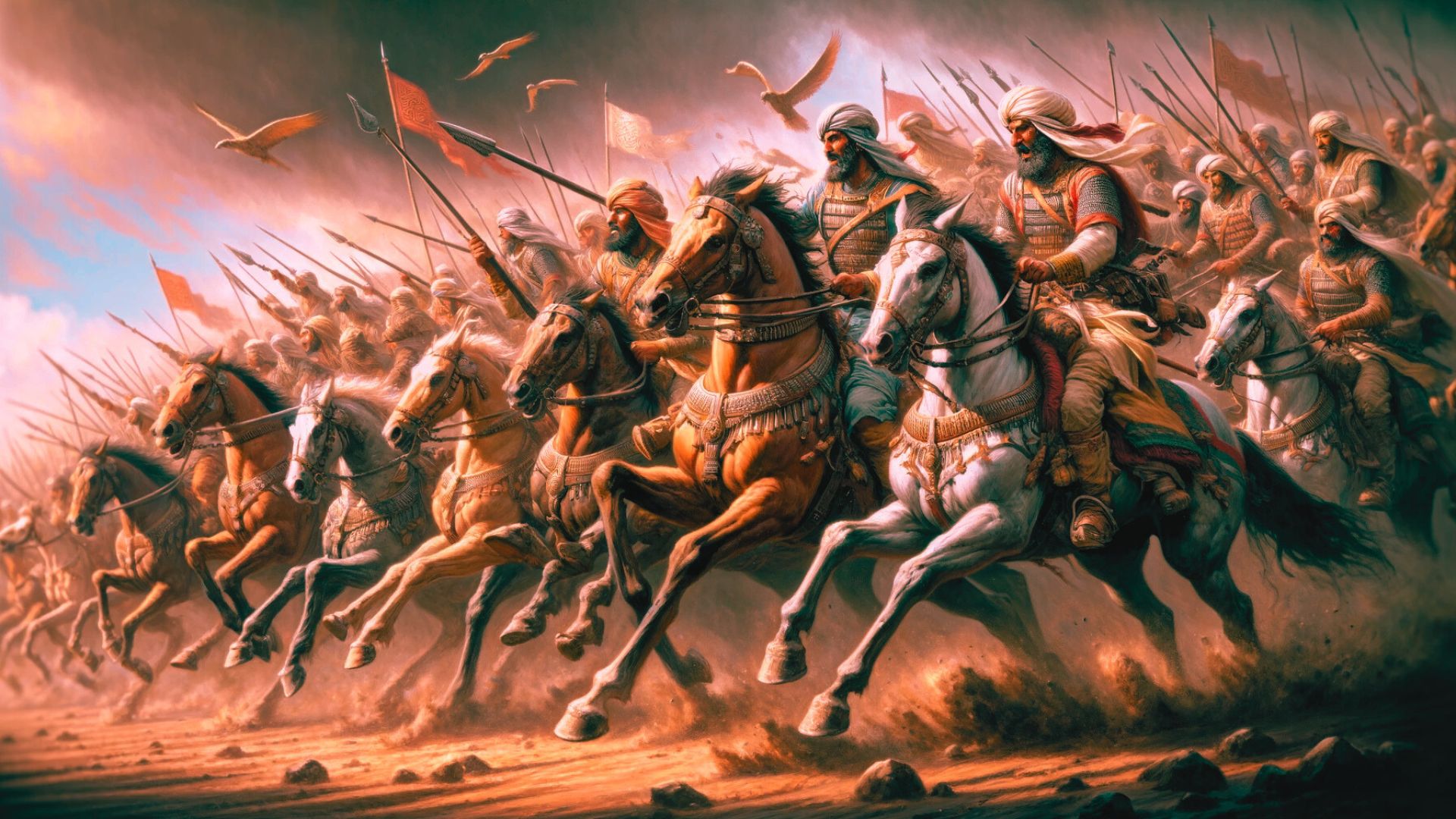
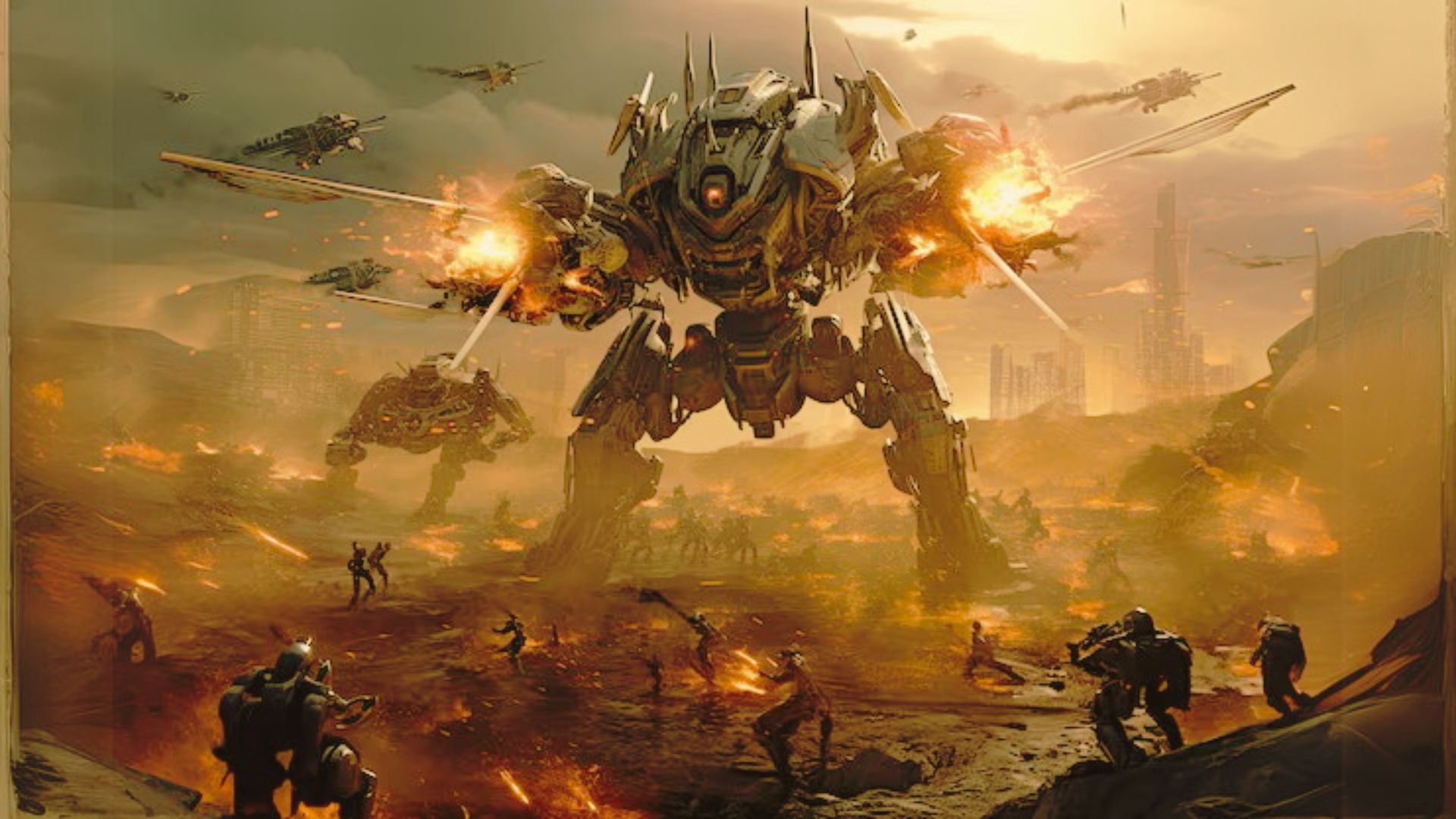
Several eschatological reports project the military institutions and material culture of Muhammad’s own historical environment into the events immediately preceding the Hour: cavalry, horses, swords, spears, booty, and reconnaissance riders. The important point is not that horses or swords could never appear in a future conflict, but that these descriptions consistently imagine the final wars through the military vocabulary and technology of Late Antiquity. Taken together, they provide evidence of the historical and cultural horizon within which these end-time scenarios were formulated. Let us compare this imagery with the technological character of modern warfare:
Now let us read a hadith,
Sahih Muslim (Islamic Foundation)
55/Tribulations and Signs of the Day of Judgment
Section: 10. The Day of Judgment will occur when the Romans are numerous
7017. Narrated from Abu Bakr ibn Abi Shaybah and Ali ibn Hujr (rh) … Usayr ibn Jabir (ra). He said: Once, a red (hot) whirlwind blew in the city of Kufa. At that time a man came to Kufa. His verbal tic was “Ala”: O Abdullah ibn Masud! The Day of Judgment has arrived. He (Abdullah ibn Masud) remained seated as he was and said: The Day of Judgment will not be established until inheritance remains undistributed and until people do not rejoice over spoils of war. Then he gestured with his hand toward Syria and said: The enemies of Allah will gather to fight the Muslims, and the Muslims will also gather to fight them.
(Hearing this) I said: By the enemies of Allah, you mean the Roman Christian community. He said: Yes, and at that time a terrible war will take place. Then the Muslim community will send forward a detachment; they will advance ready to die. They will not return without attaining victory. Then war will take place between them. They will fight until night falls. Then the soldiers of both sides will return without either side attaining victory. The detachment of Muslims that had advanced for battle will all die. Then, on the following day, the Muslims will send forward another detachment ready to die. They will not return without victory. On that day too, a fierce battle will take place between them. Eventually evening will come. Both armies will return to their own camps without victory. The detachment will be wiped out. Then on the third day, the Muslims will again send an army ready to die, who will not return without victory. On that day they will be among the best cavalry units on earth.
This battle will continue until evening. Eventually this group and that group will return without attaining victory. (However, the forward) detachment of the Muslim army will be wiped out. Then, on the fourth day of the battle, all the remaining Muslims will advance toward the front for war. On that day Allah Most High will impose a disastrous turn upon the disbelievers. Then such a battle will take place as no one has ever seen in life, or as no one had ever seen in life. Eventually birds will keep flying over their bodies. A bird will not pass beyond them; in that state it will fall to the ground and die. From a full clan of one hundred men, only one person among them will remain alive. In such a state, how will people celebrate over the spoils of war, and how will inheritance be distributed?
At this time, the Muslims will hear news of another terrible danger, and a cry will reach them to the effect that the Dajjal has come behind them among their families. As soon as they hear this news, they will leave behind everything in their hands and set out, and they will send ten horsemen as a reconnaissance party.The Messenger of Allah, peace and blessings be upon him, said: I know the name of every person in the reconnaissance party sent to gather news of the Dajjal, the names of their fathers and grandfathers, and also the colors of their horses. On that day they will be the best cavalry unit on earth. Or (he said) Ibn Abi Shaybah, in his narration, narrated أُسَيْرِ بْنِ جَابِرٍ instead of يُسَيْرِ بْنِ جَابِرٍ.
Hadith grade: Sahih (Sahih)
Narrator: Usayr ibn Jabir (RA)
Horses and Ghanimah Will Remain Until the Day of Resurrection
The connection between horses and the wars of the end times is not confined to a single isolated report. In another hadith in Sahih Muslim, Muhammad directly links reward and war-booty, ghanimah, to horses “until the Day of Resurrection”. In other words, here the horse is not merely the mount of warfare in his own time; in the language of the report, it is part of the framework of ongoing war and ghanimah until the Day of Resurrection. [12]
عَنْ جَرِيرِ بْنِ عَبْدِ اللَّهِ قَالَ: رَأَيْتُ رَسُولَ اللَّهِ صَلَّى اللَّهُ عَلَيْهِ وَسَلَّمَ يَلْوِي نَاصِيَةَ فَرَسٍ بِإِصْبَعِهِ، وَهُوَ يَقُولُ: الْخَيْلُ مَعْقُودٌ بِنَوَاصِيهَا الْخَيْرُ إِلَى يَوْمِ الْقِيَامَةِ: الْأَجْرُ وَالْغَنِيمَةُ.
Narrated from Jarir ibn Abdullah. He said: I saw the Messenger of Allah twisting the forelock of a horse with his finger. At that time he was saying: “Goodness is tied to the forelocks of horses until the Day of Resurrection—reward and ghanimah.”
The time-frame of this statement is noteworthy: إِلَى يَوْمِ الْقِيَامَةِ—“until the Day of Resurrection.” In the same article, we see descriptions of cavalry in the great war of the end times, ten horsemen gathering news of the Dajjal, the distribution of ghanimah while swords are hung on trees, and the killing of the Dajjal with a spear. When this hadith is added to those, the continuity of seventh-century war culture becomes still clearer: in Muhammad’s statement, horses, jihad, and ghanimah are presented not merely as realities of his own era, but also as part of a system continuing until the Day of Resurrection.
In this hadith, cavalry stands at the center of the final conflict before the Day of Resurrection, and Muhammad even claims to know the colors of those horses. In other similar reports, there are also scenes of swords being hung on trees while ghanimah is divided, and of the Dajjal being killed by a spear in the hand of Jesus. Taken together, these create an imagined picture of the future whose military equipment is entirely bound within ancient and medieval war culture.
Sword Warfare Before the Day of Resurrection?
Now let us read a hadith about the use of swords as weapons in the war before the Day of Resurrection. It should be noted that there are many such hadiths. [13]
Sahih Muslim (Islamic Foundation)
55/ The Tribulations and the Signs of the Day of Resurrection
Chapter: 9. The Conquest of Istanbul, the Emergence of the Dajjal, and the Descent of Isa ibn Maryam (peace be upon him)
7014. Narrated from Zuhayr ibn Harb (may Allah have mercy on him) … Abu Hurayrah (may Allah be pleased with him). The Messenger of Allah, peace and blessings be upon him, said: The Hour will not be established until the Roman army descends at Amaq or Dabiq. Then an army made up of the best people on earth at that time will come out from Madinah to confront them. After both sides have formed ranks, the Romans will say: Leave us alone with those who took prisoners from among our people, so that we may fight them.
Then the Muslims will say: By Allah! We will never separate ourselves from our brothers. Eventually they will fight one another. In this battle, one-third of the Muslim army will flee. Allah Most High will never accept their repentance. One-third of the soldiers will be killed, and they will be the best martyrs before Allah. And the remaining one-third of the soldiers will be victorious. They will never again be afflicted by fitnah in their lives. They will conquer Istanbul. They will hang their swords on olive trees and divide the war-booty. At that moment Satan will shout among them, saying: The Dajjal has come behind you among your families.
Hearing this, the Muslims will set out from there. Yet this will be false news. When they reach Syria, the Dajjal will appear. When the Muslim army prepares for battle and begins to stand in ranks, the time for prayer will arrive. Then Isa (peace be upon him) will descend and lead them in prayer. As soon as the enemy of Allah sees him, he will dissolve just as salt dissolves in water. If Isa (peace be upon him) were simply to leave him alone, he would still dissolve by himself and be destroyed. But Allah Most High will kill him by the hand of Isa (peace be upon him), and He will show them his blood on the spear of Isa (peace be upon him).
Hadith grade: Sahih
Narrator: Abu Hurayrah (may Allah be pleased with him)
The Use of Swords and Spears Before the Day of Resurrection
From the hadiths it is also known that swords and spears will be used in the war before the Day of Resurrection. [14]
Mishkat al-Masabih (Mishkat)
Part 27: Fitnah
Chapter: First Section – Concerning Wars and Battles
5421-[12] Narrated from Abu Hurayrah (may Allah be pleased with him). He said, The Messenger of Allah (peace be upon him) said: The Day of Resurrection will not occur until the Romans descend against the Muslims at a place called Amaq or Dabiq, and an army composed of the best people of Madinah at that time will come out to confront them. When the Muslims line up for battle, the Romans will say: Those among you who fought us and took some of our people captive, leave them to us; we will fight them. The Muslims will say: By Allah! This can never happen. We cannot abandon those Muslim brothers of ours for you to fight. Then the Muslims will engage in battle against the Roman disbelievers, but one-third of the Muslims will flee from confronting the Romans. Allah Most High will never accept the repentance of these fugitives. One-third will be killed; they will be regarded as the best martyrs before Allah Most High. And one-third will triumph over the Romans; Allah Most High will never cast them into fitnah. Eventually they will conquer Constantinople. Then, while they are occupied with dividing the goods and wealth of ghanimah and will have hung their swords on olive trees, at that very moment Satan will suddenly announce that, in your absence, Masih ad-Dajjal has entered your homes. Upon hearing this, that army of Madinah will set out in that direction. Yet that announcement will be entirely false. When the Muslims leave Constantinople and enter Syria, the Dajjal will appear. At that time the Muslims will be preparing to fight the Dajjal and will stand in ranks; immediately the iqamah for prayer will be given, and at that moment Isa ibn Maryam (peace be upon him) will descend from the sky to the minaret of the Jami Mosque of Damascus and lead the Muslims in prayer. Then, when the enemy of Allah (the Dajjal) sees him, he will begin to melt just as salt melts in water. And if Isa (peace be upon him) had simply left him alone, he would still have melted and perished by himself, but Allah Most High will kill him with the spear of Isa (peace be upon him), and He will show that blood-stained spear to all the people. (Muslim)
Sahih: Muslim 34-(2897), Sahih al-Jami’ 7433, Al-Mustadrak lil-Hakim 8486.
Hadith grade: Sahih
Narrator: Abu Hurayrah (may Allah be pleased with him)
The Day of Resurrection Is Very Near: As If It Has Almost Arrived
The Quran states very clearly that the Day of Resurrection is very near. [15]
The Hour has drawn near, and the moon has split,
— Taisirul Quran
The Hour is imminent, the moon has split,
— Sheikh Mujibur Rahman
The Hour has drawn near and the moon has split.
— Rawai Al-bayan
The Hour has come near [1], and the moon has split [2],
— Dr. Abu Bakr Muhammad Zakaria
In the Quran, the nearness of the Day of Resurrection and the Last Judgment is not confined only to the declaration in Surah al-Qamar, “The Hour has drawn near.” In Surah al-Ma’arij as well, the question of distance is expressed directly through two opposing positions—people consider it a distant event, but Allah declares it to be near. In Tafsir al-Qurtubi, the explanation of this verse also preserves the meaning of nearness. [16]
فَاصْبِرْ صَبْراً جَمِيلاً إِنَّهُمْ يَرَوْنَهُ بَعِيداً وَنَراهُ قَرِيباً
“So be patient with a beautiful patience. Indeed, they see it as distant, while We see it as near.”
قَوْلُهُ تَعَالَى: (إِنَّهُمْ يَرَوْنَهُ بَعِيداً) يُرِيدُ أَهْلَ مَكَّةَ يَرَوْنَ الْعَذَابَ بِالنَّارِ بَعِيدًا، أَيْ غَيْرَ كَائِنٍ. (وَنَراهُ قَرِيباً) لِأَنَّ مَا هُوَ آتٍ فَهُوَ قَرِيبٌ. وَقَالَ الْأَعْمَشُ: يَرَوْنَ الْبَعْثَ بَعِيدًا لِأَنَّهُمْ لَا يُؤْمِنُونَ كَأَنَّهُمْ يَسْتَبْعِدُونَهُ عَلَى جِهَةِ الْإِحَالَةِ.
The statement of Allah—“They see it as distant”—means that the people of Makkah considered the punishment of the Fire to be a distant matter; that is, they thought it would not occur. “And We see it as near”—because whatever is coming is near. Al-A’mash said: They see the resurrection as a distant matter, because they do not believe in it; as though they push it away as impossible.
This verse is especially important in the discourse on the nearness of the Day of Resurrection, because here the words “distant” and “near” stand face to face in the same cluster of statements. The human position is that the event is distant; the Quranic declaration is that the event is near. In Qurtubi’s explanation, too, this nearness has not disappeared; he writes directly, “whatever is coming is near”, and he includes the resurrection within this discussion as well. Thus the statement in Surah al-Qamar 54:1, “The Hour has drawn near”, is not an isolated choice of wording; elsewhere in the Quran, too, the same Last Judgment is declared near in contrast to the tendency to regard it as distant.
The Announcement of Imminence, Waiting—Yet Nothing Happened
A highly significant report about how people of that time were receiving the Quranic language of the nearness of the Day of Resurrection and divine punishment has been preserved in al-Durr al-Manthur. In this account, narrated from Ibn Jurayj, the first declaration comes: “The command of Allah has come.” Some people then began to stop their work and wait, to see what would happen. But when they saw that nothing happened, they said: “We do not see anything being sent down.” Then came another declaration: “The time of people’s reckoning has drawn near.” They again heard the same sort of claim and waited; again, when they saw nothing happen, they raised the same objection. After that came the statement that punishment had been deferred until a fixed time. [17]
وَأخرج ابْن جرير وَابْن الْمُنْذر عَن ابْن جريج قَالَ: لما نزلت هَذِه الْآيَة “أَتَى أَمر الله فَلَا تستعجلوه” قَالَ رجال من الْمُنَافِقين بَعضهم لبَعض: إِن هَذَا يزْعم أَن أَمر الله قد أَتَى فأمسكوا عَن بعض مَا كُنْتُم تَعْمَلُونَ حَتَّى تنظروا مَا هُوَ كَائِن فَلَمَّا رَأَوْا أَنه لَا ينزل شَيْء قَالُوا: مَا نرَاهُ نزل. فَنزلت “اقْترب للنَّاس حسابهم” الْآيَة، فَقَالُوا: إِن هَذَا يزْعم مثلهَا أَيْضا فَلَمَّا رَأَوْا أَنه لَا ينزل شَيْء قَالُوا: مَا نرَاهُ نزل شَيْء فَنزلت “وَلَئِن أخرنا عَنْهُم الْعَذَاب إِلَى أمة مَعْدُودَة”.
Ibn Jarir and Ibn al-Mundhir narrated from Ibn Jurayj, who said: When this verse was revealed—“The command of Allah has come, so do not seek to hasten it”—some men among the hypocrites began saying to one another: “This man claims that the command of Allah has come, so hold back from some of what you have been doing until you see what happens.” Then, when they saw that nothing was being sent down, they said: “We do not see anything being sent down.” Then the verse was revealed: “The time of people’s reckoning has drawn near.” They said: “He is again making a claim like the previous one.” Then, when they saw that nothing was being sent down, they said: “We do not see anything being sent down.” Then it was revealed: “And if I defer the punishment from them until a fixed time…” (Surah Hud, verse: 8)
The sequence of this report is especially important. First it is said that the command of Allah has already come; when nothing visible actually happens, another declaration comes—the time of people’s reckoning has drawn near; when that too does not turn into the expected event, the language of the punishment being deferred comes to the fore. In other words, the contemporary doubt confronting the declaration of “imminence” is preserved within Islamic tafsir itself—and even the language of that doubt is very clear: “We do not see anything happening.” In contrast to reading the same language of imminence many centuries later as a symbol of an infinitely long period of time, this report shows that, at least in this early memory, the claims were being received in a way that led people to wait for their real-world outcome.
“I and the Day of Resurrection have been sent like these two fingers”—in the common early explanation of this report as well, nearness is the central meaning. Nawawi wrote in his Sharh Sahih Muslim that one explanation is this: just as there is only a slight difference between the lengths of the two fingers, so too there is only a slight interval between Muhammad and the Day of Resurrection; in another explanation, it indicates that the Day of Resurrection is extremely near. [18] In other words, the nearness implied by the “two fingers” analogy is not an imposition by a modern critic; that meaning is already clear within early Islamic interpretation.
Sahih Muslim (Islamic Foundation)
Chapter: 55/ The Tribulations and the Signs of the Day of Resurrection
Section: 23. The Nearness of the Day of Resurrection
7140. Narrated from Abu Ghassan Misma’i (may Allah have mercy on him) … Anas (may Allah be pleased with him). The Messenger of Allah, peace and blessings be upon him, said: I and the Day of Resurrection have been sent like these two. The narrator said: At that time he joined his index and middle fingers together.
Hadith grade: Sahih
The Day of Resurrection Seemed to Be Overtaking Even Muhammad
The statement of nearness “like two fingers” is not an isolated analogy. In the same discussion of the same tafsir, the nearness of the Day of Resurrection is expressed in even more intense language. Qatadah says, “The Day of Resurrection has drawn very near”; Muhammad’s coming itself is called one of the signs of the Day of Resurrection; the remaining time of the world, compared with the time already elapsed, is likened to the small remaining portion of a day at sunset. Then, through Buraydah’s chain, a statement from Muhammad is preserved in which the Day of Resurrection is not merely near—it is so near that it almost seems to have been overtaking him and moving ahead. [19]
بعثت أَنا والساعة جَمِيعًا إِن كَادَت تسبقني
“I and the Day of Resurrection were sent together; it almost seems as though the Day of Resurrection would overtake me and go ahead.”
The language of this statement is extremely clear. Here the Day of Resurrection is not merely said to “happen one day,” nor is it pushed into some indefinite distant future. Rather, Muhammad’s own coming and the Day of Resurrection are placed side by side in the same temporal race, and it is said that the Day of Resurrection was almost about to pass him and go ahead. When this is placed together with “two fingers,” “the Day of Resurrection has drawn very near,” and the analogy of the small remaining portion of a day at sunset, the same picture returns again and again: at the time of Muhammad’s preaching, the world was being imagined as extremely close to its final stage.
Another similar analogy for expressing the nearness of the Day of Resurrection has also been preserved in Tafsir al-Qurtubi. While explaining the verse in Surah Muhammad 47:18, “The signs of the Hour have already come,” Qurtubi first quotes the hadith, “I and the Day of Resurrection have been sent like these two fingers.” Then he mentions another report in which the relation between Muhammad and the Day of Resurrection is compared to two horses running in a race. [20]
وَفِي الصَّحِيحِ عَنْ أَنَسٍ قَالَ قَالَ رَسُولُ اللَّهِ صلى الله عليه وسلم: بُعِثْتُ أَنَا وَالسَّاعَةِ كَهَاتَيْنِ، وَضَمَّ السَّبَّابَةَ وَالْوُسْطَى، لَفْظُ مُسْلِمٍ. وَخَرَّجَهُ الْبُخَارِيُّ وَالتِّرْمِذِيُّ وَابْنُ مَاجَهْ. وَيُرْوَى: بُعِثْتُ وَالسَّاعَةُ كَفَرَسَيْ رِهَانٍ.
In the Sahih work, it is narrated from Anas (may Allah be pleased with him) that he said: The Messenger of Allah, peace and blessings be upon him, said: “I and the Day of Resurrection have been sent like these two.” Then he joined his index and middle fingers together; this is the wording of Muslim. Bukhari, Tirmidhi, and Ibn Majah also narrated it. It is also narrated: “I and the Day of Resurrection have been sent like two horses engaged in a race.”
كَفَرَسَيْ رِهَانٍ means like two horses running side by side in a race. In this analogy, nearness is not merely a fixed distance; Muhammad’s coming and the Day of Resurrection are depicted as two competitors running almost parallel in the same race. Thus, within the same interpretive tradition, three images are found side by side—the slight gap between two fingers, the Day of Resurrection almost overtaking Muhammad, and two horses running side by side in competition. In all three cases, the Day of Resurrection is presented not as an event located at a vast distance from Muhammad’s appearance, but as an event of an extremely close final phase.
The nearness in the report “I and the Day of Resurrection are like these two fingers” is so direct that, in later times, even the difference in the lengths of the fingers was used to determine its temporal meaning. Stephen J. Shoemaker, analyzing al-Tabari’s discussion, has shown that by combining the idea of a seven-thousand-year history of the world with the difference in length between the index and middle fingers, attempts were made to place the time of the Day of Resurrection within a few centuries after Muhammad. That is, first, “as close as two fingers,” and then, once time had passed, an attempt to convert that same analogy into numbers and derive a new time-frame. [21] This sequence shows that the nearness of the Day of Resurrection was not being understood in the first period as merely an “infinite future”; as time passed, the meaning of that nearness itself had to be adjusted anew.
Al-Tabari’s Calculation—About Five Hundred Years of the World Remained
The calculation discussed by Shoemaker appears in even clearer language in al-Tabari’s own work. At the very beginning of Tarikh al-Tabari, he brings together the reports “I and the Day of Resurrection are like these two fingers,” the analogy of the remaining part of the day from after Asr until sunset, and the reports concerning a “half-day” in order to determine the total duration of the world. Then, accepting the idea attributed to Ibn Abbas that “the world is one week among the weeks of the Hereafter—seven thousand years”, he arrives at the calculation: by Muhammad’s time, about 6,500 years had passed, and what remained was half a day = 500 years. [22]
وَأَنَّهُ قَالَ لِأَصْحَابِهِ: «بُعِثْتُ أَنَا وَالسَّاعَةُ كَهَاتَيْنِ»، وَجَمَعَ بَيْنَ السَّبَّابَةِ وَالْوُسْطَى … وَكَانَ مَعْنَى قَوْلِ النَّبِيِّ ذَلِكَ أَنَّ «لَنْ يُعْجِزَ اللَّهُ هَذِهِ الْأُمَّةَ مِنْ نِصْفِ يَوْمٍ» الَّذِي مِقْدَارُهُ أَلْفُ سَنَةٍ … وَأَشْبَهُهُمَا بِمَا دَلَّتْ عَلَيْهِ الْأَخْبَارُ الْوَارِدَةُ عَنْ رَسُولِ اللَّهِ صلى الله عليه وسلم قَوْلُ ابْنِ عَبَّاسٍ الَّذِي رَوَيْنَا عَنْهُ أَنَّهُ قَالَ: «الدُّنْيَا جُمُعَةٌ مِنْ جُمَعِ الْآخِرَةِ سَبْعَةُ آلَافِ سَنَةٍ». وَإِذْ كَانَ ذَلِكَ كَذَلِكَ، وَكَانَ الْخَبَرُ عَنْ رَسُولِ اللَّهِ صلى الله عليه وسلم صَحِيحًا أَنَّهُ أَخْبَرَ عَنِ الْبَاقِي مِنْ ذَلِكَ فِي حَيَاتِهِ أَنَّهُ نِصْفُ يَوْمٍ، وَذَلِكَ خَمْسُمِائَةِ عَامٍ، إِذْ كَانَ ذَلِكَ نِصْفَ يَوْمٍ مِنَ الْأَيَّامِ الَّتِي قَدْرُ الْيَوْمِ الْوَاحِدِ مِنْهَا أَلْفُ عَامٍ، كَانَ مَعْلُومًا أَنَّ الْمَاضِيَ مِنَ الدُّنْيَا إِلَى وَقْتِ قَوْلِ النَّبِيِّ صلى الله عليه وسلم … كَانَ قَدْرَ سِتَّةِ آلَافِ سَنَةٍ وَخَمْسِمِائَةِ سَنَةٍ، أَوْ نَحْوًا مِنْ ذَلِكَ وَقَرِيبًا مِنْهُ. وَاللَّهُ أَعْلَمُ.
Al-Tabari quotes Muhammad’s statement: “I and the Day of Resurrection have been sent like these two”—and mentions the joining together of the index and middle fingers. He then interprets the report “Allah will not fail to delay this ummah by half a day” as referring to half of a day whose full length equals one thousand years. He accepts as the more fitting view the statement attributed to Ibn Abbas—“The world is one week among the weeks of the Hereafter, seven thousand years.” He then says that during Muhammad’s lifetime the remaining time of the world was half a day, that is, five hundred years; therefore, by that time about six thousand five hundred years of the world had already passed.
This is not merely a reconstruction by a later researcher; the numerical calculation is written explicitly in al-Tabari’s own work. In his model, the world’s total lifespan is seven thousand years; by Muhammad’s time, about six thousand five hundred years had already ended; and about five hundred years remained before the Day of Resurrection. In other words, language such as “the Day of Resurrection has drawn near” and “two fingers” was read, in an important early historical work of the Islamic tradition, as a real chronological calculation. This calculation has historically failed: more than a thousand years have passed even since al-Tabari’s age, and about fourteen centuries have passed since Muhammad’s time. Thus this document shows two things at once—first, that the language of nearness was once converted into a numerical time-frame; and second, that this time-frame too did not correspond with history.
The Half-Day Calculation—Five Hundred Years
Another important example of converting the nearness of the Hour into numbers is found in Tafsir Ibn Kathir. In Surah al-Hajj 22:47, it is said that with Allah, one day is equal to one thousand years by human reckoning. In discussing this verse, Ibn Kathir cites a report through Sa‘d ibn Abi Waqqas in which Muhammad expresses the hope that his ummah will be granted a delay of “half a day”. When asked how long that half-day was, Sa‘d replied: five hundred years. In other words, from the religious-time equation “one day = one thousand years,” half a day was directly converted into five hundred years. [23]
وَيَسْتَعْجِلُونَكَ بِالْعَذَابِ وَلَنْ يُخْلِفَ اللَّهُ وَعْدَهُ وَإِنَّ يَوْمًا عِنْدَ رَبِّكَ كَأَلْفِ سَنَةٍ مِمَّا تَعُدُّونَ
“They ask you to hasten the punishment, yet Allah will never break His promise. And with your Lord, one day is like one thousand years of what you count.”
عَنْ سَعْدِ بْنِ أَبِي وَقَّاصٍ، أَنَّ النَّبِيَّ صَلَّى اللَّهُ عَلَيْهِ وَسَلَّمَ قَالَ: إِنِّي لَأَرْجُو أَنْ لَا تَعْجِزَ أُمَّتِي عِنْدَ رَبِّهَا أَنْ يُؤَخِّرَهُمْ نِصْفَ يَوْمٍ. قِيلَ لِسَعْدٍ: وَكَمْ نِصْفُ ذَلِكَ الْيَوْمِ؟ قَالَ: خَمْسُ مِائَةِ سَنَةٍ.
It is narrated from Sa‘d ibn Abi Waqqas that the Prophet, peace and blessings of Allah be upon him, said: “I hope that my ummah will not be so incapable before their Lord that He will not delay them for half a day.” Sa‘d was asked: “How long is that half-day?” He said: “Five hundred years.”
This numerical interpretation is directly related to the earlier discussion of al-Tabari. Taking “one day = one thousand years,” half a day = five hundred years—in this way, the time-related metaphor of scripture was being converted into a calculation in actual centuries. Ibn Hajar, while discussing this calculation of al-Tabari, also wrote that half a day had been taken as five hundred years on the basis of the Qur’anic equivalence of one day with one thousand years. Thus, reading the language of “the Hour is near” from the outset as a metaphor for an infinite and indeterminate period was not the only current within Islamic interpretation; rather, attempts to place that nearness within a specific reckoning of centuries are also preserved within Islamic literature.
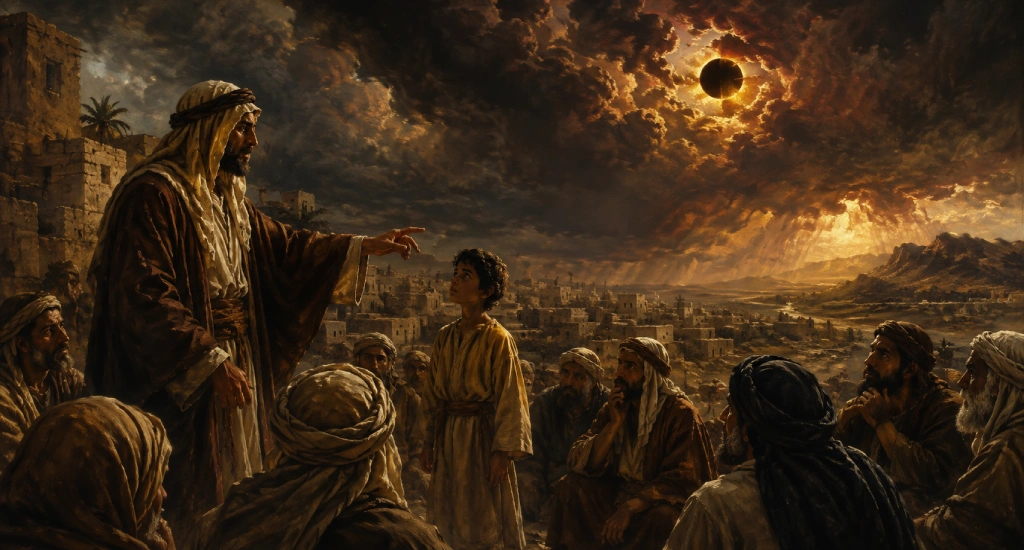
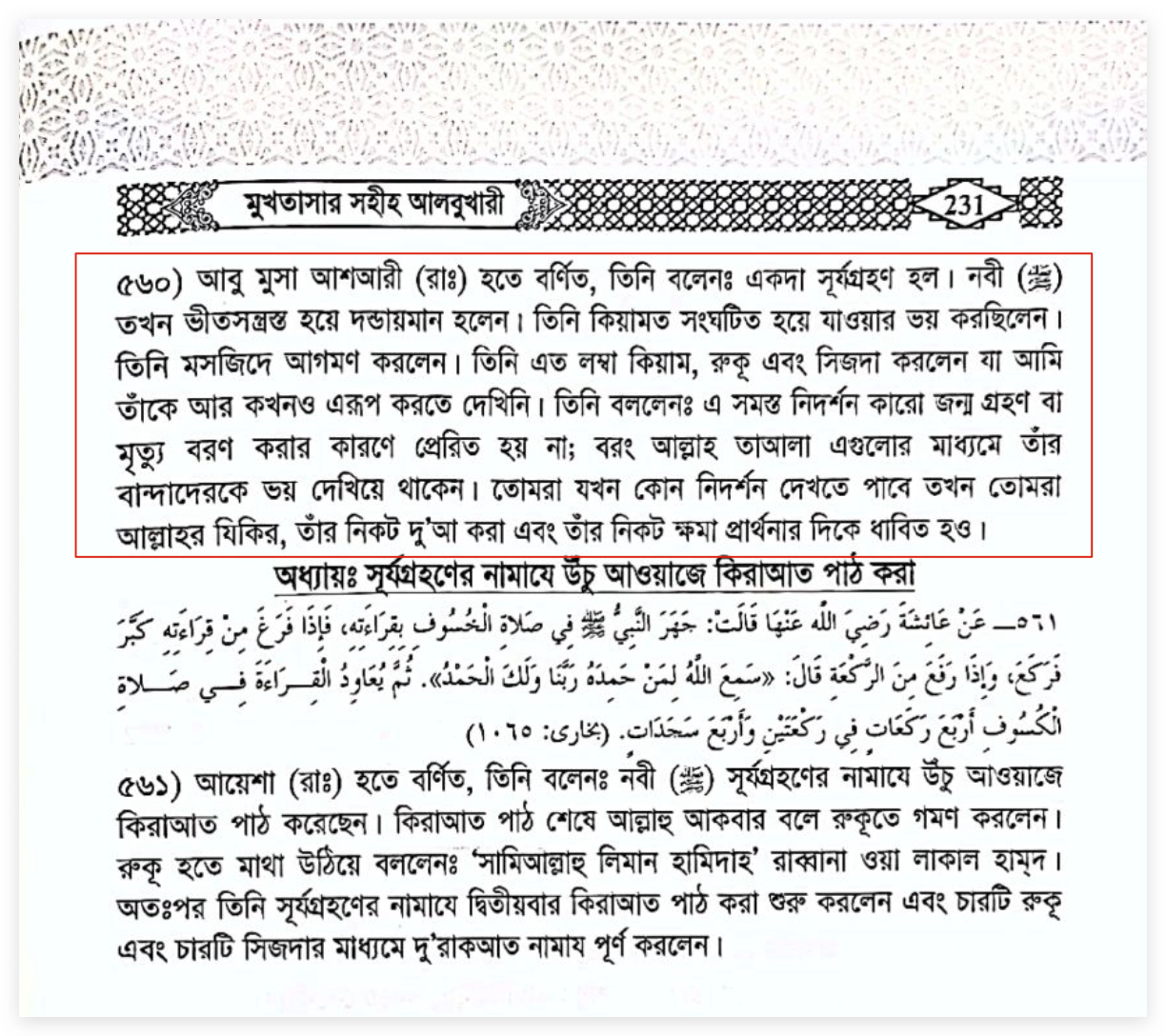
Upon seeing a solar eclipse, Muhammad became so alarmed that he feared the Hour was beginning. This sahih report shows that, for him, the Hour was not an abstract idea in some infinitely distant future; the fear that it could begin during his own lifetime, immediately in connection with a sudden natural event, was real. In modern astronomy, a solar eclipse is the result of the predictable geometric alignment of the earth, moon, and sun; in the hadith report, the same event is viewed as the possible immediate beginning of cosmic catastrophe [24] [25]
Mukhtasar Sahih al-Bukhari
16. Kitab al-Kusuf (Description of the Solar Eclipse)
Chapter: Remembering Allah at the time of a solar eclipse
Alokito Prokashoni Number: 560, International Number: 1059
560: Narrated from Abu Musa al-Ash‘ari (RA), he said:Once there was a solar eclipse. The Prophet, peace and blessings of Allah be upon him, then stood up in a state of fear. He was afraid that the Hour was taking place. He came to the mosque. He performed such a long standing, bowing, and prostration that I had never seen him do so before. He said: These signs are not sent because of anyone’s birth or death; rather, Allah Most High frightens His servants through them. When you see any sign, hasten toward remembering Allah, supplicating to Him, and seeking forgiveness from Him.
Hadith grade: Sahih (Sahih)
Narrator: Abu Musa al-Ash‘ari (RA)
The Astronomy of Eclipses versus Hadith-Based Authority
A modern example of this religious view of solar and lunar eclipses is found in the fatwa of the Saudi scholar ‘Abd al-‘Aziz ibn Baz. Astronomers determine solar eclipses as geometric events occurring at the time of the new moon and lunar eclipses as events occurring at the time of the full moon, and they can calculate their timing far in advance. But Ibn Baz refused to accept this astronomical rule as admissible evidence against sahih hadith. He even said that a solar eclipse could occur outside the end of the month and a lunar eclipse outside the night of the full moon.[26]
أَمَّا قَوْلُ الْفَلَكِيِّينَ: إِنَّ كُسُوفَ الشَّمْسِ لَا يَكُونُ إِلَّا فِي آخِرِ الشَّهْرِ … فَلَيْسَ عَلَيْهِ دَلِيلٌ يُعْتَمَدُ عَلَيْهِ
“As for the astronomers’ statement that a solar eclipse occurs only at the end of the month, there is no reliable proof for it on which one may depend.”
The fatwa further states that a solar eclipse may occur at times other than the end of the month, and a lunar eclipse at times other than the night of the full moon. Here the methodological conflict over determining knowledge is clear: on the one hand, by calculating the positions of the sun, moon, and earth, the time, place, and duration of an eclipse can be determined in advance; on the other hand, when the results of observation and calculation conflict with religious reports, the religious report is being given priority. In modern astronomy, solar eclipses occur in the new-moon phase and lunar eclipses in the full-moon phase. Thus the ancient religious fear surrounding eclipses did not remain confined to a historical report; within later religious authority as well, it created a precedent for privileging scriptural authority over observable astronomical rules.
Now let us look at another hadith. At the very beginning of this hadith, an important psychological effect is noticeable: when the Prophet spoke about the Dajjal in the morning, he sometimes presented him as insignificant, and at other times as an extremely grave danger. As a result of this “rise-and-fall” mode of narration, the message became embedded in the listeners’ minds in such a way that the appearance of the Dajjal seemed not like some distant tale of fantasy, but rather a real fear that could occur in the near future. They felt the Dajjal to be so close that they eventually began to think that perhaps the Dajjal was somewhere within that very date-grove. In other words, the narration created in their minds a sense of real presence: “this is ahead, very near.”
This is a kind of rhetorical strategy: by presenting the threat sometimes as small and sometimes as great, it creates uncertainty-driven fear within the listener. As a result, the Dajjal does not remain a “distant story”; rather, he is felt as a possibly imminent reality that “could happen now/very soon.” Within the same pattern, the Prophet’s statement—“If I am among you, I myself will resist him”—also indicates that he imagined the appearance of the Dajjal not merely theoretically, but as possible even within his own lifetime; at the very least, he presented that possibility before his listeners as a realistic fear. [27]
Sahih Muslim (Hadith Academy)
54. Various Tribulations and the Signs of the Hour
Chapter: 20. Description of the Dajjal, his identity, and what will be with him
Hadith Academy Number: 7263, International Number: 2937
7263-(110/2937) Abu Khaythamah, Zuhayr ibn Harb, Muhammad ibn Mihran al-Razi (R) ….. Narrated from al-Nawwas ibn Sam‘an (RA). He said: One morning the Messenger of Allah, peace and blessings of Allah be upon him, discussed the Dajjal. During the discussion he presented his personality as insignificant. Later he presented him with great seriousness, to the point that we began to imagine him in that particular area of trees. Then we went to him again in the evening. Seeing its effect among us, he said: What is the matter with you?We said: O Messenger of Allah! You discussed the Dajjal in the morning, and in it you sometimes presented his personality as insignificant, and at other times presented his personality as great. As a result, we thought that perhaps the Dajjal was present within this garden. Hearing this, he said: Not the Dajjal; rather, I fear something else more concerning you. But listen: if the Dajjal appears while I am present among you, then I myself will resist him. You will not need to. And if the Dajjal appears when I am not among you, then every believer will resist him on his own behalf. For every Muslim, Allah Most High is the guardian on my behalf.
The Dajjal will be a young man with thick hair, and his eye will be like a grape. I think he resembles the disbeliever ‘Abd al-‘Uzza ibn Qatan. Whoever among you reaches the time of the Dajjal should recite the opening verses of Surah al-Kahf. He will emerge from the road between Iraq and Syria. He will spread calamity to the right and to the left. O servants of Allah! Remain steadfast. We asked: O Messenger of Allah, peace and blessings of Allah be upon him! How many days will he remain on earth? In reply, the Messenger of Allah, peace and blessings of Allah be upon him, said: For forty days. Its first day will be equal to a year, the second day equal to a month, and the third day equal to a week. The remaining days will be like your days.
We asked: O Messenger of Allah! On the day that will be equal to a year, will one day’s prayer be sufficient for us? In reply he said: No; rather, calculate that day and determine the measure of your days. We said: O Messenger of Allah, peace and blessings of Allah be upon him! How will the Dajjal’s advance increase in the world? He said: Like the wind drives clouds along. He will come to a people and call them toward disbelief. They will believe in him and respond to his call. Then he will command the sky. The sky will send down rain, and he will command the earth; as a result, the earth will produce plants and crops. Then in the evening their livestock will return to them with humps taller than before, udders wider, and bellies full.
Then the Dajjal will come to another people and call them to disbelief. They will ignore his words. As a result, he will turn away from them. Immediately famine and shortage of water will appear among them, and they will have nothing of their wealth left in their hands. Then, while the Dajjal passes by a barren place, he will address it and say: Bring out your treasures. Then the treasures of the earth will come out and gather around him, just as honeybees gather around their leader.
Then the Dajjal will call a young man and strike him with a sword, cutting him into two pieces like a target for an arrow. Then he will call him again. The young man will come forward before him with a radiant, smiling face. At this time Allah, Lord of the worlds, will send ‘Isa ibn Maryam (AS). He will descend at the bright minaret on the eastern side of the city of Damascus, wearing two garments dyed with wars and saffron, leaning on the shoulders of two angels. When he lowers his head, drops of sweat will roll down from his body. Any disbeliever he approaches will be destroyed by the air of his breath. His breath will reach as far as his sight reaches. He will continue searching for the Dajjal. At last he will catch him at a place called Bab Lud and kill him.
Then ‘Isa (AS) will go to that community whom Allah Most High protected from the turmoil of the Dajjal. ‘Isa (AS) will go to them, wipe their faces with his hand, and inform them of their places in Paradise. At that time Allah Most High will reveal to ‘Isa (AS): I have brought forth servants of Mine with whom no one has the power to fight. So take My believing servants and go to Mount Tur. Then Allah Most High will send the people of Ya’juj and Ma’juj. Having been released, they will rapidly spread to every corner of the earth. Their first group will come to the shore of “Buhayrat Tabariyyah” (the Mediterranean Sea) and drink all its water dry. Then their last group, while passing by this place, will say: Was there ever water in this sea?
They will besiege Allah’s Prophet ‘Isa (AS) and his companions. As a result, the head of an ox will be worth more to them than one hundred dinars are worth to you now. Then Allah’s Prophet ‘Isa (AS) and his companions will pray to Allah. As a result, Allah Most High will send punishment upon the community of Ya’juj and Ma’juj. A kind of worm will appear in their necks. By it, they will all die and be annihilated like the death of a single person. Then ‘Isa (AS) and his companions will come down from the mountain to the earth. But they will not find even half a cubit of space anywhere without their rotting corpses and the stench of corpses. Then ‘Isa (AS) and his companions will again pray to Allah. Then Allah Most High will send a kind of bird with necks as long as the necks of camels. They will carry them and throw them wherever Allah wills.
After that Allah will send such torrential rain that no house, whether of baked or unbaked material, will remain. The earth will be washed and become barren soil without vegetation. Then the earth will again be commanded: O earth! Produce your crops again and return your blessing. On that day a group of people will eat one pomegranate, and people will take shade under its rind. There will be blessing in milk. Thus one milk-giving camel will be sufficient for a group of people, one milk-giving cow will be sufficient for the people of one clan, and one milk-giving goat will be sufficient for the children of one grandfather (a small clan). At this time Allah Most High will send a very pleasant wind. This wind will touch the armpits of all believers and will take the souls of all believing Muslims. Then only wicked people will remain on this earth. They will openly engage in fornication with one another like donkeys. Upon them the Hour will take place. (Islamic Foundation 7106. Islamic Center 7160)
Hadith grade: Sahih (Sahih)
In another narration from Abu ‘Ubaydah ibn al-Jarrah, the timeframe is even clearer. Here Muhammad not only warned about the coming of the Dajjal; he also directly expressed the possibility that someone among those who had seen him with their own eyes or heard his words directly might witness the Dajjal. Al-Tirmidhi called the report “hasan gharib”; the same statement is also preserved in Musnad Ahmad. [28]
حَدَّثَنَا عَبْدُ اللَّهِ بْنُ مُعَاوِيَةَ الْجُمَحِيُّ، قَالَ: حَدَّثَنَا حَمَّادُ بْنُ سَلَمَةَ، عَنْ خَالِدٍ الْحَذَّاءِ، عَنْ عَبْدِ اللَّهِ بْنِ شَقِيقٍ، عَنْ عَبْدِ اللَّهِ بْنِ سُرَاقَةَ، عَنْ أَبِي عُبَيْدَةَ بْنِ الْجَرَّاحِ، قَالَ: سَمِعْتُ رَسُولَ اللَّهِ صلى الله عليه وسلم يَقُولُ: إِنَّهُ لَمْ يَكُنْ نَبِيٌّ بَعْدَ نُوحٍ إِلَّا قَدْ أَنْذَرَ الدَّجَّالَ قَوْمَهُ، وَإِنِّي أُنْذِرُكُمُوهُ. فَوَصَفَهُ لَنَا رَسُولُ اللَّهِ صلى الله عليه وسلم فَقَالَ: لَعَلَّهُ يُدْرِكُهُ بَعْضُ مَنْ رَآنِي أَوْ سَمِعَ كَلَامِي. قَالُوا: يَا رَسُولَ اللَّهِ، فَكَيْفَ قُلُوبُنَا يَوْمَئِذٍ؟ قَالَ: مِثْلُهَا، يَعْنِي الْيَوْمَ، أَوْ خَيْرٌ. قَالَ التِّرْمِذِيُّ: هَذَا حَدِيثٌ حَسَنٌ غَرِيبٌ مِنْ حَدِيثِ أَبِي عُبَيْدَةَ بْنِ الْجَرَّاحِ.
Abu ‘Ubaydah ibn al-Jarrah said: I heard the Messenger of Allah, peace and blessings of Allah be upon him, say: “There was no prophet after Nuh who did not warn his people about the Dajjal; and I too warn you about him.” Then the Messenger of Allah, peace and blessings of Allah be upon him, described the Dajjal to us and said: “Perhaps someone among those who have seen me or heard my words will encounter him.” They asked: “O Messenger of Allah, what will the state of our hearts be on that day?” He said: “As they are today—or better.” Al-Tirmidhi said: This is a hasan gharib hadith through Abu ‘Ubaydah ibn al-Jarrah.
The temporal implication in this report is extremely specific. بَعْضُ مَنْ رَآنِي أَوْ سَمِعَ كَلَامِي—“someone among those who have seen me or heard my words”—places the possible appearance of the Dajjal within the lifespan of Muhammad’s direct viewers and listeners. Since the Dajjal is a central sign in Islamic end-times discourse, this statement is another direct testimony that the cluster of events of the Hour was imagined not in some indefinite, millennia-distant future, but within the possible experience of the first generation of listeners.
When Will the Hour Occur: Specifying the Time
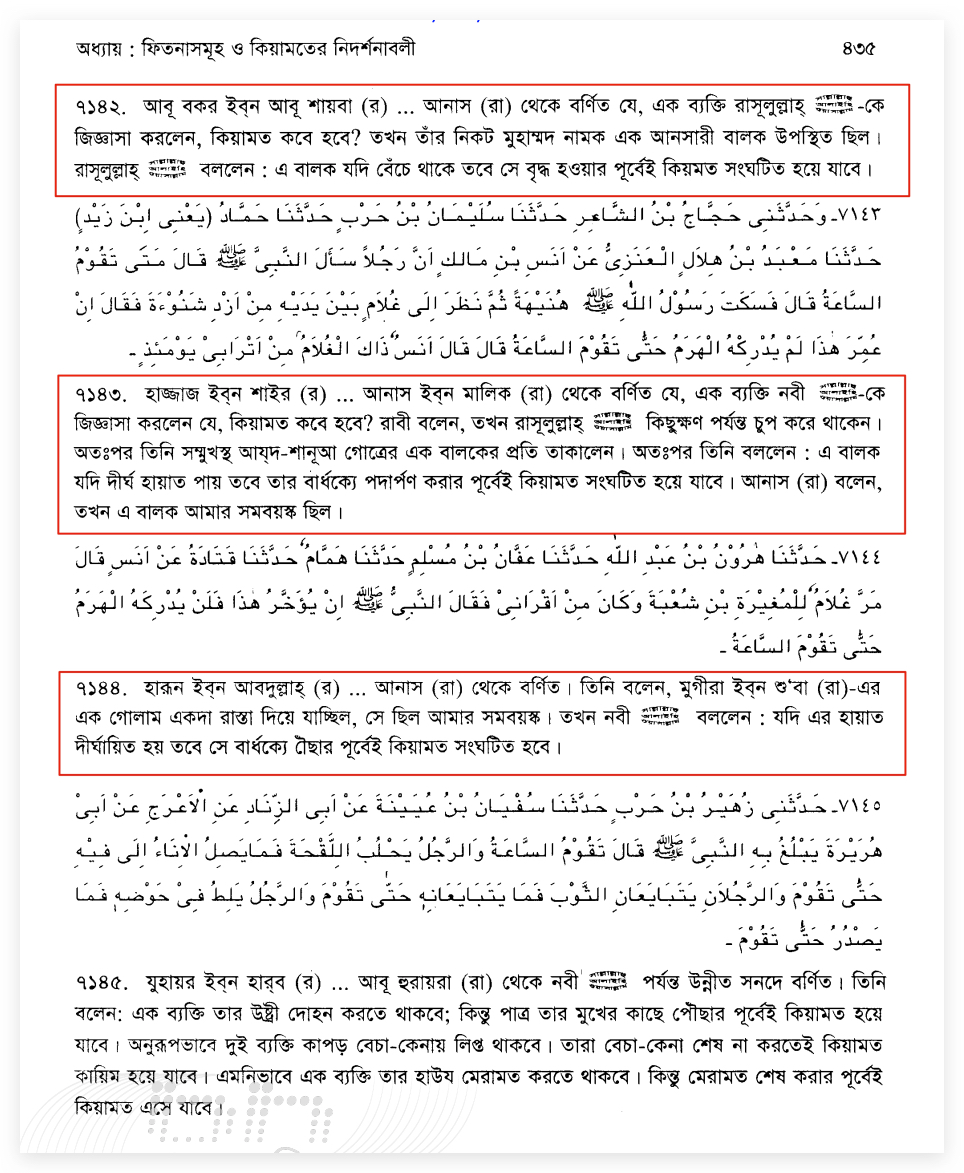
In this report, the time-related claim is the clearest. Muhammad was asked directly: when will the Hour occur? Pointing to a living boy, he said that the Hour would take place before that boy became old. That generation disappeared many centuries ago; the Hour did not occur. Therefore, in the ordinary meaning of the sentence, this is a failed time-specific prophecy. If later interpretation turns “the Hour” into death or the end of a generation, then new questions arise from the original question itself: if that had been the intended meaning, then why, in response to the questioner’s “When is the Hour?”, was the same word “Hour” used and a boy’s old age made into the time limit? [29] [30] [31] [32]
Sahih Muslim (Islamic Foundation)
55/ Tribulations and the Signs of the Hour
Chapter: 23. The Nearness of the Hour
7142. Abu Bakr ibn Abi Shaybah (R) … Narrated from Anas (RA). He said: Once a man asked the Messenger of Allah, peace and blessings of Allah be upon him: When will the Hour occur? At that time an Ansari boy named Muhammad was present near him. The Messenger of Allah, peace and blessings of Allah be upon him, said: If this boy lives, the Hour will take place before he becomes old.
Hadith grade: Sahih (Sahih)
Narrator: Anas ibn Malik (RA)
Sahih Muslim (Islamic Foundation)
55/ Tribulations and the Signs of the Hour
Chapter: 23. The Nearness of the Hour
7143. Hajjaj ibn Sha‘ir (R) … Narrated from Anas ibn Malik (RA). He said:Once a certain man asked the Messenger of Allah, peace and blessings of Allah be upon him, when the Hour would occur. Hearing this, the Messenger of Allah, peace and blessings of Allah be upon him, remained silent for a while. Then he looked toward a boy of the Azd-Shanu’ah tribe standing in front of him. Then he said: If this boy lives a long life, the Hour will take place before he reaches old age. Anas (RA) said: At that time this boy was of my age.
Hadith grade: Sahih (Sahih)
Narrator: Anas ibn Malik (RA)
Sahih Muslim (Islamic Foundation)
55/ Tribulations and the Signs of the Hour
Chapter: 23. The Nearness of the Hour
7144. Harun ibn ‘Abdullah (R) … Narrated from Anas (RA). He said: Once a slave of Mughirah ibn Shu‘bah (RA) was passing along the road; he was of my age. Then the Prophet, peace and blessings of Allah be upon him, said: If his life is prolonged, the Hour will be established before he reaches old age.
Hadith grade: Sahih (Sahih)
Narrator: Anas ibn Malik (RA)
Now let us read the detailed version of the hadith. Reading the complete account makes it very clear that here the Prophet was in fact speaking of the Hour of the great catastrophe [33]
Sahih Ibn Hibban (HadithBD)
6. The Book Concerning Good Conduct and Justice
Chapter: The hadith by which the false sects criticize the hadith scholars because they fail to understand its correct meaning
566. Narrated from Anas ibn Malik, may Allah be pleased with him, he said: A man said to the Messenger, peace and blessings of Allah be upon him: “O Prophet of Allah, peace and blessings of Allah be upon him, when will the Hour occur?” At that time the iqamah for prayer had been given; when the Messenger, peace and blessings of Allah be upon him, finished the prayer,he said: “Where is the one who asked about the Hour?” Then that man said: “O Messenger of Allah, peace and blessings of Allah be upon him, I am here.” The Messenger, peace and blessings of Allah be upon him, said: “Know that the Hour will certainly occur. But what have you prepared for the Hour?” He said: “I have not prepared many deeds for the Hour, but I love Allah and His Messenger, peace and blessings of Allah be upon him.” The Messenger, peace and blessings of Allah be upon him, said: “On the Day of the Hour, you will be with the one you love.” The narrator said: “At that time there was an Ansari Companion near him whose name was Muhammad. Then he said: “If this person remains alive, then the Hour will occur before he becomes old.”
Hudbah narrated a little more: Anas, may Allah be pleased with him, said: “We love Allah and His Messenger, peace and blessings of Allah be upon him.”[1]
قَالَ أَبُو حَاتِمٍ: هَذَا الْخَبَرُ مِنَ الْأَلْفَاظِ الَّتِي أُطْلِقَتْ بِتَعْيِينِ خِطَابٍ مُرَادُهُ التَّحْذِيرُ وَذَاكَ أَنَّ الْمُصْطَفَى صَلَّى اللَّهُ عَلَيْهِ وَسَلَّمَ أَرَادَ تَحْذِيرَ النَّاسِ عَنِ الرُّكُونِ إِلَى هَذِهِ الدُّنْيَا بِتَعْرِيفِهِمُ الشَّيْءَ الَّذِي يَكُونُ بِخَلَدِهِمْ تَقَبُّلُ حَقِيقَتِهِ مِنْ قُرْبِ السَّاعَةِ عَلَيْهِمْ دُونَ اعْتِمَادِهِمْ عَلَى ما يسمعون.
Abu Hatim Ibn Hibban, may Allah have mercy on him, said: “In the hadith, certain words have been used in address, the purpose of which is warning. For the Messenger, peace and blessings of Allah be upon him, warned people against inclining toward this world. He introduced before them the thing that would be their everlasting abode. Therefore, it accepts this reality: that the Hour is very near to them. In this matter, they should not rely on what is commonly heard.”
[1] Musnad Ahmad: 3/159; Sahih Muslim: 2953; Sahih al-Bukhari: 6511.
Allamah Shu‘ayb al-Arna’ut, may Allah have mercy on him, declared the hadith sahih according to the conditions of Muslim. Allamah Nasir al-Din al-Albani, may Allah have mercy on him, declared the hadith sahih li-ghayrihi. (al-Sahihah: 3253.)
Hadith grade: Sahih (Sahih) Narrator: Anas ibn Malik (RA)
ذِكْرُ خَبَرٍ شنَّع بِهِ بَعْضُ الْمُعَطِّلَةِ عَلَى أَهْلِ الْحَدِيثِ حَيْثُ حُرِمُوا تَوْفِيقَ الْإِصَابَةِ لِمَعْنَاهُ أَخْبَرَنَا الْحَسَنُ بْنُ سُفْيَانَ الشَّيْبَانِيُّ حَدَّثَنَا عَبْدُ الْأَعْلَى بْنُ حَمَّادٍ وَهُدْبَةُ بْنُ خَالِدٍ قَالَا: حَدَّثَنَا حَمَّادُ بْنُ سَلَمَةَ عَنْ ثَابِتٍ عَنْ أَنَسٍ: أَنَّ رَجُلًا قَالَ: يَا رَسُولَ اللَّهِ مَتَى تَقُومُ السَّاعَةُ؟ – وَأُقِيمَتِ الصَّلَاةُ – فَلَمَّا قَضَى رَسُولُ اللَّهِ صَلَّى اللَّهُ عَلَيْهِ وَسَلَّمَ صَلَاتَهُ قَالَ: (أَيْنَ السَّائِلُ عَنِ السَّاعَةِ؟ ) قَالَ: هَا أَنَا ذَا يَا رَسُولَ اللَّهِ قَالَ: (إِنَّهَا قَائِمَةٌ فَمَا أَعْدَدْتَ لَهَا؟ ) قَالَ: مَا أَعْدَدْتُ لَهَا كَبِيرَ عَمَلٍ غَيْرَ أَنِّي أُحِبُّ اللَّهَ وَرَسُولَهُ فَقَالَ النَّبِيُّ صَلَّى الله عليه وَسَلَّمَ: (أَنْتَ مَعَ مَنْ أَحْبَبْتَ) قَالَ: وَعِنْدَهُ رَجُلٌ مِنَ الْأَنْصَارِ يُقَالُ لَهُ مُحَمَّدٌ فقَالَ: (إِنْ يَعِشْ هَذَا فَلَا يُدْرِكُهُ الْهَرَمُ حَتَّى تَقُومَ السَّاعَةُ.) زَادَ هُدْبَةُ: قَالَ أَنَسٌ: فَنَحْنُ نحب الله ورسوله. الراوي : أَنَس | المحدث : العلامة ناصر الدين الألباني | المصدر : التعليقات الحسان على صحيح ابن حبان الصفحة أو الرقم: 566 | خلاصة حكم المحدث: صحيح
This hadith has also been used in modern research on early Islam as evidence of an imminent expectation of the Hour. In the chapter “Muhammad as Eschatological Prophet” in The Death of a Prophet, Stephen J. Shoemaker discusses this boy-related report as important testimony in support of the expectation among Muhammad and his first followers that the end of the world was extremely near. The publisher of the book has also summarized his main conclusion: Muhammad and his followers expected the end of the world in the “immediate future,” even possibly within their own lifetime; when the Hour did not occur, that expectation later had to be reinterpreted. [34]
Hadith Chapter: The Correct Meaning of the Hadith
If we read Ibn Hibban’s long, narrative sahih hadith very carefully, we see that Ibn Hibban wrote as the chapter heading for this hadith:
That is, Ibn Hibban is urging readers to grasp the true meaning of this hadith and is reproaching the false sects in a certain way. But what this means is precisely that various kinds of criticism and disbelief concerning this hadith had arisen already in his own time. Ibn Hibban wrote this statement in response to those false sectarians. The question is: over what did this so-called false opinion arise?
If Translated as “the death of a generation/the death of an individual”
Let us change the meaning of the words in Ibn Hibban’s long narrative hadith to the death of a generation or the death of an individual and read it, to see whether it produces any meaning.
Sahih Ibn Hibban (HadithBD)
6. The Book Concerning Good Conduct and Justice
Chapter: The hadith by which the false sects criticize the hadith scholars because they fail to understand its correct meaning
566. Narrated from Anas ibn Malik, may Allah be pleased with him, he said:A man said to the Messenger, peace and blessings of Allah be upon him: “O Prophet of Allah, peace and blessings of Allah be upon him, when will “the death of a generation/the death of an individual” occur?” At that time the iqamah for prayer had been given; when the Messenger, peace and blessings of Allah be upon him, finished the prayer,he said: “Where is the one who asked about the Hour?” Then that man said: “O Messenger of Allah, peace and blessings of Allah be upon him, I am here.”The Messenger, peace and blessings of Allah be upon him, said: “Know that “the death of a generation/the death of an individual” will certainly occur. But what have you prepared for “the death of a generation/the death of an individual”?” He said: “I have not prepared many deeds for “the death of a generation/the death of an individual”, but I love Allah and His Messenger, peace and blessings of Allah be upon him.” The Messenger, peace and blessings of Allah be upon him, said: “On the day of “the death of a generation/the death of an individual” you will be with the one you love.” The narrator said: “At that time there was an Ansari Companion near him whose name was Muhammad. Then he said: “If this person remains alive, then “the death of a generation/the death of an individual” will occur before he becomes old.”
Hudbah narrated a little more: Anas, may Allah be pleased with him, said: “We love Allah and His Messenger, peace and blessings of Allah be upon him.”[1]
قَالَ أَبُو حَاتِمٍ: هَذَا الْخَبَرُ مِنَ الْأَلْفَاظِ الَّتِي أُطْلِقَتْ بِتَعْيِينِ خِطَابٍ مُرَادُهُ التَّحْذِيرُ وَذَاكَ أَنَّ الْمُصْطَفَى صَلَّى اللَّهُ عَلَيْهِ وَسَلَّمَ أَرَادَ تَحْذِيرَ النَّاسِ عَنِ الرُّكُونِ إِلَى هَذِهِ الدُّنْيَا بِتَعْرِيفِهِمُ الشَّيْءَ الَّذِي يَكُونُ بِخَلَدِهِمْ تَقَبُّلُ حَقِيقَتِهِ مِنْ قُرْبِ السَّاعَةِ عَلَيْهِمْ دُونَ اعْتِمَادِهِمْ عَلَى ما يسمعون.
Abu Hatim Ibn Hibban, may Allah have mercy on him, said: “In the hadith, certain words have been used in address, the purpose of which is warning. For the Messenger, peace and blessings of Allah be upon him, warned people against inclining toward this world. He introduced before them the thing that would be their everlasting abode. Therefore, it accepts this reality: that “the death of a generation/the death of an individual” is very near to them. In this matter, they should not rely on what is commonly heard.”
[1] Musnad Ahmad: 3/159; Sahih Muslim: 2953; Sahih al-Bukhari: 6511.
Allamah Shu‘ayb al-Arna’ut, may Allah have mercy on him, declared the hadith sahih according to the conditions of Muslim. Allamah Nasir al-Din al-Albani, may Allah have mercy on him, declared the hadith sahih li-ghayrihi. (al-Sahihah: 3253.)
Hadith grade: Sahih (Sahih) Narrator: Anas ibn Malik (RA)
Read the narration above and see whether it can really be counted as a meaningful hadith. What one prepares for the death of a generation is hardly intelligible. At the same time, how the death of a generation or the death of an individual will occur together with the person one loves is also unintelligible.
The Specific Use of the Word ‘As-Sa’ah’ (السَّاعَةُ)
Here, the primary basis for determining the meaning of the word السَّاعَة is the full context of the sentence. The question is متى تقوم الساعة؟—“When will the Resurrection occur?” Muhammad then asks the questioner what he has prepared for it; the questioner speaks of his love for Allah and the Messenger; the reply concerns companionship in the afterlife; and then the same word السَّاعَة is used again to give a time limit before the boy reaches old age. The entire conversation is taking place within the framework of the Great Resurrection and judgment in the afterlife. There is no wording in the first part about personal death or the disappearance of a generation.
The questioner asked: “Mata taqumus-sa’ah?” (When will the Resurrection occur?). The Prophet pointed to the boy and said, “Hatta taqumus-sa’ah” (until the Resurrection occurs).
What is noteworthy here is that the Prophet repeated the very word used by the questioner (sa’ah). According to Arabic rhetoric, if the speaker had intended not the questioner’s intended meaning of the “Great Cataclysm” but merely “death,” he would not have repeated the word; rather, he would have used a more specific expression.
Argument: If he had intended personal death without using a specific noun (Proper Noun), the words above would have been more grammatical and clearer.
- The questioner asked: “Mata taqumus-sa’ah?” (When will the Resurrection occur?).
- In reply, when the Prophet pointed to that boy and said, “Hatta taqumus-sa’ah” (until the Resurrection occurs), he repeated the very word used by the questioner. If by this the Prophet had intended not the questioner’s intended “Great Cataclysm” but merely “death,” then according to Arabic rhetoric he would have used the words ‘mawtuka’ (your death) or ‘sa’atuka’ (your time).
The Verb ‘Taqumu’ (تَقُومُ) and ‘Qiyam’ (قِيَامُ)
The word تَقُومُ is the present/future form of the verb قام; its root is ق-و-م. قيام and قيامة are words from the same root. The important point here is the use of the phrase تقوم الساعة: in Qur’anic and hadith language concerning the Final Judgment, it is repeatedly used in the sense of “the Resurrection occurring.” Thus, in determining the meaning of this narration, the primary evidence is the context of the word, the phrase itself, and the continuity of the same conversation. In Arabic, the Great Cataclysm or the Day of Final Judgment is called ‘Qiyamah’ because on that day people will stand before Allah.
(تَقُومُ السَّاعَةُ)
From a linguistic point of view, تقوم الساعة means that “the Hour occurs,” “rises,” or “is established.” The verb تقوم does not by itself mean cosmic destruction; the eschatological force comes from its combination with الساعة and from the surrounding context.
Conclusion: In an unrestricted eschatological question such as متى تقوم الساعة, the natural reading is “When will the Hour occur?” Interpreting the expression as personal death is not supplied by the verb تقوم itself; that restricted meaning must come from additional context, a parallel recension, or an explanatory gloss.
- Taqumus-Sa’ah (تَقُومُ السَّاعَةُ) is a standard eschatological expression meaning that “the Hour occurs/is established.” In an unrestricted question such as متى تقوم الساعة, the natural referent is the final Hour; a death or generation-ending reading requires additional contextual evidence rather than arising from تقوم alone.
The Limitation of the Timeframe (Al-Haram vs As-Sa’ah)
Notice the structure of the sentence: “He will not reach old age until the Hour occurs” (لَا يُدْرِكُهُ الْهَرَمُ حَتَّى تَقُومَ السَّاعَةُ). The boy’s old age functions here as a temporal boundary for الساعة. A death-based reading is possible only if الساعة is first understood in a restricted sense—such as “your Hour” or the end of the relevant generation. That restriction, however, is not expressed in this recension itself. The central interpretive question is therefore not whether Arabic can ever use “hour” figuratively for death, but whether such a restricted meaning is actually signaled by this particular wording and context.
Ibn Hibban’s Chapter Heading and the Historical Debate
Ibn Hibban introduces this report with a chapter heading that explicitly frames the interpretive controversy:
“Mention of a report by which some of the Mu‘attilah criticized the Ahl al-Hadith, because they were deprived of success in grasping its correct meaning.”
Ibn Hibban’s chapter heading itself shows that this hadith had become a subject of criticism in his time. He titled the chapter—“The report by which some Mu‘attilah criticized the Ahl al-Hadith, because they did not understand its meaning.” That is, the narration had given rise to a problem for which the compiler had to provide a separate explanation. More importantly, even in his own explanation the wording قرب الساعة عليهم—“the nearness of the Hour upon them”—is retained. The narration that connects the Resurrection with the lifespan of a boy therefore created interpretive pressure from the very beginning; this is documented in Ibn Hibban’s own chapter heading.
Coherence with the Context of ‘Anta Ma’a Man Ahbabta’
In the first part of the hadith, the Prophet said, “The Resurrection will certainly occur (إِنَّهَا قَائِمَةٌ); what have you prepared for it?” Here the word ‘qa’imah’ (occurring) is used to express the inevitability of the Resurrection. Immediately afterward, the example of that boy is used to indicate its nearness. Since the questioner is asking out of concern for the afterlife and the Day of Judgment, preserving the continuity of the answer requires taking the word ‘As-Sa’ah’ as referring to the Great Cataclysm.
The Same Question, the Same Word—Yet the Ad Hoc Problem of Interpreting “Death”
Let us read two hadiths side by side. Two different narrations of the same event/the same conversation, because it is difficult to call them separate incidents: in both narrations there is the same narrator (Anas), the same question (السّاعة), the same counter-question (ماذا أعددت لها), the same answer (love), and the same concluding statement (أنت مع من أحببت). The natural explanation is that these are different reports of the same conversation.
Sahih Bukhari (Tawheed Publication)
62/ The Merits of the Companions [radiyallahu ‘anhum]
Chapter: 62/6. No chapter title.
3688. Narrated from Anas (RA). A man asked the Prophet, peace and blessings be upon him, “When will the Resurrection occur?” He said, “What have you prepared for the Resurrection?” He replied, “I have prepared nothing, except that I love Allah and His Messenger.” Then he said, “You will be with those whom you love.” Anas (RA) said: We were never as delighted by anything as we were by this statement of the Prophet, peace and blessings be upon him. Anas (RA) said: I love the Prophet, peace and blessings be upon him, and Abu Bakr and ‘Umar (RA) as well. I hope that, because of my love for them, I will be able to live with them in Paradise, even though I have not performed deeds like theirs. (6167, 6171, 6153) (Modern Publication: 3413, Islamic Foundation: 3420)
بَاب
حَدَّثَنَا سُلَيْمَانُ بْنُ حَرْبٍ حَدَّثَنَا حَمَّادُ بْنُ زَيْدٍ عَنْ ثَابِتٍ عَنْ أَنَسٍ أَنَّ رَجُلًا سَأَلَ النَّبِيَّ صلى الله عليه وسلم عَنْ السَّاعَةِ فَقَالَ مَتَى السَّاعَةُ قَالَ وَمَاذَا أَعْدَدْتَ لَهَا قَالَ لَا شَيْءَ إِلَّا أَنِّيْ أُحِبُّ اللهَ وَرَسُوْلَهُ فَقَالَ أَنْتَ مَعَ مَنْ أَحْبَبْتَ قَالَ أَنَسٌ فَمَا فَرِحْنَا بِشَيْءٍ فَرَحَنَا بِقَوْلِ النَّبِيِّ صلى الله عليه وسلم أَنْتَ مَعَ مَنْ أَحْبَبْتَ قَالَ أَنَسٌ فَأَنَا أُحِبُّ النَّبِيَّ صلى الله عليه وسلم وَأَبَا بَكْرٍ وَعُمَرَ وَأَرْجُوْ أَنْ أَكُوْنَ مَعَهُمْ بِحُبِّيْ إِيَّاهُمْ وَإِنْ لَمْ أَعْمَلْ بِمِثْلِ أَعْمَالِهِمْ
حدثنا سليمان بن حرب حدثنا حماد بن زيد عن ثابت عن انس ان رجلا سال النبي صلى الله عليه وسلم عن الساعة فقال متى الساعة قال وماذا اعددت لها قال لا شيء الا اني احب الله ورسوله فقال انت مع من احببت قال انس فما فرحنا بشيء فرحنا بقول النبي صلى الله عليه وسلم انت مع من احببت قال انس فانا احب النبي صلى الله عليه وسلم وابا بكر وعمر وارجو ان اكون معهم بحبي اياهم وان لم اعمل بمثل اعمالهم
Hadith grade: Sahih (Sahih)
Narrator: Anas ibn Malik (RA)
Let us look at its English translation,
Narrated Anas: A man asked the Prophet (ﷺ) about the Hour (i.e. Day of Judgment) saying, “When will the Hour be?” The Prophet (ﷺ) said, “What have you prepared for it?” The man said, “Nothing, except that I love Allah and His Apostle.” The Prophet (ﷺ) said, “You will be with those whom you love.” We had never been so glad as we were on hearing that saying of the Prophet (i.e., “You will be with those whom you love.”) Therefore, I love the Prophet, Abu Bakr and `Umar, and I hope that I will be with them because of my love for them though my deeds are not similar to theirs.
Sahih Ibn Hibban (HadithBD)
6. The Book Concerning Good Conduct and Uprightness
Chapter: A report by which false-doctrine proponents criticize the hadith scholars because they failed to understand its correct meaning
566. Narrated from Anas ibn Malik, may Allah be pleased with him, who said: A man said to the Messenger, peace and blessings be upon him: “O Prophet of Allah, peace and blessings be upon him, when will the Resurrection take place?” At that time the iqamah for prayer had been given. When the Messenger, peace and blessings be upon him, finished the prayer, he said: “Where is the one who asked about the Resurrection?” The man said: “O Messenger of Allah, peace and blessings be upon him, I am here.” The Messenger, peace and blessings be upon him, said: “Know that the Resurrection will surely occur. But what preparation have you made for the Resurrection?” He said: “I have not prepared many deeds for the Resurrection, but I love Allah and His Messenger, peace and blessings be upon him.” The Messenger, peace and blessings be upon him, said: “You will be with the one whom you love on the Day of Resurrection.” The narrator said: “At that time there was an Ansari Companion with him whose name was Muhammad. Then he said: “If this person lives, the Resurrection will occur before he reaches old age.” Hudbah narrated a little more: Anas, may Allah be pleased with him, said: “We love Allah and His Messenger, peace and blessings be upon him.”[1]
قَالَ أَبُو حَاتِمٍ: هَذَا الْخَبَرُ مِنَ الْأَلْفَاظِ الَّتِي أُطْلِقَتْ بِتَعْيِينِ خِطَابٍ مُرَادُهُ التَّحْذِيرُ وَذَاكَ أَنَّ الْمُصْطَفَى صَلَّى اللَّهُ عَلَيْهِ وَسَلَّمَ أَرَادَ تَحْذِيرَ النَّاسِ عَنِ الرُّكُونِ إِلَى هَذِهِ الدُّنْيَا بِتَعْرِيفِهِمُ الشَّيْءَ الَّذِي يَكُونُ بِخَلَدِهِمْ تَقَبُّلُ حَقِيقَتِهِ مِنْ قُرْبِ السَّاعَةِ عَلَيْهِمْ دُونَ اعْتِمَادِهِمْ عَلَى ما يسمعون.
Abu Hatim Ibn Hibban, may Allah have mercy on him, said: “In addressing the audience, the hadith employs certain expressions whose intended purpose is warning. For the Messenger, peace and blessings be upon him, warned people against inclining toward this world. He introduced before them the thing that would be their everlasting abode. Thus it accepts the reality that the Resurrection was extremely near to them. In this matter, they should not rely upon commonly heard statements.”
ذِكْرُ خَبَرٍ شنَّع بِهِ بَعْضُ الْمُعَطِّلَةِ عَلَى أَهْلِ الْحَدِيثِ حَيْثُ حُرِمُوا تَوْفِيقَ الْإِصَابَةِ لِمَعْنَاهُ أَخْبَرَنَا الْحَسَنُ بْنُ سُفْيَانَ الشَّيْبَانِيُّ حَدَّثَنَا عَبْدُ الْأَعْلَى بْنُ حَمَّادٍ وَهُدْبَةُ بْنُ خَالِدٍ قَالَا: حَدَّثَنَا حَمَّادُ بْنُ سَلَمَةَ عَنْ ثَابِتٍ عَنْ أَنَسٍ: أَنَّ رَجُلًا قَالَ: يَا رَسُولَ اللَّهِ مَتَى تَقُومُ السَّاعَةُ؟ – وَأُقِيمَتِ الصَّلَاةُ – فَلَمَّا قَضَى رَسُولُ اللَّهِ صَلَّى اللَّهُ عَلَيْهِ وَسَلَّمَ صَلَاتَهُ قَالَ: (أَيْنَ السَّائِلُ عَنِ السَّاعَةِ؟ ) قَالَ: هَا أَنَا ذَا يَا رَسُولَ اللَّهِ قَالَ: (إِنَّهَا قَائِمَةٌ فَمَا أَعْدَدْتَ لَهَا? ) قَالَ: مَا أَعْدَدْتُ لَهَا كَبِيرَ عَمَلٍ غَيْرَ أَنِّي أُحِبُّ اللَّهَ وَرَسُولَهُ فَقَالَ النَّبِيُّ صَلَّى الله عليه وَسَلَّمَ: (أَنْتَ مَعَ مَنْ أَحْبَبْتَ) قَالَ: وَعِنْدَهُ رَجُلٌ مِنَ الْأَنْصَارِ يُقَالُ لَهُ مُحَمَّدٌ فقَالَ: (إِنْ يَعِشْ هَذَا فَلَا يُدْرِكُهُ الْهَرَمُ حَتَّى تَقُومَ السَّاعَةُ.) زَادَ هُدْبَةُ: قَالَ أَنَسٌ: فَنَحْنُ نحب الله ورسوله. الراوي : أَنَس | المحدث : العلامة ناصر الدين الألباني | المصدر : التعليقات الحسان على صحيح ابن حبان الصفحة أو الرقم: 566 | خلاصة حكم المحدث: صحيح. اخبرنا الحسن بن سفيان الشيباني حدثنا عبد الاعلى بن حماد وهدبة بن خالد قالا: حدثنا حماد بن سلمة عن ثابت عن انس: ان رجلا قال: يا رسول الله متى تقوم الساعة؟ – واقيمت الصلاة – فلما قضى رسول الله صلى الله عليه وسلم صلاته قال: (اين الساىل عن الساعة? ) قال: ها انا ذا يا رسول الله قال: (انها قاىمة فما اعددت لها? ) قال: ما اعددت لها كبير عمل غير اني احب الله ورسوله فقال النبي صلى الله عليه وسلم: (انت مع من احببت) قال: وعنده رجل من الانصار يقال له محمد فقال: (ان يعش هذا فلا يدركه الهرم حتى تقوم الساعة.) زاد هدبة: قال انس: فنحن نحب الله ورسوله. الراوي : انس | المحدث : العلامة ناصر الدين الالباني | المصدر : التعليقات الحسان على صحيح ابن حبان الصفحة او الرقم: 566 | خلاصة حكم المحدث: صحيح. [1]
Musnad Ahmad: 3/159; Sahih Muslim: 2953; Sahih al-Bukhari: 6511. ‘Allamah Shu‘ayb al-Arna’ut, may Allah have mercy on him, declared the hadith sahih according to the conditions of Muslim. ‘Allamah Nasir al-Din al-Albani, may Allah have mercy on him, declared the hadith sahih li-ghayrihi. (al-Sahihah: 3253.)
Hadith grade: Sahih (Sahih)
Narrator: Anas ibn Malik (RA)
In both hadiths cited above, the central “target” of the question is one and the same—السّاعة (al-sa‘ah), that is, the “Resurrection/Hour.” Although the wording of the question is not absolutely identical, the formula is effectively the same: in one narration it says مَتَى السَّاعَةُ (“When is the Hour?”), and in the other مَتَى تَقُومُ السَّاعَةُ (“When will the Hour be established/occur?”). In other words, both are the same question—when will the Resurrection occur—only in the second narration the sentence structure is slightly expanded by the addition of the verb تقوم (will be established/occur). Likewise, in Bukhari’s narration (from Anas), the Prophet asks in response: وَمَاذَا أَعْدَدْتَ لَهَا؟—that is, “What have you prepared for it?”—which clearly keeps the conversation within an eschatological/moral framework.
| Hadith source | Arabic question (as it appears) | Key word | Syntactic difference | Meaning (gist) |
|---|---|---|---|---|
| Sahih Bukhari 3688 | مَتَى السَّاعَةُ | السّاعة | Concise question form | “When is the Resurrection/Hour?” |
| Sahih Ibn Hibban 566 | مَتَى تَقُومُ السَّاعَةُ؟ | السّاعة | The addition of تقوم (will be established/occur) makes the question slightly fuller | “When will the Resurrection/Hour occur/be established?” |
Summary:
Summary: Although the verbal construction differs somewhat, the presence of the words الساعة and تقوم proves that the center of the discussion was the cosmic Resurrection, not an individual person’s personal death.
- (1) The same word—yes: in both, the central word is السّاعة.
- (2) The same question (in meaning)—yes: both ask, “When will the Resurrection/Hour occur?”.
- (3) The same sentence (verbatim)—no: in Bukhari it is متى الساعة, while in Ibn Hibban it is متى تقوم الساعة—the verb تقوم is added in the second, but the aim and meaning of the question remain the same.
The exchange ends within a moral/eschatological frame: “أَنْتَ مَعَ مَنْ أَحْبَبْتَ”. Here, the natural reading (plain reading) is that the word “السّاعة” denotes the Great Resurrection/Day of Judgment: preparation for the Resurrection, companionship on the Day of Resurrection—everything fits within that larger afterlife framework. Thus, shifting the same question-language and the same word “السّاعة” here into “death” rests only on a lexical possibility of the word, not on the context.
Then, when the same question (متى تقوم الساعة) appears in another narration and is joined by the additional sentence—“If this person lives, the ‘Hour’ will be established before he reaches old age”—the problem begins. For if one wants to turn “السّاعة” in this sentence into “death/the end of a generation,” the textual signal normally required for that reading (such as “عليكم ساعتكم”—“your Hour”) is absent here; rather, the same word السّاعة is repeated in the answer just as it appears in the question.
Therefore, to construct the interpretation that “this actually means ‘your death,’” one often has to bring in another variant/later explanation/commentary and thereby alter the meaning. Logically, this may be called a harmonization-driven reading: in trying to escape a risky/problematic reading, the meaning of the word is shifted toward a safer direction.
The objection is that where reading it as the “Great Resurrection” is contextually natural, suddenly turning the same word into “death/local hour” merely for the sake of rescue is not an interpretation that arises spontaneously from the uttered wording; rather, it is a forced interpretation, a meaning-shift under pressure from the outcome. This kind of rescue-reading effectively renders a prophetic claim unfalsifiable.
In Anas’s narration, the question concerns السّاعة, the preparation is for السّاعة, and what will occur before the boy’s old age is that same السّاعة. Within this continuity, the Great Resurrection is the natural meaning. The interpretation “your death” is not present in the core wording of all the narrations; it depends on a different narration and later explanation in which the additional words عليكم ساعتكم—“your Resurrection/Hour”—appear. In other words, the unrestricted narration حتى تقوم الساعة is being reinterpreted through the restricted narration تقوم عليكم ساعتكم.
Regarding Hisham’s Statement
Let us note another version of this hadith [35]
Sahih Bukhari (Islamic Foundation)
68/ Being Tender-hearted
Chapter: 2723. The Agonies of Death
Islamic Foundation Number: 6067, International Number: 6511
6067. Sadaqah (rh) … Narrated from Aisha (ra). She said: Some harsh-tempered Bedouins would come to the Prophet, peace and blessings be upon him, and ask when Qiyamah would occur. Then he would look at the youngest among them and say: If this person lives for some time, then before he grows old, your Qiyamah will come upon you. Hisham says that this Qiyamah means their death.
Hadith grade: Sahih (Sahih)
Narrator: Aisha bint Abu Bakr Siddiq (RA)
Another form of the same report is preserved in Ad-Durr al-Manthur. There, when the Bedouins directly ask Muhammad about Qiyamah, he looks at the youngest person among them and uses his lifespan as the measure of time. The original Arabic of this report is especially important, because Muhammad’s statement contains قامت عليكم ساعتكم—“your sa‘ah will occur upon you”; nowhere in the original sentence is there the word death. [36]
وَأخرج ابْن مرْدَوَيْه عَن عَائِشَة قَالَت: كَانَت الْأَعْرَاب إِذا قدمُوا على النَّبِي صلى الله عَلَيْهِ وَسلم سَأَلُوهُ عَن السَّاعَة فَينْظر إِلَى أحدث إِنْسَان فيهم فَيَقُول: إِن يَعش هَذَا قرنا قَامَت عَلَيْكُم سَاعَتكُمْ
Ibn Mardawayh narrated from Aisha, who said: When the Bedouins would come to the Prophet, peace and blessings be upon him, they would ask him about Qiyamah. He would look at the youngest person among them and say: “If this person lives long, or lives for a century, then your Qiyamah (death) will befall you.”
Here the difference between the Arabic original and the Bengali explanation is directly visible. The Arabic sentence has سَاعَتكُمْ—“your sa‘ah”; but in the Bengali translation, “death” has been added afterward in parentheses. In other words, “death” is not a translation of any word in the original Arabic sentence; it is an interpretation of the term. This distinction is important, because the central question in the later debate is precisely this—by ساعتكم, did the speaker himself mean death, or did later narrators and commentators determine this meaning?
Here it is extremely important to separate the layers of the report. In Aisha’s narration, Muhammad’s statement is تقوم عليكم ساعتكم—“your Qiyamah will come upon you”; but the statement “it means their death” is not Muhammad’s own statement. It is an explanatory comment by Hisham ibn Urwah—يعني موتهم. Hisham was born in 61 AH, nearly half a century after Muhammad’s death. That is, the equation “Qiyamah = their death” is not the original speaker’s explanation here; it is the interpretation of a later narrator. More importantly, in Anas’s narration there is no عليكم or ساعتكم; there the wording is directly حتى تقوم الساعة. Later commentators used Aisha’s wording, which contains a limiting expression, to make the meaning of Anas’s unrestricted report also “their death.” The IslamQA discussion uses precisely this method as well. [37]
Changing the Meaning After a Failed Prophecy and Ad Hoc Rescue
Qiyamah or the Death of a Generation in the Prophet’s Question-and-Answer
In Islamic reports, “Qiyamah/al-Sa‘ah (ٱلسَّاعَةُ)” is often presented as something in the near future, not as an indefinite future event. In these texts, it is presented as an impending reality temporally close to the experience of the people of the Prophet’s era. The best-known example of this is the Prophet’s saying— “I and Qiyamah have been sent together like these two fingers”, and he showed his index and middle fingers side by side. There is certainly a “simile” in this statement, but the central function of the simile is to visibly compress temporal distance: the gap between two fingers is very small—this strongly signals “nearness” to the listener’s eye. Therefore, in reviewing the hadith, it can be understood not merely as a moral warning, but as a signal of temporal proximity.
This language of nearness becomes even more intense in the report where some questioners (in some narrations, Bedouins) ask—“When will Qiyamah occur?” In reply, the Prophet points to a boy and says: “If this boy lives, then before he reaches old age, Qiyamah will occur.” Note here that the question is not about personal death, someone’s final hour, or “when will our generation end”—or anything of that kind; the question is directly about the time of Qiyamah. And the answer is being given within the normal timeline of a human life—“before old age”—that is, on the scale of a few decades. Linguistically, it is very simple: “Event X will occur within timeframe Y.”
From here the central conflict begins: the questioner wants to know about Qiyamah; does the respondent really mean Qiyamah—or something else? Later hadith commentaries often say that “Qiyamah” here means the “minor qiyamah”—that is, personal death or the disappearance of that generation. There is also a line behind this interpretation in classical commentary: in Imam Nawawi’s Sharh Muslim, various narrations (“your hour/sa‘ah,” etc.) are brought together and it is said that “your sa‘ah” means their death, that is, the end of that age/that audience group—not Qiyamah in the greater sense. But if one wishes to sustain this “local qiyamah/personal death” interpretation, several difficult questions cannot be avoided:
Here it is worth noting what the Bedouins asked the Prophet, and what Muhammad answered. If the Bedouins had wanted to know “When will all of us die?”, and if the Prophet had answered in that context, “Before that child reaches old age, your death will occur,” then it would not stand as any intelligible or meaningful historical event. For in that age, or in any age, everyone already knows this much: people will certainly die, and many will die within a single generation. No one would come to the Prophet to ask for this kind of “information”; it is something any person already knows. The very point of asking the Prophet this question was to ask when the final cataclysm/Great Qiyamah would occur—that was, in fact, the Bedouins’ question, and Muhammad too answered on the basis of that question.
In short, the problem here is not merely “polysemy”; the problem is that if the same word (ٱلسَّاعَةُ), which in Qur’anic usage carries the signal of the great judgment, is made to mean “personal death” in the hadith question-and-answer, then to the reader it will naturally appear to be an evasive rereading (escape-reading). And if the natural reading is preserved, then statements such as “Qiyamah before this boy becomes old” come into direct conflict with historical reality. That dilemma is the core of this section: if taken as prophecy, there is a problem; and if taken as metaphor/local death, there is an uncomfortable mismatch with the language and the question.
From the standpoints of linguistic structure, Arabic grammar (Grammar), and historical context alike, ‘al-Sa‘ah’ in this hadith refers to the final hour of the great cataclysm or the destruction of the world. The Companions and the opponents of that time also understood this meaning from the word, which is why it became a widely discussed and debated issue. This kind of rescue-reading effectively makes prophetic claims unfalsifiable—because they can never be proven wrong; if they fail, the meaning will be changed.
Fear of Qiyamah Among the Companions as Well
An important report preserved in Tafsir al-Qurtubi shows how directly one of Muhammad’s Companions took the Qur’an’s declaration that “the reckoning is near” in a temporally immediate sense. Upon hearing the news that the first verse of Surah al-Anbiya—“The time of people’s reckoning has drawn near”—had been revealed, a Companion stopped his construction work and swore that, since the reckoning had drawn near, he would never build a wall again. [38]
وَرُوِيَ أَنَّ رَجُلًا مِنْ أَصْحَابِ رَسُولِ اللَّهِ صلى الله عليه وسلم كان يَبْنِي جِدَارًا فَمَرَّ بِهِ آخَرُ فِي يَوْمِ نُزُولِ هَذِهِ السُّورَةِ، فَقَالَ الَّذِي كَانَ يَبْنِي الْجِدَارَ: مَاذَا نَزَلَ الْيَوْمَ مِنَ الْقُرْآنِ؟ فَقَالَ الْآخَرُ: نَزَلَ “اقْتَرَبَ لِلنَّاسِ حِسابُهُمْ وَهُمْ فِي غَفْلَةٍ مُعْرِضُونَ” فَنَفَضَ يَدَهُ مِنَ الْبُنْيَانِ، وَقَالَ: وَاللَّهِ لَا بَنَيْتُ أَبَدًا وَقَدِ اقْتَرَبَ الْحِسَابُ. “اقْتَرَبَ” أي قرب الوقت.
It is narrated that a man among the Companions of the Messenger of Allah, peace and blessings be upon him, was building a wall. On the day this surah was revealed, another man passed by him. The man building the wall asked: “What has been revealed today from the Qur’an?” The other replied: “The time of people’s reckoning has drawn near, while they are heedlessly turning away”—this verse has been revealed. He then shook his hands free of the construction work and said: “By Allah, since the reckoning has drawn near, I will never build a wall again.” ‘Iqtaraba’ means—the time has drawn near.
This reaction is especially significant. The phrase “the reckoning has drawn near” was not taken here as a figure of speech referring to some infinitely long cosmic timescale. The Companion understood it to be so near that he considered even the construction of a permanent wall for the future meaningless and stopped working. Al-Qurtubi also directly writes in his explanation of the word “اقْتَرَبَ”—“أي قرب الوقت”, meaning “the time has drawn near.” Thus, the nearness in the early discourse about Qiyamah was not merely verbal ornamentation; at least in this report, it created a temporally immediate expectation capable of changing people’s real-life planning.
Qiyamah When One Hundred Years Were Complete—Such an Understanding Also Existed Among the Companions
That Muhammad’s contemporaries understood the nearness of Qiyamah within a real timeframe is evidenced even more directly in Tafsir al-Qurtubi. Toward the end of his life, Muhammad said that none of those alive on earth that night would remain alive after one hundred years. Quoting Ibn Umar’s statement, al-Qurtubi reports that people became confused upon hearing this. The related note clarifies the matter further—the Companions misunderstood the meaning of Muhammad’s statement, and some of them would say that when one hundred years were complete, Qiyamah would occur. Later, Ibn Umar explained that Muhammad’s intention was the disappearance of that generation. [39]
قَالَ ابْنُ عُمَرَ: فَوَهَلَ النَّاسُ فِي مَقَالَةِ رَسُولِ اللَّهِ صلى الله عليه وسلم تِلْكَ فِيمَا يَتَحَدَّثُونَ مِنْ هَذِهِ الأحاديث عن مائة سنة، وإنما قال رسول الله عليه الصلاة والسلام: «لَا يَبْقَى مِمَّنْ هُوَ الْيَوْمَ عَلَى ظَهْرِ الْأَرْضِ أَحَدٌ» يُرِيدُ بِذَلِكَ أَنْ يَنْخَرِمَ ذَلِكَ الْقَرْنُ.
وَهَلَ إِلَى الشَّيْءِ كَضَرَبَ أَيْ غَلِطَ وَذَهَبَ وَهْمُهُ إِلَى خِلَافِ الصَّوَابِ، وَالْمَعْنَى أَنَّ الصَّحَابَةَ رضى الله عنهم غَلِطُوا وَذَهَبَ وَهْمُهُمْ إِلَى خِلَافِ الصَّوَابِ فِي تَأْوِيلِ مَقَالَةِ النَّبِيِّ صلى الله عليه وسلم، فَكَانَ بَعْضُهُمْ يَقُولُ: تَقُومُ السَّاعَةُ عِنْدَ انْقِضَاءِ مِائَةِ سَنَةٍ، فَبَيَّنَ ابْنُ عُمَرَ مُرَادَ النَّبِيِّ صلى الله عليه وسلم بِقَوْلِهِ: يُرِيدُ بِذَلِكَ أَنْ يَنْخَرِمَ ذَلِكَ الْقَرْنُ.
Ibn Umar said: People became confused about that statement of the Messenger of Allah, peace and blessings be upon him, and about the hadiths relating to one hundred years. Yet the Messenger of Allah, peace and blessings be upon him, had said: “Of those who are on the earth today, no one will remain.” By this he meant the end of that generation.
Here “wahala” means to make a mistake and to go toward an understanding contrary to the correct meaning. That is, the Companions made a mistake in interpreting the Prophet’s statement, and their understanding went contrary to the correct meaning. Some of them would say: “When one hundred years are complete, Qiyamah will occur.” Ibn Umar then explained the Prophet’s intention by saying: “By this he meant the end of that generation.”
This report is an important testimony to the early Muslims’ understanding of the temporal nearness of Qiyamah. Here, no later critic is imposing a “literal reading” upon the Companions; Islamic tafsir’s own reading says that a section of the Companions understood the hundred-year timeframe directly as the timeframe for Qiyamah. That expectation is then corrected by saying that what was actually meant was not Qiyamah, but the disappearance of that generation. Thus, the “end of the generation” interpretation is not the initial understanding here; rather, it appears as an interpretation that corrects an earlier temporal understanding.
How near an event Qiyamah was imagined to be in Muhammad’s era becomes clear when several separate reports are placed together. Seeing a solar eclipse, Muhammad himself feared that Qiyamah had begun; upon hearing discussion of the Dajjal, the Companions thought he was present in a nearby grove; Muhammad said that if the Dajjal emerged while he was alive, he himself would confront him; and in Abu Ubaidah’s narration, he said that someone who had seen him or heard his words might perhaps witness the Dajjal. Another important testimony to this same temporally immediate understanding is preserved in Ibn Hajar al-Asqalani’s Fath al-Bari. He writes explicitly that a group of people of that era understood Muhammad’s statement about one hundred years to mean that the world would end after one hundred years.
وَهَذَا نَظِيرُ قَوْلِهِ صلى الله عليه وسلم فِي الْحَدِيثِ الَّذِي تَقَدَّمَ بَيَانُهُ فِي الْعِلْمِ أَنَّهُ قَالَ لِأَصْحَابِهِ فِي آخِرِ عُمْرِهِ: «أَرَأَيْتُكُمْ لَيْلَتَكُمْ هَذِهِ، فَإِنَّ عَلَى رَأْسِ مِائَةِ سَنَةٍ مِنْهَا لَا يَبْقَى عَلَى وَجْهِ الْأَرْضِ مِمَّنْ هُوَ الْيَوْمَ عَلَيْهَا أَحَدٌ». وَكَانَ جَمَاعَةٌ مِنْ أَهْلِ ذَلِكَ الْعَصْرِ يَظُنُّونَ أَنَّ الْمُرَادَ أَنَّ الدُّنْيَا تَنْقَضِي بَعْدَ مِائَةِ سَنَةٍ، فَلِذَلِكَ قَالَ الصَّحَابِيُّ: «فَوَهِلَ النَّاسُ فِيمَا يَتَحَدَّثُونَ مِنْ مِائَةِ سَنَةٍ»، وَإِنَّمَا أَرَادَ صلى الله عليه وسلم بِذَلِكَ انْخِرَامَ قَرْنِهِ، أَشَارَ إِلَى ذَلِكَ عِيَاضٌ مُخْتَصَرًا. قُلْتُ: وَوَقَعَ فِي الْخَارِجِ كَذَلِكَ، فَلَمْ يَبْقَ مِمَّنْ كَانَ مَوْجُودًا عِنْدَ مَقَالَتِهِ تِلْكَ عِنْدَ اسْتِكْمَالِ مِائَةِ سَنَةٍ مِنْ سَنَةِ مَوْتِهِ أَحَدٌ، وَكَانَ آخِرُ مَنْ رَأَى النَّبِيَّ صلى الله عليه وسلم مَوْتًا أَبُو الطُّفَيْلِ عَامِرُ بْنُ وَاثِلَةَ كَمَا ثَبَتَ فِي صَحِيحِ مُسْلِمٍ.
Ibn Hajar wrote: This is similar to the hadith whose explanation has already appeared in the Book of Knowledge. Toward the end of his life, the Prophet said to his Companions: “What do you think of this night of yours? When one hundred years from today are complete, none of those presently on the face of the earth will remain.” A group of people of that era thought that this meant the world would end after one hundred years. For this reason the Companion said, “People fell into a mistaken understanding regarding what they were saying about one hundred years.” Yet by this the Prophet meant the end of his generation—Qadi Iyad briefly indicated this. Ibn Hajar then says that in reality too, everyone of that generation died within the completion of one hundred years; the last person to have seen the Prophet was Abu Tufayl Amir ibn Wathilah.
The historical significance of Ibn Hajar’s statement is direct. “The world will end after one hundred years”—this understanding was not created by a modern critic; in his own words, “a group of people of that era” thought exactly this. Later, that understanding was corrected, and the meaning of the statement was shifted from “the end of the world” to “the end of that generation.” Thus, both the temporally immediate reading of Qiyamah and the later narrowing of meaning are attested from within the Islamic interpretive tradition itself.
The Mental Gymnastics of Metaphor and the Ad Hoc Fallacy
The logical problem here is ad hoc rescue—when a claim does not align with reality, new meanings or conditions are later added in such a way that the original failure is made to disappear. In the first narration, the question is “When is the Hour?”, the answer also refers to “the Hour,” and the timeframe is “before this boy grows old.” After the Great Hour did not occur within that timeframe, turning “the Hour” into personal death or the death of a generation means the claim is no longer the same claim it originally was. If the meaning of the words of a prophecy is changed after the result of its test has become known, it can no longer be called foreknowledge; it is a matter of rearranging an old statement into a new meaning after seeing the outcome.
How the ad hoc fallacy works:
Additional explanation: When there is not sufficient evidence in favor of a theory or idea, “special” or “additional” conditions are added to save it, or new interpretations of the words are created, with the aim of preserving the initial claim by any means possible.
Example: Suppose I said that next year the entire world would be submerged by floods. But it turned out that there was no worldwide flood that year; only Noakhali in Bangladesh experienced flooding. Then I reinterpreted my prophecy. I said that when I had made the prophecy earlier, by “the entire world” I did not mean the entire world, but Noakhali. Because there are many people in Noakhali district who consider Noakhali district itself to be the entire world. I had spoken in relation to those people.
In other words, I changed the meaning of my prophecy in relation to later events. This would be a fallacy, called the ad hoc fallacy (Ad Hoc Fallacy). The main point is that if this kind of prophecy truly came from “divine knowledge,” such a major timeline should not be wrong, and there would be no need for mental gymnastics to correct the matter by creating new interpretations and new meanings of words. And if it is wrong, then the next question arises: why should the prophecy be presented as “divine proof”? For ease of understanding, let us look at this timeline,
From the Perspective of Science, “Qiyamah” or the Destruction of the Universe
Science does not generally use the word “Qiyamah”; however, at both levels—the Earth and the universe—it offers realistic models, observation-based constraints, and ranges of uncertainty regarding “end/destruction” or possible end scenarios. There is no declaration here of “one specific date”; rather, there is a possible sequence of what may occur on very long timescales.
1) The “end” of Earth first means the loss of habitability: In the case of Earth, the strongest long-term prediction rests on the Sun’s gradual brightening. As the Sun’s radiative power increases over time, Earth’s climate may move toward a state in which processes such as the extreme intensification of the greenhouse effect, increased evaporation of ocean water, and, over the long term, permanent loss of water (for example, water vapor breaking apart in the upper atmosphere and hydrogen escaping into space) could destroy the conditions required for life to persist. According to some modeling results, Earth may lose habitability long before the “red giant” phase; an approximate timescale of about 1–1.5 billion years is often discussed. [41]
2) Earth’s fate in the Sun’s evolution: In the next stage, the Sun will enter the “red giant phase” in its life cycle—at that time, the Sun’s size and energy output will change dramatically. In NASA’s explanation, the Sun’s arrival at this stage is generally placed at about 6 billion years from now. Although there is subtle dynamical uncertainty over whether Earth will be “swallowed,” it points almost certainly to the fact that Earth’s present habitable state will not survive (because of intense heat, radiation, atmospheric breakdown, and so on). [42]
3) The “end” of the universe: the most probable—endless expansion and ‘cosmic cooling/heat death’ (Big Freeze / heat death). In the standard framework of modern cosmology (ΛCDM), if dark energy is indeed a nearly constant “cosmological constant” (cosmological constant, Λ), then the universe may continue expanding for a very long time. In that case, matter and energy become increasingly dispersed over time, and the “free energy” needed to create and sustain structure continues to diminish—so, as the final outcome, a “cosmic cooling/heat death” (heat death) scenario is regarded in many discussions as among the most probable trajectories. The final results of the Planck mission show strong consistency with ΛCDM and are compatible with dark energy’s equation of state (w) being close to a constant Λ (w≈−1). [43]
4) But there is not only one “end”—if dark energy changes, the fate may change as well: Analyses of recent DESI (Dark Energy Spectroscopic Instrument) data releases have, in some cases, suggested that dark energy may change over time (time-evolving / dynamical)—that is, w(z) may not be fixed. DESI’s DR2 results summary also states that the indication toward “time-evolving dark energy” has become stronger. [44] A Nature Astronomy study along the same lines, combining DR1+DR2 BAO, supernovae, and CMB priors, also mentions a tendency toward variation in w(z) and, in some dataset combinations, a tension with ΛCDM at approximately the ~3σ level—although it clearly notes that possible systematics are still under investigation and that future data will provide “decisive tests.” [45]
In short: Science does not give a “specific date for Qiyamah.” Rather, it explains (a) in the case of Earth—the loss of habitability over long periods, (b) in the Sun’s evolution—the environmental destruction/transformation of the planets, and (c) in the case of the universe—several possible endings depending on the nature of dark energy/cosmology (Big Freeze/Big Crunch/Big Rip, and so on), through models + observations + uncertainty. Thus, what we have here is not a “predictive declaration of certainty,” but evidence-based probabilities and constraints. None of these scientific studies suggests that the “final destruction” of the universe will occur within the next few billion years; rather, on the human timescale (the timeline of human history/civilization), the numbers they indicate are unimaginably vast.
-
NowEarth is still habitableOn the scale of human civilization, science does not give “one specific date for the end”; it explains, in terms of probability, what may happen over the long term because of astronomical changes.
-
~ 1–1.5 billion years laterThe Sun gradually becomes brighter → Earth’s habitability declinesAs the Sun’s light/heat increases, the long-term balance of the climate may change. As a result, the likelihood increases of permanent water loss, ocean evaporation, collapse of the water cycle, and the destruction of the environment needed for life—in other words, “Earth’s habitability” may decline first.
-
~ 5–7 billion years laterThe Sun enters the “Red Giant” phaseThrough the Sun’s internal evolution, its size and radiation will change substantially. In this stage, Earth’s survival in its present condition is highly uncertain— excessive heat, atmospheric loss, and orbital change are all possible.
-
After that: “Cosmic scale”The universe’s final outcome: dependent on how dark energy (Dark Energy) behavesThe Earth/Sun timeline is comparatively stable. But regarding “the end of the universe” (ultimate fate), the principal uncertainty is whether dark energy is constant or changes over time (dynamical).Possible path–A: constant (≈ constant)Cosmic cooling/heat death (Big Freeze / Heat Death): the universe continues to expand; stellar fuel runs out; energy disperses and “free energy” capable of doing work decreases—so, after a very long time, structure/activity becomes inert.Time: extremely long (trillions+ years scale), not a specific numberPossible path–B: changing (dynamical)Alternative scenarios such as the Big Rip or the Big Crunch theoretically enter the discussion—but these are data/model-dependent; they are not certain conclusions.Time: varies widely depending on the model
Conclusion
When all the reports are brought together, a coherent picture emerges. In the Quran, the Hour is “near”; Muhammad compares himself to the Hour with two fingers held side by side; upon seeing a solar eclipse, he fears that the Hour may already have begun; he places the Dajjal within the possible lifetime of himself and his direct listeners; and he gives a temporal indication that the Hour would occur before a certain boy reached old age. In history, that expected great Hour did not take place. Across the transmitted variants and later interpretive tradition, however, the wording is restricted in different ways: the unrestricted “the Hour” appears alongside “your Hour,” Hisham glosses the latter as “their death,” and later commentators extend generation-ending interpretations to reports whose wording is unrestricted. These layers need not represent a perfectly linear textual chronology, but they do document a history of semantic narrowing used to reconcile the reports with the non-occurrence of the expected great Hour. Stephen J. Shoemaker likewise identifies imminent apocalypse as a central feature of early Islam and discusses the subsequent reconfiguration of early Muslim eschatological expectations. [21]
The standard for testing a claim of divine foreknowledge cannot be lower than that applied to ordinary human conjecture. If, after a specific temporal indication fails in reality, one can say that “the word had another meaning,” that “it referred to the death of that generation,” or can import an additional phrase from another report in order to alter the meaning of the original statement, then no possible outcome can ever prove that prophecy wrong. A prophecy insulated from every possible falsifying outcome has little or no evidentiary value as a testable prediction. The picture that emerges here is not one of miraculous foreknowledge, but rather of a failed expectation of an imminent apocalypse and the centuries-long history of semantic revision that followed that failure.
References
- Britannica: Eschatology—“last things”, end of time, resurrection, judgment ↩︎
- Britannica: Apocalypticism ↩︎
- Encyclopaedia Iranica: FRAŠŌ.KƎRƎTI—final renovation/transfiguration after evil defeated ↩︎
- Encyclopaedia Iranica: ESCHATOLOGY—“final things”, savior defeating evil, end of world; Zoroastrian influence ↩︎
- Britannica: Ragnarök—final battle, catastrophe, world reborn ↩︎
- Britannica: Eschatology—historical eschatologies in Judaism/Christianity; apocalyptic tradition ↩︎
- Billings 1994, Annual Review of Sociology: Religion and Political Legitimation—religion legitimates power/privilege and can also support protest ↩︎
- Norman Cohn, The Pursuit of the Millennium—OUP catalog page ↩︎
- Marx, A Contribution to the Critique of Hegel’s Philosophy of Right: Introduction ↩︎
- Stanford Encyclopedia of Philosophy: Marx—opium remark ↩︎
- Sunan Abu Dawud, Islamic Foundation, Hadith: 3607 ↩︎
- Sahih Muslim, Hadith 1872–1873 — Shongshoy Islam Archive ↩︎
- Sahih Muslim, Islamic Foundation, Hadith: 7014 ↩︎
- Mishkat al-Masabih (Mishkat), Hadith: 5421 ↩︎
- Surah al-Qamar, verse 1 ↩︎
- Tafsir al-Qurtubi, volume 18, page 284 ↩︎
- Tafsir al-Durr al-Manthur, volume 5, page 108 ↩︎
- Imam Nawawi, Sharh Sahih Muslim, “The Nearness of the Day of Resurrection” ↩︎
- Tafsir al-Durr al-Manthur, volume 7, page 467 ↩︎
- Tafsir al-Qurtubi, volume 16, page 240 ↩︎
- Stephen J. Shoemaker, The Death of a Prophet, Chapter 3 1 2
- Muhammad ibn Jarir al-Tabari, Tarikh al-Tabari, volume 1, page 11, Mu’assasat al-A’lami edition ↩︎
- Tafsir Ibn Kathir, Surah al-Hajj 22:47 ↩︎
- Mukhtasar Sahih al-Bukhari, Hadith: 560 ↩︎
- Mukhtasar Sahih al-Bukhari, Islamic Dawah Center Ummul Hamam, Riyadh, Saudi Arabia, p. 231 ↩︎
- Fatwa of Ibn Baz, vol. 30, pp. 280–284 ↩︎
- Sahih Muslim, Hadith Academy, Hadith: 7263 ↩︎
- Sunan al-Tirmidhi 2234; Musnad Ahmad 1693 — narration of Abu ‘Ubaydah ibn al-Jarrah ↩︎
- Sahih Muslim, Islamic Foundation, Hadith: 7142 ↩︎
- Sahih Muslim, Islamic Foundation, Hadith: 7143 ↩︎
- Sahih Muslim, Islamic Foundation, Hadith: 7144 ↩︎
- Sahih Muslim, Islamic Foundation, vol. 6, p. 435 ↩︎
- Sahih Ibn Hibban (HadithBD), Hadith: 566 ↩︎
- Stephen J. Shoemaker, The Death of a Prophet, Chapter 3, pp. 118–196 ↩︎
- Sahih Bukhari, Islamic Foundation, Hadith: 6067 ↩︎
- Tafsir Ad-Durr al-Manthur, Volume 8, Page 414 ↩︎
- Sahih Bukhari 6511; Sahih Muslim 2952–2953; IslamQA, Question 363920 ↩︎
- Tafsir al-Qurtubi, Volume 11, Page 266 ↩︎
- Tafsir al-Qurtubi, Volume 11, Page 42 ↩︎
- Ibn Hajar al-Asqalani, Fath al-Bari, Volume 10, Pages 572–573 (IslamWeb pagination), ‘Chapter: What Has Come Regarding a Man’s Saying “Woe to You”’ ↩︎
- Science (AAAS), “Earth Won’t Die as Soon as Thought” ↩︎
- NASA Science, “Chapter 6: Aging Into Gianthood” — “Sun approaches its red giant phase some 6 billion years from now” ↩︎
- Planck 2018 results VI: Cosmological parameters — A&A 641, A6 (2020) PDF ↩︎
- DESI DR2 Results: March 19 Guide — 2025-03-19 ↩︎
- Nature Astronomy — “Dynamical dark energy in light of the DESI DR2…” (2025) ↩︎