
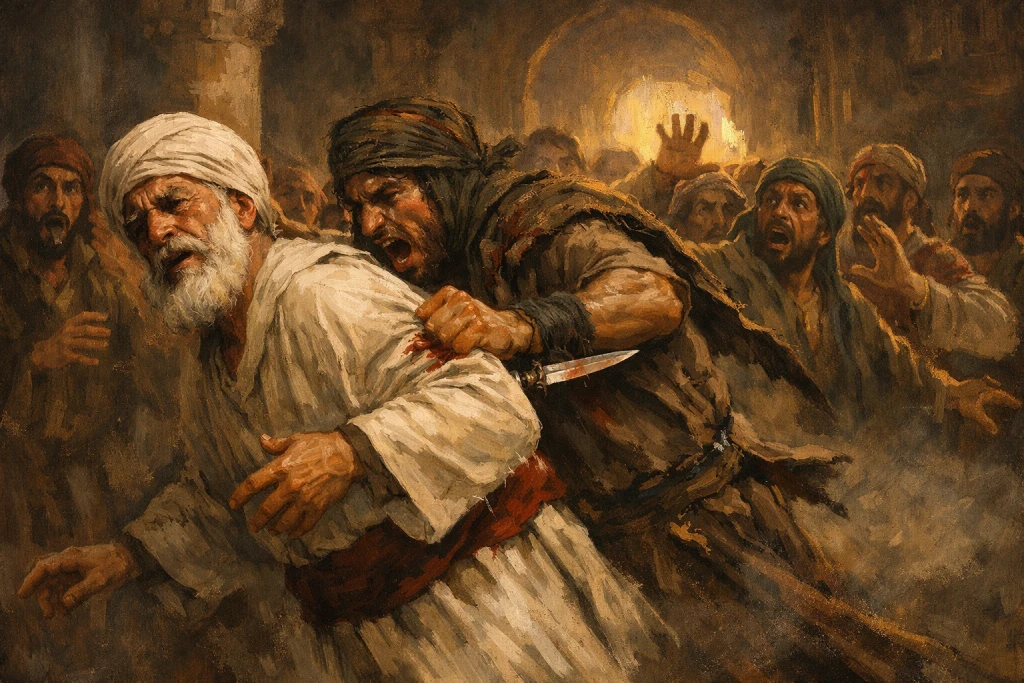
Introduction: Historical Romanticism versus the Reality of Governance
A popular religious narrative portrays the rule of the first four caliphs in Islamic history, or the “Rashidun Caliphate,” as a flawless, just, egalitarian “Golden Age.” It is claimed that justice was universal during this period and that the rights of non-Muslims were protected. Yet a dispassionate examination of historical sources and classical Islamic legal texts reveals, in contrast to this romantic image, a harsh and discriminatory system of rule. The reign of the third caliph, Uthman ibn Affan, in particular shows that justice did not rest on a neutral legal framework; rather, it was subordinated to tribal influence, political interests, and religious supremacism. Within this system, the value assigned to the lives of non-Muslims was drastically lower than that assigned to Muslims, a position fundamentally incompatible with the concept of a modern and humane state.
At the very beginning of Uthman’s reign, one judicial decision buried the rule of law: the failure to deliver justice after the assassination of Caliph Umar. This was not merely an isolated legal error; it exposed a structural limitation of Islamic governance in which preserving the ruler’s personal will or political stability could be treated as permissible even at the cost of innocent blood. Uthman’s judicial conduct shows that he treated non-Muslims or people of Persian origin as “second-class subjects” and granted state-sanctioned pardon to their killer. In the following sections, we will see how, behind the so-called “Golden Age,” the civil rights of non-Muslims were trampled and how justice was transformed into the exclusive privilege of a particular group.
The Judicial Farce of Ubaydullah ibn Umar: The Demise of the Rule of Law
One of the most discussed and controversial episodes from the beginning of Uthman’s caliphate was the killing spree carried out by Ubaydullah ibn Umar and the judicial process that followed it. After Caliph Umar’s death, his son Ubaydullah, without regard for legal process or evidence, brutally killed the former Persian commander Hormuzan, a Christian named Jufayna, and a minor daughter of Umar’s assassin Abu Lu’lu’a. Even by ordinary standards of human conscience at the time, let alone those of a modern legal system, this was an act of extreme brutality. Ubaydullah’s frenzy was not confined to the relatives or associates of the assassin; he went on threatening to kill all non-Arab slaves and captives in Medina. After such open and multiple killings, Uthman’s principal duty as head of state was to ensure the impartial application of law. Yet the historical record shows that political expediency and tribal favoritism prevailed over justice. This directly challenges the myth of a “Golden Age” in which the caliphs supposedly placed no one above the law.
When Uthman brought the case before the council of consultation, what emerged was not an uncompromising pursuit of justice but an attempt at a kind of “political settlement.” When a Companion such as Ali ibn Abi Talib explicitly demanded that Ubaydullah be executed in retaliation, or qisas, Uthman and his supporters advanced a peculiar argument. Their reasoning was: “His father was killed yesterday, and today he too will be killed—this will have an adverse effect on the people.” In other words, protecting the image and emotional standing of the ruling family was given greater weight than the killer’s crime or the value of the victims’ lives. Uthman then declared himself the “guardian” of the victims and, invoking that special authority, pardoned Ubaydullah. When the caliph acts as judge and simultaneously assumes the position of the victims’ next of kin in order to release the killer from liability, this cannot reasonably be called justice. It amounted to using state power to bury a grave crime and replacing the rule of law in Medina with the rule of power.
This judicial farce set a terrifying precedent: if a member of the ruling class, or the son of a former caliph, killed ordinary subjects or non-Muslims, the state could protect him. Uthman paid blood money on Ubaydullah’s behalf either from the public treasury or from his own personal wealth. This solution was not only legally defective but also morally indefensible. For blood money may be paid only when a killing is accidental, whereas Ubaydullah’s killings were deliberate and premeditated. Uthman’s decision therefore amounted to assigning a higher value to the life of a son of the Arab ruling family than to the life of a non-Muslim or non-Arab. The episode demonstrates that even in the so-called Golden Age of the caliphate, equality of civil rights did not exist and that members of the powerful Quraysh elite could benefit from a different interpretation and application of law.
Relevant Historical Documents and Accounts
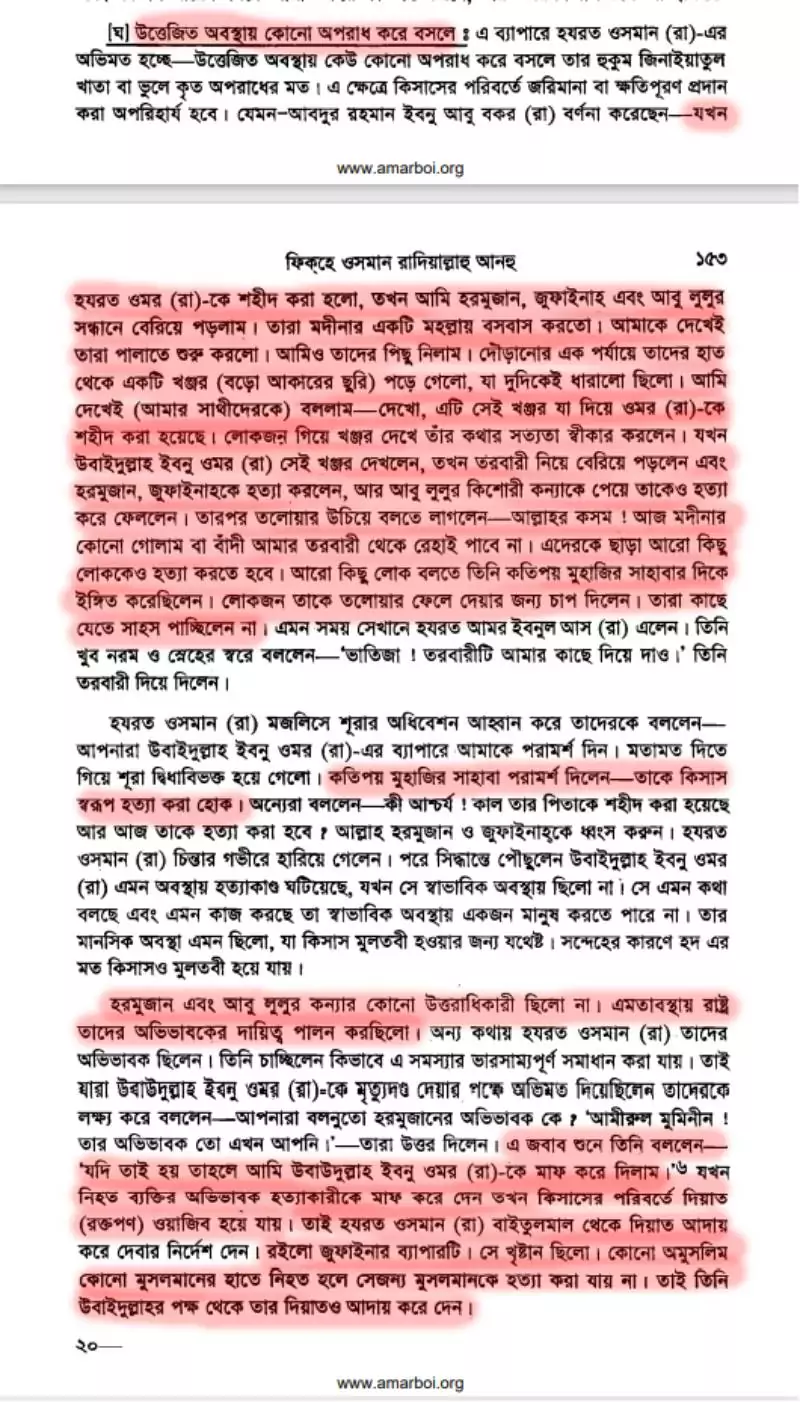
Let us examine this episode from Uthman’s reign as presented in Fiqh-e Uthman Radiyallahu Anhu [1]:
[d] If someone commits an offence while in an agitated state: Uthman’s opinion in this regard was that if a person committed an offence while in an agitated state, it would be treated like jinayat al-khata, an offence committed by mistake. In such a case, a fine or compensation would be required instead of qisas. For example, Abd al-Rahman ibn Abu Bakr related that when
www.amarboi.org
Fiqh-e Uthman Radiyallahu Anhu
153
Umar was killed, I went out in search of Hormuzan, Jufayna, and Abu Lu’lu’a. They lived in a quarter of Medina. As soon as they saw me, they began to flee. I pursued them. During the chase, a dagger fell from their possession; it was sharpened on both sides. As soon as I saw it, I said to my companions, “Look, this is the very dagger with which Umar was killed.” People went and examined the dagger and confirmed the truth of his statement. When Ubaydullah ibn Umar saw that dagger, he went out with a sword and killed Hormuzan and Jufayna, and when he found Abu Lu’lu’a’s adolescent daughter, he killed her as well. Then he raised his sword and kept saying, “By Allah! Today no male or female slave in Medina will escape my sword. Others besides them must also be killed.” By “others” he was alluding to some of the Muhajir Companions. People pressed him to put down his sword, but they did not dare approach him. At that moment Amr ibn al-As arrived. Speaking very gently and affectionately, he said, “Nephew, give the sword to me.” Ubaydullah handed it over.
Uthman convened a session of the consultative council and said to them, “Advise me concerning Ubaydullah ibn Umar.” The council became divided. Some of the Muhajir Companions advised that he be killed in qisas. Others said, “How astonishing! Yesterday his father was killed and today he too will be killed? May Allah destroy Hormuzan and Jufayna.” Uthman became deeply absorbed in thought. He eventually concluded that Ubaydullah ibn Umar had committed the killings while he was not in a normal state of mind. He was saying and doing things that a person in a normal condition would not do. His mental state was such that it was sufficient to suspend qisas. Just as a hadd punishment is suspended because of doubt, qisas too is suspended because of doubt.
Hormuzan and Abu Lu’lu’a’s daughter had no heirs. In that situation, the state was responsible for acting as their guardian. In other words, Uthman was their guardian. He wanted to find what was described as a balanced solution to the problem. Addressing those who had favored the death penalty for Ubaydullah ibn Umar, he said, “Tell me, who is Hormuzan’s guardian?” They replied, “Commander of the Faithful, you are now his guardian.” Hearing this, he said, “If that is so, then I pardon Ubaydullah ibn Umar.” When the guardian of a murdered person pardons the killer, diya becomes obligatory in place of qisas. Uthman therefore ordered that the diya be paid from the public treasury. As for Jufayna, he was a Christian. If a non-Muslim is killed at the hands of a Muslim, the Muslim cannot be executed for it. He therefore also paid Jufayna’s diya on Ubaydullah’s behalf.
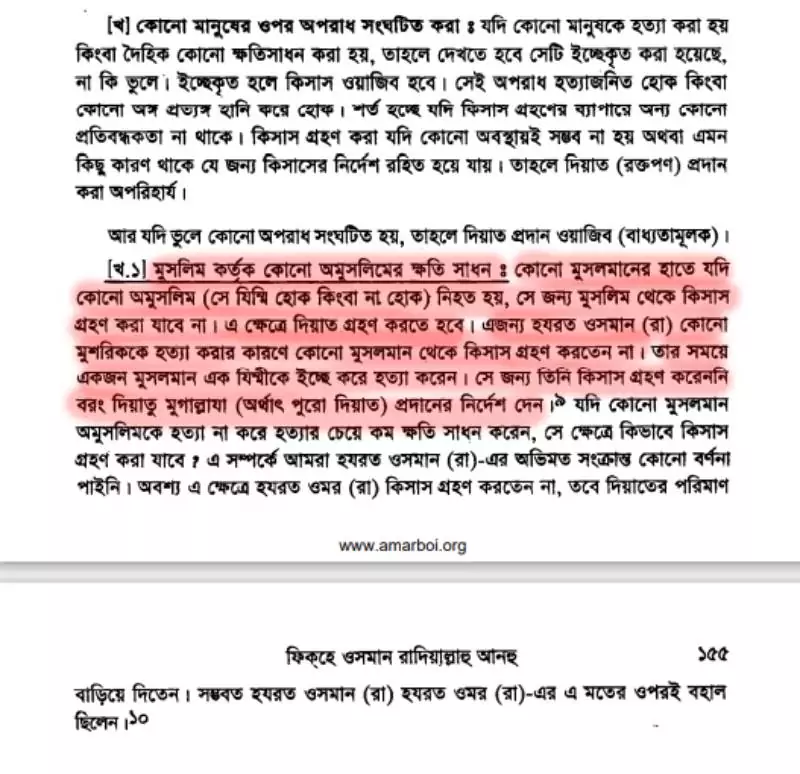
If an offence is committed by mistake, payment of diya becomes obligatory.
[b.1] Harm caused by a Muslim to a non-Muslim: if any non-Muslim—whether a dhimmi or otherwise—is killed by a Muslim, qisas cannot be taken from the Muslim. Diya must be taken instead. For this reason, Uthman did not take qisas from any Muslim for killing a polytheist. During his reign, a Muslim intentionally killed a dhimmi. Uthman did not impose qisas; instead, he ordered the payment of diyah mughallazah, that is, the full enhanced blood money. If a Muslim harms a non-Muslim without killing him, how qisas would apply in such a lesser injury is not known from any report concerning Uthman’s opinion. In this matter Umar likewise did not impose qisas, although the amount of diya…
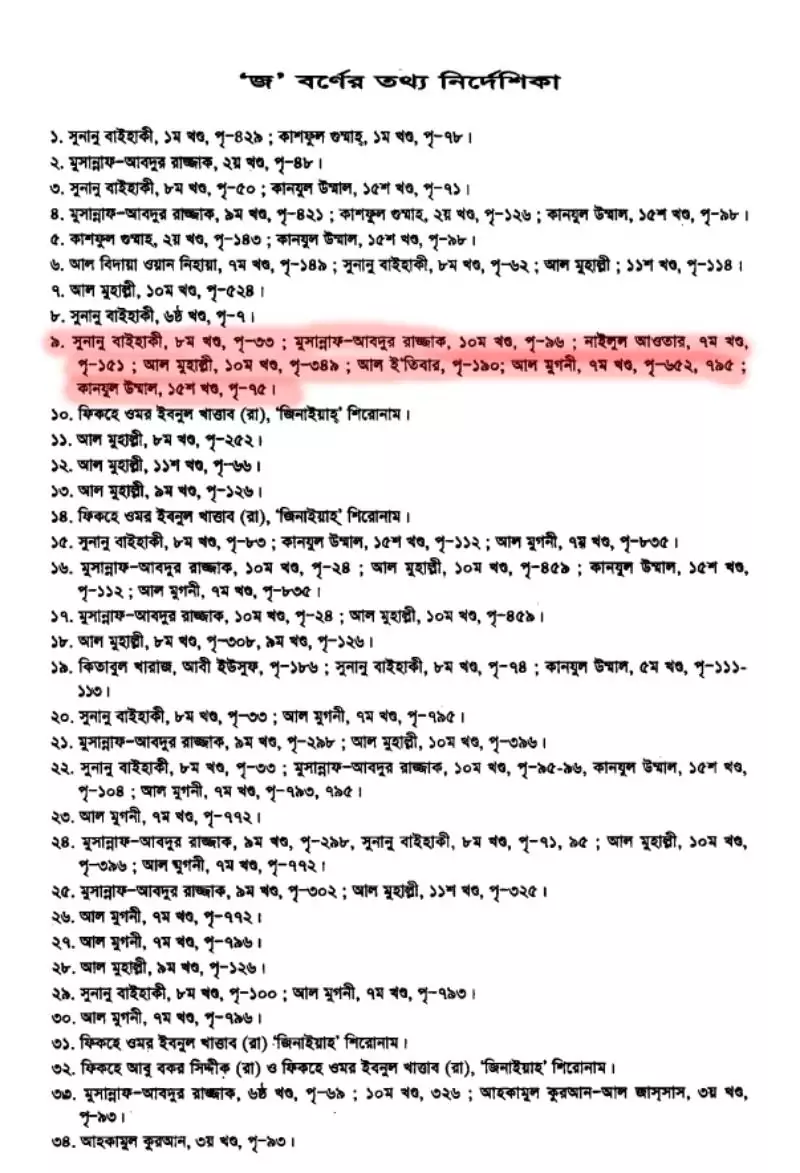
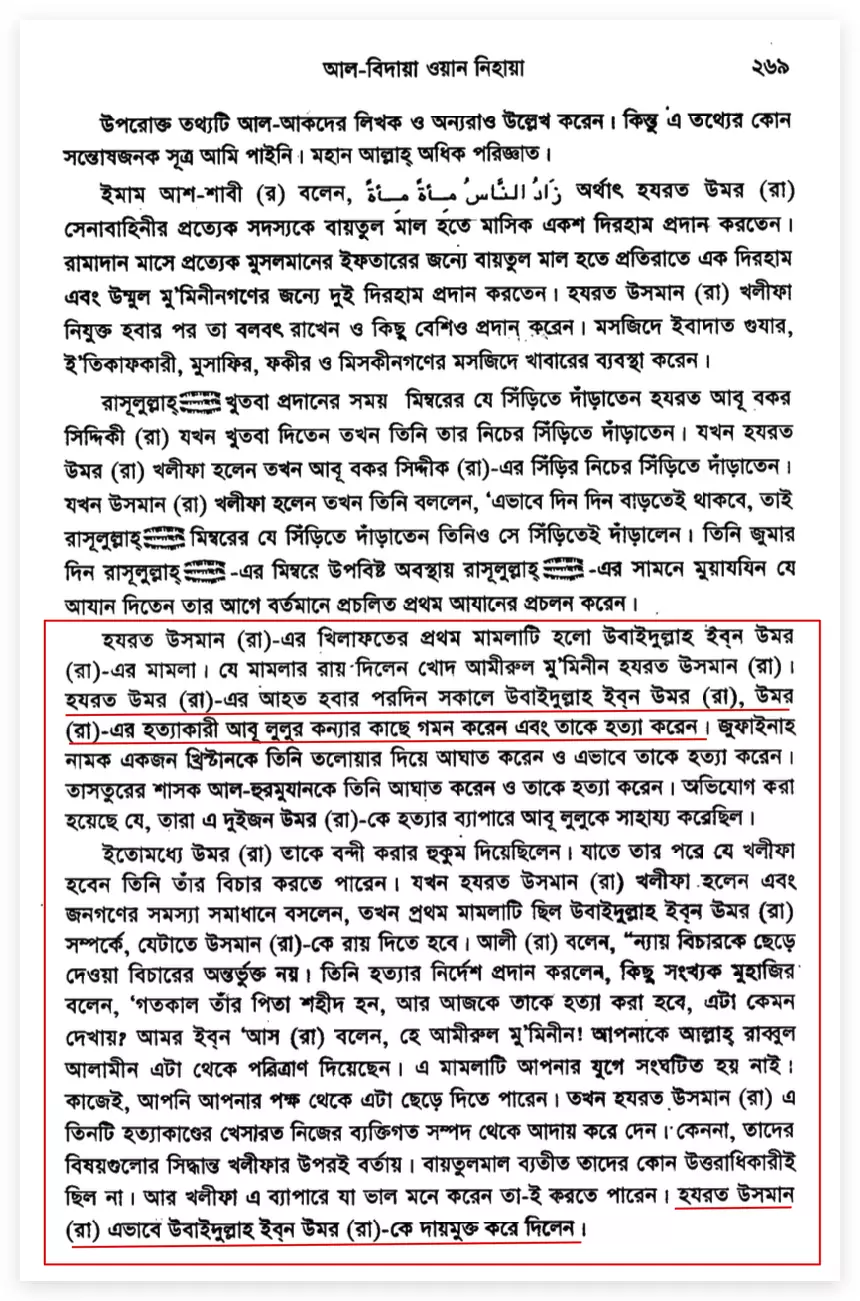
The same information is found in Al-Bidaya wa al-Nihaya [2]:
The first case of the caliphate of Uthman was the case of Ubaydullah ibn Umar, and the ruling in that case was delivered by the Commander of the Faithful Uthman himself. On the morning after Umar was wounded, Ubaydullah ibn Umar went to the daughter of Abu Lu’lu’a, Umar’s assassin, and killed her. He struck a Christian named Jufayna with his sword and killed him as well. He also struck and killed al-Hormuzan, the governor of Tustar. It had been alleged that these two had assisted Abu Lu’lu’a in the assassination of Umar.
Meanwhile, Umar had ordered that Ubaydullah be detained so that whoever became caliph after him could judge his case. When Uthman became caliph and sat to resolve the people’s affairs, the first case requiring his judgment was that of Ubaydullah ibn Umar. Ali said, “Abandoning justice is not part of justice.” He ordered that Ubaydullah be killed. Some of the Muhajir said, “His father was killed yesterday, and today he too will be killed—how will that look?” Amr ibn al-As said, “Commander of the Faithful, Allah has relieved you of this matter. The case did not occur during your rule, so you may leave it aside.” Uthman then paid compensation for the three killings from his own personal property, because the decision concerning them rested with the caliph. They had no heirs other than the public treasury, and the caliph could decide in the matter as he considered appropriate. In this way Uthman released Ubaydullah ibn Umar from liability.
Uthman’s Ruling Was Not an Isolated Incident: Religious Inequality in Qisas in Hadith and Majority Fiqh
To treat Uthman’s decision in the killings committed by Ubaydullah ibn Umar merely as the personal weakness of a caliph, political opportunism, or special sympathy for the son of the murdered Umar would conceal the larger problem in Islamic law. The inequality in qisas between a Muslim killer and a non-Muslim victim was not invented by Uthman; its legal foundation appears in hadith transmitted in Muhammad’s name. In the “Blood Money” section of Sahih al-Bukhari, a written ruling preserved by Ali explicitly states that a Muslim is not to be killed in qisas for killing a disbeliever. The same rule is preserved in Ibn Majah and Abu Dawud. Thus, in determining the maximum retaliatory punishment, not only whether a person has been intentionally killed but also the religious identity of the killer and victim becomes legally relevant [3].
حَدَّثَنَا أَحْمَدُ بْنُ يُونُسَ، حَدَّثَنَا زُهَيْرٌ، حَدَّثَنَا مُطَرِّفٌ، أَنَّ عَامِرًا، حَدَّثَهُمْ عَنْ أَبِي جُحَيْفَةَ، قَالَ قُلْتُ لِعَلِيٍّ. وَحَدَّثَنَا صَدَقَةُ بْنُ الْفَضْلِ، أَخْبَرَنَا ابْنُ عُيَيْنَةَ، حَدَّثَنَا مُطَرِّفٌ، سَمِعْتُ الشَّعْبِيَّ، يُحَدِّثُ قَالَ سَمِعْتُ أَبَا جُحَيْفَةَ، قَالَ سَأَلْتُ عَلِيًّا هَلْ عِنْدَكُمْ شَىْءٌ مِمَّا لَيْسَ فِي الْقُرْآنِ ـ وَقَالَ ابْنُ عُيَيْنَةَ مَرَّةً مَا لَيْسَ عِنْدَ النَّاسِ ـ فَقَالَ وَالَّذِي فَلَقَ الْحَبَّةَ وَبَرَأَ النَّسَمَةَ مَا عِنْدَنَا إِلاَّ مَا فِي الْقُرْآنِ إِلاَّ فَهْمًا يُعْطَى رَجُلٌ فِي كِتَابِهِ وَمَا فِي الصَّحِيفَةِ. قُلْتُ وَمَا فِي الصَّحِيفَةِ قَالَ الْعَقْلُ، وَفِكَاكُ الأَسِيرِ، وَأَنْ لاَ يُقْتَلَ مُسْلِمٌ بِكَافِرٍ.
English translation: Abu Juhaifa reported that he asked Ali whether they possessed anything beyond what was in the Qur’an, or—as one version puts it—anything not possessed by other people. Ali swore by the One who split the grain and created life that they possessed nothing beyond the Qur’an except the understanding of the Book that Allah might grant a person and what was written on a sheet. When asked what the sheet contained, he said: the rules of blood money, the release of captives, and the ruling that a Muslim is not to be killed in qisas for killing a disbeliever.
Canonical reference: Sahih al-Bukhari 6915, Book 87, Hadith 53. Sunnah.com preserves the key ruling as “no Muslim should be killed in Qisas … for killing a Kafir.”
The same rule is preserved in Sunan Ibn Majah in almost identical language. This is not presented as an inference invented by a later jurist; the report places it among the rules concerning blood money and homicide transmitted from Muhammad. Even the chapter title is explicit: “A Muslim Should Not Be Killed For A Disbeliever.” Repetition of the same transmission tradition across different hadith collections does not constitute independent historical corroboration, but neither can the clear and repeated presence of this rule within Islamic hadith law be denied [4].
حَدَّثَنَا عَلْقَمَةُ بْنُ عَمْرٍو الدَّارِمِيُّ، حَدَّثَنَا أَبُو بَكْرِ بْنُ عَيَّاشٍ، عَنْ مُطَرِّفٍ، عَنِ الشَّعْبِيِّ، عَنْ أَبِي جُحَيْفَةَ، قَالَ قُلْتُ لِعَلِيِّ بْنِ أَبِي طَالِبٍ هَلْ عِنْدَكُمْ شَىْءٌ مِنَ الْعِلْمِ لَيْسَ عِنْدَ النَّاسِ قَالَ لاَ وَاللَّهِ مَا عِنْدَنَا إِلاَّ مَا عِنْدَ النَّاسِ إِلاَّ أَنْ يَرْزُقَ اللَّهُ رَجُلاً فَهْمًا فِي الْقُرْآنِ أَوْ مَا فِي هَذِهِ الصَّحِيفَةِ فِيهَا الدِّيَاتُ عَنْ رَسُولِ اللَّهِ صلى الله عليه وسلم وَأَنْ لاَ يُقْتَلَ مُسْلِمٌ بِكَافِرٍ.
English translation: Abu Juhaifa reported that he asked Ali ibn Abi Talib, “Do you possess any knowledge that other people do not possess?” Ali replied, “No, by Allah. We have only what other people have, except that Allah may grant a man understanding of the Qur’an, or what is contained in this sheet.” The sheet contained rulings on blood money transmitted from the Messenger of Allah, including the rule that a Muslim is not to be killed in retaliation for the killing of a disbeliever.
Canonical reference: Sunan Ibn Majah 2658, Book 21, Hadith 44. Grade: Sahih (Darussalam).
The report in Sunan Abi Dawud makes the nature of this inequality even clearer, because the same document first declares that “the blood of the believers is equal among them” and then immediately states that “a believer is not to be killed for killing a disbeliever.” The equality of blood proclaimed here is therefore not a universal equality of human beings; it is equality within the Muslim community. The life of a person outside the religious boundary does not receive the same legal status within that declaration. If a Muslim is killed, the killer’s life may be taken in qisas, but when the victim is a disbeliever, the Muslim killer’s life cannot be taken in the same way. The law therefore divides human life into different legal levels on the basis of belief [5].
حَدَّثَنَا أَحْمَدُ بْنُ حَنْبَلٍ، وَمُسَدَّدٌ، قَالاَ حَدَّثَنَا يَحْيَى بْنُ سَعِيدٍ، أَخْبَرَنَا سَعِيدُ بْنُ أَبِي عَرُوبَةَ، عَنْ قَتَادَةَ، عَنِ الْحَسَنِ، عَنْ قَيْسِ بْنِ عَبَّادٍ، قَالَ انْطَلَقْتُ أَنَا وَالأَشْتَرُ، إِلَى عَلِيٍّ فَقُلْنَا هَلْ عَهِدَ إِلَيْكَ رَسُولُ اللَّهِ صلى الله عليه وسلم شَيْئًا لَمْ يَعْهَدْهُ إِلَى النَّاسِ عَامَّةً قَالَ لاَ إِلاَّ مَا فِي كِتَابِي هَذَا. قَالَ مُسَدَّدٌ قَالَ فَأَخْرَجَ كِتَابًا، وَقَالَ أَحْمَدُ كِتَابًا مِنْ قِرَابِ سَيْفِهِ، فَإِذَا فِيهِ: الْمُؤْمِنُونَ تَكَافَأُ دِمَاؤُهُمْ وَهُمْ يَدٌ عَلَى مَنْ سِوَاهُمْ وَيَسْعَى بِذِمَّتِهِمْ أَدْنَاهُمْ أَلاَ لاَ يُقْتَلُ مُؤْمِنٌ بِكَافِرٍ وَلاَ ذُو عَهْدٍ فِي عَهْدِهِ مَنْ أَحْدَثَ حَدَثًا فَعَلَى نَفْسِهِ وَمَنْ أَحْدَثَ حَدَثًا أَوْ آوَى مُحْدِثًا فَعَلَيْهِ لَعْنَةُ اللَّهِ وَالْمَلاَئِكَةِ وَالنَّاسِ أَجْمَعِينَ. قَالَ مُسَدَّدٌ عَنِ ابْنِ أَبِي عَرُوبَةَ فَأَخْرَجَ كِتَابًا.
English translation: Qays ibn Abbad reported that he and al-Ashtar went to Ali and asked whether the Messenger of Allah had entrusted him with any instruction not given to people in general. Ali replied that there was nothing except what was in a document he possessed. In one version he produced the document; in another, he took it from the sheath of his sword. It stated: “The blood of the believers is equal among them. They are one hand against others, and even the lowest among them may extend protection on behalf of all. Beware: a believer is not to be killed for a disbeliever, nor is a person protected by a covenant to be killed while his covenant remains in force.” Whoever commits an offence bears its responsibility himself; whoever introduces an offence or shelters one who does so is subject to the curse of Allah, the angels, and all people.
Canonical reference: Sunan Abi Dawud 4530, Book 41, Hadith 37. Grade: Sahih (Al-Albani).
The majority tradition of fiqh does not allow this discrimination to be hidden by restricting the rule solely to a belligerent enemy, or harbi kafir. The modern Islamic fatwa institution Islamweb explicitly acknowledges that scholars are agreed that a Muslim is not to be killed for killing a belligerent non-Muslim; more importantly, according to the majority of scholars, a Muslim is likewise not to be executed in qisas for killing a free non-Muslim living under Muslim rule, a dhimmi. The fatwa also mentions the opposing position of Abu Hanifa and the Hanafi jurists, according to whom a Muslim may be executed in qisas for killing a dhimmi. Yet after acknowledging that exception, Islamweb itself declares the unequal majority position to be the “correct opinion” [6].
All perfect praise be to Allaah, The Lord of the Worlds. I testify that there is none worthy of worship except Allaah, and that Muhammad is His slave and Messenger. We ask Allaah to exalt his mention as well as that of his family and all his companions.
First of all, you should know that a Muslim should not be killed for killing a belligerent non-Muslim according to the consensus of the scholars may Allaah have mercy upon them. According to the view of the majority of the scholars may Allaah have mercy upon them a Muslim should not be killed against a free non-Muslim under the Muslim rule. The evidence about this is the saying of the Prophet sallallaahu `alayhi wa sallam: “A Muslim should not be killed for killing a non-Muslim.” [At-Tirmithi]
Moreover, according to the view of the majority of the scholars may Allaah have mercy upon them the title (and rulings) “disbeliever” is applicable to a free non-Muslim under the Muslim rule. However, Abu Haneefah, and the scholars of his School of jurisprudence may Allaah have mercy upon them are of the view that a Muslim should be killed for killing a free non-Muslim under Muslim rule; their evidence is the two verses which the questioner mentioned. Nonetheless, the correct opinion is that of the majority of the scholars may Allaah have mercy upon them that is based on the above Prophetic narration, which is a direct proof related to the case of dispute.
Allaah Knows best.
English rendering of the Bengali translation: All praise belongs to Allah, Lord of the worlds. I testify that none is worthy of worship except Allah and that Muhammad is His servant and Messenger. We ask Allah to exalt Muhammad, his family, and all his Companions.
First, it should be known that, according to scholarly consensus, a Muslim is not to be killed for killing a belligerent non-Muslim. According to the majority of scholars, a Muslim is likewise not to be executed in qisas for killing a free non-Muslim living under Muslim rule. Their evidence is the statement attributed to Muhammad: “A Muslim should not be killed for killing a non-Muslim.”
According to the majority of scholars, the term “disbeliever” and its legal rulings also apply to a free non-Muslim living under Muslim rule. Abu Hanifa and the jurists of his school, however, hold that a Muslim should be executed for killing a free non-Muslim under Muslim rule, relying on the two Qur’anic verses mentioned by the questioner. Nevertheless, the correct opinion is the view of the majority, because it is based on the aforementioned prophetic report, which directly addresses the disputed issue.
Allah knows best.
After this admission, the religious discrimination cannot be denied through semantic maneuvering. The Hanafi school recognizes the possibility of equal qisas in the case of a dhimmi’s life; in other words, within Islamic jurisprudence itself there was a position under which a Muslim killer could be executed for killing a non-Muslim citizen. Yet the majority jurists adopted the opposite rule, and modern Islamweb continues to endorse that majority position as correct. The inequality was therefore not an unavoidable legal necessity; it was a specific religious-legal choice. Under that choice, the life of a Muslim killer received special protection against the equivalent retaliatory punishment that would apply for the killing of a Muslim victim.
Uthman’s judicial conduct makes this principle even more explicit in practice. The Fiqh-e Uthman quotation already cited in this article itself states that Ubaydullah was not executed for killing the Christian Jufayna because “if a non-Muslim is killed by a Muslim, the Muslim cannot be killed for it.” The same work further states that during Uthman’s reign a Muslim intentionally killed a dhimmi, yet Uthman did not impose qisas and instead ordered enhanced blood money. Thus, the same religious inequality appears at three levels: the hadith rule transmitted in Muhammad’s name, the interpretation of the majority jurists, and Uthman’s actual judicial practice. It is unnecessary to claim that a non-Muslim life had no value at all; the more precise and more disturbing fact is that under the law of qisas, it did not receive legal protection equal to that accorded to a Muslim life.
This was not an abstract theological distinction; its consequences concerned life and death. In the same intentional homicide, changing the victim’s religion could change the maximum punishment imposed on the killer. In a state where a person’s belief determines whether the killer’s life may be taken in retaliation, equal human dignity before the law does not exist. Uthman’s judicial ruling was therefore not merely a personal moral failure by a caliph; it was the practical enforcement of a religious legal structure in which Muslim identity could provide a killer with a special protection denied to the non-Muslim victim’s claim to equal justice.
The Value of Non-Muslim Life and Structural Discrimination: The One-Sided Application of Sharia Law
An examination of Caliph Uthman’s judicial outlook and the legal structure of the period shows that, in the so-called “Golden Age,” equality of civil rights remained confined within religious identity. The lives of non-Muslims, or dhimmis, were subjected to structural discrimination. In the formative stages of classical Islamic law, a well-established principle emerged: “A Muslim is not to be sentenced to death in qisas for killing a non-Muslim.” Under Uthman, this principle was applied harshly. When Ubaydullah ibn Umar killed the Christian Jufayna, Uthman did not sentence him to death; he merely ordered payment of diya, or blood money. This legal position is completely incompatible with modern human rights and the rule of law because it measures the value of human life according to belief. A state cannot reasonably be described as just when the punishment available for an intentional killing changes solely because of the victim’s religion.
This structural discrimination was not confined to Ubaydullah’s case; it formed part of Uthman’s broader judicial outlook. According to the historical accounts, when a Muslim intentionally killed a dhimmi or other non-Muslim during Uthman’s reign, Uthman imposed enhanced blood money instead of qisas. The result was extreme insecurity for non-Muslims, because they could not expect equal legal protection when attacked or killed by a Muslim [7]. This produced a class hierarchy in which the Muslim ruling group enjoyed legal immunity while non-Muslim subjects were exposed to denial of equal justice. Uthman’s outlook demonstrates that the judicial system of the period was essentially a Muslim-favoring legal framework in which non-Muslims stood not as equal citizens but as tax-paying subjects.
Viewed logically, this sequence of events shows that the celebrated myth of the “Golden Age” is largely a political construction. If justice is reserved for members of one’s own religion while the lives of members of other religions are treated as less valuable, calling that system “justice” becomes historical deception. Under Uthman, this legal discrimination was not merely an individual mistake; it was an expression of institutional oppression. Sources such as Al-Bidaya wa al-Nihaya and Fiqh-e Uthman testify that Uthman knowingly protected Muslim killers at the expense of non-Muslim lives. Such administrative partiality demonstrates that the Rashidun caliphate was fundamentally a state of religious domination in which “justice” functioned as a cover for the political and religious interests of the ruling group.
Political Instability and the Moral Decline of the Caliphate: The Beginning of the End of the “Golden Age”
The immunity granted to Ubaydullah ibn Umar at the beginning of Uthman’s reign was not merely an isolated legal error; it was the first clear sign that the moral backbone of the caliphate was collapsing. When the rule of law in a state submits to personal influence and tribal politics, the collapse of that system becomes inevitable. Uthman’s partisan decision generated intense dissatisfaction among conscious citizens of Medina, especially among figures such as Ali ibn Abi Talib, who held that abandoning justice could not form part of the ideals of the caliphate. The incident demonstrates that the so-called “Golden Age” had in reality turned into a form of oligarchy, in which the lives of ordinary people—particularly non-Arabs and non-Muslims—were negligible beside Qurayshi aristocratic privilege and the caliph’s personal will.
Political analysis shows that this culture of impunity under Uthman subsequently spread into other levels of his administration. His appointment of Umayyad relatives to important offices and his failure to take severe action against their corruption were extensions of the same pattern seen in Ubaydullah’s case. When a killer is pardoned because of lineage and status, the message transmitted to other state officials is that loyalty and blood relations provide stronger protection than law. This produced a form of alienation among non-Arab Muslims and non-Muslims in the conquered territories. They increasingly came to see the caliphate not as a symbol of justice but as an Arab imperial structure serving the interests of a limited number of families. This accumulated resentment later formed part of the background to mass opposition against Uthman and ultimately to his violent death.
Viewed logically, Uthman’s reign was not an ideal model of a “Golden Age” but a reflection of a decaying system. To glorify a government that buried the blood of an innocent adolescent girl beneath payment of diya, a sum of money, amounts to historical falsification. Uthman’s policies demonstrate that the caliphate had by then lost its spiritual and moral foundation and had become primarily a center of worldly and political power. Umar’s severity and Uthman’s leniency ultimately functioned as two sides of the same coin, ensuring the marginalization of ordinary subjects and non-Muslims. This moral degeneration was the principal cause of the first fitna, or civil war, which permanently shattered the myth of unity in the Islamic empire.
Conclusion: Dissecting the Myth and Confronting the Unvarnished Historical Record
An examination of Uthman’s caliphate and his administrative treatment of non-Muslims makes it clear that the idea of a “Golden Age” was largely a romantic myth constructed by later theologians. The historical reality of Uthman’s reign was a combination of nepotism, legal discrimination, and structural injustice. After Ubaydullah ibn Umar killed a Christian citizen and a minor Persian girl, the judicial farce staged by the caliph constitutes a disgraceful episode by any humane standard of modern civilization. Where justice changes according to a person’s religious identity or lineage, human dignity is inevitably crushed.
Historical truth does not answer to sentiment. The insecurity of non-Muslim dhimmis under Uthman and the state-sponsored protection extended to killers demonstrate that the caliphate of the period was fundamentally a religiously hegemonic state in which the concept of equal rights was entirely absent. Uthman’s legacy of impunity subsequently helped form the foundation of long-standing discriminatory laws under later Islamic monarchies. The myth of the so-called Golden Age must therefore be dismantled: Uthman’s caliphate was a narrow system serving group interests, stained with the blood of oppressed and persecuted non-Muslims, and its judicial structure functioned primarily as an instrument of domination.
References
- Fiqh-e Uthman Radiyallahu Anhu, Dr. Muhammad Rawwas Qal‘aji, translated and edited by Muhammad Khalilur Rahman Mumin, Adhunik Prokashoni, pp. 152–154 ↩︎
- Al-Bidaya wa al-Nihaya, vol. 7, Islamic Foundation, p. 269 ↩︎
- Sahih al-Bukhari 6915 — A Muslim should not be killed for killing a Kafir ↩︎
- Sunan Ibn Majah 2658 — A Muslim Should Not Be Killed For A Disbeliever ↩︎
- Sunan Abi Dawud 4530 — Should A Muslim Be Killed In Retaliation For A Disbeliever? ↩︎
- Islamweb Fatwa 92261 — Killing a Muslim in punishment for killing a non-Muslim ↩︎
- No Death Penalty for a Muslim Who Kills a Kafir under Islamic Sharia ↩︎