
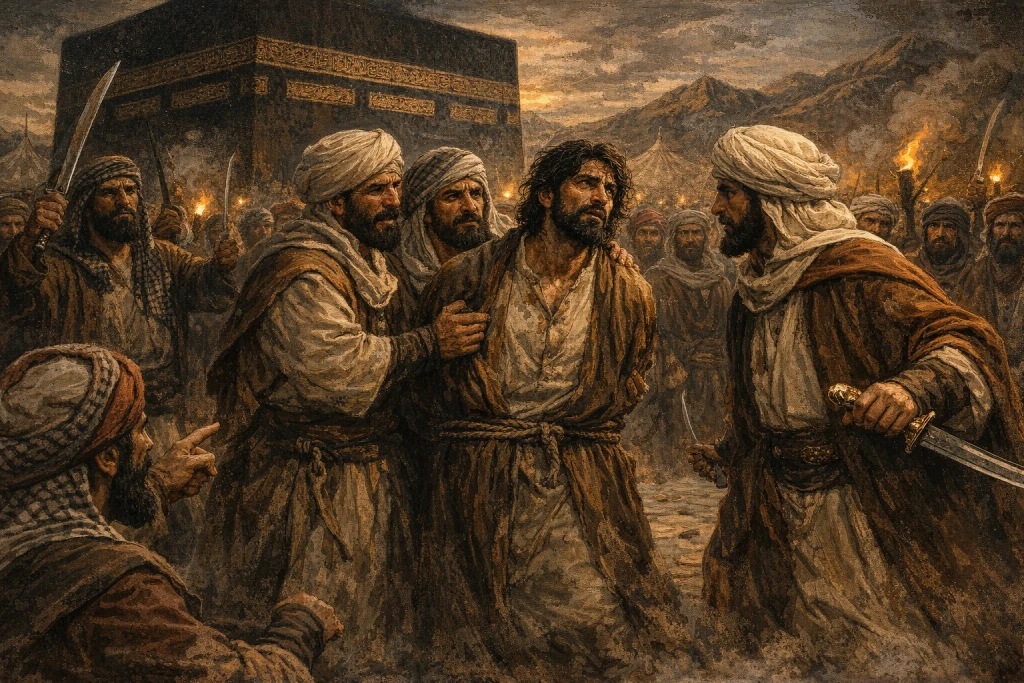
Introduction
Islamic tradition presents ‘Abdullah ibn Abi Sarh not merely as an ordinary Companion, but as an educated Qurayshi and one of Muhammad’s scribes of revelation. This identification raises a profound question: why would someone entrusted with recording revelation abandon the religion and accuse Muhammad of allowing him to participate in composing that very message? If he genuinely wrote down the Qur’an at Muhammad’s direction, he should have had firsthand experience of how revelation was spoken, heard, recorded, and checked. Reports that his doubts arose from that experience cannot simply be dismissed as the story of an individual losing his faith. They directly challenge the Qur’an’s claimed divine origin and the reliability of the process through which its text was recorded.
If Muhammad was himself illiterate, how did he ensure that his scribe wrote precisely the words he had dictated? An illiterate person cannot inspect another person’s writing by reading it, but can have the writer read it aloud for verification. This makes the question more specific: was the written text routinely read back? If so, how were altered words detected? And if altered wording was read back and nevertheless approved, the problem extends beyond a scribe’s carelessness or the prophet’s illiteracy. It reaches the fundamental question of which words were accepted as revelation, and by what standard. For a text whose every word is claimed to have come from Allah, the allegation that a writer’s suggestions or substitutions were accepted is extremely serious.
Several early Islamic exegetical and historical accounts preserve allegations that ‘Abdullah deliberately changed words. Some describe him substituting one divine attribute for another; others report that Muhammad approved the altered text as equivalent or acceptable after it was read aloud to him. Drawing on this experience, ‘Abdullah claimed that he too could produce statements like those proclaimed in Muhammad’s name. The uncomfortable question is this: if revelation truly descended from Allah in specific words, how could a scribe’s chosen alternatives acquire the same status? Does similarity of meaning make two different formulations the same divine utterance? If the scribe’s suggestions were acceptable, where did his contribution to the Qur’an’s wording end and the alleged divine instruction begin? How could that boundary be established?
This also brings into view Islamic reports concerning Muhammad’s memory and his forgetting Qur’anic verses. A message was spoken, a scribe wrote it down, and the writing was then read aloud again for approval: the entire arrangement depended on human memory, hearing, linguistic understanding, and mutual trust. Yet the religious claim presents the product of this human process as the unchanged word of an infallible God. To test that claim, it is not enough to say that Allah preserved it. We need answers about how preservation actually worked, which alterations were rejected, which were accepted, and what evidence establishes this. If ‘Abdullah’s allegation was true, it also raises the question of whether any part of the present text contains a formulation composed or selected by a scribe. If it was false, demonstrating its falsity likewise requires verifiable grounds beyond religious allegiance.
‘Abdullah’s doubts did not end with the allegation of verbal substitutions. Islamic works also preserve an account in which a phrase of praise in Surah al-Mu’minun was accepted as part of revelation after he himself uttered it. According to this narrative, he wondered: if Muhammad receives revelation, how should I explain the same words emerging from my own mouth? And if Muhammad composes these statements himself, then I too can speak as he does. He consequently returned to Mecca and used his experience to challenge Muhammad’s claim to prophethood. Was this merely an individual’s rebellion, or an allegation deeply unsettling for Islam because it arose from the experience of someone responsible for recording revelation? This article examines that allegation, the order to kill him during the conquest of Mecca, his survival through ‘Uthman’s intervention, and the conclusions later Islamic jurists drew from the episode. The question is not whether to assume in advance that any individual was truthful or dishonest, but how well the history offered in support of a religious claim withstands scrutiny of that claim.
Surah al-Mu’minun: The Allegation of Human Intervention
One of the widely discussed accounts associated with ‘Abdullah ibn Abi Sarh’s apostasy concerns the recording of verses 12–14 of Surah al-Mu’minun. The passage describes human creation in God’s first-person voice: the sperm-drop, the clot, the lump of flesh, the bones, their covering with flesh, and finally the development into another creation. In the Arabic text, these actions are expressed through verb forms meaning ‘We’; many Bengali translations render them with ‘I’. The verse’s concluding sentence, however, is: ‘So blessed is Allah, the best of creators!’ The language shifts from an account of the speaker’s own creative acts to praise of Allah by name. When this shift is read alongside the account preserved in Islamic exegesis of a human being spontaneously uttering that praise, the issue extends beyond literary ornament. It becomes a question about the sentence’s origin and its acceptance as revelation. [1]
According to the account, while Muhammad was instructing ‘Abdullah to write the verses about human creation, the description impressed ‘Abdullah, who exclaimed, ‘Fa-tabaraka Allahu ahsanu al-khaliqin’—‘So blessed is Allah, the best of creators!’ Muhammad then stated that this sentence too had been revealed to him. The Bengali account in Tafsir al-Mazhari also includes an instruction to record it. The significance of the episode is that the correspondence between a phrase uttered as the writer’s own response and the language claimed as revelation led the writer himself to doubt. When a scribe can formulate a sentence from his own understanding, what criterion distinguishes divine revelation from human composition in that same sentence? The account raises the question of whether any means of verifying its origin existed beyond Muhammad’s declaration. [2]
Surah al-Mu’minun, verse 14:
ثُمَّ خَلَقْنَا النُّطْفَةَ عَلَقَةً فَخَلَقْنَا الْعَلَقَةَ مُضْغَةً فَخَلَقْنَا الْمُضْغَةَ عِظَامًا فَكَسَوْنَا الْعِظَامَ لَحْمًا ثُمَّ أَنْشَأْنَاهُ خَلْقًا آخَرَ فَتَبَارَكَ اللَّهُ أَحْسَنُ الْخَالِقِينَ
Then We made the sperm-drop into a clinging clot, and We made the clot into a lump [of flesh], and We made [from] the lump, bones, and We covered the bones with flesh; then We developed him into another creation. So blessed is Allāh, the best of creators.
— Saheeh International
Then I transform the sperm-drop into congealed blood; then transform the lump of flesh into bones; then cover the bones with flesh; then develop him into a new creation. How great, then, is Allah, the best of creators!
— Taisirul Quran (translated from the Bengali rendering)
Then I transform the sperm-drop into a blood-clot; then transform the blood-clot into a lump of flesh and transform the lump of flesh into a skeleton; then cover the skeleton with flesh; finally, fashion him into another creation. How blessed, then, is Allah, the most accomplished creator!
— Sheikh Mujibur Rahman (translated from the Bengali rendering)
Then I transform the sperm-drop into an ‘alaqah. Then transform the ‘alaqah into a lump of flesh. Then transform the lump of flesh into bones. Then cover the bones with flesh. Thereafter, fashion him into another creation. So blessed is Allah, the best of creators!
— Rawai al-Bayan (translated from the Bengali rendering)
In the English and various Bengali translations, the creative acts are narrated in the first person, while the concluding sentence praises Allah by name. A change of grammatical person is not the same as a change of actual speaker: a speaker can refer to himself by name. But this linguistic observation does not resolve the episode preserved about ‘Abdullah. The allegation is more specific: the scribe uttered the sentence praising Allah as his own response, and Muhammad identified it as a sentence revealed to him. The question, therefore, is not simply why the verse uses the third person, but how the claimed divine origin of a sentence spontaneously spoken by a human being can be verified. Declaring the correspondence with human speech miraculous does not establish what caused it.
The Account in Tafsir al-Mazhari
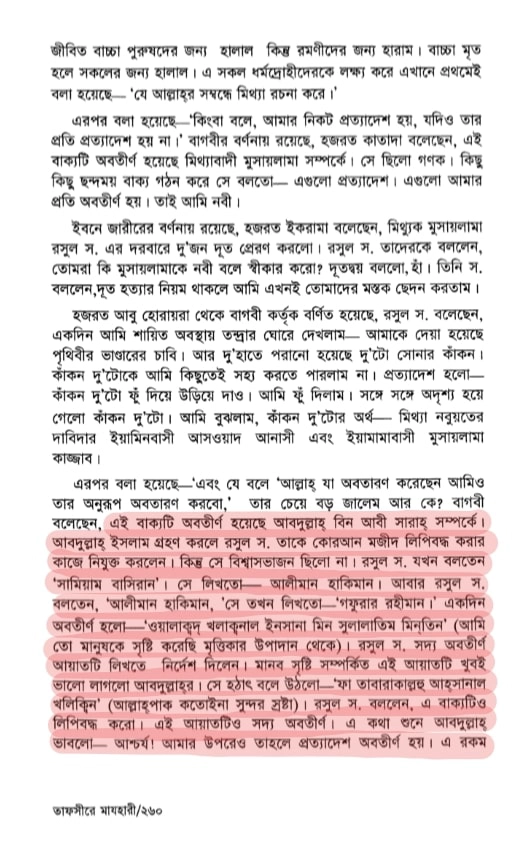
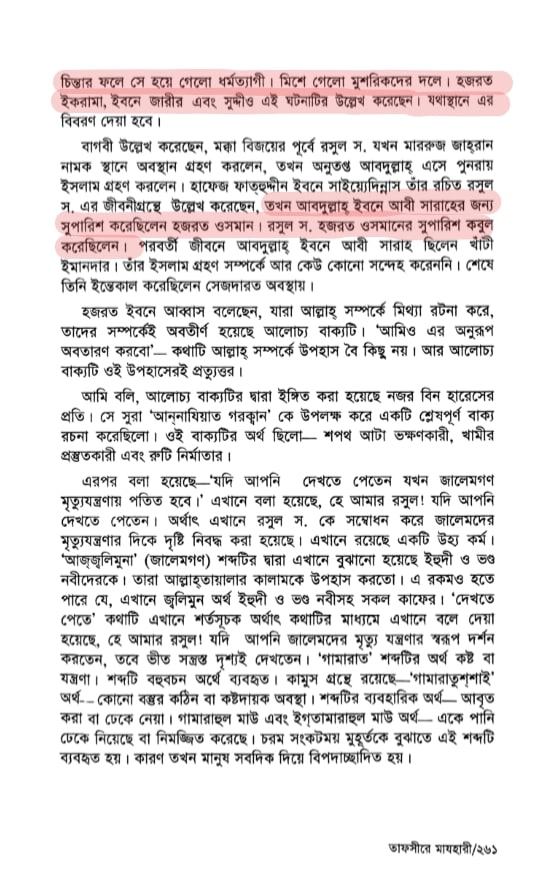
The Bengali translation of Tafsir al-Mazhari provides a detailed account of the episode. Its discussion brings together the allegation that ‘Abdullah changed words, his utterance of a phrase of praise on hearing the verses about human creation, the instruction to record that phrase, and his consequent apostasy. It then adds his return to Islam, ‘Uthman’s intercession, and an account of his religious standing later in life. Notably, although the work praises ‘Abdullah’s subsequent life, it does not omit the troubling episode in which his doubts arose while recording revelation. The claim concerning his later faith cannot therefore erase the logical questions raised by the earlier allegation. The fact that someone later returned to belief does not itself determine which statements concerning his previous experience were true or false. [3]
It then says: ‘And who is more unjust than one who says, “I too shall send down the like of what Allah has sent down”?’ Al-Baghawi said that this statement was revealed concerning ‘Abdullah ibn Abi Sarh.
When ‘Abdullah embraced Islam, the Messenger appointed him to record the Qur’an. But he was not trustworthy. When the Messenger said ‘sami‘an basiran’ [hearing, seeing], he wrote ‘‘aliman hakiman’ [knowing, wise]. Again, when the Messenger said ‘‘aliman hakiman’, he wrote ‘ghafuran rahiman’ [forgiving, merciful]. One day the verse ‘Wa-laqad khalaqna al-insana min sulalatin min tin’ [I have created man from an extract of clay] was revealed. The Messenger instructed him to write down the newly revealed verse. ‘Abdullah was greatly impressed by this verse about human creation. He suddenly exclaimed, ‘Fa-tabaraka Allahu ahsanu al-khaliqin’ [How excellent a creator Allah is]. The Messenger said, ‘Record this sentence too. This verse has also just been revealed.’ Hearing this, ‘Abdullah thought: ‘How astonishing! Revelation descends upon me too, then.’ This line of thought led him to apostasy, and he joined the polytheists. ‘Ikrimah, Ibn Jarir, and al-Suddi also mentioned this episode. Its details will be given in the appropriate place.
Al-Baghawi stated that before the conquest of Mecca, when the Messenger was staying at Marr al-Zahran, the repentant ‘Abdullah returned and embraced Islam again. Hafiz Fath al-Din ibn Sayyid al-Nas stated in his biography of the Messenger that ‘Uthman interceded for ‘Abdullah at that time, and the Messenger accepted his intercession. In later life ‘Abdullah ibn Abi Sarh was a sincere believer. No one subsequently doubted his acceptance of Islam. Finally, he died while prostrating.
Al-Wahidi’s Account: Doubt Arising from the Scribe’s Own Words
In Asbab al-Nuzul, al-Wahidi mentions the episode while explaining part of Surah al-An‘am 6:93. The logic of ‘Abdullah’s doubt is explicitly expressed in the account he preserves: if Muhammad was truthful, the same words emerging from my mouth mean that I too received revelation; if he was lying, I too could say what he said. The importance of this statement is that ‘Abdullah’s apostasy is not explained solely through greed, hostility, or arbitrary disobedience. A specific experience while recording revelation is presented as the source of his doubt. Al-Wahidi identifies this as a statement attributed to Ibn ‘Abbas through al-Kalbi. Reading the complete account makes clear that the correspondence between a human utterance and alleged revelation is the central issue in the narrative. [4]
Original Arabic:
قَوْلُهُ تَعَالَى: (وَمَنْ قَالَ سَأُنْزِلُ مِثْلَ مَا أَنْزَلَ اللَّهُ). نَزَلَتْ فِي عَبْدِ اللَّهِ بْنِ سَعْدِ بْنِ أَبِي سَرْحٍ، كَانَ قَدْ تَكَلَّمَ بِالْإِسْلَامِ، فَدَعَاهُ رَسُولُ اللَّهِ – صَلَّى اللهُ عَلَيْهِ وَسَلَّمَ – ذَاتَ يَوْمٍ يَكْتُبُ لَهُ شَيْئًا، فَلَمَّا نَزَلَتِ الْآيَةُ الَّتِي فِي الْمُؤْمِنُونَ: (وَلَقَدْ خَلَقْنَا الْإِنْسَانَ مِنْ سُلَالَةٍ) أَمْلَاهَا عَلَيْهِ، فَلَمَّا انْتَهَى إِلَى قَوْلِهِ: (ثُمَّ أَنْشَأْنَاهُ خَلْقًا آخَرَ) عَجِبَ عَبْدُ اللَّهِ فِي تَفْصِيلِ خَلْقِ الْإِنْسَانِ، فَقَالَ: تَبَارَكَ اللَّهُ أَحْسَنُ الْخَالِقِينَ، فَقَالَ رَسُولُ اللَّهِ – صَلَّى اللهُ عَلَيْهِ وَسَلَّمَ -: (هَكَذَا أُنْزِلَتْ عَلَيَّ)، فَشَكَّ عَبْدُ اللَّهِ حِينَئِذٍ وَقَالَ: لَئِنْ كَانَ مُحَمَّدٌ صَادِقًا لَقَدْ أُوحِيَ إِلَيَّ كَمَا أُوحِيَ إِلَيْهِ، وَلَئِنْ كَانَ كَذَّابًا لَقَدْ قُلْتُ كَمَا قَالَ، وَذَلِكَ قَوْلُهُ: (وَمَنْ قَالَ سَأُنْزِلُ مِثْلَ مَا أَنْزَلَ اللَّهُ) وَارْتَدَّ عَنِ الْإِسْلَامِ، وَهَذَا قَوْلُ ابْنِ عَبَّاسٍ فِي رِوَايَةِ الْكَلْبِيِّ.
English translation:
God’s statement, ‘And whoever says, “I will reveal the like of what God has revealed,”’ was revealed concerning ‘Abdullah ibn Sa‘d ibn Abi Sarh. He had professed Islam. One day, the Messenger of God summoned him to write something down. When the verse in Surah al-Mu’minun, ‘We created man from an extract,’ was revealed, he instructed him to write it. When he reached ‘Then We developed him into another creation,’ ‘Abdullah marvelled at the detailed description of human creation and said, ‘Blessed is God, the best of creators!’ The Messenger of God then said, ‘This is how it was revealed to me.’ At that point, ‘Abdullah began to doubt and said, ‘If Muhammad is truthful, then revelation has come to me just as it has come to him. If he is a liar, then I have said what he has said.’ This is the meaning of the statement, ‘And whoever says, “I will reveal the like of what God has revealed.”’ He abandoned Islam. This is Ibn ‘Abbas’s statement as transmitted in al-Kalbi’s account.
In al-Wahidi’s account, Muhammad’s statement is, ‘This is how it was revealed to me.’ These words do not establish precisely whether he had received the phrase before or after ‘Abdullah uttered it. What the account does clearly describe, however, is the experience confronting ‘Abdullah: he expressed a sentence arising from his own understanding, and Muhammad identified that sentence as the wording of revelation. What evidence, beyond the speaker’s assertion, establishes that a sentence a human being can naturally formulate is the word of God? The incident supplies no answer. This is precisely where ‘Abdullah’s doubt lies: if the same sentence can arise from his own mind, why must a separate supernatural origin be assumed when it comes from Muhammad’s mouth? Answering this question requires more than attributing the coincidence to ‘God’s will,’ because that explanation already presupposes the existence of the God and the authenticity of the revelation under examination.
The account also helps distinguish two separate claims. One is that the scribe himself uttered a sentence; the other is that a humanly composed sentence thereby entered the Qur’an. Al-Wahidi’s narrative describes the first event and shows how it gave rise to ‘Abdullah’s second doubt. Refuting that doubt requires a verifiable explanation of his experience. Calling him an apostate, pointing to his later acceptance of Islam, or assuming Muhammad’s declaration to be true from the outset supplies no such explanation of the sentence’s origin. The burden of establishing the authenticity of a claim to revelation rests with the claimant; morally condemning the scribe who expressed doubt does not discharge that burden.
Al-Tabari’s Account: The Allegation of Approval after the Altered Text Was Read Back
The question of human intervention is not confined to the expression of praise in Surah al-Mu’minun. In his Jami‘ al-Bayan, commenting on verse 93 of Surah al-An‘am, al-Tabari preserves an account attributed to ‘Ikrimah that explicitly describes ‘Abdullah’s substitution of words and his reading of the altered text back to Muhammad. It alleges that he wrote ‘Forgiving, Merciful’ in place of expressions such as ‘Mighty, Wise,’ and that Muhammad approved the text after hearing it, saying, ‘Yes, it is the same.’ This account matters because it goes beyond the question of whether Muhammad’s inability to read prevented him from inspecting the written text. According to the allegation, the substituted words reached his ears, and he nevertheless accepted them. Alongside the question of whether a procedure for checking the text existed, it therefore raises the question of what principle made different words acceptable during that checking process. [5]
Original Arabic:
١٣٥٥٥ – حدثنا القاسم قال: حدثنا الحسين، قال حدثني حجاج، عن ابن جريج، عن عكرمة قوله: «ومن أظلم ممن افترى على الله كذبا أو قال أوحي إلي ولم يوح إليه شيء»، قال: نزلت في مسيلمة أخي بني عدي بن حنيفة، فيما كان يسجع ويتكهن به. «ومن قال سأنزل مثل ما أنزل الله» نزلت في عبد الله بن سعد بن أبي سرح، أخي بني عامر بن لؤي، كان كتب للنبي صلى الله عليه وسلم، وكان فيما يملى «عزيز حكيم» فيكتب «غفور رحيم» فيغيره، ثم يقرأ عليه «كذا وكذا» لما حول، فيقول: «نعم، سواء». فرجع عن الإسلام ولحق بقريش وقال لهم: لقد كان ينزل عليه «عزيز حكيم» فأحوله، ثم أقرأ ما كتبت، فيقول: «نعم سواء»! ثم رجع إلى الإسلام قبل فتح مكة، إذ نزل النبي صلى الله عليه وسلم بمر.
English translation:
13555—Al-Qasim related to us: al-Husayn related to us; he said: Hajjaj related to me, through Ibn Jurayj, from ‘Ikrimah. Concerning the statement, ‘Whoever fabricates a lie about God or says, “Revelation has come to me,” when no revelation has come to him,’ he said: this was revealed concerning Musaylimah of Banu ‘Adi ibn Hanifah, who spoke in rhymed prose and delivered utterances like a soothsayer. As for ‘Whoever says, “I will reveal the like of what God has revealed,”’ this was revealed concerning ‘Abdullah ibn Sa‘d ibn Abi Sarh of Banu ‘Amir ibn Lu’ayy. He used to write for the Prophet. When what he was instructed to write included ‘Mighty, Wise,’ he would write ‘Forgiving, Merciful,’ making substitutions in this way. He would then read the altered passage back to him, and he would say, ‘Yes, it is the same.’ ‘Abdullah subsequently abandoned Islam and joined the Quraysh. He told them: ‘“Mighty, Wise” would be revealed to him, and I would change it. Then I would read back what I had written, and he would say, “Yes, it is the same!”’ Later, before the conquest of Mecca, while the Prophet was staying at a place called Marr, he accepted Islam again.
The two pairs of words used here are neither identical in wording nor exactly identical in meaning. ‘Mighty, Wise’ and ‘Forgiving, Merciful’ may both be used as attributes of God, but substituting one description for another changes what a sentence says. The religious acceptability of both expressions of praise does not establish that both pairs of words were equally revealed in a particular verse. For a text presented as God’s specific words, the distinction between what was actually spoken and what the scribe subsequently selected is fundamental. If the allegation is true, the approval ‘Yes, it is the same’ creates the problem of granting a humanly selected alternative the status of revelation. If the allegation is false, the grounds for rejecting it must address this particular account. Simply beginning with the proposition that the Qur’an cannot have been altered makes the claim serve as its own proof.
Although al-Tabari preserves these allegations, he describes ‘Abdullah’s claim as false in his own interpretation. The fact that the allegation appears in al-Tabari’s work is therefore distinct from the claim that al-Tabari regarded it as true. Yet his religious judgment does not, by itself, establish the allegation’s historical falsity. What matters is that this challenge arising from a revelation scribe’s experience is preserved within the Islamic exegetical tradition itself. Examining these accounts shows that the doubt concerned more than whether a scribe could change words with his pen. It concerned the basis on which the Prophet approved altered or spontaneously uttered words as the language of revelation. [6]
The question of Muhammad’s memory is also relevant here. Islamic hadith literature contains accounts of his forgetting certain Qur’anic verses and recalling them after hearing someone else recite them. There is nothing unusual about the limitations of human memory. But declaring a process dependent on human memory to be preservation beyond error requires evidence for that guarantee. Because ‘Abdullah’s allegation includes alteration of the written text and its subsequent reading aloud, the question becomes more specific: if different words were approved after being heard, was that approval based on an accurate memory of the previously heard revelation, or on the acceptability of their meaning? These two methods do not produce the same result. The first attempts to preserve a particular text; the second allows humanly selected wording to be accepted. The relevant accounts are discussed in detail in Shongshoy’s article ‘Muhammad Used to Forget Qur’anic Verses’.
In verse 14 of Surah al-Mu’minun, the description of creation is given in the first person. In the final phrase, however, God is named and praised. Reading this linguistic shift alongside the account of ‘Abdullah uttering the expression of praise himself raises a question about the phrase’s origin.
‘Then We developed him into another creation…’ — Here, the speaker describes his own act of creation.
‘Blessed is God, the best of creators!’ — Here, God is named and praised.
This shift in wording alone does not establish human interpolation. The question is more specific: Islamic exegesis preserves the same expression of praise as ‘Abdullah’s own response. How is the correspondence between that human response and the alleged revelation to be examined?
According to the account, the scribe ‘Abdullah ibn Abi Sarh, impressed by the description of human creation, said, ‘Fa-tabaraka Allahu ahsanu al-khaliqin.’ Muhammad stated that it had been revealed to him in that same form. What independent evidence supports a divine origin for a sentence the scribe could formulate from his own understanding?
The account preserved by al-Tabari alleges more than alteration of the written text. It also alleges that Muhammad approved the altered text after it was read back to him, saying, ‘Yes, it is the same.’ The question therefore extends beyond an inability to inspect the writing. On what basis were the alternative words he heard accepted as the language of revelation?
There is a direct conflict between the claim of revelation in specific words and the allegation that alternatives selected by the scribe were accepted. If the allegation is true, the human role in the text must be explained; if it is false, evidence of its falsity must be provided. Arguing that the allegation is false because the text is divine makes the claim serve as its own proof.
Later Muslim rhetoricians discussed such shifts in grammatical person and address under the term iltifat. Classifying a linguistic feature, however, is a different task from determining the historical origin of a particular sentence. The term iltifat can describe how the wording changes within a verse; it cannot establish whether the incident attributed to ‘Abdullah occurred or whether the sentence he uttered was accepted as part of revelation. Here, the Islamic exegetical tradition itself preserves the claim that the same sentence came from a human being’s mouth. Naming a rhetorical device does not settle that claim. ‘Abdullah’s doubt ultimately returns to the fundamental questions of whether human beings can compose Qur’anic sentences and how human composition can be distinguished from an allegedly divine text.
The Conquest of Mecca: The Desire for Personal Revenge
Islamic tradition repeatedly states that Muhammad granted general protection and pardon to the inhabitants of Mecca during its conquest in 8 AH. This ‘general amnesty,’ however, was not universal. Ibn Kathir’s al-Bidayah wa al-Nihayah explicitly preserves the order that certain named individuals were still to be killed, including ‘Abdullah ibn Sa‘d ibn Abi Sarh. The severity of the order is also striking: they were to be killed even if found beneath the covering of the Kaaba. Neither the declaration of general protection nor refuge in a sacred place therefore guaranteed these individuals’ survival. Investigating the reason for such an order against a former revelation scribe requires attention not only to his apostasy but also to the allegations he had expressed about Muhammad’s prophethood and revelation. He had done more than change his beliefs: he had used his experience of recording revelation to speak against Muhammad’s claims. [7]
The comparison with Hind bint ‘Utbah is also significant. Ibn Ishaq’s account of the fighting describes the mutilation of Hamzah’s body after Uhud and Hind’s chewing of his liver. Islamic sources also preserve accounts of Hind’s subsequent acceptance of Islam and pledge of allegiance to Muhammad. Within the same tradition, Hind was able to move beyond a history of intense hostility and gain acceptance, whereas ‘Abdullah faced an order for his killing even if he sought refuge in a sacred place. This comparison raises a question: which offence was considered most dangerous when setting the limits of pardon? Violence committed against people, or an experienced scribe’s statements challenging the central claim of prophethood? Even if ‘Abdullah’s allegations were false, they could have been examined and refuted. Yet the first response we encounter in the accounts preserved against him is an order for his death. [8]
If the order was being enforced as God’s immutable law, on what grounds could it later be withdrawn through a personal intercession? If, instead, Muhammad personally decided to have him killed because of allegations made against him, why should that decision be presented as an example of universal justice? These questions are particularly relevant to Ibn Abi Sarh’s case because the same account contains the order for his killing, refuge with an influential person, a prolonged silence, and eventual permission for him to live. Understanding the evidence of an offence on which a person’s life was endangered, and the rule under which it was spared, requires a clear judicial standard beyond personal intercession. In the relevant account, what becomes most visible in place of such a standard is Muhammad’s decision and ‘Uthman’s mediation.
Al-Tabarani relates, through ‘Ali ibn Sa‘id al-Razi from Ibn ‘Abbas, that the Messenger of God said: God made this city a sanctuary on the day He created the heavens and the earth. He established this city on the day He set the sun and the moon in place. He also made the sky directly above it sacred. This city had never been made lawful for anyone before me. It was made lawful only for me, for a brief period of the day. After that brief period, its sanctity was restored as before. The Messenger of God was then informed: Khalid ibn al-Walid is still fighting! He summoned a man and said: Go and tell Khalid to stop fighting. The man went to Khalid and said: The Prophet has said, keep killing whoever comes within your reach. Khalid killed seventy people that day. The man returned to the Messenger of God and informed him. He then summoned Khalid and asked: Did I not forbid you to kill people? Khalid replied: Such-and-such a man came and told me to kill whoever came within my reach. The Messenger of God summoned that man and said: Did I not order you to stop the fighting? The man replied: You intended one thing, and God intended another. God’s will prevailed over yours. I therefore could not prevent what was destined to happen. Upon hearing his reply, the Messenger of God
remained silent and said nothing to him.
Ibn Ishaq says: The Messenger of God had obtained a commitment from his commanders that they would fight no one except those who came to fight them. He had, however, named certain individuals and ordered that they be
killed, even if they were found beneath the covering of the Kaaba. Among them was ‘Abdullah ibn Sa‘d ibn Abi Sarh. He had outwardly accepted Islam and undertaken the recording of revelation, but later became an apostate. When the Messenger of God entered Mecca and announced the order for his killing, he fled and sought refuge with ‘Uthman. He was ‘Uthman’s foster brother through breastfeeding. ‘Uthman brought him to the Messenger of God to secure protection for him. After remaining silent for a long time, he said, ‘Very well.’ After he had departed with ‘Uthman, the Messenger of God addressed the Companions present: Was there not even one discerning man among you who would have killed him while I remained silent? The Companions said: Messenger of God, why did you not give us a small signal? He said: It is not fitting for a prophet to have someone killed by giving a signal. Another account states that he said: A prophet cannot engage in treachery with his eyes.
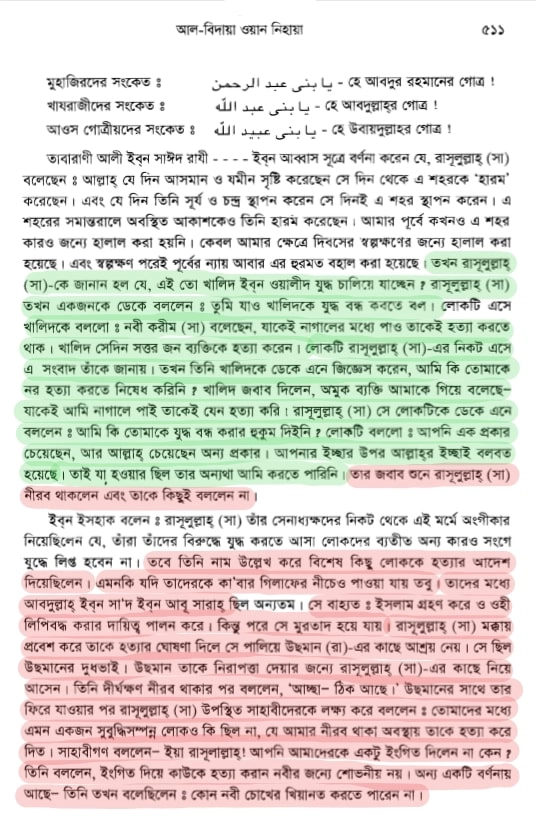
Ibn Ishaq’s statement, quoted in Ibn Kathir’s compilation, shows Muhammad instructing his commanders to fight only those who fought them. At the same time, however, certain named individuals were excluded from that protection. In ‘Abdullah’s case, the issue therefore extends beyond self-defence on a battlefield or during an ongoing clash. The order to kill him wherever he was found was based on his personal identity and previous conduct. Drawing on his experience as a revelation scribe to claim ‘I too can say the same kind of things’ posed a serious intellectual challenge to prophethood. His statements could have created doubt among believers because the accuser identified himself as someone involved in recording the revelation. Killing him could remove the person voicing the allegations, but it could establish no evidence about their truth. The death of an accuser is not the refutation of an allegation.
Another question arises here: if ‘Abdullah’s allegations were false, where were his statements publicly examined and shown to be false? It would have been possible to investigate which words he changed, what Muhammad said, whether anyone else was present, and whether his writing was compared with the texts of other scribes. In the accounts of the killing order and mediation quoted here, we find his intended killing and subsequent protection through special intercession in place of such an inquiry. The decision to spare his life therefore settles neither the truth nor the falsity of his allegations. The question also remains whether his statements might have influenced more people in a public debate. Readers may judge how this harsh response to a scribe who challenged Muhammad’s religious authority accords with the claim that he was a prophet of universal mercy.
The ‘general amnesty’ at the conquest of Mecca therefore cannot be assessed in isolation from individual cases. The moral value of a declaration of pardon depends on its scope, its exceptions, and the reasons for those exceptions. In ‘Abdullah’s case, exclusion from general protection, the order to kill him even under the protection of the Kaaba, and the subsequent sparing of his life through ‘Uthman’s intercession form a sequence showing that personal relationships and the ruler’s consent played an effective role in decisions about his life. Where is the impartial examination of an allegation in a system where the person accused also authorises killing and decides on pardon? And how does a system fulfil a claim to justice if one of two people accused of the same offence survives because he obtains an influential intercessor, while the other is killed because he has no such opportunity?
‘Uthman’s Intervention and ‘Treacherous Eyes’
‘Abdullah ibn Abi Sarh was the foster brother of ‘Uthman ibn ‘Affan through breastfeeding. Fearing for his life, he took refuge with ‘Uthman, who brought him before Muhammad. This relationship is an important part of the incident: the man marked for death found an intermediary who was a close Companion of Muhammad and also connected to his family. According to Sunan Abi Dawud, ‘Uthman asked Muhammad to accept ‘Abdullah’s pledge of allegiance. Muhammad looked at him three times, refusing each time, before eventually accepting the pledge. Afterwards, he asked the Companions why no one present had killed ‘Abdullah while he was withholding acceptance of his pledge. There is therefore no need to speculate about the purpose of the prolonged silence and refusal: the account itself attributes an expectation of killing to Muhammad’s own words. [9]
Sunan Abi Dawud
Book: Jihad
Chapter: Killing a Captive Without Inviting Him to Islam
2683 (Islamic Foundation Bengali edition: 2674). ‘Uthman ibn Abi Shaybah … related from Sa‘d, who said: On the day of the conquest of Mecca, the Messenger of God granted protection to everyone except four men and two women, whose names he also announced. And Ibn Abi Sarh … The hadith then continues. The narrator Sa‘d says: Ibn Abi Sarh remained concealed with ‘Uthman. When the Messenger of God called on everyone to pledge allegiance, ‘Uthman brought him along and made him stand before the Messenger of God. He said: Prophet of God, accept ‘Abdullah’s pledge. He raised his head and looked at him three times, refusing to accept the pledge each time.
After the third time, he accepted his pledge. He then said to his Companions: Was there no discerning man among you who, upon seeing that I was not accepting his pledge, would have killed him? They said: Messenger of God, we could not know what was in your heart. Why did you not signal to us with your eyes? He said: It is not fitting for a prophet to have a treacherous glance.
Abu Dawud says: ‘Abdullah was ‘Uthman’s foster brother through breastfeeding, and al-Walid ibn ‘Uqbah was ‘Uthman’s half-brother through their mother. During his rule, ‘Uthman punished him for drinking wine.
Hadith grading: Sahih (authentic)
Narrator: Sa‘d ibn Abi Waqqas
The incident also appears in Sunan Abi Dawud, hadith 4359, with the full conversation. The sequence is clear: concealment, ‘Uthman’s request, three refusals to accept the pledge, eventual acceptance, and an expression to those present of the expectation that someone would kill him. The expectation of killing preceded acceptance of the pledge, while Muhammad was withholding his hand. His subsequent words to the Companions referred back to that earlier moment. This sequence itself raises a sufficiently serious moral question: a man had come seeking protection and acceptance, yet his request was being refused while someone else was expected to kill him. ‘Abdullah was present with ‘Uthman; his life could have been ended on another person’s initiative while his application was under consideration. [10]
Original Arabic:
حَدَّثَنَا عُثْمَانُ بْنُ أَبِي شَيْبَةَ، حَدَّثَنَا أَحْمَدُ بْنُ الْمُفَضَّلِ، حَدَّثَنَا أَسْبَاطُ بْنُ نَصْرٍ، قَالَ زَعَمَ السُّدِّيُّ عَنْ مُصْعَبِ بْنِ سَعْدٍ، عَنْ سَعْدٍ، قَالَ لَمَّا كَانَ يَوْمُ فَتْحِ مَكَّةَ اخْتَبَأَ عَبْدُ اللَّهِ بْنُ سَعْدِ بْنِ أَبِي سَرْحٍ عِنْدَ عُثْمَانَ بْنِ عَفَّانَ فَجَاءَ بِهِ حَتَّى أَوْقَفَهُ عَلَى النَّبِيِّ صلى الله عليه وسلم فَقَالَ يَا رَسُولَ اللَّهِ بَايِعْ عَبْدَ اللَّهِ. فَرَفَعَ رَأْسَهُ فَنَظَرَ إِلَيْهِ ثَلَاثًا كُلُّ ذَلِكَ يَأْبَى فَبَايَعَهُ بَعْدَ ثَلَاثٍ ثُمَّ أَقْبَلَ عَلَى أَصْحَابِهِ فَقَالَ «أَمَا كَانَ فِيكُمْ رَجُلٌ رَشِيدٌ يَقُومُ إِلَى هَذَا حَيْثُ رَآنِي كَفَفْتُ يَدِي عَنْ بَيْعَتِهِ فَيَقْتُلَهُ». فَقَالُوا مَا نَدْرِي يَا رَسُولَ اللَّهِ مَا فِي نَفْسِكَ أَلَا أَوْمَأْتَ إِلَيْنَا بِعَيْنِكَ قَالَ «إِنَّهُ لَا يَنْبَغِي لِنَبِيٍّ أَنْ تَكُونَ لَهُ خَائِنَةُ الْأَعْيُنِ».
English translation:
‘Uthman ibn Abi Shaybah related to us; Ahmad ibn al-Mufaddal related to us; Asbat ibn Nasr related to us. He said that al-Suddi narrated through Mus‘ab ibn Sa‘d from Sa‘d. Sa‘d said: On the day of the conquest of Mecca, ‘Abdullah ibn Sa‘d ibn Abi Sarh concealed himself with ‘Uthman ibn ‘Affan. ‘Uthman brought him and made him stand before the Prophet, saying, ‘Messenger of God, accept ‘Abdullah’s pledge of allegiance.’ He raised his head and looked at him three times, refusing each time. After the third time, he accepted his pledge. He then turned to his Companions and said, ‘Was there no discerning man among you who, upon seeing me withhold my hand from accepting his pledge, would have risen and killed him?’ They said, ‘Messenger of God, we did not know what was in your mind. Why did you not signal to us with your eyes?’ He said, ‘It is not fitting for a prophet to have treacherous eyes.’
The Companions’ reply is also noteworthy: ‘We did not know what was in your mind.’ They had not understood Muhammad’s immediate expectation concerning the man before them. They suggested a signal that could have communicated that expectation. Muhammad described signalling with the eyes as unfitting for a prophet, yet his preceding words expressed the expectation that someone present would take the initiative to kill ‘Abdullah. This makes the moral conflict clear: a covert signal is deemed improper, while the expectation is expressed that someone should decide to kill a man on observing his silence and refusal to accept the pledge. If moral judgment rests on human life, safety, and transparent decisions, examining the method of signalling alone does not fulfil the responsibility; the intended act must also be examined. The claim of having avoided an eye signal does not answer the moral question raised by the expectation of killing.
The Vow to Kill and the Wait for Its Fulfilment
In al-Sarim al-Maslul, Ibn Taymiyya uses a version of the incident in which a Muslim had vowed to kill ‘Abdullah. According to his account, ‘Uthman hid ‘Abdullah for several days, brought him forward after the people of Mecca had settled down, and ‘Abdullah appeared in repentance to seek a pledge of allegiance and protection. Ibn Taymiyya explains Muhammad’s prolonged silence as an expectation that the man who had made the vow, or someone else, would rise and kill him. The desire for his death thus appears as more than a vague inference about an internal state: it is connected to a specific vow to kill and a wait for its fulfilment. Ibn Kathir’s compilation also contains an account of an Ansari’s vow and the statement addressed to him, ‘I waited for you to fulfil your vow.’ [11]
Original Arabic:
الطريقة الحادية عشرة: أن عبد الله بن سعد بن أبي سرح كان قد ارتد وافترى على النبي صلى الله عليه وسلم أنه يلقنه الوحي ويكتب له ما يريد فأهدر النبي صلى الله عليه وسلم دمه ونذر رجل من المسلمين ليقتلنه ثم حبسه عثمان أياما حتى اطمأن أهل مكة ثم جاء تائبا ليبايع النبي عليه الصلاة والسلام ويؤمنه فصمت رسول الله صلى الله عليه وسلم طويلا رجاء أن يقوم إليه الناذر أو غيره فيقتله ويوفي بنذره.
ففي هذا دلالة على أن المفتري على النبي صلى الله عليه وسلم الطاعن عليه قد كان له أن يقتله وأن دمه مباح وإن جاء تائبا من كفره وفريته لأن قتله لو كان حراما لم يقل النبي صلى الله عليه وسلم ما قال ولا قال للرجل: هلا وفيت بنذرك بقتله.
English translation:
The eleventh argument: ‘Abdullah ibn Sa‘d ibn Abi Sarh apostatised and made the false allegation against the Prophet that he taught him revelation and wrote for him whatever he wished. The Prophet therefore authorised the shedding of his blood. A Muslim vowed to kill him. ‘Uthman then hid him for several days until the people of Mecca had settled down. Afterwards, he came in repentance to pledge allegiance to the Prophet and obtain protection from him. The Messenger of God remained silent for a long time, hoping that the man who had made the vow, or someone else, would rise, kill him, and fulfil the vow.
This demonstrates that the Prophet had the right to kill the person who made false allegations against him and criticised him, and that shedding that person’s blood was lawful, even though he had come repenting of his unbelief and false allegations. Had killing him been forbidden, the Prophet would not have said those words, nor would he have said to the man, ‘Why did you not kill him and fulfil your vow?’
Ibn Taymiyya identifies ‘Abdullah’s allegation as false, and his discussion aims to establish the lawfulness of killing someone who makes allegations against the Prophet. Yet the sequence he accepts in this legal interpretation raises a more serious question: ‘Abdullah’s death was still expected after he returned in repentance. His declaration of renewed belief did not give him immediate protection. He had to survive through personal mediation and pardon. If later accounts describe him as a ‘sincere believer,’ how was that possibility being considered at the moment when someone was waiting for his killing? Killing a person before assessing his changed position ends any opportunity to examine his repentance or future life. In the legal principle Ibn Taymiyya derives from this incident, the accused needs the consent of another authority, alongside repentance, for his life to be spared.
The vow to kill also creates its own moral problem. One person’s commitment to kill another does not, by itself, make the killing just. Before the vow, it is necessary to examine the offence, the evidence, the necessity of punishment, and the rights of the accused; the same responsibility remains after the vow. Here, however, the failure to fulfil the vow is presented in a way that makes the absence of an initiative to kill appear to be what requires explanation. A commitment to kill someone seeking protection and religious obedience are joined within the same incident. This raises a question: if obedience to religious authority encourages readiness to take someone’s life, on what grounds should that obedience be accepted as a measure of morality? An act does not become justice merely because it is the object of a religious vow.
The outcome of ‘Uthman’s mediation is therefore also important. ‘Abdullah ultimately survived, but the saving of his life reveals no rule establishing equal rights for everyone. He had ‘Uthman beside him; through that relationship, he obtained a place to hide and access to direct intercession. What would have happened to someone else facing the same allegation without such refuge and mediation? There is a fundamental distinction between personally pardoning someone and providing every accused person with protection, an opportunity to speak, and a hearing according to established rules. That distinction must be examined before praising the pardon in this incident. If the right to survive depends on an influential person’s intercession, the fairness of the system cannot be established merely by the survival of one individual.
Even when the statement about avoiding ‘treacherous eyes’ is presented as evidence of moral superiority, the expectation of killing, the wait for fulfilment of a vow, and the uncertainty of survival after repentance remain parts of the same account. Alongside the statement that Muhammad gave no signal with his eyes, one must place his question: why did no one rise and kill ‘Abdullah? For a sceptical reader, the subject of moral evaluation is the entire incident. Without answers about the public examination of the statements of the man who questioned the source of revelation, his safety, and the basis of punishment against him, the Prophet’s moral superiority cannot be declared solely on the basis of his refusal to give a signal. The power, personal mediation, and expectation of killing expressed in this account subject the claims of justice and universal mercy associated with prophethood to rigorous scrutiny.
Ibn Taymiyya’s Interpretation
Ibn Taymiyya uses ‘Abdullah ibn Abi Sarh’s case to establish a legal basis for killing someone who makes allegations against the Prophet. In his interpretation, alleging that revelation was altered constitutes an insult to the Prophet; consequently, the accuser does not automatically acquire the right to have his life spared even if he repents and accepts Islam again. This interpretation further increases the incident’s significance. A scribe made allegations based on his experience of recording revelation, an order was issued for his killing, and his life was subsequently spared through an influential person’s intercession. Ibn Taymiyya transformed this sequence into a principle governing the life and death of later accused persons. The discussion therefore extends beyond the history of the personal relationship between Muhammad and ‘Abdullah to questions about the right to criticise religious claims, the safety of the accused, and the authority to grant pardon.
Two points appear side by side in his discussion. First, he preserves ‘Abdullah’s allegation of alterations to revelation but rejects it as false. Second, he regards the expression of that allegation itself as an insult to the Prophet and an offence punishable by death. It is necessary here to distinguish the examination of an allegation’s truth from the grounds for punishing the accuser. Demonstrating that a statement is false is one task; authorising the speaker’s death because he expressed it is another. The second appears in Ibn Taymiyya’s discussion as an explicit legal conclusion. The relevant extended account appears in the Bengali translation of his work. [12]
The Ninth Hadith
The incident concerns Ibn Abi Sarh. The scholars agree on this incident. It is so well known among them that it cannot be treated as a report transmitted by just one person.
The incident is as follows:
On the day of the conquest of Mecca, ‘Abdullah ibn Sa‘d ibn Abi Sarh hid with ‘Uthman ibn ‘Affan. ‘Uthman managed to bring him before the Prophet and said, ‘Messenger of God, accept ‘Abdullah’s pledge of allegiance to Islam.’ The Prophet raised his head and looked at him. ‘Uthman repeated the same request three times, and each time the Prophet refused to accept his pledge. After the third time, he accepted it. The Prophet then said to the Companions:
أَمَا كَانَ فِيكُمْ رَجُلٌ رَشِيدٌ يَقُومُ إِلَى هَذَا حَيْثُ رَآنِي كَفَفْتُ يَدِي عَنْ بَيْعَتِهِ فَيَقْتُلُهُ
‘What is the matter? Was there no astute man among you who, upon seeing that I had not extended my hand to him, would have struck off his head?’
The Companions replied, ‘Messenger of God, we did not know what you desired in your heart. Why did you not signal to us with your eyes?’ The Prophet then said, ‘Do you not know that treachery with the eyes is not fitting for a prophet?’
[71] Abu Dawud, al-Sunan: 2683 (cited as 2685 in the Bengali quotation); al-Nasa’i, al-Sunan: 4067; the chain of transmission is authentic.
The Messenger of God had declared that his blood could be shed without liability. But he was ‘Uthman’s foster brother through breastfeeding. ‘Uthman therefore interceded with the Prophet on his behalf, and he pardoned him.
After accepting Islam, however, he had become an apostate and joined the polytheists. After his initial acceptance of Islam, he had been among the Prophet’s revelation scribes. He then joined the polytheists and began saying, ‘I used to change the Qur’an however I wished, because he would instruct me to write something from the revelation. I would ask him, “Will it do if I write this or that?” He would say, “Yes, it will.” The Prophet would tell him to write “‘Alimun Hakim” [Knowing, Wise]. He would ask, “Will it do if I write “‘Azizun Hakim” [Mighty, Wise]?” He would say, “Yes! The two are the same.”’ [2]
It is said that this verse was revealed concerning him—3
وَمَنْ أَظْلَمُ مِمَّنِ افْتَرَى عَلَى اللهِ كَذِبًا أَوْ قَالَ أُوحِيَ إِلَيَّ وَلَمْ يُوحَ إِلَيْهِ شَيْءٌ وَمَنْ قَالَ سَأُنْزِلُ مِثْلَ مَا أَنْزَلَ اللهُ ….
Who could be more unjust than someone who fabricates a lie in God’s name, or says, ‘Revelation has been sent down to me,’ when nothing has been revealed to him, or says, ‘I too will soon send down revelation like that which God has sent down’?
This hadith shows that he made false allegations against the Prophet and spread fabricated claims among people: that the Prophet instructed him to write revelation, that he wrote whatever he wished, and that the Prophet let it stand. Such falsehood is certainly a form of insult against the Prophet. Another person besides him also claimed to have altered revelation. God seized him. After his death, wherever people buried him, the earth cast him out. And this is
[72] Ibn Hisham, al-Sirah: 2/409.
[73] Al-Tabari, Jami‘ al-Bayan: 5/268; al-Wahidi, Asbab al-Nuzul: p. 245.
[74] Surah al-An‘am, 6:93.
[75] For details: al-Bukhari, al-Sahih, Book of Virtues: 3617.
clear evidence that God will take vengeance on and punish anyone who makes offensive remarks about the Prophet. Thus, the lawfulness of shedding ‘Abdullah ibn Abi Sarh’s blood even after he repented and accepted Islam, the Messenger of God’s asking the Companions, ‘Why did you not kill him?’, and his subsequently pardoning him—all these steps show that the Prophet could kill him if he wished and pardon him if he wished.
This also proves that the Prophet had full authority to kill someone who insulted him, even if that person repented and returned to Islam.
An authentic account states that Ibn Abi Sarh returned to Islam before the conquest of Mecca. He told ‘Uthman, ‘I have indeed committed a very grave offence. Now I have repented and returned.’ After people had settled down and become calm, ‘Uthman brought him before the Prophet. The Prophet inwardly wanted the Muslims to kill him. He therefore waited for some time to see whether someone would kill him of his own accord. The Prophet thought that perhaps someone would kill him shortly. … All these events clearly prove that killing him remained lawful after his acceptance of Islam.
The false allegation made against the Prophet by ‘Abdullah ibn Abi Sarh and another Christian revelation scribe—that he knew of their alterations to revelation but said nothing and instead approved them—is a blatant lie. The Prophet had only what God revealed written down and ordered that only what God commanded to be retained should be retained. He made no alterations according to his own wishes. Rather, he had it recorded as God wished.
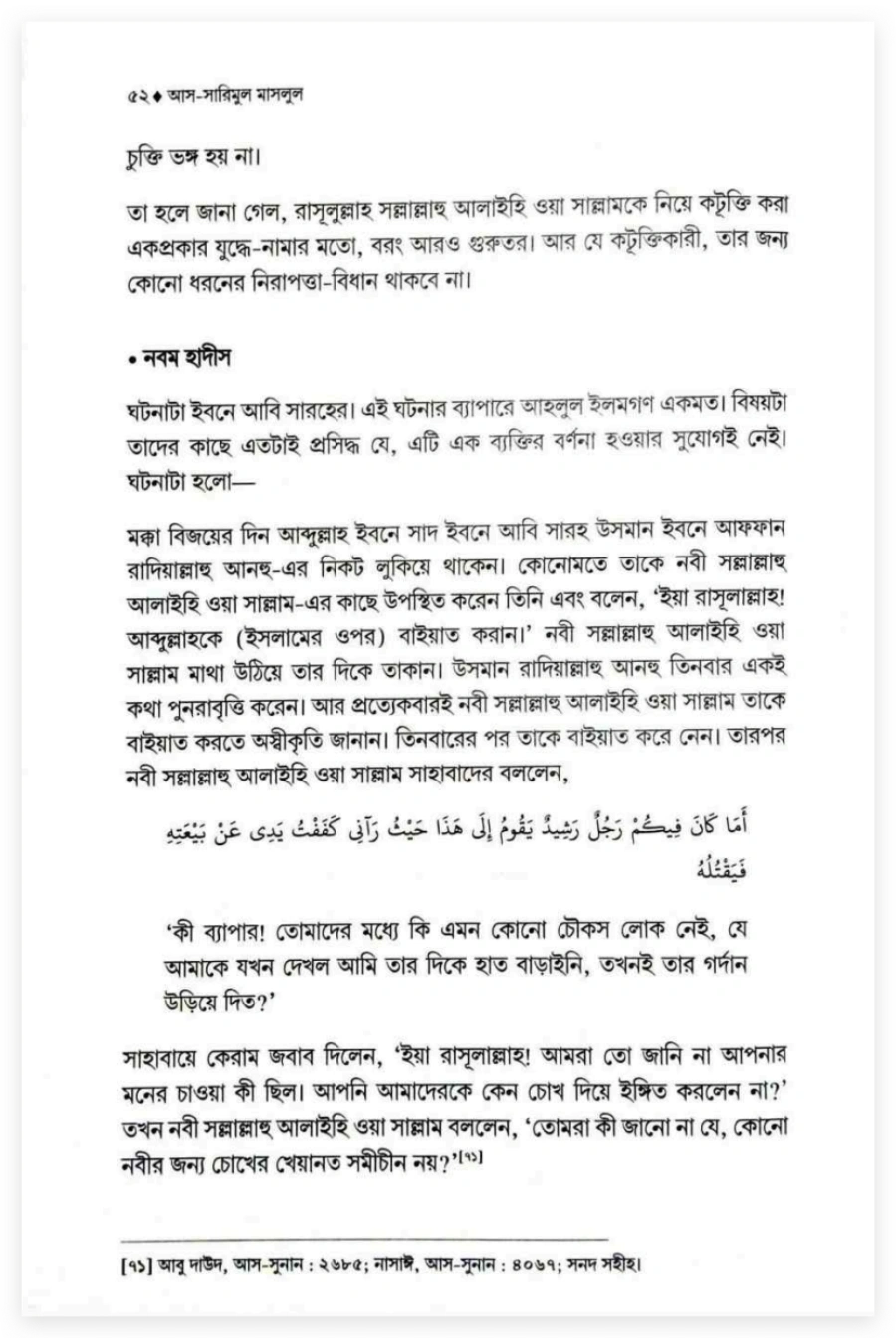
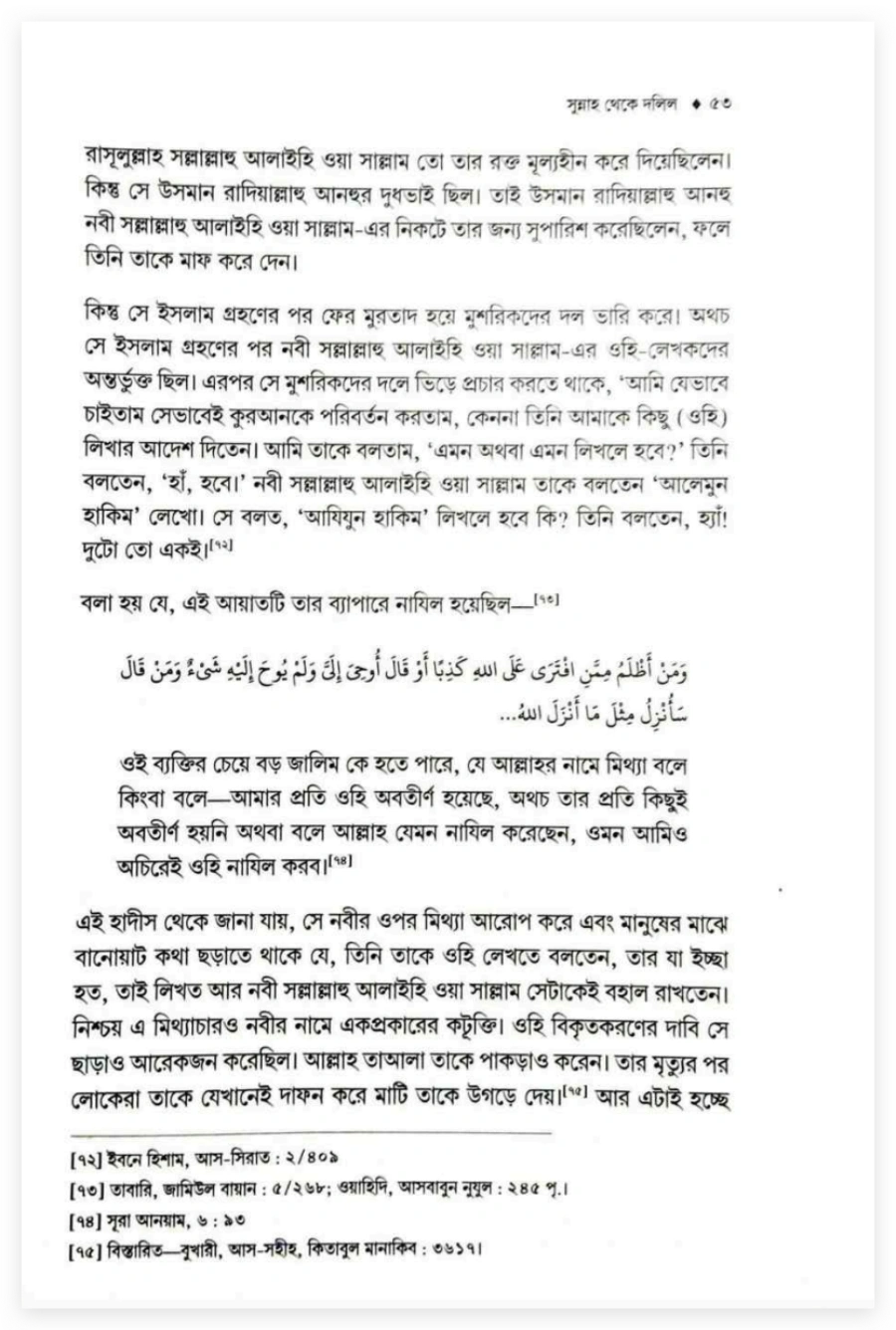
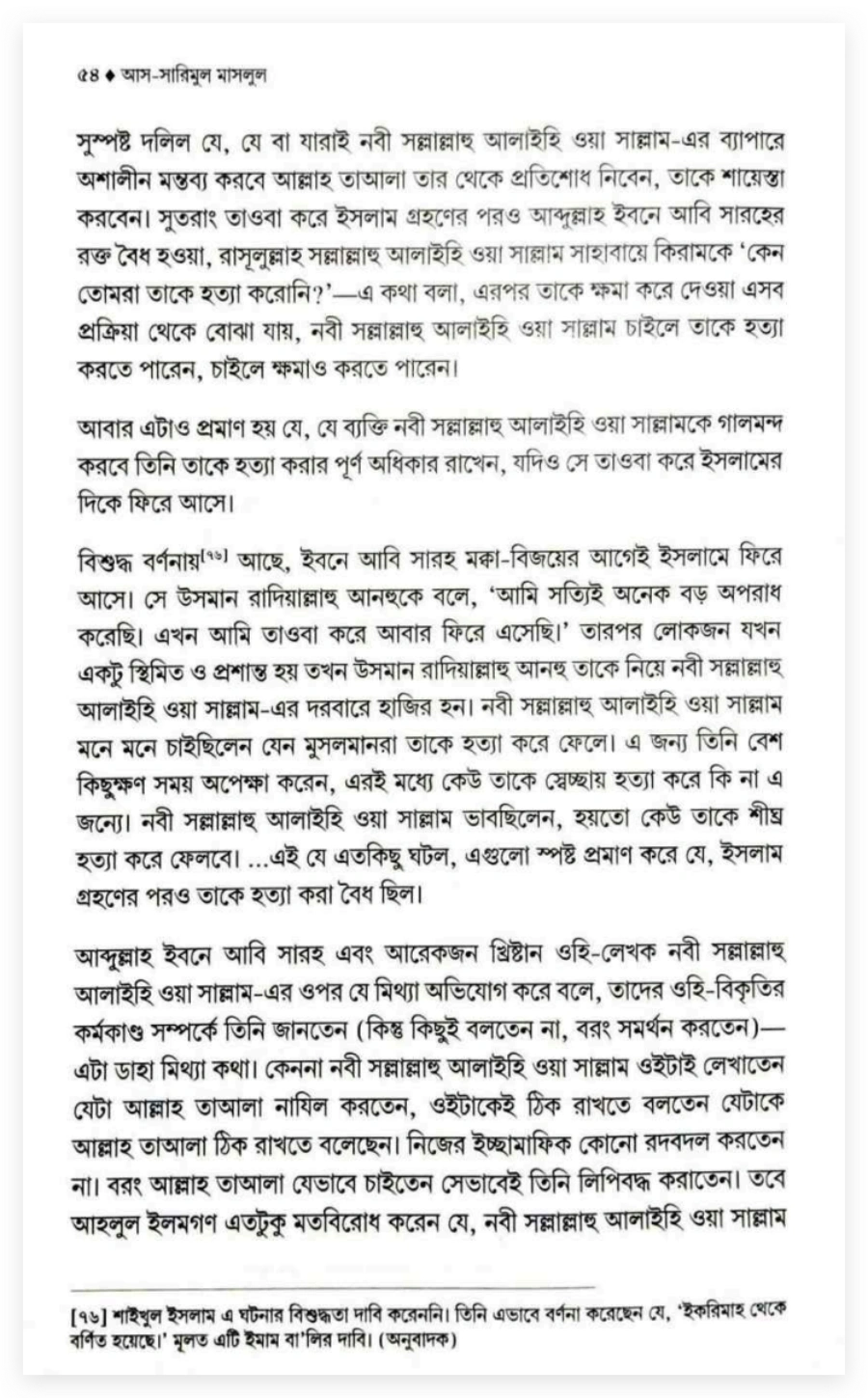
The sequence of events is as follows: ‘Abdullah first accepted Islam and became involved in recording revelation; he later apostatised and expressed allegations; and at the conquest of Mecca, he again obtained acceptance through ‘Uthman’s mediation. The apostasy and allegations described in the quotation occurred before he received pardon. At the centre of Ibn Taymiyya’s conclusion from this history is permission to kill even after repentance. He describes ‘Abdullah’s allegation as false, but does not reject the lawfulness of killing in response to its expression; instead, he incorporates that lawfulness into his legal argument. Even if his interpretation is accepted, the question therefore remains: can expressing a statement against a religious leader provide sufficient grounds for taking the speaker’s life?
In Ibn Taymiyya’s final statement, the reason given for the allegation’s falsity is that Muhammad instructed scribes to record only the words revealed by God and retained the text only at God’s command. Yet ‘Abdullah’s allegation challenges precisely the claim that Muhammad’s words were actually coming from God. Reasserting that claim as true in response supplies no independent evidence. For the argument ‘He did not alter revelation because he instructed scribes to write God’s words’ to work, it must first be shown which words belong to God and what verifiable means exist to identify them. Using the very claim under examination as proof of its own truth is circular reasoning. Answering the allegation about ‘Abdullah’s experience requires examination of the relevant events; assuming the truth of prophethood from the outset does not accomplish that examination.
Repentance Erases Sin; Personal Pardon Protects Life
The most important part of Ibn Taymiyya’s interpretation is the distinction he draws between repentance and the sparing of life. On pages 340–341 of al-Sarim al-Maslul, he states that shedding ‘Abdullah’s blood became forbidden because Muhammad pardoned him, not merely because he accepted Islam. Acceptance of Islam and repentance erased the sin, but his life was spared through a separate pardon. Under this distinction, killing someone may remain lawful even after he retracts his earlier statements and returns to belief. Recognising repentance as a religiously acceptable change and granting the person who has changed the right to live consequently become two separate decisions. The same person’s sin is said to have been erased, while permission to take his life remains in force. Questions about the purpose of punishment and the practical value of repentance in such a system are inevitable. [13]
Original Arabic:
وأيضا فإن عبد الله بن سعد بن أبي سرح لما طعن عليه وافترى افتراء عابه به بعد أن أسلم أهدر دمه وامتنع عن مبايعته وقد تقدم تقرير الدلالة منه على أن الساب يقتل وإن أسلم وذكرنا أنه كان قد جاءه مسلما تائبا قد أسلم قبل أن يجيء إليه كما رويناه عن غير واحد أو قد جاء يريد الإسلام وقد علم النبي صلى الله عليه وسلم أنه قد جاء يريد الإسلام ثم كف عنه انتظار أن يقوم إليه رجل فيقتله.
وهذا نص في أن مثل هذا المرتد الطاعن لا يجب قبول توبته بل يجوز قتله وإن جاء تائبا وإن تاب وقد قررنا هذا فيما مضى وهنا من وجوه أخرى أن الذي عصم دمه عفو رسول الله صلى الله عليه وسلم عنه لا مجرد إسلامه وأن بالإسلام والتوبة انمحى الإثم وبعفو رسول الله صلى الله عليه وسلم احتقن الدم والعفو بطل بموته صلى الله عليه وسلم وليس للأمة أن يعفوا عن حقه وامتناعه من بيعته حتى يقوم إليه بعض القوم فيقتله نص في جواز قتله وإن جاء تائبا.
English translation:
Furthermore, after accepting Islam, ‘Abdullah ibn Sa‘d ibn Abi Sarh criticised the Prophet and made false allegations against him that impugned him. The Prophet then authorised the shedding of his blood and withheld acceptance of his pledge of allegiance. The evidence this incident provides for killing an insulter even after his acceptance of Islam has already been discussed. We have stated that he came as a Muslim and a penitent: he had accepted Islam before coming to him, as we have mentioned in the accounts of several transmitters. Alternatively, he came intending to accept Islam, and the Prophet knew that this was his intention. Nevertheless, the Prophet waited for someone to rise and kill him.
This is an explicit statement that accepting the repentance of such an apostate critic is not obligatory; rather, killing him remains lawful even if he comes in repentance and does repent. We established this earlier, and it is established here from several other perspectives. What spared his life was the Messenger of God’s pardon, not merely his acceptance of Islam. Acceptance of Islam and repentance erased the sin, and the Messenger of God’s pardon prevented the shedding of his blood. The opportunity to grant that pardon ended with the Messenger’s death, and the community has no right to pardon an offence concerning his rights. His withholding acceptance of the pledge in the expectation that someone present would kill him explicitly demonstrates that killing him was lawful even if he came in repentance.
Here, the statement that ‘the opportunity to grant pardon ended with his death’ does not mean that the pardon already granted to ‘Abdullah was revoked. Ibn Taymiyya’s conclusion concerns later accused persons: while Muhammad was alive, he could pardon someone accused of an offence against himself, but after his death the community cannot grant that pardon concerning his rights. The consequence of this interpretation is extremely severe. Later people accused of the same kind of offence would have no access to the personal pardon through which ‘Abdullah survived. This interpretation therefore restricts the use of the historical pardon as a precedent for general mercy. One person’s survival establishes no right to survival for those who come after him; instead, his survival is treated as an exception that closes off their opportunity for pardon.
The moral inconsistency is clear. Even when the type of offence is the same, the opportunity to have one’s life spared changes according to when the accused was born and whether the person whose rights were allegedly violated is alive. During Muhammad’s lifetime, someone could obtain personal intercession and pardon, while a later person could be denied that opportunity despite the same repentance. Permanently reserving the right to pardon in a dead person’s name, while declaring the living community incapable of exercising it, also restricts the scope for reform, remorse, and reconsideration. How does authorising the taking of living people’s lives in the name of protecting a dead religious leader’s honour fulfil a claim to justice? Even where it is alleged that someone has been hurt by a statement, the conclusion that killing is necessary to remedy that harm requires justification beyond religious authority.
Different Uses of the Same Accounts in Contemporary Fatwas
In answer 168773, IslamQA attributes the claim of altering revelation to the unnamed Christian scribe rather than to ‘Abdullah, and says that ‘Abdullah made no such claim. Yet answer 217153 quotes the account of his expressing that allegation in order to provide a legal explanation of his intended killing. Answer 228675 also acknowledges the story’s widespread circulation while raising objections to its chain of transmission. A specific question therefore requires an answer: what evidentiary weight is being assigned, when explaining the grounds for killing, to an account whose admissibility is rejected when assessing historical truth? [14]
The Christian scribe mentioned in the quotation from Ibn Taymiyya was a different person from ‘Abdullah. The fact that they were distinct individuals does not, however, make the accounts of allegations attributed to ‘Abdullah disappear. Rejecting an account’s truth and saying that the account or allegation never existed are different claims. The allegation is preserved under ‘Abdullah’s name in the discussions of al-Tabari, al-Wahidi, and Ibn Taymiyya. Demonstrating that it is false therefore requires showing its falsity. The existence of a similar allegation by another scribe is not enough to dismiss the statements preserved under ‘Abdullah’s name as a confusion of personal identities.
IslamQA’s answer 217153 distinguishes two grounds for the offence: apostasy and allegations against the Prophet. It explains that repentance removed the punishment for the first, while personal pardon removed the punishment for the second. Under this explanation, ‘Abdullah’s return does not universally invalidate the lawfulness of killing him. Instead, Ibn Taymiyya’s principle of personal pardon is applied again. The ancient incident therefore remains connected to the safety of people expressing opinions today. [15]
From an Order for His Killing to Rule over Egypt
The later chapter of ‘Abdullah’s life also matters when assessing this incident. He did more than escape death: he later held high office in the Islamic state and became governor of Egypt under ‘Uthman. In Tahdhib al-Asma’ wa al-Lughat, al-Nawawi dates this appointment to 25 AH. His account also mentions North Africa, Nubia, and a naval campaign against the Byzantines. The man who had once expressed allegations against the claim of prophethood and faced an order for his killing thus later became part of the state’s administration and military power. This change does not settle the truth of his earlier allegations. Rather, it raises the question of how his social standing changed alongside shifts in religious acceptance, political position, and personal relationships. [16]
Original Arabic:
ثم أسلم ذلك اليوم عبد الله بن سعد بن أبى سرح، وحَسن إسلامه، ولم يظهر منه بعده ما يُنكر، وهو أحد العقلاء والكرماء من قريش، ثم ولاه عثمان مصر سنة خمس وعشرين، ففتح الله على يديه إفريقية، وكان فتحًا عظيمًا بلغ سهم الفارس ثلاثة آلاف مثقالٍ ذهبًا، وشهد معه هذا الفتح عبد الله بن عمر، وعبد الله بن عمرو بن العاص، وعبد الله بن الزبير، وكان عبد الله بن سعد هذا فارس بني عامر بن لؤى، وغزا بعدَ إفريقية الأساودَ من أرض النوبة، سنة إحدى وثلاثين، وغزا غزوة الصواري في البحر إلى الروم.
وحين قُتل عثمان بن عفان اعتزل عبد الله بن سعد بن أبي سرح الفتنة، فأقام بعسقلان، وقيل: بالرملة، وكان دعا بأن يختم عمره بالصلاة، فسلَّم من صلاة الصبح التسليمة الأولى، ثم همَّ بالتسليمة الثانية عن يساره، فتوفى سنة ست وثلاثين.
English translation:
On that day, ‘Abdullah ibn Sa‘d ibn Abi Sarh accepted Islam, and his adherence to Islam became sound. Nothing objectionable was subsequently reported of him. He was among the discerning and generous men of the Quraysh. ‘Uthman then appointed him governor of Egypt in 25 AH. Through him, God brought about the conquest of Africa. It was a great conquest: the cavalryman’s share reached three thousand mithqals of gold. ‘Abdullah ibn ‘Umar, ‘Abdullah ibn ‘Amr ibn al-‘As, and ‘Abdullah ibn al-Zubayr accompanied him on this campaign. This ‘Abdullah ibn Sa‘d was the mounted warrior of Banu ‘Amir ibn Lu’ayy. After Africa, he campaigned against the Black inhabitants of Nubia in 31 AH and took part in the naval campaign against the Byzantines known as Dhat al-Sawari.
When ‘Uthman ibn ‘Affan was killed, ‘Abdullah ibn Sa‘d ibn Abi Sarh withdrew from the conflict. He settled in Ashkelon; another account names Ramla. He prayed that his life might end in prayer. During the dawn prayer, after giving the first salutation, he attempted to give the second salutation to his left and died at that moment, in 36 AH.
Al-Dhahabi’s Siyar A‘lam al-Nubala’ also describes his earlier service under ‘Umar in the Sa‘id region of Egypt, followed by his appointment under ‘Uthman to govern all of Egypt. His political rehabilitation was therefore part of a longer process. ‘Uthman was his foster brother, the intermediary who saved his life, and the man who later appointed him; these three relationships need to be considered together. The extent to which each appointment rested on competence, administrative experience, or personal trust is a subject for separate investigation. His later appointments and military successes cannot, however, establish that his earlier allegations about revelation were false. Becoming a successful state official and determining the truth or falsity of a previously described incident are entirely separate assessments. [17]
‘Sincere Faith’ and Accounts of a Pious Death
Later Islamic biographies repeatedly state that ‘Abdullah’s adherence to Islam became sound and that nothing objectionable was subsequently reported of him. Stories of his death during prayer are also attached to this assessment. The details of his death, however, are not uniform. The passage quoted from Tafsir al-Mazhari describes his death in prostration; al-Nawawi’s account places it after the first salutation, while he was giving the second. Al-Dhahabi also preserves an account of his dying during the salutation in prayer. Different accounts name Ashkelon or Ramla as the place of death, and 36 or 59 AH as the year. Al-Dhahabi mentions the view that he died in 59 AH but considers the view placing his death during ‘Ali’s rule more accurate. [18]
Original Arabic:
سعيد بن أبي أيوب: حدثني يزيد بن أبي حبيب، قال: لما احتضر ابن أبي سرح وهو بالرملة، وكان خرج إليها فارا من الفتنة، فجعل يقول من الليل: آصبحتم؟ فيقولون: لا. فلما كان عند الصبح، قال: يا هشام! إني لأجد برد الصبح فانظر. ثم قال: اللهم اجعل خاتمة عملي الصبح، فتوضأ، ثم صلى، فقرأ في الأولى بأم القرآن والعاديات، وفي الأخرى بأم القرآن وسورة وسلم عن يمينه، وذهب يسلم عن يساره فقبض رضي الله عنه. ومر أنه توفي سنة تسع وخمسين والأصح وفاته في خلافة علي رضي الله عنه.
English translation:
Sa‘id ibn Abi Ayyub said: Yazid ibn Abi Habib told me that, when Ibn Abi Sarh approached death in Ramla—where he had fled from the conflict—he repeatedly asked during the night, ‘Has morning come?’ They said, ‘No.’ As morning approached, he said, ‘Hisham, I feel the coolness of morning; go and check.’ He then said, ‘God, make the dawn prayer my final act.’ He performed ablution and prayed. In the first unit of prayer, he recited Surah al-Fatihah and Surah al-‘Adiyat; in the second, Surah al-Fatihah and another surah. After giving the salutation to his right, he went to give it to his left and died at that moment. It was mentioned earlier that he died in 59 AH; the more accurate view, however, is that his death occurred during ‘Ali’s caliphate.
These accounts place the final chapter of his life within a pious ending. The religious significance attached to a scene of death, however, does not determine the truth of allegations concerning the recording of revelation. Even if he genuinely returned to belief and died while praying, the questions about his earlier experience remain. If later historians presented his life within a narrative of a ‘good ending,’ the evidence for that presentation must also be examined separately. Variations concerning prostration, the salutation, the place, and the year of death show the need to compare the sources before declaring one version of the familiar story to be exact history. A story of a pious death is not a refutation of a historical allegation; it is an assessment of a person’s later life. Confusing these two matters obscures the central question.
Conclusion
The story of ‘Abdullah ibn Abi Sarh is no ordinary account of an ‘apostate Companion.’ It is an uncomfortable incident preserved within Islamic tradition, containing allegations against the claim of prophethood arising from a revelation scribe’s own experience, accounts of approval of altered words, and correspondence between a person’s spontaneous utterance and alleged revelation. When an expression of praise coming from a scribe’s mouth is identified as the language of revelation, the question arises of how its divine origin can be verified. If the allegation of approval after altered words were read back is true, the question becomes more serious: where is the boundary between revelation delivered in specific words and alternative wording selected by a human being? Answering this question requires evidence about the actual methods of recording and checking the text, beyond religious declarations.
The exegetical works, hadith collections, and historical writings discussed here were compiled later; this discussion has not identified independent testimony contemporary with the incident. Historical evidence therefore remains necessary to determine which details of which accounts actually occurred. This limitation does not, however, automatically establish the truth of the claim to revelation. Rather, the allegations preserved within Islamic sources show that doubts about the origin of the text and the selection of words are more than new questions raised outside the tradition. These questions were preserved in connection with the identity and experience of a revelation scribe. Those who defend the claim that the Qur’an is entirely divine, infallible, and free from any human compositional role must provide specific answers to these allegations. Assuming the claim to be true from the outset and calling the accuser a liar supplies no such answer.
Alongside the declaration of general protection at the conquest of Mecca, the order to kill ‘Abdullah, the absence of protection even within the sanctuary of the Kaaba, and the expectation that someone present would kill him before his pledge was accepted create a separate moral crisis. Endangering an accuser’s life instead of examining and refuting his statements does not settle the truth of the allegation. The statement about avoiding ‘treacherous eyes’ does not erase the question of the expectation of killing either. Moral judgment requires consideration of the entire incident: the method of signalling with the eyes, the meaning of the silence, the safety of the accused, and the anticipated killing. Such an order for death in response to an intellectual challenge concerning the source of revelation subjects the claims of universal mercy and justice to rigorous scrutiny.
Ibn Taymiyya’s legal interpretation broadens the problem further. In his view, although repentance erases sin, there is no guarantee of survival without personal pardon; after Muhammad’s death, the community has no authority to grant that pardon. A later accused person may therefore be denied the route through which ‘Abdullah survived. The availability of pardon to one person, and its closure to another facing the same kind of allegation, creates unequal protection based on the time of birth and personal relationships. ‘Uthman’s refuge and intercession saved ‘Abdullah, but established no equal right for every accused person. If human life depends on an influential intermediary and a religious leader’s personal consent, an answer is needed to the question of how that system fulfils a claim to justice.
‘Abdullah was subsequently presented as a ‘sincere believer,’ a successful governor, or a man who died in prayer. Accounts of his political rise and pious death do not complete the examination of the truth or falsity of his earlier allegations. Returning to belief does not erase a person’s previous experience; obtaining state office does not prove the divine origin of a text; and a religious scene of death does not refute an allegation. Ultimately, ‘Abdullah ibn Abi Sarh left a question that cannot be dismissed through the term iltifat, the label ‘lying apostate,’ or praise of his later life. The question remains: what independent evidence exists for testing the claim to revelation, and what moral grounds justify authorising the killing of someone in response to his doubts about that claim?
References
- Surah al-Mu’minun, verses 12–14 ↩︎
- Al-Wahidi, Asbab al-Nuzul, discussion of Surah al-An‘am 6:93; the same account is reproduced in IslamQA, Question 228675 ↩︎
- Tafsir al-Mazhari, vol. 4, pp. 260–261 ↩︎
- Al-Wahidi, Asbab al-Nuzul, discussion of the phrase ‘And whoever says: I shall send down the like of what Allah has sent down’; quotation from p. 220 reproduced in IslamQA, Question 228675 ↩︎
- Al-Tabari, Jami‘ al-Bayan, commentary on Surah al-An‘am 6:93, vol. 11, pp. 533–534, report 13555 ↩︎
- Al-Tabari, Jami‘ al-Bayan, al-Tabari’s own comments following the reports in his commentary on Surah al-An‘am 6:93 ↩︎
- Ibn Kathir, al-Bidayah wa al-Nihayah, Bengali translation, vol. 4, p. 511; discussion in the Arabic original: the conquest of Mecca and Muhammad’s entry into the city ↩︎
- Ibn Ishaq, Sirah, quotation from p. 333, and the source on Hind’s later conversion to Islam: IslamQA, question 202360 ↩︎
- Sunan Abi Dawud, hadith 2683 (Islamic Foundation Bengali edition: 2674); another full account of the incident: Sunan Abi Dawud, hadith 4359 ↩︎
- Sunan Abi Dawud, hadith 4359, chapter on the ruling concerning an apostate ↩︎
- Ibn Taymiyya, al-Sarim al-Maslul, p. 408; Ibn Kathir, al-Bidayah wa al-Nihayah, account of the conquest of Mecca ↩︎
- Al-Sarim al-Maslul ‘ala Shatim al-Rasul, author: Ibn Taymiyya, Nusus Publications, pp. 52–54 ↩︎
- Ibn Taymiyya, al-Sarim al-Maslul, p. 340 and p. 341 ↩︎
- IslamQA, question 168773; question 217153; question 228675 ↩︎
- IslamQA, question 217153, discussion distinguishing ‘Abdullah’s pardon from the punishment for apostasy ↩︎
- Al-Nawawi, Tahdhib al-Asma’ wa al-Lughat, vol. 1, p. 270; the full relevant quotation: IslamQA, question 217153 ↩︎
- Al-Dhahabi, Siyar A‘lam al-Nubala’, vol. 3, pp. 33–35, biography of ‘Abdullah ibn Sa‘d ↩︎
- Al-Dhahabi, Siyar A‘lam al-Nubala’, vol. 3, pp. 34–35; quotation from al-Nawawi: IslamQA, question 217153 ↩︎