Introduction
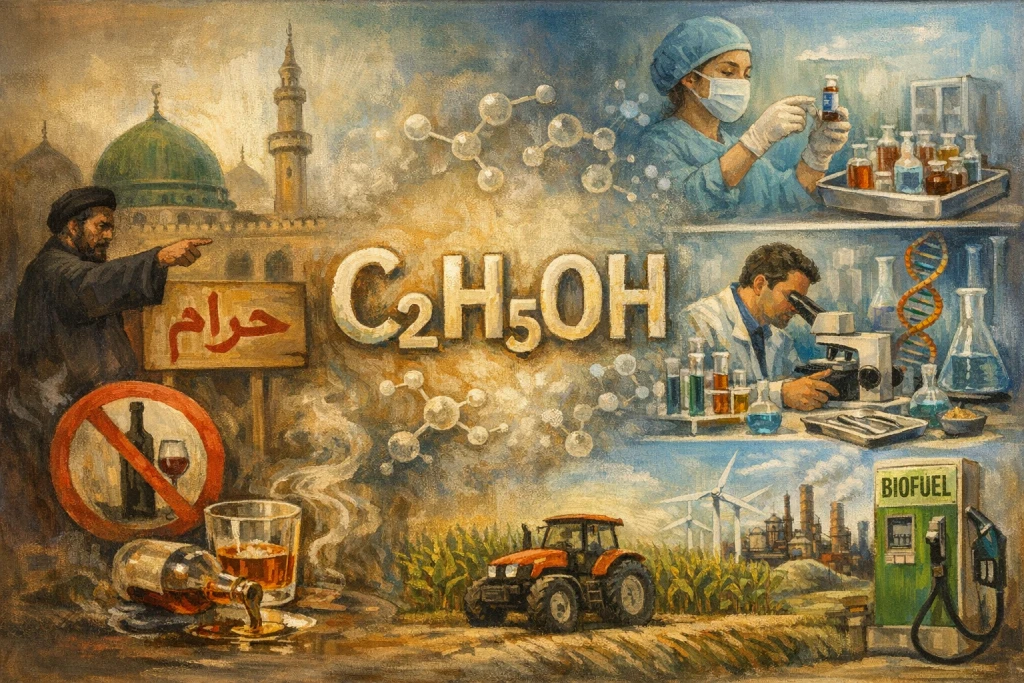
Discussions of religious prohibitions on wine and alcohol usually begin with a familiar premise: alcohol harms people, and therefore it is forbidden. Yet this reasoning often collapses two distinct questions into one. The first concerns the harm that consuming alcoholic beverages for intoxication causes to human health, mental functioning, and society. The second concerns how the same beverage’s intoxicating ingredient, ethanol (), should be evaluated when used in medicine, disinfection, pharmaceutical manufacturing, research, the chemical industry, or as fuel. The answer to the first question does not automatically settle the second. Changes in dose, intended use, route of exposure, the presence of other chemicals, and the balance of benefits and risks can change the practical effects of the same molecule. A person who becomes intoxicated by drinking alcohol, a physician who administers a controlled dose of ethanol to a patient suffering from methanol poisoning, and a healthcare worker who disinfects their hands with an ethanol-based solution are not performing equivalent actions. Placing them all in the same category solely because one chemical bears the same name discards the very information necessary for a meaningful ethical assessment.
Verses 90–91 of Surah al-Ma’idah instruct believers to avoid khamr and associate drinking and gambling with hostility, resentment, and distraction from religious obligations. Hadith extend this prohibition to those who manufacture, sell, purchase, or transport wine. When someone proposed producing wine for medicinal use, Muhammad declared that it was not a medicine but a disease. These statements carry distinct historical and legal implications. Prohibiting an intoxicating drink, cursing economic activities connected with its trade, rejecting permission to turn wine into vinegar, and asserting that a substance has no medicinal value are not four versions of the same claim. The last is a testable claim about therapeutic effectiveness; its truth does not depend on religious authority. The distinction becomes particularly significant because modern medicine recognizes specific therapeutic uses of ethanol. More strikingly, later fatwas have declared even perfume that is not intended for drinking to be impure or impermissible. In this way, rules originally concerning alcoholic drinks have been extended beyond consumption to regulate the religious acceptability of substances applied to the body, clothing, health practices, and everyday products. The crucial historical distinction is between what the scriptures directly prescribe and what later jurists extended by interpretation. [1] [2] [3]
The Essential Role of Alcohol in Industry and Manufacturing
Ethanol () is a particular chemical compound, whereas the word “alcohol” denotes an entire class of different compounds. The ethanol found in beverages and purified ethanol used in industry consist of the same molecules; differences lie in their mixtures, concentrations, applications, and processing. The hydroxyl group of an ethanol molecule interacts with water, while its carbon-containing portion interacts with numerous organic compounds. These properties account for its widespread use in botanical extracts, perfumes, cosmetics, liquid pharmaceutical preparations, solvent-based manufacturing, and chemical analysis. For instance, a solvent can distribute small quantities of fragrance compounds evenly throughout a perfume, while ethanol can also extract flavoring and aromatic compounds from vanilla and other plants. Its function in these cases is not to intoxicate the human brain; it is to dissolve, carry, or separate other substances. If a solvent is prohibited merely because the same molecule is used elsewhere to cause intoxication, neither the nature of the activity, the actual likelihood of harm, nor the availability of beneficial alternatives receives any independent consideration.
The significance of ethanol in modern industry is not merely a matter of how frequently it is used; what matters is that its social function changes fundamentally with its application. When ethanol is used to make liquor, the finished product is intended for consumption. When it is used to make a disinfectant, the purpose is to reduce the risk of infection. When ethanol is chemically converted into another substance, both the composition and function of the resulting product change. Similarly, an intermediate solvent employed in food extraction is not the same thing as an alcoholic beverage sold for drinking. Treating a common chemical as synonymous with wine in every industrial activity erases the essential distinctions between raw material, process, and finished product. Islamic hadith prohibit trade in wine, but those reports do not by themselves establish that the production of every medical solvent, laboratory preparation, or perfume is equally forbidden. Such a conclusion requires an additional legal rule. Islamweb’s fatwa concerning perfume offers a specific example of that extension. From a scientific standpoint, appropriate use of a substance is a matter of evidence and risk management; ritual purity assigned through a fatwa is not a measurement of its chemical performance. [4] [5]
The Role of Alcohol in Medicine and Research
One of the central errors in discussing alcohol in medicine is to treat disinfectants, pharmaceutical excipients, and active therapeutic chemicals as though they were the same thing. Ethanol may reduce harmful microorganisms on the hands or skin; in another setting its solvent properties help keep a drug ingredient dissolved; in methanol poisoning it can itself act as an antidote. These functions are not interchangeable, but each has an established application. Healthcare workers use alcohol-based hand rubs to reduce the transmission of microorganisms to patients. Ethanol diluted with water in appropriate proportions disrupts microbial proteins; in many circumstances a water-containing solution is more effective than absolute ethanol. Thus the simplistic assumption that a chemically “purer” substance must also be a more effective disinfectant is itself wrong. Medical usefulness is determined by what a substance actually does, not by labeling the ingredient morally pure or impure.
According to the United States Centers for Disease Control and Prevention, aqueous solutions containing roughly 60–90 percent alcohol are effective against many bacteria and certain viruses. Yet because these solutions do not reliably destroy bacterial spores, they cannot by themselves sterilize surgical instruments completely. “Reducing microorganisms on the hands,” “disinfecting skin,” and “complete sterilization” are three different claims. The distinction illustrates a fundamental principle of healthcare: a method that works for one purpose cannot be presumed effective for another without testing. It also makes the conflict with religious classifications clear. If a rule treats the mere presence of a substance as a cause of impurity, the rule itself does not distinguish between an application that reduces infections and one that increases harm. A chemical capable of lowering the risk of illness becomes objectionable by designation alone, and its user is required to reckon with a separate category of ritual impurity in addition to actual microbes. [6] [7]
The roles of ethanol in a hospital disinfectant, a laboratory solution used for DNA precipitation, a pharmaceutical formulation, and vehicle fuel are different, but all are governed by one principle: the chemical must be evaluated by the effects of the task in which it is used. Science does not describe a substance as wholly good or wholly evil. Whether it destroys a particular microorganism at a particular concentration, how it changes enzyme activity during poisoning, how well it stabilizes an ingredient in a medicine, or how much pollution results across a fuel’s entire production cycle—each question requires its own experiments, methods, and evidence. Evidence that drinking alcohol harms health cannot invalidate the demonstrated effectiveness of ethanol in other applications.
Ethanol, Methanol, and Isopropanol: Similar Names, Different Chemicals
Belonging to the chemical class called “alcohols” does not mean that every member is equally drinkable, equally intoxicating, or equally poisonous. Ethanol (C2H5OH) is the principal intoxicating component of alcoholic beverages. Methanol (CH3OH), although structurally similar, is metabolized in the human body into compounds capable of causing severe acidosis, blindness, and death. Isopropanol (C3H8O) is used in many hand and surface-cleaning solutions but is not intended for consumption. Similarity of names does not establish identical physiological effects. Even with ethanol, its molecular character cannot be determined by origin alone: ethanol obtained by fermentation and ethanol manufactured through another process have the same chemical identity, although industrial formulations may contain toxic contaminants, impurities, or substances added to make them undrinkable. When religious classifications determine purity based on origin or mixture, that determination does not become identical to chemical identification or the empirical study of effects on the human body. Molecular identity is a question for chemistry; whether a religious text designates a substance as sinful is a different question. [8]
Ethanol Itself as an Antidote to Methanol Poisoning
Treating methanol poisoning provides one of the most direct and readily verifiable demonstrations of ethanol’s medicinal effectiveness. The danger does not arise merely from the presence of methanol molecules. Alcohol dehydrogenase in the human body first converts methanol to formaldehyde and subsequently to formic acid. Accumulation of formic acid can damage vision, increase blood acidity, and cause serious organ injury. Because ethanol is a preferred substrate for the same enzyme, administering it can slow the formation of methanol’s toxic metabolites. Ethanol may therefore be used under specialist supervision when fomepizole is unavailable. Treatment requires maintenance of an appropriate blood concentration, monitoring for toxicity, and sometimes coordination with dialysis. Ethanol itself can cause intoxication and other adverse effects in this setting. Nevertheless, it is employed as an antidote precisely because, under the circumstances, its direct therapeutic benefit can be established.
The hadith describing wine as “a disease, not a medicine” is central to this analysis. A chemical component of a beverage whose misuse causes illness may save lives in a different and specific form of poisoning. Health hazards and therapeutic benefits do not negate one another; treating patients sometimes requires substances that would be dangerous under other circumstances. Even drugs used to destroy malignant tumor cells are evaluated according to their targeted effects, dose, and risks. Rejecting every possible medical application of an ingredient simply because one of its uses is harmful abandons the methods of medical science. The statement in Sahih Muslim concerns wine as khamr, not every modern ethanol formulation. Applying it directly to the demonstrated effectiveness of every such preparation yields an unjustified universal conclusion. In particular, ethanol’s role in methanol poisoning is not a laboratory speculation but an established treatment documented in medical literature. [8] [9]
The primary treatment is fomepizole, though ethanol may be administered if the former is not an option.
Ethanol Treatment for Thyroid Cysts and Other Specific Conditions
In medicine, ethanol is not merely a carrier for other drugs; in certain procedures it is itself the active treatment. For some fluid-filled thyroid nodules, a measured amount of ethanol is introduced through a needle to change the cyst’s internal cells and tissues, potentially reducing its size. Ethanol is also used to shrink or destroy tissue in selected vascular malformations, simple renal cysts, certain tumors, and specialized pain-control procedures. The distinctive feature of such treatment is that a substance’s capacity to injure cells is deliberately put to therapeutic use under controlled conditions. If ethanol reaches healthy tissue inappropriately, it can also cause harm; patient selection, imaging guidance, accurate placement, and monitoring for adverse effects are therefore essential. The assertion that a capacity to cause injury eliminates therapeutic usefulness collapses in the face of these procedures. The value of a substance in treating disease depends not on a label of “good” or “bad” but on its risks and outcomes for the particular patient. [10]
Alcohol in Hygiene: Effectiveness and the Limits of Sterilization
Alcohol is important in infection prevention not only because it acts rapidly against many microorganisms, but also because it makes hand hygiene and cleaning small surfaces practical in appropriate settings. Reducing the organisms carried on healthcare workers’ hands between patients forms part of many infection-control strategies. Ethanol or isopropanol mixed with water alters the structure of proteins in numerous bacteria and can inactivate certain viruses. CDC guidance is more specific still: effectiveness varies with concentration and the organism involved, and aqueous solutions in the 60–90 percent range are generally suitable. Absolute ethanol is not necessarily the better disinfectant, since water has a role in protein denaturation. Alcohols also have limitations against spore-forming bacteria, so other methods are required to sterilize surgical instruments. Medical practice depends on this precise account of benefits and limitations. It cannot be explained by declaring a substance “impure” in a single word. [11]
These alcohols are rapidly bactericidal rather than bacteriostatic against vegetative forms of bacteria;
Ethanol as a Pharmaceutical Solvent: Why Use and Dose Matter
Ethanol’s presence in many medicines reveals another essential distinction. It may be included to dissolve an active ingredient, assist preservation, or facilitate the passage of a particular substance through the skin. Such a medicine is not intended to cause intoxication; the ethanol contributes to formulation and delivery at an effective dose. Accordingly, the European Medicines Agency’s guidance does not adopt either “contains alcohol, therefore entirely forbidden” or “appears in medicine, therefore always safe” as a scientific conclusion. Instead, it provides for the assessment and disclosure of how many milligrams of ethanol a product contains, how much enters the body per dose, potential risks for children, precautions during pregnancy, and possible interactions with other drugs. Health claims remain testable and open to correction through this process. Applying a single standard to a perfume not intended for ingestion, a medicine containing a tiny quantity of ethanol, and a beverage containing a large amount ignores the actual doses involved. [12]
Ethanol in Biofuels: Real Benefits and Life-Cycle Impacts
The discussion of ethanol extends well beyond healthcare. It is blended with gasoline for transportation fuel, and certain production pathways may reduce overall greenhouse gas emissions relative to fossil fuels. But that possibility is not a simplistic slogan. Burning ethanol produces carbon dioxide, while crop cultivation, irrigation, fertilizer, land use, factory energy, transport, and final combustion collectively determine the actual environmental impact. Ethanol is therefore not automatically carbon-free; nor does its potential to harm people when consumed make it unsuitable as a fuel. Fuel policy requires analysis of energy yield and the full life cycle. The language of religious prohibition supplies none of these calculations. [13]
Logical Analysis and Limitations of Religious Prohibitions
A distinctive feature of the Islamic prohibition of wine is that it does not stop at the individual’s act of drinking. Abu Dawud 3674 pronounces a curse on the drinker and server as well as the producer, seller, purchaser, transporter, and recipient. Sahih al-Bukhari 2084 prohibits its trade. This legal structure concerns not only one person’s intoxication but also participation in an entire commodity chain. An important distinction is needed to understand its social consequences. A rule advising people not to put a harmful substance into their bodies can be evaluated in relation to individual and public-health risks. But a rule prohibiting the transport, transformation, sale, or wholly non-intoxicating use of an ingredient requires a separate justification in terms of preventing harm. The hadith forbidding trade in wine cannot serve as evidence that every industrial ethanol preparation is forbidden. Any further restrictions created by religious interpretation must be identified in their particular sources.
The report rejecting wine as medicine is especially significant in this context. When Tariq ibn Suwayd explained that he wished to use wine to prepare a medicine, Muhammad called it a disease rather than a cure. An actual therapeutic purpose was raised, yet the product was still rejected; thus drinking for pleasure or intoxication was not the only consideration. The statement’s chemical scope concerned khamr, not every modern solution of ethanol. However, when it is elevated into a universal scientific truth—that no wine-derived chemical component can ever have a therapeutic effect—it conflicts with direct medical evidence. Ethanol’s effectiveness as an antidote to methanol poisoning and as an active agent in selected tissue procedures supplies specific evidence against that universal assertion. The hadith states a rule on religious authority; whether ethanol works against a disease is an empirical question for medicine. Confusing those two kinds of propositions is the source of the error. [14] [2] [8]
Hadith Sambhar
23/ Trade and Earnings
Chapter: Certain Rules and Prohibitions Concerning Buying and Selling
(2495) Narrated by Ibn Umar (may Allah be pleased with him): The Messenger of Allah (peace and blessings be upon him) said, Allah has cursed the drinker of wine, the one who serves it, its buyer and seller, its maker, the person for whom it is made, its carrier, and the one to whom it is carried.
(Abu Dawud 3676; Ibn Majah 3380). Ibn Majah’s narration also includes the person who consumes its price (among those cursed). (Sahih al-Jami 5091)
Hadith grading: Sahih
Narrator: Abdullah ibn Umar
Sahih Muslim (Hadith Academy edition)
37. Drinks
Chapter 3. Treatment with wine is forbidden
Hadith Academy no. 5035; international numbering: 1984
5035-(12/1984) Muhammad ibn al-Muthanna and Muhammad ibn Bashshar … narrated from Wa’il al-Hadrami (may Allah be pleased with him), who said: Tariq ibn Suwayd al-Ju’fi (may Allah be pleased with him) asked the Messenger of Allah (peace and blessings be upon him) about wine. He forbade it or strongly disapproved of making it. Tariq said, “I make it only to prepare medicine.” He replied: “It is not a medicine (that cures disease); rather, it is itself a disease.” (Islamic Foundation 4977; Islamic Centre 4985)
Hadith grading: Sahih
Narrator: Wa’il al-Hadrami
In Muslim 1984 and Mishkat 3642, wine is described not as a medicine but as a disease. It is wrong to treat this as a universal scientific truth concerning every medical application of ethanol (). Ethanol is employed as an alternative antidote to methanol poisoning, acts as an active substance in certain procedures involving cysts and tissues, and has an established role as a solvent in specific pharmaceutical formulations. In medicine, the appropriateness of any substance depends on evidence concerning the disease, dose, and balance of risk and benefit. Although the health hazards of drinking alcohol are real, they do not entail the conclusion that “ethanol can never be medically effective.” [2] [15]
Mishkat al-Masabih (Mishkat)
Section 17: Penal Law
Chapter 6, First Section: Description of Wine and Warnings to Those Who Drink It
3642-[9] Narrated by Wa’il al-Hadrami (may Allah be pleased with him): Tariq ibn Suwayd asked the Prophet (peace and blessings be upon him) about the use of wine, and he prohibited its use. He then asked, “But what if I use it as medicine?” He replied, “It is not a remedy; rather, it is itself a disease.” (Muslim) [1]
[1] Sahih: Muslim 1984; Sharh al-Sunnah 2569.
Hadith grading: Sahih
Narrator: Wa’il al-Hadrami
Sahih Muslim (Islamic Foundation edition)
37/ Drinks
Chapter 3. The prohibition of treating illness with wine and the account that it cannot be medicine
4977. Muhammad ibn al-Muthanna and Muhammad ibn Bashshar … narrated from Wa’il al-Hadrami (may Allah be pleased with him): Tariq ibn Suwayd al-Ju’fi (may Allah be pleased with him) asked the Messenger of Allah (peace and blessings be upon him) about wine. He prohibited it, or considered its preparation very objectionable. Tariq said, “I make wine to prepare medicine.” He replied: “It is not a medicine (that cures disease); it is itself a disease.”
Hadith grading: Sahih
Narrator: Wa’il al-Hadrami
Different Bengali translations of the same event, or its repetition in Mishkat, cannot be counted as independent historical attestations. The central evidence is Tariq’s question and Muhammad’s answer in Muslim 1984: even after Tariq explained that he intended to prepare medicine from wine, the practice was prohibited and wine was called “a disease, not a medicine.” Whether drinking alcohol is harmful and whether a useful preparation can be made from it are different questions. If a medical substance is identified solely by its historical association with wine, it becomes impossible to assess actual treatments on their merits. An effective medicine changes measurable outcomes in a particular illness; it does not change the religious designation of its name. In this sense, the hadith exposes the limits of religious authority: an instruction can prevent people from undertaking an activity, but an instruction cannot alter what a particular chemical molecule does to a particular enzyme.
The Quran Prohibits Khamr: Intoxicating Drinks, Not a Chemical Molecule
Verse 90 of Surah al-Ma’idah groups khamr with gambling, sacrificial altars associated with idol worship, and divining arrows, describing them as rijs and commanding their avoidance. The following verse associates wine and gambling with mutual hostility and distraction from the remembrance of Allah and prayer. The arrangement of these terms is revealing: the rule addresses a sphere of social and religious conduct, not the chemical formula of a molecule. The Quran presents no experiment concerning ethanol’s molecular structure, disinfectant properties, or use as an antidote in poisoning. The verse therefore cannot establish a claim such as “modern chemistry also forbids every use of ethanol.” Hadith, meanwhile, formulate a general prohibition on intoxicating drinks and regulate the trade in wine. It matters to identify the scope in which these rules were stated. If a later fatwa prohibits an entirely different use, such as perfume or a disinfectant applied to the skin, that is an additional legal judgment. Conflating scriptural language, later jurisprudence, and chemical testing allows religious commands to be presented as scientific facts. [16] [17]
إِنَّمَا الْخَمْرُ وَالْمَيْسِرُ وَالْأَنْصَابُ وَالْأَزْلَامُ رِجْسٌ مِنْ عَمَلِ الشَّيْطَانِ فَاجْتَنِبُوهُ لَعَلَّكُمْ تُفْلِحُونَ
English translation: Indeed, intoxicants, gambling, altars for idol worship, and divining arrows are impure things from the work of Satan. So avoid them, that you may succeed.
The hadith in Abu Dawud is significant for understanding how far the prohibition on alcohol extends. Alongside the person who drinks wine, it curses its maker, transporter, buyer, and seller. The basis for condemnation here is not limited to causing someone’s intoxication; participation in the commercial circulation of a product categorized as wine is itself included. The prohibition therefore expands from individual conduct into the social structures of production and exchange. But pressing juice to make an alcoholic drink is not the same activity as manufacturing a purified solvent for a laboratory. Even if the same ethanol molecules are stored, one product may be intended for drinking and the other for disinfection or industrial use; their purposes and foreseeable consequences differ substantially. The ethical assessment of any sweeping prohibition must ask: Who is harmed by the particular activity, what benefits does it provide, and what useful applications would the prohibition obstruct? The fact that a hadith curses buyers and sellers does not itself answer any of these questions. [14] [18]
لَعَنَ اللَّهُ الْخَمْرَ وَشَارِبَهَا وَسَاقِيَهَا وَبَائِعَهَا وَمُبْتَاعَهَا وَعَاصِرَهَا وَمُعْتَصِرَهَا وَحَامِلَهَا وَالْمَحْمُولَةَ إِلَيْهِ
English translation: Allah has cursed wine, the one who drinks it, the one who serves it, its seller, its purchaser, the one who presses the juice, the person for whom it is pressed, the one who carries it, and the one to whom it is carried.
Even Converting Wine into Vinegar Is Forbidden: Rejecting a Useful Transformation
The account of turning wine into vinegar exposes an even sharper problem in the logic of religious prohibition. Vinegar’s principal functional acid is acetic acid, which does not intoxicate like the ethanol in wine and has long been used in preparing and preserving food. Converting ethanol to acetic acid changes its chemical structure; properly and fully converted vinegar is no longer the same intoxicating substance. In Sahih Muslim 1983, Muhammad was asked whether wine could be made into vinegar, and he answered “No.” Abu Dawud 3675 gives an even more specific account: some orphans had inherited wine, and after Abu Talha was instructed to pour it away, he asked permission to turn it into vinegar. That possibility was also rejected. No one in this incident was proposing to drink the wine or sell it for intoxication. The question was whether an impermissible beverage could be converted into a different, ordinary food product. Rejecting that possibility also destroyed the potential economic use of an inherited resource. The significance of the prohibition is therefore not exhausted by the observation that “wine is harmful.” Religious authority was extended to the decision whether an ingredient categorized as harmful or forbidden could be transformed into another useful substance. [19] [20]
عَنْ أَيْتَامٍ وَرِثُوا خَمْرًا قَالَ أَهْرِقْهَا قَالَ أَفَلاَ أَجْعَلُهَا خَلاًّ قَالَ لاَ
English translation: Abu Talha asked about wine that some orphans had inherited. He was told, “Pour it away.” He asked, “Should I not make it into vinegar?” He replied, “No.”
This incident becomes even more significant in light of Muhammad’s own favorable statement about vinegar. In Sahih Muslim 2052a, Jabir relates that Muhammad asked his family for something to eat with his food. When they said that they had nothing but vinegar, he ate it and praised it. Thus vinegar is accepted as a good accompaniment to food in one report, while permission to convert available wine into vinegar is rejected in another. Read together, the difference is not about vinegar’s value as food, but about the process of making it and permission to use the original ingredient. Instead of the chemical composition of the finished substance being decisive, the legal judgment gives greater weight to whether a person has previously handled a substance classified as forbidden. The same useful food product may therefore be socially acceptable, while making it by transforming a prohibited raw material can become a religious offense. [21]
حَدَّثَنَا يَحْيَى بْنُ يَحْيَى، أَخْبَرَنَا أَبُو عَوَانَةَ، عَنْ أَبِي بِشْرٍ، عَنْ أَبِي سُفْيَانَ، عَنْ جَابِرِ بْنِ عَبْدِ اللَّهِ، أَنَّ النَّبِيَّ صلى الله عليه وسلم سَأَلَ أَهْلَهُ الأُدُمَ فَقَالُوا مَا عِنْدَنَا إِلاَّ خَلٌّ . فَدَعَا بِهِ فَجَعَلَ يَأْكُلُ بِهِ وَيَقُولُ نِعْمَ الأُدُمُ الْخَلُّ نِعْمَ الأُدُمُ الْخَلُّ
English translation: Yahya ibn Yahya reported through Abu Awana, Abu Bishr, and Abu Sufyan from Jabir ibn Abdullah that the Prophet asked his family for something to accompany his food. They replied that they had nothing but vinegar. He had it brought, began eating with it, and repeatedly said, “What a good accompaniment vinegar is! What a good accompaniment vinegar is!”
Spontaneous and Deliberate Transformation: Two Religious Rulings for the Same Vinegar
The distinction becomes still more pronounced in later Islamic jurisprudence. Islamweb fatwa 8496 states that wine which turns into vinegar on its own becomes pure, whereas deliberately making vinegar from wine is subject to a prohibition. The religious ruling therefore changes depending on whether the transformation took place spontaneously in a container or was deliberately brought about by a person. Chemically, a completed transformation in either case produces vinegar whose principal acid is acetic acid; the molecules of the final product do not carry the moral identity of the person who initiated the process. Yet religious law can attach such importance to origin and permission to act that substantially the same end product becomes subject to different rules. The issue at the center is not intoxication or direct injury to health, but authority over the handling and transformation of a forbidden material. [22]
فالخمر إذا صارت خلاً بنفسها طهرت، لزوال الوصف الذي يوجب تحريمها ونجاستها. وأما تخليل الخمر فقد ورد النهي الصريح عنه. فعن أنس أن أبا طلحة سأل النبي صلى الله عليه وسلم عن أيتام ورثوا خمراً، فقال: أهرقها. قال: أفلا نجعلها خلاً؟ قال: لا.
English translation: When wine turns into vinegar by itself, it becomes pure because the property that made it forbidden and impure has disappeared. But an explicit prohibition was reported against deliberately converting wine into vinegar. Anas narrated that Abu Talha asked the Prophet about orphans who had inherited wine. He told him to pour it away. When asked whether it could be made into vinegar, he said no.
Classical Islamic jurisprudence does not present a uniform position on this question. In al-Mabsut, the Hanafi jurist al-Sarakhsi states that it is permissible to deliberately convert wine into vinegar and then consume the vinegar; in the same discussion, he describes the Shafi’i position as contrary to this. The importance of this evidence is that jurists reached different legal rulings while retaining the hadith about making vinegar from wine. They are not identifying a category of purity through a single chemical test; their conclusions depend on how they interpret and apply religious sources. This disagreement exposes the authority of interpreters and the role of competing legal methods in constructing religious law. The utility of vinegar can be tested by chemistry and food science; its acceptability under Sharia depends on the legal position of the interpreter. These methods can produce different conclusions, and real producers and consumers bear the consequences of that difference. [23]
وأصل المسألة أن تخليل الخمر بالعلاج جائز عندنا ، ويحل تناول الخل بعد التخليل ، وعند الشافعي التخليل حرام بإلقاء شيء في الخمر من ملح ، أو خل ، ولا يحل ذلك الخل قولا واحدا
English translation: The basic issue is that, according to our position, deliberately converting wine into vinegar by a treatment process is permissible, and the resulting vinegar may be consumed. According to al-Shafi’i, however, converting wine into vinegar by adding salt, vinegar, or another substance is forbidden, and the vinegar produced in this way is also impermissible to consume.
Perfumes Containing Ethanol and the Rules of Ritual Impurity
Another important form of the alcohol prohibition appears in fatwas on perfume. Islamweb fatwa 254, issued in 2000, associates alcohol-containing perfume with wine and classifies it as impure. The ruling is not merely a prohibition on drinking perfume; it also addresses the implications for the body, clothing, and the validity of prayer. It further states that impurity remains even if substances are added to make the product undrinkable. Thus the religious objection does not turn on a realistic possibility of intoxication. It turns on the category of najasah, or ritual impurity, attached to the presence of a particular chemical. Whether putting on perfume causes intoxication, changes the number of microorganisms on the skin, or is safe in its prepared form is not the final standard of impurity. Someone who applies perfume without harming anyone’s health may still face a religious obligation concerning the condition of their clothing or skin before prayer. Imposing ritual purity classifications on a substance thereby creates a form of social regulation separate from evaluating what the substance actually does. [5]
فالراجح في العطور التي فيها كحول عدم جواز الاستعمال، ولو أضيف إليها ما يمنع شربها،
English translation: The preferred ruling is that perfumes containing alcohol may not be used, even if another substance has been added to prevent them from being drunk.
Islamweb fatwa 422578, issued in 2020, states that ethanol produced through fermentation belongs to the category of khamr, and that adding toxic substances to make it undrinkable does not change that classification. The same fatwa allows external use for medical necessity, but under the interpretation that considers the substance impure, the affected area must be washed before prayer. This produces a revealing distinction: the same ethanol can be applied to the body for medical purposes while also making the body or clothing ritually impure. Its medical benefit may be acknowledged without changing the religious classification assigned to the chemical. Science measures the presence of microorganisms, risks of infection, and treatment outcomes; the fatwa applies an independent concept of ritual cleanliness. Calling both forms of cleanliness simply “clean” conceals the distinction: skin rendered safer through disinfection may, under a particular jurisprudential interpretation, be considered unfit for prayer until washed. Permission to use it for treatment and the requirement to wash the affected area before prayer appear together in the same ruling. [24]
وأما استعمالها في ظاهر البدن، فيجوز إن قلنا بطهارتها بلا إشكال، وإن قلنا بنجاستها فإنه جائز كذلك للحاجة كالتداوي
English translation: As for external application to the body, it is permissible without difficulty if the substance is considered pure. Even if it is considered impure, its use is likewise permitted when needed, such as for medical treatment.
The Harms of Drinking Alcohol and the Medical Benefits of Ethanol: Separate Testable Facts
Modern scientific evidence about the health harms of drinking alcohol is unambiguous. Alcoholic beverages are associated with dependence, liver disease, several cancers, injuries, accidents, and harms to families and communities. The World Health Organization estimates that alcohol consumption caused approximately 2.6 million deaths worldwide in 2019. This immense toll is real, but it does not demonstrate that the chemical is useless in a different application. Research on the harms of drinking measures the effects of ingesting alcohol, whereas studies of disinfectants examine their effects on microorganisms on skin or other surfaces. The outcome of one experiment cannot settle a different experimental question. However compelling the public-health case against drinking may be, it does not make ethanol ineffective as an antidote to methanol. Conversely, ethanol’s use in medicine does not establish that drinking alcohol is healthy. Proper scientific evaluation requires recognizing these distinct facts. [25]
The problem of religious classification runs deeper. When a rule prohibits an intoxicating beverage, it is a rule governing conduct and permission. But if it is presented as scientific reasoning for claiming that no alcohol-related substance can be medicinal, or that external use necessarily creates uncleanness, the prohibition begins making additional claims about effectiveness in the physical world. Those claims must face independent testing. Uttering the word “impure” does not detect a microorganism, disable an antidote, or stop a chemical transformation. Equating the religious definition of purity with medical safety imposes unsupported obligations on genuine health needs. Whether the person involved is a doctor, patient, researcher, food producer, or ordinary consumer, the relevant use, dose, outcome, and harm must be evaluated separately. An ancient rule regulating behavior cannot substitute for such an evaluation.
Conclusion
The Islamic prohibition of wine extends far beyond the individual’s act of drinking. Islamic sources preserve curses against its producers and transporters, rejection of producing wine for medicinal purposes, an instruction to destroy wine inherited by orphans, and a prohibition on deliberately converting wine into vinegar. Muhammad also praised vinegar, while later jurists established different rules depending on whether the same transformation occurred spontaneously or through human intervention. Some jurists permitted deliberate conversion; others prohibited it. Considered together, these accounts show that religious rulings did not always depend on the finished substance’s chemical properties, its ability to intoxicate, or its practical benefit to human beings. The substance’s earlier identity, the fact of human involvement in processing it, and the interpretation accepted by religious authorities also influenced the outcome.
Modern medicine and chemistry do not treat ethanol as a substance with a single moral character. Its misuse as a beverage can cause enormous numbers of deaths and illnesses; at appropriate concentrations, the same molecule acts as a disinfectant, serves as an antidote in poisoning, is employed as an active substance in selected treatments of cysts and tissues, and functions as a solvent in numerous pharmaceutical and industrial processes. Whether it benefits or harms people in a particular application is determined by experiments, observations, dose, route of exposure, and evidence concerning risks and benefits. Religious instructions neither create nor abolish these effects.
Fatwas on ethanol in perfume and external medical treatments reveal a final dimension of this conflict: reducing the number of microorganisms through science is not the same process as being declared ritually pure. A religious definition of purity cannot determine whether a treatment works, just as the fact that an ingredient has medical benefits cannot erase the health harms of misusing it as a drink. When ethical judgments rest on demonstrable benefits and harms, the protection of human life, property, and health becomes central. But when religious authority is treated as a substitute for testable truth, the same substance can save a life and still be called impure; the same chemical transformation can be forbidden when a person performs it but accepted when it happens by itself; and the opportunity to turn orphans’ property into a useful food product can be rejected. These are not contradictions in modern chemistry. They are contradictions produced by treating religious prescriptions as universal measures of how the physical world works.
References
- Quran 5:90 ↩︎
- Sahih Muslim 1984 1 2 3
- Islamweb: Alcohol-Containing Perfumes ↩︎
- European Medicines Agency: Ethanol ↩︎
- Islamweb, Fatwa 254 1 2
- CDC: Alcohol Disinfectants ↩︎
- WHO: Hand Hygiene Guidelines ↩︎
- NCBI: Methanol Toxicity 1 2 3
- NCBI: Ethanol ↩︎
- NCBI: Ethanol—clinical indications ↩︎
- CDC: Chemical Disinfectants ↩︎
- EMA: Ethanol—scientific guideline ↩︎
- US Department of Energy: Ethanol Emissions ↩︎
- Sunan Abu Dawud 3674 1 2
- NCBI: Clinical Uses of Ethanol ↩︎
- Quran 5:90–91 ↩︎
- Sahih Muslim 2003a ↩︎
- Sahih al-Bukhari 2084 ↩︎
- Sahih Muslim 1983 ↩︎
- Sunan Abu Dawud 3675 ↩︎
- Sahih Muslim 2052a: Praise of Vinegar ↩︎
- Islamweb: Spontaneous and Deliberate Conversion to Vinegar ↩︎
- Al-Sarakhsi, al-Mabsut: Book of Drinks ↩︎
- Islamweb, Fatwa 422578 ↩︎
- World Health Organization: Health Risks of Alcohol ↩︎