Introduction
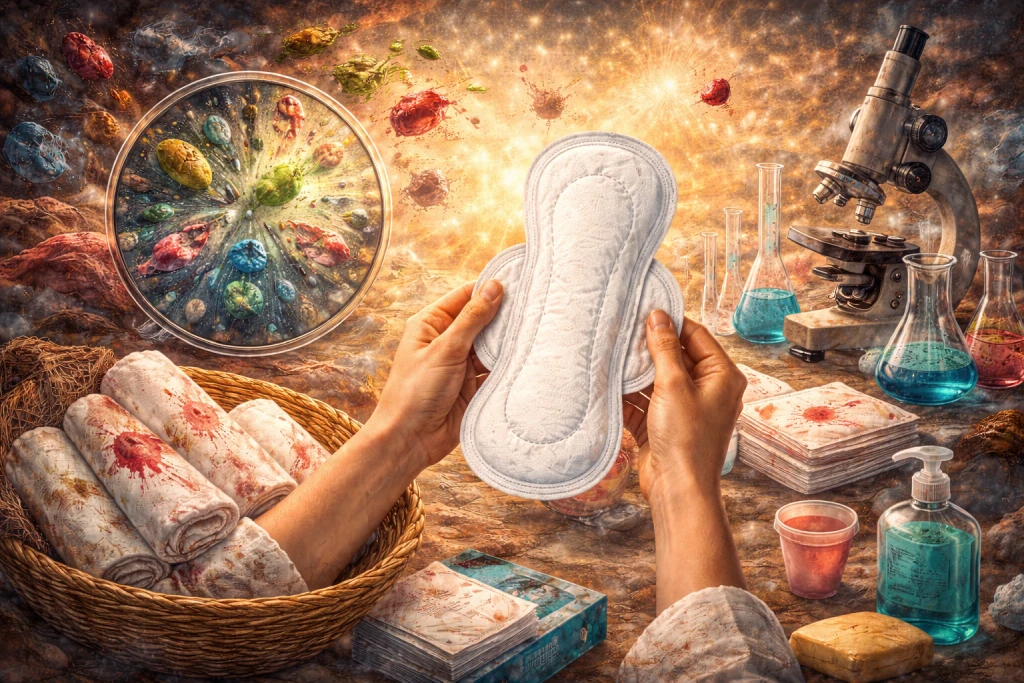
Even when the water in a well appears clear, it may contain disease-causing microorganisms or harmful chemicals. When human fecal waste, decomposing animal remains, or used bloodstained cloths enter a well, its water must be assessed for health safety. Yet in the account of the well of Buda‘ah, Muhammad declared after being told about such refuse: “Water is purifying; nothing renders it impure.” During ablution, water is taken into the mouth for rinsing and into the nose. The question of health safety therefore cannot be dismissed by saying that the water was not intended for drinking. Whether water from a well is safe from pathogens is not determined by a religious pronouncement but by the contamination actually present and the results of testing.
The account of the well of Buda‘ah in Medina is particularly important in Islamic hadith literature. This report, transmitted from Abu Sa‘id al-Khudri, states that used menstrual cloths, dead dogs or pieces of their flesh, and foul-smelling refuse entered the well. When Muhammad was asked whether its water could be used for ablution, he replied, «الْمَاءُ طَهُورٌ لَا يُنَجِّسُهُ شَيْءٌ»—“Water is purifying; nothing renders it impure.” The statement is direct and sweeping. The question concerned not merely an abstract concept of purity but the use of water from a specific source into which refuse had fallen. [1] [2]
Several important pieces of evidence within early Islamic sources bear directly on this account. The next report in Abu Dawud also mentions human fecal waste entering the same well and preserves later observations about its dimensions and the altered color of its water. Another hadith states that water reaching a specified quantity does not carry impurity. Sahih Muslim, meanwhile, prohibits urinating in stagnant water and then bathing in it. Classical jurists also claimed consensus that water becomes impure when contamination changes its color, smell, or taste, while disagreeing on quantity-based rules for water showing no such changes. The relationship between the unqualified wording of the original hadith, its actual application, and the subsequent Islamic legal framework is therefore central to its historical significance.
Human feces, animal remains, and other organic waste entering a well can be actual sources of water contamination. The presence of pathogens, levels of contamination, changes in oxygen and organic matter, and risks of infection are matters that can be tested. Muhammad’s statement that “nothing renders water impure” is especially significant in this setting, because it was given in answer to a question about the use of a particular well into which refuse had fallen. Permitting ablution also meant permitting that water to come into contact with the mouth and nose. [3]
The Hadith of the Well of Buda‘ah: The Original Religious Claim
Hadith 66 of Sunan Abi Dawud preserves, through Abu Sa‘id al-Khudri, the question about the well of Buda‘ah and Muhammad’s reply. The same fundamental statement appears in Jami‘ al-Tirmidhi 66 and Sunan al-Nasa’i 326. The Arabic term طَهُورٌ denotes ritual purity and suitability for purification; لا ينجسه شيء literally means “nothing makes it impure.” The answer contains no stated exception based on the kind of refuse, the amount of water, or a change in its color or smell. Although the question concerned ablution, rinsing the mouth and drawing water into the nose during ablution brings the water into contact with sensitive parts of the body. The claim that “the question was not about drinking” does not dispose of those health risks. [4] [5]
Mishkat al-Masabih (Mishkat)
Part 3: Purification
Chapter 7, Section Two: Description of Water
478-[5]. Narrated by Abu Sa‘id al-Khudri: He said: (One day the Messenger was) asked: “Messenger of Allah, may we perform ablution using water from the well of Buda‘ah? Menstrual cloths, dead dogs, and various kinds of foul-smelling refuse are thrown into this well.” The Messenger of Allah replied: “Water is purifying; nothing can render it impure.” (Ahmad, al-Tirmidhi, Abu Dawud, and al-Nasa’i) [1]
[1] Sahih: Ahmad 2101, Abu Dawud 66, al-Tirmidhi 66, al-Nasa’i 326, Irwa’ 14.
Hadith grade: Sahih
The Bengali translation of Sunan Abi Dawud likewise mentions the refuse and presents the pronouncement that nothing makes water impure. In the compilation, the report appears under the heading “Concerning the Well of Buda‘ah.” A note appended to the Bengali edition, however, states that if contamination alters any of the water’s characteristics, it is no longer pure, and that other hadiths restrict the generality of this report. This note is not part of the original wording of the hadith: it is an editorial or juristic explanation. The distinction between the report and its subsequent interpretation matters. [6]
Sunan Abi Dawud (critical edition)
Book 1: Purification
34. Concerning the Well of Buda‘ah
66. Narrated by Abu Sa‘id al-Khudri: The Messenger of Allah was once asked: “May we perform ablution using water from the well of Buda‘ah in Medina? Menstrual cloths, dogs’ flesh, and all kinds of foul-smelling substances used to be thrown into the well.” The Messenger of Allah replied: “Water is purifying; nothing makes it impure.” (1)
Sahih.
(1) Al-Tirmidhi (Book of Purification, chapter “Nothing renders water impure,” hadith 66; al-Tirmidhi classified the hadith as hasan); al-Nasa’i (Book of Water, chapter on the well of Buda‘ah, hadith 325); Ahmad (3/15, 16, 31, 86); al-Daraqutni (1/30–31), through Abu Sa‘id al-Khudri. Its chain of transmission is sahih. Lesson drawn from the hadith: if an impurity falling into water changes any of its characteristics, the water ceases to be pure. The general wording of this hadith is restricted by other hadiths.
Hadith grade: Sahih
Although the account of the well of Buda‘ah occurs in Abu Dawud, al-Tirmidhi, and al-Nasa’i, these appearances cannot simply be counted as three independent historical attestations. Substantial portions of the transmission chains in Abu Dawud 66, al-Tirmidhi 66, and al-Nasa’i 326 overlap on their way back to Abu Sa‘id al-Khudri, particularly through Abu Usamah, al-Walid ibn Kathir, and Muhammad ibn Ka‘b al-Qurazi. Abu Dawud 67 preserves a different intermediate chain but also ultimately derives from Abu Sa‘id. Similarities and differences among these texts help explain the report’s early transmission; their mere number cannot establish that the well water was free of pathogens. [7] [8]
Abu Dawud 67: Human Waste, the Well’s Dimensions, and Altered Water Color
The following report in Abu Dawud is especially relevant to the well of Buda‘ah. In hadith 67 the question is formulated somewhat differently: the well from which water was brought for Muhammad was said to receive pieces of dead dogs, used menstrual cloths, and عَذِرُ النَّاسِ, meaning human fecal waste. Whereas the preceding report refers generally to foul-smelling substances, this one explicitly names human waste. Muhammad’s answer is nevertheless the same: water is purifying, and nothing renders it impure. Abu Dawud appended information he had gathered about the well’s depth, breadth, and water color. [9]
وَهِيَ بِئْرٌ يُلْقَى فِيهَا لُحُومُ الْكِلاَبِ وَالْمَحَايِضُ وَعَذِرُ النَّاسِ . قَالَ رَسُولُ اللَّهِ صلى الله عليه وسلم ” إِنَّ الْمَاءَ طَهُورٌ لاَ يُنَجِّسُهُ شَىْءٌ
English translation: This is a well into which pieces of dogs’ flesh, used menstrual cloths, and human fecal refuse fall. [Muhammad replied:] “Water is purifying; nothing makes it impure.”
In the following passage, Abu Dawud reports that Qutaybah ibn Sa‘id asked the person responsible for the well about the depth of its water. According to the answer, when the water was at its highest it reached to below the waist, and when it receded it was lower still. Abu Dawud measured the width of the well using his garment and estimated it at about six cubits. He asked the person who opened the garden gate whether the structure of the well had changed; the answer was no. The most important observation is in Abu Dawud’s own words: he saw water whose color had changed। [10]
وَرَأَيْتُ فِيهَا مَاءً مُتَغَيِّرَ اللَّوْنِ
English translation: And I saw water there whose color had changed.
Two distinct conclusions follow from this account. First, Abu Dawud’s collection contains not only a transmitted exchange of questions and answers about the well but also a record of subsequent observation of its physical condition. Second, Abu Dawud did not identify what caused the water’s color to change. This sentence therefore does not establish that human feces or animal remains caused the discoloration. Nor can an observation made in a later period prove that the water was in exactly the same condition during Muhammad’s lifetime. It does, however, offer no support for the claim that the well always contained completely clear, unchanged water.
Although the width of a well and the depth of its water can suggest an approximate capacity, these measurements do not determine microbiological safety. Abu Dawud supplies no testable information about the rate of groundwater flow, the routes through which refuse entered, how long the water remained stagnant, or the concentration of microorganisms. Saying that “the well held plenty of water” is therefore not, by itself, evidence of health safety.
How Refuse Entered the Well: The Original Hadith Versus Later Explanations
The original Arabic reports use the verbs يُطْرَحُ فِيهَا and يُلْقَى فِيهَا. This means that used menstrual cloths, dog remains, and other refuse were thrown into or came to be in the well. Abu Dawud 67 also mentions human fecal waste. The hadith does not identify who put these substances there. For contamination, however, how the substances arrived matters less than the fact that they came into contact with the well water.
Later Islamic commentaries suggested that the refuse may have been carried into the well by rainwater or flood runoff. This explanation is not explicitly in the original hadith. Moreover, human feces and decomposing animal remains transported by runoff remain sources of water contamination: waste does not become sterile merely because it was not thrown in deliberately. Modern well-protection guidance identifies contaminated stormwater runoff, sewage, and floodwater infiltration as specific health hazards. Whether the waste was deliberately thrown in or washed in does not establish the scientific reliability of Muhammad’s general pronouncement about water remaining pure. [11] [12] [13]
“Water Is Pure”: Islamic Ritual Purity Versus Health Safety
The question in the hadith of the well of Buda‘ah was whether water from a refuse-contaminated well could be used for ablution. Muhammad’s answer was, “Water is purifying; nothing renders it impure.” No condition was stated concerning the type or quantity of refuse or changes in the water’s characteristics. In Islamic jurisprudence, the term طَهُورٌ refers to ritual purity, but that designation was used to permit actual use of this particular well’s water. The health of those using it is therefore directly relevant.
Ablution commonly involves rinsing the mouth and drawing water into the nose. Water declared acceptable for ablution can therefore come into contact with the oral cavity, nasal passages, skin, and eyes; some may also be swallowed unintentionally. Pathogens present in contaminated water can cause infections depending on the route of contact or entry. The objection that “the hadith did not say the water was for drinking” is consequently not an answer to the question of safety during ablution. The actual level of risk depends on the extent of contamination, the microorganisms involved, and the exposure—not on religious permission.
Later Islamic jurists ruled that water becomes impure if a contaminating substance changes its color, taste, or smell. That condition is absent from Muhammad’s quoted statement; it is a later restriction constructed from other reports and juristic analysis. Even water whose color, taste, and smell have not changed may contain pathogens. The later juristic explanation therefore does not demonstrate that water from any given well is microbiologically safe.
Different Instructions About Contaminated Water Within the Same Hadith Literature
Immediately before the account of the well of Buda‘ah, Sunan Abi Dawud includes a report dealing with the amount of water. According to Abdullah ibn Umar, Muhammad said that when water reaches two qullahs, it does not carry impurity. A qullah was a unit based on a large vessel; classical jurists calculated and disputed its precise volume in modern terms. The important point is that the report links the quantity of water to its legal status concerning impurity, introducing a distinct condition compared with the unqualified wording of “nothing renders water impure.” [14]
إِذَا كَانَ الْمَاءُ قُلَّتَيْنِ لَمْ يَحْمِلِ الْخَبَثَ
English translation: When water amounts to two qullahs, it does not carry impurity.
Sunan Abi Dawud (Islamic Foundation edition)
Book 1: Purification
Chapter 36: Urinating in Stagnant Water
69. Narrated by Ahmad ibn Yunus … from Abu Hurayrah, who reported from the Prophet: “None of you should urinate into stagnant water and then bathe in it.” (Al-Bukhari, Muslim, al-Tirmidhi, Ibn Majah, and al-Nasa’i).
باب الْبَوْلِ فِي الْمَاءِ الرَّاكِدِ
حَدَّثَنَا أَحْمَدُ بْنُ يُونُسَ، حَدَّثَنَا زَائِدَةُ، فِي حَدِيثِ هِشَامٍ عَنْ مُحَمَّدٍ، عَنْ أَبِي هُرَيْرَةَ، عَنِ النَّبِيِّ صلى الله عليه وسلم قَالَ “ لاَ يَبُولَنَّ أَحَدُكُمْ فِي الْمَاءِ الدَّائِمِ ثُمَّ يَغْتَسِلُ مِنْهُ ” .
حكم : صحيح (الألباني
حدثنا احمد بن يونس، حدثنا زاىدة، في حديث هشام عن محمد، عن ابي هريرة، عن النبي صلى الله عليه وسلم قال “ لا يبولن احدكم في الماء الداىم ثم يغتسل منه ” . حكم : صحيح (الالباني
Hadith grade: Sahih
Narrator: Abu Hurayrah
Sahih Muslim also records a prohibition, through Abu Hurayrah, on urinating in stagnant water and subsequently bathing in it. This prohibition concerns a specific action that contaminates water. Alongside the report of the well of Buda‘ah, it shows that the Islamic hadith literature does not contain a single, uniform rule treating water as permanently unchanged and suitable for use under all conditions. One narration permits ablution with water from a well into which refuse fell; another forbids adding human urine to stagnant water. The relationship between these reports became a real question for later juristic discussion. [15]
لاَ يَبُولَنَّ أَحَدُكُمْ فِي الْمَاءِ الدَّائِمِ ثُمَّ يَغْتَسِلُ مِنْهُ
English translation: None of you should urinate in stagnant water and then bathe in that same water.
Sahih Muslim (Islamic Foundation edition)
Book 2: Purification
Chapter 28: Prohibition of Urinating in Stagnant Water
Islamic Foundation no. 549; international no. 282
549. Narrated by Zuhayr ibn Harb … from Abu Hurayrah: The Messenger of Allah said, “None of you should urinate in water and then bathe in it.”
باب النَّهْىِ عَنِ الْبَوْلِ، فِي الْمَاءِ الرَّاكِدِ
وَحَدَّثَنِي زُهَيْرُ بْنُ حَرْبٍ، حَدَّثَنَا جَرِيرٌ، عَنْ هِشَامٍ، عَنِ ابْنِ سِيرِينَ، عَنْ أَبِي هُرَيْرَةَ، عَنِ النَّبِيِّ صلى الله عليه وسلم قَالَ “ لاَ يَبُولَنَّ أَحَدُكُمْ فِي الْمَاءِ الدَّائِمِ ثُمَّ يَغْتَسِلُ مِنْهُ ” .
وحدثني زهير بن حرب، حدثنا جرير، عن هشام، عن ابن سيرين، عن ابي هريرة، عن النبي صلى الله عليه وسلم قال “ لا يبولن احدكم في الماء الداىم ثم يغتسل منه ” .
Hadith grade: Sahih
Narrator: Abu Hurayrah
The same body of hadith literature contains the two-qullah rule and the prohibition against urinating in stagnant water. These reports show that Muhammad’s various pronouncements on water contamination and use do not yield a single identical rule. In one place, “nothing renders water impure”; elsewhere, the quantity of water becomes a condition, and urinating in stagnant water is prohibited. Later jurists constructed legal rules by bringing these reports together. But using different hadiths to restrict the general wording of the first report does not establish that Muhammad’s unqualified pronouncement was scientifically correct.
Scholarly Consensus Against the Prophet’s Unqualified Statement: A Weak Hadith, an Exception, and a Changed Meaning
Muhammad’s answer about the water of the well of Buda‘ah was, «الْمَاءُ طَهُورٌ لَا يُنَجِّسُهُ شَيْءٌ»—“Water is purifying; nothing renders it impure.” The question itself described a well into which menstrual cloths, dead dogs or their flesh, and foul-smelling waste fell. Yet Muhammad gave no quantitative limit, condition concerning color, smell or taste, or other exception in his answer. The way later jurists restricted this general language exposes a profound inconsistency: an exception absent from Muhammad’s sahih statement became established in later Islamic law through the jurists’ consensus, while hadith scholars classified the separate report containing that exception as weak. This is not merely a dispute over religious terminology. The change emerges clearly when one compares the original statement, the chain supporting the exception, and the legal rule subsequently adopted. [16] [17]
Which Wording Is Sahih and Which Exception Is Weak? A Comparison of Evidence and Rulings
The various reports on this subject do not carry the same status. Confusing the accepted status of the original wording with the weakness of the later-added exception might give the impression that Muhammad reliably uttered the first sentence with the additional condition. The following table distinguishes the sources, statements, evaluations of transmission, and later legal rulings. Here, “sahih” and “weak” are evaluations within Islamic hadith scholarship, not microbiological tests of the water’s actual safety.
| Source | Statement and Scope | Hadith Grade or Legal Authority | Core Problem |
|---|---|---|---|
| Sunan Abi Dawud 66 | «الْمَاءُ طَهُورٌ لَا يُنَجِّسُهُ شَيْءٌ» — Water is purifying; nothing renders it impure. | Sahih — graded by al-Albani. | The original wording contains no exception regarding taste, color, smell, or the quantity of water. |
| Jami‘ al-Tirmidhi 66 | The same basic statement concerning the well of Buda‘ah: nothing renders water impure. | Hasan — al-Tirmidhi’s own evaluation. | A report of the same event; appearing in separate books does not make it an entirely independent historical attestation. |
| Ibn Majah 521; Bulugh al-Maram 3 | “Nothing renders water impure, unless its taste, smell, or color changes।’ | Weak — Abu Hatim; al-Nawawi identified the final exception as weak. | The condition absent from the sahih basic statement appears here; it has not been established as sahih. |
| Sunan Abi Dawud 65 | Water does not become impure when it reaches two qullahs—a separate quantity-based report. | Sahih — graded by al-Albani. | Jurists disagree about inferring a contrary rule for water below two qullahs. |
| Al-Nawawi, al-Majmu‘, 1/160–161 | Water becomes impure if contamination changes its color, taste, or smell. | A juristic rule based on consensus (ijma‘) — not a hadith. | The ruling expressed by the weak exceptional clause was retained on the basis of consensus. |
The conclusion of this table is straightforward: the basic sahih report is unqualified; the separate report explicitly appending an exception is weak; and the rule embodied in that exception rests on the consensus of later jurists. It would be incorrect to describe the consensus itself as “sahih” or “da‘if,” because consensus is not a hadith. But consensus was used to establish a ruling that narrows the general meaning of the original sahih report. That limitation cannot retrospectively place words never reliably transmitted into Muhammad’s mouth.
Ibn al-Mundhir: Acknowledging the Hadith’s Generality While Asserting Consensus on an Exception
In his work al-Awsat fi al-Sunan wa al-Ijma‘ wa al-Ikhtilaf Ibn al-Mundhir first states that whether water is little or abundant, if impurity changes its taste, color, or smell, the water is impure and ablution or bathing with it is insufficient. He further states that when impurity falls into an abundant quantity of water without altering those characteristics, the water remains pure. But he records disagreement among scholars about what happens when impurity enters a small quantity of water without altering its color, taste, or smell. His discussion goes further: quoting the report of the well of Buda‘ah, he expressly states that Muhammad’s answer applies generally to all water, even small quantities. The breadth of the original pronouncement was therefore recognized within early Islamic jurisprudence itself; a quantity-based restriction is not a unanimously transmitted feature of the original wording. [18]
Two separate questions must thus be distinguished: the claimed consensus that water becomes impure when contamination changes its characteristics, and the disagreement about whether even a small quantity of water becomes impure immediately on contact with an impure substance when its characteristics remain unchanged. Applying “all scholars agree” to the second issue would misrepresent Ibn al-Mundhir’s own discussion. More significantly, despite recognizing the general wording of the original hadith, jurists felt it necessary to limit its application. If Muhammad’s own statement was clear and unqualified, why did later scholars need additional conditions and quantitative rules to decide when it applies?
Al-Shirazi and al-Nawawi: Establishing a Ruling with a Weak Hadith, Then Turning to Consensus
The clearest evidence appears in al-Nawawi’s al-Majmu‘ Sharh al-Muhadhdhab. The original author, Abu Ishaq al-Shirazi, used a hadith to support the ruling that water becomes impure when its taste, color, or smell changes. In that hadith, “Water is purifying; nothing renders it impure” is followed by the condition “except what changes its taste or smell.” Al-Nawawi explicitly states that the hadith containing this exception is weak and cannot be used as proof; the weakness lies specifically in its ending, the exception, whereas the original statement without that exception is sahih. He then expressly says that, because of this weakness, consensus must be relied upon as the evidence. In the same passage, he discusses the defect in al-Shirazi’s citation. Thus the legal ruling accepted by scholars remained unchanged, even though a later commentator declared the originally cited hadith supporting it weak and moved the evidentiary basis to consensus. [19]
قال المصنف – رحمه الله تعالى – باب ما يفسد الماء من النجاسة وما لا يفسده:
( إذا وقعت في الماء نجاسة لا يخلو: إما أن يكون راكدا أو جاريا أو بعضه راكدا وبعضه جاريا، فإن كان راكدا نظرت في النجاسة، فإن كانت نجاسة يدركها الطرف من خمر أو بول أو ميتة لها نفس سائلة؛ نظرت، فإن تغير أحد أوصاف الماء من طعم أو لون أو رائحة بالنجاسة، فهو نجس لقوله صلى الله عليه وسلم: { الماء طهور لا ينجسه شيء إلا ما غير طعمه أو ريحه } فنص على الطعم والريح، وقسنا اللون عليهما؛ لأنه في معناهما ).
( الشرح ) هذا الحكم الذي ذكره وهو نجاسة الماء المتغير بنجاسة مجمع عليه، قال ابن المنذر: أجمعوا أن الماء القليل أو الكثير إذا وقعت فيه نجاسة فغيرت طعما أو لونا أو ريحا، فهو نجس، ونقل الإجماع كذلك جماعات من أصحابنا وغيرهم، وسواء كان الماء جاريا أو راكدا قليلا أو كثيرا، تغير تغيرا فاحشا أو يسيرا، طعمه أو لونه أو ريحه، فكله نجس بالإجماع، وقد سبق في المتغير بطاهر: أنه لا يعتبر التغير اليسير على الأصح، وأنه يعتبر تغير الأوصاف الثلاثة على قول ضعيف، وتقدم الفرق، ويستثنى مما ذكرناه ما إذا تغير الماء بميتة لا نفس لها سائلة كثرت فيه، فإنه لا ينجس عن وجه ضعيف مع قولنا بنجاسة هذا الحيوان، لكن لما كان هذا الوجه ضعيفا لم يلتفت الأصحاب إليه فلم يستثنوه، وأما الحديث الذي ذكره المصنف فضعيف لا يصح الاحتجاج به، وقد رواه ابن ماجه والبيهقي من رواية أبي أمامة وذكرا فيه: طعمه أو ريحه أو لونه، واتفقوا على ضعفه، ونقل الإمام الشافعي تضعيفه عن أهل العلم بالحديث، وبين البيهقي ضعفه، وهذا الضعف في آخره وهو الاستثناء.
وأما قوله: الماء طهور لا ينجسه شيء فصحيح من رواية أبي سعيد الخدري وسبق بيانه في أول الباب الأول، وإذا علم ضعف الحديث تعين الاحتجاج بالإجماع كما قاله البيهقي وغيره من الأئمة، وقد أشار إليه الشافعي أيضا فقال: الحديث لا يثبت أهل الحديث مثله ولكنه قول العامة لا أعلم بينهم فيه خلافا، وأما قول المصنف: فنص على الطعم والريح وقسنا اللون عليهما فكأنه قاله؛ لأنه لم يقف على الرواية التي فيها اللون وهي موجودة في سنن ابن ماجه والبيهقي كما قدمنا، فإن قيل: لعله رآها فتركها لضعفها، قلنا: هذا لا يصح؛ لأنه لو راعى الضعف واجتنبه لترك جملة الحديث لضعفه المتفق عليه، والله أعلم.
( فرع ) لو وقعت جيفة في ماء كثير فتروح بها بالمجاورة ولم ينحل منها شيء فوجهان. الصحيح الذي صرح به كثيرون واقتضاه كلام الباقين: أنه نجس، ونقله إمام الحرمين عن دلالة كلام الأئمة وصححه؛ لأنه يعد متغيرا بالنجاسة ومستقذرا، وقال الشيخ أبو محمد: طاهر؛ لأنه مجاور فأشبه الجيفة خارج الماء.
English translation:
The author, Abu Ishaq al-Shirazi, writes—Chapter: What Impurity Corrupts in Water and What It Does Not:
When an impure substance falls into water, the water may be stagnant, flowing, or partly stagnant and partly flowing. If it is stagnant, the nature of the impurity must be considered. If the impurity is perceptible to the eye—such as wine, urine, or the corpse of an animal with flowing blood—one must determine whether the impurity has altered any characteristic of the water, including its taste, color, or smell. If such a change occurs, the water becomes impure. The reason is the Prophet’s saying, “Water is purifying; nothing renders it impure except what changes its taste or smell.” Taste and smell are explicitly mentioned, and we have extended this by analogy (qiyas) to color because it is comparable to those two properties.
Al-Nawawi’s commentary:
The ruling stated by the author—that water becomes impure when its characteristics are altered by impurity—is a matter of scholarly consensus. Ibn al-Mundhir said: Scholars agree that if an impure substance falls into water, whether the quantity is small or large, and changes its taste, color, or smell, the water becomes impure. Many jurists of our school and other schools have likewise transmitted this consensus. Whether water is flowing or stagnant, small or large in quantity, whether the change in taste, color, or smell is slight or considerable, it is impure by consensus whenever any such characteristic changes because of an impurity.
Earlier, when discussing changes caused by a pure substance, we explained that under the stronger view a minor change does not count. Under a weak view, all three characteristics must change. The difference between these situations was addressed earlier.
One possible exception to the stated ruling has been suggested: if numerous dead creatures without flowing blood fall into water and alter its characteristics, then according to a weak view the water does not become impure, even though we classify the animal itself as impure. Because this view is weak, however, the scholars of our school did not give it weight or list it as an exception.
The hadith cited by the author is weak and cannot legitimately be used as proof. Ibn Majah and al-Bayhaqi transmitted it from Abu Umamah, mentioning the water’s taste, smell, or color. Scholars agreed on its weakness. Al-Shafi‘i transmitted its classification as weak from hadith specialists, and al-Bayhaqi explained the weakness. The defect lies in the last part of the report—namely, the exception.
By contrast, the statement “Water is purifying; nothing renders it impure” is authentic (sahih) through Abu Sa‘id al-Khudri, as discussed at the beginning of the first chapter. Since the weakness of the report containing the exception is established, reliance on scholarly consensus as evidence becomes necessary, as al-Bayhaqi and other leading scholars have said.
Al-Shafi‘i also alluded to this point. He said that hadith scholars do not regard such a report as reliably established, yet this is the generally accepted position, and he knew of no disagreement among them.
The author said that taste and smell are explicitly named in the hadith and that color was included by analogy. He apparently said this because he had not encountered the version that also mentions color, even though it is found in the Sunan collections of Ibn Majah and al-Bayhaqi, as noted earlier.
If it is objected that perhaps the author had seen that version but omitted it because it was weak, we answer that this cannot be right. Had he taken account of the weakness and avoided it, he would have omitted the entire report, because its weakness is universally recognized. Allah knows best.
Subsidiary issue:
If a carcass falls into a large body of water, and its proximity causes a foul smell in the water even though no material from the carcass dissolves into it, there are two opinions. The stronger view, explicitly stated by many jurists and implied by the statements of others, is that the water becomes impure. Imam al-Haramayn transmitted this view based on the implications of leading jurists’ statements and judged it correct, because the water is considered altered by impurity and repugnant.
Shaykh Abu Muhammad, on the other hand, said it remains pure, because the carcass is only adjacent to the water and nothing from it has mixed into the water. He analogized this to a carcass lying outside the water.
Three steps in al-Nawawi’s argument cannot be avoided. He acknowledges that the original statement is sahih; establishes that the additional clause restricting its meaning is weak; and finally maintains the juristic ruling by appeal to consensus. Thus a rule not expressly contained in the reliably transmitted wording of Muhammad’s statement became established through the collective authority of jurists. Islamic legal theory calls this takhsis—restricting a general statement to specific circumstances. But giving a method of interpretation a technical name does not supply independent historical evidence for it. In particular, once al-Nawawi declares the chain supporting the additional words attributed to Muhammad by al-Shirazi to be weak, presenting those words as part of an authentically established prophetic statement is simply incorrect.
The final part of al-Nawawi’s quotation contains another revealing disagreement. When a carcass lies beside a large body of water and its odor reaches the water without any part of the body mixing into it, many jurists classified the water as impure. Shaykh Abu Muhammad, by contrast, classified it as pure. Two opposite rulings for the same situation: “impure” under one view, “pure” under the other. The disagreement turns not on chemical or microbiological analysis but on how “contact” and “change” fit into legal categories. If actual safety is the issue, neither ruling tells us whether pathogens are present in the water.
Al-Shawkani’s Acknowledgment: Consensus and Other Rules Restrict the Hadith’s General Meaning
In his Nayl al-Awtar, al-Shawkani discusses the legal consequences of an impure substance entering water. He states that when water amounting to two qullahs or more is altered by impurity, it is classified as impure on the basis of consensus, thereby restricting the general meaning of the hadith that “nothing renders water impure.” He also records disagreement about whether the contrary implication of the two-qullah report establishes impurity for a smaller quantity even without visible alteration. He thus acknowledges the tension between the unrestricted meaning of the original hadith and quantity-based legal rulings, and describes how jurists attempted to reconcile the two. [20]
Al-Shawkani expressly recognizes the restriction of a general hadith by consensus. The criticism, therefore, is not that later jurists failed to notice the broad literal meaning of Muhammad’s words. They recognized that breadth and nevertheless narrowed the scope through other rules. Consensus cannot turn a weak clause in a hadith into words historically authenticated as Muhammad’s. At most it provides a basis for a later legal ruling. Two questions consequently remain distinct: What did Muhammad say about water, and under what conditions did scholars later rule that water becomes impure? A later legal decision cannot rewrite the wording that answers the first question.
Two Qullahs, Small Quantities, and Color, Smell, and Taste: Conflicting Criteria for the Same Issue
The “two qullahs” hadith says that water does not become impure when it reaches that quantity. On that basis, some jurists ruled that water below two qullahs becomes impure when an impure substance enters it, even without visible alteration. Others argued that the report does not automatically establish such a contrary implication. Ibn al-Mundhir preserves differing opinions about the threshold between small and large quantities and the ruling on impurities entering small quantities of water. Thus the same contamination event can leave the water “impure” under one position and “pure” under another. This disagreement cannot be settled merely by counting sahih and weak hadiths, because much of it lies in the method by which legal rules are derived from reports. [21] [22]
These conditions also have a fundamental scientific limitation. Water may retain its color, taste, and smell and still contain fecal indicator bacteria or other harmful microorganisms. Conversely, a harmless, ritually pure substance may alter the color of water. Defining ritual impurity through visible changes is therefore a different task from establishing whether water is safe for rinsing the mouth or drawing into the nose. Modern water safety assessment requires microbiological testing, investigation of contamination sources, chemical analysis, and relevant health-risk assessment. Clarity to the naked eye and unchanged odor cannot guarantee safety. This distinction is especially important for water sources such as the well of Buda‘ah, where contact with waste is described.
In summary, one sahih report attributes an unqualified pronouncement about water to Muhammad; al-Nawawi calls the report adding an exception weak; jurists established that exception’s legal rule through consensus; and conflicting standards emerged concerning the quantity of water and the degree of change. The gap between the original hadith’s language and its later legal application cannot be concealed. Islamic legal theory may call the gap “interpretation” or “takhsis,” but that does not alter the original words, nor does it establish that waste-exposed water is microbiologically safe. The conflict among the Prophet’s unqualified statement, the jurists’ conditional rulings, and testable reality cannot be erased by appealing to chains of transmission or claims of consensus.
The Science of Water Contamination: Organic Matter, Decomposition, and Microorganisms
Used bloodstained cloths, animal remains, and human fecal waste entering a well pose genuine risks of water contamination. These substances contain organic compounds, nutrients, and, depending on their source, various microorganisms. As an animal carcass decomposes, organic matter breaks down, potentially producing bad odors, turbidity, and a depletion of dissolved oxygen. Human fecal waste is a significant route through which intestinal microorganisms enter water. Such processes are not stopped by the water’s clear appearance or by a religious declaration of purity. Actual testing is necessary to identify contamination and assess the risk.
When fecal waste from humans or other warm-blooded animals enters water, intestinal microorganisms and disease-causing pathogens may enter with it. Depending on the contamination, waterborne infections may include diarrhea, typhoid fever, dysentery, cholera, hepatitis A, and parasitic diseases. No laboratory sample of water from the historic well of Buda‘ah survives, so the presence or concentration of any particular pathogen cannot be measured. But Abu Dawud’s description of human feces and decomposing waste is sufficient grounds to investigate the safety of the water source. [23]
Decomposition of organic matter may increase the water’s biochemical oxygen demand, or Biochemical Oxygen Demand (BOD). This measure indicates how much oxygen microorganisms need to break down biodegradable organic material in water. Higher BOD, lower dissolved oxygen, and unusual odor or color may indicate changes in water quality. No single indicator, however, identifies every disease-causing organism. Assessing health risks therefore involves microbiological testing, investigation of contamination sources, and chemical analysis where necessary.
The rate at which microorganisms multiply in water depends on environmental conditions. Under favorable conditions some bacteria reproduce rapidly, while temperature, organic nutrients, oxygen, competing microorganisms, and environmental stress affect their growth in a well. Viruses do not reproduce independently in water as bacteria do; they require suitable living host cells for replication. Despite these differences, human fecal waste and decomposing animal bodies entering a well present genuine contamination hazards. Those hazards must be assessed using measurable organisms and indicators of pollution.
Why Clear Water Is Not the Same as Safe Water
People commonly judge water quality by its color, taste, smell, and visible dirt. These signs can provide warnings, but they cannot guarantee safety. Harmful bacteria, viruses, and parasites may be present in concentrations that are invisible to the naked eye and do not produce noticeable changes in taste or smell. Some chemical contaminants may likewise be present without visible changes. Therefore the inference “nothing seems to have changed” to “no pathogens are present” is invalid.
Classical jurisprudence uses changes in water’s color, taste, and smell as criteria for determining ritual impurity. But infectious microorganisms and certain chemical contaminants may be present without any such sensory changes. If these juristic criteria are treated as evidence of health safety, there is a risk of false conclusions. The United States Centers for Disease Control and Prevention (CDC) advises testing private well water at least once a year for coliform bacteria, nitrates, total dissolved solids, and pH. If contamination is suspected, it recommends appropriate precautions, treatment, and retesting. [24] [25]
The hadiths describe refuse, animal remains, and human fecal waste reaching the well of Buda‘ah, but provide no microbiological test results. Consequently, they offer no tested basis for declaring the water safe. Simply pronouncing that “water is purifying” and permitting ablution does not replace an assessment of contamination risks. The safety of a water source has to be determined by examining the sources and extent of pollution; a religious declaration supplies none of that information.
World Health Organization Standard: E. coli in Every 100 Milliliters of Water
The World Health Organization’s Guidelines for Drinking-water Quality identifies Escherichia coli, or E. coli, as an important indicator for assessing microbiological safety of drinking water. The bacterium should not be detectable in any 100-milliliter sample of water intended for drinking. E. coli is used as an important indicator of fecal contamination; finding it warns that other intestinal pathogens may also have entered. Detecting E. coli does not, however, establish that every particular pathogen is present, and a single sample testing negative for E. coli does not permanently rule out all possible chemical and microbiological risks. [26]
E. coli or thermotolerant coliform bacteria — Must not be detectable in any 100 ml sample.
English translation: E. coli or thermotolerant coliform bacteria must not be detectable in any 100 mL water sample.
The WHO criterion for E. coli provides a testable indicator of fecal contamination in drinking water. If human fecal waste may have entered a comparable well today, it cannot be assumed safe simply because the water looks clear or has been declared ritually pure. Decisions about water safety are unreliable without appropriate sampling, identifying sources of contamination, and treatment.
Public-Health Evidence: How Serious Is the Harm from Contaminated Water?
According to the World Health Organization’s 2023 Drinking-water fact sheet, at least 1.7 billion people worldwide were using drinking-water sources contaminated with feces in 2022. The same fact sheet identifies risks of diseases including diarrhea, cholera, dysentery, typhoid fever, and polio transmitted through contaminated water, and estimates approximately 505,000 diarrheal deaths per year attributable to unsafe drinking water. These figures demonstrate the real public-health importance of testing contamination sources rather than assuming that water is safe. [27]
According to the World Health Organization and researchers’ analysis of the global burden of disease in 2019, approximately 1.4 million deaths could have been prevented that year with adequate access to safe water, sanitation, and hygiene. The estimate includes not only water contamination but also unsafe sanitation, insufficient handwashing, and associated health risks. Attributing all 1.4 million deaths solely to contaminated drinking water would therefore be incorrect. The study assessed the overall health burden by accounting for the distinct risks. [28] [29]
The infectious-disease risks associated with contaminated water are real and measurable. Treating water exposed to human feces or animal waste as safe without testing may obstruct identification and prevention of contamination. Water also contacts the mouth and nose during regular practices such as ablution. A declaration that a well’s water is “pure” thus provides no scientific basis for concluding that its use is safe for health.
If the Same Well Were Tested Today: Religious Rulings Versus Scientific Investigation
Suppose an allegation arose that human feces, animal carcass fragments, and used cloths had been washed into a modern well by rainwater. Public-health professionals would not assess its safety by asking whether the water was ritually pure. They would evaluate contamination sources, the well’s construction, nearby sewage systems, groundwater movement, and flood risk. They would collect water samples and test for indicators of fecal contamination and relevant chemicals. If there were a risk of infection, drinking and other hazardous uses of the water would be suspended while appropriate treatment and retesting were arranged. [30] [31]
Safety assessments for such well water involve testing fecal contamination, pathogens, pollution sources, and relevant chemical indicators. When there is a risk that microorganisms could enter the mouth or nose through water, that type of use also belongs in the safety assessment. Muhammad’s answer concerning the well of Buda‘ah was that “nothing renders water impure.” But those words do not establish the absence of harmful microorganisms or the health safety of using the water.
Conclusion: The Fundamental Difference Between Ritual Purity and Freedom from Pathogens
The hadith of the well of Buda‘ah describes a question about whether ablution could be performed with water from a well into which used menstrual cloths, dog remains, and foul-smelling refuse fell. Another report in Abu Dawud also mentions human fecal waste. Muhammad’s reply was: “Water is purifying; nothing renders it impure.” This general declaration gives no exception based on the kind of waste, the volume of water, or changes in its properties. That the question concerned ablution does not eliminate the health risk. Water touches the mouth and nose during ablution, and some may inadvertently be swallowed when rinsing the mouth. Permitting use of water from a contaminated well is therefore not merely a matter of abstract religious terminology; it concerns direct human exposure.
Later Islamic jurists ruled water impure when its color, taste, or smell changed, and imposed various additional conditions, including the two-qullah threshold, drawing on other hadiths. These later interpretations narrowed the general wording of the original pronouncement. But water need not visibly change in order to contain harmful microorganisms. The same corpus of hadiths contains both a prohibition against urinating in stagnant water and a declaration of purity regarding well water exposed to refuse. Together they reveal differences among early rules on water and a history of subsequent juristic reconciliation; they do not establish the water’s actual microbiological safety.
According to WHO guidelines, E. coli should not be detectable in any 100-milliliter sample of safe drinking water. Fecal contamination from humans or animals is an important indicator of the risk that infectious organisms have entered water. When fecal waste or decomposing animal bodies reach a well, assessing safety requires investigation of contamination sources, microorganisms, and relevant chemical indicators. We do not know the historic microorganism counts for the well of Buda‘ah, but the absence of such data does not prove that the well was free of pathogens. Muhammad’s declaration that “nothing renders water impure” remains recorded as a religious ruling, but it is not experimental evidence of the water’s health safety. Protecting people against exposure to or ingestion of contaminated water requires reliable testing, protected water sources, and appropriate treatment—not a declaration of miraculous purity.
References
- Sunan Abi Dawud, hadith 66, chapter on the well of Buda‘ah ↩︎
- Jami‘ al-Tirmidhi, hadith 66 ↩︎
- Sunan Abi Dawud 66 ↩︎
- Sunan Abi Dawud 66: original Arabic and English text ↩︎
- Sunan al-Nasa’i 326 ↩︎
- Sunan Abi Dawud (critical edition), hadith 66, Bengali translation and appended commentary ↩︎
- Al-Tirmidhi 66: chain of transmission ↩︎
- Al-Nasa’i 326: chain of transmission ↩︎
- Sunan Abi Dawud, hadith 67, original report and observations of the well ↩︎
- Sunan Abi Dawud 67, description of the well’s depth and breadth ↩︎
- Dorar: commentary on the hadith of the well of Buda‘ah ↩︎
- Islamweb, commentary on Sunan Abi Dawud ↩︎
- CDC, How to Disinfect Wells After an Emergency ↩︎
- Sunan Abi Dawud, hadith 63, the report about two qullahs of water ↩︎
- Sahih Muslim 282a, prohibition against urinating in stagnant water ↩︎
- Sunan Abi Dawud 66: the water of the well of Buda‘ah ↩︎
- Al-Nawawi, al-Majmu‘ Sharh al-Muhadhdhab, 1/160–161 ↩︎
- Ibn al-Mundhir, al-Awsat, Book of Waters, pp. 369–377 ↩︎
- Al-Nawawi, al-Majmu‘ Sharh al-Muhadhdhab, 1/160–161, chapter on impurities affecting water ↩︎
- Al-Shawkani, Nayl al-Awtar, vol. 1, chapter on the ruling when impurity comes into contact with water ↩︎
- Sunan Abi Dawud 65, the two-qullah report ↩︎
- Ibn al-Mundhir, al-Awsat, pp. 369–378 ↩︎
- World Health Organization, Drinking-water, 13 September 2023 ↩︎
- CDC, Guidelines for Testing Well Water, 2024 ↩︎
- CDC, Guidelines for Treating Well Water, 2024 ↩︎
- WHO, Guidelines for Drinking-water Quality, fourth edition, 2022, Table 7.10 ↩︎
- WHO, Drinking-water, 13 September 2023 ↩︎
- WHO Global Health Observatory, WASH Burden of Disease ↩︎
- Wolf et al., The Lancet, 2023: disease burden attributable to unsafe WASH ↩︎
- CDC, Emergency Well Disinfection ↩︎
- CDC, Well-Water Testing ↩︎