
Introduction
One of the most prominent concepts in Islamic eschatology is that, on the Day of Resurrection, the sun will be brought extremely close to human beings, people will suffer unbearable heat, and Allah will shelter certain individuals in His own shade amid these terrifying conditions. According to accounts in Sahih al-Bukhari and Sahih Muslim, there will be no shade that day except Allah’s shade. The original hadith does not explicitly identify this shade as a metaphor; the word appears within descriptions of human resurrection, judgment, the proximity of the sun, intense heat, and shelter reserved for particular people. It therefore directly raises questions about light, heat, shadow, location, distance, and physical causation. The theological and scientific problems arising from associating a shadow with a supposedly incorporeal, transcendent, and incomparable God are also reflected in disputes within Islamic exegetical literature.
A shadow is a familiar physical phenomenon of ordinary human experience. When an object obstructs sunlight, a relatively dark region forms behind it. In the intense sunshine of a desert, shade provides relief, rest, and protection from solar radiation. In the geographical and cultural conditions of seventh-century Arabia, presenting shade as a desirable refuge was entirely natural. Islamic scriptures repeatedly describe cool shade, expansive gardens, flowing rivers, and comfortable surroundings as rewards in Paradise. But when this familiar natural experience is attributed to the personal shadow of an omnipotent, invisible, supernatural being, the description ceases to function merely as a cultural image. It raises a fundamental question about the nature of God and His relationship to the physical world.
Islamic theology declares Allah incomparable to creation. Quran 42:11 states, «لَيْسَ كَمِثْلِهِ شَيْءٌ»—“There is nothing like unto Him.” Yet authentic hadith speak of Allah having a shade beneath which certain people will find shelter. Islamic scholars have adopted different positions when explaining the relationship between these claims. Some say that the reference is not to Allah’s own shade but to the shade of His Throne. Others interpret it as a metaphor for His special protection, honor, and security. Still others reject the interpretation of the Throne’s shade as unsupported ta’wil and insist that the wording of the hadith be accepted as it stands. These disagreements show that the language of the hadith has yielded no single, clear, universally agreed account of the nature of this shade.
This article examines the account of Allah’s shade through the original Arabic wording of the hadith, classical Islamic commentaries, modern physics, and causal analysis in philosophy. It investigates whether Allah’s own shade and the shade of His Throne are the same concept, how a physical shadow can be related to a supernatural being, whether the descriptions of the sun and shade on the Day of Resurrection are internally coherent, and how contradictory interpretations offered by Islamic scholars affect the meaning of the original account. Accepting a narration as sahih within a religious tradition and establishing the actual occurrence of the event it describes are entirely different matters. The former concerns religious authentication; the latter concerns reality. That distinction is the starting point of this analysis.
The Explicit Hadith Accounts
The account of Allah’s shade is a well-known and significant narration in Islamic hadith literature. Sahih al-Bukhari 660 and 1423, Sahih Muslim 1031, Sunan al-Nasa’i 5380, and other collections relate from Abu Hurayrah that on the Day of Resurrection Allah will shelter seven categories of people in His special shade. They include a just ruler; a young person raised in worship of Allah; a person whose heart remains attached to the mosque; two people who love one another for Allah’s sake; someone who refuses an invitation to illicit sexual relations; someone who gives charity secretly; and someone who remembers Allah in solitude and weeps. The central assertion is that no other shade will exist on that day and that refuge in Allah’s shade will constitute a special reward. More specifically, the accounts establish the following points:
1. Abu Hurayrah reports that the Prophet said: “Allah will shelter seven categories of people beneath His shade on the day when there will be no shade except His” [1]. 2. In the Tawhid Publications translation of Sahih al-Bukhari 1423, the translator inserts “of the Throne” in parentheses, although the corresponding original Arabic sentence contains no such word. By contrast, Jamiʿ al-Tirmidhi 1306 explicitly says «تَحْتَ ظِلِّ عَرْشِهِ»—“beneath the shade of His Throne.” Collapsing these distinct details into a single reading erases the difference between the original wording and an interpretive addition [2].
Mishkat al-Masabih (Mishkat)
Book 4: Prayer
Chapter 7, First Section: Mosques and Places of Prayer
701-[13]. Narrated by Abu Hurayrah: The Prophet (peace and blessings be upon him) said: “Allah will shelter seven categories of people beneath His shade on the Day of Resurrection, the day when there will be no shade except Allah’s shade: (1) a just ruler; (2) a young person who spends youth worshipping Allah; (3) a person whose heart remains in the mosque from the time they leave until they return; (4) two people who love each other for Allah’s sake, meeting for His sake and parting for His sake; (5) a person who remembers Allah in solitude and whose eyes overflow with tears out of fear of Him; (6) a person whom a beautiful woman of distinguished status invites to illicit relations but who answers, ‘I fear Allah’; and (7) a person who gives secretly in Allah’s cause, so secretly that the left hand does not know what the right hand has spent.” (Al-Bukhari and Muslim) [1]
[1] Sahih: al-Bukhari 660; Muslim 1031; al-Nasa’i 5380; al-Tirmidhi 2391; Ahmad 9665; Sahih Ibn Hibban 4486; Irwa’ 887.
Hadith classification: Sahih (authentic).
Sahih al-Bukhari (Tawhid Publications)
Book 24: Zakat
Chapter 24/16: Giving Charity with the Right Hand
1423. Narrated by Abu Hurayrah: The Messenger of Allah (peace and blessings be upon him) said: “On the day when there will be no shade except Allah’s (Throne’s) shade, Allah will shelter seven types of people in that shade:
(1) a just ruler;
(2) a young person raised in Allah’s worship;
(3) a person whose heart remains attached to the mosque;
(4) two people who love each other for Allah’s pleasure, meeting and parting on that basis;
(5) a person invited to illicit sexual intercourse by an attractive woman of distinguished status who replies, ‘I fear Allah’;
(6) a person who gives charity so secretly that the left hand does not know what the right hand has given;
(7) a person who remembers Allah in seclusion and sheds tears out of fear of Him. (660) (Modern Publications: 1331; Islamic Foundation: 1337)
Hadith classification: Sahih (authentic).
Narrator: Abu Hurayrah.
The wording of the original Arabic sentence is especially significant. «يُظِلُّهُمُ اللَّهُ» means “Allah will shade them”; «فِي ظِلِّهِ» means “in His shade”; and «يَوْمَ لاَ ظِلَّ إِلاَّ ظِلُّهُ» means “on the day when there will be no shade except His.” The Arabic term for shade is ظِلّ, accompanied here by a possessive pronoun referring to Allah. Notably, the original wording of Sahih al-Bukhari 660 does not contain عرش, meaning “Throne.” Translating “Allah’s shade” directly as “the shade of His Throne” is therefore not a word-for-word rendering of the original sentence; it adopts a particular interpretive conclusion.
This distinction is visible in the Bengali translation as well. The Tawhid Publications edition of Sahih al-Bukhari 1423 reads “Allah’s (Throne’s) shade,” with “Throne’s” placed in parentheses. The corresponding Arabic sentence does not contain the word “Throne.” The translator’s insertion presents a particular theological interpretation to the reader. Without consulting the Arabic, a reader could easily assume that the hadith explicitly mentions the Throne’s shade. But the original text’s reference to Allah’s shade and the commentator’s reference to the Throne’s shade are separate matters. This distinction is essential when determining the meaning of a religious text.
The reference to the Throne’s shade is not merely a translator’s invention: it occurs explicitly in Jamiʿ al-Tirmidhi 1306. That narration promises shelter beneath Allah’s Throne to someone who grants time to a debtor unable to pay or remits the debt. Comparing it with al-Bukhari’s seven-category hadith reveals that the same reward is expressed in one account as «ظِلِّهِ» (“His shade”) and in another as «ظِلِّ عَرْشِهِ» (“the shade of His Throne”) [3].
Jamiʿ al-Tirmidhi 1306; narrated by Abu Hurayrah; classification: Hasan-Sahih-Gharib (al-Tirmidhi’s assessment)
مَنْ أَنْظَرَ مُعْسِرًا أَوْ وَضَعَ لَهُ أَظَلَّهُ اللَّهُ يَوْمَ الْقِيَامَةِ تَحْتَ ظِلِّ عَرْشِهِ يَوْمَ لَا ظِلَّ إِلَّا ظِلُّهُ
English translation: Whoever gives respite to a debtor in hardship, or reduces or waives what is owed, Allah will shelter that person on the Day of Resurrection beneath the shade of His Throne, on the day when there will be no shade except His.
Relevant context: This narration promises the same shade to someone who grants respite to a debtor, a category outside the familiar list of seven. The word “Throne” is part of the Arabic of this narration; it is absent from the corresponding Arabic sentences of Sahih al-Bukhari 660 and 1423.
More explicitly still, Sahih Muslim 2566 presents the promise of shade as a direct statement by Allah. The speaker uses the first-person possessive «ظِلِّي»—“My shade.” The difference matters: al-Bukhari’s narration says “His shade” in the Prophet’s report, while Muslim records “My shade” as Allah’s own speech. Neither account defines the nature of this shade [4].
Sahih Muslim 2566; narrated by Abu Hurayrah
أَيْنَ الْمُتَحَابُّونَ بِجَلَالِي الْيَوْمَ أُظِلُّهُمْ فِي ظِلِّي يَوْمَ لَا ظِلَّ إِلَّا ظِلِّي
English translation: On the Day of Resurrection, Allah will ask, “Where are those who loved one another for My glory? Today I will shelter them in My shade, on the day when there is no shade except My shade.”
Relevant context: Here the possessive relationship to the shade is expressed in Allah’s own reported speech. The word “Throne” does not occur. Reading it as the Throne’s shade requires a separate interpretation or another narration.
The accounts also differ in the number of people or categories promised shade. Al-Bukhari gives the familiar list of seven; al-Tirmidhi adds the promise to someone who grants relief to a debtor; and a separate report in Muslim describes the reward for people who love one another. The seven-category narration cannot be read as a final and exhaustive list of everyone who will receive shade. Classical commentators discuss additional categories. Thus, not only is the nature of the shade left unspecified, but the scope of the promised reward also expands across different reports.
This phrase has been extensively debated throughout the history of Islamic commentary. In his Commentary on Sahih Muslim, Imam al-Nawawi quotes Qadi Iyad, who interprets the attribution of shade to Allah as a relationship of ownership and identifies the intended shade as that of the Throne. The original statement reads: [5].
إِضَافَةُ الظِّلِّ إِلَى اللَّهِ تَعَالَى إِضَافَةُ مِلْكٍ، وَكُلُّ ظِلٍّ فَهُوَ لِلَّهِ وَمِلْكِهِ وَخَلْقِهِ وَسُلْطَانِهِ، وَالْمُرَادُ هُنَا ظِلُّ الْعَرْشِ كَمَا جَاءَ فِي حَدِيثٍ آخَرَ مُبَيَّنًا
English translation: Attributing the shade to Allah the Exalted is an attribution of ownership. Every shade belongs to Allah and is His property, creation, and under His authority. What is intended here is the shade of the Throne, as clarified in another hadith.
Full relevant context of the explanation: Qadi Iyad further explains that people will stand before Allah on the Day of Resurrection, the sun will approach them, the heat will intensify, and they will be afflicted by sweat; at that time there will be no shade except that of the Throne. The same discussion also mentions the shade of Paradise and the figurative meaning of honor and protection. Thus, the source places physical shelter, the comfort of Paradise, and metaphorical security alongside one another in explaining the same expression.
Qadi Iyad makes two consequential interpretive decisions. First, he does not treat the relationship between Allah and the shade as a direct bodily attribute; instead, he interprets it as ownership. Second, he identifies that shade with Allah’s Throne. Under this interpretation, “His shade” in the original hadith becomes “the shade of His Throne, which He owns.” The commentator has therefore situated the original brief expression within a broader theological framework. That framework is not stated in those words in the original sentence; it is supplied through other narrations and theological assumptions.
In Fath al-Bari, Ibn Hajar al-Asqalani goes further in correcting Qadi Iyad’s explanation of an “attribution of ownership.” In his view, ownership alone does not explain what distinguishes this special shade from every other created shade; the attribution must also express special honor. Discussing Ibn Dinar’s figurative interpretation alongside reports of the Throne’s shade, he considers the Throne-based interpretation more persuasive. Scholars have therefore had to invoke distinct notions of ownership, honor, and a particular created object to explain a single expression [6].
Ibn Hajar’s Fath al-Bari, quoted in Tuhfat al-Ahwadhi
وَكَانَ حَقُّهُ أَنْ يَقُولَ إِضَافَةَ تَشْرِيفٍ لِيَحْصُلَ امْتِيَازُ هَذَا عَلَى غَيْرِهِ
English translation: He should have called it an attribution of honor, so that this shade would be distinguished from others.
Relevant context: Ibn Hajar corrects Qadi Iyad’s ownership-based explanation by invoking an attribution of honor. He then argues for the interpretation of literal shelter beneath the Throne on the strength of a separate narration specifying the Throne’s shade.
The following portion of Qadi Iyad’s discussion is even more significant. It describes the sun approaching people on the Day of Resurrection, the heat intensifying, and people being overcome by sweat, and states that nothing will cast shade there except the Throne. Here shade is treated as actual refuge directly connected to solar heat and bodily suffering. The same discussion also mentions the shade of Paradise and honorable shelter. Thus, in explaining one hadith expression, it invokes three distinct ideas: physical shade, paradisal comfort, and metaphorical protection.
Al-Nawawi’s discussion also preserves another interpretation attributed to Ibn Dinar. In that explanation, shade signifies special honor, shelter, and protection from hardship. Qadi Iyad explains the linguistic basis of the interpretation as follows: [7].
وَقَالَ ابْنُ دِينَارٍ: الْمُرَادُ بِالظِّلِّ هُنَا الْكَرَامَةُ وَالْكَنَفُ وَالْكَفُّ مِنَ الْمَكَارِهِ فِي ذَلِكَ الْمَوْقِفِ
English translation: Ibn Dinar said that what is meant by shade here is honor, shelter, and protection from the hardships of that situation.
يُقَالُ: فُلَانٌ فِي ظِلِّ فُلَانٍ أَيْ فِي كَنَفِهِ وَحِمَايَتِهِ
English translation: One says that so-and-so is “in the shade” of so-and-so, meaning under that person’s care and protection.
Full contextual meaning: According to Ibn Dinar, the shade of the Day of Resurrection signifies honoring someone, providing refuge, and protecting that person from the suffering of that day. Qadi Iyad draws on this conventional Arabic metaphor in preferring the explanation. What is being invoked is therefore the social and linguistic concept of protection, not a geometric shadow cast by an opaque object.
Here the meaning of shade changes fundamentally. In the first interpretation it is a refuge associated with the Throne; in the second, it is a metaphor for honor and security. Qadi Iyad recognizes Ibn Dinar’s interpretation as an established usage of Arabic and gives it greater preference. This is significant: the metaphorical reading was not invented as a modern response to science; it already existed within classical Islamic exegesis. Its existence simultaneously establishes that the literal wording of the hadith did not yield a single settled account of the shade’s nature.
This disagreement continued among later Islamic scholars. In his lessons on Sharh Kitab Qa’idah Jalilah fi al-Tawassul wa al-Wasilah, Nasir ibn Abd al-Karim al-Aql directly addresses the question of what “Allah’s shade” means in the authentic hadith. He acknowledges disagreement on the issue. Some, he says, affirm shade in its apparent sense and attribute it to Allah; others interpret it as the shade of the Throne. But he characterizes the second explanation as an unsupported ta’wil [8].
وَمِنْهُمْ مَنْ قَالَ: إِنَّ الْمَقْصُودَ بِهِ ظِلُّ عَرْشِهِ، وَهَذَا نَوْعٌ مِنَ التَّأْوِيلِ لَيْسَ عَلَيْهِ دَلِيلٌ
English translation: Some of them said that what is meant is the shade of His Throne, but this is a kind of interpretation for which there is no evidence.
Full contextual meaning: Nasir al-Aql states that scholars disagree: some affirm the shade according to the apparent wording, while others identify it with the Throne’s shade. In his assessment, the second interpretation lacks evidence. The narration should be affirmed as it stands, while the nature of its relationship to Allah remains unknown. His account provides no observable properties or causal explanation of this shade.
Al-Aql’s position directly conflicts with Qadi Iyad’s interpretation. Where Qadi Iyad identifies the Throne’s shade as the intended referent, al-Aql maintains that such an identification lacks adequate evidence. He prefers accepting the words as transmitted and considers the nature of the shade unknown to human beings. A fundamental question is therefore unresolved within Islamic exegesis: is this shade some supernatural attribute directly associated with Allah, a created shadow cast by the Throne, or a metaphor for safety and honor? These are not equivalent claims. Each has different theological and physical implications.
IslamQA answer 183933 poses the question directly: what causes the shade—could it be the sun? How is the shade related to the relative positions of the seven heavens and the Throne? These are precisely questions about the light source and the location of the Throne. The answer cites the hadith in Sahih Muslim about the sun drawing close and favors the Throne’s shade interpretation. It quotes Ibn Rajab’s Fath al-Bari to argue that because the hadith about giving debtors time refers to the Throne’s shade, “Allah’s shade” in other reports should be understood the same way. It then quotes a different explanation from Ibn Uthaymin, who treats the shade as a distinct created shade belonging to Allah [9].
Ibn Rajab, Fath al-Bari, vol. 4, p. 63; quoted in IslamQA fatwa 183933
وَهَذَا يَدُلُّ عَلَى أَنَّ الْمُرَادَ بِظِلِّ اللَّهِ: ظِلُّ عَرْشِهِ
English translation: This indicates that what is meant by “Allah’s shade” is the shade of His Throne.
Full relevant context: Ibn Rajab takes the narration promising shade to a person who grants relief to a debtor as an explanation of the hadith about seven categories. The unspecified “shade” of one report is identified with “the shade of the Throne” on the basis of another.
IslamQA answer 291060 also cites the explanation of Saudi Arabia’s Permanent Committee for Fatwa. The committee rules that the shade in question is the shade of the Throne, referring to a report transmitted by Sa’id ibn Mansur from Salman and Ibn Hajar’s assessment of it. Thus, an institutional Islamic interpretation identifies a created shade of the Throne rather than a shadow cast by Allah’s body. Yet choosing a particular theological reading does not produce a mathematical account of the Throne’s position, the sun’s location, or the mechanisms by which the shade blocks radiation [10].
Saudi Permanent Committee for Fatwa, al-Lajnah al-Da’imah, second collection, vol. 2; quoted by IslamQA
الْمُرَادُ بِالظِّلِّ فِي الْحَدِيثِ هُوَ ظِلُّ عَرْشِ الرَّحْمَنِ تَبَارَكَ وَتَعَالَى
English translation: The shade referred to in the hadith is the shade of the Throne of the Most Merciful, blessed and exalted be He.
Full relevant context: The committee bases this interpretation on another narration containing the words “the shade of His Throne.” In the same IslamQA discussion, Ibn Uthaymin rejects the idea of a shadow cast by Allah’s own essence.
The interpretation of the Throne’s shade is equally explicit in Abu al-Abbas al-Qurtubi’s al-Mufhim. Describing the gathering of humanity for judgment, the sun approaching people’s heads, and the surrounding fire, he states that nothing there will provide shade except the Throne. His treatment thus connects shade not merely to an abstract symbol of honor but to a specific idea of shelter from heat [11].
Abu al-Abbas al-Qurtubi, al-Mufhim lima Ashkala min Talkhis Kitab Muslim, vol. 3, p. 75
أَيْ فِي ظِلِّ عَرْشِهِ … وَقَرُبَتِ الشَّمْسُ مِنَ الرُّءُوسِ … فَلَيْسَ هُنَاكَ إِلَّا ظِلُّ الْعَرْشِ
English translation: That is, in the shade of His Throne. People will stand in the gathering place on the Day of Resurrection, the sun will approach their heads, and there will be no shade except that of the Throne.
Relevant context: Al-Qurtubi identifies “Allah’s shade” with the Throne’s shade and connects it with the sun drawing near. His work also treats the shade promised for charity as falling within the Throne’s shade.
Abd al-Ra’uf al-Munawi’s Fayd al-Qadir reaches a firmer conclusion on the same issue. Citing the wording “shade of the Throne” in one narration, he rejects an interpretation referring to the shade of Paradise. His reasoning is that entering Paradise occurs at a later stage, whereas the shade in question is experienced at the gathering when the sun is close. This shows that classical commentators did not all interpret shade as a single kind of metaphor [12].
Abd al-Ra’uf al-Munawi, Fayd al-Qadir, vol. 4, p. 91
وَلَا ظِلَّ ثَمَّ إِلَّا لِلْعَرْشِ، وَبِهَذِهِ الرِّوَايَةِ رُدَّ عَلَى مَنْ زَعَمَ أَنَّ الْمُرَادَ بِالظِّلِّ … ظِلُّ طُوبَى أَوِ الْجَنَّةِ
English translation: There is no shade there except that of the Throne. This narration refutes those who claim that the shade refers to that of the Tuba tree or of Paradise.
Relevant context: Al-Munawi favors the Throne’s shade in view of the account of the sun approaching people’s heads and their suffering from sweat. His work also records figurative explanations found in other lines of commentary.
The issue becomes more significant once we recognize that shade is not an isolated word in the hadith: it is reserved refuge for selected individuals under particular conditions on the Day of Resurrection. The same Islamic eschatological literature contains detailed accounts of the sun’s proximity, intense heat, and human perspiration. Qadi Iyad’s explanation also brings these events together. Consequently, uncertainty about the nature of shade is not merely a linguistic problem; it affects the causal coherence of the entire scene. If the shade is physical, its properties demand explanation. If it is a metaphor for honor and security, the relationship between that metaphor and the literal accounts of sun and heat must be specified. And if its nature is declared entirely unknowable, no definite explanation of the event has been established.
These competing interpretations also expose a broader epistemological problem. Before asserting that a religious account is true, one must establish precisely what it claims. Yet in this case certainty is expressed about the shade’s existence while conflicting explanations are offered of its nature. Where there is no agreement on what the phenomenon actually is, independent evidence is needed to present it as an established fact. Classifying the chain of transmission as sahih supplies no such evidence. A report’s acceptance within a religious tradition is not the same as the actual occurrence of the supernatural event it describes.
The Physics of Shadows: An Inescapable Conflict
In modern physics, a shadow is neither an independent substance nor a source of energy nor an invisible protective field. It is a relatively less illuminated region formed when the propagation of light is obstructed. When an object completely or partially blocks light emitted by a source, the intensity of illumination decreases in a particular region behind the object. This phenomenon is called a shadow. Its size, position, intensity, and extent depend on the dimensions of the light source, the shape and transparency of the obstructing object, and the geometrical relationship among the source, the object, and the point of observation. A shadow is therefore a causally determined physical phenomenon whose properties can be observed, measured, and analyzed mathematically.
Generally, a shadow requires a light source and an object that obstructs its light. A point source produces a geometrically defined shadow. With an extended light source such as the sun, however, the situation is more complex: an umbra and a penumbra can form. The umbra is a region from which direct light from the entire source is blocked; in the penumbra, some parts of the source remain visible. Both regions can be observed when the Moon casts its shadow on Earth during a solar eclipse. These properties demonstrate that a shadow is not determined by the intentions or wishes of an object; it is determined by the source of light, the obstruction, and their relative positions.
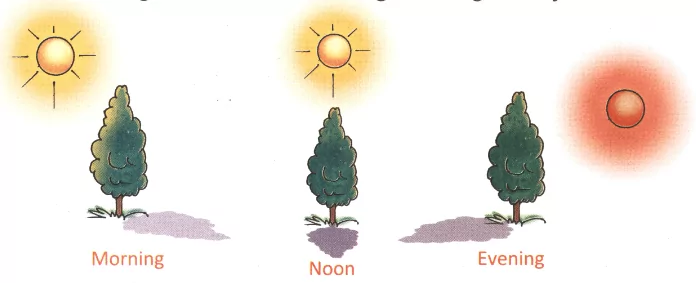
The size of a shadow can be calculated using the geometry of similar triangles. For a point light source, an obstructing object, and a parallel receiving surface behind it, the ratio between the height of the shadow and that of the object equals the ratio between their respective distances from the source. Thus, increasing the distance between the light source and the screen can enlarge the shadow; increasing the distance between the light source and the object, with the other conditions held fixed, can reduce its relative size. This is a fundamental result of geometrical optics, not a matter of religious interpretation.
Here, Hs is the height of the shadow; Ho is the height of the obstructing object; DLS is the distance from the light source to the shadow-receiving surface; and DLO is the distance from the light source to the object. The relationship applies to a point source and a suitable arrangement of parallel planes. Actual sunlight also requires consideration of the source’s angular size, the extent of umbra and penumbra, and the observer’s position.
If the shade promised on the Day of Resurrection is taken to be actual shelter blocking sunlight, the same fundamental physical questions arise. What object produces it? Where is that object relative to the sun? What are its size and optical properties? How can particular categories of people among those gathered for judgment occupy the shade while others are excluded? Will the shaded area remain fixed or move according to the positions of the chosen individuals? The original hadith gives no measurable answer to any of these questions.
The distinction between shade and thermal protection is equally important. Shade can block part of the direct solar radiation, but it does not remove all heat from the surroundings. Even where sunlight is intercepted, hot air, infrared radiation from the ground, radiation from nearby heated objects, and other heat-transfer processes can remain active. Standing beneath a tree or tent in a desert reduces direct solar exposure but does not immediately cool the surrounding air. Therefore, an account of complete protection from the terrifying heat of the Day of Resurrection cannot be physically explained by the mere existence of shade; additional conditions governing its thermal effects would have to be specified.
The distinction between Allah’s shade and the Throne’s shade is fundamental here as well. If the narration is read as describing a shadow cast by Allah’s own body, questions about an opaque form and a spatial relationship apply directly to Allah. If it is understood as the Throne’s shadow, then the Throne’s location, extent, and geometrical relationship to the light source become matters requiring explanation. If shade is instead understood only as a metaphor for special honor and security, it is no longer a shadow in the physical sense. The issue then becomes the meaning of religious language and the evidence supporting that meaning. A coherent analysis cannot simultaneously rely on physical shade and metaphorical protection without distinguishing these three positions.
Most importantly, although the hadith uses a word drawn from familiar physical reality, it offers no independent causal account of its supernatural application. Using a real physical phenomenon as an image of religious reward and establishing an actual future cosmic event on the basis of that image are fundamentally different tasks. The first concerns language and culture; the second requires independent evidence about reality. The description of shade on the Day of Resurrection provides no such evidence. The existence of the religious narration does not establish the existence of the supernatural shade it describes.
The concluding part of IslamQA answer 183933 dismisses inquiries into the causal relationship between the sun and the shade as unnecessary. The question concerned the location of the Throne and how its shade could be produced by sunlight. The response ends by saying that one should not pursue questions about what causes the shade or its physical implications, but should believe what the hadith says. This is not a scientific answer to a scientific question; it rejects the very method of questioning [13].
IslamQA, fatwa 183933; conclusion of the answer concerning the cause of the shade
فَلَيْسَ لَنَا أَنْ نَتَكَلَّفَ فِي التَّشْقِيقِ وَالْبَحْثِ عَنْ لَوَازِمِ ذَلِكَ … وَعَنْ أَيِّ شَيْءٍ يَكُونُ الظِّلُّ
English translation: We should not burden ourselves with elaborate subdivisions and inquiries into the necessary implications of this, or into what produces the shade.
Full relevant context: The questioner asks about the source of the shade in light of the positions of the sun and the Throne. After offering the interpretation of the Throne’s shade, the answer declares investigation of the spatial and physical implications unnecessary. No thermal or optical model is supplied.
Scientific Inconsistencies
The detailed hadith descriptions of the sun’s position and human physical suffering on the Day of Resurrection further complicate the notion of Allah’s shade. Sahih Muslim relates that the sun will be brought so close to people after resurrection that its distance from them will be only one mil. The same report describes enormous quantities of sweat pouring from their bodies, submerging them to the ankles, knees, waist, or even mouth. Sunlight, distance, heat, and the depth of sweat are presented as features of an actual event. Yet these descriptions directly conflict with modern astrophysics, thermodynamics, and the physiology of the human body [14].
Sahih Muslim, hadith 2864
تُدْنَى الشَّمْسُ يَوْمَ الْقِيَامَةِ مِنَ الْخَلْقِ حَتَّى تَكُونَ مِنْهُمْ كَمِقْدَارِ مِيلٍ
English translation: On the Day of Resurrection, the sun will be brought so close to creation that it will be a distance of one mil from them.
Full English rendering of the relevant narration: Al-Miqdad ibn al-Aswad reported hearing Muhammad say that the sun would be brought so near people on the Day of Resurrection that it would be only one mil away. Sulaym ibn Amir said that he did not know whether mil meant a unit of land distance or the applicator used to put kohl in the eyes. The narration continues that people would be immersed in sweat according to their deeds: some up to their ankles, others up to their knees, others up to their waists, and others up to their mouths. The narrator adds that Muhammad gestured toward his mouth when describing the last case.
Sulaym ibn Amir, a transmitter of this hadith, explicitly stated that he was unsure whether mil referred to a unit of distance or a small applicator used for kohl. The ambiguity in the unit of measurement does not remove the problem with the depiction of the sun. Either way, the account depicts the sun as extraordinarily close. The sun is a vast star, approximately 1.392 million kilometers in diameter, with an effective photospheric temperature of around 5,770 kelvin. Its average distance from Earth is approximately 149.6 million kilometers. Placing a star of this scale within a few kilometers of human beings is incompatible with the spatial and physical conditions of the familiar universe.
The sun’s radius is approximately 696,000 kilometers. If its center were just one mile from a person, that person would necessarily be inside the sun. If, instead, the distance were measured from the visible solar surface, the person would be placed in the immediate vicinity of its intensely hot outer environment. The atmospheric layers above the visible photosphere are extremely hot and contain complex processes involving plasma and solar radiation. Under those conditions, ordinary biological functions of the human body could not continue.
The problem with bringing the sun so close to Earth extends beyond temperature. The sun has a mass of approximately 1.99 × 1030 kilograms, about 333,000 times the mass of Earth. Moving such a massive star into the immediate vicinity of an Earth-like planetary surface would have catastrophic gravitational consequences. Planetary orbits, gravitational equilibrium, tidal forces, and the structural stability of matter would be radically disrupted. Under known physics, a scene in which crowds of people stand on an ordinary open plain, await judgment, and sweat in such conditions is not physically realistic.
The relationship between solar radiation and distance makes the problem clearer. For radiation spreading approximately uniformly outward from a source, its intensity varies inversely with the square of the distance. Reducing the distance increases the energy received per unit area. The sun’s total luminosity is approximately 3.83 × 1026 watts. At Earth’s present distance, around 1,361 watts of solar radiation fall on each square meter outside the atmosphere. Close to the solar surface, the radiation environment is of an entirely different magnitude. The proximity described in the hadith and the familiar physiological functioning of the human body cannot both be accommodated under ordinary physical laws.
The discrepancy becomes clearer numerically. The sun’s luminosity is approximately 3.828 × 1026 watts, and the radius of its photosphere is about 6.957 × 10⁸ meters. Applying the spherical radiation formula F = L/(4πr²) yields an outward radiative flux near the photosphere of approximately 6.3 × 10⁷ watts per square meter, or 63 megawatts per square meter. The normal solar irradiance at Earth’s orbit is about 1,361 watts per square meter. The ratio is roughly 46,000 to 1. This compares radiative flux near the photosphere; the amount of heat actually absorbed by a human body depends on exposed area, absorptivity, and environmental conditions. No speculation about a hundred-thousand-fold increase is needed: the measurable solar constant already reveals an enormous difference in scale. Sources: Particle Data Group, Astrophysical Constants and Parameters; NASA, Sun: Facts.
If the visible photosphere of the sun were only 1.6 kilometers above someone’s location, its apparent angular diameter would be approximately 179.8 degrees. Viewed from Earth today, the sun subtends only about half a degree. At the distance described, therefore, the sun would not appear as a small circular source of light; its photosphere would fill virtually the entire visible half of the sky. Shielding a person from all direct radiation from such an enormous extended source would require a specifically positioned and sufficiently extensive opaque structure. There is no meaningful comparison between this geometry and the shadow of an ordinary tree or umbrella. The angular diameter is calculated from the known solar radius using sin(θ/2) = R/(R+h).
The same physics makes clear that shade is not equivalent to thermal safety. The human body’s heat balance can be expressed in simplified form as S = (M − W) ± C ± R ± K − E. Here S is the change in stored body heat; M is metabolic heat production; W is external mechanical work; C is convective heat exchange; R is radiative heat exchange; K is conductive heat exchange; and E is heat lost through sweat evaporation. Blocking direct light may reduce one component of radiative exchange, but it does not eliminate nearby hot plasma, thermal radiation from other directions, or convective heating. Both the NIOSH heat-balance guidance and OSHA’s heat-exposure guidance distinguish these processes.
Another basic problem concerns sweating itself. In the hadith, the sun’s proximity causes people to sweat profusely. Sweating is a biological mechanism of human thermoregulation. When body temperature rises, sweat glands secrete fluid whose evaporation helps remove heat. But sweat production requires an adequate supply of body water, functional circulation, active sweat glands, and living cellular structures. Extreme thermal environments destroy these biological systems. The idea that human beings would continue to sweat normally in the immediate vicinity of the solar photosphere contradicts the known physiological limits of the human body.
The maximum amount of heat that sweat evaporation could remove can also be quantified. At temperatures around 30–37°C, evaporating one kilogram of water requires approximately 2.42 megajoules of energy. To counter the calculated flux of approximately 63 megawatts per square meter near the solar photosphere through evaporation—even under the imagined ideal conditions that all incoming radiation is absorbed and every drop of sweat evaporates instantly—would require approximately 26 kilograms of water per second per square meter. That is around 1,560 liters per minute. Nothing in the actual sweat glands or water reserves of a human body approaches such a rate. This is an idealized energy-balance calculation for direct exposure to sunlight; claims about reduced radiation after entering shade would require a separate assessment. Sources: National Academies, Dietary Reference Intakes for Water; Experimental Physiology, Sweat Evaporation in Humans.
Sahih Muslim 2864 also says that the depth of a person’s sweat will depend on their deeds. Some will be submerged to the ankles, others to the knees or waist, and others to the mouth. Sweat is thus described not merely as moisture on the skin but as a large quantity of liquid accumulating around individuals. Yet the amount of sweat a person can produce and the amount needed to build up a liquid layer several feet deep are entirely different matters. Liquid volume depends on depth, area, and the geometry of the containing surface. On an open plain, sweat would flow under gravity and spread according to the terrain. No known physical process would maintain separate, stable depths of liquid around individual people based on their sins or virtues.
Sahih Muslim 2863 gives an even more remarkable account of the quantity of sweat. It says that on the Day of Resurrection people will perspire, that their sweat will penetrate the ground to a depth of seventy baʿ, and that it will rise to their mouths or ears [15].
إِنَّ الْعَرَقَ لَيَذْهَبُ فِي الأَرْضِ سَبْعِينَ بَاعًا وَإِنَّهُ لَيَبْلُغُ إِلَى أَفْوَاهِ النَّاسِ أَوْ إِلَى آذَانِهِمْ
English translation: On the Day of Resurrection, people’s sweat will penetrate the earth to a depth of seventy baʿ, and it will rise to their mouths or ears.
Full relevant English rendering: Abu Hurayrah reported Muhammad as saying that on the Day of Resurrection sweat would reach seventy baʿ into the ground and rise to people’s mouths or ears. The transmitter Thawr was uncertain whether the wording specified mouths or ears. The Arabic بَاع is a measure based on the span of both arms stretched out to the sides; it is not the same as ذراع, a cubit measured approximately from elbow to fingertips. The original Arabic reads «سَبْعِينَ بَاعًا».
The physical implications are substantial. If human sweat penetrates the ground to a depth of seventy baʿ, its quantity, the soil’s absorption capacity, pressure, and the mechanisms of fluid flow become relevant. At the same time, sweat rising to people’s mouths or ears implies a large accumulation above ground. The narration does not specify whether each person’s sweat remains confined around that individual or whether the sweat of the entire gathering combines. That difference is fundamental to determining the volume and depth of the liquid. There is no coherent explanation under known fluid mechanics and the finite water content of the human body.
Putting quantities to the description clarifies its physical implications. A 70-kilogram adult typically has about 42 liters of total body water, although the amount varies with age, sex, body composition, and health. A layer of water one meter deep covering one square meter requires 1,000 liters; a layer two meters deep over the same area requires 2,000 liters. A pool of sweat reaching from ankle level to the mouth would involve an enormous amount of fluid. The account provides no physical mechanism for confining separate volumes around each person, preventing them from mixing, or controlling their height according to moral deeds. This comparison shows the difference in magnitude between total body water and the eschatological claim about sweat; even all the water in a human body cannot be instantly expelled as perspiration.
Reading the accounts of the sun and sweat alongside the hadith about Allah’s shade reveals a deeper inconsistency. On one hand, the sun is said to be extraordinarily close and people endure unbearable heat. On the other, seven selected categories are promised refuge beneath Allah’s shade. If this shade is a real region sheltered from sunlight, the obstructing object would have to occupy an appropriate position between the sun and the people receiving shelter. Yet the hadith never specifies what that object is, how large it is, how it would cover particular individuals while excluding others, or what physical arrangement would make this possible.
The problem becomes more specific under the interpretation of the Throne’s shade. Islamic theology treats the Throne as a vast created entity. Quran 69:17 says that eight will carry Allah’s Throne on that day, and Quran 40:7 mentions those who carry the Throne and those around it. These descriptions present the Throne as a created entity with spatial relationships. A literal shadow cast by the Throne would therefore require a definite arrangement relative to the light source and the people. If the Throne is located far above the people, how does its shadow obstruct the sun? If the sun lies between the Throne and the people, the ordinary geometrical conditions for the Throne’s shadow to fall upon them would not be met.
The Quran also offers a specific spatial picture of the Throne. Quran 69:17 speaks of eight bearers carrying it on the Day of Resurrection; Quran 40:7 refers to those carrying the Throne and those around it. Together, these descriptions associate the Throne with bearing, surrounding, and spatial positioning. Treating the same Throne as the source of a sunlight-blocking shadow introduces further physical claims about its size, height, position, and orientation [16] [17].
Quran, Surah al-Haqqah 69:17
وَالْمَلَكُ عَلَىٰ أَرْجَائِهَا وَيَحْمِلُ عَرْشَ رَبِّكَ فَوْقَهُمْ يَوْمَئِذٍ ثَمَانِيَةٌ
English translation: The angels will be at its edges, and eight will bear the Throne of your Lord above them on that day.
Relevant context: The words “bear” and “above” establish a spatial arrangement. Any claim that the Throne casts a physical shadow must specify how this arrangement relates to the position of the sun.
Quran, Surah Ghafir 40:7, relevant passage
الَّذِينَ يَحْمِلُونَ الْعَرْشَ وَمَنْ حَوْلَهُ يُسَبِّحُونَ بِحَمْدِ رَبِّهِمْ
English translation: Those who bear the Throne and those who are around it glorify their Lord with praise.
Full relevant context: The word “around” presents the Throne as a spatial center. The verse, however, does not specify the relative positions of sun, Throne, and human beings that would be necessary to cast its shadow.
Source:
A further problem with the sun’s position arises within the eschatological narratives themselves. Quran 81:1 describes the sun being folded up or losing its light; Quran 14:48 speaks of Earth and the heavens being changed. Meanwhile, Sahih Muslim 2864 describes the sun being brought close to people on the Day of Resurrection. Reading these texts as parts of one continuous cosmic sequence requires a defined chronology: when is the sun folded up, when is it brought near people, and on which Earth does the judgment occur? [18] [19].
Quran, Surah al-Takwir 81:1
إِذَا الشَّمْسُ كُوِّرَتْ
English translation: When the sun is folded up or its light is extinguished. This verse opens Surah al-Takwir’s account of cosmic catastrophe. Subsequent verses depict stars falling, mountains being removed, and changes to the seas.
Relevant context: The hadith describes the sun being brought extremely close to people, while the Quran also depicts the sun being folded up. The texts do not provide an astronomical model specifying the sequence of these events.
Source: Original source and surrounding text.
This question has also been raised within Islamic religious scholarship. In a lecture, Atiyyah Muhammad Salim said that he had not found a satisfactory answer to a question about the relationship between the Throne’s shade and the sun. The significant portion of his statement reads: [20].
وَلَكِنَّ الإِشْكَالَ الَّذِي لَمْ أَجِدْ لَهُ جَوَابًا، هُوَ أَنَّ الظِّلَّ نَاتِجٌ عَنِ الشَّمْسِ
English translation: But the difficulty for which I have found no answer is that shade results from the sun.
Full contextual meaning of the discussion: The speaker first notes that the seven-category hadith says “His shade” in one version and “the shade of the Throne” in another. The Throne, he says, is a tangible entity whose shadow can be imagined. Yet shade has a relationship to the sun, while other accounts of the Day of Resurrection say that the sun is folded up and Earth and the heavens are changed. He raises the problem of the sun–shade–Throne relationship and acknowledges that he has not found a satisfactory explanation.
The importance of this admission is that the problem of the geometric relationship between sunlight and the Throne’s shade has been recognized within Islamic commentary itself. The relative positions of a light source and an obstructing object are essential to the formation of a physical shadow. If “the shade of the Throne” refers to an actual shadow, a definite arrangement must exist. Islamic eschatological narratives, however, specify no measurable configuration of the Throne, the sun, and the Plain of Resurrection that would explain its formation.
The relationship between shade and heat deserves particular attention. Shade can block some direct solar radiation, but it does not eliminate all thermal energy in an environment. Even when sunlight is intercepted, hot air, infrared radiation emitted by nearby objects, and other heat-transfer processes continue to operate. In an environment immediately adjacent to the sun, an opaque shade alone would not keep a human body safe. Additional mechanisms would be required to regulate radiation, heat transfer, and the surrounding temperature. The hadith supplies no causal account of how the promised shade performs these functions.
The combined descriptions of the sun, sweat, and shade on the Day of Resurrection therefore conflict with the known laws of physics and the physiological limits of the human body. People remaining alive extremely close to the sun, sweating normally, being submerged in that sweat, and then being protected from the heat by a special shade form a supernatural religious scenario. No independent observation, experimental data, or scientifically verifiable evidence supports the actual occurrence of such a scenario.
Philosophical and Logical Problems
The account of Allah’s shade raises not only questions of physics but also several fundamental problems within Islamic theology. Islamic theology describes Allah as omnipotent, incomparable to creation, and free from the limitations of the created world. Quran 42:11 states that nothing resembles Him. Yet authentic hadith speak of Allah’s shade. Reading “shade” literally brings questions of location, form, and opacity into the conception of God. Reading it metaphorically makes the commentator’s interpretive choices essential to defining the original statement. The two approaches rest on fundamentally different theological frameworks.
The Problem of Anthropomorphism
Anthropomorphism refers to attributing human or material qualities to nonhuman or supernatural beings. Ancient religious literature frequently describes gods in terms of hands, faces, eyes, thrones, anger, laughter, and location. Islamic scriptures likewise refer to Allah’s hand, face, eyes, position in relation to the Throne, and other attributes. The interpretation of such descriptions has been a subject of prolonged theological dispute. Allah’s shade belongs to the same debate, because a literal physical shadow is not a property of a formless abstraction; it arises from the relationship between an opaque structure and the propagation of light.
If “Allah’s shade” means a real shadow cast by Allah’s own form, Allah would require a definite light-obstructing boundary and a spatial position relative to the light source. An object’s shadow depends on its shape and position. As the light source changes, the shadow’s position and dimensions can change as well. The idea of Allah’s own physical shadow would therefore portray Him as a being engaged in spatial and geometrical relationships with the material world. This conflicts with theological conceptions in which Allah is entirely free from bodily form and spatial limitation.
Interpreting Allah’s shade as the shade of the Throne He created changes the meaning of the original expression: instead of a shadow cast by Allah’s essence, it identifies a shadow cast by a created object. “Allah’s shade” then means “the shade of a created thing owned by Allah.” This reading abandons the claim of a personal physical shadow of Allah and introduces a different claim about a created object called the Throne. It demonstrates that an indirect relationship of ownership is being substituted for the original expression’s direct attribution. That relationship is explicit in Qadi Iyad’s interpretation.
Differences among Islamic theological schools also matter here. Ash’ari and Maturidi traditions place particular emphasis on denying bodily shape, form, and spatial limitation to Allah. Many scholars of the Athari tradition, by contrast, affirm attributes mentioned in scripture while refraining from defining their modality. These differences become especially visible in discussions of Allah’s shade. Some scholars identify it with the Throne, while others dismiss that interpretation as unsupported ta’wil. The very same hadith is therefore interpreted according to different theological principles.
The fundamental question is when an expression attributed to Allah denotes an actual attribute and when it expresses ownership. “Allah’s House” refers to the Kaaba, which is not considered part of Allah’s body. Likewise, “Allah’s she-camel” refers to a particular camel associated with Him. In the case of “Allah’s shade,” should the expression also be interpreted as ownership, or should it be taken as a supernatural attribute directly associated with Allah? A consistent linguistic and theological criterion is required to make that decision. Applying different criteria whenever convenient undermines interpretive consistency.
The theological conflict is expressed most clearly by Muhammad ibn Uthaymin. He explicitly calls the interpretation of a shadow cast by Allah’s own essence false. His reason is that if it were Allah’s own bodily shadow, the sun that produced it would have to be situated above Allah. This objection is not made by a modern atheist critic; it is a physical and theological argument advanced by an influential Muslim scholar himself [21].
Muhammad ibn Uthaymin, Majmu’ Fatawa wa Rasa’il, vol. 8, p. 497; quoted by IslamQA
لَيْسَ كَمَا تَوَهَّمَ بَعْضُ النَّاسِ أَنَّهُ ظِلُّ ذَاتِ الرَّبِّ عَزَّ وَجَلَّ، فَإِنَّ هَذَا بَاطِلٌ؛ لِأَنَّهُ يَسْتَلْزِمُ أَنْ تَكُونَ الشَّمْسُ حِينَئِذٍ فَوْقَ اللَّهِ
English translation: It is not, as some have imagined, a shadow of the essence of the Lord, Mighty and Majestic. That is false, because it would entail the sun being above Allah at that time.
Full relevant context: Ibn Uthaymin understands “Allah’s shade” to mean shade created by Allah. He rejects the interpretation of a personal bodily shadow because a real shadow entails a spatial relationship with the sun. The physical difficulty with the literal interpretation is therefore acknowledged by a religious commentator himself.
Ibn Uthaymin’s statement exposes a precise logical problem. The original hadith refers to Allah’s shade, but accepting a shadow cast by His body establishes a geometrical relationship among the sun, Allah, and the sheltered person. Ibn Uthaymin accordingly reinterprets the expression as “a shade created by Allah.” Nasir al-Aql, on the other hand, rejects particular interpretations such as the Throne’s shade and favors affirming the wording without specifying its nature. Thus, confronted with the same religious sentence, one scholar says “the interpretation as His own shadow is false,” while another insists that the wording be accepted with its modality unknown. Rather than a consensus, the sources yield conflicting interpretations.
The Inconsistency between Metaphorical and Literal Interpretations
There is a well-established classical tradition of reading Allah’s shade metaphorically. In Ibn Dinar’s interpretation, preserved in al-Nawawi’s commentary, shade signifies honor, security, and protection from hardship. Arabic can describe someone as being “in another person’s shade” to mean under that person’s care or protection. But once this interpretation is adopted, the hadith no longer describes a definite physical region created by an obstruction to light. It becomes a linguistic expression of Allah’s special favor. The hadith can then provide no scientific information establishing the existence, dimensions, or location of a physical shadow.
By contrast, a literal interpretation treats the shade as actual shelter. Questions immediately arise about the light source, the shade-producing object, and the positions of the people being sheltered. The causal relationship between the shade and the reports of the sun’s nearness and intense heat must also be specified. An account cannot be taken literally as an event while its physical implications are simply disregarded. Nor is an interpretation consistent if it shifts entirely to metaphor whenever those implications are challenged.
At the center of the interpretive problem lies the use of incompatible standards to determine the meaning of one religious account. A text must be interpreted in light of its wording, historical setting, and internal relationships. Choosing a new metaphorical meaning only after a literal meaning becomes difficult does not independently establish that interpretation. Equally, the fact that a literal reading is linguistically possible does not establish that the event actually occurred.
The problem is especially visible in the case of Allah’s shade because hadith commentators themselves reach conflicting conclusions. Qadi Iyad accepts the Throne’s shade interpretation; Ibn Dinar gives the metaphorical meaning of honor and security; and Nasir al-Aql calls the Throne interpretation unsupported ta’wil. These positions do not establish one definite nature for the shade. In one, it is a created object; in another, metaphorical security; in a third, a religious attribute whose nature is unknown. The uncertainty surrounding the meaning of the account is therefore documented within Islamic exegetical sources themselves.
The debate has a significant epistemological dimension. Before a claim can be established as true, its actual content must be defined. If “Allah has a shade” means a real physical shadow, it is one kind of claim. If it means the Throne’s shadow, it is a different claim. If it signifies honor and security, it is metaphorical. Presenting the original sentence as an established statement of physical reality without deciding among these three meanings is logically weak.
Another common position is that the nature of Allah’s shade lies beyond human knowledge and that no one can know how it exists. But declaring the nature of a phenomenon unknown is not evidence of its existence. Innumerable entities and events of unspecified nature can be imagined; there is no rational obligation to accept their existence. When independent evidence for a claim is absent, saying “we do not know how” does not make up for the missing evidence. It merely admits ignorance of the purported causal mechanism.
The distinction between religious authentication and factual truth is equally fundamental. A hadith’s classification as sahih rests principally on the chain of transmission, the assessed reliability of transmitters, and criteria established within hadith scholarship. Accepting a hadith as authentic is not the same as scientifically verifying the supernatural event it describes. A historical narration may be accepted within a religious tradition, but independent evidence is required to establish the actual existence of a future cosmic event described in it. No such independent observational evidence supports the accounts of the sun, sweat, and Allah’s shade on the Day of Resurrection.
The theological and logical problems surrounding Allah’s shade therefore arise in two directions. A literal physical reading generates questions about Allah’s nature, the position of the Throne, its geometrical relationship to the sun, and thermal protection. A metaphorical reading raises questions about the commentators’ conflicting conclusions and the independent criteria by which the original wording is interpreted. Neither route establishes a clear, self-contained, evidence-based cosmic account. Believing that an event will happen on religious grounds and demonstrating its reality through reason and evidence are entirely different matters.
Historical Context: The Seventh-Century Worldview
The concept of Allah’s shade is not an isolated motif in Islamic eschatology. Images of shade, sun, heat, coolness, water, fruit, and gardens recur throughout the Quran’s and hadith literature’s descriptions of Paradise, Hell, the Day of Resurrection, and divine rewards. These elements are closely connected to the environmental experiences familiar to people in ancient Arabia and the Near East. For people living with intense sunshine, limited access to water, and arid conditions, shade provided essential rest, safety, and relief. Cool water, fruit-bearing gardens, and flowing rivers likewise represented comfort and prosperity. Islamic accounts of the afterlife transform these worldly experiences into images of unlimited reward and punishment.
Quran 4:57 promises deep shade as one of the rewards of Paradise. The relevant phrase is: [22].
وَنُدْخِلُهُمْ ظِلًّا ظَلِيلًا
English translation and full relevant context: Allah promises believers who do good deeds gardens beneath which rivers flow, where they will remain forever. They will have purified companions there, and they will be admitted into deep, enveloping shade.
Here shade is presented as a special reward of Paradise. The expression ظِلًّا ظَلِيلًا emphasizes the density and pleasantness of that shade. The cultural significance of offering shade as a reward in an eternal abode of happiness supposedly created by an omnipotent being is plain. Shade is a material benefit whose value depends on light, heat, and environmental conditions. Where protection from solar heat is a daily necessity, shade is a desirable reward. This familiar experience has been carried over into descriptions of happiness in the afterlife.
Quran 56:28–33 describes thornless lote trees, clustered fruit-bearing plants, extended shade, flowing water, and plentiful fruit for the inhabitants of Paradise. Its central elements are familiar earthly vegetation, water, and environmental comfort. Verse 56:30 specifically says: [23].
وَظِلٍّ مَمْدُودٍ
English translation and full relevant context: The inhabitants of Paradise are promised thornless trees, arranged fruit-bearing vegetation, long and extended shade, flowing water, and abundant fruit. “Extended shade” is one element in this continuous list of rewards.
Taken together, these verses depict a fertile, cool environment filled with fruit. Happiness is expressed primarily through familiar sensory experiences: water in place of thirst, shade in place of heat, abundant fruit in place of hunger, and comfortable gardens in place of harsh surroundings. This arrangement shows how the language of Islamic rewards in the afterlife is constructed from earthly human needs and desires. Familiar elements of the finite world are used to describe supposedly infinite and supernatural happiness.
Quran 13:35 likewise presents shade as a characteristic of Paradise. It says that rivers flow beneath Paradise, its fruit is perpetual, and its shade is perpetual as well [24].
أُكُلُهَا دَائِمٌ وَظِلُّهَا
English translation and full relevant context: Rivers flow beneath the promised Paradise; its fruit continues without end, and so does its shade. The verse closes by contrasting the final destinations of the God-fearing and the unbelievers.
This statement is especially significant. On Earth, a shadow normally depends on a light source, an obstructing object, and their relative positions. When the sun changes position, the shadow cast by a particular object changes in position and extent. Yet Paradise’s shade is described here as permanent. Defining the physical conditions for an everlasting shadow would require information about the source of light, the obstructing object, and their enduring spatial relationship. The Quran gives no such arrangement. Instead, perpetual shade functions as an image of unending comfort.
Quran 76:13 makes another significant statement about the shade of Paradise. It says that the inhabitants of Paradise will neither see the sun there nor suffer extreme cold [25].
لَا يَرَوْنَ فِيهَا شَمْسًا وَلَا زَمْهَرِيرًا
English translation and full relevant context: Reclining on couches in Paradise, they will experience neither the scorching sun nor bitter cold. The following verse describes the shade drawing near to them and clusters of fruit being brought within easy reach.
The following verse says that the shade of Paradise will be close to its inhabitants. The same passage thus combines the absence of the sun with the presence of shade. In familiar terrestrial optics, shadows can be produced by light sources other than the sun; but the account of Paradise specifies no light source responsible for its shade. Shade is used to create an image of a comfortable environment without providing a causal physical description of that environment. Both the perpetual shade of Paradise and Allah’s shade on the Day of Resurrection employ a familiar natural term while leaving its supernatural nature undefined.
Shade is not confined to the rewards of Paradise; the Quran also uses the image in the opposite way when describing punishment in Hell. Quran 77:30–31 directs unbelievers toward a shade with three branches and then declares that it offers no coolness and affords no protection from flames [26].
انْطَلِقُوا إِلَىٰ ظِلٍّ ذِي ثَلَاثِ شُعَبٍ لَا ظَلِيلٍ وَلَا يُغْنِي مِنَ اللَّهَبِ
English translation and full relevant context: Those undergoing punishment are commanded to proceed toward a smoke-like shade divided into three branches. It offers no cooling relief and provides no protection against the flames. The following verses describe the casting of enormous sparks.
This description is significant because it separates the existence of shade from actual protection against heat. The so-called shade of Hell provides no comfort; it forms part of the punishment. The same scripture therefore presents shade sometimes as a symbol of perfect comfort and sometimes as part of a scene of terrifying torment. This contrast depends on familiar human experience: shade normally offers relief from heat, whereas the shade of Hell frustrates that expectation. The religious narrative achieves its effect by drawing on the expectation itself.
Quran 56:42–44 similarly describes scorching wind, boiling water, and the shade of black smoke as elements of punishment in Hell. The verses state: [27].
فِي سَمُومٍ وَحَمِيمٍ وَظِلٍّ مِنْ يَحْمُومٍ لَا بَارِدٍ وَلَا كَرِيمٍ
English translation and full relevant context: The other group will be amid scorching wind, boiling water, and the shade of black smoke. That shade is neither cool nor pleasant or beneficial. Nearby verses refer to their former indulgence and denial.
Comparing these verses with descriptions of Paradise reveals a clear literary pattern. Paradise has broad, pleasant shade; Hell has the shade of burning smoke. Paradise has flowing water; Hell has boiling water. Paradise offers coolness and rest; Hell offers scorching heat and distress. The same familiar natural elements are used in opposite ways to create images of reward and punishment. This literary arrangement depends on human environmental experience. It presents no new scientific knowledge; it extends familiar objects and sensations into a supernatural realm.
Ancient Near Eastern religious literature also speaks of finding refuge in God’s shade or under His wings. Psalm 91:1 of the Hebrew Bible refers to dwelling under the shadow of the Almighty. Psalms 17:8 and 36:7 use the image of shelter under the shadow of God’s wings. These passages belong to religious literary traditions that predate Islamic hadith by many centuries [28].
Psalm 91:1
“He who dwells in the secret place of the Most High shall abide under the shadow of the Almighty.”
English rendering: Whoever dwells in the hidden refuge of the Most High will remain under the shadow of the Almighty.
The conceptual similarity between Psalm 91:1 and the hadith about Allah’s shade is clear. In both, the shadow of an omnipotent God is associated with special refuge and security. In the Hebrew Bible, that shadow functions as a religious image of divine protection. Psalm 17:8 likewise asks for shelter under the shadow of God’s wings. Such language demonstrates that the idea of refuge under God’s shadow did not first arise in seventh-century Islam. It was already an established image in earlier religious literature.
Psalm 17:8 asks for shelter “under the shadow of Your wings,” and Psalm 36:7 describes human beings finding refuge there. Wings and shade thus appear together in this ancient religious idiom. This historical background is important for understanding later conflicts between literal and metaphorical interpretations of divine shade. If the same symbol is treated as a literal bodily attribute of God, questions about wings, form, and spatial location arise; if understood as a metaphor for protection, the question of a physical shadow disappears. Sources: Psalm 17:8 and Psalm 36:7.
An important conclusion follows from this historical parallel. The language of Allah’s shade in Islamic hadith belongs to a wider religious idiom with precedents in ancient Jewish scripture. The shadow of an omnipotent being, His protection, and refuge granted to selected persons had already appeared in earlier religious traditions. There is therefore no historical basis for presenting the hadith’s image of Allah’s shade as entirely new, unprecedented, or independently disclosed cosmic information. The concept can be understood within the continuity of religious literary traditions.
Another feature of Islamic descriptions of the afterlife is the extension of familiar earthly elements to an unlimited scale. On Earth shade is limited; in Paradise it is broad and permanent. On Earth water can be scarce; in Paradise rivers flow. On Earth fruit is seasonal; in Paradise it never ceases. On Earth heat is experienced within survivable limits; in Hell it becomes unbearable punishment. This literary technique magnifies familiar human comforts and suffering to their extremes. The account of special individuals finding refuge beneath Allah’s shade on the Day of Resurrection belongs to the same pattern: the familiar benefits of ordinary shade are transformed into a supernatural reward.
The Quran itself contains another important statement about the relationship between shade and the sun. Quran 25:45–46 describes Allah extending the shade, being able to keep it motionless if He wished, then making the sun an indicator of it and gradually drawing it back to Himself. The passage acknowledges a relationship between changing shadows and the sun. If the Throne’s shade on the Day of Resurrection is also claimed to be literal, the question of the positions of the sun and the shadow becomes all the more pressing within the Quran’s own imagery [29].
Quran, Surah al-Furqan 25:45–46
أَلَمْ تَرَ إِلَىٰ رَبِّكَ كَيْفَ مَدَّ الظِّلَّ وَلَوْ شَاءَ لَجَعَلَهُ سَاكِنًا ثُمَّ جَعَلْنَا الشَّمْسَ عَلَيْهِ دَلِيلًا
English translation: Have you not seen how your Lord extends the shade? Had He willed, He could have made it stationary; then We made the sun an indicator of it. The next verse says that the shade is then gradually drawn back toward Him.
Relevant context: These verses link the movement of shadows to the sun, constructing a claim of supernatural power from everyday experience of changing shadows.
To understand the historical origins of such descriptions, one must examine the environment, language, religious literature, and prevailing cosmology of ancient societies. Seventh-century Arabia did not possess modern knowledge of astrophysics, thermodynamics, or space science. Ancient Greek geometrical optics, however, had already discussed the propagation and reflection of light and the geometry of shadows. The specific limitation of these Islamic eschatological descriptions is therefore not a total ignorance of what a shadow is; it is their extension of an ordinary shadow into a supernatural judgment scene without specifying its physical conditions, source, or causal mechanism.
This feature is evident in the combined accounts of the sun, human sweat, and Allah’s shade on the Day of Resurrection. Three familiar experiences—the sun’s heat, bodily perspiration, and shelter under shade—are employed to construct a supernatural judgment scene. But once the sun’s actual size, mass, and radiative power, the physiological limits of the human body, and the geometrical conditions for shadow formation are taken into account, the scene is not physically realistic under the known laws of the universe. The discrepancy follows from its literary and religious character. It is part of a religious worldview, not a cosmic account derived from modern scientific investigation.
This historical context is essential to evaluating the account of Allah’s shade. Ancient religious literature, the Quranic imagery of Paradise and Hell, and hadith accounts of the Day of Resurrection together form a cultural and literary continuum. The concept of shade is intelligible within that continuum. But the fact that an image was meaningful to people in antiquity does not make it an actual event in the physical universe. Literary effectiveness, cultural relevance, and factual truth are three different questions. The account of Allah’s shade can be explained in the first two respects but supplies no independent evidence for the third.
Conclusion
Analysis of the authentic hadith concerning Allah’s shade establishes several fundamental problems. First, the primary narrations in Sahih al-Bukhari and Sahih Muslim speak of Allah’s shade without defining its nature. Classical Islamic commentators variously treat it as the shade of the Throne, a metaphor for special honor and security, or a religious attribute of unknown nature. These differences appear directly in the statements of Qadi Iyad, Ibn Dinar, and Nasir al-Aql. The original expression therefore does not establish a single, definite, universally accepted nature for the shade.
Second, if shade is taken as a real physical phenomenon, questions about the light source, obstructing object, and relative positions are unavoidable. Interpreting it as a shadow cast by Allah’s own body brings in notions of shape, boundary, and spatial relationship. Interpreting it as the Throne’s shade requires specifying the geometry among the Throne, the sun, and the gathering place of Resurrection. The hadith provides no measurable answers. Reading shade as entirely metaphorical replaces these physical questions with questions of linguistic and theological interpretation. The problem of one reading is thus approached by adopting an altogether different kind of explanation.
Third, the reports concerning the sun and human sweat on the Day of Resurrection do not accord with modern astrophysics or human physiology. If a star as massive and radiatively powerful as the sun were placed extremely close to human beings, no familiar human body or ordinary environment could remain intact under known physical laws. Likewise, descriptions of sweat filling the ground to great depths and reaching people’s mouths or ears conflict with the known behavior of fluids, the volumes required, and the limits of water within the human body. These accounts construct a supernatural religious scene, not a scientifically verifiable description of the physical universe.
Fourth, the recurring use of shade in the Quranic descriptions of Paradise and Hell, together with the older Hebrew literary image of refuge under the Almighty’s shadow, shows that the imagery belongs to a wider historical and cultural tradition. Quran 4:57, 56:30, 13:35, 76:13, and 77:30–31 employ shade as a reward, a comfort, or an inverted image of punishment. These uses draw upon environmental experiences familiar to ancient peoples. There is consequently no historical basis for treating the concept of Allah’s shade as an unprecedented scientific discovery.
Most importantly, classifying a hadith as sahih does not establish the real existence of the supernatural event it describes. The authentication of hadith rests on standards internal to Islamic transmission studies. Independent evidence is necessary to establish the factual reality of claims about the sun, sweat, and Allah’s shade on the Day of Resurrection. Such independent observational evidence is absent. The calculated radiative flux of approximately 63 megawatts per square meter near the solar photosphere, the sun’s radius of about 696,000 kilometers, and the heat-balance constraints of the human body directly conflict with a literal account of the sun’s proximity. Nor is any physical process specified that would sustain the enormous depth implied by “seventy baʿ” of sweat or keep different liquid levels around different individuals. Accepting an event as true on religious grounds does not provide independent evidence that it actually exists.
Taken as a whole, the idea of Allah’s shade is a clear example of an ancient religious worldview, cultural imagery, and supernatural eschatology. Islamic scholars disagree over its linguistic meaning; literal physical interpretations do not accord with known physics; and there is no independent evidence for its actual existence. It is not rational to present this narrative as a modern scientific fact or a verified cosmic event. It is a description of an ancient belief preserved in religious literature, asserted as true through faith but never established by evidence.
References
- Mishkat al-Masabih 701; Sahih al-Bukhari 660; Sahih Muslim 1031 ↩︎
- Sahih al-Bukhari 1423; Jamiʿ al-Tirmidhi 1306 ↩︎
- Jamiʿ al-Tirmidhi 1306 ↩︎
- Sahih Muslim 2566 ↩︎
- Imam al-Nawawi, al-Minhaj Sharh Sahih Muslim, Book of Zakat; Islamweb, original Arabic text ↩︎
- Quotation from Ibn Hajar’s Fath al-Bari, preserved in Tuhfat al-Ahwadhi ↩︎
- Al-Nawawi, Commentary on Sahih Muslim ↩︎
- Nasir al-Aql, Sharh Kitab Qa’idah Jalilah fi al-Tawassul wa al-Wasilah, lesson 28; Islamweb, original Arabic discussion ↩︎
- Ibn Rajab, Fath al-Bari, vol. 4, p. 63; IslamQA fatwa 183933 ↩︎
- Saudi Permanent Committee for Fatwa, al-Lajnah al-Da’imah, second collection, vol. 2; IslamQA ↩︎
- Abu al-Abbas al-Qurtubi, al-Mufhim lima Ashkala min Talkhis Kitab Muslim, vol. 3, p. 75 ↩︎
- Abd al-Ra’uf al-Munawi, Fayd al-Qadir, vol. 4, p. 91 ↩︎
- IslamQA, fatwa 183933 ↩︎
- Sahih Muslim 2864, original Arabic hadith ↩︎
- Sahih Muslim 2863 ↩︎
- Quran 69:17 ↩︎
- Quran 40:7 ↩︎
- Quran 81:1 ↩︎
- Quran 14:48 ↩︎
- Atiyyah Muhammad Salim, discussion of the Book of Zakat; Islamweb, original Arabic lecture ↩︎
- Muhammad ibn Uthaymin, Majmu’ Fatawa wa Rasa’il, vol. 8, p. 497; IslamQA ↩︎
- Surah al-Nisa 4:57 ↩︎
- Surah al-Waqi’ah 56:30 ↩︎
- Surah al-Ra’d 13:35 ↩︎
- Surah al-Insan 76:13 ↩︎
- Surah al-Mursalat 77:30–31 ↩︎
- Surah al-Waqi’ah 56:42–44 ↩︎
- Psalm 91:1 ↩︎
- Surah al-Furqan 25:45–46 ↩︎
