
Introduction: The Stigma of Birth, Legal Deprivation, and Human Dignity
A person’s circumstances of birth are not a matter of personal choice. No child decides whose womb they will be born from, the social relationship into which they will enter the world, or whether their parents’ relationship has legal recognition. Yet Islamic hadith and jurisprudence have assigned people born from relationships outside marriage to a distinct category. They have been described as “the worst of three,” presumed to develop a corrupt character because of their origin, and denied legal affiliation with their biological father, inheritance, and family rights. Some jurists have even treated the circumstances of their birth as relevant to their eligibility for religious leadership and judicial testimony. The individuals subjected to these rulings committed no sexual offense; what is treated as their offense is the history of a relationship between two other people.
An important feature of this discrimination is how social stigma and legal deprivation reinforce each other. A child is singled out as “illegitimate” or walad al-zina, and the classification is then used to change the rules governing paternity, property, financial maintenance, guardianship in marriage, and family relationships. Under prevailing jurisprudential rules, even a biological father’s acknowledgment of the child does not necessarily establish legal paternity. The financial and social consequences of the father’s sexual decisions are consequently borne by the child and often by the mother. This is not a system that assesses individuals by their own conduct; it makes the circumstances of birth the basis of legal consequences.
Article 25(2) of the United Nations’ Universal Declaration of Human Rights is relevant to these rules: it provides for equal social protection for all children, whether born within or outside marriage. Article 2 of the Convention on the Rights of the Child prohibits discrimination against a child on the basis of the status or conduct of the parents; Articles 7 and 8 address identity and family relations, while Article 27 concerns the child’s standard of living and parental responsibilities. The examples below, in which a child’s financial and social rights are curtailed on the basis of birth under religious rules, conflict directly with these principles. [1] [2]
The specific statements found in Qur’anic commentaries, hadith graded authentic, classical jurisprudence, and contemporary Islamic fatwas raise the same question: What moral justification exists for humiliating someone socially, excluding them from their biological father’s estate, or considering them undesirable for religious leadership because of decisions made by their parents? The documents endorsing distinctions by birth also reveal conflicting narratives and interpretations within Islamic sources themselves.
‘The Child Born from Zina Is the Worst of Three’: Degrading People Because of Birth
Sunan Abu Dawud 3963 preserves a statement attributed to Muhammad through Abu Hurayra: «وَلَدُ الزِّنَا شَرُّ الثَّلَاثَةِ»—that is, the child born from an extramarital relationship is the worst of the three. The three are understood as the woman, the man, and their child. In the same report, Abu Hurayra adds that giving a whip in the cause of Allah is preferable to him to emancipating a slave born from such a relationship. Although Muhammad’s reported words and Abu Hurayra’s own remark are distinct, their social implication is shared: a child’s identity is linked to degradation. Al-Albani classified the hadith as sahih. [3]
Sunan Abu Dawud (critically edited Bengali edition)
24. Manumission of Slaves
Chapter 12: Emancipating a Child Born from Zina
3963. Narrated by Abu Hurayra, who said: The Messenger of Allah said: “The child born from zina is the worst of the three.” Abu Hurayra said: “To benefit from a whip in the cause of Allah is dearer to me than emancipating a child born from zina.”
Authentic (sahih).
Ahmad, al-Bayhaqi, al-Hakim.
Hadith grading: Sahih.
Narrator: Abu Hurayra.
The gravest problem with the statement is that it places a child in a comparative category of evil on the basis of birth, without identifying any independent act or wrongdoing by the child. Even if the sexual relationship between the parents is regarded as a religious offense, that judgment concerns their actions; there is no logical basis for declaring the child evil for being conceived or born. Calling someone “the worst” can shape how other people treat them, legitimizing disdain in friendship, marriage, social standing, and ceremonial respect. Because the report appears in the context of freeing slaves, it raises another question: is the human value of freeing an innocent enslaved person also to be reduced on account of that person’s parentage?
Al-Sindi’s Commentary: An Evil Character Born from ‘Impure Semen’
Several later commentators offered still more disturbing interpretations of Muhammad’s statement. Muhammad ibn Abd al-Hadi al-Sindi, commenting on Ahmad’s Musnad, wrote that the point was not to assign the child a greater portion of the parents’ sin. Rather, because the child originates from “impure semen,” the child generally grows up with a corrupt disposition from childhood to adulthood and thereby becomes worse than the parents through their own actions. The legal and moral classification of the parents’ relationship is thus converted into a claim about the child’s future character. [4]
مسند أحمد
8037 3978 – (8098) – (2 \ 311) عن أبي هريرة، قال: قال رسول الله صلى الله عليه وسلم: “ولد الزنى شر الثلاثة”.
الشرح
* قوله: “شر الثلاثة”: الذين هم: الزانيان، والولد، وليس المراد أنه أوفر نصيبا من ذنب زنى الوالدين، بل المراد أنه بكونه من الماء الخبيث، ينبت خبيثا من صغره إلى كبره عادة، فيكون شرا من والديه بأعماله. وقيل: إنما جاء في رجل بعينه كان مأسوما بالشر، وقد جاء هذا التأويل في “المستدرك” عن عائشة. وقيل: إنما هو من والديه؛ لأن الحد قد يقام عليهما، فتكون العقوبة تمحيصا لهما، وهذا في علم الله، لا يدري ما يصنع به، وما يفعل بذنوبه.
وقيل: كان أبو ولد الزنا يكثر أن يمر بالنبي صلى الله عليه وسلم، فيقولون: هو رجل سوء يا رسول الله، فيقول صلى الله عليه وسلم: “هو شر الثلاثة”؛ يعني: الأب، فحول الناس الولد شر الثلاثة.
[ص: 439] قال الخطابي: هذا التأويل أمر مظنون لا يدرى صحته.
وقيل: إنه شر الثلاثة أصلا وعنصرا ونسبا ومولدا، وذلك لأنه خلق من ماء خبيث، وقد روي عن بعض الصحابة والتابعين: “ولد الزنى ذرء لجهنم”، والله تعالى أعلم.
English translation:
Musnad Ahmad
Hadith 8098 (2/311). Abu Hurayra narrated that Muhammad said: “The child born from zina is the worst of the three.”
Al-Sindi’s Commentary:
“The worst of the three” refers to the man and woman who committed zina and their child. This does not mean that the child bears a greater share of the sin committed by the parents. Rather, because the child originates from impure semen, the child generally grows up with a corrupt disposition from childhood to adulthood, and so becomes worse than the parents through their own conduct.
Another explanation holds that this statement referred to a particular individual marked by evil. This interpretation is reported from Aisha in al-Mustadrak.
According to another explanation, the child is worse than the parents because the prescribed punishment might be imposed on the parents and thereby expiate their sins; the fate of the child, however, remains within God’s knowledge, and one cannot know what will happen to the child or to the child’s sins.
Another explanation says that the father of a child born from zina frequently passed before Muhammad. People would say, “Messenger of Allah, this is an evil man.” Muhammad would reply, “He is the worst of the three,” referring to the father. The people subsequently changed the meaning and called the child the worst of the three.
Page 439: Al-Khattabi said: This interpretation is conjectural; its correctness is not known.
Another explanation holds that the child is the worst of the three in origin, substance, lineage, and birth, because the child was created from impure semen. It has also been related from certain Companions and Successors: “The child born from zina is destined for Hell.” God knows best.
This interpretation substitutes “impure semen” for education, environment, experience, personal decisions, and social conditions in explaining human behavior. It offers no empirical evidence that the validity of a person’s parents’ marriage under religious law predicts that child’s future moral character. “Impure” is a religious judgment imposed on a sexual relationship; transforming it into a biological property of semen and projecting it onto a child’s personality is an unfounded assumption. Another interpretation in the same commentary declares the child the worst in origin, lineage, and birth. In this source, therefore, the stigma of birth is not merely a metaphor: it is a direct judgment about a human being’s identity.
‘Zanim’: Paternal Lineage and Birth Outside Marriage as a Qur’anic Insult
Qur’an 68:13 contains the expression «عُتُلٍّ بَعْدَ ذَٰلِكَ زَنِيمٍ». One early exegetical meaning of zanim is someone attached to a tribe without actually belonging to its lineage, or someone whose paternal origin is uncertain. The word occurs within a sequence of disparaging descriptions of an individual. This birth-related interpretation was not invented by outside critics of Islam; it appears in the writings of Muslim commentators including al-Tabari and al-Razi. [5] [6]
وَالزَّنِيمُ فِي كَلَامِ الْعَرَبِ: الْمُلْصَقُ بِالْقَوْمِ وَلَيْسَ مِنْهُمْ؛ وَمِنْهُ قَوْلُ حَسَّانَ بْنِ ثَابِتٍ.
English translation:
In Arabic usage, zanim is someone attached to a people while not actually belonging to them. Al-Tabari cites a verse by Hassan ibn Thabit to illustrate this meaning.
Al-Tabari discussed interpretations concerning birth and attachment to a lineage transmitted from Ibn Abbas, Ikrima, and Said ibn al-Musayyib. Al-Razi used even more explicit language, describing zanim as someone born outside marriage and attached to another lineage. In one explanation, he also asserted that corrupt or impure semen generally produces a corrupt child. This link between describing someone as evil and disparaging the person’s origins was developed within the tradition of Qur’anic exegesis itself. Birth status was thus turned into an instrument of moral condemnation.
وَلِأَنَّ الْغَالِبَ أَنَّ النُّطْفَةَ إِذَا خَبُثَتْ خَبُثَ الْوَلَدُ.
English translation:
For, according to al-Razi’s reasoning, when the semen is impure, the child is generally impure as well.
There are two layers of religious degradation here. First, a relationship is declared socially illegitimate; then the circumstances of someone’s birth from that relationship become an insult directed at another person. Criticism of an individual’s behavior could be confined to that behavior. But when zanim is used as a label for parentage and birth, the condition of being born becomes a term of contempt. This insults not only a particular opponent but also places other people born under similar circumstances into the vocabulary of social humiliation. This interpretation from Islamic sources is directly relevant to the existing discussion of abusive and hostile language in the Qur’an.
Aisha’s Objection to Abu Hurayra: Conflicting Accounts Within the Same Religious Tradition
Early Islamic works record a disagreement over the claim that a child born outside marriage is “the worst of three.” Reports attributed to Aisha in al-Hakim’s al-Mustadrak and al-Tahawi’s Sharh Mushkil al-Athar object to Abu Hurayra’s generalization. According to Aisha, the remark concerned one particular man who had caused Muhammad distress; the reference to his birth concerned that person’s own misconduct. By contrast, the short statement transmitted from Abu Hurayra reads as a condemnation of all children born outside marriage. [7] [8]
وَقَدْ رُوِيَ عَنْ عَائِشَةَ إِنْكَارُهَا ذَلِكَ عَلَيْهِ ، وَإِخْبَارُهَا أَنَّ النَّبِيَّ عَلَيْهِ السَّلَامُ إِنَّمَا كَانَ قَصَدَ بِذَلِكَ الْقَوْلِ إِلَى إِنْسَانٍ بِعَيْنِهِ.
English translation:
An objection by Aisha to Abu Hurayra’s account has been transmitted. She explained that the Prophet had intended the statement to refer to one particular individual.
Al-Tahawi himself noted that applying Abu Hurayra’s words universally would make an innocent child worse than the parents even though the child took no part in their sexual relationship. He invoked the Qur’anic principle that no one bears another person’s burden of sin and connected it with Aisha’s explanation. A Muslim hadith commentator thus identified the injustice inherent in the report’s general meaning.
Despite this dispute, interpretations that treat birth as a source of inherent inferiority were preserved by al-Sindi and other commentators. Within the same tradition, one group explained why children should be deemed worse because of their origins, while another recognized that this generalization transfers responsibility for the parents’ actions onto the child. The historical existence of both interpretations demonstrates that the problem was deeply embedded in the wording and social application of the report.
Funeral Exclusion: Placing Innocent People Among Sinners Because of Birth
A person’s funeral is an important final expression of their relationships and social recognition. Yet on page 216 of Salatur Rasul, Bangladeshi Salafi scholar Asadullah al-Ghalib includes children born outside marriage alongside adulterers, drinkers, thieves, bandits, people who died by suicide, and others in a list of those whose funeral prayers should not be led by prominent figures and pious scholars. Someone who has committed no offense is placed in the same category of religious exclusion as offenders solely because of the circumstances of their birth. Refusal by religious leaders at a funeral is not merely a ritual decision about the deceased: it sends the living a clear, degrading message about that person’s place in society. [9]
Cautions Regarding Funeral Prayers:
The funeral prayers of a Muslim who commits major sins—for example, an adulterer, drinker, thief, bandit, terrorist, person who died by suicide, a child born from zina, worshipper of graves or idols, polytheist, innovator (so long as the person has not openly declared disbelief), someone who betrays a trust, and others of this kind—should not be led by prominent individuals or pious scholars. Ordinary people should, however, perform the funeral prayer. 1019
The Messenger of Allah did not personally lead the funeral prayers of debtors, those who died by suicide, or those who misappropriated funds from the public treasury or another person’s property. Instead, he instructed others to perform them. 1020 “This was to teach manners to others.” 1021
(1) In the Battle of Khaybar or Hunayn, one of the Messenger’s companions fought bravely. When people praised him highly, the Messenger declared that he was among the people of Hell. Someone then secretly followed him. It emerged that he was wounded during the fighting. Thereupon—
1017. Bukhari, Muslim, Mishkat, hadiths 1654–55; al-Nasai, hadiths 1989 and 1991.
1018. Agreed upon by Bukhari and Muslim; Mishkat, hadith 2913, Book of Sales, Chapter 11, Section 9, “Bankruptcy and Giving Respite to a Debtor.”
1019. See the commentary on Bulugh al-Maram, hadith 542.
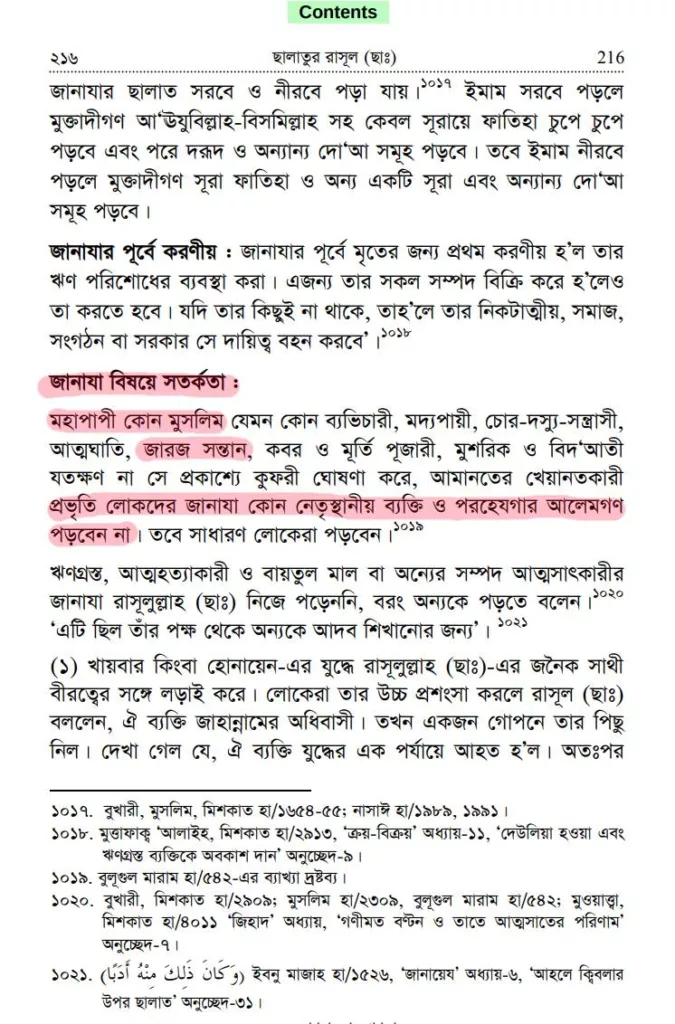
The moral inconsistency of this list is unmistakable. At least the adulterer or bandit is being accused of their own conduct. A person labeled “illegitimate,” by contrast, has done nothing at all to justify inclusion on the list other than having been born. Yet they are placed in the same disparaging category. Such religious rulings attempt to establish the circumstances of birth as an acceptable ground for social exclusion. Making birth history the basis of discriminatory funeral treatment, even after death, is morally indefensible.
Denial of Inheritance: Excluding a Child from the Biological Father’s Estate
Discrimination by birth goes beyond insulting language and funeral practices. Under the prevailing majority position in Islamic inheritance jurisprudence, a child born outside marriage is not affiliated with the biological father’s lineage. The immediate consequence is exclusion from inheritance of the father’s property. Evidence of the biological relationship, the father’s affection for the child, and even his acknowledgment of paternity are insufficient under the prevailing rule. The child retains legal affiliation with, and inheritance rights through, the mother. This creates an asymmetry of rights and responsibilities between the two parents in relation to the same birth, with financial consequences borne by the child.
Jami al-Tirmidhi 2113 preserves a statement attributed to Muhammad about the inheritance of a child conceived through illicit sexual relations with a free woman or an enslaved woman. After the report, al-Tirmidhi explains that the juristic practice was to deny such a child inheritance from the biological father. The full quotation from the original Bengali edition is preserved below in English translation. [10]
Sunan al-Tirmidhi (critically edited Bengali edition)
27. Laws of Inheritance (Faraid)
Chapter 21. A Child Born from Zina Does Not Inherit
2113. Narrated through Amr ibn Shuayb from his father and grandfather: The Messenger of Allah said: “If a man commits zina with a free woman or an enslaved woman, the child born from the relationship is a child of zina. That child does not inherit, nor is inheritance received from that child.”
Sahih; Mishkat, second critical edition (3054).
Abu Isa said: Other narrators besides Ibn Lahia also transmitted this hadith from Amr ibn Shuayb. The scholars have acted on this hadith. A child born from zina does not inherit from the biological father.
Hadith grading: Sahih.
Narrator: Amr ibn Shuayb.
The Bengali translation of this report contains an apparently general statement that the child “will not inherit from anyone.” Al-Tirmidhi himself explains its operative meaning: there is no inheritance from the biological father. A ruling attributed to Ali ibn Abi Talib and preserved in Sunan al-Darimi also describes an unusual asymmetry regarding property and blood money through the maternal relatives. The rules for maternal kinship and inheritance thus also vary according to the child’s birth status.
Sunan al-Darimi (HadithBD Bengali edition)
21. Book of Inheritance
Chapter 45. Inheritance of a Child Born from Zina
3154. Narrated from Zayd ibn Wahb: Concerning a child born from zina, Ali told the guardians from the mother’s family: “Take your sons into your care. You will share in their inheritance and blood money, but they will not share in your inheritance.”
Critical assessment: Its chain of transmission is sahih.
Cross-reference: Ibn Abi Shayba 11/347, no. 11403.
Hadith grading: Sahih.
Narrator: Zayd ibn Wahb.
There is little moral justification for making the legal validity of marriage an indispensable condition for the property rights arising from an established biological father-child relationship. The relationship between the act of bringing a child into existence and that child’s future livelihood and financial security is real; birth outside marriage is not a situation created by the child. Excluding the child from the father’s estate transfers the consequences of the father’s personal decisions onto the child’s property rights.
Islamweb’s Fatwa: No Inheritance Even When the Father Acknowledges the Child
Islamweb fatwa 191171 concerns a man who acknowledged the child as his own. The answer states that the child would receive none of his estate—even if the child had been obedient and dutiful, the father acknowledged him, and the child had never left home. The basis of the exclusion is thus neither a fault of the child nor the father’s denial, but the religious classification of the relationship preceding the birth. [11]
Islamweb fatwa 191171 provides direct evidence of discrimination in Islamic inheritance law against children born outside marriage. The question concerns a child whose biological father acknowledged him as his own. Yet Islamweb rules that even if the father acknowledges the child, the child treats him well, and they live together, the child does not inherit from the biological father. The fatwa also states that the child’s legal lineage belongs exclusively to the mother and her family. Consequently, neither the child’s behavior, the father’s acknowledgment, nor the actual biological relationship determines entitlement to the father’s property; what matters is whether the parents’ sexual relationship was valid under Sharia. A man who participated in bringing the child into existence is relieved of the paternal inheritance relationship, while its consequences fall upon a child who had no control over the circumstances of birth. [12]
ولد الزنا لا يرث من أبيه
فتوى رقم: 191171
الأحد 5 محرم 1434 هـ – 18-11-2012 م
السؤال
رجل له ولد من الزنا ورمته أمه, والولد كان عاصيا جدًّا لوالده وترك المنزل, وبعد ذلك توفى الله الرجل, فهل هذا الولد يرث من أبيه؟ مع العلم أنه كان معترفًا به, وعنده بنت شرعية من امرأة أخرى.
أفيدونا لوجه الله, جزاكم الله خيرًا.
الإجابــة
الحمد لله، والصلاة والسلام على رسول الله، وعلى آله وصحبه، أما بعد:
فإن ولد الزنا لا يرث من أبيه الزاني، ولا يرث منه أبوه؛ فقد روى الترمذي وغيره أَنَّ رَسُولَ اللَّهِ صَلَّى اللَّهُ عَلَيْهِ وَسَلَّمَ قَالَ: أَيُّمَا رَجُلٍ عَاهَرَ بِحُرَّةٍ أَوْ أَمَةٍ فَالْوَلَدُ وَلَدُ زِنَا لَا يَرِثُ وَلَا يُورَثُ” صححه الألباني, وقال الترمذي: “وَالْعَمَلُ عَلَى هَذَا عِنْدَ أَهْلِ الْعِلْمِ أَنَّ وَلَدَ الزِّنَا لَا يَرِثُ مِنْ أَبِيهِ”؛ ولذلك فإن هذا الولد لا يرث من هذا الرجل شيئًا ولو كان بَرًّا طائعًا له ومعترفًا به ولم يترك المنزل, فإن ذلك كله لا تأثير له على الحكم؛ فالزنا مانع للإرث، وابنه إنما ينسب إلى أمه وأهلها، ونسبته لهم شرعية صحيحة، يثبت بها كل ما يترتب عليها من أحكام البنوة؛ قال صاحب الكفاف: “وابن اللعان والزنا في جانب الاُم كمن هو صحيح النسب”, ولا علاقة له بأبيه, وانظري الفتاوى: 6045 67670 53386.
والذي يرث هذا الرجل هو ورثته الشرعيون إن وجدوا؛ كل حسب نصيبه المقدر له في كتاب الله تعالى، وإذا لم يكن له ورثة شرعيون غير بنته المذكورة فإنها ترث ماله كله، نصفه بالفرض, والنصف الآخر بالرد.
والله أعلم.
English translation:
A Child Born from Zina Does Not Inherit from His Father
Fatwa 191171
Sunday, 5 Muharram 1434 AH — November 18, 2012
Question:
A man had a child from zina, whom the mother abandoned. The child was extremely disobedient to his father and left home. The man subsequently died. Does this child inherit from his father? It should be noted that the man had acknowledged the child and also had a daughter born from a lawful marriage to another woman.
Please advise us for the sake of Allah. May Allah reward you.
Answer:
Praise be to Allah, and blessings and peace be upon the Messenger of Allah, his family and his Companions. To proceed:
A child born from zina does not inherit from the biological father who committed zina, nor does that father inherit from the child. Al-Tirmidhi and others narrated that Muhammad said: “If a man commits illicit sexual relations with a free woman or an enslaved woman, the resulting child is a child of zina. The child does not inherit, and no inheritance is received from the child.”
Al-Albani graded this hadith sahih. Al-Tirmidhi said: “This is the practice followed by the scholars: a child born from zina does not inherit from his father.”
Therefore, this child will inherit nothing from that man, even if he had been dutiful and obedient to his father, the father had acknowledged him, and he had not left the home. None of these matters affects the ruling.
This is because zina prevents inheritance. The child is attributed only to his mother and her family, and his lineage through them is legally valid and establishes all the resulting legal rulings of filiation.
The author of al-Kafaf said: “The child of lian [paternity denied through mutual imprecation] and the child of zina are, on the mother’s side, like children with established lawful lineage.”
The child has no legally recognized lineage relationship with his biological father.
For further discussion, consult fatwas 6045, 67670, and 53386.
The man will be inherited from by his lawful heirs, if any, each according to the portion allotted in the Book of Allah. If the daughter mentioned in the question is his only lawful heir, she will inherit his entire estate: one half as her prescribed share and the remaining half through redistribution (radd).
And Allah knows best.
The most significant feature of this fatwa is its legal rejection of paternity despite the biological father’s acknowledgment. A father accepted the child as his own before his death, so this was not simply a case of an unknown man claiming fatherhood. Nevertheless, the child is excluded from the inheritance. If the father did not support the child during his lifetime, or if his other children inherit his estate, children of the same biological father may face unequal property rights solely because of the circumstances of their birth.
‘The Child Belongs to the Marital Bed’: Legal Paternity Versus Biological Parentage
Sahih al-Bukhari 6749 records a paternity dispute involving Utba ibn Abi Waqqas, Sad ibn Abi Waqqas, and Abd ibn Zama. Utba had instructed his brother to claim a particular child as his own. But because the child was born to Zama’s enslaved woman, Muhammad applied the principle that “the child belongs to the marital bed” and awarded legal affiliation to Zama’s household. The report also acknowledges a clear physical resemblance between the child and Utba; Muhammad observed the resemblance and instructed Sawda to veil herself in front of the child. [13]
هُوَ لَكَ يَا عَبْدُ بْنَ زَمْعَةَ، الْوَلَدُ لِلْفِرَاشِ وَلِلْعَاهِرِ الْحَجَرُ
English translation:
“He belongs to you, Abd ibn Zama. The child belongs to the marital bed, and the fornicator has no claim.”
This incident reveals a significant discrepancy. Observable indications of possible biological paternity were treated as relevant to a personal veiling instruction, while disregarded for the determination of legal paternity. Religious determinations of paternity and actual biological relationships were therefore not always identical. The importance attached to biological evidence in modern parentage determinations is absent from this rule, which gives priority to the social and legal status of the relationship.
Denial of Lineage Even When the Father Acknowledges the Child: Conflicting Juristic Rulings
IslamQA’s detailed fatwa 192131 records a fundamental juristic disagreement over establishing paternity. The prevailing position of the four schools is that a child born outside marriage cannot be affiliated with the biological father’s lineage merely because that man acknowledges the child. In contrast, opinions attributed to Urwa ibn al-Zubayr, Sulayman ibn Yasar, al-Hasan al-Basri, Ibn Sirin, Ibrahim al-Nakhai, and Ishaq ibn Rahawayh allow acknowledgment of biological paternity where there is no competing claim arising from an established marital bed. The fatwa also discusses Ibn Taymiyya and Ibn al-Qayyim as supporting this alternative position. [14]
أَنَّ الْقَوْلَ بِالْمَنْعِ وَالْجَوَازِ قَوْلَانِ مُعْتَبَرَانِ عِنْدَ أَهْلِ الْعِلْمِ، وَهَذِهِ الْمَسْأَلَةُ مِنْ مَسَائِلِ الِاجْتِهَادِ.
English translation:
The views permitting and forbidding acknowledgment of paternity are both recognized positions among scholars; this question belongs to the domain of juristic disagreement and independent reasoning.
The social consequences of this disagreement are profound. Under one approach, a child can be an acknowledged biological child of a man yet lose his paternal identity and inheritance; under another, he may receive those rights in specified circumstances. The child’s birth, life, and needs remain the same; what changes is the rule adopted by the jurist. The question, therefore, is what independent humanitarian necessity justifies depriving a child when the biological father accepts responsibility. The very existence of opposing rulings demonstrates that imposing these harmful consequences is not an inevitable biological law.
The same lengthy IslamQA discussion includes arguments for recognizing biological paternity that acknowledge the injustice to the child, the creation of an orphan-like position in society, and the problem of punishing a child for the parents’ relationship. The ethical damage of the exclusion is thus recognized within the jurisprudential debate itself. If a legal pathway to acknowledging the father can protect the child, then denying that relationship solely because of the legal label attached to the birth becomes still harder to justify.
Releasing the Biological Father from Maintenance: An Unequal Financial Burden on the Mother
Beyond inheritance, another pressing issue is who must pay for a child’s food, clothing, housing, medical treatment, and education. IslamQA fatwa 506885 was asked who bears financial responsibility for a child born outside marriage when the biological father does not provide support. The answer assigns maintenance to the mother if she can afford it; if not, the obligation moves toward her relatives who qualify as heirs. [15]
يَجِبُ عَلَى الْأُمِّ أَنْ تُنْفِقَ عَلَى وَلَدِهَا مِنَ الزِّنَى، إِذَا كَانَتْ مُسْتَطِيعَةً.
English translation:
The mother is obliged to provide maintenance for her child born from zina if she has the financial means.
Here, of the two adults who biologically participated in the child’s conception, one is not automatically recognized as legally liable through paternity, while financial responsibility falls upon the other. A mother raising a child alone must supply income, care, time, and security. Instead of ensuring the child’s livelihood by recognizing the responsibility of both biological parents, such a system first excludes the biological father from legal parentage and then transfers responsibility to the mother’s family. This is not merely a matter of family sentiment; it creates the conditions for real economic inequality.
It is inequitable to insist that the mother must bear maintenance because she gave birth, while invoking the rules of religious lineage when the biological father’s responsibility is considered. A child’s needs for nutrition, healthcare, education, and safety do not increase or decrease according to whether the biological parents were married. Denying legal paternity and effectively pushing the burden of raising the child toward the mother is morally and socially discriminatory.
Marriage Guardianship: Legally ‘Fatherless’ Despite Having a Known Biological Father
IslamQA fatwa 151932 addresses the marriage guardian of a daughter whose biological father is known, has participated in supporting her, and whose daughter has now reached adulthood and marriageable age. Yet under the prevailing rules of lineage, he is not legally her father. Consequently, male relatives on the paternal side are also denied the authority to serve as her marriage guardian. The fatwa designates the Muslim ruler or his representative as guardian; in the absence of such an authority, it assigns that role to the head of an Islamic center or the imam of a mosque. [16]
إِذَا تَقَرَّرَ أَنَّ وَلَدَ الزِّنَا لَا يُنْسَبُ إِلَى الزَّانِي، فَإِنَّهُ يَكُونُ لَا عَصَبَةَ لَهُ.
English translation:
Once it is established that a child born from zina is not legally attributed to the man who committed zina, the child has no male agnatic relatives who can act as paternal guardians.
This changes more than the father’s social status: it alters the daughter’s own legal family relationships during the marriage process. Despite having an identifiable family, she is placed in a category without a paternal guardian. The denial of legal parentage at birth can therefore give unrelated religious authorities a role in personal decisions when she is an adult. The system prioritizes the legal classification of her biological parents’ sexual relationship over the daughter’s choices and existing social relationships.
Biological Half-Siblings but Not Mahrams: The Contradictions of Denied Paternity
Islamweb fatwa 22415 provides a striking illustration of the legal complications created among children of the same biological father when the parentage of a child born outside marriage is denied. It concerns a man with two sons and three daughters from his marriage, and another son born from a relationship outside marriage. According to Islamweb, even if the father later marries the boy’s mother, the majority juristic position does not establish legal lineage between father and son. More significantly, the boy is not considered a mahram to his biological half-sisters, who must therefore veil in front of him. Yet marriage between the boy and those girls is prohibited. In other words, the biological sibling relationship is denied when determining mahram status but recognized as consequential when prohibiting marriage. The boy is also excluded from his biological father’s estate. These distinctions in identity, inheritance, and kinship are imposed because of his parents’ extramarital relationship, although the child made no decision and bore no responsibility for it. [17]
أحكام تتعلق بولد الزنا
فتوى رقم: 22415
الإثنين 10 رجب 1423 هـ – 16-9-2002 م
السؤال
بسم الله الرحمن الرحيم
الإخوة الأفاضل، السلام عليكم ورحمة الله وبركاته ….. أما بعد
عندي سؤال يتعلق بأحد معارفي المتزوجين، والذي لديه من الذكور اثنان ومن الإناث ثلاثة، ولكن أزله الشيطان ووقع في الخطأ وأنجب ذكرا.
السؤال: هل يعتبر هذا الولد أخا للأولاد الباقين؟ هل يجب على البنات أن يتحجبن أمامه؟ هل للولد حق في ميراث أبيه؟
الولد يبلغ من العمر الآن 14 سنة، في حال تزوج الأب تلك المرأة التي أزله الشيطان معها، فهل يتغير أي حكم بعدها؟
أفيدونا وجزاكم الله عنا كل خير.
الإجابــة
الحمد لله، والصلاة والسلام على رسول الله، وعلى آله وصحبه، أما بعد:
وهذا الولد من الزنى لا ينسب إلى الزاني ولو تزوج بالزانية عند جمهور العلماء، وقد سبق بيان ذلك في الفتوى رقم: 6012.
ولا يكون محرماً لبنات الرجل، بل هو أجنبي عنهن فيلزمهن الاحتجاب منه، ومع كونه غير محرم لهن، إلا أنه لا يجوز له أن يتزوج بواحدة منهن، وليس لهذا الولد حق في الميراث من الزاني، وإنما يرث من أمه.
وانظر مزيداً من التفصيل حول أحكام ولد الزنا في الفتاوى التالية أرقامها: 7501، 9093، 10152.
والله أعلم.
English translation:
Rulings Concerning a Child Born from Zina
Fatwa 22415
Monday, 10 Rajab 1423 AH — September 16, 2002
Question:
In the name of Allah, the Most Merciful, the Especially Merciful.
Respected brothers, peace, mercy, and blessings of Allah be upon you. To proceed:
I have a question concerning a married acquaintance who has two sons and three daughters. However, Satan led him astray, he made a mistake, and another son was born from the relationship.
My questions are: Is this boy considered a brother to the other children? Must the daughters veil in front of him? Does the boy have a right to inherit from his father?
The boy is now fourteen years old. If the father subsequently marries the woman with whom he committed the act, will any of these rulings change?
Please advise us. May Allah reward you with good.
Answer:
Praise be to Allah, and blessings and peace be upon the Messenger of Allah, his family, and his Companions. To proceed:
According to the majority of scholars, the boy born from zina is not attributed to the man who committed zina, even if that man later marries the boy’s mother. This was explained in fatwa 6012.
He is not a mahram to the man’s daughters. Rather, he is treated as a non-mahram man in relation to them, so they are required to observe the veil before him.
Although he is not a mahram to them, he is nevertheless forbidden to marry any of them.
The boy has no right to inherit from the man who committed zina; he inherits only from his mother.
For more detailed rulings concerning children born from zina, see fatwas 7501, 9093, and 10152.
And Allah knows best.
The harshest aspect of this fatwa is that even the parents’ subsequent marriage does not remove the discrimination imposed on their child. The fourteen-year-old boy’s biological father is known and has other sons and daughters, yet Sharia denies the boy affiliation with the paternal lineage and entitlement to inheritance. He cannot marry the girls who share his biological father, while the girls are required to veil before him because he is treated as a non-mahram. Within this legal framework, the child’s actual biological relationships count as grounds to prohibit marriage, while the same relationships are denied legal recognition for paternity, mahram status, and inheritance. Determining a child’s family standing and property rights by the validity of the parents’ sexual relationship is a direct instance of discrimination based on birth.
The social danger of such a rule is that a child can be known as a biological brother within the family and still be treated as a legal outsider. The categories of “legitimate” and “illegitimate” birth then intrude upon ordinary sibling relationships and personal identity. A religious rule about birth status may thus change how family members treat one another.
Leading Prayers: Religious Leadership ‘Disliked’ When the Father Is Unknown
Discrimination by birth also entered classical jurisprudential discussions of religious leadership. In al-Umm, al-Shafii devotes a separate discussion to the imamate of a person born outside marriage (Imamat walad al-zina). He cites through Malik an incident involving Umar ibn Abd al-Aziz, who removed an imam from his position because his father was unknown. Al-Shafii then states that he himself dislikes appointing someone whose father is unknown as an imam. [18]
وأكره أن ينصب من لا يعرف أبوه إماما؛ لأن الإمامة موضع فضل وتجزي من صلى خلفه صلاتهم
English translation:
I dislike appointing as imam someone whose father is unknown, because leading prayer is a position of honor. However, the prayers of those who pray behind such a person remain valid.
This is not a ruling invalidating the congregation’s prayer, but the problem does not end there. In al-Shafii’s own words, the position of imam is an honor, and a person’s parentage becomes an adverse consideration in appointment. In other words, beyond knowledge of the Qur’an, leadership ability, and personal character, the question of paternal identity affects a person’s social standing. Introducing the parents’ sexual relationship into the assessment of a person’s fitness for religious responsibility conflicts with the principle of equality.
Al-Shafii’s direct statement proves that parentage was considered relevant to the honor associated with religious leadership. Prayer behind the person remains valid, yet appointing the very same person is disliked because of parentage. The distinction rests not on the person’s competence but on an externally imposed social identity.
Court Testimony Judged by Birth Status: Rulings of Malik and the Jurists of Medina
Discrimination by birth extended beyond religious leadership into rules on admissibility of testimony in court. In volume 17 of al-Mawardi’s al-Hawi al-Kabir, under the discussion of testimony in cases of zina, he records opposing positions attributed to al-Shafii, Malik, and other jurists of Medina. Al-Shafii accepted testimony from a person born outside marriage, and al-Mawardi maintained that lineage is not a condition of truthfulness or moral uprightness. Malik, however, rejected the person’s testimony in zina cases. Other jurists of Medina rejected it in all cases. [19]
وَقَالَ مَالِكٌ: لَا أَقْبَلُ شَهَادَتَهُ فِي الزِّنَى وَأَقْبَلُهَا فِي غَيْرِ الزِّنَى، وَقَالَ غَيْرُهُ مِنْ فُقَهَاءِ الْمَدِينَةِ: لَا أَقْبَلُ شَهَادَتَهُ بِحَالٍ.
English translation:
Malik said: “I do not accept the person’s testimony in cases of zina, but I accept it in other cases.” Some other jurists of Medina said: “I do not accept such testimony under any circumstances.”
The rational criteria for evaluating courtroom testimony are whether someone is telling the truth, whether they know the events, whether their account agrees with other evidence, and whether there is any actual reason to doubt their credibility. The legal status of their parents’ relationship answers none of these questions. A witness can be honest and have observed an event firsthand, yet be deemed inadmissible solely because of birth. Such a position violates the basic requirements of judicial fairness.
Al-Mawardi’s discussion is important for a further reason. He criticizes reports such as “the child born from zina is the worst of three” and “the child born from zina will not enter Paradise,” which were used to justify rejecting testimony. His objection invokes the Qur’anic principle that no one bears another person’s sins. His text therefore both records discriminatory opinions attributed to Medinan jurists and shows how those opinions substitute parentage for evidence of moral character. That the same person’s testimony can be rejected by one jurist because of birth and accepted by another raises a serious problem of consistency in administering justice.
‘The Child Born from Zina Will Not Enter Paradise’: Inherited Stigma and Punishment in the Afterlife
Islamic hadith commentaries and tafsir works also preserve a claim that a person born outside marriage will be denied entry to Paradise. Al-Razi mentions such a report in his explanation of zanim in Qur’an 68:13, and al-Mawardi cites comparable claims in discussing judicial testimony. IslamQA fatwa 332984 examines the chains of transmission and rejects the reliability of the relevant reports. Yet the reports were historically circulated, and some jurists used them as arguments for discrimination. [20]
حديث (لا يدخل الجنة ولد زانية) معلول لا يصح
الإسلام سؤال وجواب
السؤال رقم: 332984
25/جمادى الثانية/1442 الموافق 07/فبراير/2021
السؤال
حديث (لا يدخل الجنة ولد زانية) أخرجه الإمام أحمد في مسنده، وحسنه العلامة الألباني في “السلسلة الصحيحة”، فما مدى صحته؟ وآمل ذكر النصوص التي دلت على ضعفه إذا كان ضعيفا؟ وإذا كان ضعيفا فكيف ذكره الإمام الألباني في السلسلة الصحيحة؟
ملخص الجواب
حديث (لا يدخل الجنة ولد زانية) معلول لا يصح، وأن كل طرقه لا تخلو من ضعف ظاهر.
ولا يصح الاحتجاج بهذا الحديث ونحوه، في مثل هذه المسألة الكبيرة، ولا يلزم لها التأويل، فإنه فرع عن التصحيح.
English translation:
“The Child of an Adulteress Will Not Enter Paradise”: A Defective, Unauthentic Hadith
Islam Question & Answer (IslamQA)
Question 332984
25 Jumada al-Thani 1442 AH — February 7, 2021
Question:
The hadith “The child of an adulteress will not enter Paradise” was recorded by Imam Ahmad in his Musnad, and al-Albani classified it as hasan in al-Silsila al-Sahiha. How authentic is this hadith? Please provide the texts establishing its weakness if it is weak. If it is weak, why did al-Albani include it in al-Silsila al-Sahiha?
Summary of the Answer:
The hadith “The child of an adulteress will not enter Paradise” is defective and not authentic. Every one of its transmission routes contains an evident weakness.
Such a hadith, or similar reports, cannot legitimately be invoked as proof in such an important matter. There is no need to reinterpret it, for interpretation would presuppose that its authenticity had first been established.
Al-Mawardi’s explanation on this issue is also significant. [21]
الحاوي الكبير في فقه مذهب الإمام الشافعي
الماوردي – أبو الحسن علي بن محمد بن حبيب الماوردي
الجزء السابع عشر، الصفحة 211
القول في شهادة الزنا
النص العربي:
[ القول في شهادة الزنا ].
مسألة: قال الشافعي رضي الله عنه: “ويجوز شهادة ولد الزنا في الزنا”.
قال الماوردي: وهذا صحيح، لأن الأنساب ليست من شروط العدالة، فتقبل شهادة ولد الزنا إذا كان عدلا في الزنى وغير الزنى.
وقال مالك رضي الله عنه: لا أقبل شهادته في الزنى وأقبلها في غير الزنى، وقال غيره من فقهاء المدينة: لا أقبل شهادته بحال.
استدلالا بما روي عن النبي صلى الله عليه وسلم أنه قال: “ولد الزنى شر الثلاثة”.
وبما روي عن النبي صلى الله عليه وسلم أنه قال: “لا يدخل الجنة ولد زنية”.
وإذا كان شرا من الزاني ومدفوعا من الجنة، كان من أهل الكبائر، فلم تقبل شهادته.
وهذا قول فاسد، لأن الله تعالى لا يؤاخذ أحدا بذنب غيره وهو تعالى يقول:
[ولا تزر وازرة وزر أخرى] [الأنعام: 164].
فلم يجز أن يؤاخذ ولد الزاني بذنب أبويه، لأنه ظلم، والله تعالى منزه عن الظلم، وهو تعالى يقول: [ولا يظلم ربك أحدا] [الكهف: 49].
ولأن عار النسب ربما منعه من ارتكاب العار، لئلا يصير جامعا بين عارين، فصار مزجورا بمعرة نسبه عن معرة كذبه، فلم يمنع من قبول الشهادة مع ظهور عدالته.
[ص: 211] وأما الخبر الأول وهو “ولد الزنا شر الثلاثة” فهو من مناكير الأخبار، وما رواه إلا مضعوف، غير مقبول الحديث، ونص القرآن يمنع منه، ولو سلمت الرواية لكان لاستعماله وجوها:
أحدها: أنه شر الثلاثة نسبا.
والثاني: شر الثلاثة إذا كان زانيا.
والثالث: أنه كان واحدا من ثلاثة، فأشير إليه أنه شرهم، فكان ذلك للزنى تعريفا لا تعليلا.
والرابع: ما ذكر أن أبا عزة الجمحي كان يهجو رسول الله صلى الله عليه وسلم ويقدح فيه بالعظائم، فذكر عند النبي صلى الله عليه وسلم ما يقوله، وقيل له: إنه ولد زنية، فقال عليه السلام: “ولد الزنى شر الثلاثة” يعني به أبا عزة.
وأما الخبر الثاني: فهو أوهى من الأول، وأضعف وأبعد أن يكون له في الاحتمال وجه، لأنه لا يجوز أن يحبط طاعته معصية غيره، والكفر أعظم من الزنى، ولا يحبط عمل المؤمن بكفر أبويه، فكان أولى أن لا يحبط عمله بزنى والديه والله أعلم.
English translation:
Al-Hawi al-Kabir in the Jurisprudence of the Shafii School
Author: Abu al-Hasan Ali ibn Muhammad ibn Habib al-Mawardi
Volume 17, page 211
Chapter: Testimony in Cases of Zina
Legal Issue: Al-Shafii said: “The testimony of a child born from zina is admissible even in cases of zina.”
Al-Mawardi said: This is correct, because lineage is not a condition of moral uprightness. Consequently, if a person born from zina is upright, that person’s testimony is accepted in cases of zina and in other cases.
Malik said: “I do not accept that person’s testimony in cases of zina, but I accept it in other cases.”
Other jurists of Medina said: “I do not accept such testimony under any circumstances.”
They invoked a report attributed to Muhammad: “The child born from zina is the worst of the three.”
They also invoked another report attributed to him: “The child of an adulteress will not enter Paradise.”
Their argument was that if this child is worse than the person who commits zina and excluded from Paradise, the child must be among the perpetrators of major sins and cannot be accepted as a witness.
But this position is false, because Allah does not hold anyone accountable for the sin of another. Allah says:
“No bearer of burdens will bear the burden of another.” [Qur’an 6:164]
It is therefore impermissible to hold a child responsible for the sin of parents who committed zina. That would be injustice, and Allah is exalted above injustice. Allah also says: “Your Lord does not wrong anyone.” [Qur’an 18:49]
Furthermore, the shame associated with lineage might deter a person from incurring further disgrace, lest two stigmas be combined. Thus the disgrace attributed to parentage might discourage the disgrace of lying. Once the person’s uprightness is apparent, testimony must not be rejected merely because of lineage.
Page 211:
Regarding the first report, “The child born from zina is the worst of the three,” it belongs to objectionable and repudiated reports. It was transmitted only by a weakened narrator whose hadith is not accepted, and the explicit text of the Qur’an precludes its meaning.
Even if the transmission were accepted, the statement could be understood in several ways:
First: The child is the worst of the three in terms of lineage.
Second: The child is the worst of the three if the child also commits zina.
Third: The person was one of three individuals and was identified as the worst of them; birth from zina was mentioned to identify the person, not to explain why the person was the worst.
Fourth: It has been said that Abu Azza al-Jumahi used to satirize Muhammad and make grave accusations against him. His statements were brought to Muhammad’s attention, and he was told that the man was born from zina. Muhammad then said, “The child born from zina is the worst of the three,” referring specifically to Abu Azza.
As for the second report, “The child of an adulteress will not enter Paradise,” it is even more feeble and weaker than the first, and there is still less scope for construing it plausibly. Another person’s sin cannot nullify someone’s obedience and good works.
Disbelief is a more serious sin than zina, but the good works of a believer are not invalidated by the disbelief of the believer’s parents. It is therefore all the more appropriate that a person’s good works should not be invalidated by the parents’ zina.
And Allah knows best.
The notion that a person can be excluded from religious salvation or reward in the afterlife solely because of birth is incompatible with individual moral responsibility, justice, and equal human dignity. Reports such as “the child of an adulteress will not enter Paradise” and “the child born from zina is the worst of three” make the parents’ sexual relationship, rather than the child’s actions, character, or choices, the determinant of that person’s moral and ultimate fate. More disturbingly, these reports were not confined to theological debate. According to al-Mawardi, some jurists used them to justify refusing to admit testimony from people born outside marriage. Thus, ideas of birth-based stigma and punishment in the afterlife became instruments for denying legal rights and credibility in this life. One distinction is essential: classifying a hadith as daif, or weak, does not mean that it is false, fabricated, or that the reported event never occurred. Daif is a classification within Islamic hadith criticism concerning the reliability of transmission; it is not final proof of historical falsity. Equally, classifying a hadith as sahih does not automatically establish the historical truth of its statement. Whether Muhammad actually uttered the reports under discussion is a separate historical question. But their preservation in Islamic books, their interpretation by religious commentators, and their use by some jurists in determining whether a person’s testimony could be accepted are themselves historically significant facts. The mere weakness of a chain of transmission cannot erase the social influence of these reports, their history of religious reception, or their discriminatory legal application. The central criticism concerns the use of an innocent person’s birth status against their moral character and civil rights. For a fuller discussion of sahih and daif classifications, historical reliability, and the practical use of weak reports, see: “Weak Hadith”: How Authentic Is the Concept of Daif?.
‘Every Child Is Born upon the Fitrah’ and ‘No One Bears Another’s Sin’: A Moral Contradiction
Two frequently cited principles in Islamic theology are that every child is born upon the fitrah, and that no one bears the burden of another person’s sins. Qur’an 6:164 states: «وَلَا تَزِرُ وَازِرَةٌ وِزْرَ أُخْرَىٰ»—“No bearer of burdens will bear the burden of another.” Hadith literature also discusses the innate condition of the newborn. In contrast, calling a child “the worst of three,” suggesting that “impure semen” produces a corrupt child, and denying the child inheritance from the biological father because of the parents’ extramarital relationship produce a serious moral inconsistency. [22] [23]
The first contradiction concerns moral character. If a child is declared inferior before committing any act, the principle of individual responsibility becomes meaningless. The second concerns property: the child is not formally charged with the parents’ sexual offense, yet their legal relationship is used to reduce the child’s financial rights. The third is social: without committing any offense, a person can face discriminatory treatment at funerals, in appointments to lead mosque prayers, and in court testimony. The statement “no one bears another’s burden” does not answer the question of these concrete deprivations.
Two facts must be distinguished when discussing a person’s identity, inheritance, and social standing: who their biological parents are, and whether the parents’ relationship was valid under a particular religious rule. The first is a fact of birth; the second is a legal or moral classification imposed on a relationship. Using the latter to deny the financial and social implications of the former places a burden on the child that was fixed before their birth. The person cannot eliminate this disadvantage through changes in their own behavior.
The Multiple Consequences of One Birth Status: A Comparison of Hadith, Fiqh, and Modern Fatwas
Placing the statements from different religious sources alongside one another makes the social and legal consequences of birth-based classification clear. The same person may have committed no wrongdoing, yet their parents’ relationship operates as a permanent category affecting multiple aspects of their life.
| Area | Position Reported in Religious Sources | Direct Consequence for the Individual | Primary Source |
|---|---|---|---|
| Personal dignity | ‘The worst of three’ | A degrading identity based on birth | Abu Dawud 3963 |
| Innate character | Claim that impure semen produces a corrupt disposition | A negative presumption about character before any wrongdoing | Al-Sindi, commentary on Musnad Ahmad |
| Paternal inheritance | No entitlement to the biological father’s property | Loss of property rights | Islamweb 191171 |
| Financial maintenance | Responsibility on a mother with means and her maternal relatives | Unequal financial responsibilities | IslamQA 506885 |
| Marriage guardian | No legally recognized paternal guardian | Religious authorities replace family guardians | IslamQA 151932 |
| Paternal half-siblings | Denial of mahram status between biological half-siblings | Changes to family relationships and veiling requirements | Islamweb 22415 |
| Religious leadership | Appointment as imam disliked when paternal identity is unknown | Discrimination in leadership because of birth | Al-Shafii, al-Umm |
| Court testimony | Some jurists reject testimony in zina cases or in all cases | Witness eligibility judged by birth rather than honesty | Al-Mawardi, al-Hawi al-Kabir |
| Funeral prayer | Salafi text instructs prominent scholars not to lead funeral prayers | Social humiliation even after death | Salatur Rasul, p. 216 |
The table does not portray every position as unanimous: where scholars disagreed, it identifies the position of the particular source. This does not diminish the central criticism. These statements and rulings are genuine parts of Islamic literature and provide direct examples of humiliation and discrimination based on birth. The absence of a restriction in one legal school does not erase discriminatory positions preserved in another school or text.
Conclusion: Depriving Innocent People of Dignity and Rights for Their Parents’ Relationships
No person born from a relationship outside marriage is responsible for their own birth. Yet multiple strands of the hadith, tafsir, jurisprudence, and fatwas discussed here have turned birth status into a ground for social humiliation and legal deprivation. The “worst of three” statement in Abu Dawud, al-Sindi’s speculation that “impure semen” produces an evil character, and the lineage-related insult attached to zanim in the commentaries of al-Tabari and al-Razi all make the history of birth, rather than the individual’s actions, a basis of judgment. In this thinking, moral worth is not acquired through character but assigned according to whether someone was born within an approved sexual relationship.
The most enduring damage lies in economic and family rights. Even if the biological father is known and acknowledges the child, prevailing rulings deny inheritance. The responsibility for financial maintenance can fall upon the mother and her relatives. The biological father can be excluded from guardianship in a daughter’s marriage, while children who share the same father may be treated as legal strangers to one another. The child made no decision at birth, yet this legal category can continue to control property, family, and identity throughout adulthood.
Al-Shafii regarded unknown paternal identity as an adverse consideration for appointment as an imam; al-Mawardi recorded opinions that excluded such people from testifying in court; and a Bangladeshi Salafi text placed innocent people marked by their birth circumstances on the same funeral-exclusion list as sinners. These examples show that the issue is not confined to an isolated phrase in one hadith. The tendency to treat birth status as an indicator of social fitness has entered multiple areas of religious law.
Aisha’s objection and al-Tahawi’s analysis show that early Muslim commentators themselves identified the problem: if “the worst of three” applies to all such children, a child is made to bear the consequences of someone else’s acts. IslamQA’s discussion of paternity also preserves an alternative position under which a biological father’s acknowledgment can establish lineage. These facts demonstrate that the harshest rulings are not immutable natural truths; they are religious interpretations and legal determinations constructed by people. A rule that can deprive a child of property and recognition of a father must itself face moral scrutiny.
The principle of humane justice is straightforward: a person may be held accountable for their own actions, but it is wrong to pronounce them inferior, exclude them from inheritance, discredit their testimony or leadership, or discriminate against them even at their funeral because of the relationship between their biological parents. A child bears no guilt for the circumstances of their birth. These religious rulings and interpretations that diminish human dignity and rights on the basis of birth are morally unacceptable.
References
- Universal Declaration of Human Rights, Article 25(2) ↩︎
- United Nations Convention on the Rights of the Child, Articles 2, 7, 8 and 27 ↩︎
- Sunan Abu Dawud 3963: Arabic text, English translation and grading ↩︎
- Al-Sindi, Hashiyat Musnad al-Imam Ahmad ibn Hanbal, vol. 5, pp. 438–439, hadith 8098 ↩︎
- Al-Tabari, Jami al-Bayan, Qur’an 68:13 ↩︎
- Al-Razi, Mafatih al-Ghayb, Qur’an 68:13 ↩︎
- Al-Tahawi, Sharh Mushkil al-Athar, vol. 2, pp. 365–369 ↩︎
- Al-Hakim, al-Mustadrak, hadith 2910 ↩︎
- Asadullah al-Ghalib, Salatur Rasul, p. 216; accompanying photograph of the book ↩︎
- Jami al-Tirmidhi 2113: Arabic report and al-Tirmidhi’s commentary ↩︎
- Islamweb, fatwa 191171: A child born from zina does not inherit from his father ↩︎
- Islamweb, fatwa 191171, “A child born from zina does not inherit from his father,” November 18, 2012 ↩︎
- Sahih al-Bukhari 6749: the child belongs to the marital bed ↩︎
- IslamQA, question 192131: Detailed scholarly disagreement over acknowledgment of a child born from zina ↩︎
- IslamQA, question 506885: Who is responsible for maintaining a child born from zina? ↩︎
- IslamQA, question 151932: Who acts as the marriage guardian of a daughter born outside marriage? ↩︎
- Islamweb, fatwa 22415, “Rulings concerning a child born from zina,” September 16, 2002 ↩︎
- Al-Shafii, al-Umm, Book of Prayer, “Imamat Walad al-Zina” ↩︎
- Al-Mawardi, al-Hawi al-Kabir, vol. 17, pp. 210–211 ↩︎
- IslamQA, question 332984: Assessment of the report “The child born from zina will not enter Paradise” ↩︎
- Al-Mawardi, al-Hawi al-Kabir, discussion of admissibility of testimony ↩︎
- Qur’an 6:164 ↩︎
- Sahih al-Bukhari 1358: Every child is born upon the fitrah ↩︎