Introduction
The tendency to attribute illness to supernatural forces has a long history in human civilization. In Islamic prophetic medicine, the “evil eye,” or “al-‘ayn,” is an established form of this superstition. The claim is that an admiring or envious gaze makes another person physically ill. As a remedy, Muhammad instructed that water used to wash the accused person’s body and the inside of his izar (lower garment) be poured over the patient. Classical Islamic interpretations also identify the latter as the genitals. This system, which treats a gaze as the cause of illness and water used to wash the body or genitals as its antidote, is unsupported and absurd. The prophet’s authority and religious washing rituals have displaced diagnosis and the assessment of treatment outcomes.
Muhammad explicitly declared the evil eye to be real. His statement in Sahih Muslim is that the evil eye is real; if anything could overtake divine decree, the evil eye would do so. The same statement also contains an instruction to wash. An unproven cause of illness was declared true, and a treatment rule was established on that basis. In this system, the prophet’s word is the foundation of the theory of disease. The cause and remedy were determined by religious proclamation, bypassing investigation and testing. [1]
الْعَيْنُ حَقٌّ وَلَوْ كَانَ شَىْءٌ سَابَقَ الْقَدَرَ سَبَقَتْهُ الْعَيْنُ وَإِذَا اسْتُغْسِلْتُمْ فَاغْسِلُوا.
English translation: The evil eye is real. If anything could overtake divine decree, the evil eye would do so. When you are asked to wash, wash.
This belief empowers people to accuse others of causing illness without evidence. Someone who praises another person’s beauty becomes a suspect in causing disease; collecting water used to wash that person’s body becomes a condition of the patient’s recovery. The patient’s illness is coupled with an allegation that someone else has inflicted supernatural harm. Illness following praise and recovery following the pouring of water are both treated as cause and effect. This is a straightforward error in causal reasoning. In Muhammad’s treatment claim, suspicion, superstition, and religious authority have taken the place of an established explanation of illness.
The Hadith Accounts: The Prophetic Treatment Method
The treatment instructions attributed to Muhammad also include drinking camel urine. Sahih al-Bukhari describes a group who became ill in Medina being told to drink camel milk and urine. In the case of the evil eye, the treatment material was water used to wash another person’s body. In both accounts, treatment instructions were propagated around a story of recovery. Treating these stories as conclusive evidence of efficacy is a logical error. The camel urine episode is discussed in detail in the Camel Urine Is Lawful and Pure in Islam article. Bukhari’s instruction is explicit: [2]
أَنَّ نَاسًا اجْتَوَوْا فِي الْمَدِينَةِ فَأَمَرَهُمُ النَّبِيُّ صلى الله عليه وسلم أَنْ يَلْحَقُوا بِرَاعِيهِ ـ يَعْنِي الإِبِلَ ـ فَيَشْرَبُوا مِنْ أَلْبَانِهَا وَأَبْوَالِهَا.
English translation: Some people became ill in Medina’s climate. The prophet then instructed them to go to his herdsman, that is, to the camels, and drink their milk and urine.
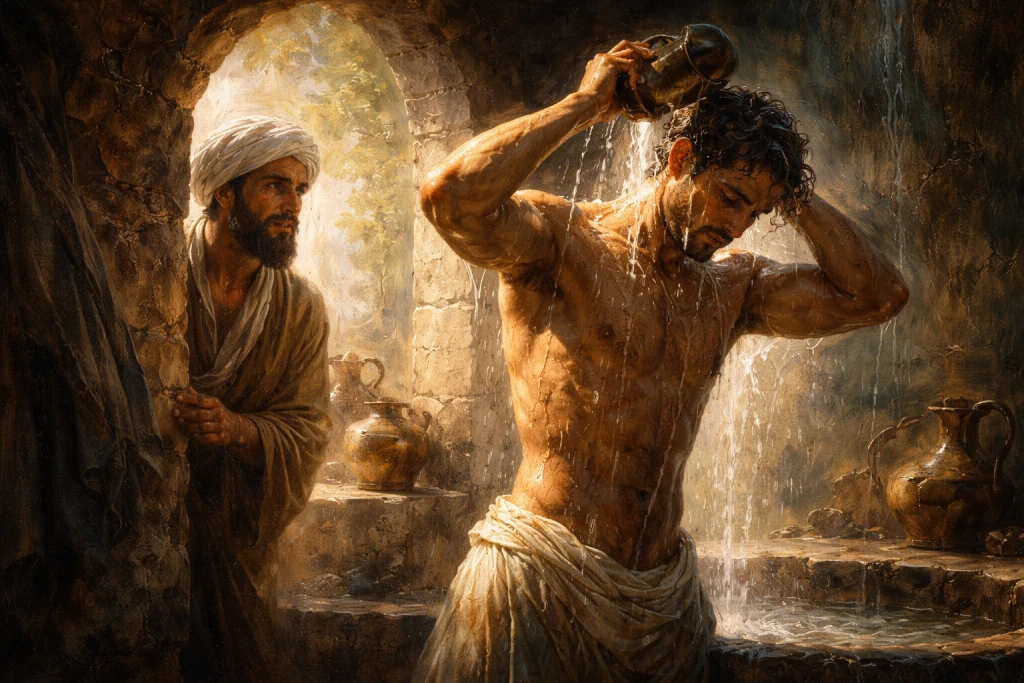
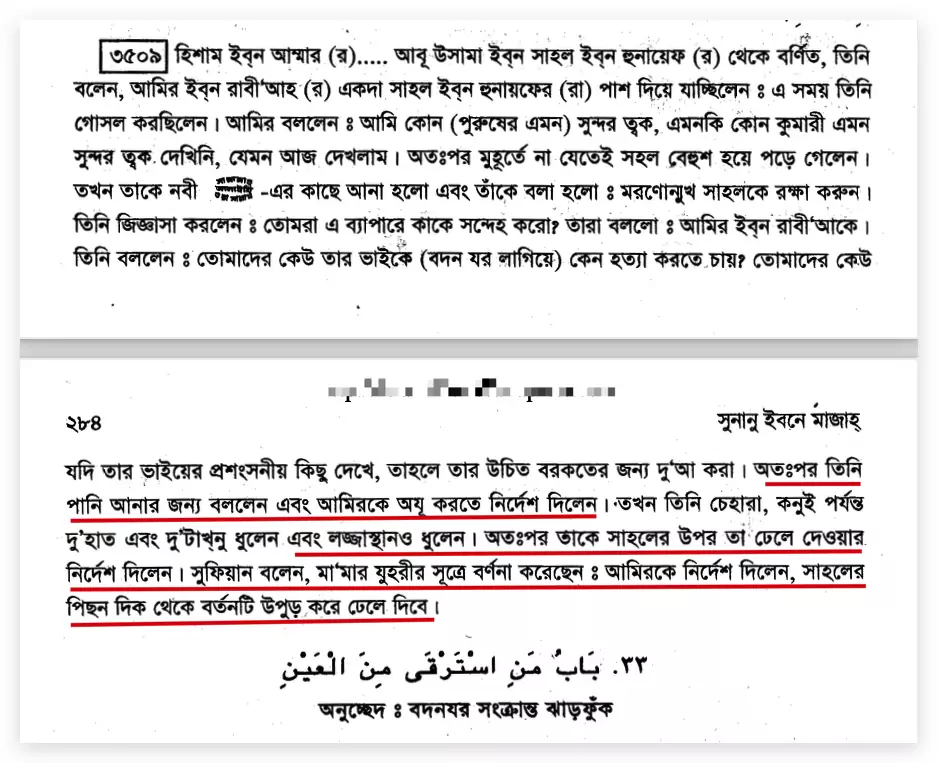
Amir ibn Rabi‘ah saw Sahl ibn Hunayf bathing and praised the beauty of his skin. Sahl then fell ill. Muhammad asked who was suspected. Those present named Amir. Muhammad then instructed Amir to wash and have that water poured over Sahl. Amir was identified as the source of the illness on the basis of suspicion. Linking someone’s praise to a subsequent illness and holding him responsible is an unsupported accusation. Muhammad’s instruction made that accusation the basis of treatment. [3]
مَرَّ عَامِرُ بْنُ رَبِيعَةَ بِسَهْلِ بْنِ حُنَيْفٍ وَهُوَ يَغْتَسِلُ فَقَالَ لَمْ أَرَ كَالْيَوْمِ وَلاَ جِلْدَ مُخَبَّأَةٍ. فَمَا لَبِثَ أَنْ لُبِطَ بِهِ فَأُتِيَ بِهِ النَّبِيَّ ـ صلى الله عليه وسلم ـ فَقِيلَ لَهُ أَدْرِكْ سَهْلاً صَرِيعًا. قَالَ «مَنْ تَتَّهِمُونَ بِهِ». قَالُوا عَامِرَ بْنَ رَبِيعَةَ. قَالَ «عَلاَمَ يَقْتُلُ أَحَدُكُمْ أَخَاهُ إِذَا رَأَى أَحَدُكُمْ مِنْ أَخِيهِ مَا يُعْجِبُهُ فَلْيَدْعُ لَهُ بِالْبَرَكَةِ». ثُمَّ دَعَا بِمَاءٍ فَأَمَرَ عَامِرًا أَنْ يَتَوَضَّأَ فَيَغْسِلَ وَجْهَهُ وَيَدَيْهِ إِلَى الْمِرْفَقَيْنِ وَرُكْبَتَيْهِ وَدَاخِلَةَ إِزَارِهِ وَأَمَرَهُ أَنْ يَصُبَّ عَلَيْهِ. قَالَ سُفْيَانُ قَالَ مَعْمَرٌ عَنِ الزُّهْرِيِّ وَأَمَرَهُ أَنْ يَكْفَأَ الإِنَاءَ مِنْ خَلْفِهِ.
English translation: Amir ibn Rabi‘ah was passing Sahl ibn Hunayf while Sahl was bathing. Amir said, “I have never seen anything like this today, not even the skin of a secluded woman.” Shortly afterward, Sahl collapsed. He was brought to the prophet, who was told, “Help Sahl, who has collapsed.” He asked, “Whom do you accuse of this?” They said, “Amir ibn Rabi‘ah.” He said, “Why does one of you kill his brother? If any of you sees something in his brother that pleases him, let him pray for blessings for him.” He then called for water and instructed Amir to perform ablution. Amir washed his face, both arms up to the elbows, both knees, and the inside of his izar. He instructed him to pour that water over Sahl. Sufyan said that Ma‘mar reported from al-Zuhri: He instructed him to overturn the vessel and pour the water over Sahl from behind.
Muwatta Malik’s account explicitly describes Muhammad’s anger, his rebuke of Amir, and the claim of recovery after the washing water was applied. The accusation against Amir was based on his praise of Sahl’s beauty. For that remark, he was asked why he was killing his brother. Muhammad held the admiring man responsible for potentially fatal harm. Attaching an accusation of killing to praise is an appalling act of social blame. With the support of religious authority, ordinary human admiration was transformed into an act of endangering another person’s life. [4]
رَأَى عَامِرُ بْنُ رَبِيعَةَ سَهْلَ بْنَ حُنَيْفٍ يَغْتَسِلُ فَقَالَ مَا رَأَيْتُ كَالْيَوْمِ وَلاَ جِلْدَ مُخْبَأَةٍ. فَلُبِطَ سَهْلٌ فَأُتِيَ رَسُولُ اللَّهِ صلى الله عليه وسلم فَقِيلَ يَا رَسُولَ اللَّهِ هَلْ لَكَ فِي سَهْلِ بْنِ حُنَيْفٍ وَاللَّهِ مَا يَرْفَعُ رَأْسَهُ. فَقَالَ «هَلْ تَتَّهِمُونَ لَهُ أَحَدًا». قَالُوا نَتَّهِمُ عَامِرَ بْنَ رَبِيعَةَ. قَالَ فَدَعَا رَسُولُ اللَّهِ صلى الله عليه وسلم عَامِرًا فَتَغَيَّظَ عَلَيْهِ وَقَالَ «عَلاَمَ يَقْتُلُ أَحَدُكُمْ أَخَاهُ أَلاَّ بَرَّكْتَ اغْتَسِلْ لَهُ». فَغَسَلَ عَامِرٌ وَجْهَهُ وَيَدَيْهِ وَمِرْفَقَيْهِ وَرُكْبَتَيْهِ وَأَطْرَافَ رِجْلَيْهِ وَدَاخِلَةَ إِزَارِهِ فِي قَدَحٍ ثُمَّ صُبَّ عَلَيْهِ فَرَاحَ سَهْلٌ مَعَ النَّاسِ لَيْسَ بِهِ بَأْسٌ.
English translation: Amir ibn Rabi‘ah saw Sahl ibn Hunayf bathing and said, “I have never seen anything like this today, not even the skin of a secluded woman.” Sahl collapsed. People approached the Messenger of Allah and said, “O Messenger of Allah, will you do something for Sahl ibn Hunayf? By Allah, he cannot raise his head.” He said, “Do you accuse anyone of this?” They said, “We accuse Amir ibn Rabi‘ah.” The Messenger of Allah then summoned Amir, became angry with him, and said, “Why does one of you kill his brother? Why did you not pray for blessings? Wash for him.” Amir washed his face, both hands, both elbows, both knees, the extremities of both feet, and the inside of his izar in a vessel. That water was then poured over Sahl. Sahl went away with the people in good health.
Abu Dawud reports, on Aisha’s authority, that the person who cast the evil eye would be instructed to perform ablution and the affected person would bathe with that water. Collecting the accused person’s used water and applying it to the patient thus received recognition as a treatment practice to be followed. At the center of this practice is the use of water that has washed one person’s body as an antidote to another’s illness. The used washing water itself is collected and poured over the patient. Supernatural healing power is attributed to water that has been in contact with the body. [5]
كَانَ يُؤْمَرُ الْعَائِنُ فَيَتَوَضَّأُ ثُمَّ يَغْتَسِلُ مِنْهُ الْمَعِينُ.
English translation: The person who cast the evil eye would be instructed to perform ablution. The person affected by the evil eye would then bathe with that water.
The interpretation involving water used to wash the genitals is present in classical Islamic medical literature itself. Ibn al-Qayyim wrote of instructing the person who cast the evil eye to wash his body folds, extremities, and the inside of his izar, and identified the genitals as one meaning of the last expression. In the same paragraph, he placed this treatment beyond physicians’ reach and listed deniers, mockers, doubters, and those who tried it without belief among those deprived of its benefit. Belief was demanded before the treatment’s outcomes were assessed. This condition opens the way to blaming the person testing the treatment for its failure. The mechanism for protecting an unsupported treatment by making doubt responsible for failure is explicit here. [6]
ومنها : أن يُؤمر العائِنُ بغسل مَغابنِهِ وأطرافه وداخِلَةِ إزاره ، وفيه قولان ؛ أحدهما : أنه فرجُه . والثانى : أنه طرفُ إزاره الداخل الذى يلى جسدَه من الجانب الأيمن ، ثم يُصَبُّ على رأس المَعِين مِن خلفه بغتة ، وهذا مما لا ينالُه عِلاجُ الأطباء ، ولا ينتفِعُ به مَن أنكره ، أو سَخِرَ منه ، أو شَكَّ فيه ، أو فعله مجرِّباً لا يعتقد أنَّ ذلك ينفعُه.
English translation: Among these measures is instructing the person who cast the evil eye to wash his body folds, extremities, and the inside of his izar. There are two views concerning the last expression: one is that it means his genitals; the other is the inner edge of his izar that touches the right side of his body. That water is then suddenly poured onto the affected person’s head from behind. This is something beyond the reach of physicians’ treatment. Anyone who denies it, mocks it, doubts it, or tries it experimentally without believing that it will benefit him derives no benefit from it.
Calling the account of Sahl’s recovery scientific evidence is wrong. The illness is unidentified in the narrative; information about its natural course, the effect of ordinary water, and comparative outcomes in other patients is also absent. The relevant accounts in Ibn Majah and the Muwatta pass through al-Zuhri and Abu Umamah ibn Sahl. Counting the repetition of this one incident across compilations as support from independent experiments is a misuse of evidence. “Sahih” is an internal classification in Islamic transmission criticism. Presenting that classification as experimental certification of the evil eye and the efficacy of washing water is plainly misleading.
The People Involved and the Historical Setting
Two companions are involved in this incident: Sahl ibn Hunayf and Amir ibn Rabi‘ah. Muwatta Malik names the location as al-Kharrar. In Musnad Ahmad’s detailed account, Muhammad and his companions were traveling toward Mecca; Sahl bathed in the al-Kharrar valley at al-Juhfah. Amir commented on the beauty of his body, after which Sahl fell ill. One traveler’s sudden illness was identified as the effect of another’s gaze. Belief in the evil eye displaced investigation of the illness and made a person the target of suspicion. [7]
أَنَّ رَسُولَ اللَّهِ صَلَّى اللَّهُ عَلَيْهِ وَسَلَّمَ خَرَجَ، وَسَارُوا مَعَهُ نَحْوَ مَكَّةَ، حَتَّى إِذَا كَانُوا بِشِعْبِ الْخَرَّارِ مِنَ الْجُحْفَةِ، اغْتَسَلَ سَهْلُ بْنُ حُنَيْفٍ وَكَانَ رَجُلًا أَبْيَضَ، حَسَنَ الْجِسْمِ، وَالْجِلْدِ، فَنَظَرَ إِلَيْهِ عَامِرُ بْنُ رَبِيعَةَ أَخُو بَنِي عَدِيِّ بْنِ كَعْبٍ وَهُوَ يَغْتَسِلُ، فَقَالَ: مَا رَأَيْتُ كَالْيَوْمِ، وَلَا جِلْدَ مُخَبَّأَةٍ.
English translation: The Messenger of Allah set out, and they traveled with him toward Mecca. When they reached the al-Kharrar valley at al-Juhfah, Sahl ibn Hunayf bathed. He was fair-skinned, with a beautiful body and skin. While he was bathing, Amir ibn Rabi‘ah, who was associated with Banu ‘Adi ibn Ka‘b, looked at him and said, “I have never seen anything like this today, not even the skin of a secluded woman.”
Sahl was an Ansari companion from Medina’s Aws tribe. He took part in Badr and Uhud and stood by Muhammad at Uhud. The evil-eye account mentions his beautiful body and skin. Amir compared his skin to that of a secluded woman. The bathing man’s sudden illness was explained as supernatural harm inflicted by another person’s gaze. The sequence of bodily beauty, praise, and subsequent collapse was used to determine the cause of his illness. [8]
Amir was an early convert to Islam, a Muhajir companion, and a participant in the Battle of Badr. He saw Sahl bathing and praised the beauty of his skin. When Sahl fell ill after that praise, Amir was accused. Muhammad rebuked him and instructed him to wash for Sahl. Amir’s gaze and praise were turned into an accusation of causing illness; he was burdened with washing his own body to supply water for another person’s treatment. This is an example of exercising religious authority over someone’s body on the basis of superstition. [9]
The incident: Sahl fell ill after Amir’s praise. Muhammad became angry with Amir and asked, “Why does one of you kill his brother?” He also rebuked Amir for omitting the prayer for blessings. Adding a religious phrase to praise was made a means of preventing potentially fatal harm. Under this rule, a person’s health is tied to the admirer’s recitation of a prayer. This imposed supernatural relationship between admiration of beauty, a prayer formula, and physical illness is unsupported. Muhammad held Amir responsible for potentially fatal harm on the basis of that unproven relationship. [10]
فَدَعَا رَسُولُ اللَّهِ صلى الله عليه وسلم عَامِرًا فَتَغَيَّظَ عَلَيْهِ وَقَالَ: «عَلاَمَ يَقْتُلُ أَحَدُكُمْ أَخَاهُ أَلاَّ بَرَّكْتَ اغْتَسِلْ لَهُ».
English translation: The Messenger of Allah summoned Amir, became angry with him, and said, “Why does one of you kill his brother? Why did you not pray for blessings? Wash for him.”
Classical commentators also discussed rules for exercising authority over the person who cast the evil eye on the basis of this incident. Ibn Battal’s statement, quoted on Islamweb, says that once that person is identified, he is to be ordered to perform ablution; the prophet’s instruction supplies the justification. Belief in the evil eye thus creates a religious entitlement to demand that someone wash his body and surrender the used water. One person’s illness makes another person’s body a treatment material. From an unproven conception of illness to the imposition of obligations on the accused, the same superstition acquires the power of social control. [11]
قال ابن بطال في شرح صحيح البخاري: فيه من الفقه أنه إذا عرف العائن أنه يقضى عليه بالوضوء لأمر النبي عليه السلام بذلك، وأنها نشرة ينتفع بها.
English translation: In his commentary on Sahih al-Bukhari, Ibn Battal said that one of its legal implications is that when the person who cast the evil eye is identified, he is to be ordered to perform ablution because the prophet gave that instruction; it is a beneficial form of incantatory treatment.
Details of the Treatment Method: Water Used to Wash “the Inside of the Lower Garment”
At the center of Muhammad’s prescribed method is pouring water used to wash the accused person’s body over the patient. The detailed classical descriptions include spitting mouth-rinsing water into the same vessel, washing limbs in a specified order, keeping the vessel above the ground, and pouring the water over the patient from behind. Diagnosis is replaced by the assumption of the evil eye; the remedy is this list of rituals. Which body part to wash, which hand to use to take water, and from which direction to pour it onto the patient’s head—these ritual details have acquired the status of treatment.
The accounts describe washing the face, hands, elbows, knees, and extremities of the feet as a remedy for the evil eye. Ibn Majah’s text mentions the face, both arms up to the elbows, and both knees; the Muwatta also includes the extremities of the feet. The washing is performed by the person accused of casting the evil eye. Water running off his body is collected for another person’s treatment. Special healing power is attributed to water that has touched the body. The accused person’s body is assigned two roles: the source of the illness and the supplier of its antidote. [12]
The hadith uses the expression «داخلة إزاره»—the inside of his izar. The interpretation involving washing the genitals occurs in classical Islamic works themselves. Mulla ‘Ali al-Qari cited the genital interpretation when quoting Sharh al-Sunnah. Ibn al-Qayyim also wrote explicitly, «أنه فرجه»—his genitals. His explanation links the body folds and genitals to a supposed harmful influence and satanic spirits. Under this interpretation, applying water used to wash the genitals to the patient’s body is part of prophetic medicine. This attribution of supernatural efficacy to the genitals is unsupported. [13]
Amir washed the specified parts and collected the water in a vessel. The account in Musnad Ahmad instructs someone to pour the water onto Sahl’s head and back from behind; it also mentions overturning the vessel behind him afterward. The account claims that Sahl recovered after this application and went away with the people. The practice of pouring the accused person’s used water over the patient was established around this incident. Pouring it from behind and overturning the vessel are also parts of that practice. The remedy for illness was thus tied to the performance of specified rituals. [14]
Mouth-rinsing water is collected in the same vessel as water used to wash the skin. In the procedure reported from al-Zuhri within al-Baji’s discussion, quoted in Islamweb’s fatwa, the person who cast the evil eye first takes water from the vessel, rinses his mouth, and spits that water back into it. He then washes his face and collects that water in the same vessel. Pouring this mixture of water used in another person’s mouth and water used to wash his body over the patient is designated treatment. The claim of this mixture’s efficacy rests on religious authorization. Its disease-specific medical basis is unsubstantiated. [15]
الغسل الذي أدركنا علماءنا يصفونه أن يؤتى العائن بقدح فيه ماء فيمسك مرتفعا من الأرض فيدخل فيه كفه فيمضمض، ثم يمجه في القدح، ثم يغسل وجهه في القدح صبة واحدة.
English translation: The washing procedure we have seen our scholars describe is this: a vessel containing water is brought to the person who cast the evil eye and held above the ground. He puts his hand into it, takes water to rinse his mouth, and then spits the water into the vessel. He then washes his face with a single pouring, letting the water fall into the vessel.
The rule specifies washing the right hand with the left, the left hand with the right, then the elbows, feet, and knees. Finally, the inside of the izar is put into the vessel, and the water must be poured onto the patient’s head from behind in one pouring. The vessel must be kept above the ground. Certainty about an unproven cause of illness is coupled with detailed remedial rituals. Diagnostic information is absent, while the rules for switching hands and holding the vessel are elaborate. This contrast exposes the method’s superstitious character. Meticulous performance of the ritual is itself presented as the work of treatment. [16]
ثم يدخل داخلة إزاره في القدح ولا يوضع القدح في الأرض، فيصب على رأس المعين من خلفه صبة واحدة، وقيل يغتفل ويصب عليه، ثم يكفأ القدح على ظهر الأرض وراءه.
English translation: He then puts the inside of his izar into the vessel. The vessel is not placed on the ground. The water is then poured onto the affected person’s head from behind in one pouring. It has also been said that the water is poured over him when he is caught unawares. The vessel is then overturned on the ground behind him.
Ibn al-Qayyim’s explanation for washing the genitals and body folds is an unsupported supernatural theory of the body. He claims that a harmful quality seeks to penetrate through the body’s delicate areas; the body folds and inside of the izar are particularly delicate, and satanic spirits have a special connection to these places. Washing them with water nullifies the influence. “Satanic spirits,” a “harmful quality,” “fire,” and “toxicity” become components of the explanation of illness. Water used to wash the genitals has been made a treatment material on the basis of this imaginary theory of the body. [17]
ولما كانت هذه الكيفية الخبيثة تظهر فى المواضع الرقيقة من الجسد، لأنها تطلب النفوذ، فلا تجد أرق من المغابن، وداخلة الإزار، ولا سيما إن كان كناية عن الفرج، فإذا غسلت بالماء، بطل تأثيرها وعملها، وأيضاً فهذه المواضع للأرواح الشيطانية بها اختصاص.
English translation: This harmful quality manifests itself in the body’s delicate areas because it seeks to penetrate inward. It finds no areas more delicate than the body folds and the inside of the izar, particularly if the expression refers to the genitals. Washing these places with water nullifies its influence and action. Moreover, satanic spirits have a special connection to these places.
This theory rests on three unsupported claims: a human gaze carries a harmful supernatural influence; that influence is associated with particular parts of the body; and pouring water used to wash those parts over someone else removes the harm. The analogy of extinguishing fire and the idea of satanic spirits are used to support these claims. This is the logical error of passing off an analogy as evidence. A supernatural force is inserted in place of the unknown cause of illness, and a rule prescribing body-washing water is devised for it. Imposing an unproven theory of disease through authority is plainly unscientific.
Treatment with Water Used to Wash the Penis: A Modern Fatwa
The rule prescribing that a patient bathe in water used to wash the person who cast the evil eye remains in force in modern fatwas. Islamweb’s Fatwa 297226, published on May 21, 2015, is titled «صفة اغتسال العائن والمعين»—the bathing procedure for the person who cast the evil eye and the affected person. It authorizes ablution or bathing by the former and bathing in that used water by the patient as a sharia instruction. The decision rests on hadith and the statements of earlier scholars. Disease-specific experimental findings and comparative medical data are absent. An unproven practice has been given the status of treatment by treating the religious instruction itself as evidence of efficacy. [18]
ما هي كيفية اغتسال العائن؟ وهل هو اغتسال كامل أم غسل المواضع المذكورة في الحديث فقط؟ وهل داخلة الإزار تقصد بها العورة؟ وهل يجزئ الوضوء فقط؟ وما صفته في هذه الحالة؟.
الإجابــة
الحمد لله، والصلاة والسلام على رسول الله، وعلى آله وصحبه، أما بعد:
فإنه قد أمر الشرع العائن بالوضوء أو الاغتسال لدفع ضرر العين بعد وقوعها، ثم يغتسل المصاب بالماء الذي توضأ به العائن، فعن عائشة ـ رضي الله عنها ـ قالت: كان يؤمر العائن فيتوضأ ثم يغسل منه المعين.. رواه أبو داود، قال النووي في الأذكار: بإسناد صحيح على شرط البخاري ومسلم ـ وصححه الألباني.
وعن أبي أمامة سهل بن حنيف أنه قال: رأى عامر بن ربيعة سهل بن حنيف يغتسل فقال: ما رأيت كاليوم ولا جلد مخبأة ـ يعني من شدة بياضه ـ فلبط ـ أي صرع وسقط على الأرض ـ سهل، فأتى رسول الله صلى الله عليه وسلم فقيل: يا رسول الله؛ هل لك في سهل بن حنيف والله ما يرفع رأسه، فقال: هل تتهمون له أحداً؟ قالوا: نتهم عامر بن ربيعة، قال: فدعا رسول الله صلى الله عليه وسلم عامراً، فتغيظ عليه وقال: علام يقتل أحدكم أخاه؟! ألا بركت، اغتسل له، فغسل عامر وجهه ويديه ومرفقيه وركبتيه وأطراف رجليه وداخلة إزاره في قدح، ثم صب عليه، فراح سهل مع الناس ليس به بأس. رواه مالك وأحمد وابن ماجه، وصححه الألباني.
قال ابن بطال في شرح صحيح البخاري: فيه من الفقه أنه إذا عرف العائن أنه يقضى عليه بالوضوء لأمر النبي عليه السلام بذلك، وأنها نشرة ينتفع بها. اهـ.
وقال النووي في المجموع: الاستغسال أن يقال للعائن ـ وهو الناظر بعينه بالاستحسان ـ اغسل داخلة إزارك مما يلي الجلد بماء، ثم يصب ذلك الماء على المعين، وهو المنظور إليه.
وأما صفة الوضوء أو الغسل المطلوبة ومعنى غسل داخلة الغزار: فقد قال فيه الباجي: وفي حديث الزهري: اغتسل له إلا أنه فسر الغسل بفعل الوضوء، والوضوء غسل الأعضاء المخصوصة به، وروي عن يحيى بن يحيى عن ابن نافع في معنى الوضوء الذي أمر به رسول الله صلى الله عليه وسلم فقال: يغسل الذي يتهم للرجل وجهه ويديه ومرفقيه وركبتيه ورجليه وداخلة إزاره، قال عيسى بن دينار: إنما يغسل يديه ومرفقيه ولا يغسل ما بين اليد والمرفق، وروي عن الزهري أنه قال: الغسل الذي أدركنا علماءنا يصفونه أن يؤتى العائن بقدح فيه ماء فيمسك مرتفعا من الأرض فيدخل فيه كفه فيمضمض، ثم يمجه في القدح، ثم يغسل وجهه في القدح صبة واحدة، ثم يدخل يده اليسرى فيصب بها على كفه اليمنى، ثم يدخل يده اليمنى فيصب بها على ظهر كفه اليسرى صبة واحدة، ثم يدخل يده اليسرى فيصب بها على مرفقه الأيمن، ثم يدخل يده اليمنى فيصب على مرفقه الأيسر، ثم يدخل يده اليسرى فيصب بها على قدمه اليمنى، ثم يدخل يده اليمنى فيصب بها على قدمه الأيسر، ثم يدخل يده اليسرى فيصب بها على ركبته اليمنى، ثم يدخل يده اليمنى فيصب بها على ركبته اليسرى كل ذلك في قدح، ثم يدخل داخلة إزاره في القدح ولا يوضع القدح في الأرض، فيصب على رأس المعين من خلفه صبة واحدة، وقيل يغتفل ويصب عليه، ثم يكفأ القدح على ظهر الأرض وراءه، وأما داخلة إزاره فهو الطرف المتدلي الذي يفضي من مئزره إلى جلده كأنه إنما يمر بالطرف الأيمن على الأيسر حتى يشده بذلك الطرف المتدلي الذي يكون من داخل، قال يحيى بن يحيى عن ابن نافع: لا يغسل موضع الحجزة من داخل الإزار، وإنما يغسل الطرف المتدلي. اهـ.
والله أعلم.
English translation:
Question: What is the bathing procedure for the person who cast the evil eye? Is it a full bath or just the washing of the places mentioned in the hadith? Does the inside of the izar mean the private parts? Is ablution alone sufficient? What is the procedure in that case?
Answer: All praise belongs to Allah. May blessings and peace be upon Allah’s Messenger, his family, and his companions. To proceed:
To remove the harm of the evil eye after it has occurred, sharia has instructed the person who cast it to perform ablution or bathe. The affected person then bathes in the water used for that ablution. It is narrated from Aisha that she said: the person who cast the evil eye would be instructed to perform ablution, and the person affected would then be washed with that water. Abu Dawud narrated it. Al-Nawawi said in Al-Adhkar that its chain is sahih according to the criteria of al-Bukhari and Muslim. Al-Albani also graded it sahih.
It is narrated from Abu Umamah ibn Sahl ibn Hunayf that he said: Amir ibn Rabi‘ah saw Sahl ibn Hunayf bathing and said, “I have never seen anything like this today, not even the skin of a secluded woman”—meaning because of the exceptional whiteness of his skin. Sahl collapsed, that is, fell to the ground. People approached the Messenger of Allah and said, “O Messenger of Allah, will you do something for Sahl ibn Hunayf? By Allah, he cannot raise his head.” He said, “Do you accuse anyone of this?” They said, “We accuse Amir ibn Rabi‘ah.” The Messenger of Allah then summoned Amir, became angry with him, and said, “Why does one of you kill his brother? Why did you not pray for blessings? Wash for him.” Amir washed his face, both hands, both elbows, both knees, the extremities of both feet, and the inside of his izar in a vessel. That water was then poured over Sahl. Sahl went away with the people in good health. Malik, Ahmad, and Ibn Majah narrated it, and al-Albani graded it sahih.
In his commentary on Sahih al-Bukhari, Ibn Battal said: one of its legal implications is that when the person who cast the evil eye is identified, he is to be ordered to perform ablution because the prophet gave that instruction. It is a beneficial form of incantatory treatment. End quote.
Al-Nawawi said in Al-Majmu‘: istighsal means telling the person who cast the evil eye—that is, the one who looked with admiration—to wash with water the inside of his izar that lies against the skin. That water is then poured over the person affected by the evil eye, that is, the person who was looked at.
Regarding the required procedure for ablution or bathing and the meaning of washing the inside of the izar, al-Baji said: al-Zuhri’s hadith says, “Bathe for him.” However, he explained this bathing through the acts of ablution. Ablution is the washing of its designated limbs. Yahya ibn Yahya reported from Ibn Nafi‘ concerning the meaning of the ablution instructed by the Messenger of Allah: the person accused of casting the evil eye on the man washes his face, both hands, both elbows, both knees, both feet, and the inside of his izar. ‘Isa ibn Dinar said: he washes only his hands and elbows; he does not wash the area between the hand and the elbow.
It is reported from al-Zuhri that he said: the washing procedure we have seen our scholars describe is this: a vessel containing water is brought to the person who cast the evil eye and held above the ground. He puts his hand into it, takes water to rinse his mouth, and spits that water into the vessel. He then washes his face with a single pouring, letting the water fall into the vessel. He then puts in his left hand and pours water onto his right palm. Next, he puts in his right hand and pours water once onto the back of his left hand. He then puts in his left hand and pours water onto his right elbow, and puts in his right hand and pours water onto his left elbow. Next, he puts in his left hand and pours water onto his right foot, and puts in his right hand and pours water onto his left foot. He then puts in his left hand and pours water onto his right knee, and puts in his right hand and pours water onto his left knee. All this takes place over the same vessel. He then puts the inside of his izar into the vessel. The vessel is not placed on the ground. The water is then poured onto the affected person’s head from behind in one pouring. It has also been said that the water is poured over him when he is caught unawares. The vessel is then overturned on the ground behind him.
The inside of the izar is its hanging edge, which extends from the garment to the skin. It is as though he takes the right edge over the left and fastens it with the hanging edge that lies inside. Yahya ibn Yahya reported from Ibn Nafi‘: the waistband area inside the izar is not washed; only the hanging edge is washed. End quote.
Allah knows best.
The fatwa’s reasoning is that the prophet gave the instruction, so using this water is a practice to be followed. Religious obedience is presented as the answer to the question of efficacy. The washing sequence, spitting mouth-rinsing water into the vessel, and holding the vessel above the ground are reproduced in detail; patient numbers, the identity of the illness, and comparative success-and-failure data are absent. This fatwa is a modern reauthorization of an unsupported treatment. Even in the twenty-first century, decisions about human illness and bodies are being imposed through the authority of an old religious instruction.
Another Islamweb fatwa extends belief in the evil eye to online communication. In Fatwa 320443, published on January 17, 2016, the questioner admires a friend’s greater number of online “achievements” and then fears having cast the evil eye on that friend thousands of kilometers away. The response accepts the possibility of the evil eye operating through a photograph and at a distance. It invokes Ibn al-Qayyim’s statement that even a blind person can exert a harmful influence after hearing something described. By removing the limits of sight and distance, the idea of an invisible attack is made still more pervasive. [19]
ونفس العائن لا يتوقف تأثيرها على الرؤية، بل قد يكون أعمى، فيوصف له الشيء، فتؤثر نفسه فيه وإن لم يره.
English translation: The influence of the soul of the person who casts the evil eye does not depend on sight. He may even be blind; when something is described to him, his soul influences it without his seeing it.
Under this explanation, even a blind person can cast the “evil eye”; an absent person and a distant photograph also become targets of harmful influence. A claim that began with the gaze thus expands into the idea of an all-pervasive invisible power. An ordinary experience such as admiring someone else’s success online becomes a source of fear of harm and guilt. This mechanism for expanding suspicion is entirely unsupported. Religious fatwas are spreading fear of supernatural harm into the relationships of modern life.
Why Was This Method Used?
In Islamic belief, the evil eye is established as real. The declaration attributed to Muhammad in Sahih Muslim is that the evil eye is real; if anything could overtake divine decree, the evil eye would do so. The same statement instructs people to wash when asked. The supposed cause of illness and its remedy have received religious authorization together. In this system, the theory of disease begins with the prophet’s declaration. The reality of the evil eye and the remedial power of washing water became beliefs and practices to be followed on the basis of that declaration. [1]
الْعَيْنُ حَقٌّ وَلَوْ كَانَ شَىْءٌ سَابَقَ الْقَدَرَ سَبَقَتْهُ الْعَيْنُ وَإِذَا اسْتُغْسِلْتُمْ فَاغْسِلُوا.
English translation: The evil eye is real. If anything could overtake divine decree, the evil eye would do so. When you are asked to wash, wash.
Ibn al-Qayyim supplied the theoretical explanation for making used water an antidote. He compared the harmful influence of the person who cast the evil eye to fire and toxicity. He claims that washing that person’s body extinguishes the “fire”; the same water is then poured over the patient to remove the harmful influence in him as well. The water is assumed to become a remedy for the second person precisely because it has been used on the first person’s body. This explanation creates an unsupported connection between supernatural power and used water. The treatment claim is constructed through the analogy of extinguishing fire. [20]
فإن قيل: فقد ظهرت مناسبة الغسل، فما مناسبة صب ذلك الماء على المعين؟ قيل: هو في غاية المناسبة، فإن ذلك الماء ماء طفئ به تلك النارية، وأبطل تلك الكيفية الرديئة من الفاعل، فكما طفئت به النارية القائمة بالفاعل طفئت به، وأبطلت عن المحل المتأثر بعد ملابسته للمؤثر العائن.
English translation: If it is said, “The relevance of washing has become clear, but what is the relevance of pouring that water over the affected person?” the answer is that it is entirely appropriate. That water has extinguished the fiery influence and neutralized the harmful quality in the person exerting the influence. Just as the fiery quality in that person has been extinguished with this water, it is also extinguished and neutralized with the same water in the affected place after the water has come into contact with the person exerting the evil-eye influence.
This is a straightforward error of deriving causation from analogy. Water’s familiar ability to extinguish fire is projected onto the imaginary “fiery quality” of a human gaze. Water used on the body of the person who cast the evil eye is then declared an antidote for the patient. In this theory, “fiery quality” and “toxicity” name vague supernatural properties. The substance transferred, its identification, and experimental information about the water’s remedial power are all absent. This medical theory, built on successive assumptions, is unsupported. Supernatural terminology and analogy are used to manufacture a pretense of knowledge.
Ibn al-Qayyim also provided conditions that protect this treatment claim from failure. He lists deniers, mockers, doubters, and people who apply it experimentally without belief in its benefit among those deprived of that benefit. Belief thus becomes compulsory before outcomes are assessed. This condition allows failed applications to be blamed on the patient’s or practitioner’s doubt. Prior belief is demanded in the very claim under investigation. This is circular reasoning and a mechanism for shielding the treatment claim from testing. [21]
وهذا مما لا يناله علاج الأطباء، ولا ينتفع به من أنكره، أو سخر منه، أو شك فيه، أو فعله مجربا لا يعتقد أن ذلك ينفعه.
English translation: This is something beyond the reach of physicians’ treatment. Anyone who denies it, mocks it, doubts it, or tries it experimentally without believing that it will benefit him derives no benefit from it.
Ibn al-Qayyim also proclaimed the superiority of prophetic medicine. He placed the treatment of naturalistic physicians, relative to prophetic medicine, even below the standing of street healers. The comparison rests on the status of prophets; comparative treatment-outcome data are absent. Religious rank has taken the place of the question of what happened in the patient’s body. The unsupported claim of superiority turns a discussion of treatment into a test of obedience: the treatment is supreme because of the prophet’s status, while the doubter is deprived of its benefit. [22]
فطب الطبائعية وعلاجهم بالنسبة إلى العلاج النبوي، كطب الطرقية بالنسبة إلى طبهم، بل أقل، فإن التفاوت الذي بينهم وبين الأنبياء أعظم، وأعظم من التفاوت الذي بينهم وبين الطرقية بما لا يدرك الإنسان مقداره.
English translation: The treatment of naturalistic physicians, in relation to prophetic treatment, is like the treatment of street healers in relation to theirs—indeed, lower still. For the gap between them and the prophets is so much greater than the gap between them and street healers that a person cannot comprehend its magnitude.
This method rests on declaring the evil eye real, attributing a harmful supernatural influence to the body of the person who cast it, treating washing water as an antidote, and using the prophet’s instruction as final authorization. Authority, analogy, and belief have taken the place of diagnosis and outcome assessment. The practice of pouring water used to wash the body or genitals over the patient acquired the status of treatment on this basis. An unproven theory of disease has been coupled with an unproven remedy to construct a complete superstition. The prophet’s authority turned that superstition into a religious rule to be followed.
Theoretical and Scientific Inconsistencies in the Treatment Method
The cause of illness, the accused person, and the remedy—all three determinations rest on supernatural belief. One person offered praise, and another subsequently fell ill; that sequence was used to make the first person’s gaze the cause. The claim of recovery after water used to wash his body was applied was then treated as evidence of the remedy. In both cases, succession is taken to establish cause and effect. This is a fundamental error in causal reasoning. Identifying the source of illness through superstition and making used water an antidote on that assumption is plainly unscientific.
Illness from exposure to contaminated water is a real public-health problem. The CDC describes illness through contact with germ-contaminated water, swallowing it, and inhaling water droplets. It also advises avoiding entering water with an open wound. Information about the microbiological safety of the used water is absent from the evil-eye rule. Religious authorization supplies the basis for assuming that water used to wash someone’s body is suitable for another person’s treatment. Authorizing the application of used water as treatment while bypassing infection-control questions is unscientific and irresponsible. [23]
Even if water looks clean, it can still have germs in it that could make you sick.
English translation: Even when water looks clean, it may contain germs that can make you ill.
Comparative testing helps distinguish a treatment’s specific effect from the natural course of illness, the patient’s expectations, and observer bias. The NHLBI explains the assessment of efficacy and side effects, comparison with another treatment or an inactive counterpart, random allocation, and blinding. This comparative information is absent from the account of Sahl’s incident. Identifying Amir’s used water conclusively as the cause of recovery is conjectural. Presenting that conjecture as conclusive evidence of efficacy is misleading. [24]
Blinded or masked studies are designed to prevent members of the research team and study participants from influencing the results.
English translation: Blinded studies are designed to prevent the research team and participants from influencing the results.
Ibn al-Qayyim’s condition allows failure to be blamed on the doubter. Successful application is credited to the treatment, while failed application invites an accusation of insufficient belief. The same claim uses two opposite outcomes to its own advantage. This reasoning blocks the discovery of errors in the treatment. Demanding trust in an unsupported remedy and making the patient’s doubt a fault is intellectual coercion in the name of treatment. This system of accusing the doubter instead of investigating the reasons for failure protects religious authority and adds to the patient’s burden.
Psychological and Sexual Analysis: The “Evil Eye,” Bodily Beauty, and Attraction
Sahl is bathing, Amir is watching, and he compares Sahl’s skin to that of a virgin woman. An account in Muwatta Malik also mentions Sahl removing his outer robe. One man’s admiration for the beauty of another man’s body and the comparison with a woman’s skin are direct elements of the narrative. Illness and an accusation of potentially fatal harm immediately follow that admiration. Praise of the body is transformed into a sign of supernatural danger. Muhammad’s response makes the admiring man a target of suspicion and his body a source of the remedy. [25]
اغْتَسَلَ أَبِي سَهْلُ بْنُ حُنَيْفٍ بِالْخَرَّارِ فَنَزَعَ جُبَّةً كَانَتْ عَلَيْهِ وَعَامِرُ بْنُ رَبِيعَةَ يَنْظُرُ قَالَ وَكَانَ سَهْلٌ رَجُلًا أَبْيَضَ حَسَنَ الْجِلْدِ قَالَ فَقَالَ لَهُ عَامِرُ بْنُ رَبِيعَةَ مَا رَأَيْتُ كَالْيَوْمِ وَلَا جِلْدَ عَذْرَاءَ.
English translation: My father, Sahl ibn Hunayf, bathed at al-Kharrar. He removed his outer robe while Amir ibn Rabi‘ah watched. Sahl was fair-skinned and had beautiful skin. Amir ibn Rabi‘ah said to him, “I have never seen anything like this today, not even the skin of a virgin woman.”
In Amir’s statement, a virgin woman’s skin is the standard for the beauty of the male body. The commentary in Mirqat al-Mafatih mentions the skin’s softness and whiteness and the secluded woman. This is an explicit expression of one man’s admiration for another man’s beauty. The comparison with a woman’s skin gives that admiration a bodily and intimate dimension. Amir’s enduring sexual orientation and private mental state are unknown. The clear psychological and social aspect of the narrated incident is the coupling of admiration of the body with fear of harm and the imposition of blame on the admirer.
After Amir’s praise, Muhammad rebuked him and questioned his omission of the prayer for blessings. In this system, admiration is coupled with responsibility for another person’s illness. People learn to fear their own gaze and praise as potential sources of harm. Islamweb’s modern questioner admired a friend’s greater online achievements and then feared having cast the evil eye on that distant friend. Guilt and fear following admiration are directly expressed in the questioner’s account. Religious belief has transformed an ordinary social experience into terror of supernatural harm.
In Ibn al-Qayyim’s genital interpretation, the private parts are linked to both the source of illness and the remedial system. He connects the body folds and genitals with a harmful quality and satanic spirits. He claims that washing these places and pouring the same water over another person neutralizes the influence. This theory, which makes bodily contact a vehicle of supernatural efficacy, is unsupported. Attributing spiritual power to the genitals and used water is the distinctive feature of this practice. A superstitious theory of the body has been constructed by involving the private parts in the explanation and remedy of illness.
The relationship between mental processes and bodily sensations is investigated experimentally. In nocebo research, after an association between particular cues and pain was learned, stimuli of equal intensity were experienced differently. The intensity of stimuli, cues, allocation of participants, and pain levels are recorded in these experiments. The specific cause of Sahl’s illness is undetermined. Imposing a definitive diagnosis of repressed desire, guilt, or a nocebo effect on him is conjectural. The established information in the incident is the accusation of the evil eye after illness and the religious instruction to apply used water.
The bodily character of the comparison with a woman’s skin also appears in classical commentary. In explaining the word “mukhabbā’ah,” Mulla ‘Ali al-Qari mentions an unmarried young woman living in seclusion and the softness of her skin. The meaning of using female beauty as the standard in praising a male body is specific here. Illness and an accusation of harm are coupled with this admiration of the body. The social result is suspicion of the admiring man, religious rebuke, and the use of water that has washed his body as a remedy. [26]
وَهِيَ الْجَارِيَةُ الَّتِي فِي خِدْرِهَا لَمْ تَتَزَوَّجْ بَعْدُ، لِأَنَّ صِيَانَتَهَا أَبْلَغُ مِمَّنْ قَدْ تَزَوَّجَتْ وَجِلْدُهَا أَنْعَمُ.
English translation: She is the young woman in her secluded quarters who has not yet married; she is kept more secluded than a married woman, and her skin is softer.
A controlled study published in 2020 found changes in the experience of pain through learned associations. The researchers randomly assigned 87 healthy women to three groups. During conditioning, two color cues were paired with electrical pain stimuli of different intensities. During testing, stimulus intensity was held constant. Nocebo-induced increased pain was found in the group conditioned without disclosure of the relationship between the cues and stimuli. A specific effect was investigated through controlled stimuli, a learning procedure, and measurement of sensation. [27]
During the testing phase all participants received a series of stimuli of the same intensity, regardless of the preceding color.
English translation: During testing, all participants received a series of stimuli of the same intensity, regardless of the color displayed beforehand.
Praise of bodily beauty, the comparison with a woman’s skin, illness, and the imposition of blame on the admirer—this sequence is explicit in the narrative. In that situation, Muhammad instructed the application of water used to wash the person accused of casting the evil eye. Under this system, ordinary admiration invites the prospect of accusation, omission of a prayer becomes grounds for rebuke, and the accused person’s body becomes a treatment material. Holding people responsible for supernatural harm without evidence is degrading. Ignorance about illness has been used to impose religious liability on a person.
Conclusion
Muhammad’s evil-eye treatment is an unsupported superstition. Human gazes and praise are made causes of illness, and water used to wash the accused person’s body becomes the antidote. Under the classical interpretation, water used to wash the genitals is also included. This supernatural theory of disease and the claim of the water’s healing power are unproven. Using Muhammad’s instruction and later scholars’ approval as medical evidence is misleading. Like the instruction to drink camel urine, promoting this practice as infallible divine medicine elevates an unsupported claim to the status of religious truth.
Drawing definite causal conclusions from illness following praise and recovery following the pouring of water is wrong. Sahl’s illness is unidentified; information about its natural course, the effects of ordinary water, and success and failure in other patients is absent. Passing off a recovery story as certification of treatment efficacy is a misuse of evidence. Counting multiple compilations of the same account as support from independent experiments is also wrong. “Sahih” is an internal classification in Islamic transmission criticism; promoting it as scientific certification of the water’s safety and healing power is plainly misleading.
Collecting mouth-rinsing water and body-washing water in the same vessel and pouring it over a patient is unhygienic. Its rules detail holding the vessel, washing limbs, and pouring from behind; information on microbiological safety and disease-specific efficacy is absent. Used water is declared an antidote on the strength of religious authorization. The leap from cleaning the body to a special power to cure illness is a logical error. Bypassing the safety of a treatment material and relying on supernatural purity is unscientific and irresponsible.
Ibn al-Qayyim’s explanation allows the burden of this unsupported treatment to be placed on the doubter. By listing those who apply it without belief among those deprived of its benefit, he provides a mechanism for locating the cause of failure in the patient’s or practitioner’s belief. Success is credited to the method; failure becomes the doubter’s fault. This is circular reasoning and a strategy for shielding the claim from scrutiny. The proclamation of prophetic medicine’s superiority likewise rests on the status of prophets. Determining truths about the human body by substituting religious rank for treatment outcomes is irrational.
People bear the social cost of this superstition. Others’ gazes and praise become objects of suspicion in place of investigation of illness. The admiring person is accused of potentially fatal harm and burdened with washing his body to supply water. Fear of invisible harm intrudes on the enjoyment of beauty and success. Modern fatwas have expanded suspicion by including photographs, distance, and blind people within the scope of this harmful power. Holding someone responsible for another person’s illness without evidence and making his body a material for supernatural treatment is an affront to human dignity.
This unsupported theory of disease has been given religious authority under the labels “prophetic” and “spiritual.” Supernatural declarations about the cause of illness, used water in the name of a remedy, and demands for obedience before efficacy is assessed—these three elements have established superstition as treatment. This instruction of Muhammad’s is absurd and unscientific. Promoting water used to wash the body or genitals as a supernatural antidote is irresponsible conduct toward the patient. Imposing an unsupported treatment as infallible divine knowledge sanctifies ignorance and represents an irrational exercise of religious authority over people’s bodies.
References
- Sahih Muslim, Hadith 2188 1 2
- Sahih al-Bukhari, Hadith 5686 ↩︎
- Sunan Ibn Majah, Hadith 3509 ↩︎
- Muwatta Malik, Book of the Evil Eye, Report 2; Number 1746 in the Bengali edition ↩︎
- Sunan Abi Dawud, Hadith 3880 ↩︎
- Ibn al-Qayyim, Al-Tibb al-Nabawi: Discussion of Washing the Body Folds, Extremities, and Inside of the Izar of the Person Who Cast the Evil Eye ↩︎
- Muwatta Malik, Book of the Evil Eye, Report 1; The Account in Musnad Ahmad, with al-Sindi’s Commentary ↩︎
- Ibn ‘Abd al-Barr, Al-Isti‘ab: Sahl ibn Hunayf; Muwatta Malik, Book of the Evil Eye, Report 1 ↩︎
- Mulla ‘Ali al-Qari, Mirqat al-Mafatih, Commentary on Hadith 4562; Muwatta Malik, Book of the Evil Eye, Report 2 ↩︎
- Muwatta Malik, Book of the Evil Eye, Report 2 ↩︎
- Ibn Battal’s Statement Quoted in Islamweb, Fatwa 297226 ↩︎
- Sunan Ibn Majah, Hadith 3509; Muwatta Malik, Book of the Evil Eye, Report 2 ↩︎
- Mirqat al-Mafatih, Commentary on Hadith 4562; Ibn al-Qayyim, Al-Tibb al-Nabawi ↩︎
- Musnad Ahmad, the Account of Sahl ibn Hunayf; Muwatta Malik, Book of the Evil Eye, Report 2 ↩︎
- Islamweb, Fatwa 297226: Al-Zuhri’s Account Quoted in al-Baji’s Discussion ↩︎
- The Washing and Water-Application Procedure Quoted in Islamweb, Fatwa 297226 ↩︎
- Ibn al-Qayyim, Al-Tibb al-Nabawi: Washing the Body Folds, Extremities, and Inside of the Izar of the Person Who Cast the Evil Eye ↩︎
- Islamweb, Fatwa 297226: The Bathing Procedure for the Person Who Cast the Evil Eye and the Affected Person ↩︎
- Islamweb, Fatwa 320443: Different Circumstances of the Influence of the Person Who Cast the Evil Eye ↩︎
- Ibn al-Qayyim, Al-Tibb al-Nabawi: Explanation of Pouring the Used Water of the Person Who Cast the Evil Eye over the Affected Person ↩︎
- Ibn al-Qayyim, Al-Tibb al-Nabawi: Statement on Doubt and Experimental Application ↩︎
- Ibn al-Qayyim, Al-Tibb al-Nabawi: Comparison of Naturalistic and Prophetic Medicine ↩︎
- CDC: Preventing Illnesses Transmitted through Water ↩︎
- NHLBI: Clinical Trial Methods and Bias Control ↩︎
- Muwatta Malik, Book of the Evil Eye, Report 1 ↩︎
- Mulla ‘Ali al-Qari, Mirqat al-Mafatih, Commentary on Hadith 4562 ↩︎
- Bajcar and Colleagues, 2020: A Controlled Experiment on Nocebo-Induced Increased Pain ↩︎