
Introduction
Modern societies recognize women’s equal rights with men, including equal participation in education, employment, leadership, and public life. Yet Islamic religious texts and their interpretations impose an obligation on women to satisfy their husbands’ sexual demands, providing religious and legal sanction for conduct amounting to marital rape. Sunan Ibn Majah (hadith 1853), for example, states that a wife must not refuse her husband’s sexual demands even while on a camel saddle. Likewise, Mishkat al-Masabih (hadith 3255) says that, were prostration before another person to be commanded, a wife would be told to prostrate before her husband. These traditions depict women as subject to their husbands’ proprietary claims, leaving little place for the wife’s independent wishes or consent. Classical interpretations of mahr likewise describe the husband’s payment of the dower as the consideration for gaining a right over his wife’s sexual organs, a conception fundamentally at odds with human equality. [1]. Islam also grants husbands the Right to Discipline and Beat a Disobedient Wife.
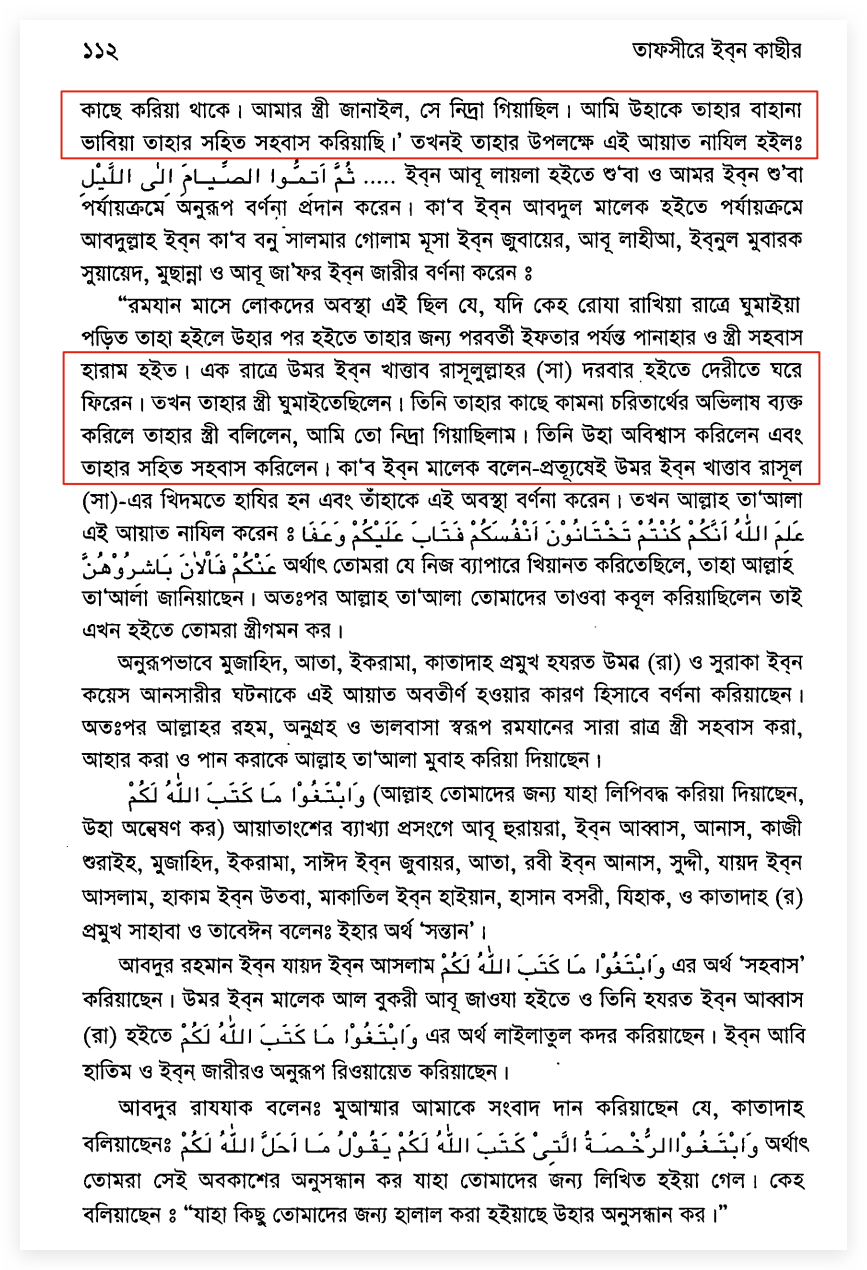
Commentaries on Sahih Muslim describe a wife’s abandonment of her husband’s bed as forbidden, making compliance with his summons obligatory. Riyad al-Salihin transmits a similar rule. Such accounts subordinate women’s independence and consent to their husbands’ demands, in conflict with rational principles of bodily autonomy and human rights. Tafsir Ibn Kathir also preserves an account in which Umar had intercourse with his wife after rejecting her statement that she had fallen asleep; Muhammad is not reported to have objected to Umar’s treatment of her. The episode reflects how little independent weight the wife’s wishes carried within the narrated social setting.
The Legal Nature of Marriage: Sexual Entitlement, Dower, and Tamkin
In classical Hanafi jurisprudence, marriage is defined as a contract through which the husband obtains a right to sexual enjoyment and intercourse with his wife. The technical expression for this concept is milk al-mut’ah—ownership of the right to sexual enjoyment. In the marriage chapter of his Al-Bahr al-Ra’iq Sharh Kanz al-Daqa’iq , Ibn Nujaym describes marriage as a contract intentionally establishing this entitlement; in the same discussion, milk al-mut’ah refers to the right to sexual enjoyment and intercourse. The legal consequence of marriage is thus articulated as the husband’s entitlement to sexual access to his wife, rather than as two equal individuals’ ability to grant separate consent to each sexual act. Once sexual access is made an enforceable benefit acquired by contract, a wife’s refusal is treated not primarily as an exercise of free choice but as a possible violation of the husband’s contractual rights. [2].
وملك المتعة عبارة عن ملك الانتفاع والوطء كما في الكشف ، ومعنى وروده عليه إفادته له شرعا
English translation: Ownership of the right to sexual enjoyment means ownership of the benefit of enjoyment and intercourse, as explained in Al-Kashf. The contract’s application to this right means that the contract legally establishes this entitlement under Islamic law.
Burhan al-Din al-Marghinani’s Al-Hidayah fi Sharh Bidayat al-Mubtadi also employs the concept of milk al-mut’ah when discussing the wording of a marriage contract. Under Hanafi doctrine, a marriage may validly be contracted using the word for sale; the reasoning invokes the figurative connection between the transfer of property and ownership of the right to sexual enjoyment. The same discussion rejects concluding marriage using the language of hiring or lease (ijarah). In other words, transfer, ownership, and sexual enjoyment all figure in the contractual vocabulary of marriage, while jurists establish specific rules concerning which expressions can create the relevant sexual entitlement. By placing a woman’s body and sexual relationship within this rights-based contractual framework, the husband’s sexual access becomes a consequence of the contract. [3].
وينعقد بلفظ البيع هو الصحيح لوجود طريق المجاز ولا ينعقد بلفظ الإجارة في الصحيح لأنه ليس بسبب لملك المتعة
English translation: A marriage contract is concluded using the wording of sale—this is the correct view, because the wording can be used figuratively. But a marriage contract is not concluded using the wording of lease or hire—this is the correct view—because lease is not a means of establishing ownership of the right to sexual enjoyment.
The Hanafi jurist Ala al-Din al-Kasani, in Bada’i al-Sana’i fi Tartib al-Shara’i , identifies the husband’s exclusive ownership of the right to sexual enjoyment as one of the legal consequences of marriage in his chapter on milk al-mut’ah. This entitlement encompasses sexual enjoyment derived from the wife’s genitals and other parts of her body. Al-Kasani records differences among Hanafi jurists over the legal characterization of that right: some describe ownership of sexual usufruct, while others speak of a right over the wife’s body and person for the purposes of sexual enjoyment. The dower appears as the consideration for establishing the husband’s exclusive entitlement; the rule is not distributed equally between the spouses. [4]
ومنها ملك المتعة ، وهو اختصاص الزوج بمنافع بضعها وسائر أعضائها استمتاعا أو ملك الذات والنفس في حق التمتع
English translation: Among the effects of marriage is ownership of the right to sexual enjoyment: the husband’s exclusive entitlement to enjoy the benefits of her genitals and other bodily parts, or ownership of her person and body insofar as sexual enjoyment is concerned.
Elsewhere in the same work, al-Kasani explicitly compares marriage with a transaction of purchase and sale when explaining the payment of the dower. In his account, mahr is the consideration for sexual access to the woman’s genitals, just as a price is the consideration for an item sold. When the dower is payable immediately, the wife may withhold intercourse until she receives the full payment. Al-Kasani reasons that just as a seller may withhold goods until payment is received, a wife may withhold herself to secure the mahr. He also describes the husband’s authority to regulate the wife’s movements and departure from the marital home after the dower has been paid. Here the husband’s authority is determined by payment and contracted entitlement, rather than by whether the wife wishes to have sex. [5]
ولأن المهر عوض عن بضعها كالثمن عوض عن المبيع وللبائع حق حبس المبيع لاستيفاء الثمن فكان للمرأة حق حبس نفسها لاستيفاء المهر
English translation: For the dower is consideration for her genitals, just as the price is consideration for goods sold. The seller has the right to withhold the goods until the price is paid; accordingly, the woman has the right to withhold herself until she receives the dower.
By tying the dower to sexual enjoyment in this form of reciprocal exchange, the contractual focus of marriage becomes what the husband is entitled to receive. The wife’s body is classified not as a domain of independent decision-making but as the subject of a right acquired by another party in return for payment. This legal framework of subordination is connected to the juristic rules on refusal of intercourse, disobedience, and termination of financial maintenance.
Within this proprietary framework of Islamic marriage, access to the wife’s sexuality is established as a husband’s right. The wife’s obligation is described as tamkin—making herself available for her husband’s sexual enjoyment. If she refuses his demand, she may be classified as nashizah , or disobedient, with her financial maintenance withdrawn. Her decisions about her own body are therefore no longer exclusively her own; they are tied to her husband’s contractual entitlement and financial obligations.
The Hanbali jurist Ibn Qudamah, in the maintenance chapter of his Al-Mughni , states explicitly that a wife’s maintenance is owed in return for the tamkin to which the husband is entitled under the marriage contract. Where tamkin is provided, maintenance is due; where it is absent, maintenance is not due. He discusses full tamkin as a condition of maintenance and explains that even making oneself available only at certain times or places may result in loss of financial support. [6]
ولأن النفقة تجب في مقابلة التمكين المستحق بعقد النكاح، فإذا وجد استحقت، وإذا فقد لم تستحق شيئا.
English translation: Maintenance becomes obligatory in exchange for the tamkin owed under the marriage contract. When it exists, she is entitled to maintenance; when it is absent, she is entitled to nothing.
In the section of the same work concerning the loss of maintenance by a disobedient wife, Ibn Qudamah lists refusal of the marital bed, leaving the house without the husband’s permission, refusing to move with him to appropriate accommodation, and refusing to travel with him as grounds for terminating maintenance. Thus, not only the wife’s decisions concerning sexual relations but also her freedom of movement are subjected to the husband’s financial authority. [7]
فمتى امتنعت من فراشه، أو خرجت من منزله بغير إذنه، أو امتنعت من الانتقال معه إلى مسكن مثلها، أو من السفر معه، فلا نفقة لها.
English translation: Whenever she refuses his bed, leaves his house without his permission, refuses to move with him to accommodation suitable for someone of her status, or refuses to travel with him, she is not entitled to maintenance.
The acquisition of sexual enjoyment in return for mahr and the provision of maintenance in return for sexual compliance belong to the same structure of power. When a woman refuses her husband’s sexual demands, her refusal is not treated merely as a personal decision: it also affects her food, accommodation, and financial security. Under the marriage contract, economic dependence thereby becomes a means of enforcing sexual obedience. Under this system:
This conception strips a woman of her status as an independent person and full citizen, reducing her to a “sexual asset” or an object available for enjoyment. Under modern human rights principles, one person cannot own another person’s body. Yet Islamic jurisprudence continues to lend legitimacy to this medieval, servitude-based arrangement, which directly violates women’s fundamental rights, bodily autonomy, and dignity. Rather than demonstrating timeless or divinely ordained justice, the framework reflects an intensely patriarchal, tribal conception of marriage.
Religious Scholars’ Statements on Sexual Coercion in Marriage
Whether marriage entitles a husband to disregard his wife’s refusal and have sexual intercourse with her is a question on which religious preachers invoke sexual obedience and male authority. Arguments supporting the coercion or punishment of a woman for refusing her husband’s sexual demands are incompatible with the fundamental principle of sexual consent. Forced sex with a wife without her willingness and consent is no less abusive because the parties are married, and husbands should not receive special legal immunity. The videos below feature statements by several religious speakers concerning sexual coercion within marriage.
We can now examine how the definition of rape is being altered to legitimize marital rape. Dr. Shafiqur Rahman, a physician and political figure who leads Bangladesh Jamaat-e-Islami, publicly asserted, while discussing rape statistics, that extramarital sex between an “immoral” man and woman constitutes rape, whereas sexual relations conducted through a “lawful” arrangement cannot be called rape even where coercion is involved.
Hadith Prohibiting a Wife from Refusing Her Husband’s Sexual Summons
Sahih Muslim devotes a separate section in its Book of Marriage to the prohibition against a wife refusing her husband’s bed. In a report transmitted from Abu Hurayrah, Muhammad declares divine displeasure toward a wife who refuses her husband’s invitation to bed and makes the end of that displeasure dependent upon the husband’s satisfaction. [8].
Original Arabic:
حَدَّثَنَا ابْنُ أَبِي عُمَرَ، حَدَّثَنَا مَرْوَانُ، عَنْ يَزِيدَ، – يَعْنِي ابْنَ كَيْسَانَ – عَنْ أَبِي حَازِمٍ، عَنْ أَبِي هُرَيْرَةَ، قَالَ قَالَ رَسُولُ اللَّهِ صلى الله عليه وسلم «وَالَّذِي نَفْسِي بِيَدِهِ مَا مِنْ رَجُلٍ يَدْعُو امْرَأَتَهُ إِلَى فِرَاشِهَا فَتَأْبَى عَلَيْهِ إِلَّا كَانَ الَّذِي فِي السَّمَاءِ سَاخِطًا عَلَيْهَا حَتَّى يَرْضَى عَنْهَا».
English translation: Ibn Abi Umar narrated from Marwan, from Yazid ibn Kaysan, from Abu Hazim, from Abu Hurayrah, who said that Muhammad stated: “By Him in Whose hand is my soul, whenever a man calls his wife to his bed and she refuses him, the One in heaven remains displeased with her until her husband is pleased with her.”
Even the wife’s decision to observe a voluntary fast is placed under her husband’s permission. Sahih al-Bukhari 5195 prohibits a woman from fasting without her husband’s permission while he is present; the same report also addresses admitting others into his home without permission and spending his property. [9].
Original Arabic:
حَدَّثَنَا أَبُو الْيَمَانِ، أَخْبَرَنَا شُعَيْبٌ، حَدَّثَنَا أَبُو الزِّنَادِ، عَنِ الْأَعْرَجِ، عَنْ أَبِي هُرَيْرَةَ، رضى الله عنه أَنَّ رَسُولَ اللَّهِ صلى الله عليه وسلم قَالَ «لاَ يَحِلُّ لِلْمَرْأَةِ أَنْ تَصُومَ وَزَوْجُهَا شَاهِدٌ إِلاَّ بِإِذْنِهِ، وَلاَ تَأْذَنَ فِي بَيْتِهِ إِلاَّ بِإِذْنِهِ، وَمَا أَنْفَقَتْ مِنْ نَفَقَةٍ عَنْ غَيْرِ أَمْرِهِ فَإِنَّهُ يُؤَدَّى إِلَيْهِ شَطْرُهُ». وَرَوَاهُ أَبُو الزِّنَادِ أَيْضًا عَنْ مُوسَى عَنْ أَبِيهِ عَنْ أَبِي هُرَيْرَةَ فِي الصَّوْمِ.
English translation: Abu al-Yaman narrated from Shuayb, from Abu al-Zinad, from al-Araj, from Abu Hurayrah, that Muhammad said: “A woman may not fast while her husband is present except with his permission, nor may she admit anyone into his house without his permission. If she spends any of his property without his instruction, he receives half the reward.” Abu al-Zinad also narrated the report about fasting from Musa, from his father, from Abu Hurayrah.
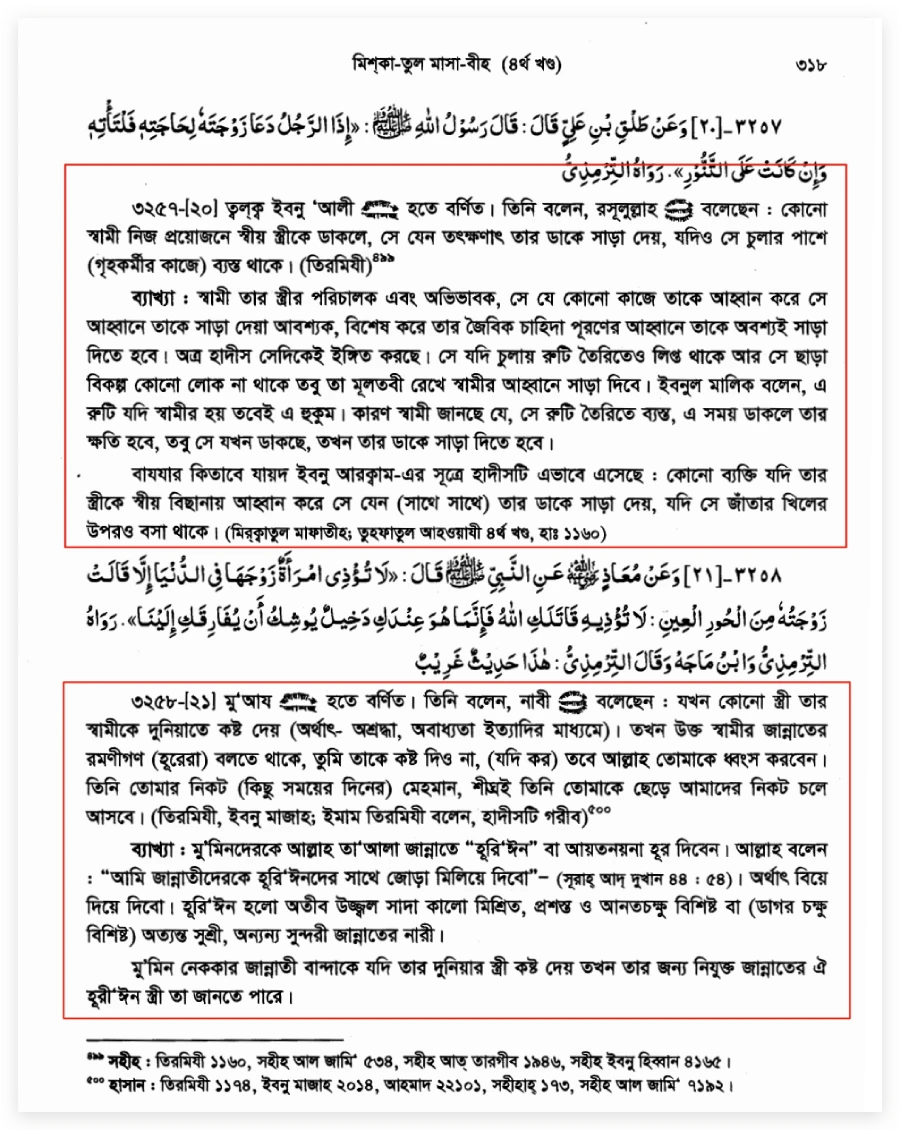
The same requirement of sexual obedience appears in Mishkat al-Masabih 3257 as an instruction to respond to a husband’s summons even when engaged in work at the oven, and in Ibn Majah 1853 as an instruction to discharge the husband’s rights. The Bengali editions and commentaries relevant to these reports are reproduced below. [10] [11] [12] [13].
Mishkat al-Masabih
Book 13: Marriage
Chapter 10, second section: Kind Treatment of Wives and the Mutual Rights and Duties of Husband and Wife
3257– [20] Narrated from Talq ibn Ali, who said: The Messenger of Allah said: “When a man calls his wife to satisfy his need, she should respond at once, even if she is occupied with work at the oven.” (Al-Tirmidhi) [1]
[1] Graded sahih: Al-Tirmidhi 1160; Sahih al-Jami 534; Sahih al-Targhib 1946; Sahih Ibn Hibban 4165.
Hadith classification: Sahih
Narrator: Talq ibn Ali
3257 — [20] Talq ibn Ali narrated that the Messenger of Allah said: “When a husband calls his wife to satisfy his need, she should answer immediately even if she is beside the oven
(busy with household work).” (Al-Tirmidhi), p. 199.
Commentary: The husband is his wife’s guardian and authority. Whenever he summons her, she is obliged to answer, especially when he calls her to satisfy his sexual needs. That is what this hadith indicates. Even if she is preparing bread in an oven and there is nobody else to do the work, she must put it aside and answer him. Ibn al-Malik says this applies when the bread belongs to the husband, because he knows she is busy preparing it and that calling her would disrupt the work; nevertheless, since he calls her, she must respond.
In Al-Bazzar’s collection, a report from Zayd ibn Arqam says: When a man invites his wife to his bed, she must respond immediately even if she is seated upon the millstone. (Mirqat al-Mafatih; Tuhfat al-Ahwadhi, vol. 4, hadith 1160.)
٣٢٥٨ – [٢١] وَعَنْ مُعَادٍ عَنِ النَّبِيِّ ﷺ قَالَ: «لَا تُؤْذِي امْرَأَةٌ زَوْجَهَا فِي الدُّنْيَا إِلَّا قَالَتْ زَوْجَتُهُ مِنَ الْحُورِ الْعِينِ : لَا تُؤْذِيهِ قَاتَلَكِ اللهُ فَإِنَّمَا هُوَ عِنْدَكِ دَخِيلٌ يُوشِكُ أَنْ يُفَارِ قَكِ إِلَيْنَا» . رَوَاهُ التَّرْمِذِيُّ وَابْنُ مَاجَهُ وَقَالَ التَّرْمِذِيُّ : هُذَا حَدِيثٌ غَرِيبٌ
3258 — [21] Muadh narrated that the Prophet said: “Whenever a wife harms her husband in this world (through disrespect, disobedience, and the like), his wife among the wide-eyed maidens of Paradise says: ‘Do not harm him; may Allah destroy you! He is only a temporary guest with you and will soon leave you to come to us.’” (Al-Tirmidhi and Ibn Majah; al-Tirmidhi called it gharib.) Page 500.
Commentary: Allah will grant believing men the wide-eyed maidens of Paradise, the hur al-ayn. He says: “We shall pair them with wide-eyed maidens” (Surah al-Dukhan 44:54), meaning that He will marry them to those maidens. The hur al-ayn are described as exceptionally beautiful women of Paradise, with bright complexions and large, striking eyes.
When a believing, righteous man’s earthly wife harms him, the heavenly maiden appointed for him becomes aware of it.
Sunan Ibn Majah
Tawhid Publications
Book 9: Marriage
2/1853. Abdullah ibn Abi Awfa narrated: When Muadh returned from Syria, he prostrated before the Prophet. The Prophet asked, “What is this, Muadh?” He replied, “I went to Syria and saw people prostrating before their bishops and nobles, and I wished to do the same before you.” The Messenger of Allah said, “Do not do that. If I were to command anyone to prostrate before someone other than Allah, I would command a wife to prostrate before her husband. By Him in Whose hand is the soul of Muhammad, a woman cannot fulfill her duty to her Lord until she fulfills her duty to her husband.” “If her husband asks to satisfy his sexual need with her even when she is on a camel saddle, she should not refuse him.”
Hadith classification: Hasan
It was narrated that: Abdullah bin Abu Awfa said “When Muadh bin Jabal came from Sham, he prostrated to the Prophet who said: ‘What is this, O Muadh?’ He said: ‘I went to Sham and saw them prostrating to their bishops and patricians and I wanted to do that for you.’ The messenger of Allah said: ‘Do not do that. If I were to command anyone to prostrate to anyone other than Allah, I would have commanded women to prostrate to their husbands. By the One in Whose Hand is the soul of Muhammad! No woman can fulfill her duty towards Allah until she fulfills her duty towards her husband. If he asks her (for intimacy) even if she is on her camel saddle, she should not refuse.’ ”
Mishkat al-Masabih
Publisher: Hadith Academy
Book 13: Marriage
Chapter 10, second section: Kind Treatment of Wives and the Mutual Rights and Duties of Husband and Wife
3255 — [18] Abu Hurayrah narrated: The Messenger of Allah said: “If I were to command a human being to prostrate before another human being, I would command a wife to prostrate before her husband.” (Al-Tirmidhi)
Hadith classification: Hasan.
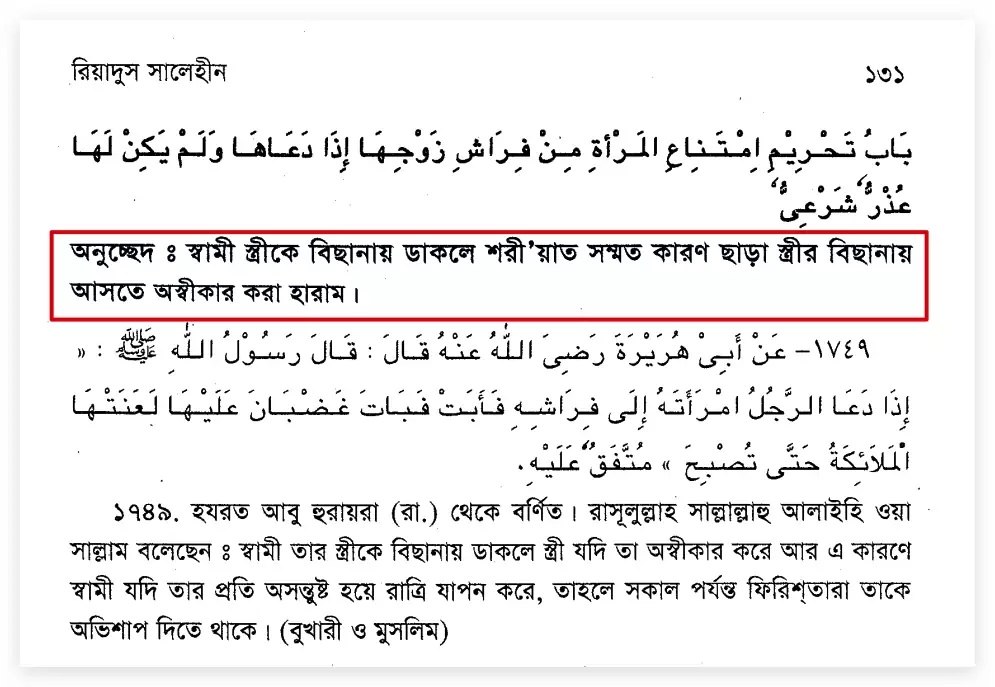
The discussion of marriage in Riyad al-Salihin likewise contains a separate chapter heading prohibiting a wife from refusing her husband’s bed. The heading in the Bengali edition and a photograph of the printed page are reproduced below [14].
Chapter: It is forbidden for a wife to refuse to come to her husband’s bed when he calls her, unless she has a reason recognized by Sharia.
Sexual Obedience in a Bengali Commentary on Sahih Muslim
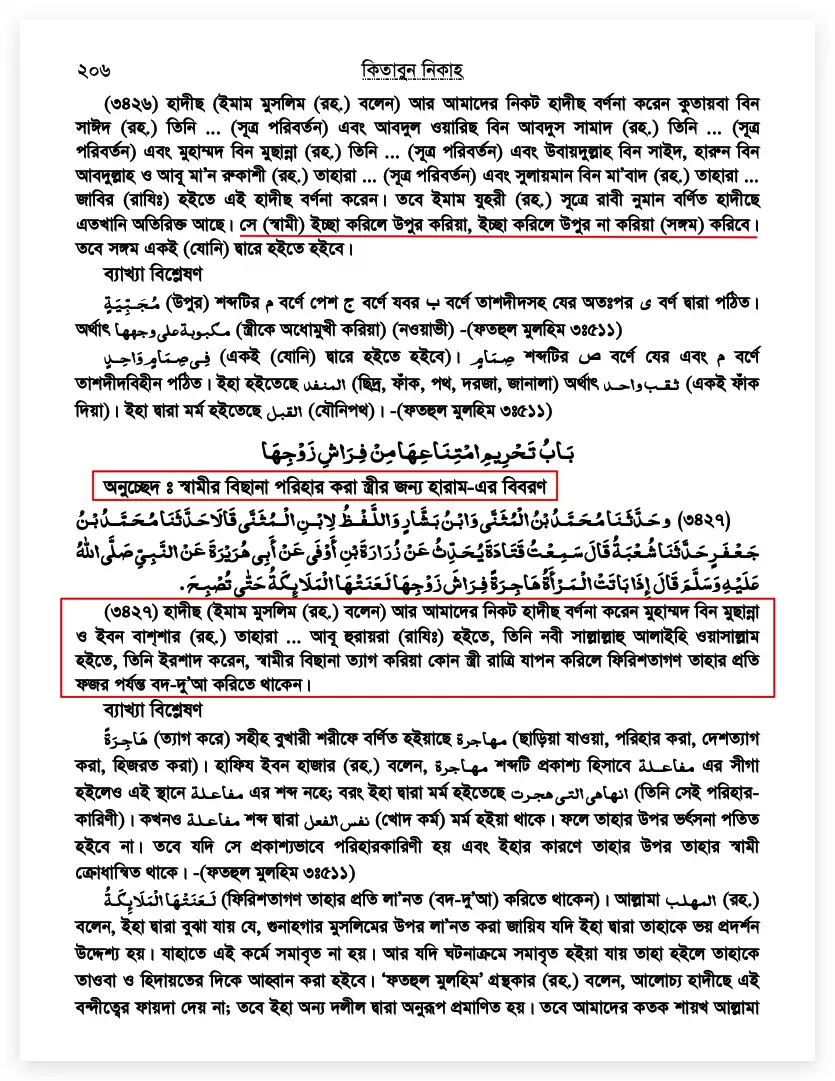
Consider a page from a commentary on Sahih Muslim, which says that it is forbidden for a wife to abandon her husband’s bed ; in other words, responding when her husband calls her to bed is obligatory [15].
(3426) Hadith. Imam Muslim says: Qutaybah ibn Said narrated to us … (change of chain); Abd al-Warith ibn Abd al-Samad … (change of chain); Muhammad ibn al-Muthanna … (change of chain); and Ubayd Allah ibn Said, Harun ibn Abd Allah, Abu Man al-Ruqashi, and Sulayman ibn Mabad all narrated this tradition from Jabir through their respective chains. In the narration through al-Zuhri, al-Numan adds: “He [the husband] may have intercourse with her while she is face down or otherwise, but intercourse must take place through the same [vaginal] opening.”
Commentary and analysis
The word مُجَنِيَةٍ (“face down”) is pronounced with a dammah, then a fathah and a doubled consonant followed by a kasrah, and means مكبوبة على وجهها (“with the wife lying on her face”). (Al-Nawawi; Fath al-Mulhim, 3:511.)
The expression فِي صِمَامٍ وَاحِدٍ (“through one [vaginal] opening”) is pronounced with a kasrah and without doubling the relevant consonant. صِمّامٍ denotes المنفد (an opening, gap, passage, door, or window), namely ثقب واحد (“one opening”). The intended meaning here is القبل (the vagina). (Fath al-Mulhim, 3:511.)
بَابُ تَحْرِيمِ امْتِنَاعِهَا مِنْ فِرَاشٍ زَوْجِهَا
Chapter: The Prohibition Against a Wife Abandoning Her Husband’s Bed
(9829) وحَدَّثَنَا مُحَمَّدُ بْنُ الْمُثَنَّى وَابْنُ بَشَّارٍ وَاللَّفْظُ لِابْنِ الْمُثَنَّى قَالَا حَدَّثَنَا مُحَمَّدُ بْنُ جَعْفَرٍ حَدَّثَنَا شُعْبَةُ قَالَ سَمِعْتُ قَتَادَةَ يُحَدِّثُ عَنْ زُرَارَةَ بْنِ أَوْفَى عَنْ أَبِي هُرَيْرَةَ عَنْ النَّبِيِّ صَلَّى اللَّهُ عَلَيْهِ وَسَلَّمَ قَالَ إِذَا بَاتَتْ الْمَرْأَةُ هَاجِرَةً فِرَاشَ زَوْجِهَا لَعَنَتْهَا الْمَلَائِكَةُ حَتَّى تُصْبِحَ.
(3427) Hadith. Imam Muslim says: Muhammad ibn al-Muthanna and Ibn Bashshar narrated to us … from Abu Hurayrah, who reported that the Prophet said: “When a woman spends the night avoiding her husband’s bed, the angels curse her until morning.”
Commentary and analysis
The word مَاجِرَةً (“departing”) appears in Sahih al-Bukhari as مهاجرة (“leaving, abandoning, emigrating”). Al-Hafiz Ibn Hajar explains that although مهاجرة outwardly resembles the morphological form مفاعلة, it does not carry the reciprocal meaning of مفاعلة here; rather, it means انهاهي التي هجرت (“she is the one who abandoned [him]”). Sometimes مفاعلة denotes the action itself, نفس الفعل. Consequently, blame does not attach simply on that grammatical basis; it attaches when she deliberately avoids him and her husband is angry with her because of it. (Fath al-Mulhim, 3:511.)
Tafsir Ibn Kathir: Umar’s Intercourse After Dismissing His Sleeping Wife’s Explanation
Islamic historical accounts indicate that Muhammad and his Companions attached little importance to their wives’ independent consent in sexual matters. The husband occupied a position of authority resembling that of a master, while the wife was treated as someone obliged to comply; later juristic writings also reflect this structure. An episode reported in Tafsir Ibn Kathir describes Umar having intercourse with his wife after she said she had already fallen asleep. Umar rejected her explanation and had intercourse regardless of what she said. When the matter was reported to Muhammad, no objection to Umar’s conduct toward his wife is recorded; the narration presents the episode as part of the circumstances surrounding the revelation of a rule about Ramadan nights [16].
“… had intercourse with her. My wife told me that she had fallen asleep, but I regarded it as an excuse and had intercourse with her.” In connection with this, the verse ثُمَّ اَتِمُوا الصَّيَامَ إِلَى اللَّيْلِ … was revealed. Shubah and Amr ibn Shubah transmitted similar accounts from Ibn Abi Layla. Abu Jafar ibn Jarir also narrated through al-Muthanna, Suwayd, Ibn al-Mubarak, Abu Lahiah, Musa ibn Jubayr, the freedman of Banu Salimah, Abd Allah ibn Kab, and Kab ibn Malik:
“During Ramadan the people’s practice was that if a fasting person fell asleep at night, food, drink, and intercourse with his wife became forbidden until the next breaking of the fast. One night Umar ibn al-Khattab returned home late from the Messenger of Allah’s presence. His wife was asleep. When he expressed his desire for intercourse, she said, ‘I had fallen asleep.’ He did not believe her and had intercourse with her. Kab ibn Malik said that the next morning Umar went to the Messenger of Allah and described what had happened. Then Allah revealed: علِمَ اللَّهُ أَنَّكُمْ كُنْتُمْ تَخْتَانُونَ أَنْفُسَكُمْ فَتَابَ عَلَيْكُمْ وَعَفَا عَنْكُمْ فَالْأَنَ بَاشِرُوهُنَّ, meaning: ‘Allah knows that you had been deceiving yourselves; He has therefore accepted your repentance and pardoned you. So now have relations with them.’”
Similarly, Mujahid, Ata, Ikrimah, Qatadah and others narrated the accounts involving Umar and Suraqah ibn Qays al-Ansari as occasions for the revelation of this verse. Thereafter, by Allah’s mercy, favor and love, intercourse with one’s wife, eating, and drinking were permitted throughout the nights of Ramadan.
Regarding the phrase وَابْتَغُوا مَا كَتَبَ اللَّهُ لَكُمْ (“seek what Allah has prescribed for you”), Abu Hurayrah, Ibn Abbas, Anas, Qadi Shurayh, Mujahid, Ikrimah, Said ibn Jubayr, Ata, Rabi ibn Anas, al-Suddi, Zayd ibn Aslam, al-Hakam ibn Utaybah, Muqatil ibn Hayyan, al-Hasan al-Basri, al-Dahhak, and Qatadah interpreted it as referring to children.
Intercourse Between Umm Sulaym and Abu Talhah on the Night Their Child Died
The episode involving Abu Talhah and his wife Umm Sulaym illustrates the degree to which a husband’s sexual satisfaction could take precedence over a woman’s grief and emotions in accounts of Islamic family life. According to the report, although her child lay dead in the house, Umm Sulaym concealed her intense grief, made herself attractive for her husband, and had intercourse with him [17]. From the standpoint of contemporary psychology and humane values, the account presents a profoundly troubling picture in which a woman’s natural grief is suppressed while she is depicted as meeting her husband’s sexual needs.
Sahih al-Bukhari (Tawhid Publications)
Book 71: Aqiqah
Chapter 71/1: Naming a Child and Performing Tahnik (Placing Chewed Food in the Child’s Mouth) on the Day of Birth, Even When No Aqiqah Is Offered
5470Anas ibn Malik narrated: A son of Abu Talhah fell ill. Abu Talhah went out, and the boy died during his absence. On returning, Abu Talhah asked, “How is the boy?” Umm Sulaym said, “He is calmer than before.” She then served him dinner, and he ate. Afterward, he had sexual intercourse with Umm Sulaym. When the intercourse was over, she told him, “Go and bury the boy.” In the morning Abu Talhah visited the Messenger of Allah and told him what had happened. The Prophet asked, “Did you have intercourse with your wife last night?” He answered, “Yes.” The Prophet said, “O Allah, bless them.”
Some time later Umm Sulaym gave birth to another child. The narrator said: Abu Talhah asked me to look after him until he could bring him to the Prophet. When they took the child to the Messenger of Allah, Umm Sulaym sent some dates with them. The Prophet held the child and asked whether they had brought anything. They said yes, and he chewed the dates, removed them from his mouth, and placed them in the baby’s mouth. Thus he performed tahnik and named the child Abdullah. [Bukhari 1301; Muslim 2144] (Modern Publications 5065; Islamic Foundation 4961.)
Anas also transmitted this same hadith. (Modern Publications 5065; Islamic Foundation 4962.)
Hadith classification: Sahih
Narrator: Anas ibn Malik
Most significantly, Muhammad responded positively to the episode and offered a special prayer for Allah’s blessing upon the couple’s intercourse. Portraying sexual activity beside a deceased child as a virtuous or blessed act is, in the author’s ethical assessment, a profound affront to women’s dignity and individuality. Such an account conveys the message that a woman’s principal duty is to remain sexually available to her husband in any circumstances, even amid the devastating loss of her own child. The Prophet’s praise and prayer are presented as evidence that the husband’s supposed sexual entitlement carried greater weight than the woman’s psychological distress. The depiction reduces her to a condition resembling sexual servitude, in which the husband’s satisfaction becomes more important than her motherhood or personal grief.
Juristic Rules on Beating and Punishment for Sexual Refusal
Classical manuals of Islamic jurisprudence and contemporary fatwas contain provisions classifying a wife’s refusal of intercourse as disobedience and authorizing physical or financial penalties for that disobedience. The Shafi jurist al-Nawawi, the Zahiri jurist Ibn Hazm, and the IslamQA fatwa all directly articulate obligations imposed on wives and enslaved concubines regarding sexual refusal. Religious curses, the withdrawal of maintenance, and physical punishment for failing to meet a husband or owner’s sexual demands do not recognize sexual consent as the woman’s independent decision. After the following video, the relevant texts of the juristic works and fatwa are reproduced.
Rawdat al-Talibin: Strict Prohibition on Sexual Refusal by Wives and Enslaved Concubines
The influential Shafi jurist Yahya ibn Sharaf al-Nawawi, in his Rawdat al-Talibin wa Umdat al-Muftin , sets out rules governing the sexual compliance of wives and enslaved concubines in the chapter “What the Husband Owns of Sexual Enjoyment” within the Book of Marriage. Al-Nawawi states that a wife or concubine is strictly forbidden to refuse a summons for legally permitted sexual enjoyment. In the same passage he also says that intercourse with a breastfeeding or pregnant woman is not prohibited. Wife and concubine are placed under the same prohibition on sexual refusal: the husband’s entitlement in one case, and the owner’s in the other, provide its basis. Legally authorized sexual relations are thereby framed as a man’s right and a woman’s obligation, rather than as conduct contingent on her independent consent on each occasion. [18].
ويحرم على الزوجة والأمة تحريما غليظا أن تمتنع إذا طلبها للاستمتاع الجائز ، ولا يحرم وطء المرضع والحامل
English translation: It is emphatically forbidden for a wife or an enslaved concubine to refuse when she is requested for permissible sexual enjoyment. Intercourse with a breastfeeding or pregnant woman is not prohibited.
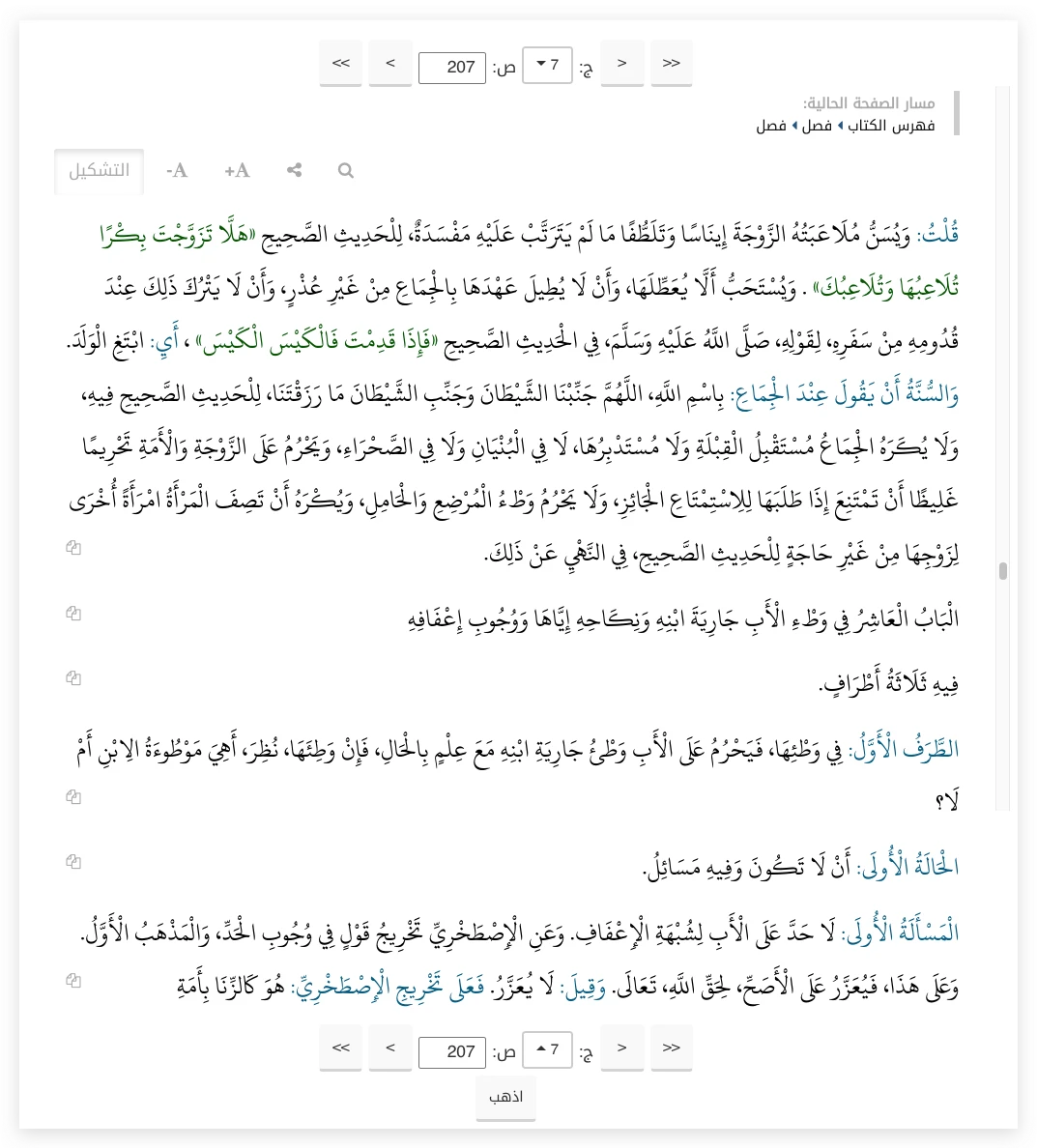
The significance of al-Nawawi’s ruling lies in its explicit wording. When a wife or enslaved concubine does not wish to have sex, he treats her refusal not as an exercise of the independent right to say no, but as a breach of a stringent prohibition. He also defines the legally permitted scope of sexual enjoyment by addressing intercourse during breastfeeding and pregnancy. The central concern is whether the husband or owner’s demand is legally permissible, not whether the woman exercises an independent right to refuse that demand. Religiously prohibiting a woman’s decision to decline sexual relations and imposing satisfaction of her husband or owner’s sexual demands as an obligation directly contradicts bodily autonomy and the principle of sexual consent. The same structure of authority appears in other schools of jurisprudence, which classify sexual refusal as disobedience punishable by sanctions.
Ibn Hazm’s Al-Muhalla: Wives and Concubines Must Not Refuse Sexual Summons
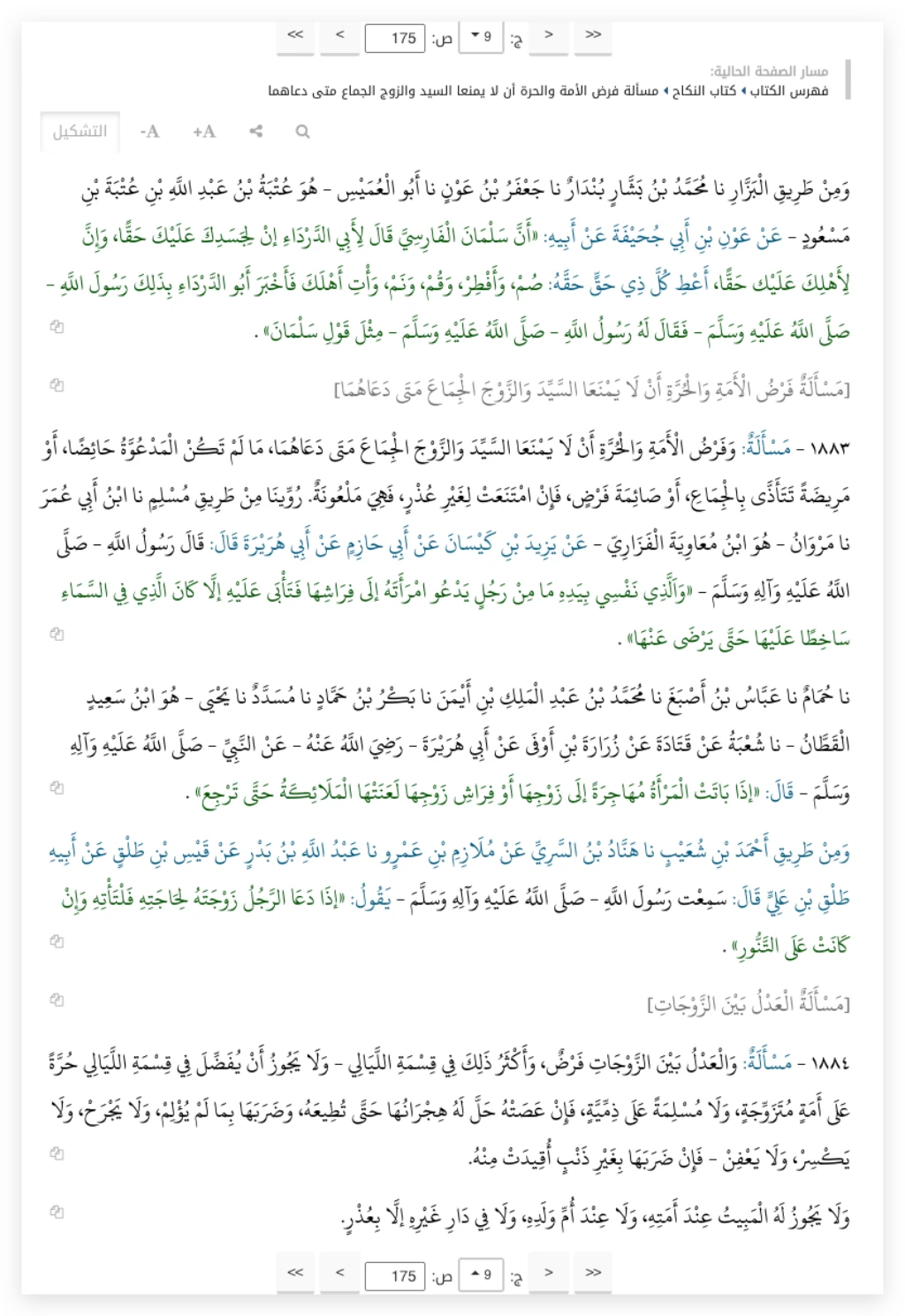
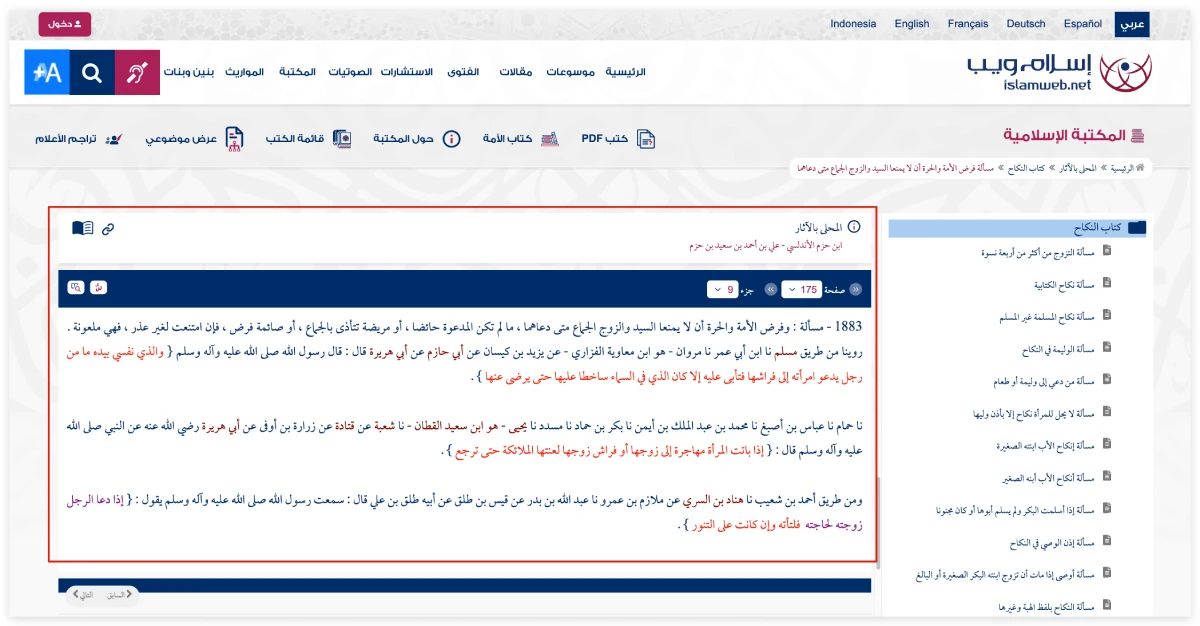
The Zahiri jurist Ibn Hazm, in Al-Muhalla bil-Athar , forbids both free wives and enslaved concubines from refusing the sexual summons of a husband or owner. He describes a woman who refuses as cursed unless she has a specific recognized excuse, such as menstruation, illness that makes intercourse painful, or an obligatory fast. He cites three hadith reports attributed to Muhammad in support of the rule. [19]
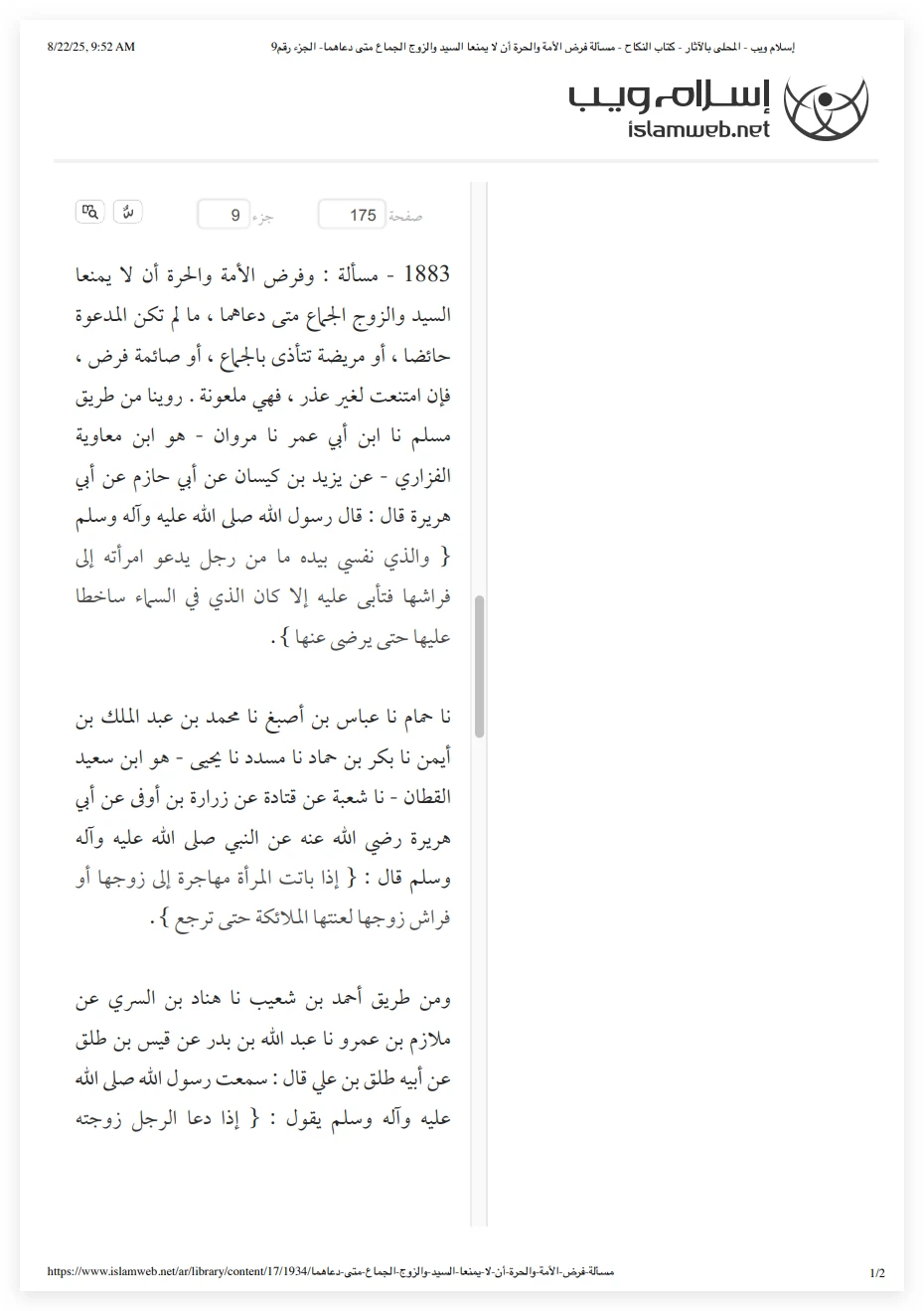
١٨٨٣ – مَسْأَلَةٌ: وَفَرْضُ الْأَمَةِ وَالْحُرَّةِ أَنْ لَا يَمْنَعَا السَّيِّدَ وَالزَّوْجَ الْجِمَاعَ مَتَى دَعَاهُمَا، مَا لَمْ تَكُنْ الْمَدْعُوَّةُ حَائِضًا، أَوْ مَرِيضَةً تَتَأَذَّى بِالْجِمَاعِ، أَوْ صَائِمَةَ فَرْضٍ، فَإِنْ امْتَنَعَتْ لِغَيْرِ عُذْرٍ، فَهِيَ مَلْعُونَةٌ.
رُوِّينَا مِنْ طَرِيقِ مُسْلِمٍ نا ابْنُ أَبِي عُمَرَ نا مَرْوَانُ – هُوَ ابْنُ مُعَاوِيَةَ الْفَزَارِيّ – عَنْ يَزِيدَ بْنِ كَيْسَانَ عَنْ أَبِي حَازِمٍ عَنْ أَبِي هُرَيْرَةَ قَالَ: قَالَ رَسُولُ اللَّهِ – صَلَّى اللَّهُ عَلَيْهِ وَآلِهِ وَسَلَّمَ – «وَاَلَّذِي نَفْسِي بِيَدِهِ مَا مِنْ رَجُلٍ يَدْعُو امْرَأَتَهُ إلَى فِرَاشِهَا فَتَأْبَى عَلَيْهِ إلَّا كَانَ الَّذِي فِي السَّمَاءِ سَاخِطًا عَلَيْهَا حَتَّى يَرْضَى عَنْهَا» .
نا حُمَامٌ نا عَبَّاسُ بْنُ أَصْبَغَ نا مُحَمَّدُ بْنُ عَبْدِ الْمَلِكِ بْنِ أَيْمَنَ نا بَكْرُ بْنُ حَمَّادٍ نا مُسَدَّدٌ نا يَحْيَى – هُوَ ابْنُ سَعِيدٍ الْقَطَّانُ – نا شُعْبَةُ عَنْ قَتَادَةَ عَنْ زُرَارَةَ بْنِ أَوْفَى عَنْ أَبِي هُرَيْرَةَ – رَضِيَ اللَّهُ عَنْهُ – عَنْ النَّبِيِّ – صَلَّى اللَّهُ عَلَيْهِ وَآلِهِ وَسَلَّمَ – قَالَ: «إذَا بَاتَتْ الْمَرْأَةُ مُهَاجِرَةً إلَى زَوْجِهَا أَوْ فِرَاشِ زَوْجِهَا لَعَنَتْهَا الْمَلَائِكَةُ حَتَّى تَرْجِعَ» .
وَمِنْ طَرِيقِ أَحْمَدَ بْنِ شُعَيْبٍ نا هَنَّادُ بْنُ السَّرِيِّ عَنْ مُلَازِمِ بْنِ عَمْرٍو نا عَبْدُ اللَّهِ بْنُ بَدْرٍ عَنْ قَيْسِ بْنِ طَلْقٍ عَنْ أَبِيهِ طَلْقِ بْنِ عَلِيٍّ قَالَ: سَمِعْت رَسُولَ اللَّهِ – صَلَّى اللَّهُ عَلَيْهِ وَآلِهِ وَسَلَّمَ – يَقُولُ: «إذَا دَعَا الرَّجُلُ زَوْجَتَهُ لِحَاجَتِهِ فَلْتَأْتِهِ وَإِنْ كَانَتْ عَلَى التَّنُّورِ» .
English translation:
Issue 1883: It is obligatory for an enslaved woman and a free woman not to refuse intercourse whenever her owner or husband summons her, unless the woman is menstruating, is ill in a way that makes intercourse painful, or is observing an obligatory fast. If she refuses without an excuse, she is cursed.
Through Muslim’s chain, Ibn Abi Umar narrated from Marwan ibn Muawiyah al-Fazari, from Yazid ibn Kaysan, from Abu Hazim, from Abu Hurayrah, that Muhammad said: “By Him in Whose hand is my soul, whenever a man calls his wife to bed and she refuses, the One in heaven is displeased with her until her husband is pleased with her.”
Humam, Abbas ibn Asbagh, Muhammad ibn Abd al-Malik ibn Ayman, Bakr ibn Hammad, Musaddad, Yahya ibn Said al-Qattan, Shubah, Qatadah, and Zurarah ibn Awfa transmitted from Abu Hurayrah that Muhammad said: “When a woman spends the night staying away from her husband or his bed, the angels curse her until she returns.”
Through Ahmad ibn Shuayb, Hannad ibn al-Sari, Mulazim ibn Amr, Abd Allah ibn Badr, and Qays ibn Talq, his father Talq ibn Ali reported hearing Muhammad say: “When a man calls his wife for his need, she must come to him, even if she is occupied at the oven.”
Ibn Hazm’s ruling does not make the woman’s will the basis of an independent decision about sex. Wives and enslaved women are subjected to the same obligation, and the right to refuse is confined to specified circumstances. Satisfying the demands of the husband or owner is a legal duty, while refusal becomes grounds for a religious curse.
Screenshots of the original printed pages and online text:
IslamQA: Sexual Refusal by Wives and Concubines, Beating, and Withdrawal of Maintenance
IslamQA’s fatwa 33597 asks whether a man may compel his wife or enslaved concubine to have intercourse when she refuses. The answer requires a wife to respond to sexual summons and authorizes sanctions for refusal: divine anger and the angels’ curse, classification as disobedient (nashizah), withdrawal of maintenance and clothing, abandonment in bed, and beating. It also classifies an enslaved woman’s refusal of her owner’s sexual demands as disobedience and authorizes punishment. [20]
إجبار الزوج زوجته على الجماع
السؤال: 33597
هل يجوز للرجل أن يُجبر زوجته أو أمته على الجماع إذا رفضت ؟.
الجواب
الحمد لله والصلاة والسلام على رسول الله، وبعد:
ليس للمرأة أن تمنع نفسها من زوجها ، بل يجب عليها أن تلبي طلبه كلما دعاها ما لم يضرها أو يشغلها عن واجب .
روى البخاري (3237) ومسلم (1436) عن أبي هريرة رضي الله عنه قال : قال رسول الله صلى الله عليه وسلم : ( إذا دعا الرجل امرأته إلى فراشه فأبت فبات غضبان عليها لعنتها الملائكة حتى تصبح ) .
فإن امتنعت من غير عذر كانت عاصية ناشزا ، تسقط نفقتها وكسوتها .
وعلى الزوج أن يعظها ويخوفها من عقاب الله ، ويهجرها في المضجع ، وله أن يضربها ضرباً غير مُبَرِّح، قال الله تعالى :
( وَاللاتِي تَخَافُونَ نُشُوزَهُنَّ فَعِظُوهُنَّ وَاهْجُرُوهُنَّ فِي الْمَضَاجِعِ وَاضْرِبُوهُنَّ فَإِنْ أَطَعْنَكُمْ فَلا تَبْغُوا عَلَيْهِنَّ سَبِيلًا إِنَّ اللَّهَ كَانَ عَلِيًّا كَبِيرًا ) النساء/34 .
وسئل شيخ الإسلام ابن تيمية رحمه الله عما يجب على الزوج إذا منعته من نفسها إذا طلبها ؟ فأجاب : ( لا يحل لها النشوز عنه ، ولا تمنع نفسها منه ، بل إذا امتنعت منه وأصرت على ذلك فله أن يضربها ضربا غير مبرح ، ولا تستحق نفقة ولا قسما ) مجموع الفتاوى 32/279 .
وسئل عن رجل له زوجة وهي ناشز تمنعه نفسها فهل تسقط نفقتها وكسوتها وما يجب عليها ؟
فأجاب : ( تسقط نفقتها وكسوتها إذا لم تمكنه من نفسها ، وله أن يضربها إذا أصرت على النشوز . ولا يحل لها أن تمتنع من ذلك إذا طالبها به ، بل هي عاصية لله ورسوله ، وفي الصحيح : ” إذا طلب الرجل المرأة إلى فراشه فأبت عليه كان الذي في السماء ساخطا عليها حتى تصبح ” )
انتهى من مجوع الفتاوى 32/278 ، والحديث رواه مسلم (1736) .
فينبغي وعظ الزوجة أولا ، وتحذيرها من النشوز وغضب الله عليها ولعنة الملائكة لها ، فإن لم تستجب هجرها الزوج في الفراش ، فإن لم تستجب ضربها ضربا غير مبرح ، فإن لم ينفع معها ذلك ، منع عنها النفقة والكسوة ، وله أن يطلقها أو يخالعها لتفتدي منه بمالها .
وكذلك الأمة ليس لها أن تمتنع من تلبية رغبة سيدها إلا من عذر ، فإن فعلت كانت عاصية ، وله أن يؤدبها بما يراه مناسباً وأذن الشرع به .
والله أعلم .
English translation:
Question 33597 — Compelling a Wife to Have Intercourse.
Question: Is it permissible for a man to force his wife or enslaved concubine to have sexual intercourse if she refuses?
Answer: Praise be to Allah, and peace and blessings be upon the Messenger of Allah. To proceed:
A wife may not withhold herself from her husband. Rather, she must respond whenever he calls her, unless doing so harms her or prevents her from fulfilling an obligatory duty.
Al-Bukhari (3237) and Muslim (1436) narrate from Abu Hurayrah that Muhammad said: “If a man calls his wife to his bed and she refuses, and he spends the night angry with her, the angels curse her until morning.”
If she refuses without a valid excuse, she is sinful and disobedient (nashizah), and her entitlement to maintenance and clothing is forfeited.
The husband should admonish her, warn her of Allah’s punishment, and abandon her in bed. He is permitted to beat her in a manner that is not severely injurious. Allah says: “As for those women whose disobedience you fear, admonish them, abandon them in beds, and beat them. But if they obey you, seek no way against them. Surely Allah is Most High, Most Great.” (Qur’an 4:34.)
Ibn Taymiyyah was asked what a husband should do when his wife withholds herself from him after he requests intercourse. He replied: “She may not be disobedient to him or withhold herself from him. If she refuses and persists in doing so, he may beat her without inflicting severe injury. She is not entitled to maintenance or to her share of his time.” (Majmu al-Fatawa, 32/279.)
Ibn Taymiyyah was also asked about a man whose disobedient wife refuses intercourse, whether she thereby loses maintenance and clothing, and what she must do. He replied: “Her maintenance and clothing cease to be due if she does not make herself available to him. He may beat her if she persists in disobedience. It is not lawful for her to refuse when he demands it; she is disobedient to Allah and His Messenger. In an authentic hadith: When a man calls a woman to his bed and she refuses, the One in heaven is displeased with her until morning.” (Majmu al-Fatawa, 32/278.) The hadith is cited here as Muslim (1736).
Accordingly, the wife should first be admonished and warned about disobedience, Allah’s anger, and the angels’ curse. If she does not respond, her husband should abandon her in bed. If she still does not respond, he should beat her without inflicting severe injury. If that too fails, he should withhold maintenance and clothing. He may divorce her or agree to a khul divorce in exchange for a payment from her property.
Likewise, an enslaved woman may not refuse to satisfy her owner’s sexual desire without a valid excuse. If she does, she is disobedient, and he may discipline her in whatever manner he considers appropriate within the limits authorized by Sharia.
And Allah knows best.
These fatwas demonstrate that the cited framework of Islamic law rejects independent sexual refusal by wives and enslaved concubines, treating sexual access as a legal right of the husband or owner.
Beating a Wife Like a Slave and Subsequent Intercourse: What the Hadith Says
Certain hadith reports prohibit a man from beating his wife “like a slave” or “like a slave woman,” and some compare such treatment to striking a domestic animal. These statements are sometimes invoked as evidence that Islam opposes wife-beating. But the reasoning within the reports reveals a different concern. The reason given for not beating a wife like a slave or an animal is that the husband may wish to have intercourse with that same wife at the end of the day. Thus, rather than grounding the prohibition in the woman’s dignity, bodily safety, or an ethical rejection of violence, the report invokes the practical problem that severe beating may interfere with the husband’s later sexual access.
This language does not reject beating as a matter of principle. It advises against beating a wife so severely that she may subsequently become unwilling to satisfy the husband’s sexual demands. The woman is consequently viewed not as an independent person but as someone subject to the husband’s marital right of sexual enjoyment. The issue is not whether violence against her is permissible in the first place, but whether her husband’s sexual access will remain intact after the violence. The tradition therefore cannot be treated as a categorical ethical condemnation of wife-beating. Instead, it assumes a distinction between limited beating and excessive beating and discusses the inconvenience of the latter. The injunction not to beat a wife like a slave is thus framed around preserving the husband’s subsequent access to her body, rather than protecting her autonomy or allowing her to decide whether to have intercourse. [21] —
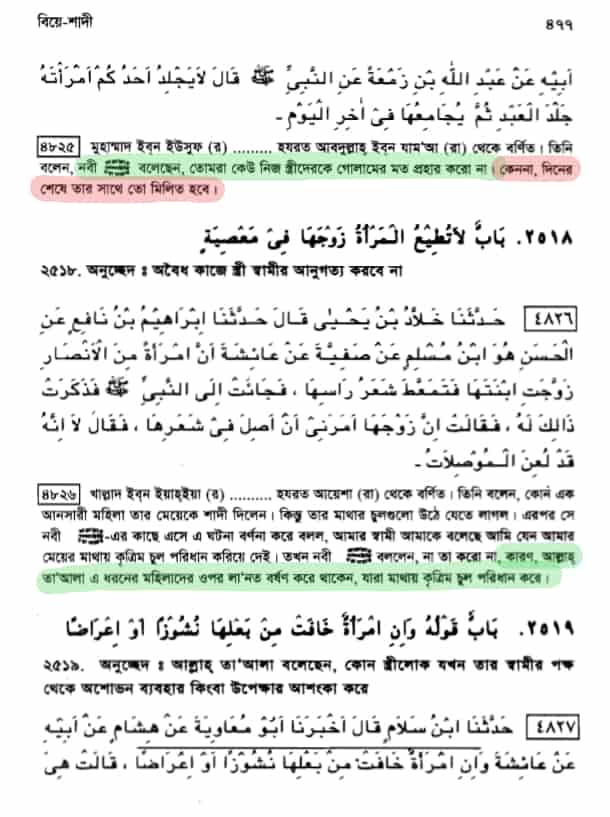
Another hadith collection reports the same statement and makes its rationale clearer. According to one version, beating a wife like a slave may cause her to be unwilling to have intercourse with her husband later that day. [22]
Mishkat al-Masabih
Book 13: Marriage
Chapter 10, first section: Kind Treatment of Wives and the Mutual Rights and Duties of Husband and Wife
3242 — [5] Abdullah ibn Zam’ah narrated that the Messenger of Allah said: “None of you should beat his wife as he beats a slave woman and then have intercourse with her at the end of the same day.”
Another version says: “None of you should intentionally beat his wife as though she were a slave woman. He may wish to have intercourse with her at the end of the day, and she may then be reluctant.” He then advised against making fun of people for passing wind: “Why do you laugh at something you yourselves do?” (Al-Bukhari and Muslim.) [1]
[1] Graded sahih: Al-Bukhari 4942; Muslim 1470.
Hadith classification: Sahih
Narrator: Abdullah ibn Zam’ah
The narration does not explicitly reject the morality of wife-beating. Instead, to point out the inconsistency of severe beating, it describes a man who beats his wife like a slave during the day and then has intercourse with her that night. Another version makes the concern more explicit: after such a beating, the wife may be reluctant to have sex. The focus is therefore not on the woman’s suffering but on the possibility that the violence might disrupt the husband’s sexual access.
Prohibiting beating “like a slave woman” does not amount to forbidding a husband from beating his wife under all circumstances. Rather, it prohibits severe or excessive beating of that kind. The report therefore establishes a distinction concerning the degree of violence instead of imposing a comprehensive prohibition. One of the practical reasons for this limitation is to avoid leaving the wife in a state in which she becomes unwilling to have intercourse later.
Obedience in Bed Despite Hatred: Beating and Compulsory Sexual Compliance
A particularly explicit account of how a wife may be compelled when she does not want sexual relations appears in report 11878 of the Musannaf Abd al-Razzaq, transmitted from al-Thawri. It prescribes admonition for disobedience, followed by refusing to speak to her and using harsh words, and finally beating. The intended outcome is unmistakable: even if she hates her husband, the wife must come to his bed. Once she comes to bed and complies with his sexual demand, she is considered obedient. [23].
Hadith 11,878
Original Arabic:
عَبْدُ الرَّزَّاقِ، عَنِ الثَّوْرِيِّ قَالَ: قَالَ أَصْحَابُنَا: «يَبْدَأُ فَيَعِظُهَا فَإِنْ قَبِلَتْ، وَإِلَّا هَجَرَهَا بِلِسَانِهِ، وَأَغْلَظَ لَهَا فِي ذَلِكَ، فَإِنْ قَبِلَتْ وَإِلَّا ضَرَبَهَا ضَرْبًا غَيْرَ مُبَرِّحٍ، فَإِنْ أَطَعْنَكُمْ [النساء: 34] أَتَتِ الْفِرَاشَ وَهِيَ تَبْغَضُكَ فَلَا تَبْغُوا عَلَيْهِنَّ سَبِيلًا [النساء: 34]».
English translation: Abd al-Razzaq transmitted from Sufyan al-Thawri, who said: Our companions said: The husband should begin by admonishing her. If she accepts, well and good; otherwise he should abandon her verbally and speak harshly to her about the matter. If she still does not comply, he should beat her without inflicting severe injury. The words of Allah, “If they obey you” (Qur’an 4:34), mean that the wife must come to his bed even if she hates him. Then, “Seek no way against them” (Qur’an 4:34), means that once she has obeyed in bed, no further action may be taken against her.
This account directly links physical beating with sexual obedience. No consideration is given to why the wife does not want to enter her husband’s bed, what she is experiencing, or why she dislikes or hates him. Instead, she is subjected first to psychological pressure, then verbal hostility, and finally beating to compel compliance. Even if she hates her husband, simply presenting herself in his bed counts as “obedience.” Thus, her sincere willingness or sexual consent is not the criterion of obedience within this juristic framework; physical submission is. Consider another report from the same hadith collection. [24].
Hadith 17,974
Original Arabic
عَنْ مَعْمَرٍ، عَنِ الزُّهْرِيِّ قَالَ: «لَا تُقَادُ الْمَرْأَةُ مِنْ زَوْجِهَا فِي الْأَدَبِ» يَقُولُ: «لَوْ ضَرَبَهَا فَشَجَّهَا، وَلَكِنْ إِنِ اعْتَدَى عَلَيْهِا فَقَتَلَهَا كَانَ الْقَوَدُ»
English translation
Al-Zuhri is reported to have said: “A woman is not entitled to retaliation (qisas) against her husband in cases of disciplinary beating.” He further explained: “Even if he beats her and causes a head wound, retaliation does not apply. But if he exceeds the bounds and kills her, retaliation is obligatory.”
Under contemporary principles of sexual consent, agreement given under threats, religious intimidation, domestic punishment, or physical beating is not freely given consent. Here the husband himself wields the power to beat his wife and afterward requires her to enter the same person’s bed. This is not a rule of mutual affection or a freely chosen intimate relationship; it is an explicit structure for obtaining sexual obedience through violence. Describing the beating as “not severe” or “not causing serious injury” cannot transform coercion into consent. Even if a beating is comparatively mild, when its purpose is to break a wife’s sexual refusal and compel her into bed, it amounts to religious and legal approval of coercive sexual conduct.
In his commentary on Qur’an 4:34, al-Tabari directly connects the provision for beating with a wife’s obedience in the marital bed. His Jami al-Bayan preserves a report attributed to Ibn Abbas through Abu al-Duha stating that a husband may beat his wife until she obeys him in bed. Once she complies with his demand, he may no longer take action against her. The verse’s command, “If they obey you, seek no way against them,” is thus applied specifically to the wife’s sexual compliance. [25]
قال: يفعل بها ذاك ويضربها حتى تطيعه في المضاجع، فإذا أطاعته في المضجع فليس له عليها سبيل إذا ضاجعته.
English translation: He said: He should act toward her in that way and beat her until she obeys him in bed. Once she obeys him in bed and shares the bed with him, he has no grounds to take further action against her.
In this interpretation, the condition for ending the beating is not the wife’s free choice or safety, but her obedience in her husband’s bed. Based on the same verse, early juristic reports and exegetical traditions recognize sexual refusal as disobedience subject to correction and beating as a means of overcoming that disobedience. Sexual relations are not being settled by the consent of two people; religious authority is being used to enforce the husband’s claim.
The Husband’s Sexual Demands Take Priority over His Wife’s Worship
A significant illustration of the priority assigned to a husband’s sexual needs within Islamic marriage appears in a report about Safwan ibn al-Muattal and his wife in Sahih Ibn Hibban. A woman complained directly to Muhammad that her husband beat her while she prayed and forced her to break her fasts. The husband did not deny the beating; he explained that his wife recited two surahs during prayer despite his telling her not to. As for making her break her fast, he said she fasted frequently while he was a young man unable to restrain his sexual desires. [26].
Hadith 1,488
Original Arabic
أَخْبَرَنَا أَحْمَدُ بْنُ عَلِيِّ بْنِ الْمُثَنَّى، حَدَّثَنَا أَبُو خَيْثَمَةَ، حَدَّثَنَا جَرِيرٌ، عَنِ الْأَعْمَشِ، عَنْ أَبِي صَالِحٍ، عَنْ أَبِي سَعِيدٍ الْخُدْرِيِّ، قَالَ: جَاءَتِ امْرَأَةٌ إِلَى النَّبِيِّ صَلَّى اللَّهُ عَلَيْهِ وَسَلَّمَ، فَقَالَتْ: يَا رَسُولَ اللَّهِ، إِنَّ زَوْجِي صَفْوَانَ بْنَ الْمُعَطَّلِ يَضْرِبُنِي إِذَا صَلَّيْتُ، وَيُفَطِّرُنِي إِذَا صُمْتُ، وَلَا يُصَلِّي صَلَاةَ الْفَجْرِ حَتَّى تَطْلُعَ الشَّمْسُ، قَالَ: – وَصَفْوَانُ عِنْدَهُ – فَسَأَلَهُ عَمَّا قَالَتْ، فَقَالَ: يَا رَسُولَ اللَّهِ أَمَّا قَوْلُهَا: يَضْرِبُنِي إِذَا صَلَّيْتُ، فَإِنَّهَا تَقْرَأُ بِسُورَتِي وَقَدْ نَهَيْتُهَا عَنْهَا، فَقَالَ النَّبِيُّ صَلَّى اللَّهُ عَلَيْهِ وَسَلَّمَ: «لَوْ كَانَتْ سُورَةً وَاحِدَةً لَكَفَتِ النَّاسَ»، قَالَ: وَأَمَّا قَوْلُهَا: يُفَطِّرُنِي إِذَا صُمْتُ، فَإِنَّهَا تَنْطَلِقُ فَتَصُومُ، وَأَنَا رَجُلٌ شَابٌّ وَلَا أَصْبِرُ، فَقَالَ رَسُولُ اللَّهِ صَلَّى اللَّهُ عَلَيْهِ وَسَلَّمَ يَوْمَئِذٍ: «لَا تَصُومُ امْرَأَةٌ إِلَّا بِإِذْنِ زَوْجِهَا»، قَالَ: وَأَمَّا قَوْلُهَا: لَا أُصَلِّي حَتَّى تَطْلُعَ الشَّمْسُ، فَإِنَّا أَهْلُ بَيْتٍ لَا نَكَادُ نَسْتَيْقِظُ حَتَّى تَطْلُعَ الشَّمْسُ، فَقَالَ صَلَّى اللَّهُ عَلَيْهِ وَسَلَّمَ: «فَإِذَا اسْتَيْقَظْتَ فَصَلِّ».
English translation
Abu Said al-Khudri narrated: A woman came to the Messenger of Allah and said, “Messenger of Allah, my husband Safwan ibn al-Muattal beats me when I pray, forces me to break my fast when I fast, and does not perform the dawn prayer until after sunrise.” Safwan was present, and the Messenger asked him about her allegations. He said, “Messenger of Allah, regarding her statement that I beat her when she prays: she recites two surahs, and I had forbidden her to do so.” The Prophet said, “Even one surah would suffice for people.” Safwan continued, “As for her claim that I make her break her fast, she repeatedly begins fasting, whereas I am a young man who cannot restrain himself.” On that occasion the Messenger of Allah said, “A woman must not observe a voluntary fast except with her husband’s permission.” Safwan then said, “As for her claim that I do not pray until after sunrise: we are a household that hardly wakes before the sun rises.” The Messenger replied, “When you wake, perform the prayer.”
Sources: Musnad Ahmad 3/80; Sunan Abi Dawud 2459; al-Tahawi, Mushkil al-Athar 2/424; al-Hakim 1/436. Shuayb al-Arnaut classified the chain as sahih under the criteria of al-Bukhari and Muslim. Nasir al-Din al-Albani likewise classified the report as sahih in Sahih Abi Dawud 2122 and al-Silsilah al-Sahihah 395.
The most significant feature of this episode is that Muhammad did not rebuke or punish the husband for beating his wife after hearing her complaint. The husband himself admitted striking her because she recited more in prayer than he allowed. Rather than condemning the beating as wrong, the response effectively accepts the husband’s objection about how much she should recite. An adult woman’s personal worship thereby falls under her husband’s control and physical punishment. The report records no ethical objection to beating a wife for extending her prayer against her husband’s instructions.
The fasting incident concerns the husband’s sexual entitlement even more directly. Safwan said that his wife fasted frequently while he was young and could not restrain his desires. His objection was therefore that, during the daylight hours of her fast, he could not have intercourse with her. Muhammad did not reject this claim or affirm that the wife had independent control over her body and worship. Instead, he ruled that she could not undertake voluntary fasting without her husband’s permission. Thus, the husband’s potential sexual demands take priority over his wife’s religious devotion, bodily autonomy, and personal decisions.
Safwan’s wife complained that he made her break her fasts, and Safwan justified his conduct by saying he could not restrain his sexual desire. In response Muhammad required a wife to obtain her husband’s permission before observing voluntary fasts. The woman’s choice about worship is thus subordinated to the husband’s sexual needs. Restricting a woman’s control over her own body and religious observance in order to satisfy a man is not merely an interpersonal marital dispute; the rule institutionalizes priority for the husband’s sexual claims. When a woman cannot independently decide to observe a voluntary fast, her freedom of sexual consent is also constrained by that authority.
Notably, allegations of wife-beating, forced interruption of fasting, and the husband’s inability to restrain his sexual desires occur together in the same report. Yet the burden of adjustment falls primarily on the wife: she must shorten her prayer and may not fast voluntarily without her husband’s permission. The husband’s violence or lack of sexual restraint is not comparably identified as an ethical problem. Instead of requiring a violent husband to change his conduct, the decision regulates his wife so that her worship and use of her body conform to his convenience. This report illustrates the higher priority granted to husbands’ authority and sexual access over wives’ personal freedom within the marital framework described.
Al-Ghazali’s Ihya Ulum al-Din: Marriage as a Form of Slavery
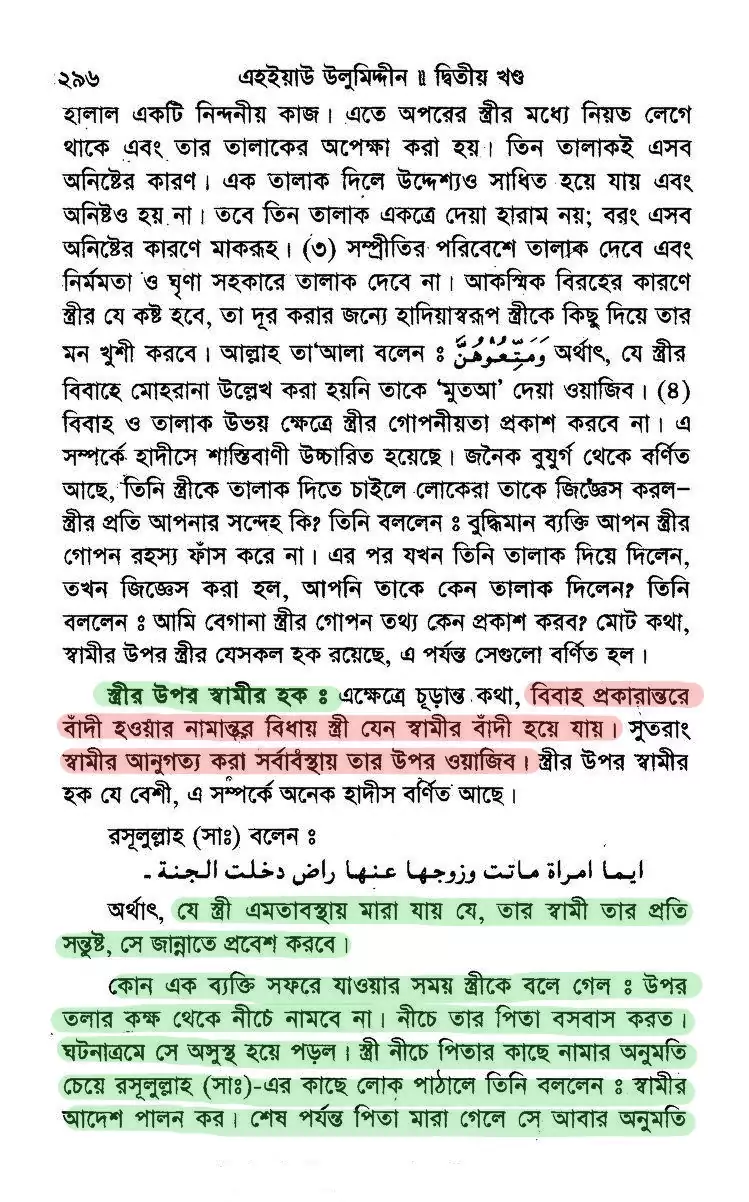
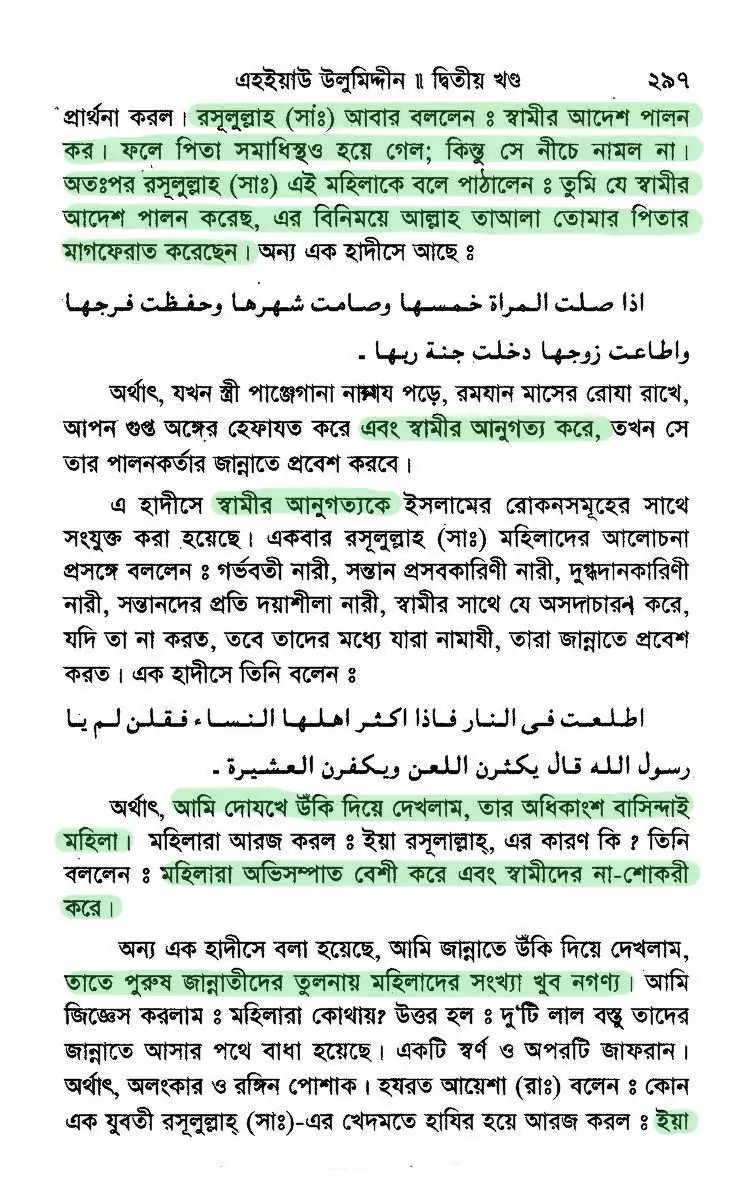
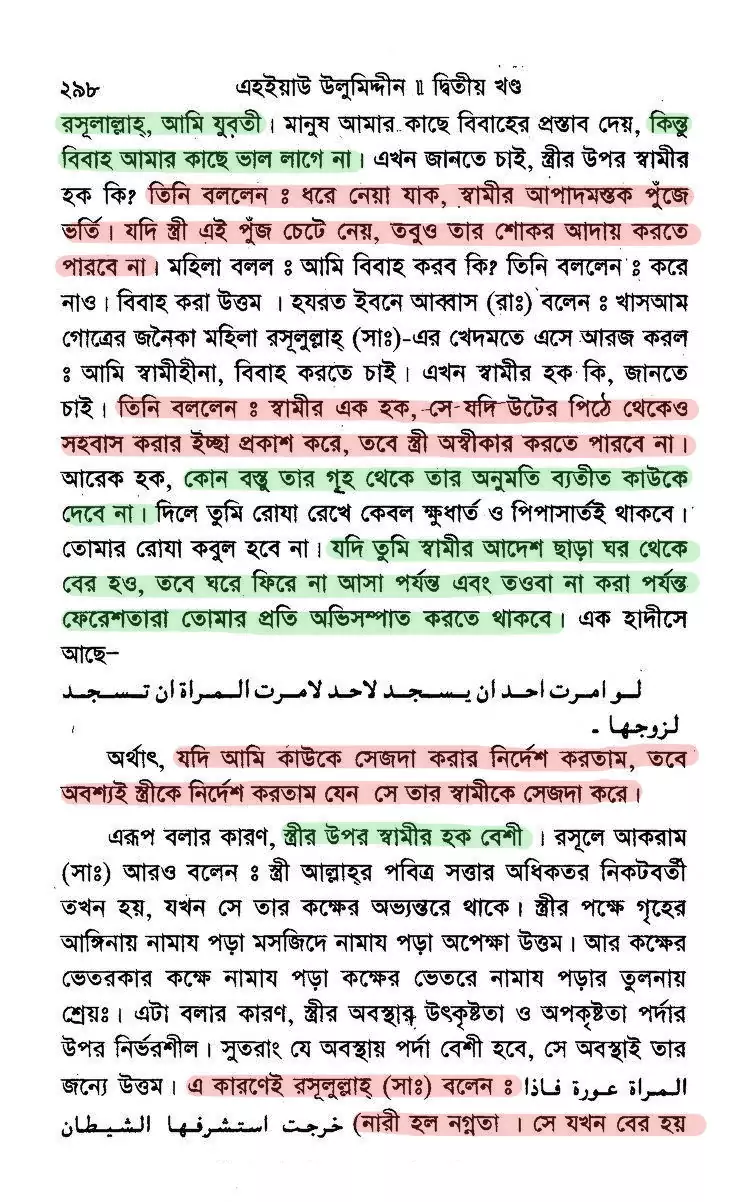
Abu Hamid al-Ghazali, in his Ihya Ulum al-Din , in the section concerning “A Husband’s Rights over His Wife,” explicitly compares marriage to slavery. His original Arabic wording is «النكاح نوع رق، فهي رقيقة له»—“marriage is a form of bondage, and the wife is like a bondwoman belonging to him.” Following this comparison, he cites numerous reports to establish obedience to the husband as the wife’s religious duty: her husband’s displeasure and its consequences in the afterlife; the prohibition on visiting her father even during illness and at his death when her husband forbids it; the duty not to refuse intercourse even on a camel’s back; and prohibitions on leaving home or observing voluntary fasts without the husband’s permission. The same discussion emphasizes women’s confinement to the home and veiling. The husband’s authority is thus not limited to managing domestic affairs; it extends to the wife’s movements, worship, and sexual decisions. The relevant passage in the Bengali translation published by Madina Publications and photographs of the printed pages appear below [27].
The Husband’s Rights over His Wife: In short, marriage amounts to a kind of bondage, so the wife becomes like a bondwoman to her husband. Consequently, obedience to him is obligatory upon her at all times. Numerous hadith reports describe the extent of the husband’s rights over his wife.
The Messenger of Allah said:
ايما امرأة ماتت وزوجها عنها راض دخلت الجنة .
Meaning: “Any woman who dies while her husband is pleased with her will enter Paradise.”
When a man was leaving on a journey, he told his wife not to descend from the upper floor to the lower floor. Her father lived downstairs. Her father became ill, and she sent someone to the Messenger of Allah asking permission to go down to see him. The Messenger told her, “Obey your husband’s command.” Eventually her father died, and she again sought permission. The Messenger again said, “Obey your husband’s command.” Her father was buried, and she still did not go downstairs. The Messenger then sent her a message: “Because you obeyed your husband’s command, Allah has forgiven your father.” Another hadith states:
اذا صلت المرأة خمسها وصامت شهرها وحفظت فرجها
واطاعت زوجها دخلت جنة ربها
Meaning: “When a woman performs her five daily prayers, fasts in Ramadan, guards her private parts, and obeys her husband, she will enter the Paradise of her Lord.”
This report places obedience to the husband alongside the pillars of Islam. On another occasion, the Messenger of Allah said concerning women that pregnant women, those who give birth, those who breastfeed, and those who show compassion to their children would enter Paradise if those among them who prayed did not mistreat their husbands. Another hadith says:
اطلعت في النار فاذا اكثر اهلها النساء فقلن لم يا
رسول الله قال يكثرن اللعن ويكفرن العشيرة .
Meaning: “I looked into Hell and saw that most of its inhabitants were women.” The women asked, “Why, Messenger of Allah?” He replied, “They curse frequently and are ungrateful to their husbands.”
Another hadith states: “I looked into Paradise and saw very few women compared with men. I asked, ‘Where are the women?’ I was told that two red things had prevented them from entering Paradise: gold and saffron”—that is, ornaments and brightly colored clothing. Aisha said: A young woman came to the Messenger of Allah and said, “Messenger of Allah, I am a young woman. Men seek to marry me, but I do not like marriage. I want to know what rights a husband has over his wife.” He replied, “Imagine a husband covered from head to foot in pus. Even if his wife licked all of it off, she still could not repay what she owes him.” She asked, “Should I marry?” He replied, “Yes. Marriage is preferable.” Ibn Abbas narrated that a woman from the tribe of Khatham came to the Messenger of Allah and said, “I am unmarried and wish to marry. What are the husband’s rights?” He answered, “One of his rights is that if he wishes to have intercourse with her even while she is on a camel’s back, she may not refuse. Another right is that she may give nothing from his household to anyone without his permission. If she does, her fasting will bring her only hunger and thirst and will not be accepted. If she leaves the house without her husband’s permission, the angels will curse her until she returns home and repents.” Another hadith says:
لو امرت احد أن يسجد لأحد لأمرت المرأة أن تسجد
لزوجها .
Meaning: “If I were to order anyone to prostrate before another person, I would order a wife to prostrate before her husband.”
The reason for this is that the husband’s rights over his wife are greater. The Messenger of Allah also said that a wife is closest to Allah when she remains inside her room. For a woman, praying in the courtyard of her house is better than praying in the mosque, and praying in the innermost part of her room is better than praying in the room itself. This is because her virtue is connected to how thoroughly she is veiled: the greater the concealment, the better. For this reason the Messenger said: المرأة عورة فإذا خرجت استشرفها الشيطان
English translation of the Arabic statement: A woman is awrah, something to be covered; when she goes outside, Satan looks toward her.
Marital Rape in Bangladesh: Child Marriage, Law, and Reality
Consider the following video. It shows parents forcing a child to marry an adult man, an arrangement permitted within classical Islamic jurisprudence [28]. Consider what may happen to this child on her wedding night.
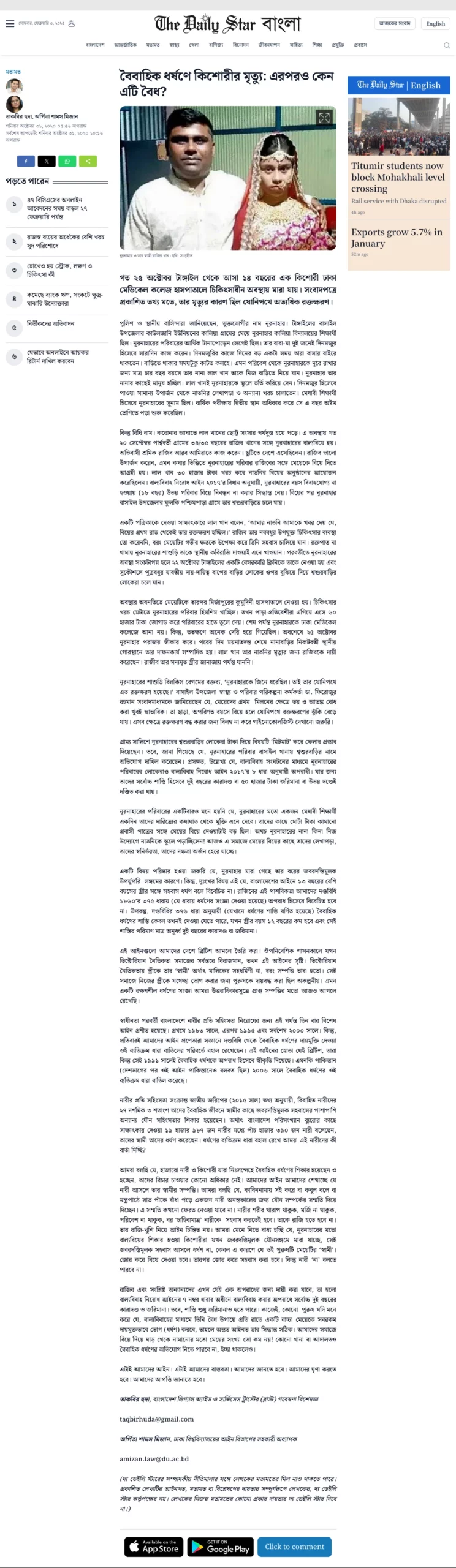
Consider this news report. [29] [30]
Teenage Girl Dies After Marital Rape: Why Is It Still Lawful?
Photograph: Nur Nahar and her husband, Rajib Khan.
On October 25, a fourteen-year-old girl from Tangail died while receiving treatment at Dhaka Medical College Hospital. According to press reports, her death resulted from severe vaginal bleeding.
Police and local residents identified her as Nur Nahar, a student of Kalia School from Kalia village in the Kauljani Union of Basail Upazila, Tangail. Her family had long faced financial hardship. Both parents worked as day laborers, spending much of each day away from home, and quarrels were common when they were at home. To remove her from that environment, her maternal grandfather, Lal Khan, took her into his own home when she was only four years old. She grew up there. He enrolled her in school and paid for her education and other expenses from his meager wages as a day laborer. Known as a gifted pupil, she had finished second in her annual examinations and entered eighth grade that year.
Then the coronavirus pandemic devastated Lal Khan’s modest household. Against this background, on September 20, Nur Nahar was married as a child to Rajib Khan, a thirty-four- or thirty-five-year-old man from a neighboring village. Rajib was a migrant worker in the United Arab Emirates who had returned home on leave. Nur Nahar’s family supported the marriage after hearing that Rajib earned a good income. Lal Khan spent 30,000 taka organizing his granddaughter’s wedding. Because Nur Nahar was under the legal marriage age of eighteen under the Child Marriage Restraint Act 2017, both families decided not to register the marriage. Afterward she moved to her husband’s family’s home in Phulki Paschimpara village, Basail.
In an interview, Lal Khan said: “My granddaughter told me that she had been bleeding from the very first night of the marriage.” Rather than arrange appropriate medical treatment for his young bride, Rajib continued having intercourse despite her serious injuries. When the bleeding persisted, Nur Nahar’s mother-in-law obtained a traditional remedy from a local healer and gave it to her. On October 22, when Nur Nahar’s condition became critical, she was taken to a private clinic in Tangail. Her husband’s family then left, maneuvering to shift all responsibility for her care onto her birth family.
As her condition worsened, she was transferred to Kumudini Hospital in Mirzapur. Her family struggled to pay for her treatment, and neighbors raised 60,000 taka to help. She was finally brought to Dhaka Medical College Hospital, but by then it was too late. Nur Nahar died on October 25. The next day, after an autopsy, she was buried in a local cemetery near her grandfather’s home. Lal Khan blamed Rajib for her death. Rajib did not even attend his recently deceased wife’s funeral prayers.
Her mother-in-law, Bilkis Begum, claimed: “Nur Nahar was possessed by a jinn. That is why she bled so heavily from her vagina.” Dr. Firozur Rahman, the Basail Upazila Health and Family Planning Officer, told the media that fear and anxiety are common during a girl’s first sexual intercourse, and that marriage at an immature age increases the risk of vaginal bleeding. In such cases it is essential to consult a gynecologist without delay to stop the bleeding.
At a village arbitration gathering, Nur Nahar’s in-laws reportedly proposed settling the matter with money. However, her family was said to have filed a complaint against the husband’s family at Basail Police Station. It should also be noted that Nur Nahar’s own family members committed an offense under section 8 of the Child Marriage Restraint Act 2017 by arranging a child marriage, punishable by up to two years’ imprisonment, a fine of 50,000 taka, or both.
It apparently never occurred to Nur Nahar’s family that such a gifted student might one day help lift them out of poverty. What mattered most to them was marrying her to an expatriate who earned a substantial income, even though her grandfather had taken the initiative to ensure she received an education. In this society, girls’ education, independence, and development of skills still lose out to marriage.
One point must be clear: Nur Nahar died as a result of repeated, coercive intercourse by her husband. Yet Bangladesh’s law did not classify intercourse with a wife aged thirteen or older as rape. Rajib’s conduct would not be treated as an offense under section 375 of the Penal Code 1860, which defines rape. Under section 376, which sets out penalties, the special provision concerning marital rape applied only when the wife was under twelve, carrying a punishment of no more than two years’ imprisonment or a fine.
These laws were enacted during British colonial rule, when Victorian morality pervaded society. Under Victorian norms, a wife was often treated not as an equal partner but as the property of her “husband,” or master. Holding a man accountable for doing whatever he wished sexually to his wife was almost unthinkable in that society. We have continued to preserve this conservative definition of rape as though it were an inheritance to be treasured.
Since Bangladesh’s independence, special legislation against violence toward women had been enacted three times by the time of this report: in 1983, 1995, and 2000. On each occasion, lawmakers consciously preserved rather than repealed the Penal Code’s marital exemption. Britain, which had created the original colonial law, had recognized marital rape as a criminal offense back in 1991. Pakistan, where the same law had also remained in force after Partition, abolished that exception in 2006.
According to the 2015 National Violence Against Women Survey, 27.3 percent of married women had experienced forced intercourse or other forms of sexual violence by their husbands during marriage. Of the 19,987 women interviewed by the Bangladesh Bureau of Statistics, that corresponds to 5,390 who reported being raped by their husbands. What message are we sending these women by maintaining the marital exemption?
We are telling thousands of women and girls who have been, and continue to be, subjected to marital rape that they have no right to seek justice. The law teaches us that a woman is, in effect, her husband’s property. By signing a marriage contract, saying “I accept,” or completing religious wedding rituals, she is treated as having consented to sex forever. She cannot withdraw that consent. Whether she is ill, unwilling, or in an unsuitable situation, she must have intercourse whenever her husband demands it. She need not actually agree; the law does not concern itself with her willingness. We are expected to accept that when girls such as Nur Nahar, victims of child marriage, die from coercive intercourse, that intercourse is not rape merely because the man is their “husband.” A child can be forced to marry and then forced to have sex, yet she cannot say “no.”
The offense for which Rajib and others involved could then be prosecuted was child marriage under section 7 of the Child Marriage Restraint Act, carrying up to two years’ imprisonment and a fine, or potentially only a fine. Thus, a man could calculate that marriage to a child would allow him to subject her to repeated sexual acts with almost complete impunity and regard that calculation as legally sound. Society certainly does not lack girls whom families wish to marry off to relieve themselves of responsibility. Even a police station or court willing to help would be unable to proceed on a marital-rape complaint under the exemption.
This is our law. This is our reality. We must know it. We must condemn it. We must object to it.
Takbir Huda, Research Specialist, Bangladesh Legal Aid and Services Trust (BLAST)
Marital Rape Immunity Under Bangladeshi Law
Section 375 of the Penal Code 1860 in Bangladesh defines rape to include sexual intercourse against a woman’s will or without her consent. Yet its exception grants husbands special protection: intercourse with one’s own wife is not rape if she is not under thirteen. Thus, even when an adult wife explicitly refuses, the marital relationship excludes her husband’s conduct from the ordinary definition of rape. An act that would be criminal if committed by a stranger becomes an exception when committed by her husband. [31].
Exception. Sexual intercourse by a man with his own wife, the wife not being under thirteen years of age, is not rape.
Section 376 of the Penal Code separately provides a special punishment of up to two years’ imprisonment, a fine, or both where the offender’s own wife is not under twelve. The thresholds in sections 375 and 376—thirteen and twelve years—are not identical. Read together, they show that even in the case of a twelve-year-old wife, a lesser penalty may apply instead of the ordinary rape punishment. These age-based exceptions and the legal discounting of married women’s consent are present in the statute’s own wording. [32].
Enacted on April 10, 2026, the Women and Children Repression Prevention (Amendment) Act 2026replaced the explanation concerning rape in section 9 of the principal law through its section 4. In defining nonconsensual sexual acts with a woman over sixteen, the revised wording expressly includes the condition “outside the bonds of marriage” . The same explanation separately addresses sexual acts involving children under sixteen. Accordingly, the amended law still does not recognize a married adult woman’s refusal in the same way as an unmarried woman’s refusal. Marriage remains a special legal boundary determining whether sexual violence is prosecuted as rape. [33].
Explanation—(1) If any person, outside the bonds of marriage, engages in a sexual act with a woman over sixteen years of age without her consent, or after obtaining her consent through intimidation or fraud, or engages in a sexual act with a child under sixteen years of age, with or without the child’s consent, the person shall be deemed to have raped the woman or child.
(2) For the purposes of this section, “rape” shall also include sodomy.
The explanation introduced by the 2026 amendment explicitly distinguishes married from unmarried women in defining rape. The provision treating sexual acts with a woman over sixteen as rape when committed without consent or after consent has been obtained through intimidation or fraud begins with the condition “outside the bonds of marriage.” The explanation also treats sexual acts with children under sixteen as rape regardless of consent and expands the definition to include sodomy. Although this creates a separate and broader rule for children, the marital condition remains an obstacle to criminalizing nonconsensual sexual relations with an adult wife on the same terms. The statutory wording gives the man’s status as a “husband” decisive legal significance alongside the woman’s actual consent. This exception directly undermines sexual autonomy and equal protection under law. [34].
Sexual Violence by Husbands in Bangladesh: The 2024 National Survey
The Bangladesh Bureau of Statistics and the United Nations Population Fund jointly conducted the Violence Against Women Survey 2024, interviewing 27,476 women aged fifteen or older. The full report was published on October 13, 2025. Among 24,963 ever-married women, the survey found that 29.0 percent had experienced sexual violence by their current or former husband at some point in their lives; during the twelve months preceding the survey, the figure was 9.4 percent. Such violence includes being coerced into unwanted sex, intercourse against one’s will, and degrading sexual acts. Marital rape is therefore neither rare nor imaginary: nationally representative interviews document extensive sexual coercion by husbands. [35].
The same survey found that 54.4 percent of ever-married women had experienced physical or sexual violence by a husband at least once, and 75.9 percent had experienced at least one form of physical, sexual, psychological, economic, or controlling behavior by a husband. Nearly 64 percent of women subjected to physical or sexual violence had told no one. Fear, social stigma, economic dependence, and barriers to redress contribute to this silence. It would therefore be wrong to treat police complaints and court cases as an accurate measure of the prevalence of violence; countless incidents remain undisclosed within families. [36] [37].
In the 2015 national survey, the lifetime prevalence of sexual violence among ever-married women was 27.2 percent; the comparable Bangladesh-specific measure in the 2024 survey was 29.0 percent. Over the same period, the prevalence during the preceding twelve months declined from 13.3 percent to 9.4 percent. Thus, although the recent rate decreased, lifetime exposure to sexual violence in marriage remained close to one woman in three. [38].
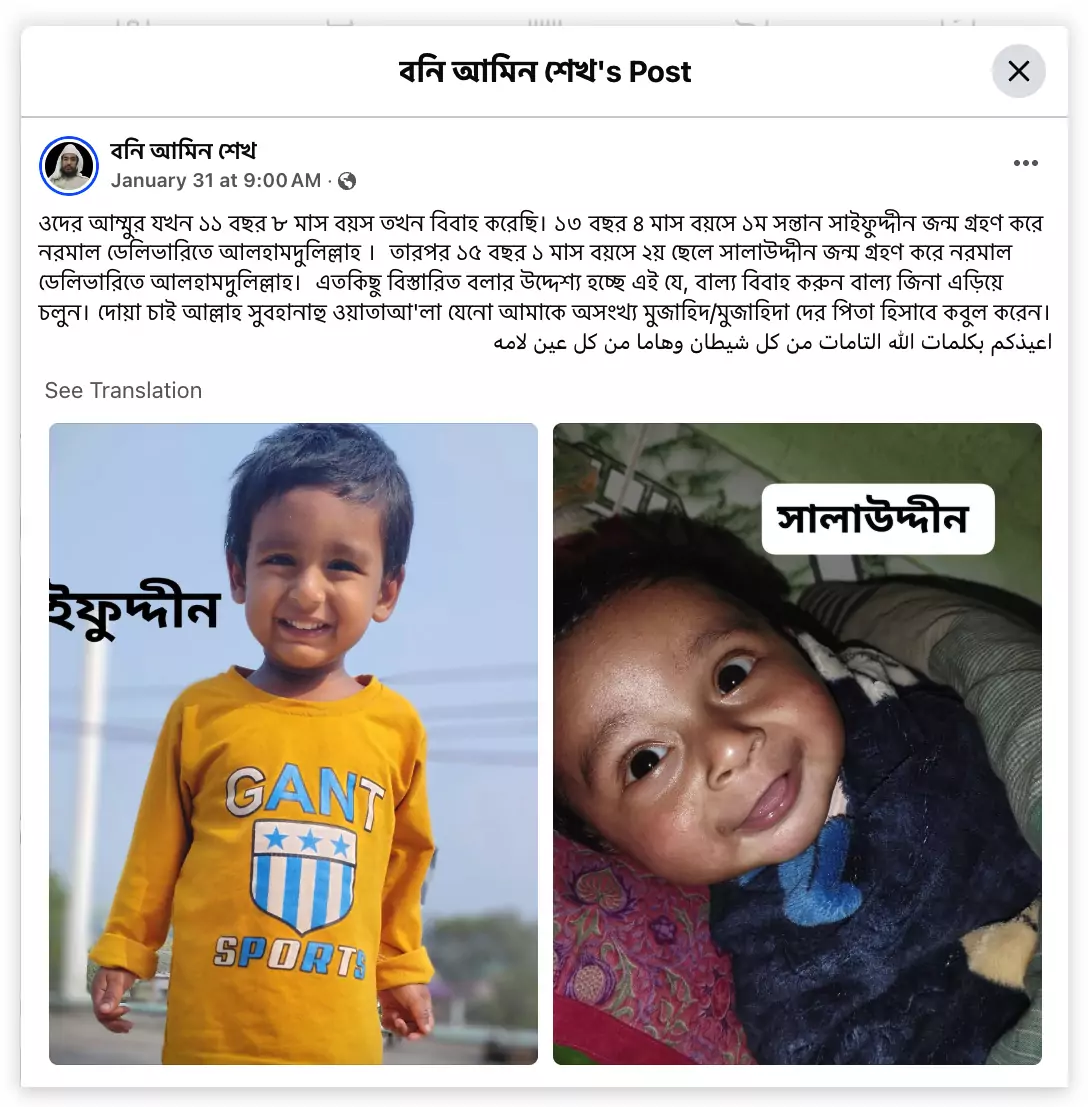
Consider the following Facebook post .
Offering to Divorce a Wife in the Name of Brotherhood: Where Is Her Consent?
The bond of “brotherhood” (mu’akhah) established between the Ansar of Medina and the Muhajirun of Mecca is often celebrated in Islamic history as an extraordinary act of self-sacrifice. Yet Sahih al-Bukhari 3780 contains an alarming illustration of how women’s dignity and consent can disappear from the narrative of that sacrifice. In the account, Sad ibn al-Rabi offers his emigrant brother Abd al-Rahman ibn Awf the following arrangement: “I have two wives. Tell me which one you prefer, and I will divorce her. When her waiting period is over, you may marry her.” [39]. Although conventional Islamic retellings celebrate this as Sad’s exceptional “generosity,” from the standpoint of human rights and personal autonomy, the proposal places a woman’s marital future alongside transferable possessions rather than recognizing her as a person whose own decision matters.
Sahih al-Bukhari (Tawhid Publications)
Book 63: Merits of the Ansar
Chapter 63/3: Establishment of Brotherhood Between the Muhajirun and Ansar by the Prophet
3780Abd al-Rahman ibn Awf narrated: When the emigrants arrived in Medina, the Messenger of Allah established a bond of brotherhood between Abd al-Rahman ibn Awf and Sad ibn al-Rabi. Sad said to Abd al-Rahman, “I am the wealthiest among the Ansar.” “Take half of my property. I have two wives; tell me which one you prefer, and I will divorce her. After her waiting period, you may marry her.” Abd al-Rahman replied, “May Allah bless your family and wealth. Where is your market?” They directed him to the market of Banu Qaynuqa. When he returned home he brought some cheese and clarified butter. He continued to go to the market every morning. One day he came to the Prophet with traces of yellow coloring on his body and clothing. The Prophet asked what had happened. He replied, “I have married.” The Prophet asked, “How much mahr did you give her?” He replied, “Gold weighing as much as a date stone,” or something to that effect. (Bukhari 2048; Modern Publications 3498; Islamic Foundation 3506.)
Hadith classification: Sahih
Narrator: Abd al-Rahman ibn Awf
In expressing his wish to help his friend, Sad ibn al-Rabi offered half his property and proposed divorcing one of his two wives so that Abd al-Rahman could marry her after her waiting period. The proposal centers on a man’s wealth and another man’s preference; it does not mention the women’s wishes or decisions about their own marriages. Rather than accept the offer, Abd al-Rahman asked where the market was and later married someone else. The normality with which two men could discuss such a proposal about their wives’ futures reveals patriarchal power. Presenting a wife’s possible divorce and remarriage as a way for a husband to demonstrate generosity subordinates her personhood to men’s decisions. Celebrating a man’s sacrifice while omitting the fundamental question of what the woman herself wants from her marriage is a profound patriarchal insult.
Marital Rape, Sexual Consent, and Human Rights
Consent to marriage and consent to sexual intercourse are not the same thing. Marriage is a decision to enter a relationship; sexual consent is a person’s independent decision about their body at a particular time. Someone who consented yesterday, or moments earlier, may refuse later and may withdraw consent even during a sexual act. Agreement obtained through fear, threatened punishment, financial dependence, authority, or threats of losing a relationship is not freely given consent. Absence of consent is not limited to saying the word “no”: silence, lack of resistance, and failure to fight back are not proof of consent. The decision to participate in each sexual act belongs to the person involved. A wedding ceremony, mahr, or past sexual relations do not give anyone permanent permission to use another person’s body in the future. [40] [41].
The World Health Organization defines sexual violence to include sexual acts, attempts to obtain sexual acts, and other acts directed against a person’s sexuality through coercion, regardless of the perpetrator’s relationship to that person. Coercion is not limited to physical force; sexual pressure, psychological abuse, and controlling behavior can also form part of violence within intimate relationships. Rules permitting a husband to beat his wife for refusal, withdraw her maintenance, threaten religious curses, or make divine approval conditional on the husband’s satisfaction destroy the conditions for freely given consent. When a woman submits to unwanted sex out of fear for her relationship, livelihood, safety, or punishment in the afterlife, her agreement is not free. Forced sexual penetration against her will constitutes marital rape. [42].
Article 36 of the Istanbul Convention requires criminalization of nonconsensual vaginal, anal, or oral penetration and other nonconsensual sexual acts. It further specifies that consent must be given voluntarily as the result of a person’s free will and assessed in the context of the surrounding circumstances. The same provision expressly extends to acts committed against current or former spouses and partners. Marriage therefore creates no legal or ethical immunity of its own. A husband’s disregard for his wife’s consent does not make sexual violence less serious than an identical act committed by a stranger. The framework of compulsory sexual obedience, tamkin, and punishment for nushuz described in the earlier juristic sources directly conflicts with this principle of freely given and revocable consent. [43].
Legal Immunity for Marital Rape in Various Countries
The notion that marriage creates a permanent sexual entitlement over the wife’s body is reflected in the laws of certain modern states. Article 292 of the Jordanian Penal Code defines rape involving intercourse without consent through force, threats, trickery, or deception, but expressly describes the victim as a “woman other than his wife” . The words ‘غير زوجه’—“not his wife”—exclude the marital relationship from the definition of that rape offense. The injury caused by nonconsensual intercourse does not change when the victim is married to the perpetrator; the law creates a distinction solely on the basis of the marriage. [44].
من واقع انثى (غير زوجه) بغير رضاها سواء بالاكراه او التهديد او بالحيلة او بالخداع
English translation: A person who has intercourse with a woman who is not his wife without her consent, whether through coercion, threat, trickery, or deception.
In Saudi Arabia, the 2022 Personal Status Law links a wife’s entitlement to maintenance with obedience to her husband. When she refuses sexual relations without an excuse accepted by the law, she may be classified as disobedient and lose maintenance. Although Saudi Arabia has legislation addressing domestic abuse, marital rape has not been clearly recognized as a distinct criminal offense. As a result, the husband’s claimed entitlement to sex enjoys legal significance while effective criminal protection against unwanted sexual relations within marriage remains inadequate. This resembles the classical juristic rules on tamkin, nushuz and loss of financial maintenance. [45].
In Iran, the legal treatment of marital intercourse as consensual closes the usual route for a rape complaint against one’s husband. A United Kingdom country report and Human Rights Watch’s 2026 World Report document the absence of criminal recognition for marital rape in Iran. Thus, whether a woman is married directly affects whether disregard of her sexual consent can be prosecuted. In Syria, marital rape is likewise not recognized as a rape offense under the Penal Code, according to a British government country report issued in late 2025 and updated in 2026. [46] [47] [48].
The central inequality in these provisions is the same: a husband’s marital status receives special protection when the law determines whether nonconsensual intercourse constitutes rape. In Jordan this appears in the wording of the rape offense; in Saudi Arabia, in the rules governing sexual obedience and maintenance; and in Iran and Syria, in the absence of criminal recognition of marital rape. Such provisions directly conflict with the principle that a woman’s free consent is indispensable to sexual relations with her husband.
Physical, Psychological, and Family Harm Caused by Marital Sexual Violence
The harm caused by disregarding a wife’s independent consent extends far beyond immediate physical injuries. When the perpetrator is her husband, sexual violence is compounded by domestic dependence, shared living arrangements, the risk of repeated abuse, and an absence of safety within the relationship. In its fact sheet dated June 18, 2026, the World Health Organization identifies intimate partner violence and sexual violence as causes of serious short- and long-term physical, mental, sexual, and reproductive health problems for women. [49].
IPV and sexual violence cause serious short- and long-term physical, mental, sexual and reproductive health problems for women.
Sexual violence is associated with increased risks of post-traumatic stress disorder (PTSD), depression, anxiety, sleep disturbances, and suicide attempts. Survivors of rape may experience fear, shame, guilt, negative feelings about their bodies, mistrust of intimate relationships, and social isolation. In marital rape, the partner, housemate, and perpetrator are the same person, so insecurity may persist. A review by Raquel Kennedy Bergen and Elizabeth Barnhill likewise discusses repeated sexual victimization, psychological trauma, disrupted sleep, and sexual difficulties among survivors of marital rape. [50] [51].
Physical and reproductive health effects include genital injury, chronic lower abdominal or pelvic pain, unintended pregnancy, sexually transmitted infections, and gynecological problems. Intimate partner violence during pregnancy has also been associated with increased risks of miscarriage, stillbirth, premature birth, and low birth weight. When satisfying a husband’s demands replaces consent as the governing rule, a woman loses the ability to make independent decisions about illness, injury, pregnancy, and the risks of intercourse. Fear of religious curses, physical punishment, or withdrawal of maintenance further restricts these decisions. [52] [53].
The harm of sexual and physical violence in the home also reaches children. Children growing up amid violence may face increased risks of fear, anxiety, behavioral difficulties, problems regulating emotions, and long-term mental health consequences. The World Health Organization documents the effects of domestic violence on children’s health and development, including its association with later victimization and perpetration of violence. Denying a woman’s sexual consent within the family does not affect her alone; family safety and children’s psychological development may also suffer. [54].
The religious curses, beating, and financial sanctions described in the preceding sources for refusing a husband’s sexual summons have the practical effect of narrowing women’s freedom to make their own decisions about sex. Making conduct that can seriously harm a woman’s body and mind a compulsory condition of marriage, and treating refusal as an offense or disobedience, establishes a hierarchy of power contrary to bodily integrity and fundamental sexual freedom.
Women Advocating Patriarchal Sharia
The social influence of patriarchal rules is not limited to statements by men; women, too, may support this structure of authority. In the videos below, several Muslim women argue against equality between women and men and advocate the establishment of Sharia law in Bangladesh. Yet the juristic texts associated with the system they defend classify a wife’s sexual refusal as disobedience, regard satisfaction of the husband’s sexual demands as a duty, and authorize penalties for failure to comply. Advocacy by women does not change the fact that such unilateral male authority conflicts with gender equality.
Conclusion: Sexual Consent and Women’s Bodily Autonomy
Taken together, the Islamic religious texts, juristic interpretations, and historical accounts discussed here portray women not as fully independent individuals but as subordinate to men and subject to claims of sexual access. “milk al-mut’ah” , or ownership of the right to sexual enjoyment, is not merely an abstract legal concept: it provides religious and juristic authorization for conduct amounting to marital rape. When a husband treats intercourse despite his wife’s refusal as a “haqq,” or entitlement owed to him, the modern human principle of voluntary sexual consent is fundamentally negated.
The inhumanity of this structure becomes clearer in the following examples:
These hadith reports and juristic rules do not establish timeless or divine truths; they reflect the legal and social arrangements of a deeply patriarchal culture associated with the Arabian Peninsula of the seventh century. In the twenty-first century, when equality, dignity, and individual freedom are widely recognized as fundamental principles, treating ideas inherited from fifteen centuries ago as infallible amounts to blind faith. Denying women’s bodily autonomy perpetuates those inequalities today.
Reason, rights, and humanity owe no allegiance to religious sentiment.
If Muslim societies are to protect women’s fundamental rights and take part in a modern world, these harmful texts and interpretations must be abandoned or explicitly rejected. Neither a lack of evidence nor unquestioning obedience has any place in a struggle for truth and justice. A woman’s body belongs to her alone: it is not the subject of a contract, nor an object controlled by a man’s wishes. Standing for reason and rights requires abandoning blind allegiance to belief and adopting scientific and human rights-based principles.
References
- Mahr: The Price of Sexual Access to Women in Islam ↩︎
- Ibn Nujaym, Al-Bahr al-Ra’iq, Book of Marriage, vol. 3, pp. 84–85 ↩︎
- Al-Marghinani, Al-Hidayah, Book of Marriage: Rules on the Terms of Sale and Lease in Marriage Contracts ↩︎
- Al-Kasani, Bada’i al-Sana’i, Book of Marriage, chapter on Milk al-Mut’ah, vol. 2 ↩︎
- Al-Kasani, Bada’i al-Sana’i, Book of Marriage, chapter on the Grounds for the Obligation to Pay Mahr, vol. 2 ↩︎
- Ibn Qudamah, Al-Mughni, vol. 8, p. 182, issue 6519 ↩︎
- Ibn Qudamah, Al-Mughni, vol. 8, p. 189, issue 6533 ↩︎
- Sahih Muslim, hadith 1436c — Prohibition on Refusing the Marital Bed ↩︎
- Sahih al-Bukhari, hadith 5195 — A Husband’s Permission for His Wife’s Fasting ↩︎
- Mishkat al-Masabih, hadith 3257 ↩︎
- Mishkat al-Masabih, vol. 4, Hadith Academy, p. 318 ↩︎
- Sunan Ibn Majah, Tawhid Publications, hadith 1853 ↩︎
- Mishkat al-Masabih, Hadith Academy, hadith 3255 ↩︎
- Riyad al-Salihin, Imam al-Nawawi, Islamia Quran Mahal, vol. 4, p. 131 ↩︎
- Sahih Muslim Sharif, Bengali Translation with Commentary, Maktabatul Hadith, vol. 13, p. 206 ↩︎
- Tafsir Ibn Kathir, vol. 2, Islamic Foundation, p. 112 ↩︎
- Sahih al-Bukhari, Tawhid Publications, hadith 5470 ↩︎
- Al-Nawawi, Rawdat al-Talibin, Book of Marriage, chapter 9, vol. 7, pp. 206–207 ↩︎
- Al-Muhalla bil-Athar, Book of Marriage, issue 1883, vol. 9, p. 175 ↩︎
- IslamQA, question 33597: Compelling a Wife to Have Intercourse — إجبار الزوج زوجته على الجماع ↩︎
- Sahih al-Bukhari, Islamic Foundation, vol. 8, p. 477 ↩︎
- Mishkat al-Masabih, hadith 3242. ↩︎
- Musannaf Abd al-Razzaq, relevant chapter, hadith 11878 ↩︎
- Musannaf Abd al-Razzaq, relevant chapter, hadith 17974 ↩︎
- Al-Tabari, Tafsir of Qur’an 4:34, report 7433 attributed to Ibn Abbas ↩︎
- Sahih Ibn Hibban, hadith 1488 ↩︎
- Ihya Ulum al-Din, vol. 2, Madina Publications, pp. 296–298; Original Arabic: Kitab Adab al-Nikah, chapter 3 ↩︎
- Had Aisha Reached Puberty at the Age of Nine? ↩︎
- Teenage Girl Dies After Marital Rape: Why Is It Still Lawful? ↩︎
- Archived version: Teenage Girl Dies After Marital Rape: Why Is It Still Lawful? ↩︎
- Bangladesh Penal Code 1860, section 375 ↩︎
- Bangladesh Penal Code 1860, section 376 ↩︎
- Women and Children Repression Prevention (Amendment) Act 2026, Act No. 85 of 2026, section 4 ↩︎
- Women and Children Repression Prevention (Amendment) Act 2026, section 4, explanations (1)–(2) ↩︎
- Bangladesh Bureau of Statistics and UNFPA, Violence Against Women Survey 2024, chapter 4, section 4.4, table 4.4.1 ↩︎
- UNFPA Bangladesh: Overview of the 2024 Violence Against Women Survey ↩︎
- UNFPA: Gender-Based Violence in Bangladesh ↩︎
- Violence Against Women Survey 2024, key findings, Table I ↩︎
- Sahih al-Bukhari, Tawhid Publications, hadith 3780 ↩︎
- Belgian Institute for the Equality of Women and Men: Understanding Sexual Consent ↩︎
- Government of Canada: Sexual Violence and Consent ↩︎
- World Health Organization: Violence Against Women and Sexual Coercion ↩︎
- Istanbul Convention, Article 36 ↩︎
- Jordanian Penal Code, Article 292: Arabic Text of the Amended Law ↩︎
- Human Rights Watch, Saudi Arabia: Law Enshrines Male Guardianship ↩︎
- UK Government, Country Report on Women in Iran, 2025 ↩︎
- Human Rights Watch, World Report 2026: Iran ↩︎
- UK Government, Syria: Country Policy and Information Note, 2025–2026 ↩︎
- World Health Organization, Violence Against Women, June 18, 2026 ↩︎
- Bergen and Barnhill, Marital Rape: New Research and Directions ↩︎
- National Domestic Violence Hotline, Marital Rape and Domestic Violence ↩︎
- World Health Organization, Violence Against Women, Health Consequences ↩︎
- US Centers for Disease Control and Prevention, Violence and Pregnancy ↩︎
- World Health Organization, Violence Against Women, Impact on Children ↩︎
- Sahih al-Bukhari, hadith 3780 ↩︎