
Introduction
One deeply objectionable and sectarian aspect of the Islamic theological and legal framework concerns the social standing of non-Muslims, particularly dhimmis under Islamic rule, and the rules governing their treatment. Numerous works of authentic hadith, classical hadith commentary, Qur’anic exegesis and jurisprudence contain provisions that assign different social ranks on the basis of religious identity rather than treating Muslims and non-Muslims as citizens of equal standing. The prohibitions on greeting non-Muslims first with salam, giving Muslims priority on the road, seating dhimmis in places of honour, requiring them to vacate their seats for Muslims, distinguishing them through clothing and outward appearance, and requiring payment of jizya in a state of submission or abasement are different manifestations of the same broader social structure. In explaining these provisions, some classical scholars explicitly used the language of withholding respect from non-Muslims, belittling them, treating them with contempt and humiliating them. The issue therefore extends beyond a harsh Bengali translation of a single hadith or an isolated scholar’s personal statement: it concerns a clearly defined structure of social status based on religion in classical Islamic legal literature. This structure fundamentally conflicts with modern concepts of equal standing, religious freedom and citizenship without discrimination.
An Arab Islamic Preacher in Britain
Let us begin by listening to a statement by an Arab religious scholar.
Discussion of Non-Muslims on a Bengali Television Channel
Let us now listen to an Islamic question-and-answer programme on a television channel in Bangladesh.
Friendship with Non-Muslims Is Forbidden: Religious Scholars in Bangladesh
Let us listen to some further statements.
Non-Muslims Must Be Hated
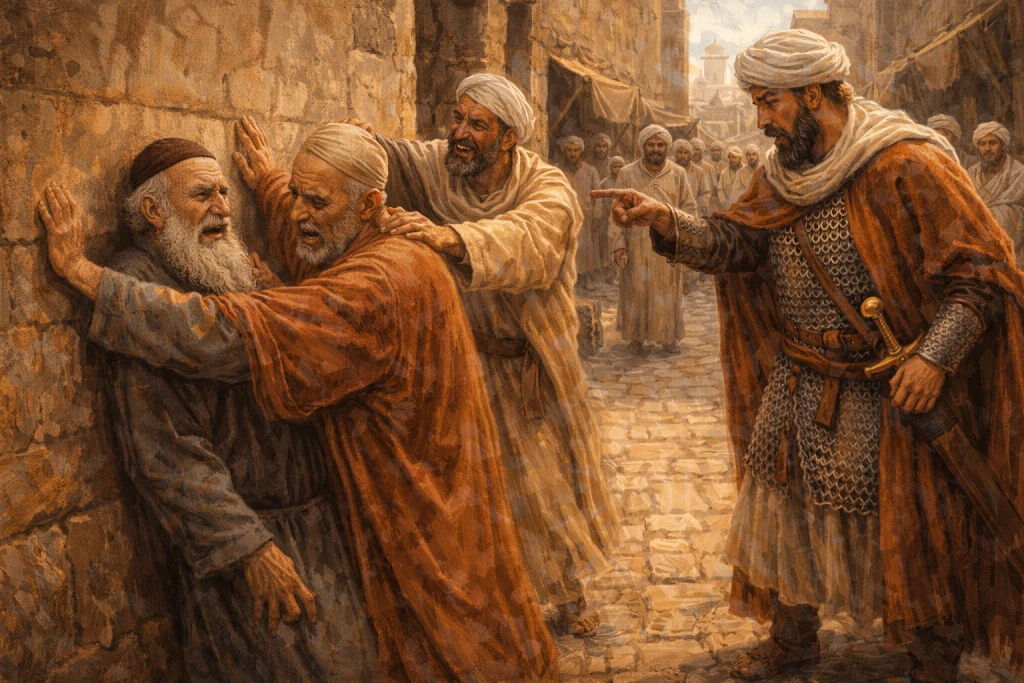
The Instruction to Force Non-Muslims into the Narrowest Part of the Road
Let us now examine the evidence for these statements. The remaining evidence is provided on other pages [1].
Sunan al-Tirmidhi (Verified Edition)
Publisher: Husain al-Madani
Book: 19 / Military Expeditions
Chapter: 41. Greeting the People of the Book with Salam
1602. Narrated from Abu Hurayra (ra.): The Messenger of Allah, peace and blessings be upon him, said: Do not be the first to greet Jews and Christians with salam. If you encounter any of them while travelling along a road, push him towards its edge.
Sahih; al-Sahiha (704), al-Irwa’ (1271), Muslim, Bukhari’s al-Adab al-Mufrad; discussion of hadith 2855 will follow.
Reports concerning this chapter have also been transmitted from Ibn ‘Umar, Anas and Abu Basra al-Ghifari (ra.). Abu ‘Isa described this hadith as hasan sahih.
Hadith grading: Sahih (Authentic)
In the Bengali edition of Sunan al-Tirmidhi published by the Islamic Foundation, the explanatory passage following this hadith identifies withholding respect from non-Muslims and the instruction to humiliate them as the reasons for not greeting them first or giving way to them on the road. This is an explanation appended in the Bengali edition, rather than part of the hadith’s original narration [2] [3].
Sunan al-Tirmidhi (Islamic Foundation)
24 / Military Expeditions
Chapter: Greeting the People of the Book with Salam.
1608. Qutayba (rh.) … Narrated from Abu Hurayra, may Allah be pleased with him. The Messenger of Allah, peace and blessings be upon him, said: Do not be the first to greet Jews and Christians with salam. If you encounter any of them on the road, push him towards its edge. Sahih; al-Sahiha 704, al-Irwa’ 1271, Muslim, al-Adab al-Mufrad; Tirmidhi hadith 1602 [al-Madani Publications].
Hadiths on this subject have also been transmitted from Ibn ‘Umar, Anas and the Companion Abu Basra al-Ghifari, may Allah be pleased with them. Imam Abu ‘Isa (rh.) said: This hadith is hasan sahih. The meaning of the hadith is that you should not be the first to greet Jews and Christians with salam. Some scholars say that this is disliked because it shows them respect, whereas Muslims are instructed to humiliate them. Similarly, if one encounters any of them on the road, one should not give way to him, because that shows him respect.
Hadith grading: Sahih (Authentic)
Narrator: Abu Hurayra (ra.)
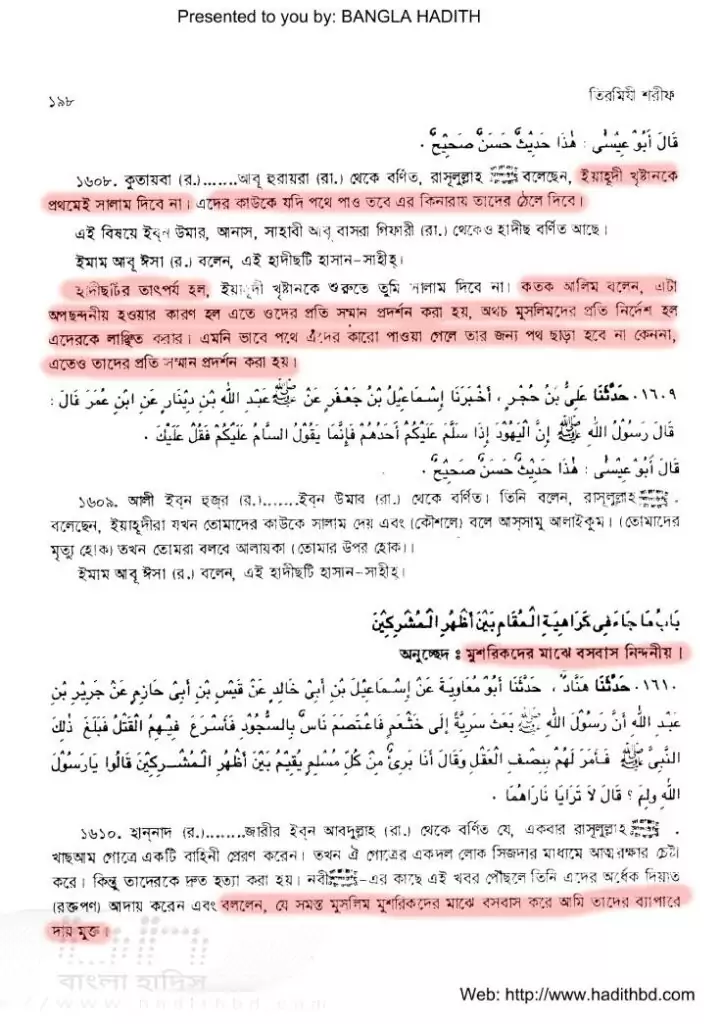
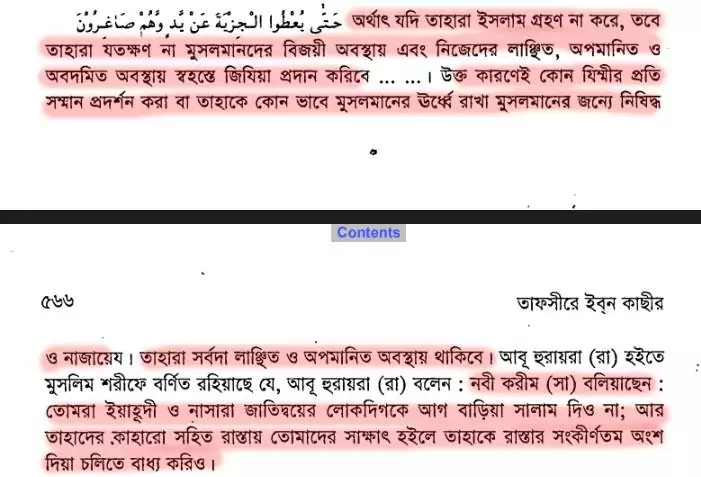
In his commentary on verse 29 of Surah al-Tawba, Ibn Kathir also connects this hadith to the discussion of jizya, saghirun, and the subordinate position of the People of the Book [4] [5].
حَتَّى يُعْطُوا الْجِزْيَةَ عَنْ يَّدٍ وَهُمْ صَاغَرُونَ That is, if they do not accept Islam, then
until they pay jizya with their own hands, with the Muslims in a position of victory and themselves humiliated, disgraced and subdued … For this reason, showing respect to a dhimmi or placing him above a Muslim in any way is forbidden and impermissible for a Muslim. They shall always remain humiliated and disgraced. It is narrated in Sahih Muslim from Abu Hurayra (ra.), who said: The noble Prophet (sa.) said: Do not take the initiative in greeting members of the Jewish and Christian communities with salam; if you encounter any of them on the road, compel him to use its narrowest part.
Imam al-Nawawi’s Explanation: No Collision with a Wall, but No Priority on the Road Either
Imam al-Nawawi, one of the most influential commentators on Sahih Muslim, cites the position of Shafi‘i scholars when explaining this hadith. His statement makes an important distinction clear: a dhimmi must not be pushed into a narrow space in a way that causes him to fall into a hollow or collide with a wall; at the same time, however, the principal or preferential part of the road must not be yielded to him [6].
لا يترك للذمي صدر الطريق، بل يضطر إلى أضيقه إذا كان المسلمون يطرقون، فإن خلت الطريق عن الزحمة فلا حرج. قالوا: وليكن التضييق بحيث لا يقع في وهدة، ولا يصدمه جدار ونحوه.
English Translation: The principal part of the road is not to be left to a dhimmi; rather, when Muslims are using the road, he is to be forced into its narrowest part. However, if the road is free of congestion, there is no objection. They said: the restriction must be imposed in such a way that he does not fall into a hollow or collide with a wall or anything similar.
It is therefore correct to infer from al-Nawawi’s statement that ‘the hadith does not mean crushing someone against a wall’. But to infer from this that ‘the hadith contains no discriminatory allocation of social priority’ is false. In his explanation, Muslims and dhimmis do not have equal rights to use the road: when their claims conflict, the principal part belongs to the Muslim and the narrow part to the dhimmi. Prohibiting physical injury is not synonymous with establishing equal standing.
Abu al-‘Abbas al-Qurtubi: Belittling Non-Muslims, Treating Them with Contempt and Ignoring Them as Though They Did Not Exist
In his Al-Mufhim lima Ashkala min Talkhis Kitab Muslim, Abu al-‘Abbas al-Qurtubi explains the instructions not to greet non-Muslims first and to force them into the narrowest part of the road as two expressions of the same social principle. His argument begins with an explicit judgment: initiating salam is an act of honour, and an unbeliever is unworthy of that honour. He then goes beyond refraining from salam to speak of turning away from non-Muslims, paying them no attention, belittling them and treating their standing with contempt. His most significant phrase is that they should be ignored ‘as though they did not exist’. He connects the rule concerning the road to the same purpose: on a narrow road, a Muslim should not relinquish his place out of respect for a non-Muslim. The relevant explanation is reproduced in full below [7].
Original Arabic Text:
قوله – صلى الله عليه وسلم -: (لا تبدؤوا اليهود والنصارى بالسلام) إنما نهى عن ذلك لأن الابتداء بالسلام إكرام، والكافر ليس أهلا لذلك، فالذي يناسبهم الإعراض عنهم، وترك الالتفات إليهم؛ تصغيرا لهم، وتحقيرا لشأنهم، حتى كأنهم غير موجودين.
و(قوله: وإذا لقيتم أحدهم في طريق فاضطروه إلى أضيقه) أي: لا تتنحوا لهم عن الطريق الضيق؛ إكراما لهم واحتراما. وعلى هذا فتكون هذه الجملة مناسبة للجملة الأولى في المعنى والعطف، وليس معنى ذلك: أنا إذا لقيناهم في طريق واسع أننا نلجئهم إلى حرفه حتى نضيق عليهم؛ لأن ذلك أذى منا لهم من غير سبب، وقد نهينا عن أذاهم.
English Translation:
His statement—‘Do not be the first to greet Jews and Christians with salam’—was prohibited because initiating salam is an act of honour, and an unbeliever is unworthy of that honour. The appropriate treatment of them is to turn away from them and pay them no attention, in order to belittle them and treat their standing with contempt, as though they did not exist.
His statement—‘If you encounter any of them on the road, force him into its narrowest part’—means that you should not move aside for them on a narrow road out of honour and respect for them. On this interpretation, this sentence accords with the first sentence in meaning and connection. It does not mean that, if we encounter them on a wide road, we should force them to its edge and make the way narrow for them; that would mean causing them harm without reason, and we have been prohibited from harming them.
In this explanation, al-Qurtubi himself defines the purpose of the treatment of non-Muslims. His term tasghir means belittling, and tahqir means treating with contempt. These are not merely choices of greeting or arrangements for convenient movement; they declare that people of another religion are to occupy an inferior social position. A Muslim may be offered a respectful greeting when encountered, but a non-Muslim standing in the same place is considered unworthy of that honour because of his religious identity. Likewise, when two people meet on a narrow road, religious identity becomes the basis of their conduct rather than who arrived first, who has greater difficulty moving, or who could reasonably be expected to give way. The connection between the two instructions is also explicit in al-Qurtubi’s explanation: both in offering salam and in yielding the road, one must refrain from showing respect to a non-Muslim.
His prohibition on needlessly forcing someone to the edge of a wide road and causing discomfort is also reproduced in full in the quotation. That prohibition places a limit on causing physical harm or obstructing movement, but leaves in place the instruction to regard non-Muslims as unworthy of respect, belittle them, and ignore them as though they did not exist. This distinction is essential to understanding discrimination. A person’s social standing can be denied without beating him; without injuring him, he can be told that the respect recognised as due to others is not his entitlement. It is precisely this principle of social exclusion based on religion that appears in al-Qurtubi’s statement. Reading his entire explanation makes the problem still clearer: the non-Muslim’s existence is acknowledged, yet in everyday social conduct he is to be ignored as though that existence had no significance.
Mulla ‘Ali al-Qari: Humiliation, ‘Figurative Killing’ and Withdrawing a Greeting Already Given
In his Mirqat al-Mafatih Sharh Mishkat al-Masabih, the Hanafi scholar Mulla ‘Ali al-Qari explicitly identifies withholding respect from non-Muslims and humiliating them as the purpose of this hadith’s instructions. In his account, Jewish and Christian dhimmis are included in the prohibition. He regards initiating salam as an act of honour and states that honouring them is impermissible. He then connects this with the words wa-hum saghirun in Surah al-Tawba and writes: ‘We are instructed to humiliate them.’ He presents the rule requiring them to use the narrowest part of the road as support for that humiliation. His explanation also discusses the obligation to kill being lifted because of jizya, describes social humiliation as ‘figurative killing’, and addresses withdrawing a greeting to belittle someone who was initially thought to be Muslim but was subsequently discovered to be a dhimmi. The complete explanation of the hadith is provided below [8].
Original Arabic Text:
4635 – (وعن أبي هريرة – رضي الله تعالى عنه – قال: قال رسول الله – صلى الله عليه وسلم: (لا تبدءوا اليهود ولا النصارى) أي: ولو كانوا ذميين، فضلا عن غيرهما من الكفار (بالسلام): لأن الابتداء به إعزاز للمسلم عليه، ولا يجوز إعزازهم، وكذا لا يجوز تواددهم وتحاببهم بالسلام ونحوه، قال تعالى: لا تجد قوما يؤمنون بالله واليوم الآخر يوادون من حاد الله ورسوله الآية.
ولأنا مأمورون بإذلالهم، كما أشار إليه سبحانه بقوله: وهم صاغرون، ويؤيده قوله: (وإذا لقيتم أحدهم في طريق فاضطروه) أي: ألجئوا أحدهم (إلى أضيقه) أي: أضيق الطريق بحيث لو كان في الطريق جدار يلتصق بالجدار، وإلا فيأمره ليعدل عن وسط الطريق إلى أحد طرفيه جزاء وفاقا، لما عدلوا عن الصراط المستقيم؛ ولأن قتلهم واجب، لكن ارتفع بالجزية وما لا يدرك كله لا يترك كله، فهذا قتل معنوي والله أعلم.
وفي شرح مسلم للنووي، قال بعض أصحابنا يكره ابتداؤهم بالسلام ولا يحرم، وهذا ضعيف؛ لأن النهي للتحريم، فالصواب تحريم ابتدائهم، وحكى القاضي عياض عن جماعة: أنه يجوز ابتداؤهم للضرورة والحاجة، وهو قول علقمة والنخعي. وقال الأوزاعي: إن سلمت فقد سلم الصالحون، وإن تركت فقد ترك الصالحون.
قلت: الترك أصلح على ما هو الأصح. قال: وأما المبتدع فالمختار أنه لا يبدأ بالسلام إلا لعذر وخوف من مفسدة، ولو سلم على من لم يعرفه، فبان ذميا استحب أن يسترد سلامه بأن يقول: استرجعت سلامي تحقيرا له. قلت: ولا بأس بمثل هذا للمبتدع، أو للمباغض، أو المتكبر الذين لم يردوا عليه السلام.
قال، وقال أصحابنا: لا يترك للذمي صدر الطريق، بل يضطر إلى أضيقه، ولكن التضييق بحيث لا يقع في وهدة ونحوها، وإن خلت الطريق عن الزحمة فلا حرج. (رواه مسلم): وكذا أحمد، وأبو داود، والترمذي.
English Translation:
4635—Narrated from Abu Hurayra, who said: The Messenger said, ‘Do not be the first to greet Jews and Christians with salam.’ That is, even if they are dhimmis; it applies still more to other unbelievers. Initiating salam bestows honour on the person greeted, and honouring them is impermissible. Likewise, establishing mutual affection and love with them through salam or similar conduct is impermissible. Allah said: ‘You will not find a people who believe in Allah and the Last Day loving those who oppose Allah and His Messenger’—the verse.
And we are instructed to humiliate them, as Allah indicated through His words, ‘They shall be in a state of submission.’ This meaning is supported by his statement: ‘If you encounter any of them on the road, compel him’—that is, force him to go—‘into its narrowest part’. That is, if there is a wall along the road, he should remain close against it; otherwise, he should be instructed to leave the middle of the road and move to either side. This is an appropriate recompense, since they have departed from the straight path. And killing them is obligatory, but this obligation has been lifted because of jizya. What cannot be achieved in its entirety is not abandoned in its entirety. Thus, this is a kind of figurative killing. Allah knows best.
In al-Nawawi’s Sharh Muslim, it is stated: some of our scholars said that initiating salam with them is disliked, not forbidden. But this opinion is weak, because the prohibition indicates unlawfulness. The correct position, therefore, is that initiating salam with them is forbidden. Qadi ‘Iyad transmitted from a group of scholars that initiating salam with them is permissible in cases of need and necessity. This is the opinion of ‘Alqama and al-Nakha‘i. Al-Awza‘i said: if you offer salam, righteous people have offered it; if you refrain, righteous people have refrained.
I say: according to the more correct opinion, refraining is more appropriate. He said: concerning an innovator, the preferred position is that salam should not be initiated with him except for an acceptable reason or fear of harm. If someone greets a person without knowing him and subsequently discovers that he is a dhimmi, it is recommended to withdraw the greeting by saying, ‘I take back my salam’, in order to belittle him. I say: there is no objection to doing the same to an innovator, a person who harbours hostility, or an arrogant person who did not return the greeting.
He said: our scholars have stated that the principal part of the road should not be left to a dhimmi; rather, he should be forced into its narrowest part. However, this restriction must be imposed in such a way that he does not fall into a hollow or a similar place. If the road is free of congestion, there is no objection. ‘Muslim narrated it’—as did Ahmad, Abu Dawud and al-Tirmidhi.
In this explanation, religious belief is made the standard for determining a person’s standing in public space. As the reason for requiring a non-Muslim to leave the middle of the road and move to one side, al-Qari does not cite difficulty of movement, the safety of other pedestrians, or the need to manage congestion; he says that the non-Muslim has departed from the straight path, so removing him from the middle of the road is an appropriate recompense. In other words, assigning people an inferior position in everyday life because of their religious identity is presented as a just recompense. The word ‘humiliation’ is not imposed by a critic: al-Qari himself uses idhlal and declares it a religious instruction. In his reasoning, theological disagreement turns directly into permission to degrade a person’s social standing.
His phrase ‘figurative killing’ is particularly striking. Omitting the reasoning preceding it conceals both the severity and the purpose of the statement. He says that, although the obligation to kill has been lifted because of jizya, what cannot be accomplished in full is not to be abandoned in full; he then calls the practice of forcing someone into the narrow part of the road figurative killing. In this explanation, preserving a non-Muslim’s life and allowing him to live with dignity become two separate matters. Although jizya is cited as the reason for preserving his life, social humiliation remains religiously authorised. Thus, his own explanation refutes the conclusion that provisions protecting non-Muslim lives within the dhimma system necessarily establish their equal standing. A protected life and a dignified life are not the same: when the terms of protection are accompanied by instructions to humiliate, subordination remains within the system.
The discussion of withdrawing salam makes this social division still more explicit. Someone is greeted without being recognised, and at that point no obstacle to ordinary courtesy is felt. But once he is discovered to be a non-Muslim dhimmi, the discussion quoted by al-Qari describes withdrawing that greeting in order to belittle him as recommended. The reason for changing the conduct is not any crime, misconduct or mockery of the greeting by that person; it is his newly discovered religious identity. Following this rule makes even initial courteous relations with people conditional on determining their beliefs. The same explanation mentions the opinion allowing salam out of necessity and the limits intended to avoid harm such as falling into a hollow; but humiliation, withholding honour and withdrawing courtesy after discovering religious identity are also explicitly present. Reading the entire statement shows that social disrespect here is not an incidental act of rudeness: it is reasoned through and connected to religious rules.
Only for Jews During Wartime? Application to Christians in Syria as Well
A report in Sunan Abi Dawud is significant in addressing attempts to restrict this rule to a temporary instruction during conflict with a particular Jewish group in Medina. Suhayl ibn Abi Salih says that he was travelling to Syria with his father. Along the way, people were greeting Christians with salam as they passed their places of worship. His father then quoted this same hadith from Abu Hurayra and prohibited them from initiating salam. Thus, within the hadith’s early transmission tradition itself, it was applied to Christians in Syria rather than being restricted to a particular enemy group in Medina [9].
خرجت مع أبي إلى الشام فجعلوا يمرون بصوامع فيها نصارى فيسلمون عليهم، فقال أبي: لا تبدءوهم بالسلام، فإن أبا هريرة حدثنا عن رسول الله صلى الله عليه وسلم قال: لا تبدءوهم بالسلام، وإذا لقيتموهم في الطريق فاضطروهم إلى أضيق الطريق.
English Translation: I set out for Syria with my father. They were greeting people with salam as they passed places of worship containing Christians. My father then said: Do not initiate salam with them, for Abu Hurayra narrated to us from the Messenger that he said: Do not initiate salam with them, and if you encounter them on the road, force them into its narrowest part.
This report cannot establish Muhammad’s original historical motive for issuing the instruction. But it does establish one point: in early Muslim transmission, the rule was not confined to a particular situation centred on Medina. The same rule was applied to Christians in Syria. Consequently, if a later commentator dismisses it entirely as ‘merely a wartime instruction from that period’, that interpretation conflicts with this early application.
Beyond an Isolated Hadith: Social Hierarchy in al-Nawawi’s Jurisprudential Rules
In Imam al-Nawawi’s Rawdat al-Talibin, the rule concerning the road appears within a broader jurisprudential framework. Alongside rules withholding the principal part of the road from dhimmis, denying them places of honour, and refusing to give them precedence in gatherings where Muslims are present, the work sets out detailed requirements for distinguishing them from Muslims through clothing and outward appearance [10].
لا يترك لذمي صدر الطريق، بل يلجأ إلى أضيقه إذا كان المسلمون يطرقون … ولا يوقر، ولا يصدر في مجلس إذا كان فيه مسلمون … ويؤخذ أهل الذمة في دار الإسلام بالتميز في اللباس.
English Translation: The principal part of the road is not to be left to a dhimmi; when Muslims are using the road, he is to be forced into its narrowest part … He is not to be honoured or given a prominent seat in a gathering where Muslims are present … In an Islamic state, dhimmis are to be required to distinguish themselves through their clothing.
In the same discussion, al-Nawawi also mentions rules concerning garments of different colours or bearing distinctive signs, special belts worn around the waist, restrictions on the use of particular mounts, and requirements to remain visibly distinguishable from Muslims in various circumstances. Reading the instruction to use the narrowest part of the road as an isolated rule of ‘traffic etiquette’ therefore does not accord with its historical jurisprudential framework. It belongs to a system of status in which religious identity affects social standing, priority of movement and outward appearance.
Ibn al-Qayyim’s Ahkam Ahl al-Dhimma: Seats Must Be Vacated for Muslims
In his Ahkam Ahl al-Dhimma, Ibn al-Qayyim quotes at length the ‘Pact of ‘Umar’ circulated in ‘Umar’s name. Although its historical chain of transmission is disputed, Ibn al-Qayyim himself states that jurists accepted these conditions, included them in their books and used them as evidence. The text he quotes also contains conditions requiring non-Muslims to honour Muslims in their gatherings, show them the way, and vacate their own seats if Muslims wish to sit [11].
وأن نوقر المسلمين في مجالسهم ونرشدهم الطريق ونقوم لهم عن المجالس إن أرادوا الجلوس … وشهرة هذه الشروط تغني عن إسنادها، فإن الأئمة تلقوها بالقبول وذكروها في كتبهم واحتجوا بها.
English Translation: We shall honour Muslims in their gatherings, show them the way, and rise from our seats for them if they wish to sit … The renown of these conditions removes the need for their chain of transmission, for the imams accepted them, mentioned them in their books and used them as evidence.
There is no need to present this document as a personal decree conclusively proven to have come from ‘Umar. What matters is that an influential jurist such as Ibn al-Qayyim uses it as an accepted part of his explanation of the rules concerning dhimmis and incorporates its social principles into jurisprudential discussion. Priority on the road, vacating seats, distinctive clothing and restrictions on public religious symbols together reveal an overt hierarchy of status based on religion, rather than citizenship of equal standing.
The Rule Has Not Disappeared in the Modern Era: Ibn ‘Uthaymin
The modern Salafi scholar Muhammad ibn Salih al-‘Uthaymin likewise did not declare the hadith invalid or applicable only to the past. He rejected only a physical interpretation such as pressing someone against a wall. In his explanation, a Muslim should not yield his path to a non-Muslim; if space is limited, the burden of that restriction should fall on the non-Muslim. He also connects this rule with demonstrating the Muslim’s dignity [12].
لا تتوسعوا لهم إذا قابلوكم حتى يكون لهم السعة ويكون الضيق عليكم، بل استمروا في اتجاهكم وسيركم، واجعلوا الضيق إن كان هناك ضيق على هؤلاء … بل فيه إظهار لعزة المسلم.
English Translation: When they approach you, do not make room for them in such a way that they have ample space while you are confined to a narrow space. Rather, continue in your own direction and along your own path, and if space is restricted, let that restriction fall on them … Rather, this demonstrates the Muslim’s dignity.
This modern explanation does not remove the underlying discrimination either. ‘A non-Muslim is not to be pushed against a wall’ imposes a physical limit; at the same time, however, Ibn ‘Uthaymin reserves priority in the use of the road for Muslims on the basis of religious identity and explains it as an expression of Muslim dignity. The claim that the rule’s discriminatory character results merely from a medieval misinterpretation therefore does not hold.
Conclusion
Reading the sources above together undermines the claim that Muslims and non-Muslim dhimmis possessed equal social standing in classical Islamic law. Authentic hadith contains instructions not to initiate salam with Jews and Christians and to force them into the narrowest part of the road. Al-Nawawi explains this rule as withholding the principal part of the road from a dhimmi. Abu al-‘Abbas al-Qurtubi identifies initiating salam as an act of honour, declares the unbeliever unworthy of it, and explicitly uses the language of belittlement and contempt. Mulla ‘Ali al-Qari writes still more directly of an instruction to humiliate non-Muslims. These are not modern terms imposed by a critic; they are concepts employed by the classical commentators themselves.
This framework extended beyond salam and the use of roads. Al-Nawawi’s jurisprudential discussion includes rules denying dhimmis precedence in places of honour, requiring clothing that visibly distinguishes them from Muslims, and maintaining their separation through various social markers. The ‘Pact of ‘Umar’ quoted by Ibn al-Qayyim preserves conditions such as vacating seats for Muslims and showing them the way. In his explanation of jizya and saghirun, Ibn Kathir presents the non-Muslim’s abasement and humiliation as part of the religious rule. What appears here, therefore, is not a collection of isolated instances of harsh conduct, but a structural distinction in standing and social priority based on religious identity.
In response to criticism of these rules, it is often said that they do not instruct anyone to make non-Muslims collide with walls or authorise gratuitous physical abuse. Although true, this does not answer the central problem. Refraining from physically injuring someone and granting that person equal social standing are different things. In the classical explanations, withholding priority on the road, refusing to initiate respectful salam, denying precedence in gatherings and requiring distinctive social markers produce discrimination based on religion even without physical violence. Under the fundamental principles of modern human rights, a citizen’s social standing, rights in public space or entitlement to respect cannot depend on religious identity. For this reason, these provisions of the classical dhimma framework are fundamentally incompatible with equal standing and citizenship without discrimination.
References
- Sunan al-Tirmidhi, verified edition, Husain al-Madani Publications, hadith 1602 ↩︎
- Sunan al-Tirmidhi, Islamic Foundation, hadith 1608 ↩︎
- Sunan al-Tirmidhi, Islamic Foundation, vol. 4, p. 198 ↩︎
- Tafsir Ibn Kathir, Islamic Foundation, vol. 4, pp. 565–566 ↩︎
- Ibn Kathir, Tafsir al-Qur’an al-‘Azim, Surah al-Tawba 9:29 ↩︎
- Imam al-Nawawi, Sharh Sahih Muslim, vol. 14, p. 324 ↩︎
- Abu al-‘Abbas al-Qurtubi, Al-Mufhim, vol. 5, p. 490; chapter on not initiating salam with the People of the Dhimma and responding when they offer salam ↩︎
- Mulla ‘Ali al-Qari, Mirqat al-Mafatih, vol. 7, p. 2939, commentary on hadith 4635 ↩︎
- Sunan Abi Dawud, hadith 5205 ↩︎
- Imam al-Nawawi, Rawdat al-Talibin, rules concerning dhimmis ↩︎
- Ibn al-Qayyim, Ahkam Ahl al-Dhimma, vol. 3, pp. 1159–1165 ↩︎
- Muhammad ibn Salih al-‘Uthaymin, Majmu‘ Fatawa wa-Rasa’il, 3/38 ↩︎