Summary
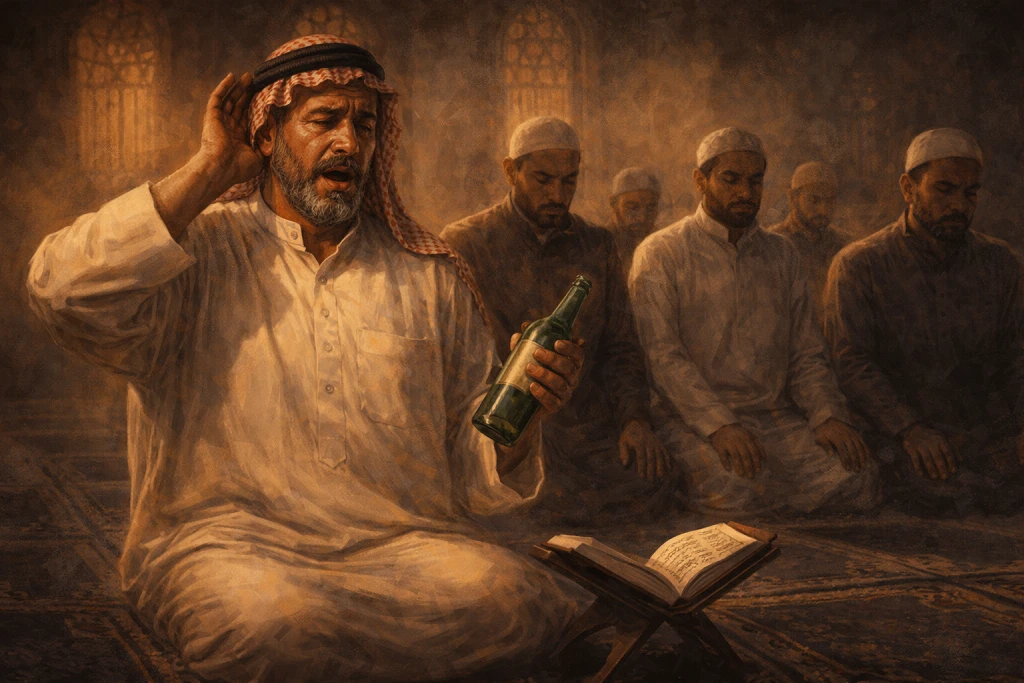
According to Islamic theology, Allah is omniscient, omnipotent, and aware of every event in the past, present and future. Yet the history of the enactment and abrogation of Quranic laws contains numerous examples of new rulings being issued successively in response to human experiences, complaints, difficulties and social conflicts. From the initial permissibility of drinking alcohol to Ali ibn Abi Talib’s drunken utterance contrary to monotheism during prayer, Hamza’s drunkenness, fights among the Companions and the final prohibition of alcohol after Umar’s repeated appeals, this entire sequence is preserved in Islamic sources themselves. The very wine initially included among Allah’s blessings and signs was subsequently declared an abomination of Satan’s handiwork.
Similar changes occurred in the rules concerning a widow’s waiting period and maintenance, bequests to parents, the duties of Muslim combatants on the battlefield, and the payment of charity before consulting Muhammad privately. The history of these rulings profoundly calls into question the Quran’s alleged divine origin, Allah’s omniscience, religion-based morality, and the claim that the Quran is an eternal and self-sufficient code of life.
| Subject and evidence | Initial ruling or position | Events leading to change and subsequent ruling | Theological and philosophical problem |
|---|---|---|---|
| Wine as Allah’s blessing Surah al-Nahl 16:67 | The production of wine and good food is included among Allah’s blessings and signs. Drinking alcohol is lawful under Sharia. | New rulings are later enacted concerning the harmful effects of the same wine. | Its religious evaluation changes although its harmful properties existed from the beginning. |
| The Companions’ complaints about the harmful effects of alcohol Surah al-Baqarah 2:219 | Drinking remained permissible. | Following complaints by Umar, Muadh and other Companions, the sin of drinking is declared greater than its benefit. | New revelation appears in response to ordinary human observation and experience. |
| Hamza’s drunkenness Sahih al-Bukhari 3091 | Drinking is permissible for Muhammad’s close relatives and Companions. | Hamza mutilates Ali’s two camels and insults Muhammad by calling him a slave of his father. | No comprehensive ban follows even after the harmful consequences of drinking manifest within Muhammad’s own family. |
| Ali’s drunkenness and an utterance contrary to monotheism Surah al-Nisa 4:43; al-Tirmidhi 3026; Abu Dawud 3671 | There was no comprehensive ban on drinking. | While drunk, Ali distorts the meaning of Surah al-Kafirun in prayer. Praying while intoxicated is subsequently prohibited. | A partial restriction is imposed while drinking remains permissible, even after an utterance contrary to monotheism. |
| Fights among the Companions and the final prohibition Surah al-Maidah 5:90–91; Sahih Muslim 1748; Abu Dawud 3670 | Drinking remains permissible outside prayer times. | Following Sa’d’s injury, mutual hostility among the Companions and Umar’s renewed appeal, wine is declared an abomination of Satan’s handiwork. | The same substance recognised as Allah’s blessing is subsequently identified as Satan’s handiwork. |
| Exemption of deceased Companions from liability Surah al-Maidah 5:93 | Many Companions had consumed alcohol before the final prohibition. | After questions arise about the fate of deceased Companions, a ruling exempts them from liability for previous drinking. | Another reactive ruling resolves questions arising from the new law. |
| Widows’ waiting period and maintenance Surah al-Baqarah 2:240, 2:234; Sahih al-Bukhari 4530–4531 | One year of maintenance and accommodation; a one-year waiting period according to the majority interpretation in classical exegesis. | Introduction of a waiting period of four months and ten days and fixed inheritance shares. | Changes in laws governing women’s personal freedom and economic rights. |
| Mandatory bequests Surah al-Baqarah 2:180; Sahih al-Bukhari 2747; Abu Dawud 2870 | Bequests to parents and close relatives are mandatory. | New inheritance rules and a general prohibition on bequests to heirs. | A formerly mandatory act later becomes prohibited in relation to certain persons. |
| Muslim capacity on the battlefield Surah al-Anfal 8:65–66; Sahih al-Bukhari 4652–4653 | One Muslim must remain steadfast against ten opponents. | The ratio is changed from 1:10 to 1:2 because of the Muslims’ weakness and the difficulty of complying. | Revision of an earlier command to accommodate the followers’ actual capabilities. |
| Charity before private consultation with Muhammad Surah al-Mujadilah 58:12–13 | Followers who can afford it must give charity before private consultation. | The obligation is withdrawn shortly afterwards following the followers’ reluctance and difficulties. | Legislation to resolve Muhammad’s personal inconvenience and its withdrawal in response to the consequences. |
| Naskh and mansukh (abrogation) Surah al-Baqarah 2:106; Surah al-Nahl 16:101 | Various commands and prohibitions are issued in Allah’s name. | Subsequent verses abrogate earlier rulings and establish new ones. | The claim of omniscience, the permanence of religious morality, the Quran’s self-sufficiency and the evidential crisis of its alleged divine origin. |
The historical sequence of these events is consistent with the experience-based legislative process of a seventh-century religious and political leader. No supernatural entity need be postulated to explain this process of enacting and revising laws in response to human behaviour, social needs and practical problems.
Introduction
Human-made laws change with human experience, knowledge, needs and social circumstances. When a legislator enacts a law, he is not aware of all its possible consequences. As new problems emerge after implementation, he revises his earlier decisions, imposes new conditions, or repeals the old law entirely and enacts a new one. This legislative process is a natural feature of limited human knowledge and experience-based decision-making. But according to Islamic theology, Allah is no legislator with limited knowledge. He is omniscient, omnipotent and aware of every event in the past, present and future. There can be no new information for him to discover, nor can he be ignorant of the consequences of any event. Yet an examination of the history of Quranic legislation repeatedly reveals precisely this familiar human process of enacting and revising laws on the basis of experience.
According to Islamic belief, the Quran is Allah’s word preserved in the Lawh al-Mahfuz, or Preserved Tablet, and revealed gradually to Muhammad over approximately twenty-three years. There is a profound inconsistency between this belief and the actual history of Quranic legislation. Allah should already have known what Muhammad’s Companions would do in the future, who would become drunk, who would misrecite a surah during prayer under the influence of alcohol, who would fight whom, and who would object to which ruling. Yet Islamic sources show that verses were revealed one after another in response to the Companions’ personal conduct, questions, complaints, opinions, disputes and various social problems. New revelation arrived as a solution after a problem arose; once the limitations of an earlier ruling became apparent, another ruling revised it. The very features one would expect of a seventh-century religious and political leader’s legislative process are present in the history of legislation attributed to the supposedly omniscient Allah.
The history of the prohibition of alcohol in Islam is a particularly clear example of this inconsistency. In the early stages of Islam, drinking alcohol was not merely permissible: Surah al-Nahl included the production of wine and good food from dates and grapes among Allah’s blessings and signs. Eminent Islamic exegetes also recognised this verse as evidence of the initial permissibility of wine. Later, several Companions, including Umar ibn al-Khattab, complained that alcohol destroyed reason and wealth. Allah then announced that alcohol contained benefits, but its sin was greater than its benefit. The Companions nevertheless continued drinking. At one point Muhammad’s cousin and son-in-law, Ali ibn Abi Talib, became so drunk that, while leading the prayer, he reversed the meaning of Surah al-Kafirun. A new verse was then revealed prohibiting prayer while intoxicated. Drinking subsequently led to fights, mutual hostility and tribal disputes among the Companions. Finally, the very wine once included among Allah’s blessings and signs was declared an abomination of Satan’s handiwork and ordered to be shunned.
Throughout this period the chemical properties of alcohol did not change. Its intoxicating capacity, its effects on human judgement and behaviour, and the potential physical and social harm of excessive drinking were all present when the first verse was revealed. No new chemical component appeared in wine after the Companions became drunk, nor did its nature change after Ali misrecited the surah. What changed was the behaviour and experience of Muhammad’s followers and the social problems confronting Muhammad. Alongside these changes, the rulings proclaimed in Allah’s name changed as well. A drink initially presented as Allah’s blessing subsequently became a mixture of sin and benefit, then something prohibited at certain times, and finally an abomination of Satan’s handiwork. This sequence is not a history of miraculous knowledge being revealed; it is a history of progressively adapting religious law to human experience.
Alcohol is not an isolated example of Islamic legislation. New Quranic commands followed earlier ones on various matters, including widows’ waiting periods and maintenance, testamentary bequests, Muslim combatants’ battlefield obligations and charity before private consultation with Muhammad. Islamic jurisprudence calls this change naskh, or abrogation. The ruling that is cancelled is called mansukh, and the ruling that cancels it is called nasikh. In other words, a separate theological framework was developed to establish a ruling as Allah’s word, subsequently invalidate it and establish another ruling as Allah’s word. Calling a legislative change naskh in Arabic neither alters its historical reality nor proves that it originated with an omniscient being.
Establishing the claim of omniscience requires evidence of knowledge that cannot be explained by limited human experience and observation. Yet the history of Quranic legislation shows ordinary people identifying problems first, complaining to Muhammad, appealing for clear rulings, and receiving new rulings on the basis of the consequences of their conduct. There is no logical basis for treating an ordinary person’s observation, subsequently proclaimed as Allah’s word, as evidence of supernatural knowledge. Rather, this sequence constitutes strong historical evidence for the human origin of Quranic laws. The claim that a book whose rules are so intimately connected with the needs, problems, personal incidents and changing circumstances of seventh-century Arabian society is the eternal law of an omniscient being, applicable for all time, is itself profoundly questionable.
The Initial Permissibility of Wine: Alcohol as Allah’s Blessing and Sign
In the early Islamic period, drinking was a lawful and ordinary social activity. Muhammad’s followers continued to drink after embracing Islam, attended drinking gatherings and served wine to one another at social occasions. A clear basis for this permissibility is found in the Quran itself. Several verses of Surah al-Nahl, revealed in the Meccan period, describe various elements of nature and their usefulness to people as Allah’s blessings and signs. This sequence includes obtaining milk from livestock, preparing various foods and beverages from dates and grapes, and obtaining honey from bees. Within this description of blessings and signs, Allah mentions the production of wine alongside good food and provision. In other words, by including the production of wine from dates and grapes among Allah’s gifts and signs, its permissibility at the time received religious recognition [1]
وَمِنْ ثَمَرَاتِ النَّخِيلِ وَالْأَعْنَابِ تَتَّخِذُونَ مِنْهُ سَكَرًا وَرِزْقًا حَسَنًا إِنَّ فِي ذَلِكَ لَآيَةً لِقَوْمٍ يَعْقِلُونَ
English translation:
And from the fruits of date palms and grapes you produce wine and good food. Surely in this is a sign for people who understand.
Tafsir Ibn Kathir, one of the most important works of Islamic exegesis, explains this verse very clearly. Ibn Kathir states that after mentioning milk from livestock, Allah mentions an intoxicating drink made from dates and grapes. According to his explanation, wine is mentioned as Allah’s blessing to humanity, and the verse is evidence of its former permissibility under Sharia. Particularly noteworthy is Ibn Kathir’s use of امتن به عليهم meaning that it was mentioned as a blessing bestowed upon them, and إباحته شرعا explicitly acknowledging its legal permissibility under Sharia [2]
ولهذا امتن به عليهم فقال : ( ومن ثمرات النخيل والأعناب تتخذون منه سكرا ) دل على إباحته شرعا قبل تحريمه
English translation:
For this reason, He mentioned it as a blessing bestowed upon them. He then said, ‘And from the fruits of date palms and grapes you produce wine.’ This indicates its permissibility under Sharia before its prohibition.
The interpretation of wine as Allah’s blessing is not unique to Ibn Kathir. The same point is found in the statement of Hasan al-Basri, a prominent member of the generation of Successors in early Islam. Al-Tabari recorded Hasan al-Basri’s statement in his celebrated commentary. Hasan al-Basri explicitly said that Allah mentioned His blessing in wine before prohibiting it [3]
حدثنا محمد بن بشار، قال: ثنا هوذة، قال: ثنا عوف، عن الحسن، في قوله ( تَتَّخِذُونَ مِنْهُ سَكَرًا وَرِزْقًا حَسَنًا ) قال: ذكر الله نعمته في السكر قبل تحريم الخمر
English translation:
Muhammad ibn Bashshar narrated to us, saying: Hawdha narrated to us, saying: Awf narrated from Hasan al-Basri. Commenting on ‘you produce wine and good food from it’, he said: Allah mentioned His blessing in wine before the prohibition of intoxicating drink.
The prominent Andalusian exegete Ibn Atiyyah also cites Ibn Abbas’s statement in his work Al-Muharrar al-Wajiz when explaining this verse. According to Ibn Abbas, the verse was revealed before wine was prohibited, and the word sakar in it means wine. Ibn Atiyyah cites similar interpretations from Ibn Jubayr, Ibrahim al-Nakha’i, al-Sha’bi and Abu Zayd. The former permissibility of wine and its recognition in this Quranic verse are therefore well-established interpretations in classical Islamic exegesis [4]
فقال ابن عباس: نزلت هذه الآية قبل تحريم الخمر، وأراد بالسكر الخمر، وبالرزق الحسن جميع ما يشرب ويؤكل حلالاً من هاتين الشجرتين
English translation:
Ibn Abbas said: This verse was revealed before wine was prohibited, and by sakar wine was intended. By good provision, all lawful food and drink derived from these two trees was intended.
The Quranic text and the explanations of classical exegetes thus clearly establish the initial religious permissibility of wine. At one time it was mentioned as Allah’s blessing to humanity; later, the very same wine was declared an abomination of Satan’s handiwork. The question is whether, when including wine among His blessings, Allah did not know that it would subsequently cause disputes among His followers, that they would become drunk and misrecite surahs in prayer, and that they would fight one another. It is quite natural for someone with limited knowledge to be impressed by the usefulness of a substance, initially approve it and later prohibit it upon recognising its harmful effects. The Quran’s treatment of wine displays precisely this history of changing evaluations.
Following the initial permissibility of alcohol, several Companions recognised its harmful effects through their own experience and complained to Muhammad. The eminent Islamic scholar al-Wahidi, in his work Asbab al-Nuzul cites the complaints of Umar ibn al-Khattab, Muadh ibn Jabal and several Ansar as the occasion for the revelation of Surah al-Baqarah 2:219. They informed Muhammad that alcohol and gambling destroy human reason and wealth. Al-Wahidi reports that the relevant verse was revealed in response to this statement [5]
نزلت في عمر بن الخطاب ، ومعاذ بن جبل ، ونفر من الأنصار أتوا رسول الله – صلى الله عليه وسلم – فقالوا : أفتنا في الخمر والميسر فإنهما مذهبة للعقل مسلبة للمال ، فأنزل الله تعالى هذه الآية .
English translation:
This verse was revealed concerning Umar ibn al-Khattab, Muadh ibn Jabal and several Ansar. They came to the Messenger of Allah and said: Give us a ruling concerning wine and gambling, for they destroy reason and deprive people of wealth. Then Allah Most High revealed this verse.
After these complaints from Umar and other Companions, a change in Allah’s position becomes apparent. Although wine had previously been included among blessings and signs, it was now acknowledged to contain great sin. Its benefits were also mentioned. In other words, even after the Companions complained about alcohol, drinking was not completely prohibited. They were informed that the sin of alcohol and gambling outweighed their benefit [6]
يَسْأَلُونَكَ عَنِ الْخَمْرِ وَالْمَيْسِرِ قُلْ فِيهِمَا إِثْمٌ كَبِيرٌ وَمَنَافِعُ لِلنَّاسِ وَإِثْمُهُمَا أَكْبَرُ مِنْ نَفْعِهِمَا ۗ وَيَسْأَلُونَكَ مَاذَا يُنْفِقُونَ قُلِ الْعَفْوَ ۗ كَذَٰلِكَ يُبَيِّنُ اللَّهُ لَكُمُ الْآيَاتِ لَعَلَّكُمْ تَتَفَكَّرُونَ
English translation:
They ask you about wine and gambling. Say: In both there is great sin and benefits for people. But their sin is greater than their benefit. And they ask you what they should spend. Say: what is beyond your needs. Thus Allah makes the verses clear to you so that you may reflect.
The verse begins with يَسْأَلُونَكَ meaning ‘They ask you.’ It was the Companions who first raised with Muhammad the harmful effects of alcohol and gambling on human reason and wealth. Knowledge derived from ordinary people’s everyday experience was subsequently proclaimed as Allah’s word. Remarkably, human experience and observation play a direct role in the legislative process of the being claimed to be the source of all knowledge. Umar and the other Companions identified the problem by exercising their own judgement, and new revelation came in response to their question. Proclaiming familiar human knowledge as divine speech in response to a problem raised by humans is no evidence of omniscience.
In his commentary on this verse of Surah al-Baqarah, Ibn Kathir also discusses various alleged benefits of alcohol. He mentions physical benefits, digestion, pleasure, mental stimulation and earning money through its sale. At the same time, he explicitly acknowledges that this verse did not directly declare wine forbidden. It was merely a preliminary instruction preparing the way for the subsequent prohibition [7]
ولهذا كانت هذه الآية ممهدة لتحريم الخمر على البتات ، ولم تكن مصرحة بل معرضة
English translation:
For this reason, this verse prepared the way for the complete prohibition of wine. It did not explicitly prohibit it, but rather implied the prohibition.
The fact that Muhammad’s close and influential Companions continued to drink even after the revelation of this verse is explicitly mentioned in the prominent exegete al-Alusi’s work Ruh al-Ma’ani. According to his account, leading Companions continued drinking after the verse was revealed, saying that they were drinking only what benefited them. They continued drinking until the final prohibition in Surah al-Maidah was revealed [8]
ومن هنا شربها كبار الصحابة – رضي الله تعالى عنهم – بعد نزولها، وقالوا: إنما نشرب ما ينفعنا، ولم يمتنعوا حتى نزلت آية المائدة
English translation:
For this reason, leading Companions continued to drink wine after this verse was revealed, saying: We drink only what benefits us. They did not refrain until the verse in Surah al-Maidah was revealed.
Thus, even though new revelation followed the Companions’ complaints about the harmful effects of wine after it had been recognised as Allah’s blessing, that revelation did not stop drinking. The Companions continued drinking on the basis of the Quranic acknowledgement of its benefits. Consequently, further problems arose concerning alcohol, requiring yet another revelation to address them. A legislator initially permits an activity, subsequently discourages it after receiving complaints about its harmful effects, and imposes stricter rules when that instruction fails to resolve the problem: this is precisely the history of Quranic legislation on alcohol. These Quranic rulings developed through the same process by which human societies enact laws, observe their consequences and revise them on the basis of experience. The next consequence was that the Companions’ drunkenness penetrated the prayer itself, reversing the declaration of Allah’s oneness under the influence of wine.
Drinking Culture in Early Islam and the So-Called Best Generation
Islamic religious literature presents Muhammad’s Companions as the best generation of humanity. Their religious devotion, firmness of character, self-restraint, obedience and moral excellence are established as ideals for Muslims of subsequent generations. Muhammad’s own statements underlie the religious importance attached to emulating the Companions’ lives. In Sahih al-Bukhari, Muhammad declares his contemporary generation the best generation of humanity. This hadith is one of the foundations on which subsequent Islamic theology established the special status of the Companions [9]
أَنَّ النَّبِيَّ صلى الله عليه وسلم قَالَ “ خَيْرُ النَّاسِ قَرْنِي، ثُمَّ الَّذِينَ يَلُونَهُمْ، ثُمَّ الَّذِينَ يَلُونَهُمْ، ثُمَّ يَجِيءُ قَوْمٌ تَسْبِقُ شَهَادَةُ أَحَدِهِمْ يَمِينَهُ وَيَمِينُهُ شَهَادَتَهُ ”
English translation:
The Prophet said: The best people are my generation, then those who follow them, then those who follow them. Then there will come people whose testimony precedes their oath and whose oath precedes their testimony.
Yet the accounts of the daily lives of this so-called best generation in authentic hadiths and early commentaries are entirely inconsistent with the idealised image propagated about them. Drinking culture persisted among the Companions after their conversion to Islam. Drinking was common even among Muhammad’s closest relatives, fellow combatants, future caliphs and important religious figures. They invited each other to gatherings, served wine and drank in groups, sometimes becoming so intoxicated that they lost control over their conduct, speech and judgement. Incidents of destruction of other people’s property, fighting, insulting Muhammad and reversing the meaning of the Quran during prayer under the influence of alcohol are preserved in Islam’s most important hadith collections. It was the conduct of members of the generation declared superior to all subsequent human generations that required successive new religious regulations to control it.
A particularly significant incident of drunkenness involving Muhammad’s paternal uncle, Hamza ibn Abd al-Muttalib, is preserved in Ali ibn Abi Talib’s own account in Sahih al-Bukhari. Ali received one camel as his share of the spoils of Badr, and Muhammad gave him another from the khums (one-fifth share). Ali planned to use the two camels to earn money to cover the expenses of his wedding to Fatima. However, while drinking with a group of Ansar, Hamza attacked Ali’s two camels. He cut off their humps, slit open their bellies and removed portions of their livers. Seeing the condition of his property, Ali burst into tears and complained to Muhammad. When Muhammad went to reprimand Hamza, the drunken Hamza insulted Muhammad himself, calling him a slave of his father. On seeing the situation, Muhammad backed away and left the place [10]
ثُمَّ قَالَ حَمْزَةُ هَلْ أَنْتُمْ إِلاَّ عَبِيدٌ لأَبِي فَعَرَفَ رَسُولُ اللَّهِ صلى الله عليه وسلم أَنَّهُ قَدْ ثَمِلَ، فَنَكَصَ رَسُولُ اللَّهِ صلى الله عليه وسلم عَلَى عَقِبَيْهِ الْقَهْقَرَى وَخَرَجْنَا مَعَهُ
English translation:
Then Hamza said: Are you anything but slaves of my father? The Messenger of Allah realised that he was drunk. The Messenger of Allah then backed away, and we went out with him.
The incident is particularly important because the harmful consequences of alcohol manifested within Muhammad’s own family. Hamza was no stranger: he was Muhammad’s uncle, one of Islam’s most important warriors and a highly revered Companion in later Islamic literature. Yet his drinking resulted in cruelty to innocent animals, financial loss to Ali, a family dispute and an insult to Muhammad himself. What more direct experience could Muhammad have had of alcohol’s capacity to impair judgement and cause harm to others? The incident demonstrated that drinking is not merely a matter of personal consumption but can also threaten other people’s lives, property and safety. Nevertheless, no comprehensive prohibition on drinking had yet been issued.
Some of Muhammad’s followers even drank alcohol on the morning of the Battle of Uhud. They were killed in battle that very day and attained the status of martyrs in Islamic religious terminology. This incident is recorded in Jabir ibn Abdullah’s narration in the Book of Tafsir of Sahih al-Bukhari. Thus drinking culture persisted among the Companions even after such significant developments as the establishment of the Islamic state, the migration to Medina and the Battle of Badr. Drinking took place even on the morning of a major military conflict such as Uhud [11]
بَاب قَوْلِهِ :{إِنَّمَا الْخَمْرُ وَالْمَيْسِرُ وَالْأَنْصَابُ وَالْأَزْلَامُ رِجْسٌ مِّنْ عَمَلِ الشَّيْطَانِ}
صَدَقَةُ بْنُ الْفَضْلِ أَخْبَرَنَا ابْنُ عُيَيْنَةَ عَنْ عَمْرٍو عَنْ جَابِرٍ قَالَ صَبَّحَ أُنَاسٌ غَدَاةَ أُحُدٍ الْخَمْرَ فَقُتِلُوْا مِنْ يَوْمِهِمْ جَمِيْعًا شُهَدَاءَ وَذَلِكَ قَبْلَ تَحْرِيْمِهَا.
صدقة بن الفضل اخبرنا ابن عيينة عن عمرو عن جابر قال صبح اناس غداة احد الخمر فقتلوا من يومهم جميعا شهداء وذلك قبل تحريمها.
Sahih al-Bukhari (Tawhid Publications)
65. Commentary on the Glorious Quran
Chapter 65/5/10: Allah’s words: O you who believe! Wine, gambling, idols and divining arrows are nothing but filthy, impure works of Satan. Therefore avoid them so that you may succeed. (Surah al-Maidah 5:90)
4618. Jabir (may Allah be pleased with him) said that some people drank wine at dawn on the day of the Battle of Uhud, and all of them were martyred that day. This drinking took place before it was prohibited. [2815] (Adhunik Publications: 4257; Islamic Foundation: 4263)
Hadith grading: Sahih (authentic)
Narrator: Jabir ibn Abdullah al-Ansari (may Allah be pleased with him)
عَنْ جَابِرٍ، قَالَ صَبَّحَ أُنَاسٌ غَدَاةَ أُحُدٍ الْخَمْرَ فَقُتِلُوا مِنْ يَوْمِهِمْ جَمِيعًا شُهَدَاءَ، وَذَلِكَ قَبْلَ تَحْرِيمِهَا
English translation:
Narrated by Jabir, who said: Some people drank wine on the morning of the Battle of Uhud and were all killed as martyrs that same day. This occurred before wine was prohibited.
Drinking was not confined to a few individuals such as Hamza or Ali. Companions of great importance in Islamic history, Abu Ubayda ibn al-Jarrah, Abu Talha and Ubayy ibn Ka’b, also drank together. Anas ibn Malik served them wine. Abu Ubayda is regarded in Islamic tradition as one of the ten Companions promised Paradise. Ubayy ibn Ka’b was one of the renowned Quran reciters and scribes of revelation. An account of these important religious figures’ drinking gathering is also found in Sahih al-Bukhari. They were still drinking when news of the prohibition reached them [12]
كُنْتُ أَسْقِي أَبَا عُبَيْدَةَ وَأَبَا طَلْحَةَ وَأُبَىَّ بْنَ كَعْبٍ مِنْ فَضِيخِ زَهْوٍ وَتَمْرٍ فَجَاءَهُمْ آتٍ فَقَالَ إِنَّ الْخَمْرَ قَدْ حُرِّمَتْ. فَقَالَ أَبُو طَلْحَةَ قُمْ يَا أَنَسُ فَأَهْرِقْهَا. فَأَهْرَقْتُهَا
English translation:
I was serving Abu Ubayda, Abu Talha and Ubayy ibn Ka’b wine made from unripe and ripe dates. Then someone came and told them that wine had been prohibited. Abu Talha said, ‘Get up, Anas, and pour it away.’ So I poured it away.
The persistence of drinking in early Islamic society is also recognised in the exegetical tradition. A report attributed to Abu Razin in Tafsir al-Tabari states that the Companions continued drinking after the revelation of the verse in Surah al-Baqarah concerning the sin and benefits of wine. They continued even after praying while intoxicated was prohibited in Surah al-Nisa. Only when the final prohibition came in Surah al-Maidah did they abandon it [13]
عن أبي رزين , قال : كانوا يشربون بعد ما أنزلت التي في البقرة , وبعد التي في النساء , فلما أنزلت التي في المائدة تركوها
English translation:
Abu Razin narrated: They continued drinking after the revelation of the verse in al-Baqarah and after the verse in al-Nisa. When the verse in al-Maidah was revealed, they abandoned it.
The collective significance of these incidents is that embracing Islam did not produce a miraculous transformation of the Companions’ character. Their previous social habits, drinking, lack of restraint, family disputes and mutual conflicts persisted under their new religious identity. Reciting the Quran, Muhammad’s direct company, belief in angels and the afterlife, or the claim of witnessing divine revelation directly did not automatically improve their behaviour. Instead, Muhammad had to issue various instructions at different times to regulate their conduct. What emerges here is the history of initially granting religious legitimacy to a common social habit, then imposing partial restrictions because of its harmful consequences, and finally prohibiting it entirely. These accounts of drinking offer no support for declaring this seventh-century society humanity’s finest moral generation. Rather, they reveal the reality of an ordinary human society concealed beneath religious glorification.
Ali’s Drunkenness, an Utterance of Disbelief During Prayer, and the Arrival of New Revelation
The problems arising from drinking among the Companions eventually extended into Islam’s most important religious ritual, prayer. Muhammad’s cousin, son-in-law and later the fourth caliph of Islam, Ali ibn Abi Talib, once became so drunk that he reversed the meaning of Surah al-Kafirun while leading the prayer. The central message of this surah is the rejection of worship of any deity other than Allah. Yet while standing in prayer under the influence of wine, Ali declared that Muslims worship the same deities that the unbelievers worship. Hadiths and commentaries report that the instruction not to approach prayer while intoxicated was revealed in response to this incident. The well-known Bangladeshi Islamic preacher Mizanur Rahman Azhari also discusses the Companions’ drinking and this incident involving Ali in his sermon. His statement is presented below.
One of the most important accounts of the incident is found in Sunan al-Tirmidhi, where Ali himself narrates what happened. According to him, Abd al-Rahman ibn Awf invited several people to a meal and served them wine. They became intoxicated. When prayer time arrived in this condition, Ali was put forward to lead the prayer. While reciting Surah al-Kafirun, Ali uttered a sentence meaning, ‘We also worship what you worship.’ Al-Tirmidhi classified this hadith as hasan, sahih and gharib [14] [15]
Sunan al-Tirmidhi (Islamic Foundation)
Book 50: Quranic Exegesis
Chapter: Surah al-Nisa
3026. Abd Humayd (may Allah have mercy on him) ……. Narrated by Ali ibn Abi Talib (may Allah be pleased with him). He said: Abd al-Rahman ibn Awf once prepared a meal for us and invited us. He served us wine there (wine had not yet been prohibited). We became intoxicated by it. Meanwhile, the time for prayer arrived. In this condition, the people put me forward to lead the prayer. I recited (قُلْ يَا أَيُّهَا الْكَافِرُونَ لاَ أَعْبُدُ مَا تَعْبُدُونَ وَنَحْنُ نَعْبُدُ مَا تَعْبُدُونَ) during prayer, and instead of (وَلَا أَنْتُمْ عَابِدُونَ مَا أَعْبُدُ) I recited (وَنَحْنُ نَعْبُدُ مَا تَعْبُدُونَ) We also worship what you worship. Then Allah Most High revealed this verse:
O believers! Do not approach prayer while intoxicated until you understand what you are saying. (4:43). Abu Isa said: The hadith is hasan-gharib-sahih.
Sahih, al-Tirmidhi hadith number 3026 (Al Madani Publications)
Hadith grading: Sahih (authentic)
An account of the same incident is preserved in Sunan Abu Dawud. It states explicitly that Ali led the Maghrib prayer and became confused while reciting Surah al-Kafirun. According to Abu Dawud’s account, a Companion from the Ansar invited Ali and Abd al-Rahman ibn Awf and served them wine. This was therefore not an incident of one Companion drinking in secret, but a consequence of social drinking involving several prominent Companions. Al-Albani classified the hadith as sahih [16] [17]
Sunan Abu Dawud (authenticated edition)
Publisher: Allama Albani Academy
Book 21: Drinks
Chapter 1: The prohibition of wine
3671. Narrated on the authority of Ali ibn Abi Talib (may Allah be pleased with him). Once a man from the Ansar invited him and Abd al-Rahman ibn Awf (may Allah be pleased with him) and served them both wine before it was prohibited. Ali (may Allah be pleased with him) then led them in the Maghrib prayer. He became confused while reciting the surah ‘Say: O disbelievers.’ Then this verse was revealed: ‘O believers! Do not even approach prayer when you are drunk. Pray only when you properly understand what you are saying.’ (Surah al-Nisa: 43)(1)
Sahih.
Hadith grading: Sahih (authentic)
To understand the gravity of Ali’s utterance, one must know the original message of Surah al-Kafirun. This surah establishes a clear distinction between the deity of Muslims and the deities of people of other religions. Rejecting the worship of other deities is its central message. Yet the sentence Ali uttered was directly contrary to the surah’s fundamental theological position. The original Quranic surah reads [18]
قُلْ يَا أَيُّهَا الْكَافِرُونَ لَا أَعْبُدُ مَا تَعْبُدُونَ وَلَا أَنْتُمْ عَابِدُونَ مَا أَعْبُدُ وَلَا أَنَا عَابِدٌ مَا عَبَدْتُمْ وَلَا أَنْتُمْ عَابِدُونَ مَا أَعْبُدُ لَكُمْ دِينُكُمْ وَلِيَ دِينِ
English translation:
Say: O disbelievers! I do not worship what you worship. Nor do you worship what I worship. Nor am I a worshipper of what you have worshipped. Nor are you worshippers of what I worship. To you your religion, and to me my religion.
Comparing the statement Ali uttered under the influence of wine with the original verse shows that this was not merely a pronunciation error. The meaning of the sentence was altered so drastically that the declaration of monotheism became an acknowledgement of polytheistic worship.
| Subject | Arabic statement | English meaning |
|---|---|---|
| Original Quranic statement | لَا أَعْبُدُ مَا تَعْبُدُونَ | I do not worship what you worship. |
| Statement uttered by Ali while drunk | وَنَحْنُ نَعْبُدُ مَا تَعْبُدُونَ | We also worship what you worship. |
| Theological position | A declaration of worshipping other deities instead of rejecting their worship. | |
According to Quranic theology, associating another deity with Allah, or shirk, is one of the gravest offences. Surah al-Nisa 4:48 identifies shirk as an offence Allah does not forgive. Yet a particularly important Companion of that very religion declared the worship of other deities during prayer under the influence of wine. The meaning of Ali’s utterance directly contradicts the Quran’s monotheistic theology. The wine previously included among Allah’s blessings now created a situation in which a prominent Companion uttered a statement contrary to Allah’s oneness [19]
The incident is not confined to hadith collections. Al-Tabari recorded several accounts in his commentary. One report states that Abd al-Rahman ibn Awf invited several Companions to food and drink. They drank so much wine that they became intoxicated. Ali was then put forward to lead the Maghrib prayer and, while reciting Surah al-Kafirun, declared the worship of others’ deities. Another report collected by al-Tabari identifies Abd al-Rahman ibn Awf as the prayer leader. Although the reports differ regarding the identity of the imam, the central sequence is identical: the distortion of Surah al-Kafirun during prayer after drinking and the subsequent revelation of a new verse in response [20]
The Quranic instruction revealed after this incident of drunkenness was not a comprehensive ban on drinking. The new ruling was that one must not approach prayer while drunk until one is capable of understanding the meaning of one’s own words. In other words, drinking remained permissible even after an incident as serious as the utterance of a statement contrary to monotheism during prayer. The restriction was limited to performing prayer while intoxicated [21]
يَا أَيُّهَا الَّذِينَ آمَنُوا لَا تَقْرَبُوا الصَّلَاةَ وَأَنْتُمْ سُكَارَىٰ حَتَّىٰ تَعْلَمُوا مَا تَقُولُونَ وَلَا جُنُبًا إِلَّا عَابِرِي سَبِيلٍ حَتَّىٰ تَغْتَسِلُوا ۚ وَإِنْ كُنْتُمْ مَرْضَىٰ أَوْ عَلَىٰ سَفَرٍ أَوْ جَاءَ أَحَدٌ مِنْكُمْ مِنَ الْغَائِطِ أَوْ لَامَسْتُمُ النِّسَاءَ فَلَمْ تَجِدُوا مَاءً فَتَيَمَّمُوا صَعِيدًا طَيِّبًا فَامْسَحُوا بِوُجُوهِكُمْ وَأَيْدِيكُمْ ۗ إِنَّ اللَّهَ كَانَ عَفُوًّا غَفُورًا
English translation:
O you who believe! Do not approach prayer while intoxicated until you understand what you are saying. Nor while in a state of ritual impurity until you have bathed, except when passing through. If you are ill, travelling, have returned from relieving yourselves, or have touched women and cannot find water, then perform tayammum with clean earth and wipe your faces and hands with it. Surely Allah is pardoning and forgiving.
The fact that the Companions continued drinking after this verse is explicitly mentioned in Tafsir Ibn Kathir. Ibn Kathir explains that following this ruling, the Companions did not drink during prayer times. They adjusted the timing of their drinking to comply with the new ruling. The habit of drinking nevertheless persisted [22]
فلما نزلت هذه الآية ، تلاها عليه ، فقال : اللهم بين لنا في الخمر بيانا شافيا . فكانوا لا يشربون الخمر في أوقات الصلوات
English translation:
When this verse was revealed, he recited it to Umar. Umar said, ‘O Allah, give us a clear ruling concerning wine.’ Thereafter they did not drink wine at prayer times.
The eminent exegete al-Qurtubi also recorded an important statement attributed to Sa’id ibn Jubayr. It says that even after embracing Islam, people continued drinking according to their former habits. When al-Baqarah mentioned both benefits and sin in wine, they continued drinking, saying that they consumed it for its benefits. Following the incident of misrecitation during prayer while intoxicated, the command in al-Nisa arrived. Even after this command they decided to drink outside prayer times [23]
قالوا : نشربها للمنفعة لا للإثم ؛ فشربها رجل فتقدم يصلي بهم فقرأ : قل يا أيها الكافرون أعبد ما تعبدون ؛ فنزلت : يا أيها الذين آمنوا لا تقربوا الصلاة وأنتم سكارى . فقالوا : في غير عين الصلاة
English translation:
They said, ‘We drink it for its benefit, not for its sin.’ Then a man drank wine and came forward to lead them in prayer, reciting: ‘O disbelievers! I worship what you worship.’ Then was revealed: ‘O you who believe! Do not approach prayer while intoxicated.’ Thereafter they said: We shall drink outside the actual times of prayer.
After the enactment of this rule, Muhammad also needed to arrange a special announcement at prayer times. The person calling people to prayer announced that no intoxicated person should approach it. Drinking was so widespread in Islamic society that a separate religious instruction and public announcement were necessary to prevent drunk people from attending prayer. In the society presented as the finest human society governed by divine law, religious order had to be maintained by announcing that intoxicated people should stay away from prayer [22]
The greatest theological inconsistency in this sequence is that even after a major Companion uttered words tantamount to shirk, which Islam identifies as one of the most heinous offences, the final decision to prohibit wine was not taken. Quranic theology adopts an exceptionally strict position on associating other deities with Allah. Yet drinking remained permissible even after it led to a declaration of worshipping other deities during prayer. The sole condition imposed was that one must not be intoxicated during prayer. This partial restriction, aimed at preventing disruption of religious ritual, controlled one manifestation of the problem without eliminating its root.
The allegedly omniscient Allah should have known in advance that Ali would reverse the meaning of Surah al-Kafirun while intoxicated. Allah should likewise have known beforehand that alcohol impairs judgement, memory and verbal control. Why, then, was it necessary to wait until this embarrassing incident occurred? Why was the instruction against praying while drunk not given from the outset? The instruction issued after Ali’s drunkenness could have been issued before it. Yet in the history of Quranic legislation, the incident occurred first, the problem became apparent, and only then did new revelation arrive in response.
Here the revelation demonstrated no foreknowledge of a future problem; it appeared in response to a problem that had already occurred. Human-made laws are enacted in precisely this way after an undesirable incident to prevent its recurrence. There is no need to postulate an omniscient being to explain this event. The drunkenness of Muhammad’s followers disrupted the conduct of his religious ritual, and to prevent that disruption he issued a new instruction in Allah’s name: this provides a complete human explanation of the sequence. Yet even this partial restriction failed to end subsequent conflict and disorder among the Companions over drinking. Consequently, another revelation against wine was required.
Drunkenness, Fighting and Tribal Hostility Among the Companions
Even after praying while intoxicated was prohibited, the social problems arising from drinking among the Companions did not end. The requirement to remain sober during prayer was intended to maintain order in religious ritual, but alcohol-related impairment of judgement, disputes, tribal hostility and physical conflicts persisted. Conversion to Islam had not eliminated the Arabs’ former tribal pride and rivalry for supremacy. Muhammad’s followers themselves, the Muhajirun (emigrants from Mecca) and the local Ansar of Medina, disputed which group was superior. At a drinking gathering this dispute eventually developed into physical conflict. An incident involving Sa’d ibn Abi Waqqas, a particularly important Companion in Islamic history, provides a clear picture of the situation.
Sa’d ibn Abi Waqqas was one of the earliest converts to Islam and is counted in Islamic tradition among the ten Companions promised Paradise. According to his own account preserved in Sahih Muslim, one day he joined a drinking gathering with several Ansar and Muhajirun. They ate and drank together. When discussion turned to which group was superior, Sa’d declared that the Muhajirun were superior to the Ansar. Angered by this statement, a man struck him on the nose with a camel’s jawbone. Injured, he went to Muhammad and reported the incident. According to Sa’d himself, the verse declaring wine an abomination of Satan’s handiwork was revealed in response to this incident [24]
قَالَ وَأَتَيْتُ عَلَى نَفَرٍ مِنَ الأَنْصَارِ وَالْمُهَاجِرِينَ فَقَالُوا تَعَالَ نُطْعِمْكَ وَنَسْقِيكَ خَمْرًا. وَذَلِكَ قَبْلَ أَنْ تُحَرَّمَ الْخَمْرُ. قَالَ فَأَتَيْتُهُمْ فِي حَشٍّ وَالْحَشُّ الْبُسْتَانُ فَإِذَا رَأْسُ جَزُورٍ مَشْوِيٌّ عِنْدَهُمْ وَزِقٌّ مِنْ خَمْرٍ. قَالَ فَأَكَلْتُ وَشَرِبْتُ مَعَهُمْ. قَالَ فَذُكِرَتِ الأَنْصَارُ وَالْمُهَاجِرُونَ عِنْدَهُمْ فَقُلْتُ الْمُهَاجِرُونَ خَيْرٌ مِنَ الأَنْصَارِ. قَالَ فَأَخَذَ رَجُلٌ أَحَدَ لَحْيَىِ الرَّأْسِ فَضَرَبَنِي بِهِ فَجَرَحَ بِأَنْفِي فَأَتَيْتُ رَسُولَ اللَّهِ صلى الله عليه وسلم فَأَخْبَرْتُهُ فَأَنْزَلَ اللَّهُ عَزَّ وَجَلَّ فِيَّ يَعْنِي نَفْسَهُ شَأْنَ الْخَمْرِ {إِنَّمَا الْخَمْرُ وَالْمَيْسِرُ وَالأَنْصَابُ وَالأَزْلاَمُ رِجْسٌ مِنْ عَمَلِ الشَّيْطَانِ}
English translation:
He said: I went to some Ansar and Muhajirun. They said, ‘Come, we will give you food and wine.’ This was before wine was prohibited. I went to them in a garden. They had a roasted camel’s head and a leather vessel filled with wine. I ate and drank with them. Then the Ansar and Muhajirun were mentioned among them. I said, ‘The Muhajirun are better than the Ansar.’ Then a man took one of the jawbones of the camel’s head and struck me with it, wounding my nose. I went to the Messenger of Allah and informed him. Then Allah Almighty revealed concerning me—Sa’d was referring to himself—the verse on wine: ‘Wine, gambling, sacrificial altars and divining arrows are an abomination of Satan’s handiwork.’
Sa’d’s account establishes two important points. First, tribal rivalry for superiority persisted among Muhammad’s followers alongside the practice of drinking. Second, the revelation of the verse prohibiting wine was associated with a complaint about a physical conflict at a drinking gathering being brought directly to Muhammad. The narrator is not a later critic of Islam but Sa’d himself, a direct participant in the event. He stated that the verse was revealed concerning him. The relationship between the Companions’ personal disputes and complaints and the enactment of Quranic laws is therefore a statement made by Islamic sources themselves.
Al-Tabari also collected several accounts of Sa’d’s incident in his commentary on Surah al-Maidah 5:91. One report in his commentary describes more explicitly how the Companions drank together until they became intoxicated and how the Ansar and Quraysh competed over their superiority. The same report states that the incident left Sa’d’s nose permanently disfigured [25]
صنع رجل من الأنصار طعامًا، فدعانا. قال: فشربنا الخمر حتى انتشينا، فتفاخرت الأنصار وقريش، فقالت الأنصار: نحن أفضل منكم! قال: فأخذ رجل من الأنصار لحيى جمل فضرب به أنف سعد ففزره، فكان سعد أفزر الأنف. قال: فنزلت هذه الآية: يا أيها الذين آمنوا إنما الخمر والميسر إلى آخر الآية.
English translation:
A man from the Ansar prepared food and invited us. He said: We drank wine until we became intoxicated, and the Ansar and Quraysh began boasting of their superiority over one another. The Ansar said, ‘We are better than you!’ Then a man from the Ansar took a camel’s jawbone and struck Sa’d on the nose, splitting it. Sa’d was left with a cleft nose. He said: Then this verse was revealed: ‘O you who believe! Wine and gambling…’ to the end of the verse.
Fighting and mutual hostility arising from drinking among Muhammad’s followers were not confined to Sa’d ibn Abi Waqqas’s case. Another report attributed to Ibn Abbas in Tafsir al-Tabari describes an alcohol-related conflict between two tribes of the Ansar. These people regarded one another as brothers, but after becoming intoxicated they mistreated each other. When they sobered up, they saw signs of injury on their faces and beards and began accusing one another. This gave rise to lasting resentment and hostility. This incident attributed to Ibn Abbas is also associated with the final prohibition of wine [26]
عن ابن عباس قال: نزل تحريم الخمر في قبيلتين من قبائل الأنصار شربوا. حتى إذا ثملوا، عبث بعضهم على بعض.
English translation:
Ibn Abbas narrated: The prohibition of wine was revealed concerning two tribes of the Ansar. They drank wine, and when they became intoxicated, they began mistreating one another.
The subsequent part of the report collected by al-Tabari states that when the Companions sobered up and saw signs of injury on their faces, they realised that their religious brothers had done this to them. They began doubting one another’s sincerity and compassion. Hostility arose even among those who had previously harboured no resentment towards one another. In those circumstances, a verse was revealed stating that Satan creates enmity among people through wine and gambling. Thus the statement in Surah al-Maidah 5:91 that drinking creates mutual enmity and hatred is clearly connected with problems that had occurred in the Companions’ actual lives.
Placing Ali’s drunken leadership of prayer alongside Sa’d’s injury at a drinking gathering makes the nature of Quranic legislative change clearer. In the first incident drinking disrupted the conduct of Islamic religious ritual. In response, praying while intoxicated was prohibited. In the second type of incident drinking damaged social unity, interpersonal relations and tribal cohesion among Muhammad’s followers. In response, a comprehensive prohibition on alcohol was enacted. From difficulties in conducting religious rituals to controlling internal communal conflict, the content of each new revelation corresponds with the practical problems confronting Muhammad. Such legislation was a familiar human method of governing a growing seventh-century religious and political community.
There is no need for Satan to exist in order for drinking to impair self-control, bring existing resentments to the surface and cause interpersonal disputes. The effects of alcohol on the human brain provide a natural explanation for these events. Yet in Quranic legislation these behavioural problems were identified as Satan’s activity. A religious prohibition was enacted as a solution to problems caused by the Companions’ own tribal pride, drinking habits and lack of behavioural restraint. Direct human experience of alcohol’s harmful effects was thus connected with the activity of a supernatural being to establish religious law.
More important still is the claim of Allah’s omniscience concerning the behaviour of this supposedly best generation of Islam. If Allah already knew that alcohol would cause Ali to declare the worship of other deities during prayer, Hamza to destroy another person’s property and insult Muhammad, and Sa’d to be injured at a drinking gathering, measures to prevent the harmful consequences could have been taken from the beginning. Instead, drinking was initially left permissible; its harmful aspects were acknowledged after human complaints; a partial restriction was imposed because of problems with prayer; and finally a comprehensive prohibition followed social conflict. This sequence reveals no supernatural foreknowledge of the future, but a history of progressive legislation and social control in response to problems that had already occurred.
The Final Prohibition After Umar’s Repeated Appeals: From Allah’s Blessing to an Abomination of Satan’s Handiwork
Umar ibn al-Khattab played a particularly important role in the history of changing Quranic rulings on alcohol. Islamic sources show that Umar repeatedly appealed to Allah for a clear ruling concerning the harmful consequences of wine. Even after Surah al-Baqarah mentioned its sin and benefits, he was dissatisfied with that instruction. After praying while drunk was prohibited, he again appealed for a clear ruling. Finally, after wine was declared an abomination of Satan’s handiwork in Surah al-Maidah, Umar announced that they had stopped drinking. Thus the hadith collections associate three distinct stages of Quranic legislation on wine directly with Umar’s three appeals.
Umar’s account preserved in Sunan Abu Dawud provides the entire sequence of the prohibition of wine. Particularly important is the phrase Umar used:اللَّهُمَّ بَيِّنْ لَنَا فِي الْخَمْرِ بَيَانًا شِفَاءً—that is, O Allah, give us an unequivocal explanation concerning wine that removes our doubts. He had to repeat the same appeal again and again. The hadith states that each time a new instruction followed the earlier one [27]
عَنْ عُمَرَ بْنِ الْخَطَّابِ، قَالَ لَمَّا نَزَلَ تَحْرِيمُ الْخَمْرِ قَالَ عُمَرُ اللَّهُمَّ بَيِّنْ لَنَا فِي الْخَمْرِ بَيَانًا شِفَاءً فَنَزَلَتِ الآيَةُ الَّتِي فِي الْبَقَرَةِ {يَسْأَلُونَكَ عَنِ الْخَمْرِ وَالْمَيْسِرِ قُلْ فِيهِمَا إِثْمٌ كَبِيرٌ} الآيَةَ قَالَ فَدُعِيَ عُمَرُ فَقُرِئَتْ عَلَيْهِ قَالَ اللَّهُمَّ بَيِّنْ لَنَا فِي الْخَمْرِ بَيَانًا شِفَاءً فَنَزَلَتِ الآيَةُ الَّتِي فِي النِّسَاءِ {يَا أَيُّهَا الَّذِينَ آمَنُوا لاَ تَقْرَبُوا الصَّلاَةَ وَأَنْتُمْ سُكَارَى} فَكَانَ مُنَادِي رَسُولِ اللَّهِ صلى الله عليه وسلم إِذَا أُقِيمَتِ الصَّلاَةُ يُنَادِي أَلاَ لاَ يَقْرَبَنَّ الصَّلاَةَ سَكْرَانُ فَدُعِيَ عُمَرُ فَقُرِئَتْ عَلَيْهِ فَقَالَ اللَّهُمَّ بَيِّنْ لَنَا فِي الْخَمْرِ بَيَانًا شِفَاءً فَنَزَلَتْ هَذِهِ الآيَةُ {فَهَلْ أَنْتُمْ مُنْتَهُونَ} قَالَ عُمَرُ انْتَهَيْنَا.
English translation:
Narrated by Umar ibn al-Khattab. At the time of the revelation of the prohibition of wine, Umar said: O Allah, give us a clear, doubt-resolving ruling concerning wine. Then the verse in Surah al-Baqarah was revealed: ‘They ask you about wine and gambling. Say: In both there is great sin.’ Umar was summoned and the verse was recited to him. He again said, ‘O Allah, give us a clear ruling concerning wine.’ Then the verse in Surah al-Nisa was revealed: ‘O you who believe! Do not approach prayer while intoxicated.’ Thereafter, when the prayer was called, the Messenger of Allah’s announcer proclaimed that no intoxicated person should approach prayer. Umar was summoned and the verse was recited to him. He again said, ‘O Allah, give us a clear ruling concerning wine.’ Then this verse was revealed: ‘Will you not then desist?’ Umar said, ‘We have desisted.’
This account is also preserved in Sunan al-Tirmidhi, which likewise describes the successive revelation of new verses after each of Umar’s appeals. Finally, when the verse from Surah al-Maidah was recited to him, Umar declared twice, ‘We have desisted, we have desisted.’ This account likewise connects the initiative of a Companion with the successive enactment of Quranic rulings [28]
Umar’s repeated appeals raise a fundamental epistemological question concerning the concept of an omniscient Allah. An ordinary human being recognised the need for a clear ruling on alcohol. Yet that clear ruling from the being claimed to possess all knowledge did not arrive until after repeated appeals. Umar’s appeals did not end when the benefits and sin of wine were mentioned. Nor did they end when intoxication during prayer was prohibited. Only when the comprehensive prohibition he had sought arrived was he satisfied. The event is readily explained as a ruler revising a law in response to a close associate’s advice. Yet this human process of consultation and decision-making is presented as a miraculous event in which legislation descended from heaven through an angel.
The eminent exegete al-Qurtubi explicitly states in his description of this history that wine was prohibited gradually and in response to numerous incidents. His phrase نوازل كثيرة refers to numerous events and emerging circumstances. His explanation discusses together Umar’s appeals, the prevalence of drinking among the Companions and their continued drinking after various stages of legislation [29]
تحريم الخمر كان بتدريج ونوازل كثيرة ؛ فإنهم كانوا مولعين بشربها
English translation:
The prohibition of wine occurred gradually and in response to numerous incidents; for they were exceedingly fond of drinking it.
Al-Qurtubi’s statement shows that classical Islamic exegesis itself recognises the connection between changes in the rulings on alcohol, the Companions’ habits and various social incidents. The Companions were strongly attached to drinking; many continued after several rulings, and the law became progressively stricter in response to multiple incidents. Enacting laws to accommodate people’s habits and changing them as circumstances change is a human administrative method. Describing that method cannot prove the divine origin of a ruling. Rather, it explains the social circumstances in which the ruling developed.
Finally, Surah al-Maidah 5:90 delivered the Quran’s definitive prohibition concerning wine. The very wine included alongside good food among Allah’s blessings and signs in Surah al-Nahl was now grouped with gambling, pagan sacrificial altars and divining arrows and identified as an abomination of Satan’s handiwork. Although drinking had remained permissible in the earlier stages, this verse ordered its complete avoidance [30]
يَا أَيُّهَا الَّذِينَ آمَنُوا إِنَّمَا الْخَمْرُ وَالْمَيْسِرُ وَالْأَنْصَابُ وَالْأَزْلَامُ رِجْسٌ مِنْ عَمَلِ الشَّيْطَانِ فَاجْتَنِبُوهُ لَعَلَّكُمْ تُفْلِحُونَ
English translation:
O you who believe! Surely wine, gambling, sacrificial altars and divining arrows are filthy and impure works of Satan. Therefore avoid them, so that you may succeed.
The next verse specifies two problems as the reasons for this prohibition. One is the creation of enmity and hatred among people through alcohol and gambling; the other is preventing people from remembering Allah and praying. Remarkably, both problems had already manifested in the conduct of Muhammad’s Companions. Ali’s drunkenness had caused disorder during prayer, and the incidents involving Sa’d and the Ansar had produced mutual enmity and hatred. Those very two problems were now described as Satan’s objectives [31]
إِنَّمَا يُرِيدُ الشَّيْطَانُ أَنْ يُوقِعَ بَيْنَكُمُ الْعَدَاوَةَ وَالْبَغْضَاءَ فِي الْخَمْرِ وَالْمَيْسِرِ وَيَصُدَّكُمْ عَنْ ذِكْرِ اللَّهِ وَعَنِ الصَّلَاةِ فَهَلْ أَنْتُمْ مُنْتَهُونَ
English translation:
Satan only desires, through wine and gambling, to create enmity and hatred among you and to turn you away from remembrance of Allah and from prayer. Will you not then desist?
There is a clear change in evaluation between including wine production among Allah’s blessings and signs in Surah al-Nahl and declaring the same wine an abomination of Satan’s handiwork in Surah al-Maidah. If wine is an instrument used by Satan to create hatred among people, why did Allah initially include it among His blessings? If wine is an abomination of Satan’s handiwork, did Allah’s earlier approval not establish religious legitimacy for that very satanic activity? Before wine was prohibited, it impaired human judgement; afterwards it continued to do so. The potential of wine to cause enmity and conflict that Allah subsequently mentioned had existed from the beginning. After several embarrassing incidents, neither the chemical composition of wine nor its effect on the human brain suddenly changed. What changed was the ruling proclaimed in Allah’s name and the religious evaluation imposed on the same substance.
Islamic sources explicitly recognise that the earlier rulings were abrogated by subsequent verses. A report attributed to Ibn Abbas in Sunan Abu Dawud states that the earlier rules concerning wine in Surah al-Baqarah and Surah al-Nisa were abrogated by the verse in Surah al-Maidah. The invalidation of earlier rulings and establishment of subsequent ones is therefore no invention of a modern critic; it is recognised within Islamic jurisprudence’s own doctrine of naskh [32]
عَنِ ابْنِ عَبَّاسٍ، قَالَ {يَا أَيُّهَا الَّذِينَ آمَنُوا لاَ تَقْرَبُوا الصَّلاَةَ وَأَنْتُمْ سُكَارَى} وَ {يَسْأَلُونَكَ عَنِ الْخَمْرِ وَالْمَيْسِرِ قُلْ فِيهِمَا إِثْمٌ كَبِيرٌ وَمَنَافِعُ لِلنَّاسِ} نَسَخَتْهُمَا الَّتِي فِي الْمَائِدَةِ {إِنَّمَا الْخَمْرُ وَالْمَيْسِرُ وَالأَنْصَابُ} الآيَةَ.
English translation:
Ibn Abbas narrated: ‘O you who believe! Do not approach prayer while intoxicated,’ and ‘They ask you about wine and gambling. Say: In both there is great sin and benefits for people’—the rulings of these two verses were abrogated by the verse in Surah al-Maidah. That is: ‘Wine, gambling and sacrificial altars…’ to the end of the verse.
Interestingly, another problem arose after wine was declared a filthy abomination of Satan’s handiwork. Many Companions already killed in the battles of Badr and Uhud had drunk wine during their lives. If wine was Satan’s abominable handiwork, what would become of those who died after drinking it, perhaps with wine still in their stomachs? When this question arose among the Companions, another verse was reportedly revealed to exempt them from liability for previous drinking. The report attributed to Ibn Abbas in Tafsir al-Tabari explicitly connects this question with the revelation of the subsequent verse [26]
فقال ناس من المتكلفين: رجس في بطن فلان قتل يوم بدر، وقتل فلان يوم أحد! فأنزل الله: ليس على الذين آمنوا وعملوا الصالحات جناح فيما طعموا، الآية.
English translation:
Then some people said: There was an impure substance in the stomach of so-and-so, who was killed on the day of Badr, and so-and-so was killed on the day of Uhud! Then Allah revealed: ‘There is no sin upon those who believe and do righteous deeds for what they consumed’—to the end of the verse.
In response to this problem, Surah al-Maidah 5:93 declared that believers who did righteous deeds incurred no sin for what they had previously eaten or drunk. Thus the doubts arising from the new prohibition about the religious status and fate in the afterlife of deceased Companions were resolved through yet another verse [33]
لَيْسَ عَلَى الَّذِينَ آمَنُوا وَعَمِلُوا الصَّالِحَاتِ جُنَاحٌ فِيمَا طَعِمُوا إِذَا مَا اتَّقَوْا وَآمَنُوا وَعَمِلُوا الصَّالِحَاتِ ثُمَّ اتَّقَوْا وَآمَنُوا ثُمَّ اتَّقَوْا وَأَحْسَنُوا ۗ وَاللَّهُ يُحِبُّ الْمُحْسِنِينَ
English translation:
There is no sin upon those who believe and do righteous deeds for what they consumed, provided they are mindful of Allah, believe and do righteous deeds, then remain mindful and believe, then remain mindful and do good. Allah loves those who do good.
Thus the entire process of prohibiting alcohol did not end with the four stages of legislation; after the final ban, questions about its retrospective application necessitated another explanatory verse. When modern states enact a law, provisions are made concerning its commencement, its application to earlier conduct, and liability for actions undertaken under the old law. In the Quran, a similar legal problem was resolved following the Companions’ questions. There is no logical reason to accept this familiar process of enacting and revising human laws as evidence of revelation descending from heaven.
Arranging this lengthy history of legislation on alcohol reveals very clearly the relationship between instructions proclaimed in Allah’s name and the experiences, complaints, conduct and social problems of Muhammad’s followers.
| Stage | Social events and circumstances | Quranic ruling and religious evaluation |
|---|---|---|
| First stage Surah al-Nahl 16:67 | Drinking is prevalent in Arabian society and permissible for Muhammad’s followers. | The production of wine and good food is included among Allah’s blessings and signs. |
| Second stage Surah al-Baqarah 2:219 | Umar, Muadh and other Companions complain that wine and gambling destroy reason and wealth. | Wine has benefits, but its sin is greater than its benefit. No comprehensive prohibition. |
| Third stage Surah al-Nisa 4:43 | Ali leads prayer while intoxicated and distorts the meaning of Surah al-Kafirun. | Praying while intoxicated is prohibited. Drinking at other times remains permissible. |
| Fourth stage Surah al-Maidah 5:90–91 | Fights among the Companions, tribal hostility, Sa’d’s injury and Umar’s renewed appeal. | Wine is declared an abomination of Satan’s handiwork and must be avoided entirely. |
| Subsequent clarification Surah al-Maidah 5:93 | Questions arise about the fate of Companions who had consumed wine and already died. | Believers concerned are exempted from liability for what they previously ate and drank. |
Every important stage in this sequence is connected with human experience, questions and social problems. Such event-driven legislation is entirely normal in human-made legal systems. A legislator initially leaves a practice lawful, imposes restrictions upon receiving complaints about its harmful consequences, issues a comprehensive prohibition if restrictions prove ineffective, and resolves legal questions arising from the new prohibition. Muhammad’s role in governing seventh-century Arabian society provides a coherent explanation of the entire sequence. At no stage was knowledge revealed that lay beyond human experience, observation and decision-making. Yet this human legislative process was proclaimed as the law of an invisible, omniscient, omnipotent being aware of the entire future.
The Analogy of Changing a Doctor’s Prescription Versus the Claim of Allah’s Omniscience
Islamic theologians and exegetes have employed a particular analogy to justify changes in various Quranic rulings. According to their explanation, just as a doctor changes a patient’s medication as the patient’s condition changes, Allah changes His commands and prohibitions as human circumstances change. A ruling may therefore be appropriate for people at one time but subsequently be replaced with another. The Bengali edition of Tafsir al-Jalalayn also uses this analogy of a doctor changing medication to justify changes in Allah’s rulings [34]
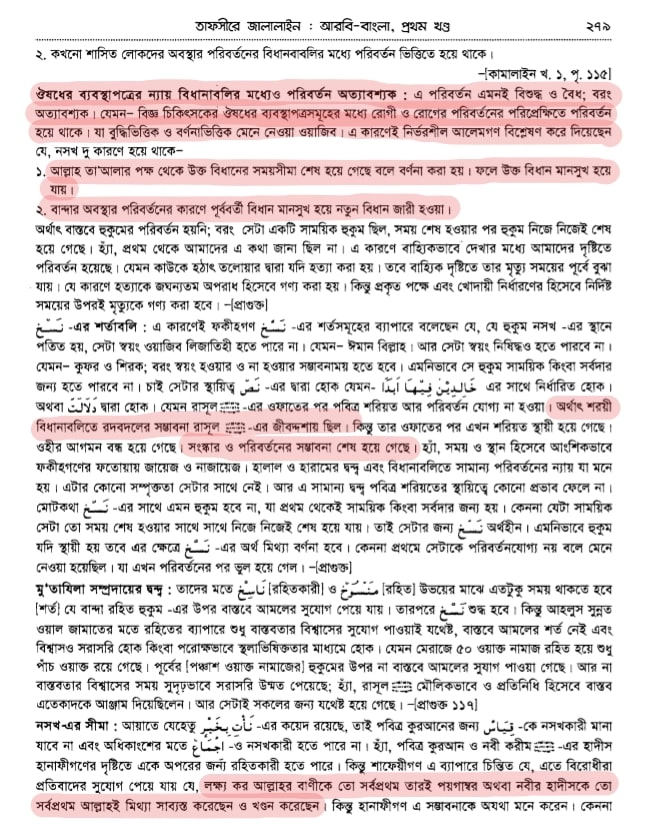
A similar argument is found in the commentary of the eminent Egyptian exegete Ahmad Mustafa al-Maraghi. Commenting on Surah al-Baqarah 2:106, he states that Sharia rulings are enacted for human welfare, and that the considerations of welfare change with time and place. If a ruling needed at one time is no longer needed at another, it is changed. He compares this change to a doctor changing diet and medication [35]
وما مثل ذلك إلا مثل الطبيب الذي يغير الأغذية والأدوية باختلاف الأزمنة والأمزجة
English translation:
This is like a doctor who changes diets and medicines according to differences in times and bodily constitutions.
Rather than establishing Allah’s omniscience, this analogy makes the resemblance between human legislation and Quranic legislation even clearer. A doctor observes a patient’s physical condition, identifies the symptoms, analyses test results and selects medication on the basis of acquired medical knowledge. After administering the medicine, the doctor observes whether the patient’s condition improves, whether side effects appear and how the patient’s body responds. Based on these observations, the doctor may adjust the dose, discontinue one medication and prescribe another, or revise an earlier understanding of the disease. This entire process is an excellent example of decision-making based on limited human knowledge, observation, testing and new information.
A doctor does not know beforehand every biological process in the patient’s body, every future physical change, and every possible outcome of treatment. A drug effective for one patient may be ineffective for another. It may produce unexpected side effects. The doctor’s initial diagnosis may also be wrong. Consequently, treatment must be revised on the basis of experience. Such human epistemic limitations are no offence; indeed, recognising one’s limitations and revising decisions in light of new evidence are qualities of a responsible doctor. But there is a fundamental inconsistency in comparing a being with omniscience to a doctor with limited knowledge. According to Islamic theology, Allah is not supposed to have the very limitation that requires a doctor to collect new information and make observations.
If a doctor knew in advance, with complete accuracy, every future change in a patient’s physical condition, the effectiveness of every drug, all side effects and the ultimate outcome of treatment, there would be no need to acquire new knowledge by observing the treatment’s results. The doctor could devise a complete treatment plan from the beginning, determining which medicine would be used for how long, when its dose would change, when another medicine would be needed and when treatment would end. Complete knowledge of the future and the acquisition of new knowledge from events that occur in the future are two entirely different things. The former belongs to the concept of omniscience; the latter is the human method of acquiring knowledge through experience. Conflating these two things constitutes a fallacious comparison, or False Analogy.
The inadequacy of this analogy is even more apparent in the changing rulings on alcohol. If Allah knew that drinking was deeply entrenched in Arabian society and that gradually changing this habit required a phased approach, that entire phased plan could have been disclosed in the first instruction. Directions to restrict drinking for a certain period, impose tighter controls in the next phase and prohibit it entirely after a specified interval could have been issued together. People would then have known from the outset the law’s ultimate purpose, duration and subsequent changes. Yet no such comprehensive plan announced from the beginning is found in the Quran. Instead, wine was initially included among Allah’s blessings; verses concerning its harmful aspects came in response to the Companions’ complaints; a partial restriction followed a drunken misrecitation during prayer; and a comprehensive prohibition followed further social conflict and Umar’s renewed appeal.
The distinction between a predetermined plan and event-driven decision-making is crucial. In the former, the legislator announces a definite plan for the future in advance. In the latter, new decisions are issued after each new problem. The historical accounts of the Quran’s alcohol-related rulings display the latter method. After all these events have occurred, it is easy to claim that they formed part of a predetermined divine strategy. But an explanation devised after the event is no evidence of foreknowledge. There is no evidence that any follower of Muhammad was given an initial announcement specifying all the future stages of the prohibition and their reasons.
There is another serious ethical problem. When a doctor knows in advance about a medicine’s harmful side effects, the doctor ordinarily tries to prevent them. If a doctor knows with certainty that a prescribed medicine will seriously harm a patient but takes no preventive action despite having the ability to do so, the ethics of that treatment become questionable. Similarly, if Allah already knew that drinking, which He had permitted, would lead Hamza to mutilate Ali’s camels, Ali to utter words contrary to monotheism during prayer, and Sa’d to be injured at a drinking gathering, the harm could have been prevented in advance instead of issuing reactive rulings after the events. Adding the claim of omnipotence to the claim of omniscience makes this ethical question even more serious.
By using the analogy of a doctor, Islamic exegetes have effectively acknowledged that the suitability of Quranic rulings was related to people’s contemporary conditions, needs and social circumstances. A ruling considered beneficial at one time was no longer regarded as beneficial at another. This is in profound tension with the claim that all Quranic laws constitute an equally suitable, immutable way of life for all time. If changes in human circumstances made it necessary to change Allah’s laws in the seventh century itself, what rational basis is there for keeping those laws unchanged fourteen centuries later despite immense changes in humanity’s social, economic, political, medical and ethical circumstances?
The same argument used to justify abrogating a seventh-century religious law applies to revising or repealing ancient religious laws in the modern era. If social welfare is the criterion for legislative change, current human knowledge, experience and moral understanding should also form the basis for changing ancient laws concerning slavery, sexual slavery, child marriage, punishment for apostasy, legal discrimination against women and corporal punishment. But if the freedom to adapt religious laws to the times is denied to people and reserved solely for Allah and His prophet, human welfare ceases to be the real criterion. Religious authority becomes the criterion instead.
The analogy of a doctor is therefore no evidence of the Quran’s divine origin. Rather, it describes a human method of enacting, revising and repealing laws according to changing human needs. Observing the conduct of Muhammad’s followers, hearing their complaints, controlling social conflicts and issuing new instructions based on subsequent experience can all be coherently explained as the activities of a human legislator. Adding Allah and angels to those activities provides no additional explanatory knowledge.
Changes in the Rules Governing Widows’ Waiting Period and Maintenance
Another important example of change in Quranic legislation concerns a woman’s waiting period, accommodation and maintenance after her husband’s death. In Islamic Sharia, iddah is the prescribed waiting period after divorce or the death of a husband, during which a woman cannot remarry. Surah al-Baqarah provides for a woman’s maintenance and accommodation for up to one year after her husband’s death. According to a well-established interpretation in classical Islamic exegesis, the widow’s waiting period under this provision was also one year. Later, the waiting period was changed to four months and ten days, and the provision of one year’s maintenance was replaced with a fixed share of inheritance. An important law directly affecting a woman’s family, personal and economic life thus changed during Muhammad’s lifetime.
Surah al-Baqarah 2:240 instructs that one year’s maintenance and accommodation should be provided for wives after their husband’s death. Under this verse, the heirs could not evict a widow from her residence. In Islamic exegetical discussions, this verse is considered one of the most important examples of a subsequently abrogated ruling [36]
وَالَّذِينَ يُتَوَفَّوْنَ مِنْكُمْ وَيَذَرُونَ أَزْوَاجًا وَصِيَّةً لِأَزْوَاجِهِمْ مَتَاعًا إِلَى الْحَوْلِ غَيْرَ إِخْرَاجٍ ۚ فَإِنْ خَرَجْنَ فَلَا جُنَاحَ عَلَيْكُمْ فِي مَا فَعَلْنَ فِي أَنْفُسِهِنَّ مِنْ مَعْرُوفٍ ۗ وَاللَّهُ عَزِيزٌ حَكِيمٌ
English translation:
Those of you who die and leave wives behind should make a bequest for their wives of maintenance for one year without evicting them from their homes. If they leave of their own accord, there is no blame upon you for what they do concerning themselves in an appropriate manner. Allah is mighty and wise.
The subsequent ruling prescribes a waiting period of four months and ten days following the death of a woman’s husband. This instruction appears in Surah al-Baqarah 2:234 of the present Quran. In the current mushaf, therefore, the abrogating verse precedes the abrogated verse. Both continue to be recited as part of the Quran, but according to the majority interpretation in classical exegesis, the legal effect of the one-year provision was abrogated by the subsequent instruction [37]
وَالَّذِينَ يُتَوَفَّوْنَ مِنْكُمْ وَيَذَرُونَ أَزْوَاجًا يَتَرَبَّصْنَ بِأَنْفُسِهِنَّ أَرْبَعَةَ أَشْهُرٍ وَعَشْرًا ۖ فَإِذَا بَلَغْنَ أَجَلَهُنَّ فَلَا جُنَاحَ عَلَيْكُمْ فِيمَا فَعَلْنَ فِي أَنْفُسِهِنَّ بِالْمَعْرُوفِ ۗ وَاللَّهُ بِمَا تَعْمَلُونَ خَبِيرٌ
English translation:
Those of you who die and leave wives behind, their wives shall wait for four months and ten days. When they have completed their prescribed period, there is no blame upon you for what they do concerning themselves in an appropriate manner. Allah is aware of what you do.
The change from a one-year waiting period to four months and ten days is also explicitly stated by the prominent Companion Ibn Abbas. Al-Tabari quotes a report attributed to Ibn Abbas in his commentary. It clearly mentions a one-year waiting period and maintenance from the deceased husband’s estate. Ibn Abbas’s explanation also describes the subsequent change in the waiting period through another verse [38]
فكان الرجل إذا مات وترك امرأته، اعتدت سنة في بيته، ينفق عليها من ماله، ثم أنزل الله تعالى ذكره بعد
English translation:
When a man died leaving his wife behind, she observed iddah for one year in his house and was maintained from his property. Afterwards, Allah Most High revealed the subsequent verse.
In the subsequent part of this report, Ibn Abbas mentions the verse prescribing a waiting period of four months and ten days and the verse in Surah al-Nisa specifying a widow’s share of inheritance. According to his explanation, the waiting period for pregnant widows was set until childbirth, and the waiting period of four months and ten days applied to other widows. At the same time, the former provision of one year’s maintenance from the deceased husband’s estate was replaced with fixed inheritance shares. This was not merely a change in a time limit; an entire legal arrangement governing women’s freedom to marry, accommodation and economic rights was reorganised.
The same legislative change is recorded in Tafsir al-Tabari in reports attributed to Qatada, al-Dahhak, Rabi ibn Anas and Ibn Zayd. Particularly important is that al-Dahhak’s explanation separately identifies the abrogation of the one-year waiting period and the replacement of maintenance with fixed inheritance shares [39]
فنسخ الأجل الحول، ونسخ النفقة الميراث الربع والثمن
English translation:
The one-year period was then abrogated, and the provision of maintenance was abrogated by the inheritance shares of one-quarter and one-eighth.
At the beginning of his commentary on this verse, the prominent exegete Ibn Kathir also states that according to most Islamic scholars, Surah al-Baqarah 2:240 was abrogated by the preceding verse, 2:234. Thus the present Quran preserves, after an operative command, another command whose legal effect has already been cancelled [40]
قال الأكثرون : هذه الآية منسوخة بالتي قبلها وهي قوله : ( يتربصن بأنفسهن أربعة أشهر وعشرا )
English translation:
Most scholars said: This verse is abrogated by the verse preceding it. That is His statement: ‘They shall wait for four months and ten days.’
Tafsir al-Qurtubi likewise cites Ibn Abbas, Qatada, al-Dahhak, Ibn Zayd and Rabi, describing the abrogation of the one-year period by four months and ten days and the replacement of maintenance by inheritance provisions. Al-Qurtubi also quotes the eminent Maliki jurist Qadi Iyad, who stated that consensus had been established concerning the abrogation of the one-year waiting period and the application of four months and ten days [41]
وقال القاضي عياض : والإجماع منعقد على أن الحول منسوخ وأن عدتها أربعة أشهر وعشر
English translation:
Qadi Iyad said: Consensus has been established that the one-year provision was abrogated and that her waiting period is four months and ten days.
This legislative change also has a particularly important connection with the history of the Quran’s compilation. Sahih al-Bukhari preserves a conversation between Abdullah ibn al-Zubayr and the third caliph, Uthman ibn Affan. Ibn al-Zubayr directly asked Uthman why a verse whose ruling had already been abrogated by another verse was being written into the Quran. Uthman replied that he would not move any part of the Quran from its position [42]
قَدْ نَسَخَتْهَا الآيَةُ الأُخْرَى فَلِمَ تَكْتُبُهَا أَوْ تَدَعُهَا قَالَ يَا ابْنَ أَخِي، لاَ أُغَيِّرُ شَيْئًا مِنْهُ مِنْ مَكَانِهِ
English translation:
The other verse has abrogated this one. Why, then, are you writing it or leaving it there? He replied: O my nephew, I will not change anything from its position.
Abdullah ibn al-Zubayr’s question was entirely reasonable. If a repealed law is preserved alongside operative laws without clear identification, subsequent readers are likely to have difficulty determining which law is effective and which has been repealed. In modern legal systems, when a law is amended or repealed, the date of change, its legal effect and the current status of the earlier law are clearly indicated. In the Quran, however, abrogated and abrogating verses are preserved in the same book. Their current arrangement does not even follow the chronology of revelation. Consequently, someone reading the Quran alone cannot always determine which ruling applies. They must rely on later hadiths, commentaries, works on nasikh and mansukh, and the decisions of Islamic jurists.
In explaining Ibn al-Zubayr’s question to Uthman, Ibn Kathir himself notes that because the abrogated verse appears after the abrogating verse, its ruling might appear still to be in force. Uthman’s decision was to retain the verse in the position in which he had found it in the mushaf. The possibility of confusion about the legal effect of a ruling due to the Quran’s textual arrangement is therefore recognised in Islamic exegesis itself. This makes clear the dependence on subsequent human interpretation and historical information to determine whether an instruction in this allegedly clear divine legal text is effective.
Another important account of the history of widows’ accommodation and maintenance is found in the next hadith in Sahih al-Bukhari. Mujahid’s interpretation distinguishes the compulsory waiting period of four months and ten days from the additional entitlement to accommodation. According to Ata’s statement in the same hadith, this right to accommodation was later abrogated by the inheritance provisions. Thus even apart from the interpretation of a one-year waiting period, there is explicit evidence that widows’ accommodation and financial rights changed [43]
قَالَ عَطَاءٌ ثُمَّ جَاءَ الْمِيرَاثُ فَنَسَخَ السُّكْنَى فَتَعْتَدُّ حَيْثُ شَاءَتْ، وَلاَ سُكْنَى لَهَا
English translation:
Ata said: Then the inheritance provisions came and abrogated the accommodation provision. She may observe her waiting period wherever she wishes, and she has no entitlement to accommodation.
Later, Surah al-Nisa 4:12 established a wife’s inheritance share in her husband’s property. If he had no children she would receive one-quarter of his estate; if he had children, one-eighth. The same verse establishes the husband’s respective shares of one-half and one-quarter in his wife’s estate. Islamic commentaries clearly describe the relationship between the establishment of this new inheritance system and the abrogation of the earlier provision for widows’ maintenance [44]
وَلَهُنَّ الرُّبُعُ مِمَّا تَرَكْتُمْ إِنْ لَمْ يَكُنْ لَكُمْ وَلَدٌ ۚ فَإِنْ كَانَ لَكُمْ وَلَدٌ فَلَهُنَّ الثُّمُنُ مِمَّا تَرَكْتُمْ ۚ مِنْ بَعْدِ وَصِيَّةٍ تُوصُونَ بِهَا أَوْ دَيْنٍ
English translation:
They are entitled to one-quarter of what you leave if you have no child; if you have a child, they are entitled to one-eighth of what you leave, after fulfilment of your bequests and payment of debts.
Legally, a guarantee of maintenance and accommodation for one year is not the same as inheriting a fixed share of a deceased husband’s estate. The amount a widow receives as inheritance depends on the husband’s property, debts and other relevant factors. There is no guarantee that the property received will suffice to cover a year’s living expenses. If the estate is large, the prescribed inheritance may also be worth much more than one year’s maintenance. The earlier and later provisions therefore differ not merely in wording: the very method of determining women’s economic security has changed.
The same question arises concerning the change in the waiting period. If the answer to how long a woman must wait after her husband’s death before remarrying was one year, why was it subsequently set at four months and ten days? If four months and ten days were sufficient, why was a year initially necessary? During that interval, there was no fundamental change in human pregnancy, reproduction or physiology that made such a substantial change in the waiting period indispensable. What changed was religious legislation. The limits on personal freedom imposed in Allah’s name were not the same for a woman living under the earlier rule and one living under the subsequent rule.
An omniscient legislator would already know all possible economic and family circumstances of widows. Whether a woman would receive adequate maintenance from her husband’s estate, whether her accommodation would be secure, whether she had children, whether she wished to remarry, and how a long waiting period might affect her life should not be beyond His knowledge. In human-made legal systems, these matters are observed and laws revised at different times. The history of changing Quranic laws can also be explained through this familiar human legislative process.
In the case of alcohol, the enactment of new legislation was connected with human conduct, complaints and social problems. In the case of widows, the history records changes in the waiting period, accommodation, maintenance and inheritance. In both cases, after one instruction came into force, another changed the effect of the earlier arrangement. Such changes were so extensive that a distinct branch of Islamic jurisprudence, nasikh and mansukh, developed to determine which verses remained operative and which had been abrogated. [45]
Abrogation of Mandatory Bequests and Changes in Inheritance Law
Quranic rulings also underwent significant changes concerning how a person’s property should be distributed after death. Under the initial Islamic ruling, a wealthy person was required to make a bequest for parents and close relatives before death, as a binding religious duty imposed by Allah. Subsequently, this obligation was abrogated by establishing fixed inheritance shares. Furthermore, for those among the former beneficiaries who qualified as heirs, testamentary bequests were subsequently prohibited. Thus the act of leaving property to the same person, which once constituted obedience to Allah’s command, became prohibited under the later ruling. This provision is an important example of how religious authority can change the moral and legal status of an act.
Surah al-Baqarah 2:180 gives the instruction to make bequests to parents and close relatives in exceptionally clear language. The expression كُتِبَ عَلَيْكُمْ or ‘It has been prescribed for you’, used in this verse, is language imposing a religious obligation. The same expression is used in the Quran when making fasting obligatory. The bequest verse also identifies this obligation as a binding duty for the God-fearing. A bequest is therefore presented not as an optional donation or general moral recommendation, but as a specific duty imposed in Allah’s name [46]
كُتِبَ عَلَيْكُمْ إِذَا حَضَرَ أَحَدَكُمُ الْمَوْتُ إِنْ تَرَكَ خَيْرًا الْوَصِيَّةُ لِلْوَالِدَيْنِ وَالْأَقْرَبِينَ بِالْمَعْرُوفِ حَقًّا عَلَى الْمُتَّقِينَ
English translation:
It has been prescribed for you that when death approaches one of you, if he leaves wealth, he shall make a fair bequest for his parents and close relatives. This is a binding duty upon the God-fearing.
Al-Tabari explicitly recognises the obligatory nature of bequests in his explanation of this verse. According to him, ‘It has been prescribed for you’ means that Allah has made bequests obligatory. To illustrate the binding nature of the ruling, he even compares it with the verse making fasting obligatory. Al-Tabari favours maintaining this obligation in the case of parents and close relatives excluded from inheritance. His discussion makes clear both the mandatory language of the original verse and the differences among Islamic jurists concerning its subsequent scope of application [47]
يعني بقوله تعالى ذكره: ” كُتب عليكم “، فُرض عليكم، أيها المؤمنون، الوصية
English translation:
What Allah Most High means by ‘It has been prescribed for you’ is: O believers, making a bequest has been made obligatory upon you.
Later, various verses of Surah al-Nisa established specific rules for distributing inheritance. The ratio of the shares of sons and daughters, the shares of parents, husbands and wives, and the inheritance rules for other relatives were determined. With the establishment of this new inheritance system, the former obligation to make bequests to parents and relatives who qualified as heirs came to an end. Sahih al-Bukhari preserves a clear account of this change in Ibn Abbas’s own words. The chapter heading of the hadith is also particularly important: there is no bequest for an heir [48]
عن ابن عباس رضي الله عنهما قال كَانَ الْمَالُ لِلْوَلَدِ، وَكَانَتِ الْوَصِيَّةُ لِلْوَالِدَيْنِ، فَنَسَخَ اللَّهُ مِنْ ذَلِكَ مَا أَحَبَّ
English translation:
Narrated by Ibn Abbas, who said: The property used to belong to the children, and the bequest was for the parents. Then Allah abrogated whatever He wished of that arrangement.
In the subsequent part of the hadith, Ibn Abbas says that Allah then assigned a male child a share equal to those of two female children. He established the provisions of one-sixth for each parent, one-eighth or one-quarter for a wife, and one-half or one-quarter for a husband. The abrogation of the former arrangement and the establishment of the new inheritance system are therefore described as parts of the same legislative change. Ibn Abbas’s expression فَنَسَخَ اللَّهُ مِنْ ذَلِكَ مَا أَحَبَّ indicates that Allah cancelled various parts of the previous arrangement and established a new one.
In his commentary on Surah al-Baqarah 2:180, Ibn Kathir likewise states that making bequests to parents and close relatives was obligatory before the inheritance verses were revealed. This ruling was subsequently abrogated by the verses specifying inheritance shares. In the same discussion, he cites interpretations concerning abrogation attributed to numerous early Islamic figures, including Ibn Abbas, Ibn Umar, Abu Musa, Sa’id ibn al-Musayyib, Hasan al-Basri, Mujahid, Ikrima, Qatada, al-Suddi, Ibrahim al-Nakha’i, al-Dahhak and al-Zuhri. The abrogation of the earlier bequest ruling is therefore a well-established position in Islamic exegesis [49]
وقد كان ذلك واجبا على أصح القولين قبل نزول آية المواريث ، فلما نزلت آية الفرائض نسخت هذه
English translation:
According to the more correct of the two opinions, this was obligatory before the inheritance verse was revealed. When the verse prescribing the fixed inheritance shares was revealed, it abrogated this one.
One of the earliest Islamic works on abrogation is Abu Ubayd al-Qasim ibn Sallam’s Al-Nasikh wa-l-Mansukh. This book contains a separate chapter on the abrogating and abrogated rulings concerning bequests. According to a statement attributed to Hasan al-Basri, the earlier provision required bequests for parents and close relatives. Subsequently, all those qualifying as heirs were excluded from its scope. The provision remained in force only for relatives who did not inherit [50]
كانت الوصية للوالدين والأقربين ، فنسخ ذلك منها فصارت الوصية للأقربين الذين لا يرثون ونسخ منها كل وارث
English translation:
The provision for bequests applied to parents and close relatives. Then part of it was abrogated, so the bequest was retained for close relatives who do not inherit, and every heir was excluded from it.
The prohibition on making a bequest to an heir under the subsequent ruling is also found in Muhammad’s own statement. In a hadith preserved in Sunan Abu Dawud, Muhammad declares that Allah has given every entitled person their due, so there is no bequest for an heir. Thus the right to execute a bequest for heirs was subsequently restricted, even though those persons had previously been among the beneficiaries for whom bequests were obligatory in Allah’s name [51]
إِنَّ اللَّهَ قَدْ أَعْطَى كُلَّ ذِي حَقٍّ حَقَّهُ فَلاَ وَصِيَّةَ لِوَارِثٍ
English translation:
Allah has indeed given every entitled person their due. Therefore, there is no bequest for an heir.
One of the most important jurists of the Hanafi school, Shams al-A’imma al-Sarakhsi, states in his extensive work of jurisprudence, Al-Mabsut, that according to most scholars making a bequest is recommended, not fard or wajib. He acknowledges that according to most exegetes the provision for bequests was obligatory before the inheritance verses were revealed and was subsequently abrogated. Another important point emerges from al-Sarakhsi’s discussion: Islamic jurists differ over whether the bequest ruling was abrogated by the inheritance verses or by Muhammad’s statement that there is no bequest for an heir [52]
وَأَمَّا الْآيَةُ فَقَدْ اتَّفَقَ أَكْثَرُ أَهْلِ التَّفْسِيرِ عَلَى أَنَّ ذَلِكَ كَانَ فِي الِابْتِدَاءِ قَبْلَ أَنْ يَنْزِلَ آيَةُ الْمَوَارِيثِ ثُمَّ اُنْتُسِخَ ، وَتَكَلَّمُوا فِي نَاسِخِهِ
English translation:
As for the verse, most exegetes agree that this ruling was operative in the beginning, before the inheritance verse was revealed, and was subsequently abrogated. They have discussed what abrogated it.
According to al-Sarakhsi’s discussion, an important position of Hanafi jurists is that the earlier Quranic ruling was abrogated by Muhammad’s hadith itself. The discussion also mentions an exception allowing a bequest to an heir to take effect with the consent of the other heirs. Thus the application of the mandatory instruction in the original Quranic verse is determined in later jurisprudence by separate legal conditions, including inheritance rules, hadiths and the consent of other heirs. An ordinary reader cannot determine the current Sharia ruling on bequests simply by reading Surah al-Baqarah 2:180. They must resort to the interpretations of later jurists.
| Legal issue | Initial ruling | Subsequent ruling |
|---|---|---|
| Bequests to parents | Mandatory | Generally prohibited if they are heirs; fixed inheritance shares apply. |
| Bequests to close relatives | Included in the mandatory instruction | Different rules for heirs and non-heirs. |
| Method of distributing property | Instruction to make fair bequests to parents and relatives. | Fixed inheritance shares and legal restrictions on bequests. |
| Principal evidence | Surah al-Baqarah 2:180 | Surah al-Nisa 4:7, 4:11–12; Sunan Abu Dawud 2870. |
The question of what rights parents and relatives should have over a person’s property was as important in seventh-century Arabian society as in any other society. People enact inheritance laws by considering the owner’s wishes, the economic security of family members, fairness in the distribution of property and inequality among heirs. Those laws are also revised on the basis of experience in their application. A similar legal evolution is evident in the history of Quranic provisions on bequests and inheritance. At one stage a wealthy person was obliged to leave property to parents through a bequest; at a subsequent stage this arrangement was replaced with fixed inheritance shares. There is no need to invoke the supernatural knowledge of an omniscient being to explain this change.
The notion of accepting Allah’s command as the source of morality also confronts a serious problem here. Making a bequest to parents was initially an obligatory duty under Allah’s command. Subsequently, if they qualified as heirs, making a bequest to them without the consent of other heirs became prohibited. The religious evaluation of the act depends on when it is performed and which instruction was most recently proclaimed in Allah’s name. If the latest command is the ultimate criterion for determining the legality or illegality of the same act, morality is not founded on any independent moral truth but on the authority of the command-giver. In this system, obedience takes precedence over morality. A separate article on Shongshoy discusses the bequest provisions in greater detail [53]
Allah’s Changing Calculation on the Battlefield: From Ten to Two and the Discovery of the Companions’ Weakness
One of the most notable examples of changes in Quranic legislation is found in two consecutive verses of Surah al-Anfal. In the case of alcohol, one must examine verses revealed at different times and the circumstances of their revelation. Here, however, the earlier command, the subsequent command and the reason for the change are preserved side by side in the same surah. The first verse imposes upon Muhammad’s followers the obligation to remain steadfast against an opponent ten times their number. The next verse changes the ratio, limiting the obligation to an opponent twice their number. Most significantly, in the subsequent verse Allah Himself cites weakness among Muslims as the reason for easing the ruling. According to Sahih al-Bukhari, this change came after the earlier ruling became extremely burdensome for Muslims.
The first instruction orders Muhammad to encourage his followers to fight. It also declares that twenty steadfast Muslims will defeat two hundred opponents, and a hundred Muslims will defeat a thousand disbelievers. The lack of understanding among the disbelievers is cited as the reason for this extraordinary military capacity. In other words, the disbelievers’ lack of religious understanding, contrasted with the Muslims’ faith and steadfastness, is presented as the reason for their defeat [54]
يَا أَيُّهَا النَّبِيُّ حَرِّضِ الْمُؤْمِنِينَ عَلَى الْقِتَالِ ۚ إِنْ يَكُنْ مِنْكُمْ عِشْرُونَ صَابِرُونَ يَغْلِبُوا مِائَتَيْنِ ۚ وَإِنْ يَكُنْ مِنْكُمْ مِائَةٌ يَغْلِبُوا أَلْفًا مِنَ الَّذِينَ كَفَرُوا بِأَنَّهُمْ قَوْمٌ لَا يَفْقَهُونَ
English translation:
O Prophet! Urge the believers to fight. If there are twenty steadfast people among you, they will defeat two hundred; and if there are a hundred among you, they will defeat a thousand of those who disbelieve, because they are a people who do not understand.
In his commentary on this verse, al-Tabari draws a distinction between the Muslims’ and polytheists’ motives for fighting. According to his explanation, Muslims fight in anticipation of Allah’s reward in the afterlife, whereas polytheists are unaware of that reward. Consequently, fearing death, they cannot remain as steadfast on the battlefield as Muslims. This explanation presents Muslim religious faith as the basis for greater military resolve. Yet the numerical ratio established on the basis of this religious confidence proved extremely difficult for Muhammad’s followers in practice.
In the next verse Allah eases the earlier command and establishes a completely different numerical ratio. The verse begins, ‘Now Allah has lightened your burden and has learned that there is weakness among you.’ Whereas the earlier verse spoke of one hundred Muslims against a thousand opponents, the new verse speaks of one hundred Muslims against two hundred opponents [55]
الْآنَ خَفَّفَ اللَّهُ عَنْكُمْ وَعَلِمَ أَنَّ فِيكُمْ ضَعْفًا ۚ فَإِنْ يَكُنْ مِنْكُمْ مِائَةٌ صَابِرَةٌ يَغْلِبُوا مِائَتَيْنِ ۚ وَإِنْ يَكُنْ مِنْكُمْ أَلْفٌ يَغْلِبُوا أَلْفَيْنِ بِإِذْنِ اللَّهِ ۗ وَاللَّهُ مَعَ الصَّابِرِينَ
English translation:
Now Allah has lightened your burden and has learned that there is weakness among you. So if there are one hundred steadfast people among you, they will defeat two hundred; and if there are one thousand among you, they will defeat two thousand by Allah’s permission. Allah is with the steadfast.
Here the expressions الْآنَ or ‘now’, خَفَّفَ or ‘has lightened’, and وَعَلِمَ أَنَّ فِيكُمْ ضَعْفًا or ‘He has learned that there is weakness among you’ are particularly significant. Easing an earlier obligation is directly linked with recognition of weakness among Muhammad’s followers. The Allah who initially imposed on His followers the duty of remaining steadfast against opponents ten times their number now reduces that duty, citing their weakness. The question is how well Allah knew the actual physical and mental capabilities of Muhammad’s followers when issuing the first instruction. Should He not have known of their weakness before imposing the initial obligation?
Ibn Abbas explicitly explains the legal significance of these two verses in Sahih al-Bukhari. According to him, after the first verse was revealed, it became obligatory for one Muslim not to flee from ten opponents. The second verse subsequently eased this obligation. The issue was therefore not merely a change in a general exhortation concerning victory in battle, but a change in a specific religious duty imposed upon Muslim combatants [56]
Another report from Ibn Abbas makes the reason for this change even clearer. He states that the initial instruction became extremely burdensome for Muslims. After the duty of one person remaining steadfast against ten opponents was imposed on them, the difficulty of the instruction became apparent, and the subsequent verse lightened their obligation [57]
شَقَّ ذَلِكَ عَلَى الْمُسْلِمِينَ حِينَ فُرِضَ عَلَيْهِمْ أَنْ لاَ يَفِرَّ وَاحِدٌ مِنْ عَشَرَةٍ، فَجَاءَ التَّخْفِيفُ
English translation:
When it was made obligatory for Muslims that one person should not flee from ten, it became extremely burdensome for them. Then the instruction easing the obligation came.
Ibn Abbas’s statement makes the sequence of legislative change clear. First a difficult duty was imposed. After that duty became burdensome for Muslims, it was eased. The responsibility initially prescribed in Allah’s name was therefore extremely difficult in relation to the actual capabilities of Muhammad’s followers. This disparity between their capacity and the duty imposed became the subject of the subsequent revelation. A military leader may initially issue a difficult command out of excessive optimism regarding the capabilities of his forces and subsequently revise it upon recognising their actual capabilities. The change in the Quranic ruling clearly resembles this familiar human process of decision-making based on experience.
In his commentary on Surah al-Anfal 8:66, Ibn Kathir directly identifies this event as an example of naskh, or abrogation. Citing a report attributed to Ibn Abbas through Ibn Ishaq, he states that the Muslims found the prospect of twenty facing two hundred and a hundred facing a thousand extremely difficult. Allah abrogated the earlier ruling through the subsequent verse [58]
لما نزلت هذه الآية ثقلت على المسلمين ، وأعظموا أن يقاتل عشرون مائتين ، ومائة ألفا ، فخفف الله عنهم فنسخها بالآية الأخرى
English translation:
When this verse was revealed, it weighed heavily upon the Muslims. They found it extremely difficult that twenty should fight two hundred and a hundred should fight a thousand. Allah then lightened their burden and abrogated it with the other verse.
On the basis of Ibn Abbas’s hadith, al-Qurtubi also acknowledges that the earlier instruction was an obligatory ruling. After that ruling became burdensome for Muslims, the scope of the obligation was reduced. Al-Qurtubi also discusses the terminological question of whether this should be called complete abrogation or an easing of the former ruling. Under either description, the legal reality is the same: the previous numerical obligation no longer remained in effect [59]
وحديث ابن عباس يدل على أن ذلك فرض . ثم لما شق ذلك عليهم حط الفرض إلى ثبوت الواحد للاثنين
English translation:
Ibn Abbas’s hadith indicates that this was obligatory. Then, when it became difficult for them, the obligation was reduced to one person remaining steadfast against two.
The change in the duty imposed concerning Muslims’ military capabilities in these two consecutive Quranic verses is numerically substantial. The subsequent instruction reduces the ratio of opponents to one-fifth of its former value, an 80 percent reduction in the earlier numerical obligation. The Companions’ weakness and the difficulty of complying with the earlier ruling are cited as the reasons for the change in Islamic sources themselves.
| Subject | Earlier command | Subsequent command |
|---|---|---|
| Quranic verse | Surah al-Anfal 8:65 | Surah al-Anfal 8:66 |
| Ratio of Muslims to opponents | 1:10 | 1:2 |
| Opponents against one hundred Muslims | 1,000 | 200 |
| Legal obligation | Remaining steadfast against opponents ten times their number. | Remaining steadfast against opponents twice their number. |
| Reason for the ruling’s change | The initial command mentions the disbelievers’ lack of understanding. | The Muslims’ weakness and difficulty in fulfilling the earlier command. |
| Change in obligation | Initial standard | An 80 percent reduction compared with the earlier numerical ratio. |
An omniscient being cannot be ignorant of a person’s physical strength, mental resolve, training, experience of warfare and behaviour in the face of danger. Allah should already know how strong or weak Muhammad’s followers were and what burden they could bear. Consequently, imposing a difficult obligation upon them and then issuing a new instruction because it became burdensome cannot constitute evidence of omniscience. A human leader may need to acquire new knowledge of his followers’ actual capabilities and limitations; a being aware of the entire past and future should not need to do so.
This Quranic instruction also has an important connection with claims of the Companions’ supposed spiritual and moral superiority. The first verse declared extraordinary military capacity for Muslims on the basis of religious faith and steadfastness. Yet once the mismatch between that declaration and actual human capacity became apparent, the obligation was substantially reduced. A person’s religious identity, belief in rewards in the afterlife, or conviction of the superiority of their community does not miraculously multiply their physical and mental capacities. When religious confidence conflicts with practical reality, actual human capabilities must ultimately be recognised. This recognition is preserved in the two consecutive Quranic verses.
In the case of alcohol, a problem first manifested in human conduct, and the law was subsequently changed in response. In the battlefield ruling, a duty was initially imposed according to a numerical standard, which was subsequently changed on the basis of human weakness and the difficulty of fulfilling that duty. These events share a feature: instructions proclaimed in Allah’s name changed to accommodate actual human capabilities, conduct and experience. The same process of observation, experience and revision that is normal for a human legislator is clearly present in the history of Quranic legislation. Declaring this history miraculous cannot erase its human characteristics.
Charity Before Private Consultation with Muhammad: Enactment and Immediate Withdrawal of a Ruling
Another particularly significant example of changing Quranic legislation appears in two consecutive verses of Surah al-Mujadilah. Muhammad’s followers consulted him privately on various personal and social matters. At one point, Islamic commentaries report, their excessive questions and private meetings inconvenienced Muhammad. In these circumstances, a new ruling was revealed from Allah, requiring followers who could afford it to give charity before speaking privately with Muhammad. In other words, an economic condition was imposed in the name of the creator of the universe himself to regulate private communication between a religious leader and his followers. But after the ruling came into effect, people’s tendency to consult Muhammad privately declined, and the ruling became burdensome for them. Consequently, another verse was revealed shortly afterwards, withdrawing the previous obligation.
Surah al-Mujadilah 58:12 instructs people to give charity before consulting Muhammad privately. It not only issues that instruction but also declares this arrangement better and purer for his followers. The verse exempts those unable to afford the charity [60]
يَا أَيُّهَا الَّذِينَ آمَنُوا إِذَا نَاجَيْتُمُ الرَّسُولَ فَقَدِّمُوا بَيْنَ يَدَيْ نَجْوَاكُمْ صَدَقَةً ۚ ذَٰلِكَ خَيْرٌ لَّكُمْ وَأَطْهَرُ ۚ فَإِن لَّمْ تَجِدُوا فَإِنَّ اللَّهَ غَفُورٌ رَّحِيمٌ
English translation:
O you who believe! When you consult the Messenger privately, give charity before your consultation. That is better and purer for you. If you cannot find the means, Allah is surely forgiving and merciful.
Al-Tabari collected an important report attributed to Ibn Abbas concerning the occasion of this revelation. It explicitly states that Muslims asked Muhammad so many questions that it became burdensome for him. The charity requirement was instituted to relieve Muhammad of this inconvenience. But after the new ruling arrived, many people refrained from asking questions. The subsequent verse therefore withdrew the obligation imposed upon them. Both Muhammad’s personal inconvenience and the change in his followers’ conduct were thus directly connected with the revelation of these two Quranic verses [61]
عن ابن عباس، قوله: ( فَقَدِّمُوا بَيْنَ يَدَيْ نَجْوَاكُمْ صَدَقَةً )، وذاك أن المسلمين أكثروا المسائل على رسول الله صَلَّى الله عَلَيْهِ وَسَلَّم، حتى شقوا عليه، فأراد الله أن يخفف عن نبيه؛ فلما قال ذلك صبر كثير من الناس، وكفوا عن المسألة، فأنـزل الله بعد هذا فَإِذْ لَمْ تَفْعَلُوا وَتَابَ اللَّهُ عَلَيْكُمْ فَأَقِيمُوا الصَّلاةَ وَآتُوا الزَّكَاةَ ، فوسع الله عليهم، ولم يضيق.
English translation:
Ibn Abbas narrated concerning the statement ‘Give charity before your private consultation’: The Muslims asked the Messenger of Allah so many questions that they burdened him, so Allah wished to lighten His prophet’s burden. When He issued this instruction, many people restrained themselves and refrained from asking questions. Allah subsequently revealed: ‘When you did not do so and Allah pardoned you, establish prayer and give zakat.’ Thus Allah made things easier for them and did not impose restrictions upon them.
It is normal for a political or religious leader to adopt administrative measures to regulate excessive private meetings with followers. Such a leader may establish visiting hours, grant appointments according to the importance of questions, or impose conditions on private consultation. In Muhammad’s case, even this ordinary administrative problem was resolved through a verse revealed in Allah’s name. The decline in the number of private meetings after the charity requirement was imposed also clarifies its social function: communication with followers was regulated by creating an economic barrier. Yet the arrangement adopted to resolve one problem created a new problem for his followers.
A report in Sunan al-Tirmidhi, also collected by Ibn Kathir in his commentary, describes a discussion between Muhammad and Ali concerning the amount of charity. Muhammad initially asked Ali’s opinion about giving one dinar. Ali replied that people would not be able to afford it. When Muhammad proposed half a dinar, Ali raised the same objection. Finally, Ali proposed gold equal to the weight of a grain of barley. According to Ali himself, it was through him that the burden imposed on the community was lightened. Ibn Kathir notes that al-Tirmidhi classified the report as hasan gharib [62]
قال لي النبي – صلى الله عليه وسلم – : ” ما ترى ، دينارا ؟ ” قلت لا يطيقونه. وذكره بتمامه ، مثله ، ثم قال : ” هذا حديث حسن غريب ، إنما نعرفه من هذا الوجه ” . ثم قال : ومعنى قوله : ” شعيرة ” : يعني وزن شعيرة من ذهب
English translation:
The Prophet said to me: ‘What do you think of one dinar?’ I replied, ‘They cannot afford it.’ He then related the complete hadith in the same manner and said: ‘This is a hasan gharib hadith; we know it only through this chain.’ He then explained that ‘a grain of barley’ meant gold equivalent to the weight of a grain of barley.
This report clearly describes an exchange between Muhammad and Ali concerning people’s financial capacity when determining the amount of charity. Muhammad proposes an amount; Ali tells him that it is beyond people’s means; a smaller amount is then discussed. A ruler and an associate may discuss a new economic regulation in precisely this way. Financial conditions are established on the basis of a realistic understanding of people’s incomes, expenditure and resources. But here even the determination of a practicable amount for implementing a ruling presented as an omniscient being’s instruction requires human observation and advice. Ali’s advice demonstrates practical economic judgement, not supernatural knowledge.
Early Islamic sources also contain important statements concerning how briefly this charity requirement remained operative. Al-Tabari collected a report attributed to Qatada stating that it was in effect for only an hour or a short part of a day. In classical Arabic, ساعة can also denote a brief period. According to this account, the ruling was abrogated before it could operate as a long-term social law [63]
حدثنا ابن عبد الأعلى، قال: ثنا ابن ثور، عن معمر، عن قتادة ( إِذَا نَاجَيْتُمُ الرَّسُولَ فَقَدِّمُوا بَيْنَ يَدَيْ نَجْوَاكُمْ صَدَقَةً ) قال: إنها منسوخة ما كانت إلا ساعة من نهار.
English translation:
Ibn Abd al-A’la narrated to us, saying: Ibn Thawr narrated to us from Ma’mar, from Qatada, concerning ‘When you consult the Messenger privately, give charity before your consultation’. He said: It was abrogated. It remained in effect for only a short part of a day.
A report attributed to Ali makes the short-lived character of the ruling even clearer. According to Ali’s statement transmitted through Mujahid, there is a verse in the Quran that no one before him had acted upon and no one after him would act upon. He exchanged one dinar for ten dirhams and gave charity when consulting Muhammad privately. Then the ruling was abrogated. According to this report attributed to Ali, the obligatory force of the verse declared better and purer thus ended before anyone other than him had complied with it [64]
وقال ليث بن أبي سليم ، عن مجاهد ، قال علي ، رضي الله عنه : آية في كتاب الله عز وجل لم يعمل بها أحد قبلي ، ولا يعمل بها أحد بعدي ، كان عندي دينار فصرفته بعشرة دراهم ، فكنت إذا ناجيت رسول الله – صلى الله عليه وسلم – تصدقت بدرهم ، فنسخت ولم يعمل بها أحد قبلي ، ولا يعمل بها أحد بعدي ، ثم تلا هذه الآية : ( يا أيها الذين آمنوا إذا ناجيتم الرسول فقدموا بين يدي نجواكم صدقة ) الآية.
English translation:
Layth ibn Abi Sulaym narrated from Mujahid that Ali said: There is a verse in the Book of Allah Almighty that no one before me has acted upon and no one after me will act upon. I had a dinar and exchanged it for ten dirhams. Whenever I consulted the Messenger of Allah privately, I gave a dirham in charity. Then the verse was abrogated. No one before me acted upon it and no one after me will act upon it. He then recited the verse: ‘O you who believe! When you consult the Messenger privately, give charity before your consultation.’
In the very next verse, Allah raises the issue of his followers’ reluctance to give charity and withdraws the preceding obligation. The wording indicates that the followers had not complied with the instruction as expected. They were consequently relieved of this duty and instructed generally to establish prayer, give zakat, and obey Allah and Muhammad [65]
أَأَشْفَقْتُمْ أَن تُقَدِّمُوا بَيْنَ يَدَيْ نَجْوَاكُمْ صَدَقَاتٍ ۚ فَإِذْ لَمْ تَفْعَلُوا وَتَابَ اللَّهُ عَلَيْكُمْ فَأَقِيمُوا الصَّلَاةَ وَآتُوا الزَّكَاةَ وَأَطِيعُوا اللَّهَ وَرَسُولَهُ ۚ وَاللَّهُ خَبِيرٌ بِمَا تَعْمَلُونَ
English translation:
Were you afraid to give charity before your private consultations? Since you did not do so and Allah has pardoned you, establish prayer, give zakat, and obey Allah and His Messenger. Allah is aware of what you do.
In his commentary on this verse, al-Tabari quotes Mujahid as stating that giving charity became burdensome for Muhammad’s followers. The obligation was therefore lifted, and they were permitted to consult Muhammad privately without giving charity. The followers’ actual experience and difficulty are cited here as the reason for withdrawing the new ruling [66]
عن مجاهد (أَأَشْفَقْتُمْ ) قال: شقّ عليكم تقديم الصدقة، فقد وُضِعت عنكم، وأمروا بمناجاة رسول الله صَلَّى الله عَلَيْهِ وَسَلَّم بغير صدقة حين شقّ عليهم ذلك.
English translation:
Mujahid narrated concerning ‘Were you afraid?’, saying: Giving charity beforehand became burdensome for you, so it was lifted from you. When it became burdensome for them, they were instructed to consult the Messenger of Allah privately without giving charity.
The first verse declares the charity requirement better and purer. The next verse withdraws it after people’s reluctance to comply becomes apparent. Did Allah not already know that this condition would be burdensome and that many people would refrain from communicating with Muhammad? While an associate of Muhammad could object to the proposed amount after considering people’s financial capacity, the suitability of an instruction proclaimed in the name of the omniscient Allah is determined after observing human behaviour. This is a coherent example of a human leader making an administrative decision, observing its consequences and withdrawing it as necessary.
This example has an important similarity to the rulings on alcohol. In the case of drinking, the law changed in response to the Companions’ longstanding habits and various social conflicts. In the case of charity, legislation was enacted to regulate access to Muhammad and repealed shortly afterwards because of people’s difficulties. According to Qatada’s account, the ruling was withdrawn so quickly that long-term social change was out of the question. Rather, the subsequent ruling followed the immediate reaction to a new administrative arrangement. This process of resolving a seventh-century religious leader’s everyday problems was proclaimed as the eternal word of the omniscient creator of the universe.
Naskh and Mansukh: The Fundamental Philosophical Crisis of Abrogation
In Islamic jurisprudence, the process of changing or cancelling one Quranic ruling through a subsequent ruling is called naskh, or abrogation. The ruling that abrogates an earlier one is called nasikh, and the ruling that is abrogated is called mansukh. Thus, after an instruction has been revealed as Allah’s word, its text may remain in the Quran even if its legal effect has been cancelled. According to the Islamic doctrine of naskh, the recitation of a verse itself may also be abrogated. This arrangement makes it impossible to accept every Quranic verse simultaneously as an operative ruling. Determining whether a verse’s ruling remains effective requires knowledge of the chronology of revelation, hadiths, the Companions’ statements and the interpretations of later Islamic jurists.
The concept of abrogation is explicitly mentioned in the Quran itself. In Surah al-Baqarah 2:106 Allah declares that when He abrogates a verse or causes it to be forgotten, He brings one better than it or similar to it. Here the ability to replace a verse with a better one is connected with Allah’s power. Yet this declaration raises a fundamental question: if the subsequent verse is better than the preceding one, why was that better ruling not given in the first place? [67]
مَا نَنْسَخْ مِنْ آيَةٍ أَوْ نُنْسِهَا نَأْتِ بِخَيْرٍ مِنْهَا أَوْ مِثْلِهَا ۗ أَلَمْ تَعْلَمْ أَنَّ اللَّهَ عَلَىٰ كُلِّ شَيْءٍ قَدِيرٌ
English translation:
Whatever verse I abrogate or cause to be forgotten, I bring one better than it or similar to it. Do you not know that Allah has power over all things?
Al-Tabari provides a particularly clear statement concerning the nature of naskh in his commentary on this verse. According to his explanation, abrogation turns what is lawful into what is forbidden, what is forbidden into what is lawful, what is permitted into what is prohibited, and what is prohibited into what is permitted. Abrogation is therefore not merely a linguistic explanation of a statement or a method of removing ambiguity from an earlier ruling; through it, the legal status of an act can be changed into its complete opposite [68]
وذلك أن يحول الحلال حراما والحرام حلالا ، والمباح محظورا والمحظور مباحا ؛ ولا يكون ذلك إلا في الأمر والنهي والحظر والإطلاق والمنع والإباحة ، فأما الأخبار فلا يكون فيها ناسخ ولا منسوخ.
English translation:
This means turning the lawful into the forbidden, the forbidden into the lawful, the permitted into the prohibited, and the prohibited into the permitted. This occurs only in matters of commands, prohibitions, restrictions, authorisations, prevention and permission. In matters of reports or factual statements there is no abrogating or abrogated text.
According to al-Tabari’s explanation, a change in Allah’s instructions changes the religious evaluation of the same human act. Drinking wine was once lawful and subsequently became forbidden. Making bequests to parents and close relatives was once obligatory and later became generally prohibited in the case of heirs. Remaining steadfast against opponents ten times one’s number was once compulsory, and subsequently that duty was eased. Giving charity before consulting Muhammad privately was once mandatory, and later that obligation was withdrawn entirely. Even when the nature of an act remains unchanged, its religious status changes according to the latest instruction proclaimed in Allah’s name. The authority of the command-giver lies at the centre of this moral and legal system.
Muhammad’s Contemporaries Also Questioned the Changing Rulings
Doubting the divine origin of the Quran because of its changing rulings is no invention of modern atheists or sceptics. The question arose among Muhammad’s contemporaries during his own lifetime. The Quran itself acknowledges that Muhammad’s opponents accused him of fabricating false statements because one verse was replaced with another. This accusation is recorded in Surah al-Nahl 16:101. The idea that Muhammad authored his own pronouncements and altered them according to circumstances therefore existed among his contemporaries as well [69]
وَإِذَا بَدَّلْنَا آيَةً مَكَانَ آيَةٍ ۙ وَاللَّهُ أَعْلَمُ بِمَا يُنَزِّلُ قَالُوا إِنَّمَا أَنْتَ مُفْتَرٍ ۚ بَلْ أَكْثَرُهُمْ لَا يَعْلَمُونَ
English translation:
When I replace one verse with another, and Allah knows best what He reveals, they say, ‘You are nothing but a fabricator.’ Rather, most of them do not know.
The eminent exegete al-Qurtubi provides a more explicit account of this criticism when explaining the occasion of the revelation of the abrogation verse in Surah al-Baqarah. According to him, following the change of the qibla, Jews criticised Muhammad’s religion, saying that Muhammad initially instructed his followers to do something and later forbade them from doing it. They concluded that the Quran came from Muhammad himself, which explained the inconsistencies between its various statements. According to al-Qurtubi’s account, the verses concerning abrogation were revealed in response to this criticism [70]
وسببها أن اليهود لما حسدوا المسلمين في التوجه إلى الكعبة وطعنوا في الإسلام بذلك ، وقالوا : إن محمدا يأمر أصحابه بشيء ثم ينهاهم عنه ، فما كان هذا القرآن إلا من جهته ، ولهذا يناقض بعضه بعضا ، فأنزل الله : وإذا بدلنا آية مكان آية وأنزل ما ننسخ من آية.
English translation:
The reason was that the Jews envied the Muslims for turning towards the Kaaba and criticised Islam on that account. They said: Muhammad commands his Companions to do something and then forbids them from doing it. This Quran therefore comes only from him, and that is why one part contradicts another. Then Allah revealed, ‘When I replace one verse with another’, and revealed, ‘Whatever verse I abrogate…’.
The account collected by al-Qurtubi shows that the philosophical problem of abrogation has existed since the establishment of Islam. Muhammad’s contemporary critics identified the changing rulings as an indication of the human origin of his pronouncements. In response to that accusation, the Quran states that Allah knows best what He reveals, and that if He abrogates a verse, He brings one better than it or similar to it. But responding to questions about the divine origin of a statement proclaimed in Allah’s name by issuing another statement in Allah’s name provides no independent evidence. The truth of a claim cannot be established by merely repeating the very claim whose truth has been questioned.
Omniscience, Foreknowledge and the Problem of Revising Rulings
Omniscience means possessing complete and accurate knowledge of all truths. The idea that an omniscient being might not know a fact about the past, understand a present circumstance or be certain about the outcome of a future event contradicts the definition of omniscience itself. Human knowledge increases over time. People make mistakes, discover new information, revise earlier beliefs and make new decisions on the basis of experience. The claim of omniscience describes an epistemic condition in which no new information needs to be discovered. Yet accounts of changes in various Quranic rulings reveal a sequence in which new decisions are announced after human limitations, complaints, conduct, difficulties and social conflicts become apparent.
In the case of alcohol, Allah’s instructions changed after behavioural problems manifested among people. On the battlefield, a difficult duty was imposed on the Companions and subsequently eased by acknowledging their weakness. The requirement to give charity before consulting Muhammad privately was imposed and then withdrawn because of people’s difficulties. In each case, the information determining the content of the subsequent ruling could have been obtained through human experience. None of these incidents revealed information beyond the reach of a seventh-century person’s observation and judgement.
Changing a ruling and possessing foreknowledge of the future are not directly contradictory in logical terms. But the historical accounts of changing Quranic rulings do not establish such foreknowledge either. Independent evidence is necessary to distinguish a plan known in advance from a decision made in response to circumstances. If every change is declared to have been predetermined after it occurs, there is no way to verify that claim. Whatever the outcome, it can be proclaimed part of Allah’s prior plan. Omniscience cannot be established by such unverifiable explanations.
Changing Religious Authority in Place of Immutable Morality
A further profound problem of abrogation concerns the foundations of morality. If an act is good or bad because of its actual consequences, human welfare, individual freedom, consent and harm to others, it can be morally evaluated through reason and evidence. But if an act’s permissibility depends solely on Allah’s command, its religious evaluation changes whenever that command changes. This is related to the philosophical problem known as the Euthyphro dilemma in religion-based morality. Does God command something because it is good, or does it become good because God commands it?
This dilemma is particularly relevant to alcohol. If alcohol’s harmful effects are the moral basis of its prohibition, those effects existed when it was permissible as well. If Allah’s command is the sole basis of its permissibility or prohibition, the religious evaluation of the same chemical substance depends entirely on the will of the command-giver. Wine, initially included among Allah’s blessings, subsequently became an abomination of Satan’s handiwork. The religious evaluation of a substance changed radically although its nature underwent no fundamental change. Such religious evaluations establish no independent and immutable moral truth; they establish the changing authority of religious commands.
Likewise, if human welfare is the real criterion for matters such as making bequests to parents, widows’ waiting periods, the extent to which human lives may be endangered in battle, or the obligation to give charity before speaking with a religious leader, people also have the right to criticise and revise religious instructions on the basis of that welfare. Declaring a law to be Allah’s law does not place it above reason, evidence and ethical evaluation. If religious law needed to change with human circumstances in the seventh century, the need to reassess its suitability is greater still in the completely different social circumstances of the modern era.
The Crisis of the Quran’s Claim to Be a Self-Sufficient and Clear Legal Text
Abrogation creates a fundamental problem when determining religious law directly from the Quran. One verse contains a clear command to do something, while another changes that command. Yet the present arrangement of Quranic verses does not follow the chronology of revelation. Readers must depend on information outside the Quran to determine which ruling was effective first, which verse came later and which ruling currently applies. The example of the one-year provision for widows and the waiting period of four months and ten days makes this problem particularly clear: the abrogating verse precedes the abrogated verse in the present Quran.
Islamic exegesis itself considers knowledge of nasikh and mansukh exceptionally important. Al-Qurtubi states that knowledge of this subject is indispensable for scholars because it directly concerns the determination of what is lawful and forbidden. He also collected a report attributed to Ali in which a man ignorant of abrogation was prevented from delivering religious discourse in a mosque [71]
معرفة هذا الباب أكيدة وفائدته عظيمة ، لا يستغني عن معرفته العلماء ، ولا ينكره إلا الجهلة الأغبياء ، لما يترتب عليه من النوازل في الأحكام ، ومعرفة الحلال من الحرام.
English translation:
Knowledge of this subject is of great necessity and benefit; scholars cannot dispense with knowing it. None denies it except the ignorant and foolish, because rulings on newly arising cases and knowledge of what is lawful and forbidden depend upon it.
In a clear and self-sufficient legal text, it should be possible to determine from the text itself whether a provision is currently operative. Yet according to Islamic jurists themselves, specialised knowledge of abrogation is indispensable for determining what is lawful and forbidden. Subsequent human historical investigation and interpretation have thus become unavoidable in determining the legal effect of Quranic rulings. A separate branch of legal theory had to be established in later centuries merely to understand the laws of a book proclaimed as clear and complete guidance for humanity.
The Human-Origin Explanation and Unnecessary Supernatural Assumptions
There is no evidential need to accept several supernatural concepts—an omniscient being, invisible angels, a book preserved in heaven and miraculous communication—to explain the history of changing Quranic legislation. Muhammad led a growing religious community. Various social problems arose among his followers; they complained to him, appealed for new rulings and encountered difficulties in complying with existing ones. It is entirely familiar human behaviour for a leader to issue new instructions to resolve such problems and revise earlier instructions when necessary. The history of the revelation of Quranic rulings displays precisely this process.
According to the principle of explanatory parsimony known in philosophy as Occam’s razor, when an event can be adequately explained by familiar and established factors, there is no need to postulate additional entities without independent evidence. Human social and political behaviour is sufficient to explain the drunken Companions’ conduct, their fighting, Umar’s complaints, Muhammad’s personal inconvenience, the combatants’ weakness and the history of changing financial regulations. Adding the existence of an invisible Allah and angels provides no new observable information that would be impossible to obtain through a human explanation.
Naskh and mansukh are therefore no evidence of the Quran’s divine origin. Abrogation is a religious theory developed to determine the legal effect of changing rulings preserved in the Quran. Issuing a new instruction and cancelling the legal effect of the old one after its limitations become apparent is a familiar human legislative process. Calling this process naskh does not eliminate its human characteristics. Instead, the close relationship between Quranic rulings and the changing needs of seventh-century Arabian society, Muhammad’s leadership and the conduct of his followers becomes apparent. A separate article on Shongshoy discusses abrogation in greater detail [45]
Conclusion
The history of drinking in early Islam provides a particularly important example for understanding the human character of supposedly divine revelation. Examining together the Quranic verses, authentic hadiths, the Companions’ statements and accounts preserved in classical Islamic commentaries reveals a clear sequence. Initially, wine was included among Allah’s blessings and signs and remained permissible. Later, the Companions recognised its harmful effects through experience and complained to Muhammad. It was then announced that wine contained benefits but a greater amount of sin. After Ali uttered words contrary to monotheism during prayer while intoxicated, praying while drunk was prohibited. Following fights, tribal hostility and physical conflicts among the Companions over drinking, that same wine was finally declared an abomination of Satan’s handiwork. Even after the final prohibition, questions arose about the fate of Companions who had drunk wine and died, requiring the revelation of yet another verse.
The most striking feature of this entire sequence is that neither the nature of alcohol nor its effects on the human brain underwent any fundamental change. The properties of alcohol that caused Hamza to become drunk and destroy another person’s property, Ali to misrecite a surah during prayer, and the Companions to fight one another already existed when the verse in Surah al-Nahl was revealed. What changed was the experience of Muhammad’s followers, the problems confronting them, and the instructions proclaimed in Allah’s name in response to those problems. Within a few years, a substance once included among Allah’s blessings became an abomination of Satan’s handiwork. This was not a change in its chemical or biological nature; it was a change in the religious evaluation imposed on the same substance.
The claim of the Companions’ supposed spiritual and moral superiority is also called into question by these incidents. Muhammad’s direct company, hearing revelation from him, belief in the afterlife or fighting for Islam do not appear from these incidents to have produced any miraculous moral excellence among the Companions. Drinking, lack of self-restraint, tribal pride, mutual hostility and violent behaviour existed among them. Muhammad’s own uncle insulted him, his son-in-law uttered words contrary to the central belief of his religion under the influence of alcohol, and Companions regarded as having been promised Paradise became embroiled in disputes at drinking gatherings. Examining historical accounts of their conduct instead of glorifying this generation religiously reveals the picture of an ordinary seventh-century human society.
Changing the rulings on alcohol was not an isolated example. The rules concerning widows’ waiting periods and maintenance were changed; mandatory bequests to parents and close relatives were abrogated in the case of heirs; the duty imposed on Muslim combatants was reduced because of their weakness; and the requirement to give charity before consulting Muhammad privately was withdrawn shortly afterwards because of people’s difficulties. In each case, one finds the familiar human method of changing religious legislation to accommodate people’s actual needs and capabilities. Particularly significant are the acknowledgement of Muslims’ weakness in Surah al-Anfal and the withdrawal of the obligation after their reluctance to give charity in Surah al-Mujadilah, both preserved in the Quran’s own language.
Comparing changes in Allah’s rulings to changes in a doctor’s prescription does not solve this problem. A doctor has limited knowledge, observes the patient’s condition, collects new information and revises decisions in accordance with the outcome of treatment. But no future event should present itself as new information to an omniscient being. People’s habits, weaknesses, financial capacities and all possible consequences of a ruling should already be known to Him. Presenting a predetermined legislative system and a series of rulings devised in response to circumstances as the same thing is no evidence of omniscience. In the history of changing Quranic legislation, solutions arrived after problems confronted people; no independent evidence of supernatural foreknowledge before these incidents occurred is found.
The doctrine of nasikh and mansukh attempts to determine the religious and legal effect of these changing rulings. But assigning an Arabic name to a change in legislation does not establish its divine origin. The transformation of lawful acts into forbidden ones, forbidden acts into lawful ones and obligatory acts into prohibited ones through abrogation also exposes the fundamental problem of religion-based morality. If the moral evaluation of an act depends not on its actual consequences and human welfare but solely on the latest instruction proclaimed in Allah’s name, religious authority rather than independent moral judgement becomes the ultimate criterion in this system. If human welfare is accepted as the real criterion, people have the right to criticise, revise and, when necessary, entirely repeal religious laws on the basis of reason, evidence and ethics.
Abrogation also undermines the claim that the Quran is a self-sufficient and clear legal text. Abrogating and abrogated rulings are preserved in the same book, yet it is not always possible to determine which was revealed first and which came later from the present arrangement of the mushaf. Even among the Companions, questions arose about the rationale for retaining an abrogated ruling in the Quran. Islamic scholars themselves recognised the necessity of specialised knowledge of abrogation to determine what is lawful and forbidden. Determining the legal effect of supposedly eternal divine instructions therefore depends on human historical investigation, compilation of books and jurisprudential interpretation.
The most coherent and evidence-based explanation of the history of Quranic legislation and revision is its human origin. As the leader of a religious and political community, Muhammad confronted the conduct, complaints, needs and social problems of his followers. To control these problems, he issued new instructions at various times and changed previous ones when necessary. Like the laws of other human legislators, his rulings reflected the social realities, political needs, personal inconveniences and limitations of his followers in his own time. The difference is that these instructions were proclaimed not as the changing decisions of a human being, but as the word of the omniscient and omnipotent creator of the universe.
These Quranic rulings display no evidence of supernatural knowledge; they display the familiar human characteristics of decisions shaped by circumstances, social control, the establishment of religious authority and legislative revision based on experience. This history provides no evidence for establishing changing instructions enacted to govern seventh-century Arabian society as the infallible, eternal code of life of an omniscient being, applicable to all people at all times. Rather, the very incidents of legislative change preserved in Islamic sources constitute strong historical and philosophical evidence against that claim.
Principal Books and Sources
The evidence concerning the initial permissibility of wine, the Companions’ drinking and mutual conflicts, the occasions of revelation of various verses, and the history of the abrogation of Quranic rulings has been drawn primarily from the following Islamic works of hadith, exegesis, jurisprudence and abrogation.
| Book title | Author | Type of work | Relevant subjects |
|---|---|---|---|
| The Quran القرآن | — | Islamic scripture | Drinking, waiting periods, bequests, inheritance, battlefield rulings, charity and abrogation. |
| Sahih al-Bukhari صحيح البخاري | Muhammad ibn Ismail al-Bukhari | Hadith | The Companions’ drinking, Hamza’s drunkenness, waiting periods, bequests and battlefield rulings. |
| Sahih Muslim صحيح مسلم | Muslim ibn al-Hajjaj | Hadith | Sa’d ibn Abi Waqqas’s injury at a drinking gathering and the prohibition of wine. |
| Jami al-Tirmidhi جامع الترمذي | Muhammad ibn Isa al-Tirmidhi | Hadith | Ali’s drunkenness, distortion of Surah al-Kafirun and Umar’s appeals. |
| Sunan Abu Dawud سنن أبي داود | Sulayman ibn al-Ash’ath al-Sijistani | Hadith | Stages of the prohibition of wine, the incident involving Ali and abrogation of the bequest ruling. |
| Jami al-Bayan an Ta’wil Ay al-Quran جامع البيان عن تأويل آي القرآن | Muhammad ibn Jarir al-Tabari | Classical exegesis | The initial permissibility of wine, the Companions’ drinking and conflicts, waiting periods, charity and abrogation. |
| Tafsir al-Quran al-Azim تفسير القرآن العظيم | Ismail ibn Umar ibn Kathir | Classical exegesis | Wine as Allah’s blessing, the history of its prohibition and the abrogation of various rulings. |
| Al-Jami li-Ahkam al-Quran الجامع لأحكام القرآن | Muhammad ibn Ahmad al-Qurtubi | Classical legal exegesis | Stages of the prohibition of wine, waiting periods, battlefield rulings and abrogation. |
| Al-Muharrar al-Wajiz المحرر الوجيز | Abd al-Haqq ibn Atiyyah al-Andalusi | Classical exegesis | Explanation of the initial permissibility of wine in Surah al-Nahl 16:67. |
| Ruh al-Ma’ani روح المعاني | Shihab al-Din Mahmud al-Alusi | Exegesis | Leading Companions continuing to drink after the revelation of the verse on wine’s sin and benefits. |
| Asbab al-Nuzul أسباب النزول | Ali ibn Ahmad al-Wahidi | Occasions of revelation | Complaints by Umar, Muadh and other Companions concerning the harmful effects of wine and gambling. |
| Tafsir al-Jalalayn تفسير الجلالين | Jalal al-Din al-Mahalli and Jalal al-Din al-Suyuti | Classical exegesis | The comparison of changing legislation with a doctor changing medication in the Bengali edition. Islamia Kutubkhana, volume 1, page 279. |
| Tafsir al-Maraghi تفسير المراغي | Ahmad Mustafa al-Maraghi | Modern exegesis | Explanation of abrogation using the analogy of a doctor changing diet and medication. |
| Al-Nasikh wa-l-Mansukh الناسخ والمنسوخ | Abu Ubayd al-Qasim ibn Sallam | Early Islamic work on abrogation | The mandatory provision for bequests and its abrogation in the case of heirs. |
| Al-Mabsut المبسوط | Shams al-A’imma al-Sarakhsi | Hanafi jurisprudence | The initial obligation of bequests, its abrogation and subsequent legal restrictions. |
References
- Surah al-Nahl, verse 67 ↩︎
- Tafsir Ibn Kathir, commentary on Surah al-Nahl, verse 67 ↩︎
- Tafsir al-Tabari, commentary on Surah al-Nahl, verse 67 ↩︎
- Ibn Atiyyah, Al-Muharrar al-Wajiz, commentary on Surah al-Nahl, verse 67 ↩︎
- Al-Wahidi, Asbab al-Nuzul, Surah al-Baqarah, verse 219, report 132 ↩︎
- Surah al-Baqarah, verse 219 ↩︎
- Tafsir Ibn Kathir, commentary on Surah al-Baqarah, verse 219 ↩︎
- Al-Alusi, Ruh al-Ma’ani, commentary on Surah al-Baqarah, verse 219 ↩︎
- Sahih al-Bukhari, hadith 3651 ↩︎
- Sahih al-Bukhari, hadith 3091 ↩︎
- Sahih al-Bukhari, hadith 4618 ↩︎
- Sahih al-Bukhari, hadith 5582 ↩︎
- Tafsir al-Tabari, commentary on Surah al-Nisa, verse 43, report 7558 ↩︎
- Jami al-Tirmidhi, hadith 3026 ↩︎
- Sunan al-Tirmidhi, Islamic Foundation, hadith 3026 ↩︎
- Sunan Abu Dawud, hadith 3671 ↩︎
- Sunan Abu Dawud, Albani Academy, hadith 3671 ↩︎
- Surah al-Kafirun, verses 1–6 ↩︎
- Surah al-Nisa, verse 48 ↩︎
- Tafsir al-Tabari, commentary on Surah al-Nisa, verse 43, reports 7554–7555 ↩︎
- Surah al-Nisa, verse 43 ↩︎
- Tafsir Ibn Kathir, commentary on Surah al-Nisa, verse 43 1 2
- Tafsir al-Qurtubi, commentary on Surah al-Nisa, verse 43 ↩︎
- Sahih Muslim, Book of the Merits of the Companions, hadith 1748c ↩︎
- Tafsir al-Tabari, Surah al-Maidah, verse 91, report 12518 ↩︎
- Tafsir al-Tabari, Surah al-Maidah, verse 91, report 12522 1 2
- Sunan Abu Dawud, Book of Drinks, hadith 3670 ↩︎
- Jami al-Tirmidhi, Book of Quranic Exegesis, hadith 3049 ↩︎
- Tafsir al-Qurtubi, commentary on Surah al-Maidah, verse 90, second issue ↩︎
- Surah al-Maidah, verse 90 ↩︎
- Surah al-Maidah, verse 91 ↩︎
- Sunan Abu Dawud, hadith 3672 ↩︎
- Surah al-Maidah, verse 93 ↩︎
- Tafsir al-Jalalayn, Jalal al-Din al-Mahalli and Jalal al-Din al-Suyuti, Islamia Kutubkhana Publications, volume 1, page 279 ↩︎
- Ahmad Mustafa al-Maraghi, Tafsir al-Maraghi, volume 1, commentary on Surah al-Baqarah, verse 106 ↩︎
- Surah al-Baqarah, verse 240 ↩︎
- Surah al-Baqarah, verse 234 ↩︎
- Tafsir al-Tabari, Surah al-Baqarah, verse 240, report 5574 ↩︎
- Tafsir al-Tabari, Surah al-Baqarah, verse 240, report 5576 ↩︎
- Tafsir Ibn Kathir, commentary on Surah al-Baqarah, verse 240 ↩︎
- Tafsir al-Qurtubi, commentary on Surah al-Baqarah, verse 240, first issue ↩︎
- Sahih al-Bukhari, Book of Tafsir, hadith 4530 ↩︎
- Sahih al-Bukhari, Book of Tafsir, hadith 4531 ↩︎
- Surah al-Nisa, verse 12 ↩︎
- Nasikh and Mansukh: Allah’s Habit of Changing His Mind 1 2
- Surah al-Baqarah, verse 180 ↩︎
- Tafsir al-Tabari, commentary on Surah al-Baqarah, verse 180 ↩︎
- Sahih al-Bukhari, Book of Wills and Testaments, hadith 2747 ↩︎
- Tafsir Ibn Kathir, commentary on Surah al-Baqarah, verse 180 ↩︎
- Abu Ubayd al-Qasim ibn Sallam, Al-Nasikh wa-l-Mansukh, pages 231–232, report 425 ↩︎
- Sunan Abu Dawud, Book of Wills, hadith 2870; al-Albani’s grading: hasan sahih ↩︎
- Shams al-A’imma al-Sarakhsi, Al-Mabsut, volume 27, Book of Wills, pages 142–143 ↩︎
- The Omniscient Allah Changes His Mind: Mandatory Bequests Become Prohibited ↩︎
- Surah al-Anfal, verse 65, and Tafsir al-Tabari ↩︎
- Surah al-Anfal, verse 66 ↩︎
- Sahih al-Bukhari, Book of Tafsir, hadith 4652 ↩︎
- Sahih al-Bukhari, Book of Tafsir, hadith 4653 ↩︎
- Tafsir Ibn Kathir, commentary on Surah al-Anfal, verse 66 ↩︎
- Tafsir al-Qurtubi, commentary on Surah al-Anfal, verse 66 ↩︎
- Surah al-Mujadilah, verse 12 ↩︎
- Tafsir al-Tabari, commentary on Surah al-Mujadilah, verse 12, volume 23, page 249 ↩︎
- Tafsir Ibn Kathir, commentary on Surah al-Mujadilah, verse 13; report from Sunan al-Tirmidhi ↩︎
- Tafsir al-Tabari, commentary on Surah al-Mujadilah, verse 12 ↩︎
- Tafsir Ibn Kathir, commentary on Surah al-Mujadilah, verse 13 ↩︎
- Surah al-Mujadilah, verse 13 ↩︎
- Tafsir al-Tabari, commentary on Surah al-Mujadilah, verse 13 ↩︎
- Surah al-Baqarah, verse 106 ↩︎
- Tafsir al-Tabari, commentary on Surah al-Baqarah, verse 106 ↩︎
- Surah al-Nahl, verse 101 ↩︎
- Tafsir al-Qurtubi, commentary on Surah al-Baqarah, verse 106, first issue ↩︎
- Tafsir al-Qurtubi, commentary on Surah al-Baqarah, verse 106, second issue ↩︎