

ভূমিকা
একজন মানুষ কোন ধর্মে বিশ্বাস করবে, আদৌ কোনো ধর্মে বিশ্বাস করবে কিনা, পূর্বপুরুষের ধর্ম ত্যাগ করবে কিনা কিংবা নিজের বিবেক ও উপলব্ধির ভিত্তিতে নতুন কোনো বিশ্বাস গ্রহণ করবে কিনা, এসব মানুষের ব্যক্তিগত চিন্তা ও বিবেকের স্বাধীনতার সবচেয়ে মৌলিক প্রশ্নগুলোর অন্তর্ভুক্ত। মানুষ জন্মের সময় কোনো ধর্মগ্রন্থ পড়ে, কোনো ধর্মতত্ত্ব যাচাই করে কিংবা কোনো ঈশ্বরের অস্তিত্ব সম্পর্কে যুক্তিতর্ক বিচার করে ধর্ম নির্বাচন করে জন্মায় না; অধিকাংশ ক্ষেত্রেই সে একটি পরিবার ও সমাজের ধর্মীয় পরিচয়ের মধ্যে জন্ম নেয়। বড় হওয়ার পর যদি সে প্রশ্ন করে, প্রমাণ চায়, মত পরিবর্তন করে বা ধর্মই ত্যাগ করে, তাহলে সেটি তার চিন্তার স্বাধীনতার স্বাভাবিক প্রয়োগ। অথচ মানবসভ্যতার বহু প্রাচীন ধর্মতান্ত্রিক ব্যবস্থায় এই ব্যক্তিগত স্বাধীনতাকেই রাষ্ট্র, সম্প্রদায় ও ঈশ্বরের বিরুদ্ধে অপরাধ হিসেবে গণ্য করা হয়েছে। বাইবেলের পুরাতন নিয়মে এমন বিধান রয়েছে যেখানে ধর্মীয় আনুগত্য থেকে বিচ্যুতি কিংবা অন্যকে ভিন্ন দেবতার উপাসনায় আহ্বান করার শাস্তি হিসেবে মৃত্যুদণ্ড, এমনকি পাথর ছুড়ে হত্যার নির্দেশ দেওয়া হয়েছে।
বর্তমানের অধিকাংশ খ্রিস্টান-অধ্যুষিত গণতান্ত্রিক দেশ এসব আইন প্রয়োগ করে না। একজন জার্মান, ব্রিটিশ, ফরাসি, কানাডীয় বা সুইডিশ নাগরিক খ্রিস্টধর্ম ছেড়ে নাস্তিক, মুসলিম, হিন্দু, বৌদ্ধ কিংবা অন্য কিছু হলে তাকে পাথর ছুড়ে হত্যা করা হয় না। কিন্তু এই আধুনিক মানবিক অবস্থাকে বাইবেলের আইনের কৃতিত্ব হিসেবে দেখানোর সুযোগ নেই; কারণ বাইবেলের মূল বিধানটি নিজেই বিপরীত কথা বলছে। আধুনিক রাষ্ট্রগুলো এই ধরনের ধর্মতান্ত্রিক আইন থেকে যত দূরে সরে গেছে, ব্যক্তির ধর্ম ও বিবেকের স্বাধীনতা তত বেশি প্রতিষ্ঠিত হয়েছে।
জাতিসংঘের মানবাধিকারের সর্বজনীন ঘোষণার ১৮ নম্বর অনুচ্ছেদ সরাসরি ধর্ম বা বিশ্বাস পরিবর্তনের স্বাধীনতাকে মানুষের অধিকার হিসেবে স্বীকৃতি দেয়; আন্তর্জাতিক নাগরিক ও রাজনৈতিক অধিকার সনদও নিজের পছন্দের ধর্ম বা বিশ্বাস গ্রহণের স্বাধীনতাকে সুরক্ষিত করেছে। জাতিসংঘের মানবাধিকার কমিটির ব্যাখ্যায় এই স্বাধীনতার মধ্যে বর্তমান ধর্ম ত্যাগ করা, অন্য ধর্ম গ্রহণ করা এবং নাস্তিক দৃষ্টিভঙ্গি গ্রহণ করার অধিকারও অন্তর্ভুক্ত। [1]
বাইবেলের নির্দেশ: আপনজন হলেও দয়া নয়, পাথর ছুড়ে হত্যা
বাইবেলে ধর্মীয় বিশ্বাস থেকে বিচ্যুতি এবং অন্য দেবতার উপাসনায় প্ররোচনার বিরুদ্ধে যে ভাষা ব্যবহৃত হয়েছে, তা শুধু কঠোর নয়; আধুনিক মানবাধিকারের মানদণ্ডে তা ভয়াবহ। এখানে অপরাধের কেন্দ্রে হত্যা, ধর্ষণ, নির্যাতন বা অন্য কারও অধিকার হরণ নেই; অপরাধ হলো ভুল ঈশ্বরে বিশ্বাস করা কিংবা অন্যকে সেই বিশ্বাসের দিকে আহ্বান করা। আরও ভয়ঙ্কর বিষয় হলো, আইনটি পারিবারিক ভালোবাসা ও মানবিক সহানুভূতিকেও অপরাধীর প্রতি “দয়া” হিসেবে প্রত্যাখ্যান করছে। ভাই, সন্তান, স্ত্রী কিংবা ঘনিষ্ঠ বন্ধু—যেই হোক, ধর্মীয় আনুগত্যের বিরুদ্ধে গেলে তাকে রক্ষা করা যাবে না; বরং আপনজনকেই প্রথমে হত্যার কাজে হাত দিতে বলা হয়েছে।
বাইবেলে মুরতাদ বা ধর্মত্যাগকারীদের হত্যা করার নির্দেশ দেয়া হয়েছে। যদিও আধুনিক খ্রিস্টান দেশগুলো এই প্রাচীন আইন মানে না। বাইবেলের একটি অংশে উল্লেখ করা হয়েছে:
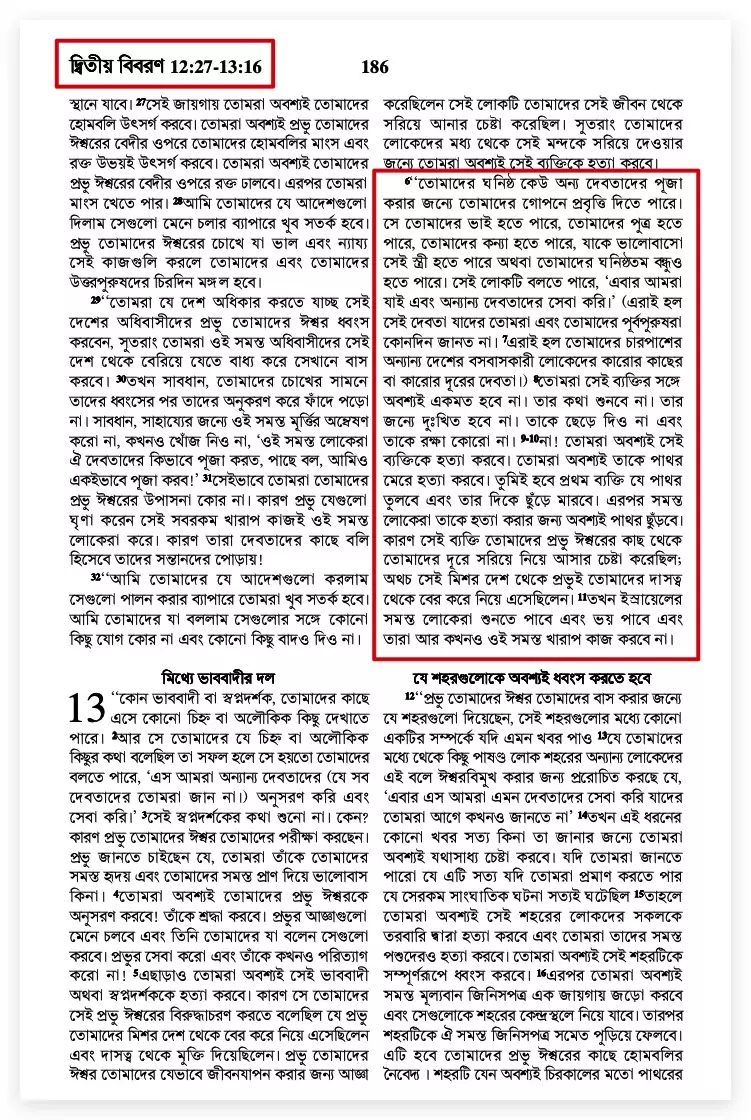
দ্বিতীয় বিবরণ ১৩:৬-১১
(নিউ কিং জেমস ভার্সন অনুযায়ী)
৬ “যদি তোমার ভাই, মাতার পুত্র, তোমার পুত্র বা কন্যা, তোমার স্ত্রী, বা তোমার আত্মার মতো প্রিয় বন্ধু গোপনে তোমাকে প্ররোচিত করে বলে, ‘চলো, আমরা অন্য দেবতাদের পূজা করি,’ যাদের তোমরা কিংবা তোমাদের পূর্বপুরুষেরা চিনত না,
৭ সেই দেবতাদের যাদের পুজা করে পৃথিবীর এক প্রান্ত থেকে আরেক প্রান্তের মানুষ,
৮ তখন তুমি তার কথা শুনবে না বা তাকে কোনোভাবেই সমর্থন করবে না; এমনকি তাকে দয়া করো না বা রক্ষা করার চেষ্টা করো না।
৯ বরং তুমি অবশ্যই তাকে হত্যা করবে; প্রথমে তোমারই হাত তাকে মৃত্যুদণ্ড কার্যকর করতে উঠবে, তারপর সবার হাত।
১০ তুমি তাকে পাথর ছুঁড়ে হত্যা করবে, কারণ সে তোমাকে তোমার প্রভু, তোমার ঈশ্বরের কাছ থেকে সরিয়ে নিয়ে যেতে চেয়েছিল, যিনি তোমাকে মিশরের দাসত্ব থেকে মুক্ত করেছিলেন।
১১ যাতে পুরো ইসরায়েল এই ঘটনা শুনে ভয় পায় এবং ভবিষ্যতে এমন দুষ্ট কাজ করার সাহস আর না করে।”
এই বিধানের শেষ বাক্যটি বিশেষভাবে গুরুত্বপূর্ণ—“পুরো ইসরায়েল এই ঘটনা শুনে ভয় পায়।” অর্থাৎ শাস্তির উদ্দেশ্য শুধু কথিত অপরাধীকে সরিয়ে দেওয়া নয়; প্রকাশ্য হত্যার মাধ্যমে অন্যদের মনে ভয় সৃষ্টি করাও এর ঘোষিত উদ্দেশ্য। আধুনিক ভাষায় এটি একটি ভয়ভিত্তিক ধর্মীয় নিয়ন্ত্রণব্যবস্থা: একজনকে হত্যা করো, যাতে বাকিরা দেখে বিশ্বাস পরিবর্তন বা প্রচারের সাহস না পায়। রাষ্ট্রীয় সন্ত্রাসের মৌলিক যুক্তিও ঠিক এটাই—শাস্তি শুধু ব্যক্তির জন্য নয়, জনগোষ্ঠীকে আতঙ্কিত করে আনুগত্য নিশ্চিত করার জন্য।
Deuteronomy 13:6-11
New King James Version
6 “If your brother, the son of your mother, your son or your daughter, the wife [a]of your bosom, or your friend who is as your own soul, secretly entices you, saying, ‘Let us go and serve other gods,’ which you have not known, neither you nor your fathers, 7 of the gods of the people which are all around you, near to you or far off from you, from one end of the earth to the other end of the earth, 8 you shall not [b]consent to him or listen to him, nor shall your eye pity him, nor shall you spare him or conceal him; 9 but you shall surely kill him; your hand shall be first against him to put him to death, and afterward the hand of all the people. 10 And you shall stone him with stones until he dies, because he sought to entice you away from the Lord your God, who brought you out of the land of Egypt, from the house of bondage. 11 So all Israel shall hear and fear, and not again do such wickedness as this among you.
শুধু অন্যকে প্ররোচনা নয়—নিজে অন্য দেবতার উপাসনা করলেও মৃত্যুদণ্ড
এখানে একটি গুরুত্বপূর্ণ বিষয় স্পষ্ট করা প্রয়োজন। দ্বিতীয় বিবরণ ১৩:৬–১১-কে শুধু “ধর্মত্যাগের আইন” বললে কোনো খ্রিস্টান এপোলোজিস্ট আপত্তি করতে পারেন যে এই নির্দিষ্ট অংশে নিছক ব্যক্তিগতভাবে ধর্ম পরিবর্তনের কথা নয়; বরং অন্য কাউকে অন্য দেবতার উপাসনায় প্ররোচিত করার কথা বলা হয়েছে। পাঠগতভাবে এই পার্থক্যটি সত্য। কিন্তু এটি বাইবেলকে রক্ষা করে না, কারণ একই গ্রন্থের দ্বিতীয় বিবরণ ১৭:২–৭-এ কোনো ইসরায়েলীয় নারী বা পুরুষ অন্য দেবতা, সূর্য, চন্দ্র বা আকাশের অন্য কিছুর উপাসনা করলে এবং সাক্ষ্যের মাধ্যমে অভিযোগ প্রমাণিত হলে তাকে শহরের ফটকের কাছে এনে পাথর ছুড়ে হত্যা করার নির্দেশ দেওয়া হয়েছে। পঞ্চম শতাব্দীর খ্রিস্টীয় ধর্মতাত্ত্বিক সিরিল অব আলেকজান্দ্রিয়াও এই অংশকে স্পষ্টভাবে ধর্মত্যাগীর মৃত্যুদণ্ড হিসেবে পড়েছিলেন এবং ধর্মত্যাগী ও ধর্মত্যাগে প্ররোচনাকারী—উভয়ের মৃত্যুদণ্ডের প্রতি সমর্থন জানিয়েছিলেন। [2]
অতএব এখানে শব্দ নিয়ে লুকোচুরির সুযোগ খুব কম। বাইবেলের আইনগত কাঠামোয় একদিকে অন্যকে ভিন্ন ধর্মীয় উপাসনায় আহ্বান করলে হত্যা, অন্যদিকে নিজে অন্য দেবতার উপাসনা করলেও পাথর ছুড়ে হত্যার বিধান রয়েছে। অর্থাৎ মানুষের বিবেকের ভেতরে কোন বিশ্বাস থাকবে এবং সে কোন দেবতার সামনে মাথা নত করবে—এই ব্যক্তিগত বিষয়কে মৃত্যুদণ্ডযোগ্য অপরাধে পরিণত করা হয়েছে। আধুনিক মানবাধিকারের দৃষ্টিতে এটি শুধু “কঠোর আইন” নয়; এটি চিন্তা, বিবেক ও ধর্মের স্বাধীনতার সরাসরি অস্বীকার।
একজন নয়, পুরো শহর ধ্বংসের বিধান
দ্বিতীয় বিবরণ ১৩-এর সহিংসতা একজন ব্যক্তির মৃত্যুদণ্ডেই শেষ হয় না। একই অধ্যায়ের পরবর্তী অংশে কোনো ইসরায়েলীয় শহরের বাসিন্দারা অন্য দেবতার উপাসনার দিকে চলে গেলে তদন্তের পর শহরটিকে আক্রমণ, অধিবাসীদের হত্যা, সম্পদ একত্র করে আগুনে পুড়িয়ে দেওয়া এবং শহরটিকে ধ্বংসস্তূপে পরিণত করার বিধান রয়েছে। অর্থাৎ ধর্মীয় বিচ্যুতি ব্যক্তিগত অপরাধ থেকে সমষ্টিগত ধ্বংসযজ্ঞে রূপ নেয়। পরবর্তী রাব্বিনিক আলোচনায় এই “বিপথগামী শহর”-এর আইন এত কঠোর শর্তে সীমাবদ্ধ করা হয়েছিল যে তালমুদের একটি মত অনুযায়ী এমন শহর বাস্তবে কখনো ছিল না এবং ভবিষ্যতেও হবে না। এই পরবর্তী ব্যাখ্যা ঐতিহাসিকভাবে গুরুত্বপূর্ণ, কারণ এটি দেখায় যে ধর্মীয় ঐতিহ্যের ভেতরেই মানুষ পরবর্তীতে ভয়াবহ প্রাচীন বিধানকে কার্যত অকার্যকর করার পথ খুঁজেছে। কিন্তু পরবর্তী যুগের মানবিকীকরণ মূল পাঠের নৈতিক চরিত্র বদলে দেয় না—মূল পাঠে সমষ্টিগত হত্যার নির্দেশটি থেকেই যায়। [3]
ধর্মত্যাগ নাকি রাষ্ট্রদ্রোহ? এপোলোজেটিক যুক্তির সমস্যা
এই আইনকে রক্ষা করতে একটি প্রচলিত যুক্তি হলো—প্রাচীন ইসরায়েল ছিল একটি ধর্মতান্ত্রিক চুক্তিভিত্তিক রাষ্ট্র, তাই অন্য দেবতার উপাসনা নিছক ব্যক্তিগত ধর্ম পরিবর্তন ছিল না; এটি রাজনৈতিক রাষ্ট্রদ্রোহের সমতুল্য ছিল। প্রাচীন নিকটপ্রাচ্যের রাজনৈতিক চুক্তি ও আনুগত্যের আইনের সঙ্গে দ্বিতীয় বিবরণ ১৩-এর ভাষাগত ও কাঠামোগত মিল নিয়ে গবেষণাও হয়েছে; বিশেষ করে কিছু গবেষক দেখিয়েছেন যে এর ধর্মত্যাগ-বিরোধী বিধানগুলো প্রাচীন সাম্রাজ্যিক আনুগত্য ও রাষ্ট্রদ্রোহবিরোধী আইনের কাঠামোর সঙ্গে তুলনীয়। [4]
কিন্তু এই ঐতিহাসিক প্রেক্ষাপট আইনটির নৈতিক সমস্যা দূর করে না; বরং সমস্যাটি আরও পরিষ্কার করে। একটি ধর্মতান্ত্রিক রাষ্ট্র যখন বলে, “আমার ঈশ্বরে বিশ্বাস না করা মানেই রাষ্ট্রদ্রোহ”, তখন সেটিই তো ধর্মীয় স্বৈরতন্ত্রের সংজ্ঞা। উত্তর কোরিয়া যদি রাষ্ট্রনেতার মতাদর্শ প্রত্যাখ্যান করাকে রাষ্ট্রদ্রোহ বলে, তাহলে শুধু “সেই রাষ্ট্রের কাঠামোয় এটি রাষ্ট্রদ্রোহ ছিল” বললে সেই আইন নৈতিক হয়ে যায় না। রাষ্ট্র নিজেই যদি মানুষের বিবেক, বিশ্বাস ও ধর্মকে নিজের মালিকানাধীন সম্পত্তিতে পরিণত করে, তাহলে রাষ্ট্রদ্রোহের সংজ্ঞাটিই অন্যায়। কোনো মানুষ সরকারের বিরুদ্ধে সশস্ত্র বিদ্রোহ করেনি, হত্যা করেনি, গুপ্তচরবৃত্তি করেনি; সে শুধু অন্য দেবতায় বিশ্বাস করেছে বা অন্যকে সেই বিশ্বাসে আহ্বান করেছে। এটিকে রাষ্ট্রদ্রোহে পরিণত করা ধর্ম ও রাজনৈতিক ক্ষমতার এক ভয়ঙ্কর একীভবন।
ইতিহাসে এই আইন কি হুবহু প্রয়োগ করা হয়েছিল?
ঐতিহাসিক সততার জন্য এখানে একটি গুরুত্বপূর্ণ সীমা স্বীকার করতে হবে। দ্বিতীয় বিবরণ ১৩:৬–১১-এর বিধান অনুযায়ী প্রাচীন ইসরায়েলে ঠিক কতজন মানুষকে বিচার করে পাথর ছুড়ে হত্যা করা হয়েছিল—এমন নির্ভরযোগ্য স্বাধীন ঐতিহাসিক নথি আমাদের হাতে নেই। বাইবেলের নিজস্ব কাহিনীকে সরাসরি স্বাধীন ঐতিহাসিক দলিল ধরে নিয়ে “এই আইন এতবার প্রয়োগ হয়েছিল” বলা দায়িত্বশীল হবে না। তাই মূল বিধানটির বাস্তব প্রয়োগের পরিমাণ সম্পর্কে অতিরঞ্জিত দাবি করার প্রয়োজন নেই। একটি আইন নৈতিকভাবে ভয়াবহ প্রমাণ করতে সেটির হাজারবার প্রয়োগ হওয়া দরকারও নেই; কোনো সংবিধানে যদি লেখা থাকে “ধর্ম পরিবর্তন করলে নাগরিককে পাথর ছুড়ে হত্যা করতে হবে”, আইনটি একবারও প্রয়োগ না হলেও সেটি একটি বর্বর আইন।
তবে এই আইনের চিন্তাগত উত্তরাধিকার ইতিহাসে হারিয়ে যায়নি। হিব্রু বাইবেলের আইনগুলো পরবর্তী ইহুদি ব্যাখ্যা, খ্রিস্টীয় ধর্মতত্ত্ব এবং ধর্মীয় রাষ্ট্রক্ষমতার আলোচনায় বারবার ফিরে এসেছে। গুরুত্বপূর্ণ বিষয় হলো, পরবর্তী যুগে কেউ কেউ এই বিধানগুলোকে সীমিত বা রূপক করে মানবিক করার চেষ্টা করেছেন, আবার অন্যরা এগুলোকে ধর্মীয় বিচ্যুতির বিরুদ্ধে সহিংসতার নৈতিক ভিত্তি হিসেবে গ্রহণ করেছেন। এই দ্বিতীয় ধারাটিই খ্রিস্টীয় ইতিহাসে বিশেষভাবে ভয়াবহ পরিণতি তৈরি করেছে।
প্রাচীন আইন থেকে খ্রিস্টীয় ধর্মতন্ত্র: সিরিলের কাছে ধর্মত্যাগীর মৃত্যুদণ্ড “পবিত্র”
খ্রিস্টধর্মের প্রথম কয়েক শতাব্দীতে খ্রিস্টানরা নিজেরাই রোমান রাষ্ট্রের নির্যাতনের শিকার হয়েছিল। কিন্তু খ্রিস্টধর্ম রাষ্ট্রীয় ক্ষমতার কেন্দ্রে উঠে আসার পর পরিস্থিতি বদলাতে শুরু করে। পঞ্চম শতাব্দীর শক্তিশালী বিশপ ও ধর্মতাত্ত্বিক সিরিল অব আলেকজান্দ্রিয়ার লেখায় আমরা দ্বিতীয় বিবরণের সহিংস বিধানের সরাসরি ইতিবাচক গ্রহণ দেখতে পাই। তিনি দ্বিতীয় বিবরণ ১৩-এর সেই অংশ উদ্ধৃত করেন যেখানে মিথ্যা নবী বা অন্য দেবতার দিকে প্ররোচনাকারীকে মৃত্যুদণ্ড দিতে বলা হয়েছে এবং আইনটির প্রশংসা করেন। এরপর দ্বিতীয় বিবরণ ১৭:২–৭-এর ভিত্তিতে ধর্মত্যাগীর মৃত্যুদণ্ডকেও সমর্থন করেন। আধুনিক গবেষণায় তাঁর লেখার বিশ্লেষণে দেখানো হয়েছে যে তিনি আত্মাকে ধর্মীয় “ভুল” থেকে রক্ষা করাকে এমন গুরুতর বিষয় হিসেবে দেখেছিলেন যে ধর্মীয় বিভ্রান্তিকারী এবং ধর্মত্যাগীকে মৃত্যুদণ্ড দেওয়া তাঁর কাছে ন্যায়সঙ্গত বলে প্রতীয়মান হয়েছিল। [5]
এখানেই প্রাচীন ধর্মীয় কালাকানুনের ভয়াবহ মানসিক কাঠামোটি বোঝা যায়। যুক্তিটি হলো: ভুল ধর্মীয় ধারণা মানুষের “আত্মাকে হত্যা” করে, তাই ভুল ধারণা প্রচারকারীকে শারীরিকভাবে হত্যা করা যেতে পারে। এই যুক্তি গ্রহণ করলে মতপ্রকাশের স্বাধীনতা বলে কিছু থাকে না। কারণ প্রতিটি ধর্মই অন্য ধর্মকে ভুল বলতে পারে, প্রতিটি সম্প্রদায়ই প্রতিদ্বন্দ্বী মতকে মানুষের আত্মার জন্য বিপজ্জনক বলতে পারে, এবং প্রত্যেকেই একই যুক্তিতে অন্যকে হত্যা করার নৈতিক অনুমতি দাবি করতে পারে। সত্য নির্ধারণের জায়গায় তখন যুক্তি, প্রমাণ ও আলোচনা থাকে না; থাকে যে সম্প্রদায়ের হাতে বেশি ক্ষমতা, তার ধর্মতত্ত্ব এবং তার জল্লাদ।
খ্রিস্টীয় রোমান সাম্রাজ্য: বিশ্বাস হয়ে উঠল রাষ্ট্রীয় নিয়ন্ত্রণের বিষয়
রোমান সাম্রাজ্য খ্রিস্টীয়করণের পর ধর্মীয় পরিচয় ক্রমে রাষ্ট্রীয় আইনের বিষয় হয়ে ওঠে। থিওডোসীয় আইনে ধর্মত্যাগী, ভিন্নমতাবলম্বী ও তথাকথিত ধর্মদ্রোহীদের বিরুদ্ধে বিভিন্ন নাগরিক ও সম্পত্তিগত শাস্তি আরোপ করা হয়েছিল। ধর্মত্যাগীদের উইল, উত্তরাধিকার ও সম্পত্তির অধিকার সীমিত করার বিধান ছিল; পরবর্তী জাস্টিনীয় আইনি ব্যবস্থাতেও ধর্মত্যাগকে অপরাধ হিসেবে বিবেচনা করা হয়। সব সময় প্রতিটি ধর্মীয় বিচ্যুতির শাস্তি সরাসরি মৃত্যুদণ্ড ছিল—এমন দাবি করা ভুল হবে; আইন যুগ ও অপরাধভেদে ভিন্ন ছিল। কিন্তু মূল পরিবর্তনটি ছিল অত্যন্ত গুরুত্বপূর্ণ: ব্যক্তির বিশ্বাস আর ব্যক্তিগত বিবেকের বিষয় থাকল না, রাষ্ট্র সিদ্ধান্ত নিতে শুরু করল কোন ধর্মীয় পরিচয় বৈধ এবং কোন বিশ্বাসের কারণে নাগরিকের অধিকার কেড়ে নেওয়া যাবে। [6]
এটি একটি ভয়াবহ নীতি। রাষ্ট্র যদি আপনার বাড়ি চুরি করলে শাস্তি দেয়, তার একটি বাস্তব ভুক্তভোগী আছে। আপনি কাউকে হত্যা করলে একটি জীবন নষ্ট হয়েছে। কিন্তু আপনি মনে মনে সিদ্ধান্ত নিলেন ত্রিত্ববাদ সত্য নয়, যিশু ঈশ্বর নন, অথবা কোনো ঈশ্বরই নেই—এতে কার শরীর ক্ষতিগ্রস্ত হলো? কার সম্পত্তি গেল? কার স্বাধীনতা নষ্ট হলো? কোনো বাস্তব ক্ষতির উত্তর না থাকলে রাষ্ট্রের হস্তক্ষেপের একমাত্র ভিত্তি দাঁড়ায় ধর্মীয় কর্তৃত্ব: “তুমি ভুল বিশ্বাস করেছ।” আর এই জায়গাতেই আইন ন্যায়বিচার থেকে সরে গিয়ে মতাদর্শিক নিপীড়নের যন্ত্রে পরিণত হয়।
মধ্যযুগ: ধর্মীয় মতভেদের বিরুদ্ধে প্রাতিষ্ঠানিক দমন
দ্বিতীয় বিবরণের আইনটি নিজে মধ্যযুগীয় নয়; এটি মধ্যযুগের বহু শতাব্দী আগের। তাই ইতিহাসগতভাবে একে সরাসরি “মধ্যযুগীয় আইন” বলা ভুল হবে। আরও সঠিক কথা হলো—এটি মধ্যযুগীয় ধর্মতান্ত্রিক বর্বরতারও পূর্ববর্তী এক প্রাচীন কালাকানুন, যার মৌলিক নীতি—সঠিক ধর্ম থেকে বিচ্যুতি রাষ্ট্রীয় শাস্তির বিষয়—পরবর্তী মধ্যযুগীয় খ্রিস্টীয় দমননীতির সঙ্গে ভয়ঙ্করভাবে সাযুজ্যপূর্ণ। ১২১৫ সালের চতুর্থ ল্যাটেরান কাউন্সিলের তৃতীয় ক্যানন ধর্মদ্রোহীদের নিন্দা করে তাদের ধর্মনিরপেক্ষ কর্তৃপক্ষের হাতে “যথাযথ শাস্তির” জন্য তুলে দেওয়ার নির্দেশ দেয়, সম্পত্তি বাজেয়াপ্তের বিধান করে এবং শাসকদের নিজ নিজ এলাকা থেকে ধর্মদ্রোহীদের নির্মূল করতে চাপ প্রয়োগ করে। এমনকি যে শাসক চার্চের নির্দেশমতো এলাকা “পরিষ্কার” করতে ব্যর্থ হতেন, তাঁর বিরুদ্ধেও ধর্মীয় ও রাজনৈতিক ব্যবস্থা নেওয়ার পথ রাখা হয়েছিল। [7]
এই ব্যবস্থার একটি কুৎসিত কৌশল ছিল দায়িত্বের বিভাজন। ধর্মীয় কর্তৃপক্ষ কাউকে ধর্মদ্রোহী ঘোষণা করবে, তারপর তাকে রাষ্ট্রীয় বা ধর্মনিরপেক্ষ কর্তৃপক্ষের হাতে তুলে দেওয়া হবে শাস্তির জন্য। ফলে ধর্মীয় প্রতিষ্ঠান বলতে পারত, “আমরা তো হত্যা করিনি; রাষ্ট্র শাস্তি দিয়েছে।” কিন্তু যে প্রতিষ্ঠান একজন মানুষকে তার বিশ্বাসের জন্য অপরাধী ঘোষণা করে, রাষ্ট্রকে তাকে শাস্তি দিতে বাধ্য করে এবং শাসকদের ধর্মীয় শুদ্ধি অভিযান চালানোর নির্দেশ দেয়, সে নৈতিক দায় থেকে পালাতে পারে না। জল্লাদের হাতে কুঠারটি অন্য প্রতিষ্ঠান তুলে দিলেই হত্যার নৈতিক দায় মুছে যায় না। চতুর্থ ল্যাটেরান কাউন্সিলের নথিতেই ধর্মদ্রোহীদের ধর্মনিরপেক্ষ কর্তৃপক্ষের হাতে তুলে দেওয়া, সম্পত্তি বাজেয়াপ্ত এবং শাসকদের ধর্মদ্রোহী উৎখাতে বাধ্য করার কাঠামো স্পষ্টভাবে পাওয়া যায়।
পরবর্তী ইনকুইজিশনগুলোতে ধর্মীয় মত, ধর্মান্তর, গোপনে পূর্বধর্ম পালন, ধর্মদ্রোহিতা ও মতবাদগত বিচ্যুতি নিয়ে তদন্ত, জিজ্ঞাসাবাদ, সামাজিক বর্জন, সম্পত্তি বাজেয়াপ্ত, কারাবাস এবং বিভিন্ন ক্ষেত্রে মৃত্যুদণ্ডের ইতিহাস গড়ে ওঠে। সব ইনকুইজিশন একই ছিল না, সব অভিযুক্তকে হত্যা করা হয়নি এবং “ধর্মত্যাগ”, “ধর্মদ্রোহিতা” ও “ব্লাসফেমি” আইনগতভাবে এক জিনিসও ছিল না। কিন্তু এগুলোর পেছনে অভিন্ন কর্তৃত্ববাদী নীতি ছিল: মানুষের বিশ্বাসকে স্বাধীন চিন্তার ক্ষেত্র হিসেবে না দেখে ধর্মীয় ক্ষমতার অধীন একটি শাস্তিযোগ্য বিষয় হিসেবে গণ্য করা।
ক্যাথলিক থেকে প্রোটেস্ট্যান্ট: ক্ষমতা বদলেছে, অসহিষ্ণুতার যুক্তি টিকে ছিল
ধর্মীয় নিপীড়নকে শুধু মধ্যযুগীয় ক্যাথলিক চার্চের সমস্যা ভাবলেও ইতিহাস অসম্পূর্ণ থেকে যায়। প্রোটেস্ট্যান্ট সংস্কারের পরও ধর্মীয় স্বাধীনতা সঙ্গে সঙ্গে প্রতিষ্ঠিত হয়নি। জন ক্যালভিনের ধর্মীয়-রাজনৈতিক চিন্তায় দ্বিতীয় বিবরণ ১৩-এর বিধান নিয়ে আলোচনা পাওয়া যায়, যেখানে ধর্মত্যাগ এবং অন্যকে ধর্মত্যাগে প্ররোচনা রাষ্ট্রীয় শাসকের দায়িত্বের সঙ্গে যুক্ত করা হয়েছিল। ১৫৫৩ সালে জেনেভায় মাইকেল সার্ভেটাসকে ত্রিত্ববাদবিরোধী মতসহ ধর্মদ্রোহিতার অভিযোগে বিচার করে জীবন্ত পুড়িয়ে মারা হয়। সার্ভেটাসের ঘটনা দ্বিতীয় বিবরণ ১৩-এর কোনো সরাসরি আদালতীয় প্রয়োগ ছিল না, এবং তাকে “মুরতাদ” হিসেবেও বিচার করা হয়নি; তিনি ধর্মদ্রোহিতার অভিযোগে নিহত হন। কিন্তু ঘটনাটি একই বৃহত্তর নীতির নির্মম উদাহরণ—কোনো মানুষের ধর্মতাত্ত্বিক মত ভুল মনে হলে রাষ্ট্র তাকে হত্যা করতে পারে। [8]
এই ইতিহাস একটি গুরুত্বপূর্ণ সত্য দেখায়: ধর্মীয় সহিংসতার মূল সমস্যা শুধু কোন ধর্ম “সত্য” আর কোন ধর্ম “মিথ্যা” সেই প্রশ্ন নয়; সমস্যা হলো কোনো ধর্মীয় প্রতিষ্ঠান বা রাষ্ট্রকে মানুষের চিন্তা নিয়ন্ত্রণের ক্ষমতা দেওয়া। ক্যাথলিক রাষ্ট্র প্রোটেস্ট্যান্টকে ধর্মদ্রোহী বলতে পারে, প্রোটেস্ট্যান্ট রাষ্ট্র ত্রিত্ববাদবিরোধীকে হত্যা করতে পারে, একটি ইহুদি ধর্মতান্ত্রিক রাষ্ট্র অন্য দেবতার উপাসককে পাথর মারতে পারে—প্রত্যেকেই নিজের ধর্মকে সত্য ধরে একই নীতি প্রয়োগ করতে পারে। তাই “সত্য ধর্মের ক্ষেত্রে এই আইন ঠিক” যুক্তিটি আত্মঘাতী। পৃথিবীর পরস্পরবিরোধী সব ধর্মই নিজেদের সত্য বলে; কার হাতে তরবারি থাকবে, সেটি সত্য নির্ধারণের পদ্ধতি হতে পারে না।
বিশ্বাসের জন্য শাস্তি কেন মৌলিক মানবাধিকার হরণ?
ধর্মত্যাগের শাস্তি মৌলিকভাবে মানবাধিকারবিরোধী, কারণ মানুষের চিন্তা ও বিশ্বাস তার ব্যক্তিসত্তার অন্তর্গত। কোনো মানুষকে জোর করে সত্যিকার অর্থে বিশ্বাসী বানানো যায় না। বন্দুকের মুখে কাউকে “আমি বিশ্বাস করি” বলানো যায়, কিন্তু তার মস্তিষ্কে বিশ্বাস সৃষ্টি করা যায় না। ফলে ধর্মত্যাগের শাস্তি বাস্তবে বিশ্বাস সৃষ্টি করে না; এটি সৃষ্টি করে ভণ্ডামি। মানুষ মনে মনে অবিশ্বাসী থাকবে, কিন্তু জীবন, পরিবার, সম্পত্তি বা সামাজিক নিরাপত্তা রক্ষার জন্য বাইরে বিশ্বাসীর অভিনয় করবে। যে ধর্মীয় ব্যবস্থা মৃত্যুভয়ের মাধ্যমে বিশ্বাস ধরে রাখে, সে নিজের সত্যতার শক্তি নয়, নিজের জবরদস্তির শক্তি প্রদর্শন করে।
মানবাধিকারের সর্বজনীন ঘোষণার ১৮ নম্বর অনুচ্ছেদে ধর্ম পরিবর্তনের অধিকার স্পষ্টভাবে অন্তর্ভুক্ত করা হয়েছে। আন্তর্জাতিক নাগরিক ও রাজনৈতিক অধিকার সনদের ১৮ নম্বর অনুচ্ছেদ চিন্তা, বিবেক ও ধর্মের স্বাধীনতা এবং নিজের পছন্দের ধর্ম বা বিশ্বাস গ্রহণের অধিকার স্বীকার করে। জাতিসংঘের মানবাধিকার কমিটি আরও পরিষ্কারভাবে বলেছে—এর মধ্যে বর্তমান ধর্মের পরিবর্তে অন্য ধর্ম গ্রহণ, ধর্ম ত্যাগ এবং নাস্তিক মত গ্রহণের স্বাধীনতাও রয়েছে। কাউকে এমন কোনো জবরদস্তির মুখে ফেলা যাবে না যা তার নিজের পছন্দের ধর্ম বা বিশ্বাস গ্রহণের স্বাধীনতাকে ক্ষতিগ্রস্ত করে। মৃত্যুদণ্ড তো সেই জবরদস্তির চূড়ান্ত রূপ। [9]
একটি সভ্য আইনব্যবস্থায় অপরাধ নির্ধারণের কেন্দ্রে থাকা উচিত বাস্তব ক্ষতি ও অন্যের অধিকার লঙ্ঘন। আপনি অন্য ধর্ম গ্রহণ করলেন—কাকে হত্যা করলেন? আপনি ঈশ্বরে বিশ্বাস হারালেন—কার সম্পত্তি চুরি করলেন? আপনি বললেন “আমার পূর্বের ধর্ম সত্য নয়”—কার শারীরিক নিরাপত্তা ধ্বংস করলেন? যদি উত্তর হয় “কাউকে নয়”, তাহলে রাষ্ট্রের মৃত্যুদণ্ড দেওয়ার কোনো নৈতিক ভিত্তি নেই। “ঈশ্বর অপমানিত হয়েছেন” বা “ধর্মীয় সমাজ কষ্ট পেয়েছে” কোনো মানুষকে পাথর মেরে হত্যার বৈধ কারণ হতে পারে না। সর্বশক্তিমান ঈশ্বরের সম্মান রক্ষার জন্য যদি দুর্বল মানুষকে পাথর হাতে দাঁড়াতে হয়, তাহলে এখানে রক্ষা করা হচ্ছে ঈশ্বরকে নয়—ধর্মীয় ক্ষমতাকে।
পরিবারকে জল্লাদে পরিণত করা: বিধানটির সবচেয়ে ভয়ঙ্কর দিক
দ্বিতীয় বিবরণ ১৩:৬–১১-এর সবচেয়ে নৃশংস দিকগুলোর একটি হলো, এটি রাষ্ট্রীয় সহিংসতাকে পরিবারের ভেতরে ঢুকিয়ে দেয়। ভাই, সন্তান, স্ত্রী বা “নিজের প্রাণের মতো প্রিয় বন্ধু” যদি অন্য দেবতার দিকে আহ্বান করে, তাহলে তাকে দয়া করা যাবে না, লুকানো যাবে না; বরং হত্যার জন্য প্রথম হাত আপনজনেরই উঠবে। এটি শুধু ধর্মীয় অসহিষ্ণুতা নয়, এটি মানুষের সবচেয়ে মৌলিক সামাজিক সম্পর্কের ওপর ধর্মীয় আনুগত্যকে বসিয়ে দেওয়া। বার্তাটি পরিষ্কার: তোমার সন্তান নয়, তোমার ভাই নয়, তোমার জীবনসঙ্গী নয়—ধর্মীয় কর্তৃত্ব সবার আগে। প্রয়োজন হলে ধর্মের জন্য আপনজনের মৃত্যুতেও অংশ নাও।
এই ধরনের আইন একটি সমাজে বিশ্বাস নয়, সন্দেহ ও নজরদারির সংস্কৃতি তৈরি করে। মানুষ নিজের পরিবারের কাছেও মনের কথা বলতে ভয় পাবে। কেউ প্রশ্ন করলে, সন্দেহ প্রকাশ করলে কিংবা ভিন্ন বিশ্বাসের কথা বললে তার নিকটতম মানুষই সম্ভাব্য অভিযোগকারী হয়ে উঠতে পারে। আধুনিক সর্বগ্রাসী রাষ্ট্রগুলোও ঠিক এই কৌশল ব্যবহার করেছে—পরিবারের সদস্যকে পরিবারের বিরুদ্ধে, প্রতিবেশীকে প্রতিবেশীর বিরুদ্ধে, বন্ধুকে বন্ধুর বিরুদ্ধে তথ্যদাতা বানানো। দ্বিতীয় বিবরণের বিধানে ধর্মীয় আনুগত্যকে এমন পর্যায়ে তোলা হয়েছে যেখানে মানবিক মমতাকেও সন্দেহের চোখে দেখা হয়: “দয়া করো না।” এটি কোনো উচ্চতর নৈতিকতার ভাষা নয়; এটি মতাদর্শিক নিষ্ঠুরতার ভাষা।
এটি পুরাতন নিয়ম, এখন আর প্রযোজ্য নয়?
বাইবেলের এসব বর্বর বিধানের সমালোচনা উঠলে আধুনিক খ্রিস্টান এপোলোজেটিক্সে একটি বহুল ব্যবহৃত উত্তর হলো, এগুলো পুরাতন নিয়মের মোজাইক আইন, এগুলো শুধু প্রাচীন ইসরায়েলের জন্য ছিল; যীশুর আগমনের পরে এসব আইন আর খ্রিস্টানদের জন্য প্রযোজ্য নয়। কিন্তু এই উত্তরটি যতটা সহজভাবে উপস্থাপন করা হয়, নতুন নিয়মের বক্তব্য ততটা সহজ নয়। কারণ মথির সুসমাচারে যীশু নিজেই স্পষ্টভাবে বলেছেন যে তিনি মুসার বিধান ও নবীদের শিক্ষা ধ্বংস বা বিলোপ করতে আসেননি, বরং তা পূর্ণ করতে এসেছেন। শুধু এটুকুই নয়, তিনি আরও বলেছেন—আকাশ ও পৃথিবী বিলুপ্ত না হওয়া পর্যন্ত এবং সবকিছু পূর্ণ না হওয়া পর্যন্ত বিধানের ক্ষুদ্রতম অংশও লোপ পাবে না; যে ব্যক্তি ক্ষুদ্রতম আদেশও অমান্য করে এবং অন্যকে তা করতে শেখায়, সে স্বর্গরাজ্যে ক্ষুদ্র বলে গণ্য হবে, আর যে তা পালন করে এবং অন্যকে পালন করতে শেখায়, সে মহান বলে গণ্য হবে [10] [11]। অর্থাৎ মথির বর্ণনায় যীশুর অবস্থান “মুসার বিধান ভুল ছিল, তাই আমি তা বাতিল করতে এসেছি”, এমন নয়; বরং ঠিক উল্টোভাবে তিনি সেই বিধান ধ্বংস করতে আসার ধারণা প্রত্যাখ্যান করছেন এবং তার পূর্ণতা, স্থায়িত্ব ও পালনের গুরুত্ব ঘোষণা করছেন।
এখানেই “ওগুলো তো পুরাতন নিয়ম” অজুহাতটি বড় সমস্যায় পড়ে। কারণ একই পুরাতন নিয়মে যদি অন্য দেবতার উপাসনা কিংবা অন্যকে সেই উপাসনার দিকে আহ্বান করার জন্য পাথর ছুড়ে হত্যার মতো বর্বর বিধান থাকে, তাহলে প্রশ্ন আসে—যীশু কোথায় স্পষ্টভাবে বলেছেন যে এই আইনগুলো নৈতিকভাবে অন্যায় ছিল এবং তাই তিনি সেগুলো বাতিল করছেন? মথি ৫:১৭–২০-এ আমরা তার বিপরীত ভাষাই দেখি: বিধান বিলোপ নয়, পূর্ণ করা; ক্ষুদ্রতম বিধানও অগ্রাহ্য না করা; বিধান পালন করা এবং অন্যকে পালন করতে শেখানোর প্রশংসা। পরবর্তী খ্রিস্টীয় ধর্মতত্ত্বে মোজাইক আইনকে “নৈতিক”, “আনুষ্ঠানিক” ও “নাগরিক” ইত্যাদি ভাগে বিভক্ত করে কোনটি এখন কার্যকর আর কোনটি নয়—এ নিয়ে জটিল ব্যাখ্যা তৈরি হয়েছে। কিন্তু সেই পরবর্তী ধর্মতাত্ত্বিক শ্রেণিবিভাগকে সরাসরি যীশুর মুখের কথা হিসেবে চালিয়ে দেওয়া যায় না। মথির এই বক্তব্যে যীশু বলেননি, “মুসার কিছু আইন আসলে বর্বর ও অন্যায় ছিল, সেগুলো এখন বাতিল।” বরং তিনি মুসার বিধান বিলোপ করতে আসার ধারণাটিই সরাসরি অস্বীকার করেছেন।
আরও গুরুত্বপূর্ণ হলো, ধরে নিলাম পরবর্তী কোনো ধর্মতাত্ত্বিক ব্যাখ্যার মাধ্যমে বলা হলো যে ধর্মত্যাগীকে পাথর ছুড়ে হত্যার আইন এখন আর খ্রিস্টানদের জন্য কার্যকর নয়। তাতেও মূল নৈতিক সমস্যার বিন্দুমাত্র সমাধান হয় না। প্রশ্ন শুধু এই নয় যে আজকের একজন খ্রিস্টান আইনটি পালন করেন কিনা; আসল প্রশ্ন হলো, সর্বজ্ঞ, সর্বকালীন এবং পরম ন্যায়বান বলে দাবি করা ঈশ্বর প্রথম অবস্থাতেই কেন এমন আইন দেবেন যেখানে একজন মানুষের বিশ্বাস পরিবর্তন, অন্য দেবতার উপাসনা কিংবা অন্যকে সেই বিশ্বাসের দিকে আহ্বান করার শাস্তি মৃত্যু? একটি আইন পরে অকার্যকর হয়ে গেলেই তার অতীতের বর্বরতা ন্যায়সঙ্গত হয়ে যায় না। কোনো ঈশ্বর যদি একসময় দাস রাখা, ধর্মত্যাগী হত্যা বা ভিন্ন বিশ্বাসের মানুষকে পাথর মেরে মারাকে বৈধ করেন এবং পরে সেই আইন আর কার্যকর না থাকে, তাহলে প্রশ্ন থেকেই যায়—পরম ন্যায়বিচারের মানদণ্ড কি যুগে যুগে এমনভাবে বদলায় যে এক যুগে যা ন্যায়সঙ্গত হত্যাকাণ্ড, অন্য যুগে সেটিই মানবাধিকার লঙ্ঘন?
“তখনকার সময়ের জন্য ঠিক ছিল”—এই অজুহাতও একই কারণে ব্যর্থ। একজন মানুষ খ্রিস্টপূর্ব যুগে জন্মেছে বলে কি তার বিবেক, বিশ্বাস ও ধর্ম পরিবর্তনের স্বাধীনতার কোনো মূল্য ছিল না? আর আধুনিক যুগে জন্মেছে বলে হঠাৎ সেই একই স্বাধীনতা মৌলিক মানবাধিকার হয়ে গেল? মানুষের জীবন ও বিবেকের মূল্য ক্যালেন্ডারের তারিখের ওপর নির্ভর করে না। হত্যা, নির্যাতন বা অন্যের অধিকার হরণ না করে কেবল অন্য ধর্মে বিশ্বাস করার কারণে কাউকে পাথর ছুড়ে হত্যা করা আজ যদি বর্বরতা হয়, তবে তিন হাজার বছর আগেও সেটি বর্বরতাই ছিল। সময়ের ব্যবধান কোনো অন্যায়কে ন্যায়বিচারে রূপান্তরিত করে না।
বরং ইতিহাসের বাস্তবতা অনেক সহজ একটি ব্যাখ্যা দেয়। প্রাচীন ধর্মতান্ত্রিক সমাজগুলো তাদের সময়ের গোত্রীয় আনুগত্য, ধর্মীয় একচেটিয়াবাদ, প্রতিশোধমূলক শাস্তি এবং কর্তৃত্ববাদী আইনকে ঈশ্বরের নামে পবিত্র করেছে। পরে মানবসভ্যতায় ব্যক্তিস্বাধীনতা, বিবেকের স্বাধীনতা ও মানবাধিকারের ধারণা বিকশিত হওয়ার সঙ্গে সঙ্গে মানুষ সেই বর্বর বিধানগুলো কার্যত পরিত্যাগ করেছে। আধুনিক খ্রিস্টান রাষ্ট্রগুলো ধর্মত্যাগীকে পাথর মেরে হত্যা করে না—এটি অবশ্যই সভ্যতার অগ্রগতি। কিন্তু এই অগ্রগতি দ্বিতীয় বিবরণের সেই আইন অনুসরণ করে আসেনি; এসেছে সেই আইনকে আর প্রয়োগ না করার মধ্য দিয়ে। অর্থাৎ বহু ক্ষেত্রে মানুষ বাইবেলের প্রাচীন কালাকানুন অনুসরণ করে মানবিক হয়নি, বরং সেগুলো অতিক্রম ও পরিত্যাগ করেই অধিক মানবিক হয়েছে।
মানুষ বাইবেলকে অনুসরণ করে মানবিক হয়নি
এখানে আধুনিক সভ্যতার অগ্রগতির একটি অস্বস্তিকর সত্য রয়েছে। আজ অধিকাংশ খ্রিস্টান সমাজ ধর্মত্যাগীকে হত্যা করে না, ধর্মদ্রোহীকে আগুনে পোড়ায় না, অন্য দেবতার উপাসককে পাথর মারে না। এটি নিঃসন্দেহে ভালো। কিন্তু এই মানবিক অবস্থান দ্বিতীয় বিবরণ ১৩-এর নির্দেশ অনুসরণের ফল নয়; বরং সেই নির্দেশ কার্যত প্রত্যাখ্যান করার ফল। আধুনিক ধর্মীয় স্বাধীনতা প্রতিষ্ঠিত হয়েছে এই নীতির ওপর যে রাষ্ট্র নাগরিকের আত্মার মালিক নয়, কোনো চার্চ মানুষের বিবেকের মালিক নয়, এবং একজন মানুষের বিশ্বাসের সত্য-মিথ্যা নির্ধারণের জন্য কারাগার, পাথর, আগুন বা জল্লাদ ব্যবহার করা যাবে না।
আজ একজন খ্রিস্টান তার ধর্ম ত্যাগ করলে তাকে বাঁচিয়ে রাখা যদি ন্যায়সঙ্গত হয়, তাহলে প্রাচীন ইসরায়েলীয়কে অন্য দেবতার জন্য হত্যা করা ন্যায়সঙ্গত ছিল না। নৈতিক সত্য একই ঘটনার ক্ষেত্রে শুধু যুগ বদলানোর কারণে উল্টো হয়ে যায় না। নিরপরাধ মানুষের জীবন, চিন্তা ও বিবেকের স্বাধীনতা প্রাচীন মানুষদের জন্যও মূল্যবান ছিল, যেমন আজকের মানুষের জন্য। তাই এই বিধানকে “ঐতিহাসিক প্রেক্ষাপট” দিয়ে বোঝা যায়, কিন্তু নৈতিকভাবে বৈধ করা যায় না। দাসপ্রথাকেও ঐতিহাসিক প্রেক্ষাপটে বোঝা যায়; তাই বলে দাসপ্রথা ন্যায়সঙ্গত হয়ে যায় না।
উপসংহার
দ্বিতীয় বিবরণের ধর্মীয় বিচ্যুতি-বিরোধী আইনগুলো আধুনিক মানবিক মূল্যবোধের বিচারে স্পষ্টতই বর্বর, কর্তৃত্ববাদী এবং মানবাধিকারবিরোধী। একজন মানুষকে তার বিশ্বাস, উপাসনা বা অন্যকে ভিন্ন ধর্মীয় মতের দিকে আহ্বান করার জন্য পাথর ছুড়ে হত্যা করা ন্যায়বিচার নয়; এটি ধর্মতান্ত্রিক সন্ত্রাস। আপনজনকে দয়া না করতে বলা, পরিবারের সদস্যকে হত্যায় প্রথম হাত তুলতে বলা এবং একজনের মৃত্যুকে অন্যদের ভয় দেখানোর উপায় হিসেবে ব্যবহার করা কোনো সর্বজনীন মানবিক নীতির পরিচয় বহন করে না। এগুলো এমন এক প্রাচীন সমাজের আইনগত মানসিকতা প্রতিফলিত করে যেখানে ধর্ম, রাষ্ট্র, গোত্রীয় পরিচয় ও রাজনৈতিক আনুগত্য একাকার ছিল এবং ব্যক্তির বিবেকের স্বাধীনতার স্বতন্ত্র মূল্য স্বীকৃত ছিল না।
ঐতিহাসিকভাবে এই নির্দিষ্ট বিধান প্রাচীন ইসরায়েলে ঠিক কতবার হুবহু প্রয়োগ করা হয়েছিল, তার নির্ভরযোগ্য প্রমাণ সীমিত—এটি স্পষ্টভাবে স্বীকার করা উচিত। কিন্তু তাই বলে এর নৈতিক ভয়াবহতা কমে না। আরও গুরুত্বপূর্ণ হলো, ধর্মীয় বিচ্যুতিকে অপরাধ হিসেবে দেখার এই বৃহত্তর মানসিকতা পরবর্তী খ্রিস্টীয় ইতিহাসে বাস্তব রাষ্ট্রীয় ও প্রাতিষ্ঠানিক রূপ পেয়েছে—প্রাচীন খ্রিস্টীয় ধর্মতত্ত্বে ধর্মত্যাগীর মৃত্যুদণ্ডের সমর্থন, খ্রিস্টীয় রোমান আইনে ধর্মীয় পরিচয়ের ওপর নাগরিক অধিকার নির্ধারণ, মধ্যযুগে ধর্মদ্রোহীদের বিরুদ্ধে চার্চ ও রাষ্ট্রের যৌথ দমন এবং সংস্কারযুগেও ভিন্নমতের জন্য মৃত্যুদণ্ড তার প্রমাণ।
বাইবেলের এই বিধানকে “মধ্যযুগীয় কালাকানুন” বলা কালানুক্রমিকভাবে পুরোপুরি সঠিক নয়—এটি মধ্যযুগেরও বহু আগের। আরও কঠিন সত্য হলো, এটি মধ্যযুগীয় বর্বরতারও পূর্ববর্তী এক প্রাচীন ধর্মতান্ত্রিক কালাকানুন, যার মৌলিক দর্শন পরবর্তী বহু শতাব্দীর ধর্মীয় নিপীড়নের সঙ্গে একই বিপজ্জনক নীতি ভাগ করে নেয়: সত্য নির্ধারণ করবে ক্ষমতাবান ধর্ম, আর ভিন্নমতের মূল্য দিতে হবে স্বাধীনতা, সম্পত্তি কিংবা জীবন দিয়ে। মানবসভ্যতার সবচেয়ে বড় নৈতিক অগ্রগতিগুলোর একটি ঘটেছে তখনই, যখন আমরা এই ধারণাকে উল্টে দিয়েছি—মানুষ ধর্মের জন্য নয়; ধর্ম মানুষের জন্য। কোনো ধর্মগ্রন্থ, নবী, পুরোহিত, চার্চ বা রাষ্ট্র মানুষের বিবেকের মালিক নয়। বিশ্বাস করার অধিকার যেমন মানুষের, তেমনি অবিশ্বাস করার, প্রশ্ন করার, ধর্ম বদলানোর এবং ধর্ম ত্যাগ করার অধিকারও মানুষের। যে আইন এই অধিকারের বিনিময়ে মৃত্যু দাবি করে, তাকে পবিত্র আইন নয়—বর্বর কালাকানুন বলাই নৈতিকভাবে সঠিক।
About This Article
Genre: Biblical, Historical, Human-Rights, and Religious-Law Critique of Apostasy Punishment
Epistemic Position: Secular Humanism, Biblical Criticism, Historical Criticism, Freedom of Conscience, Human Rights Ethics, and Anti-Theocratic Reasoning
This article examines biblical laws on apostasy, the worship of other gods, religious persuasion, stoning, family-based enforcement, and collective punishment for religious deviation.
The central argument is that punishing belief, disbelief, or religious change with death is not justice; it is theocratic terror against freedom of conscience.
The article also rejects the apologetic shortcut that these were merely “Old Testament laws,” showing that later Christian history repeatedly preserved the same authoritarian logic against heretics, apostates, and dissenters.
This article should be evaluated through human rights, freedom of belief, historical evidence, biblical law, moral consistency, and secular ethics—not through inherited reverence, theological excuses, religious authority, or the demand that ancient cruelty be called divine justice.
তথ্যসূত্রঃ
- Universal Declaration of Human Rights, Article 18; International Covenant on Civil and Political Rights, Article 18; UN Human Rights Committee, General Comment No. 22 ↩︎
- Deuteronomy 17:2–7; Cyril of Alexandria, De adoratione, Book VI ↩︎
- Babylonian Talmud, Sanhedrin 71a; Mishnah Sanhedrin 10:4 ↩︎
- Joshua Berman, “CTH 133 and the Hittite Provenance of Deuteronomy 13,” Journal of Biblical Literature, 2011; Bernard M. Levinson, studies on Deuteronomy and ancient Near Eastern treaty traditions ↩︎
- David Maldonado Rivera, “Cyril of Alexandria’s Renunciation of Religious Violence,” Church History, Cambridge University Press ↩︎
- Codex Theodosianus, Book XVI; Codex Justinianus 1.7; scholarly studies on religious dissent in late Roman law ↩︎
- Fourth Lateran Council, 1215, Canon 3: On Heretics ↩︎
- Cambridge University Press, Calvin’s Political Theology and the Public Engagement of the Church, chapter on “The Magistrate’s Care of Religion”; historical records of the trial and execution of Michael Servetus, Geneva, 1553 ↩︎
- Universal Declaration of Human Rights, Article 18; ICCPR, Article 18; Human Rights Committee General Comment No. 22 ↩︎
- নতুন নিয়ম, মথি ৫:১৭–২০ ↩︎
- মুসার বিধান পূর্ণ করতে এসেছে যীশু ↩︎