
ইসলামের প্রথম খলিফা হযরত আবু বকরের মৃত্যু স্বাভাবিকভাবেই হয়েছিল, এটি মোটামুটি আমরা সকলেই জানি। ইসলামের বিভিন্ন তথ্যসূত্র থেকে জানা যায়, অসুস্থ হয়েই মারা গিয়েছিল সে। কিন্তু এই প্রসঙ্গে দুইটি খুবই গুরুত্বপূর্ণ হাদিস রয়েছে, যেই হাদিস সম্পর্কে অনেক মুহাদ্দিসই নিশ্চুপ ছিলেন। কেন নিশ্চুপ ছিলেন, কেন তারা এই হাদিসকে জাল বলেননি, তা একটু অস্বাভাবিক। সেই কারণেই, সেই বিষয়টি আমাদেরও জেনে রাখা প্রয়োজন। কারণ আমরা সকলেই জানি, ইসলামিস্টদের এই বিষয়গুলো নিয়ে এক ধরণের লুকোচুরি খেলা সবসময়ই ছিল এবং আছে। তাই হাদিসগুলো পড়ার জরুরি। আরও জরুরি এই কারণে যে, এই হাদিসগুলোতে বলা রয়েছে, আবু বকরকে বিষ প্রয়োগ করা হয়েছিল।
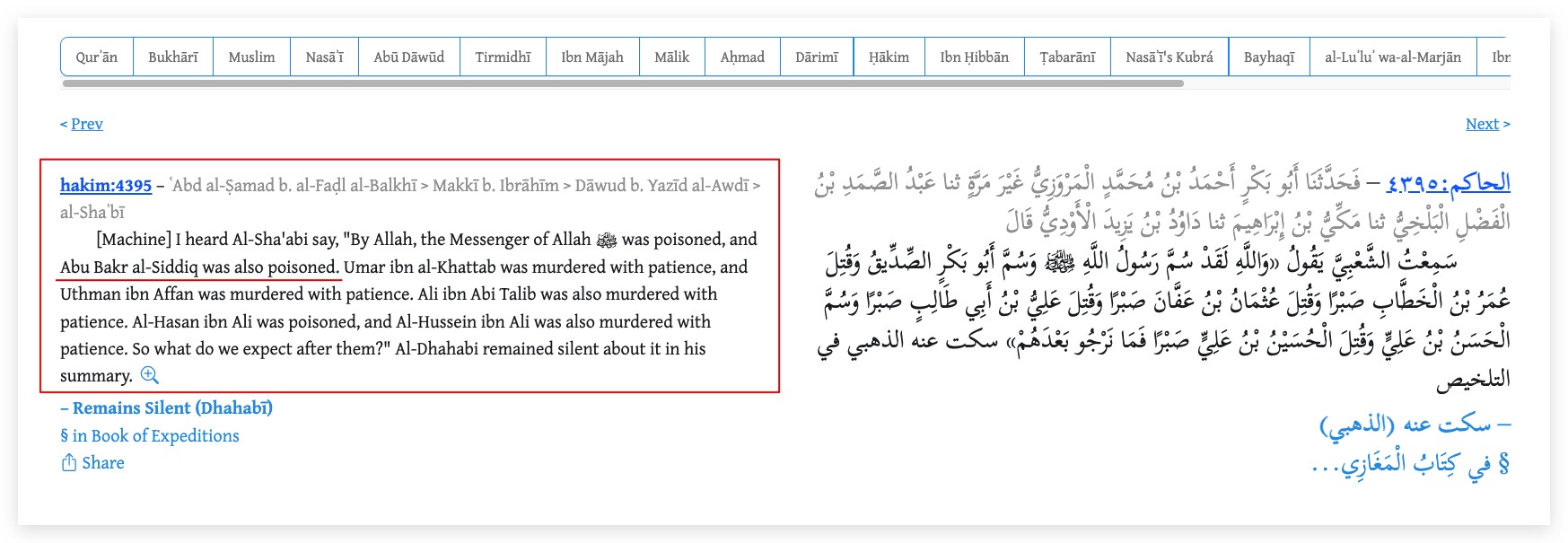
hakim:4395 – ʿAbd al-Ṣamad b. al-Faḍl al-Balkhī > Makkī b. Ibrāhīm > Dāwud b. Yazīd al-Awdī > al-Shaʿbī
[Machine] I heard Al-Sha’abi say, “By Allah, the Messenger of Allah ﷺ was poisoned, and Abu Bakr al-Siddiq was also poisoned. Umar ibn al-Khattab was murdered with patience, and Uthman ibn Affan was murdered with patience. Ali ibn Abi Talib was also murdered with patience. Al-Hasan ibn Ali was poisoned, and Al-Hussein ibn Ali was also murdered with patience. So what do we expect after them?” Al-Dhahabi remained silent about it in his summary.
– Remains Silent (Dhahabī)
§ in Book of Expeditions
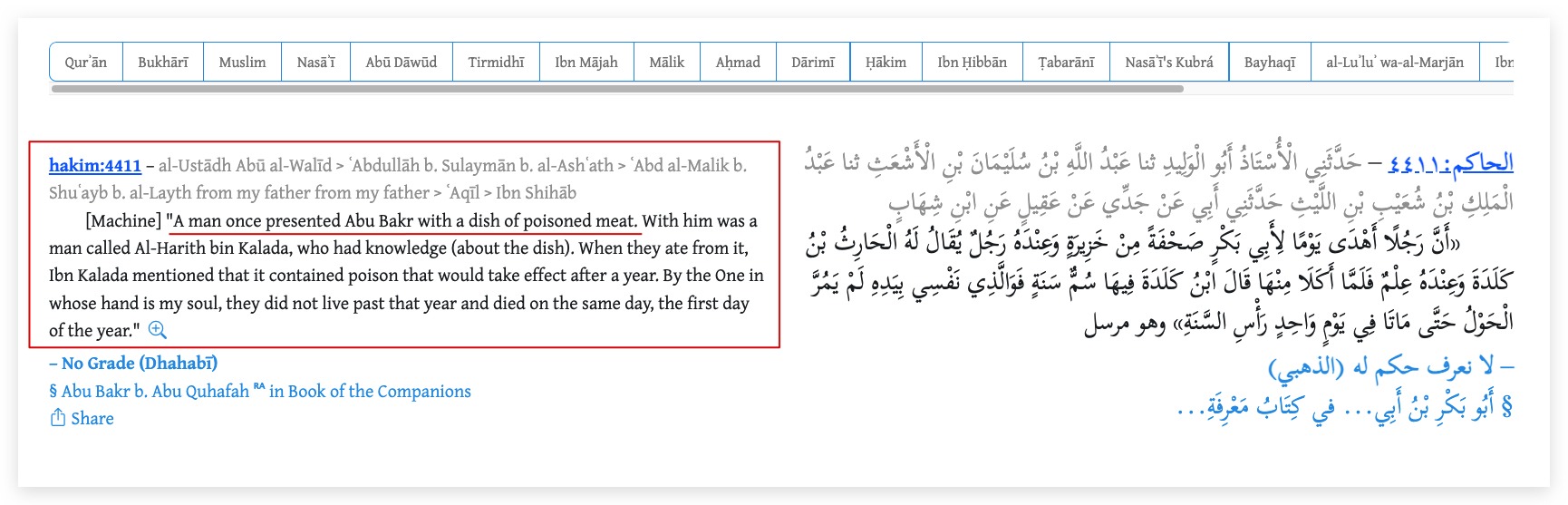
hakim:4411 – al-Ustādh Abū al-Walīd > ʿAbdullāh b. Sulaymān b. al-Ashʿath > ʿAbd al-Malik b. Shuʿayb b. al-Layth from my father from my father > ʿAqīl > Ibn Shihāb
[Machine] “A man once presented Abu Bakr with a dish of poisoned meat. With him was a man called Al-Harith bin Kalada, who had knowledge (about the dish). When they ate from it, Ibn Kalada mentioned that it contained poison that would take effect after a year. By the One in whose hand is my soul, they did not live past that year and died on the same day, the first day of the year.”
– No Grade (Dhahabī)
§ Abu Bakr b. Abu Quhafah ᴿᴬ in Book of the Companions
About This Article
Genre: Semi-Academic Skeptical Analysis
Epistemic Position: Scientific Skepticism and Secular Humanist Ethics
This article belongs to the skeptical-rationalist analytical tradition of Shongshoy.com.
Its purpose is not theological neutrality or artificial both-sides balance, but evidence-based critical examination of religious, philosophical, moral, and historical claims.
Neutrality here means methodological fairness: accurate use of sources, logical rigor, evidentiary discipline, and factual consistency. It does not mean moral indifference or equal treatment between harmful doctrines and their criticism.
Strong criticism should not be mistaken for bias if it is supported by evidence and sound reasoning.
This article should be evaluated through source quality, evidentiary strength, logical rigor, factual consistency, and fairness in representing opposing claims—not through theological sensitivity, apologetic expectations, or demand for rhetorical softness.